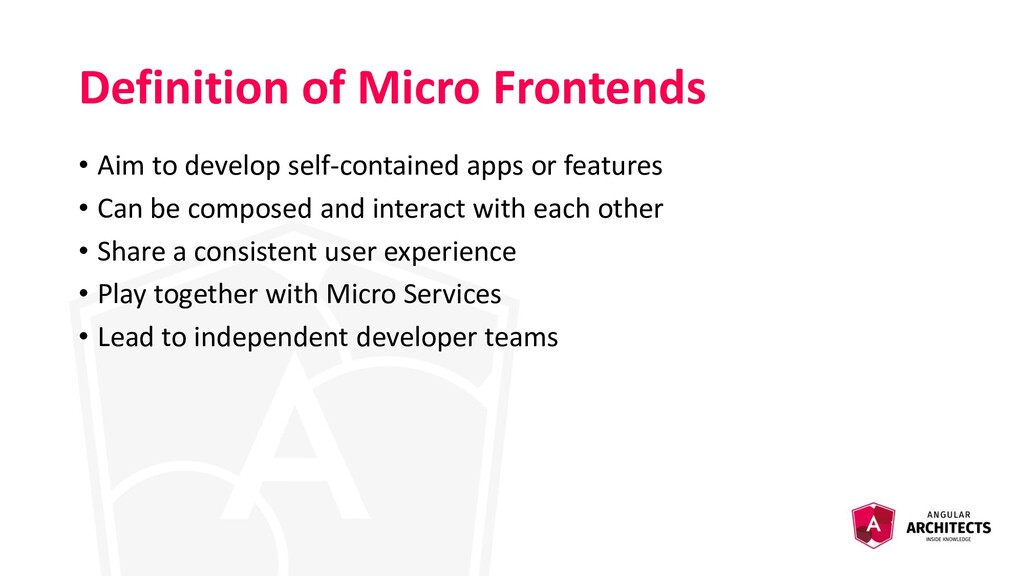
or features • Can be composed and interact with each other • Share a consistent user experience • Play together with Micro Services • Lead to independent developer teams
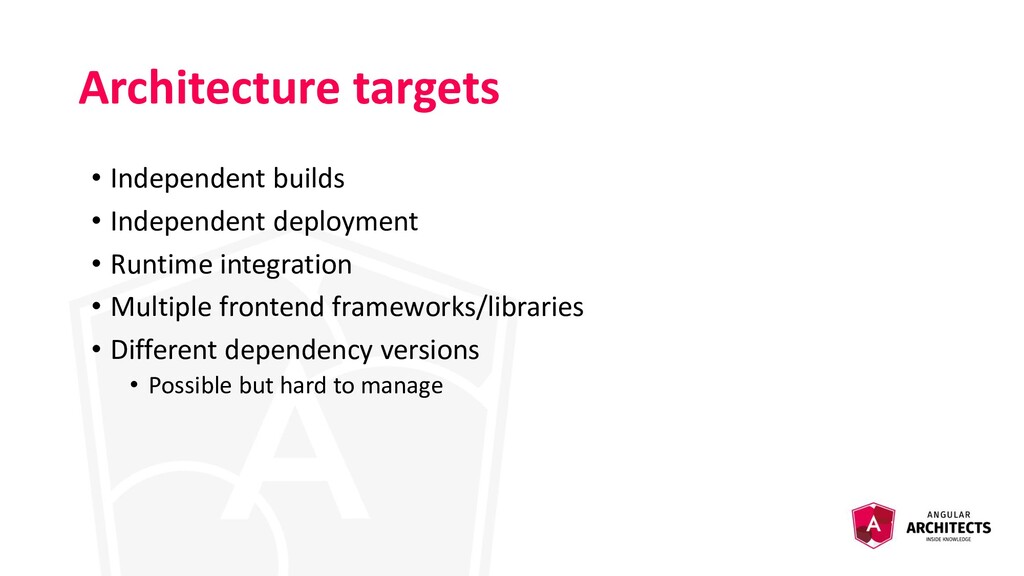
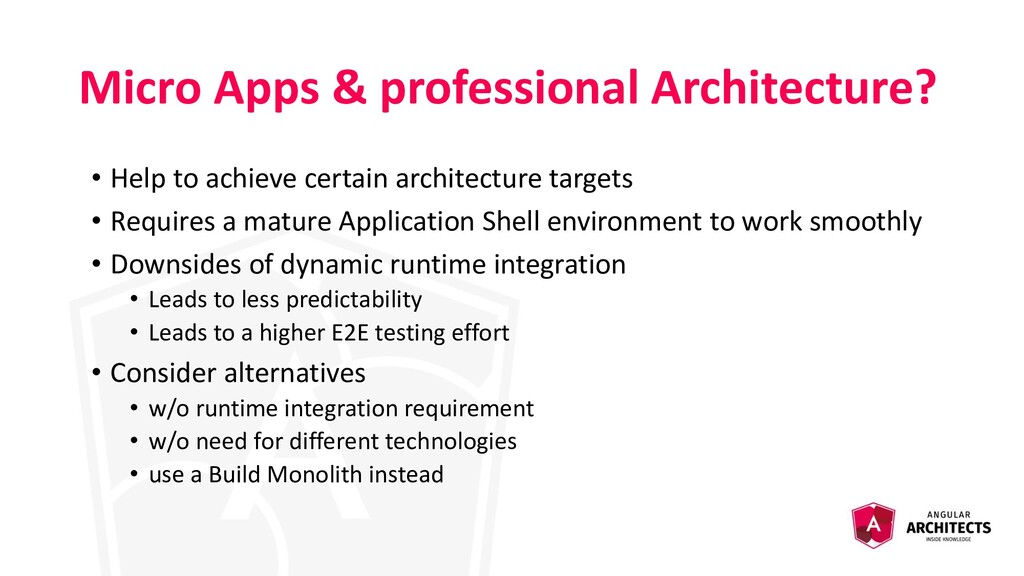
architecture targets • Requires a mature Application Shell environment to work smoothly • Downsides of dynamic runtime integration • Leads to less predictability • Leads to a higher E2E testing effort • Consider alternatives • w/o runtime integration requirement • w/o need for different technologies • use a Build Monolith instead
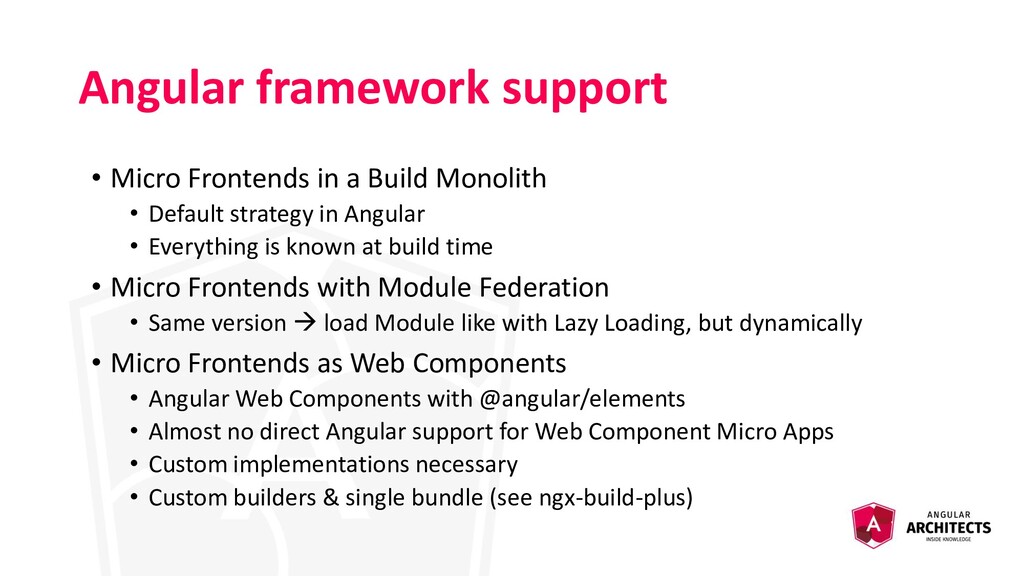
• Default strategy in Angular • Everything is known at build time • Micro Frontends with Module Federation • Same version → load Module like with Lazy Loading, but dynamically • Micro Frontends as Web Components • Angular Web Components with @angular/elements • Almost no direct Angular support for Web Component Micro Apps • Custom implementations necessary • Custom builders & single bundle (see ngx-build-plus)
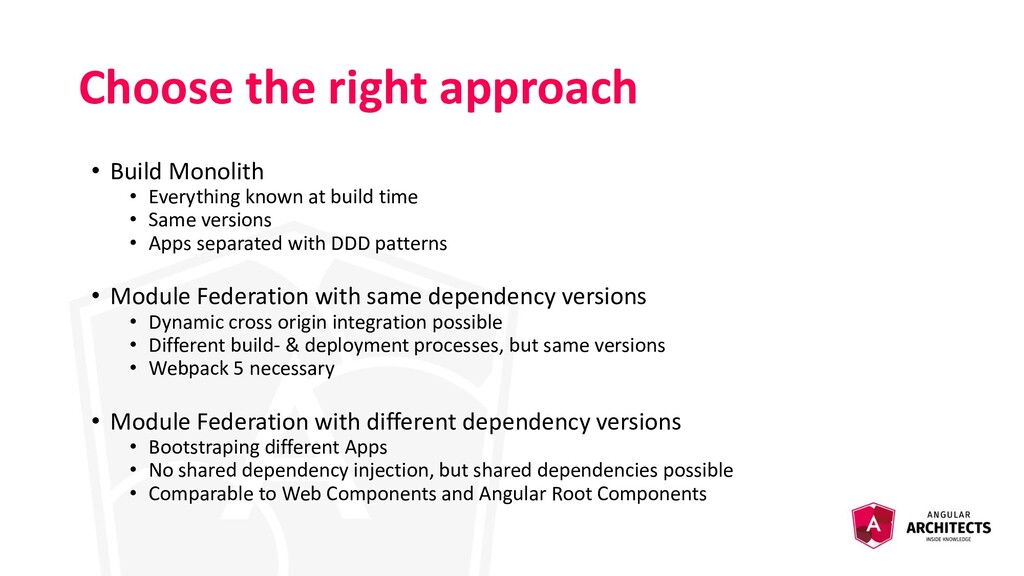
at build time • Same versions • Apps separated with DDD patterns • Module Federation with same dependency versions • Dynamic cross origin integration possible • Different build- & deployment processes, but same versions • Webpack 5 necessary • Module Federation with different dependency versions • Bootstraping different Apps • No shared dependency injection, but shared dependencies possible • Comparable to Web Components and Angular Root Components
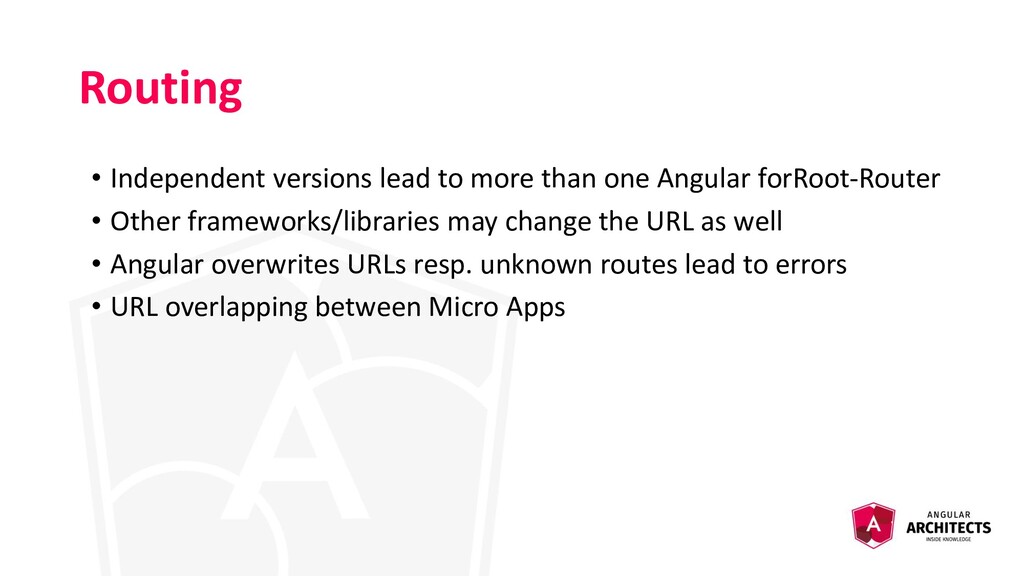
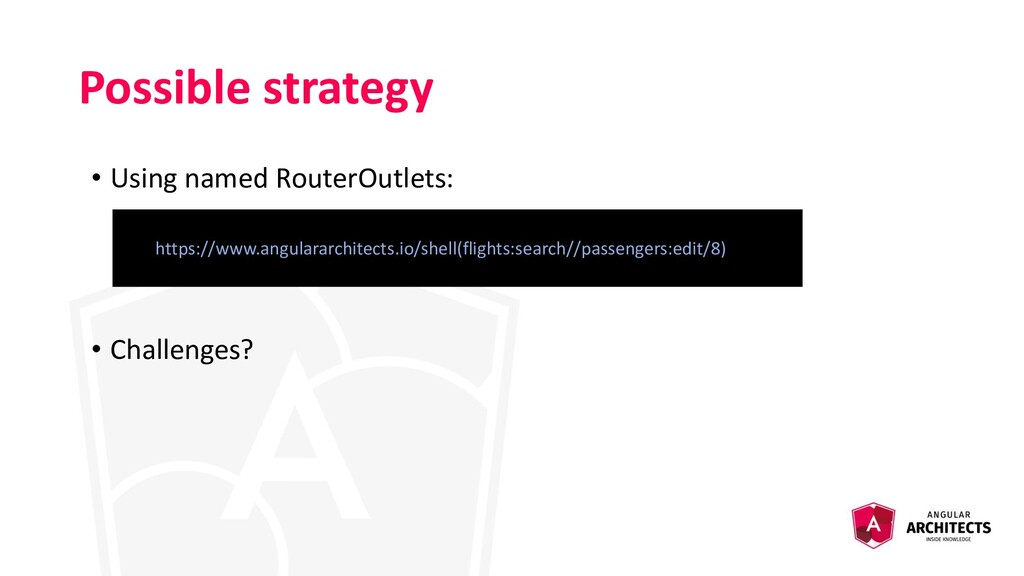
forRoot-Router • Other frameworks/libraries may change the URL as well • Angular overwrites URLs resp. unknown routes lead to errors • URL overlapping between Micro Apps
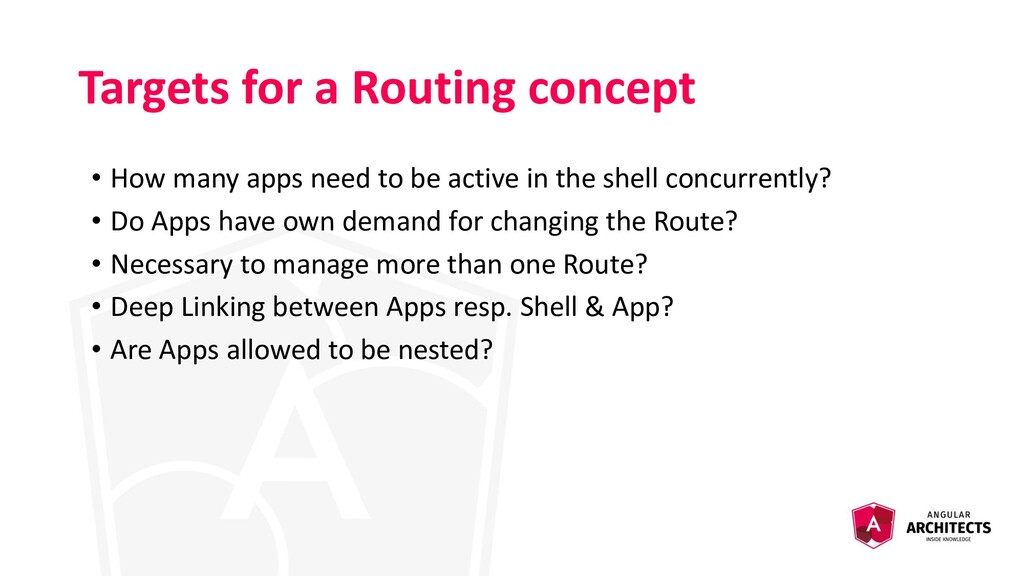
to be active in the shell concurrently? • Do Apps have own demand for changing the Route? • Necessary to manage more than one Route? • Deep Linking between Apps resp. Shell & App? • Are Apps allowed to be nested?
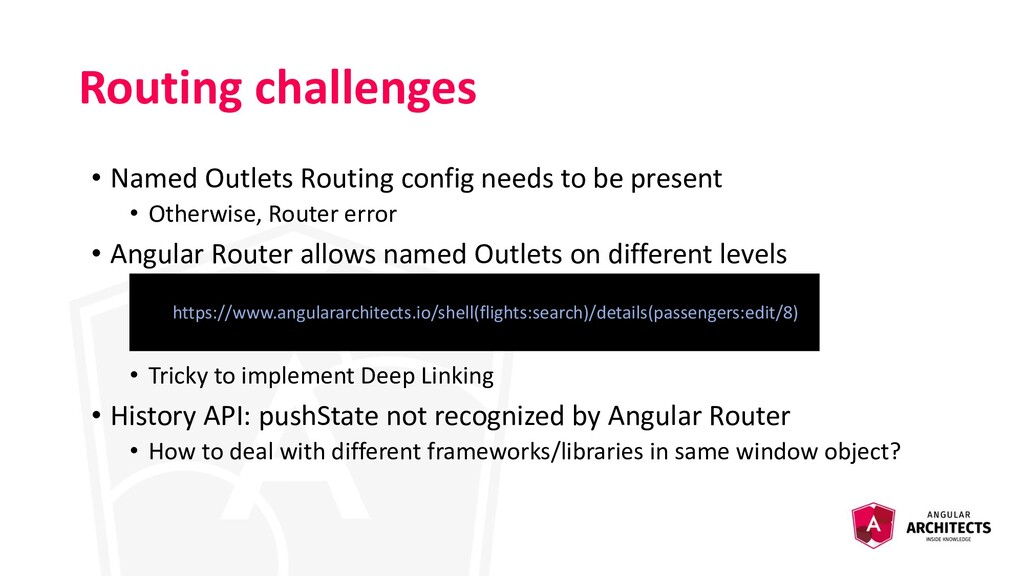
present • Otherwise, Router error • Angular Router allows named Outlets on different levels • Tricky to implement Deep Linking • History API: pushState not recognized by Angular Router • How to deal with different frameworks/libraries in same window object? https://www.angulararchitects.io/shell(flights:search)/details(passengers:edit/8)
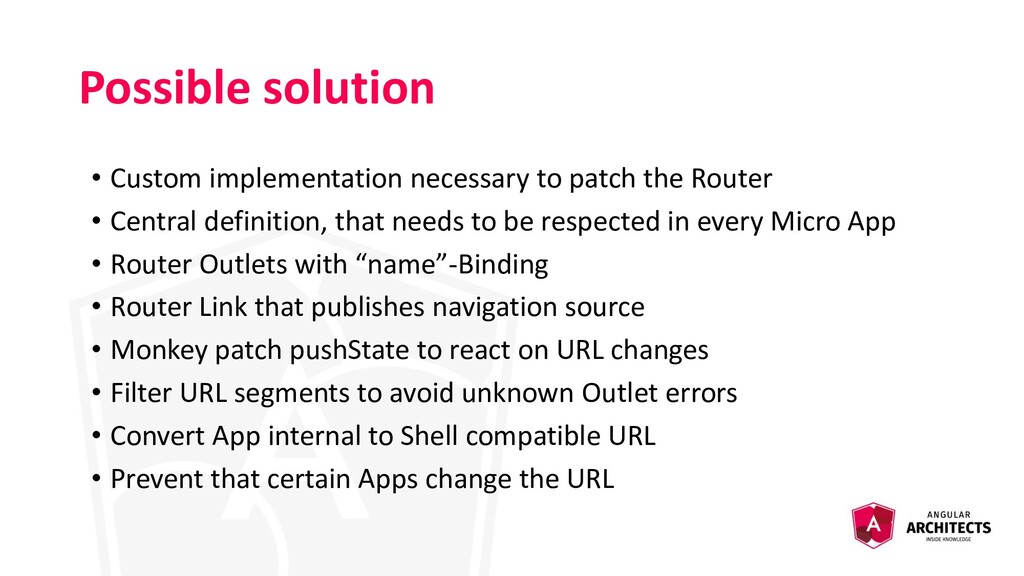
• Central definition, that needs to be respected in every Micro App • Router Outlets with “name”-Binding • Router Link that publishes navigation source • Monkey patch pushState to react on URL changes • Filter URL segments to avoid unknown Outlet errors • Convert App internal to Shell compatible URL • Prevent that certain Apps change the URL
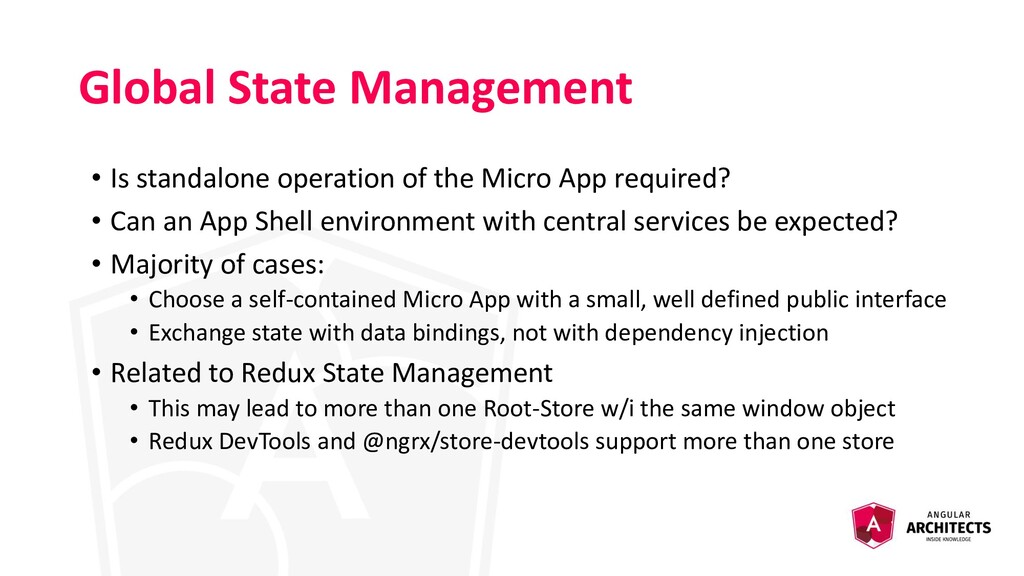
App required? • Can an App Shell environment with central services be expected? • Majority of cases: • Choose a self-contained Micro App with a small, well defined public interface • Exchange state with data bindings, not with dependency injection • Related to Redux State Management • This may lead to more than one Root-Store w/i the same window object • Redux DevTools and @ngrx/store-devtools support more than one store
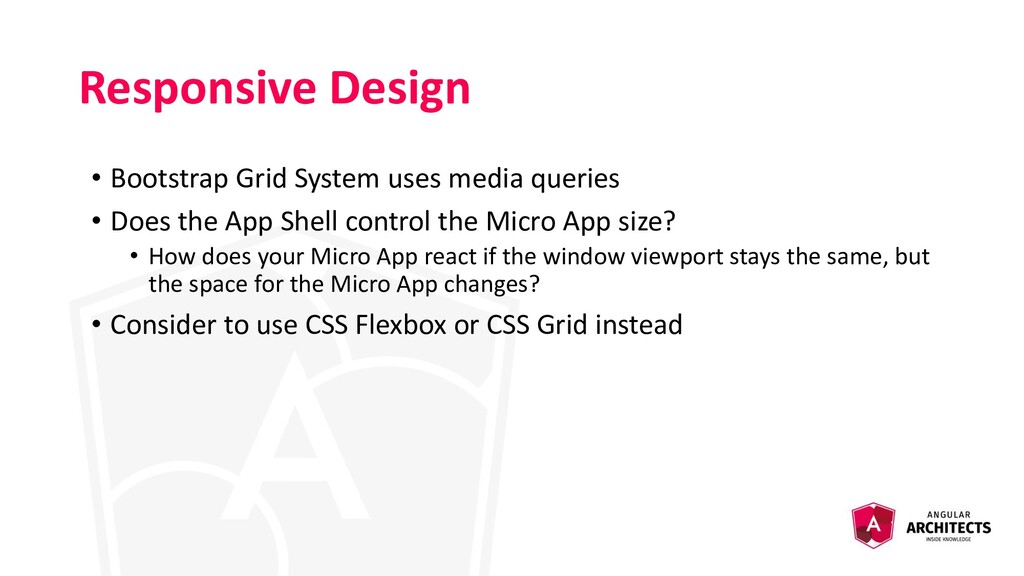
Does the App Shell control the Micro App size? • How does your Micro App react if the window viewport stays the same, but the space for the Micro App changes? • Consider to use CSS Flexbox or CSS Grid instead
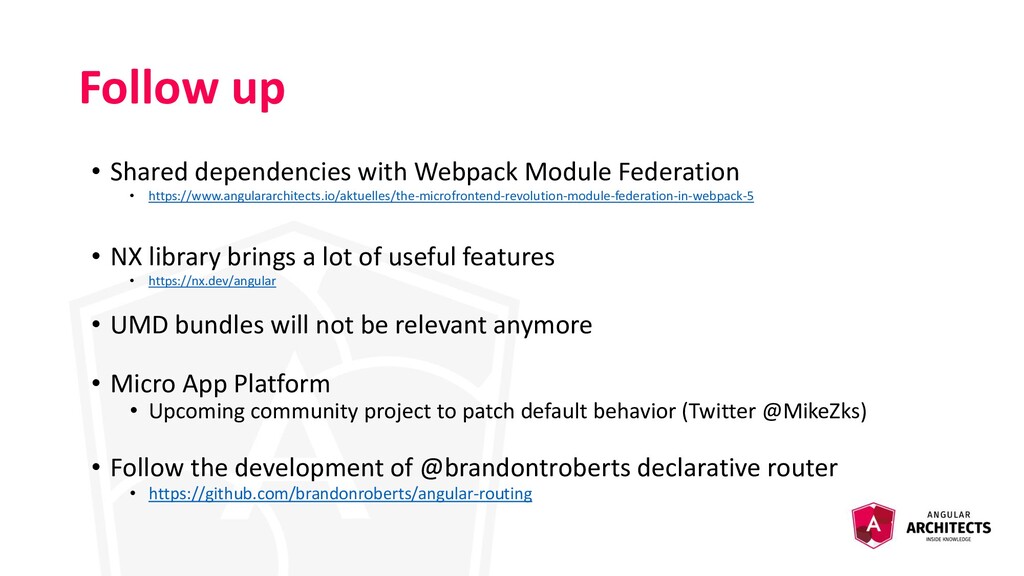
https://www.angulararchitects.io/aktuelles/the-microfrontend-revolution-module-federation-in-webpack-5 • NX library brings a lot of useful features • https://nx.dev/angular • UMD bundles will not be relevant anymore • Micro App Platform • Upcoming community project to patch default behavior (Twitter @MikeZks) • Follow the development of @brandontroberts declarative router • https://github.com/brandonroberts/angular-routing


 michaeleggerzikes
 seike460
.jpg) sokohirai
sokohirai
 jespino
 juntaromatsumoto
 chigichan24
 slashnephy
 willingc
 seosoft
 kiakiraki
 achimnol
 mazrean
 karad
karad
 mongodb
 danielanewman
 erikaheidi
 kevinliebholz
 nmsamuel
 mkilby
 marketingsoph
 reverentgeek
 samanthasiow
 tammielis
 sugarenia
 takai
takai










![[web] ANGULARarchitects.io [email] [email protected] [twitter] Michael Zikes (@MikeZks) Slides Contact](https://files.speakerdeck.com/presentations/7a4bace1b96f421aad28d30c4ded2358/slide_24.jpg)