Upgrade to Pro — share decks privately, control downloads, hide ads and more …

Gophers! Go, google's open source language - WX...

Sponsored · Ship Features Fearlessly Turn features on and off without deploys. Used by thousands of Ruby developers.
Avatar for Ben Lovell Ben Lovell
October 25, 2013

Gophers! Go, google's open source language - WXG Guildford 2013

Go was conceived within Google to scratch their itch for a fully featured systems programming language with a super-fast compiler and runtime performance close to that of the C programming language.

We'll take a high level glance at how Go can help you write performant and maintainable servers and applications, how Go's language-level concurrency constructs "go-routines" and "channels" make traditional multithreading headaches a thing of the past and a brief look into Go's "batteries included" amazing standard library.

Go is built from the ground up for concurrency - a commonly misunderstood term and often used interchangeably with parallelism. We'll talk about this distinction and why it is increasingly significant in the age of multicore and multi-CPU systems and servers.

Of course, Go isn't perfect. I'll take you on a tour of some of Go's controversial design decisions and the reasoning behind them. Hopefully turning the typical and initial reaction - "huh?" into "ah!"

This talk was presented at WXG Guildford. http://wxg.co.uk

Avatar for Ben Lovell

Ben Lovell

October 25, 2013
Tweet

More Decks by Ben Lovell

Other Decks in Programming

Transcript

  1. go will be the server language of the future -

    Tobias Lütke, Shopify founder
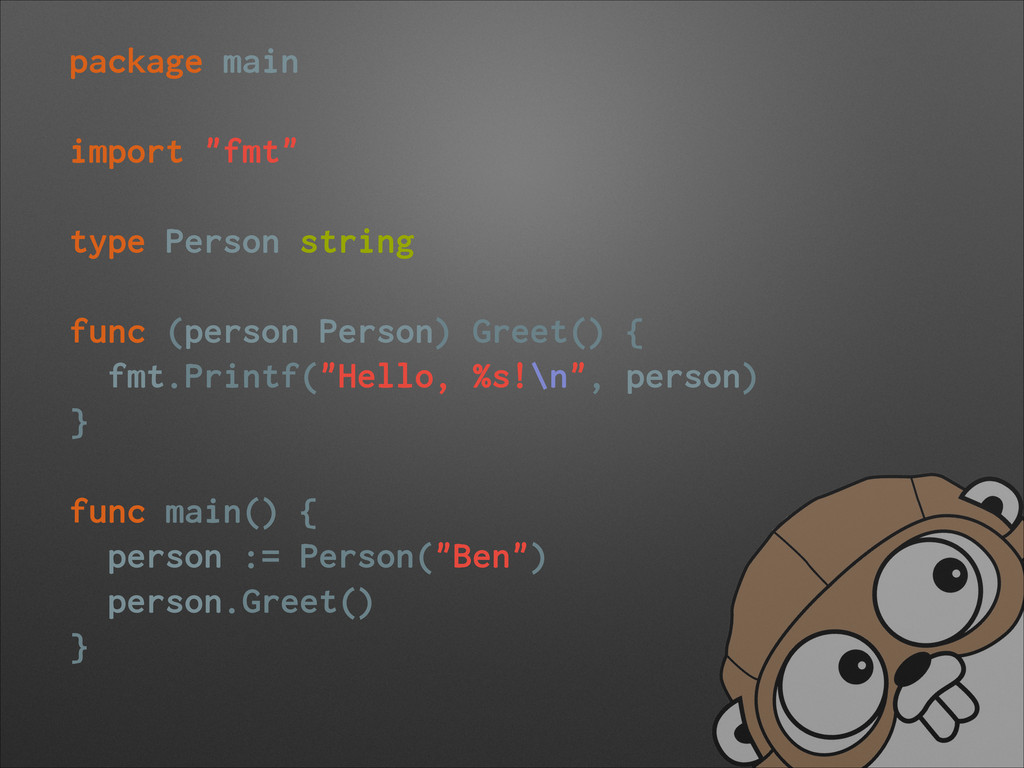
  2. package main ! import "fmt" ! type Person string !

    func (person Person) Greet() { fmt.Printf("Hello, %s!\n", person) } ! func main() { person := Person("Ben") person.Greet() } !
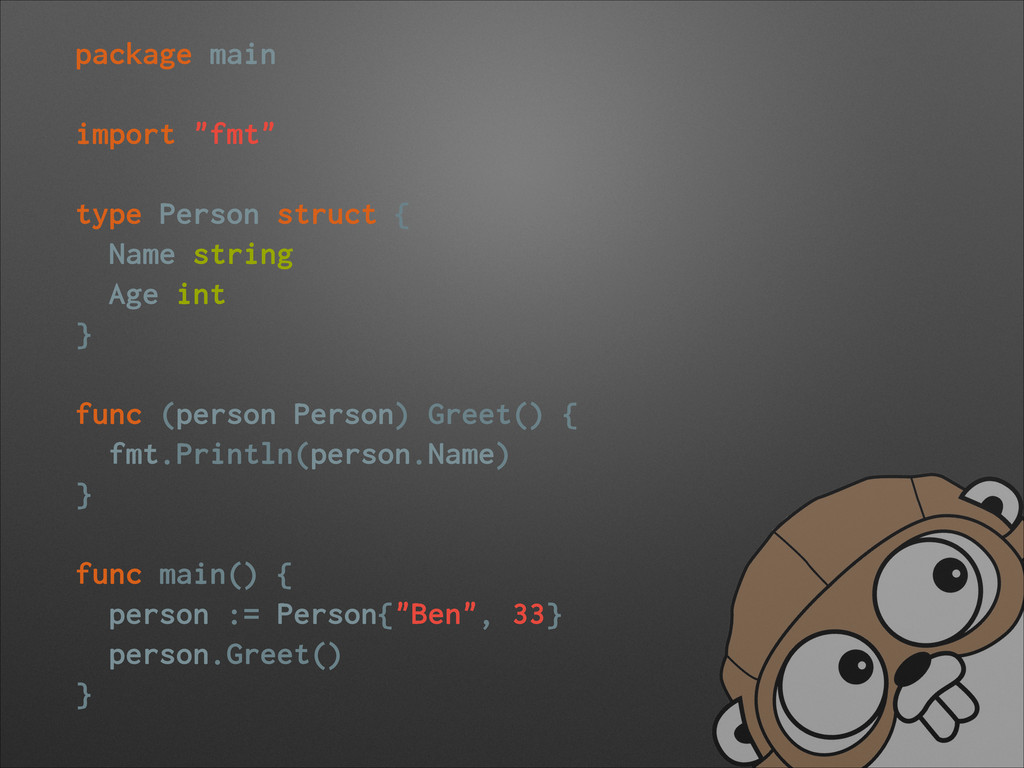
  3. package main ! import "fmt" ! type Person struct {

    Name string Age int } ! func (person Person) Greet() { fmt.Println(person.Name) } ! func main() { person := Person{"Ben", 33} person.Greet() } !
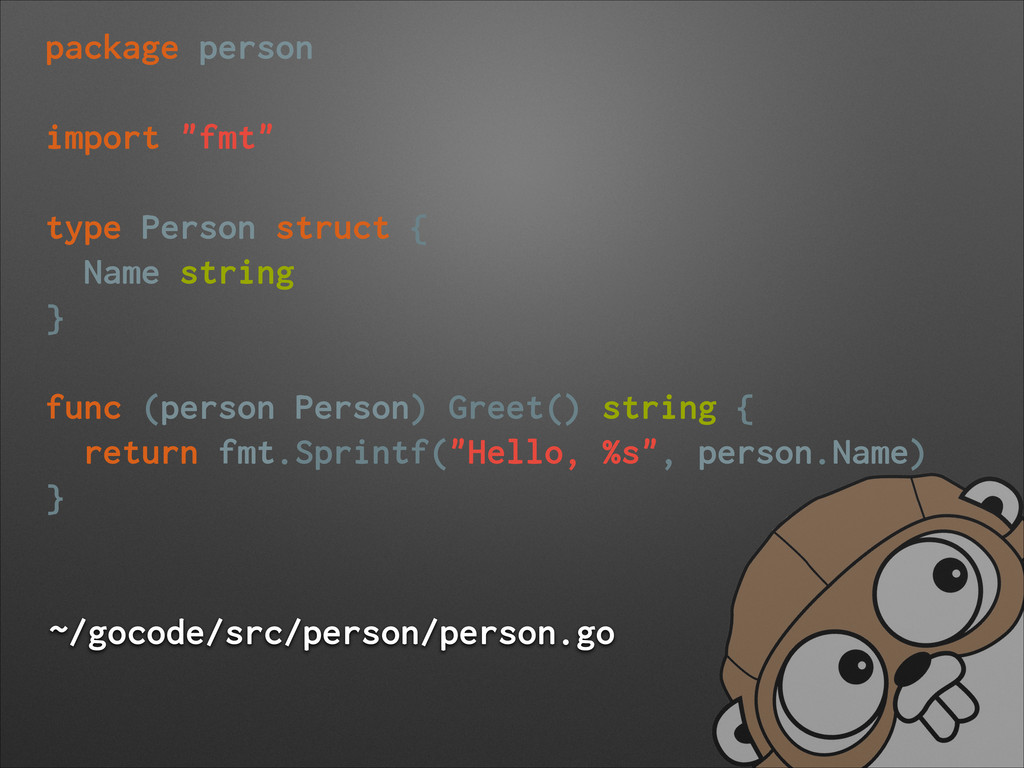
  4. package person ! import "fmt" ! type Person struct {

    Name string } ! func (person Person) Greet() string { return fmt.Sprintf("Hello, %s", person.Name) } ~/gocode/src/person/person.go
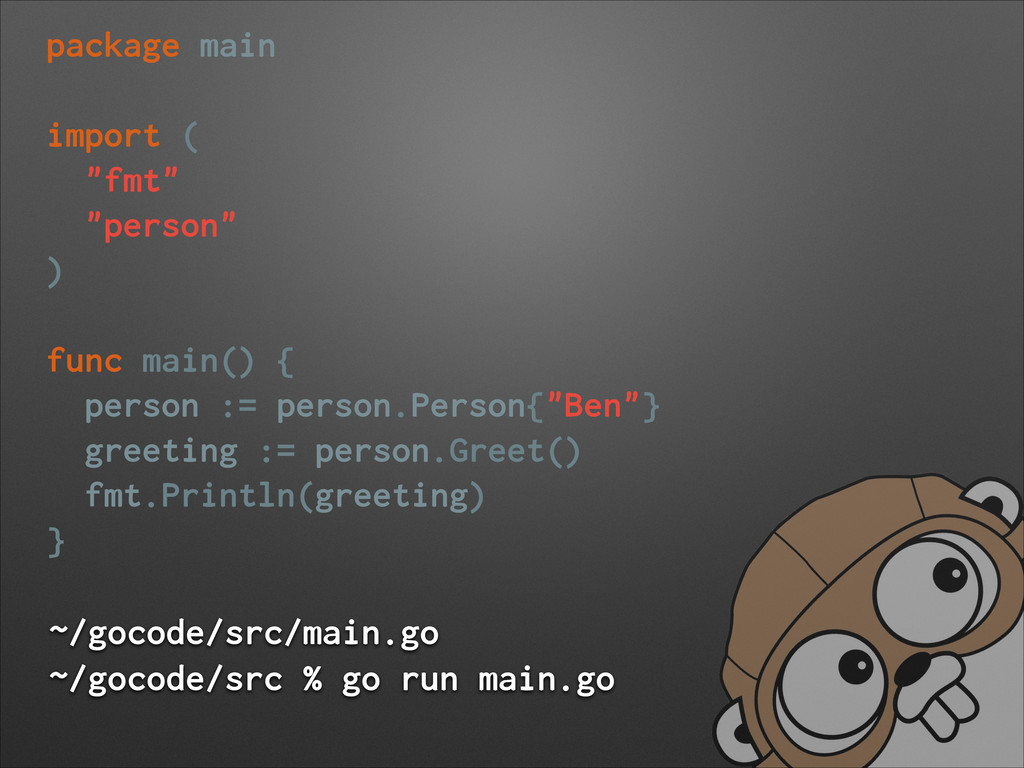
  5. ~/gocode/src/main.go ~/gocode/src % go run main.go package main ! import

    ( "fmt" "person" ) ! func main() { person := person.Person{"Ben"} greeting := person.Greet() fmt.Println(greeting) } !
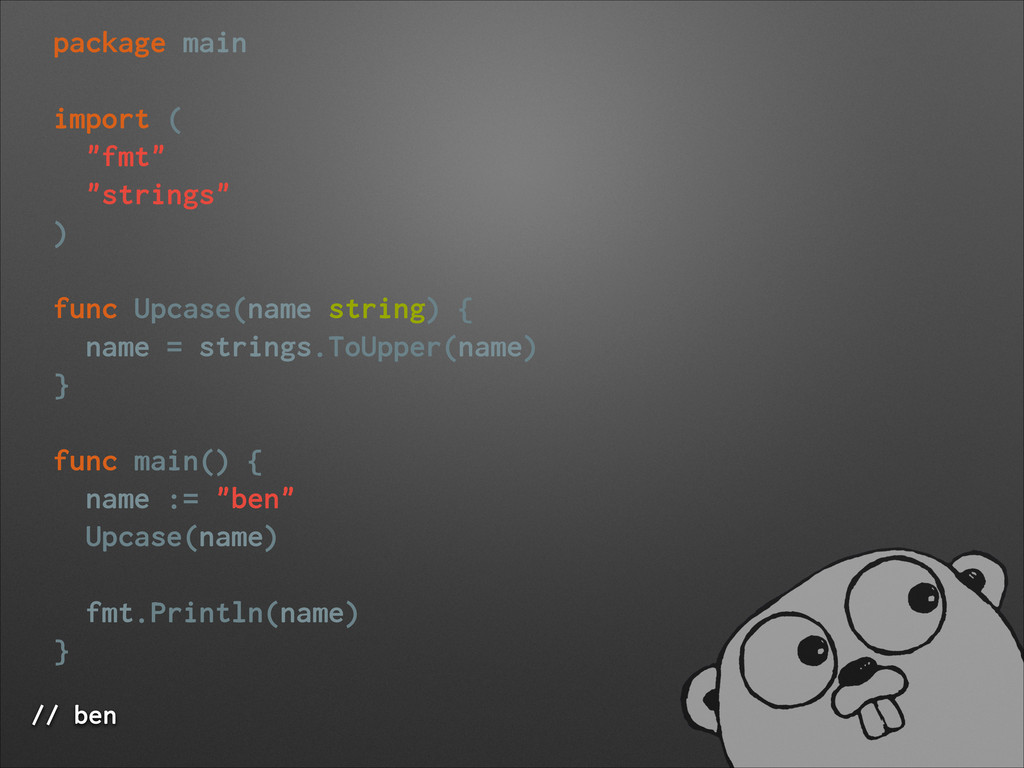
  6. package main ! import ( "fmt" "strings" ) ! func

    Upcase(name string) { name = strings.ToUpper(name) } ! func main() { name := "ben" Upcase(name) ! fmt.Println(name) } ! // ben
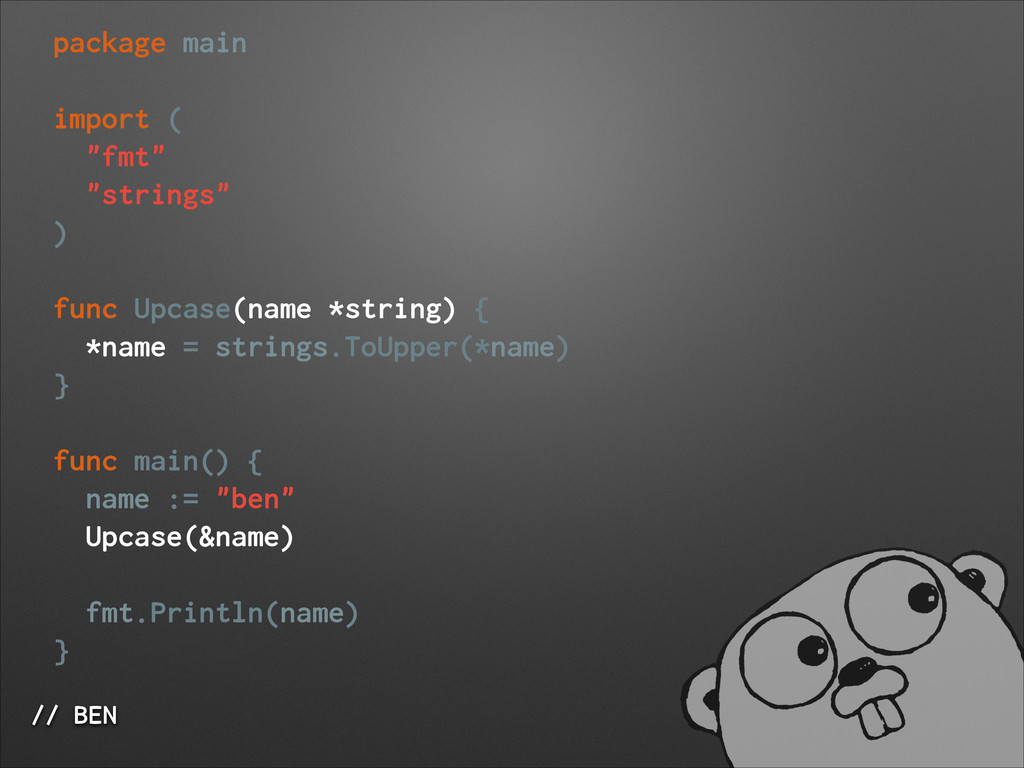
  7. // BEN package main ! import ( "fmt" "strings" )

    ! func Upcase(name *string) { *name = strings.ToUpper(*name) } ! func main() { name := "ben" Upcase(&name) ! fmt.Println(name) } !
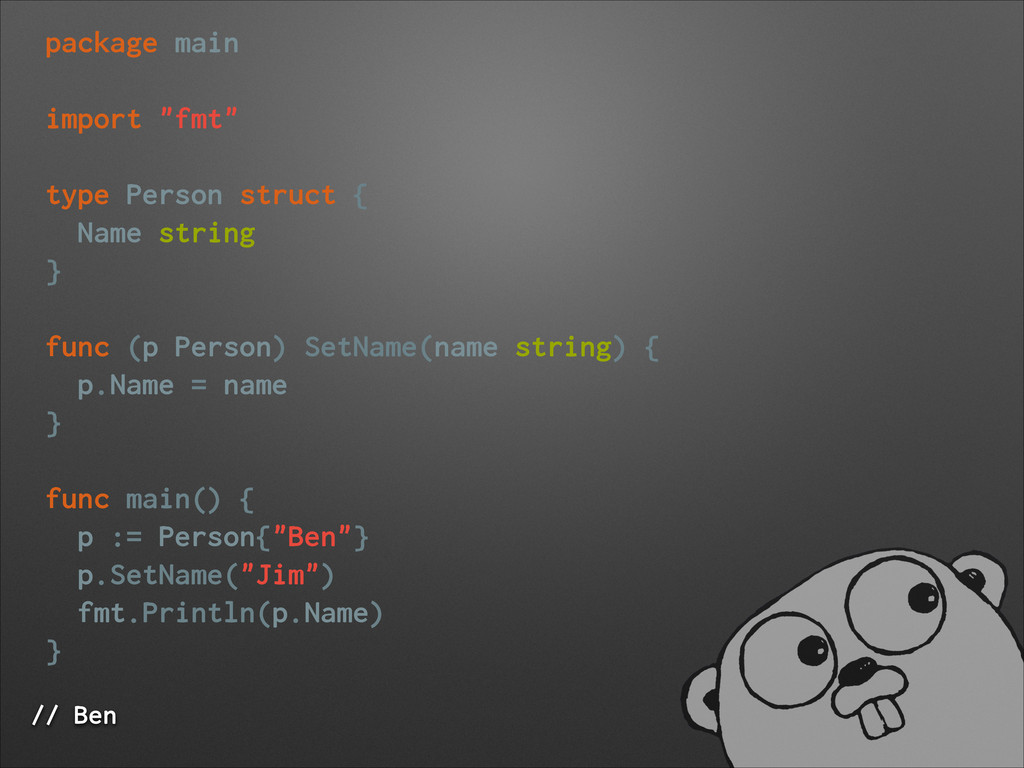
  8. package main ! import "fmt" ! type Person struct {

    Name string } ! func (p Person) SetName(name string) { p.Name = name } ! func main() { p := Person{"Ben"} p.SetName("Jim") fmt.Println(p.Name) } ! // Ben
  9. // Jim package main ! import "fmt" ! type Person

    struct { Name string } ! func (p *Person) SetName(name string) { p.Name = name } ! func main() { p := Person{"Ben"} p.SetName("Jim") fmt.Println(p.Name) } !
  10. // I’M BEN // I’m Ben type Person struct {

    Name string } ! func (p Person) Greet() { fmt.Println("I'm", p.Name) } ! type Manager struct { Person } ! func (m Manager) Greet() { fmt.Println("I'M", strings.ToUpper(m.Name)) } ! func main() { m := Manager{Person{"Ben"}} m.Greet() m.Person.Greet() }
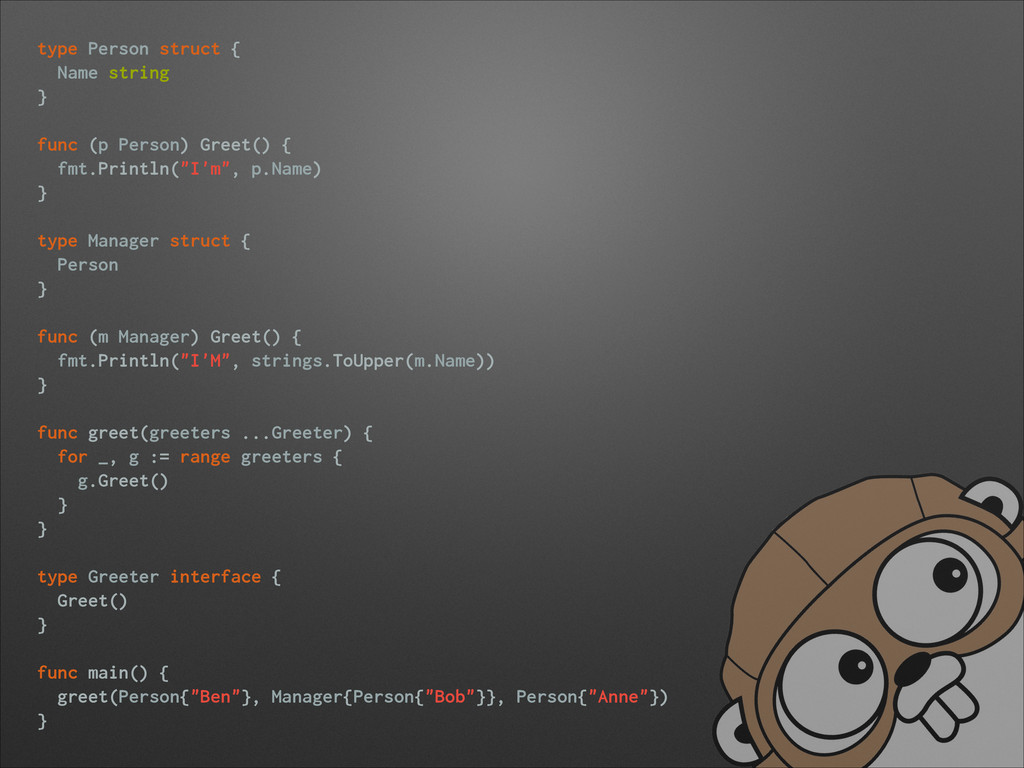
  11. type Person struct { Name string } ! func (p

    Person) Greet() { fmt.Println("I'm", p.Name) } ! type Manager struct { Person } ! func (m Manager) Greet() { fmt.Println("I'M", strings.ToUpper(m.Name)) } ! func greet(greeters ...Greeter) { for _, g := range greeters { g.Greet() } } ! type Greeter interface { Greet() } ! func main() { greet(Person{"Ben"}, Manager{Person{"Bob"}}, Person{"Anne"}) }
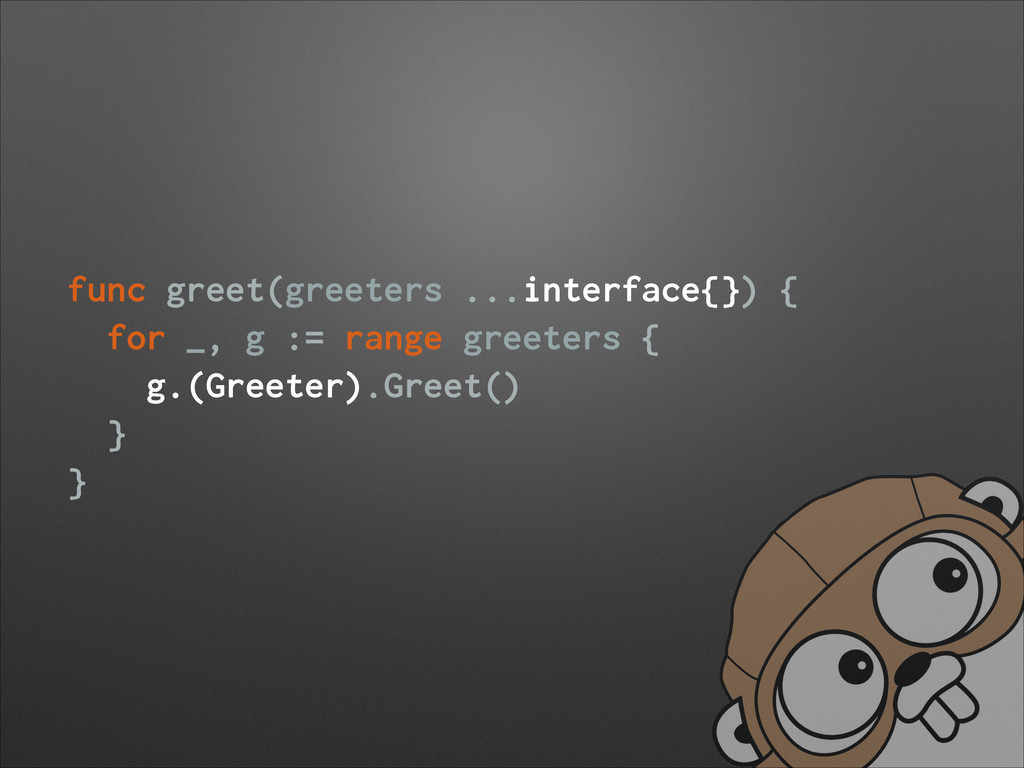
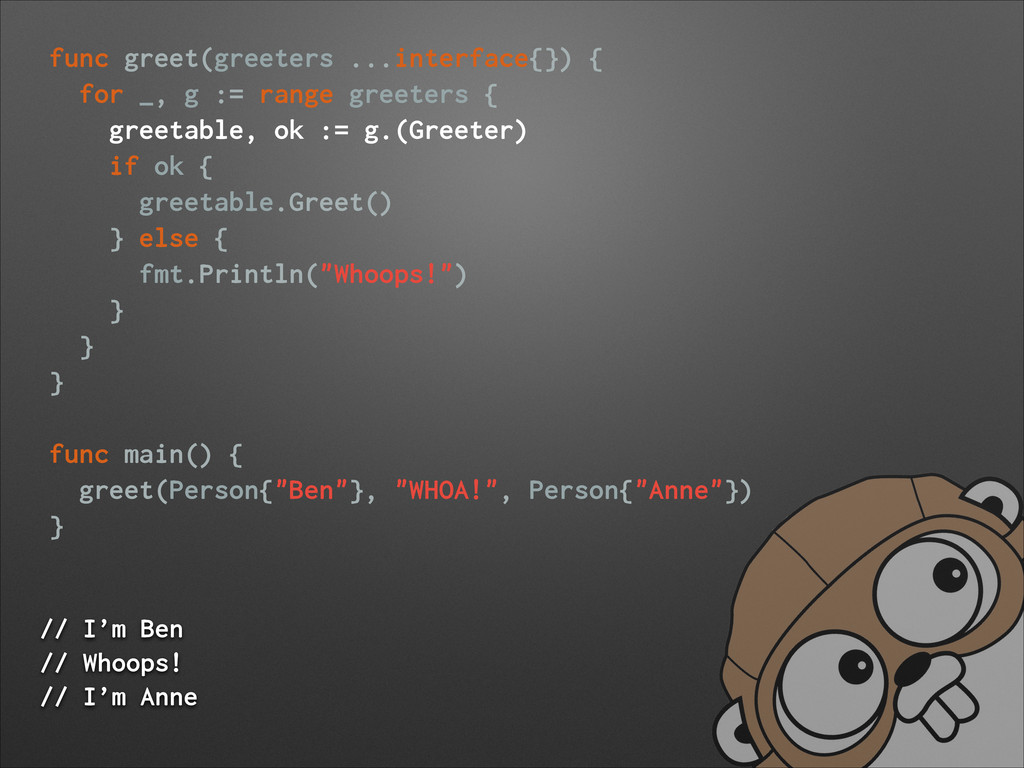
  12. func greet(greeters ...interface{}) { for _, g := range greeters

    { greetable, ok := g.(Greeter) if ok { greetable.Greet() } else { fmt.Println("Whoops!") } } } ! func main() { greet(Person{"Ben"}, "WHOA!", Person{"Anne"}) } ! // I’m Ben // Whoops! // I’m Anne
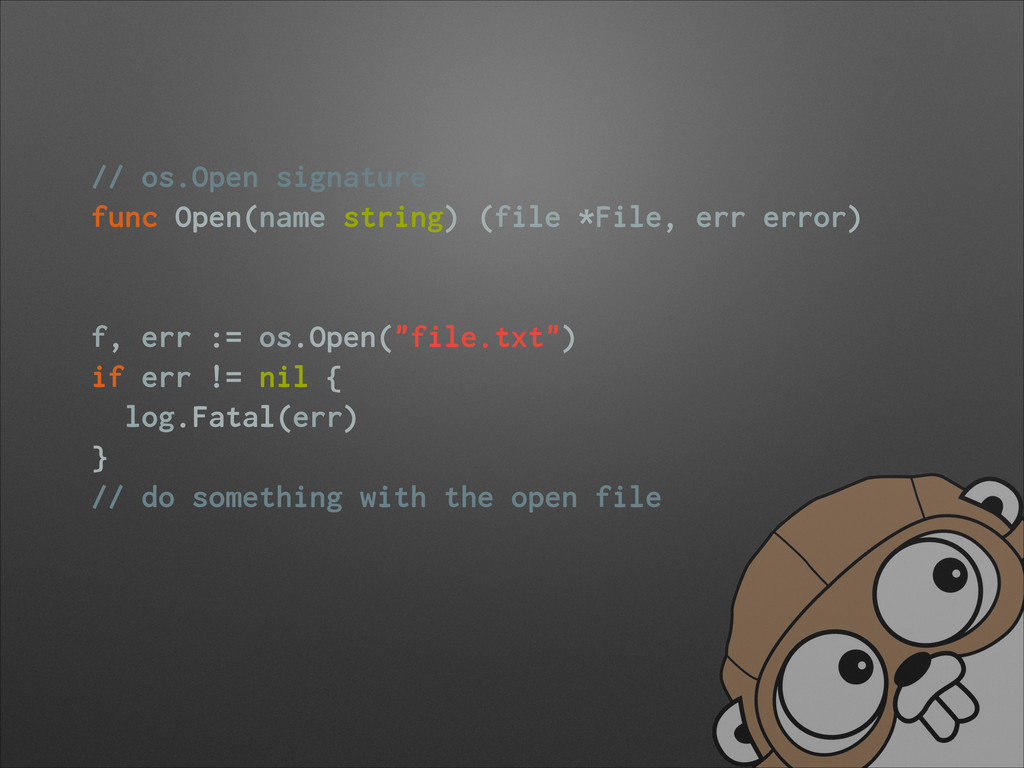
  13. // os.Open signature func Open(name string) (file *File, err error)

    ! ! f, err := os.Open("file.txt") if err != nil { log.Fatal(err) } // do something with the open file
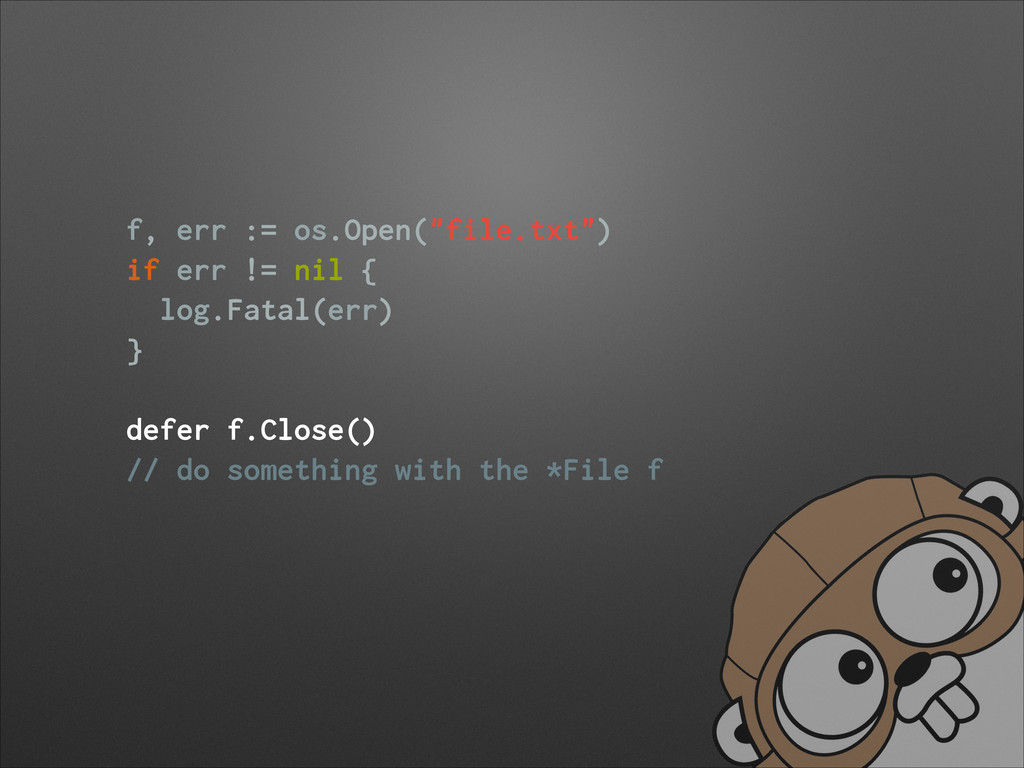
  14. f, err := os.Open("file.txt") if err != nil { log.Fatal(err)

    } ! defer f.Close() // do something with the *File f
  15. func main() { go greet() ! // hang around a

    while time.Sleep(2 * time.Second) } ! func greet() { fmt.Println("Hi!") }
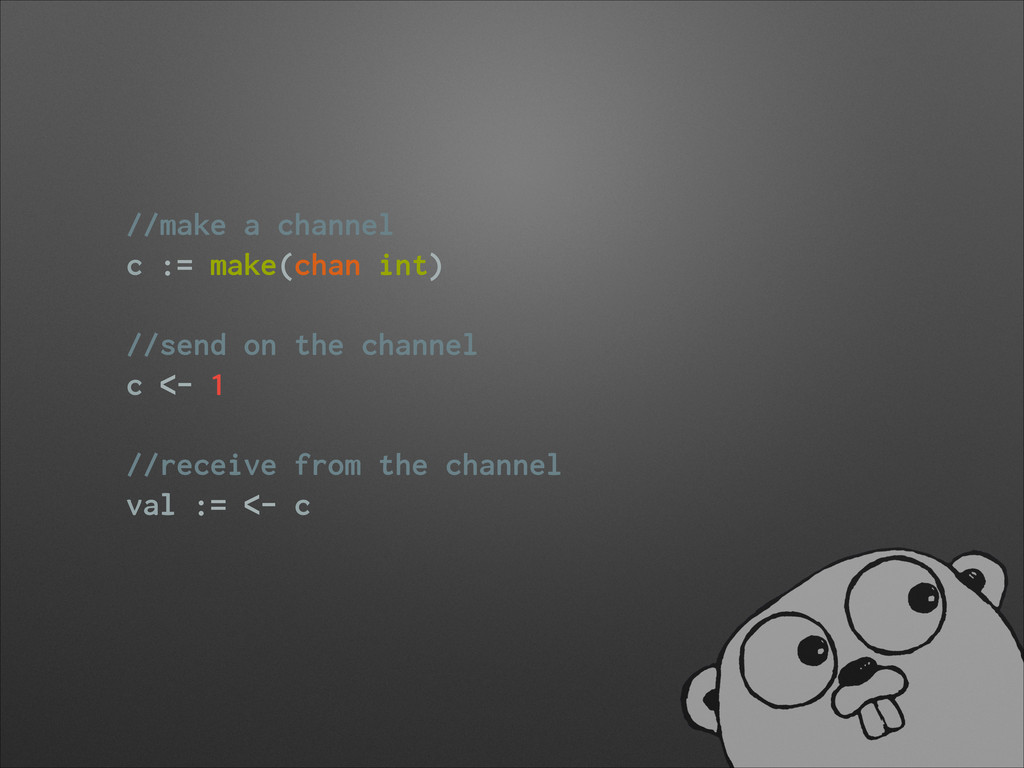
  16. //make a channel c := make(chan int) ! //send on

    the channel c <- 1 ! //receive from the channel val := <- c
  17. func ping(c chan string) { for i := 0; ;
    i++ { c <- "ping" } } ! func printer(c chan string) { for { msg := <- c fmt.Println(msg) time.Sleep(time.Second * 1) } } ! func main() { c := make(chan string) ! go ping(c) go printer(c) ! time.Sleep(time.Second * 10) }
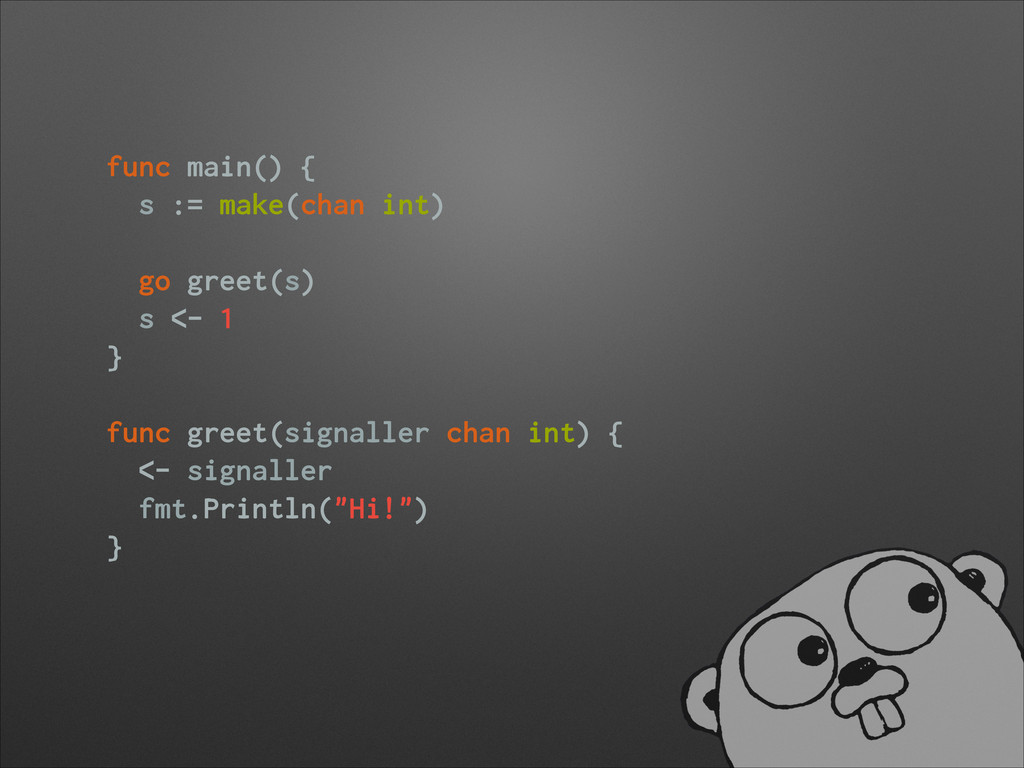
  18. func main() { s := make(chan int) ! go greet(s)

    s <- 1 } ! func greet(signaller chan int) { <- signaller fmt.Println("Hi!") }
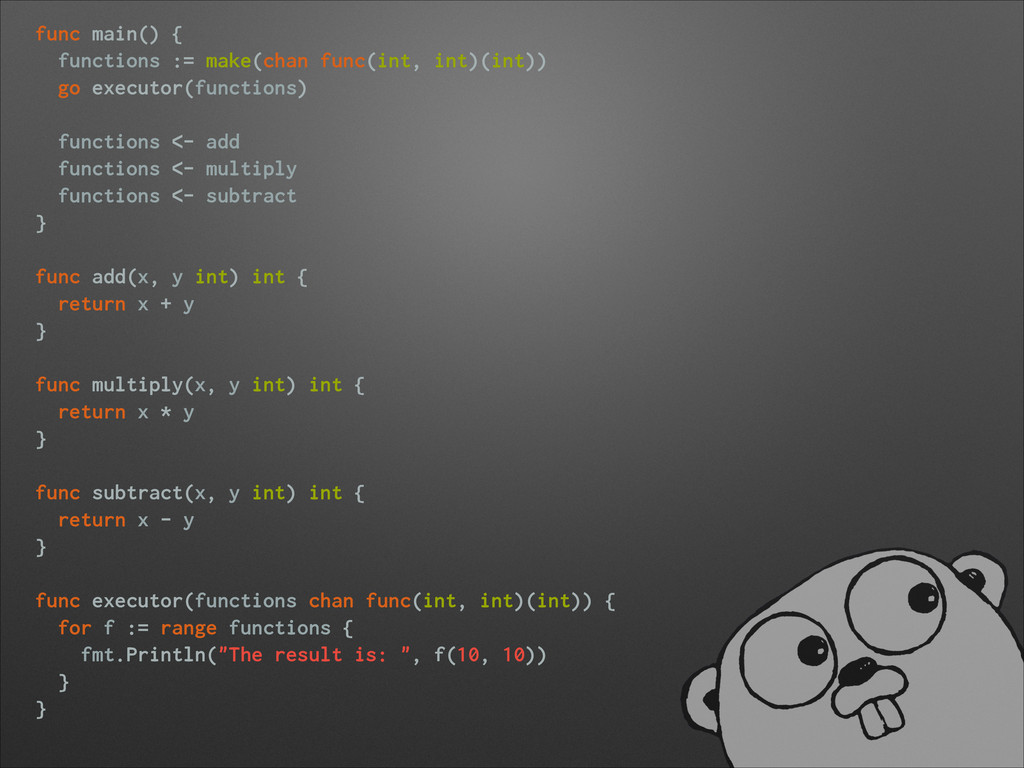
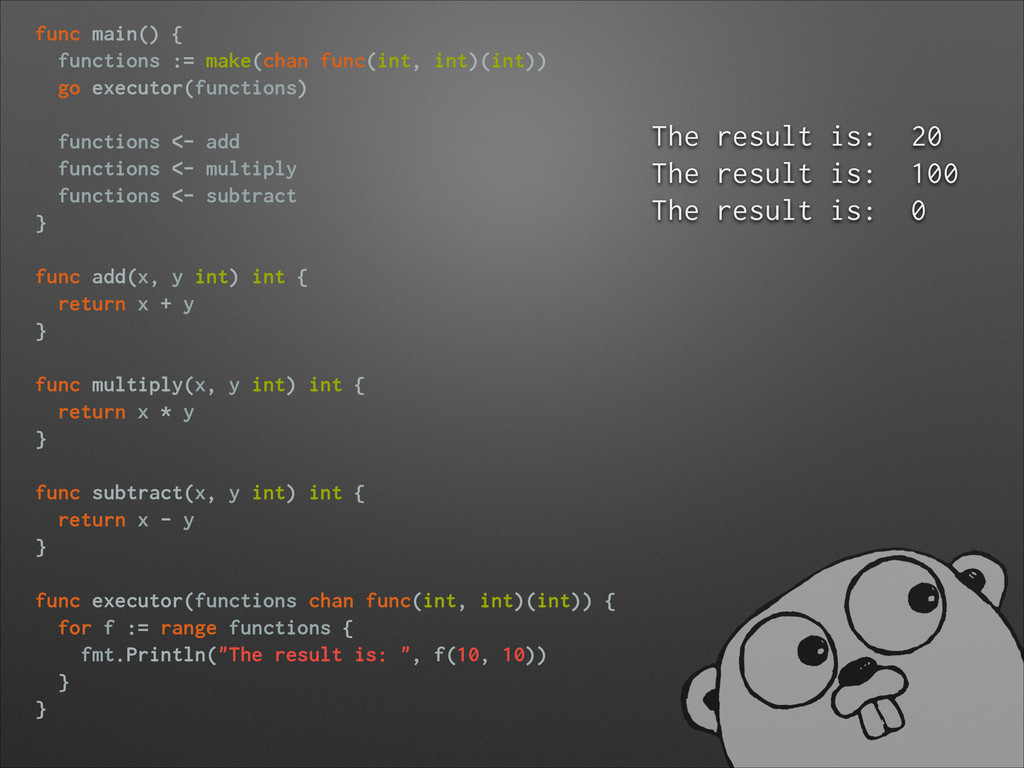
  19. func main() { functions := make(chan func(int, int)(int)) go executor(functions)

    ! functions <- add functions <- multiply functions <- subtract } ! func add(x, y int) int { return x + y } ! func multiply(x, y int) int { return x * y } ! func subtract(x, y int) int { return x - y } ! func executor(functions chan func(int, int)(int)) { for f := range functions { fmt.Println("The result is: ", f(10, 10)) } }
  20. func main() { functions := make(chan func(int, int)(int)) go executor(functions)

    ! functions <- add functions <- multiply functions <- subtract } ! func add(x, y int) int { return x + y } ! func multiply(x, y int) int { return x * y } ! func subtract(x, y int) int { return x - y } ! func executor(functions chan func(int, int)(int)) { for f := range functions { fmt.Println("The result is: ", f(10, 10)) } } The result is: 20 The result is: 100 The result is: 0
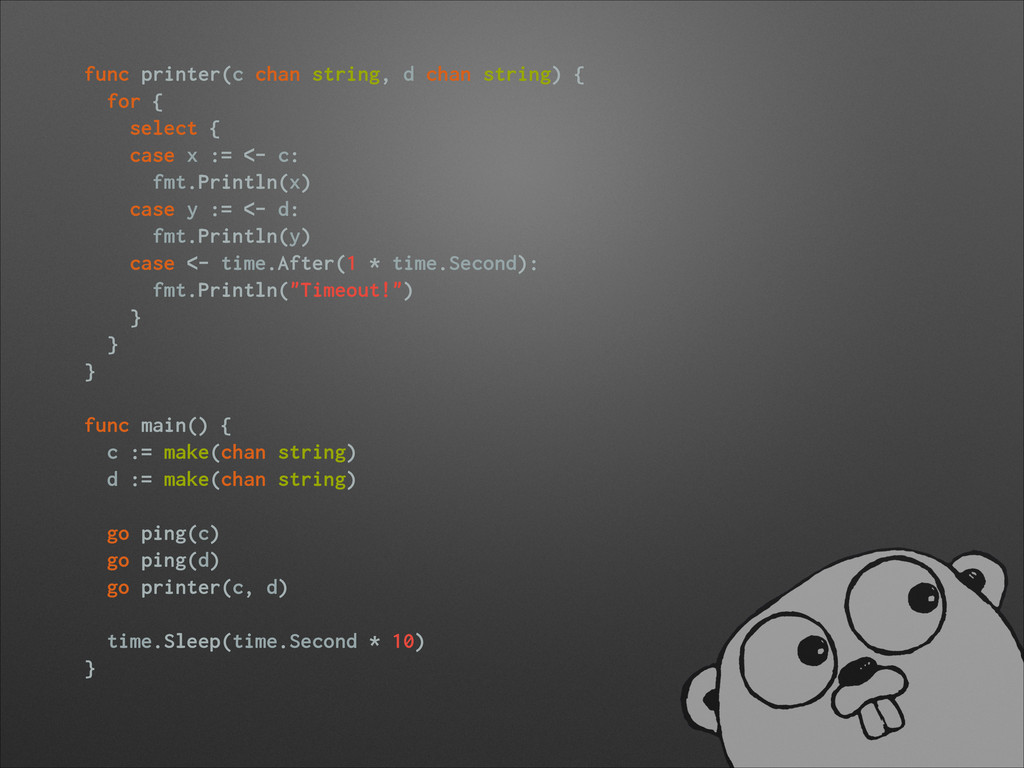
  21. func printer(c chan string, d chan string) { for {

    select { case x := <- c: fmt.Println(x) case y := <- d: fmt.Println(y) case <- time.After(1 * time.Second): fmt.Println("Timeout!") } } } ! func main() { c := make(chan string) d := make(chan string) ! go ping(c) go ping(d) go printer(c, d) ! time.Sleep(time.Second * 10) }