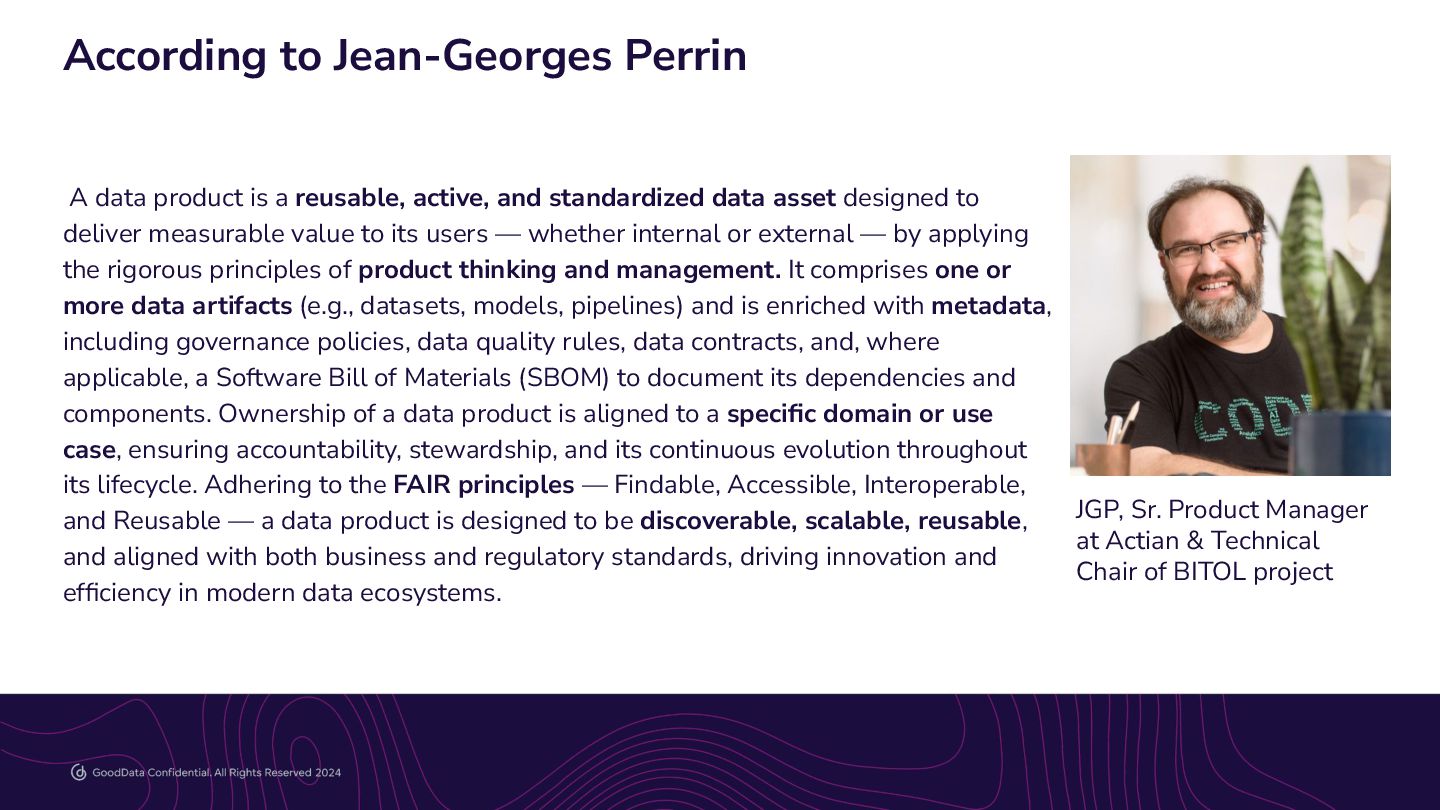
active, and standardized data asset designed to deliver measurable value to its users — whether internal or external — by applying the rigorous principles of product thinking and management. It comprises one or more data artifacts (e.g., datasets, models, pipelines) and is enriched with metadata, including governance policies, data quality rules, data contracts, and, where applicable, a Software Bill of Materials (SBOM) to document its dependencies and components. Ownership of a data product is aligned to a specific domain or use case, ensuring accountability, stewardship, and its continuous evolution throughout its lifecycle. Adhering to the FAIR principles — Findable, Accessible, Interoperable, and Reusable — a data product is designed to be discoverable, scalable, reusable, and aligned with both business and regulatory standards, driving innovation and efficiency in modern data ecosystems. JGP, Sr. Product Manager at Actian & Technical Chair of BITOL project
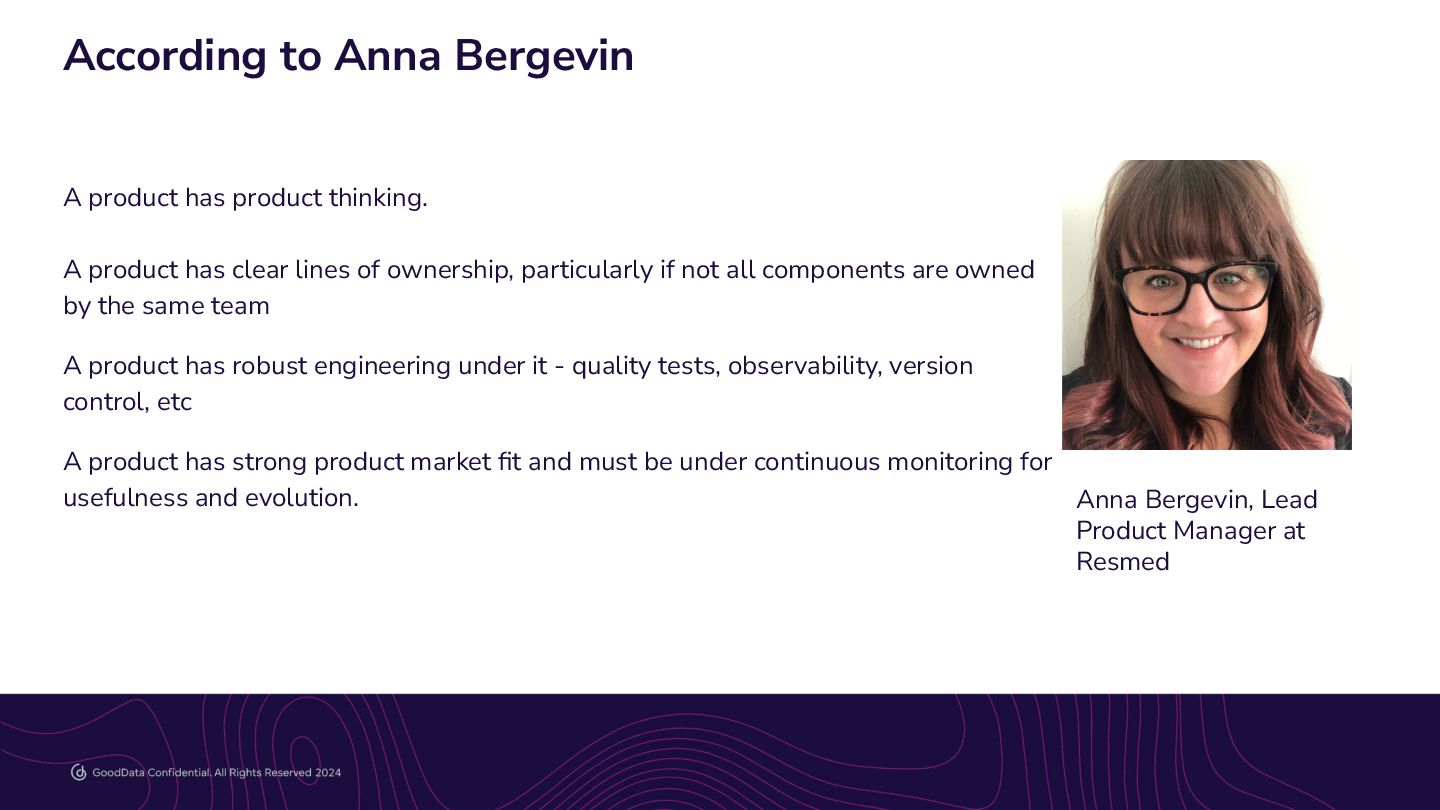
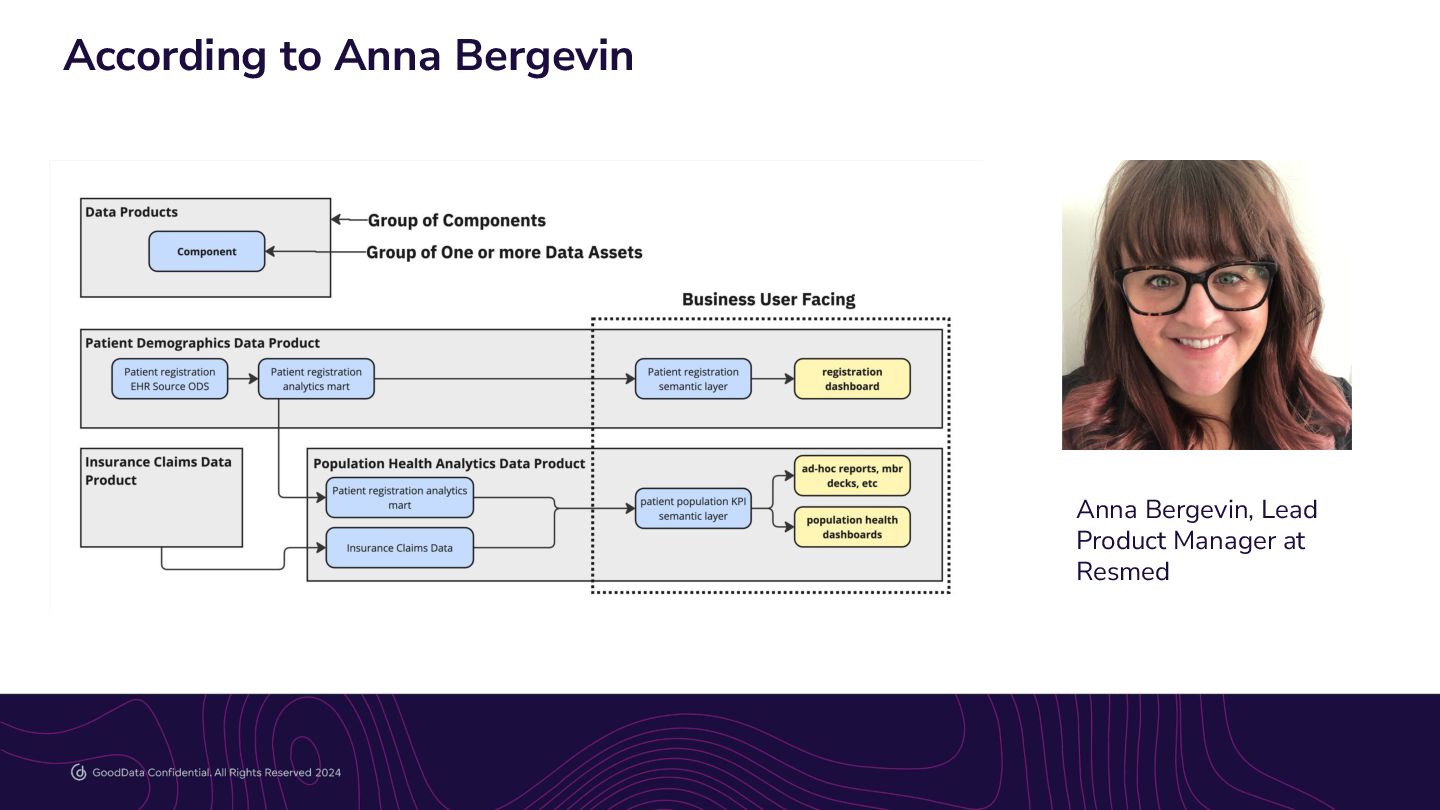
Resmed A product has product thinking. A product has clear lines of ownership, particularly if not all components are owned by the same team A product has robust engineering under it - quality tests, observability, version control, etc A product has strong product market fit and must be under continuous monitoring for usefulness and evolution.
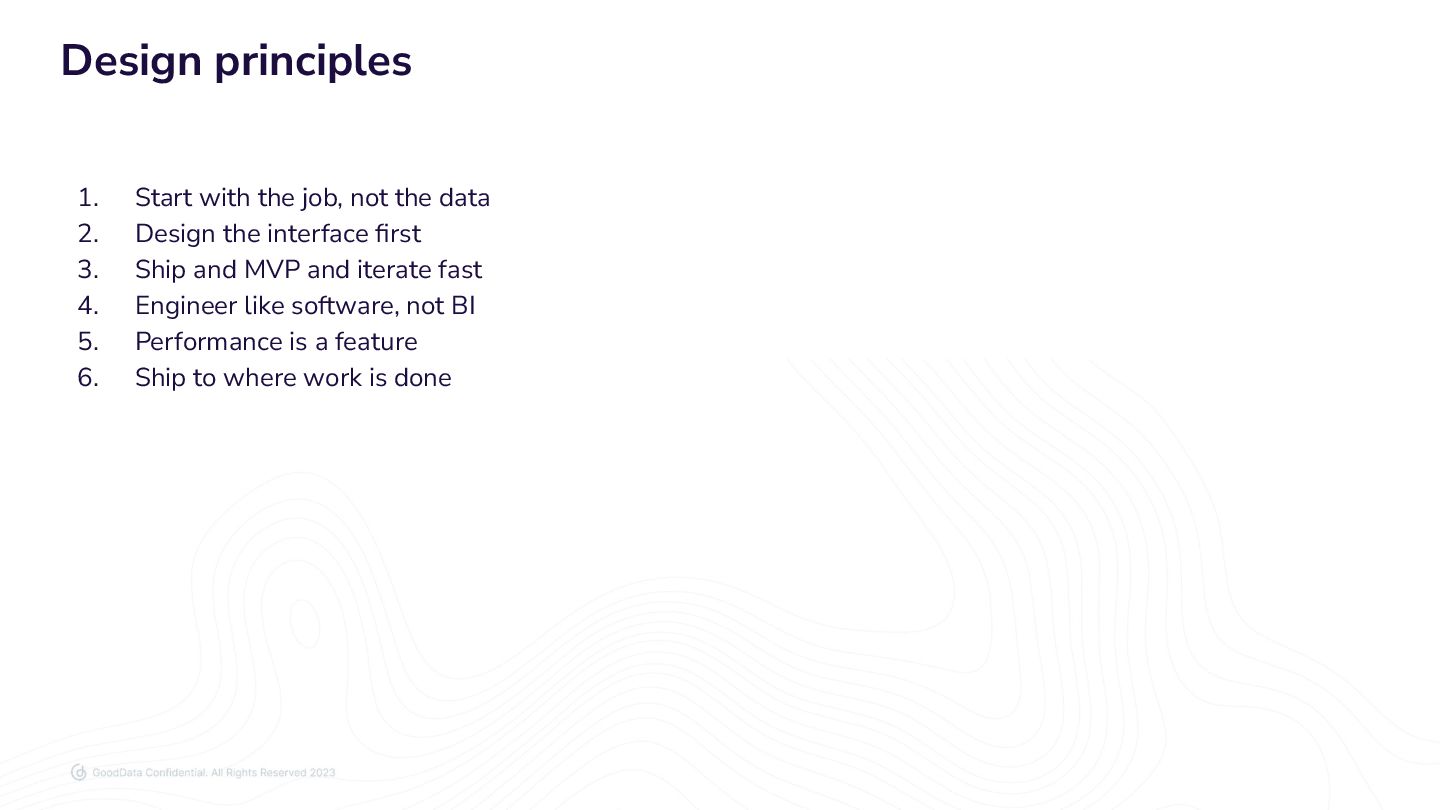
the interface first 3. Ship and MVP and iterate fast 4. Engineer like software, not BI 5. Performance is a feature 6. Ship to where work is done Design principles
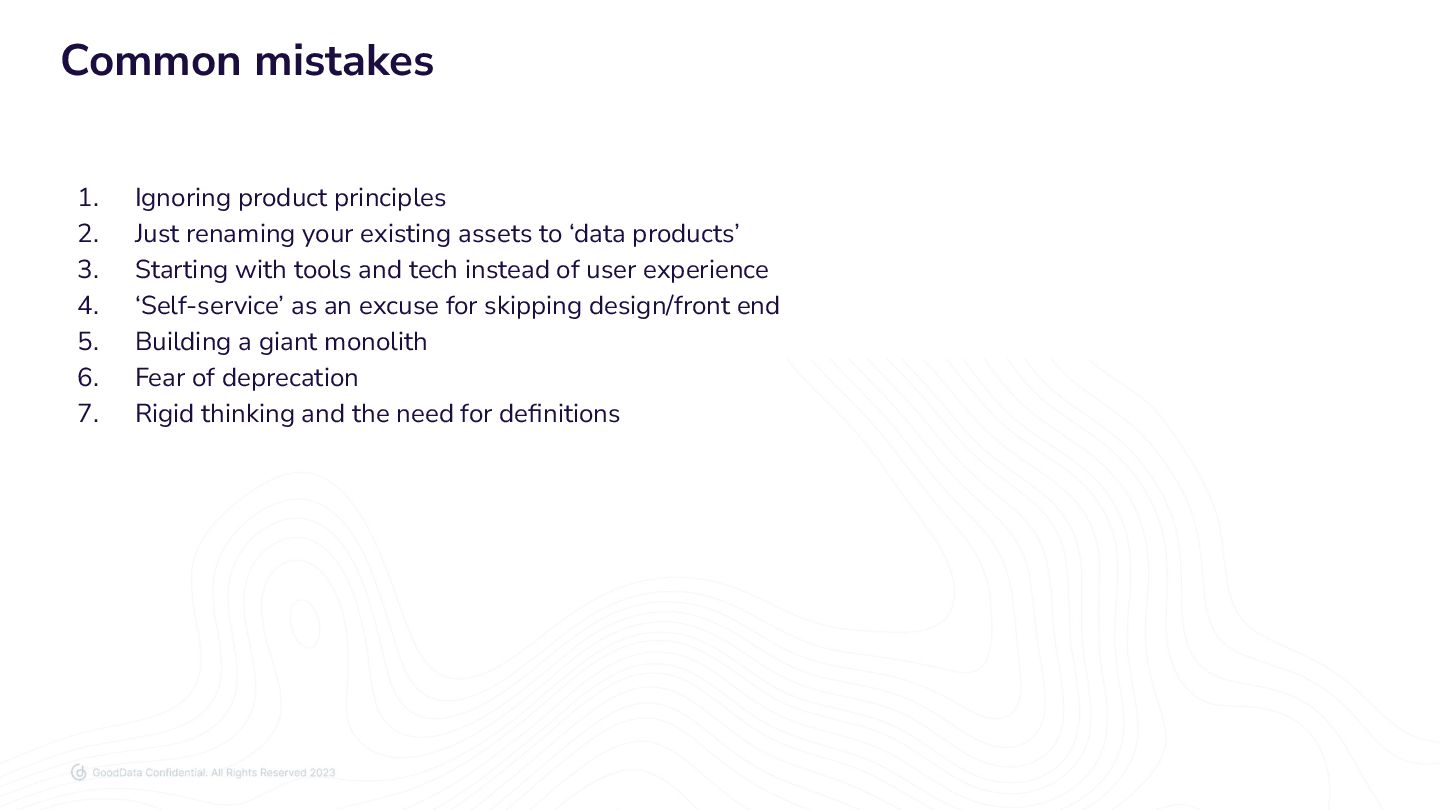
to ‘data products’ 3. Starting with tools and tech instead of user experience 4. ‘Self-service’ as an excuse for skipping design/front end 5. Building a giant monolith 6. Fear of deprecation 7. Rigid thinking and the need for definitions Common mistakes


 mark3t1ng
 lemiorhan
 maltzj
 auna
auna
 soysaucechin
 codingconduct
 minecr
 3n
3n
 skipperchong
 panda_program
 tmiket
 madoxten
 bkeepers