in a Marketplace [User & Content Understanding] Rishabh Mehrotra Ben Carterette Senior Research Scientist, Senior Research Manager, Spotify, London Spotify, New York [email protected][email protected] 23rd August 2020 @erishabh @BenCarterette https://sites.google.com/view/kdd20-marketplace-autorecsys/
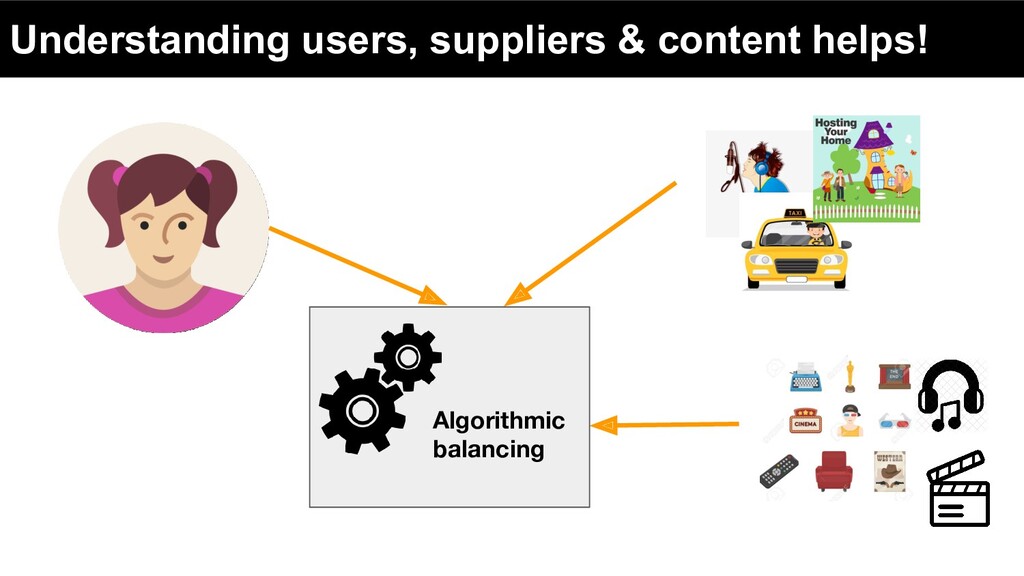
catered towards user-centric modeling - Multiple stakeholders in online marketplaces - Need to consider multiple objectives + ML models to optimize those objectives
online marketplaces - different industrial case-studies - UberEats, Postmates, Etsy, AirBnb, Music, P2P lending, Crowdfunding - Multiple, often conflicting objectives - +vely correlated, neutral, -vely correlated - ML methods needed to model the interplay between objectives - Important to carefully decide what a system optimizes for
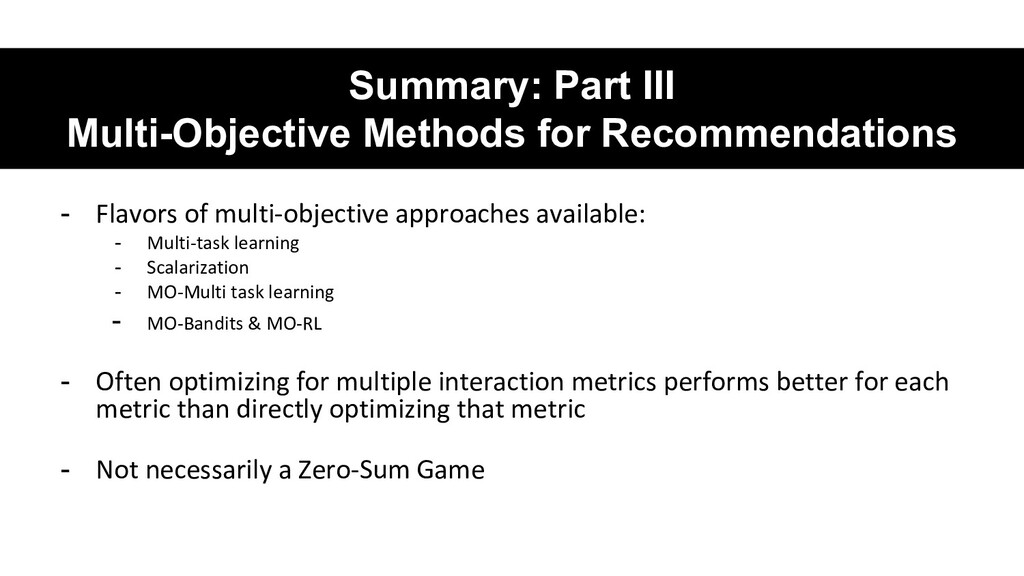
multi-objective approaches available: - Multi-task learning - Scalarization - MO-Multi task learning - MO-Bandits & MO-RL - Often optimizing for multiple interaction metrics performs better for each metric than directly optimizing that metric - Not necessarily a Zero-Sum Game
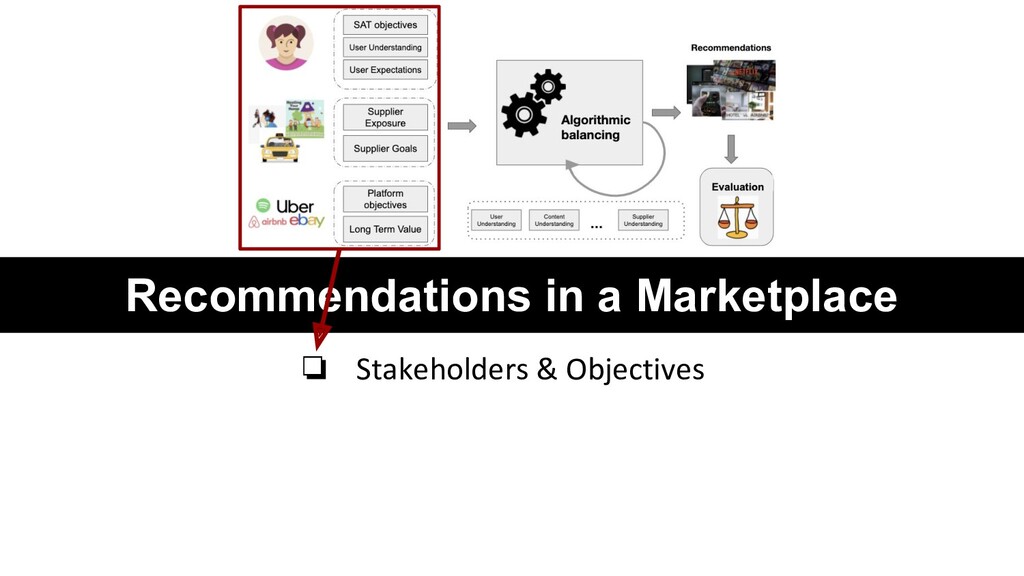
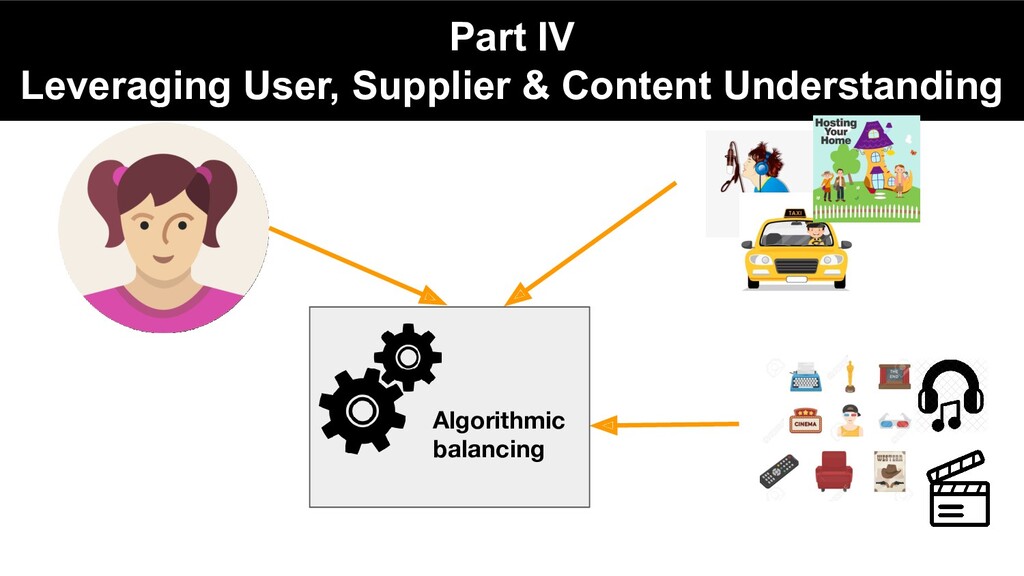
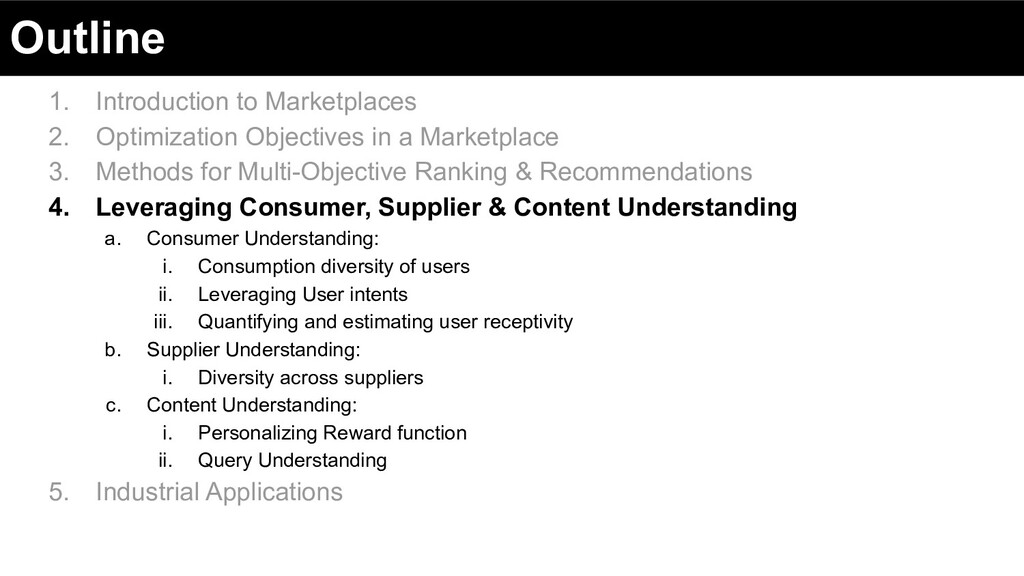
Marketplace 3. Methods for Multi-Objective Ranking & Recommendations 4. Leveraging Consumer, Supplier & Content Understanding a. Consumer Understanding: i. Consumption diversity of users ii. Leveraging User intents iii. Quantifying and estimating user receptivity b. Supplier Understanding: i. Diversity across suppliers c. Content Understanding: i. Personalizing Reward function ii. Query Understanding 5. Industrial Applications
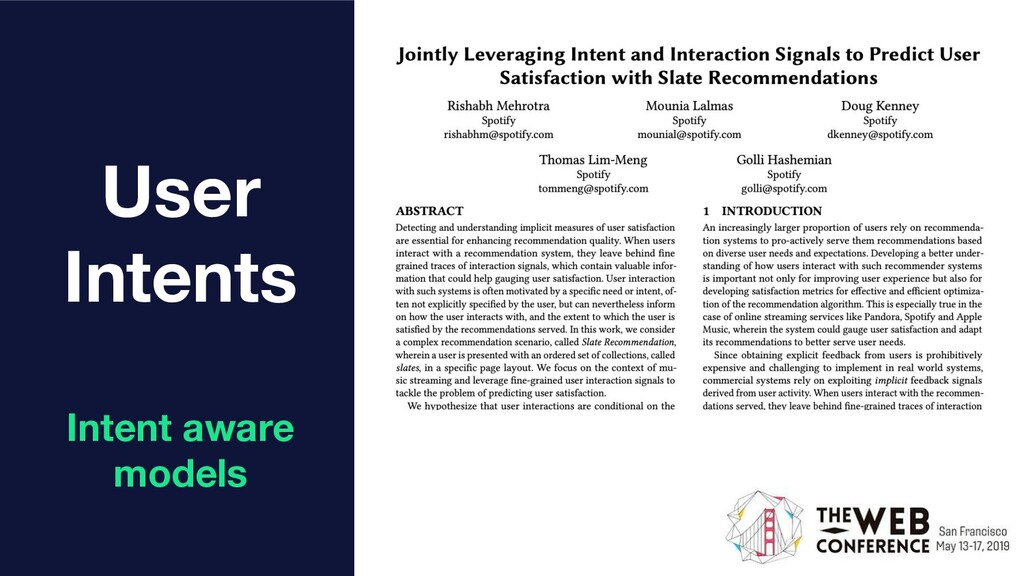
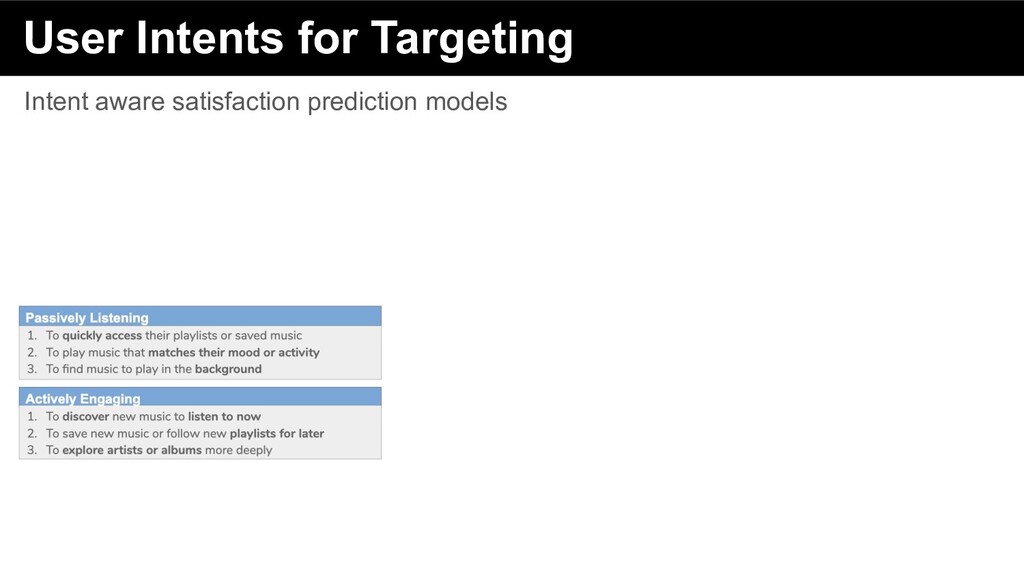
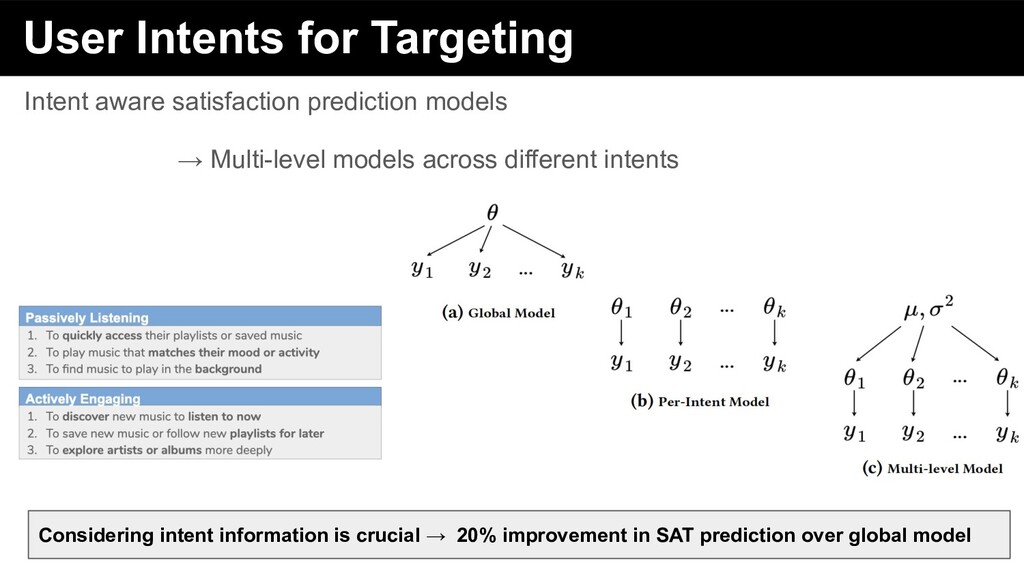
Multi-level models across different intents Considering intent information is crucial → 20% improvement in SAT prediction over global model User Intents for Targeting
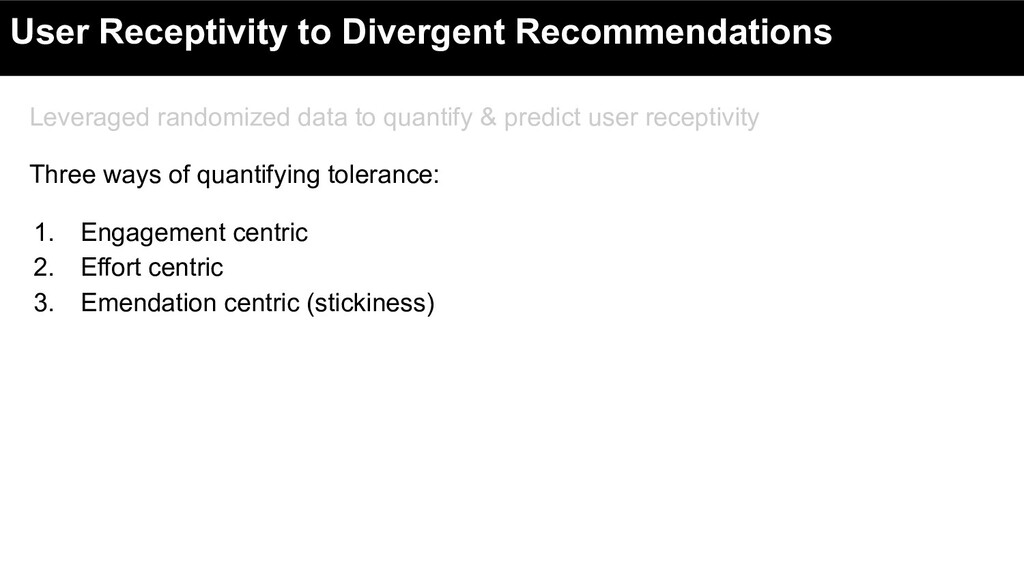
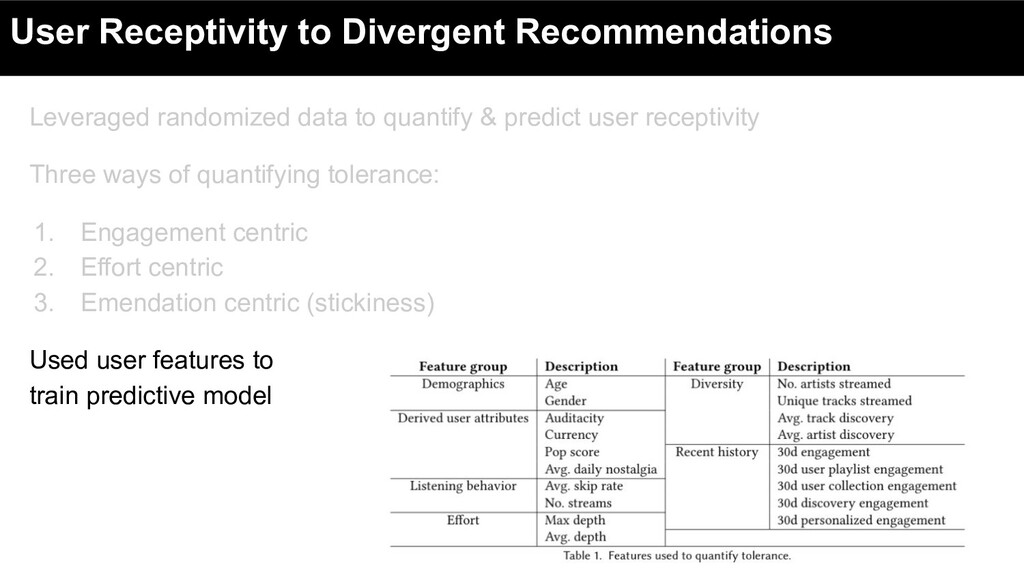
& predict user receptivity Three ways of quantifying tolerance: 1. Engagement centric 2. Effort centric 3. Emendation centric (stickiness) Used user features to train predictive model
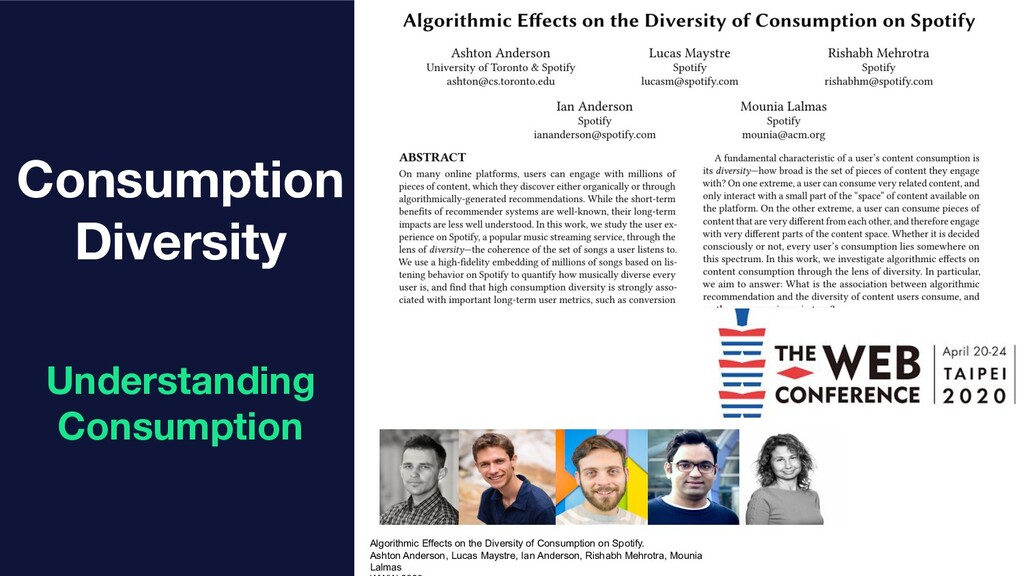
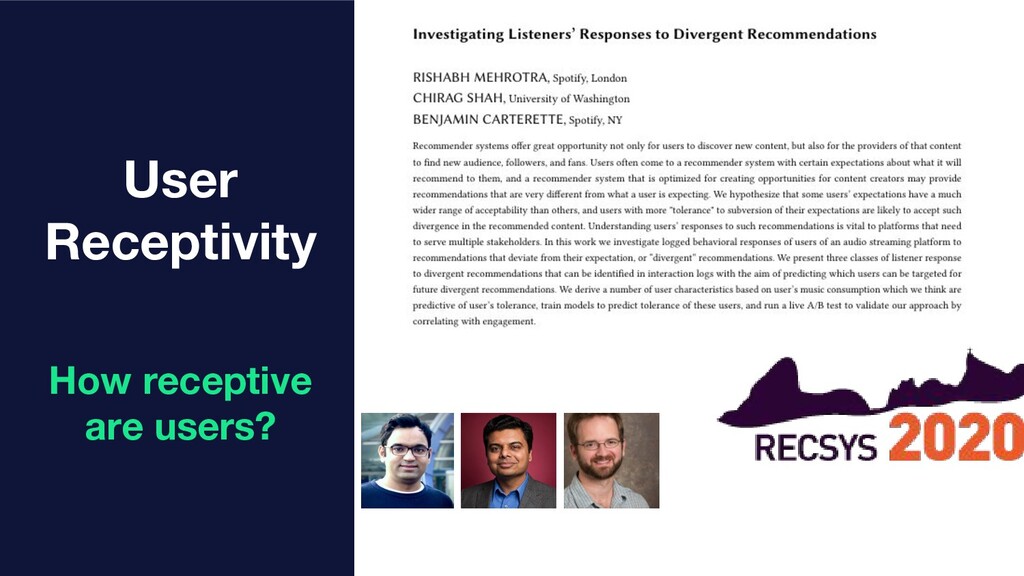
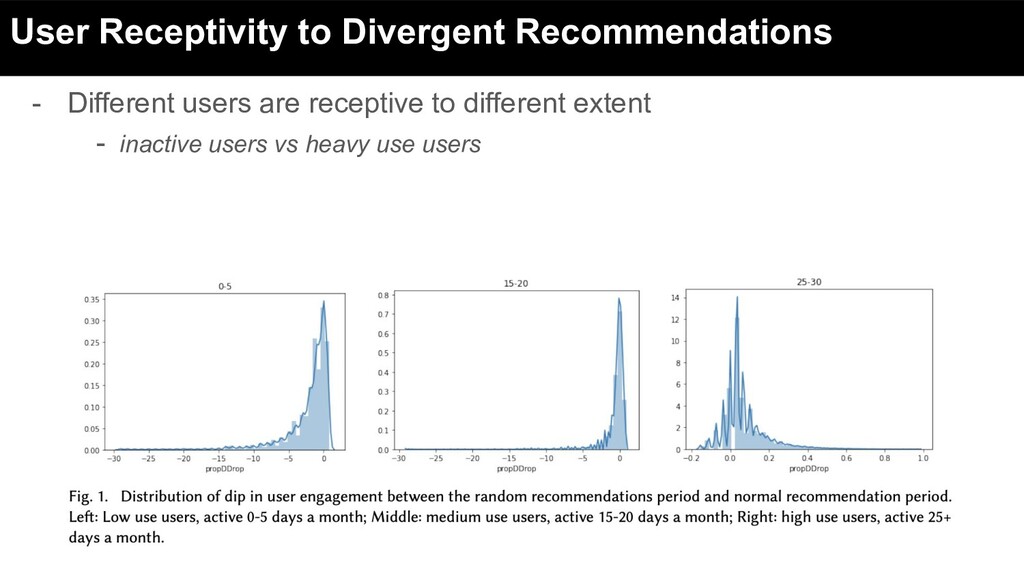
to different extent - inactive users vs heavy use users - Identified predictive features for user receptivity - Consumption diversity is NOT predictive of engagement receptivity User Receptivity to Divergent Recommendations
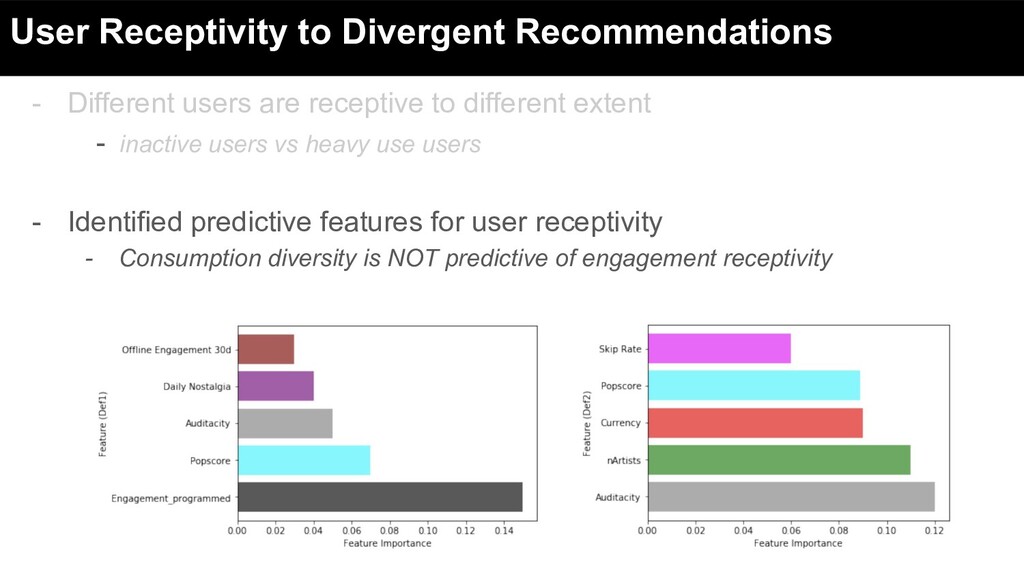
to different extent - inactive users vs heavy use users - Identified predictive features for user receptivity - Consumption diversity is NOT predictive of engagement receptivity - Get 70% accuracy in predicting Engagement tolerance - Receptivity predictive of future engagement User Receptivity to Divergent Recommendations
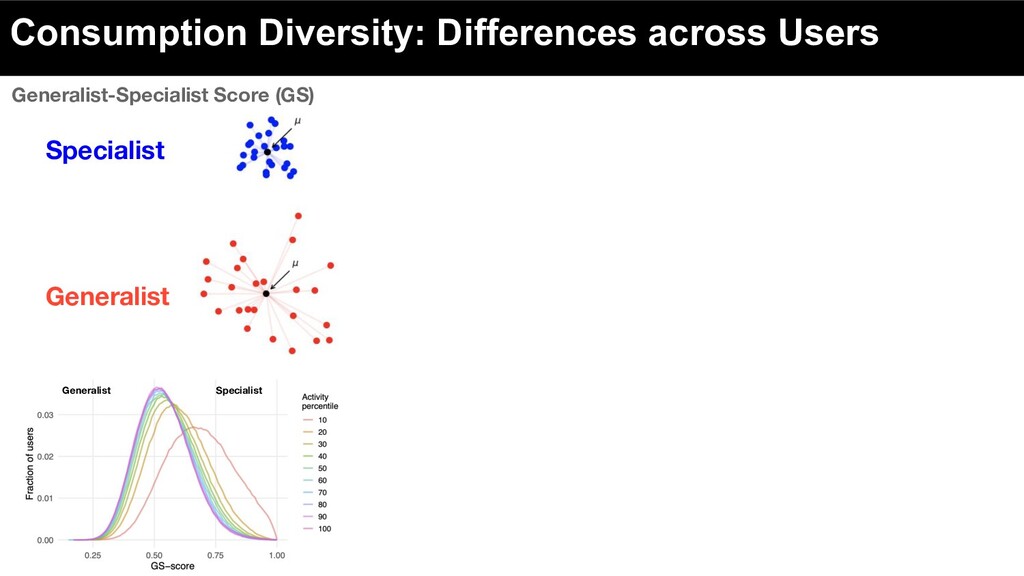
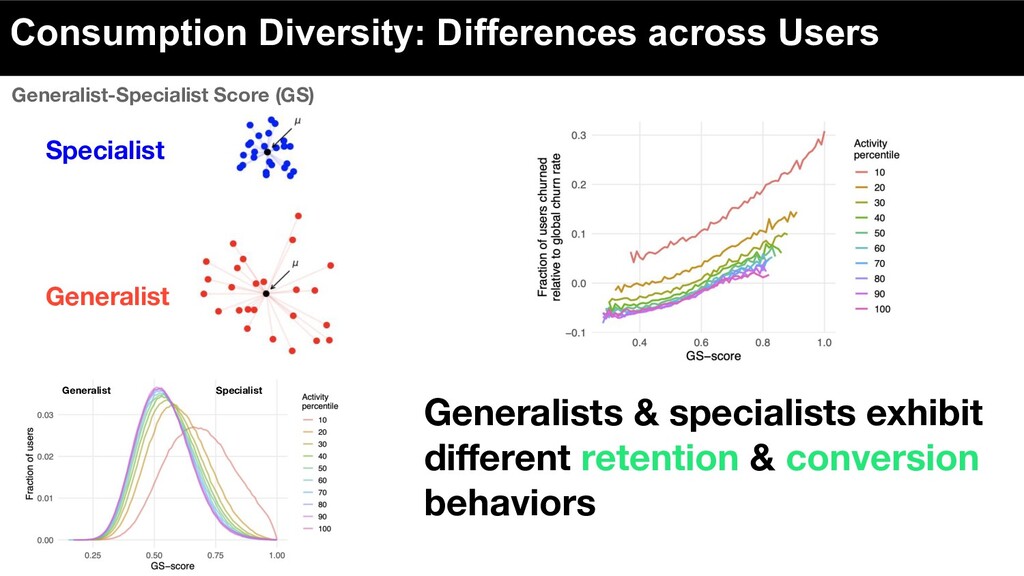
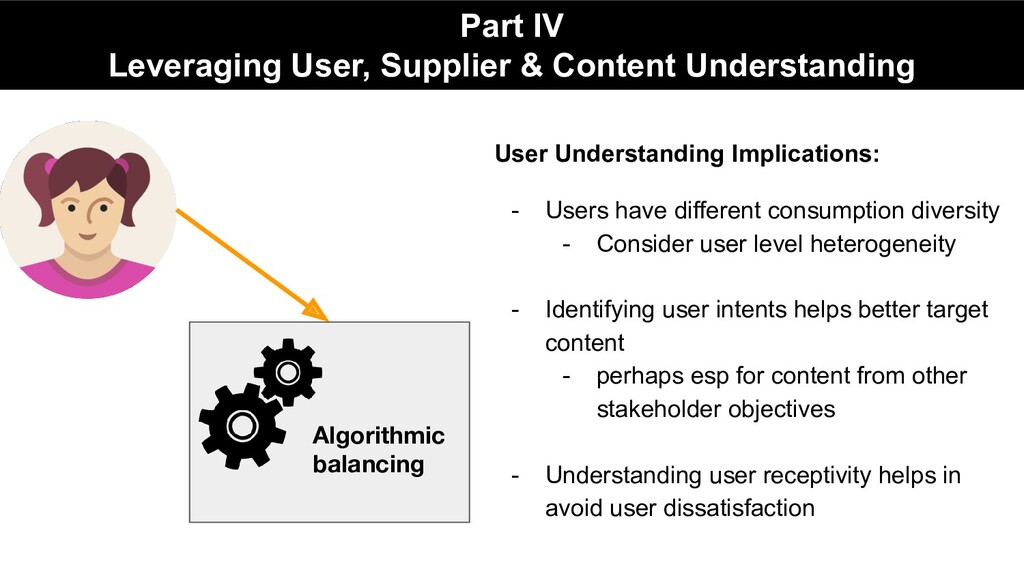
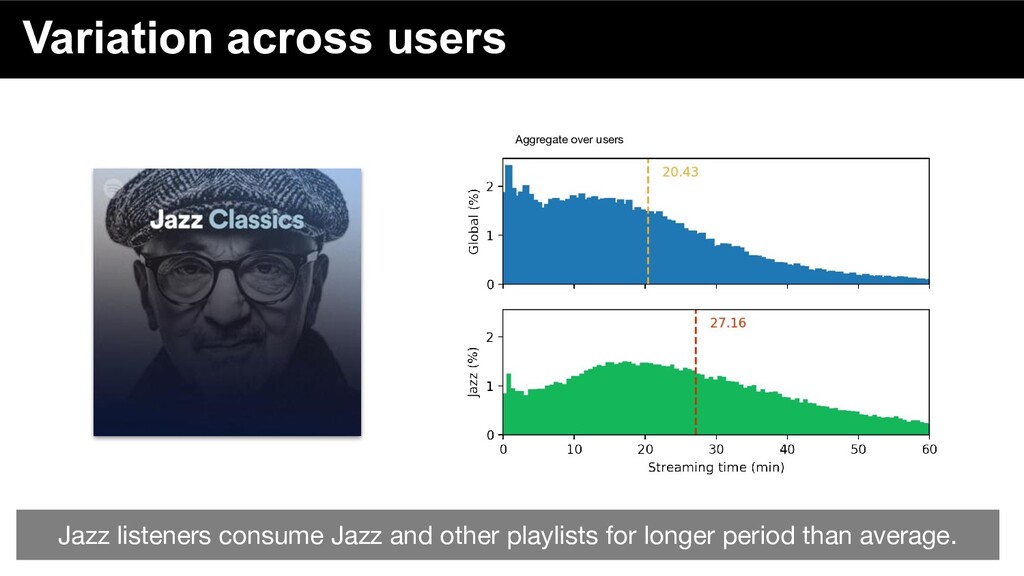
User Understanding Implications: - Users have different consumption diversity - Consider user level heterogeneity - Identifying user intents helps better target content - perhaps esp for content from other stakeholder objectives - Understanding user receptivity helps in avoid user dissatisfaction
Marketplace 3. Methods for Multi-Objective Ranking & Recommendations 4. Leveraging Consumer, Supplier & Content Understanding a. Consumer Understanding: i. Consumption diversity of users ii. Leveraging User intents iii. Quantifying and estimating user receptivity b. Supplier Understanding: i. Diversity across suppliers ii. Spillover effect across suppliers c. Content Understanding: i. Personalizing Reward function ii. Query Understanding 5. Industrial Applications
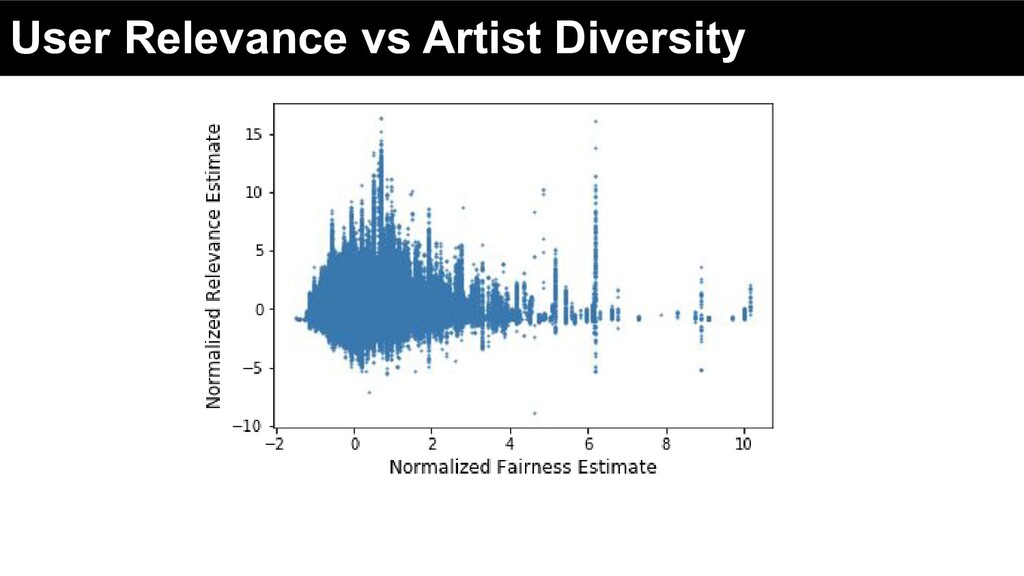
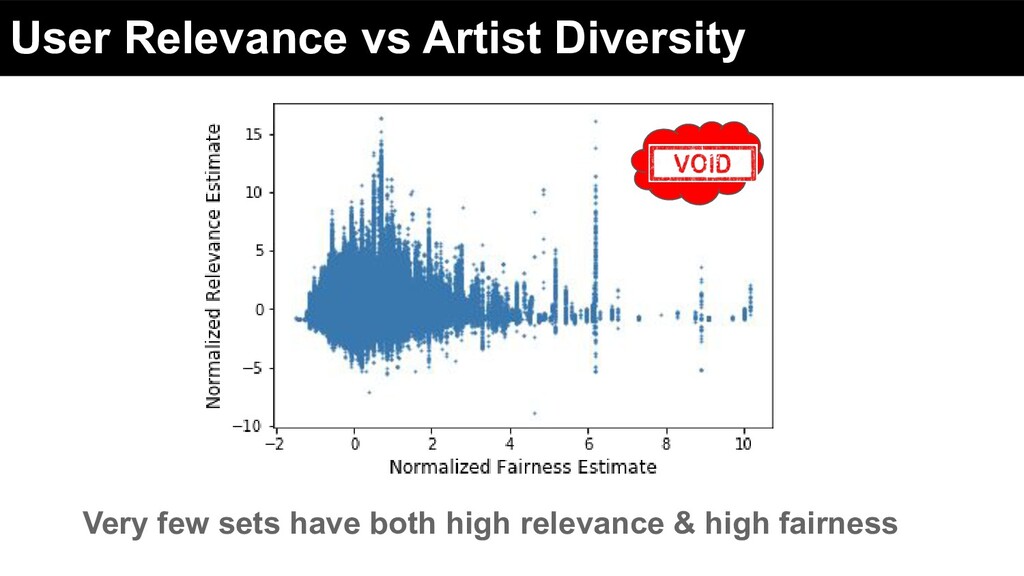
Fair Marketplace: Counterfactual Evaluation of the trade-off between Relevance, Fairness & Satisfaction in Recommendation Systems. Rishabh Mehrotra, James McInerney, Hugues Bouchard, Mounia Lalmas, Fernando Diaz CIKM 2018
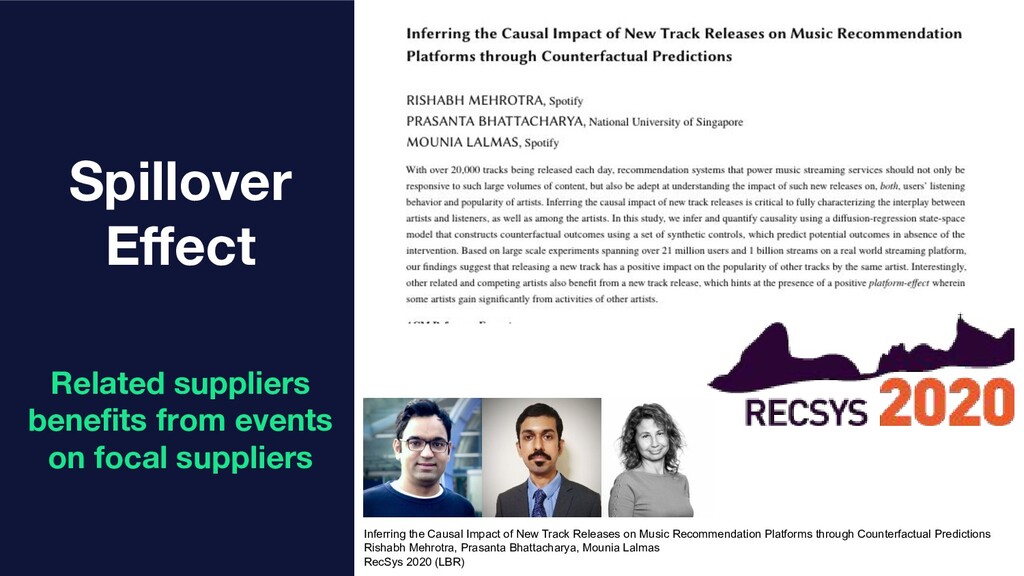
Inferring the Causal Impact of New Track Releases on Music Recommendation Platforms through Counterfactual Predictions Rishabh Mehrotra, Prasanta Bhattacharya, Mounia Lalmas RecSys 2020 (LBR)
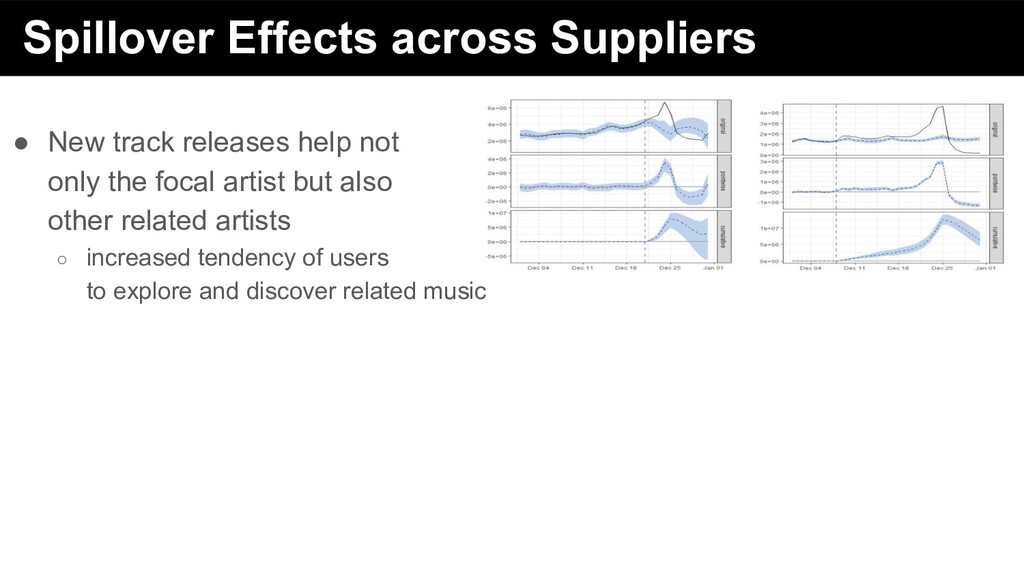
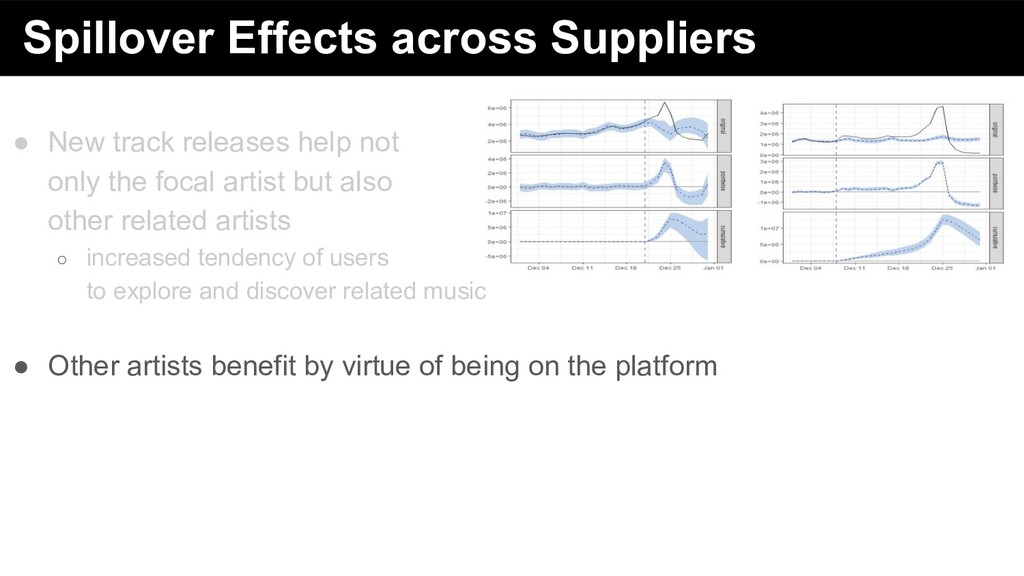
track releases help not only the focal artist but also other related artists ◦ increased tendency of users to explore and discover related music • Other artists benefit by virtue of being on the platform
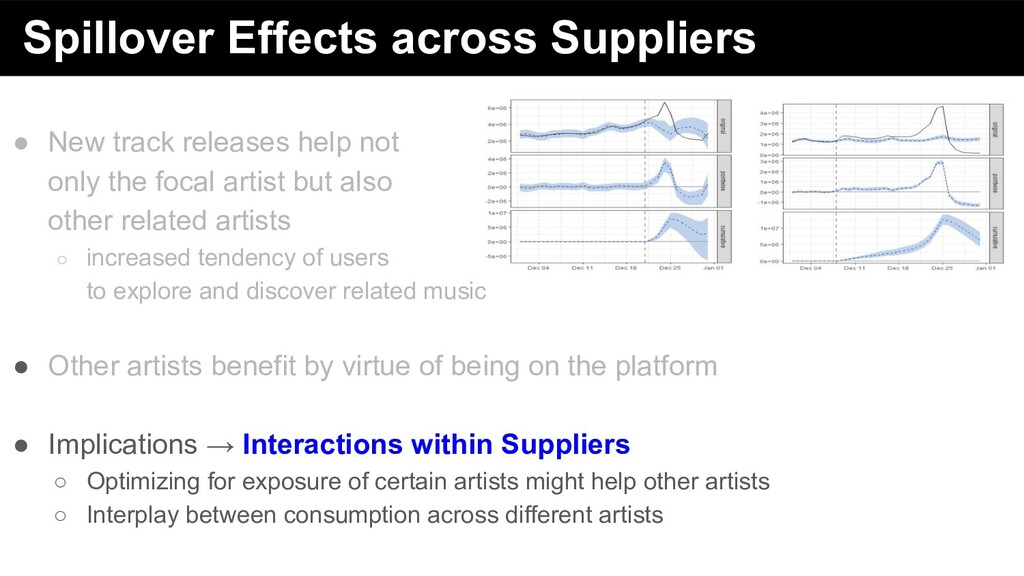
track releases help not only the focal artist but also other related artists ◦ increased tendency of users to explore and discover related music • Other artists benefit by virtue of being on the platform • Implications → Interactions within Suppliers ◦ Optimizing for exposure of certain artists might help other artists ◦ Interplay between consumption across different artists
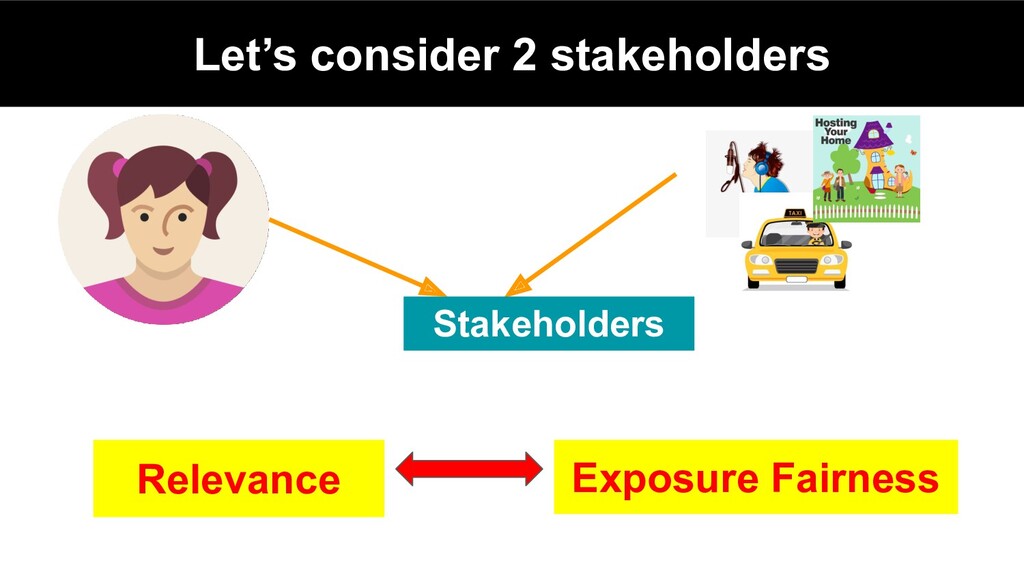
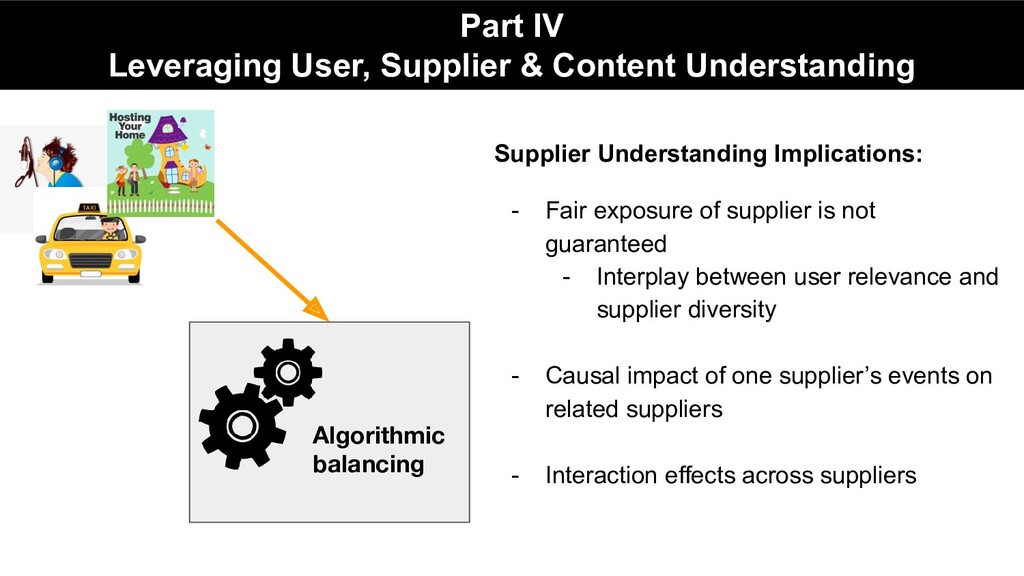
Supplier Understanding Implications: - Fair exposure of supplier is not guaranteed - Interplay between user relevance and supplier diversity - Causal impact of one supplier’s events on related suppliers - Interaction effects across suppliers
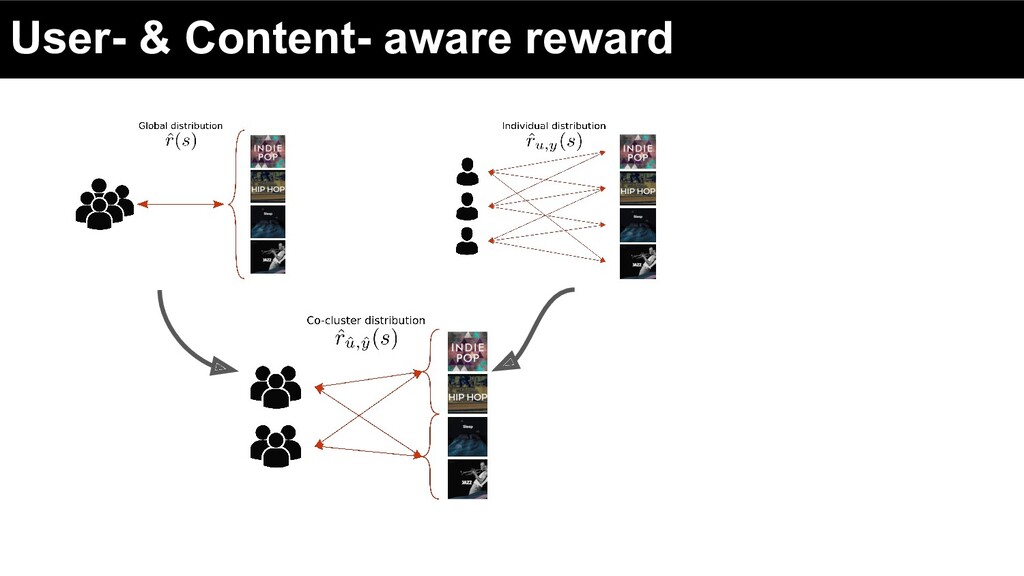
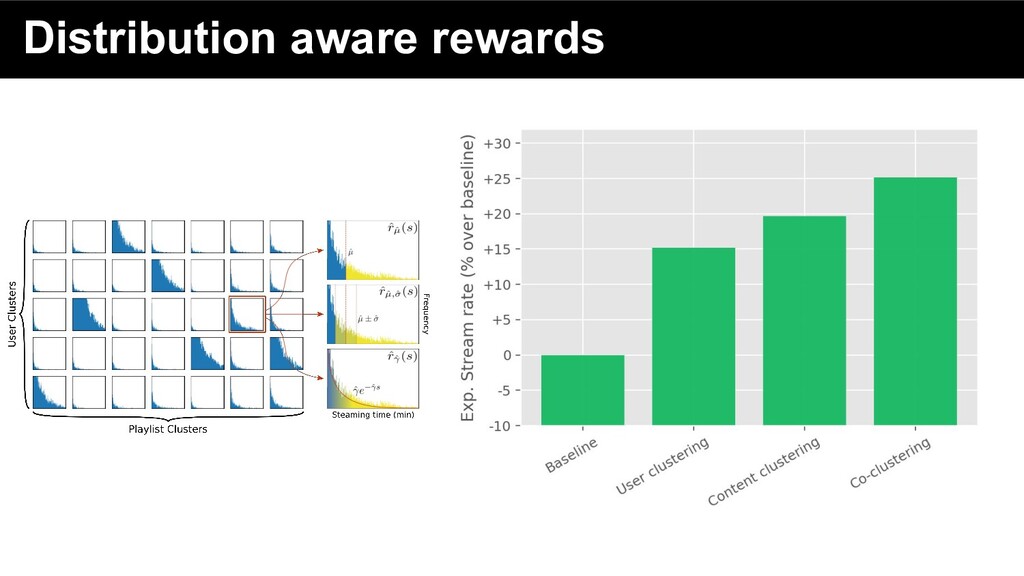
Marketplace 3. Methods for Multi-Objective Ranking & Recommendations 4. Leveraging Consumer, Supplier & Content Understanding a. Consumer Understanding: i. Consumption diversity of users ii. Leveraging User intents iii. Quantifying and estimating user receptivity b. Supplier Understanding: i. Diversity across suppliers ii. Spillover effect across suppliers c. Content Understanding: i. User- & Content- aware Reward function ii. Query Understanding 5. Industrial Applications
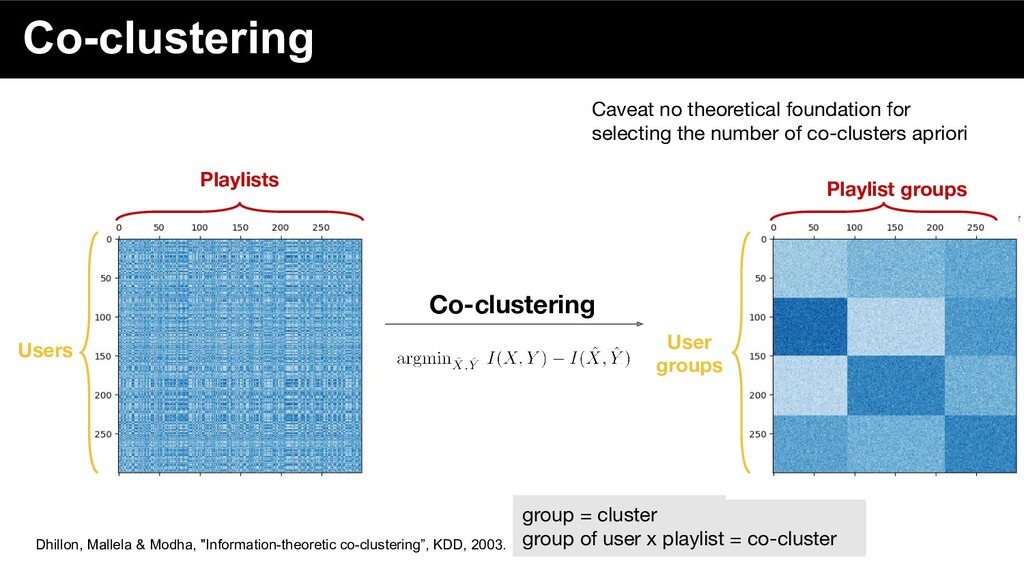
no theoretical foundation for selecting the number of co-clusters apriori group = cluster group of user x playlist = co-cluster Users Playlists User groups Playlist groups Co-clustering
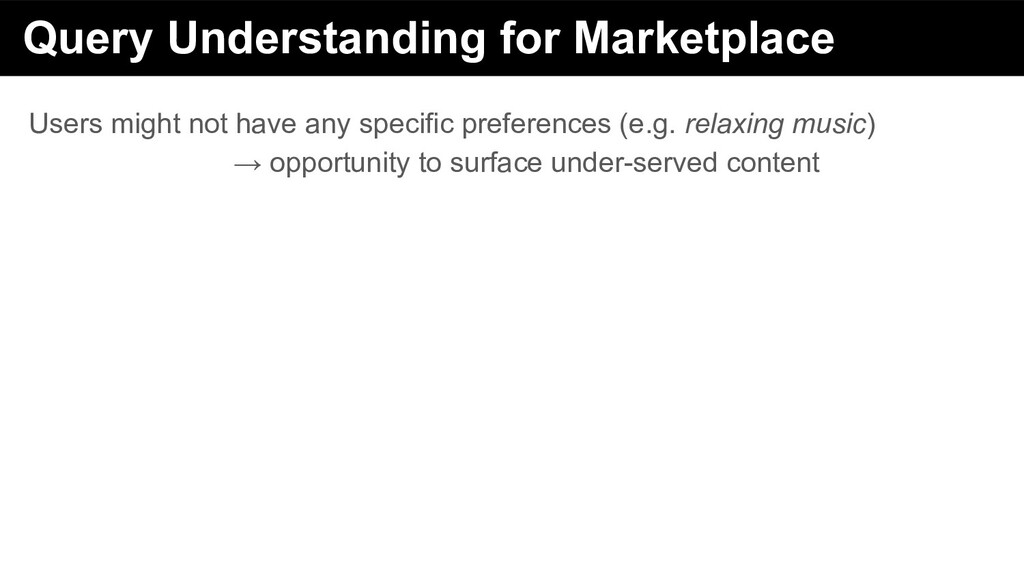
not have any specific preferences (e.g. relaxing music) → opportunity to surface under-served content Non-focused queries: broad intent queries for which uses are more open to non-specific recommendations
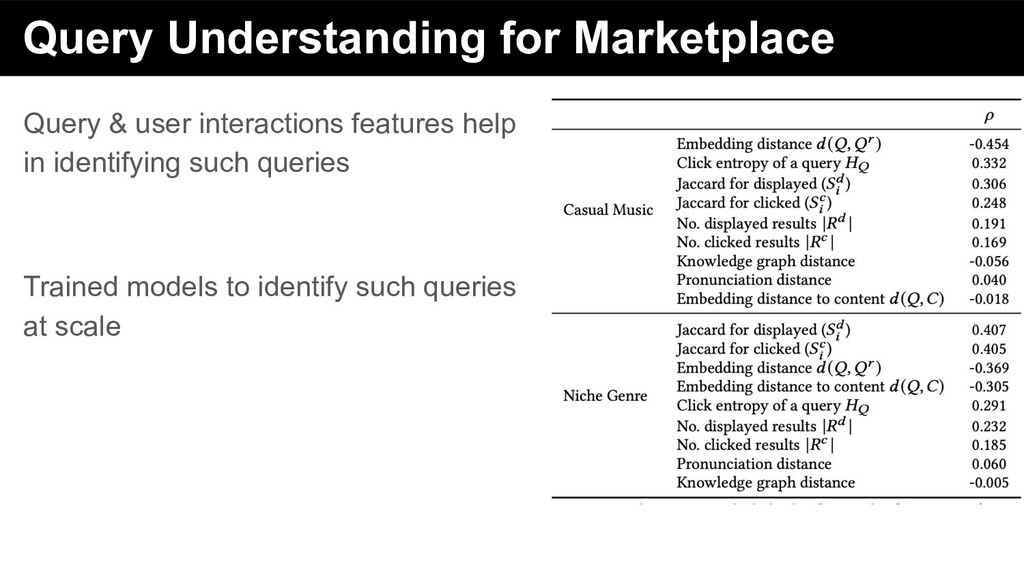
not have any specific preferences (e.g. relaxing music) → opportunity to surface under-served content Non-focused queries: broad intent queries for which uses are more open to non-specific recommendations Target content groups: Casual Music and Niche Genre
Identify non-focused queries Step 2: Surface recommendations which help other stakeholder objectives, without hurting user SAT Step 3: Understand trade-offs between Gain in exposure vs Loss in SAT
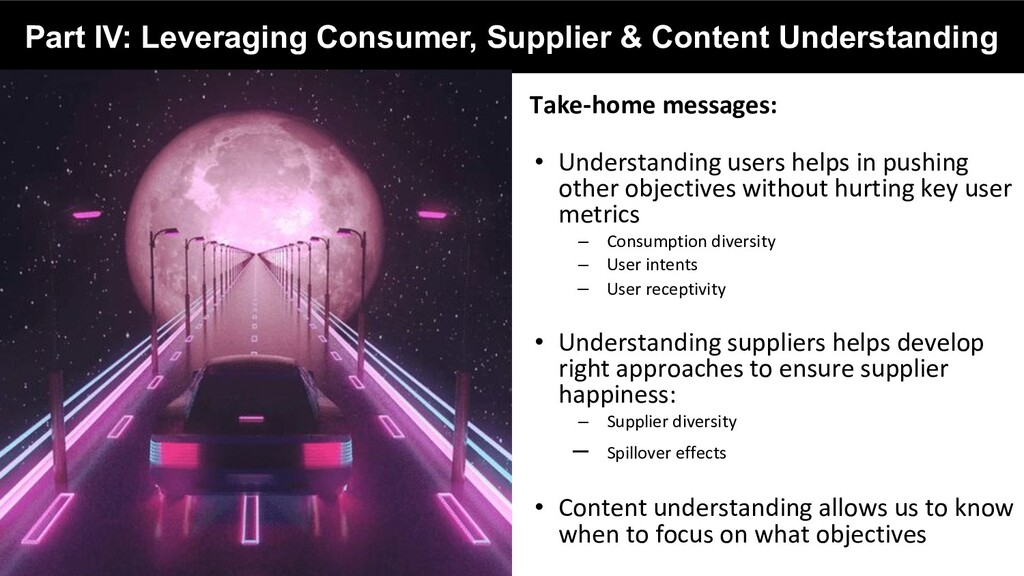
is a task & why are they important? 2. Characterizing Tasks across interfaces: 1. desktop search 2. digital assistants 3. voice-only assistants 3. Understanding User Tasks in Web Search a. Extracting Query Intents b. Queries → Sessions → Tasks c. Search Task Understanding a. Task extraction b. Subtask extraction c. Hierarchies of tasks & subtasks d. Evaluating task extraction algorithms 5. Recommendation Systems a. Case study: Pinterest b. Case study: Spotify Take-home messages: • Understanding users helps in pushing other objectives without hurting key user metrics – Consumption diversity – User intents – User receptivity • Understanding suppliers helps develop right approaches to ensure supplier happiness: – Supplier diversity – Spillover effects • Content understanding allows us to know when to focus on what objectives


 erishabh
 dip_tech
 leveragestech
 hironobuiga
 yutakaosada
 toru_kubota
 dtunkelang
 oracle4engineer
 ichiki1023
 aoto
aoto
 siromi
 ochtum
 chikuwait
 bkeepers
 baasie
 keathley
 pwiseman
 brettharned
 lcolladotor
 kevinliebholz
 konakalab
 frankvandijk
 sonatard
 holman