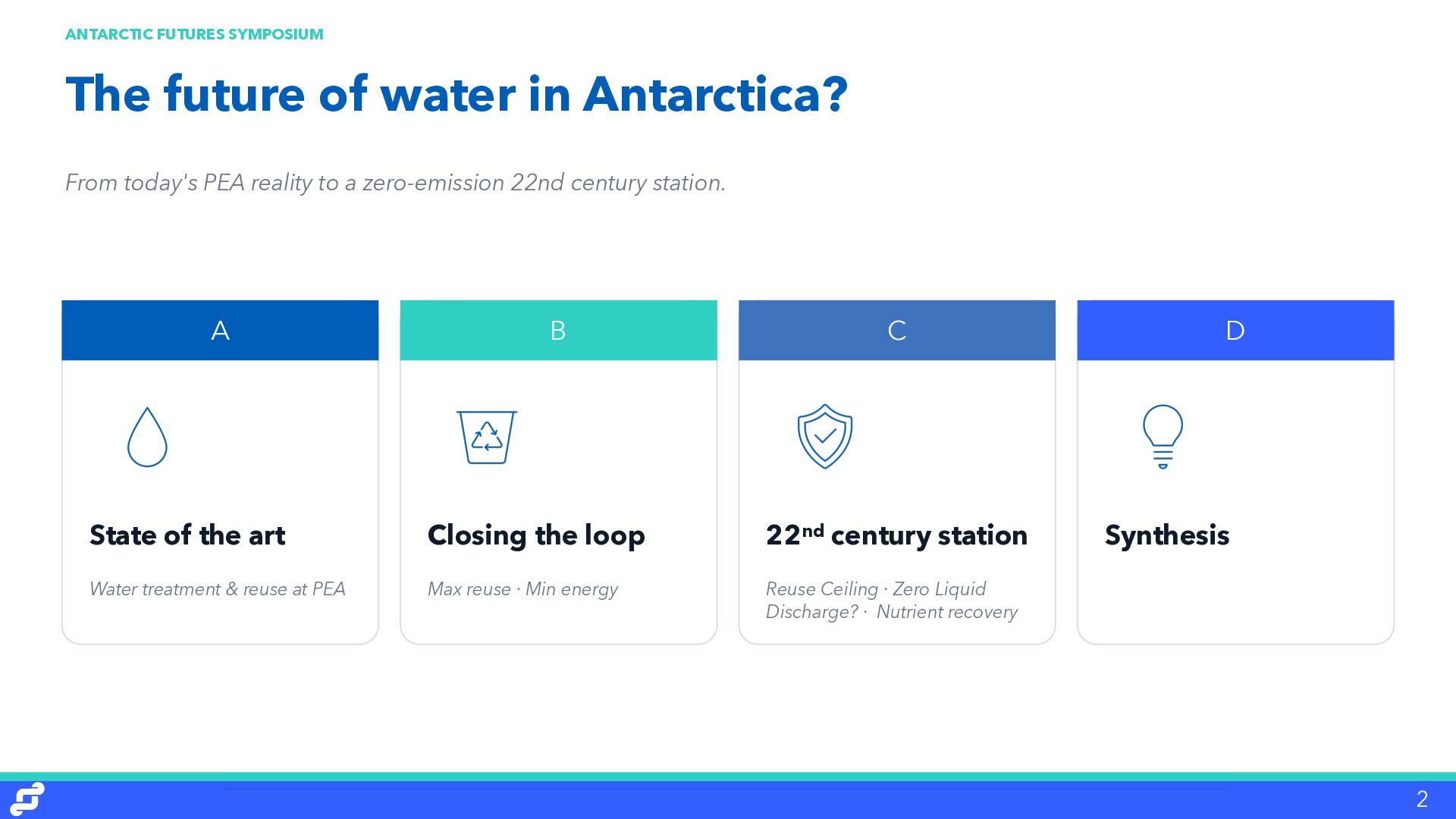
From today's PEA reality to a zero-emission 22nd century station. A State of the art Water treatment & reuse at PEA B Closing the loop Max reuse · Min energy C 22nd century station D Synthesis Reuse Ceiling · Zero Liquid Discharge? · Nutrient recovery
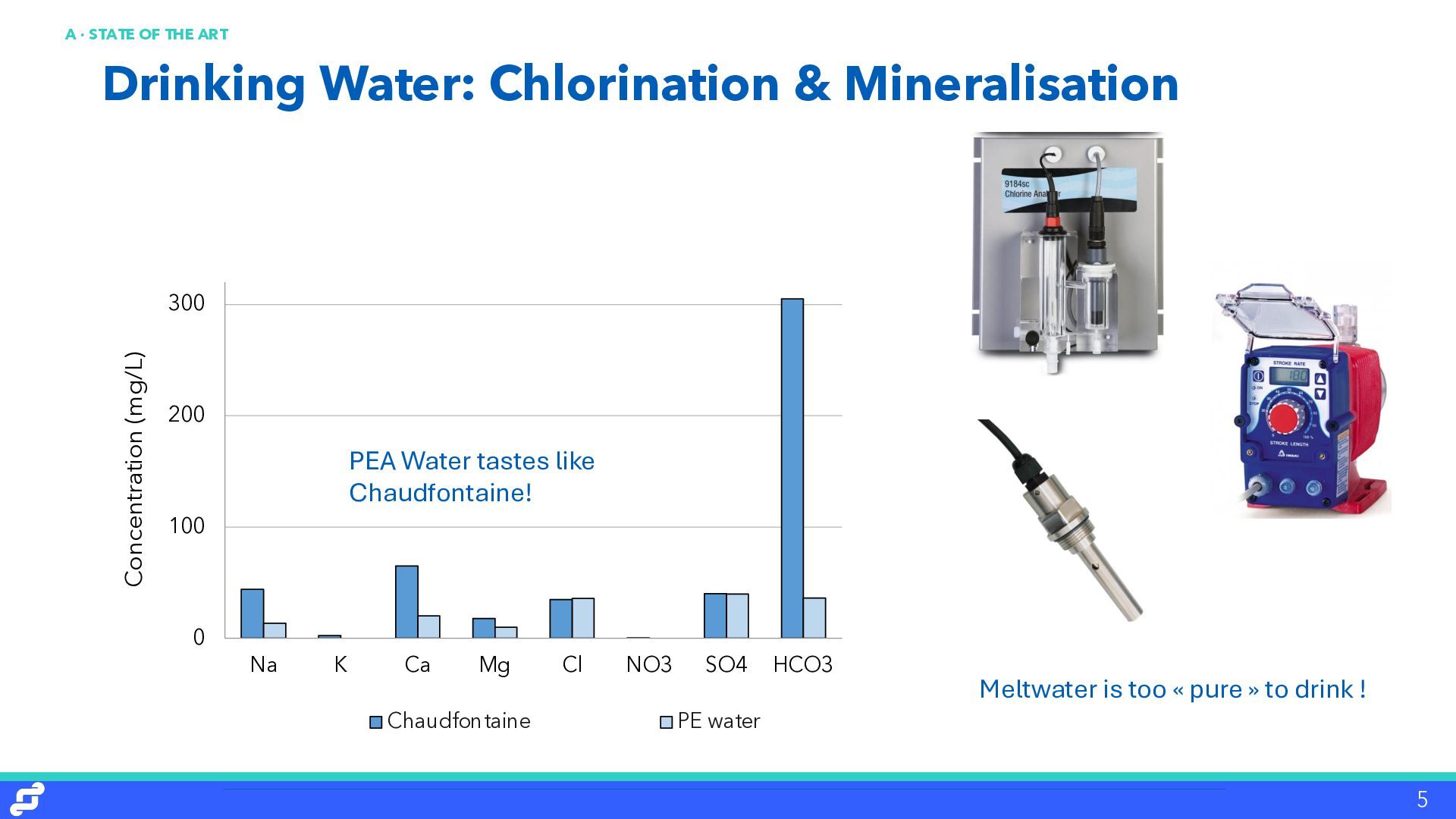
Na K Ca Mg Cl NO3 SO4 HCO3 Concentration (mg/L) Chaudfontaine PE water PEA Water tastes like Chaudfontaine! Meltwater is too « pure » to drink ! A · STATE OF THE ART
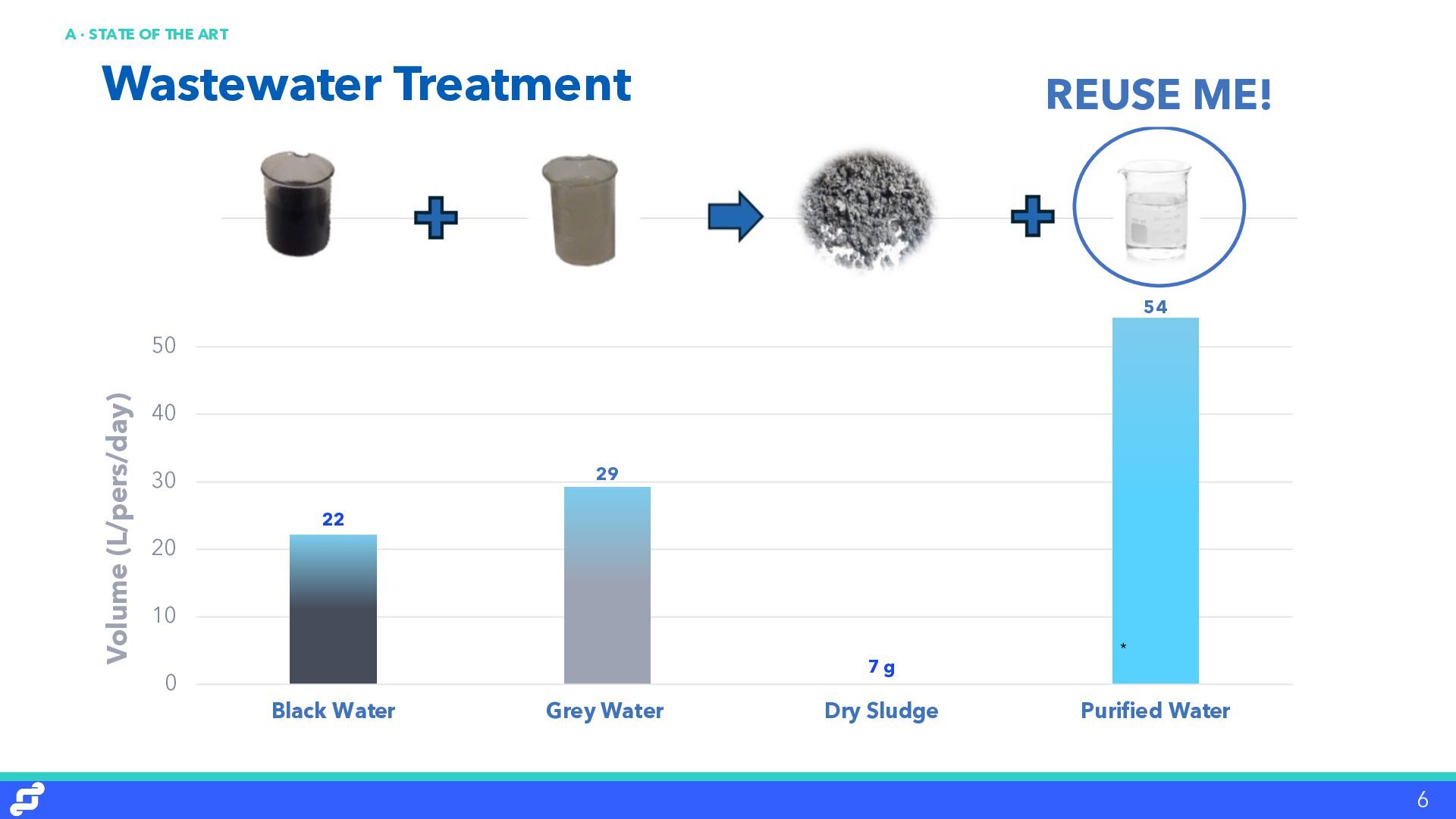
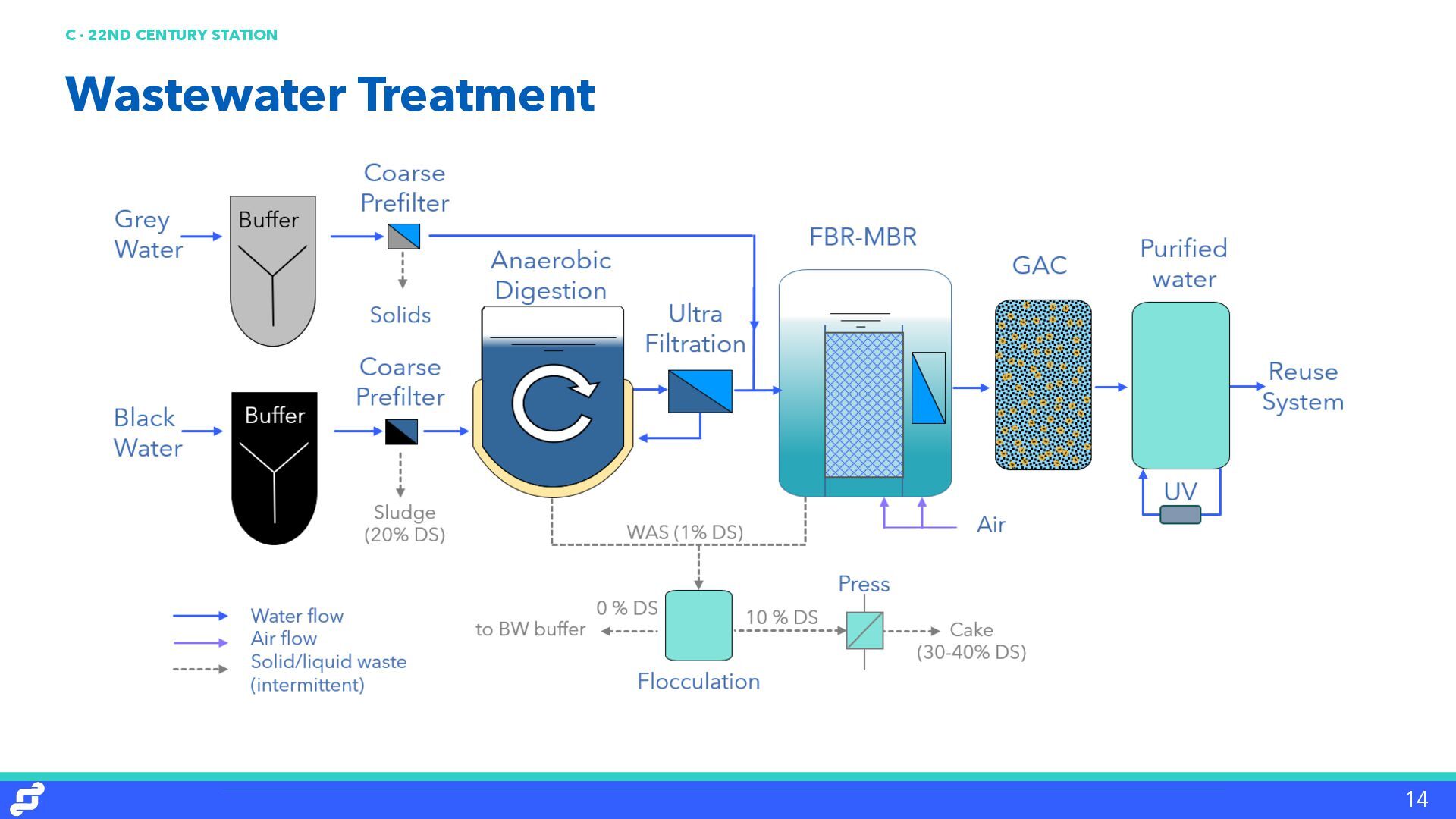
80-95% removal 22 29 7 g 54 0 10 20 30 40 50 Black Water Grey Water Dry Sludge Purified Water Volume (L/pers/day) * Wastewater Treatment REUSE ME! A · STATE OF THE ART
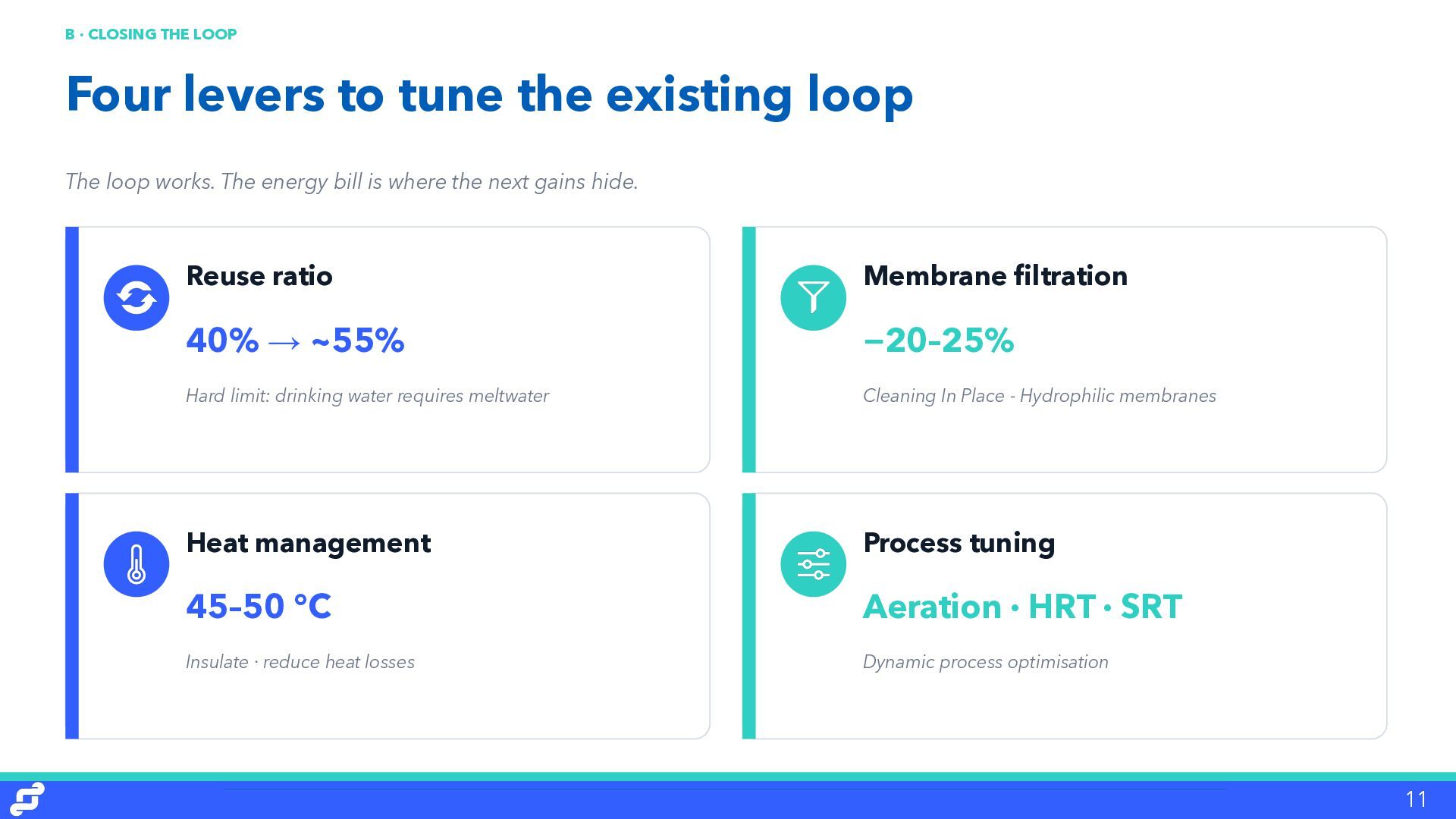
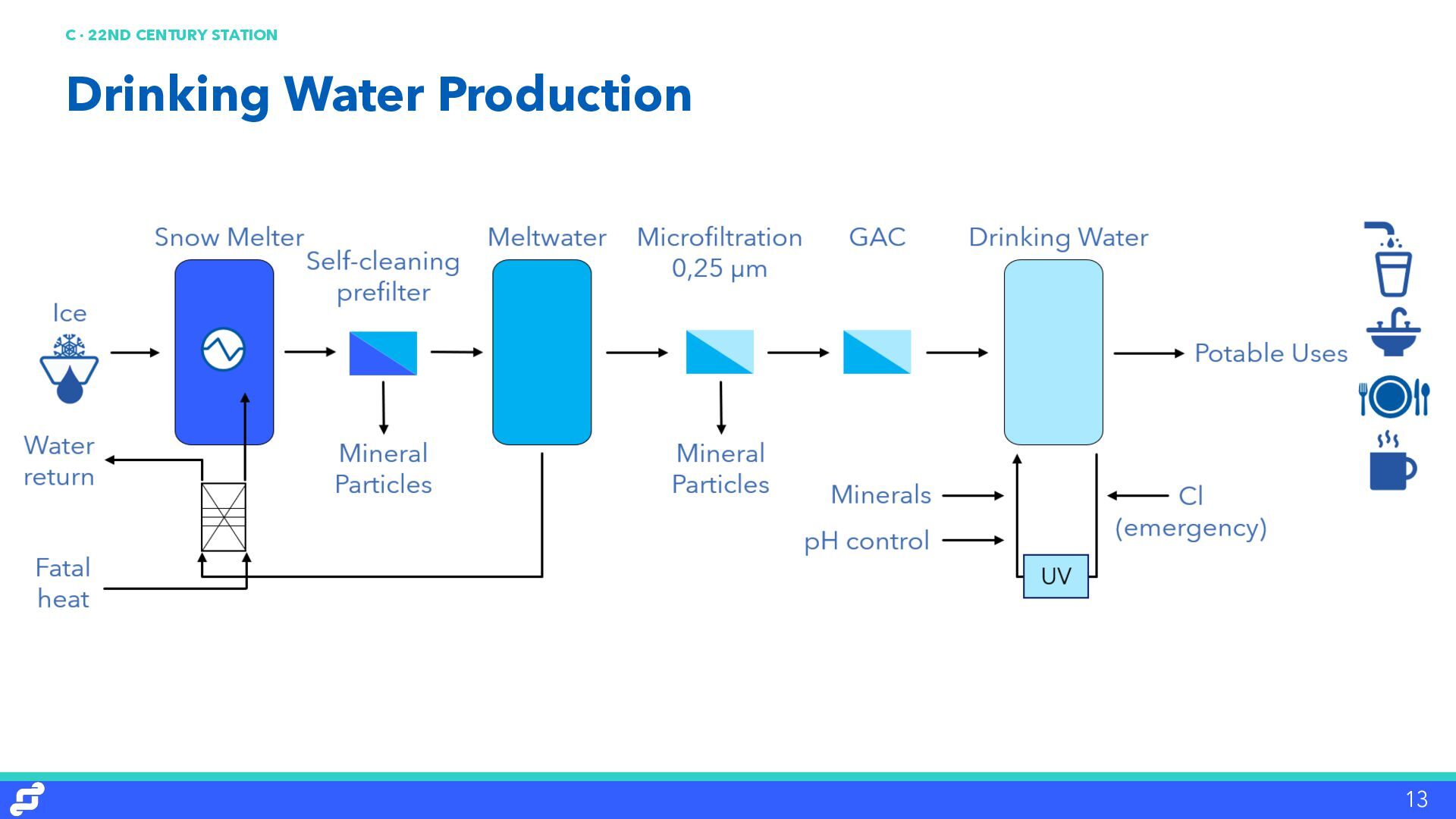
the existing loop The loop works. The energy bill is where the next gains hide. Reuse ratio 40% → ~55% Hard limit: drinking water requires meltwater Membrane filtration −20–25% Cleaning In Place - Hydrophilic membranes Heat management 45–50 °C Insulate · reduce heat losses Process tuning Aeration · HRT · SRT Dynamic process optimisation
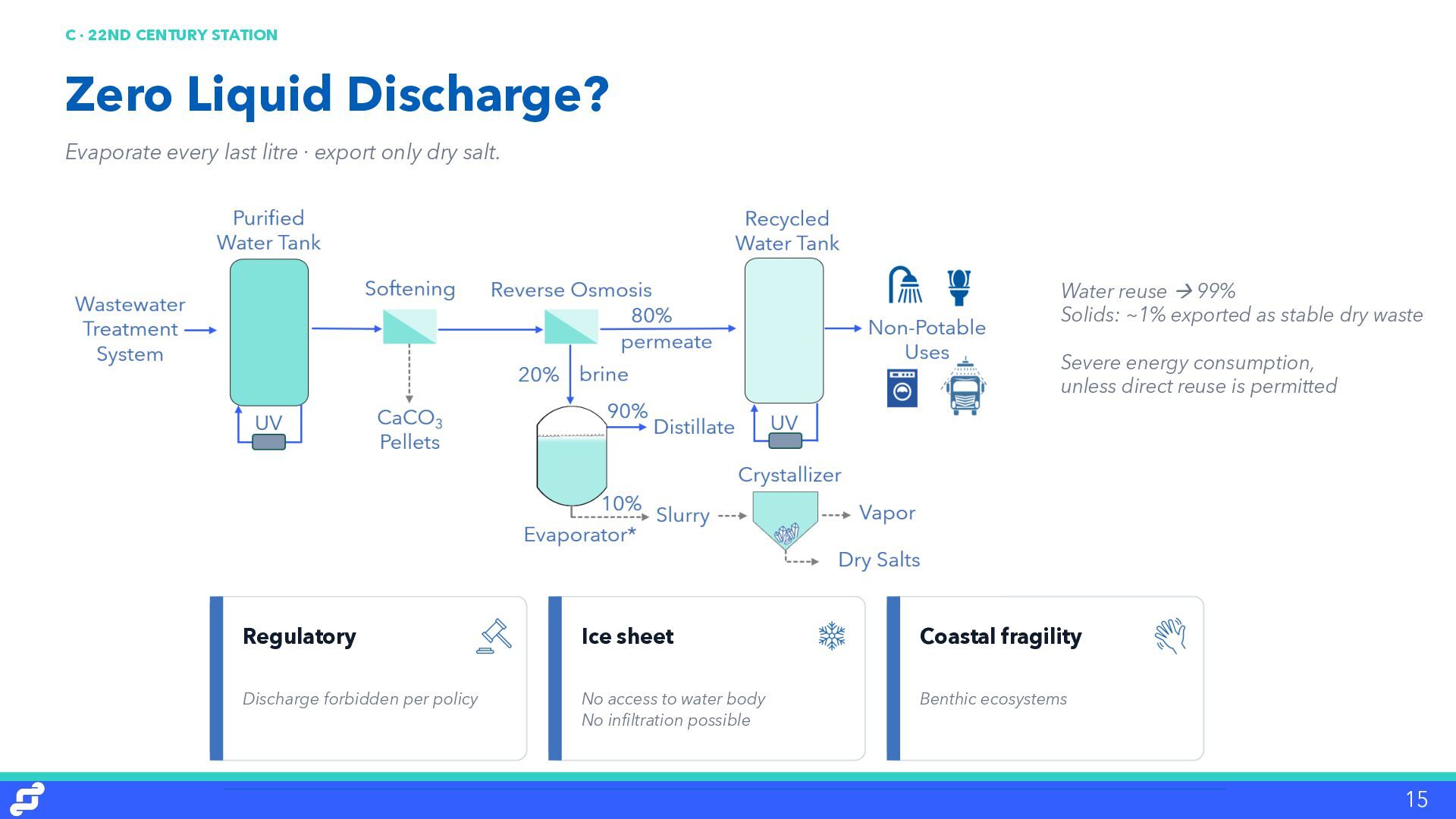
only dry salt. FB-MBR UF RO >80% recovery Evaporator Thermal (MVR) Salt out Dry salt Exported off-site Water reuse à 99% Solids: ~1% exported as stable dry waste Severe energy consumption, unless direct reuse is permitted Regulatory Discharge forbidden per policy Ice sheet No access to water body No infiltration possible Coastal fragility Benthic ecosystems C · 22ND CENTURY STATION
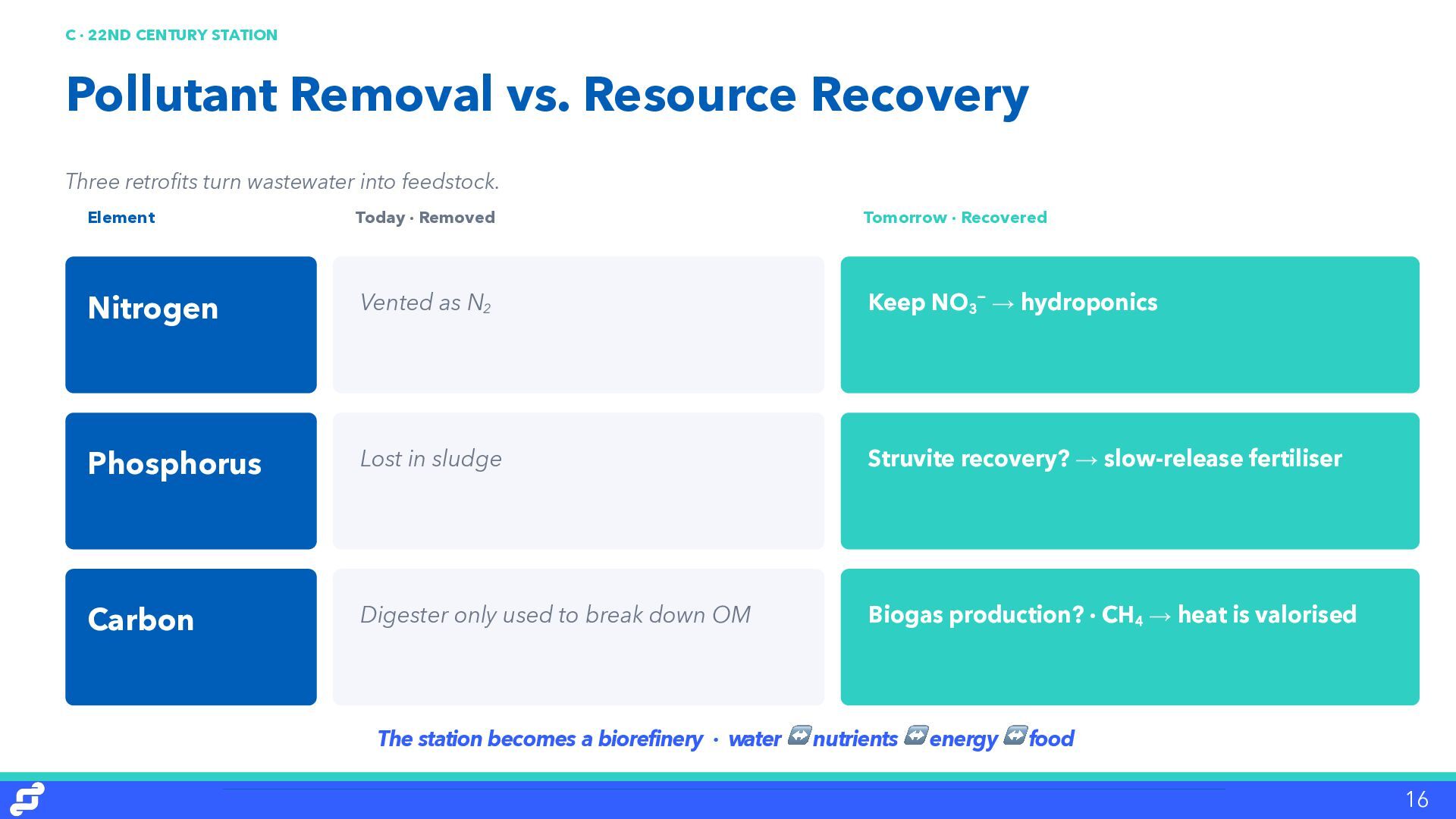
into feedstock. Element Today · Removed Tomorrow · Recovered Nitrogen Vented as N₂ Keep NO₃⁻ → hydroponics Phosphorus Lost in sludge Struvite recovery? → slow-release fertiliser Carbon Digester only used to break down OM Biogas production? · CH₄ → heat is valorised The station becomes a biorefinery · water ↔ nutrients ↔ energy ↔ food C · 22ND CENTURY STATION
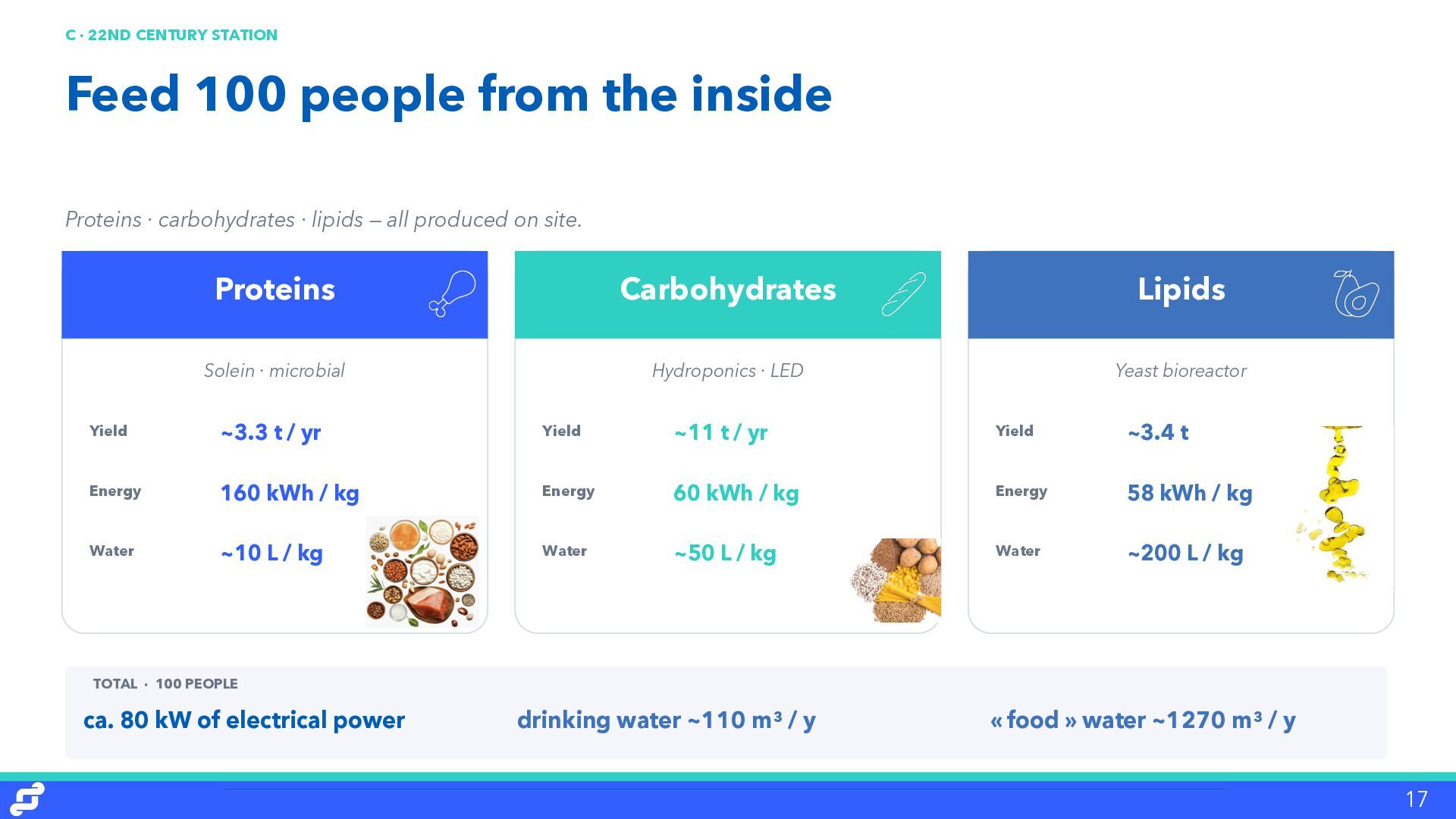
· lipids — all produced on site. Proteins Solein · microbial Yield ~3.3 t / yr Energy 160 kWh / kg Water ~10 L / kg Carbohydrates Hydroponics · LED Yield ~11 t / yr Energy 60 kWh / kg Water ~50 L / kg Lipids Yeast bioreactor Yield ~3.4 t Energy 58 kWh / kg Water ~200 L / kg TOTAL · 100 PEOPLE ca. 80 kW of electrical power drinking water ~110 m³ / y C · 22ND CENTURY STATION « food » water ~1270 m³ / y
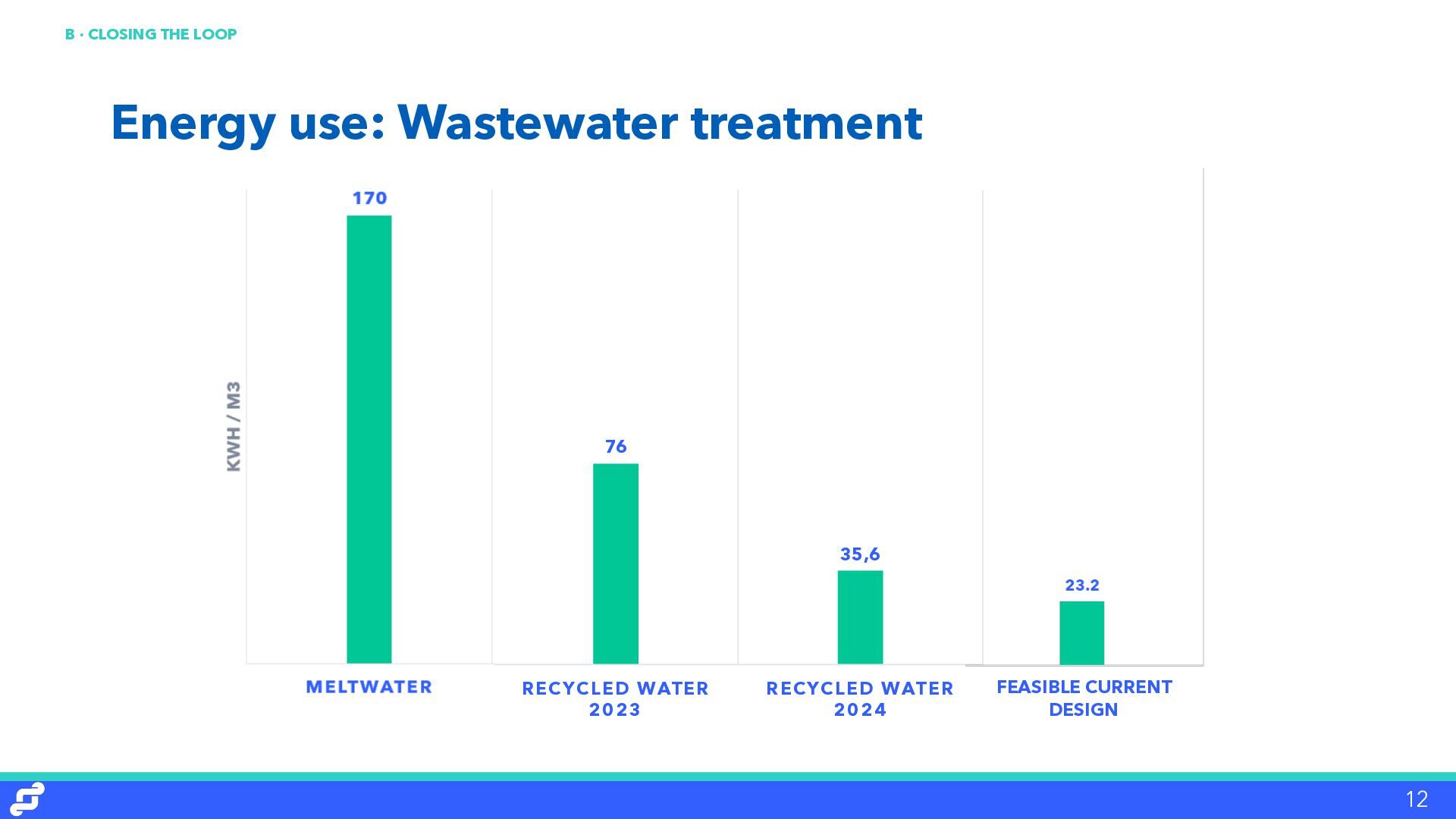
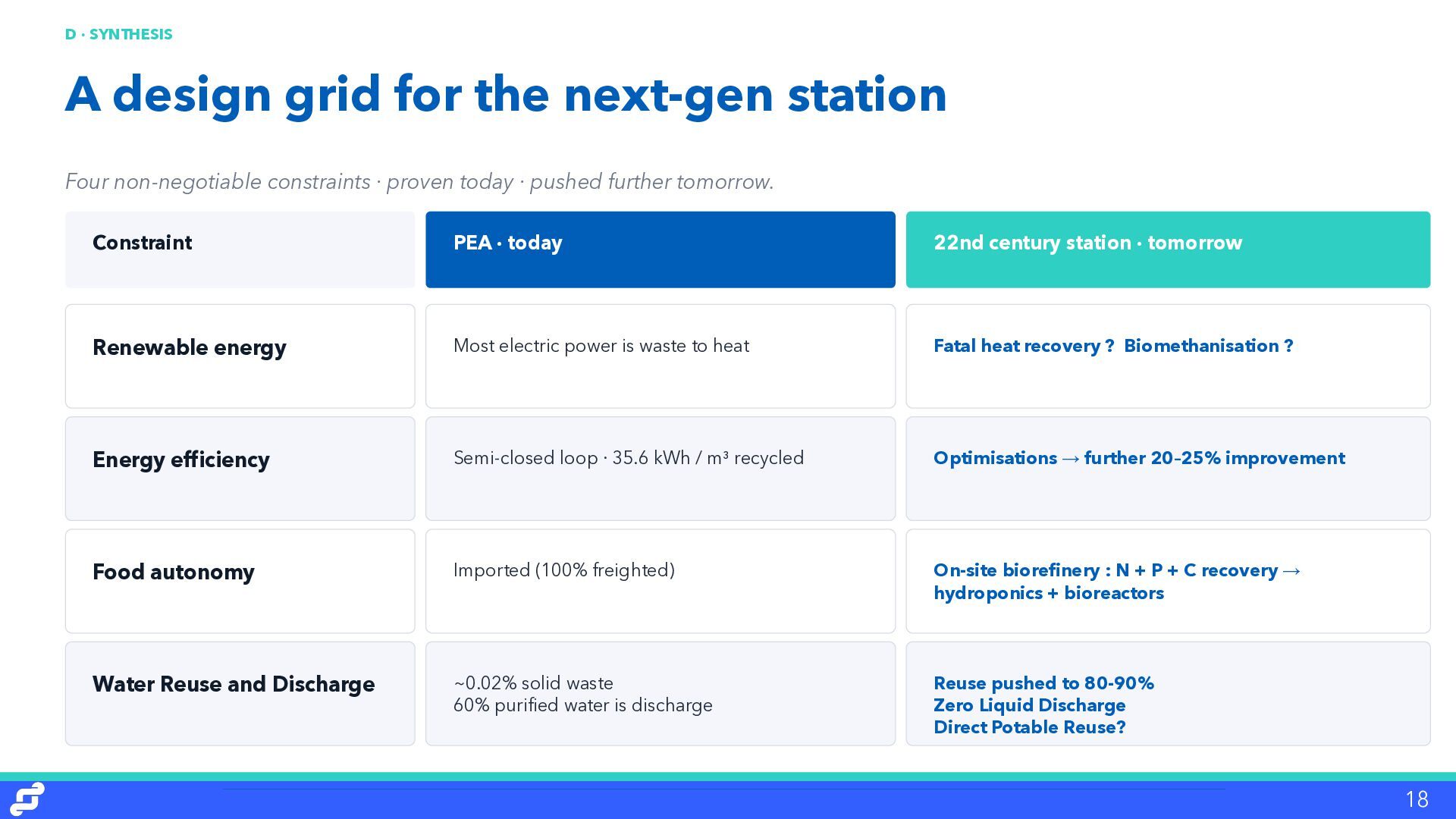
station Four non-negotiable constraints · proven today · pushed further tomorrow. Constraint PEA · today 22nd century station · tomorrow Renewable energy Most electric power is waste to heat Fatal heat recovery ? Biomethanisation ? Energy efficiency Semi-closed loop · 35.6 kWh / m³ recycled Optimisations → further 20–25% improvement Food autonomy Imported (100% freighted) On-site biorefinery : N + P + C recovery → hydroponics + bioreactors Water Reuse and Discharge ~0.02% solid waste 60% purified water is discharge Reuse pushed to 80-90% Zero Liquid Discharge Direct Potable Reuse?

 Your Podcast. Everywhere. Effortlessly.


 ipfevents
 hashimoto_kei
 ykiyota
 fufufukakaka
 taka88
 tagtag
 i2tsuki
 sshimizu2006
 nagano
 trycycle
.png) oidfj
oidfj
 expajp
 kimpetersen
 honzajavorek
 lauravandoore
 joshbly
 mongodb
 uxyall
 oripsolob
 gurzu
gurzu
 samanthasiow
 madoxten
 addyosmani
 chrislema
![19 Let’s revalue water [email protected] Responsable Technologie +32 494 92](https://files.speakerdeck.com/presentations/c717c21b0d2349f4ad5805d96e8808a6/slide_18.jpg)