do Rio Grande do Sul (UFRGS), Porto Alegre, BRAZIL and General coordinator, Brazilian National Institute for Cryospheric Sciences • 27 Antarctic expeditions (Antarctic Peninsula and the WAIS) Led the International Antarctic Coastal Circumnavigation Expedition (ICCE) • Glaciology and Paleoclimatology (glaciochemistry and ice core climatic record) • Former SCAR Vice-President (2016–2024) A Southern Hemisphere Perspective
transmitted to the South Atlantic via water mass export? • What is the role of this connection in the variability of global circulation (e.g., AMOC)? • Could this pathway amplify or dampen climate change on a global scale? We need high-resolution coupled ice-ocean-atmosphere models to advance our understanding of the formation of Antarctic Bottom Water (AABW) and its role in the AMOC. Oceans
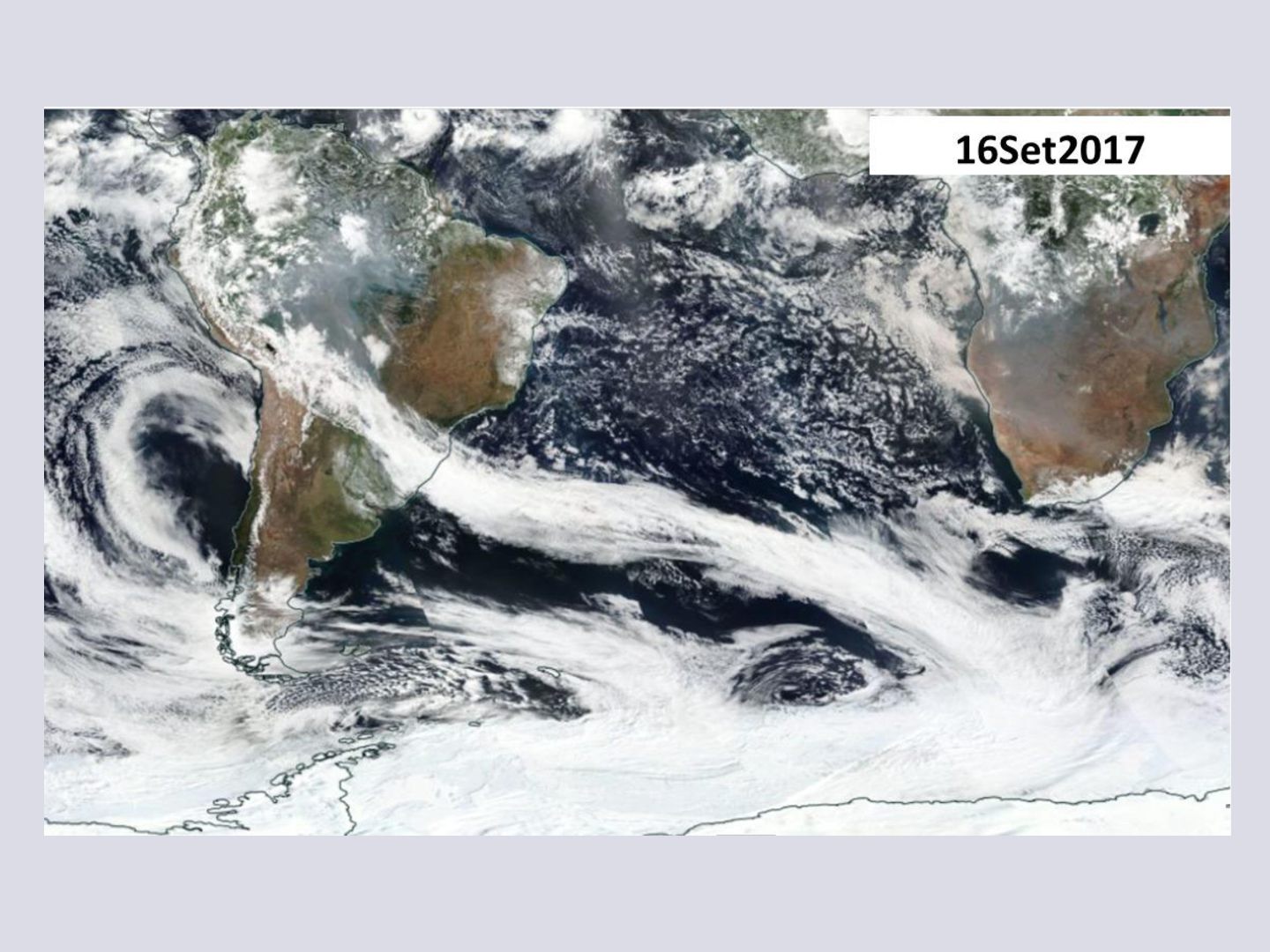
atmospheric rivers in the transport of humidity and pollutants to Antarctica, and how its affected by the different modes of climatic variability and their connection to the tropical climatic variability? • How do byproducts of southern hemisphere tropical forests' biomass burning, such as black carbon, affect climate trends and mass balance of Antarctic coastal glaciers? • How do changes in the Amazon's and Africa's rainforest hydrological cycle affect the atmospheric rivers that reach Antarctica? We still lack knowledge of how tropical teleconnections to the Southern Hemisphere extratropics arise and are associated with the El Niño–Southern Oscillation, Interdecadal Pacific Oscillation, and Atlantic Multidecadal Oscillation.
could the fast Arctic climate change ripple to the Southern Hemisphere? • Teleconnections between the Arctic Oscillation and other modes of climatic variability (ENSO, SAM, PDO) Arctic atmospheric changes could affect mid- and low-latitude weather (through shifts in storm tracks, jet streams, and planetary waves), resulting in a southward shift of tropical rain belts. Shallow cores (200 m deep) in the WAIS and EAIS, covering about the same timescale, could provide a basis for this discussion. Arctic-Antarctic teleconnections Atmosphere
ice, permafrost, lakes, moss and lichen mats – with emphasis on resistant biota in these environments – to examine the impact of environmental changes and potential for biotechnological processes. * Pay attention to release rates of trapped organisms that can impact human and animal health and agriculture (especially birds, considering the unchecked increase in tourism and warming on the Antarctic coast). Characterizing and monitoring these organisms can inform discussions and protocols to prevent the emergence of new agricultural diseases and pests.

 Your Podcast. Everywhere. Effortlessly.


 ipfevents
 rmaruy
 chinson03
 sshimizu2006
 shunyanoda
 trycycle
 xspa2012
 voginip
 taka88
 nagano
 grow_design_lab
 tammyeverts
 axbom
axbom
 kneath
 honzajavorek
 jonoalderson
 danielanewman
 varn
varn
 chriscoyier
 aleyda
 signer
 brad_frost
 soudai