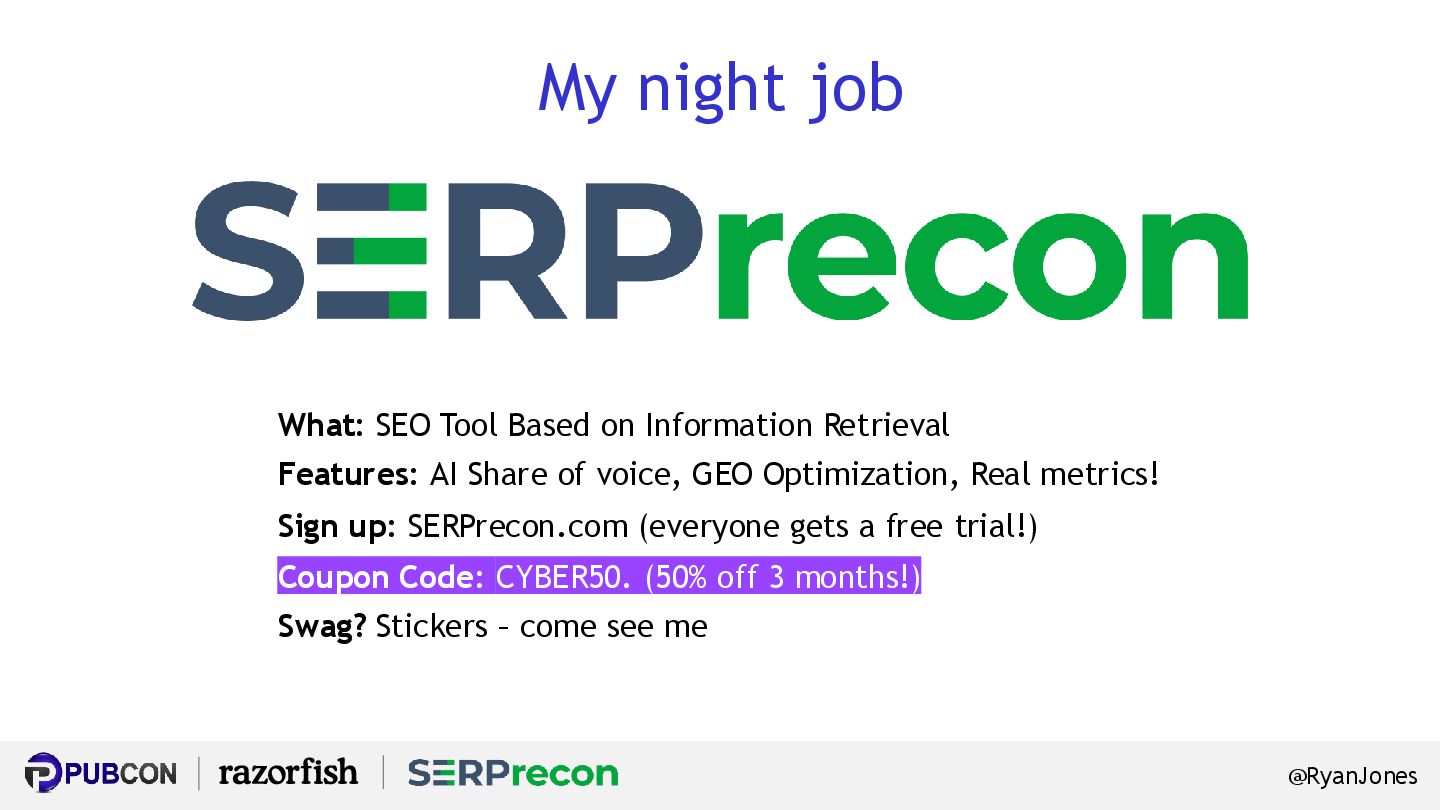
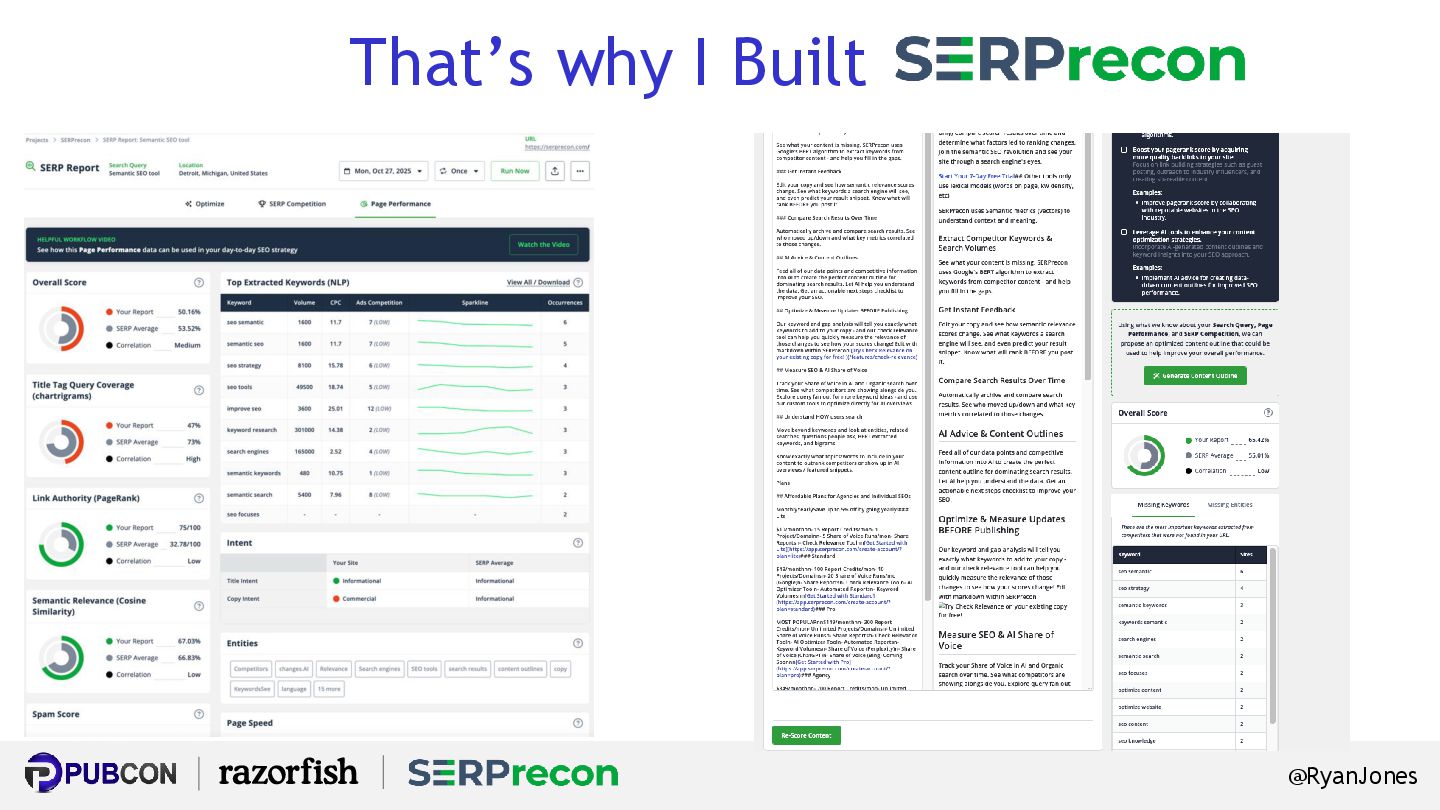
Retrieval Features: AI Share of voice, GEO Optimization, Real metrics! Sign up: SERPrecon.com (everyone gets a free trial!) Coupon Code: CYBER50. (50% off 3 months!) Swag? Stickers – come see me
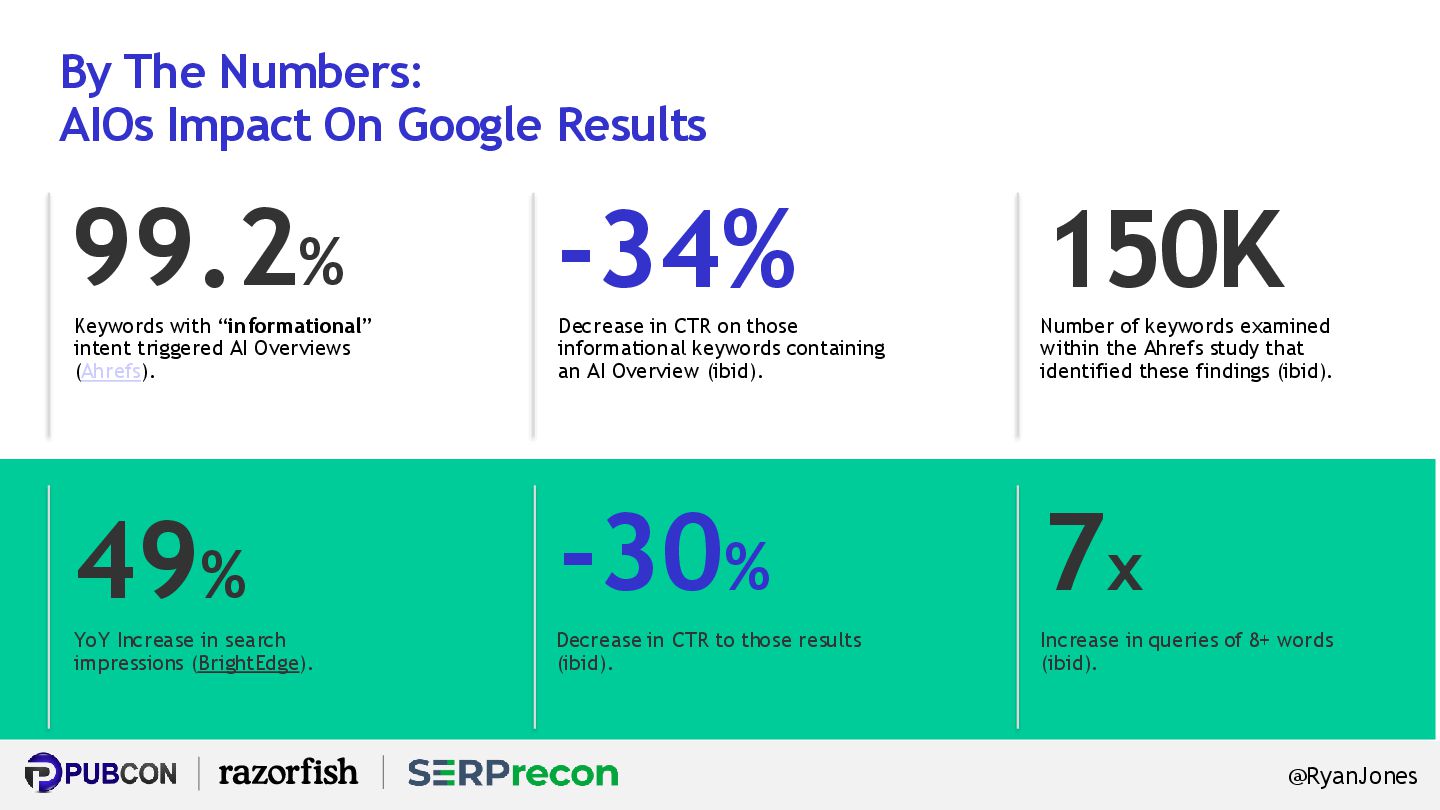
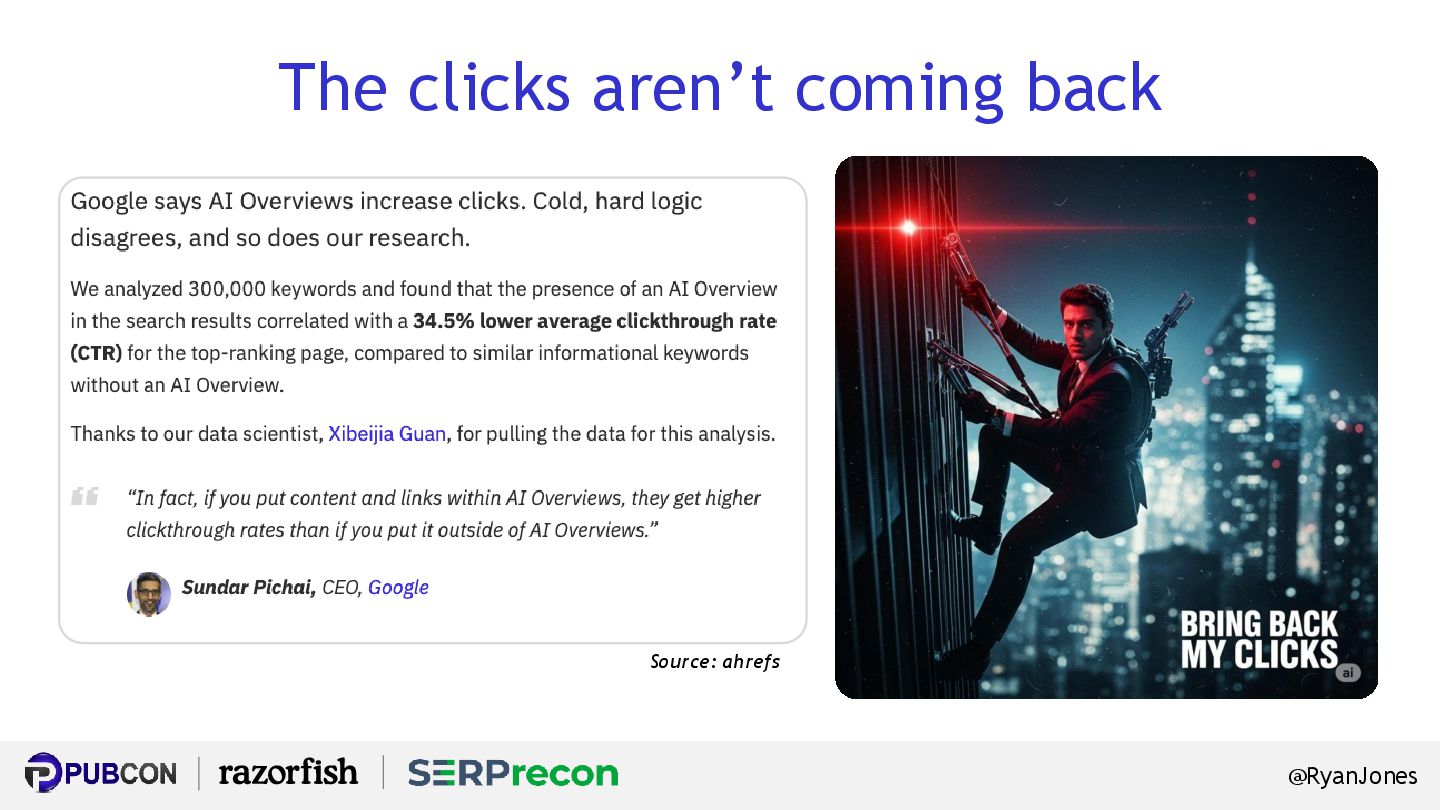
with “informational” intent triggered AI Overviews (Ahrefs). Decrease in CTR on those informational keywords containing an AI Overview (ibid). Number of keywords examined within the Ahrefs study that identified these findings (ibid). YoY Increase in search impressions (BrightEdge). Decrease in CTR to those results (ibid). Increase in queries of 8+ words (ibid). 49% 7x 99.2% -30% -34% 150K
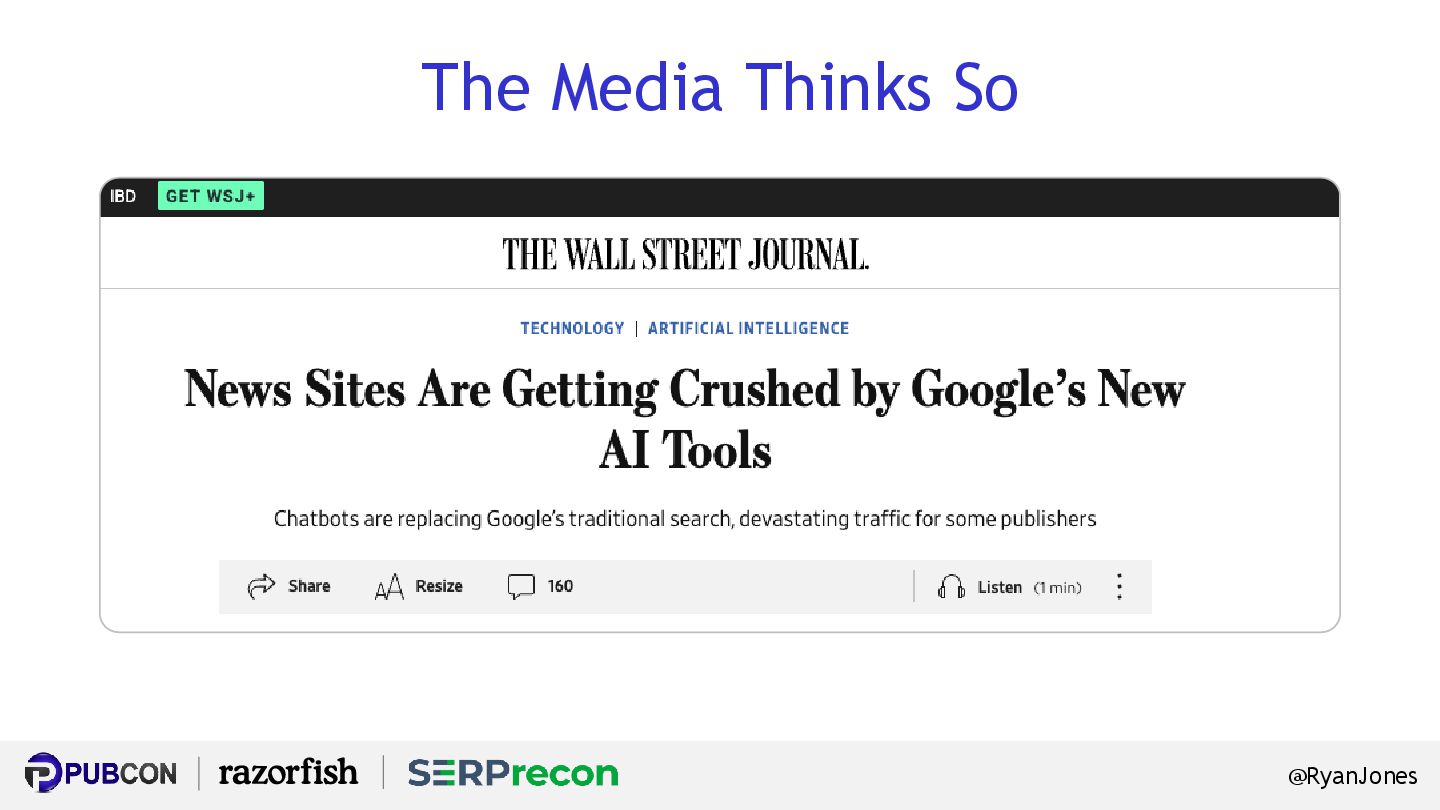
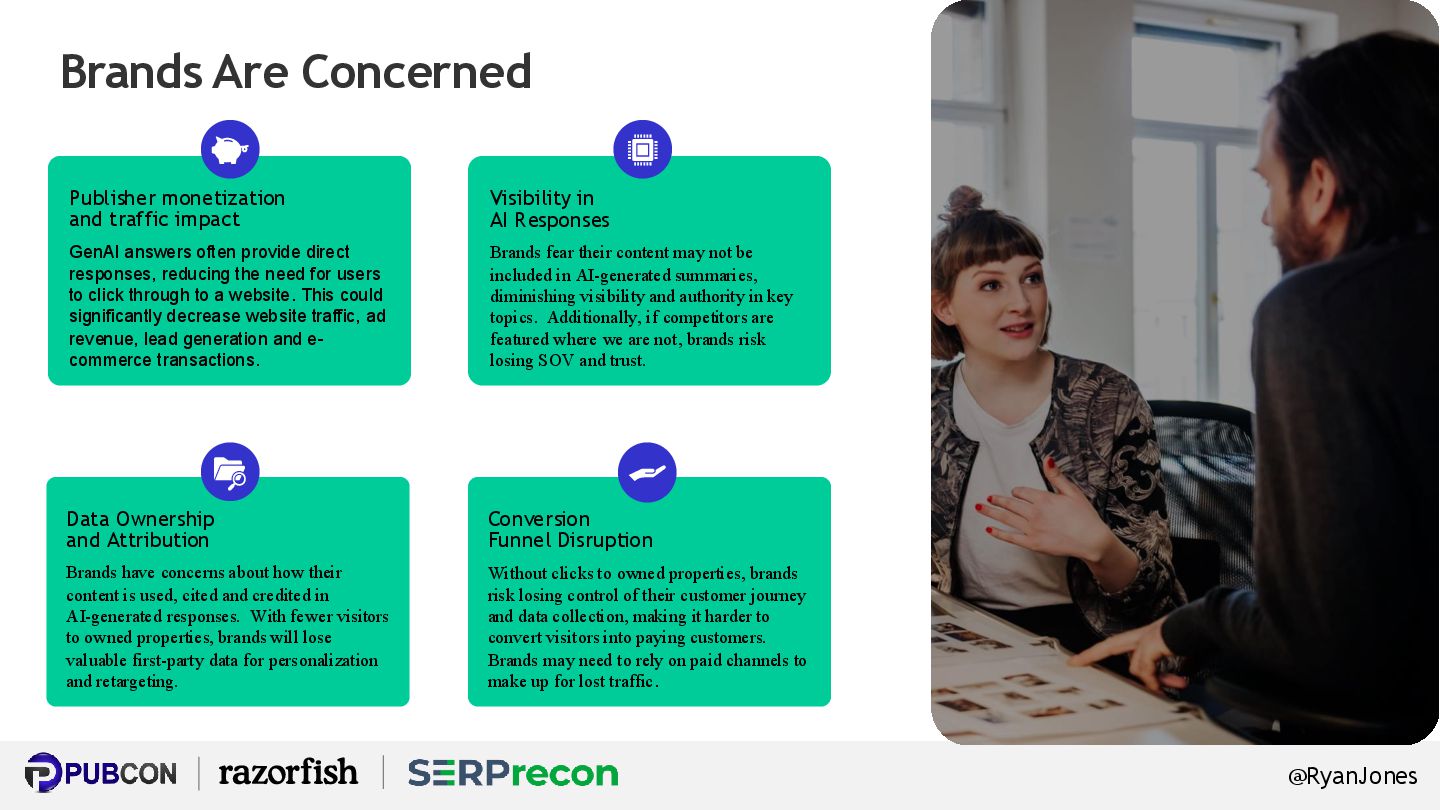
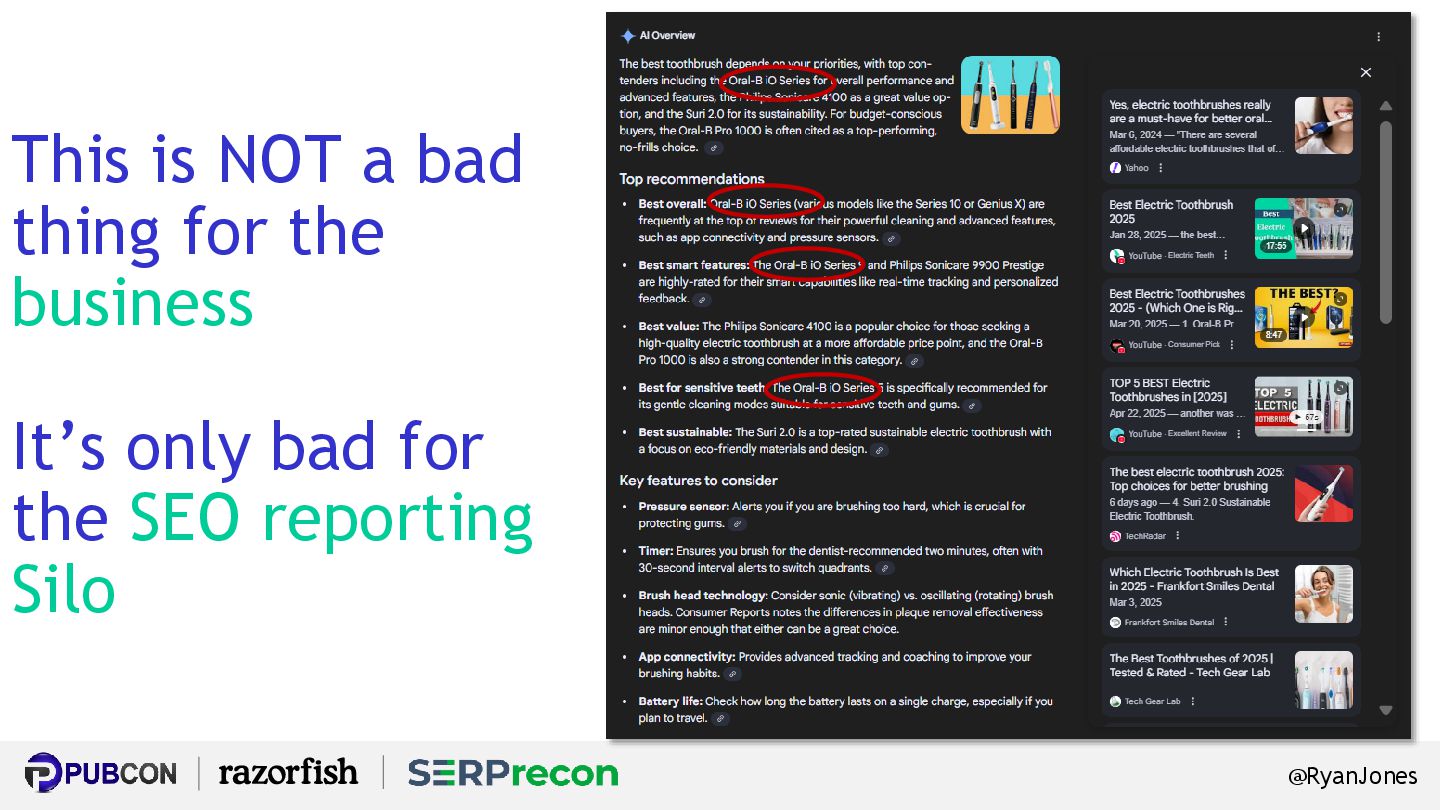
direct responses, reducing the need for users to click through to a website. This could significantly decrease website traffic, ad revenue, lead generation and e- commerce transactions. Visibility in AI Responses Brands fear their content may not be included in AI-generated summaries, diminishing visibility and authority in key topics. Additionally, if competitors are featured where we are not, brands risk losing SOV and trust. Data Ownership and Attribution Brands have concerns about how their content is used, cited and credited in AI-generated responses. With fewer visitors to owned properties, brands will lose valuable first-party data for personalization and retargeting. Conversion Funnel Disruption Without clicks to owned properties, brands risk losing control of their customer journey and data collection, making it harder to convert visitors into paying customers. Brands may need to rely on paid channels to make up for lost traffic. Brands Are Concerned
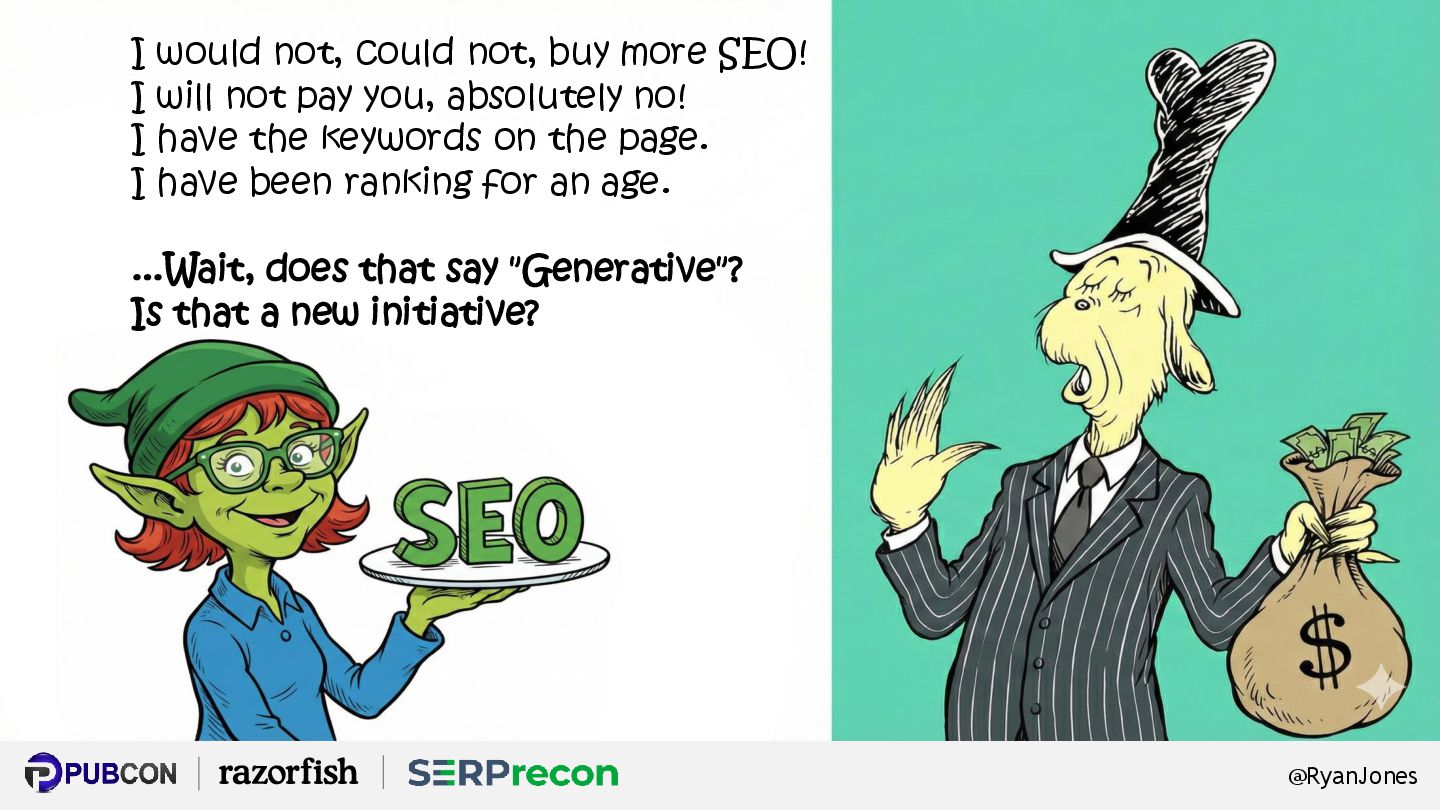
will not pay you, absolutely no! I have the keywords on the page. I have been ranking for an age. ...Wait, does that say "Generative"? Is that a new initiative?
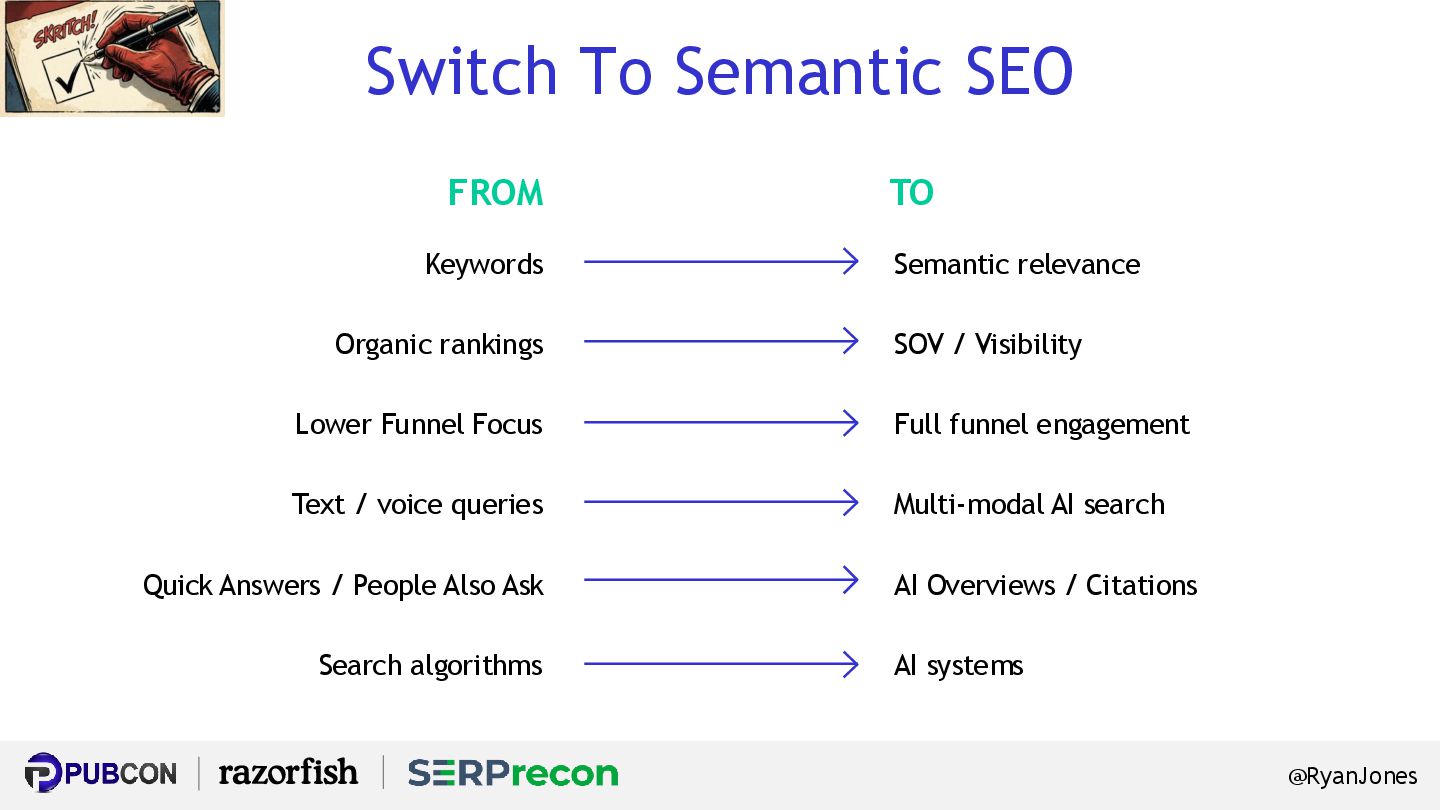
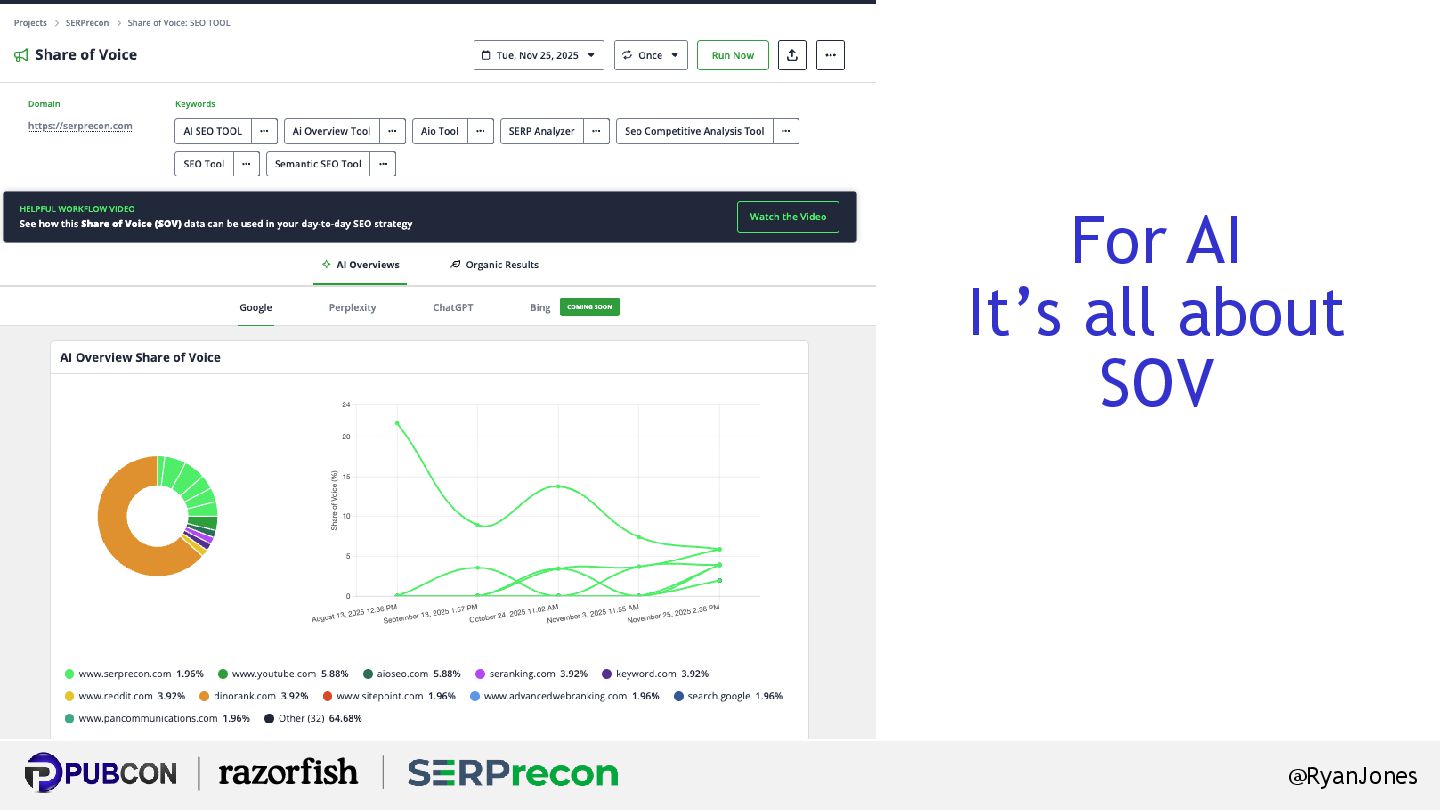
SOV / Visibility Keywords Organic rankings Lower Funnel Focus FROM Multi-modal AI search AI Overviews / Citations Quick Answers / People Also Ask TO AI systems Search algorithms Text / voice queries
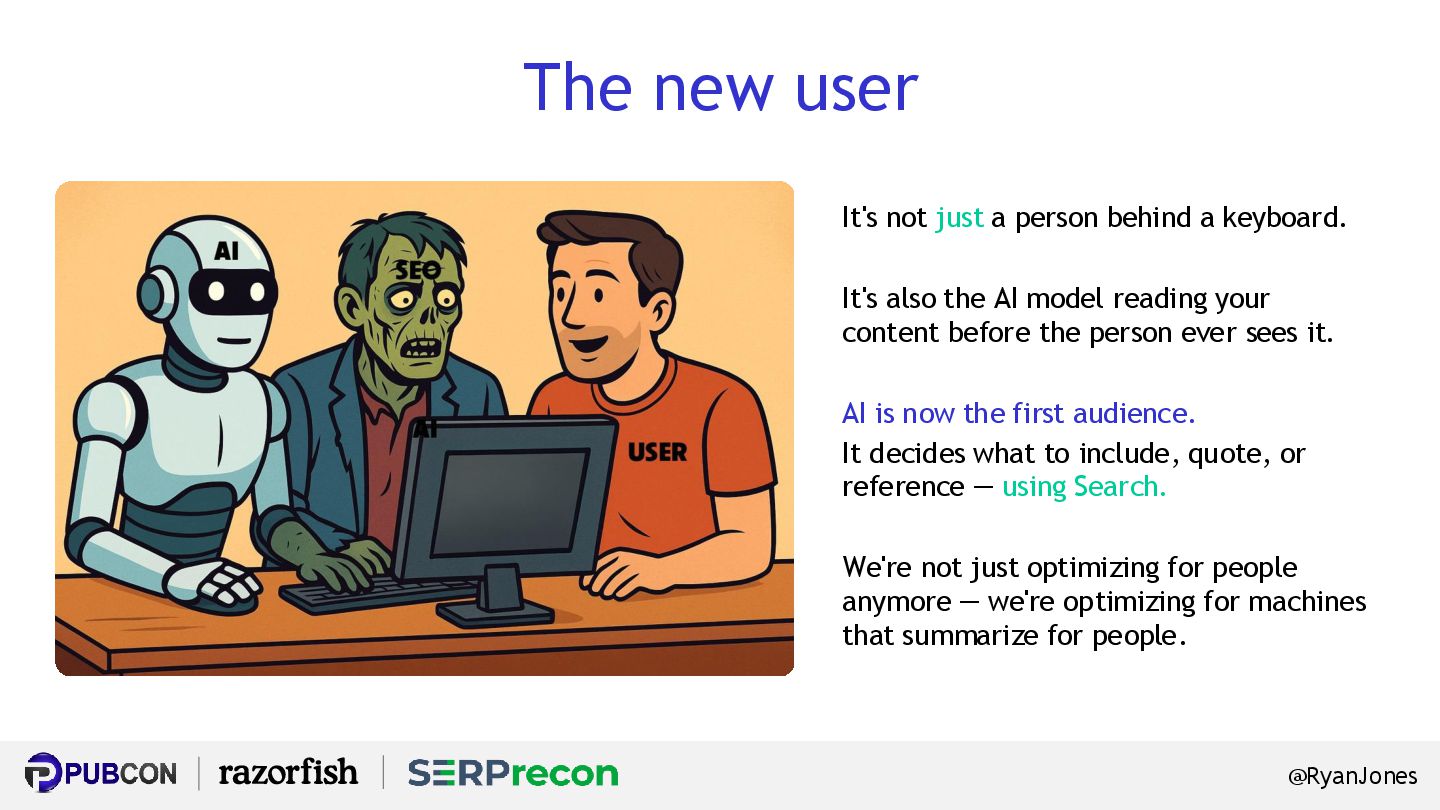
a keyboard. It's also the AI model reading your content before the person ever sees it. AI is now the first audience. It decides what to include, quote, or reference — using Search. We're not just optimizing for people anymore — we're optimizing for machines that summarize for people.


 ryanjones
 dougneiner
 aleyda
 marketingsoph
 kastner
 carmenintech
 techseoconnect
 swwweet
 tmiket
 rkendrick25
 mfonobong
 axbom
axbom