Upgrade to Pro
— share decks privately, control downloads, hide ads and more …
Speaker Deck
Sign up for free
Menu
Search
Features
All features
Private URLs
Password Protection
Custom URLS
Scheduled publishing
Remove Branding
Restrict embedding
Deck Collections
Notes
Features
All features
Private URLs
Password Protection
Custom URLS
Scheduled publishing
Remove Branding
Restrict embedding
Deck Collections
Notes
Explore
Featured decks
Featured speakers
Programming
Technology
Storyboards
Explore
Featured decks
Featured speakers
Programming
Technology
Storyboards
Pricing
Search
Sign in
Sign up for free
Design Patterns in Kotlin
Search
Sohel Shaikh
July 06, 2024
81
1
Share
Embed
Copy iframe code
Copy JS code
Copy link
Start on current slide
Design Patterns in Kotlin
Presented at KSUG, Surat
Sohel Shaikh
July 06, 2024
More Decks by Sohel Shaikh
See All by Sohel Shaikh
Supercharge your Android Apps with Gemini API
thesohelshaikh
1
130
Featured
See All Featured
Applied NLP in the Age of Generative AI
inesmontani
PRO
4
2.5k
Building Applications with DynamoDB
mza
96
7.2k
Navigating Weather and Climate Data
rabernat
0
560
SEO for Brand Visibility & Recognition
aleyda
0
4.8k
Understanding Cognitive Biases in Performance Measurement
bluesmoon
32
3.1k
Tell your own story through comics
letsgokoyo
1
1.1k
Impact Scores and Hybrid Strategies: The future of link building
tamaranovitovic
0
460
Build The Right Thing And Hit Your Dates
maggiecrowley
39
3.5k
Java REST API Framework Comparison - PWX 2021
mraible
34
9.8k
Neural Spatial Audio Processing for Sound Field Analysis and Control
skoyamalab
0
570
SERP Conf. Vienna - Web Accessibility: Optimizing for Inclusivity and SEO
sarafernandez
2
1.6k
Pawsitive SEO: Lessons from My Dog (and Many Mistakes) on Thriving as a Consultant in the Age of AI
davidcarrasco
0
260
Transcript
Design Patterns in Kotlin Sohel Shaikh Lead Android Engineer @
Skylark Drones
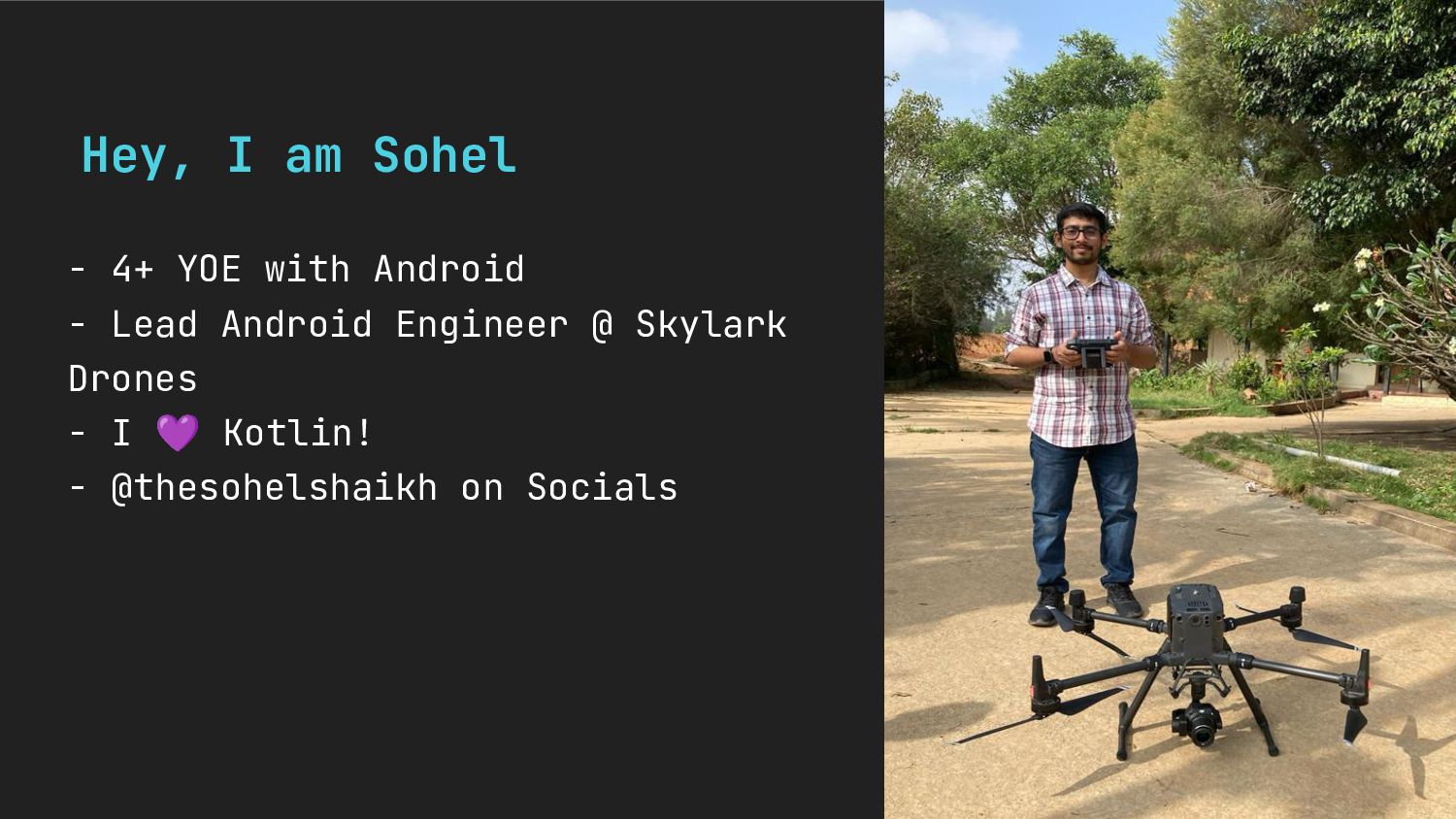
- 4+ YOE with Android - Lead Android Engineer @
Skylark Drones - I 💜 Kotlin! - @thesohelshaikh on Socials Hey, I am Sohel
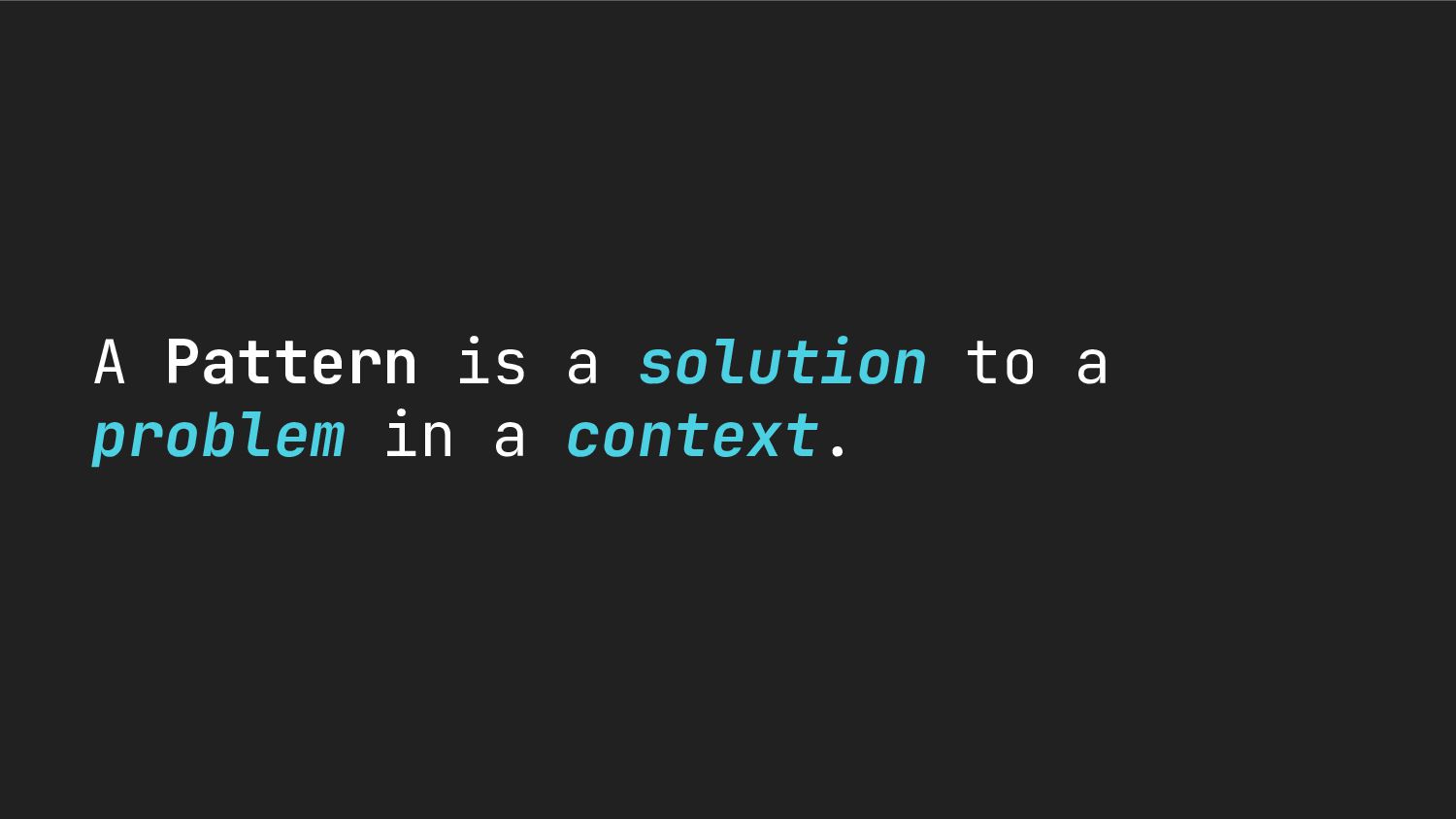
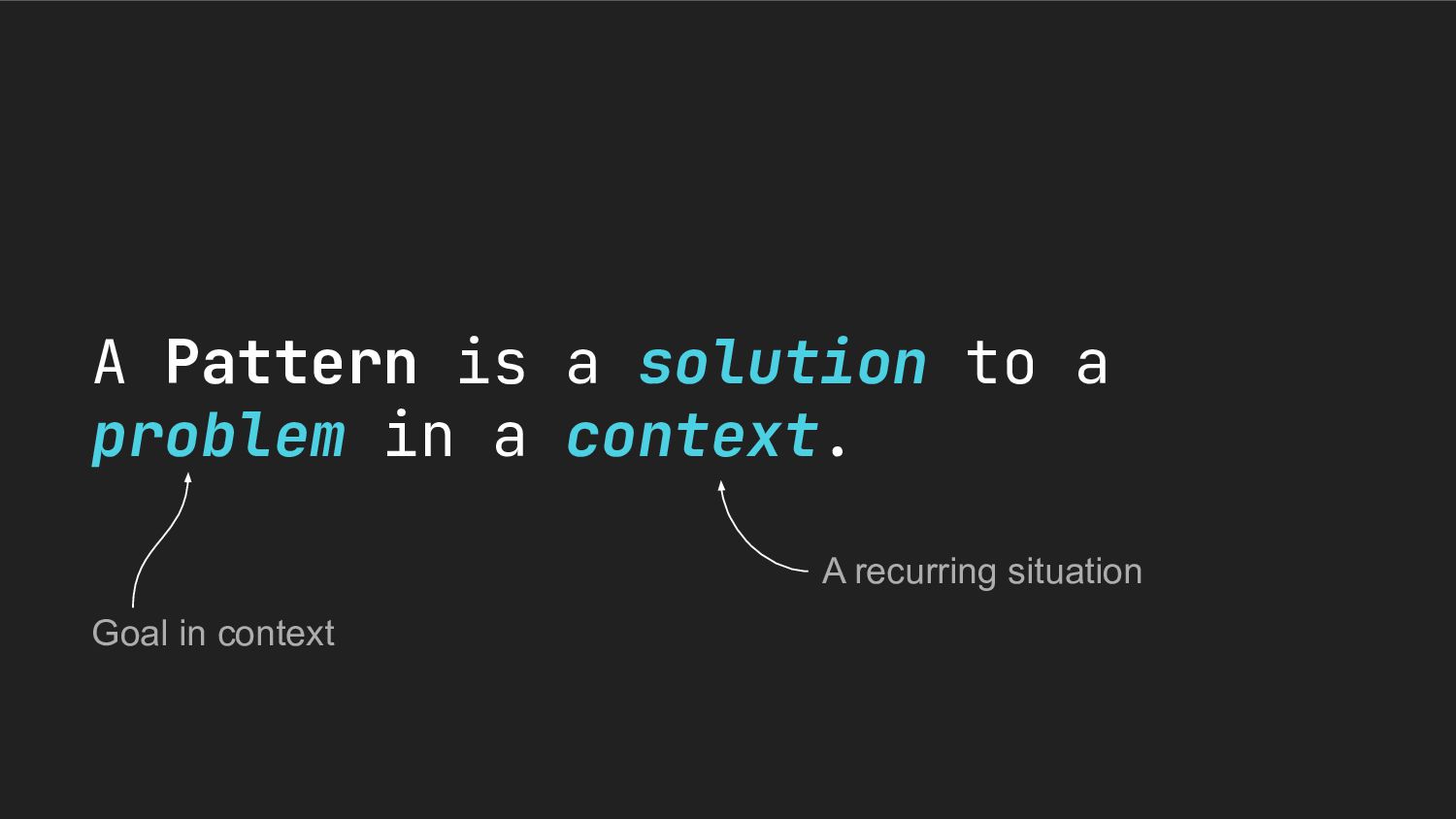
A Pattern is a solution to a problem in a
context.
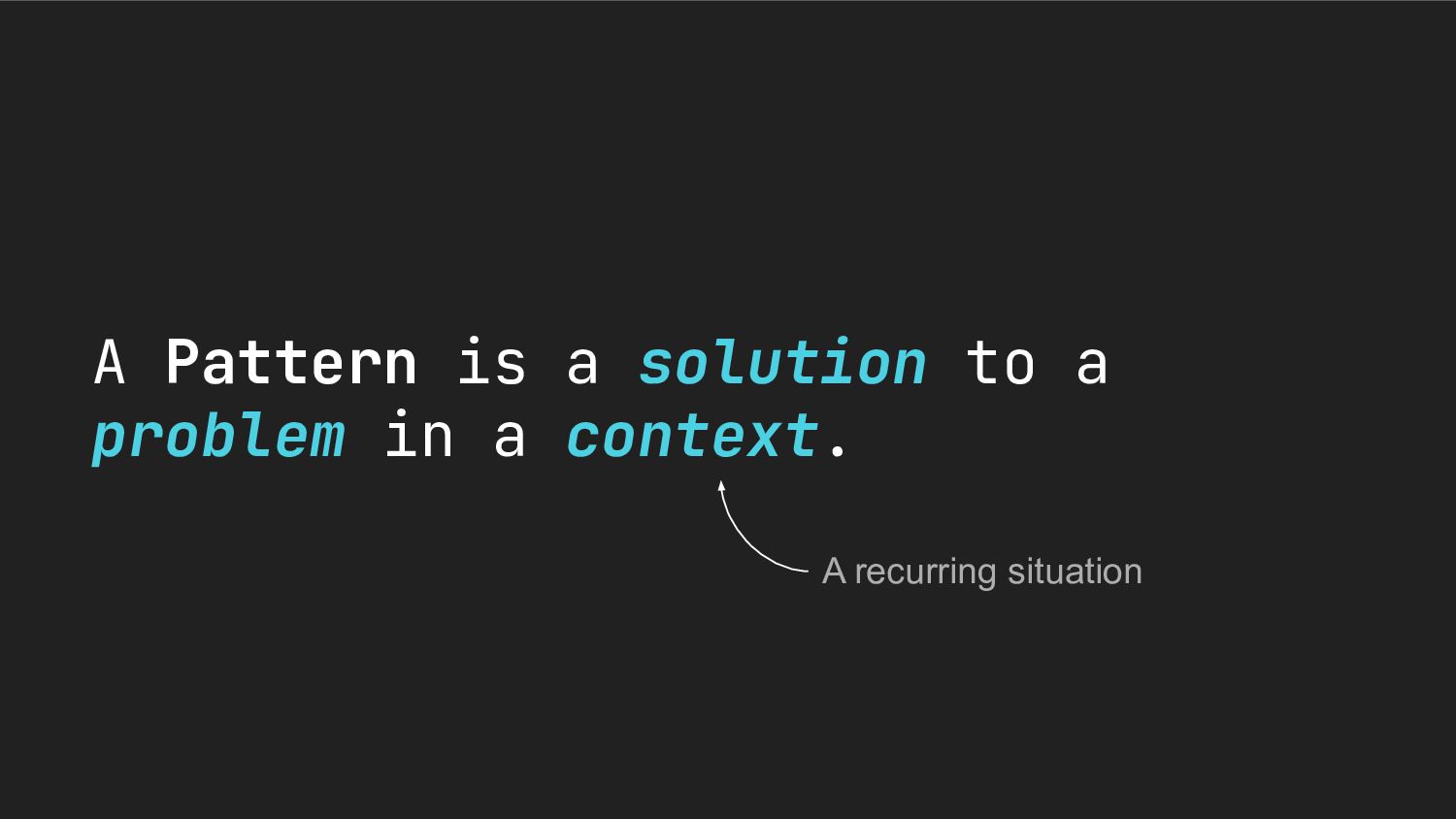
A Pattern is a solution to a problem in a
context. A recurring situation
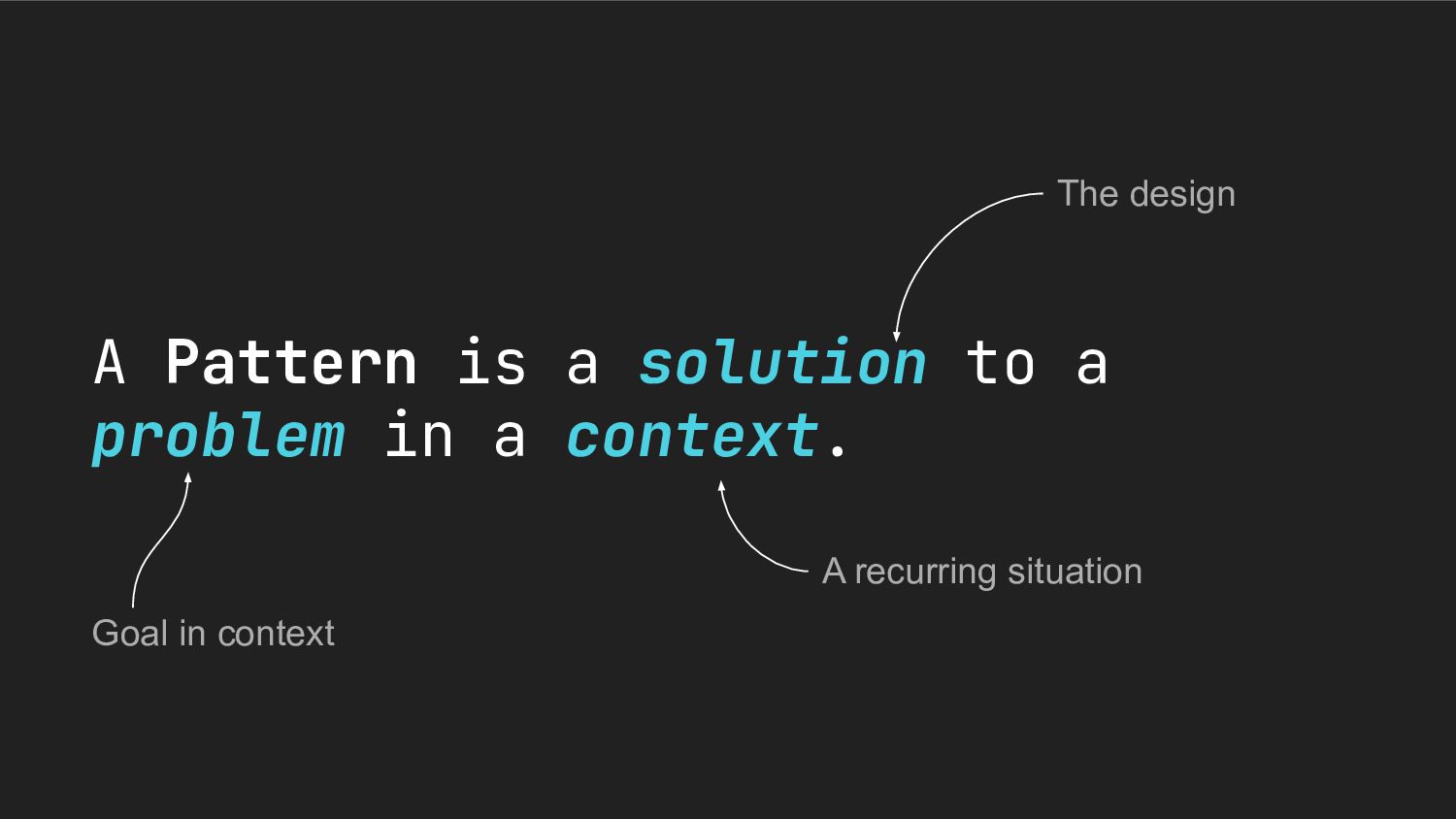
A Pattern is a solution to a problem in a
context. A recurring situation Goal in context
A Pattern is a solution to a problem in a
context. A recurring situation Goal in context The design
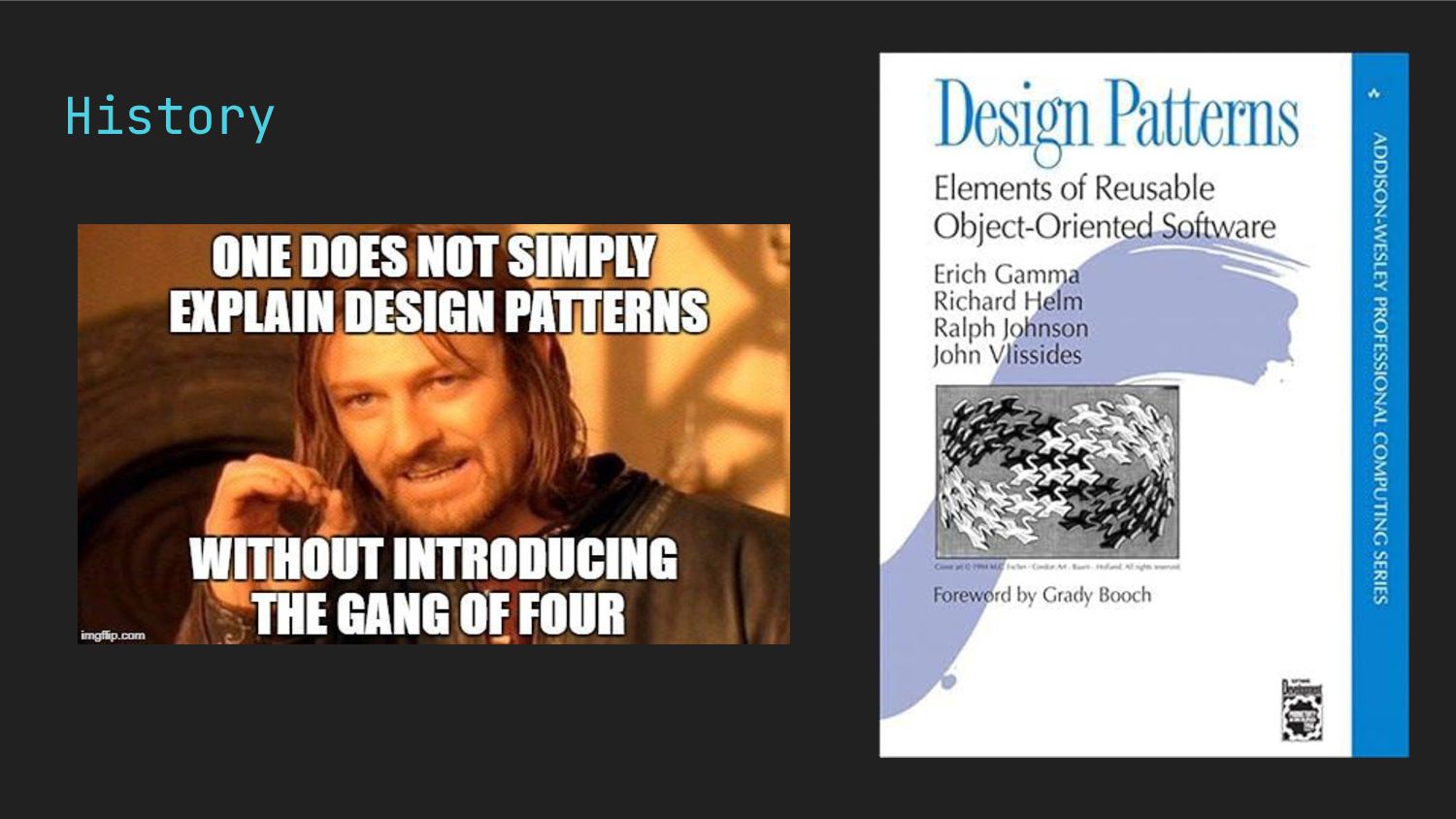
History
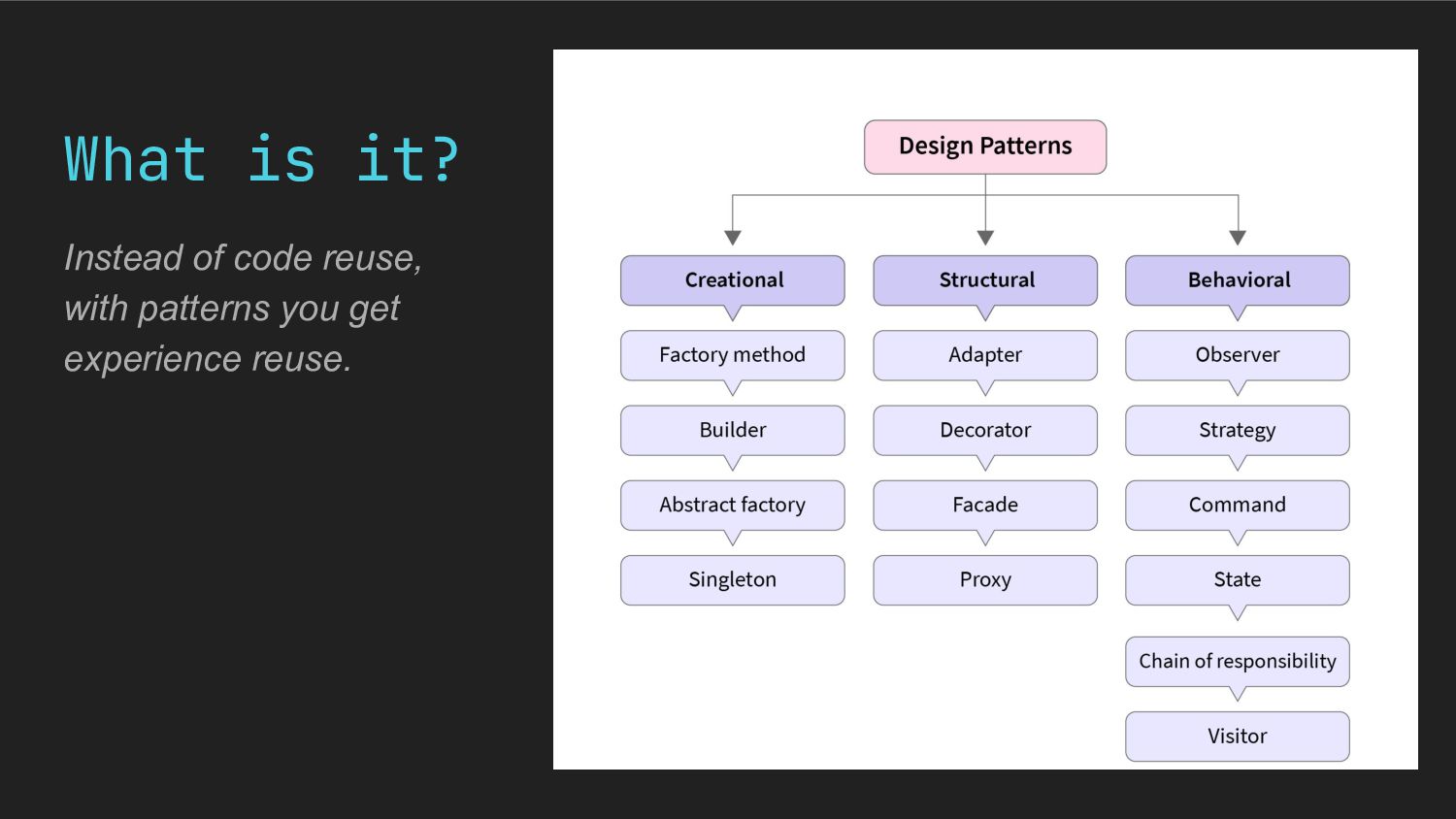
What is it? Instead of code reuse, with patterns you
get experience reuse.
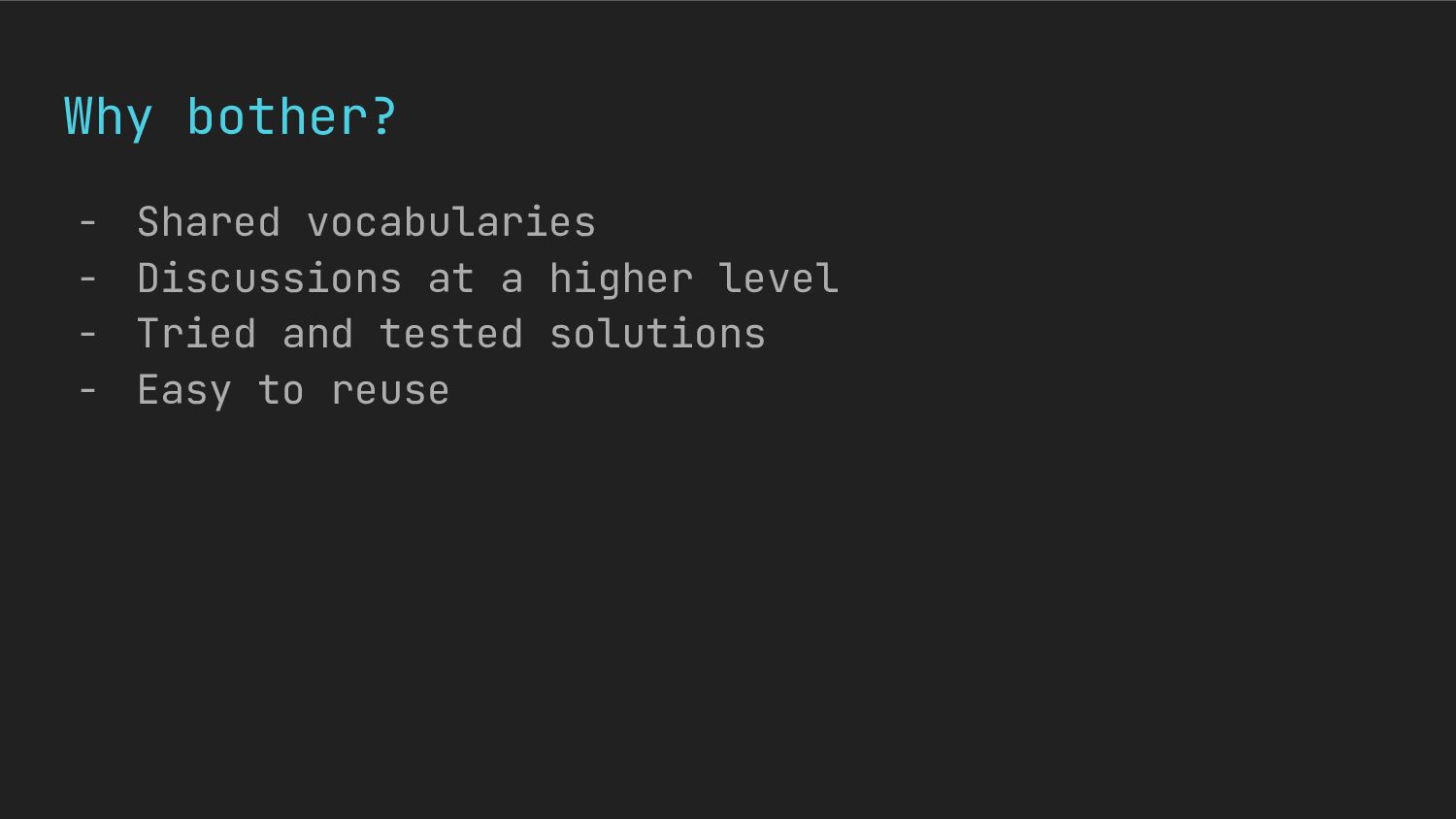
Why bother? - Shared vocabularies - Discussions at a higher
level - Tried and tested solutions - Easy to reuse
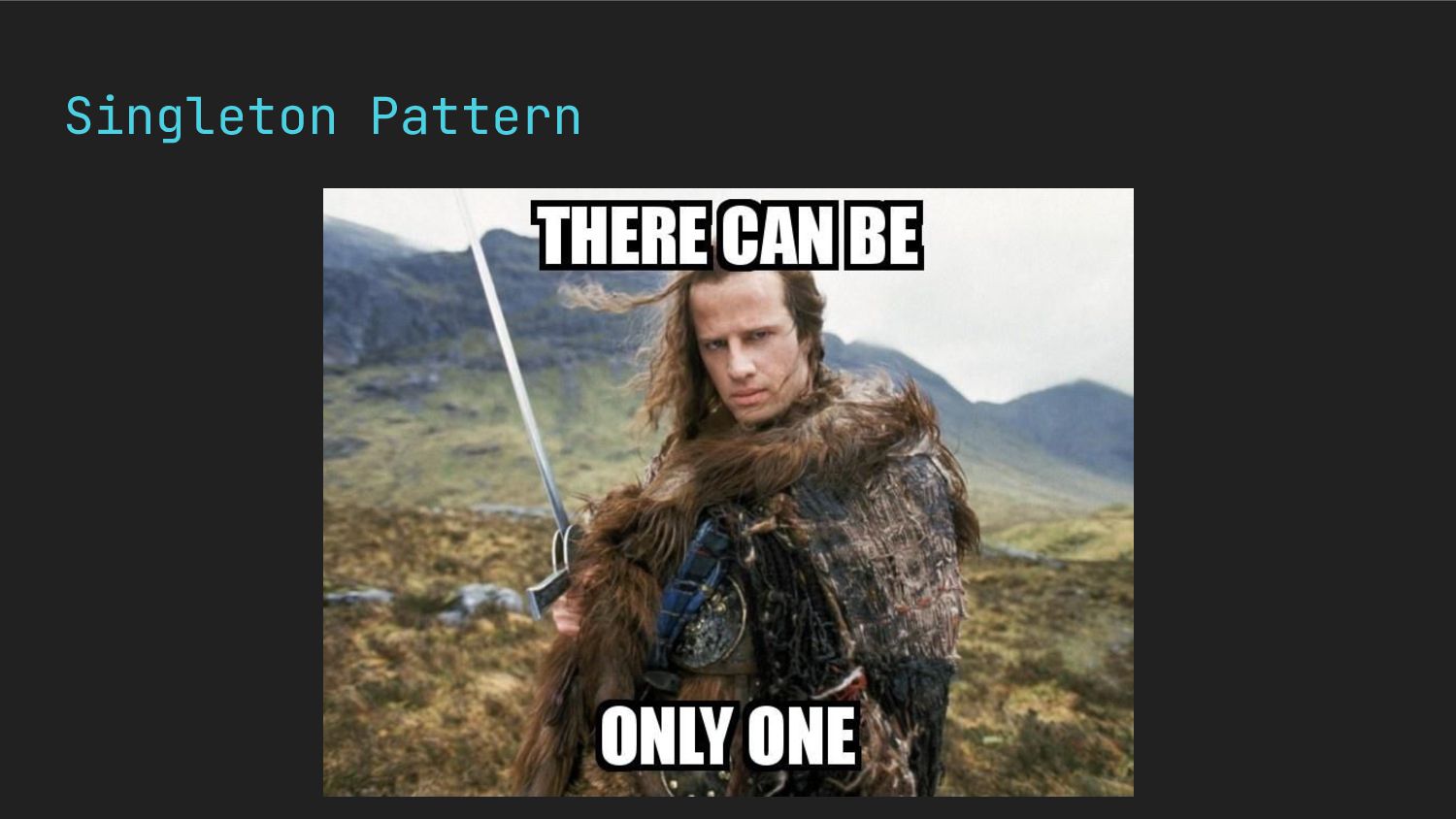
Singleton Pattern
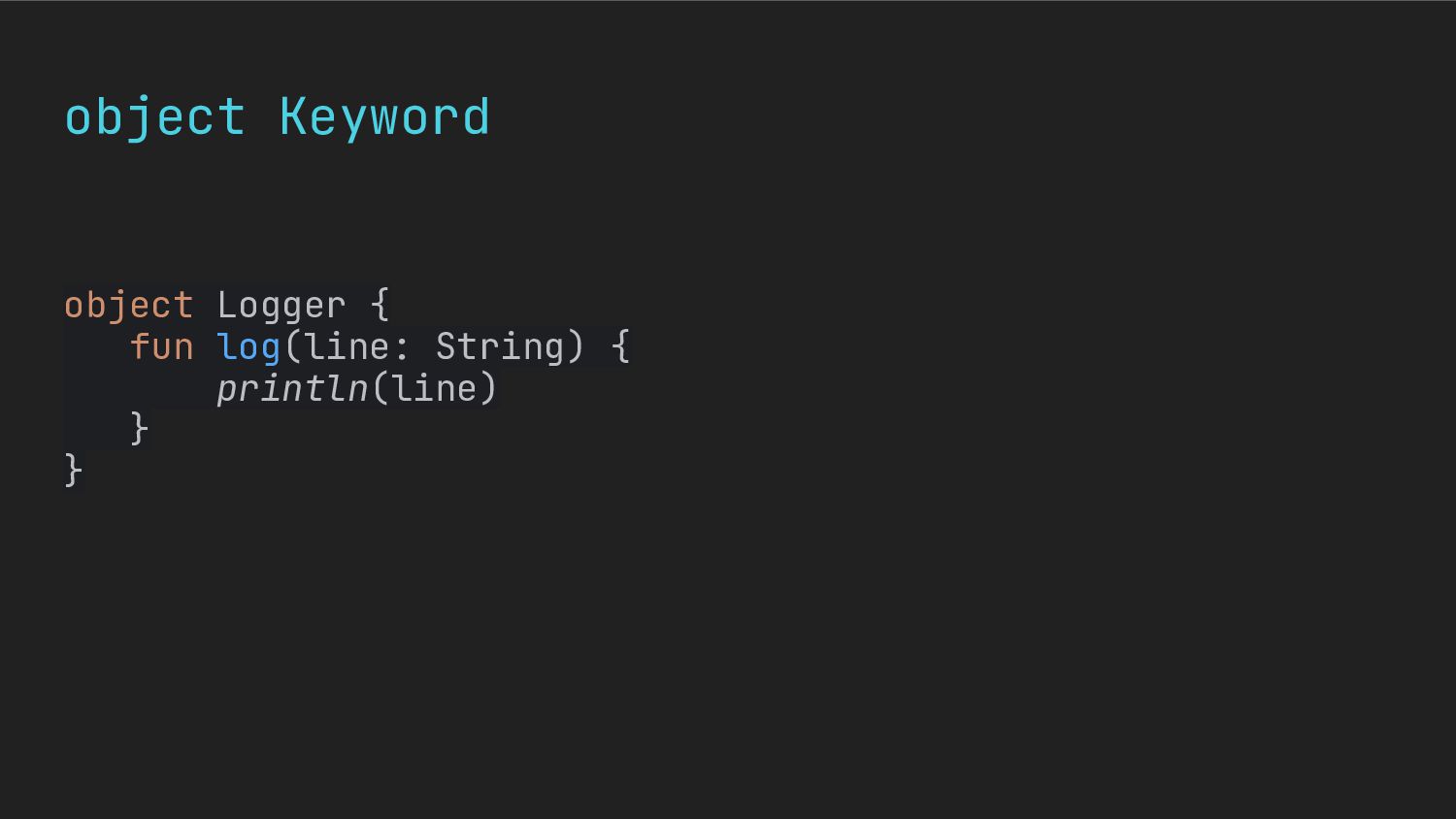
object Keyword object Logger { fun log(line: String) { println(line)
} }
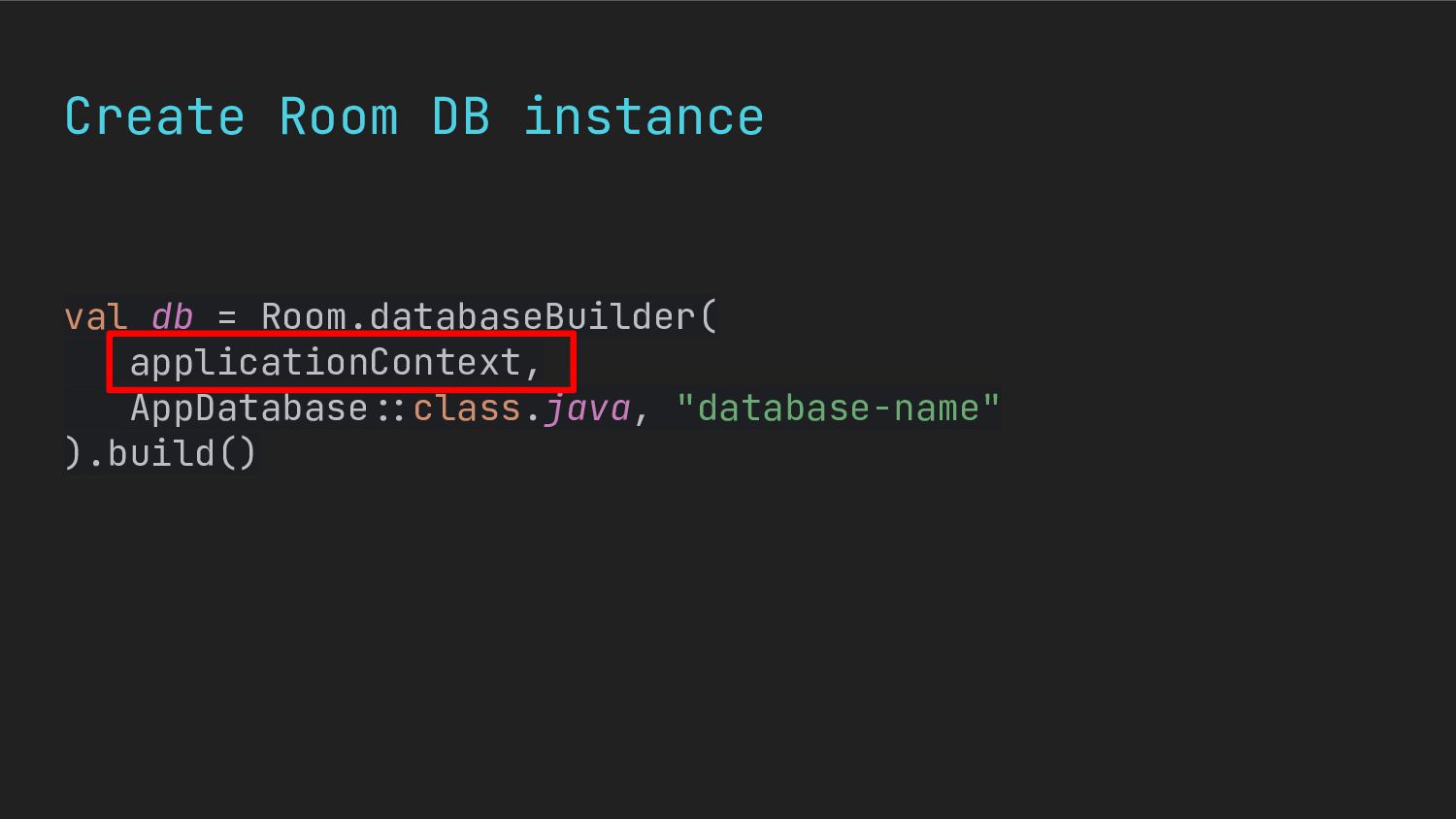
Create Room DB instance val db = Room.databaseBuilder( applicationContext, AppDatabase-:class.java,
"database-name" ).build()
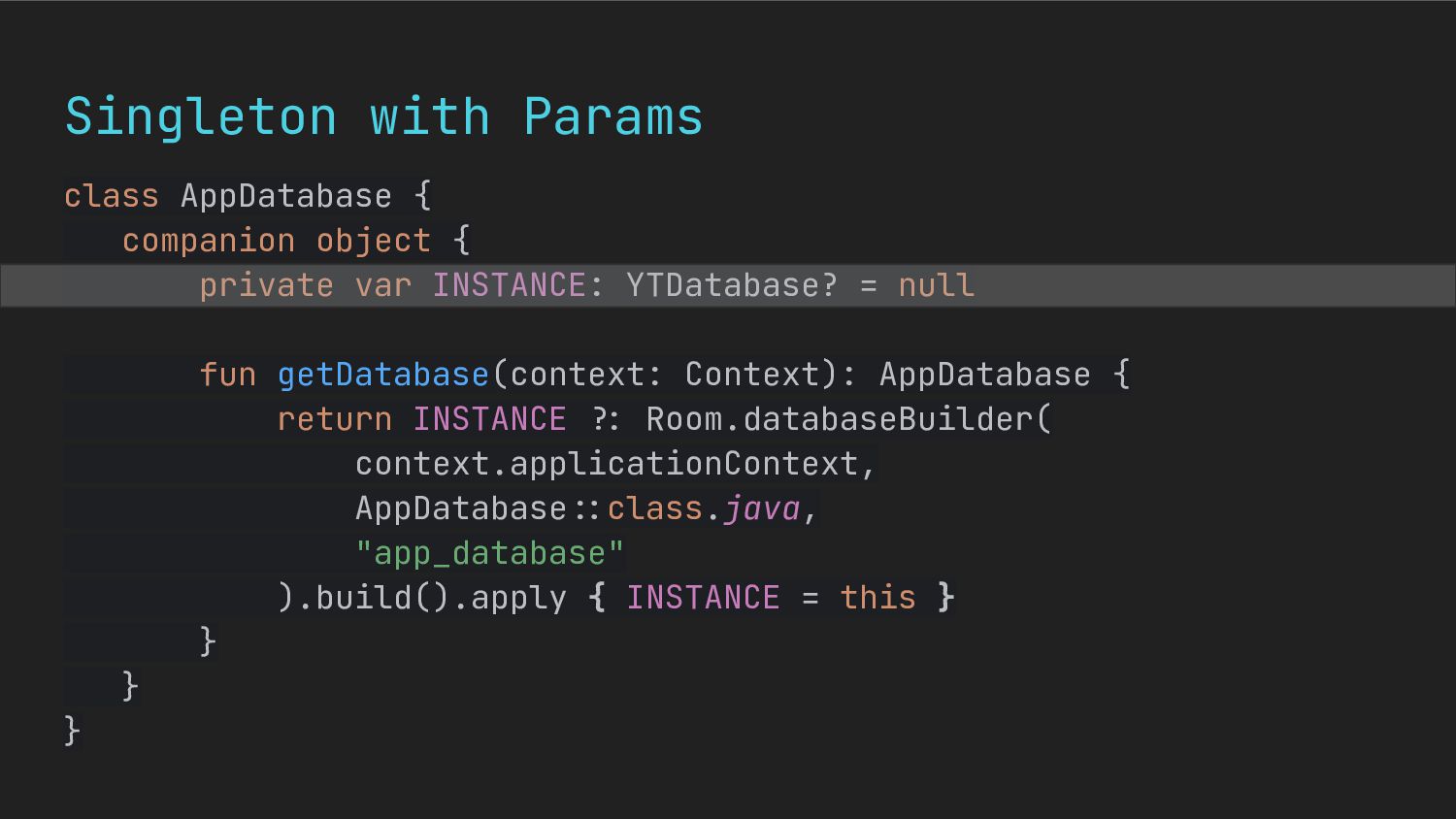
Singleton with Params class AppDatabase { companion object { private
var INSTANCE: YTDatabase? = null fun getDatabase(context: Context): AppDatabase { return INSTANCE -: Room.databaseBuilder( context.applicationContext, AppDatabase-:class.java, "app_database" ).build().apply { INSTANCE = this } } } }
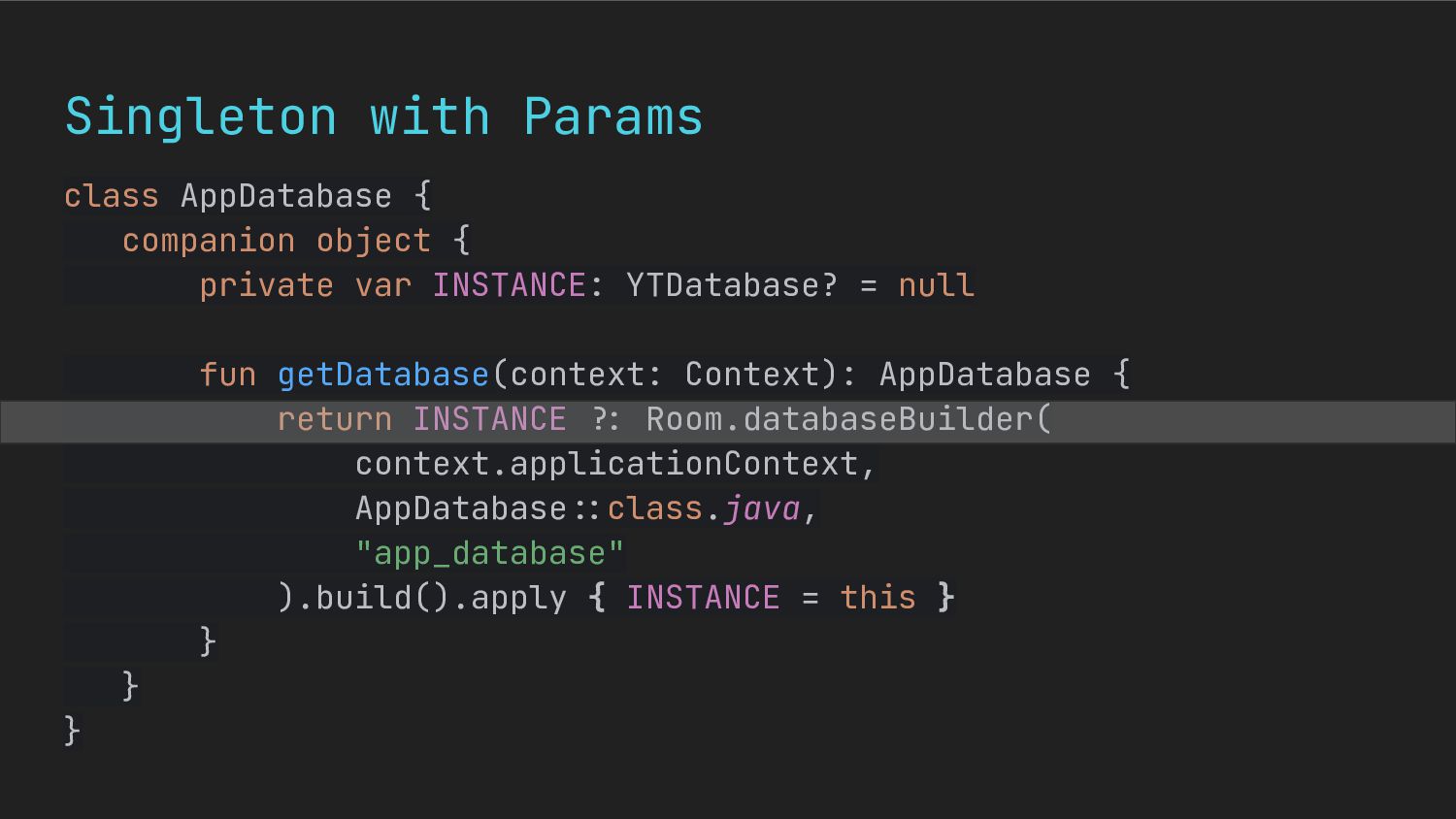
Singleton with Params class AppDatabase { companion object { private
var INSTANCE: YTDatabase? = null fun getDatabase(context: Context): AppDatabase { return INSTANCE -: Room.databaseBuilder( context.applicationContext, AppDatabase-:class.java, "app_database" ).build().apply { INSTANCE = this } } } }
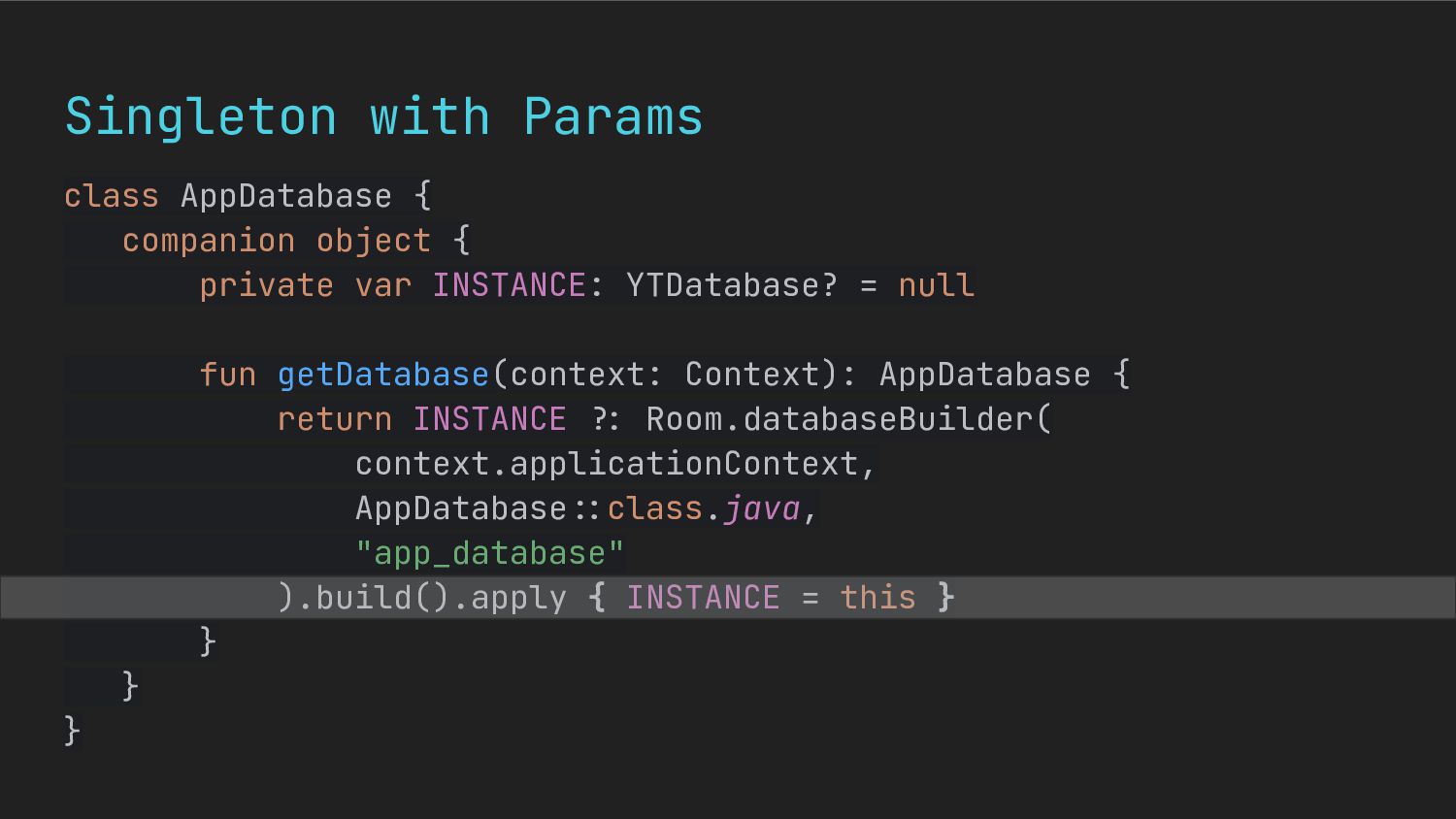
Singleton with Params class AppDatabase { companion object { private
var INSTANCE: YTDatabase? = null fun getDatabase(context: Context): AppDatabase { return INSTANCE -: Room.databaseBuilder( context.applicationContext, AppDatabase-:class.java, "app_database" ).build().apply { INSTANCE = this } } } }
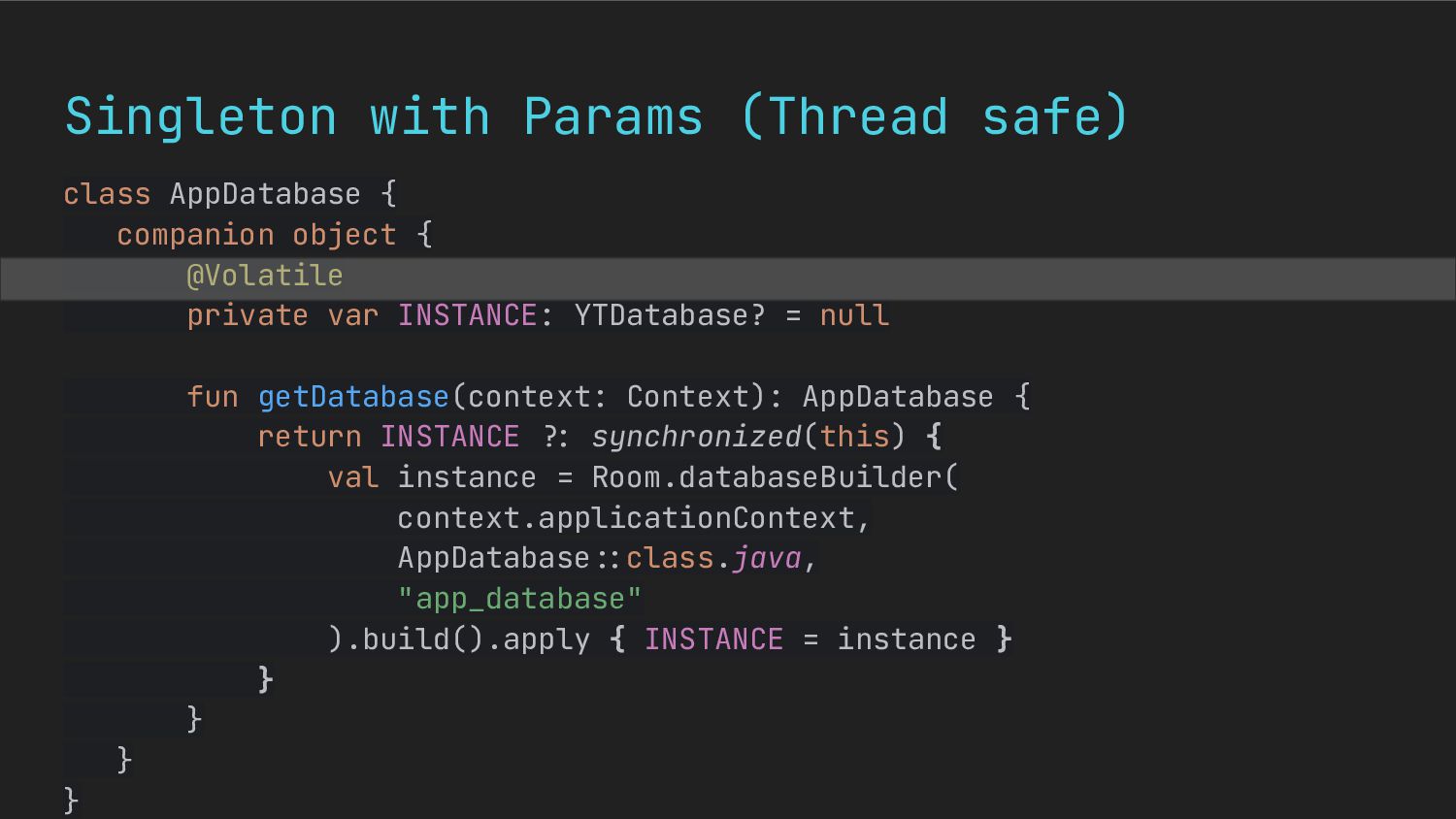
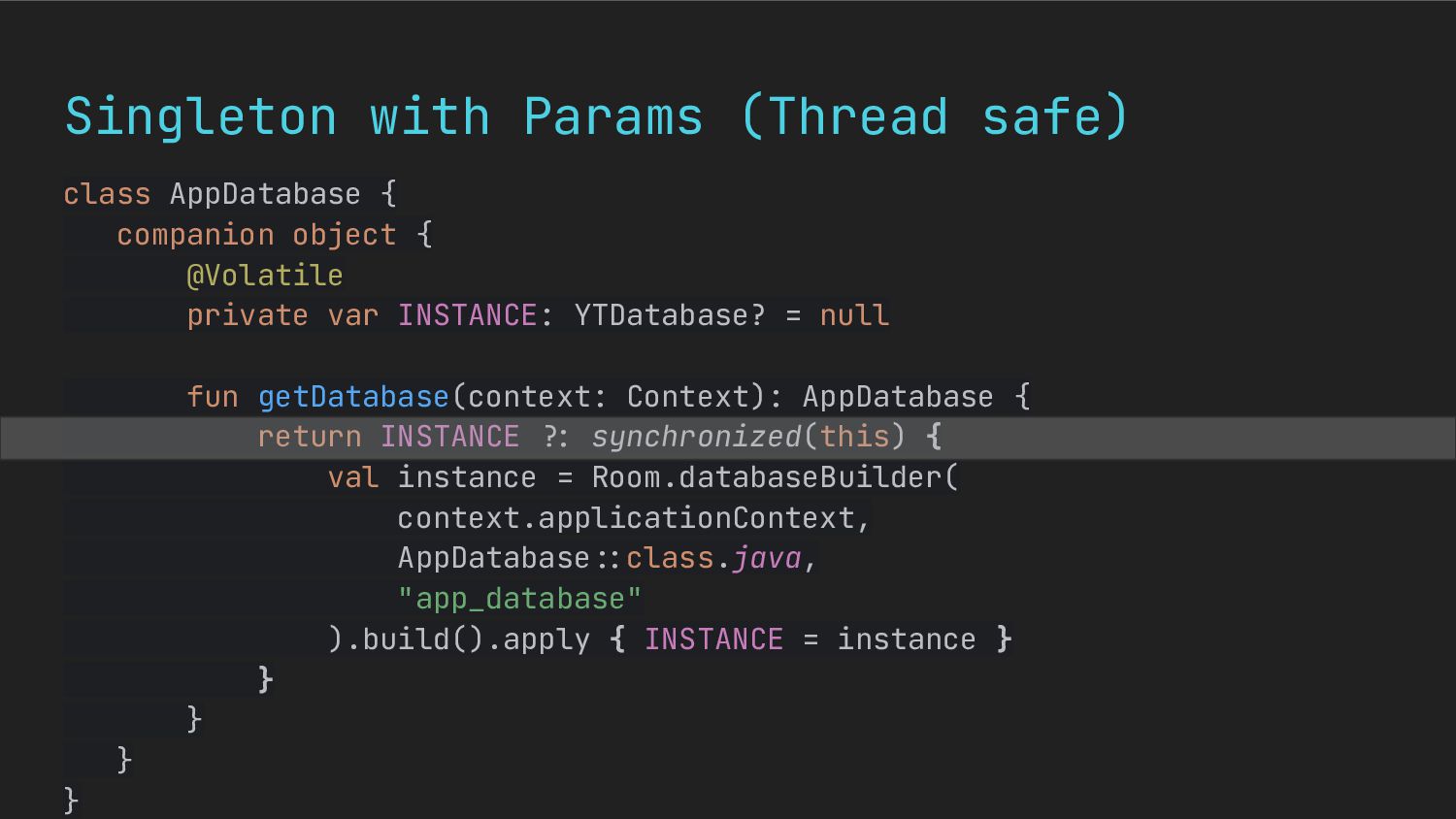
Singleton with Params (Thread safe) class AppDatabase { companion object
{ @Volatile private var INSTANCE: YTDatabase? = null fun getDatabase(context: Context): AppDatabase { return INSTANCE -: synchronized(this) { val instance = Room.databaseBuilder( context.applicationContext, AppDatabase-:class.java, "app_database" ).build().apply { INSTANCE = instance } } } } }
Singleton with Params (Thread safe) class AppDatabase { companion object
{ @Volatile private var INSTANCE: YTDatabase? = null fun getDatabase(context: Context): AppDatabase { return INSTANCE -: synchronized(this) { val instance = Room.databaseBuilder( context.applicationContext, AppDatabase-:class.java, "app_database" ).build().apply { INSTANCE = instance } } } } }
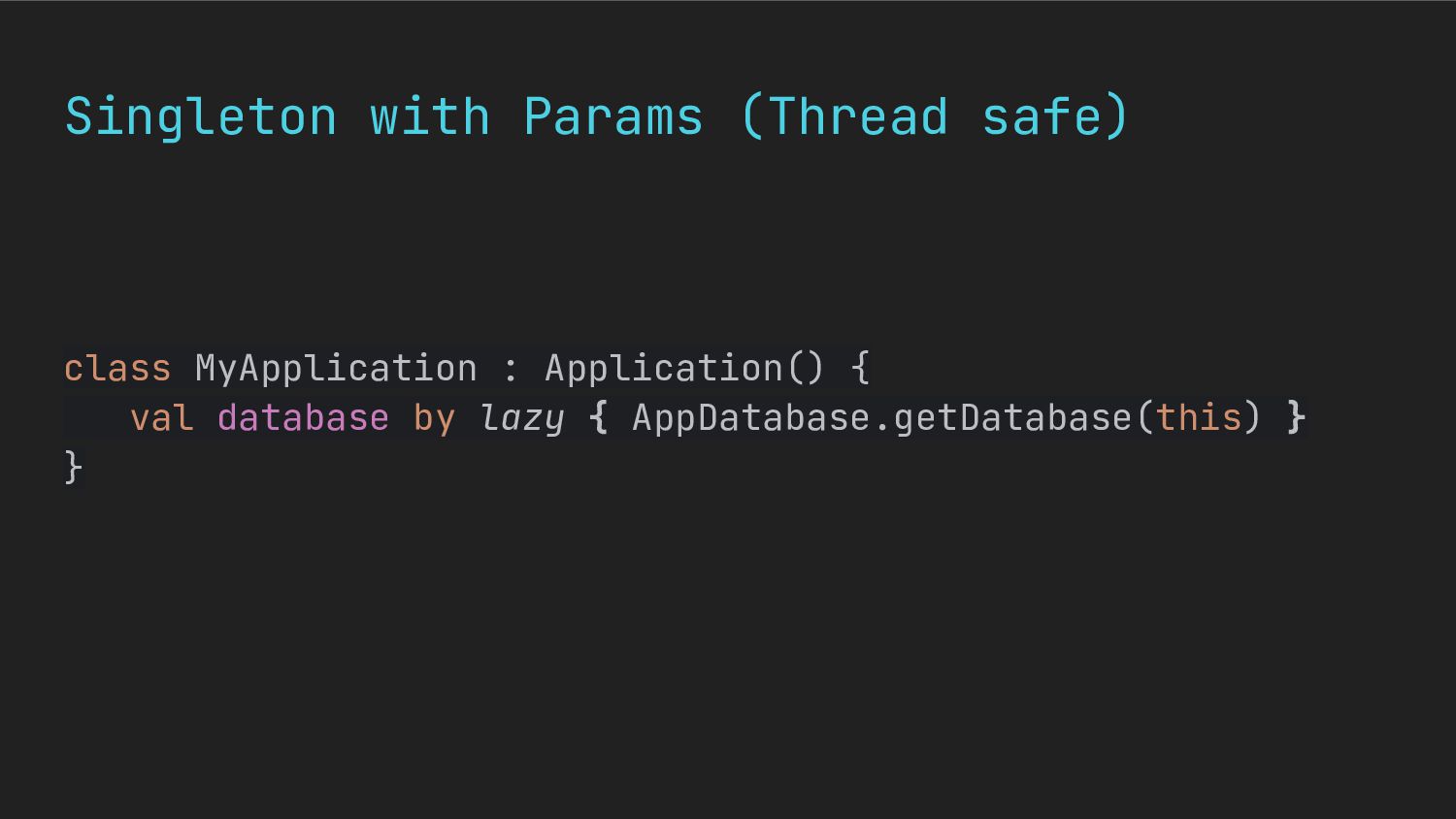
Singleton with Params (Thread safe) class MyApplication : Application() {
val database by lazy { AppDatabase.getDatabase(this) } }
An Anti-Pattern tells you how to go from a problem
to BAD Solution.
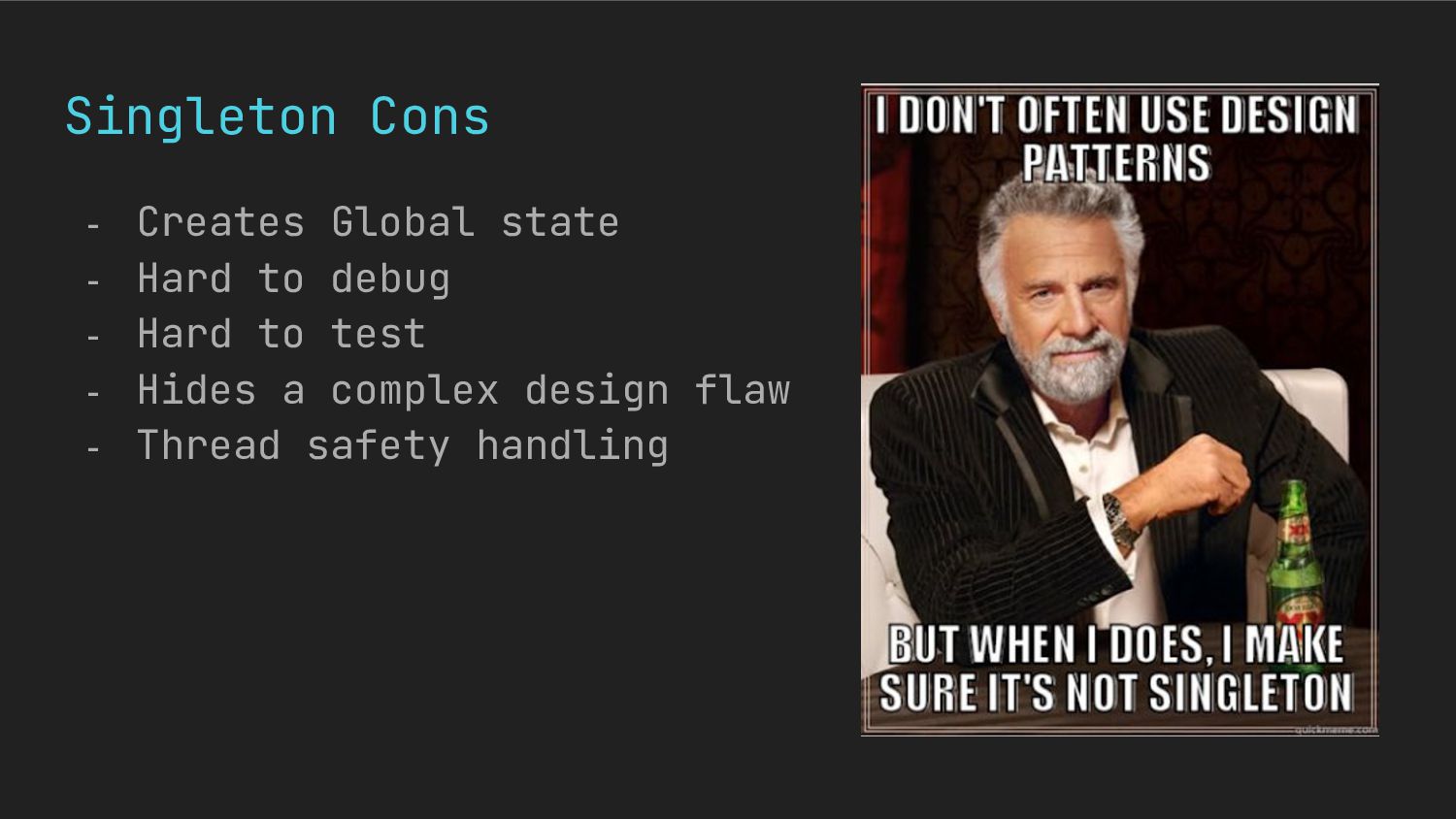
Singleton Cons - Creates Global state - Hard to debug
- Hard to test - Hides a complex design flaw - Thread safety handling
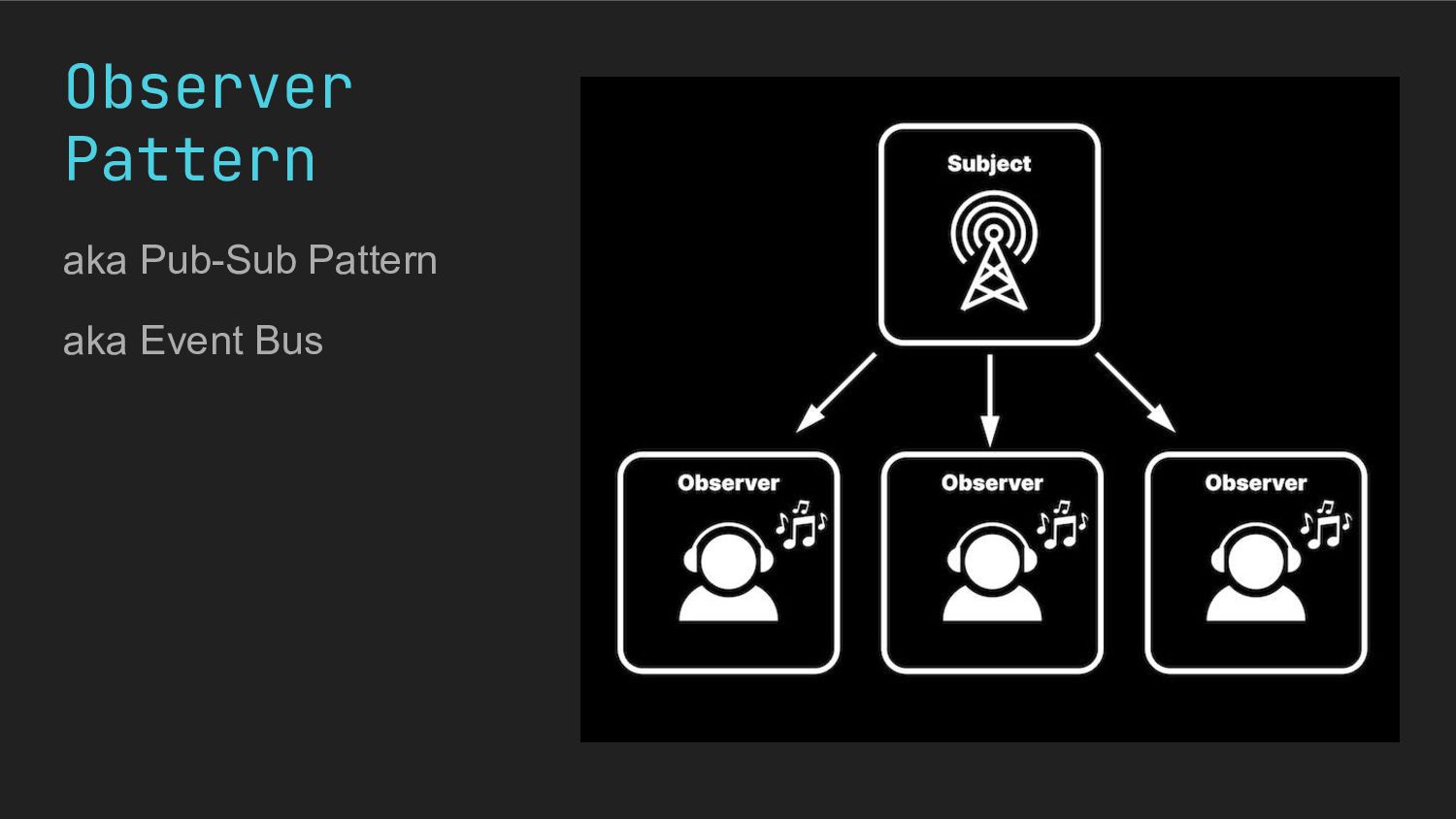
Observer Pattern aka Pub-Sub Pattern aka Event Bus
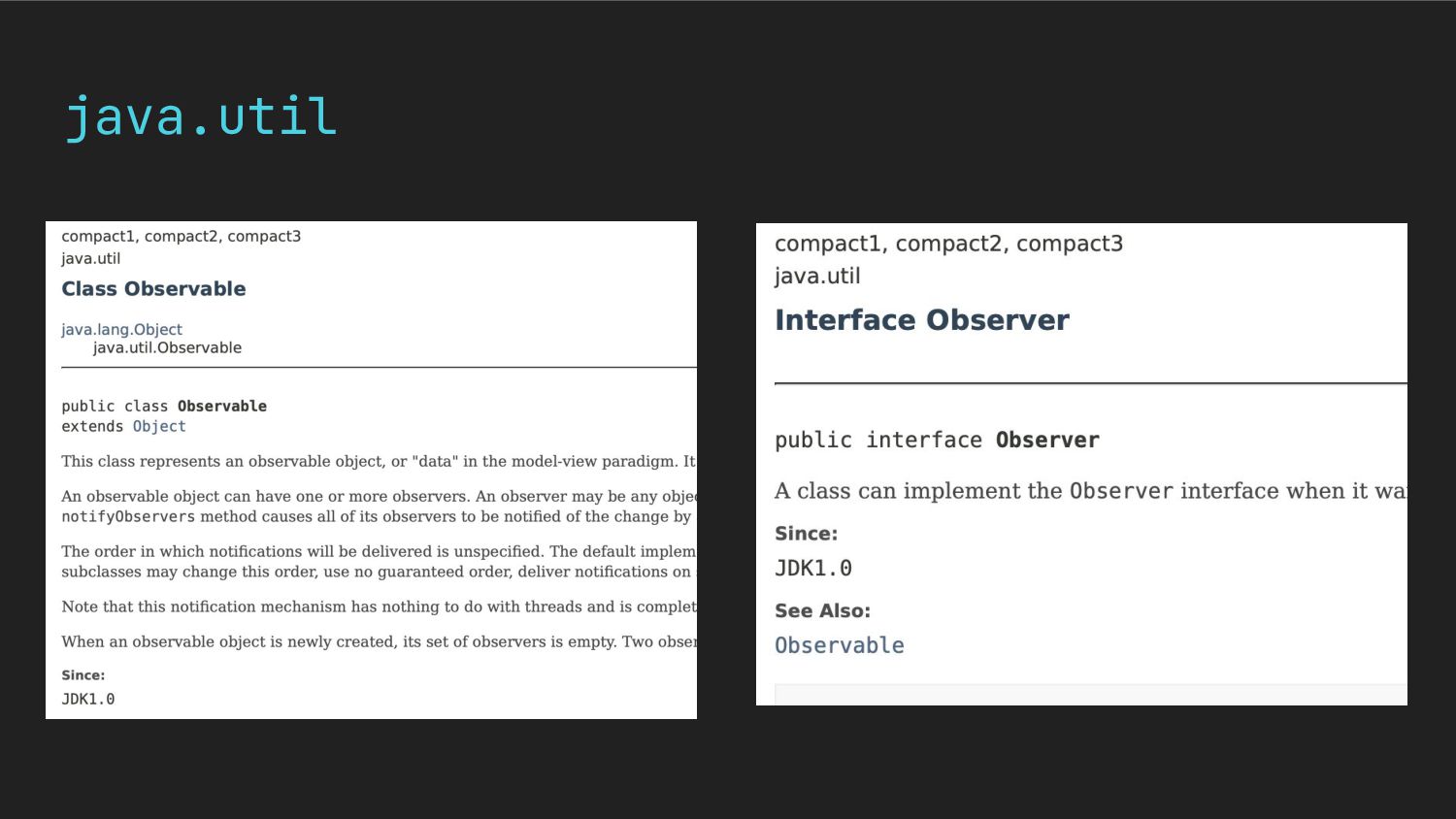
java.util
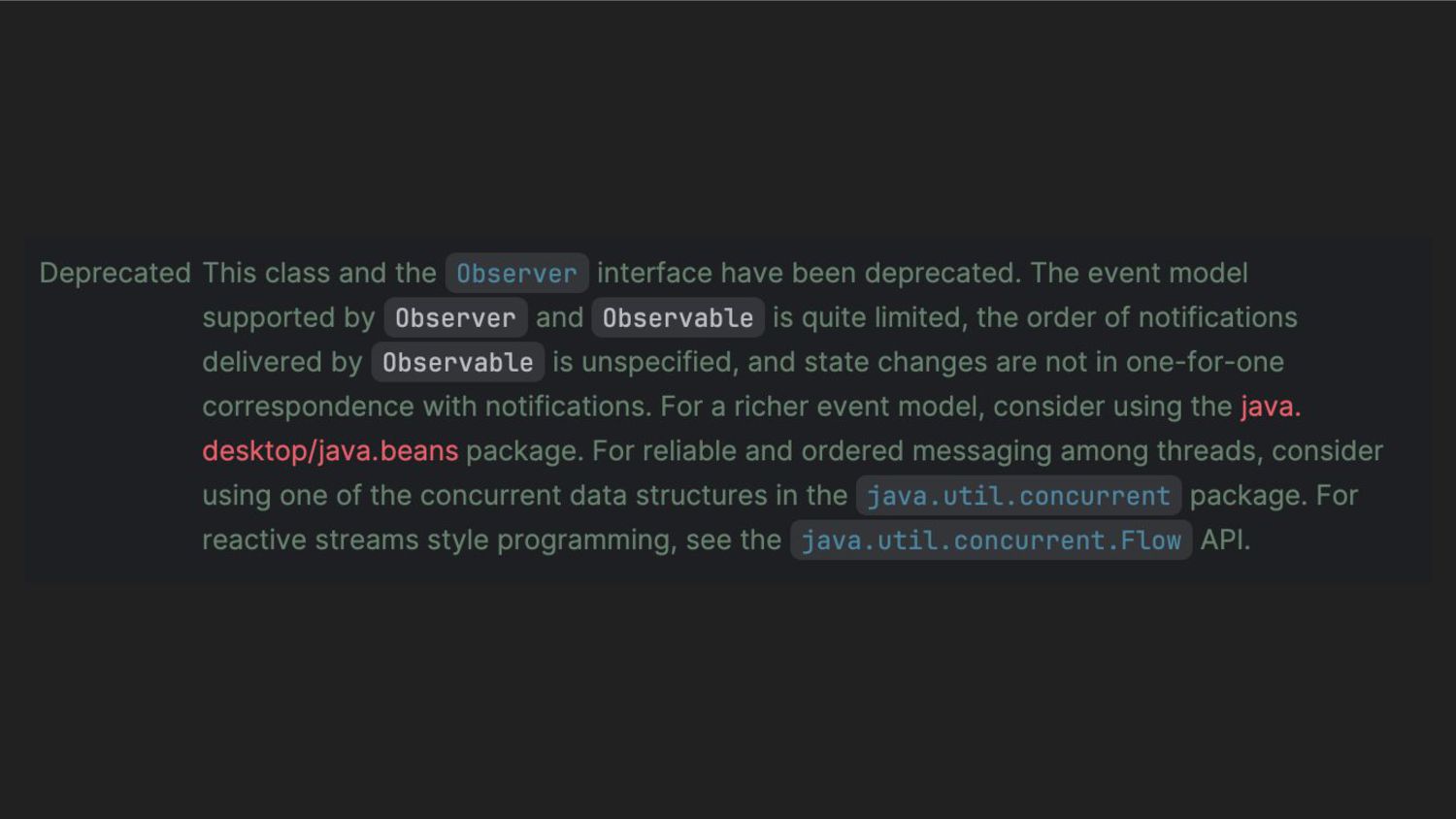
None
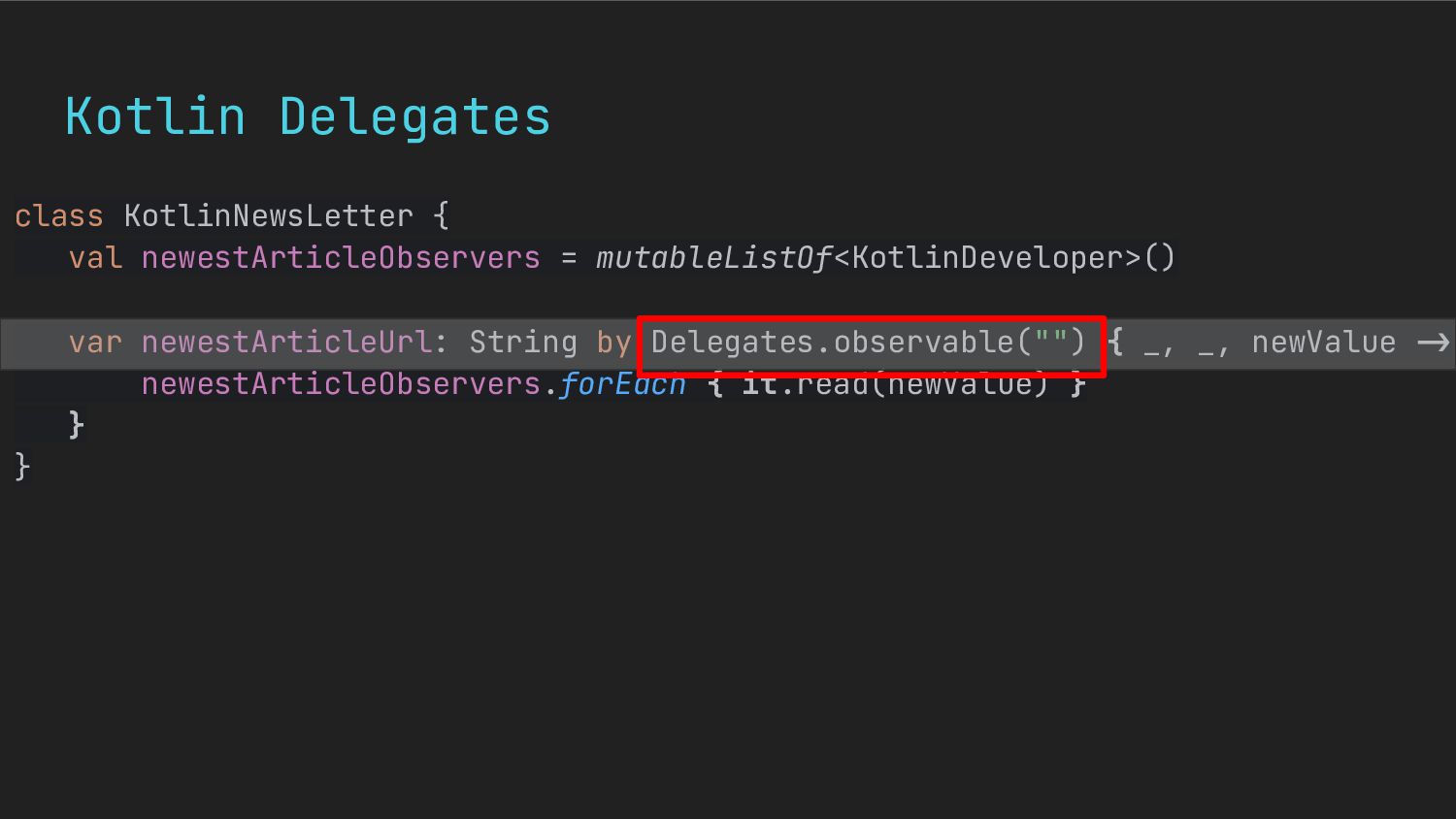
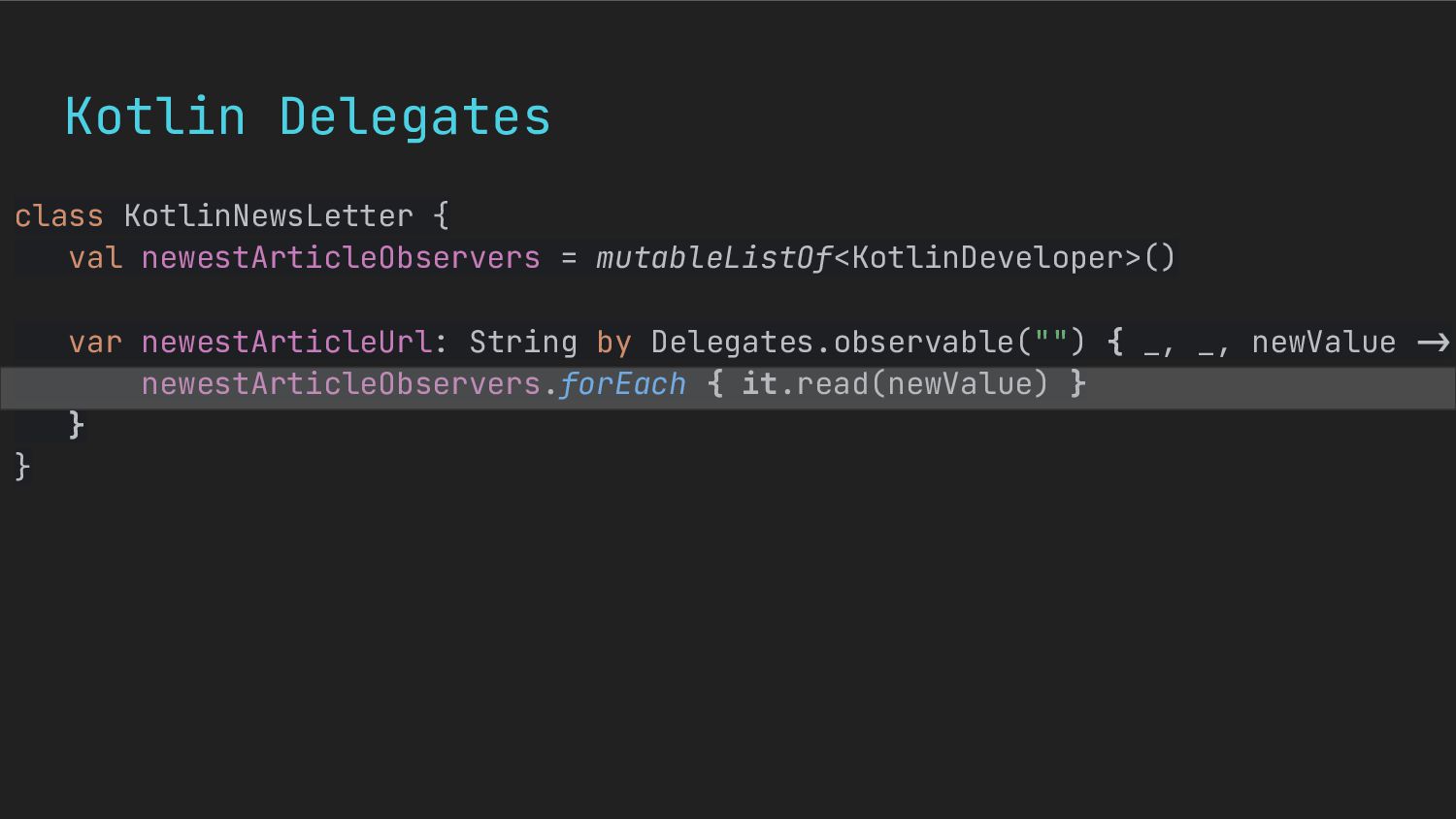
class KotlinNewsLetter { val newestArticleObservers = mutableListOf<KotlinDeveloper>() var newestArticleUrl: String
by Delegates.observable("") { _, _, newValue -> newestArticleObservers.forEach { it.read(newValue) } } } Kotlin Delegates
class KotlinNewsLetter { val newestArticleObservers = mutableListOf<KotlinDeveloper>() var newestArticleUrl: String
by Delegates.observable("") { _, _, newValue -> newestArticleObservers.forEach { it.read(newValue) } } } Kotlin Delegates
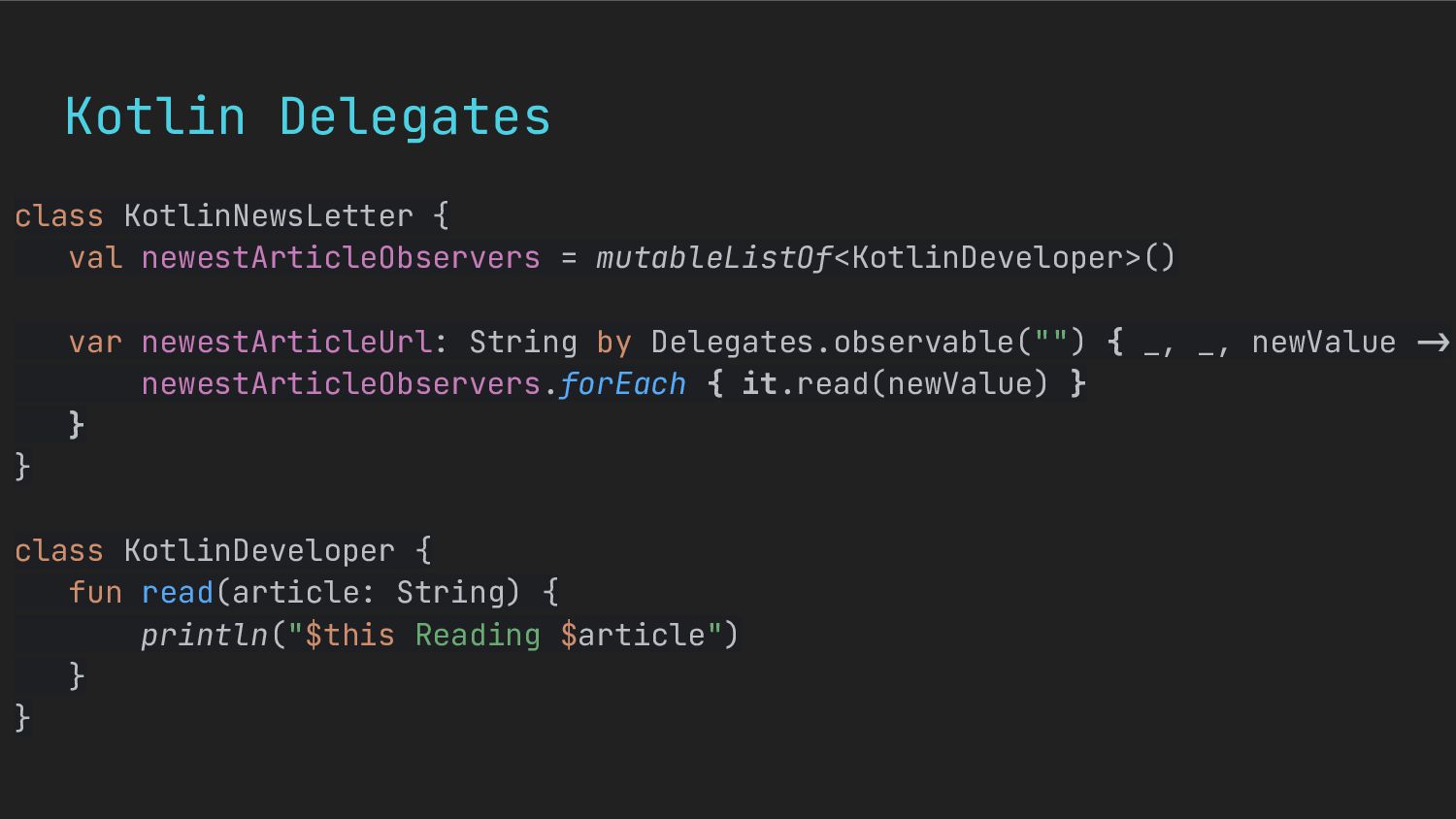
class KotlinNewsLetter { val newestArticleObservers = mutableListOf<KotlinDeveloper>() var newestArticleUrl: String
by Delegates.observable("") { _, _, newValue -> newestArticleObservers.forEach { it.read(newValue) } } } class KotlinDeveloper { fun read(article: String) { println("$this Reading $article") } } Kotlin Delegates
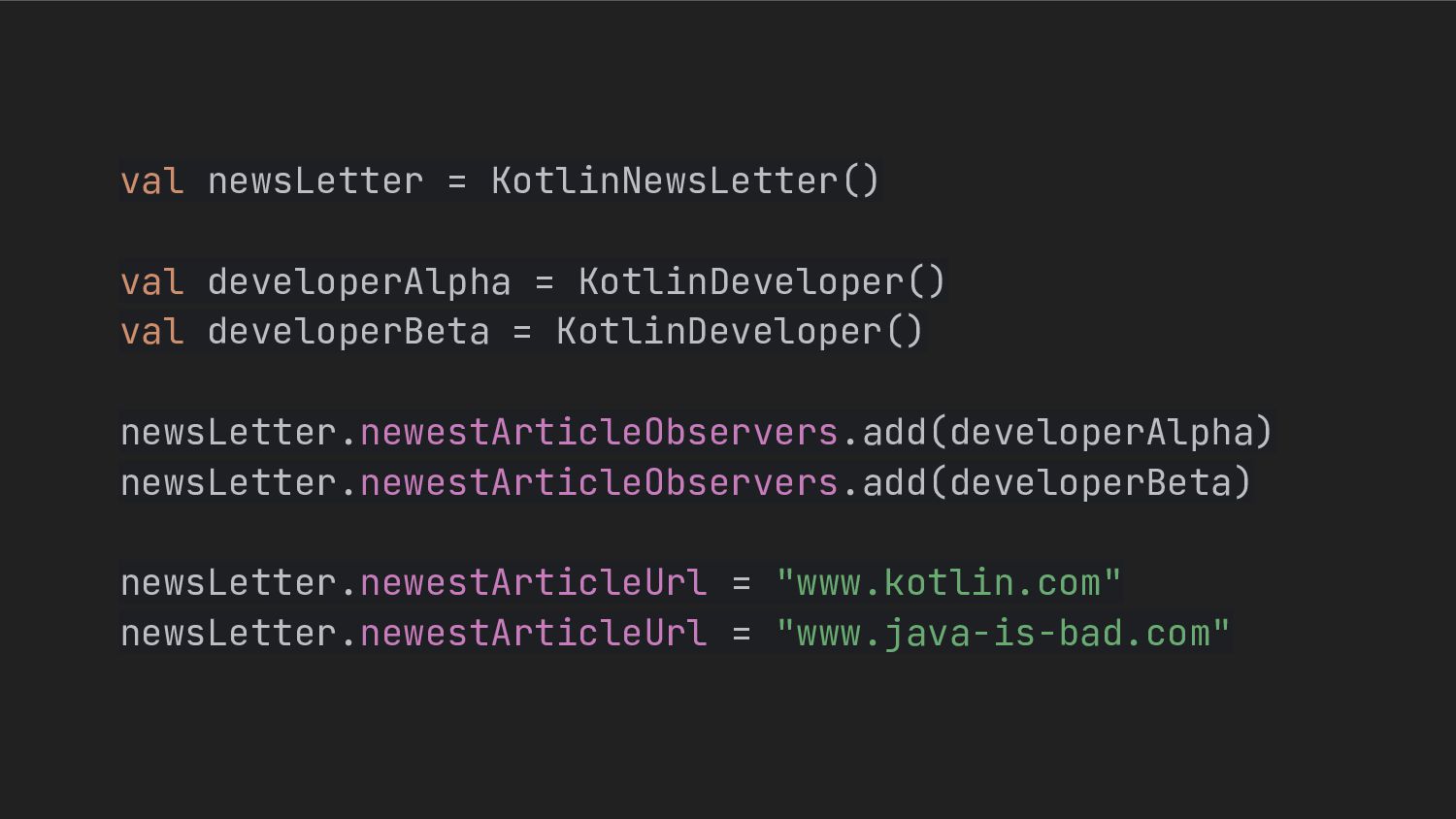
val newsLetter = KotlinNewsLetter() val developerAlpha = KotlinDeveloper() val developerBeta
= KotlinDeveloper() newsLetter.newestArticleObservers.add(developerAlpha) newsLetter.newestArticleObservers.add(developerBeta) newsLetter.newestArticleUrl = "www.kotlin.com" newsLetter.newestArticleUrl = "www.java-is-bad.com"
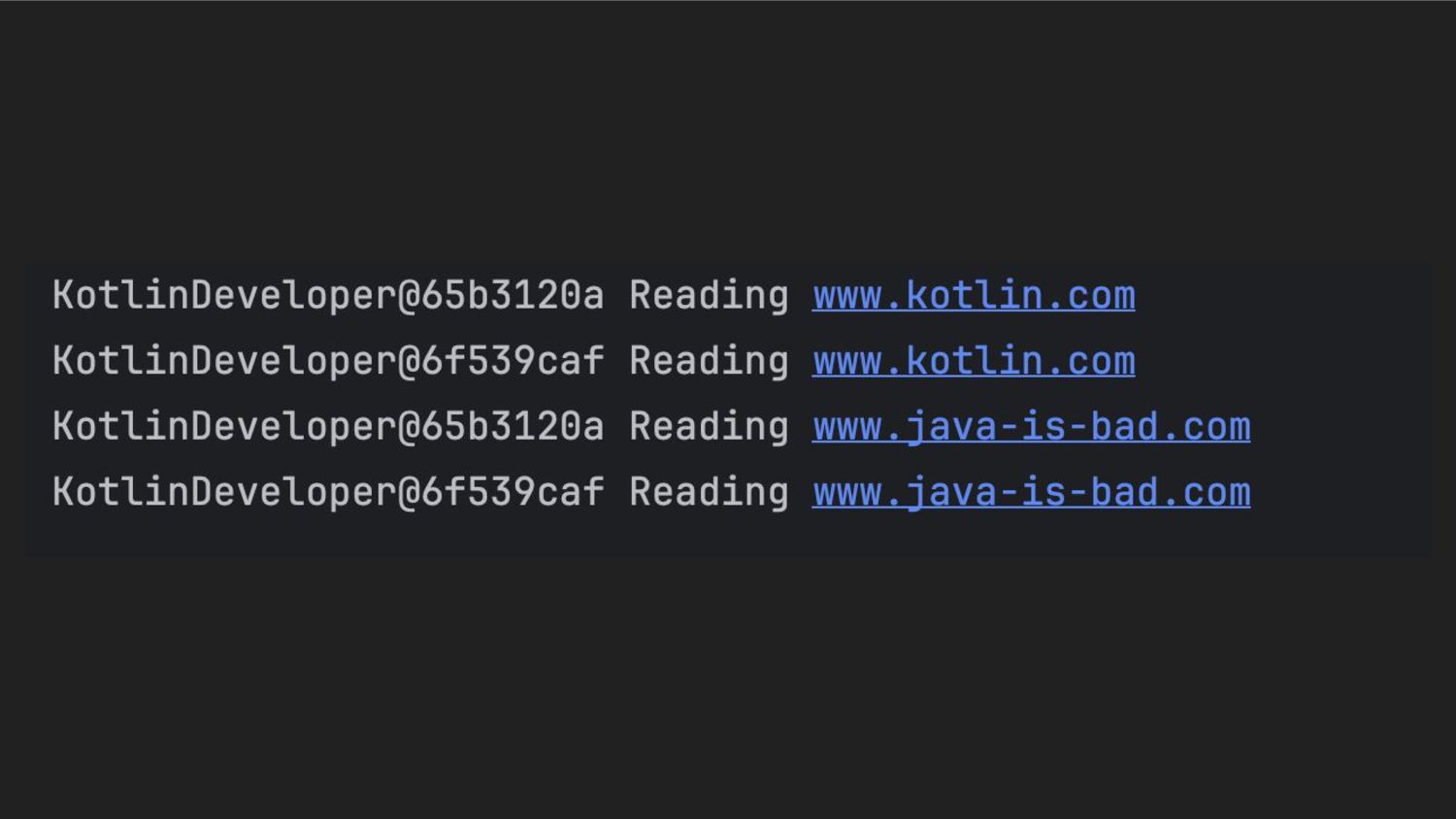
None
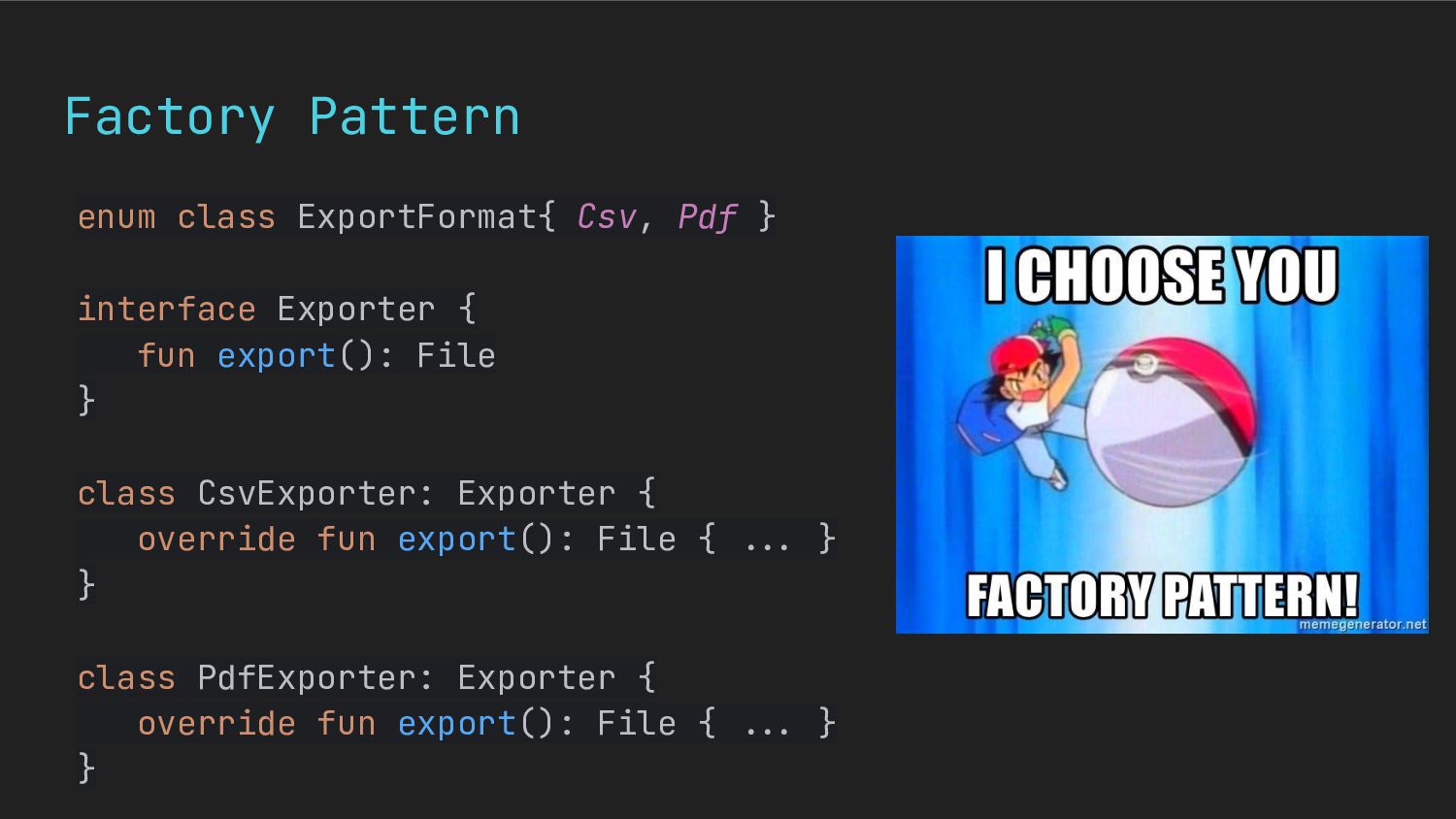
Factory Pattern enum class ExportFormat{ Csv, Pdf } interface Exporter
{ fun export(): File } class CsvExporter: Exporter { override fun export(): File { --. } } class PdfExporter: Exporter { override fun export(): File { --. } }
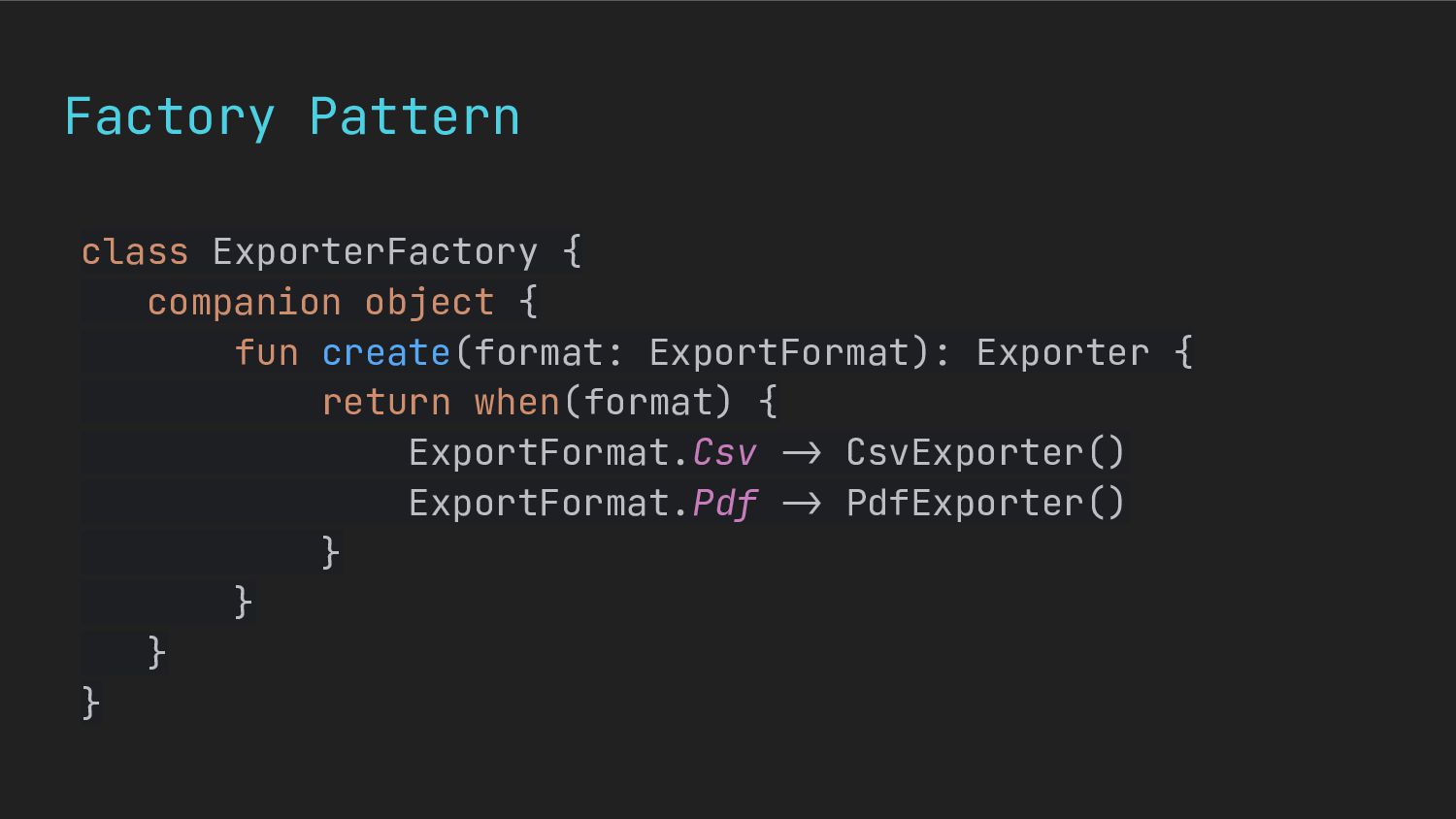
Factory Pattern class ExporterFactory { companion object { fun create(format:
ExportFormat): Exporter { return when(format) { ExportFormat.Csv -> CsvExporter() ExportFormat.Pdf -> PdfExporter() } } } }
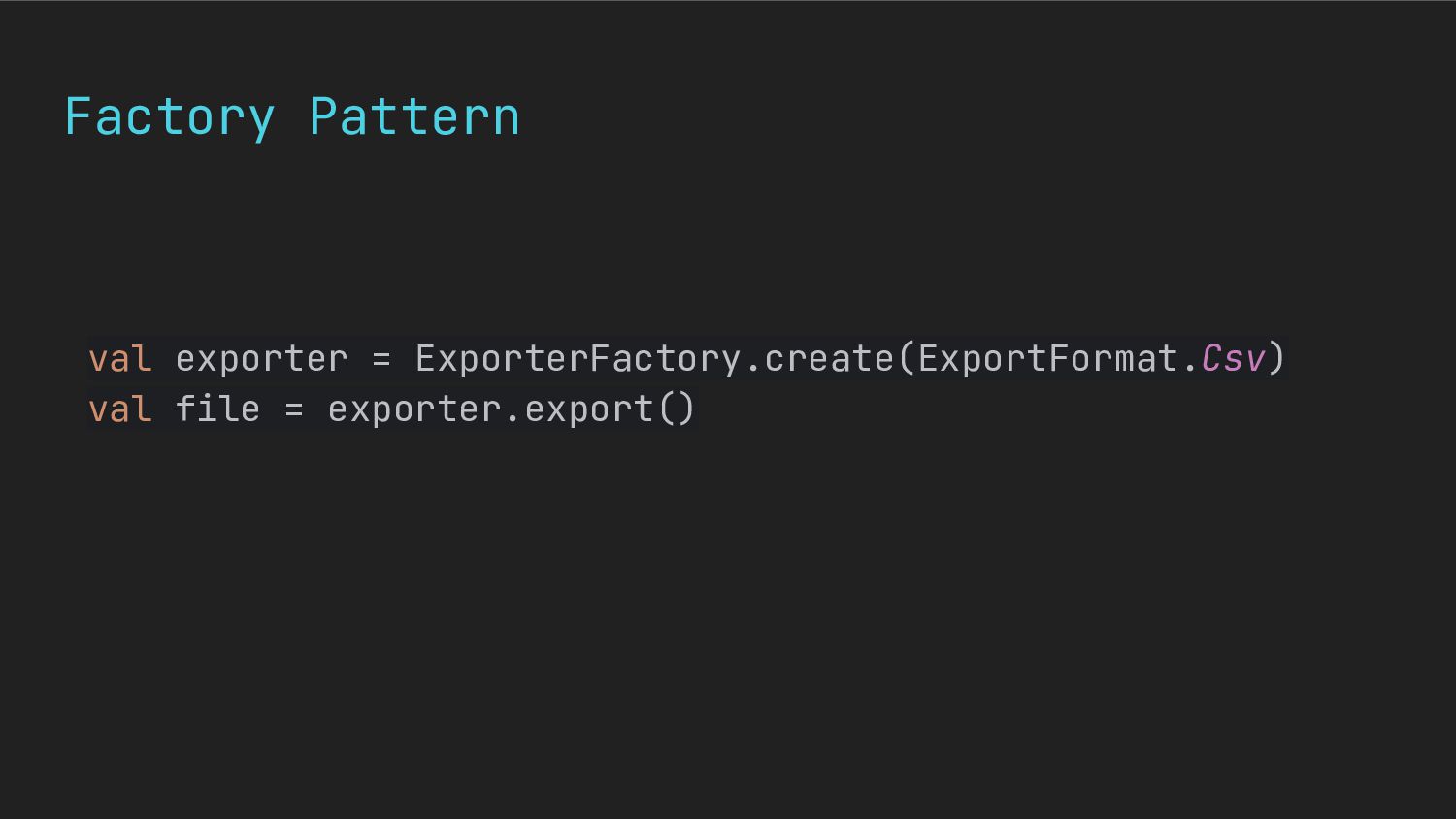
Factory Pattern val exporter = ExporterFactory.create(ExportFormat.Csv) val file = exporter.export()
Factory Pattern with different constructor parameters?
Sealed Classes
None
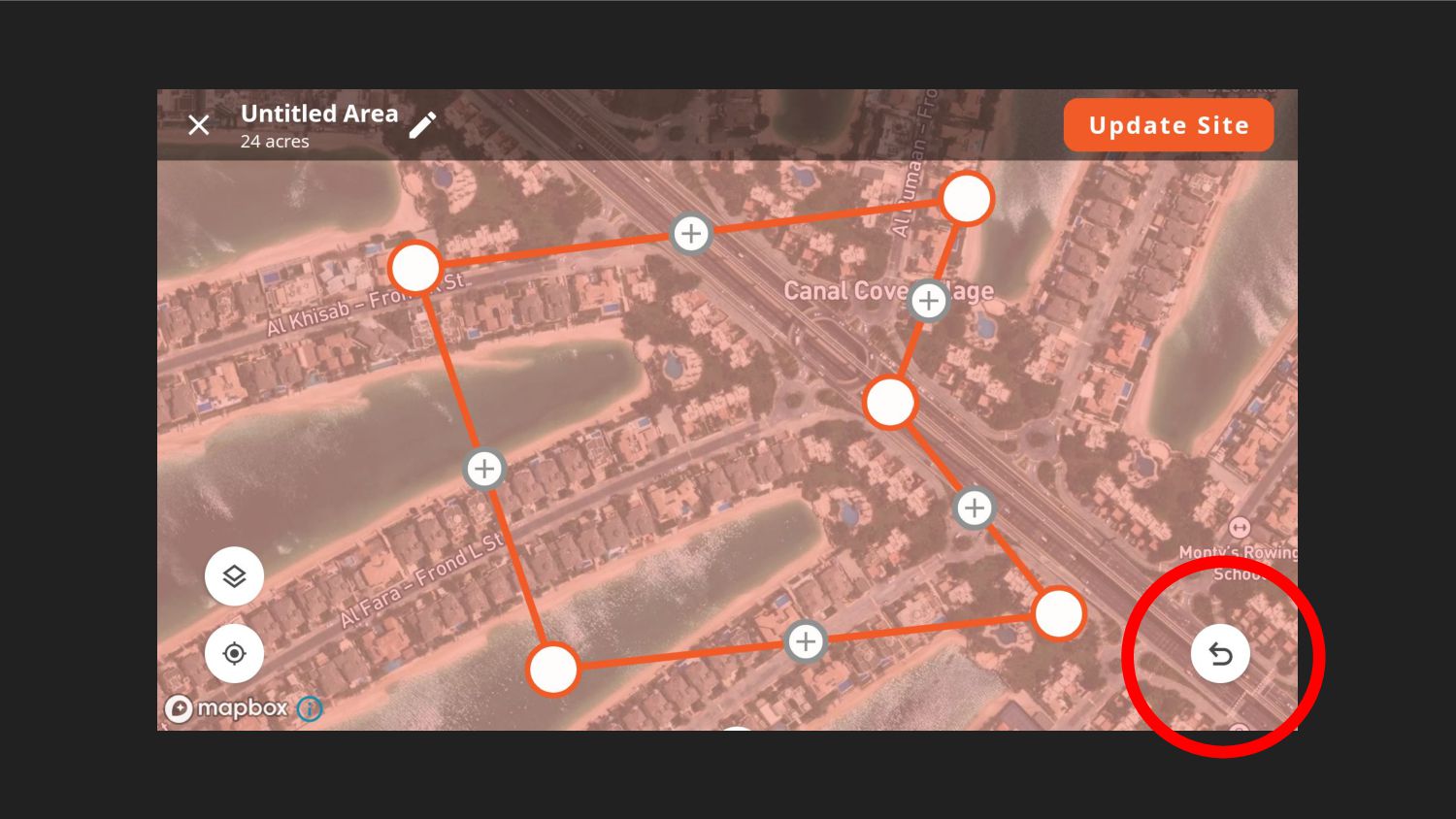
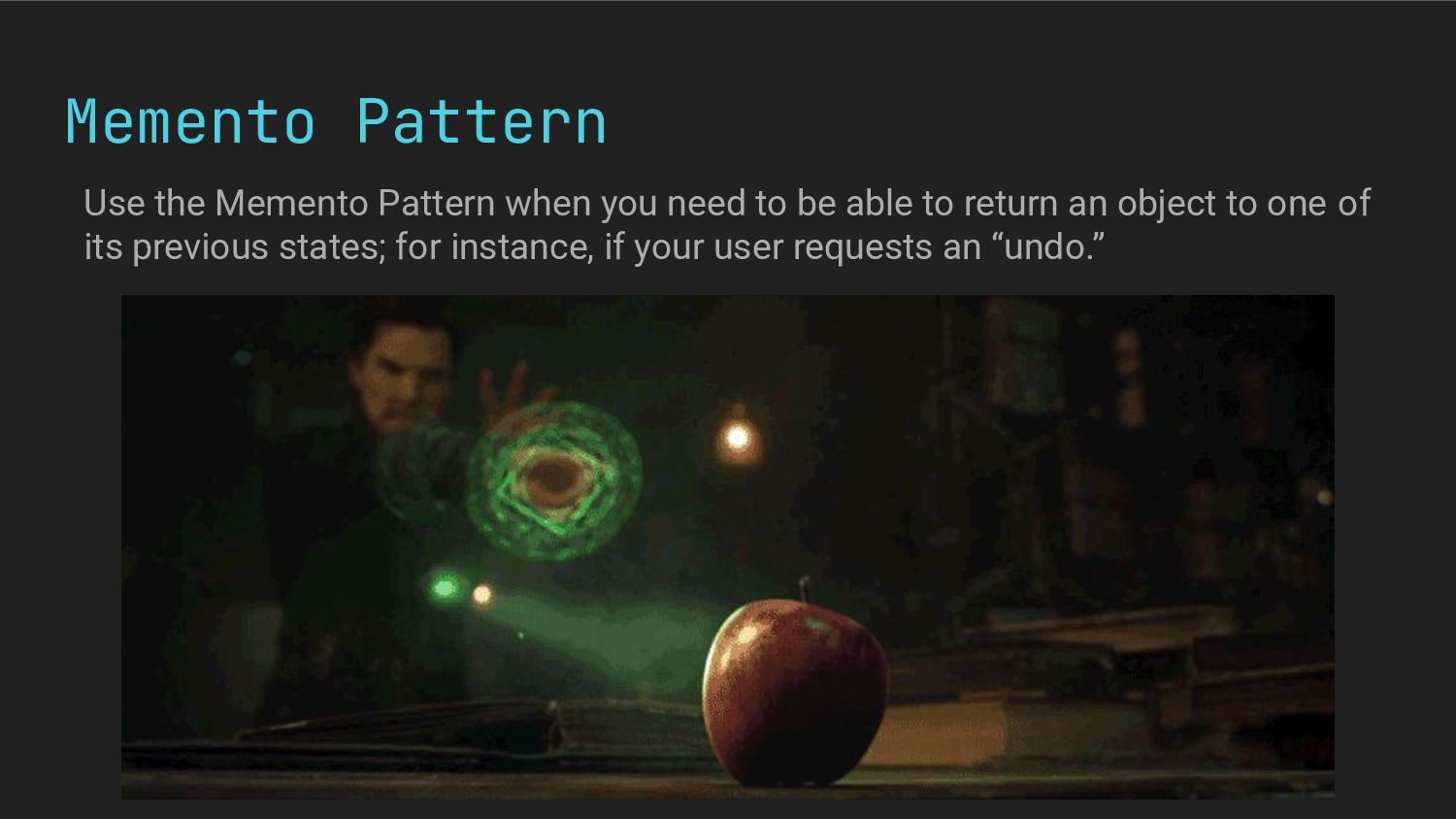
Memento Pattern Use the Memento Pattern when you need to
be able to return an object to one of its previous states; for instance, if your user requests an “undo.”
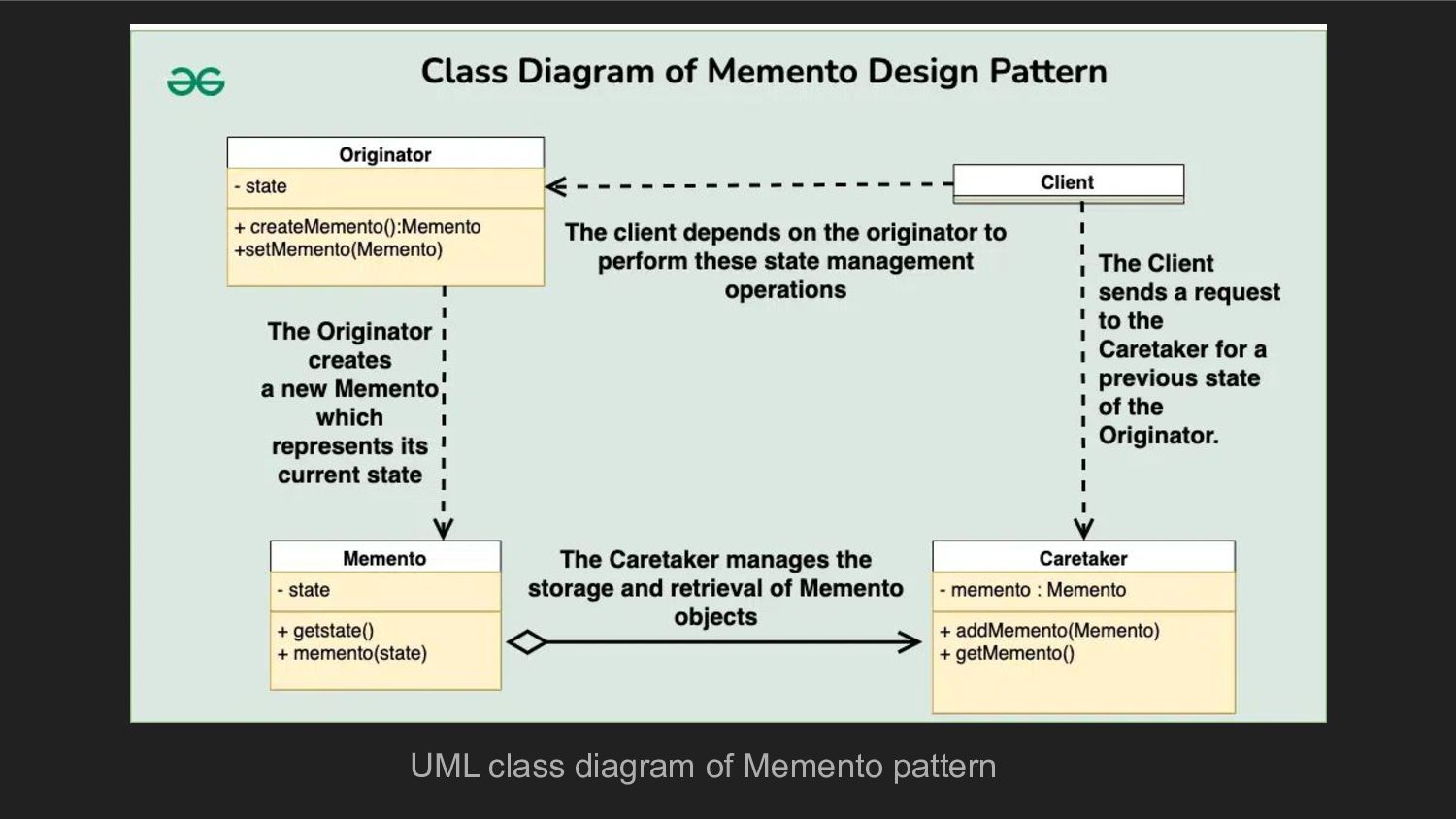
UML class diagram of Memento pattern
Design Principle Identify the aspects of your application that vary
and separate them from what stays the same.
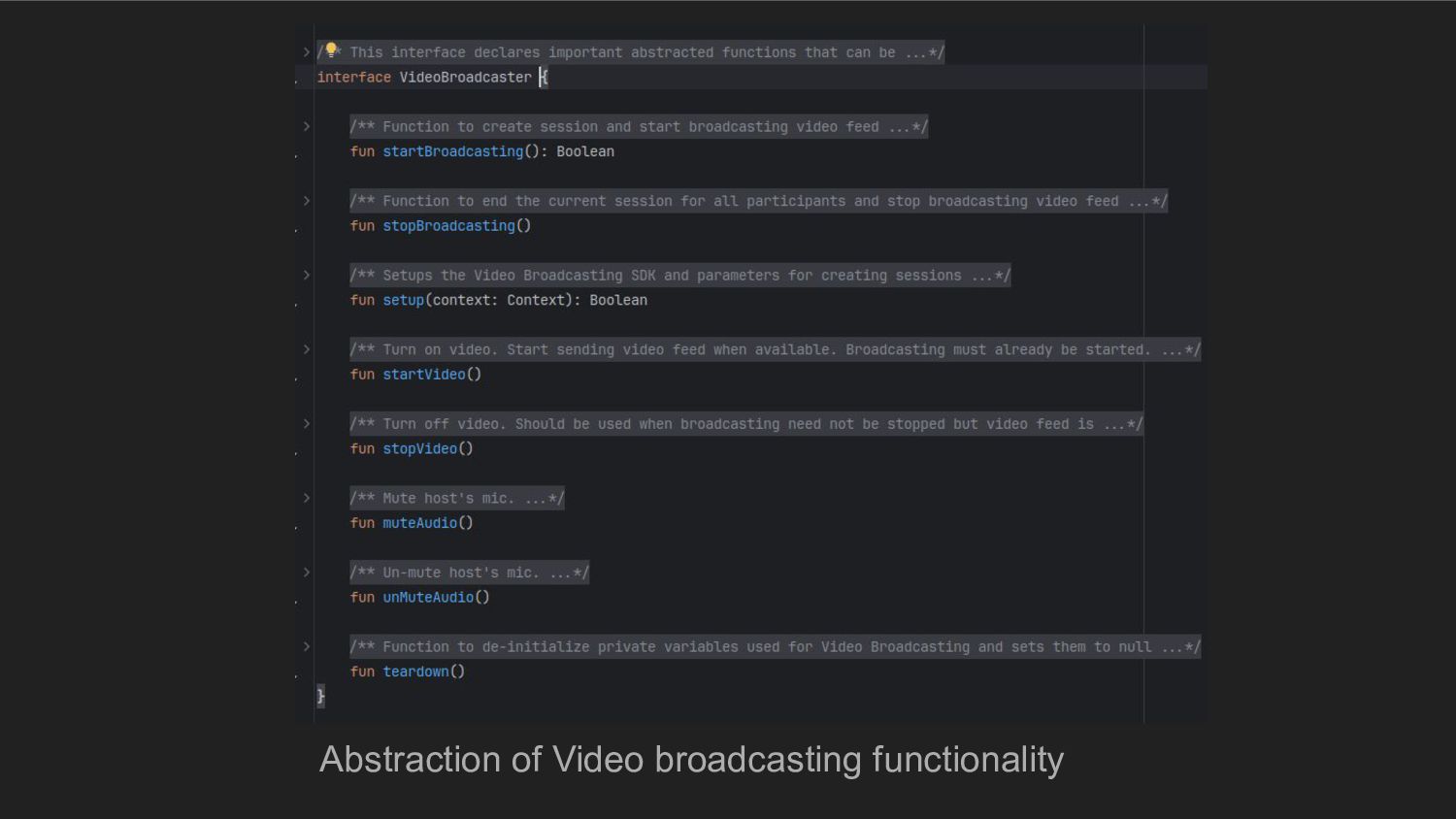
Abstraction of Video broadcasting functionality
Design Principle Program to an interface, not an implementation.
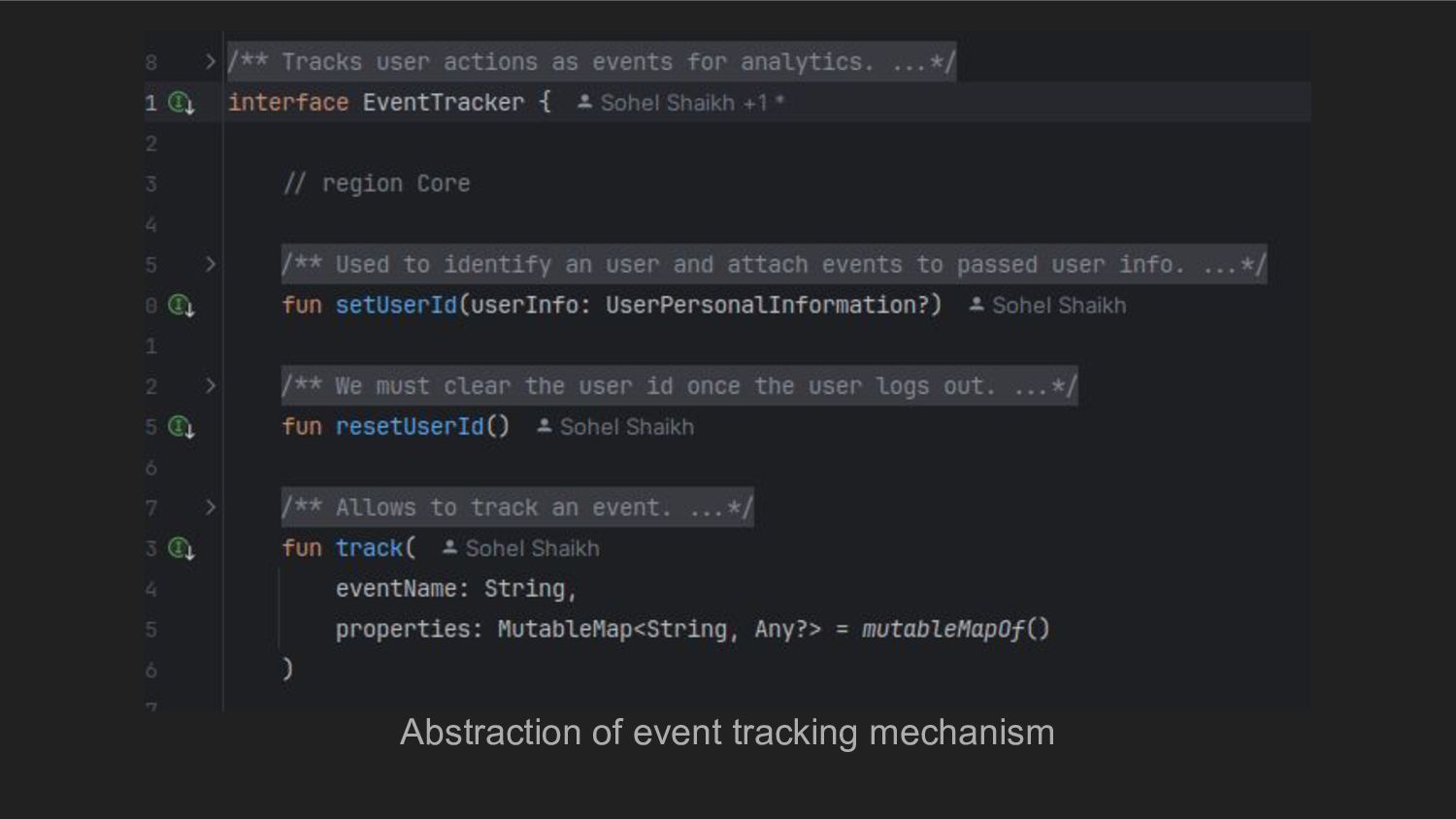
Abstraction of event tracking mechanism
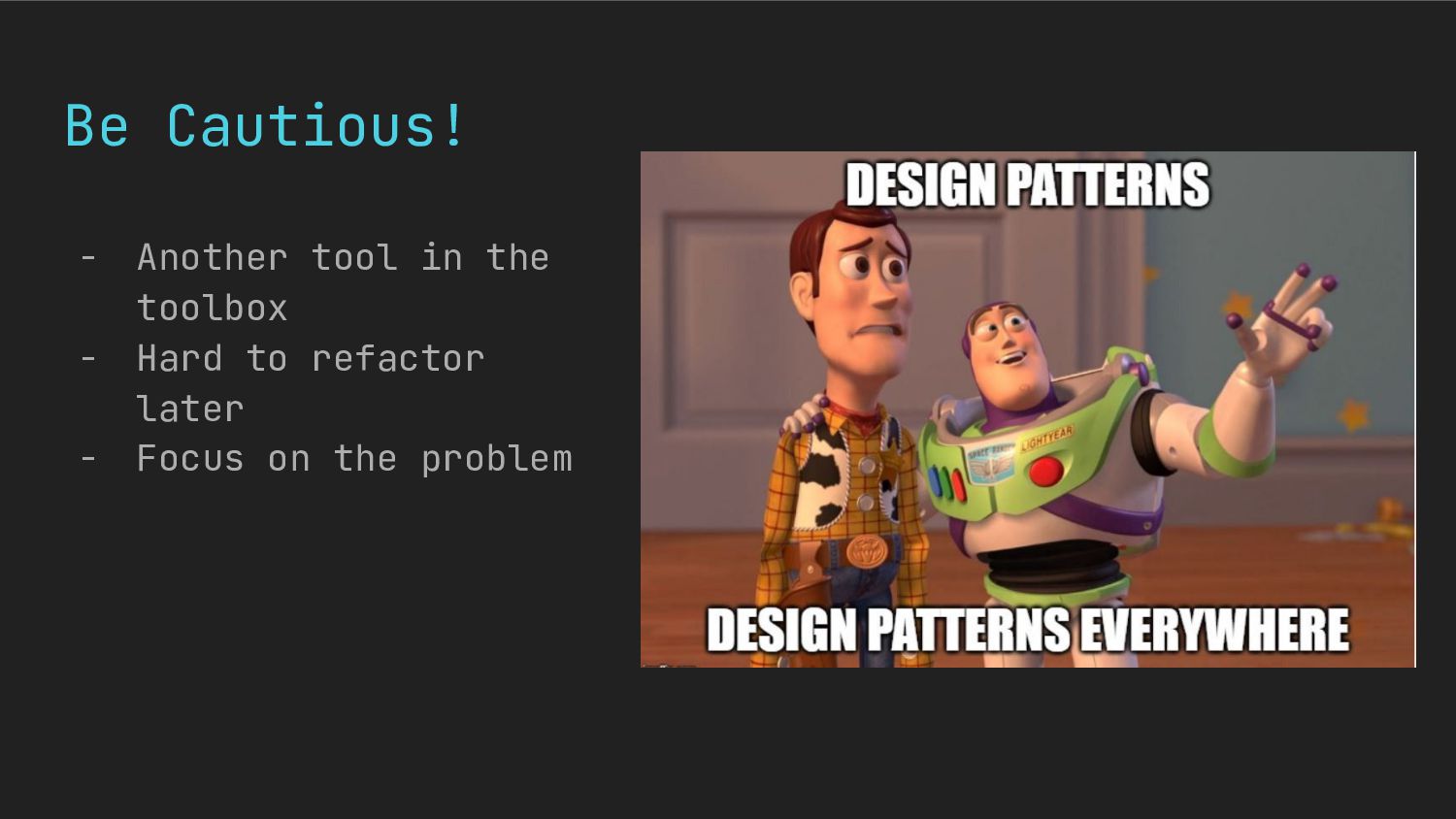
Be Cautious! - Another tool in the toolbox - Hard
to refactor later - Focus on the problem
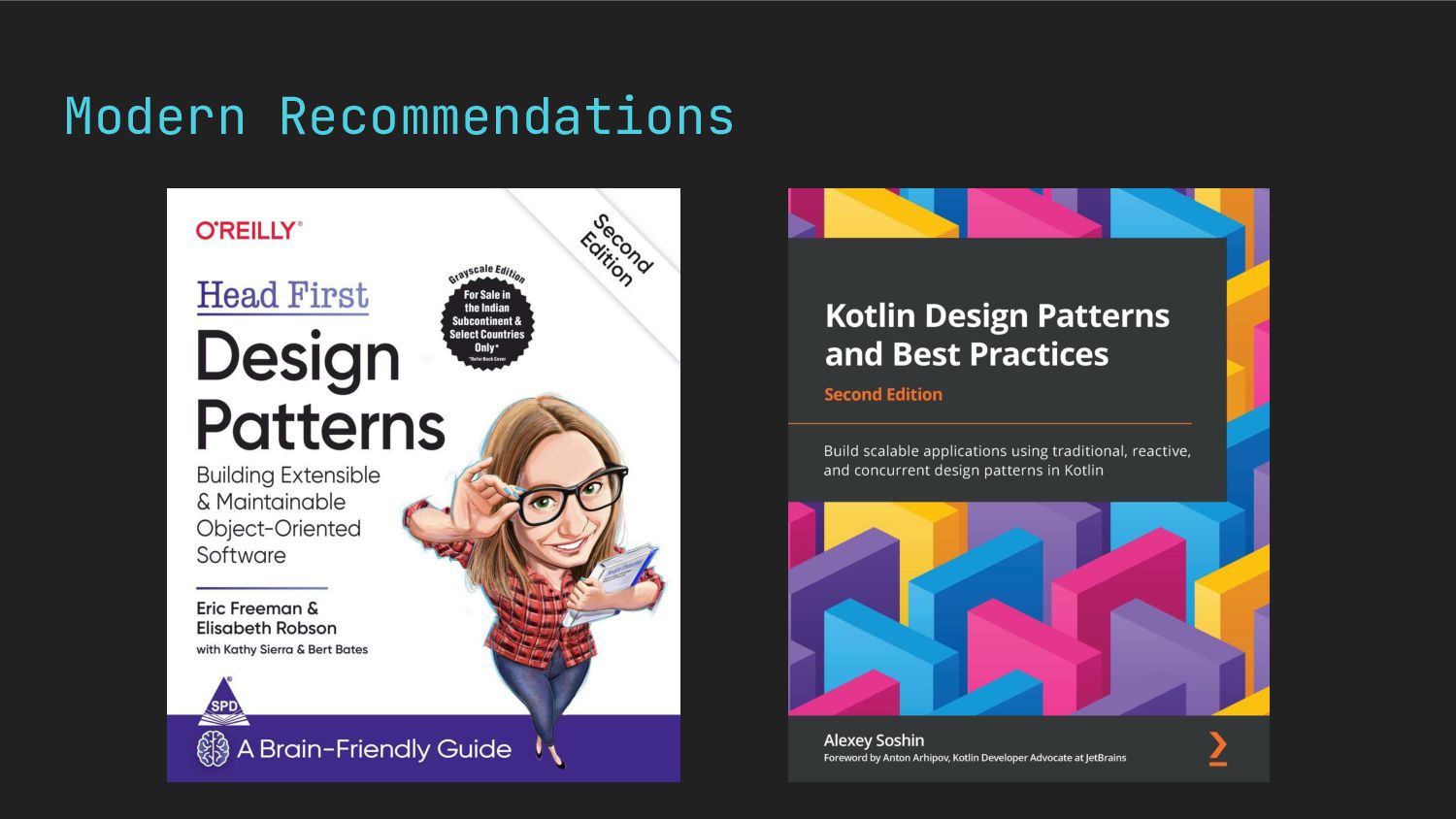
Modern Recommendations
Unlocking the economic potential of the skies We’re Hiring! Skylark
Drones
What are your questions? Too shy? Ping me @thesohelshaikh
Thank you!


 thesohelshaikh
 inesmontani
 mza
mza
 rabernat
 aleyda
 bluesmoon
 letsgokoyo
 tamaranovitovic
 maggiecrowley
 mraible
 skoyamalab
 sarafernandez
 davidcarrasco