while taking the CKS exam • Even if you’re familiar with Kubernetes security, there are surprisingly few opportunities to learn about it in a systematic way • I hope this will give you the confidence to think, “Oh, so knowing this much is enough,” and serve as an opportunity to fill in any gaps in your knowledge • I'm not a security professional🙏
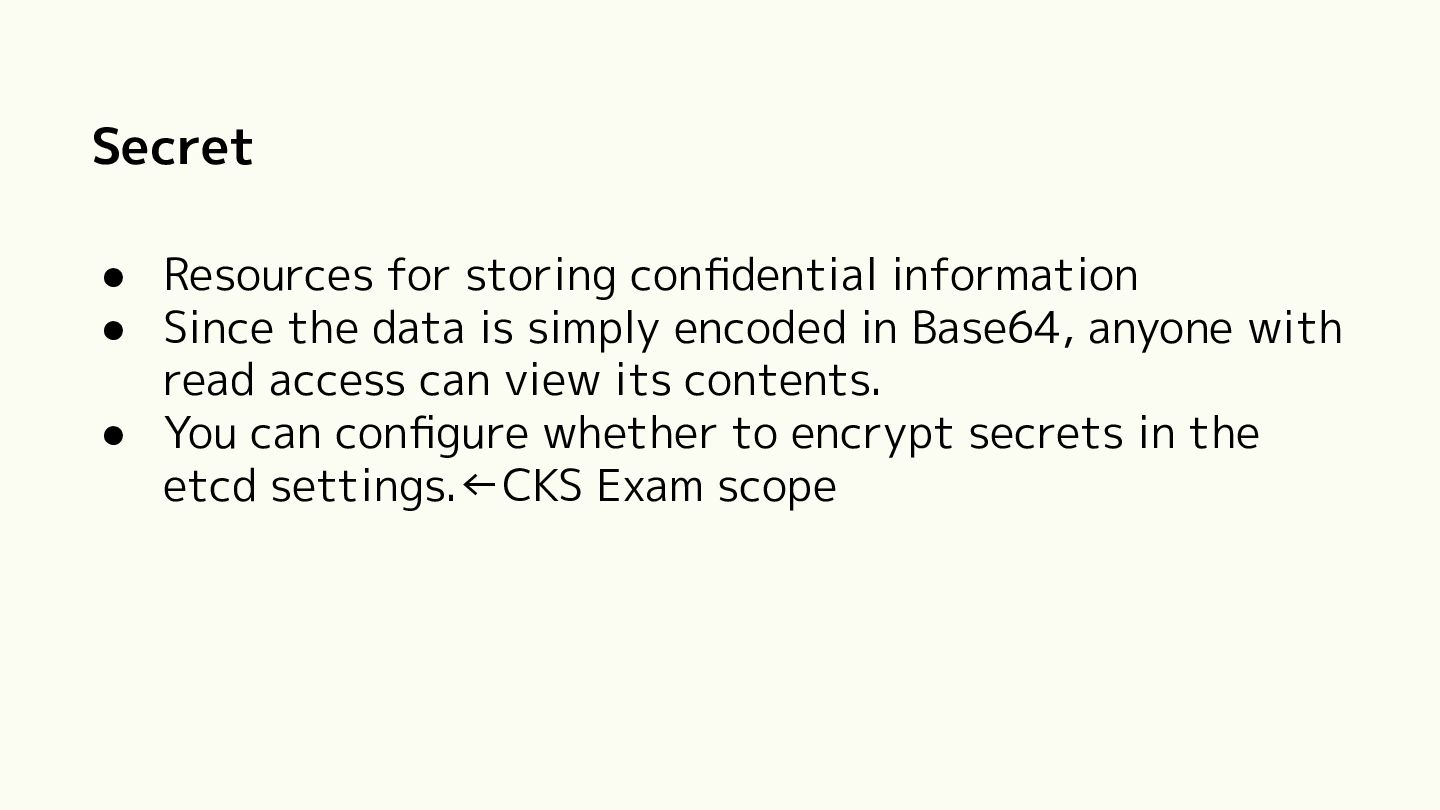
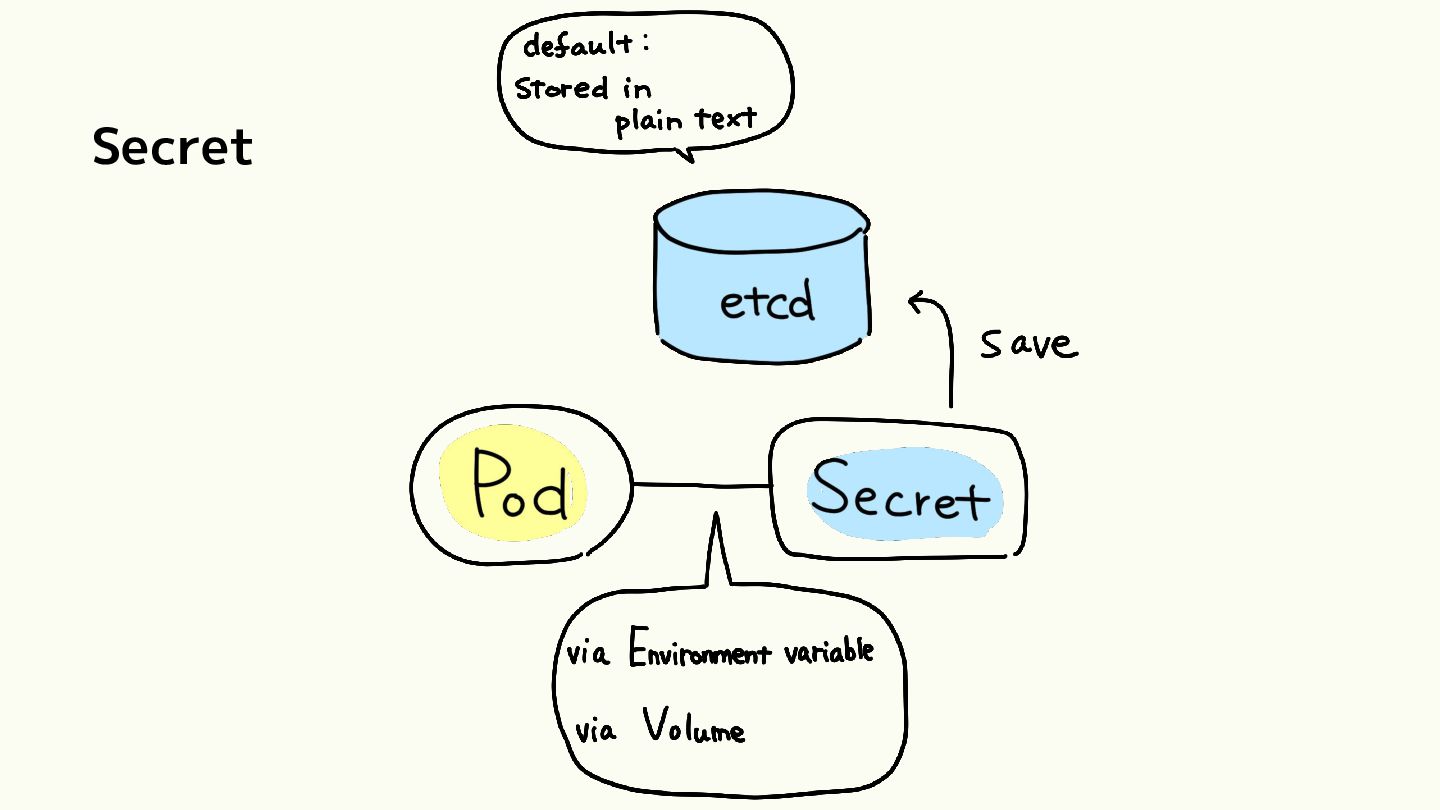
data is simply encoded in Base64, anyone with read access can view its contents. • You can configure whether to encrypt secrets in the etcd settings.←CKS Exam scope
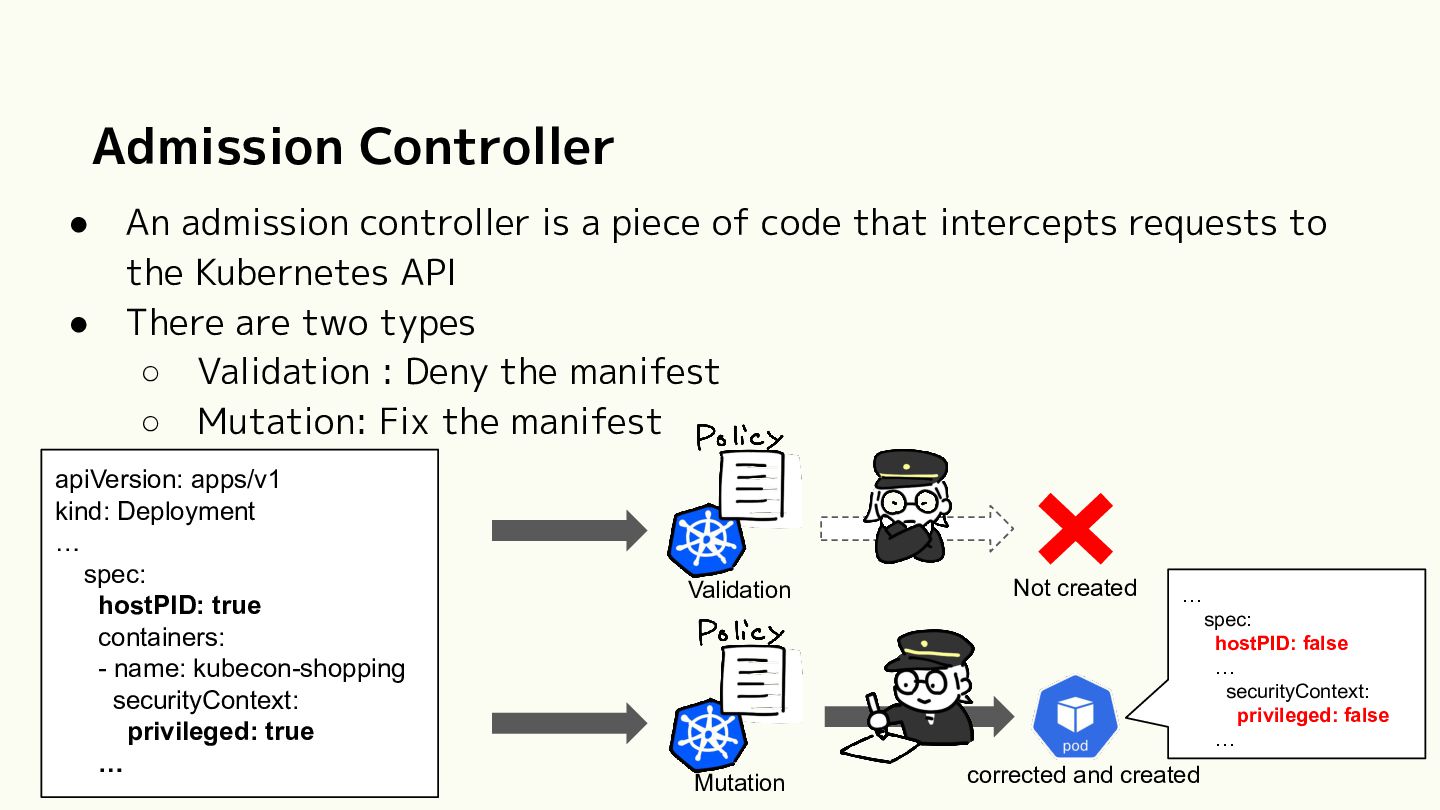
of code that intercepts requests to the Kubernetes API There are two types ◦ Validation : Deny the manifest ◦ Mutation: Fix the manifest apiVersion: apps/v1 kind: Deployment … spec: hostPID: true containers: - name: kubecon-shopping securityContext: privileged: true … Validation Not created … spec: hostPID: false … securityContext: privileged: false … Mutation corrected and created
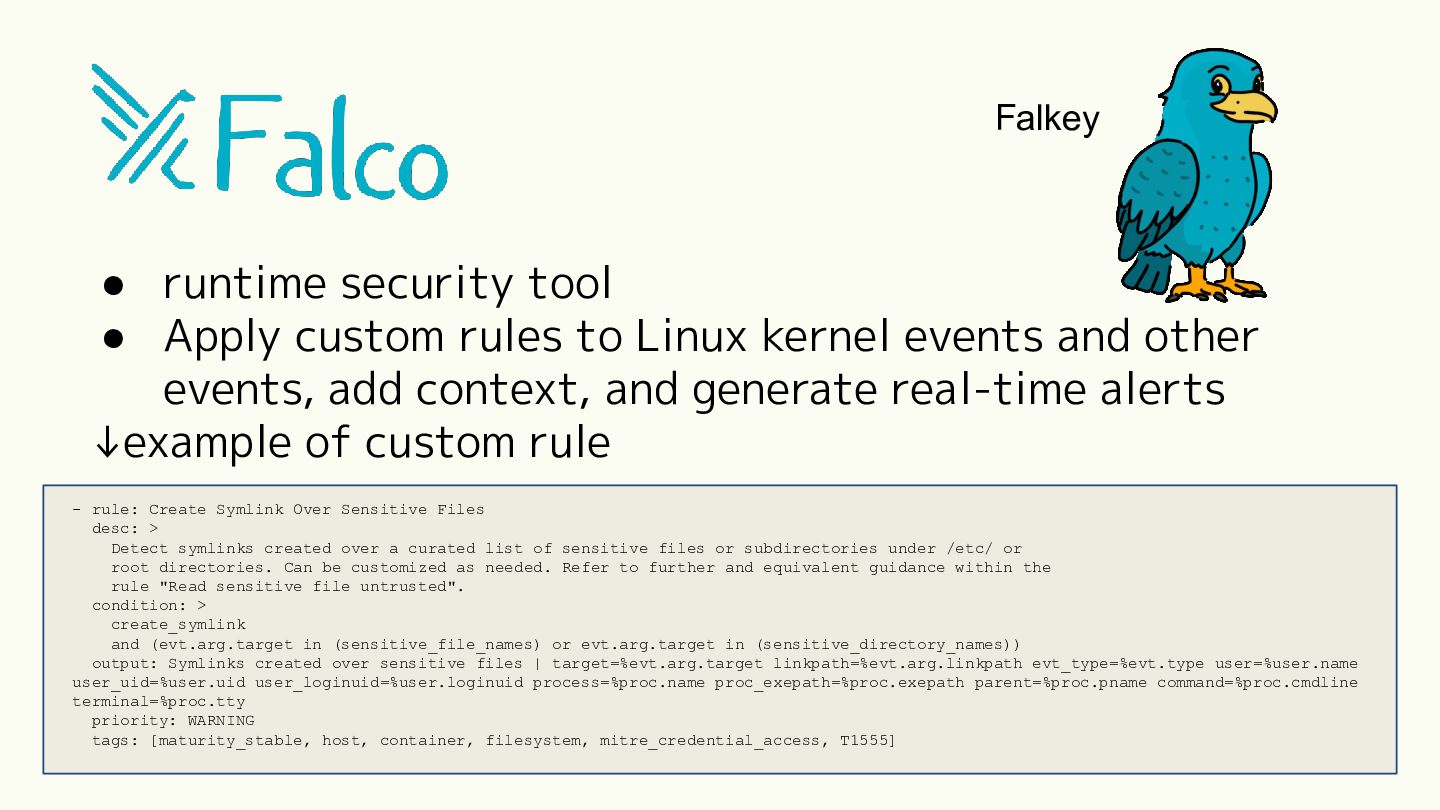
Linux kernel events and other events, add context, and generate real-time alerts ↓example of custom rule - rule: Create Symlink Over Sensitive Files desc: > Detect symlinks created over a curated list of sensitive files or subdirectories under /etc/ or root directories. Can be customized as needed. Refer to further and equivalent guidance within the rule "Read sensitive file untrusted". condition: > create_symlink and (evt.arg.target in (sensitive_file_names) or evt.arg.target in (sensitive_directory_names)) output: Symlinks created over sensitive files | target=%evt.arg.target linkpath=%evt.arg.linkpath evt_type=%evt.type user=%user.name user_uid=%user.uid user_loginuid=%user.loginuid process=%proc.name proc_exepath=%proc.exepath parent=%proc.pname command=%proc.cmdline terminal=%proc.tty priority: WARNING tags: [maturity_stable, host, container, filesystem, mitre_credential_access, T1555]
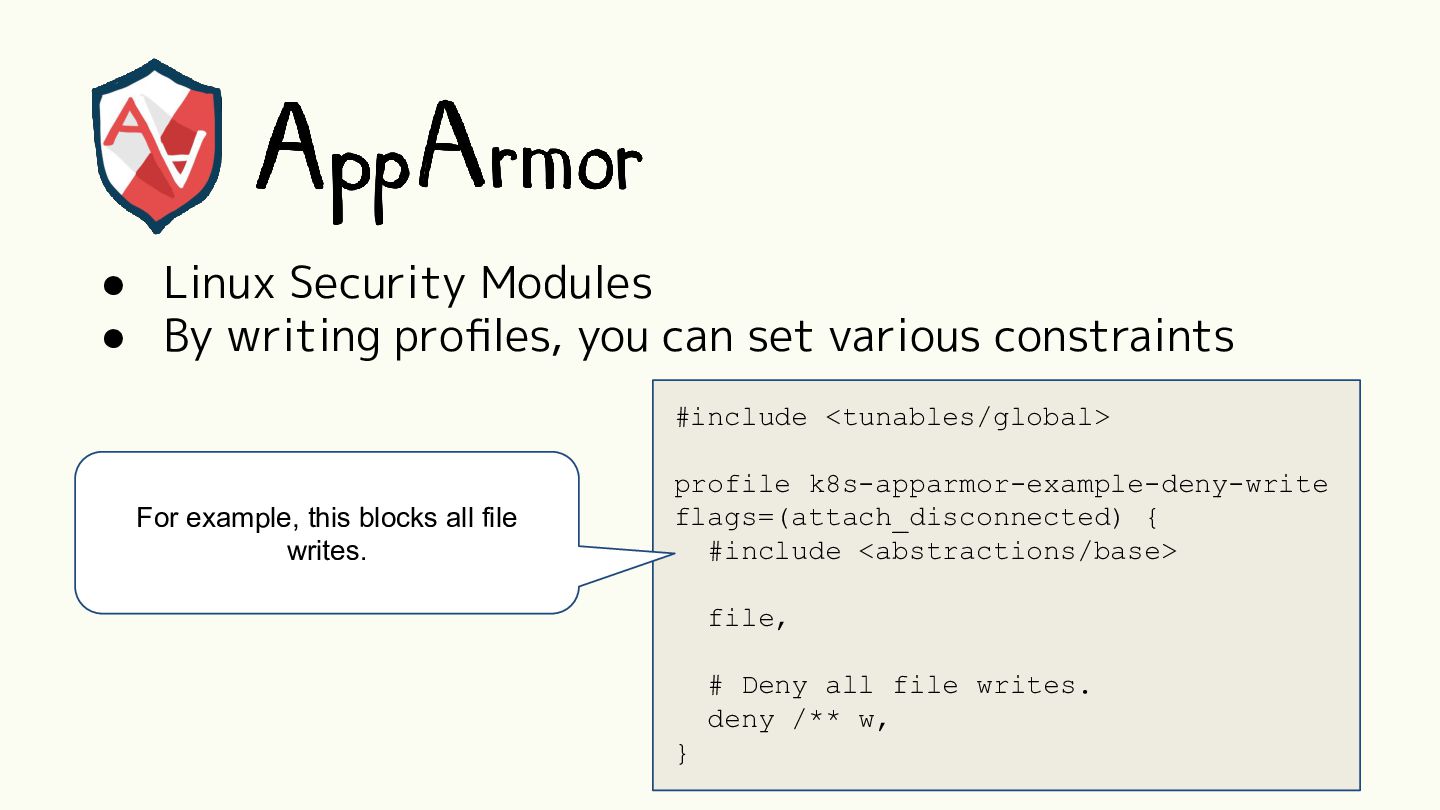
set various constraints #include <tunables/global> For example, this blocks all file writes. profile k8s-apparmor-example-deny-write flags=(attach_disconnected) { #include <abstractions/base> file, # Deny all file writes. deny /** w, }


 aoi1
 inariku
 sh_fk2
 y_matsubara
 nagisa53
 henryofficial
 snoozer05
 akuwano
 teamlab
 oidfj
 amixedcolor
 cscengineer
 davidcarrasco
 jonoalderson
 raygrieselhuber
 jmmastey
 techseoconnect
 retrage
 leimatthew05
 tammyeverts
 apolaine
 axbom
 cassininazir
 greggifford