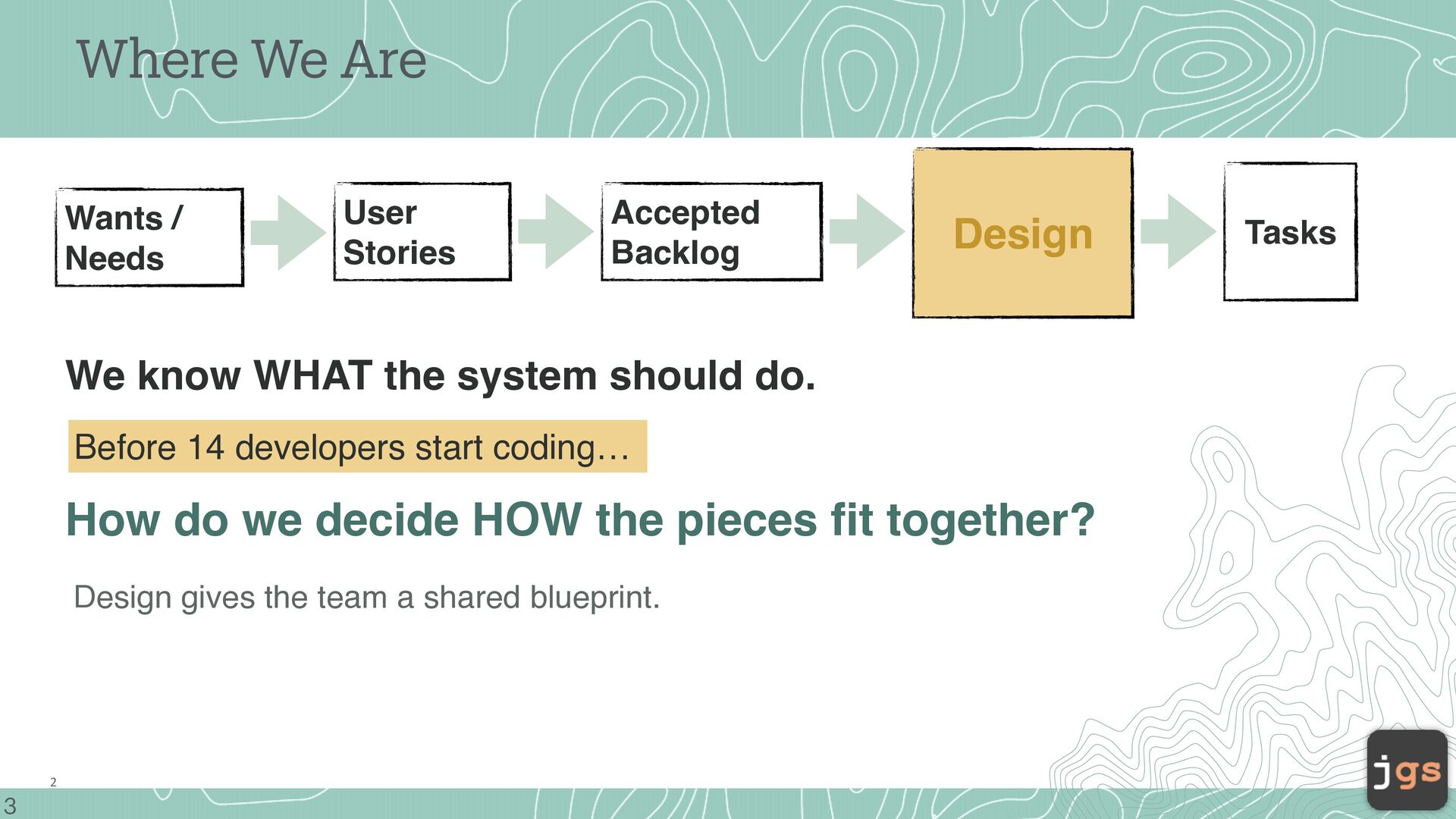
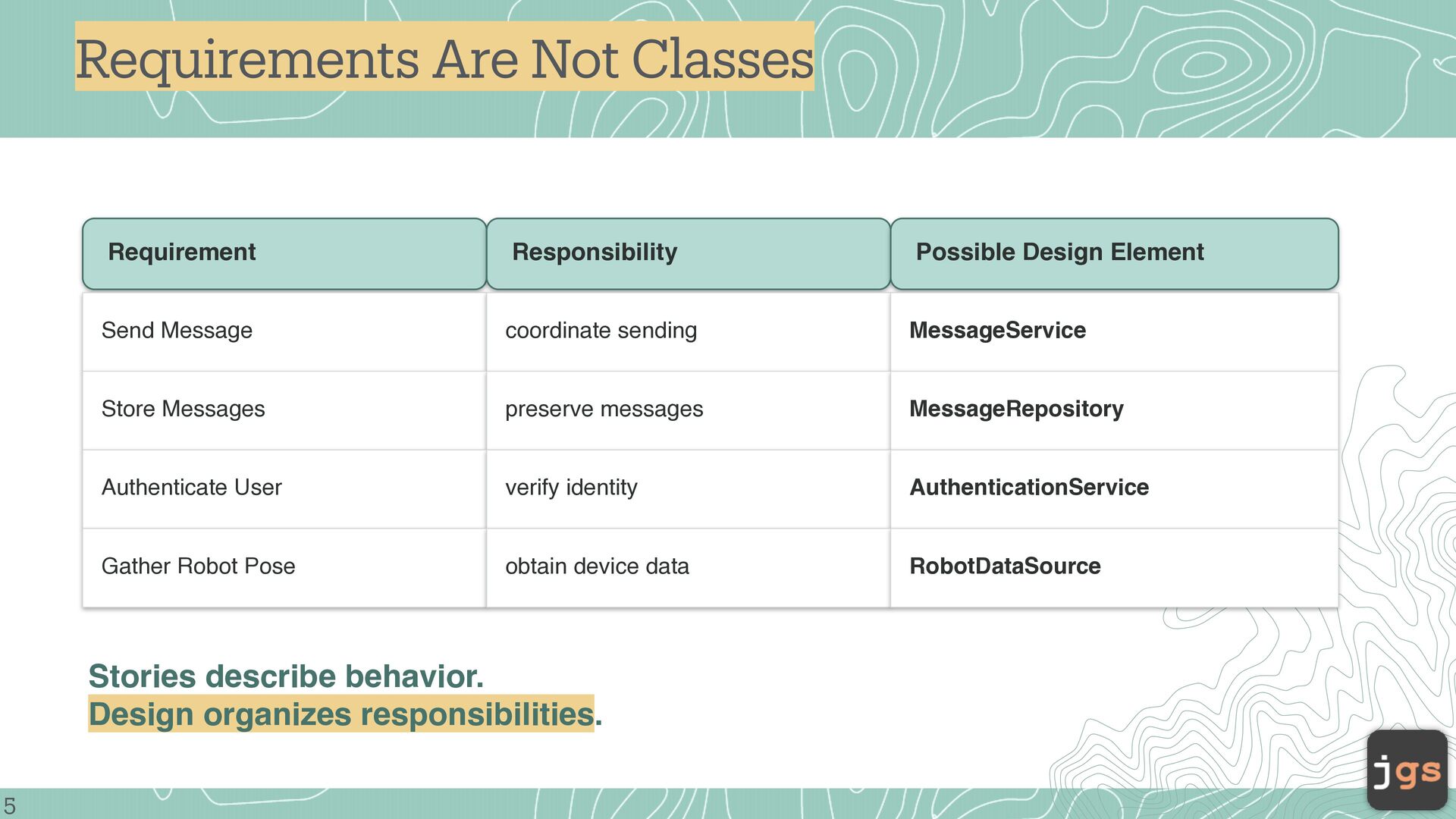
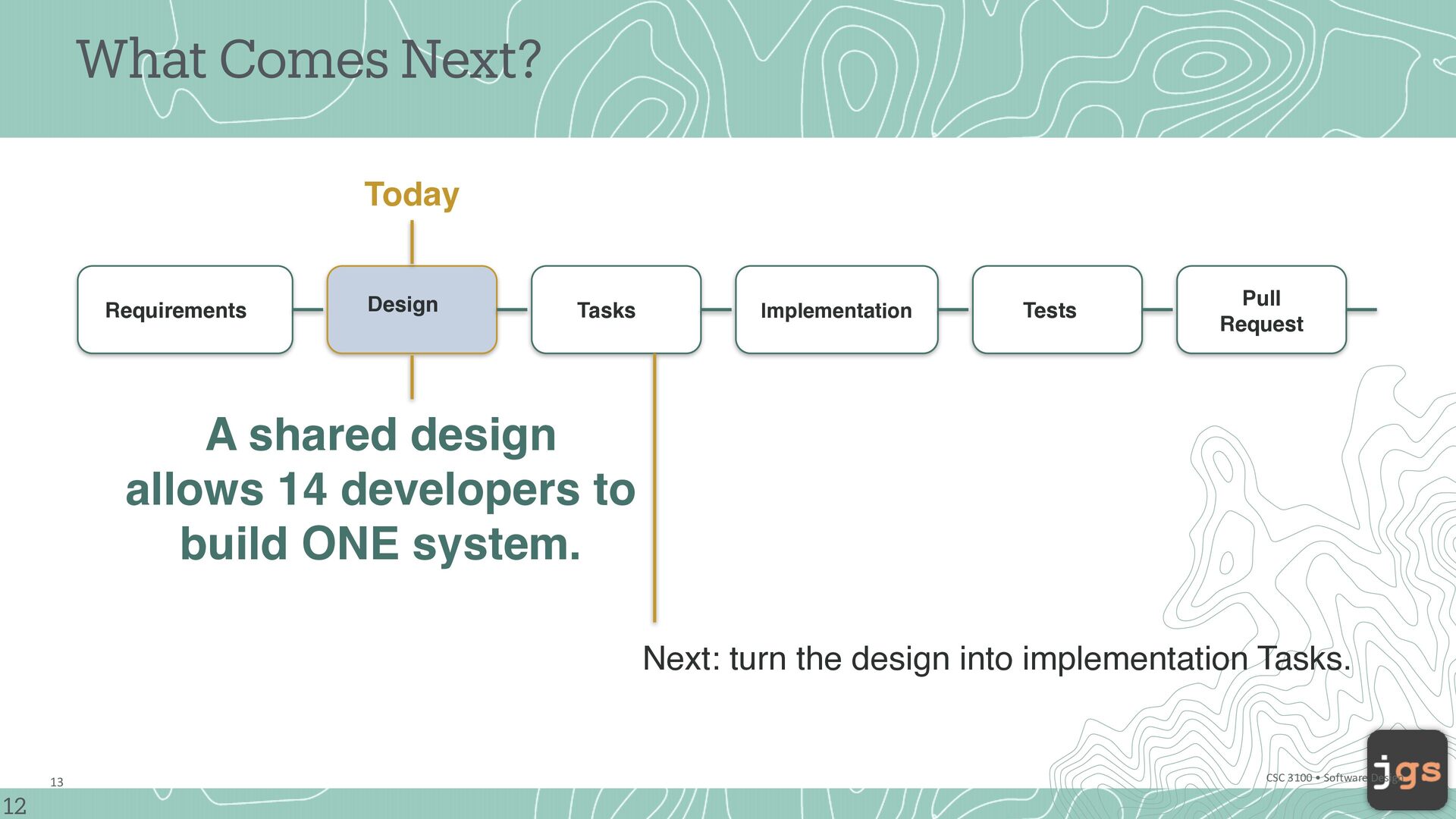
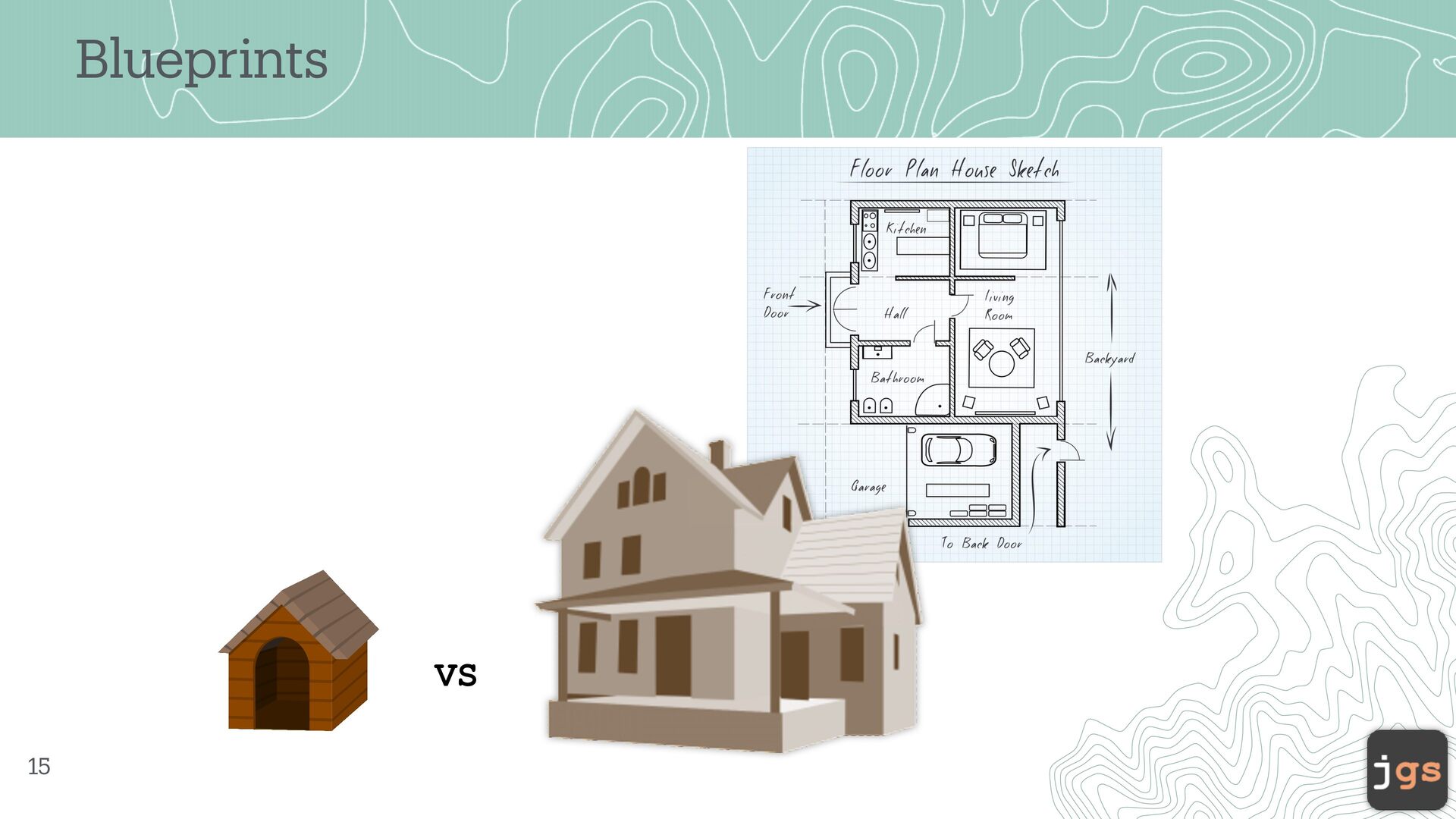
Design We know WHAT the system should do. Before N developers start coding… How do we decide HOW the pieces fit together? Design gives the team a shared blueprint. 2 4 Tasks
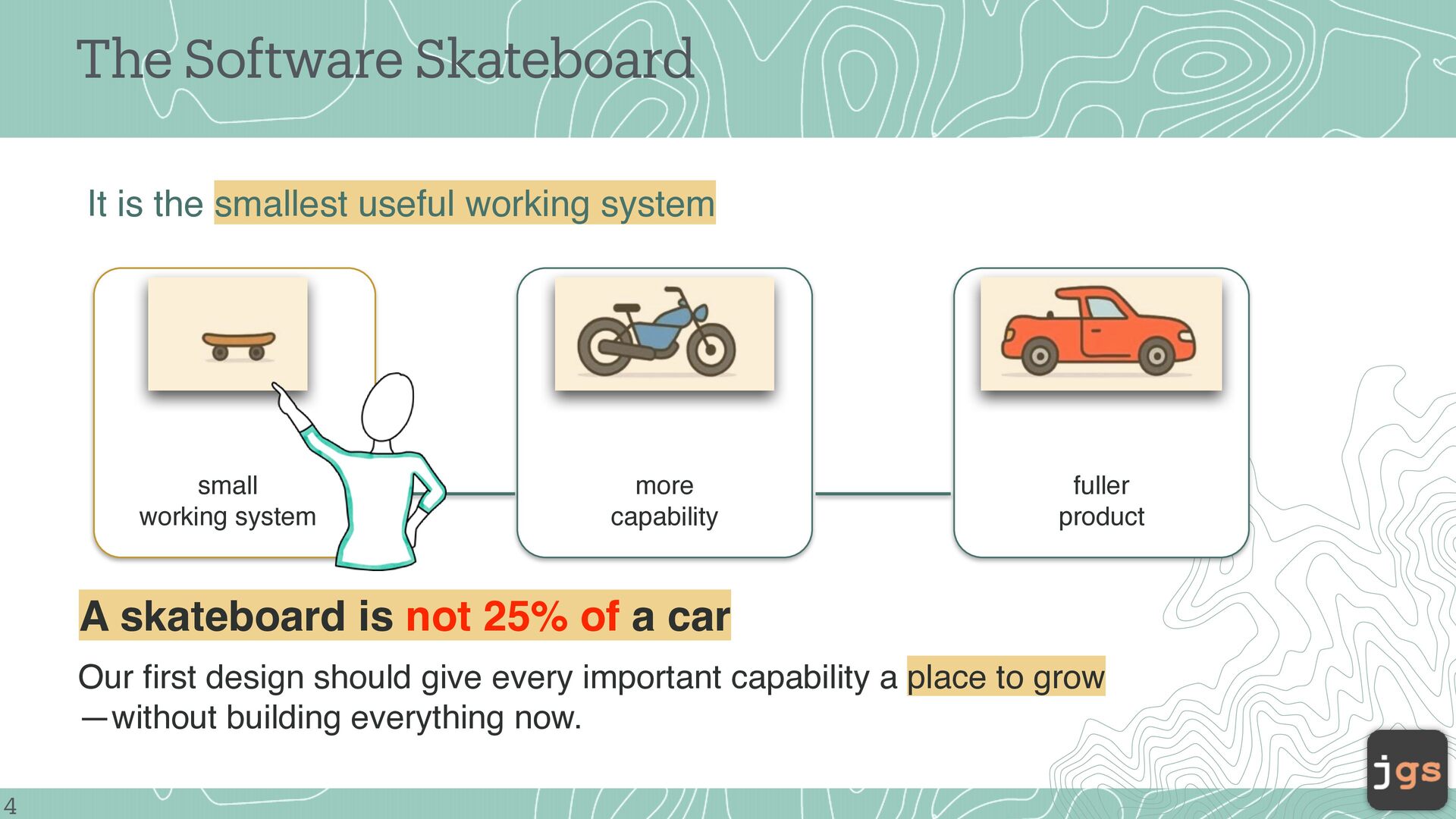
small working system more capability fuller product A skateboard is not 25% of a car Our first design should give every important capability a place to grow —without building everything now. 6
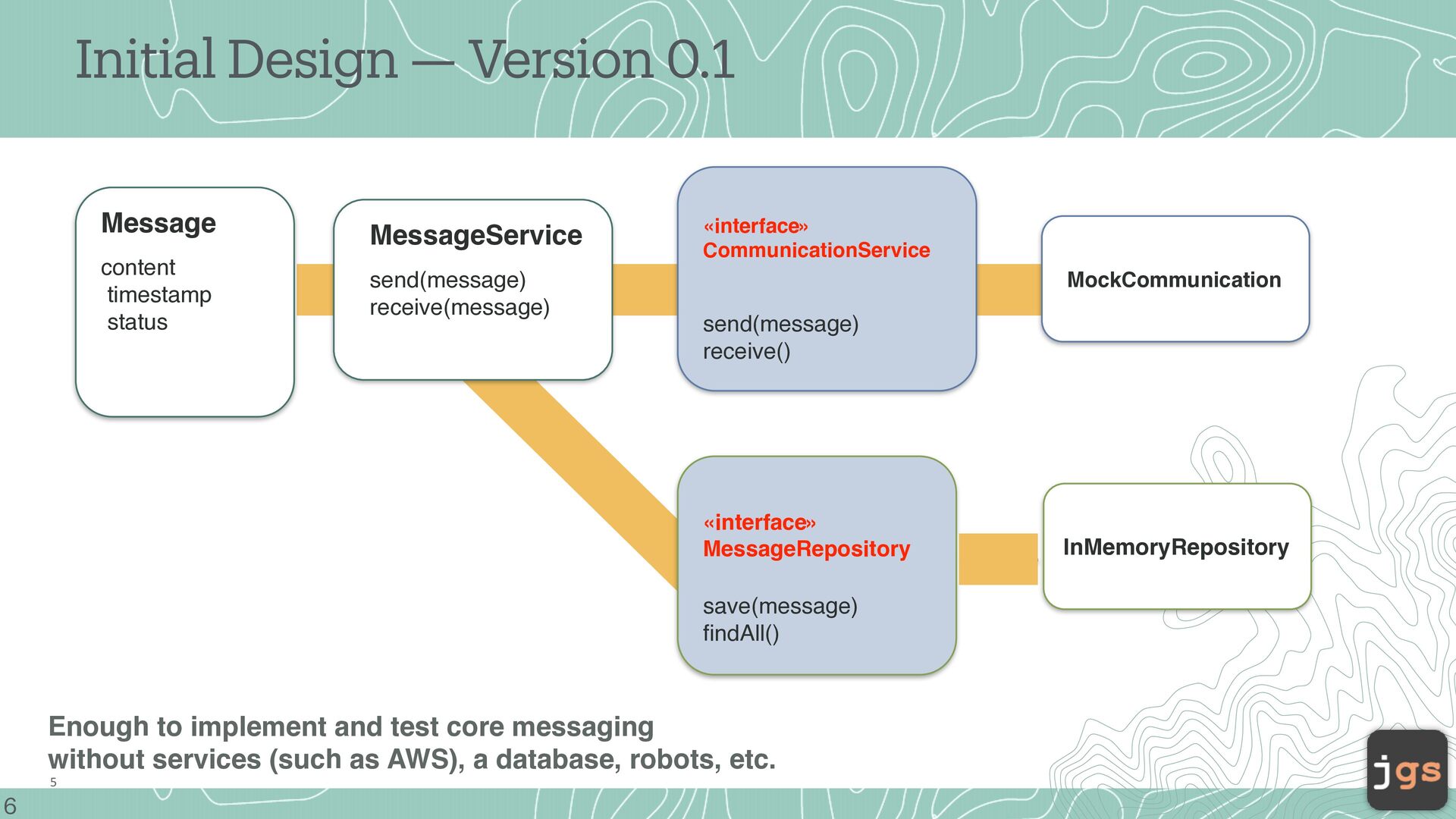
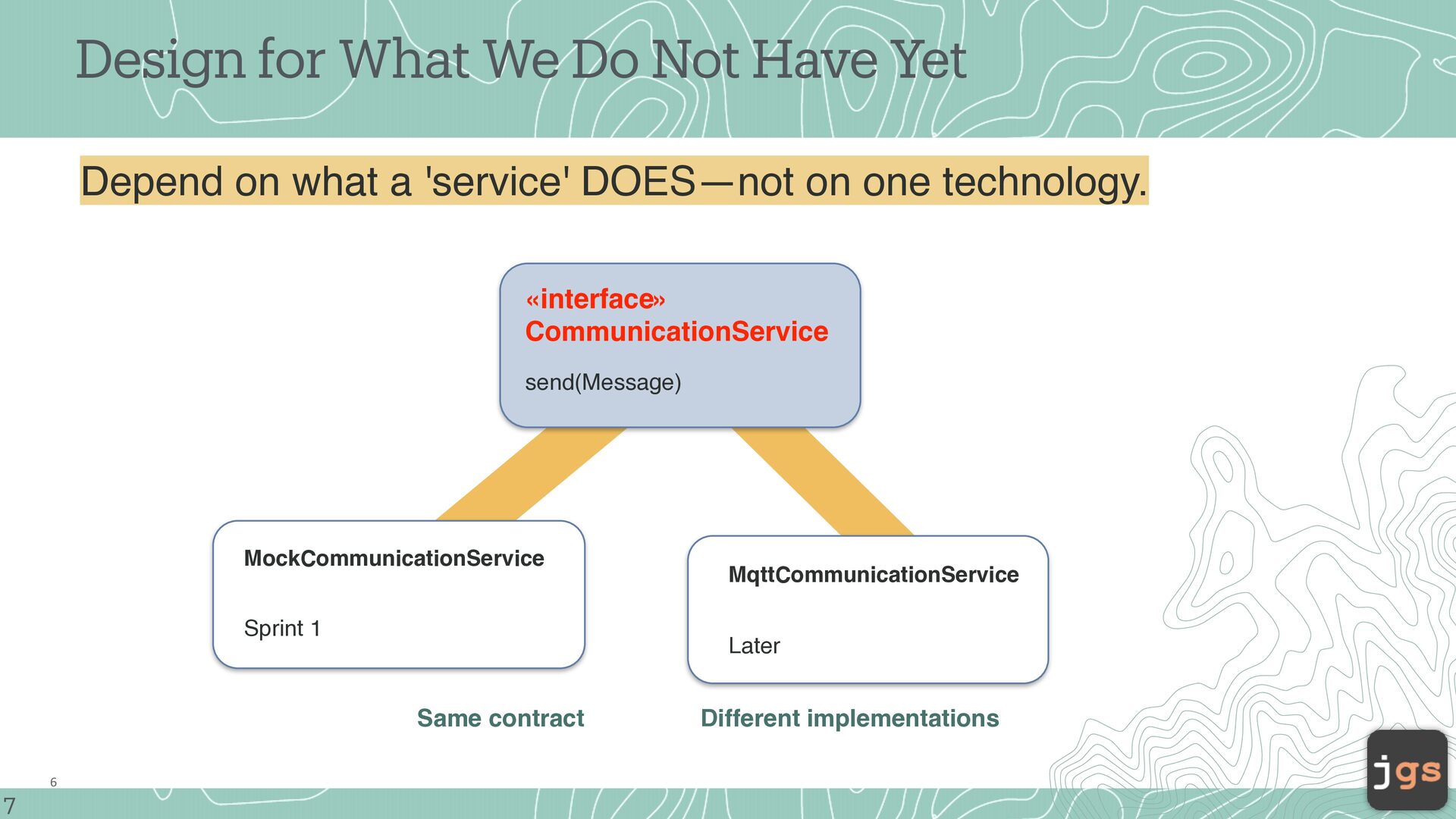
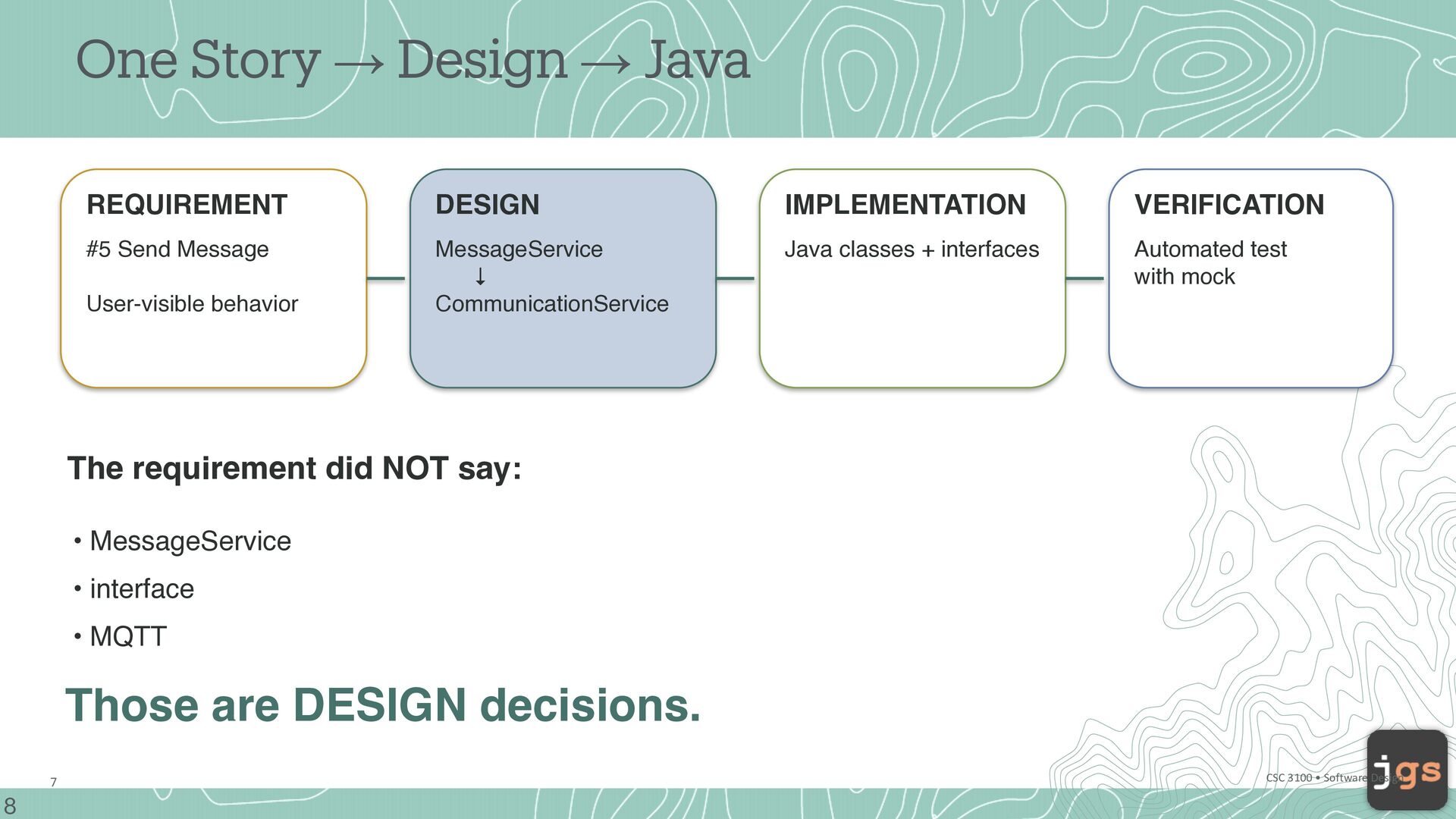
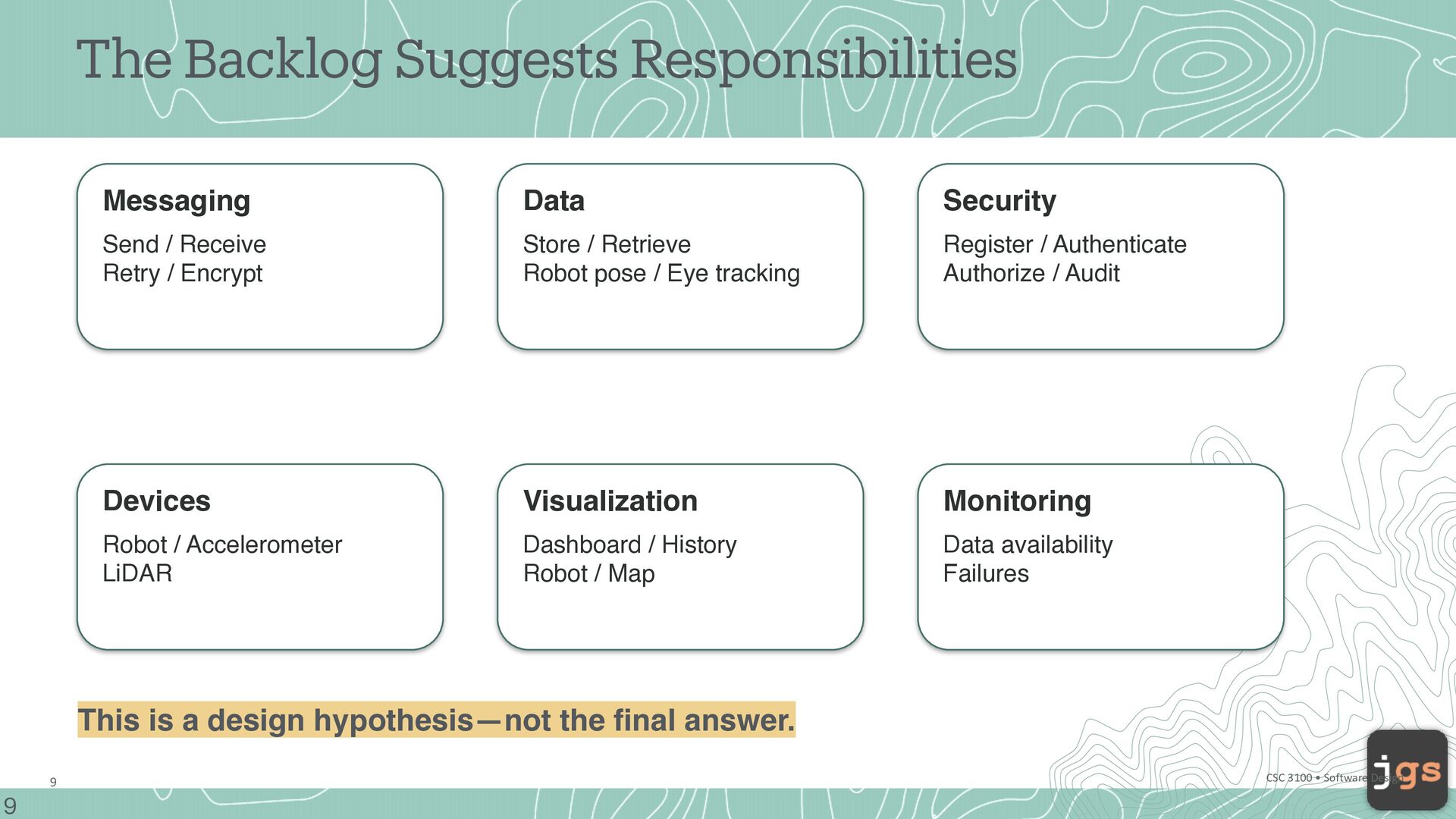
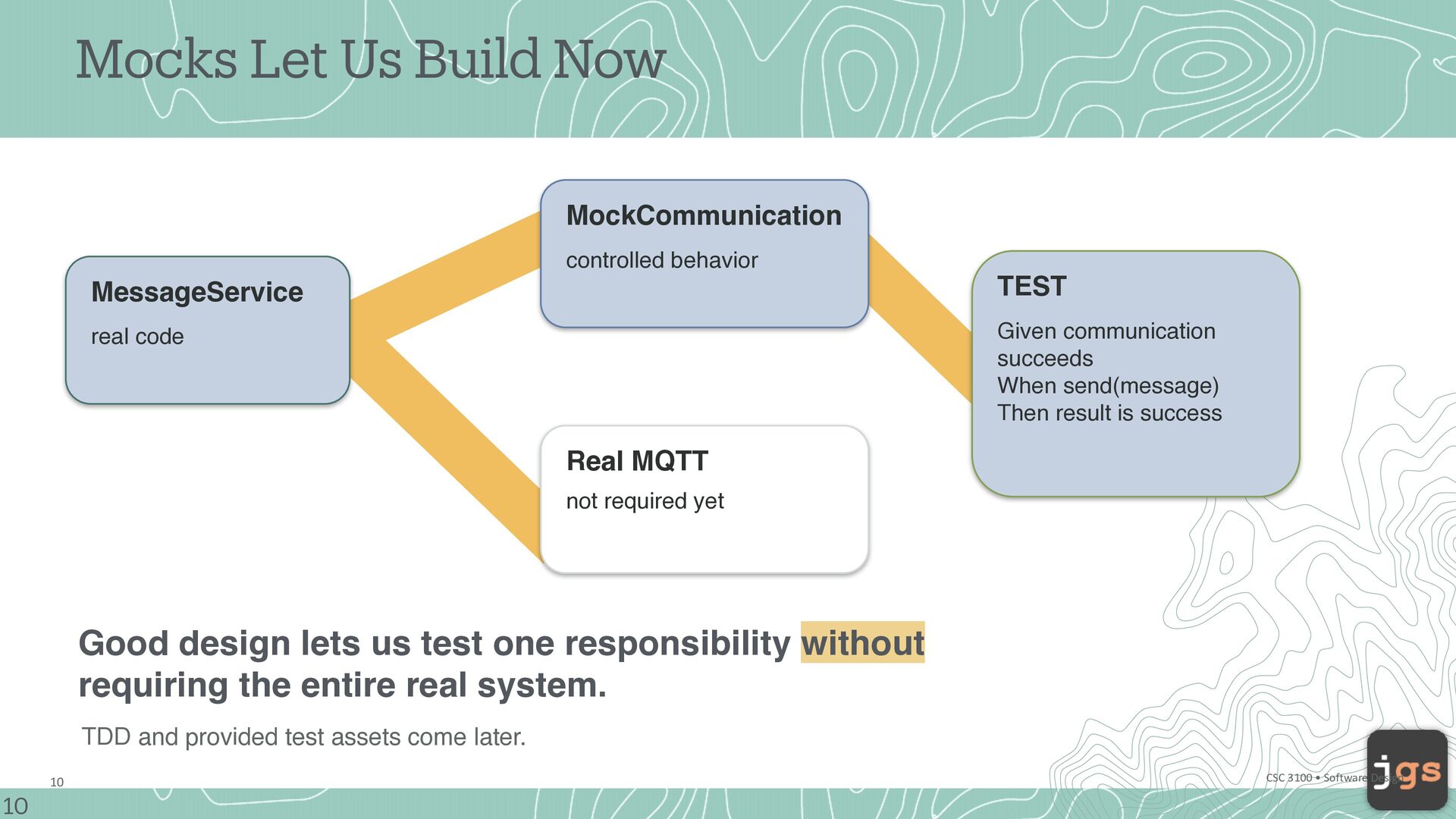
something? • What needs to DO something? • What information needs to EXIST? • Which responsibilities belong together? • Which dependencies should be interfaces? • What can we mock today? • Can we trace every design element back to a requirement? 11 9 CSC 3100 • Software Design
niz tion of system in terms of ) the p rts (items, elements, components) th t m ke up th t system nd b) their rel tionships. a a a a a a a a a a a 13 a a Structural models
Copyright. These slides may be used only as study material for CSC 5100 within the California State University system. They may not be distributed or used for any other purpose.


 javiergs
 sugarenia
 axbom
axbom
 jonrohan
 chrisshort
 maltzj
 gurzu
gurzu
.png) helenjbeal
helenjbeal
 rkendrick25
 zakiyama
 tammyeverts
 tmiket
 aleyda
![CSC 3100 Software Engineering Javier Gonzalez-Sanchez, Ph.D. [email protected] Fall 2026](https://files.speakerdeck.com/presentations/16717f2dc5a54c709aaba1bffbde00d9/slide_19.jpg)