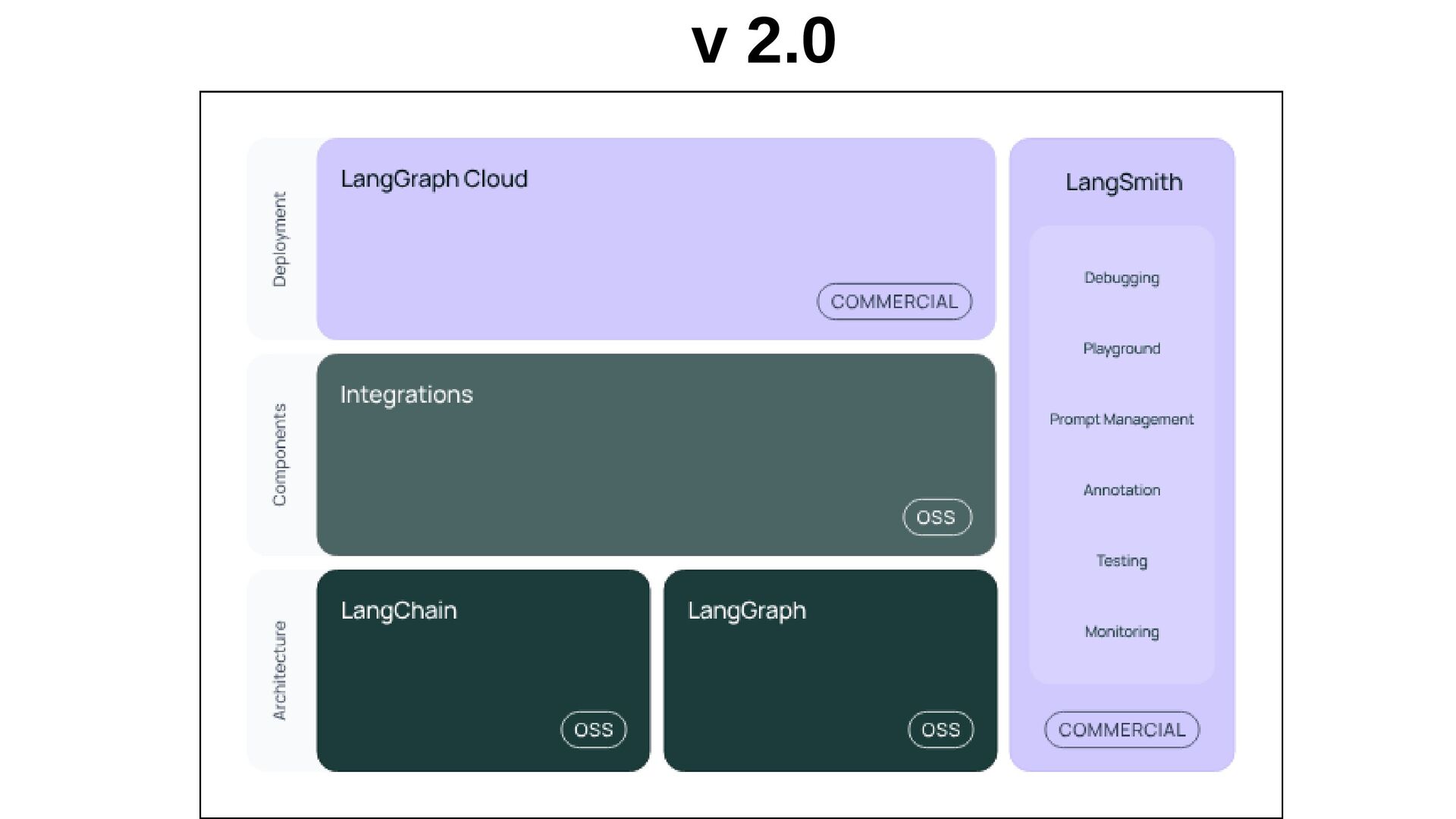
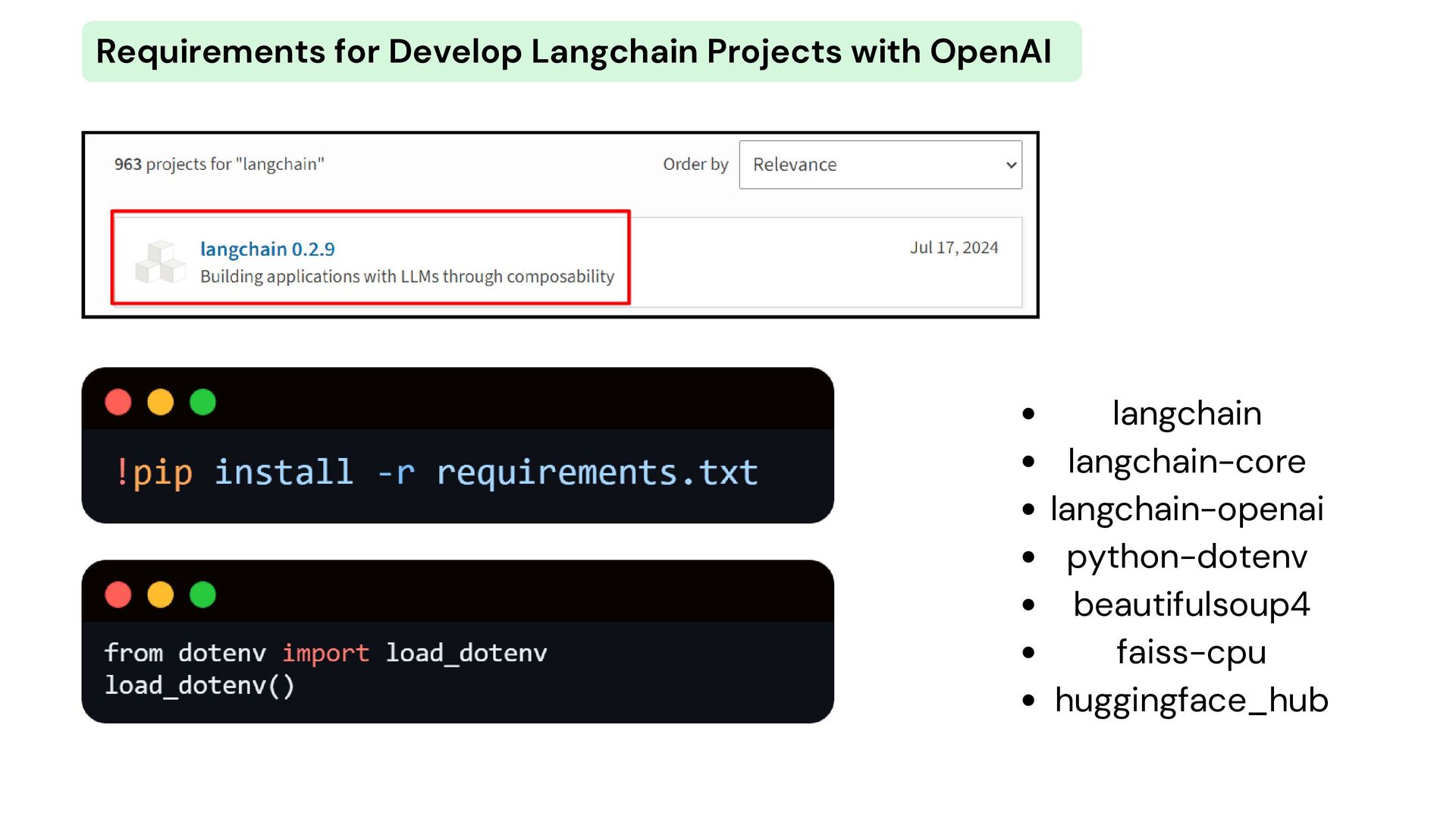
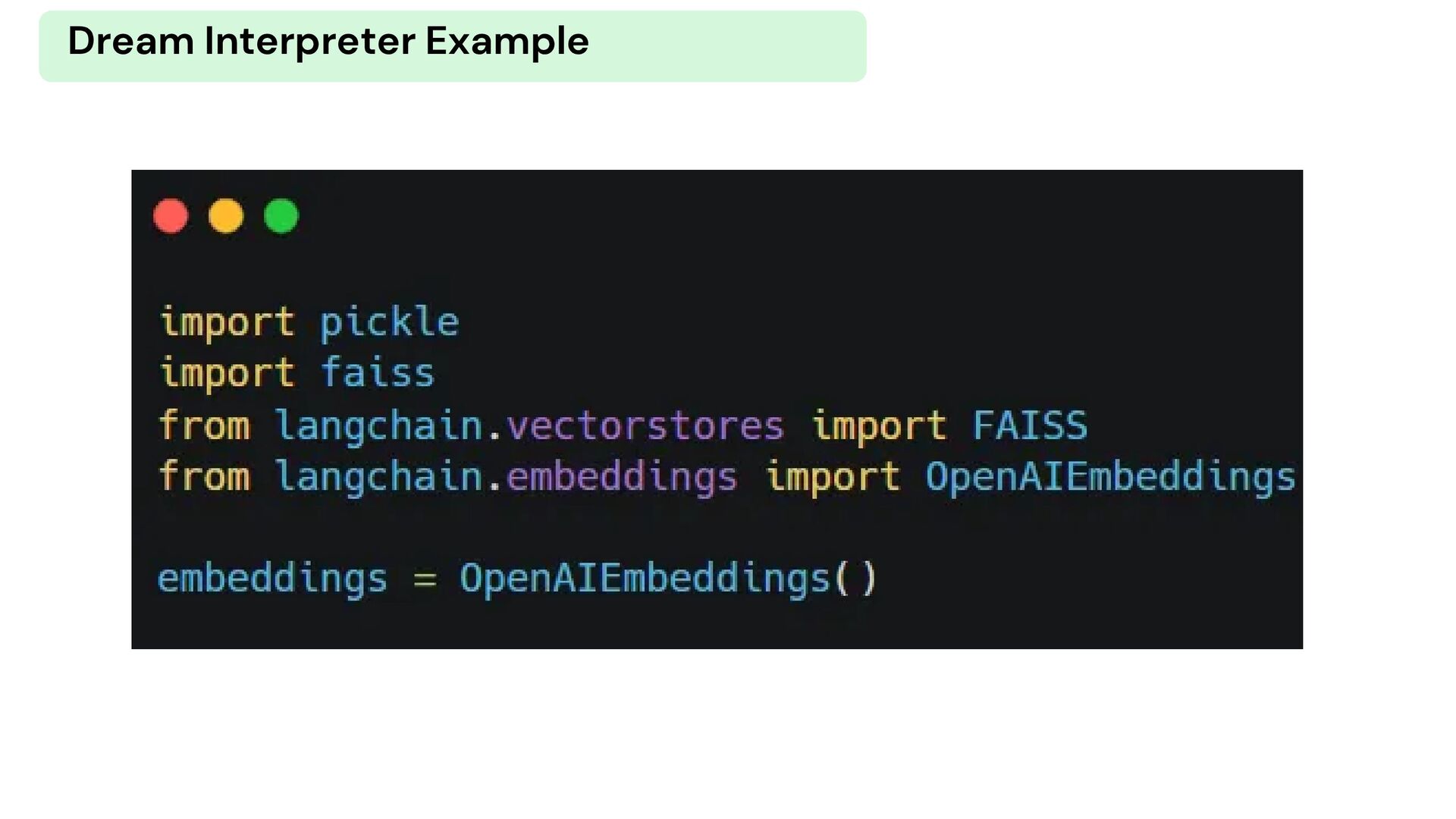
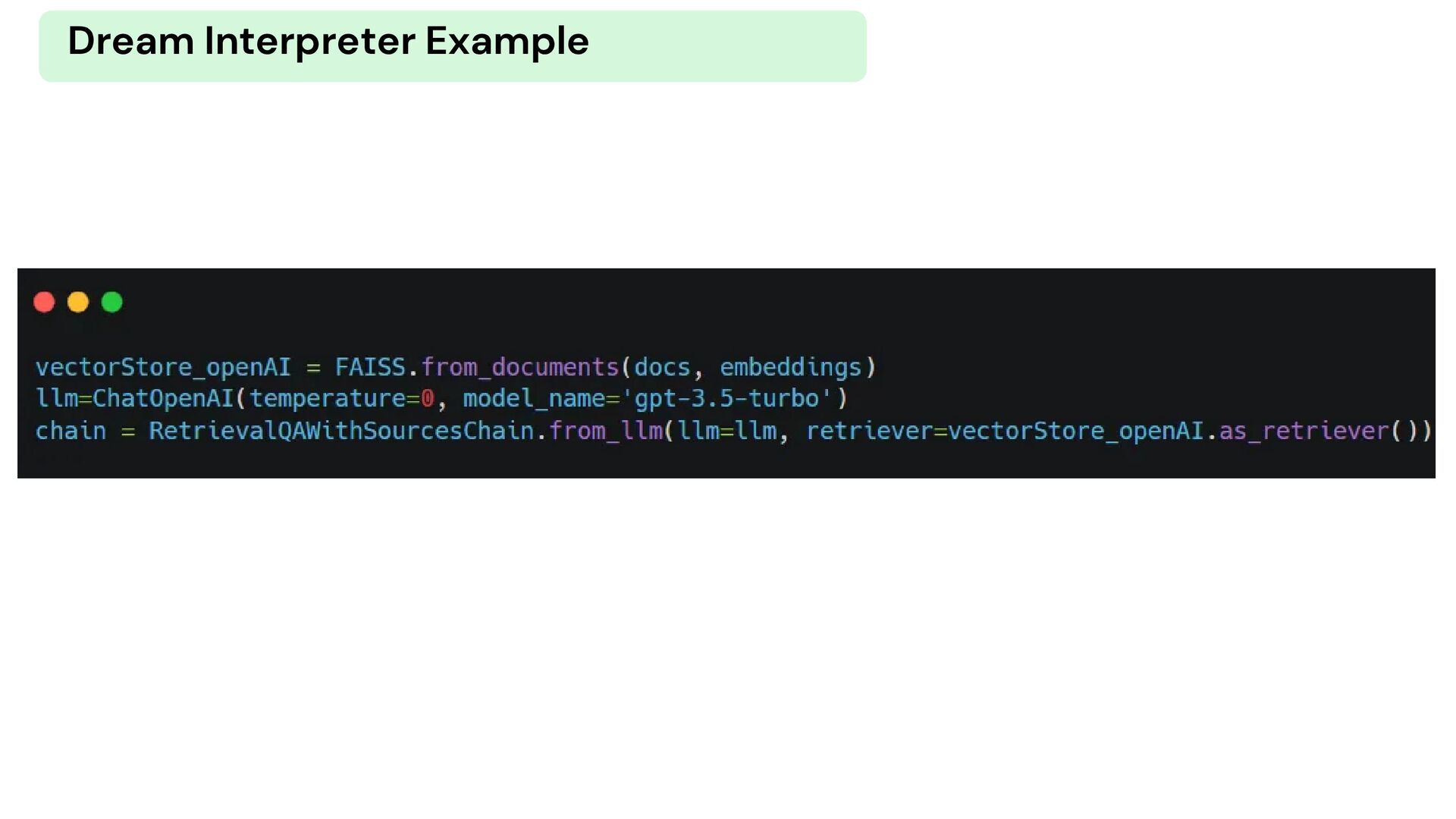
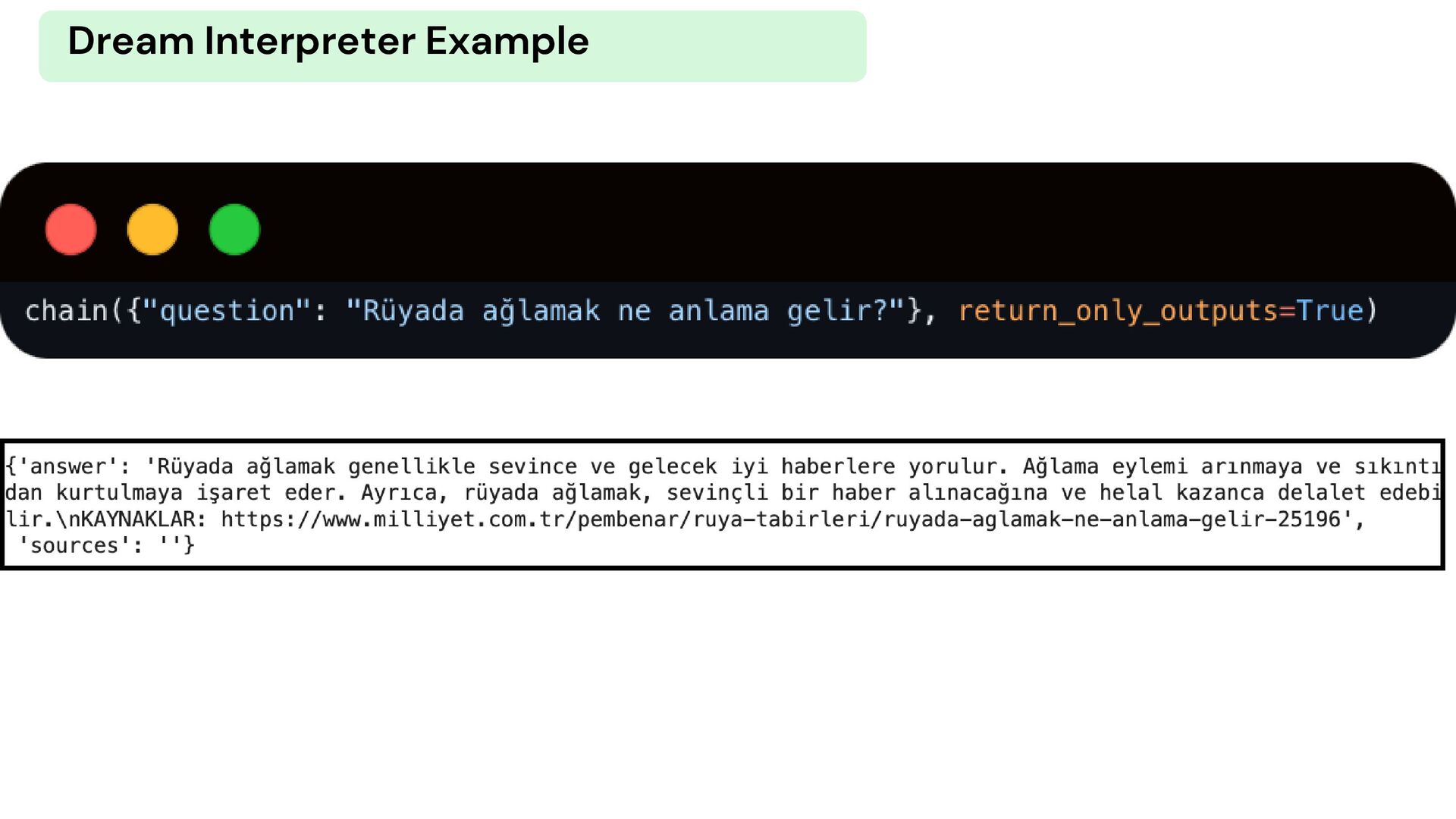
is a framework for developing applications powered by large language models (LLMs). It is developing very fast. It recently announced version 0.2.9 (July 17, 2024)
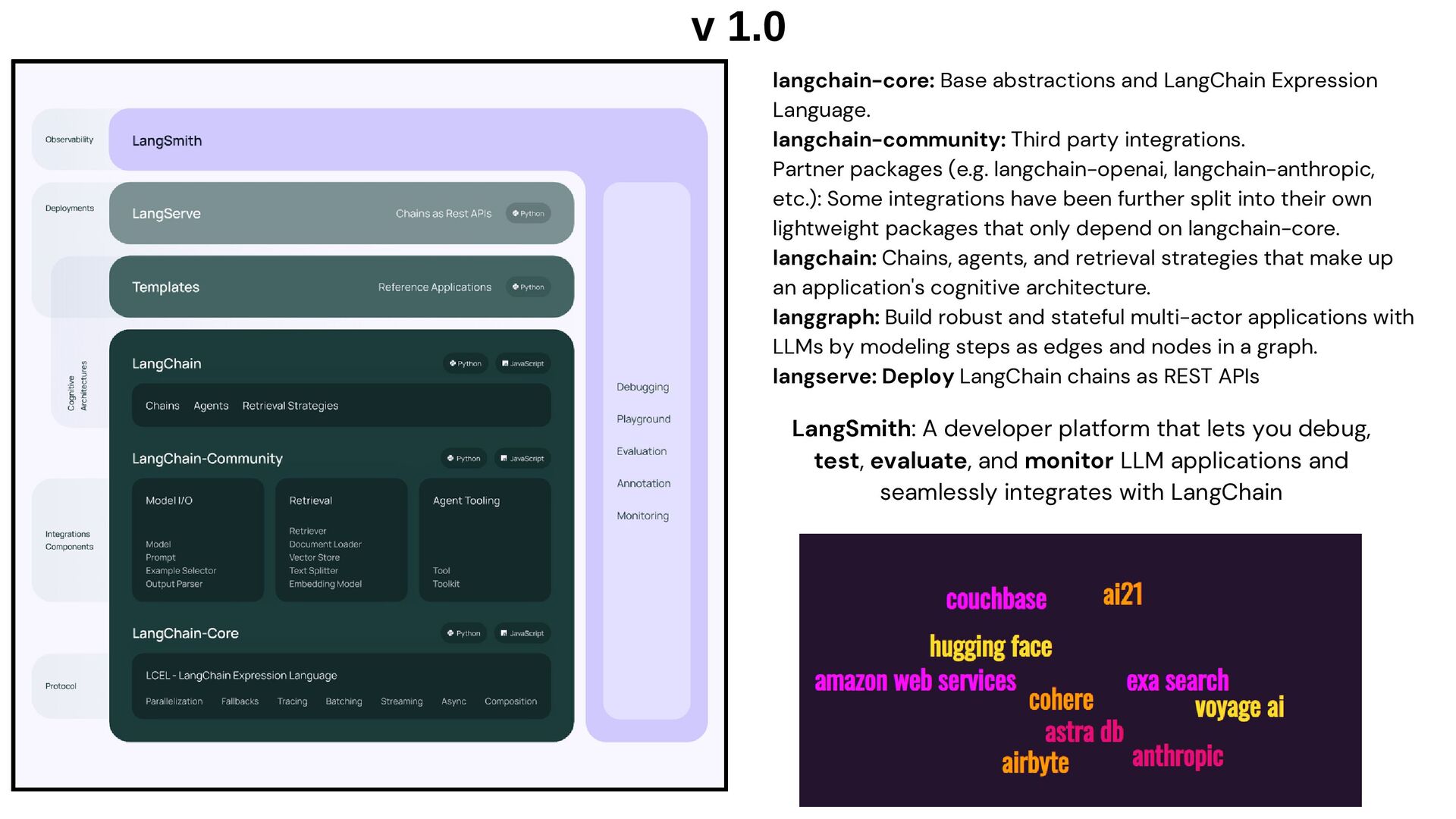
Third party integrations. Partner packages (e.g. langchain-openai, langchain-anthropic, etc.): Some integrations have been further split into their own lightweight packages that only depend on langchain-core. langchain: Chains, agents, and retrieval strategies that make up an application's cognitive architecture. langgraph: Build robust and stateful multi-actor applications with LLMs by modeling steps as edges and nodes in a graph. langserve: Deploy LangChain chains as REST APIs LangSmith: A developer platform that lets you debug, test, evaluate, and monitor LLM applications and seamlessly integrates with LangChain
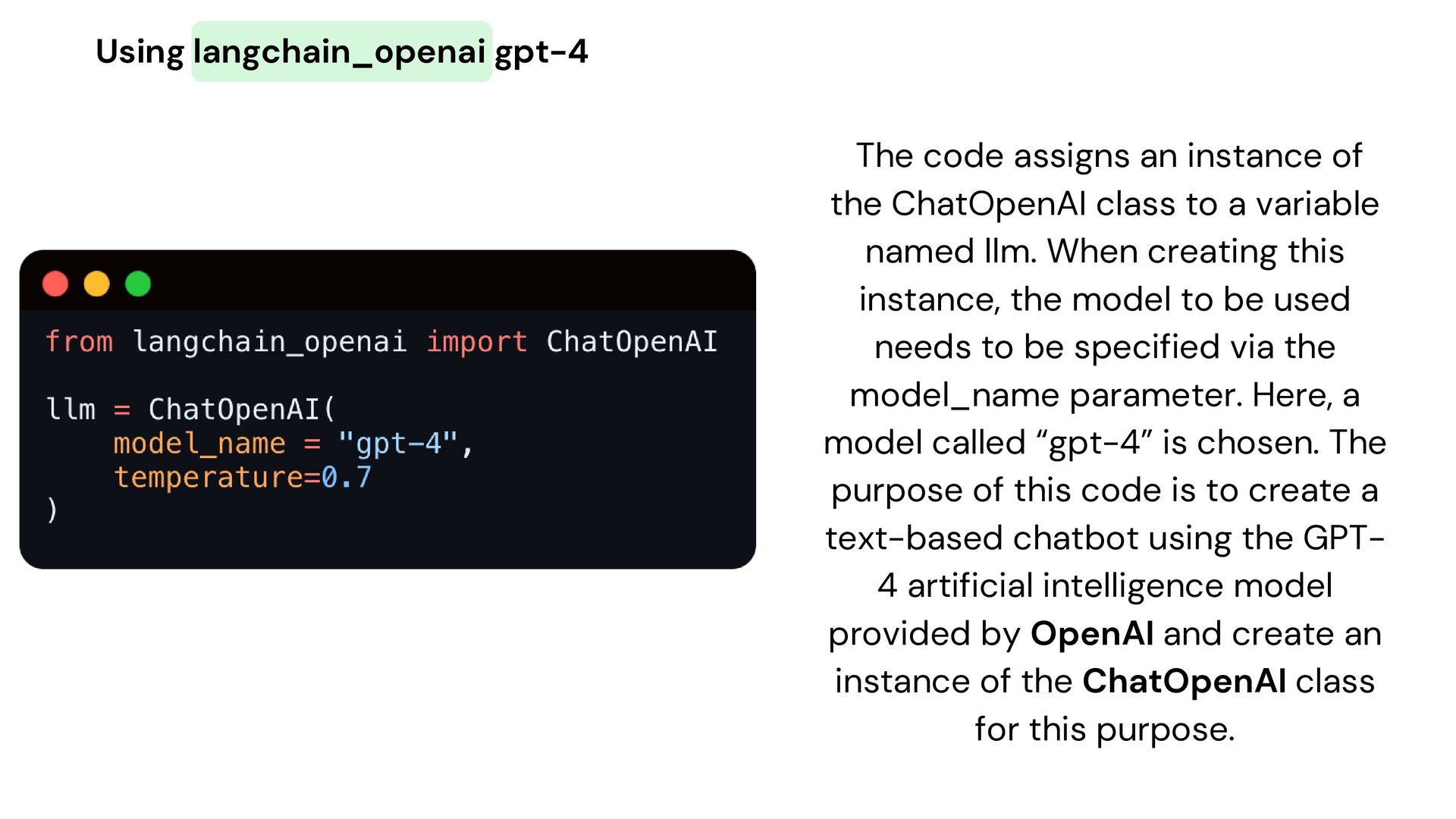
ChatOpenAI class to a variable named llm. When creating this instance, the model to be used needs to be specified via the model_name parameter. Here, a model called “gpt-4” is chosen. The purpose of this code is to create a text-based chatbot using the GPT- 4 artificial intelligence model provided by OpenAI and create an instance of the ChatOpenAI class for this purpose.
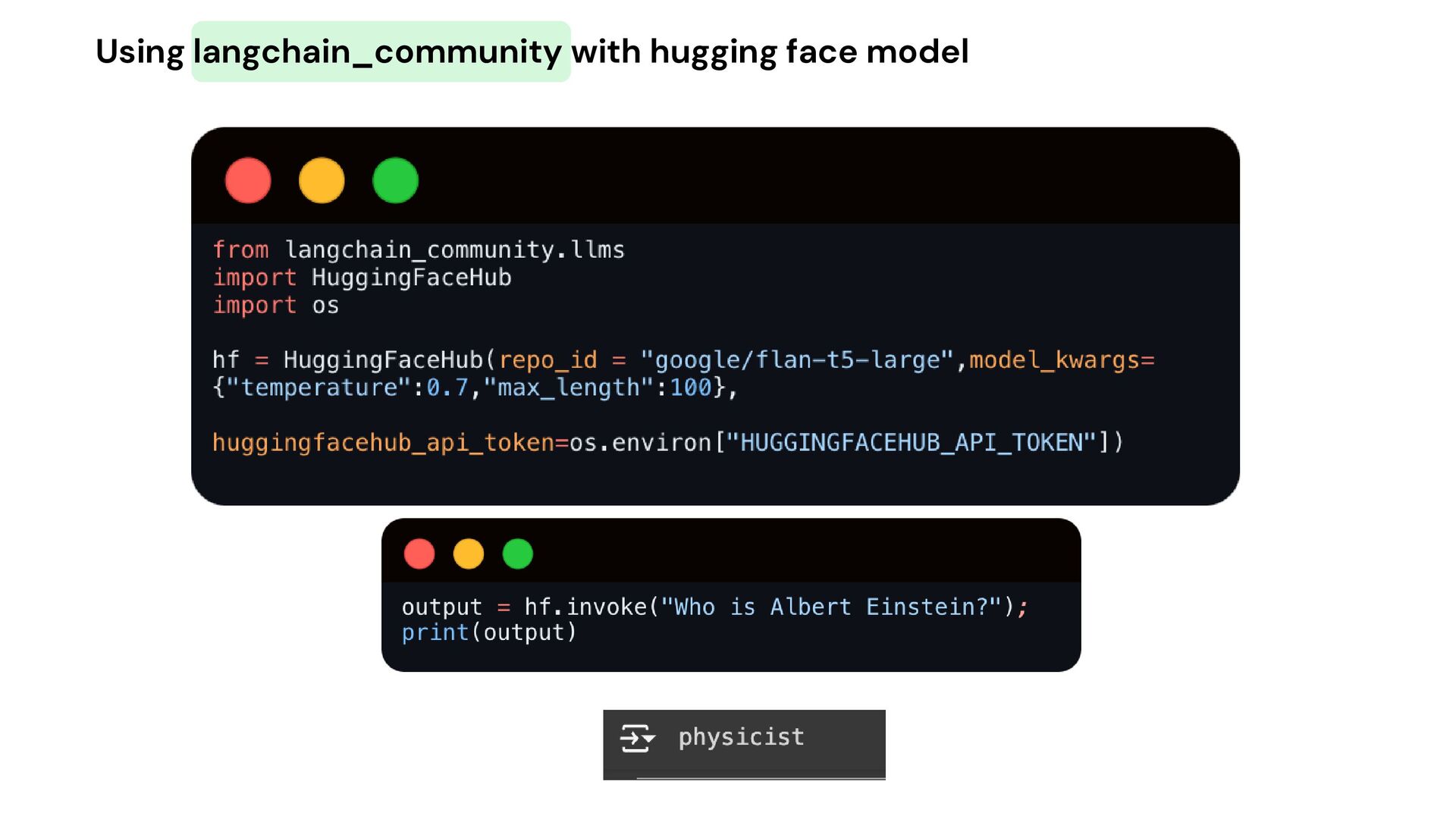
the text “Who is Albert Einstein?”. This text represents a question to be asked to the AI model. Then, the invoke() method is called to execute the text query in the text variable on the model and the model's response is assigned to a variable called response. Finally, when the response variable is called, the response from the AI model is received and this response is presented to the user or processed.
that is often recommended is "Blade Runner" (1982) directed by Ridley Scott. Other options include "The Matrix" (1999) directed by the Wachowskis, "Inception" (2010) directed by Christopher Nolan, "2001: A Space Odyssey" (1968) directed by Stanley Kubrick, and "Eternal Sunshine of the Spotless Mind" (2004) directed by Michel Gondry. AIMessage(content='I recommend "Blade Runner 2049" directed by Denis Villeneuve. This film is a visually stunning and thought-provoking sequel to the original "Blade Runner" and explores themes of artificial intelligence, identity, and the nature of humanity. It has received critical acclaim for its stunning visuals, compelling story, and exceptional performances by the cast.', response_metadata={'token_usage': {'completion_tokens': 72, 'prompt_tokens': 16, 'total_tokens': 88}, 'model_name': 'gpt-4', 'system_fingerprint': None, 'finish_reason': 'stop', 'logprobs': None}, id='run-265cdb29-f2a5-4676-a879- cadfad449a0c-0', usage_metadata={'input_tokens': 16, 'output_tokens': 72, 'total_tokens': 88}) OPENAI ChatOpenAI
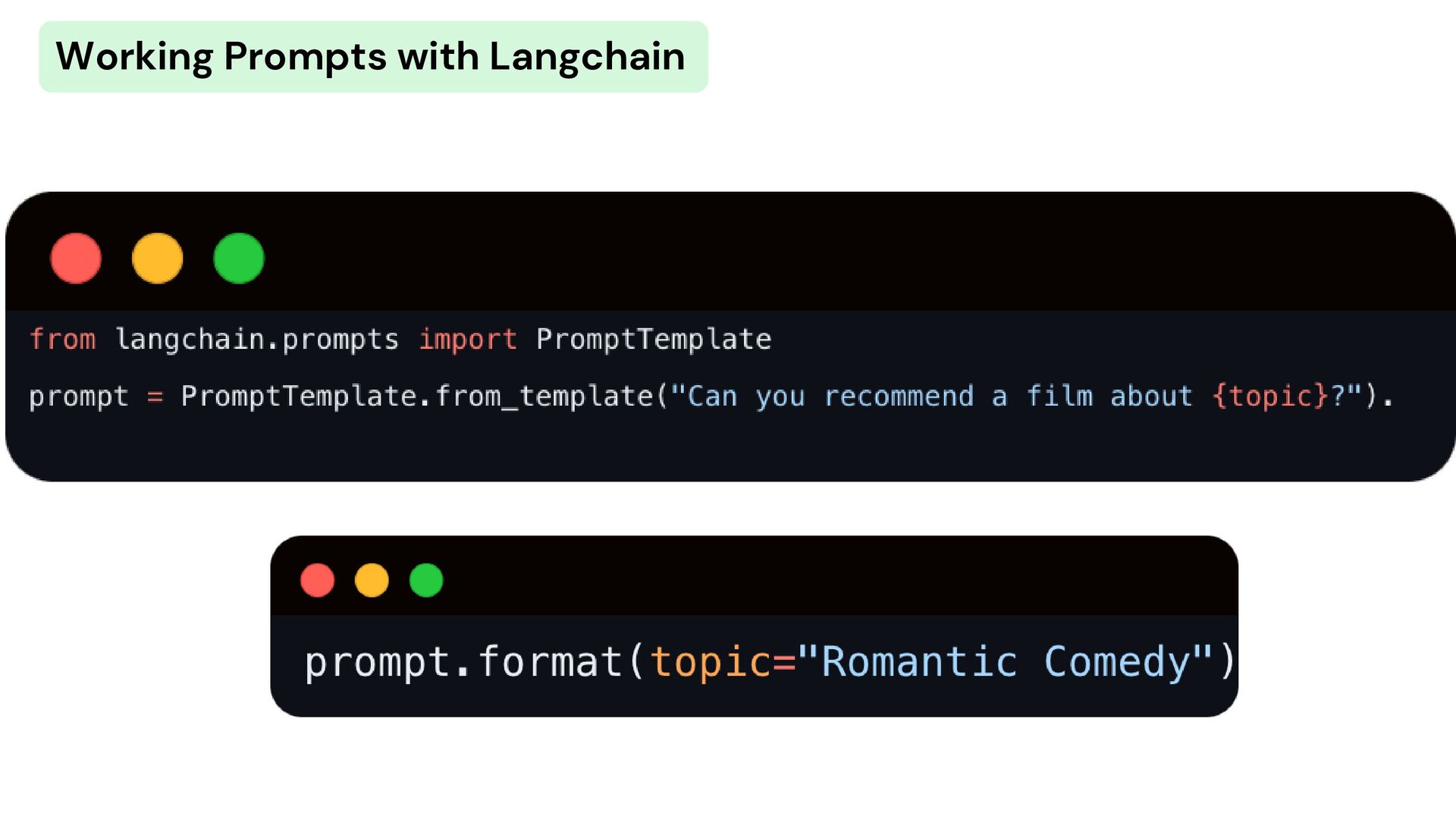
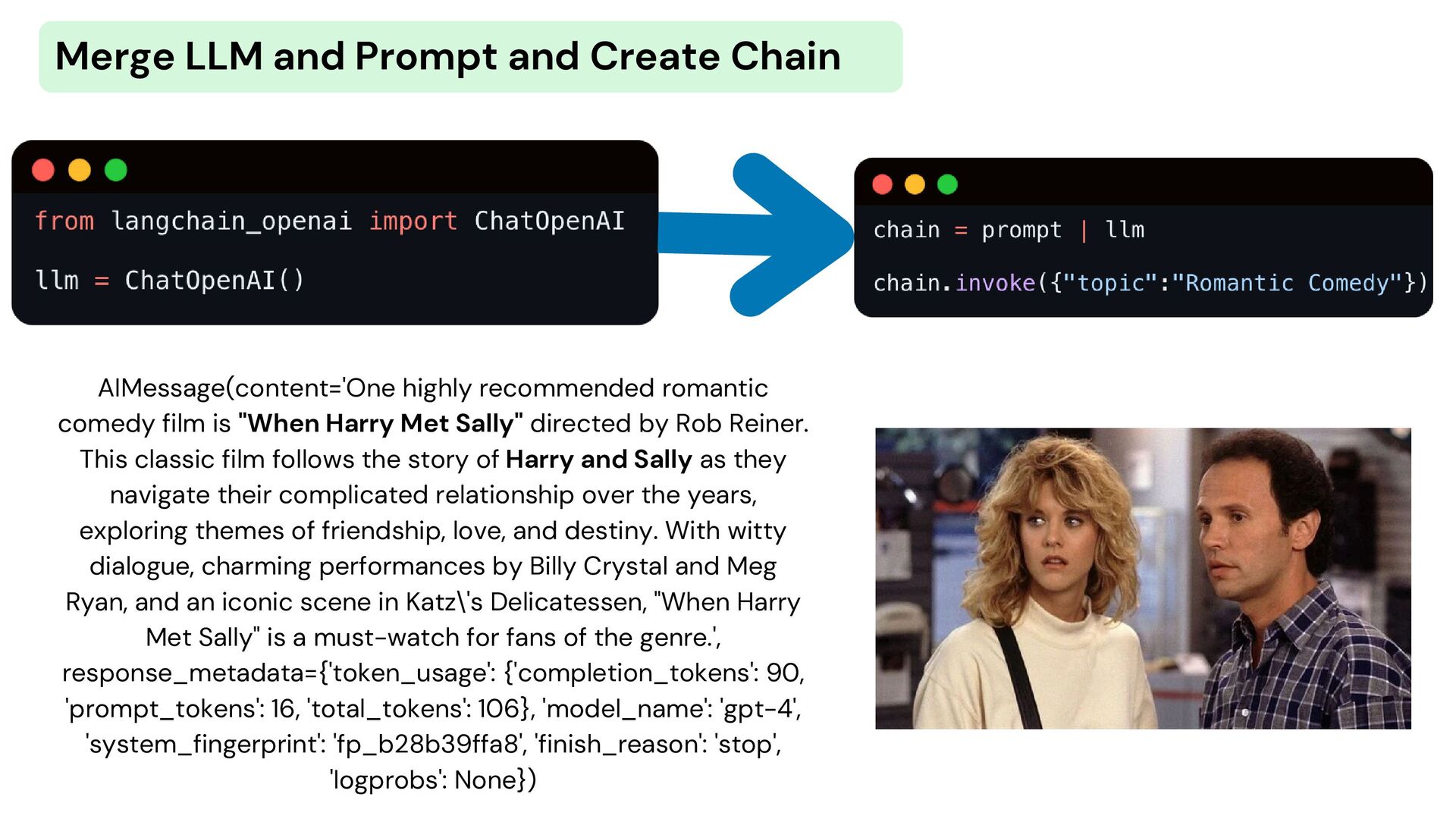
romantic comedy film is "When Harry Met Sally" directed by Rob Reiner. This classic film follows the story of Harry and Sally as they navigate their complicated relationship over the years, exploring themes of friendship, love, and destiny. With witty dialogue, charming performances by Billy Crystal and Meg Ryan, and an iconic scene in Katz\'s Delicatessen, "When Harry Met Sally" is a must-watch for fans of the genre.', response_metadata={'token_usage': {'completion_tokens': 90, 'prompt_tokens': 16, 'total_tokens': 106}, 'model_name': 'gpt-4', 'system_fingerprint': 'fp_b28b39ffa8', 'finish_reason': 'stop', 'logprobs': None})
and well-reviewed romantic comedy film is "Crazy, Stupid, Love" starring Steve Carell, Ryan Gosling, and Emma Stone. The movie follows the story of a recently divorced man who seeks advice on dating from a suave bachelor, only to realize that love may be closer than he thinks. It's a funny and heartwarming film that explores the ups and downs of relationships in a humorous and relatable way.
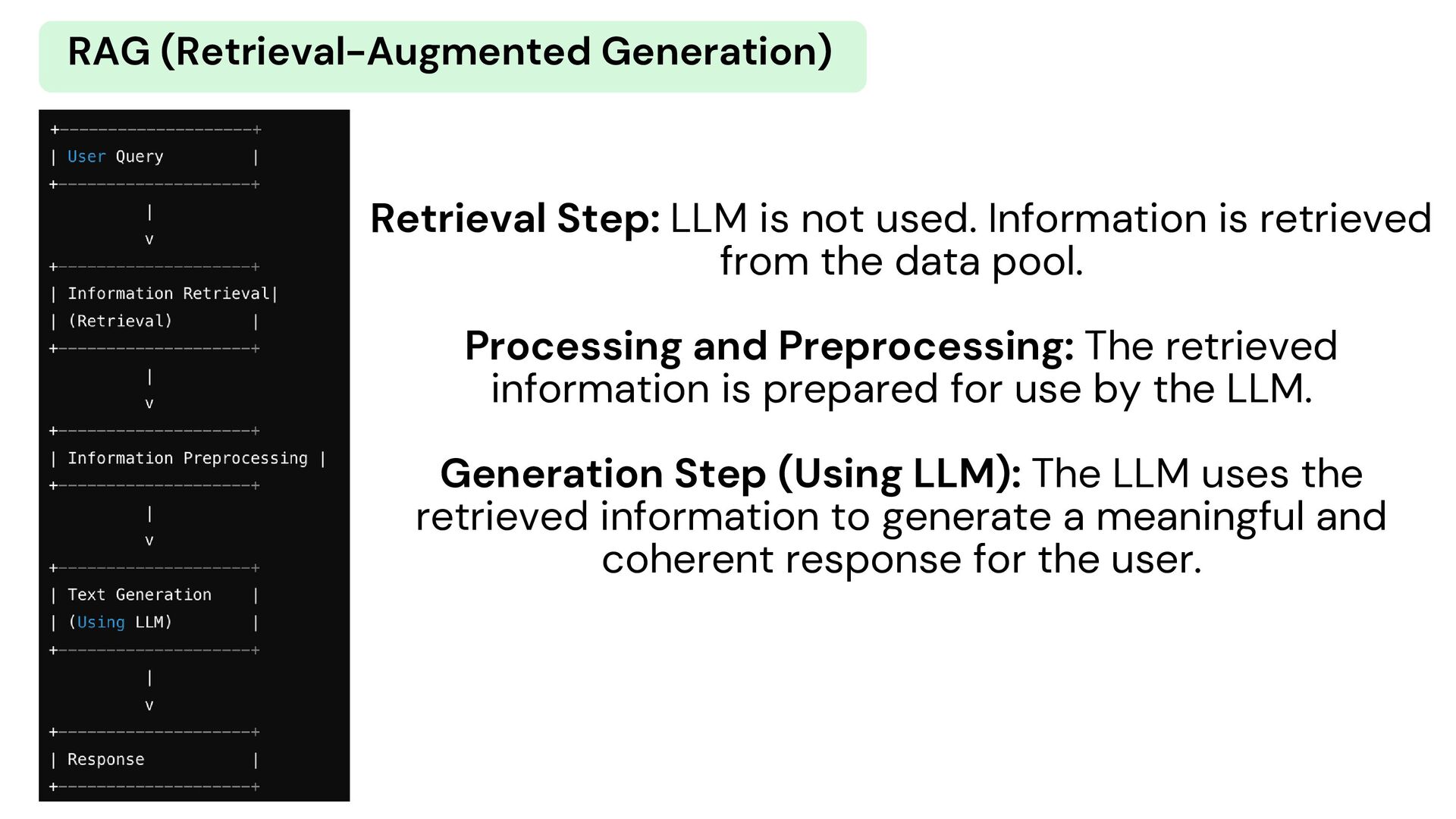
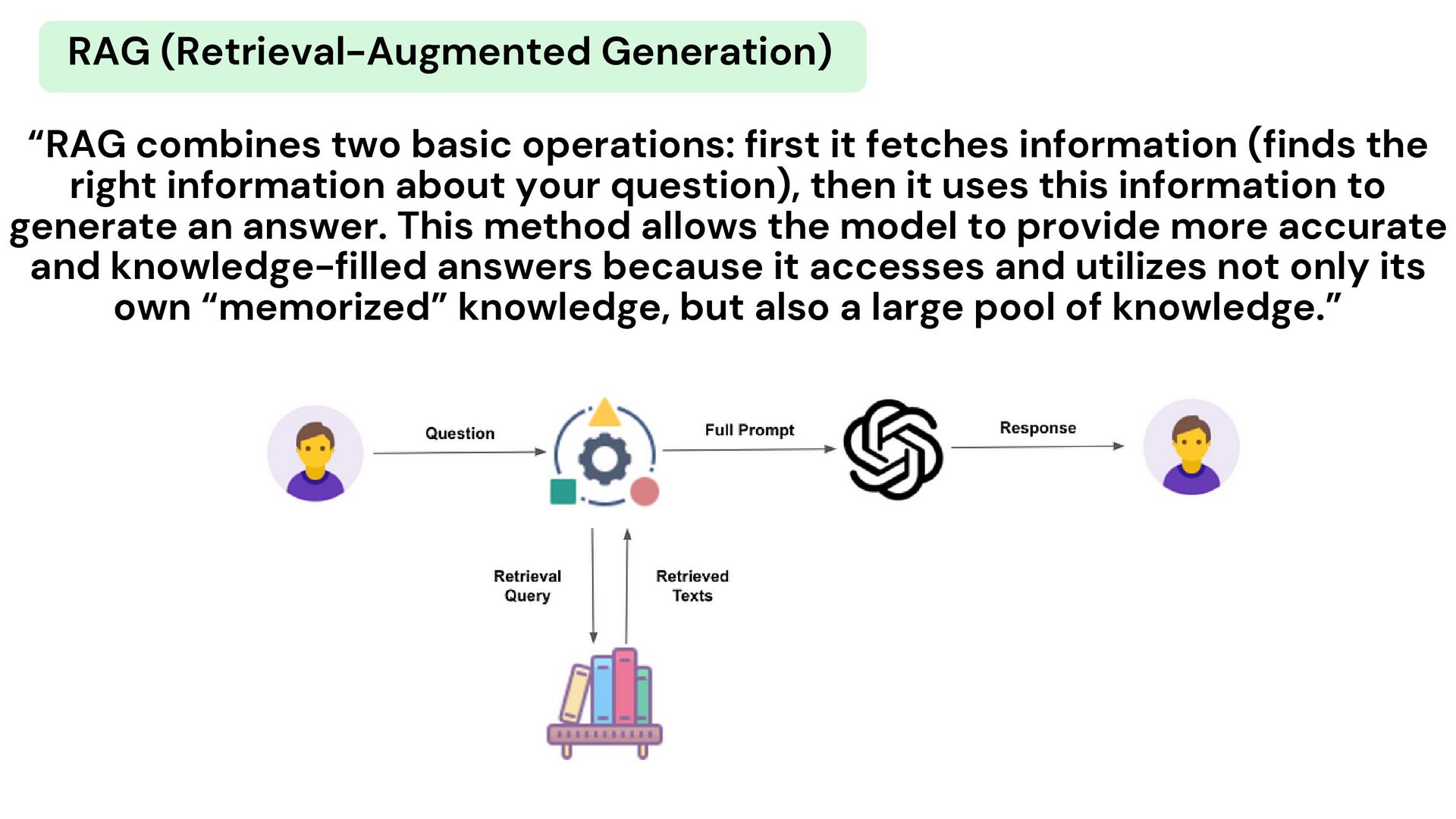
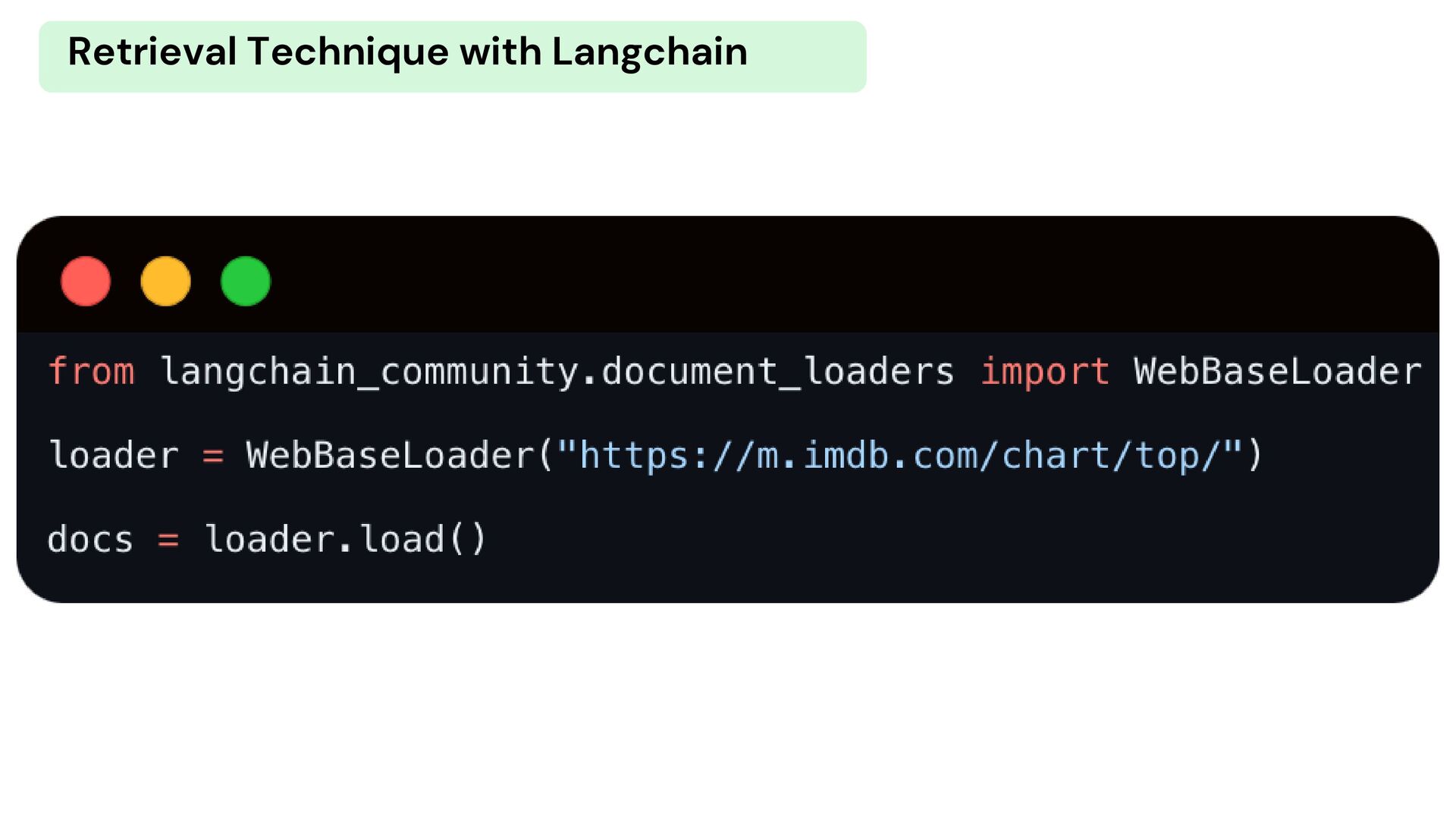
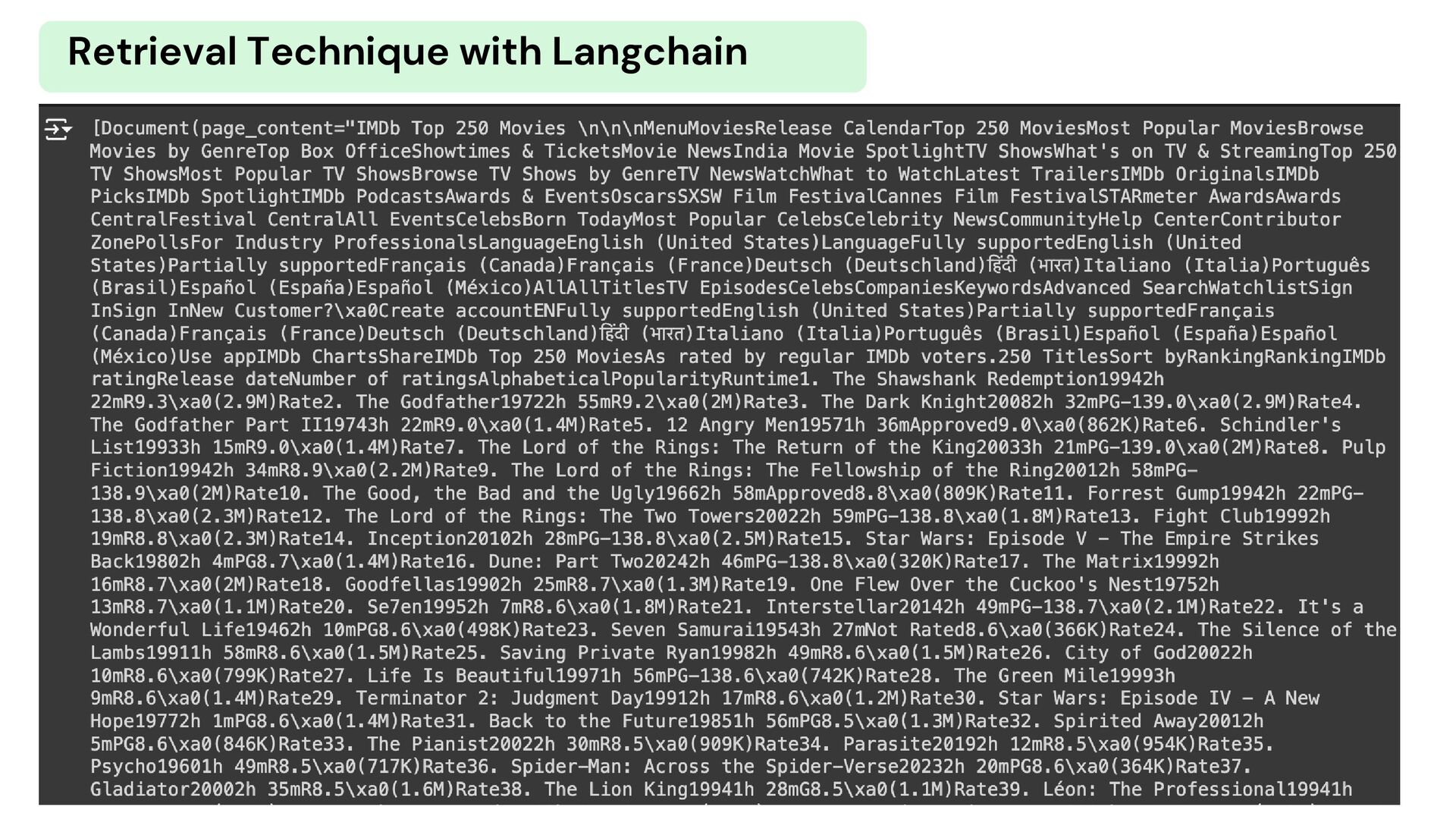
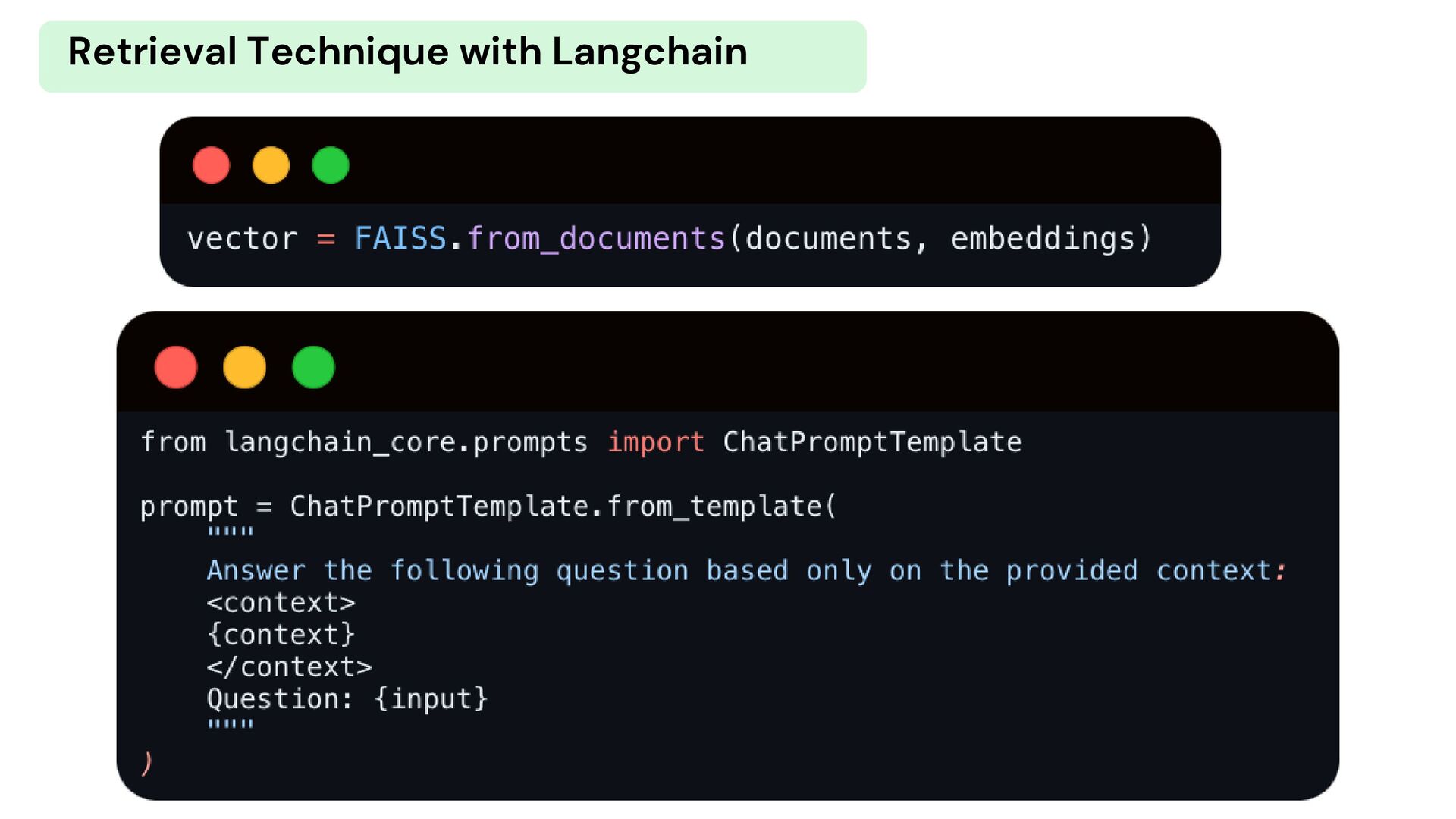
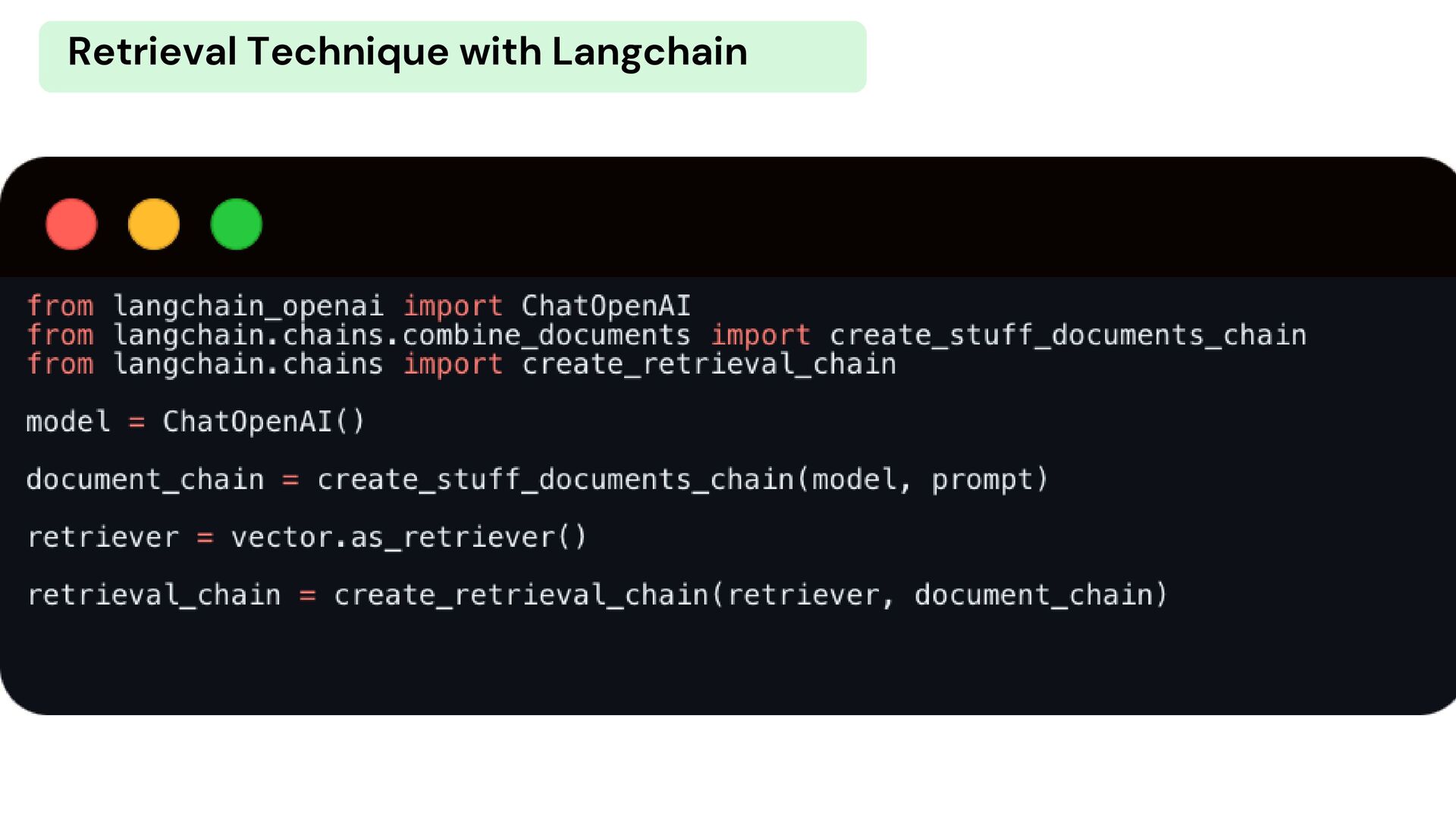
is retrieved from the data pool. Processing and Preprocessing: The retrieved information is prepared for use by the LLM. Generation Step (Using LLM): The LLM uses the retrieved information to generate a meaningful and coherent response for the user.
fetches information (finds the right information about your question), then it uses this information to generate an answer. This method allows the model to provide more accurate and knowledge-filled answers because it accesses and utilizes not only its own “memorized” knowledge, but also a large pool of knowledge.”


 kardelruveyda
 nikkihalliwell
 jonrohan
 rkendrick25
 stephenakadiri
 colly
colly
 chriscoyier
 philnash
 tessaabrams
 marktimemedia
 skipperchong
 sugarenia
 frankvandijk