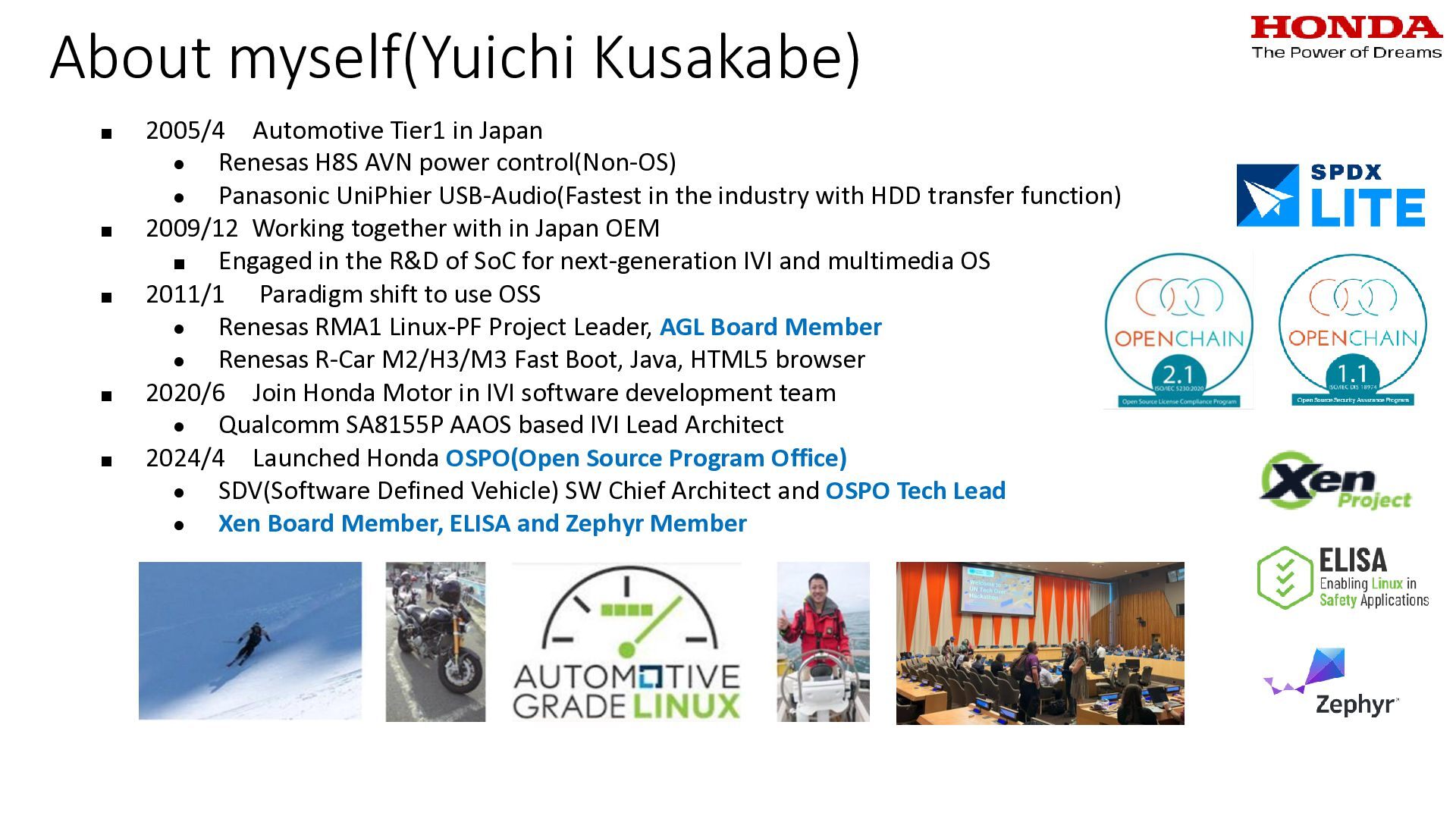
Tier1 in Japan • Renesas H8S AVN power control(Non-OS) • Panasonic UniPhier USB-Audio(Fastest in the industry with HDD transfer function) 2009/12 Working together with in Japan OEM ▪ Engaged in the R&D of SoC for next-generation IVI and multimedia OS 2011/1 Paradigm shift to use OSS • Renesas RMA1 Linux-PF Project Leader, AGL Board Member • Renesas R-Car M2/H3/M3 Fast Boot, Java, HTML5 browser 2020/6 Join Honda Motor in IVI software development team • Qualcomm SA8155P AAOS based IVI Lead Architect 2024/4 Launched Honda OSPO(Open Source Program Office) • SDV(Software Defined Vehicle) SW Chief Architect and OSPO Tech Lead • Xen Board Member, ELISA and Zephyr Member
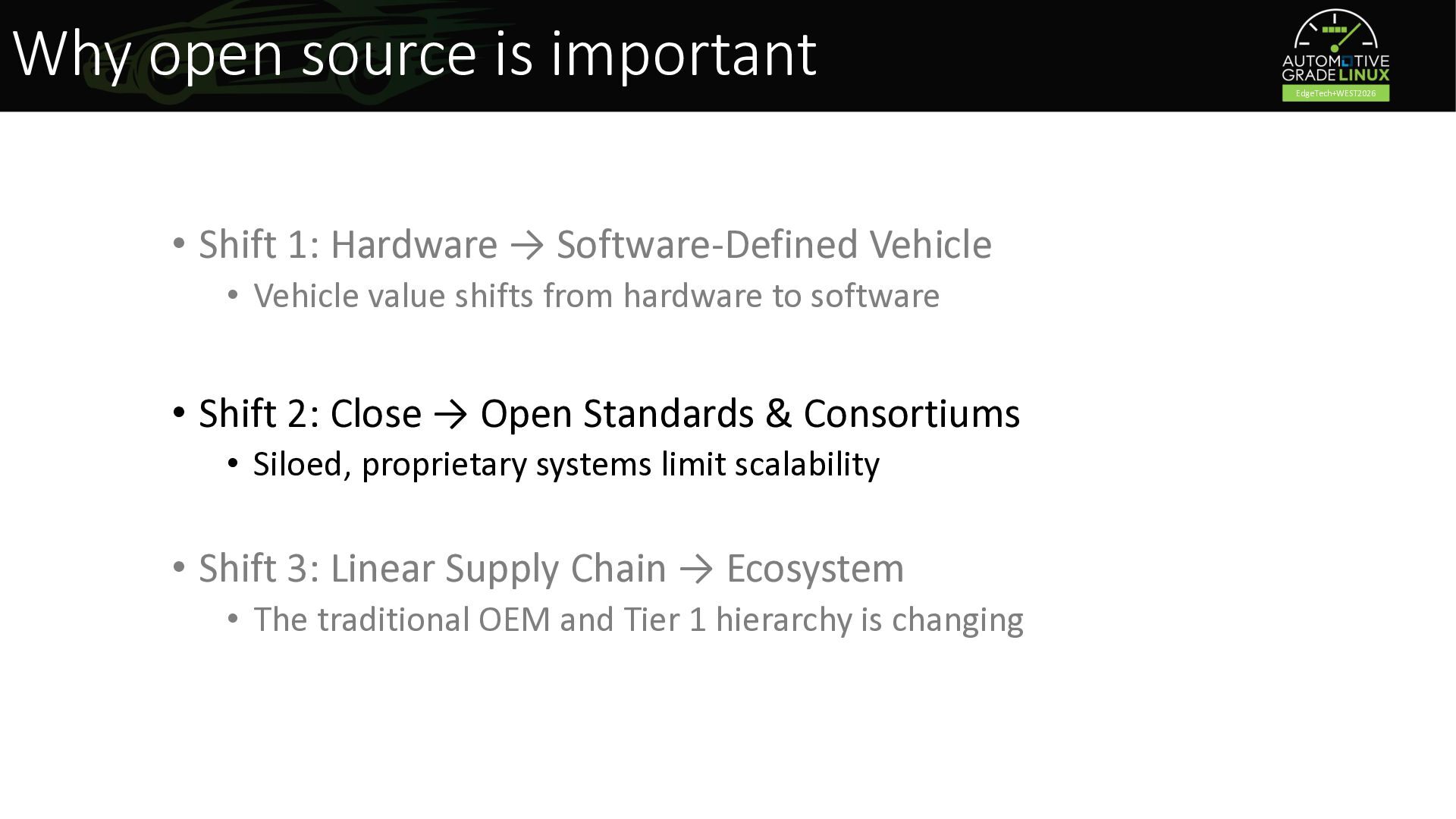
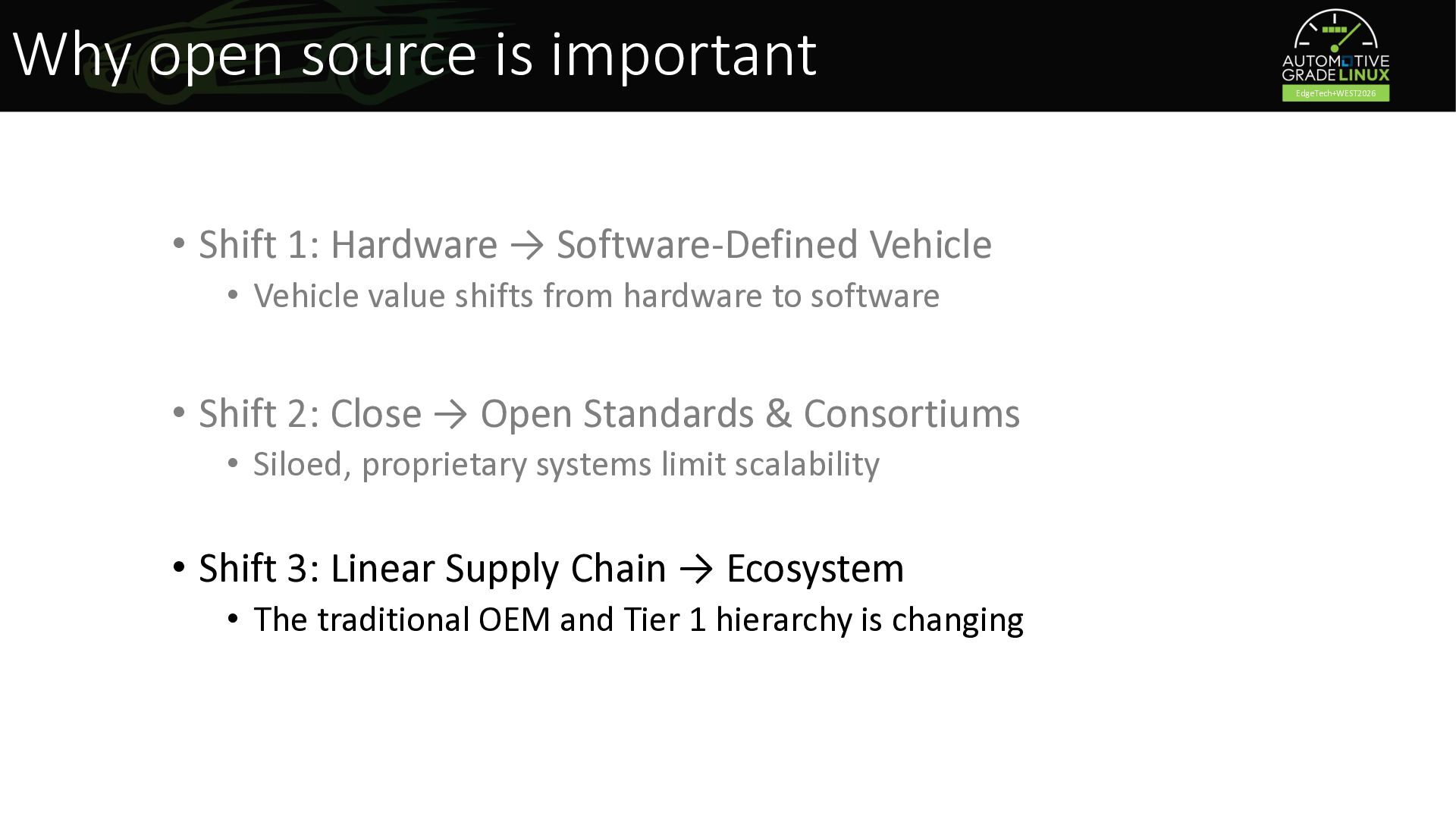
Shift 1: Hardware → Software-Defined Vehicle • Vehicle value shifts from hardware to software • Shift 2: Close → Open Standards & Consortiums • Siloed, proprietary systems limit scalability • Shift 3: Linear Supply Chain → Ecosystem • The traditional OEM and Tier 1 hierarchy is changing
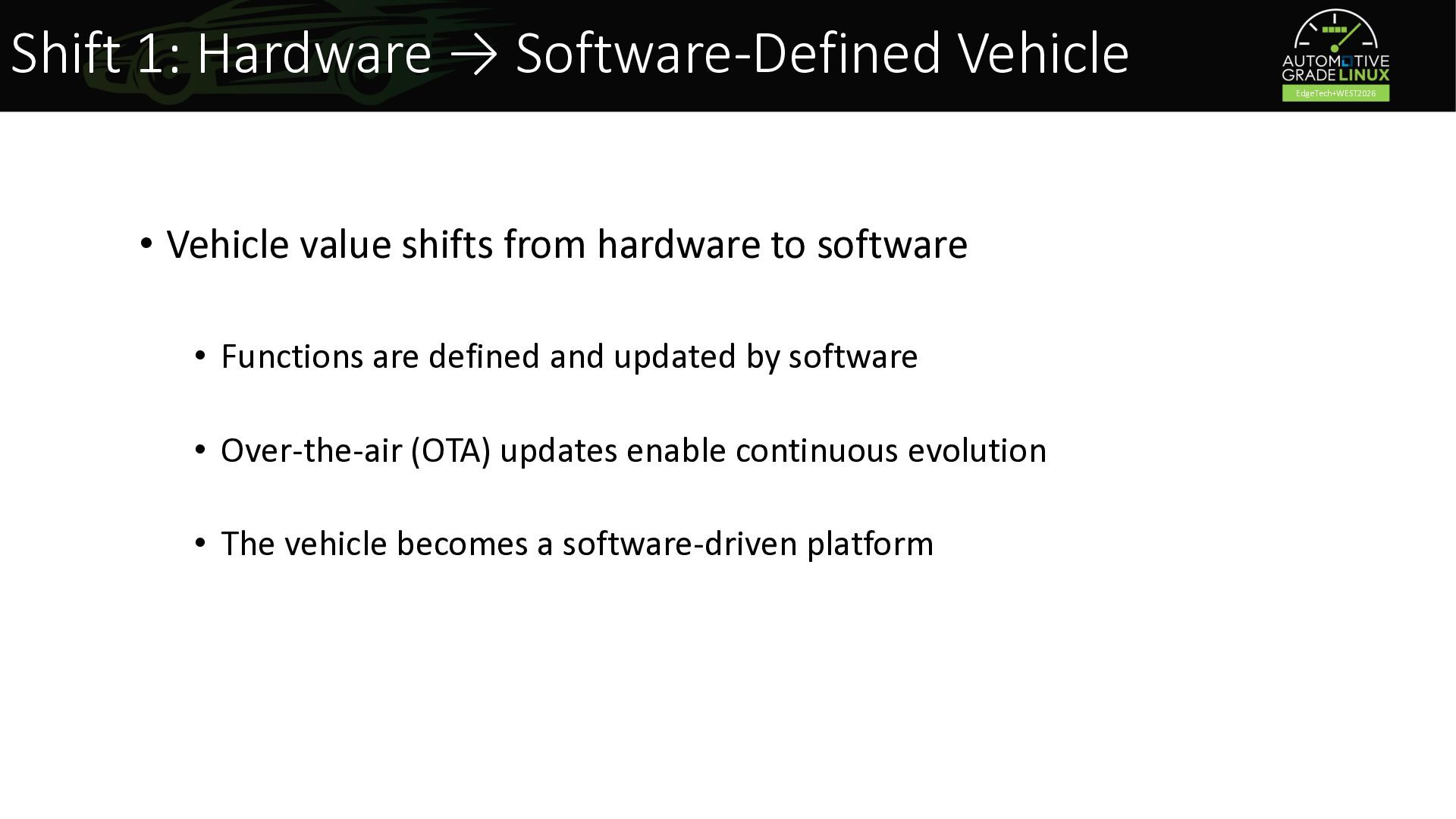
shifts from hardware to software • Functions are defined and updated by software • Over-the-air (OTA) updates enable continuous evolution • The vehicle becomes a software-driven platform
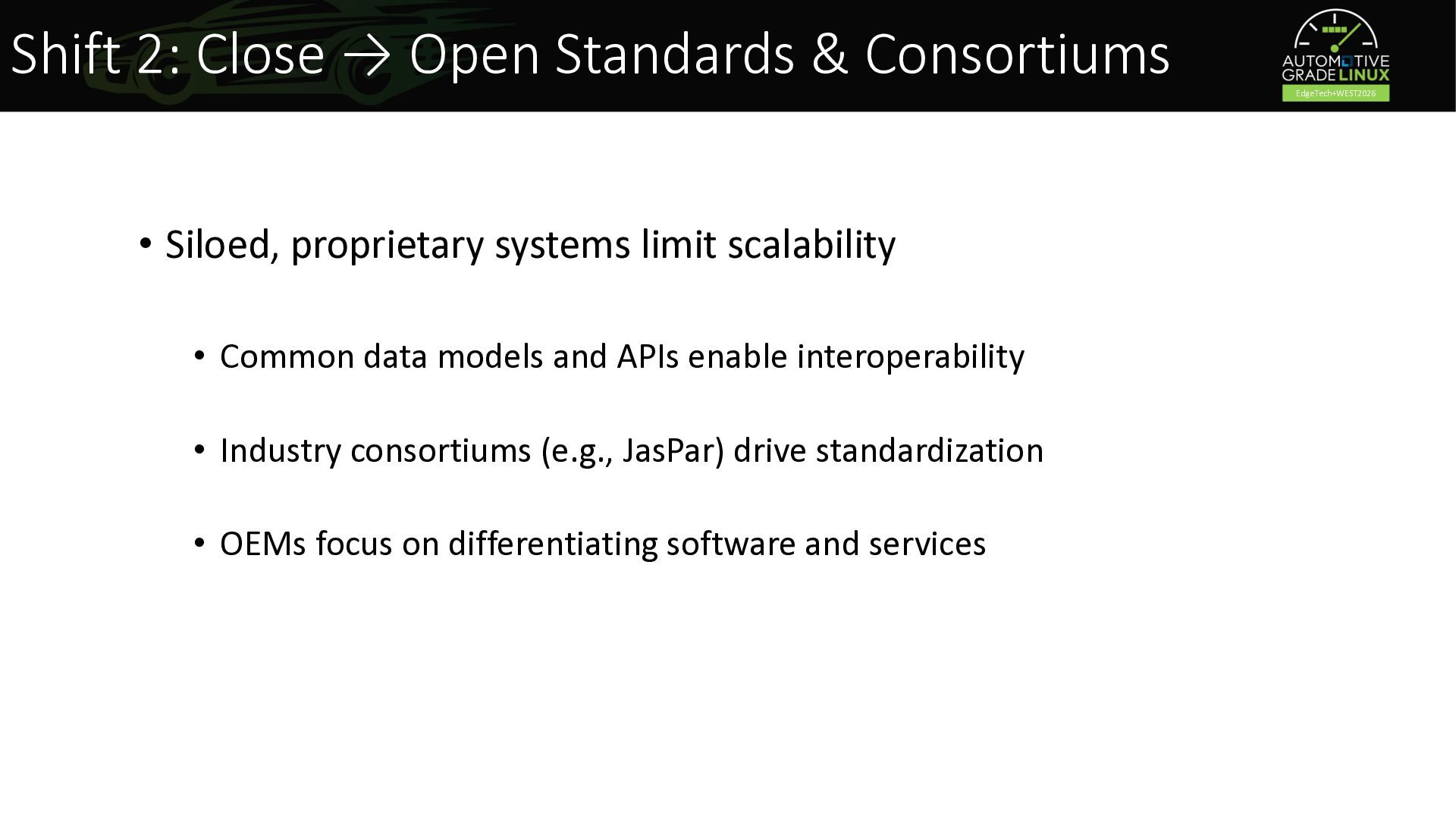
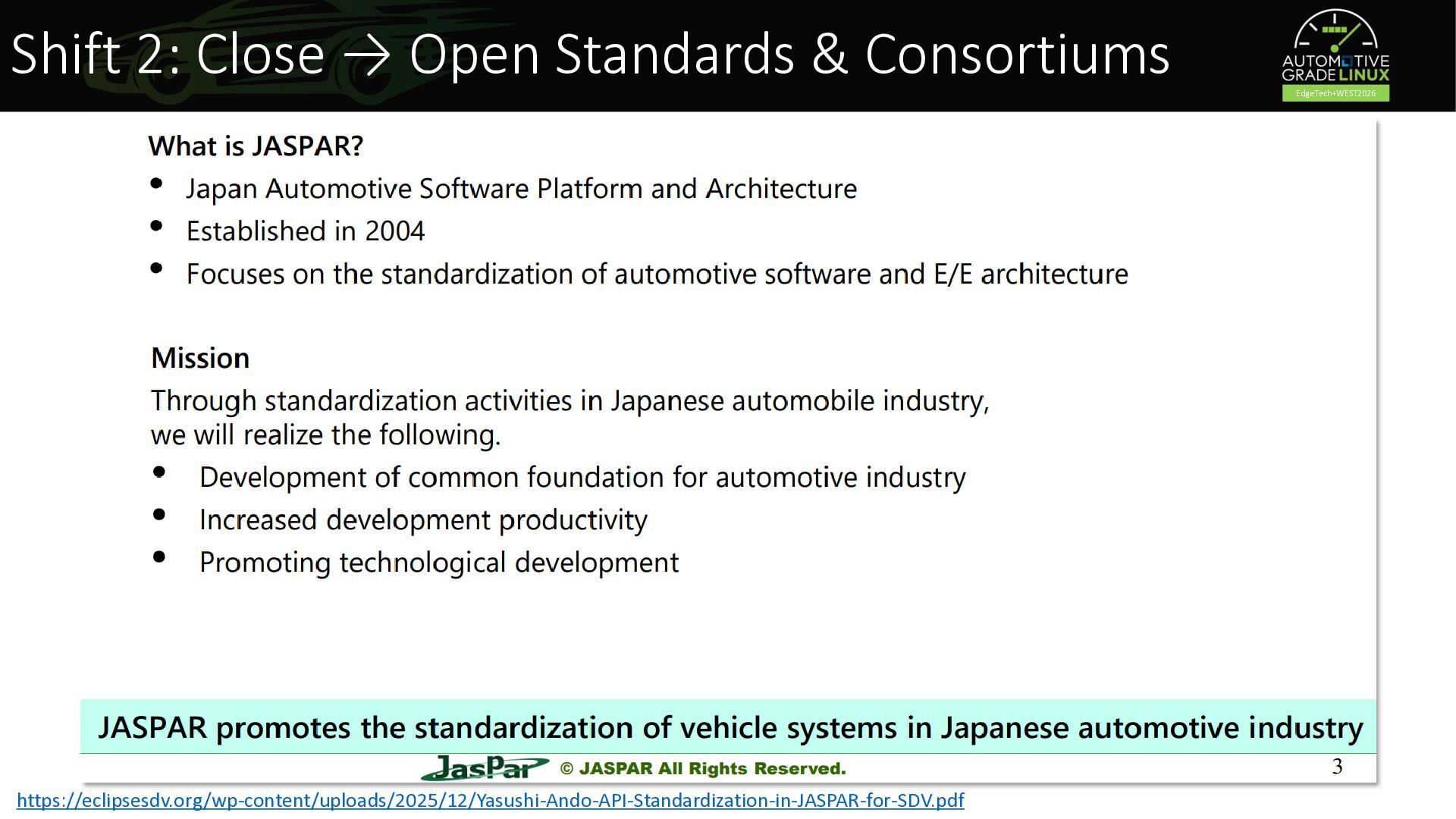
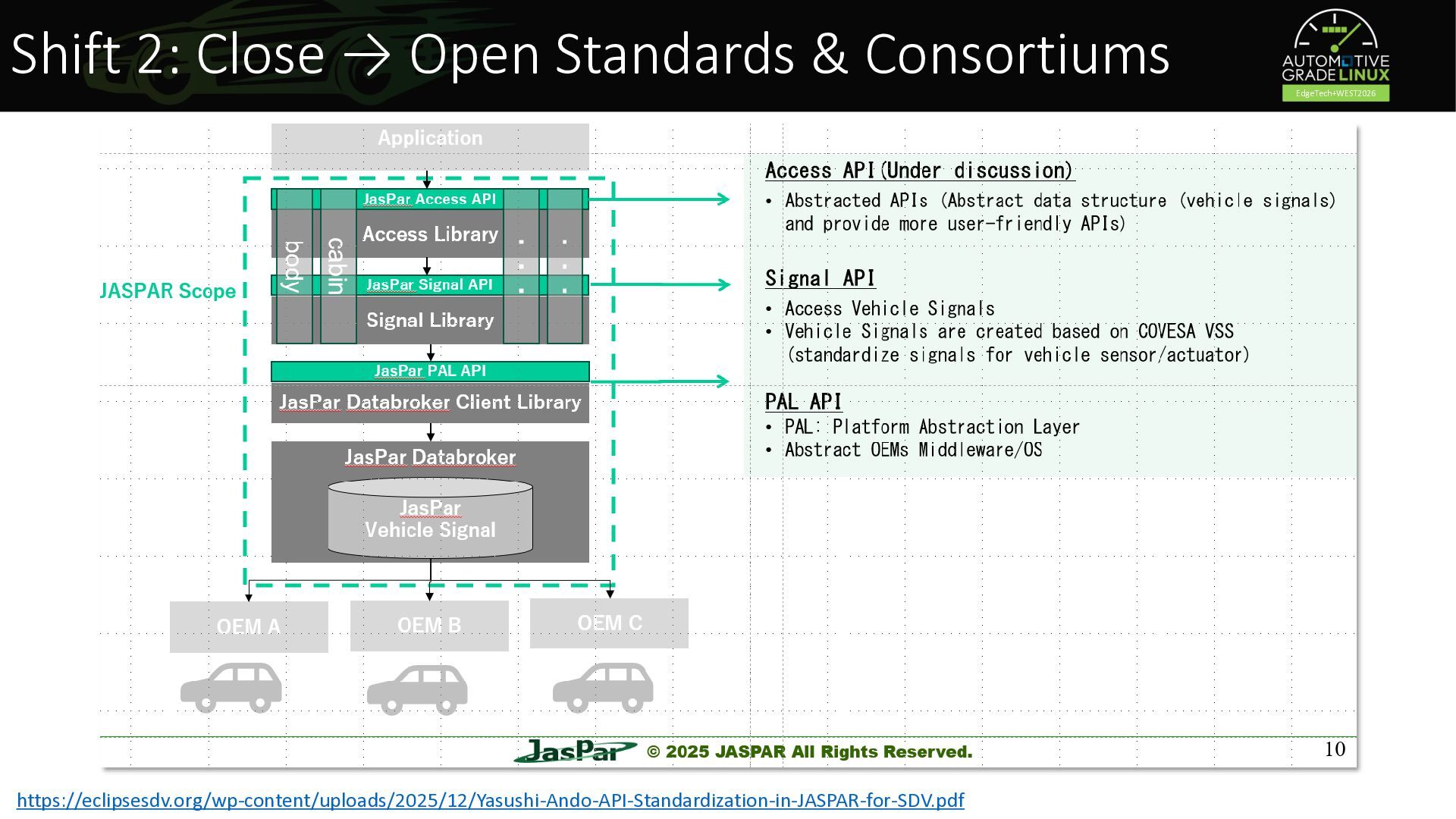
Siloed, proprietary systems limit scalability • Common data models and APIs enable interoperability • Industry consortiums (e.g., JasPar) drive standardization • OEMs focus on differentiating software and services
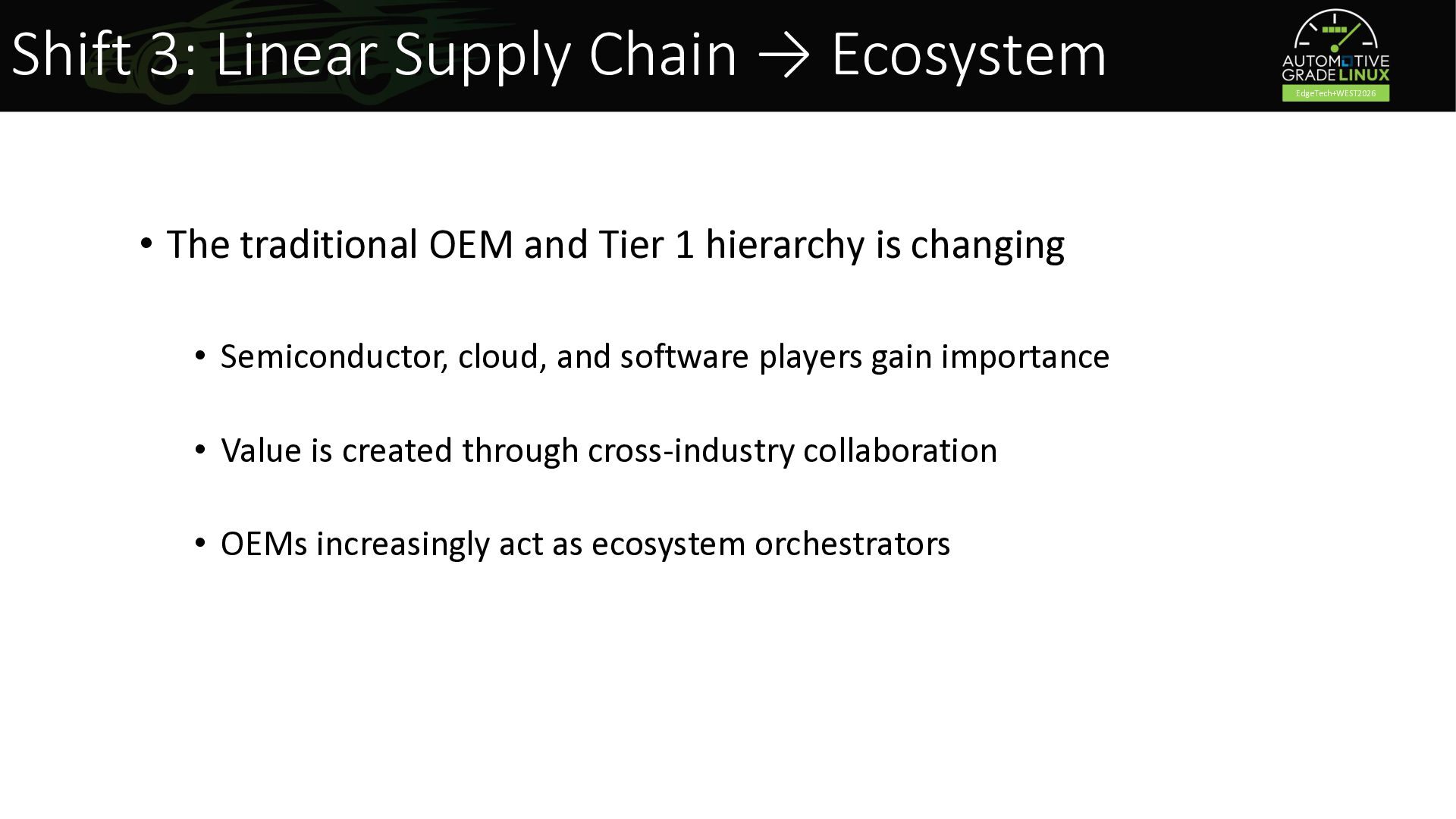
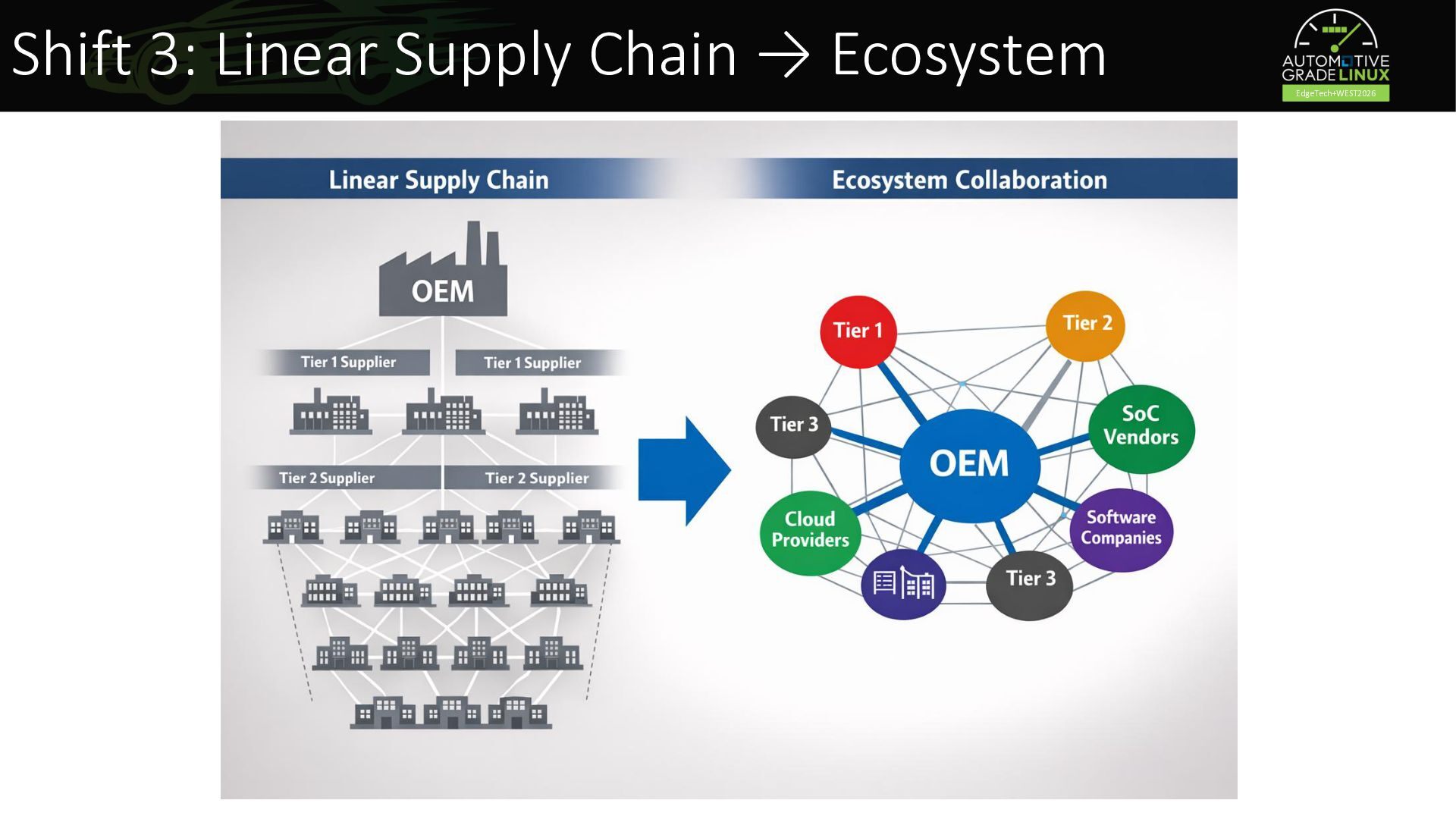
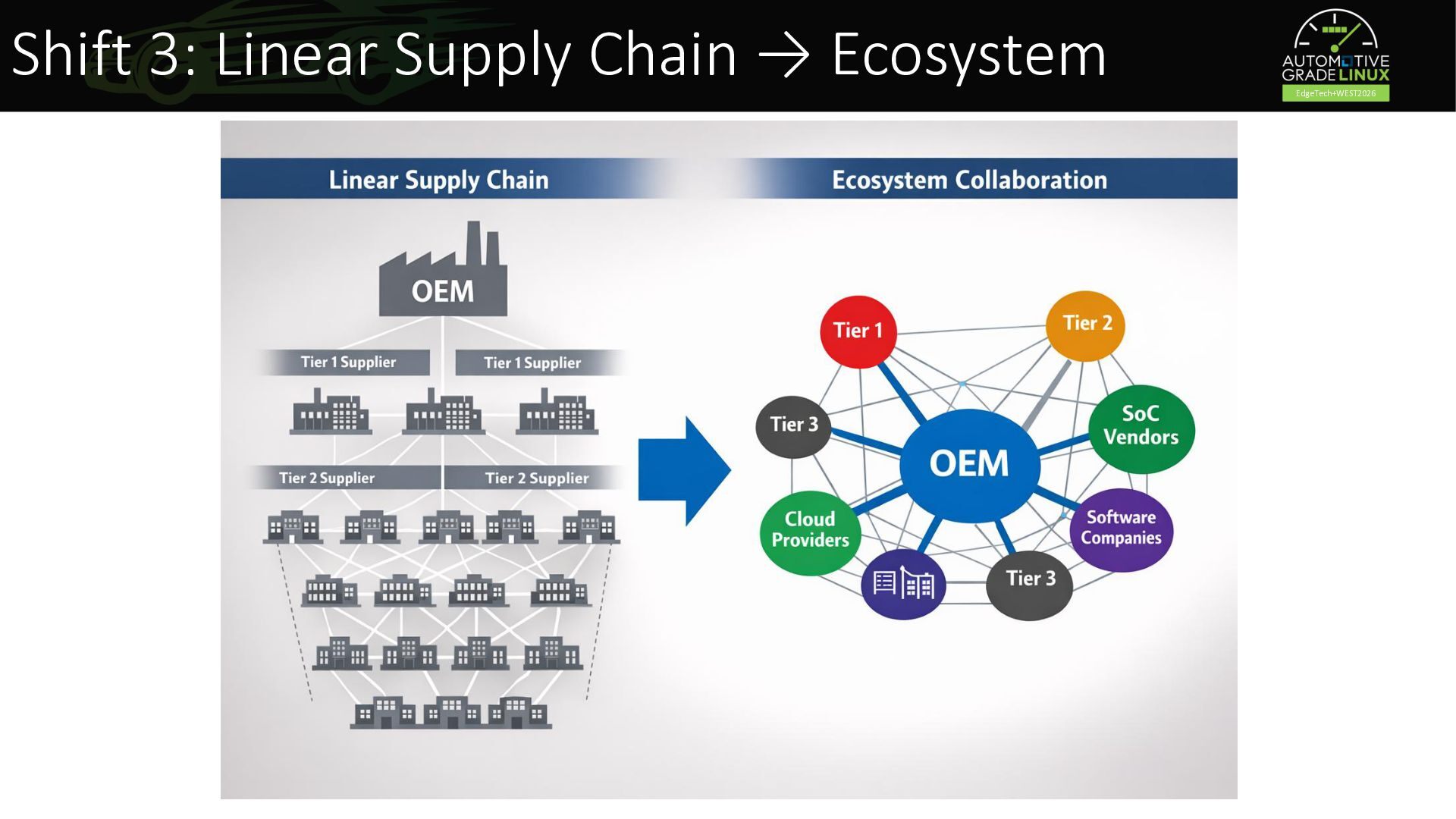
OEM and Tier 1 hierarchy is changing • Semiconductor, cloud, and software players gain importance • Value is created through cross-industry collaboration • OEMs increasingly act as ecosystem orchestrators EdgeTech+WEST2026
Software-Defined Vehicle • Vehicle value shifts from hardware to software • Shift 2: Close → Open Standards & Consortiums • Siloed, proprietary systems limit scalability • Shift 3: Linear Supply Chain → Ecosystem • The traditional OEM and Tier 1 hierarchy is changing EdgeTech+WEST2026
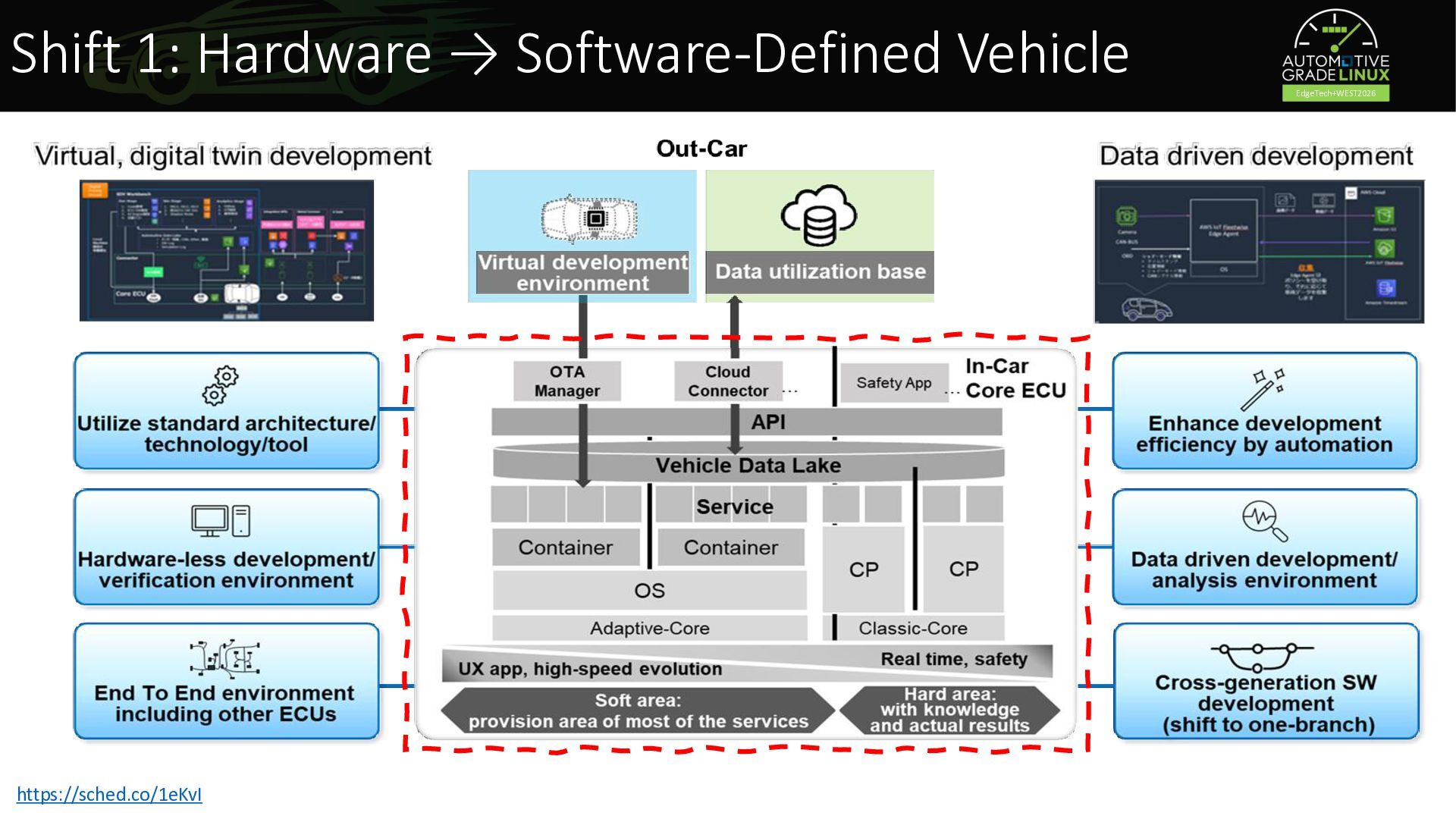
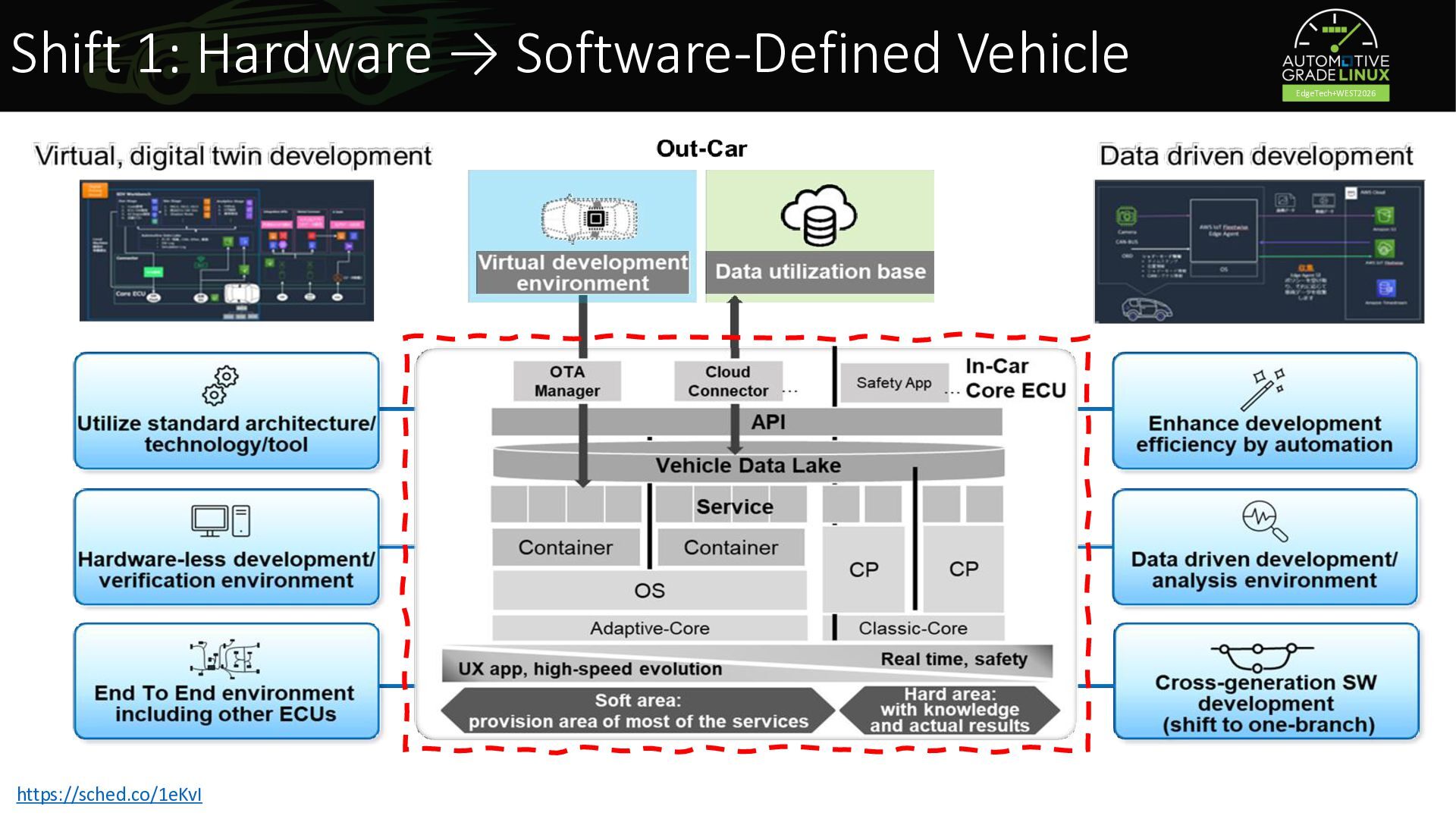
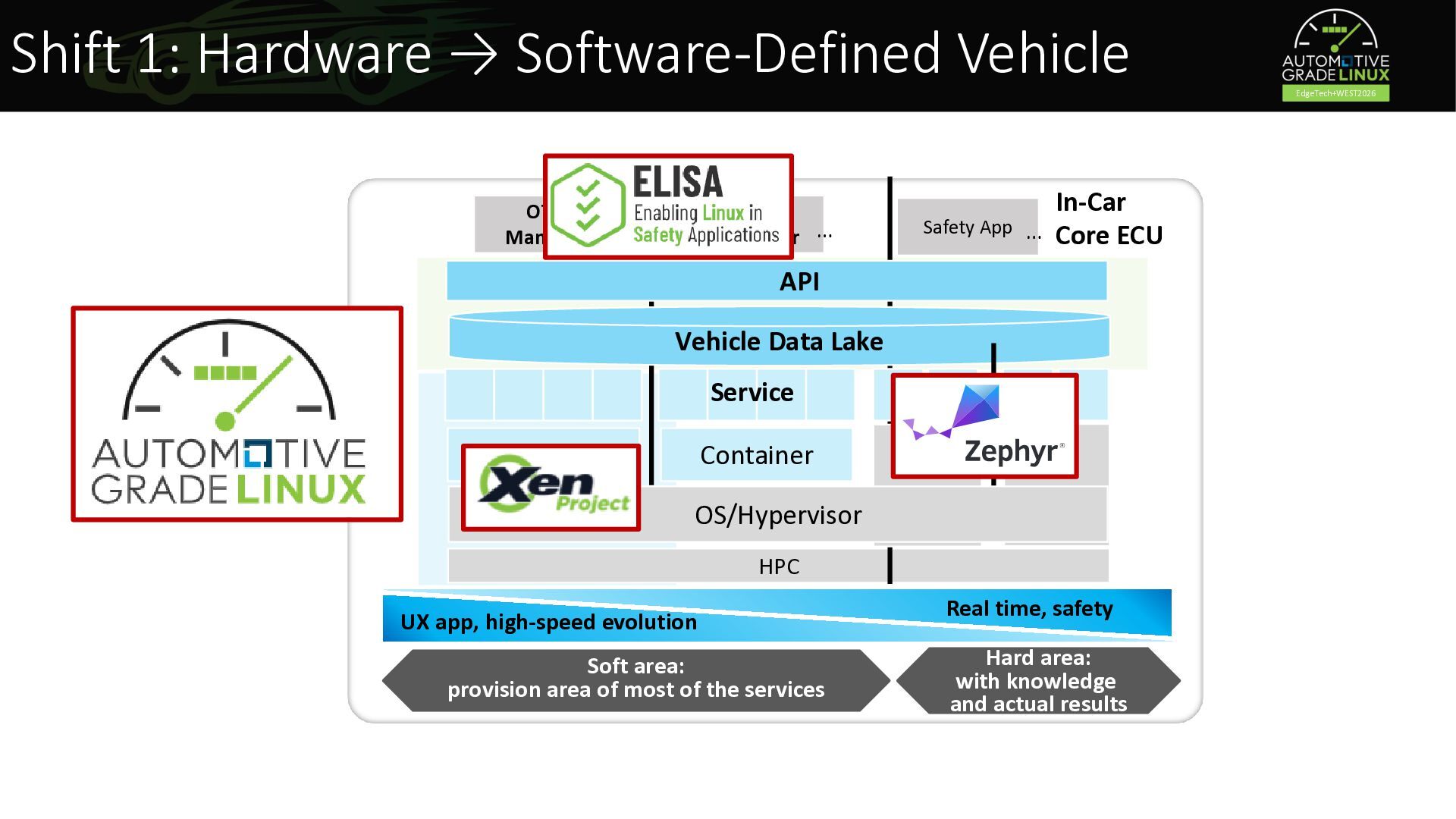
Connector … In-Car Safety App … Core ECU API Vehicle Data Lake Service Container Container OS/Hypervisor HPC UX app, high-speed evolution Soft area: provision area of most of the services Real time, safety Hard area: with knowledge and actual results
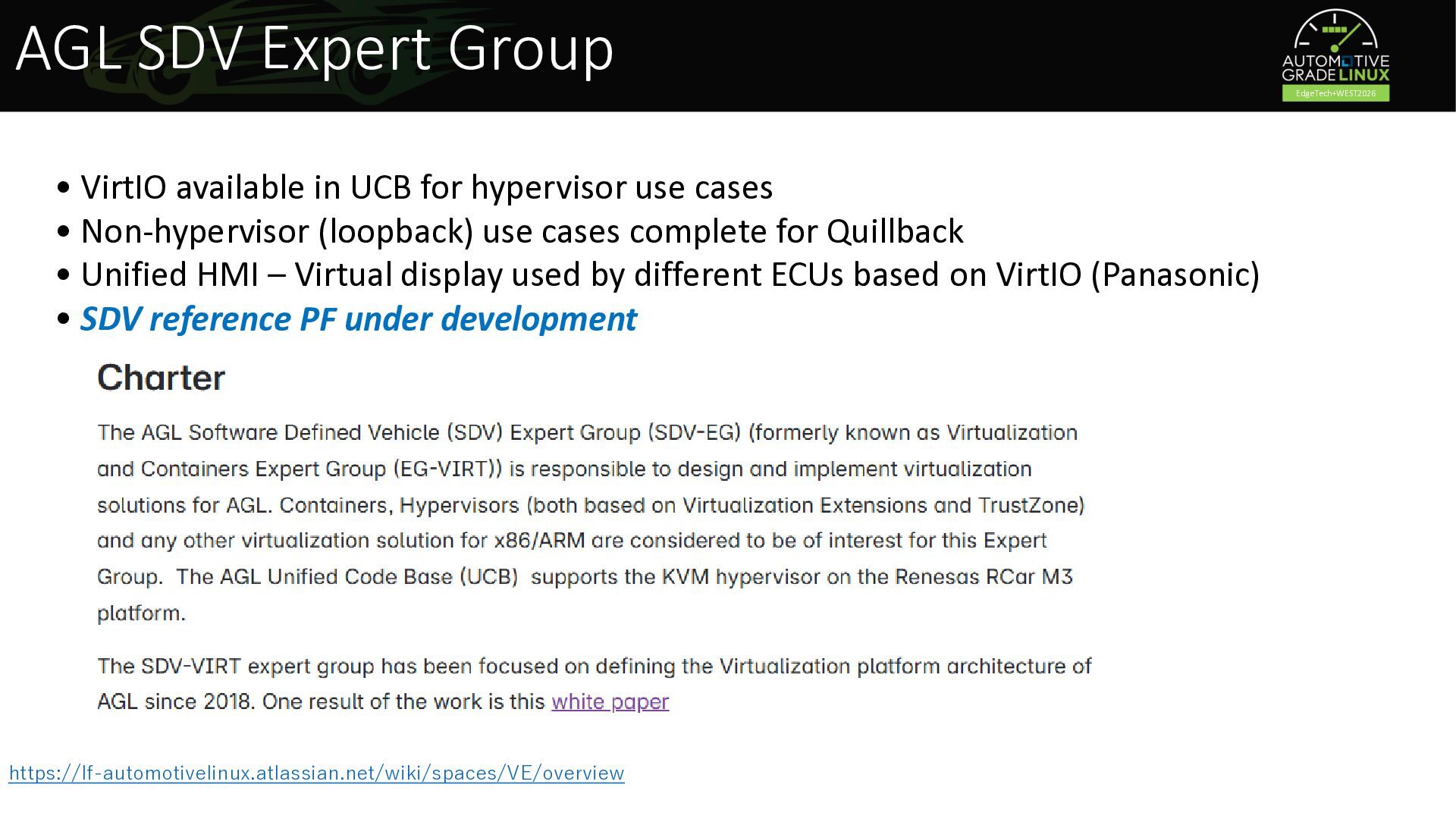
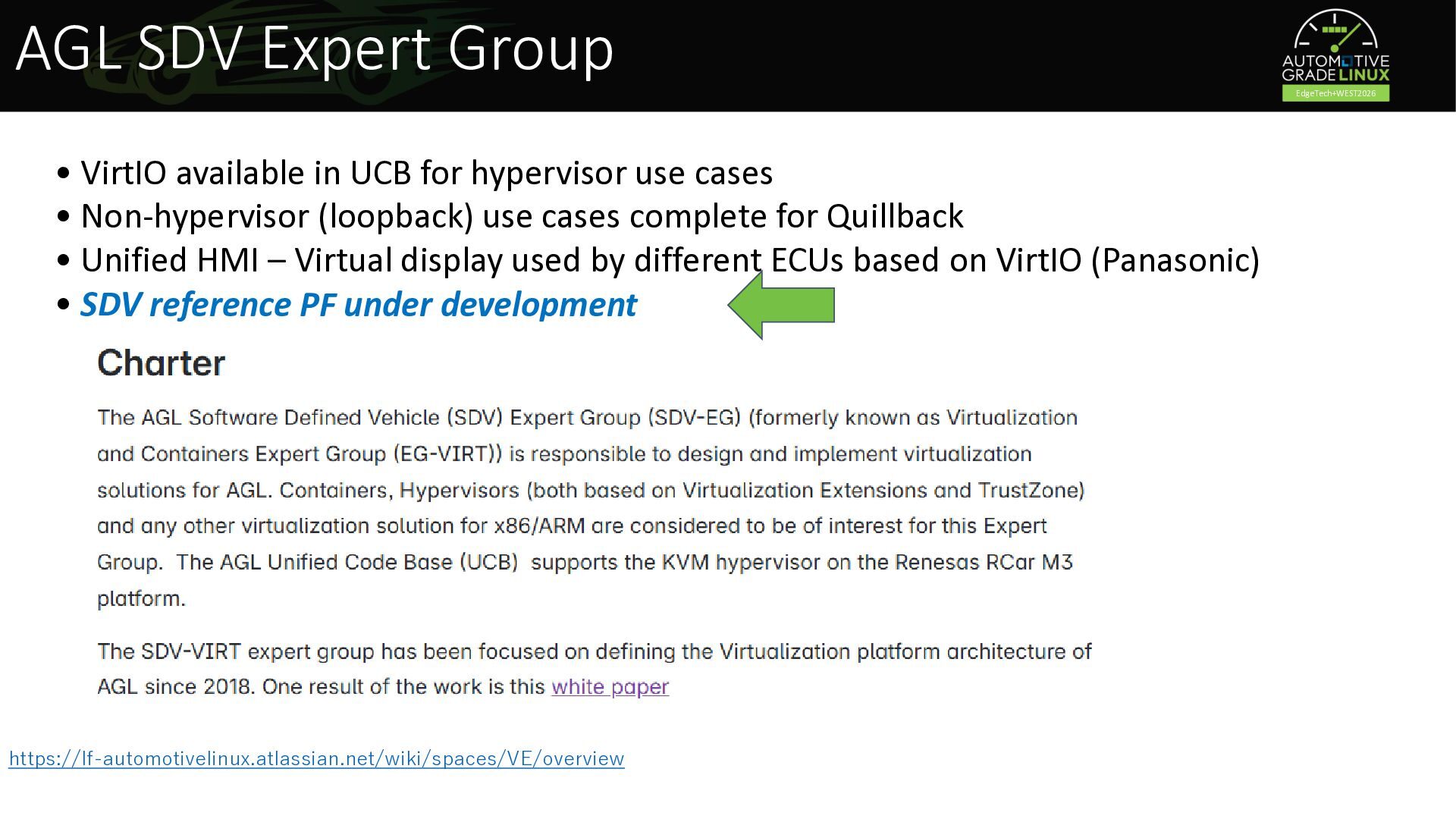
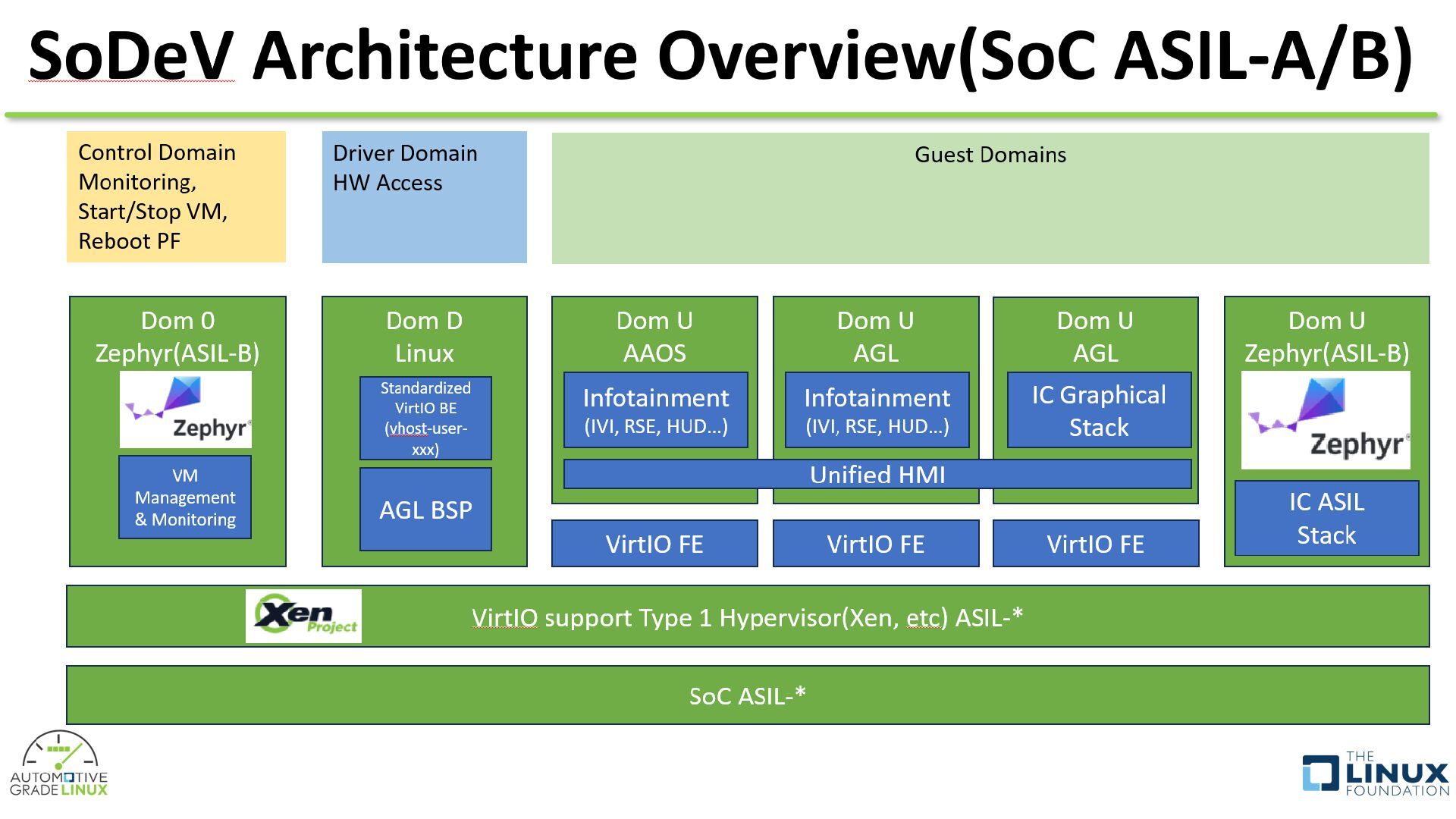
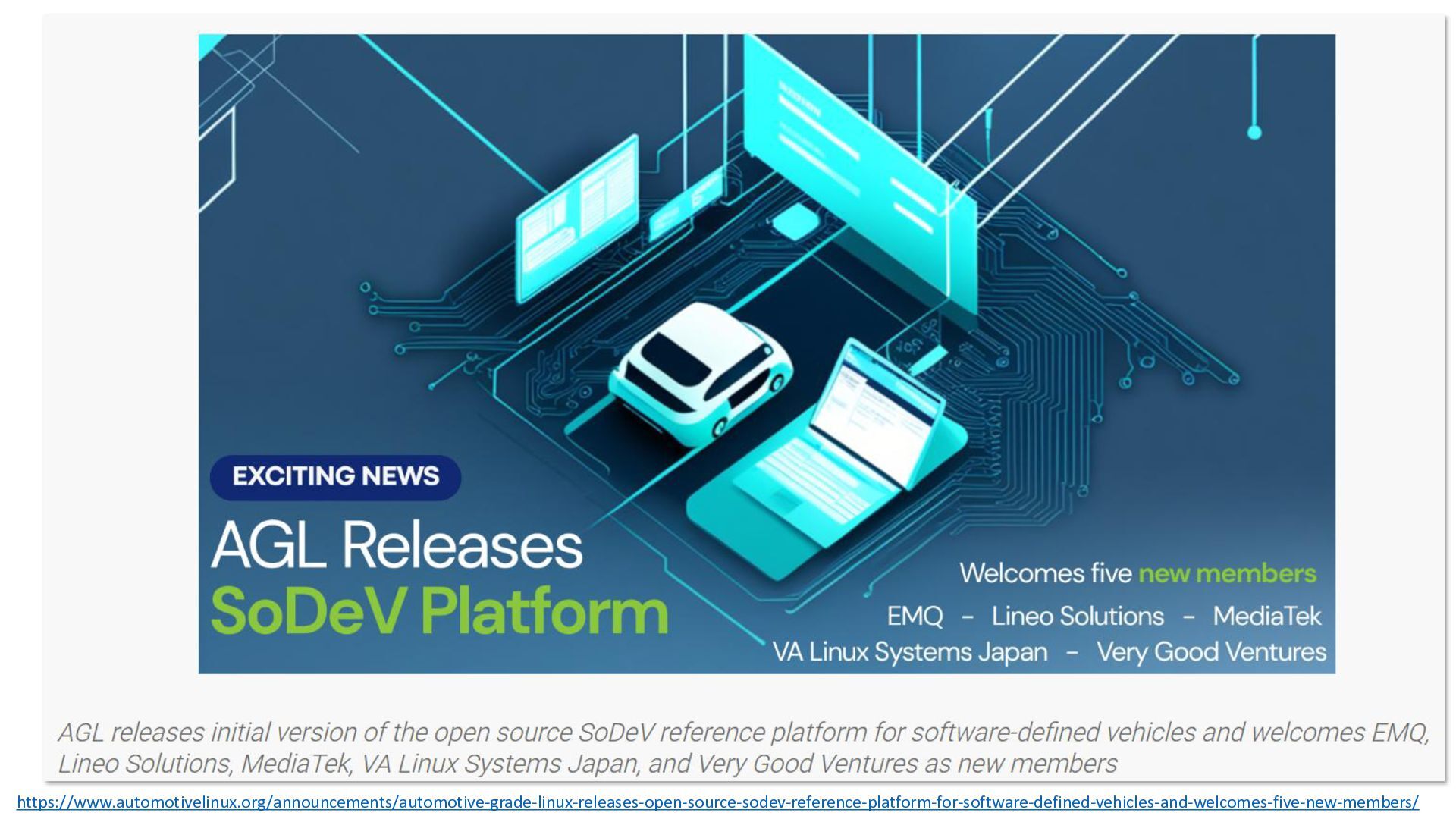
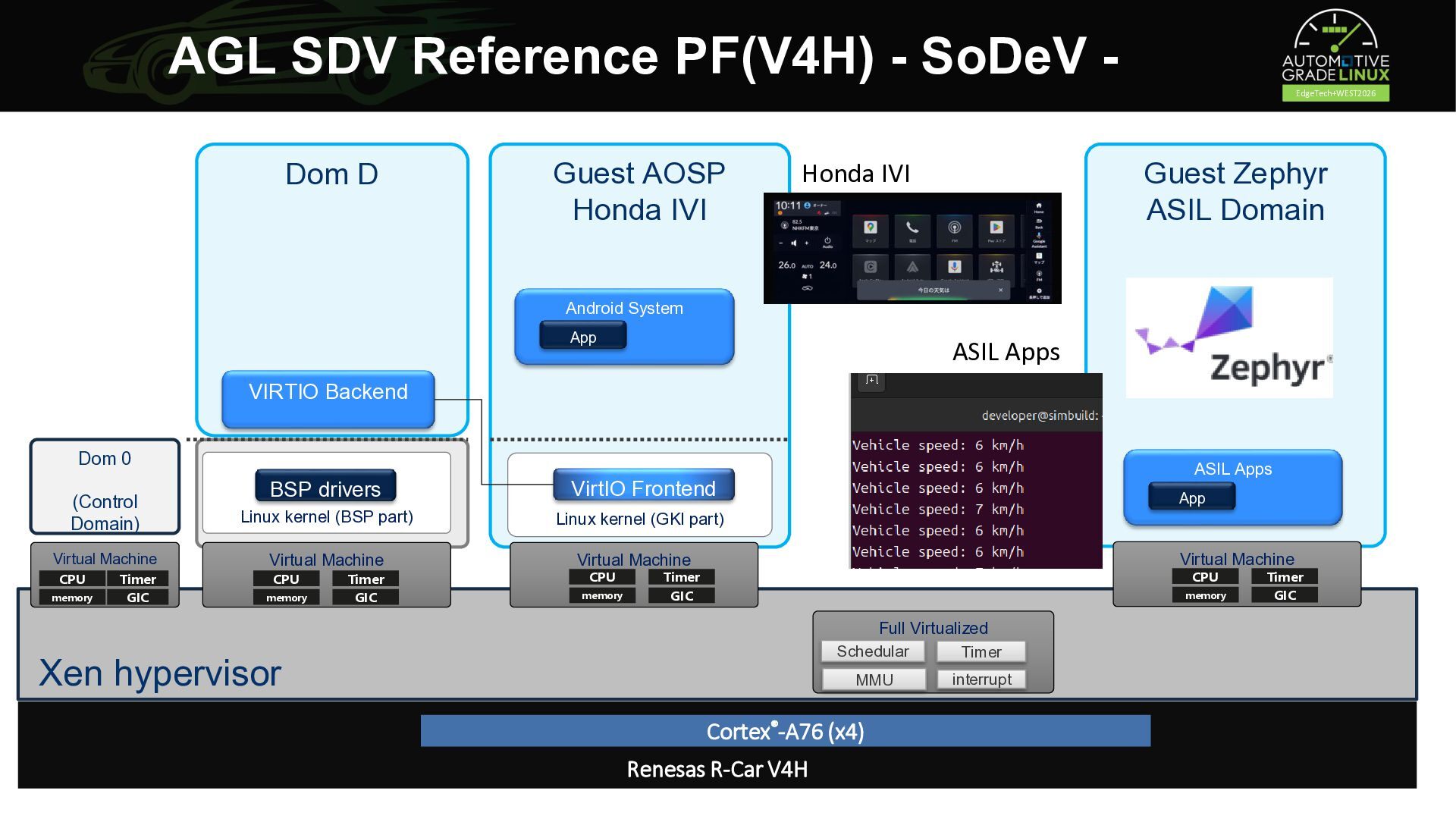
for hypervisor use cases • Non-hypervisor (loopback) use cases complete for Quillback • Unified HMI – Virtual display used by different ECUs based on VirtIO (Panasonic) • SDV reference PF under development https://lf-automotivelinux.atlassian.net/wiki/spaces/VE/overview
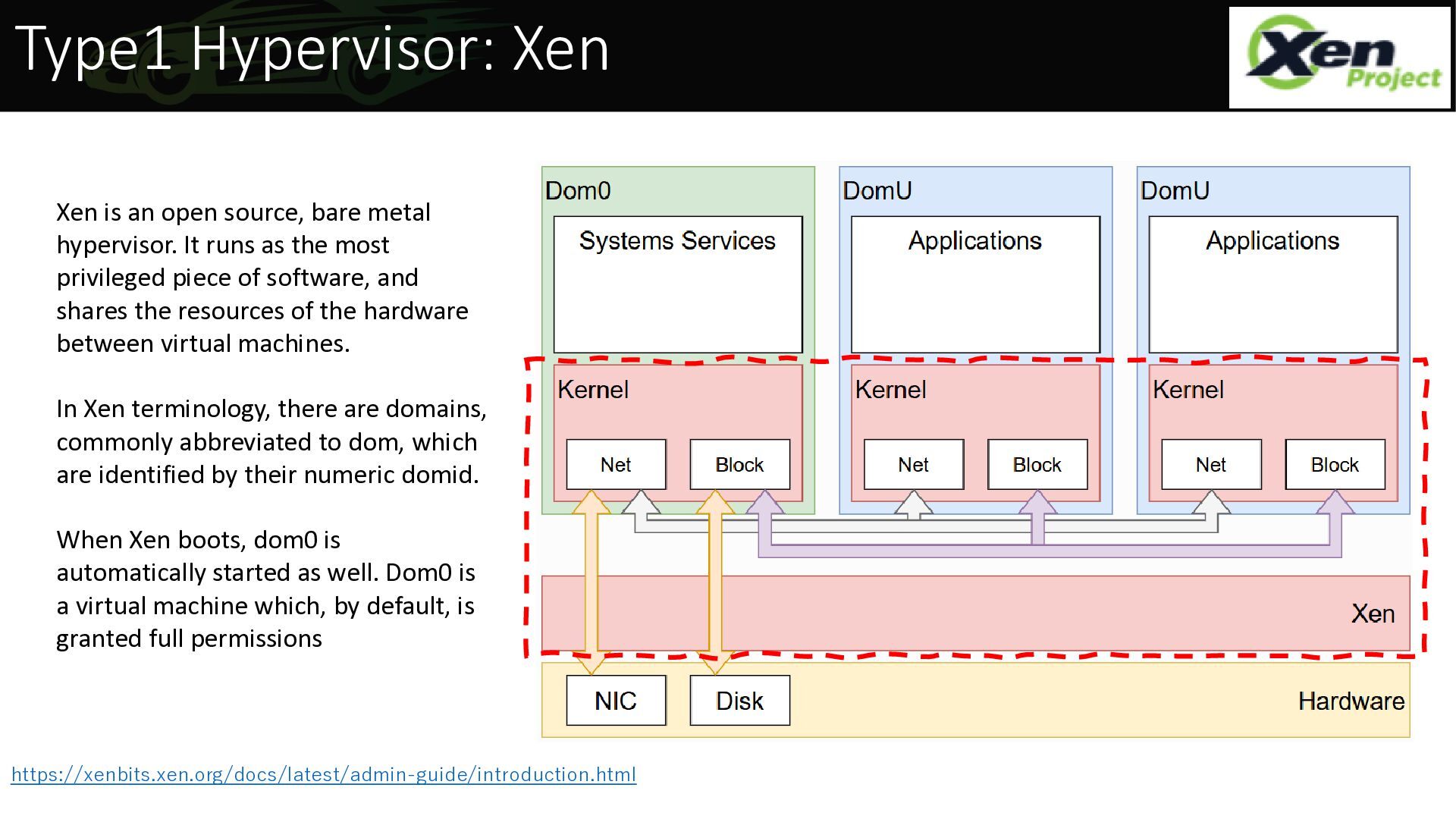
metal hypervisor. It runs as the most privileged piece of software, and shares the resources of the hardware between virtual machines. In Xen terminology, there are domains, commonly abbreviated to dom, which are identified by their numeric domid. When Xen boots, dom0 is automatically started as well. Dom0 is a virtual machine which, by default, is granted full permissions https://xenbits.xen.org/docs/latest/admin-guide/introduction.html
Software-Defined Vehicle • Vehicle value shifts from hardware to software • Shift 2: Close → Open Standards & Consortiums • Siloed, proprietary systems limit scalability • Shift 3: Linear Supply Chain → Ecosystem • The traditional OEM and Tier 1 hierarchy is changing EdgeTech+WEST2026
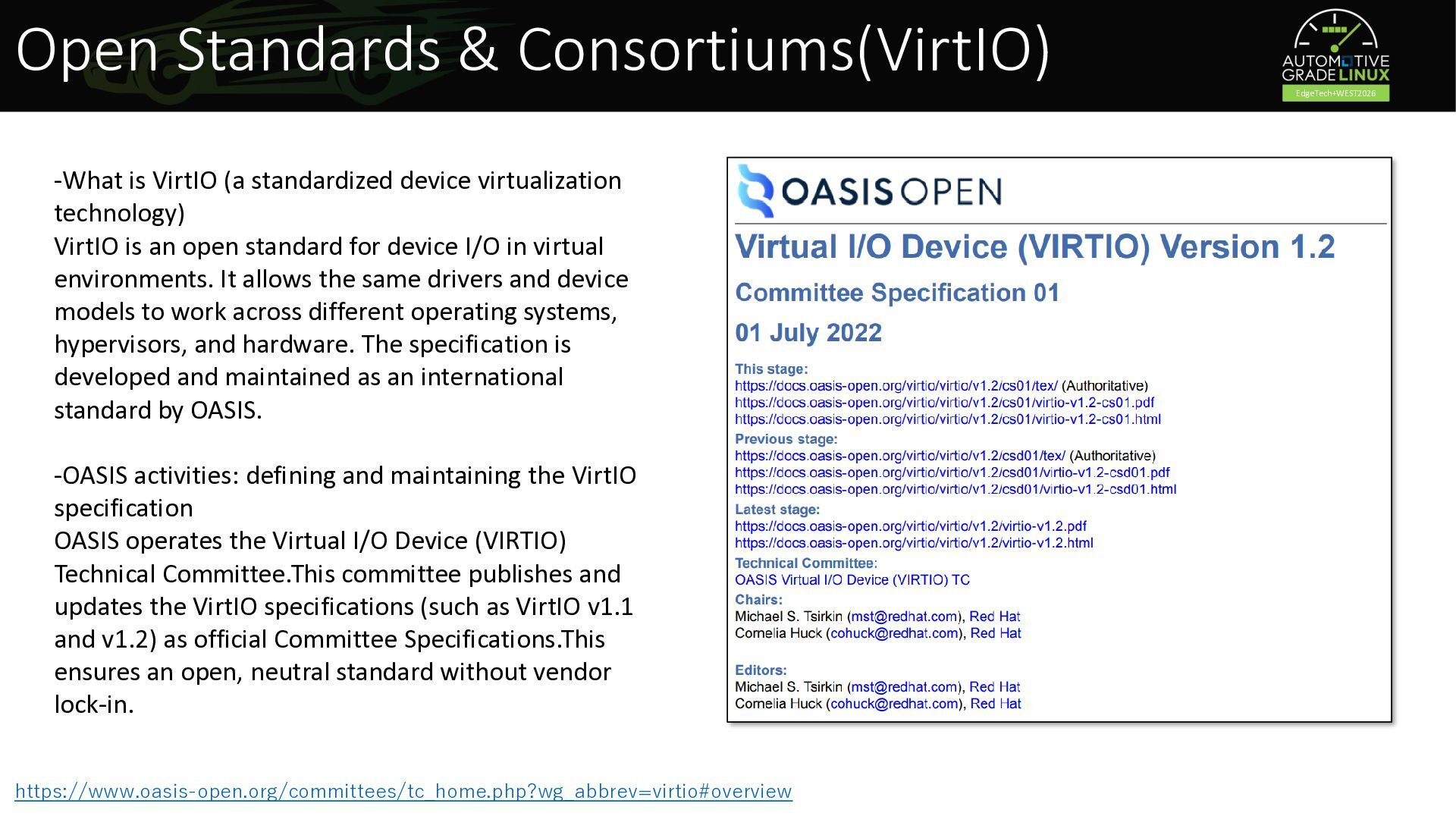
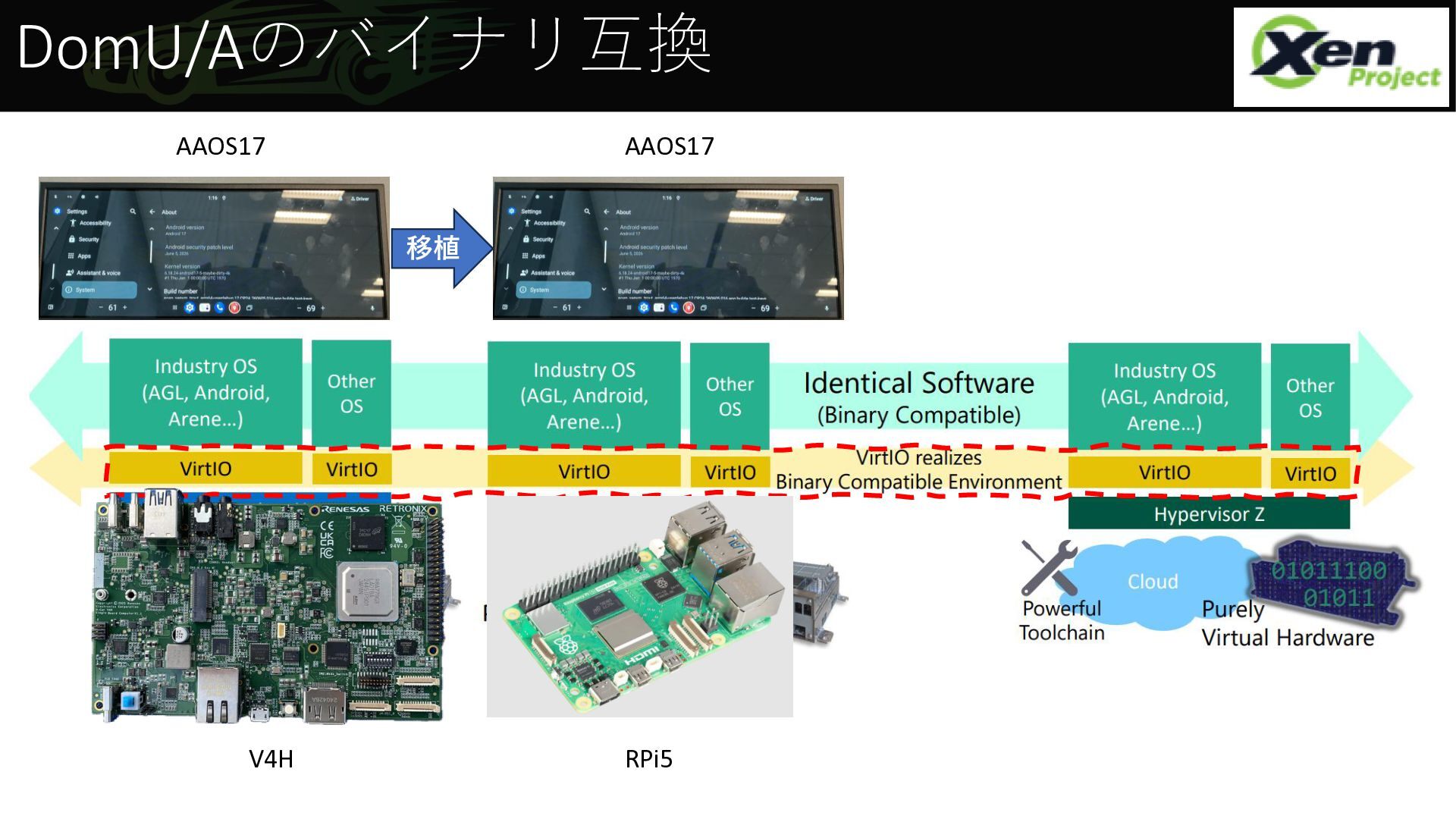
device virtualization technology) VirtIO is an open standard for device I/O in virtual environments. It allows the same drivers and device models to work across different operating systems, hypervisors, and hardware. The specification is developed and maintained as an international standard by OASIS. -OASIS activities: defining and maintaining the VirtIO specification OASIS operates the Virtual I/O Device (VIRTIO) Technical Committee.This committee publishes and updates the VirtIO specifications (such as VirtIO v1.1 and v1.2) as official Committee Specifications.This ensures an open, neutral standard without vendor lock-in. https://www.oasis-open.org/committees/tc_home.php?wg_abbrev=virtio#overview
Software-Defined Vehicle • Vehicle value shifts from hardware to software • Shift 2: Close → Open Standards & Consortiums • Siloed, proprietary systems limit scalability • Shift 3: Linear Supply Chain → Ecosystem • The traditional OEM and Tier 1 hierarchy is changing EdgeTech+WEST2026
for hypervisor use cases • Non-hypervisor (loopback) use cases complete for Quillback • Unified HMI – Virtual display used by different ECUs based on VirtIO (Panasonic) • SDV reference PF under development https://lf-automotivelinux.atlassian.net/wiki/spaces/VE/overview
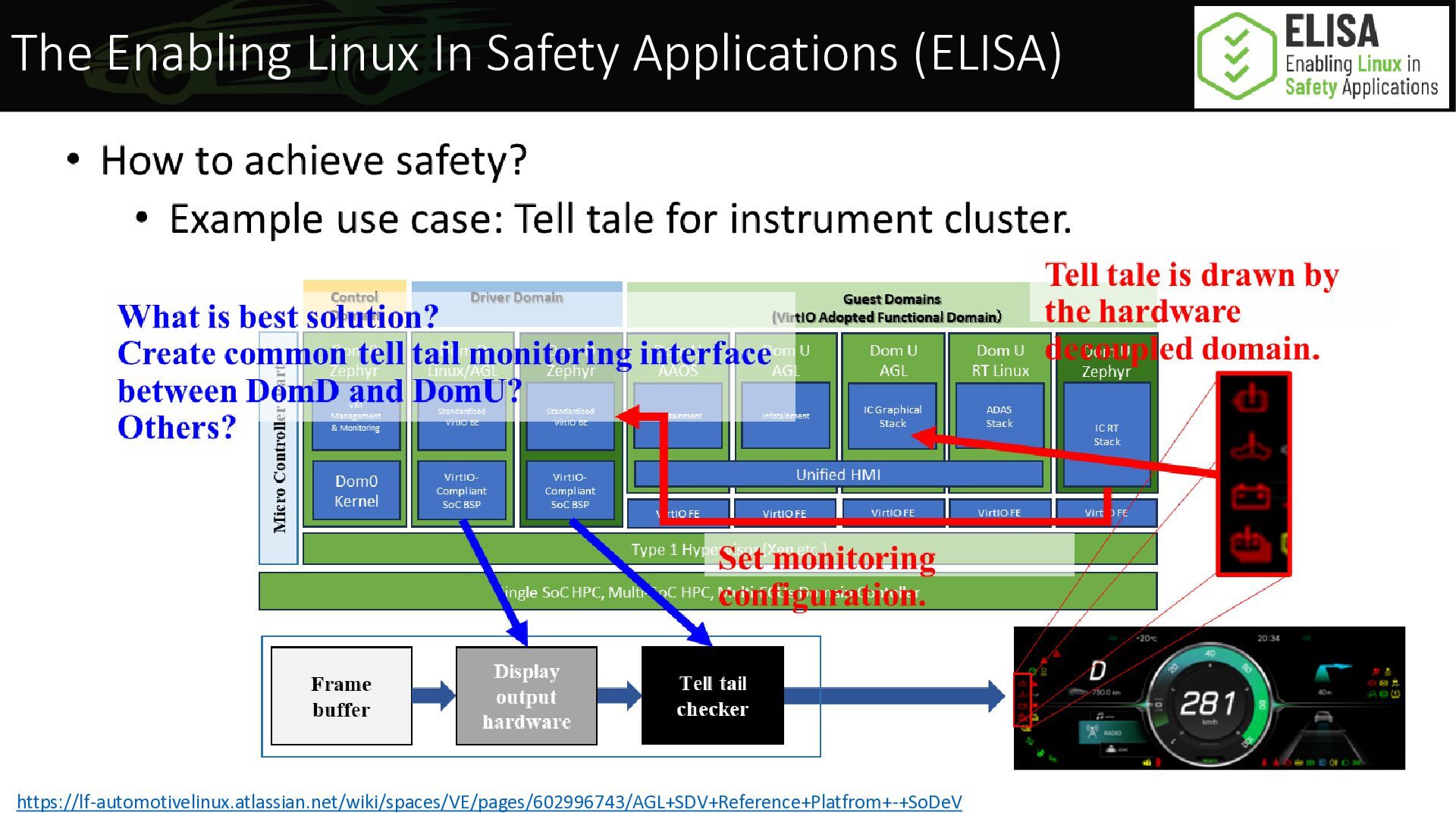
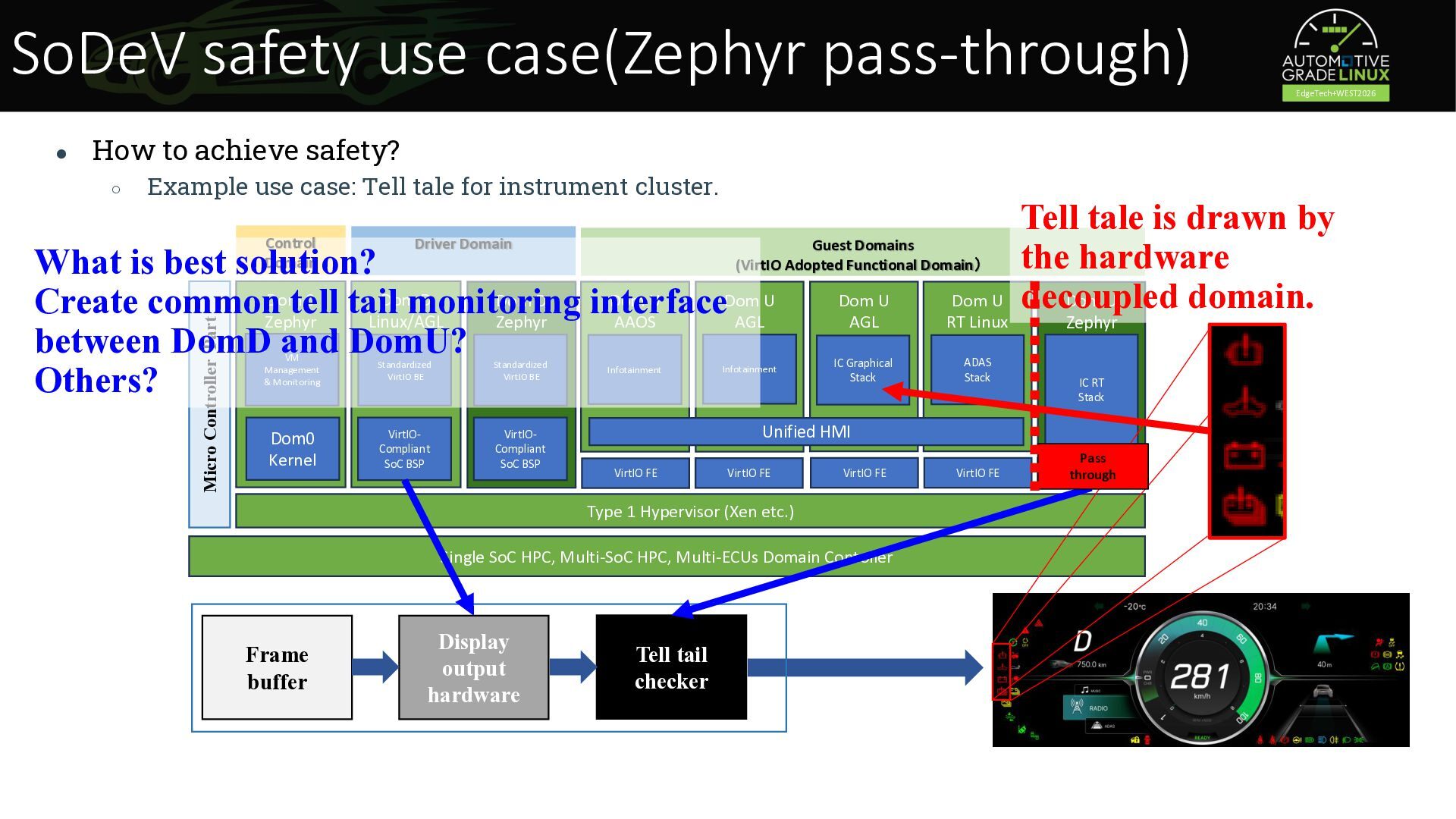
safety? ◦ Example use case: Tell tale for instrument cluster. Tell tale is drawn by Driver Domain Guest Domains the hardware (VirtIO Adopted Functional Domain) What is best solution? Dom 0 Dommonitoring D Dom D Dom U Dom U decoupled Dom U Dom U Dom U domain. Create commonZephyr tell tail interface Linux/AGL Zephyr AGL RT Linux AAOS AGL Zephyr between DomD and DomU? Others? Micro Controller Part Control Domain VM Management & Monitoring Standardized VirtIO BE Standardized VirtIO BE Dom0 Kernel VirtIOCompliant SoC BSP VirtIOCompliant SoC BSP Infotainment Infotainment IC Graphical Stack VirtIO FE VirtIO FE VirtIO FE Single SoC HPC, Multi-SoC HPC, Multi-ECUs Domain Contoller Display output hardware IC RT Stack Unified HMI Type 1 Hypervisor (Xen etc.) Frame buffer ADAS Stack Tell tail checker VirtIO FE Pass VirtIO FE through
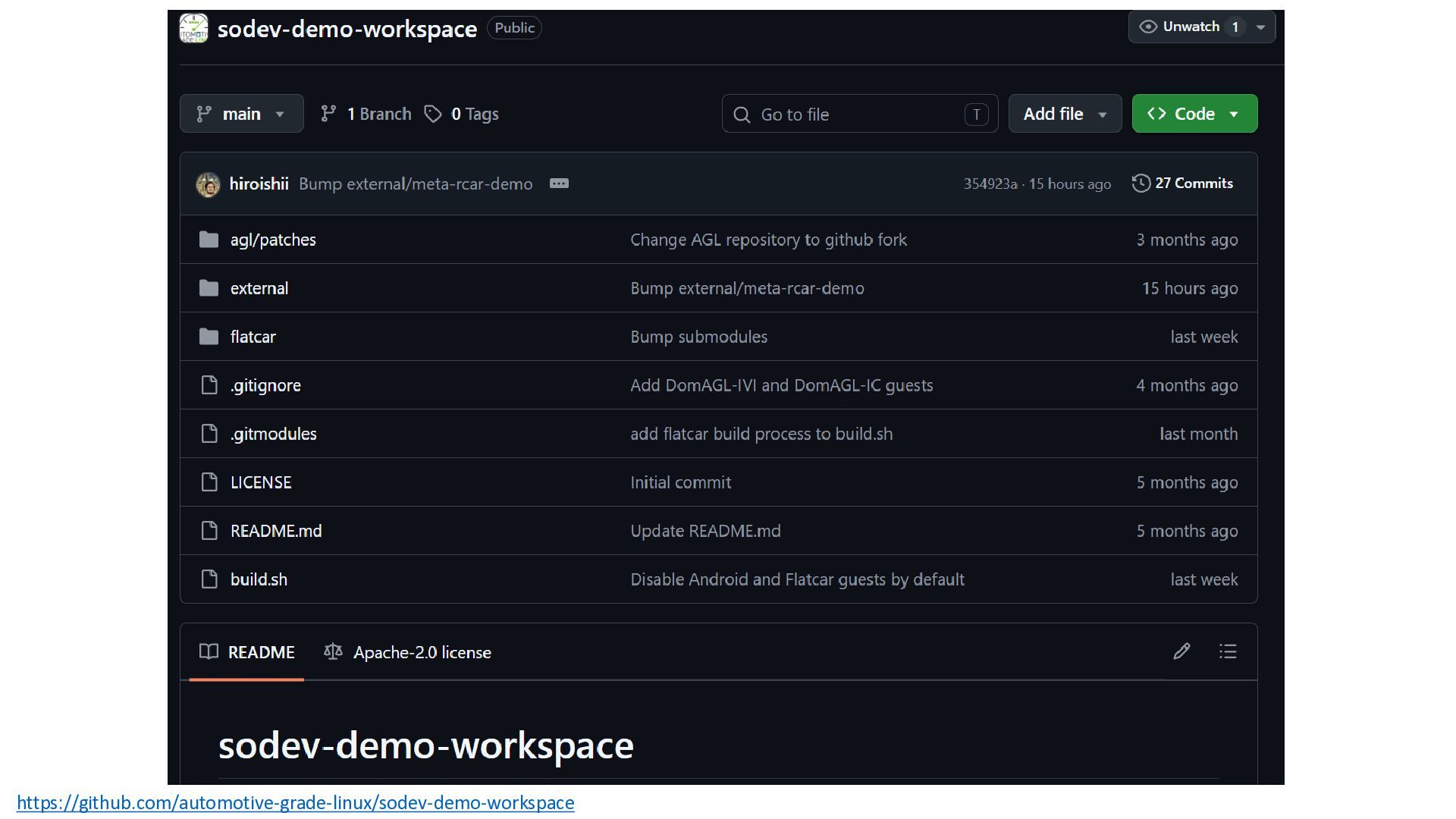
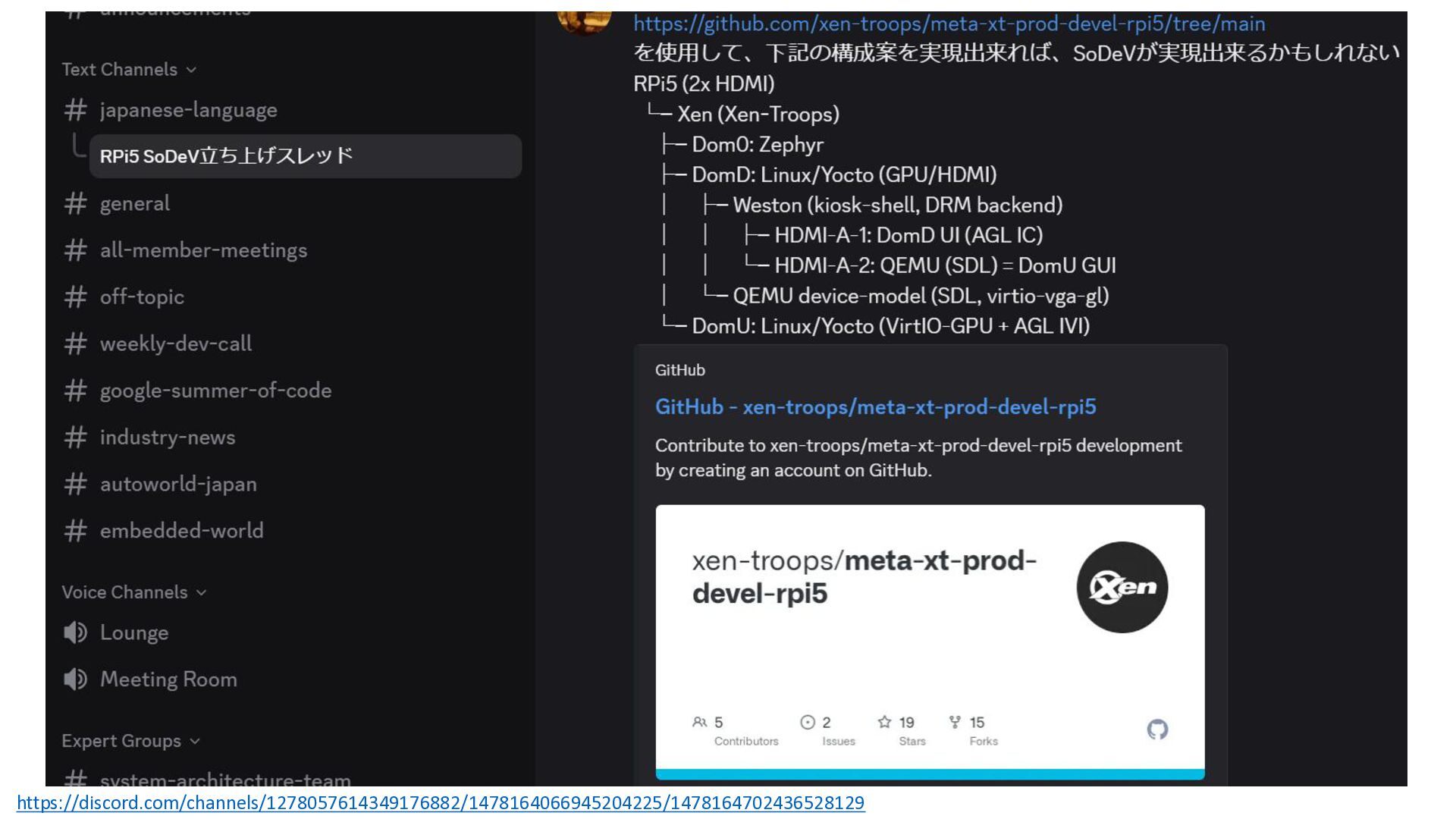
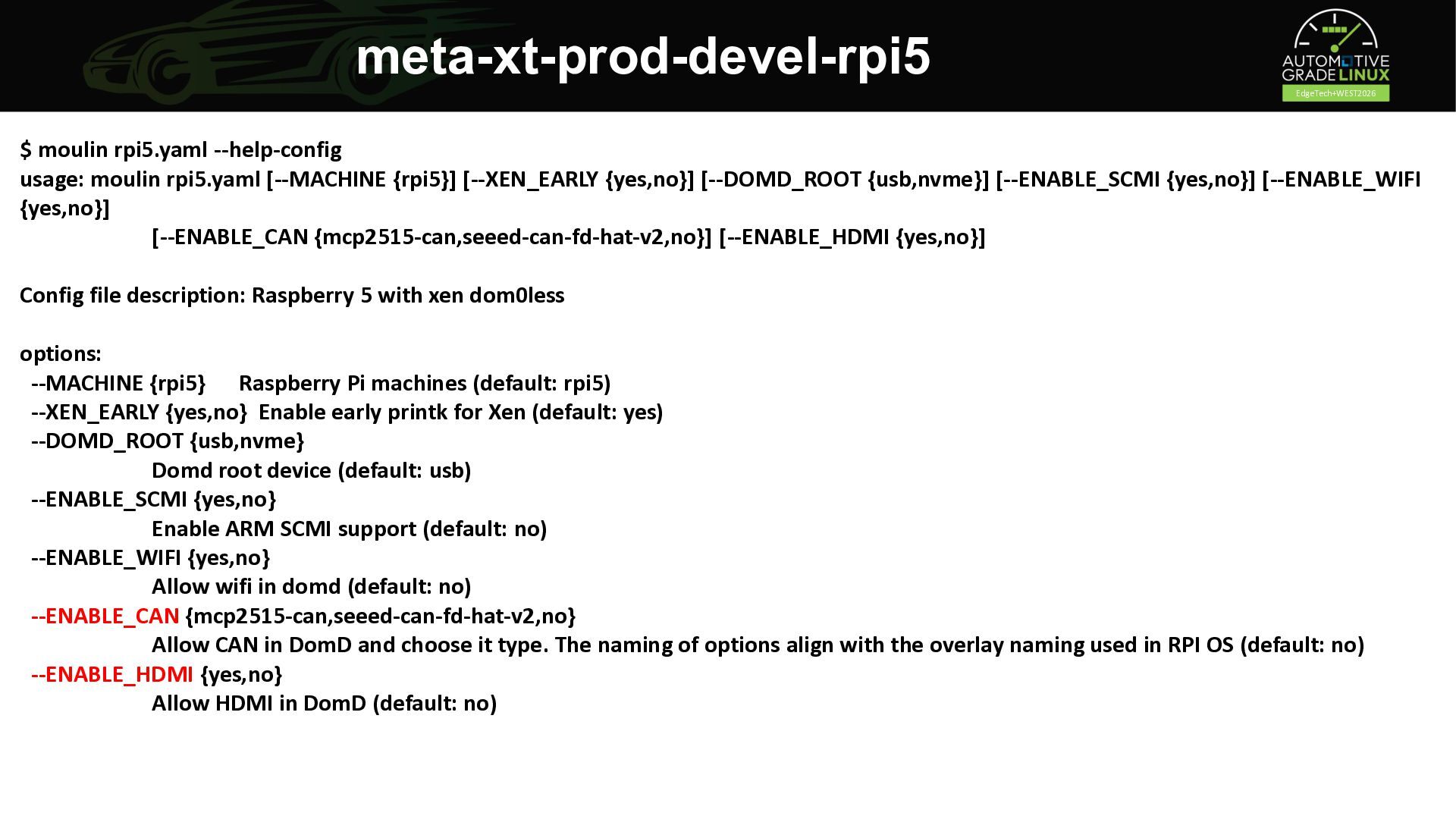
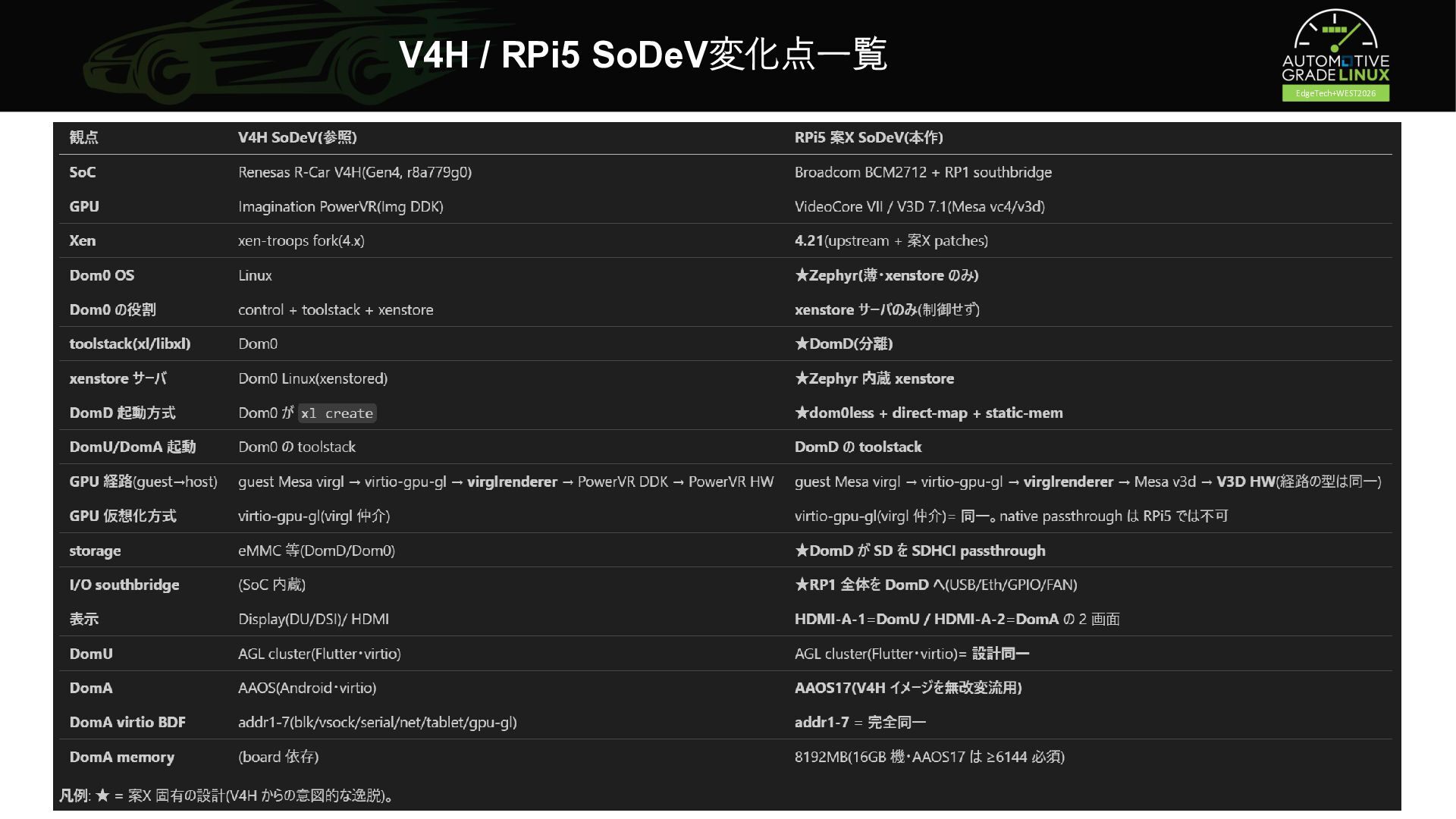
{rpi5}] [--XEN_EARLY {yes,no}] [--DOMD_ROOT {usb,nvme}] [--ENABLE_SCMI {yes,no}] [--ENABLE_WIFI {yes,no}] [--ENABLE_CAN {mcp2515-can,seeed-can-fd-hat-v2,no}] [--ENABLE_HDMI {yes,no}] Config file description: Raspberry 5 with xen dom0less options: --MACHINE {rpi5} Raspberry Pi machines (default: rpi5) --XEN_EARLY {yes,no} Enable early printk for Xen (default: yes) --DOMD_ROOT {usb,nvme} Domd root device (default: usb) --ENABLE_SCMI {yes,no} Enable ARM SCMI support (default: no) --ENABLE_WIFI {yes,no} Allow wifi in domd (default: no) --ENABLE_CAN {mcp2515-can,seeed-can-fd-hat-v2,no} Allow CAN in DomD and choose it type. The naming of options align with the overlay naming used in RPI OS (default: no) --ENABLE_HDMI {yes,no} Allow HDMI in DomD (default: no)
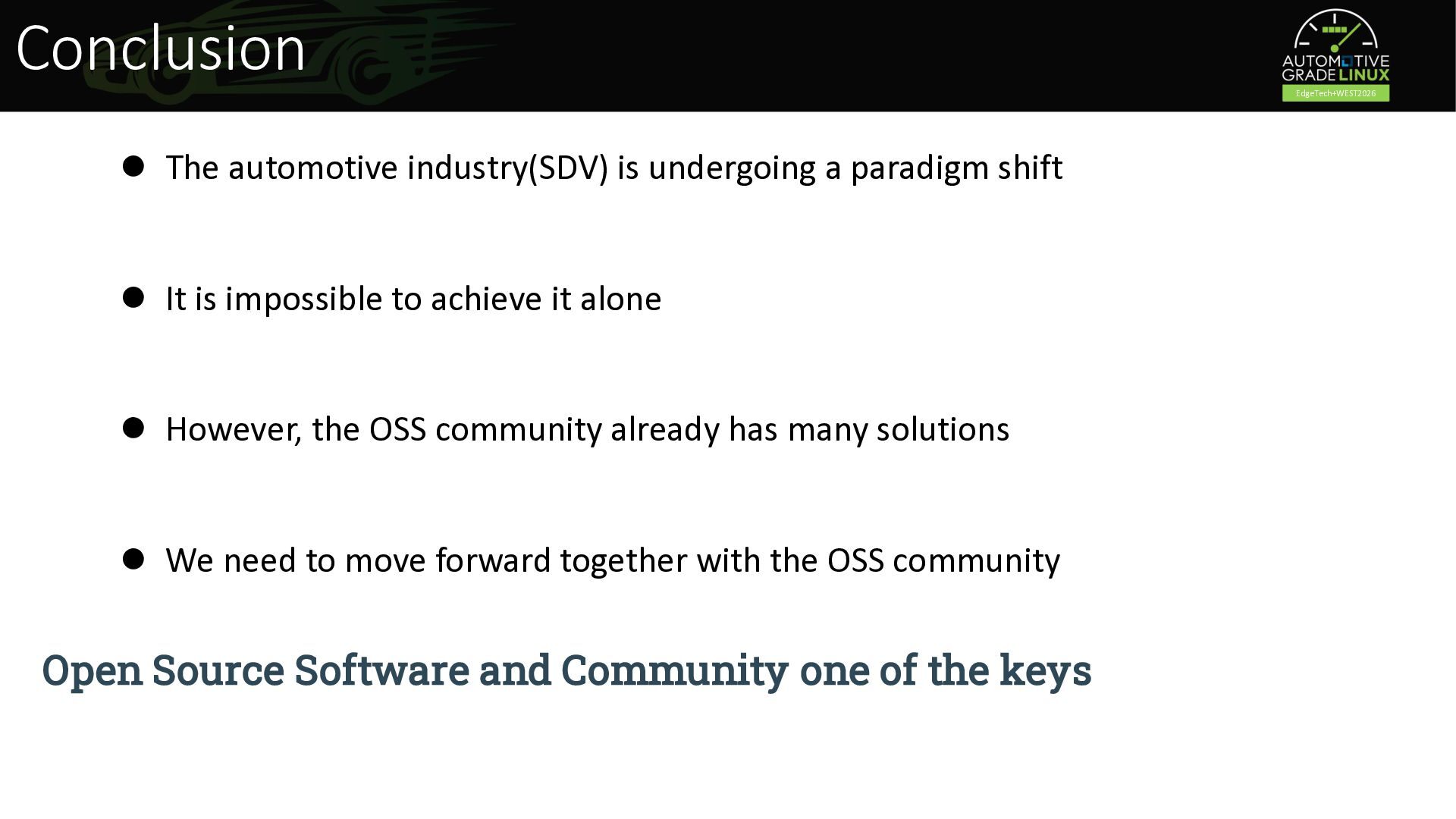
shift ⚫ It is impossible to achieve it alone ⚫ However, the OSS community already has many solutions ⚫ We need to move forward together with the OSS community Open Source Software and Community one of the keys


 lfj
lfj
 tmiket
 palkan
 eileencodes
 sabderemane
 ammeep
 chriscoyier
 stephenakadiri
 bkeepers
 smashingmag
 aleyda
 bcantrill
 speakerdeck