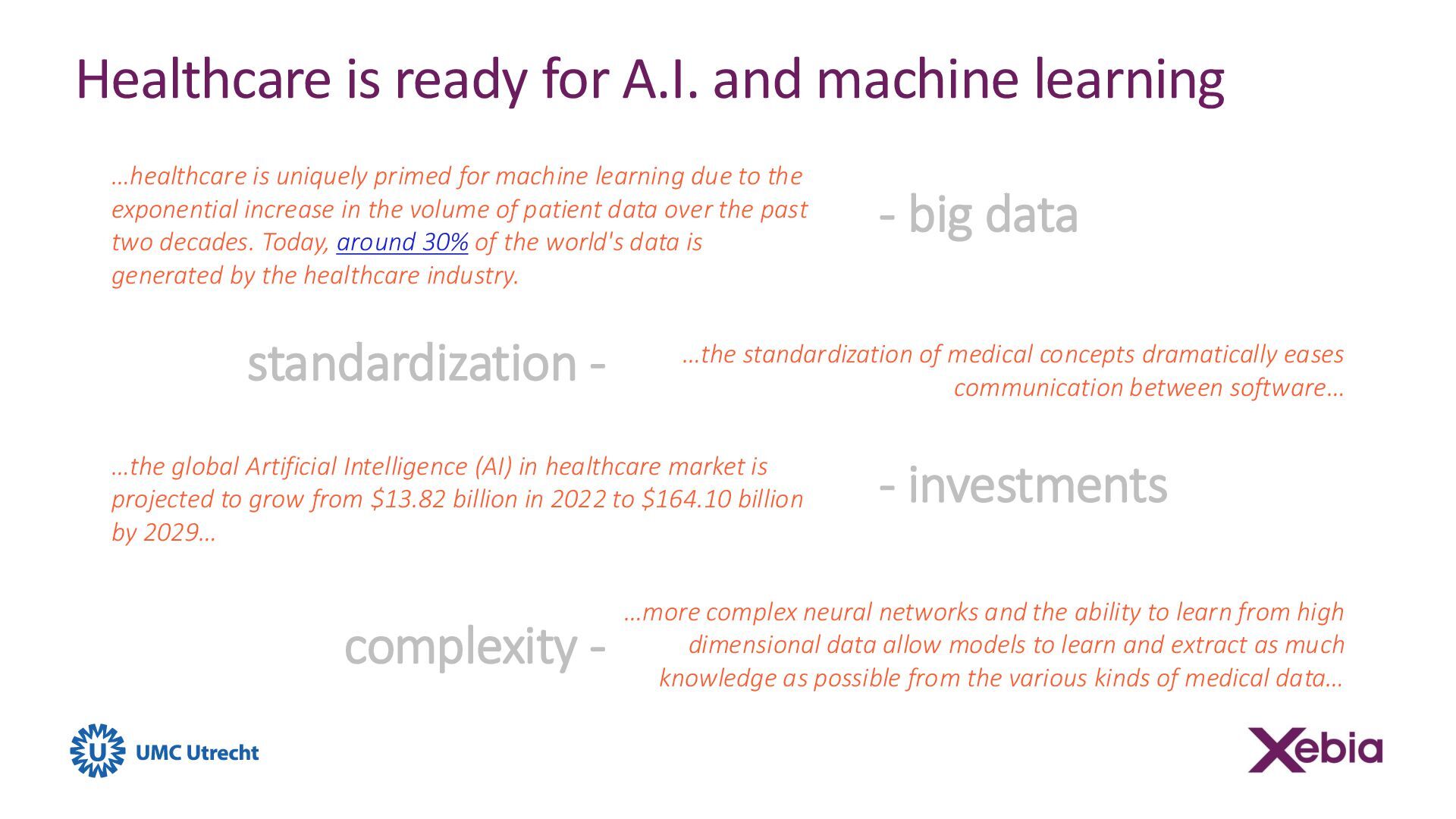
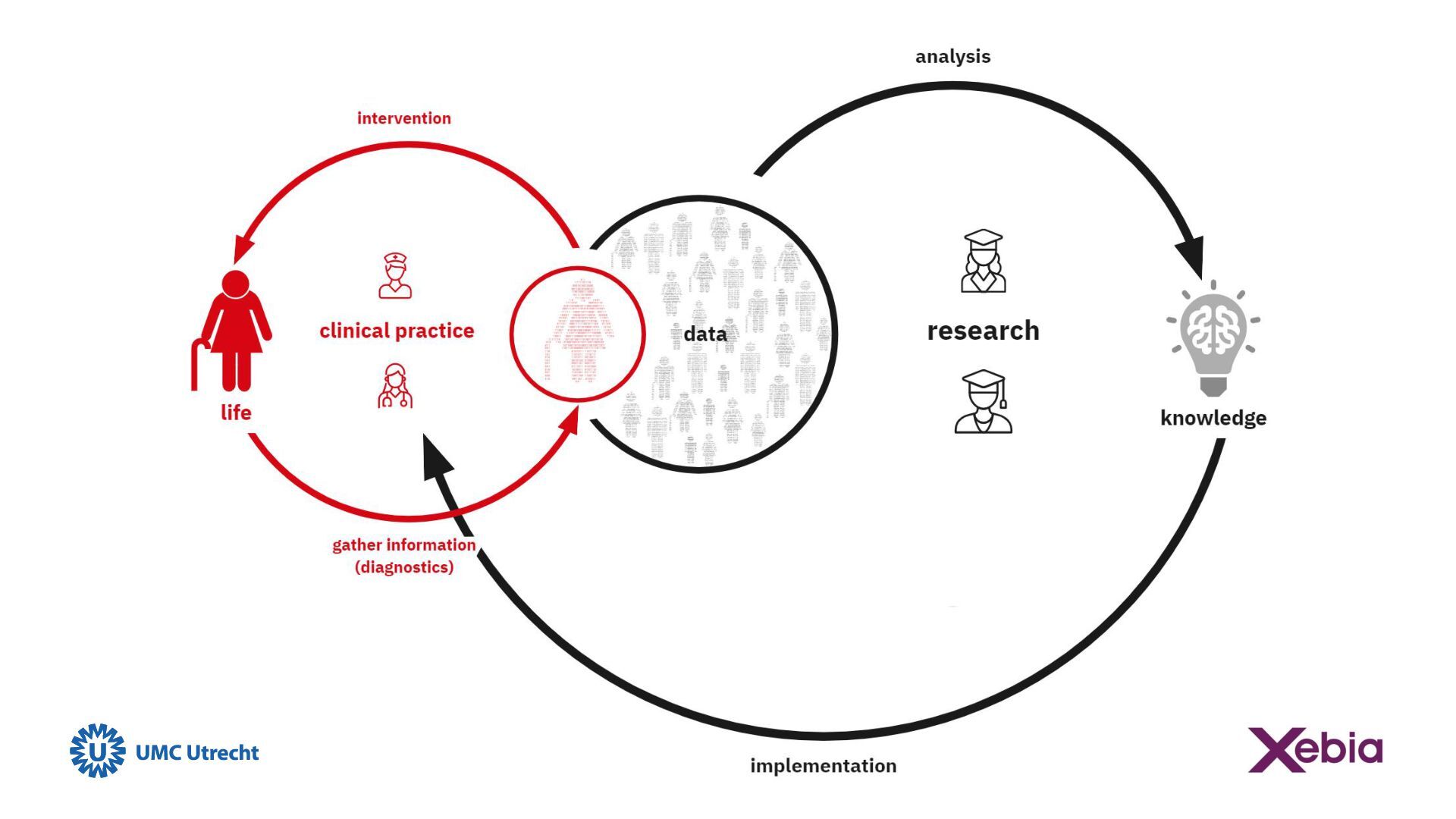
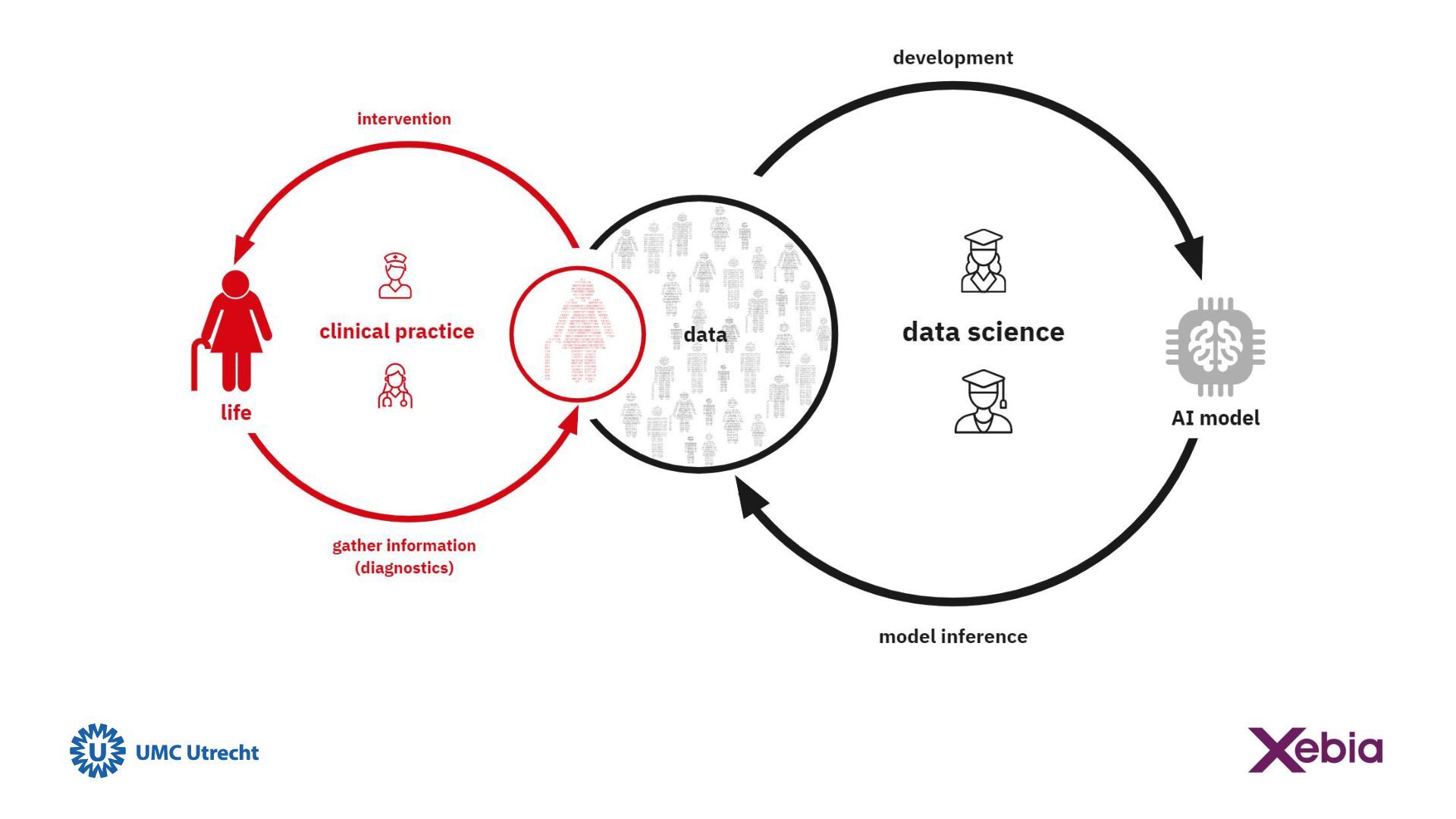
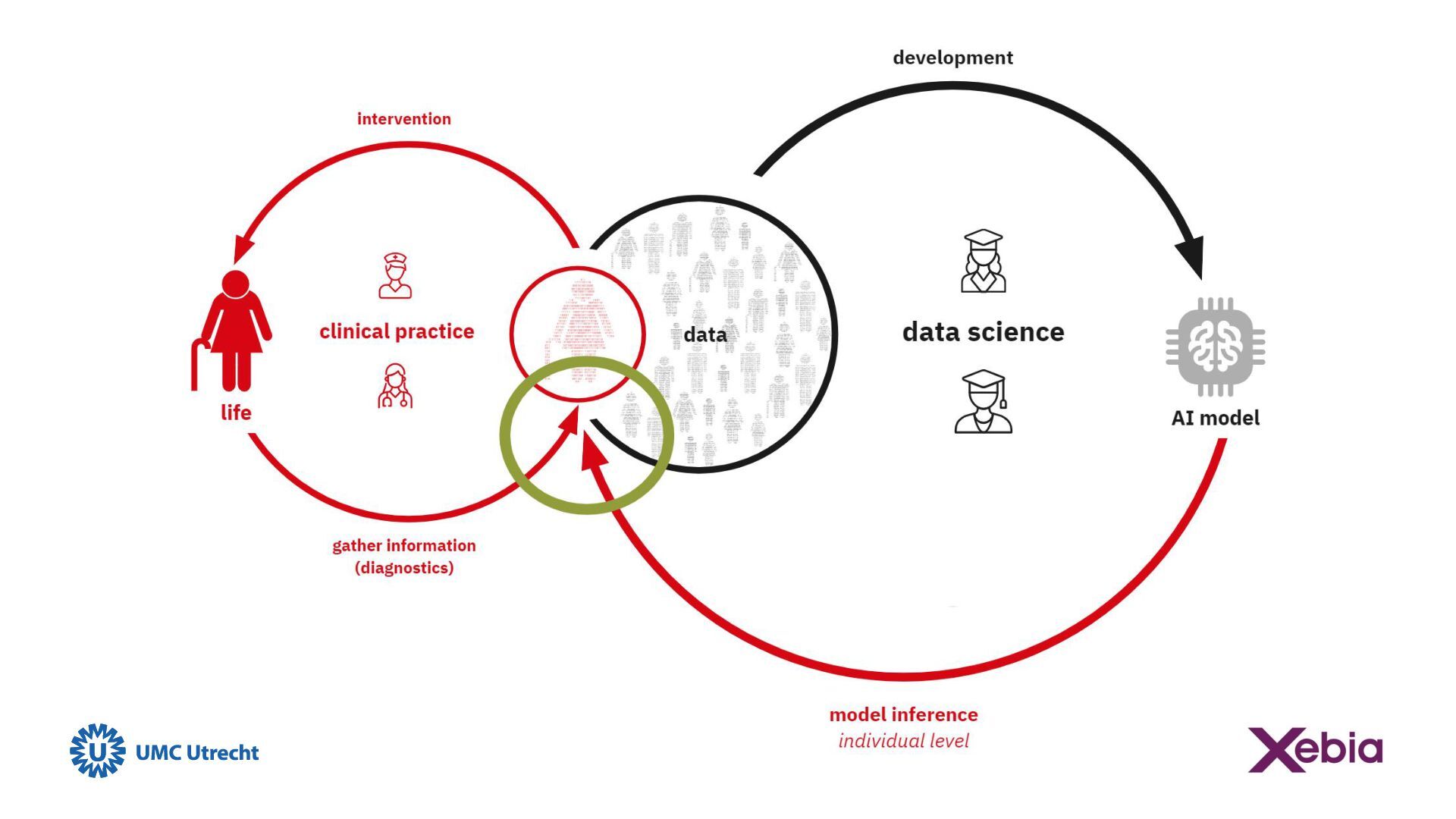
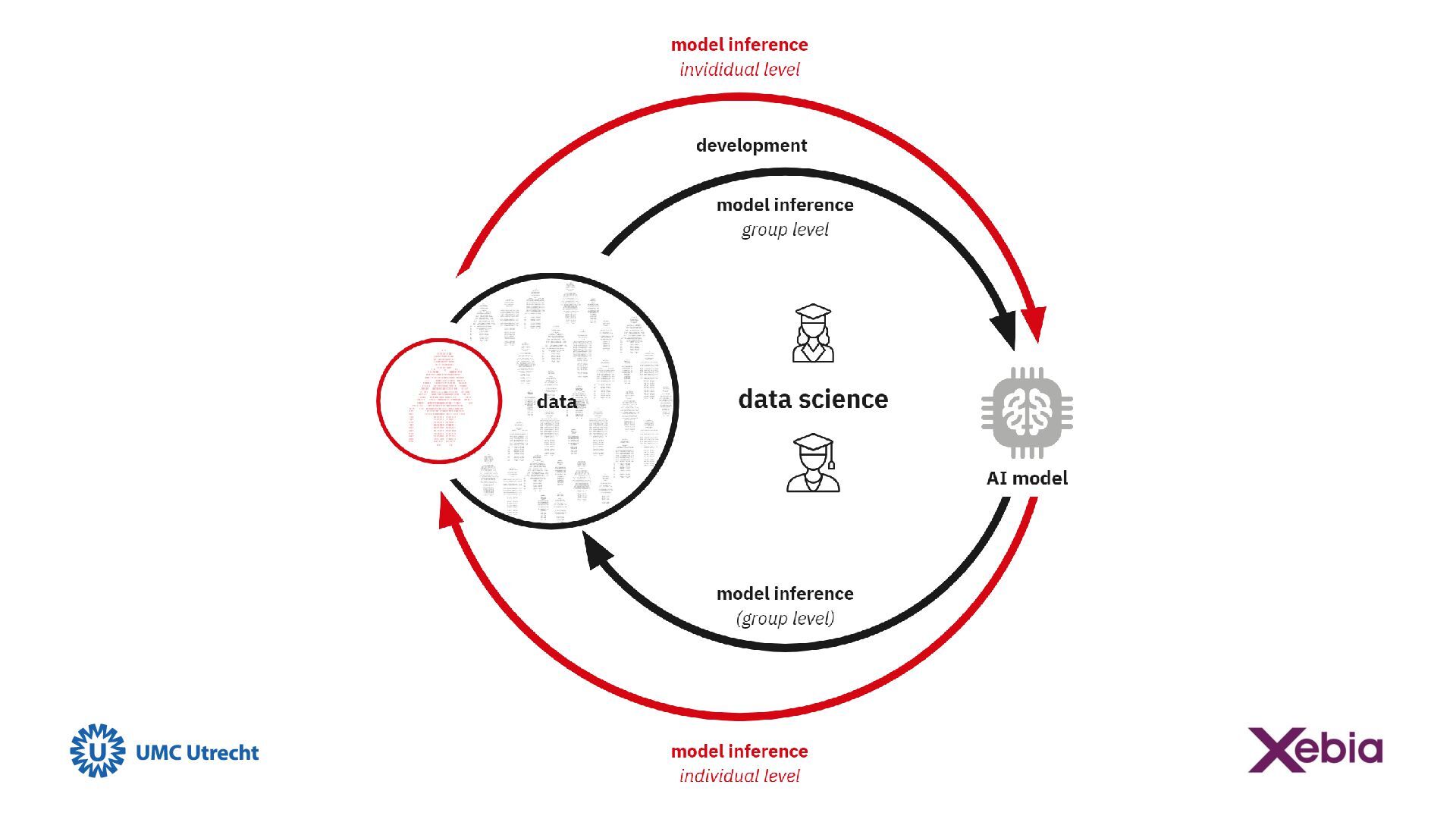
of medical concepts dramatically eases communication between software… …the global Artificial Intelligence (AI) in healthcare market is projected to grow from $13.82 billion in 2022 to $164.10 billion by 2029… …more complex neural networks and the ability to learn from high dimensional data allow models to learn and extract as much knowledge as possible from the various kinds of medical data… …healthcare is uniquely primed for machine learning due to the exponential increase in the volume of patient data over the past two decades. Today, around 30% of the world's data is generated by the healthcare industry. - big data standardization - - investments complexity -
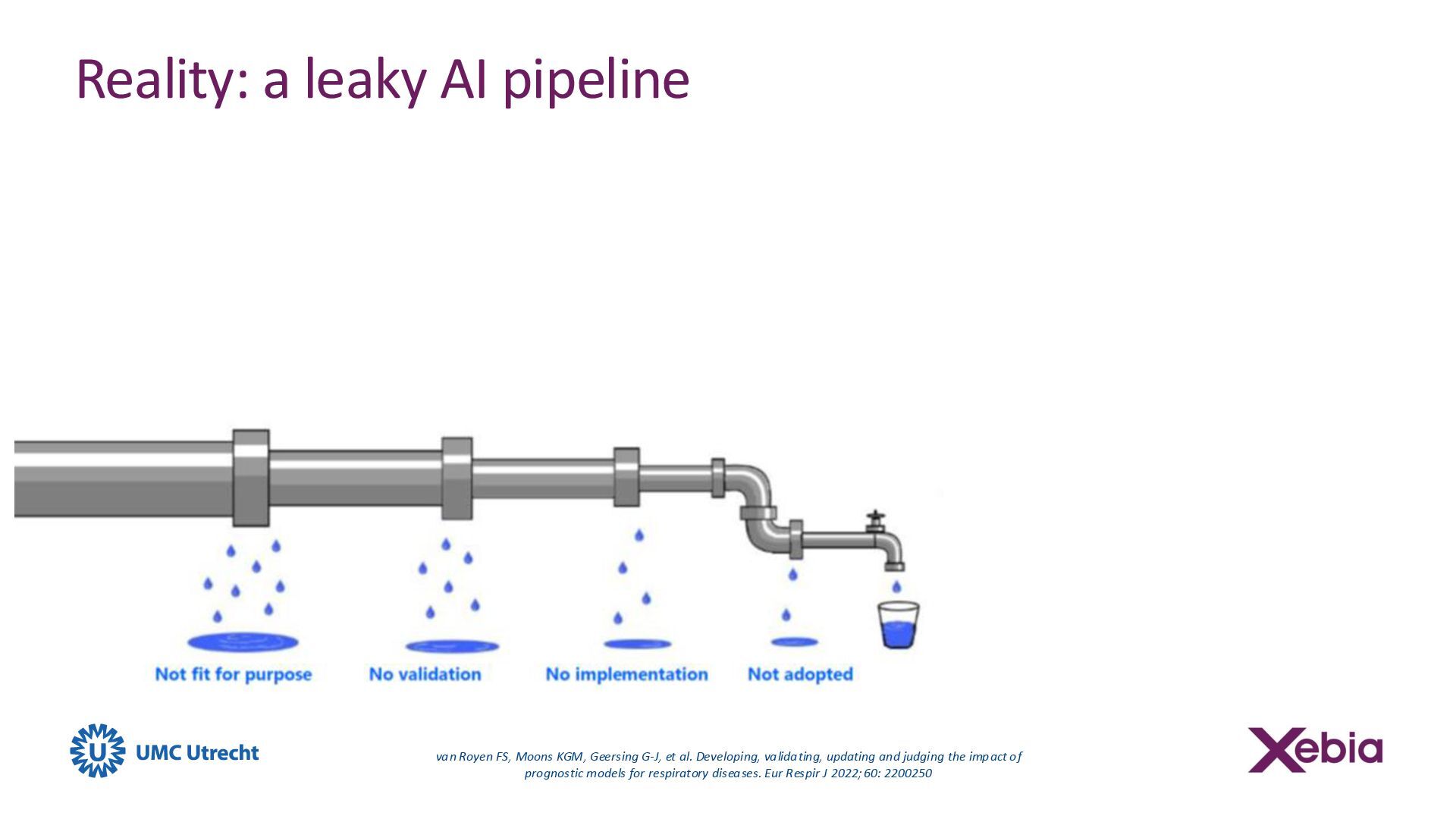
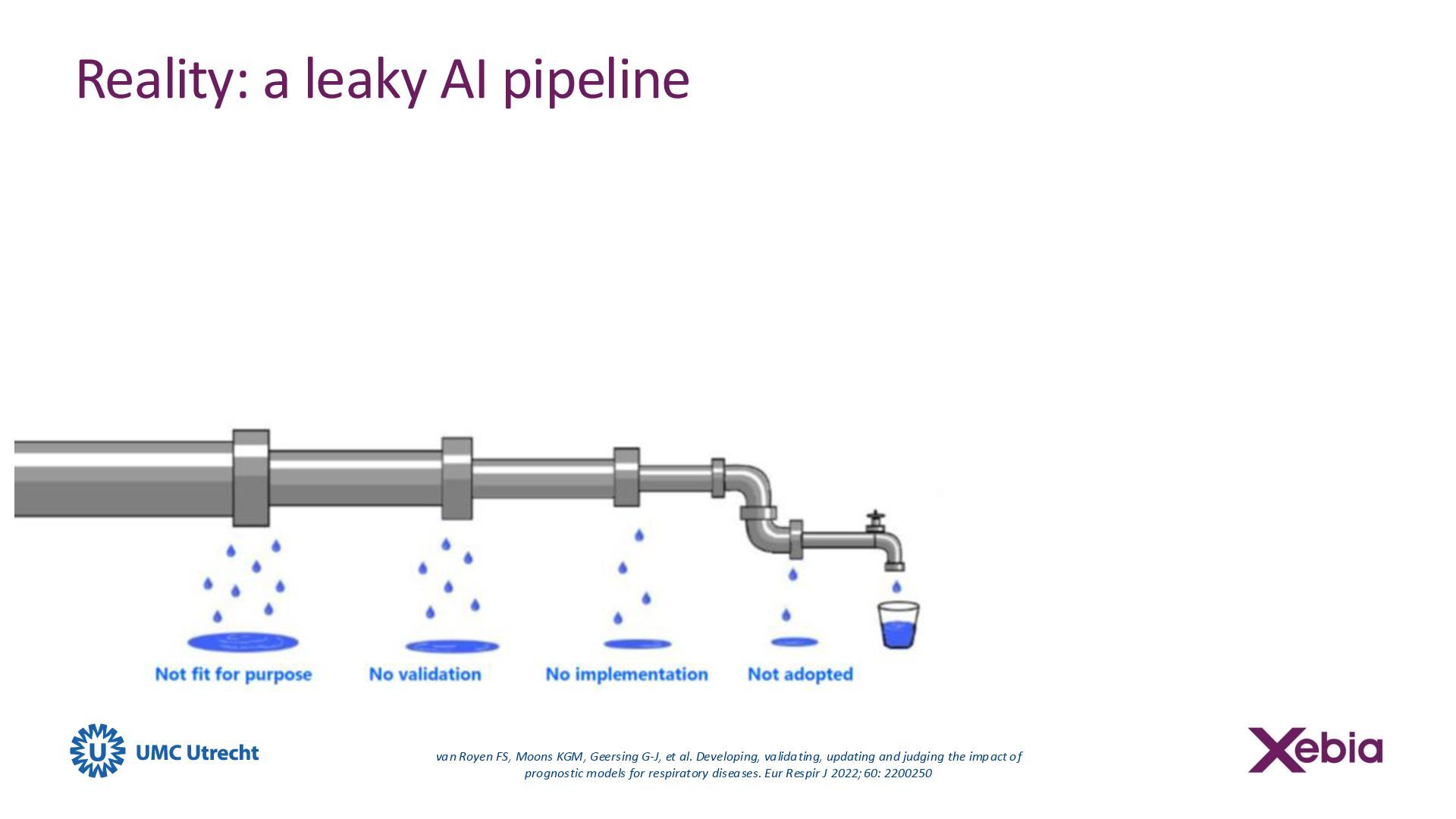
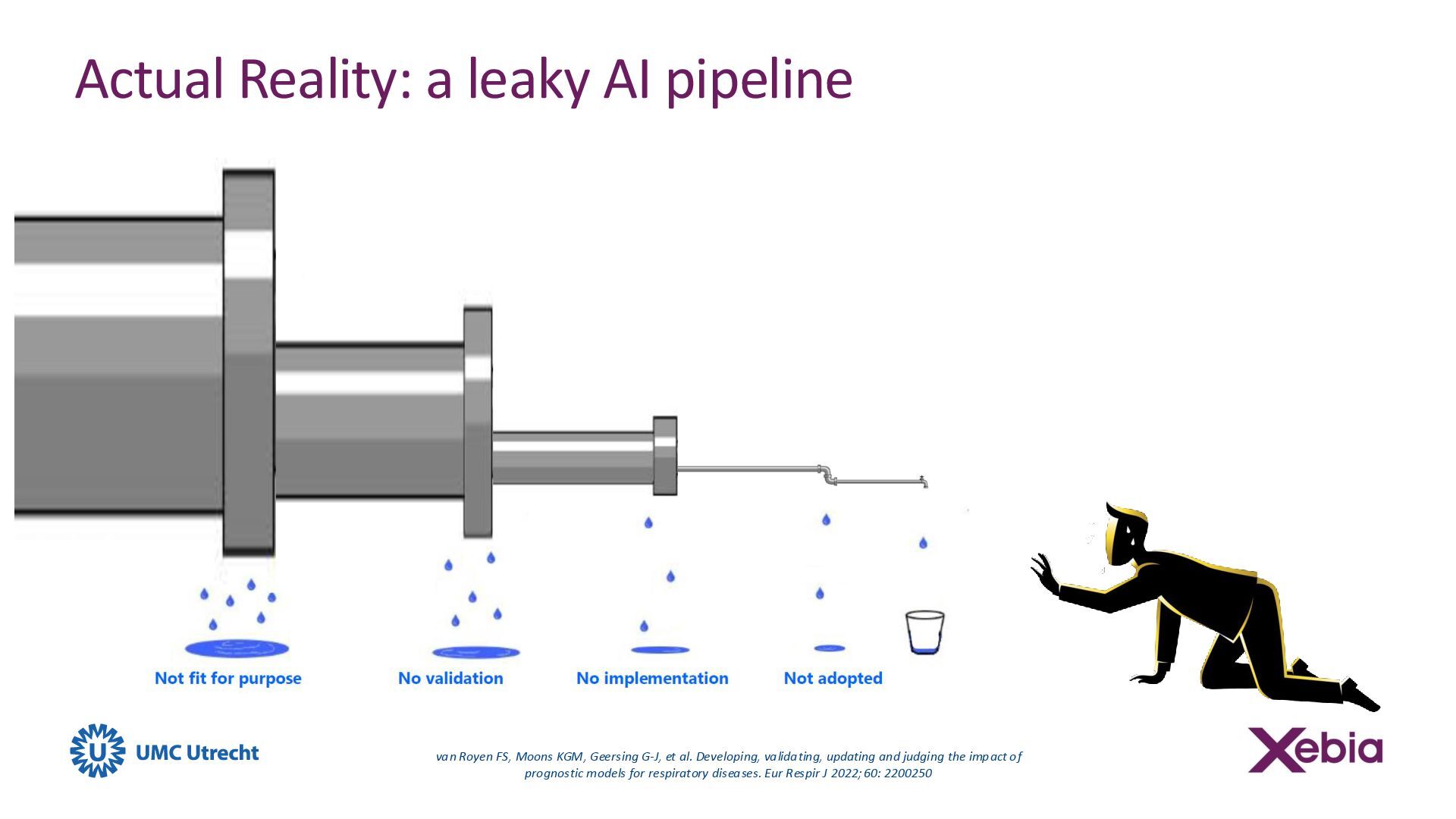
Geersing G-J, et al. Developing, validating, updating and judging the impact of prognostic models for respiratory diseases. Eur Respir J 2022; 60: 2200250
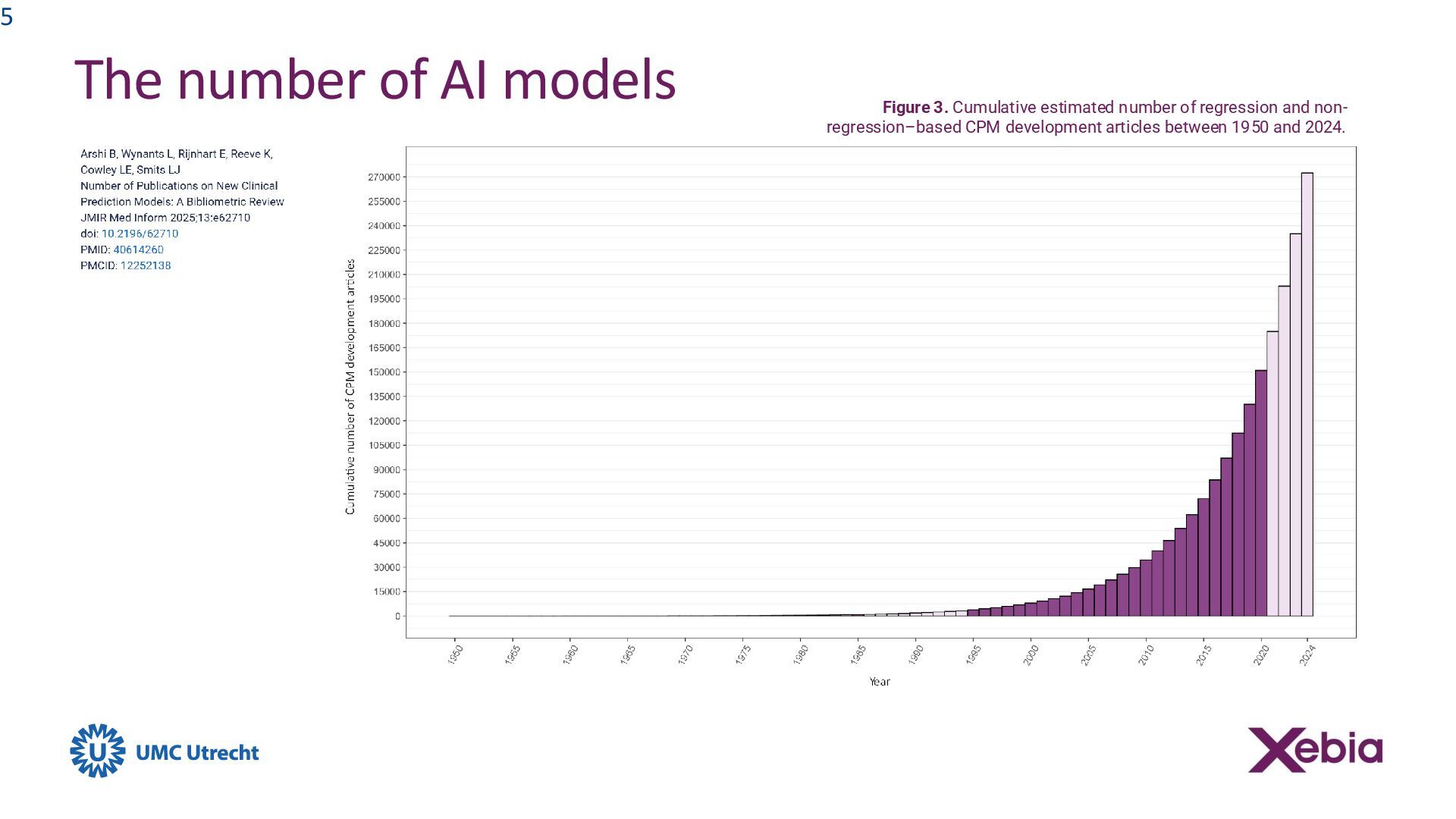
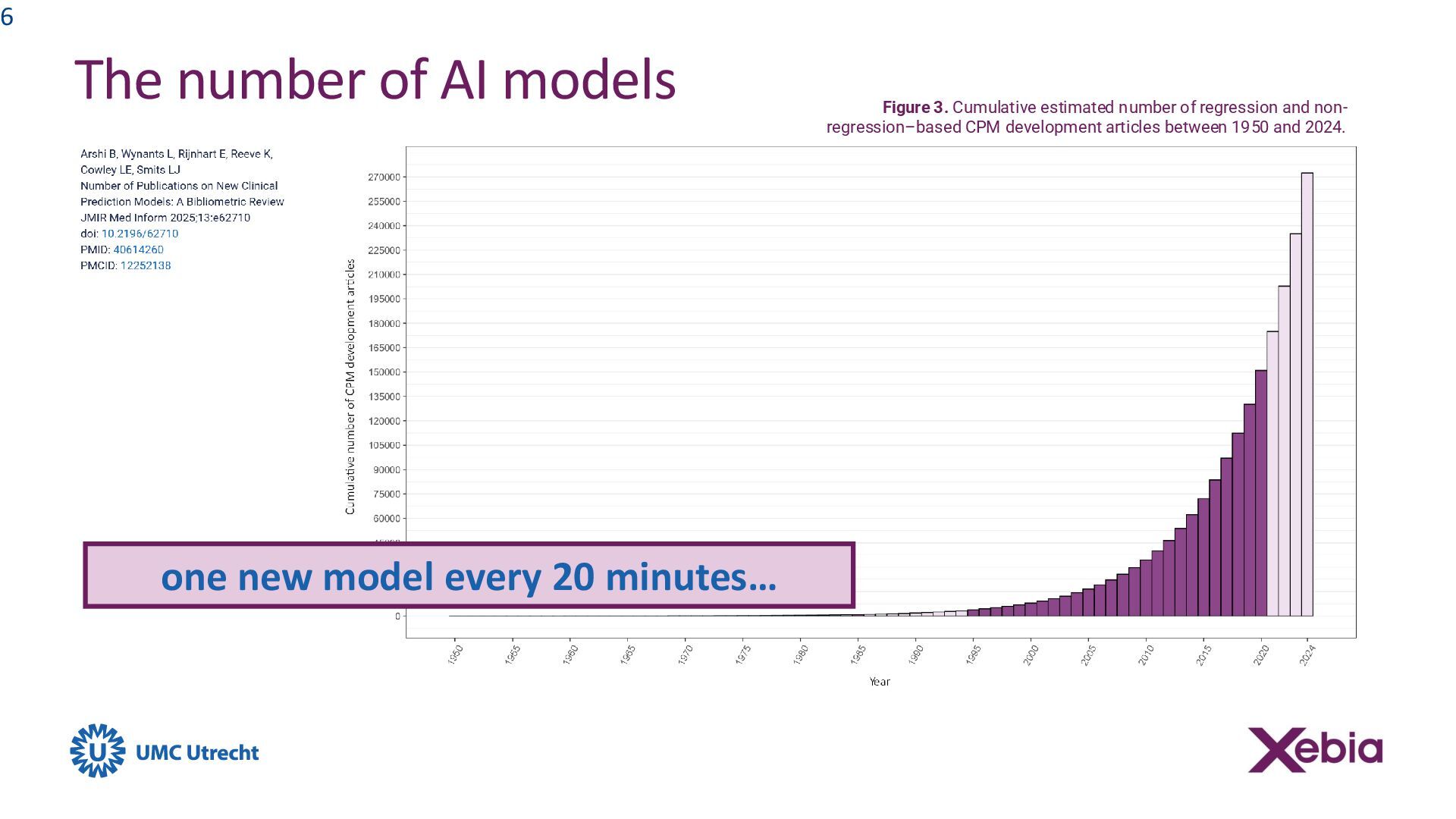
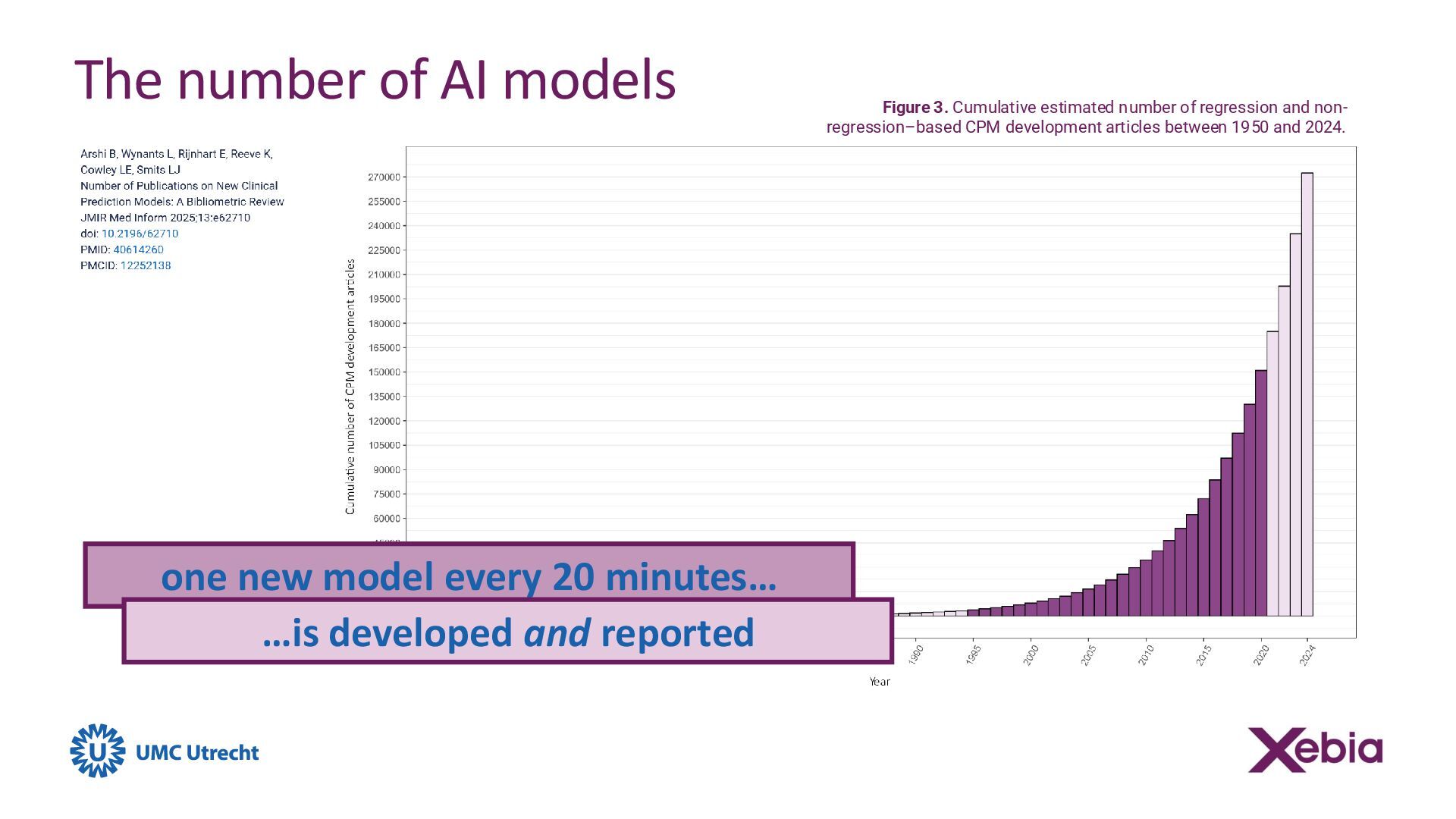
minutes… Figure 3. Cumulative estimated number of regression and non- regression–based CPM development articles between 1950 and 2024. …is developed and reported
Geersing G-J, et al. Developing, validating, updating and judging the impact of prognostic models for respiratory diseases. Eur Respir J 2022; 60: 2200250
KGM, Geersing G-J, et al. Developing, validating, updating and judging the impact of prognostic models for respiratory diseases. Eur Respir J 2022; 60: 2200250
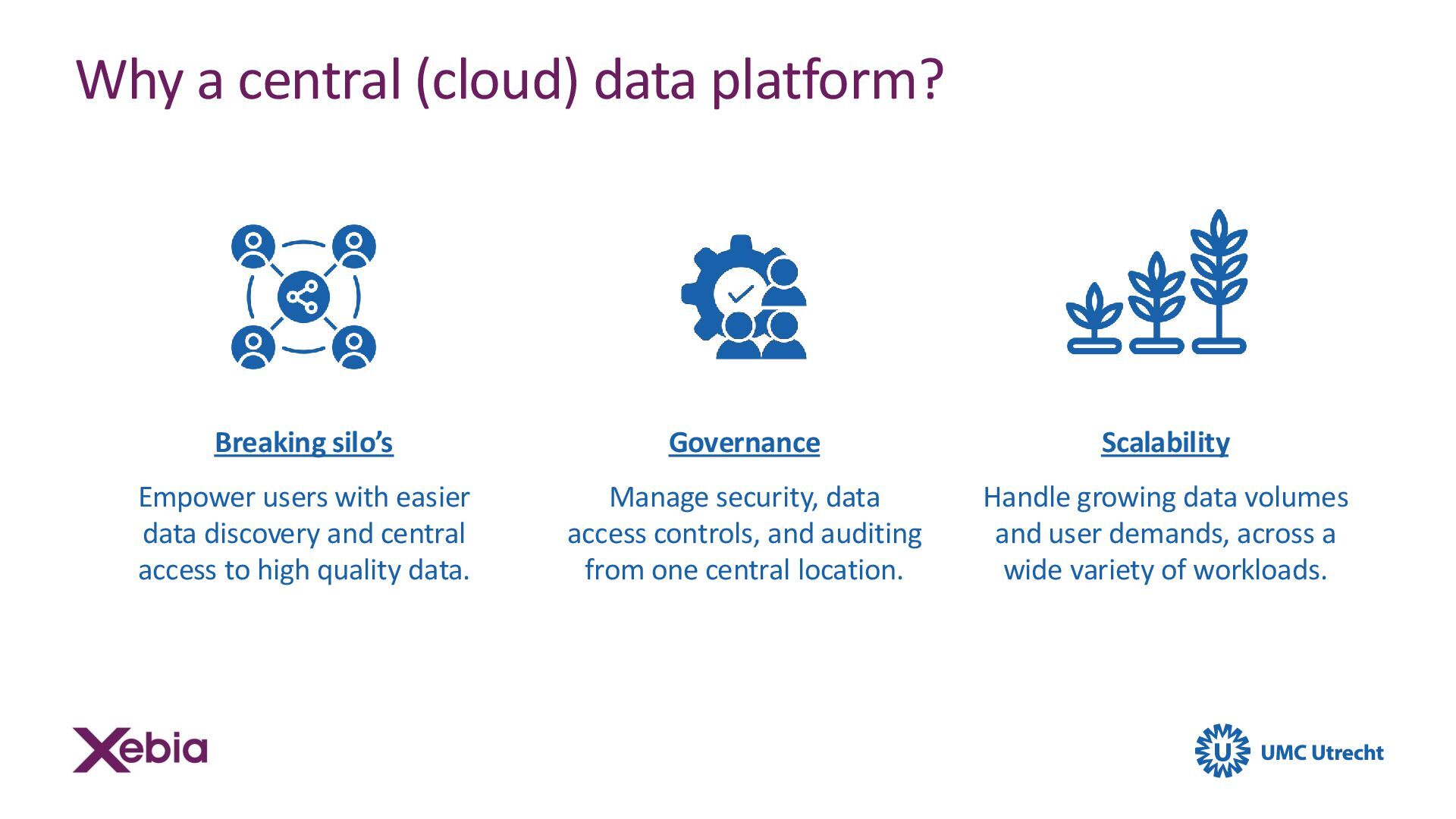
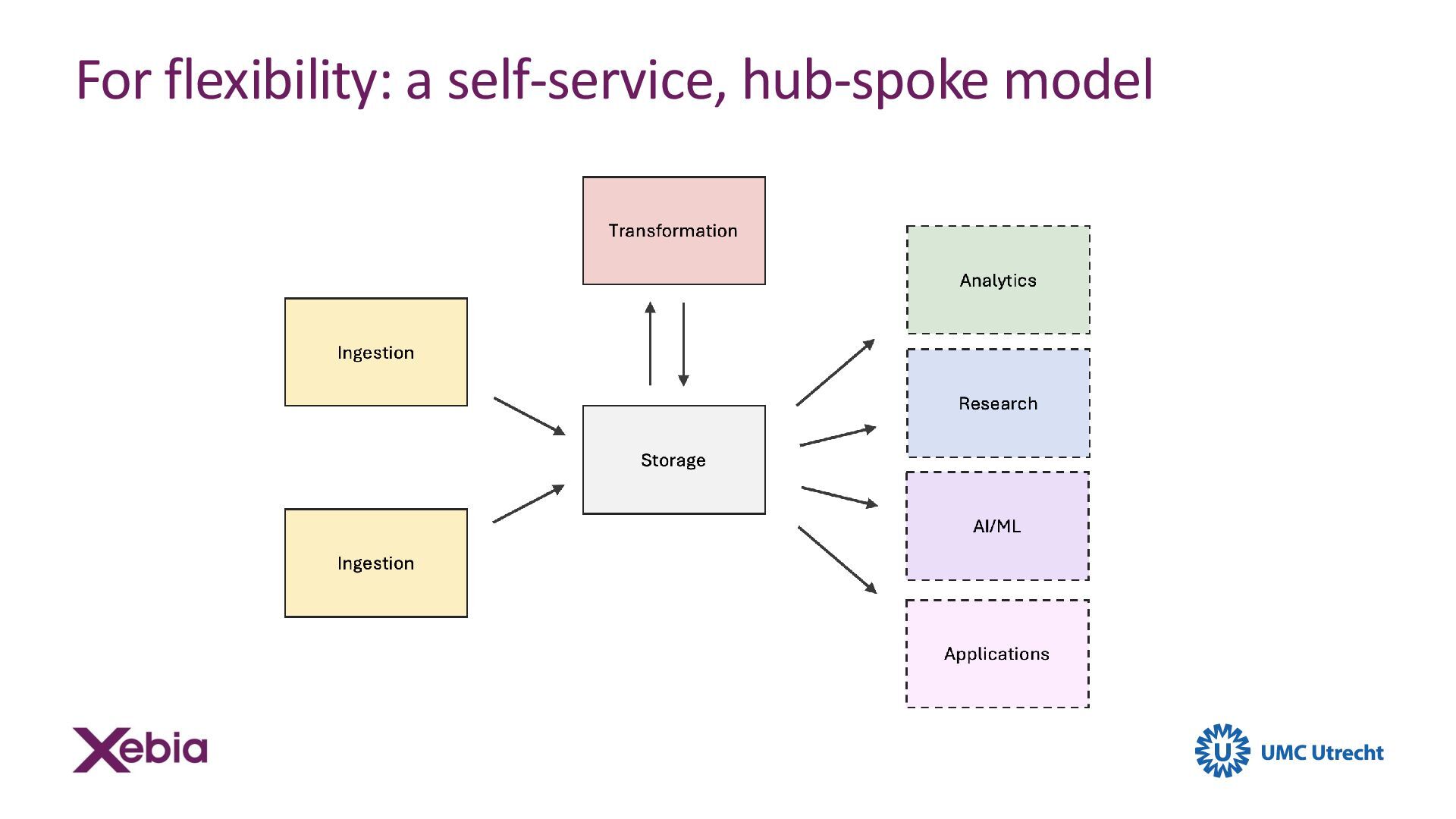
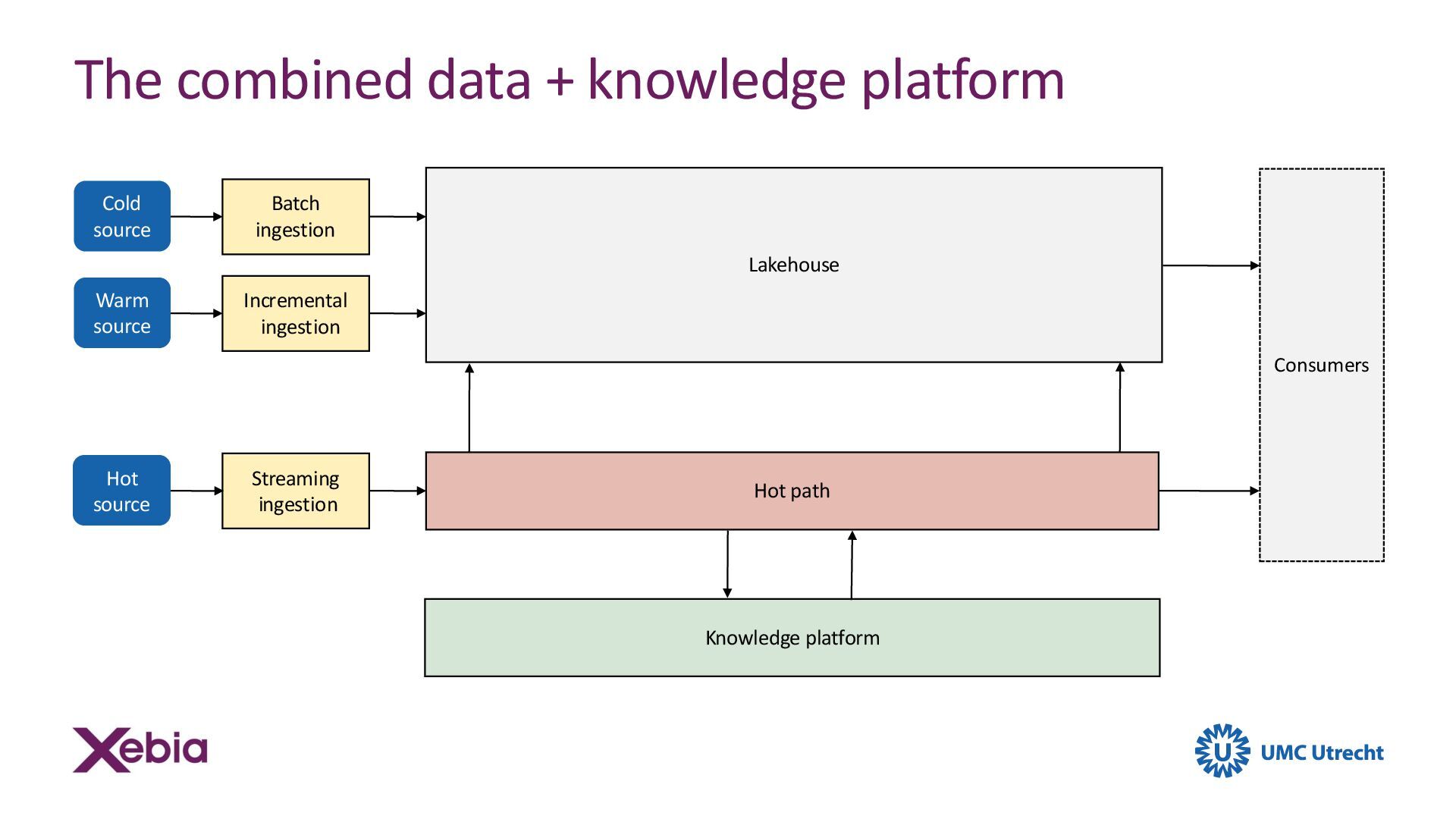
with easier data discovery and central access to high quality data. Governance Manage security, data access controls, and auditing from one central location. Scalability Handle growing data volumes and user demands, across a wide variety of workloads.
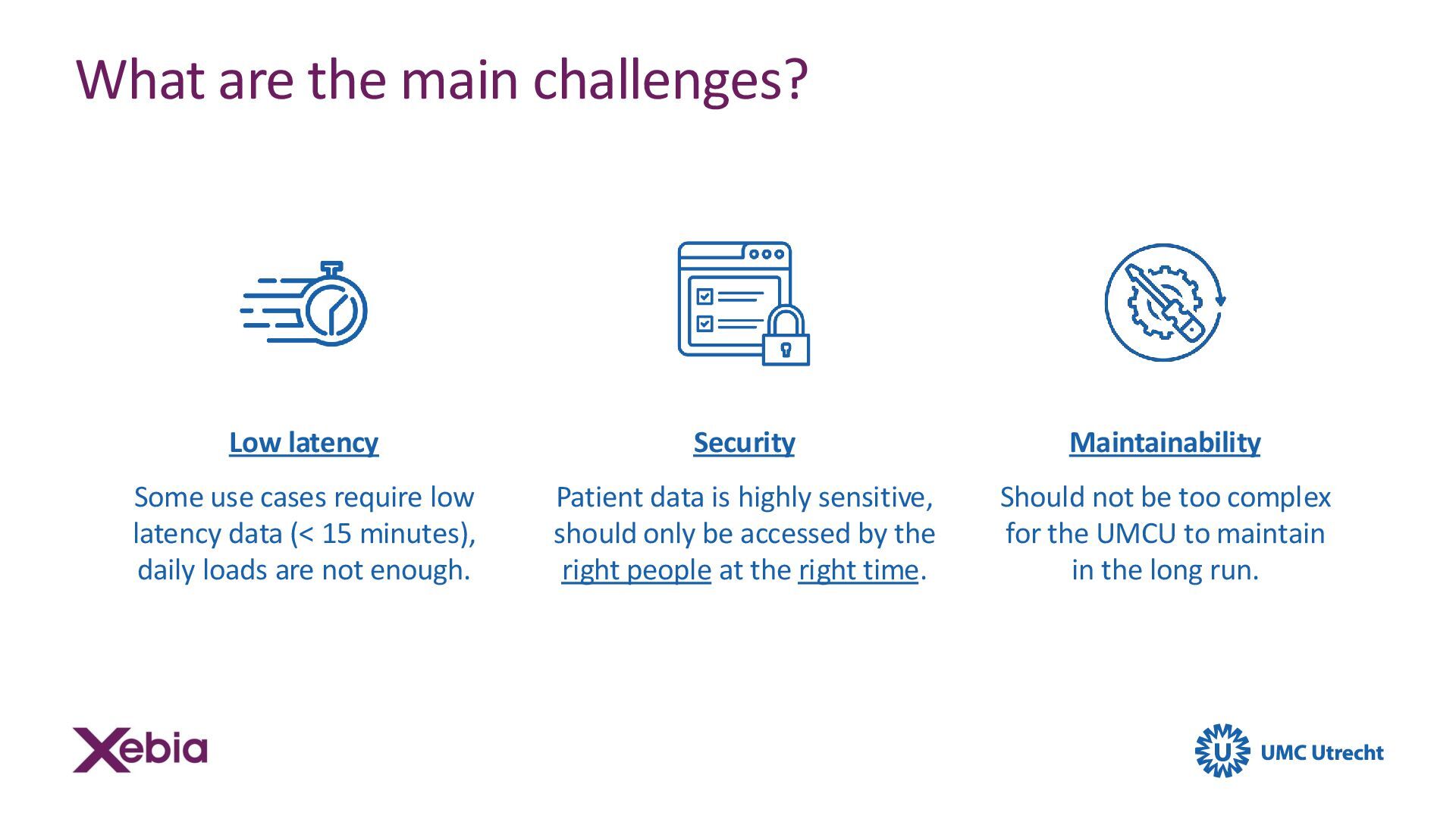
require low latency data (< 15 minutes), daily loads are not enough. Security Patient data is highly sensitive, should only be accessed by the right people at the right time. Maintainability Should not be too complex for the UMCU to maintain in the long run.
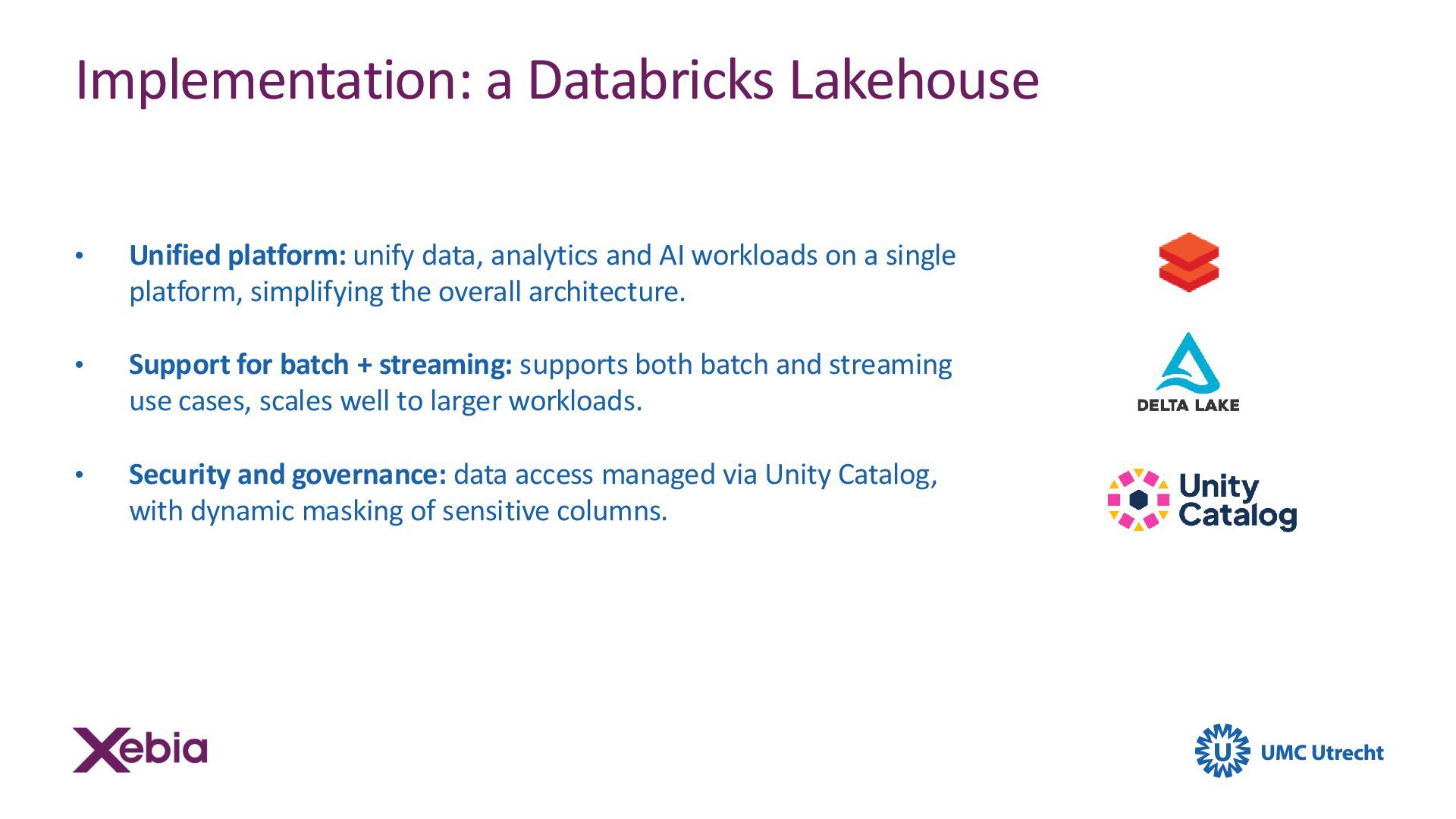
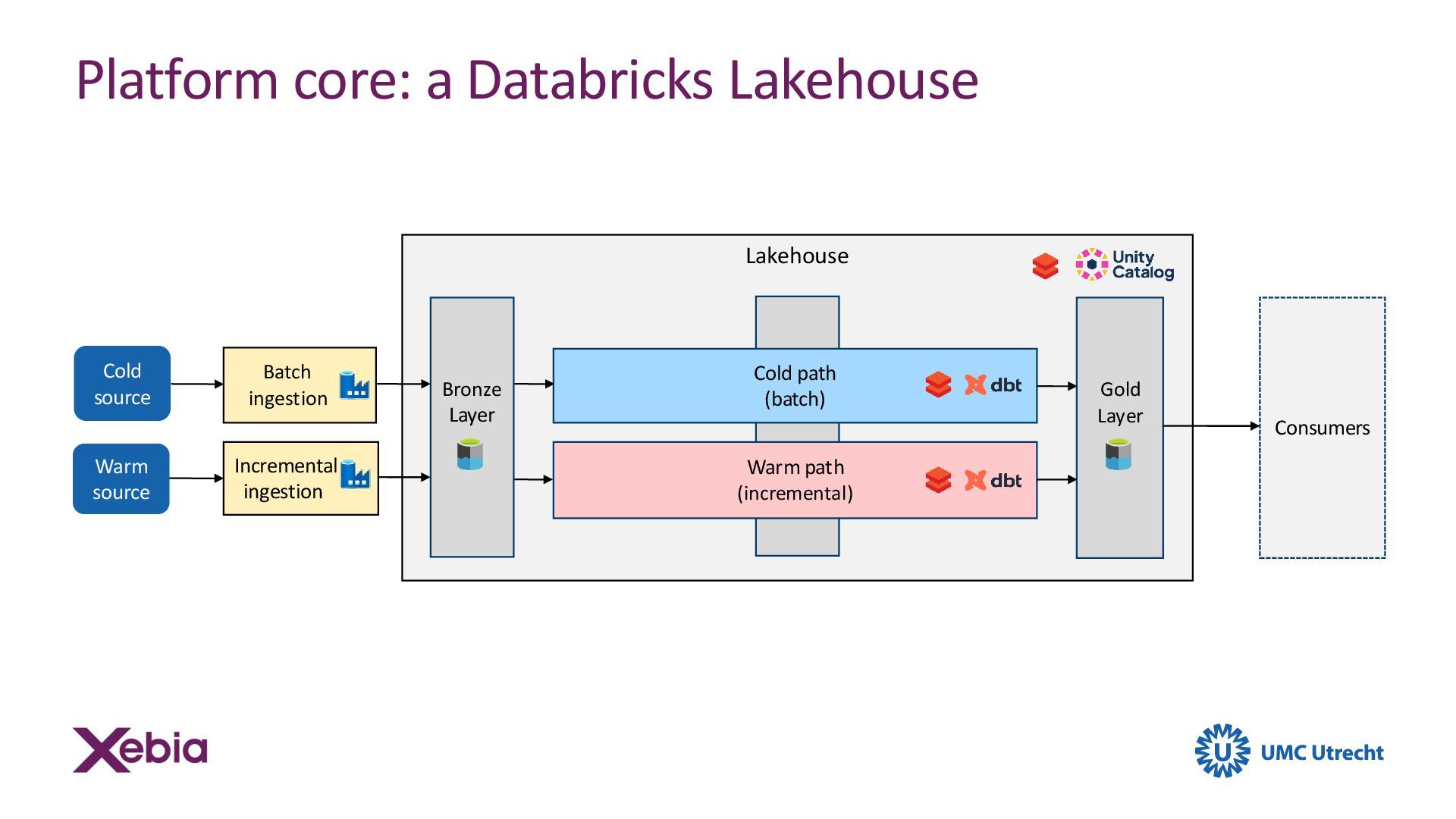
and AI workloads on a single platform, simplifying the overall architecture. • Support for batch + streaming: supports both batch and streaming use cases, scales well to larger workloads. • Security and governance: data access managed via Unity Catalog, with dynamic masking of sensitive columns.
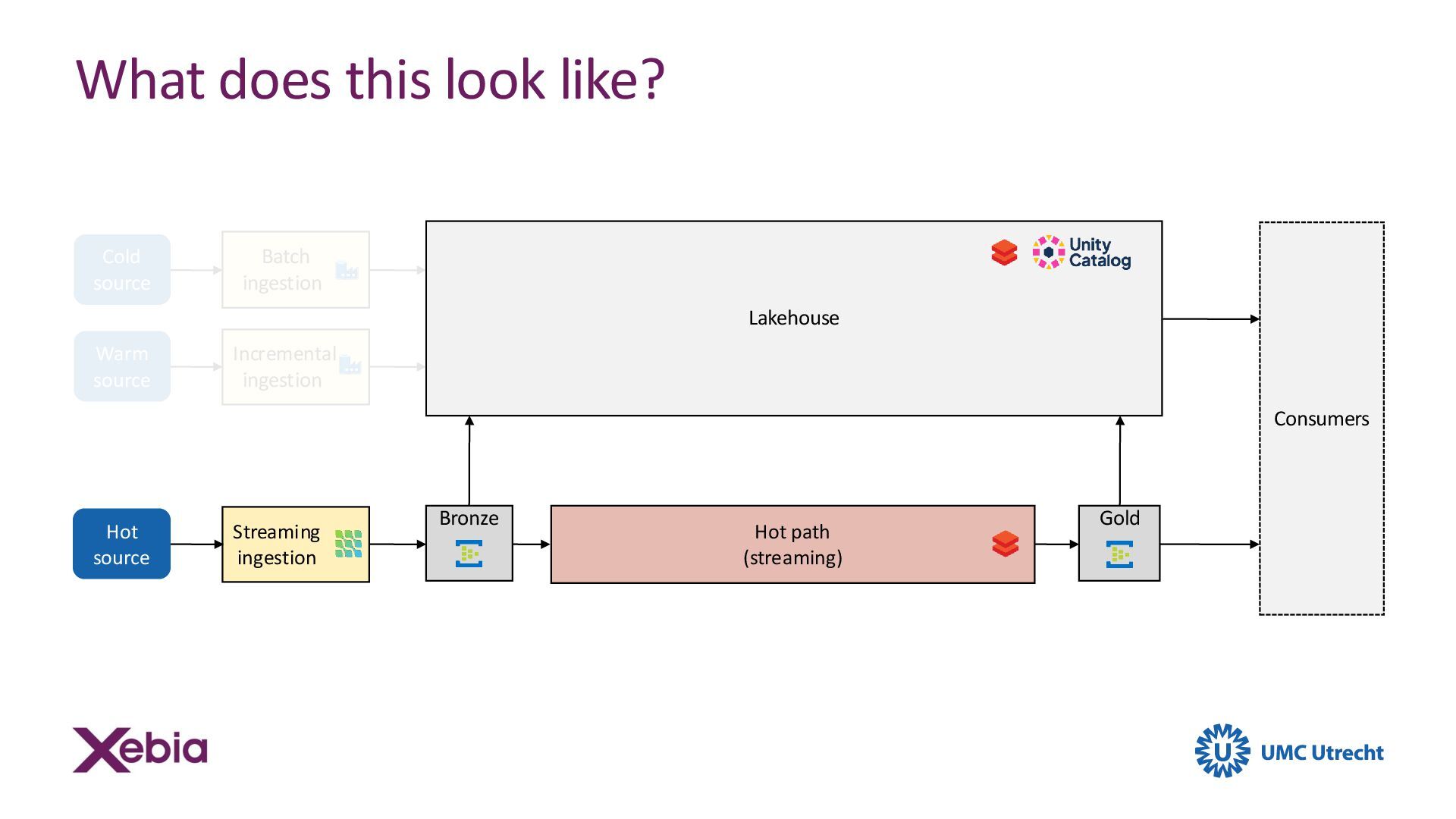
(< 1s) However, the lakehouse was not designed for this: • Azure Data Factory does not support low-latency ingestion. • Databricks Delta not ideal for sub-second workloads. • Complex transformations (e.g. joins) introduce even more latency.
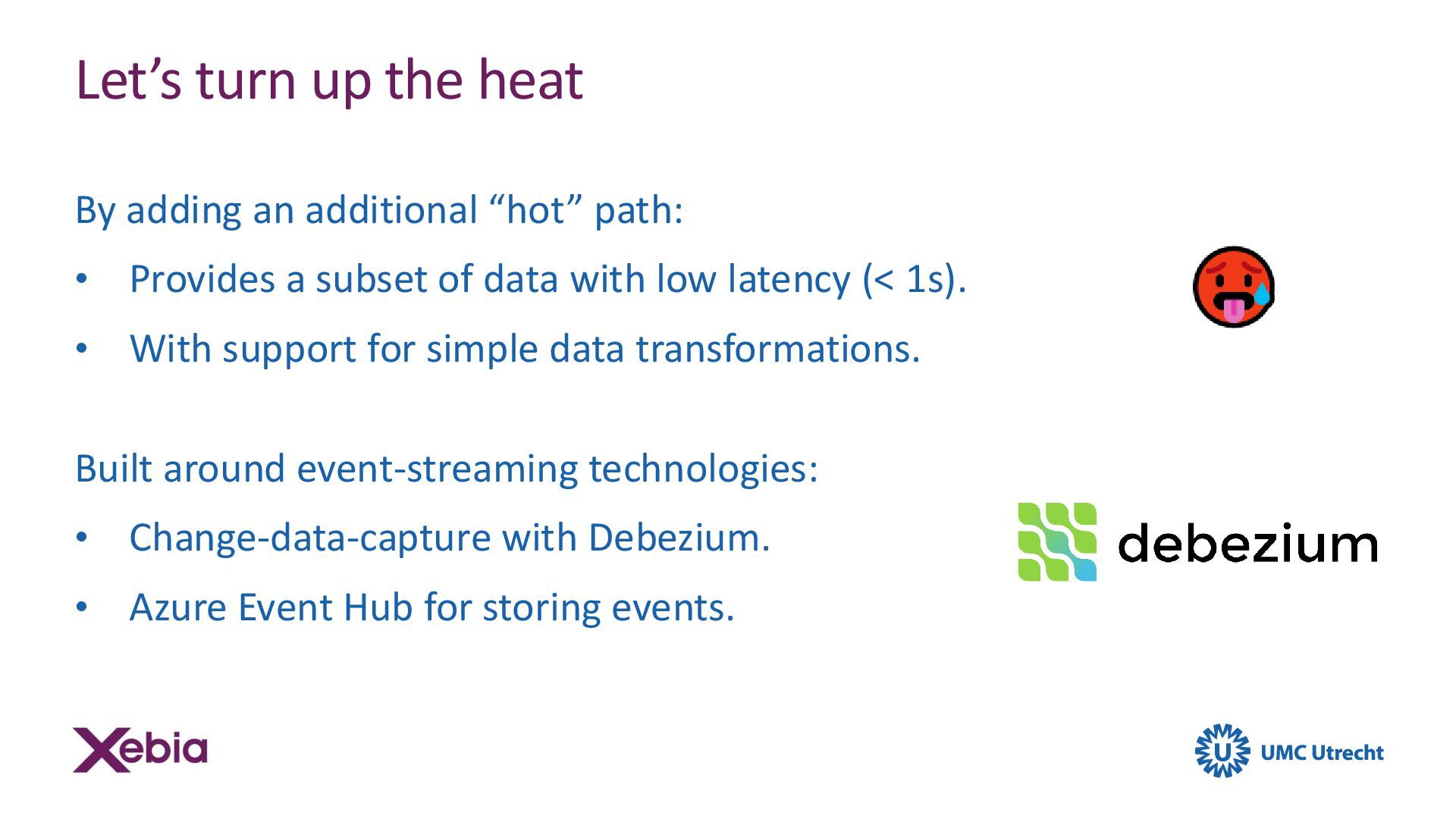
path: • Provides a subset of data with low latency (< 1s). • With support for simple data transformations. Built around event-streaming technologies: • Change-data-capture with Debezium. • Azure Event Hub for storing events.
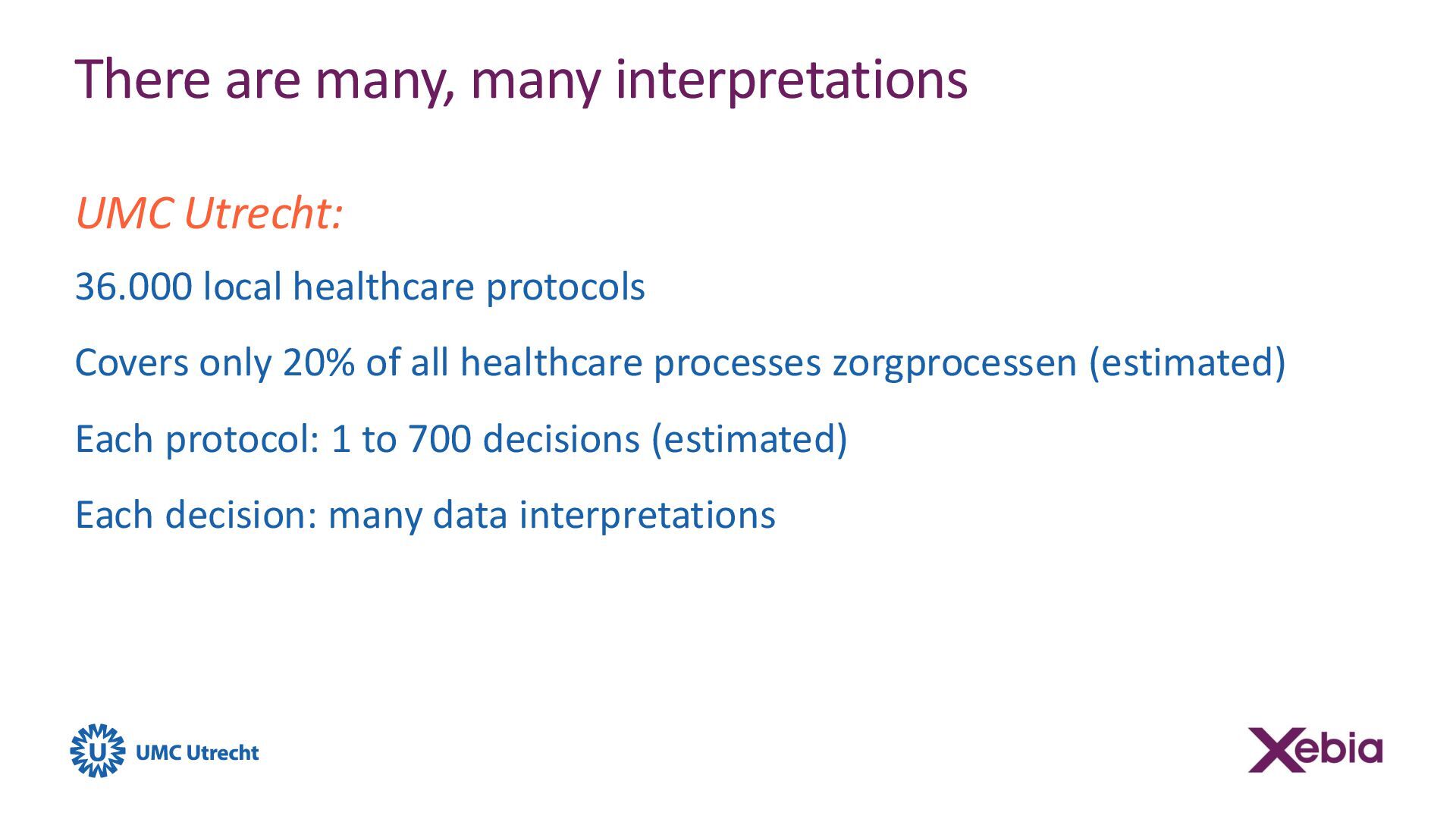
protocols Covers only 20% of all healthcare processes zorgprocessen (estimated) Each protocol: 1 to 700 decisions (estimated) Each decision: many data interpretations
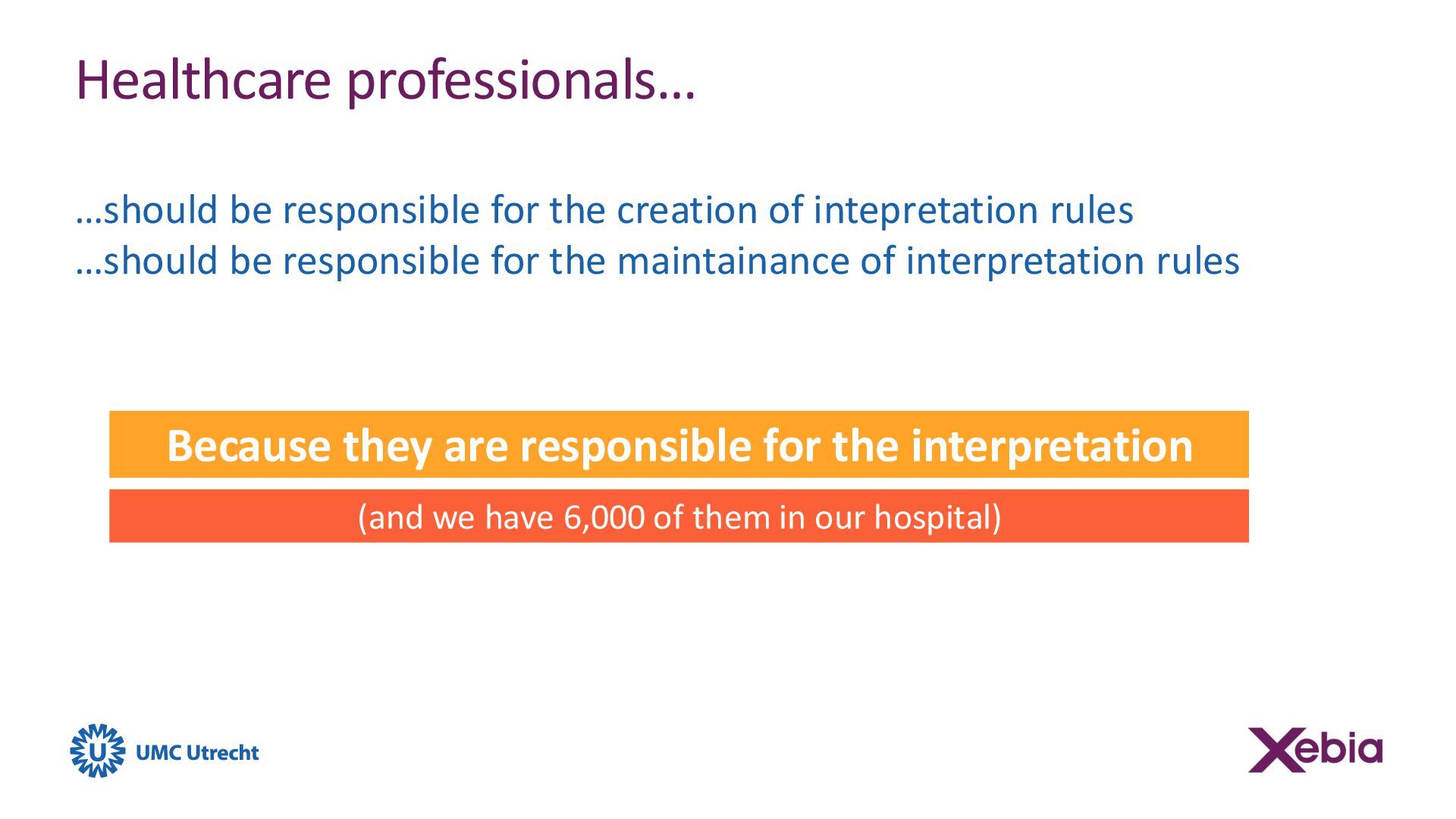
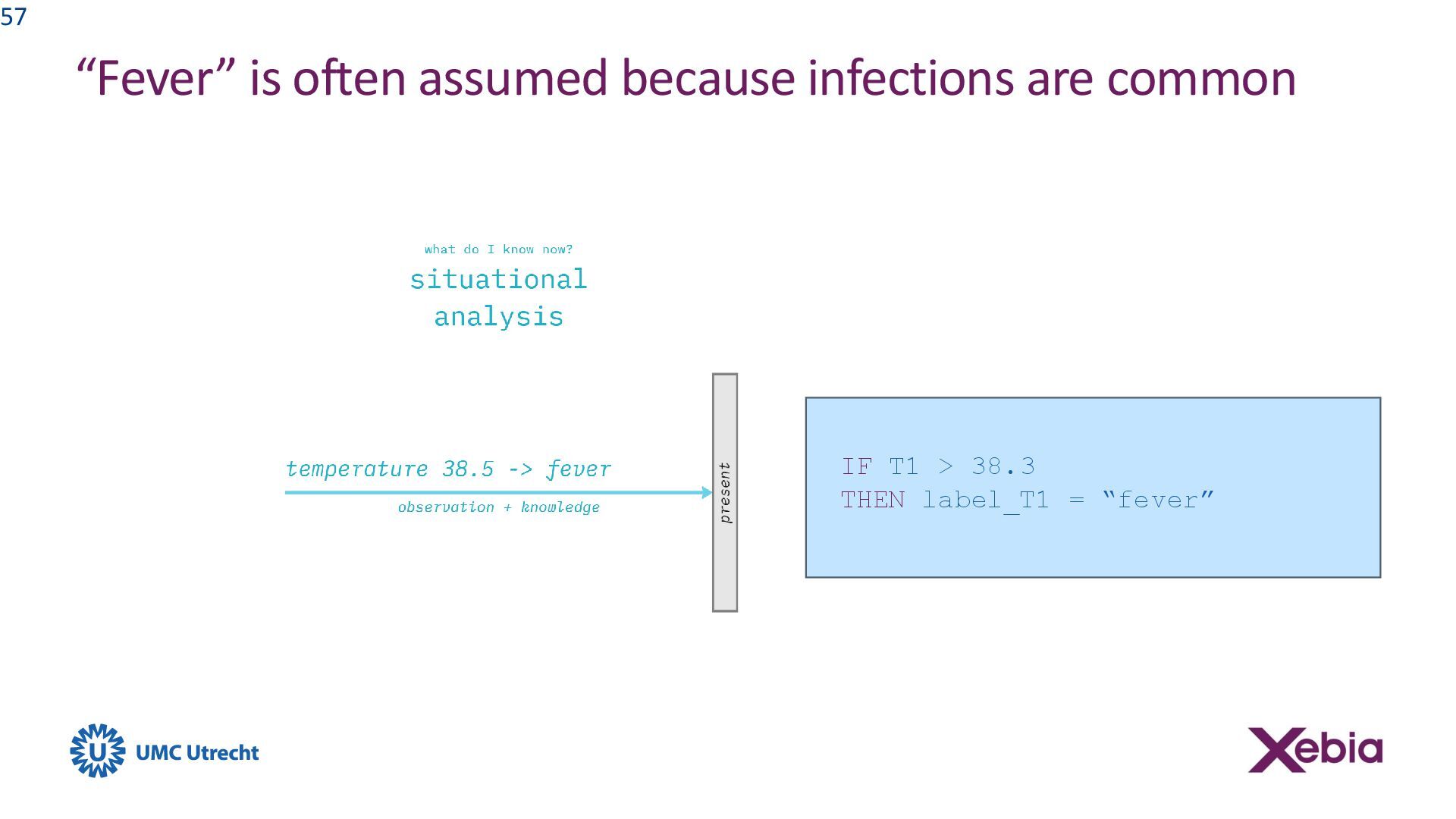
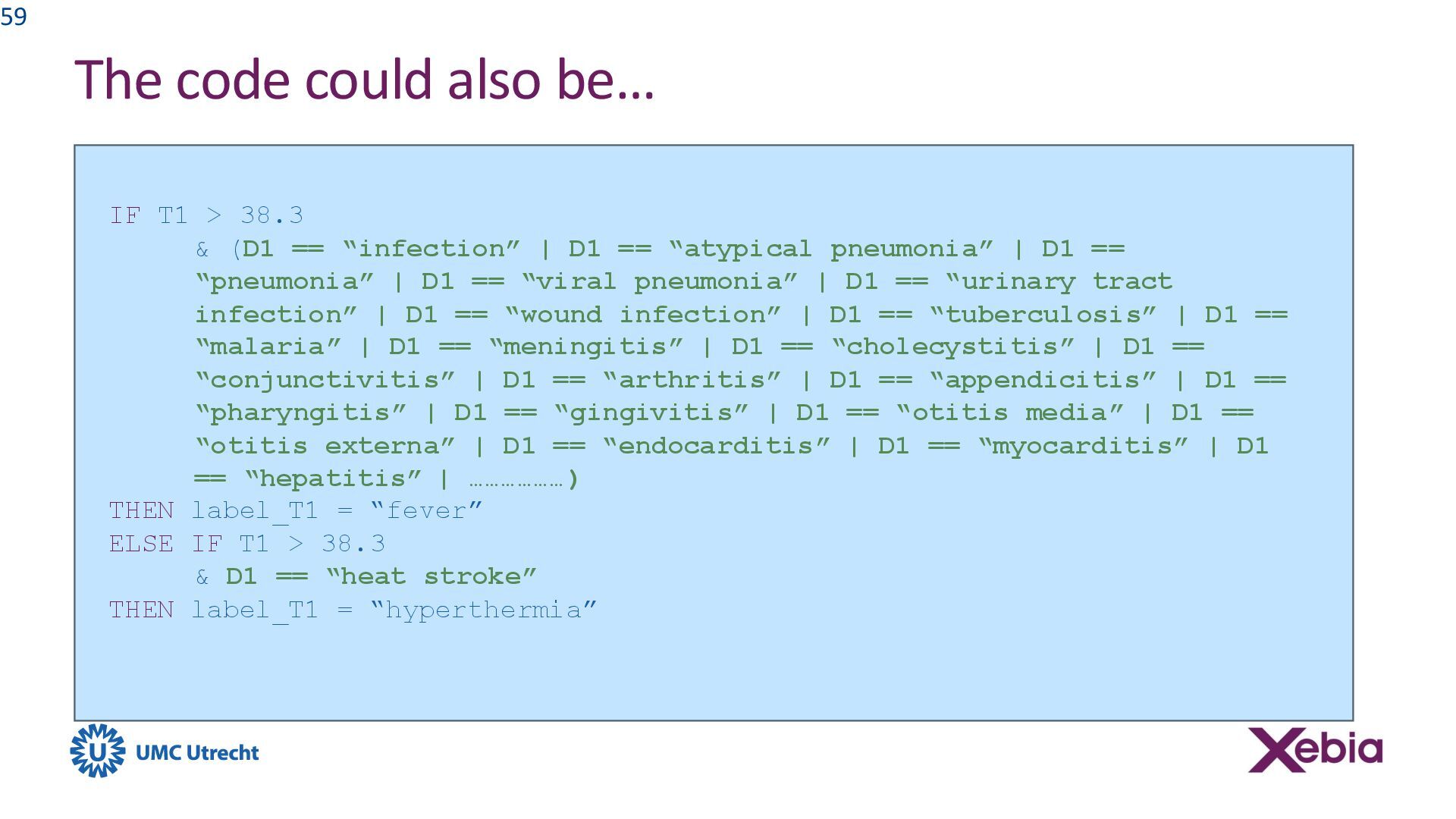
rules …should be responsible for the maintainance of interpretation rules Because they are responsible for the interpretation (and we have 6,000 of them in our hospital)
rules …should be responsible for the maintainance of interpretation rules Because they are responsible for the interpretation (and we have 6,000 of them in our hospital)
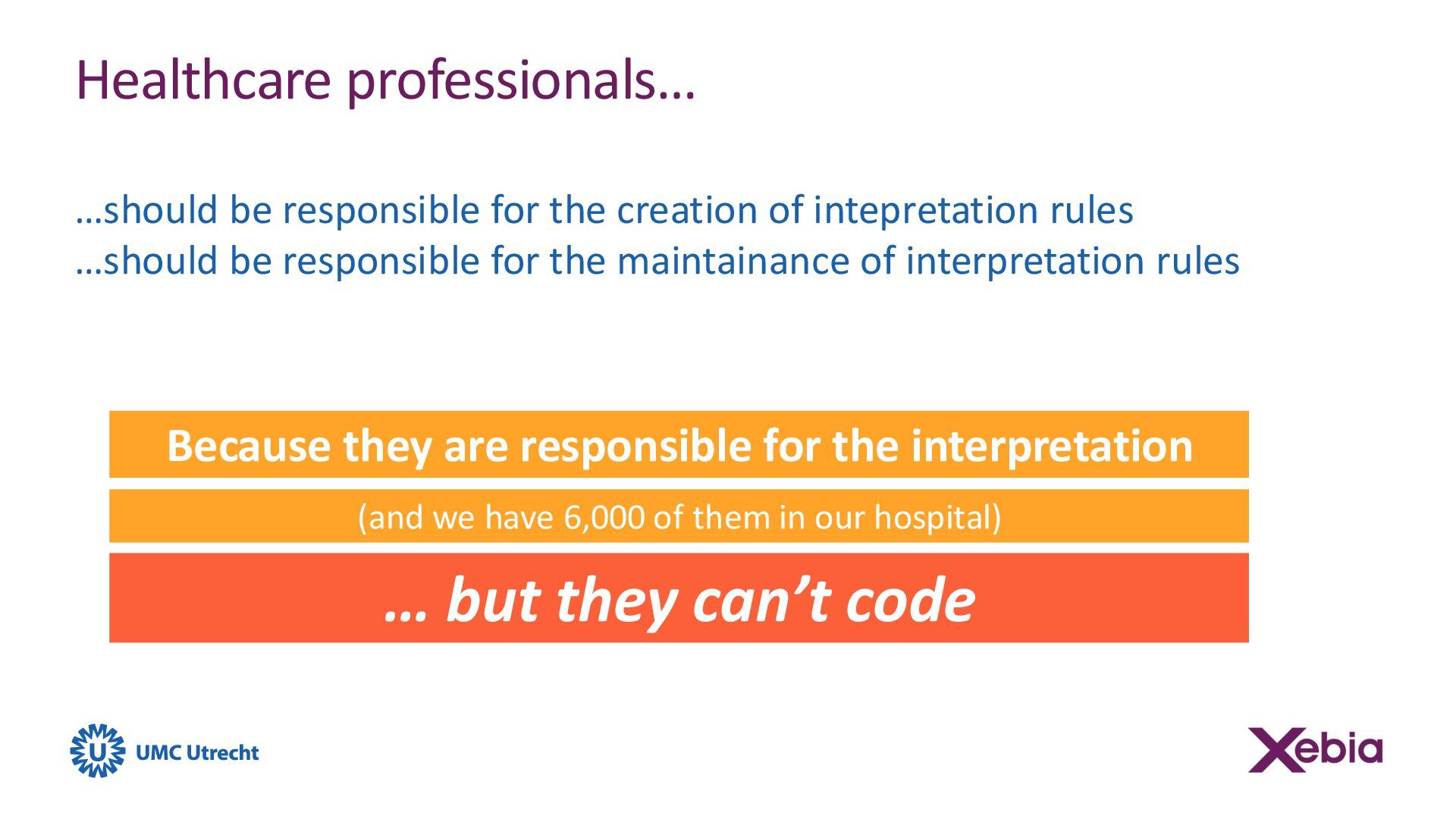
rules …should be responsible for the maintainance of interpretation rules Because they are responsible for the interpretation (and we have 6,000 of them in our hospital) … but they can’t code
is how they register data in an EMR Local healthcare protocols contain many tables and flowcharts Plenty of spreadsheets and databases for quality and research purposes
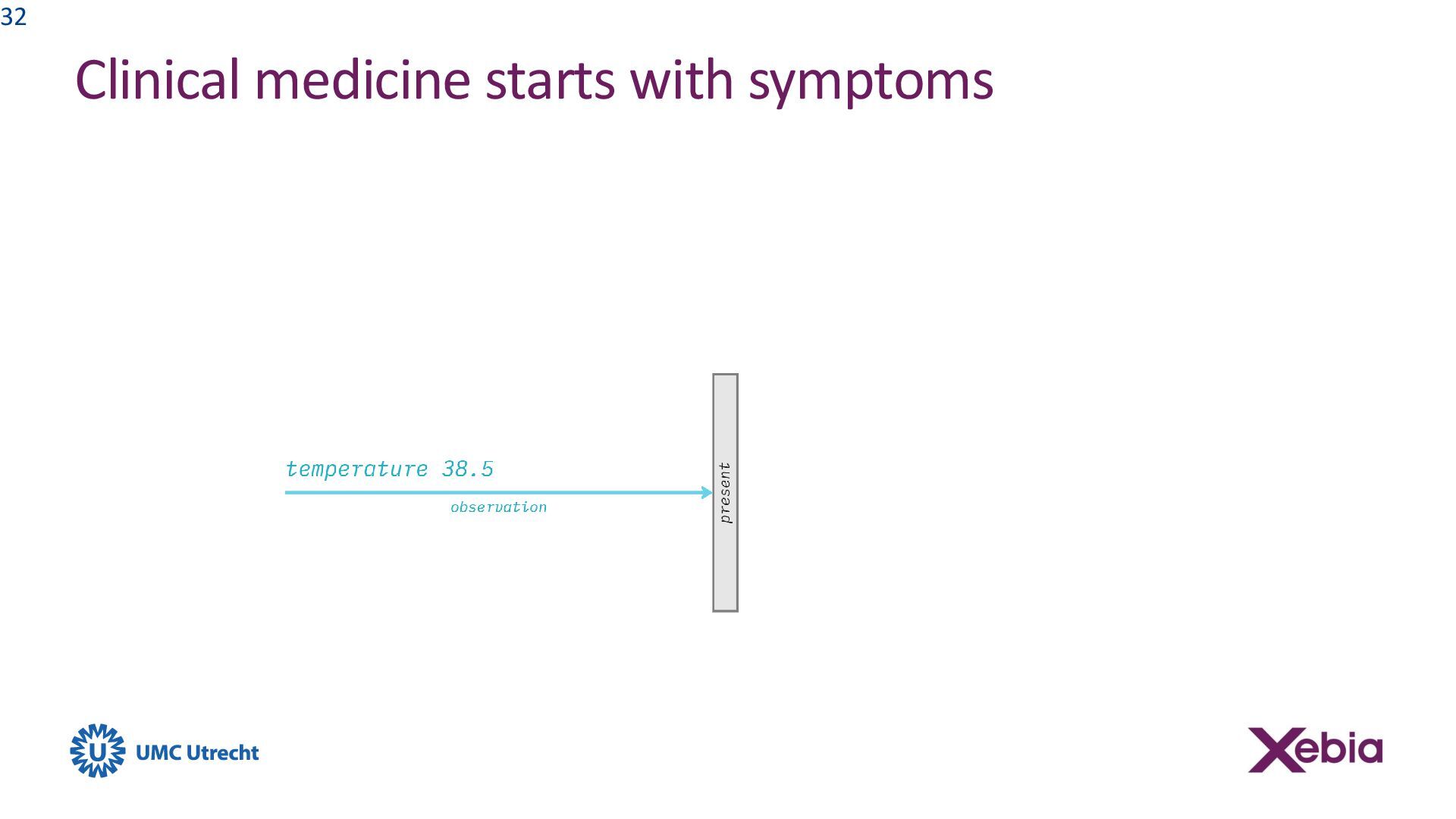
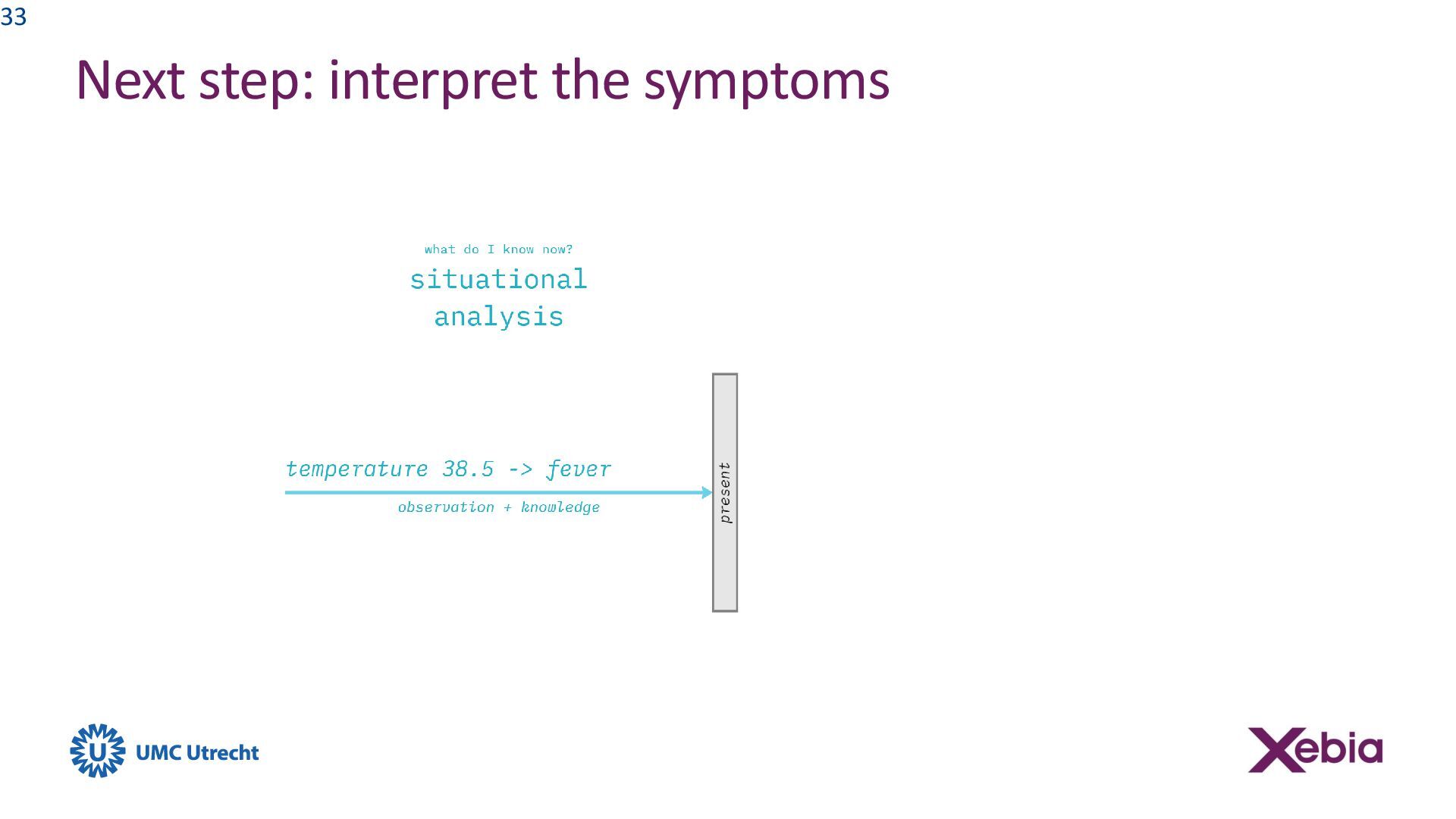
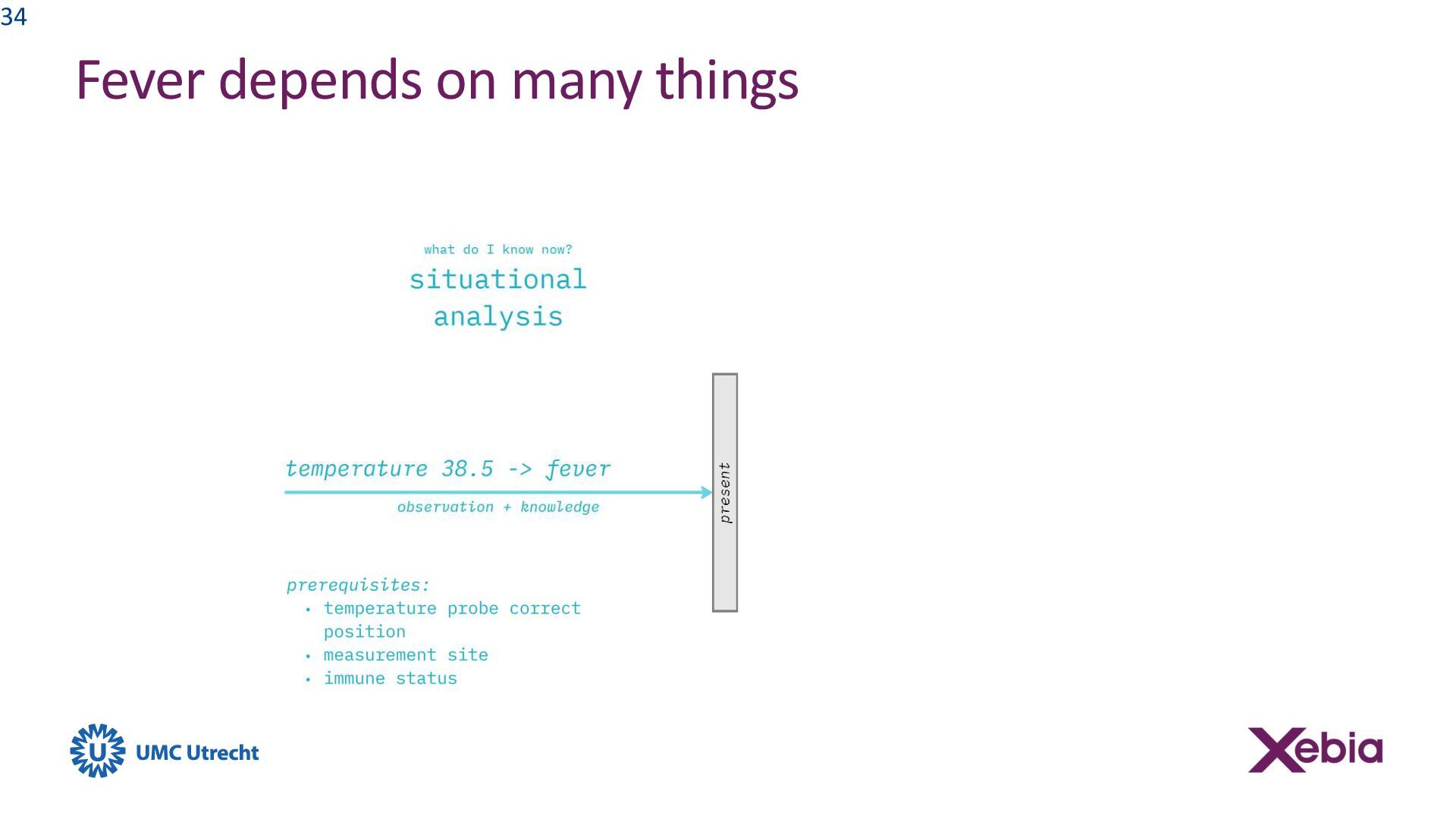
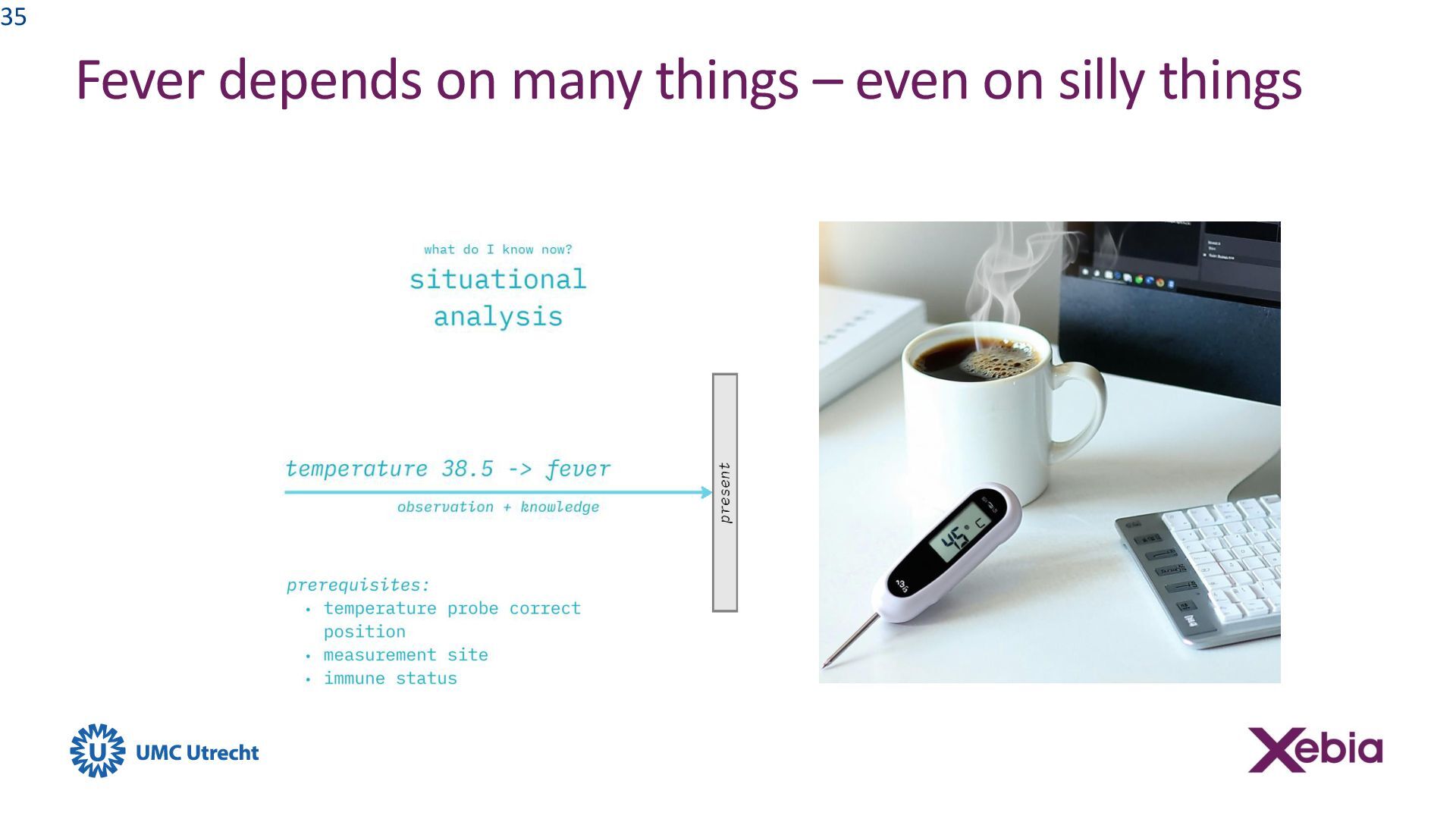
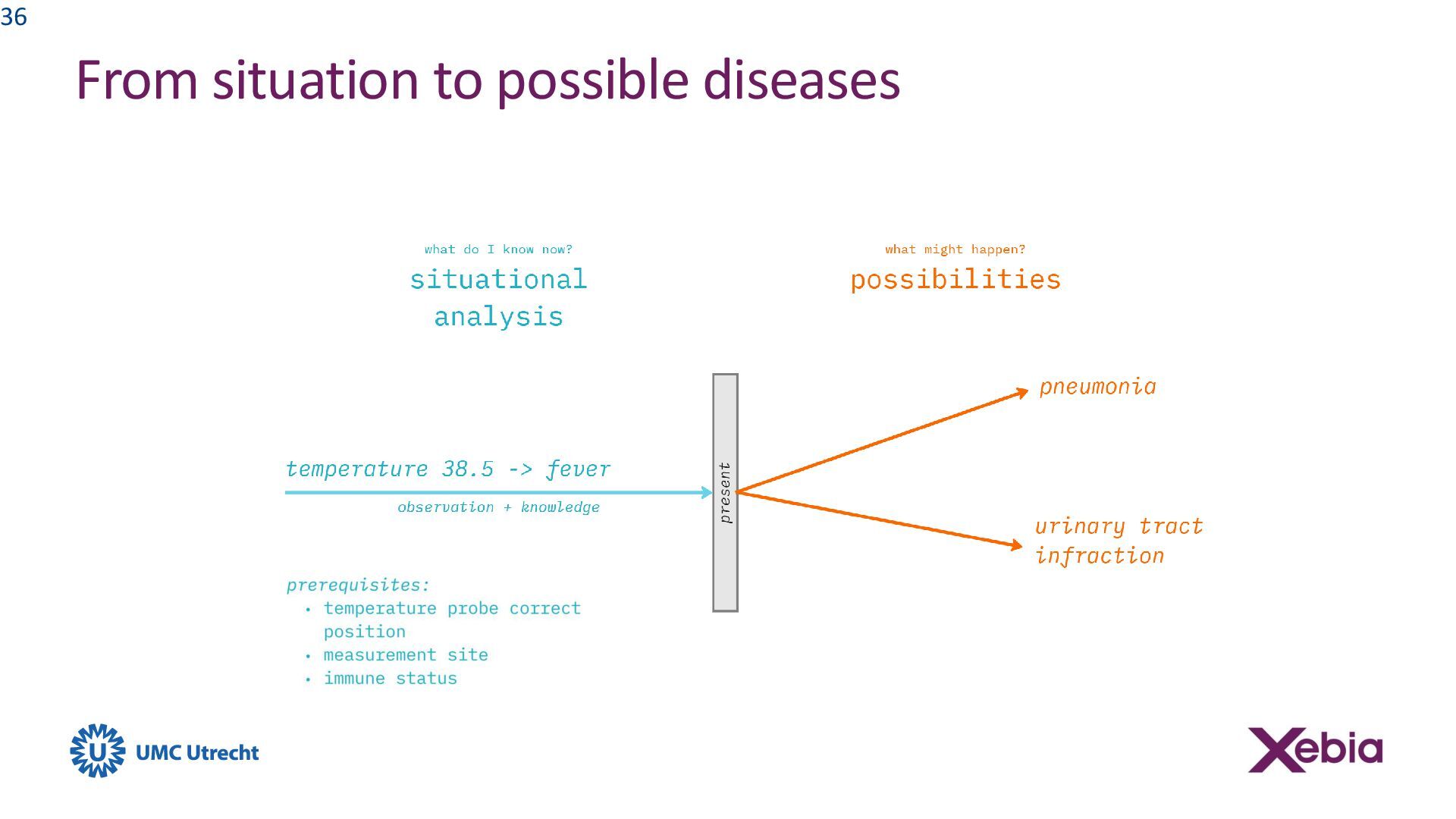
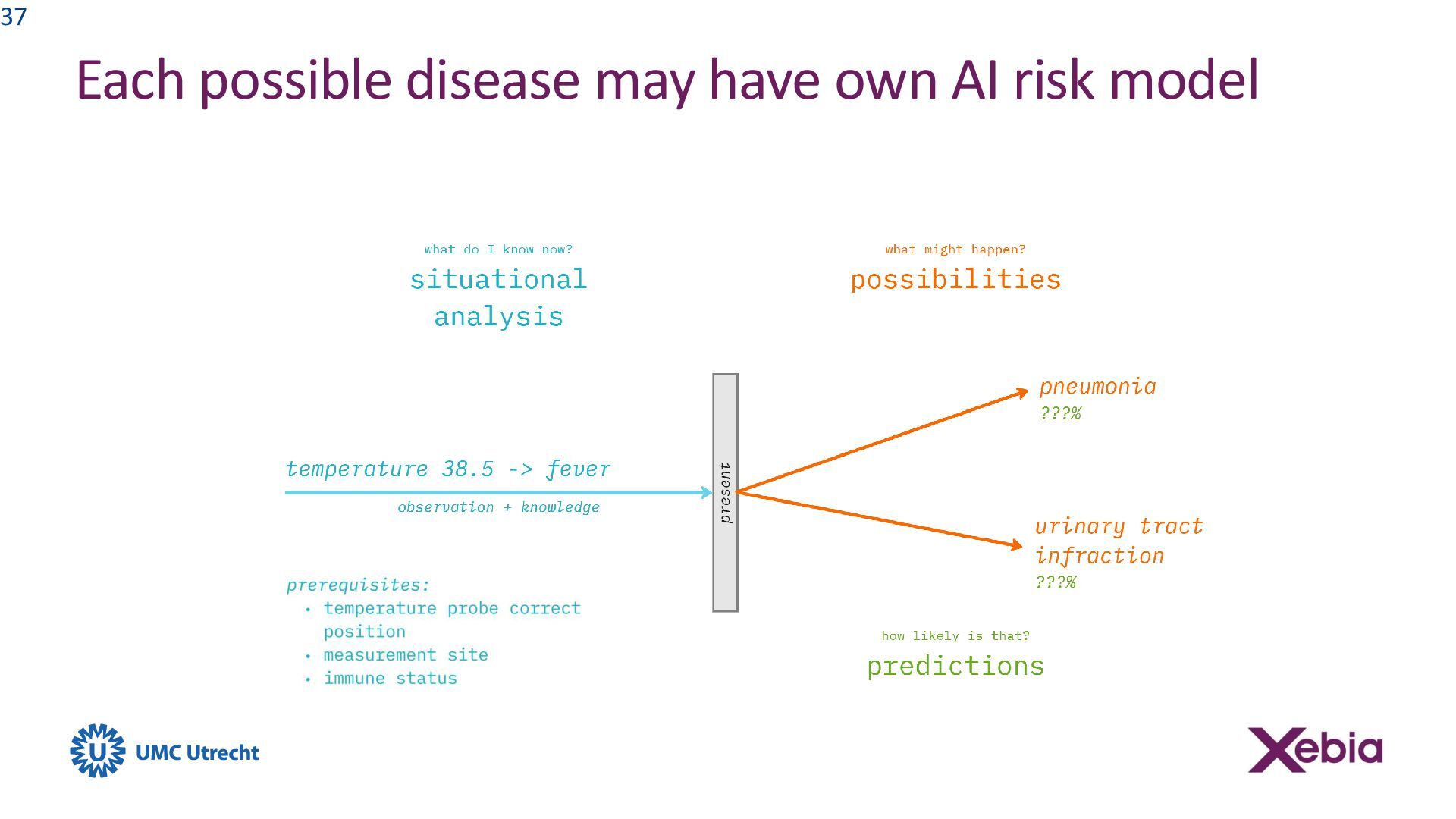
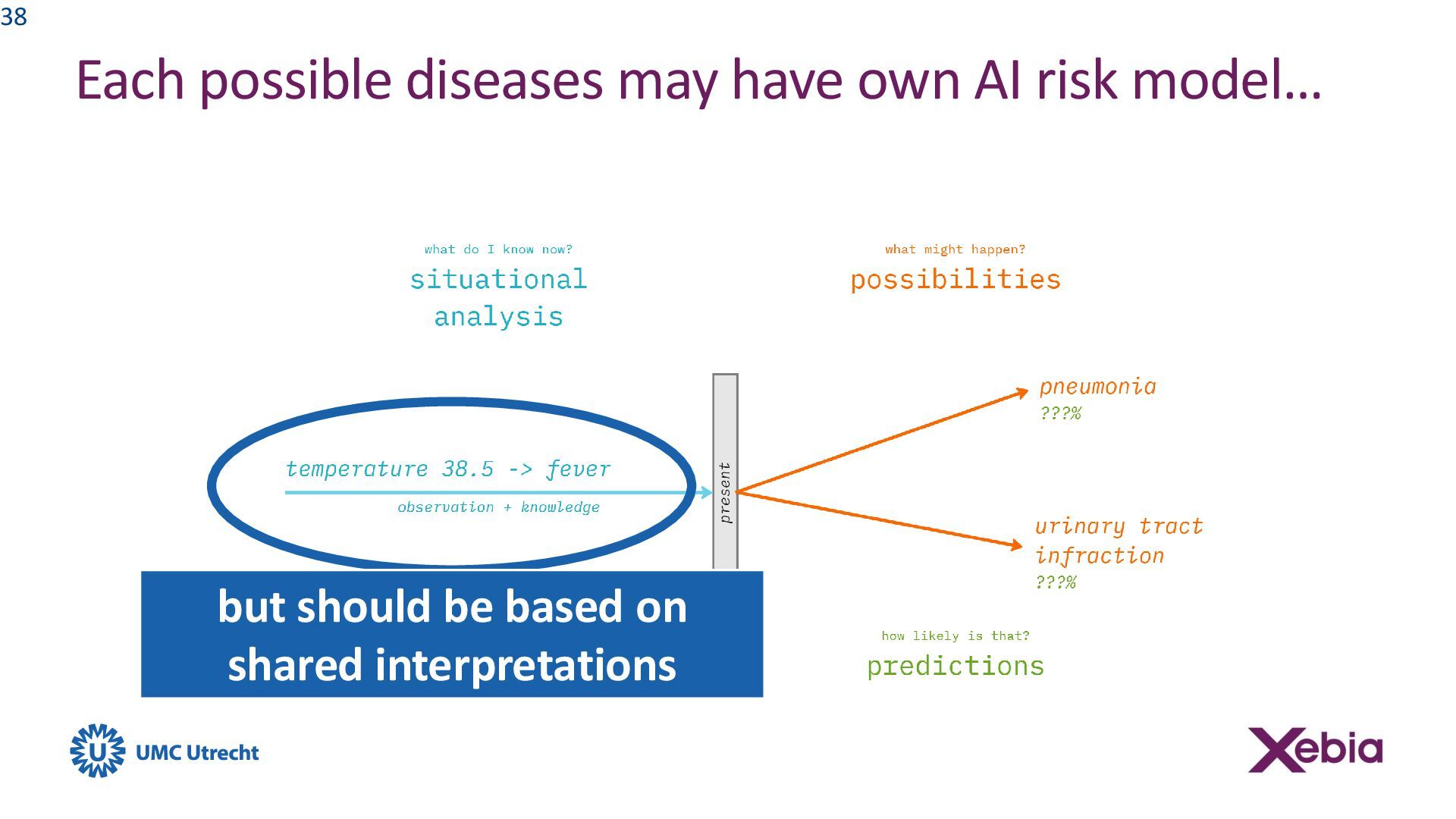
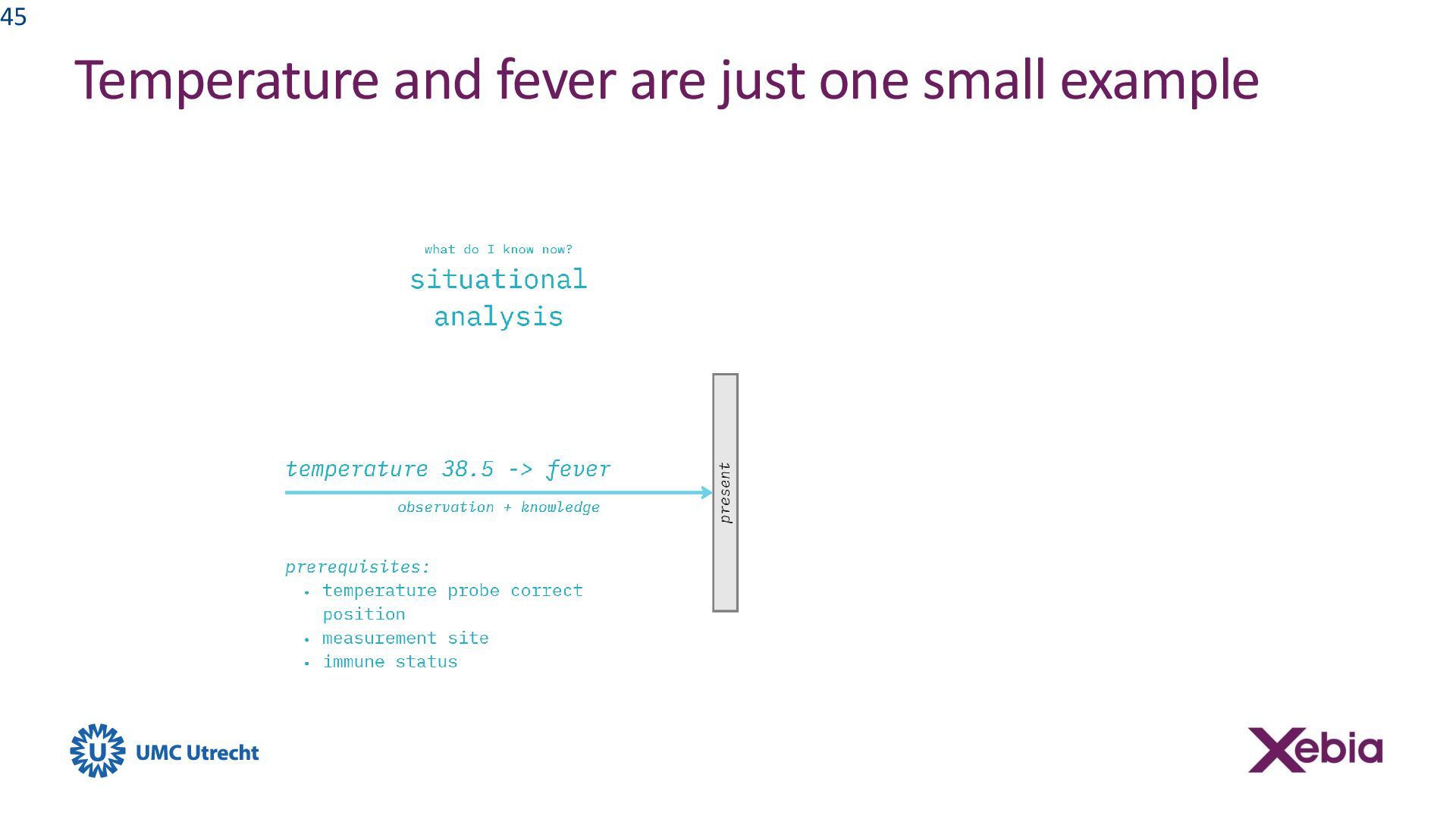
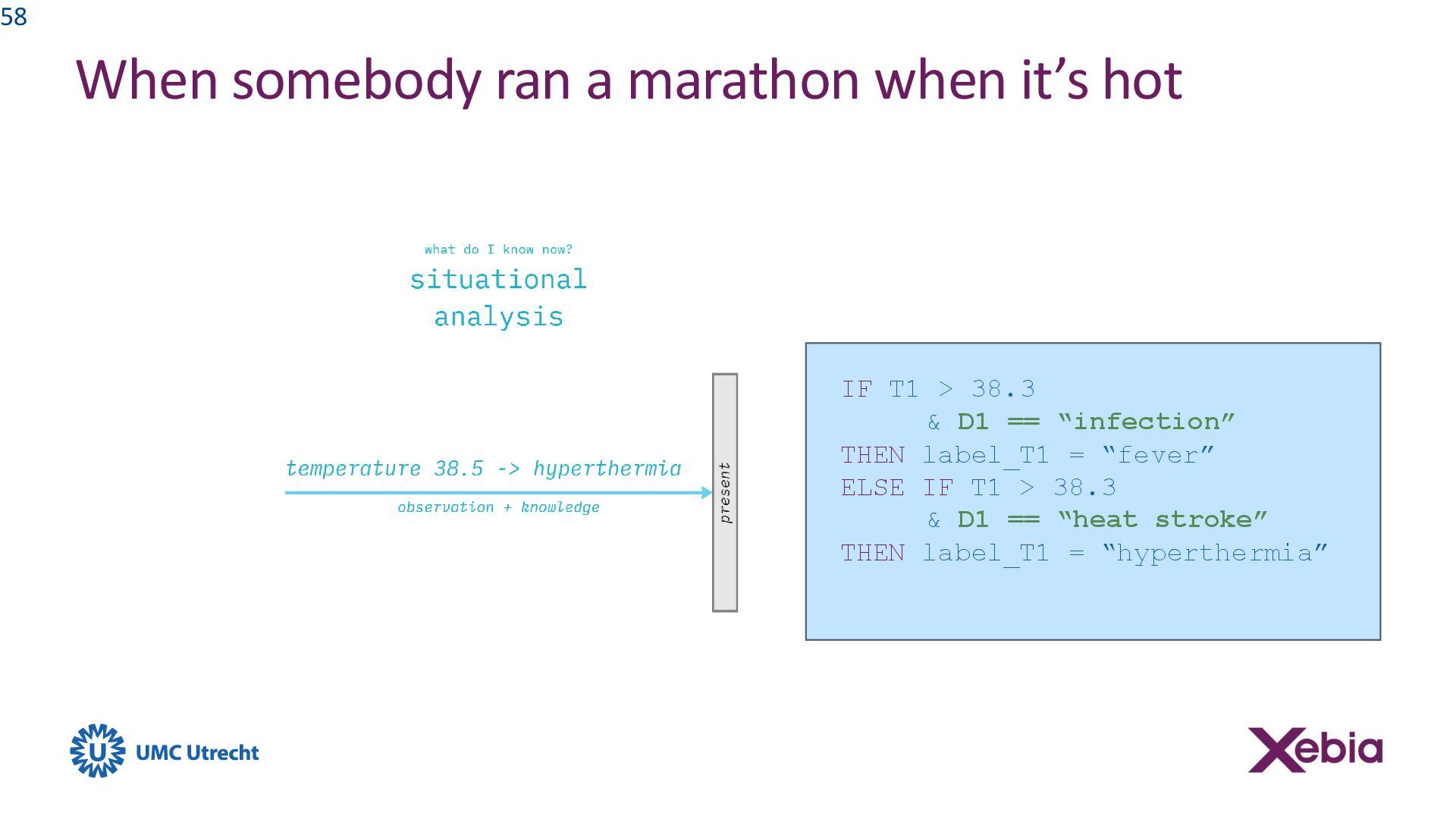
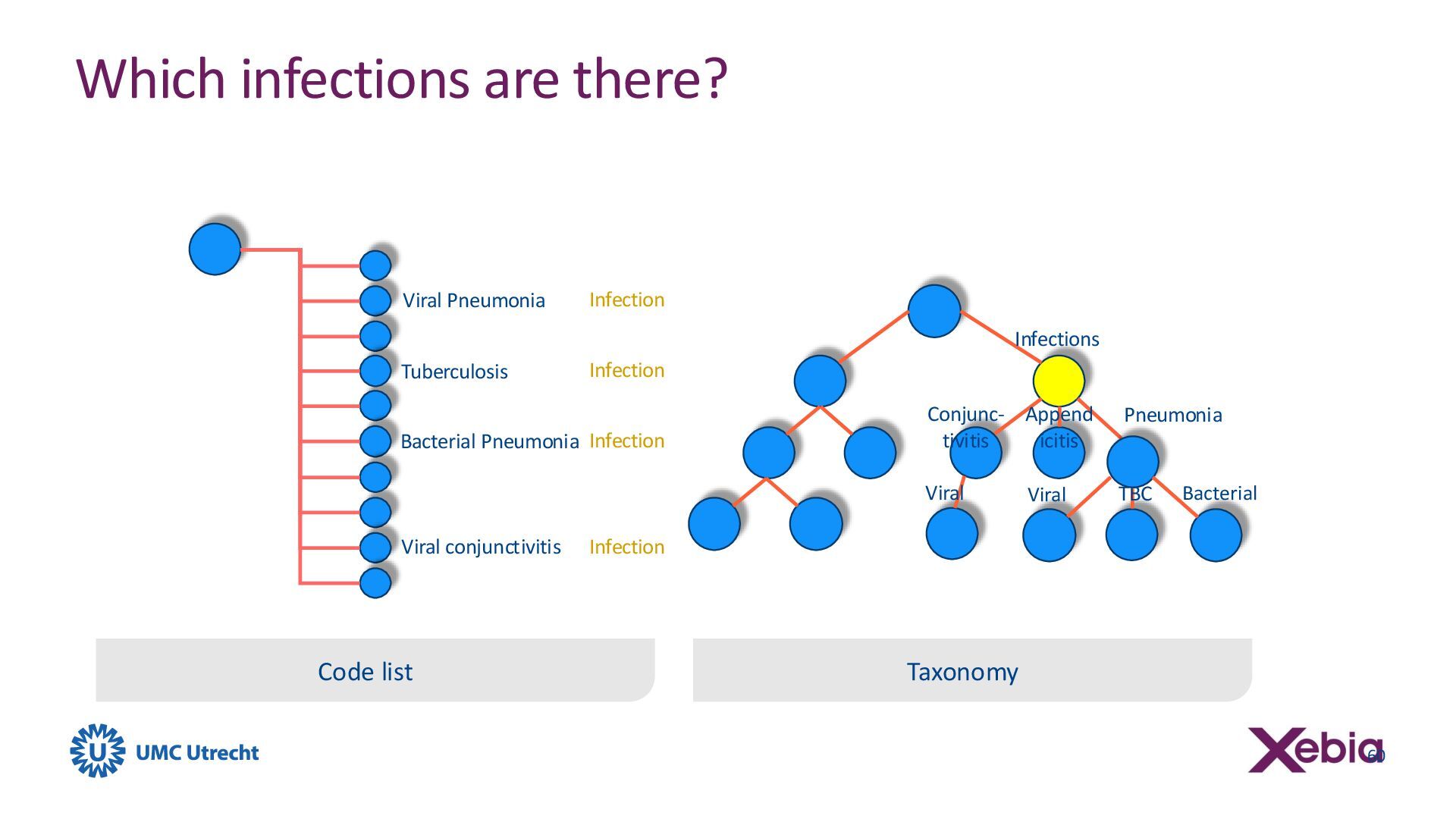
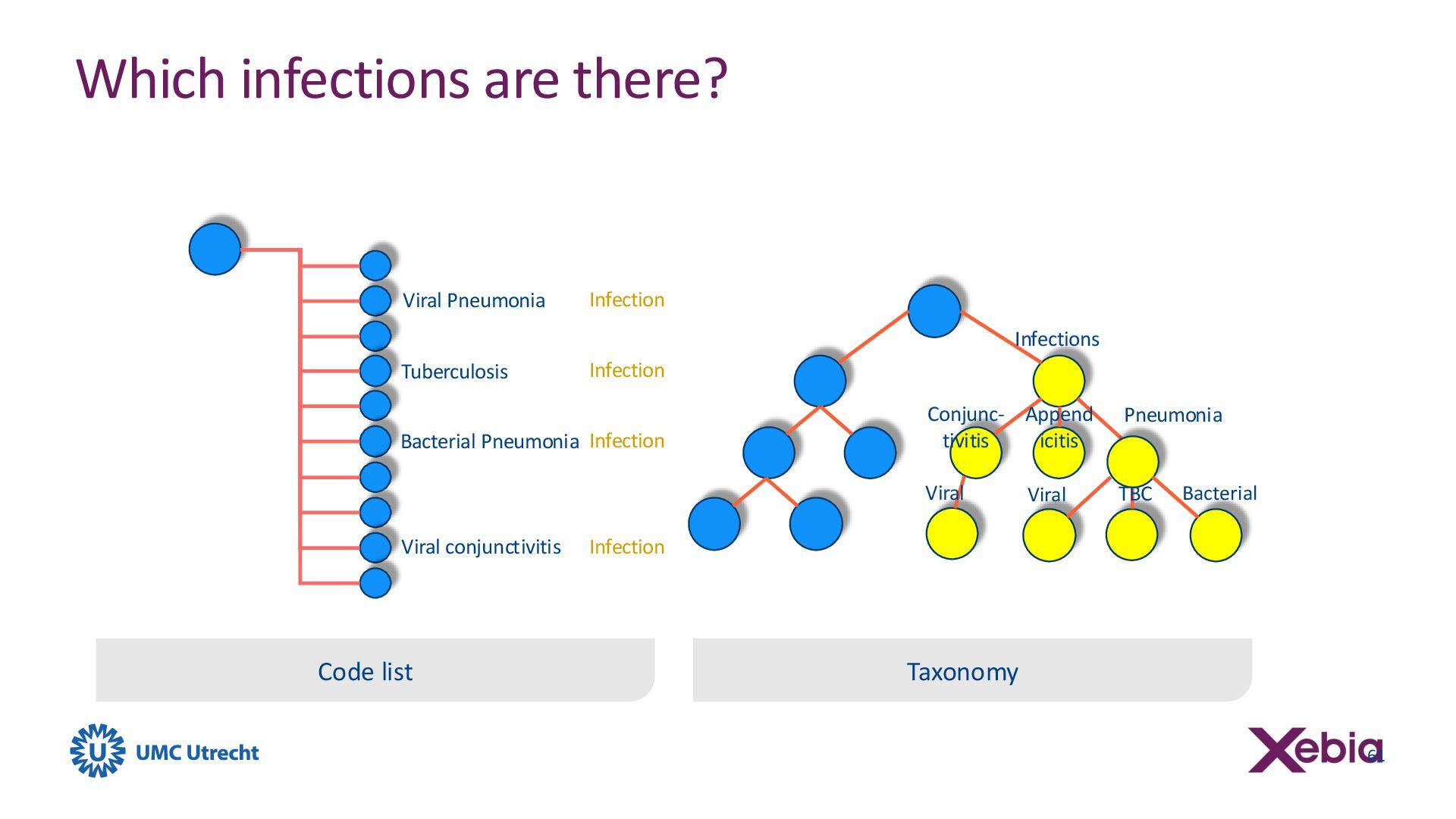
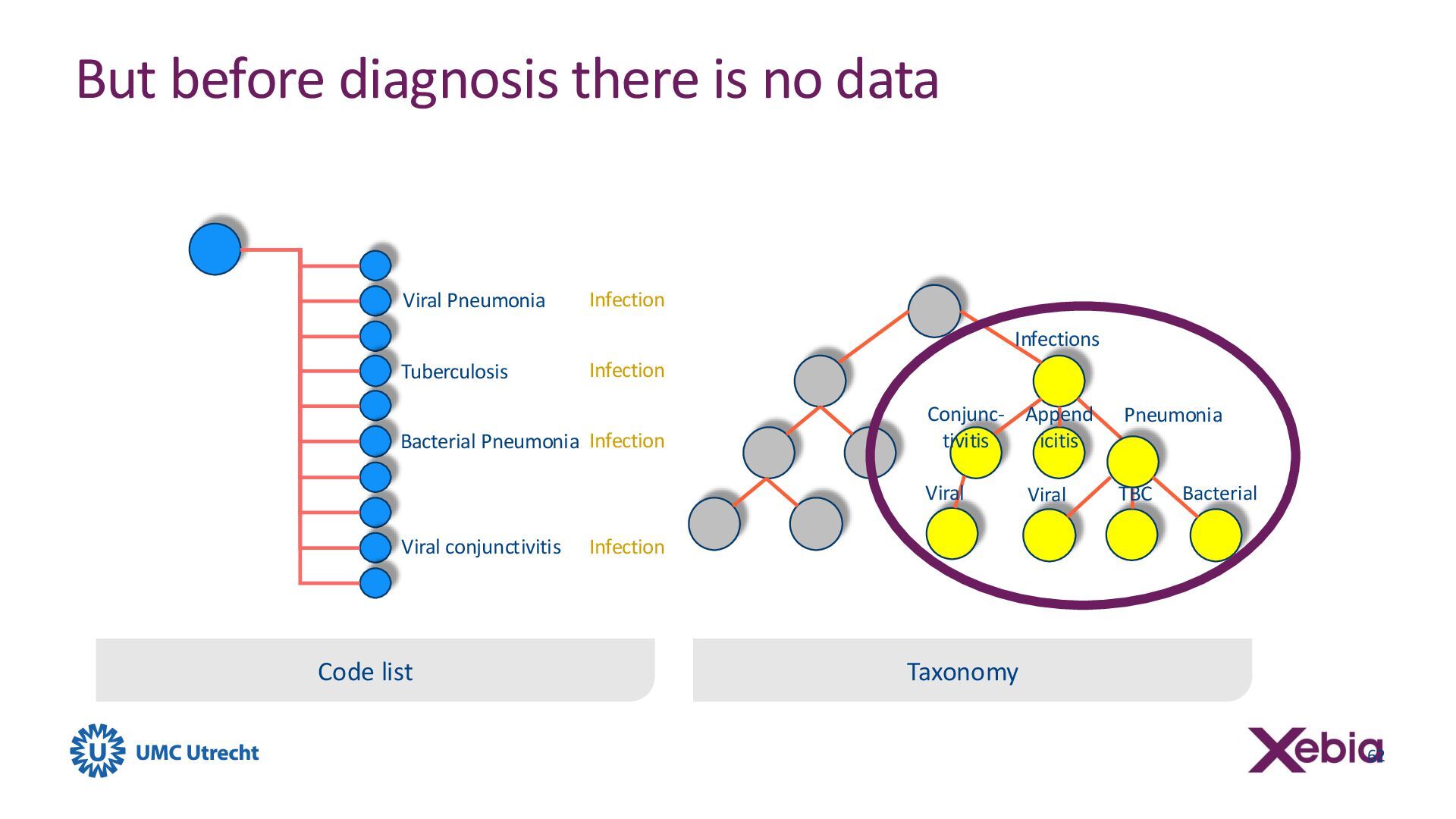
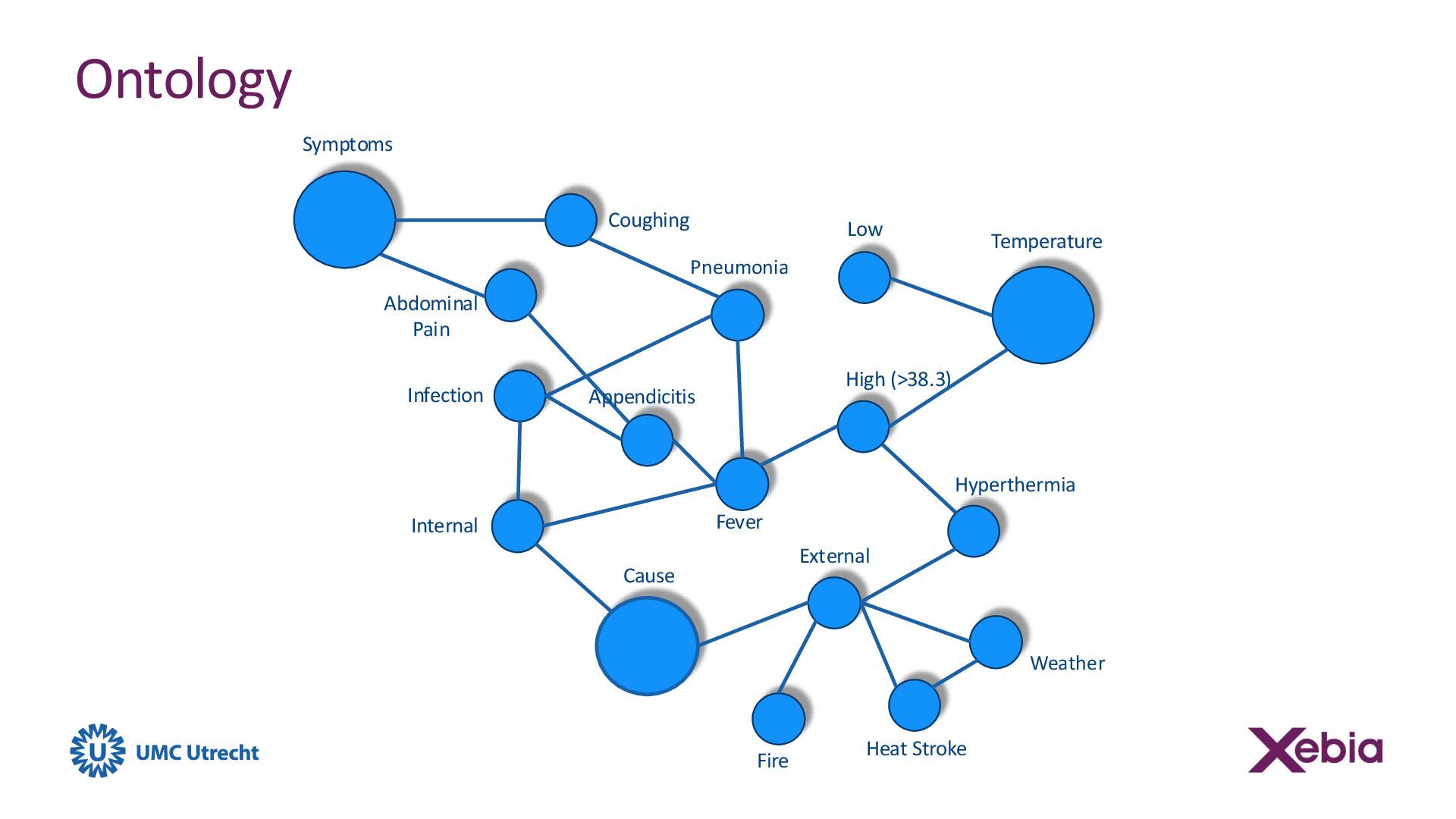
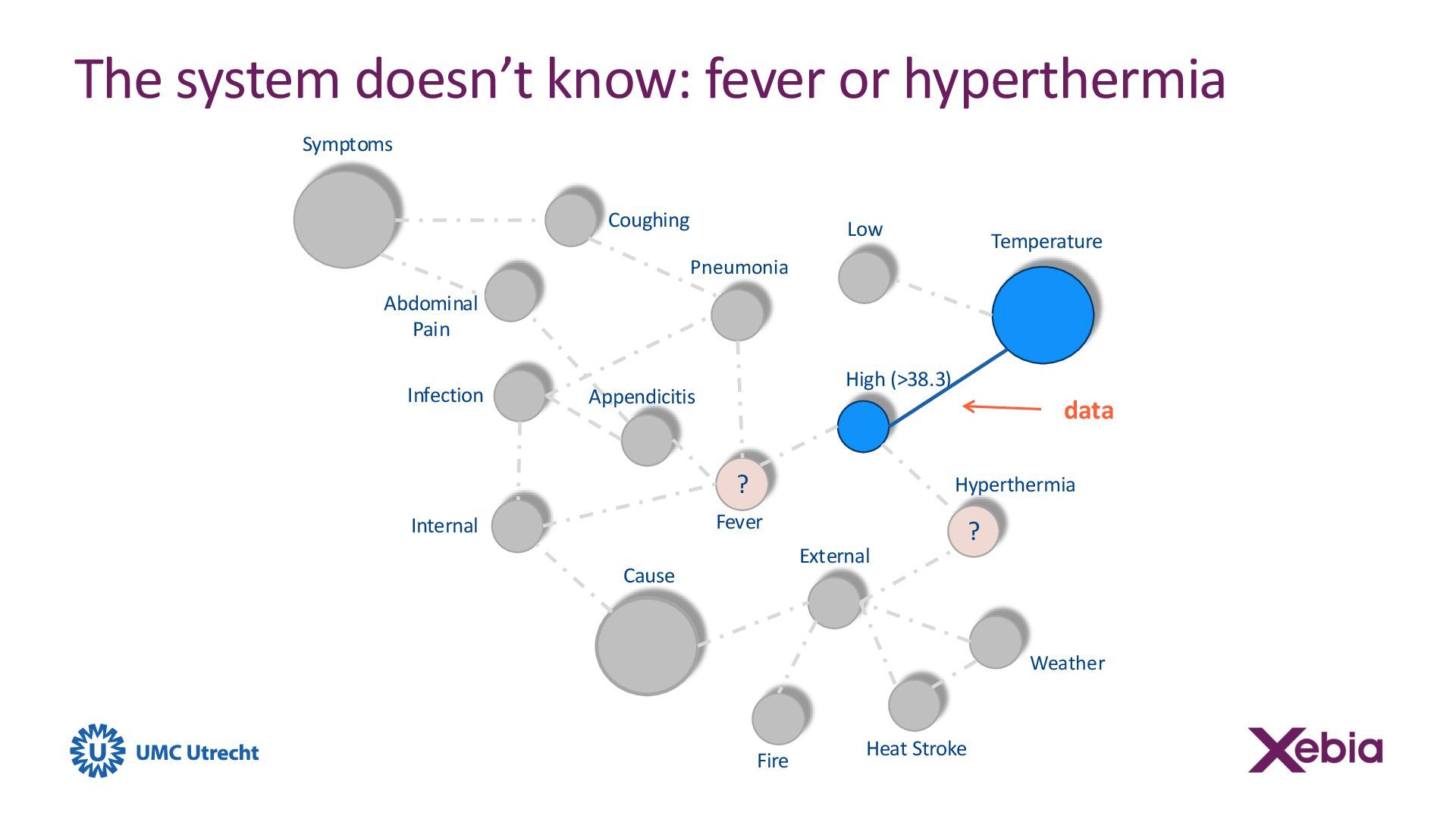
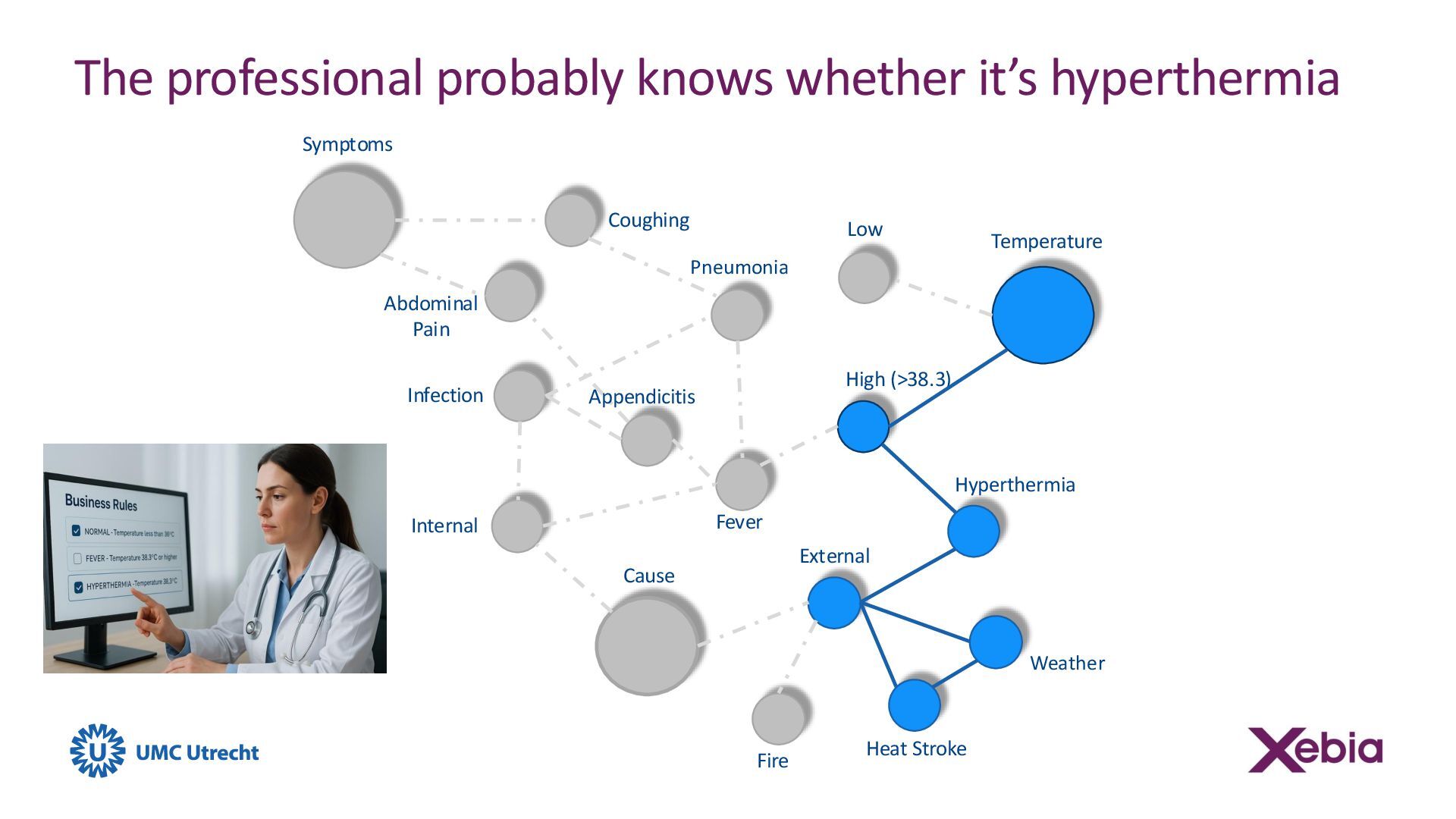
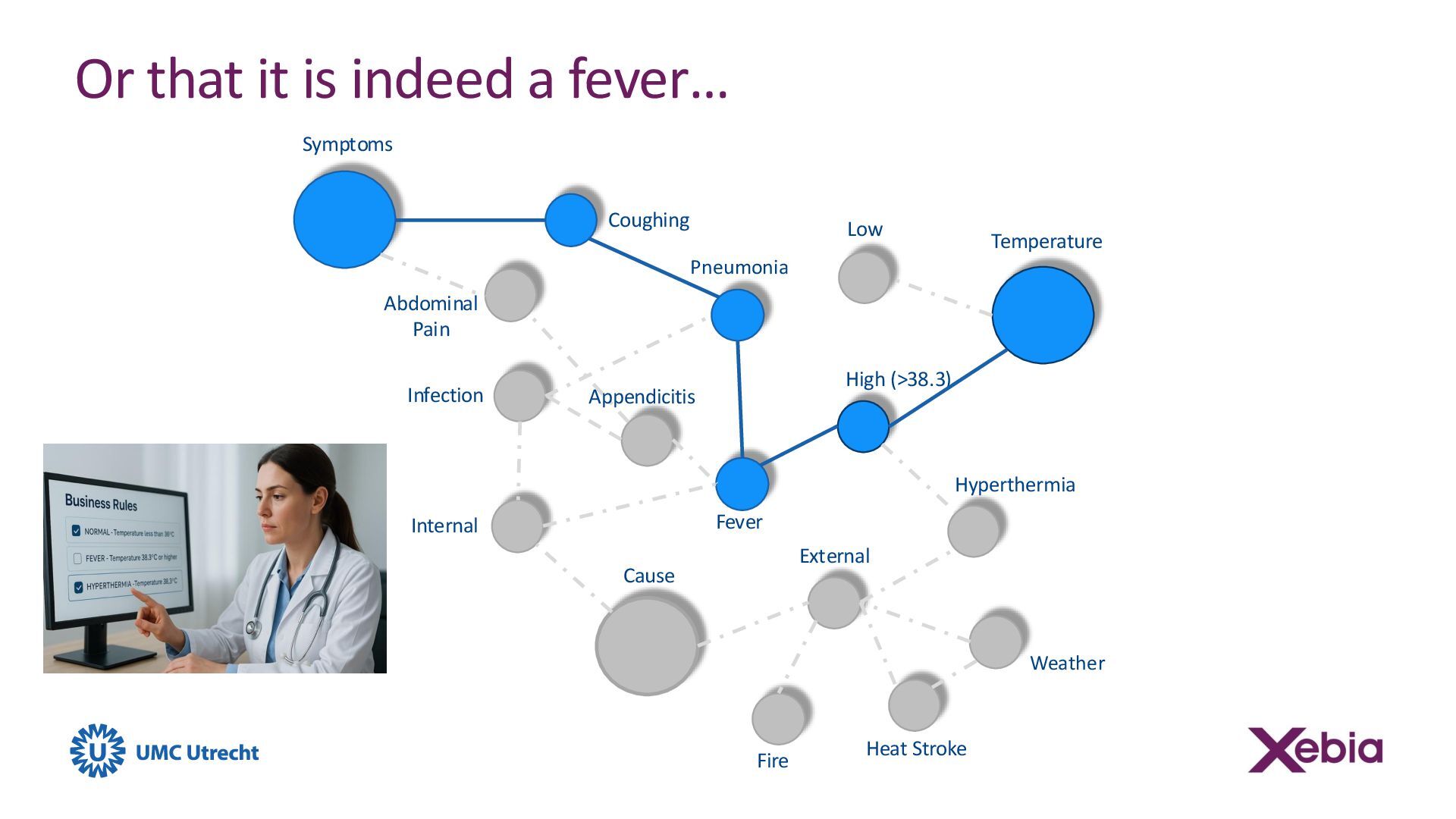
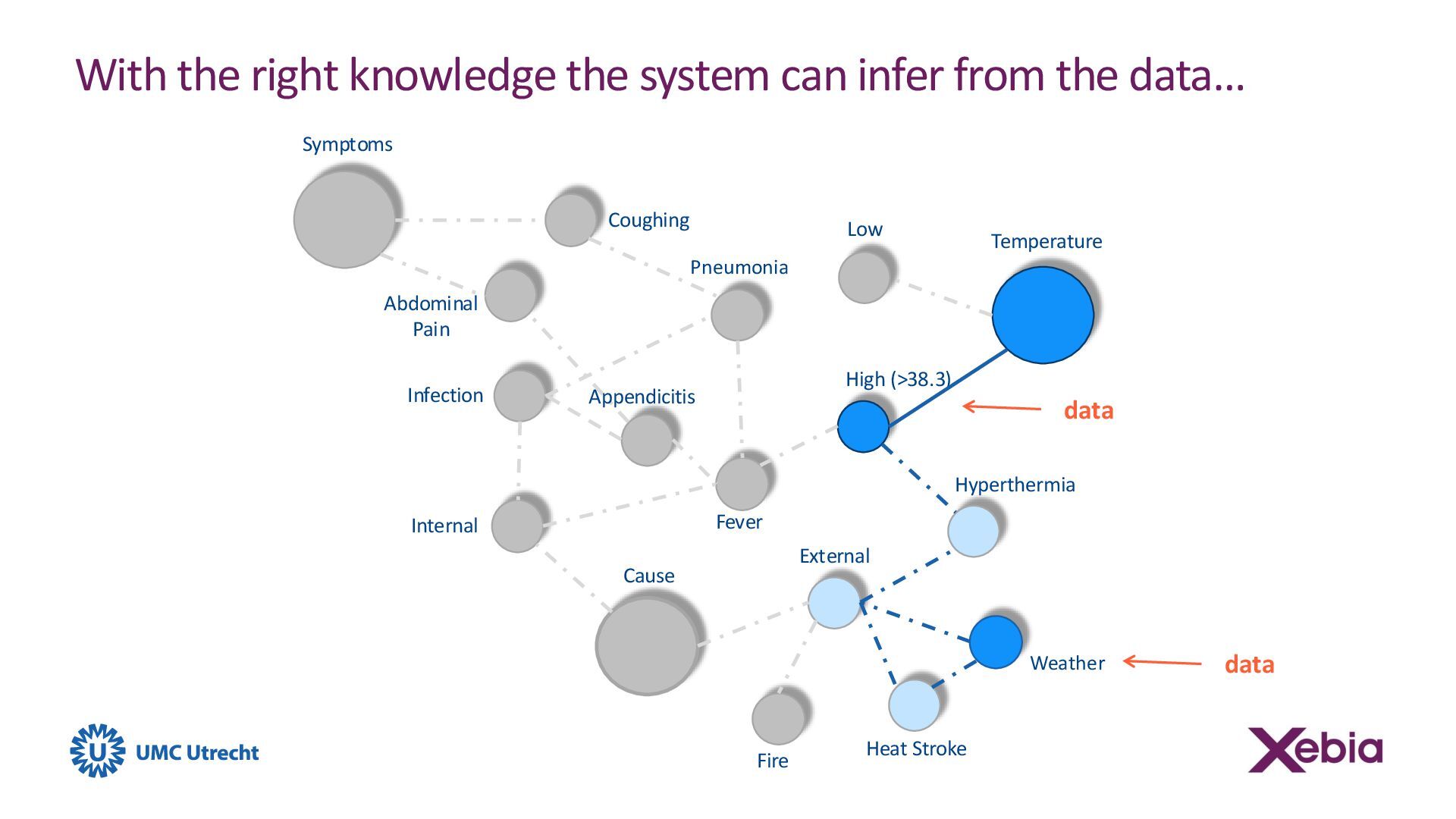
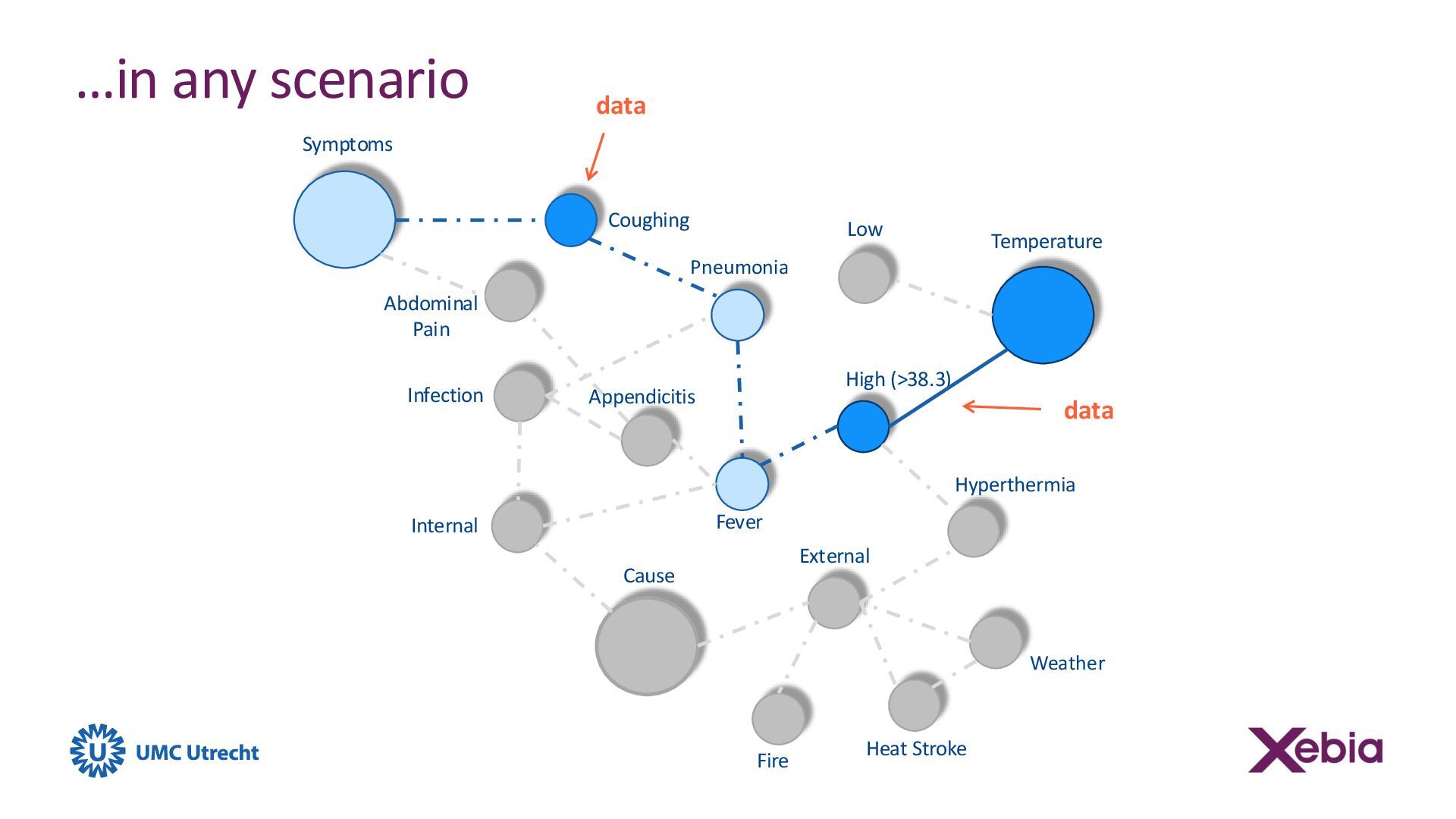
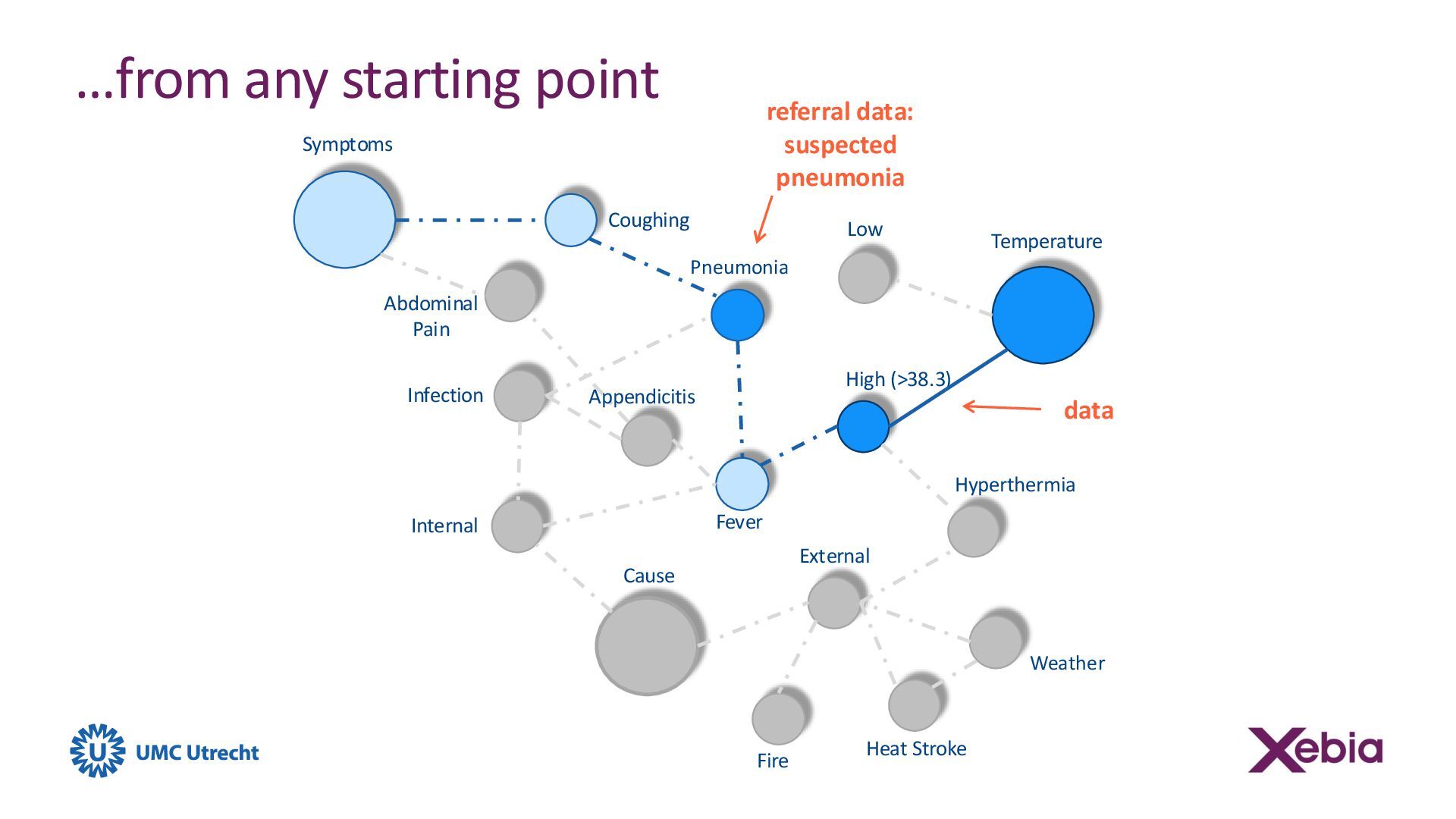
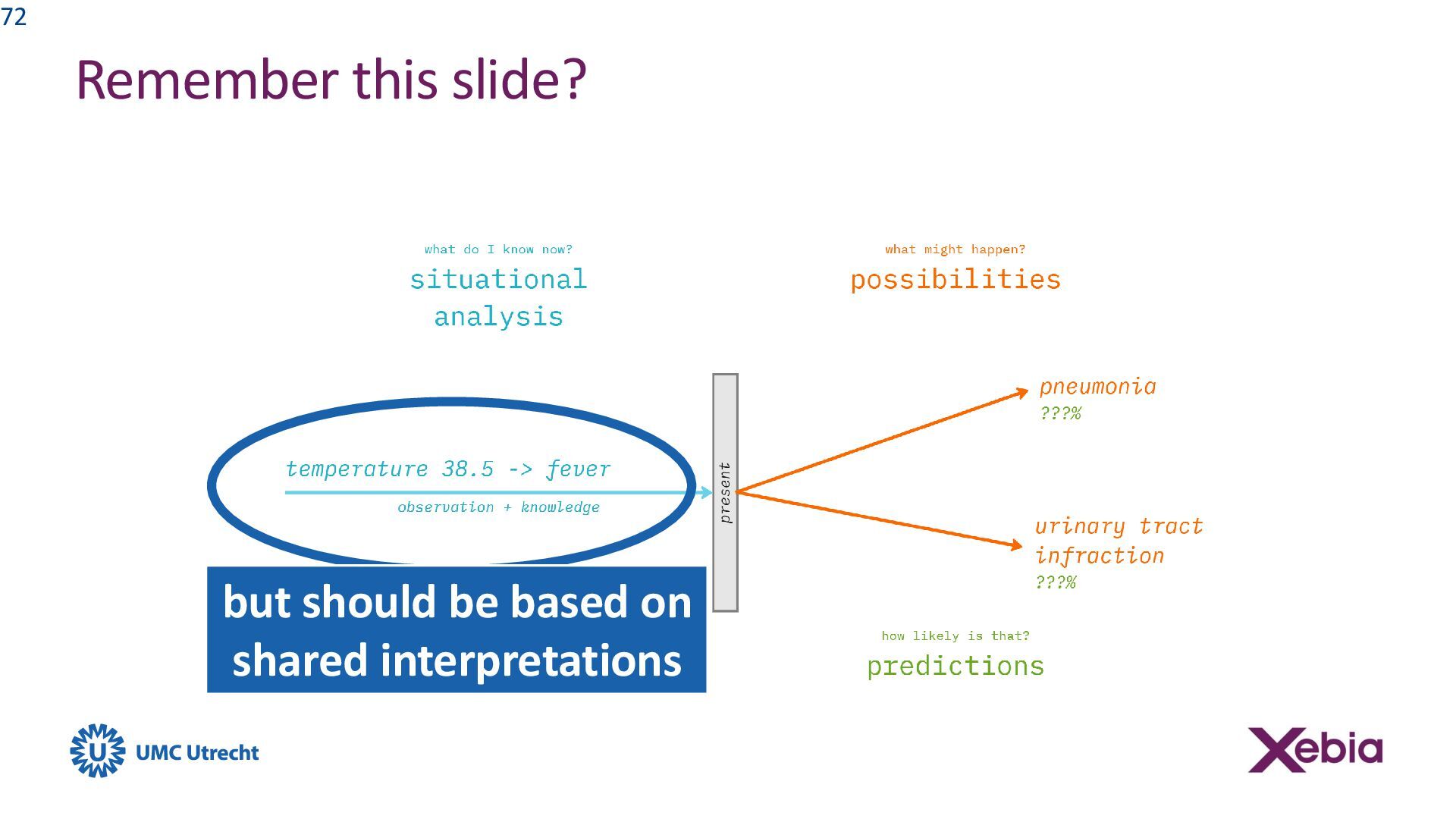
data… Low Temperature High (>38.3) Hyperthermia Fever Cause Internal External Infection Heat Stroke Fire Pneumonia Coughing Abdominal Pain Weather Appendicitis Symptoms data data
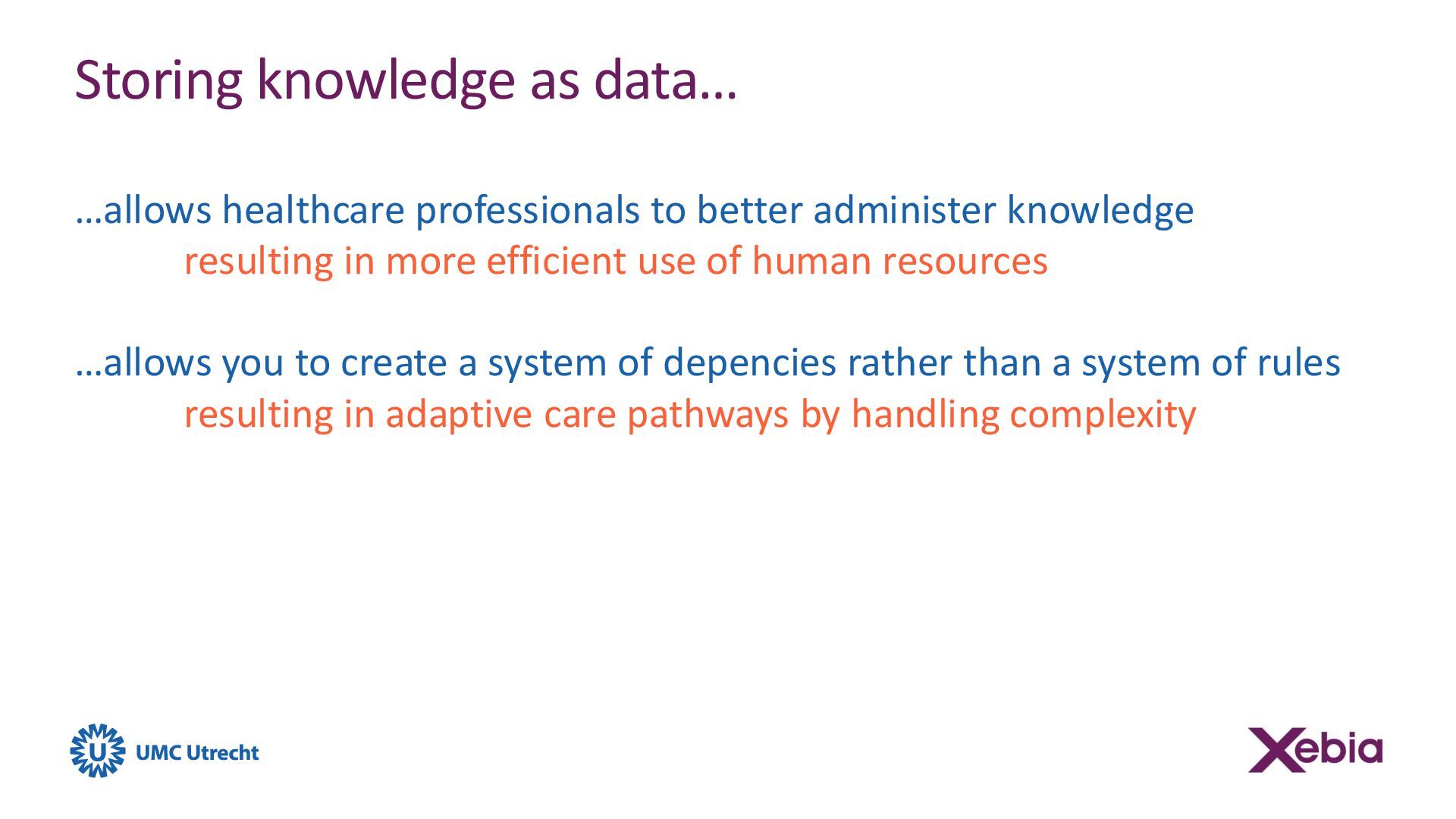
knowledge resulting in more efficient use of human resources …allows you to create a system of depencies rather than a system of rules resulting in adaptive care pathways by handling complexity
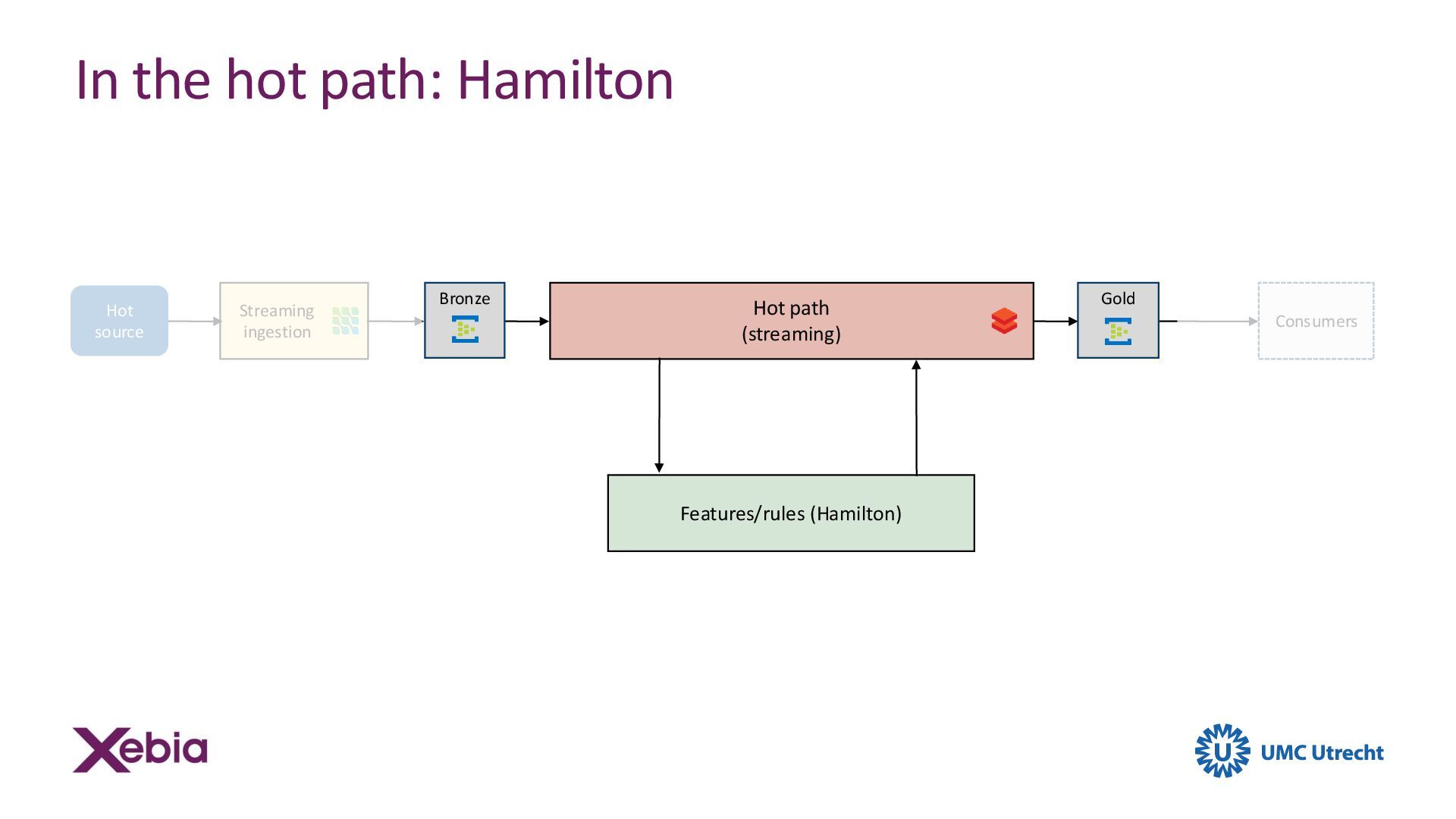
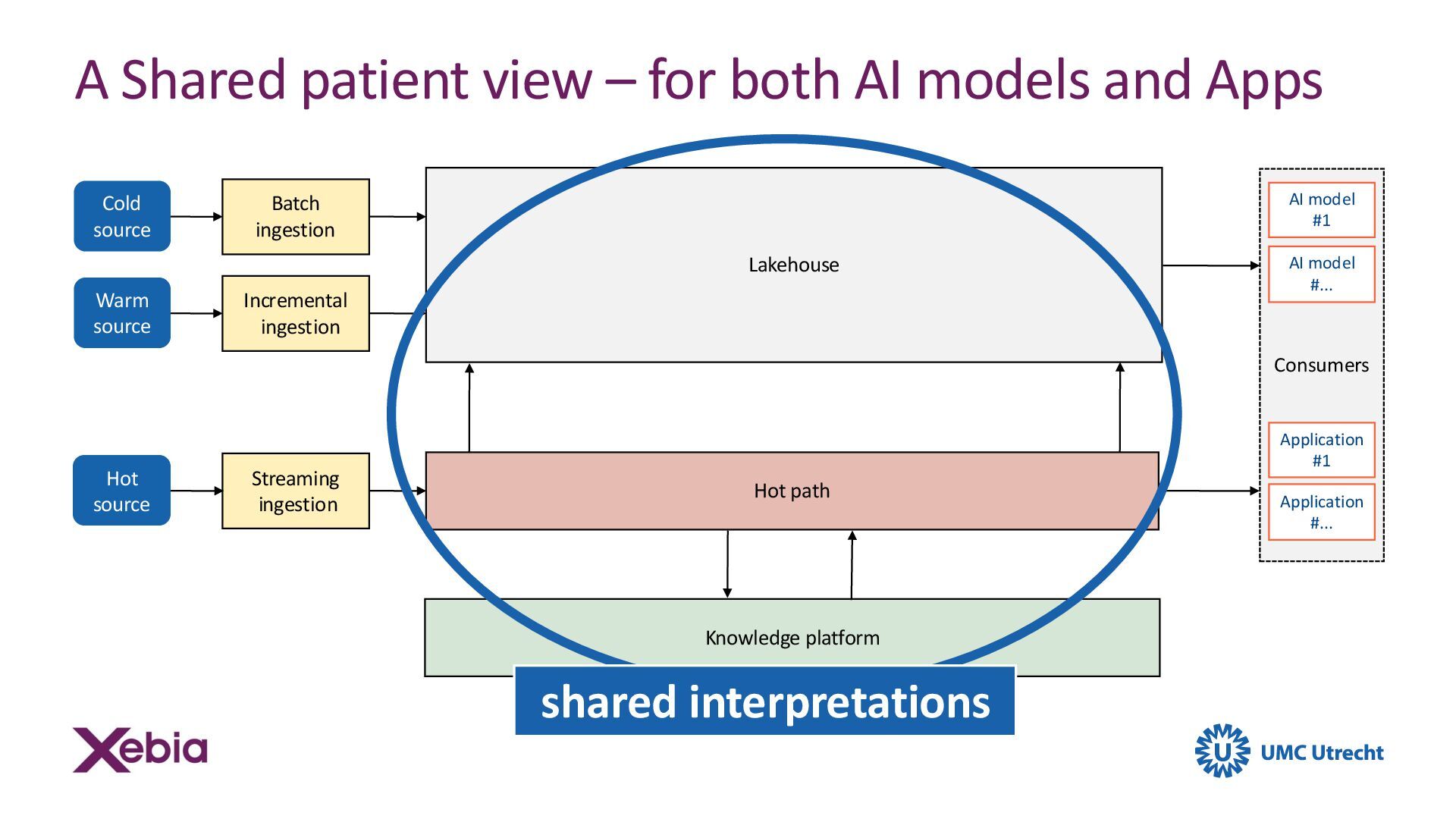
and Apps Consumers Streaming ingestion Hot source Incremental ingestion Warm source Batch ingestion Cold source Knowledge platform Hot path AI model #1 AI model #... Application #... Application #1 shared interpretations
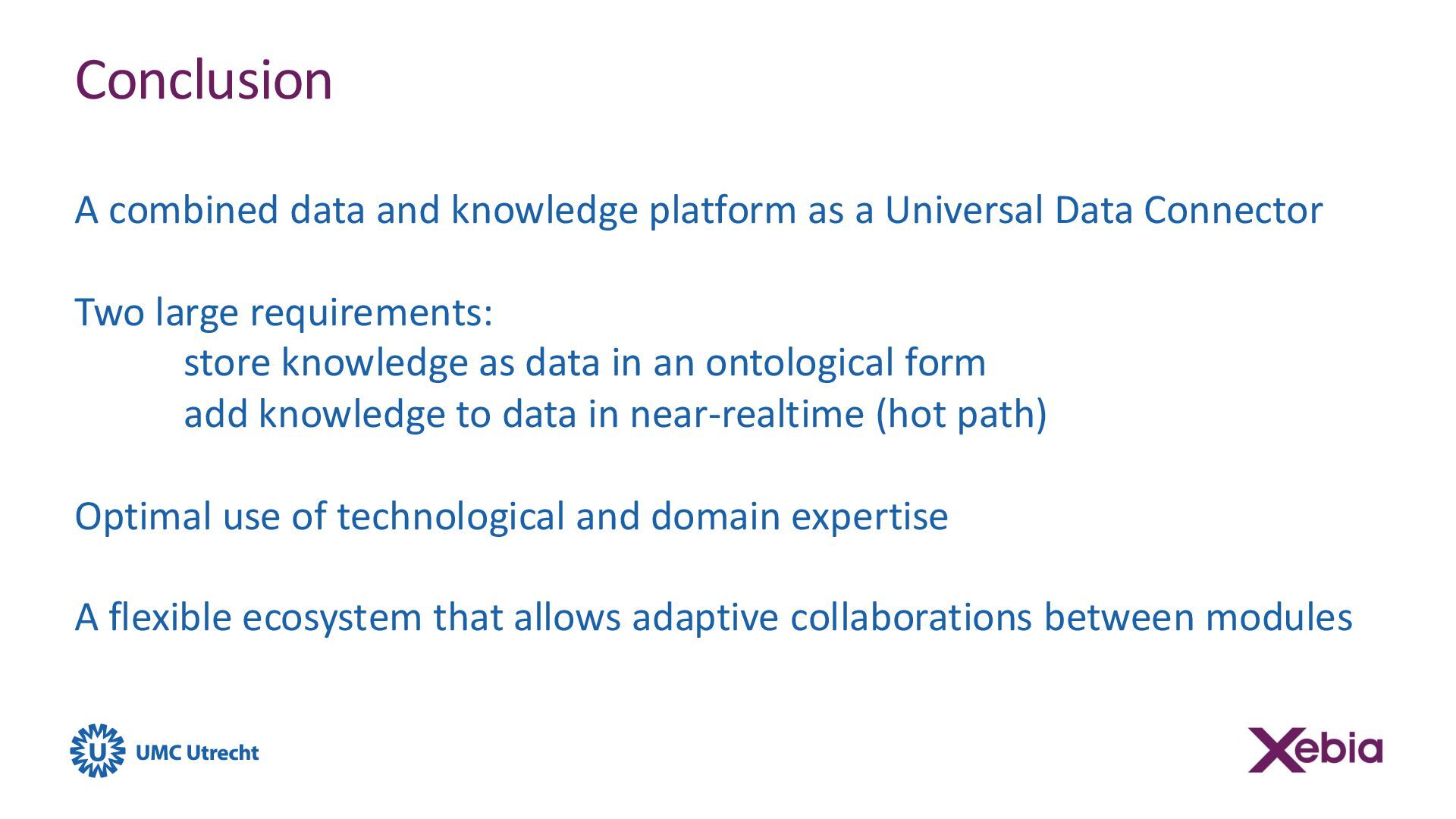
Data Connector Two large requirements: store knowledge as data in an ontological form add knowledge to data in near-realtime (hot path) Optimal use of technological and domain expertise A flexible ecosystem that allows adaptive collaborations between modules
graag maatschappelijke impact maakt? Het UMCU zoekt nog deskundige Platform Engineer(s) om het team te versterken en mee te werken aan de bouw, architectuur en opzet van ons Cloud Dataplatform! Heb je interesse? Neem contact op of kom langs bij ons voor een praatje bij de Xebia booth! Contact: [email protected]


 mark3t1ng
 tanoku
 jonoalderson
 davetheseo
 popppiees
 twada
twada
 tammyeverts
 inesmontani
 axbom
axbom
 ks91
ks91
 greggifford
 cassininazir
 geshan