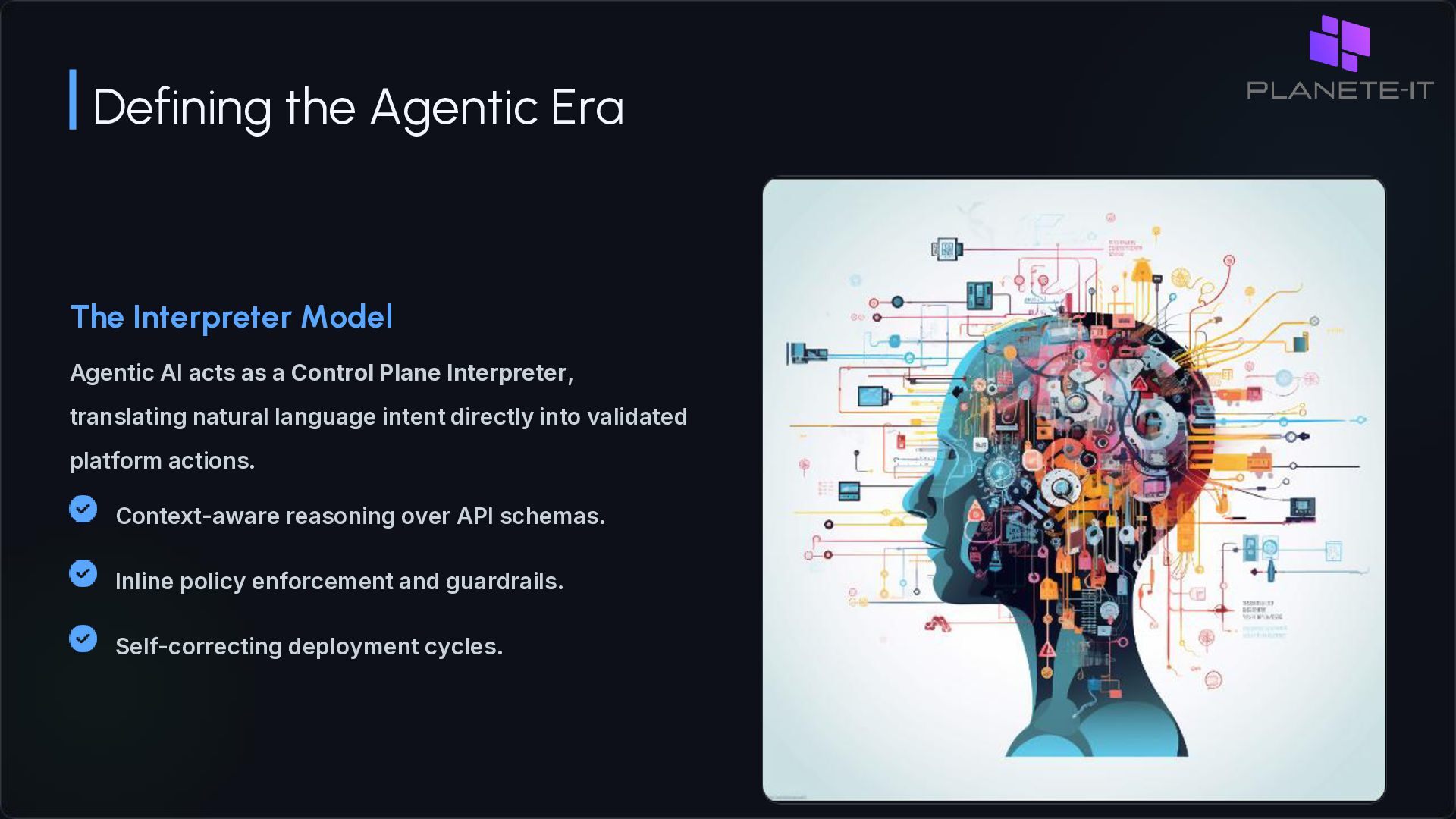
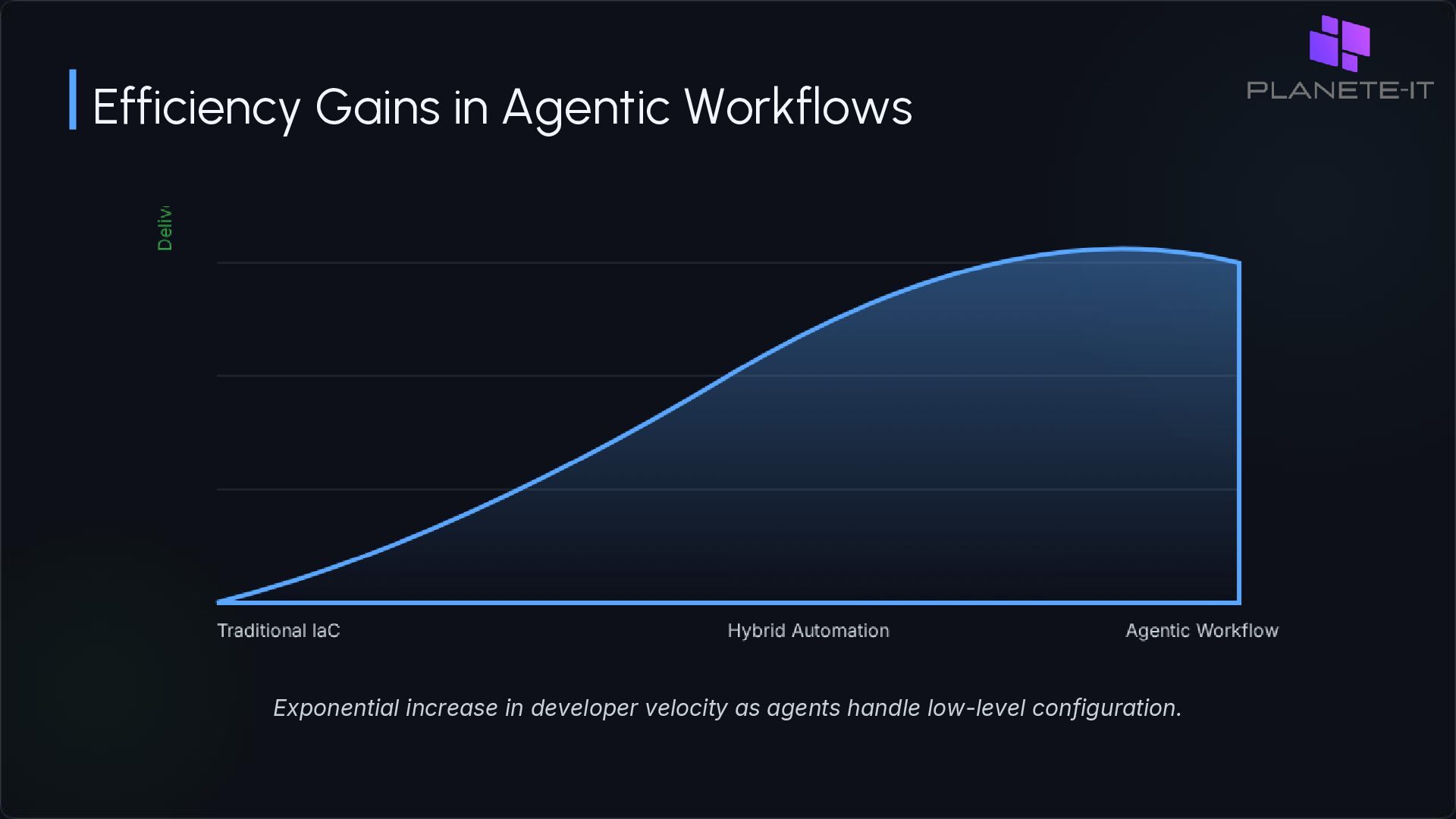
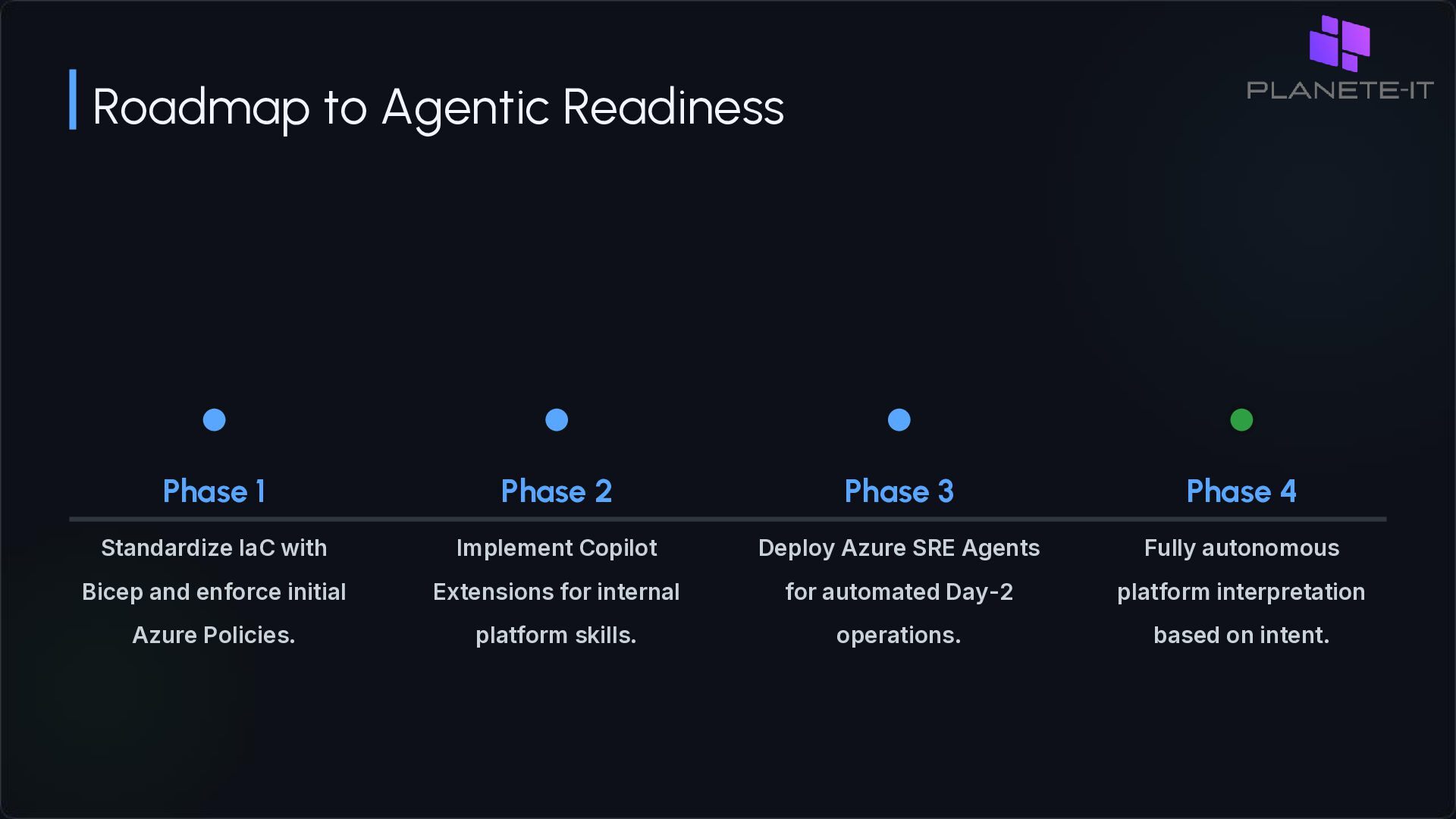
language intent directly into validated platform actions. Context-aware reasoning over API schemas. Inline policy enforcement and guardrails. Self-correcting deployment cycles. Defining the Agentic Era The Interpreter Model
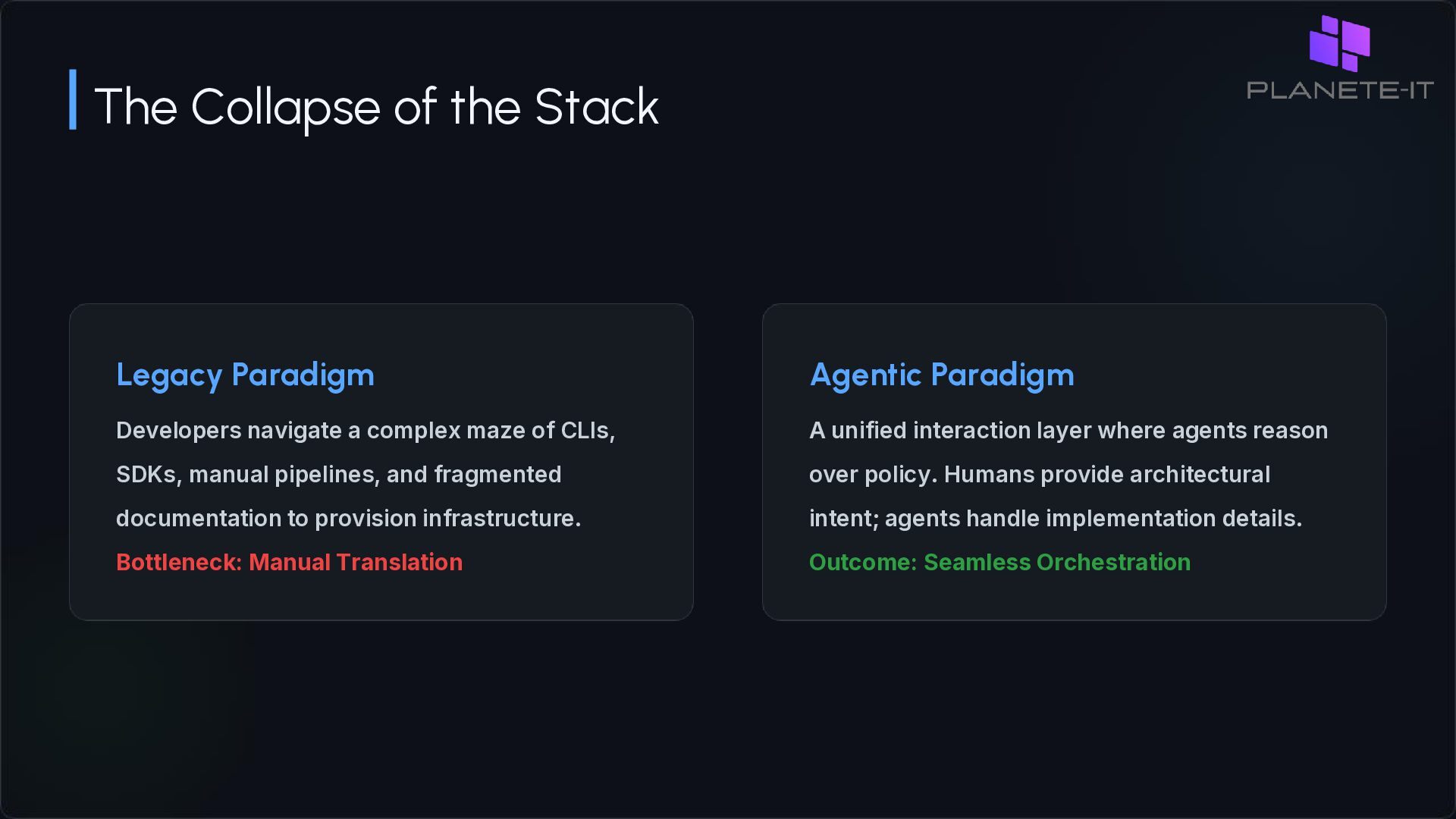
and fragmented documentation to provision infrastructure. Bottleneck: Manual Translation A unified interaction layer where agents reason over policy. Humans provide architectural intent; agents handle implementation details. Outcome: Seamless Orchestration The Collapse of the Stack Legacy Paradigm Agentic Paradigm
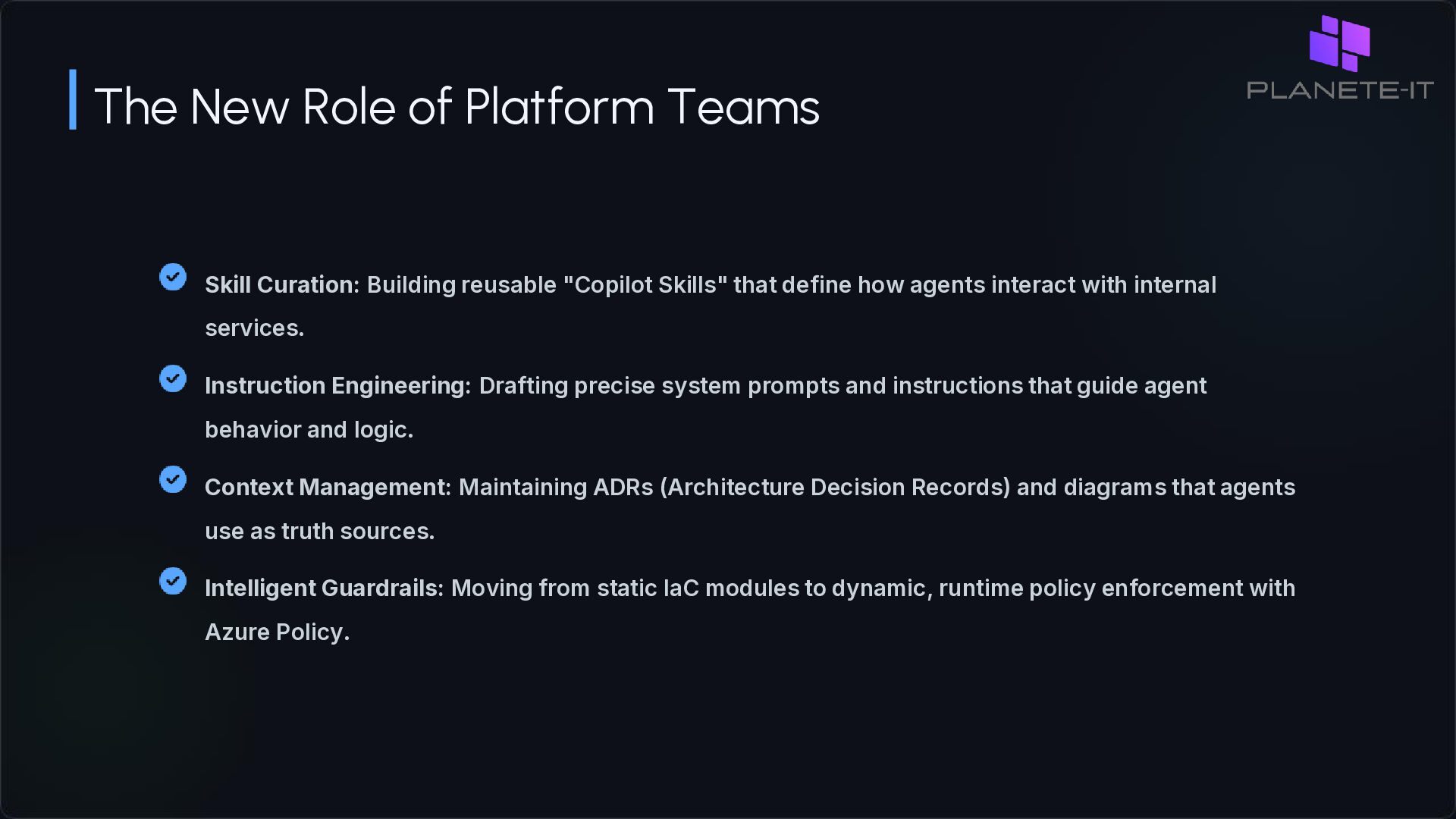
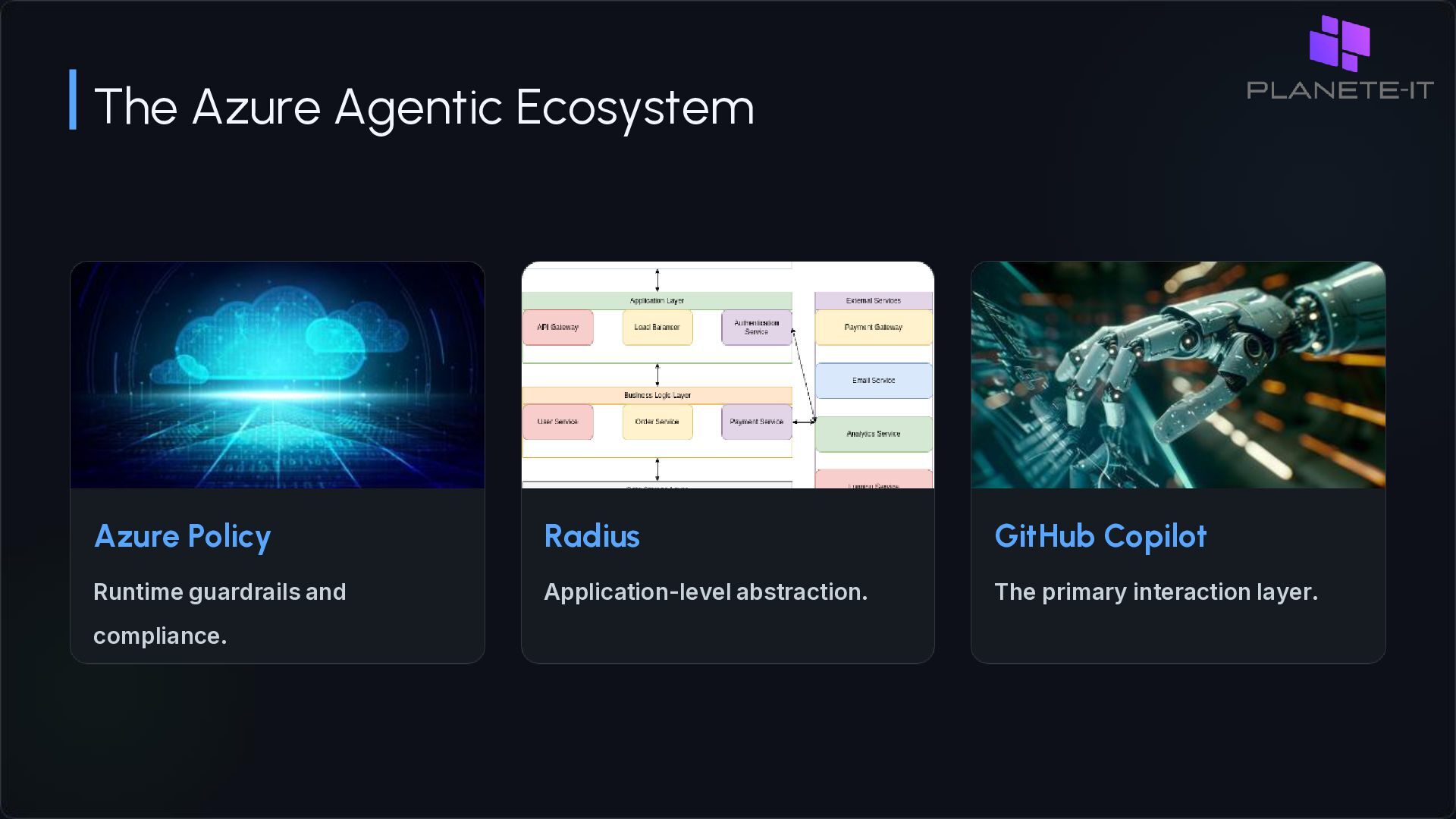
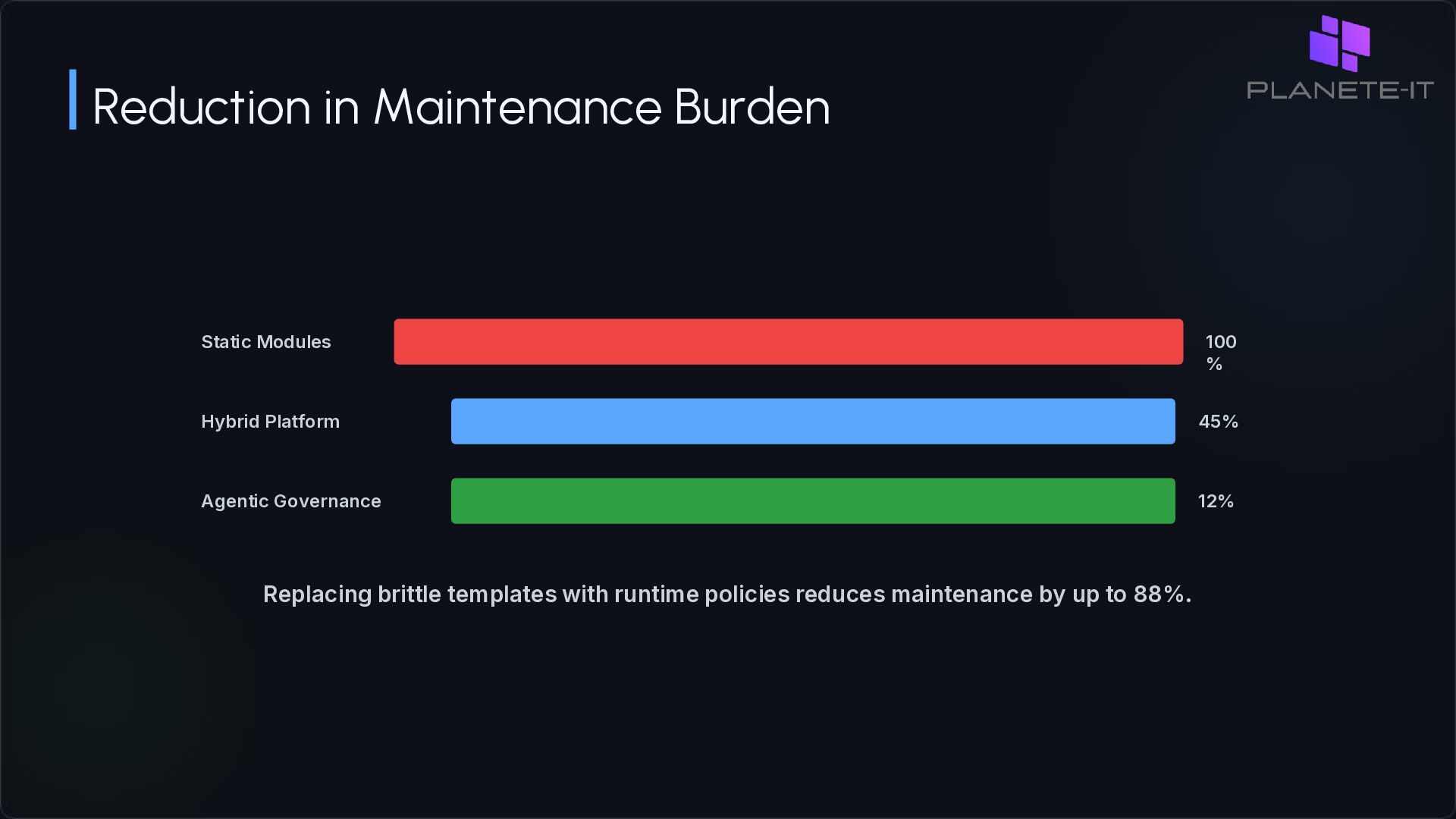
interact with internal services. Instruction Engineering: Drafting precise system prompts and instructions that guide agent behavior and logic. Context Management: Maintaining ADRs (Architecture Decision Records) and diagrams that agents use as truth sources. Intelligent Guardrails: Moving from static IaC modules to dynamic, runtime policy enforcement with Azure Policy. The New Role of Platform Teams
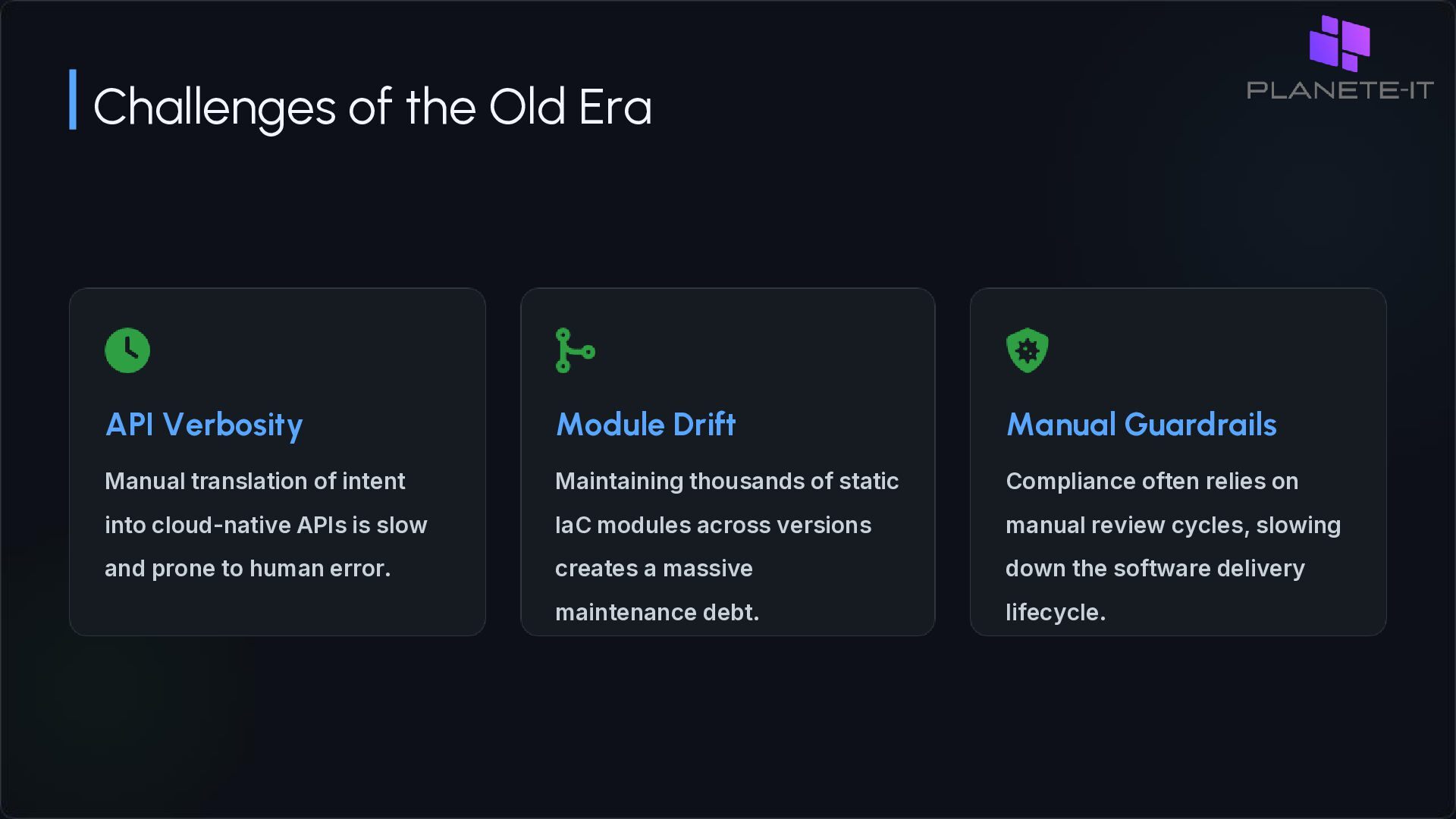
prone to human error. Maintaining thousands of static IaC modules across versions creates a massive maintenance debt. Compliance often relies on manual review cycles, slowing down the software delivery lifecycle. Challenges of the Old Era API Verbosity Module Drift Manual Guardrails
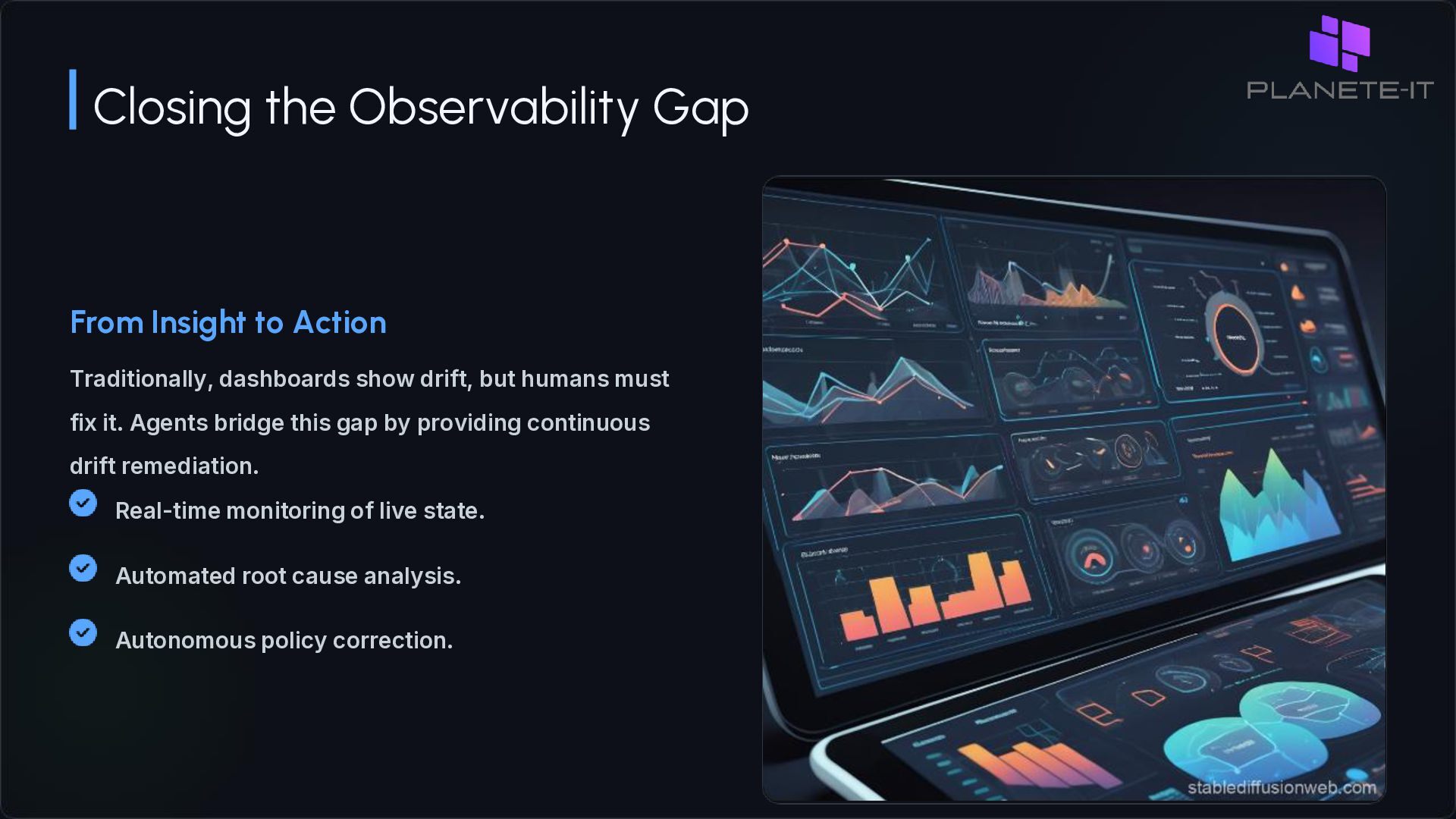
bridge this gap by providing continuous drift remediation. Real-time monitoring of live state. Automated root cause analysis. Autonomous policy correction. Closing the Observability Gap From Insight to Action
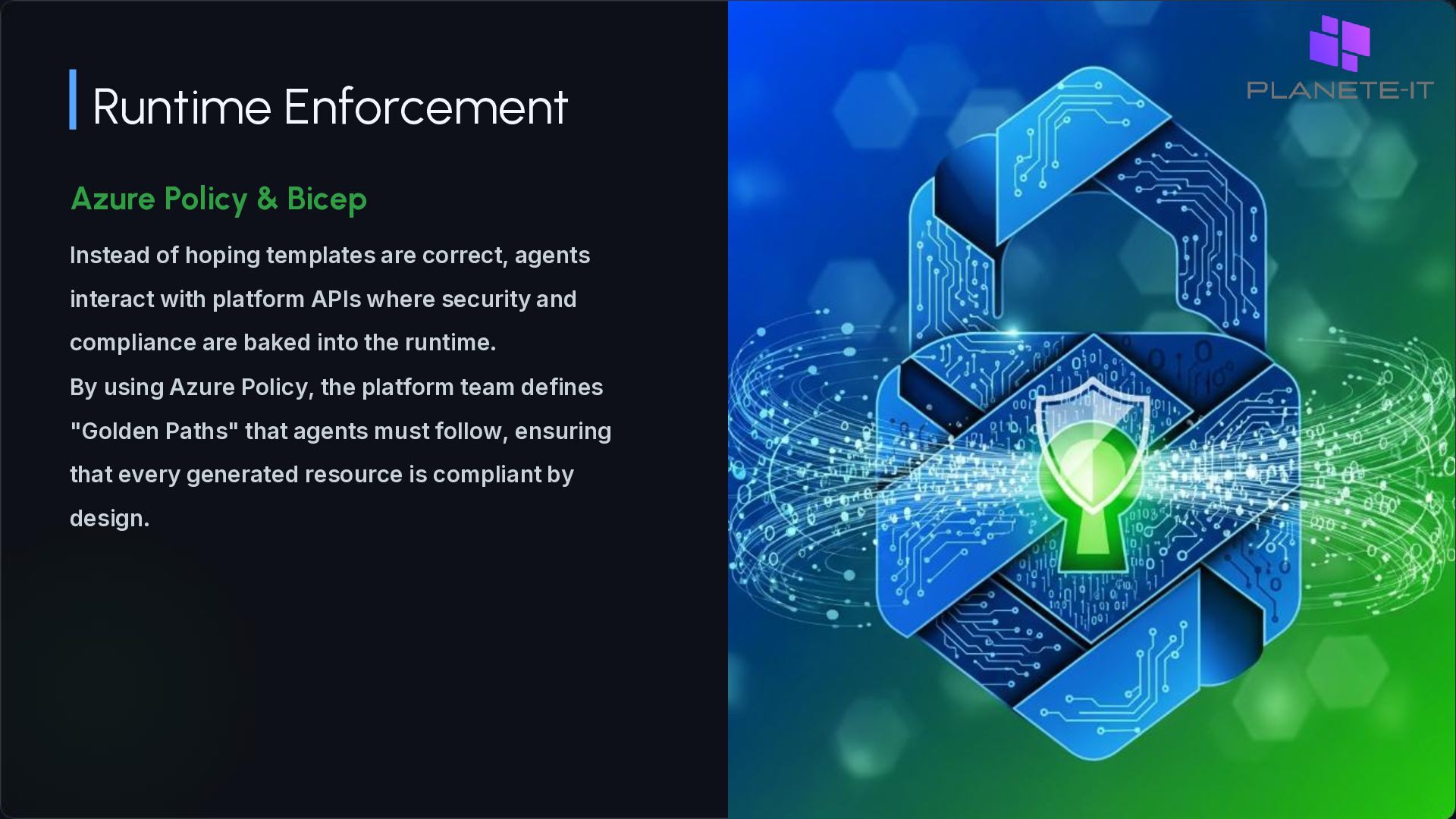
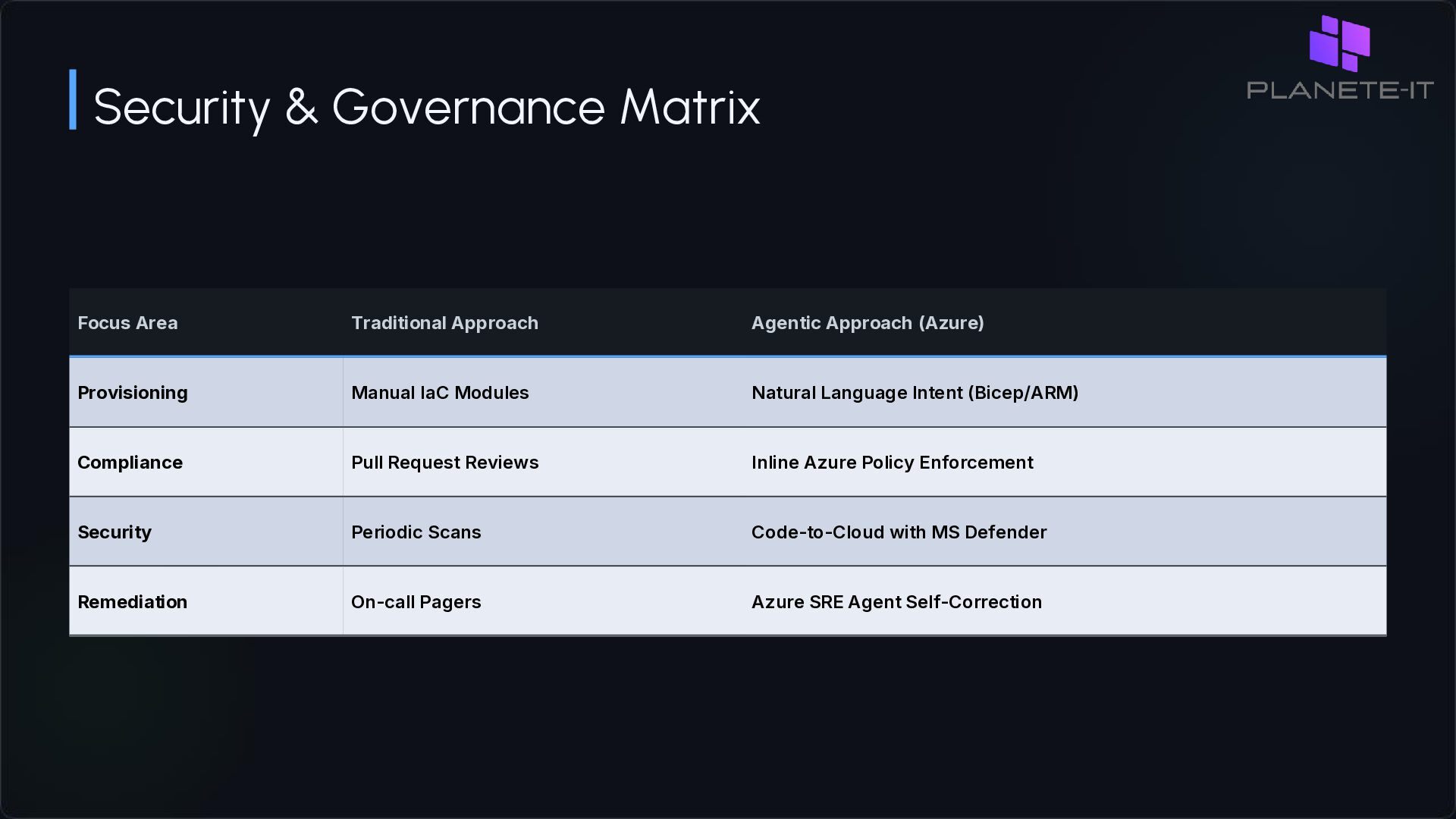
APIs where security and compliance are baked into the runtime. By using Azure Policy, the platform team defines "Golden Paths" that agents must follow, ensuring that every generated resource is compliant by design. Runtime Enforcement Azure Policy & Bicep
reducing MTTR (Mean Time To Recovery). Incident detection in real-time. Root cause analysis (RCA) reporting. Automated remediation steps. The Azure SRE Agent Autonomous Operations

 SiteGround - Reliable hosting with speed, security, and support you can count on.


 michmuch
 slsops
 mot_techtalk
 oracle4engineer
 vivion
 masakane55
 mtpooh
 recruitengineers
 mewuto
 ymiya55
 nayuts
 ymrl
ymrl
 nikkihalliwell
 minecr
 panda_program
 trallard
 honnibal
 aleyda
 eileencodes
 akademiya2063
 marktimemedia
 kneath
 kastner
 jonoalderson