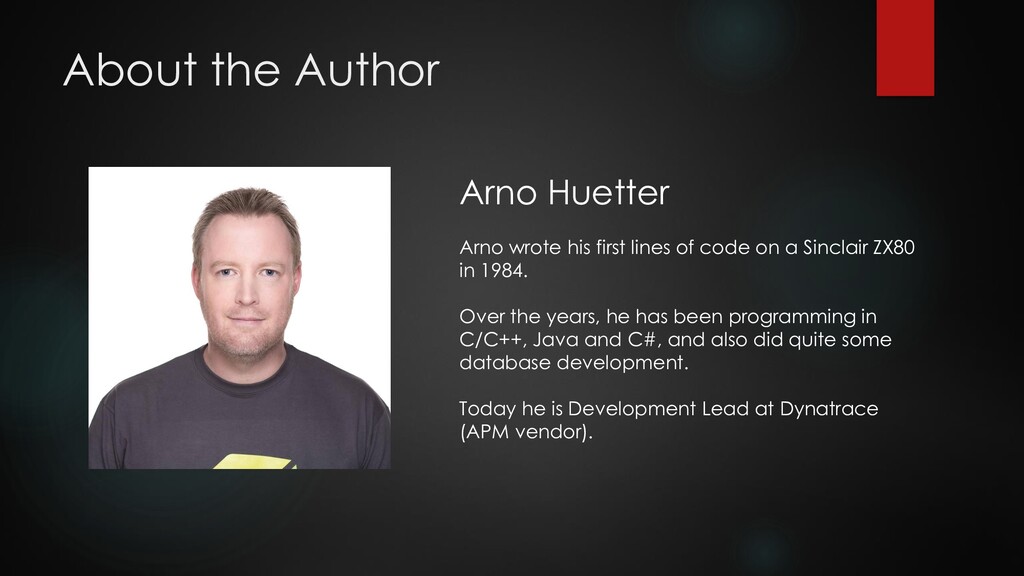
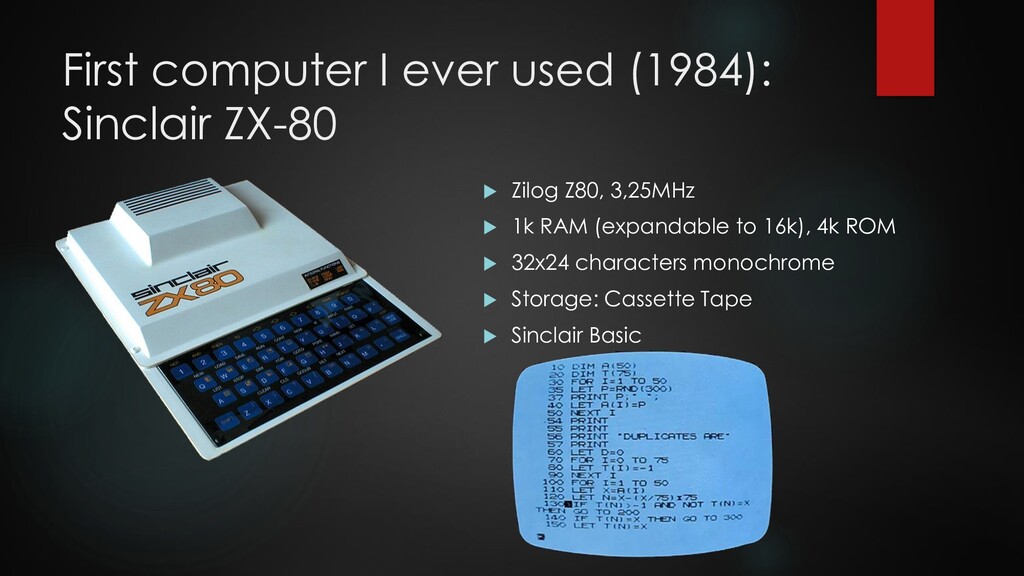
of code on a Sinclair ZX80 in 1984. Over the years, he has been programming in C/C++, Java and C#, and also did quite some database development. Today he is Development Lead at Dynatrace (APM vendor).
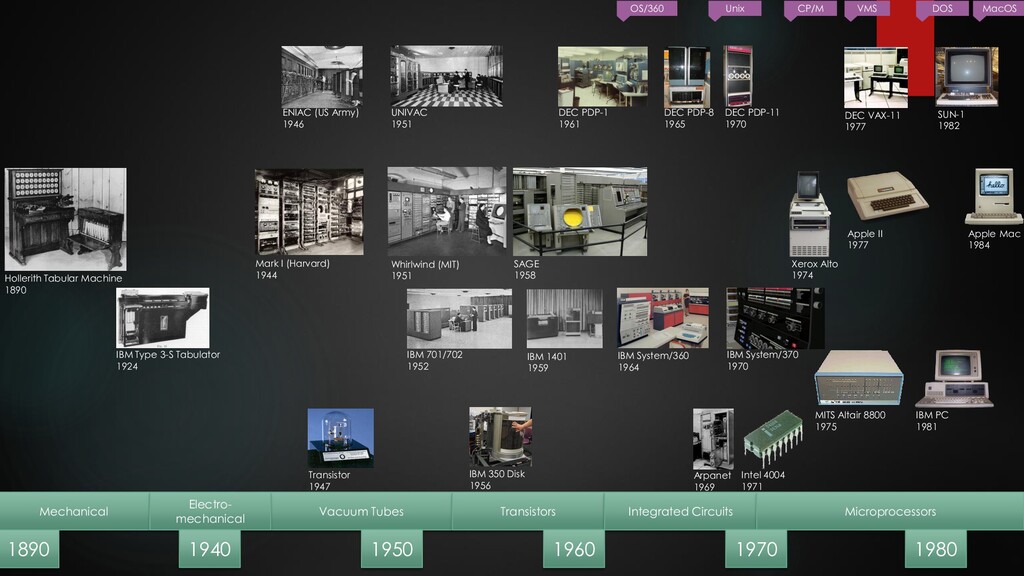
3-S Tabulator 1924 Vacuum Tubes Transistors Integrated Circuits Microprocessors Mechanical Electro- mechanical UNIVAC 1951 IBM 701/702 1952 Whirlwind (MIT) 1951 DEC PDP-1 1961 IBM System/360 1964 IBM 350 Disk 1956 Intel 4004 1971 MITS Altair 8800 1975 Apple II 1977 IBM PC 1981 Xerox Alto 1974 Apple Mac 1984 SAGE 1958 DEC PDP-8 1965 DEC VAX-11 1977 IBM System/370 1970 Transistor 1947 Mark I (Harvard) 1944 DEC PDP-11 1970 1970 1960 1950 1940 1890 1980 IBM 1401 1959 OS/360 Unix CP/M VMS DOS MacOS SUN-1 1982 Arpanet 1969
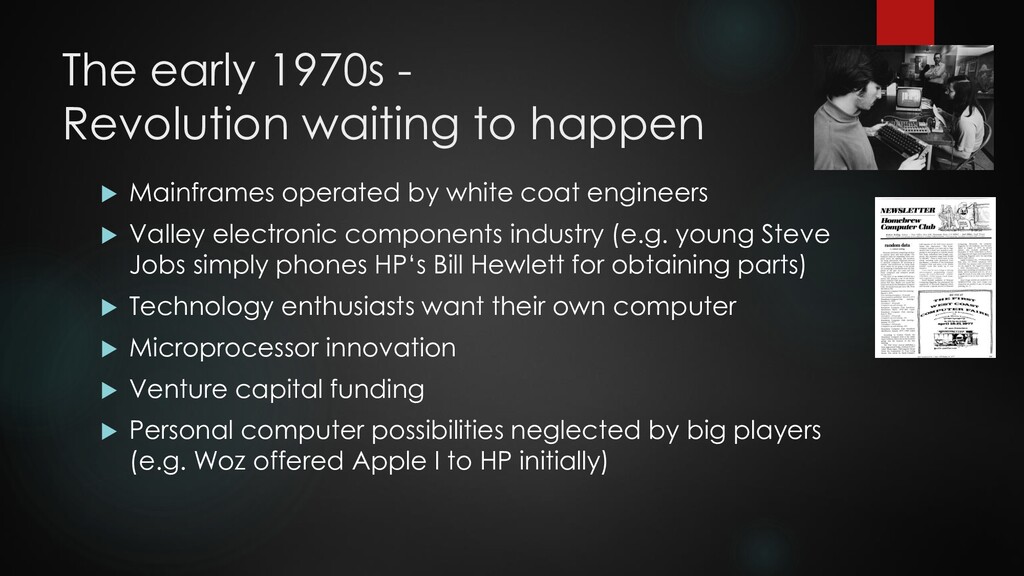
operated by white coat engineers Valley electronic components industry (e.g. young Steve Jobs simply phones HP‘s Bill Hewlett for obtaining parts) Technology enthusiasts want their own computer Microprocessor innovation Venture capital funding Personal computer possibilities neglected by big players (e.g. Woz offered Apple I to HP initially)
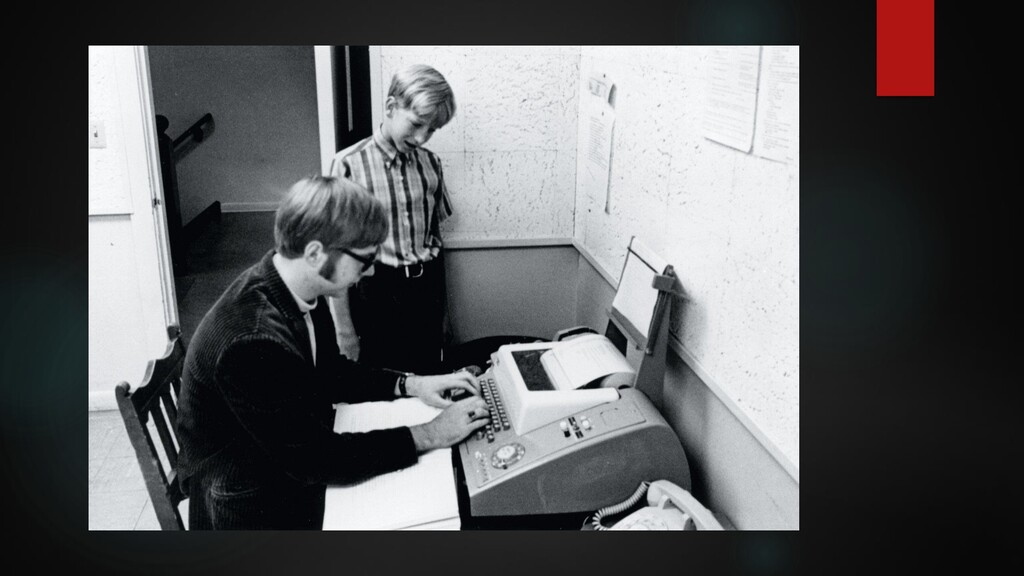
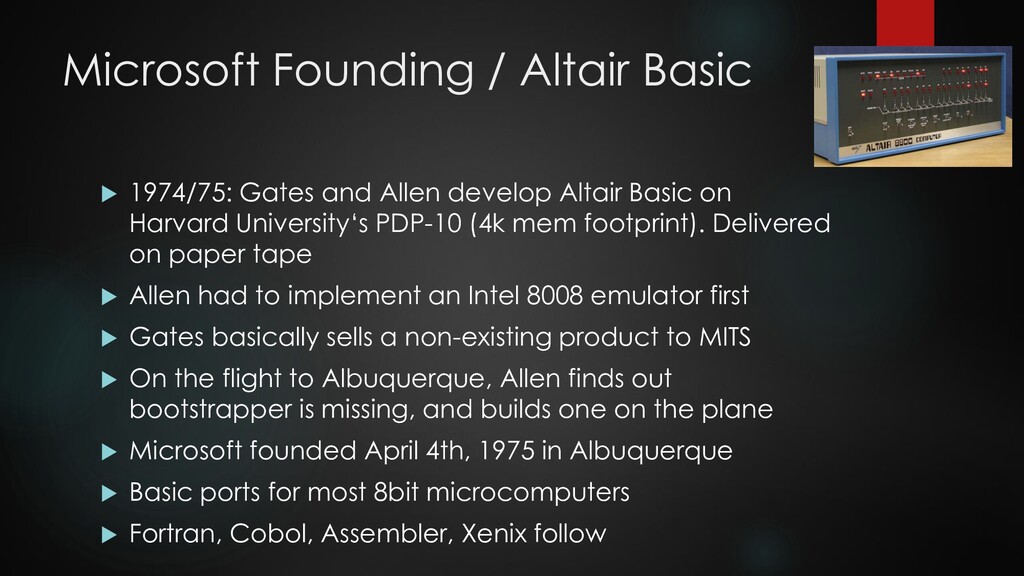
develop Altair Basic on Harvard University‘s PDP-10 (4k mem footprint). Delivered on paper tape Allen had to implement an Intel 8008 emulator first Gates basically sells a non-existing product to MITS On the flight to Albuquerque, Allen finds out bootstrapper is missing, and builds one on the plane Microsoft founded April 4th, 1975 in Albuquerque Basic ports for most 8bit microcomputers Fortran, Cobol, Assembler, Xenix follow
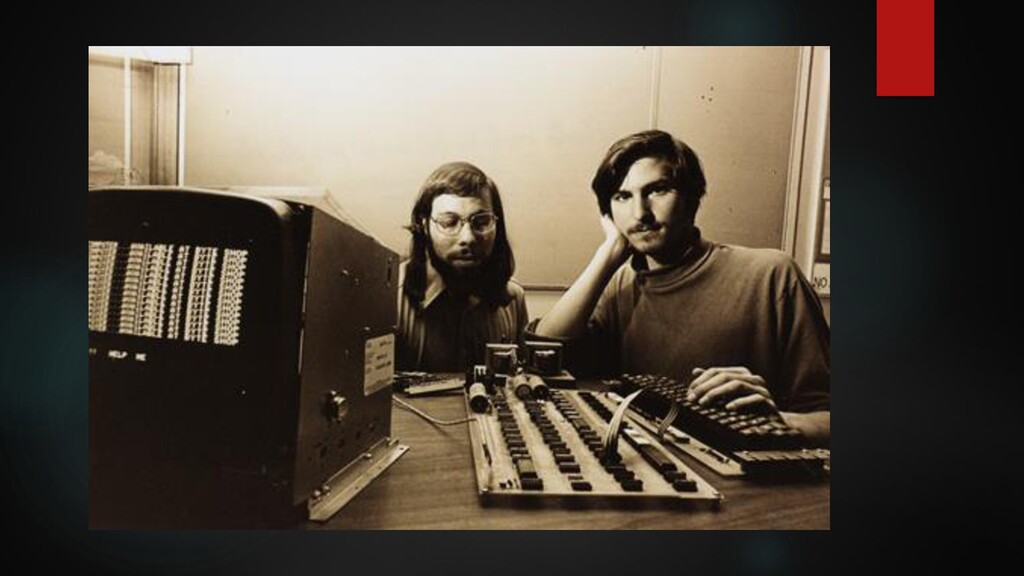
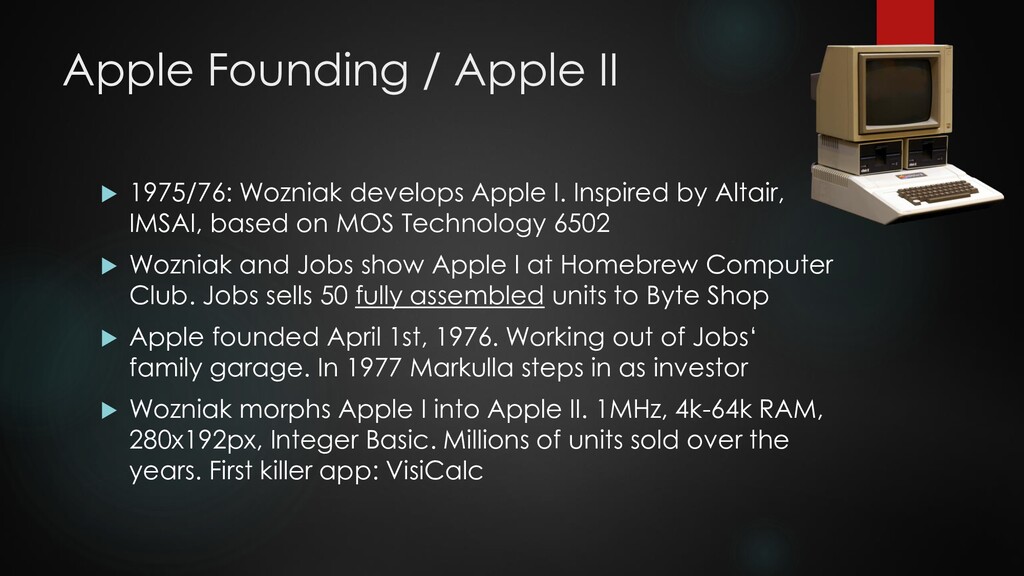
I. Inspired by Altair, IMSAI, based on MOS Technology 6502 Wozniak and Jobs show Apple I at Homebrew Computer Club. Jobs sells 50 fully assembled units to Byte Shop Apple founded April 1st, 1976. Working out of Jobs‘ family garage. In 1977 Markulla steps in as investor Wozniak morphs Apple I into Apple II. 1MHz, 4k-64k RAM, 280x192px, Integer Basic. Millions of units sold over the years. First killer app: VisiCalc
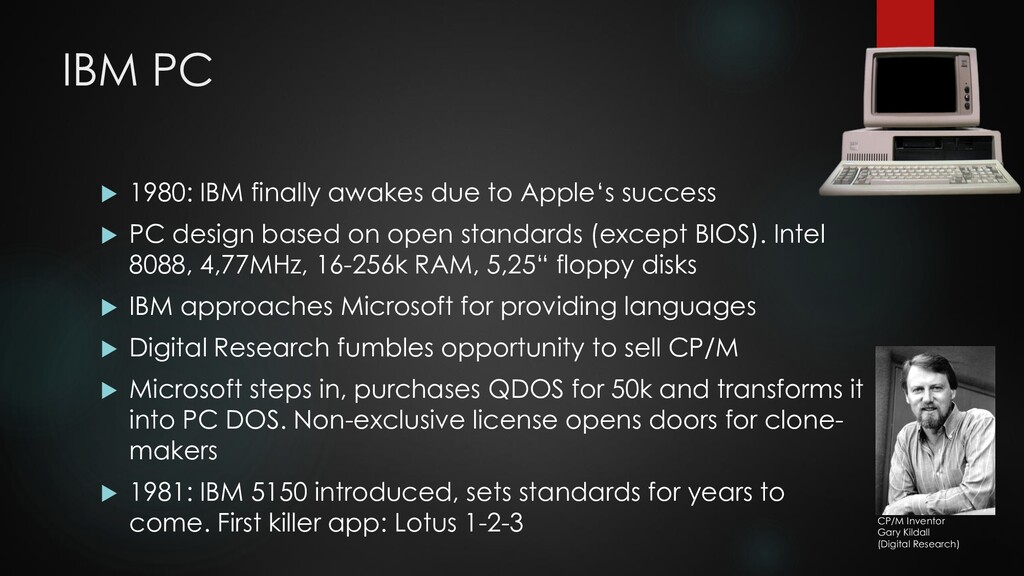
success PC design based on open standards (except BIOS). Intel 8088, 4,77MHz, 16-256k RAM, 5,25“ floppy disks IBM approaches Microsoft for providing languages Digital Research fumbles opportunity to sell CP/M Microsoft steps in, purchases QDOS for 50k and transforms it into PC DOS. Non-exclusive license opens doors for clone- makers 1981: IBM 5150 introduced, sets standards for years to come. First killer app: Lotus 1-2-3 CP/M Inventor Gary Kildall (Digital Research)
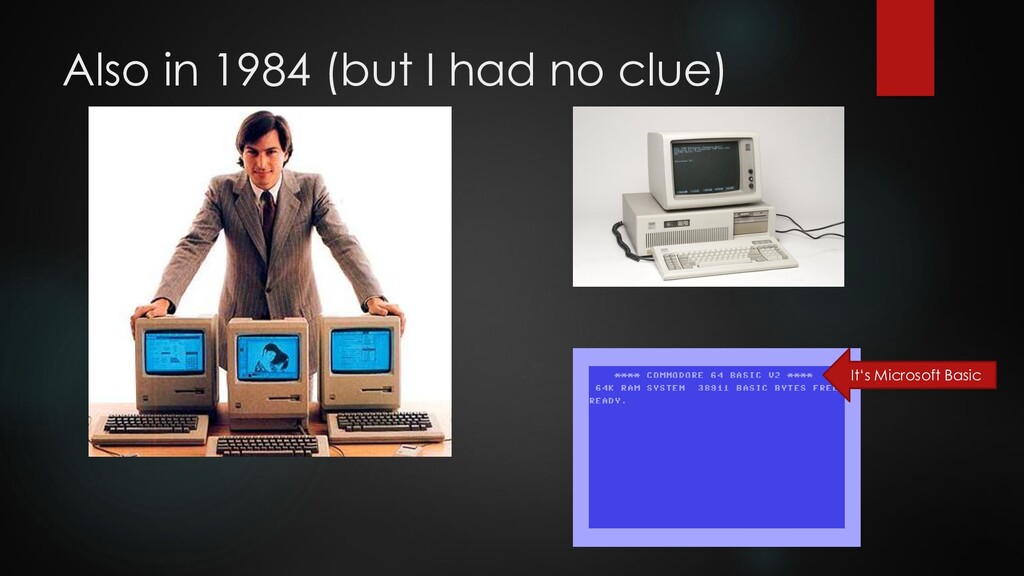
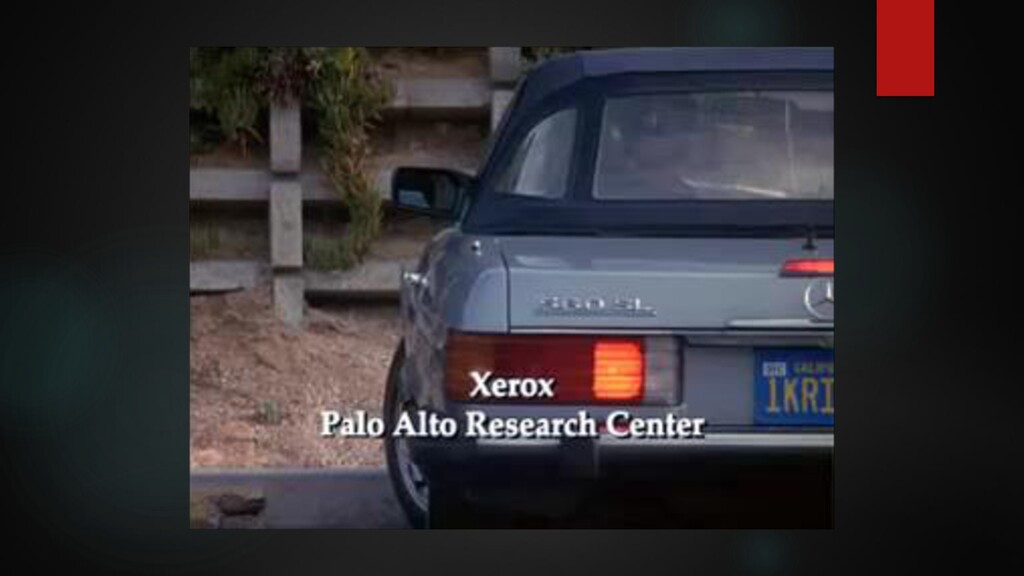
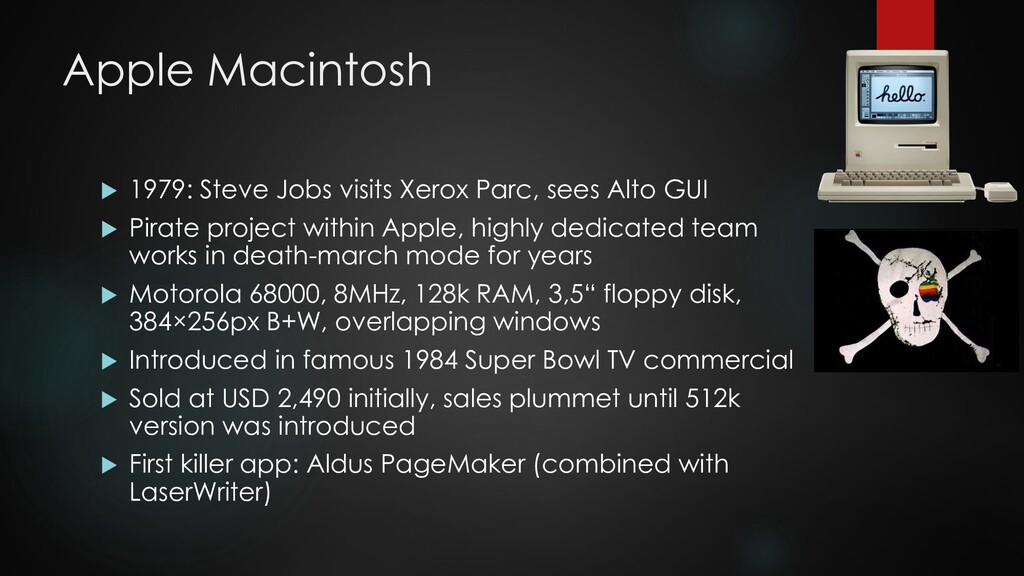
Alto GUI Pirate project within Apple, highly dedicated team works in death-march mode for years Motorola 68000, 8MHz, 128k RAM, 3,5“ floppy disk, 384×256px B+W, overlapping windows Introduced in famous 1984 Super Bowl TV commercial Sold at USD 2,490 initially, sales plummet until 512k version was introduced First killer app: Aldus PageMaker (combined with LaserWriter)
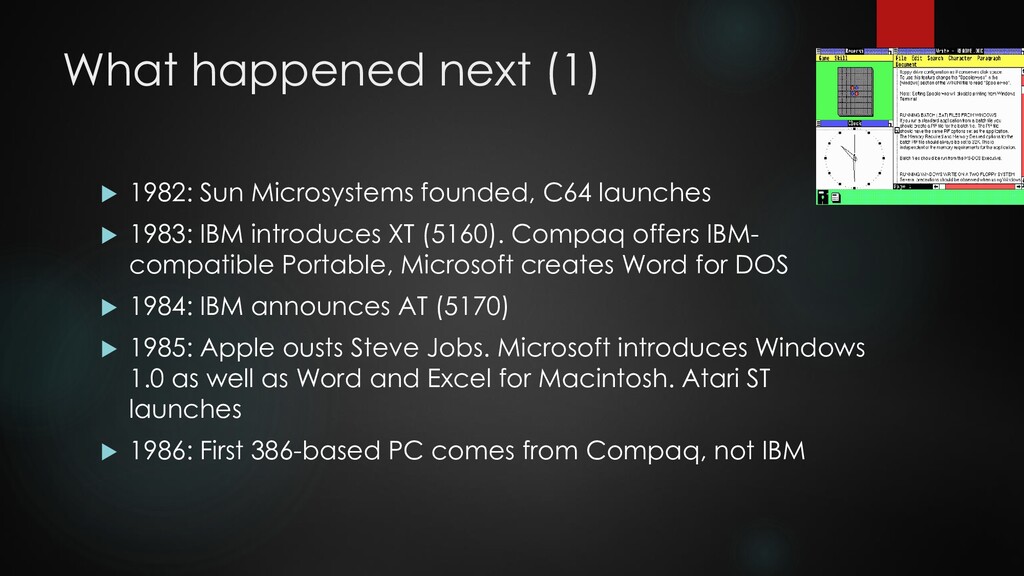
launches 1983: IBM introduces XT (5160). Compaq offers IBM- compatible Portable, Microsoft creates Word for DOS 1984: IBM announces AT (5170) 1985: Apple ousts Steve Jobs. Microsoft introduces Windows 1.0 as well as Word and Excel for Macintosh. Atari ST launches 1986: First 386-based PC comes from Compaq, not IBM
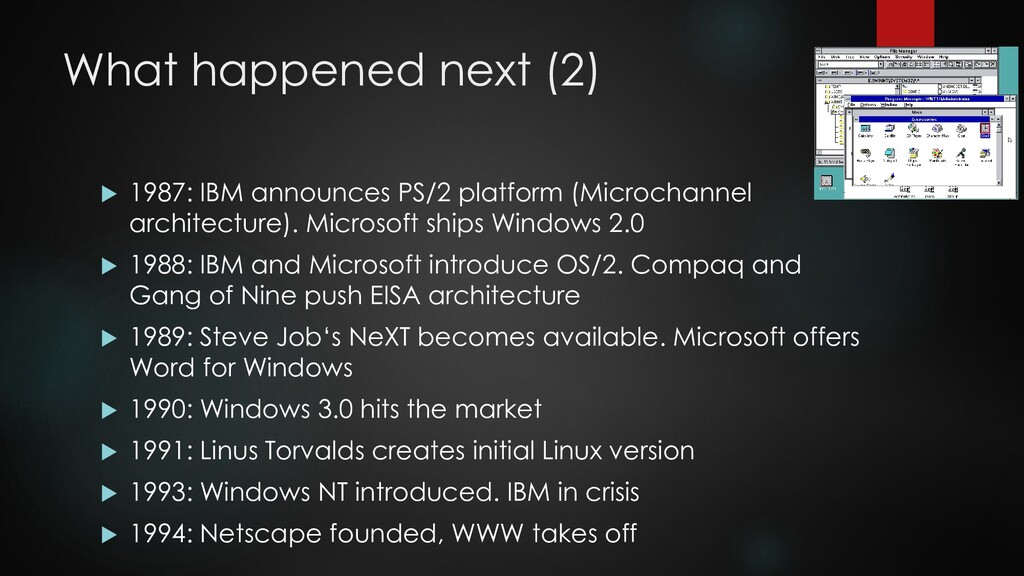
(Microchannel architecture). Microsoft ships Windows 2.0 1988: IBM and Microsoft introduce OS/2. Compaq and Gang of Nine push EISA architecture 1989: Steve Job‘s NeXT becomes available. Microsoft offers Word for Windows 1990: Windows 3.0 hits the market 1991: Linus Torvalds creates initial Linux version 1993: Windows NT introduced. IBM in crisis 1994: Netscape founded, WWW takes off
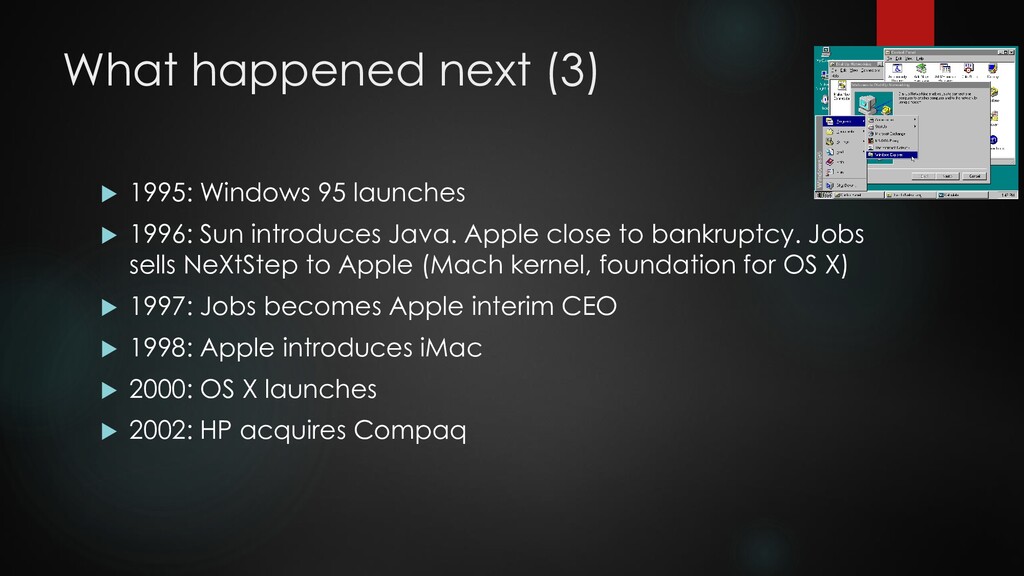
1996: Sun introduces Java. Apple close to bankruptcy. Jobs sells NeXtStep to Apple (Mach kernel, foundation for OS X) 1997: Jobs becomes Apple interim CEO 1998: Apple introduces iMac 2000: OS X launches 2002: HP acquires Compaq
Domination and Helped Invent Modern Computing “ Cringeley, R.: „Triumph of the Nerds“, http://www.pbs.org/nerds/ Cringeley, R.: „Accidental Empires“ Freiberger, P.: „Fire in the Valley: The Making of The Personal Computer” Hiltzik, M.: „Dealers of Lightning: Xerox PARC and the Dawn of the Computer Age “ Linzmayer, O.: „Apple Confidential“ Isaacson, W.: „Steve Jobs“ Wallace, J.: „Hard Drive: Bill Gates and the Making of the Microsoft Empire”


 arnohue
 jozono
 shogo4131
 terurou
 mikanichinose
 masakane55
 tetsuya28
 y0hgi
y0hgi
 pauli
pauli
 pei0804
 makocchi
 sansantech
 recruitengineers
.png) helenjbeal
helenjbeal
 marktimemedia
 signer
 swwweet
 eileencodes
 jonoalderson
 aleyda
 katarinadahlin
 moore
moore
 tammyeverts
 chrislema