Upgrade to Pro — share decks privately, control downloads, hide ads and more …

Jetpack DataStore

Sponsored · Ship Features Fearlessly Turn features on and off without deploys. Used by thousands of Ruby developers.

Jetpack DataStore

Avatar for Divya Jain

Divya Jain

April 25, 2022
Tweet

More Decks by Divya Jain

Other Decks in Programming

Transcript

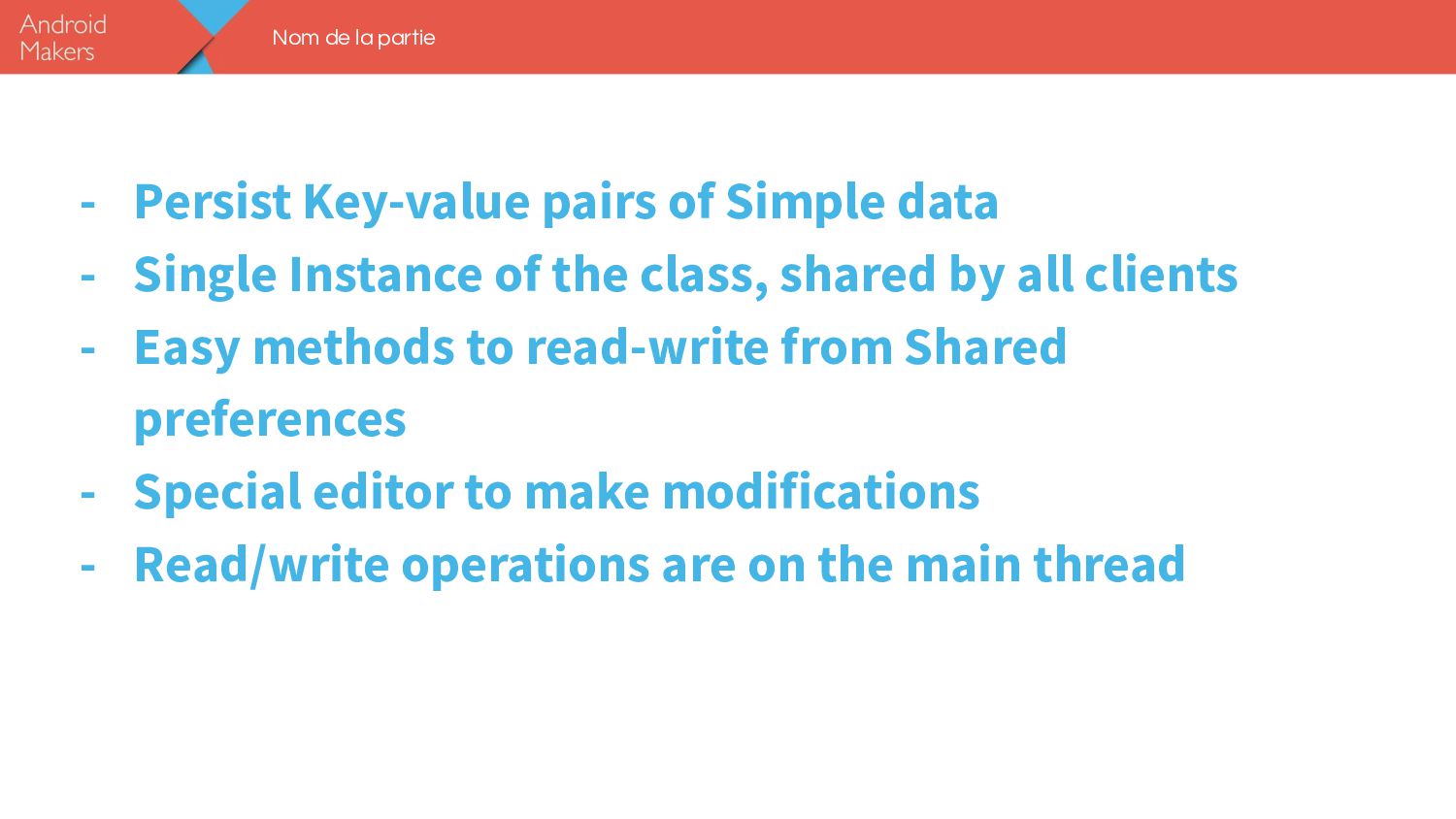
  1. Nom de la partie - Persist Key-value pairs of Simple

    data - Single Instance of the class, shared by all clients - Easy methods to read-write from Shared preferences - Special editor to make modifications - Read/write operations are on the main thread
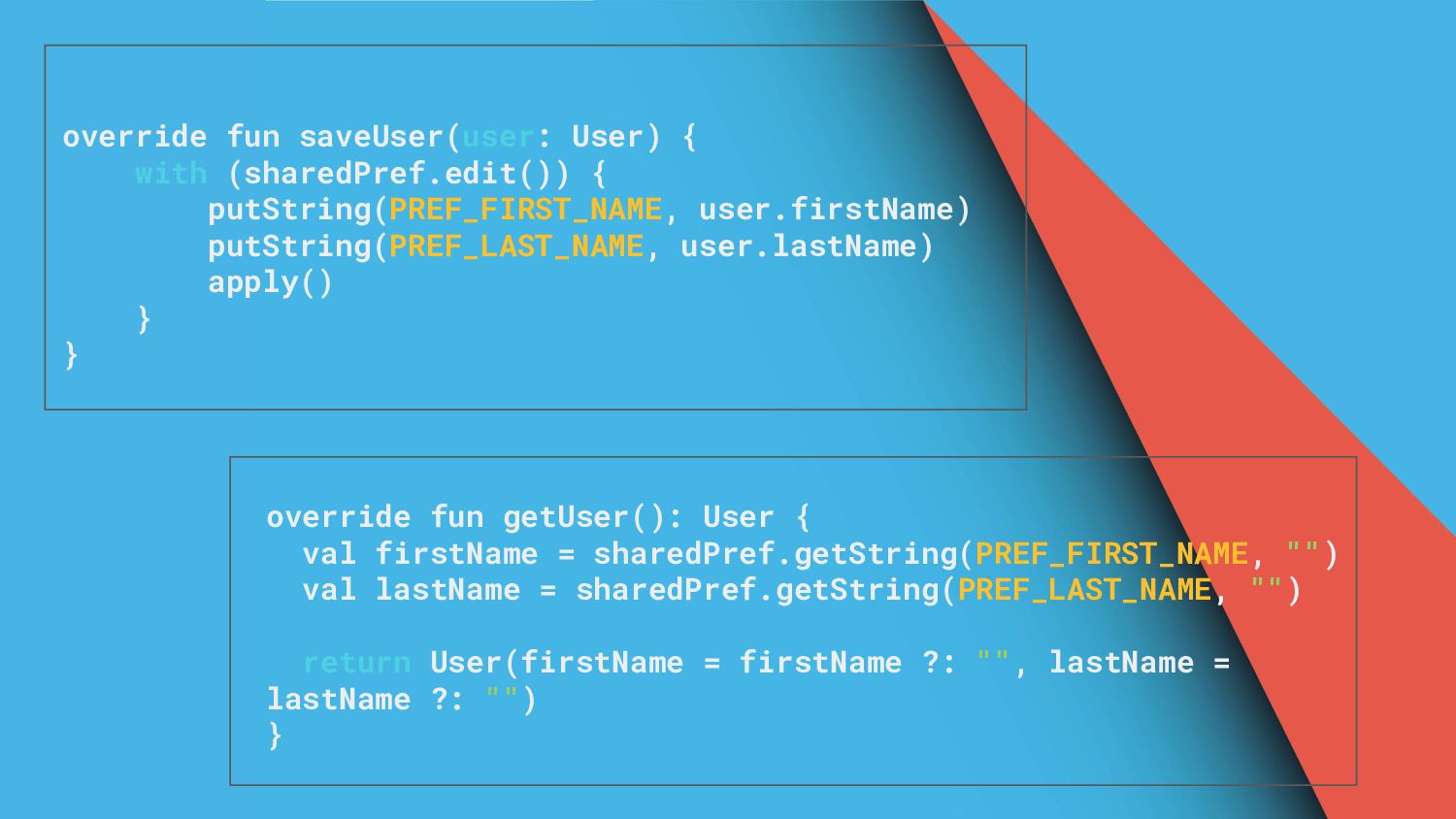
  2. override fun getUser(): User { val firstName = sharedPref.getString(PREF_FIRST_NAME, "")

    val lastName = sharedPref.getString(PREF_LAST_NAME, "") return User(firstName = firstName ?: "", lastName = lastName ?: "") } override fun saveUser(user: User) { with (sharedPref.edit()) { putString(PREF_FIRST_NAME, user.firstName) putString(PREF_LAST_NAME, user.lastName) apply() } }
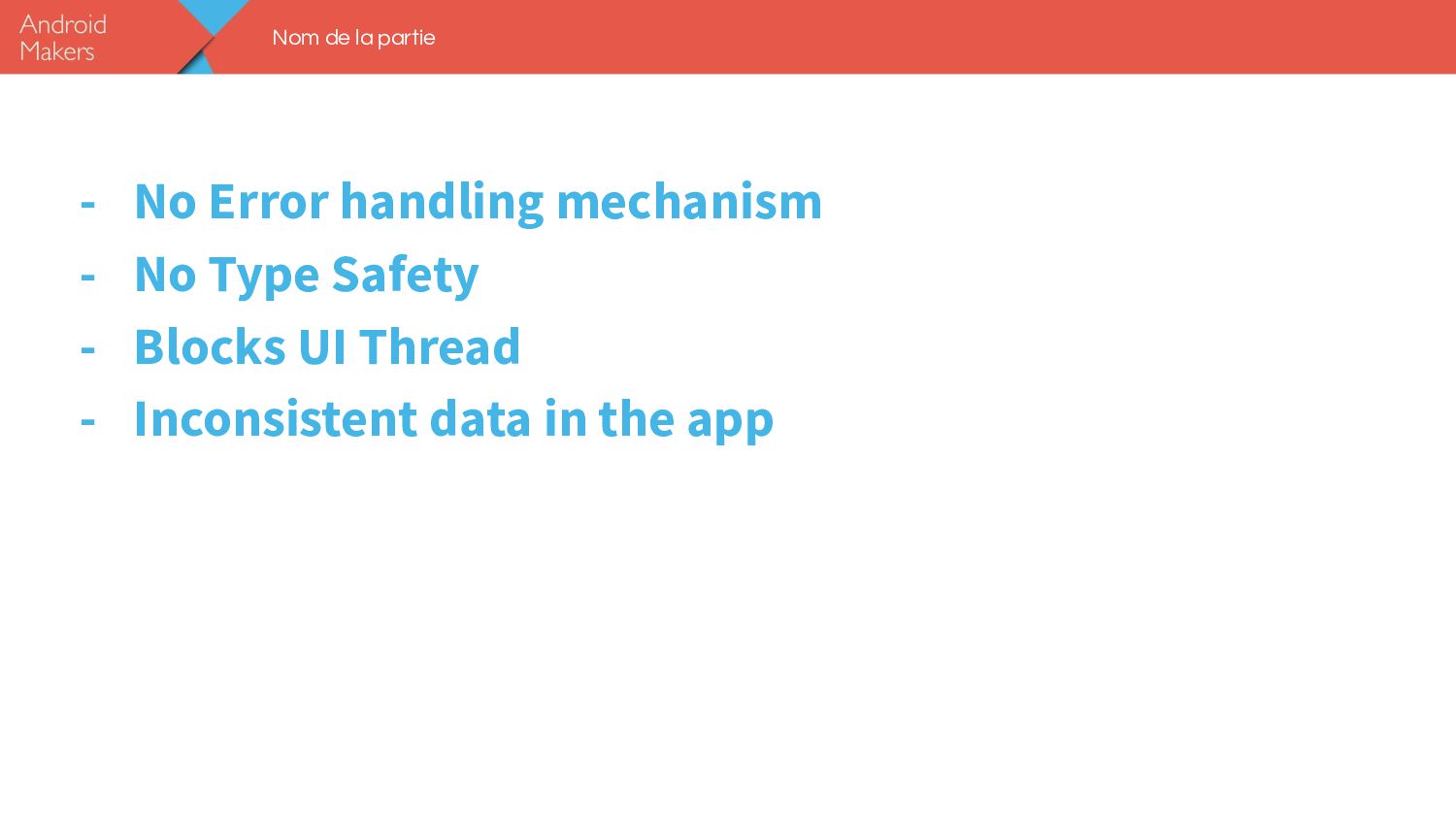
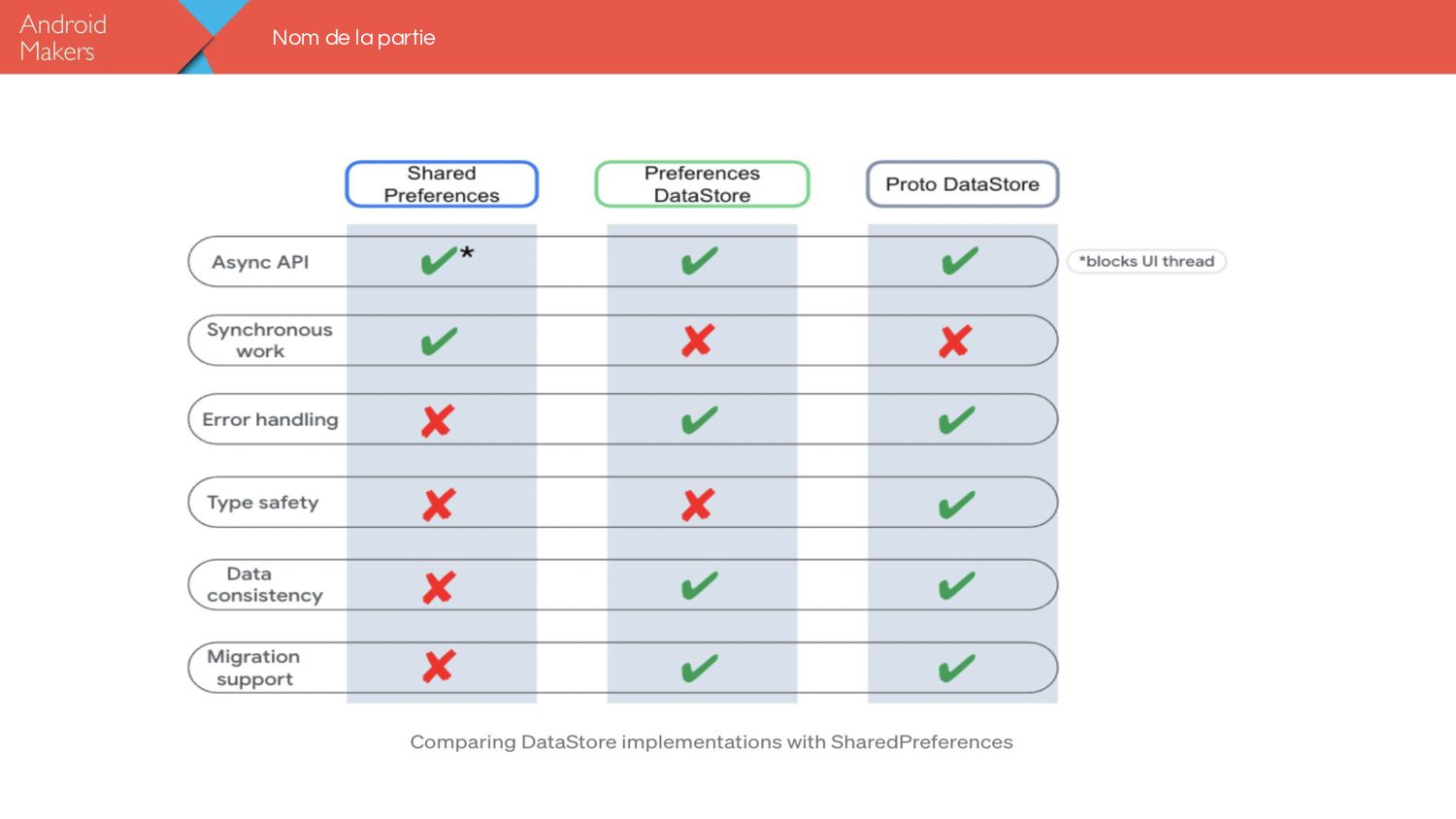
  3. Nom de la partie - No Error handling mechanism -

    No Type Safety - Blocks UI Thread - Inconsistent data in the app
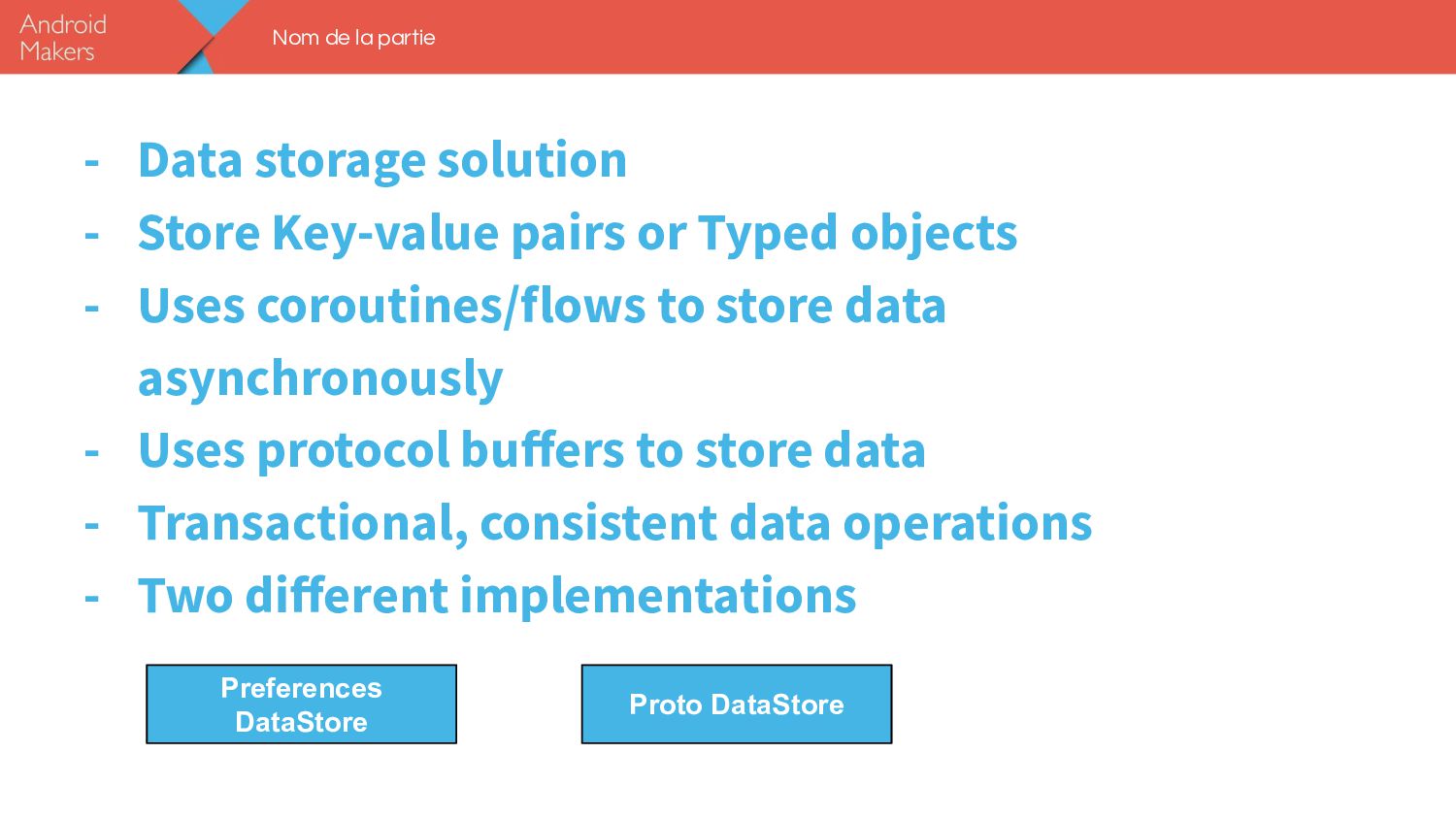
  4. Nom de la partie - Data storage solution - Store

    Key-value pairs or Typed objects - Uses coroutines/flows to store data asynchronously - Uses protocol buffers to store data - Transactional, consistent data operations - Two different implementations Preferences DataStore Proto DataStore
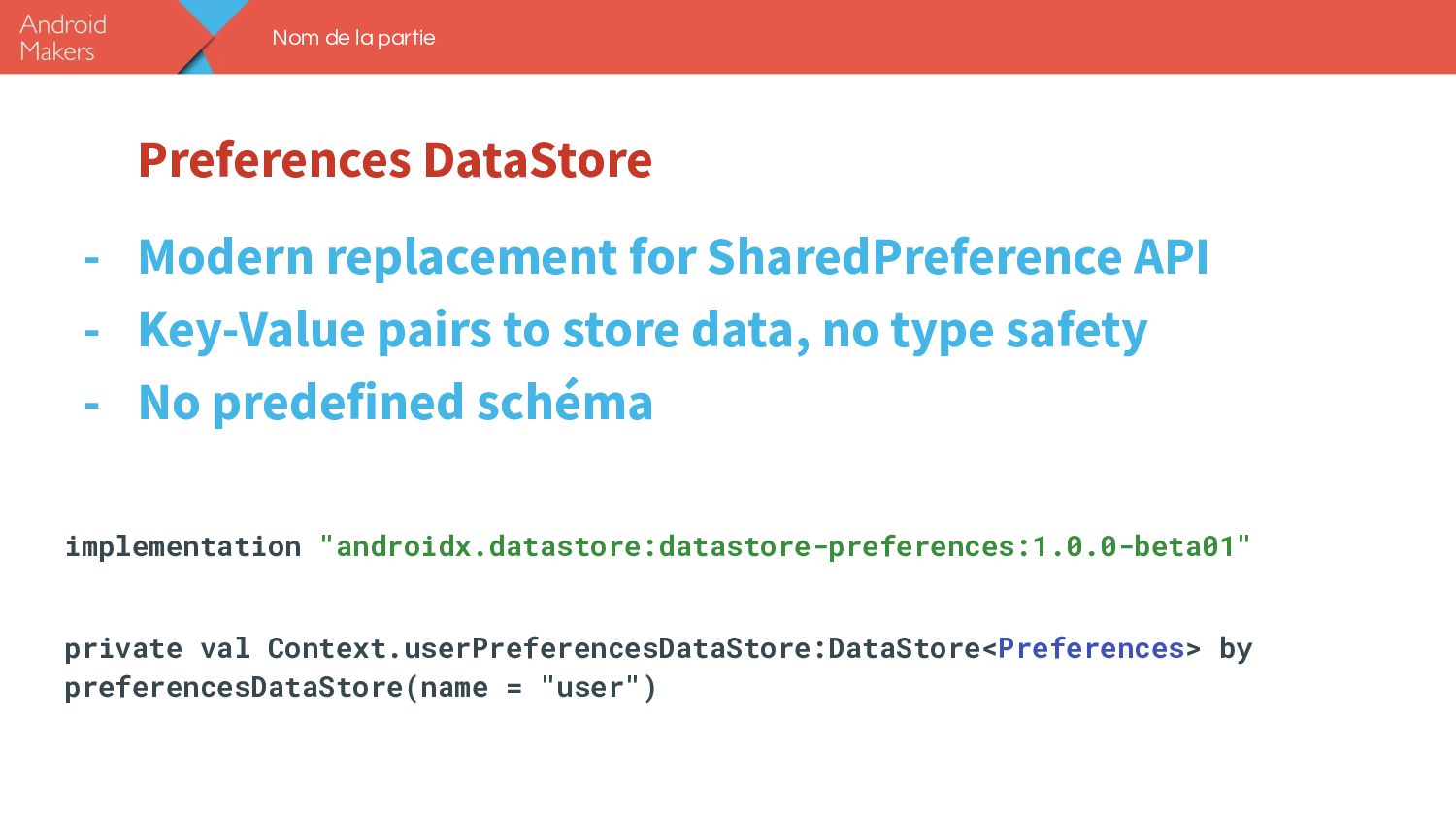
  5. Nom de la partie Preferences DataStore - Modern replacement for

    SharedPreference API - Key-Value pairs to store data, no type safety - No predefined schéma implementation "androidx.datastore:datastore-preferences:1.0.0-beta01" private val Context.userPreferencesDataStore:DataStore<Preferences> by preferencesDataStore(name = "user")
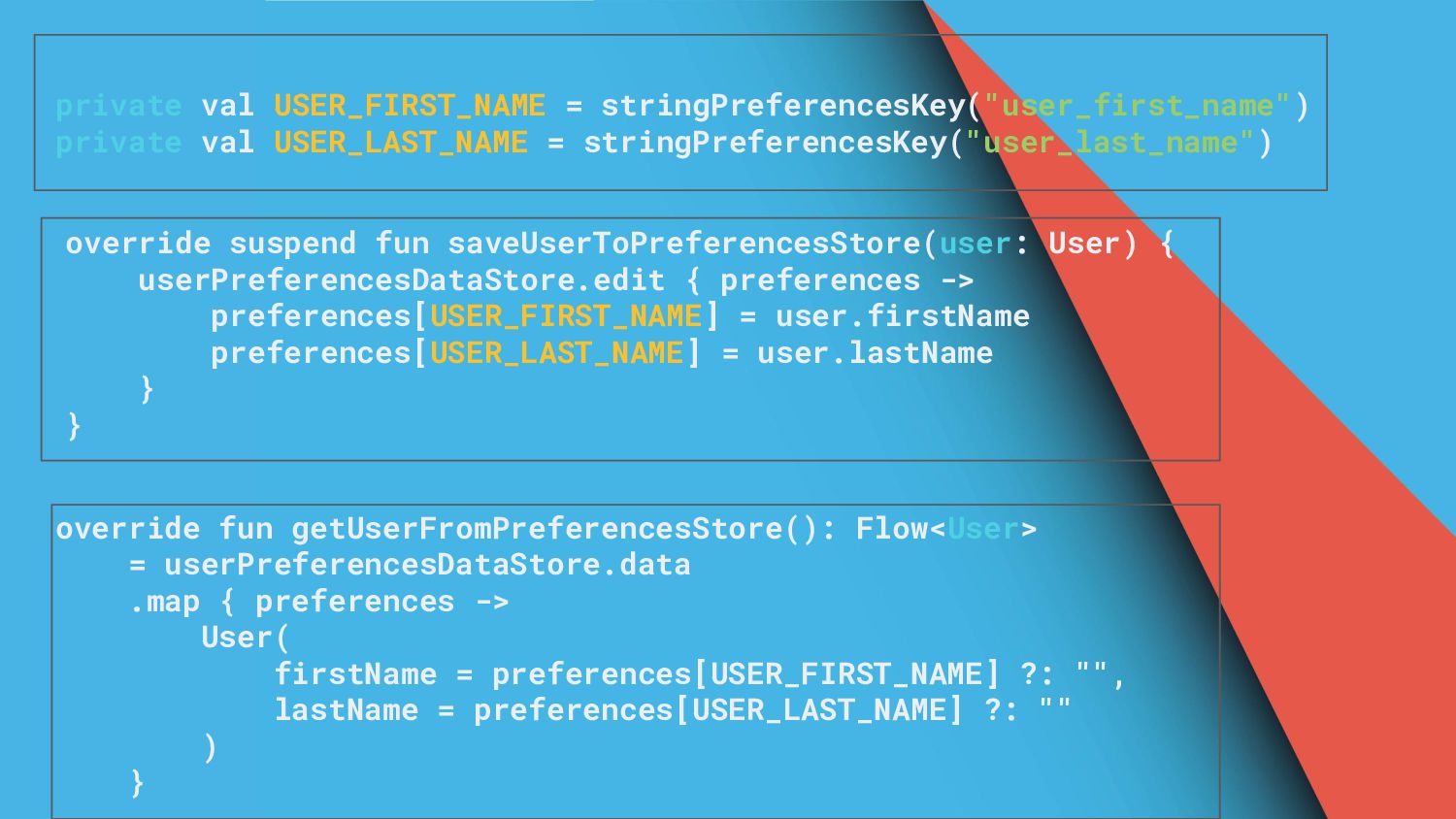
  6. private val USER_FIRST_NAME = stringPreferencesKey("user_first_name") private val USER_LAST_NAME = stringPreferencesKey("user_last_name")

    override suspend fun saveUserToPreferencesStore(user: User) { userPreferencesDataStore.edit { preferences -> preferences[USER_FIRST_NAME] = user.firstName preferences[USER_LAST_NAME] = user.lastName } } override fun getUserFromPreferencesStore(): Flow<User> = userPreferencesDataStore.data .map { preferences -> User( firstName = preferences[USER_FIRST_NAME] ?: "", lastName = preferences[USER_LAST_NAME] ?: "" ) }
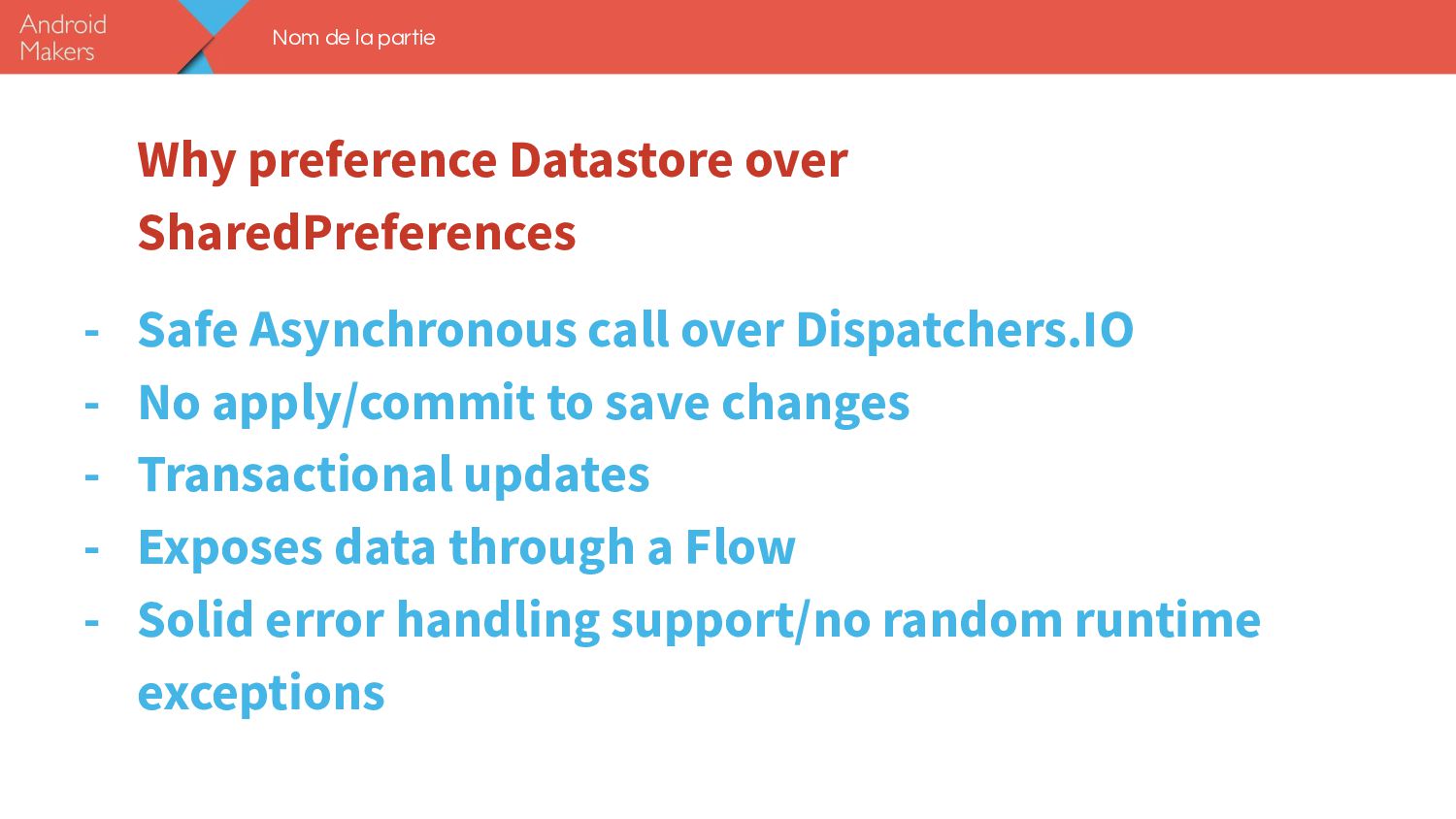
  7. Nom de la partie Why preference Datastore over SharedPreferences -

    Safe Asynchronous call over Dispatchers.IO - No apply/commit to save changes - Transactional updates - Exposes data through a Flow - Solid error handling support/no random runtime exceptions
  8. Nom de la partie Proto DataStore - Store and access

    custom typed objects - Predefined Schema in .protoc file - Out of the box type safety - Uses protocol buffers as serialization mechanism implementation "androidx.datastore:datastore:1.0.0-beta01"
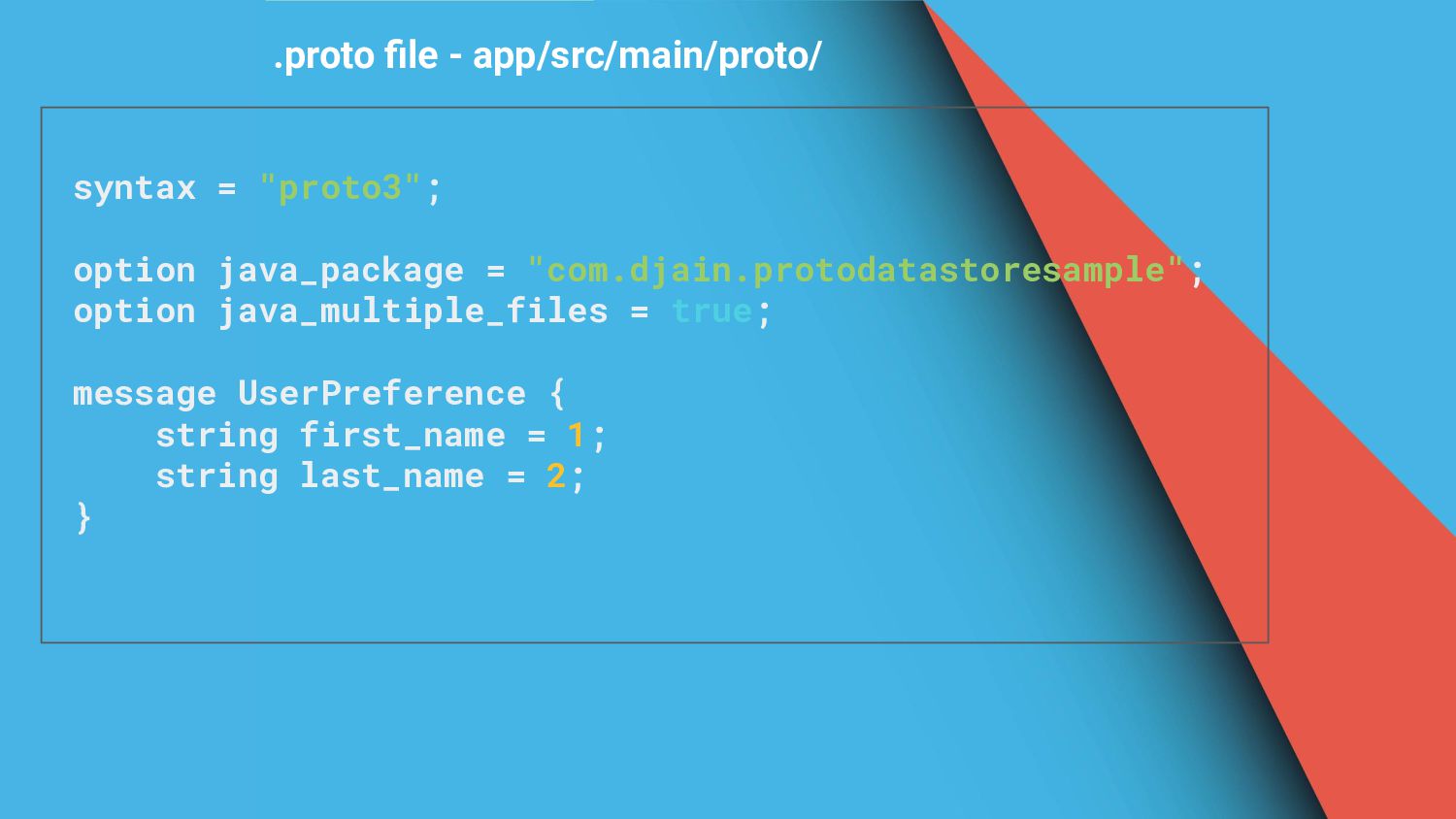
  9. syntax = "proto3"; option java_package = "com.djain.protodatastoresample"; option java_multiple_files =

    true; message UserPreference { string first_name = 1; string last_name = 2; } .proto file - app/src/main/proto/
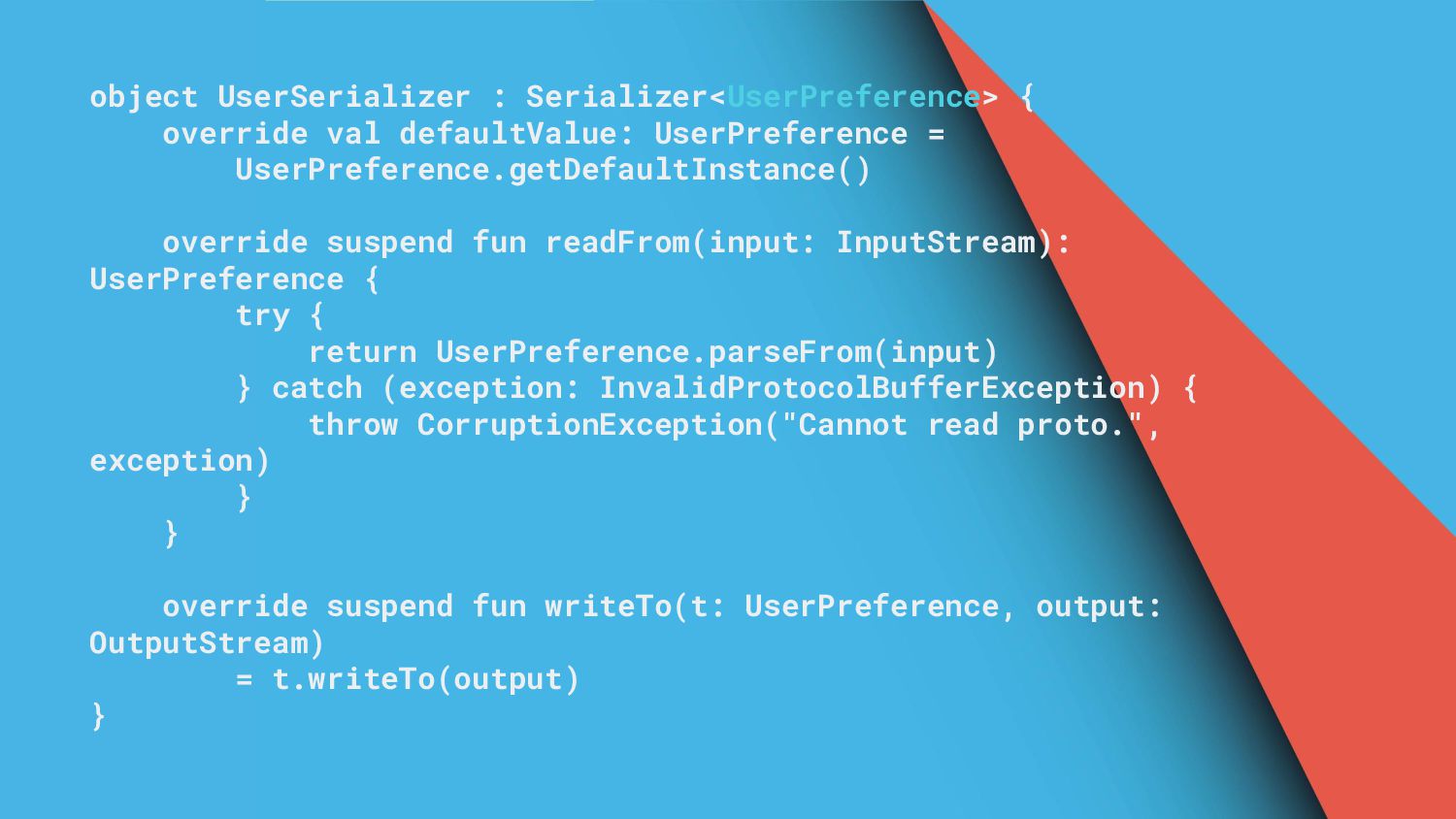
  10. object UserSerializer : Serializer<UserPreference> { override val defaultValue: UserPreference =

    UserPreference.getDefaultInstance() override suspend fun readFrom(input: InputStream): UserPreference { try { return UserPreference.parseFrom(input) } catch (exception: InvalidProtocolBufferException) { throw CorruptionException("Cannot read proto.", exception) } } override suspend fun writeTo(t: UserPreference, output: OutputStream) = t.writeTo(output) }
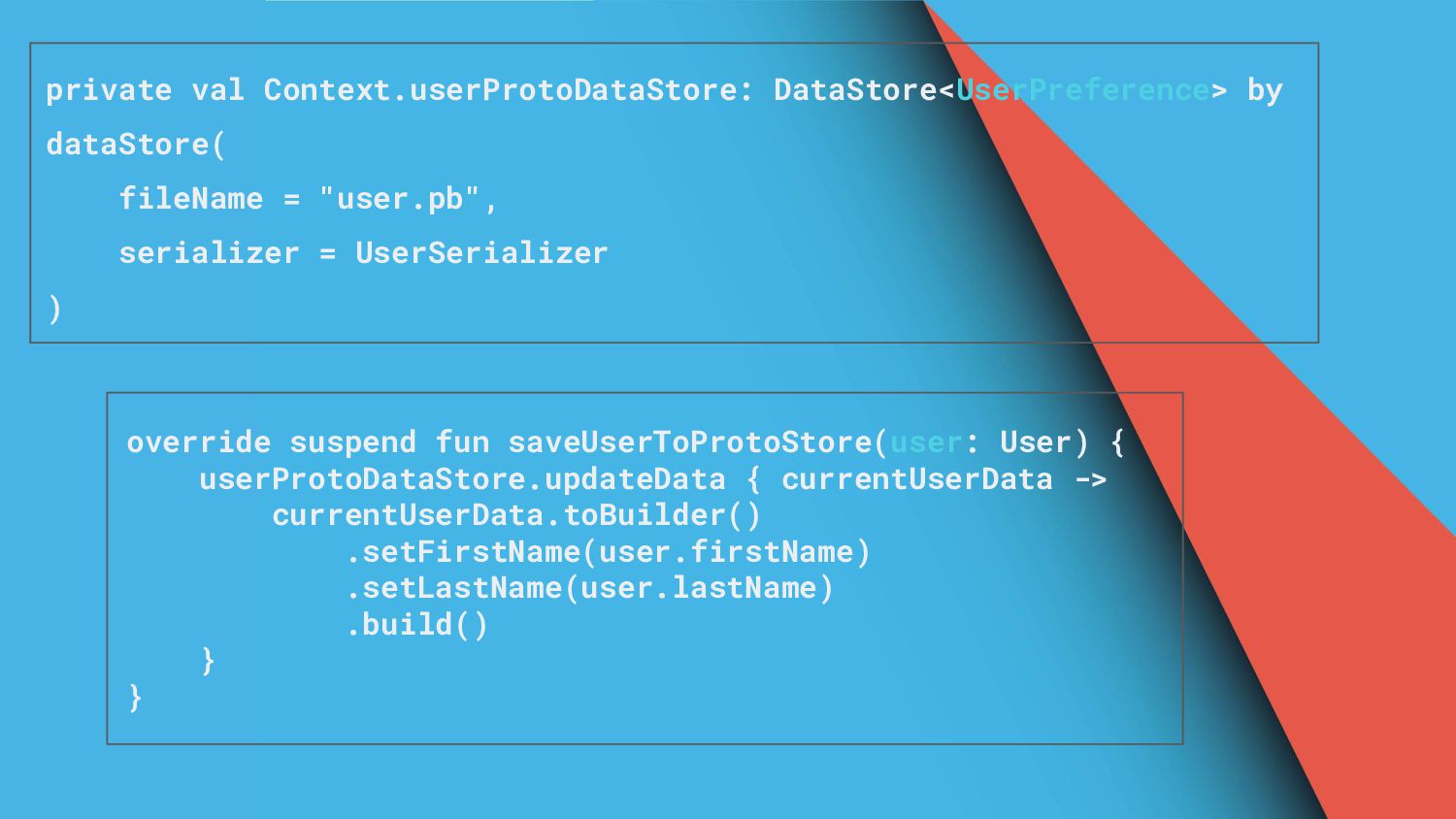
  11. private val Context.userProtoDataStore: DataStore<UserPreference> by dataStore( fileName = "user.pb", serializer

    = UserSerializer ) override suspend fun saveUserToProtoStore(user: User) { userProtoDataStore.updateData { currentUserData -> currentUserData.toBuilder() .setFirstName(user.firstName) .setLastName(user.lastName) .build() } }
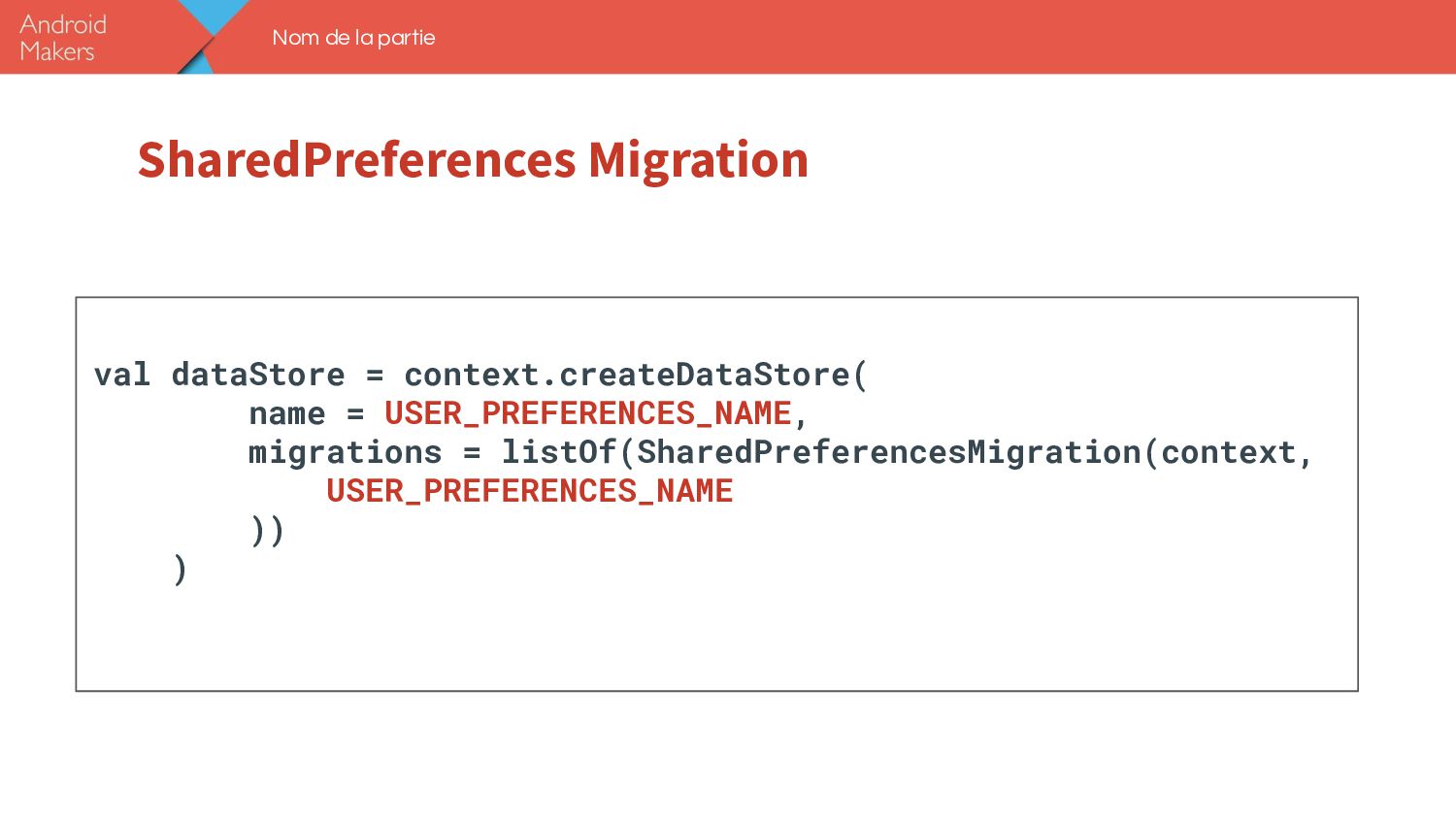
  12. Nom de la partie val dataStore = context.createDataStore( name =

    USER_PREFERENCES_NAME, migrations = listOf(SharedPreferencesMigration(context, USER_PREFERENCES_NAME )) ) SharedPreferences Migration