Upgrade to Pro — share decks privately, control downloads, hide ads and more …

Using OAuth with PHP

Using OAuth with PHP

Talk given at PHP London on 4th November 2010.

Dave Ingram

March 23, 2012

Transcript

76 slides
  1. Coming up • What is OAuth? • How do you

    write a Consumer in PHP? • What doesn’t OAuth do? • Thoughts on being a Provider
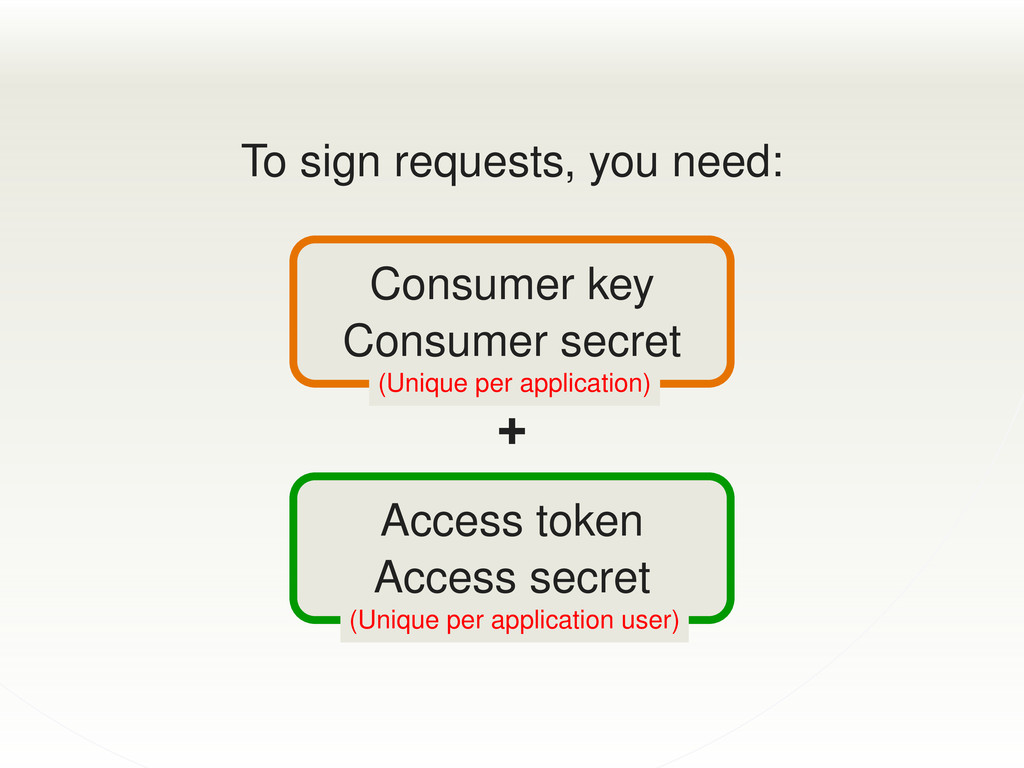
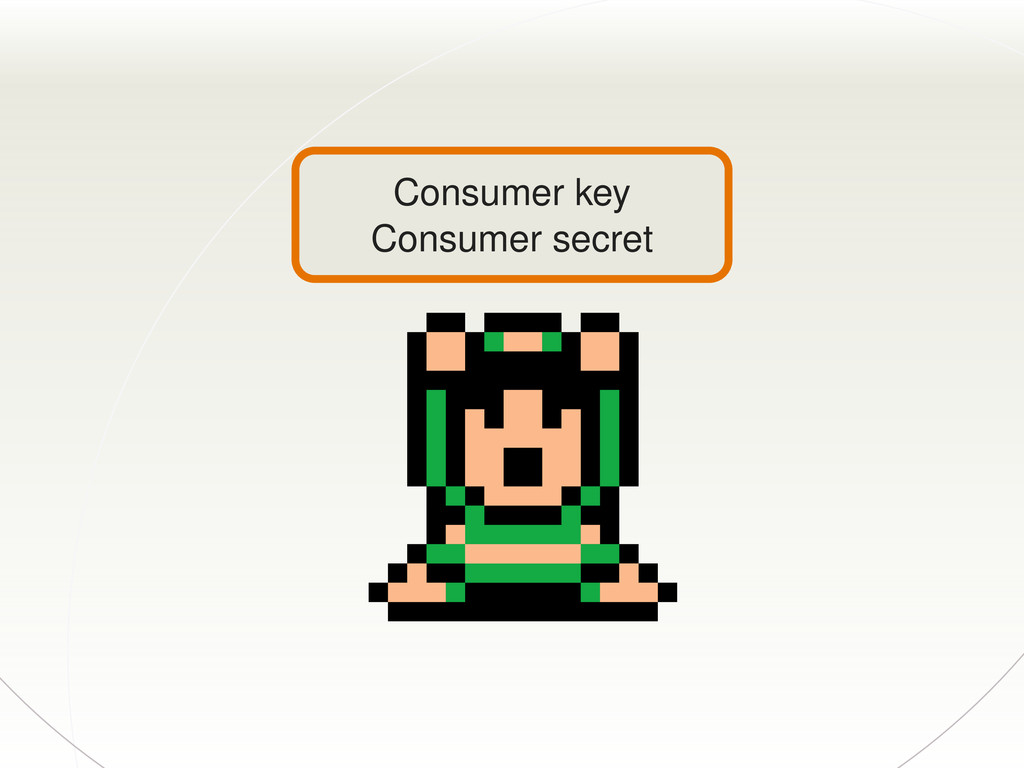
  2. To sign requests, you need: Consumer key Consumer secret (Unique

    per application) + Access token Access secret (Unique per application user)
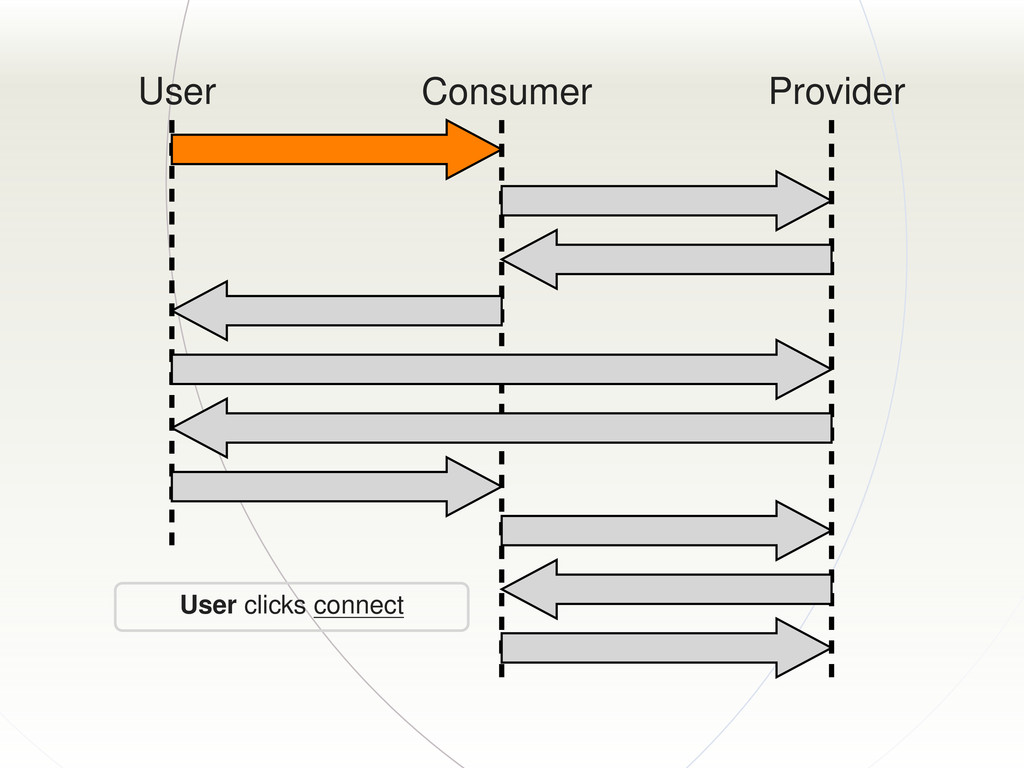
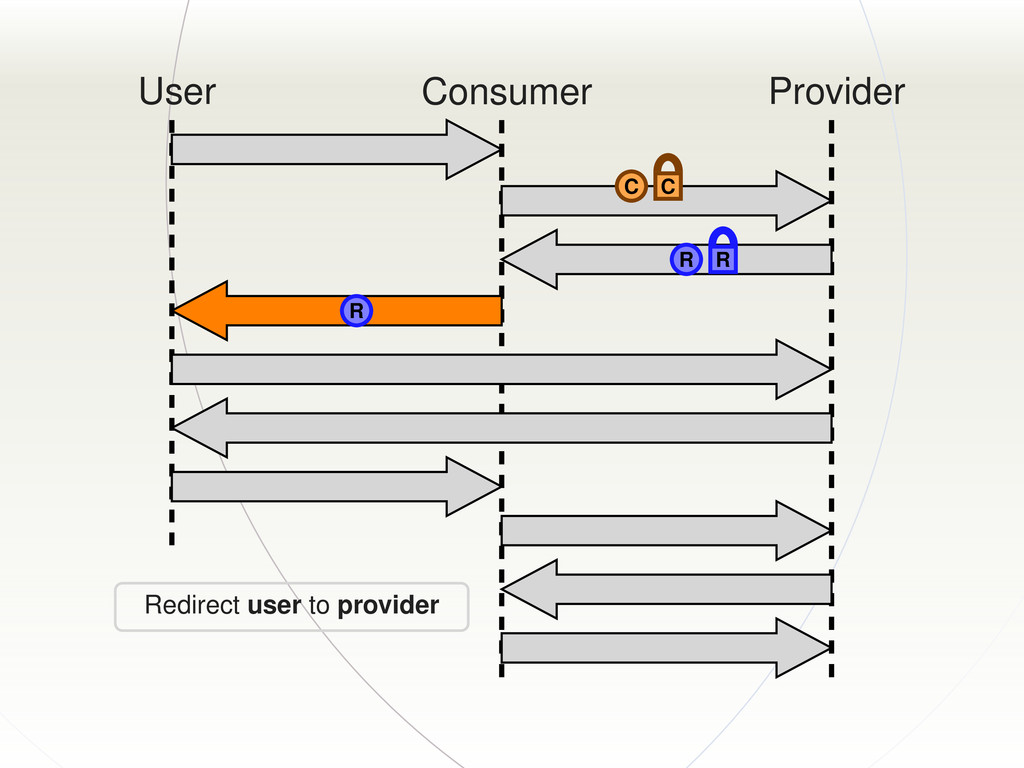
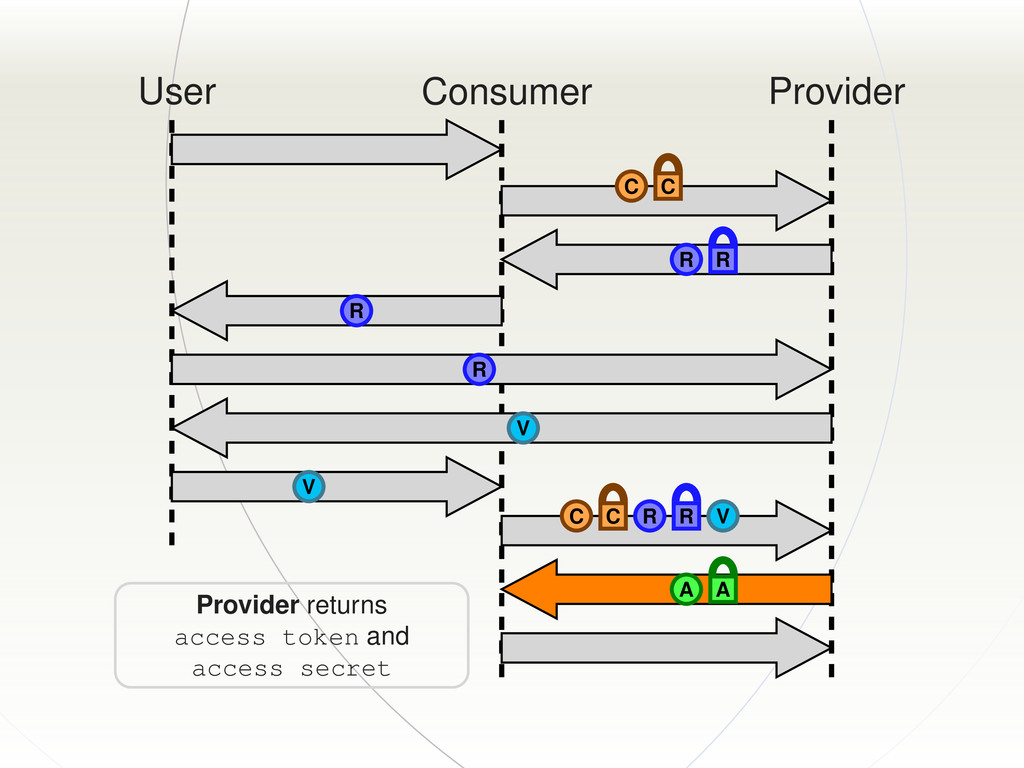
  3. User Consumer Provider C C R R R R V

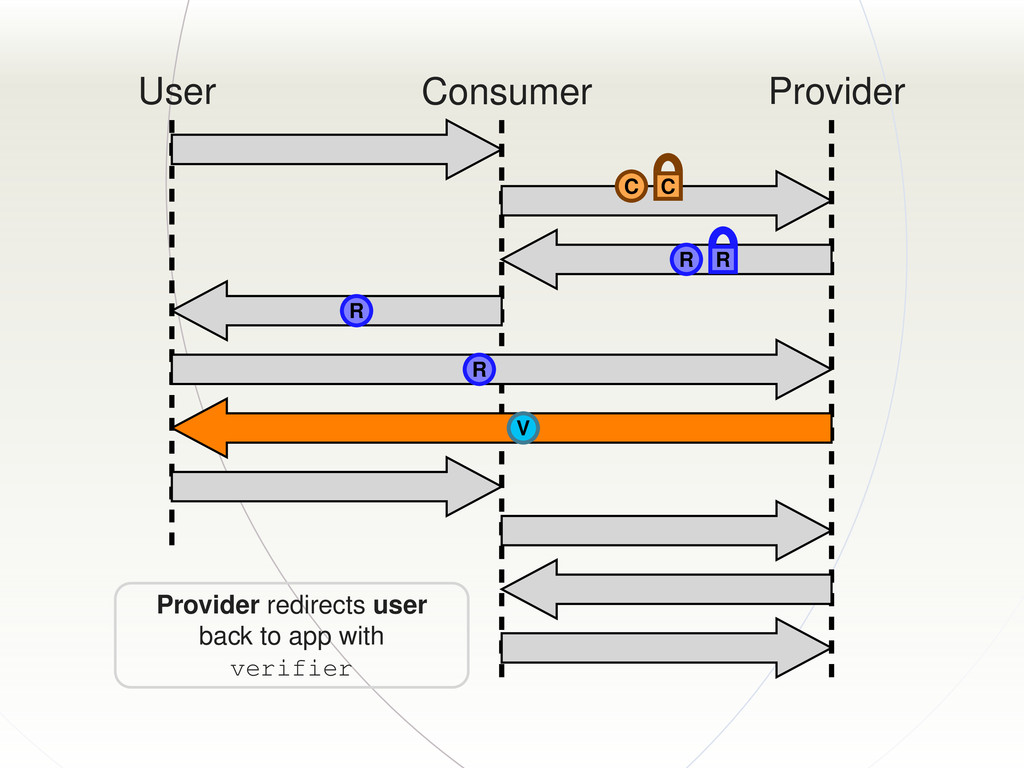
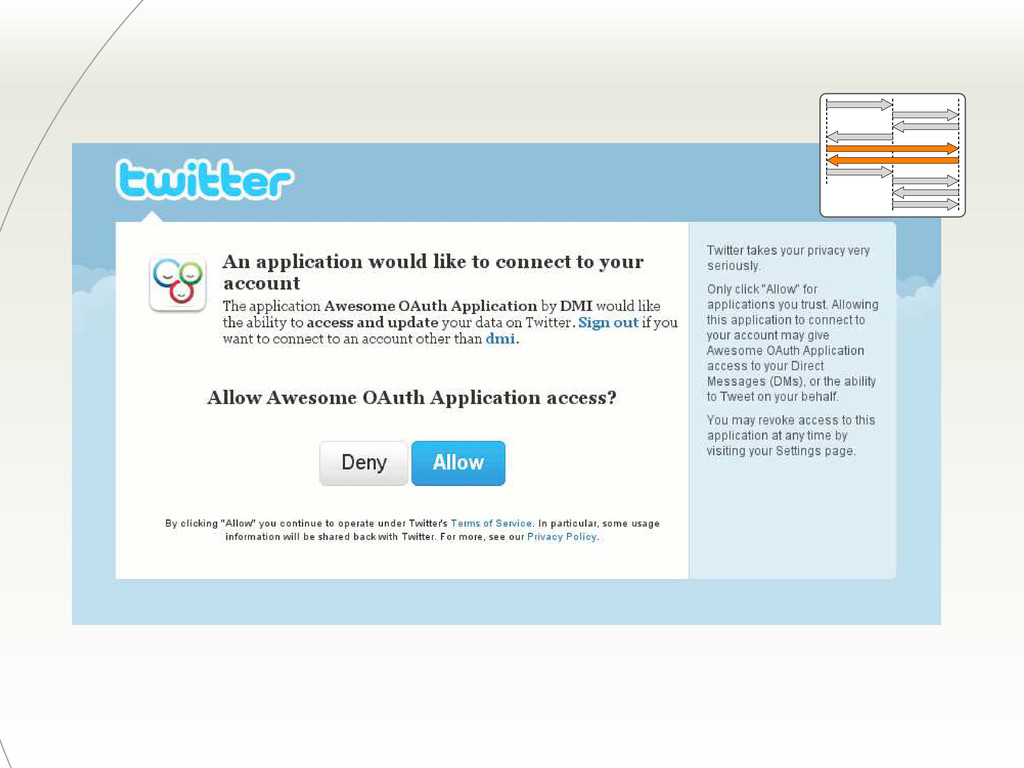
    Provider redirects user back to app with verifier
  4. User Consumer Provider C C R R R R V

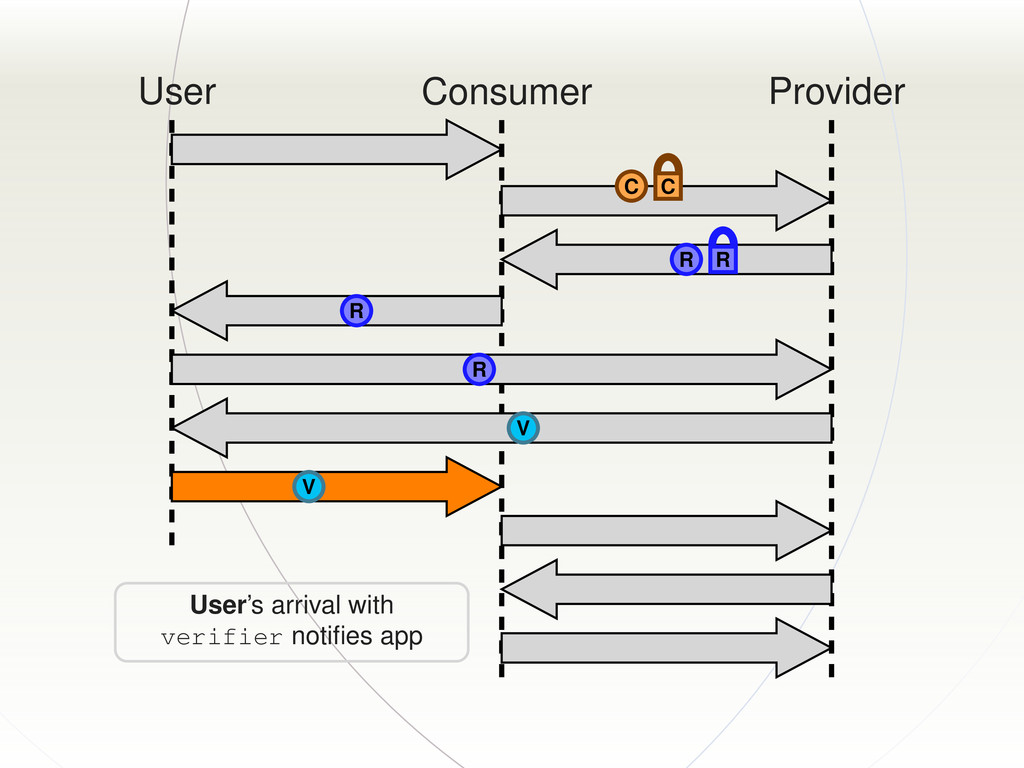
    V User’s arrival with verifier notifies app
  5. User Consumer Provider C C R R R R V

    V C C R R V App then exchanges request token for access token
  6. User Consumer Provider C C R R R R V

    V C C R R V A A Provider returns access token and access secret
  7. User Consumer Provider C C R R R R V

    V C C R R V A A C C A A App makes request on user’s behalf
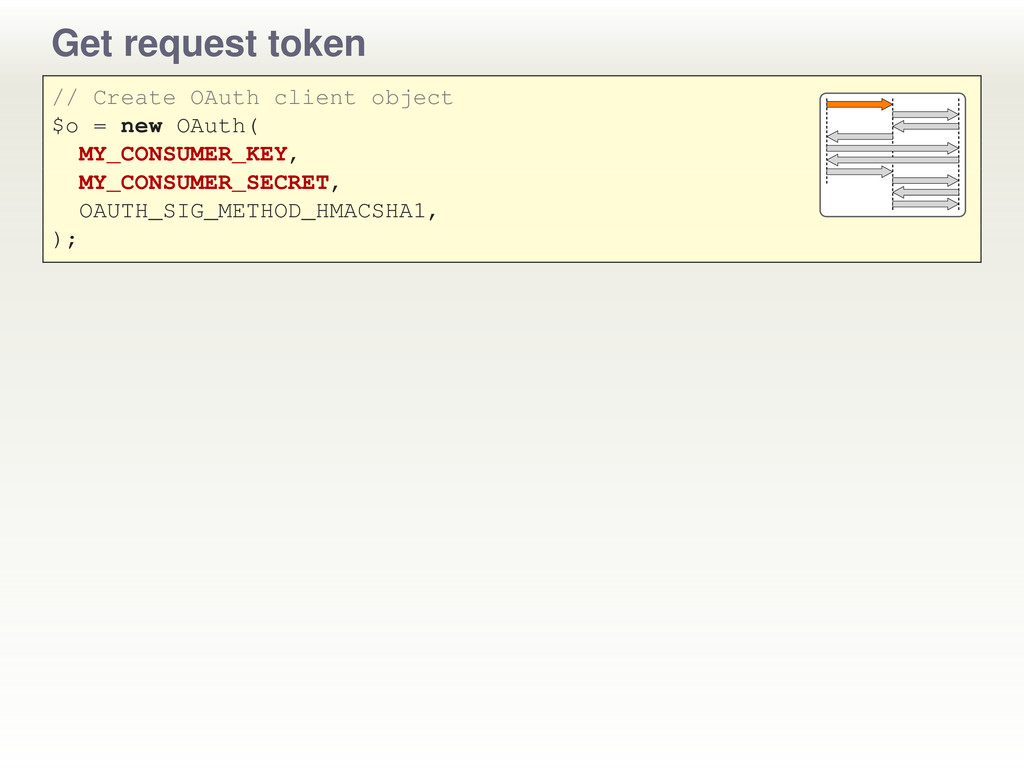
  8. Get request token // Create OAuth client object $o =

    new OAuth( MY_CONSUMER_KEY, MY_CONSUMER_SECRET, OAUTH_SIG_METHOD_HMACSHA1, );
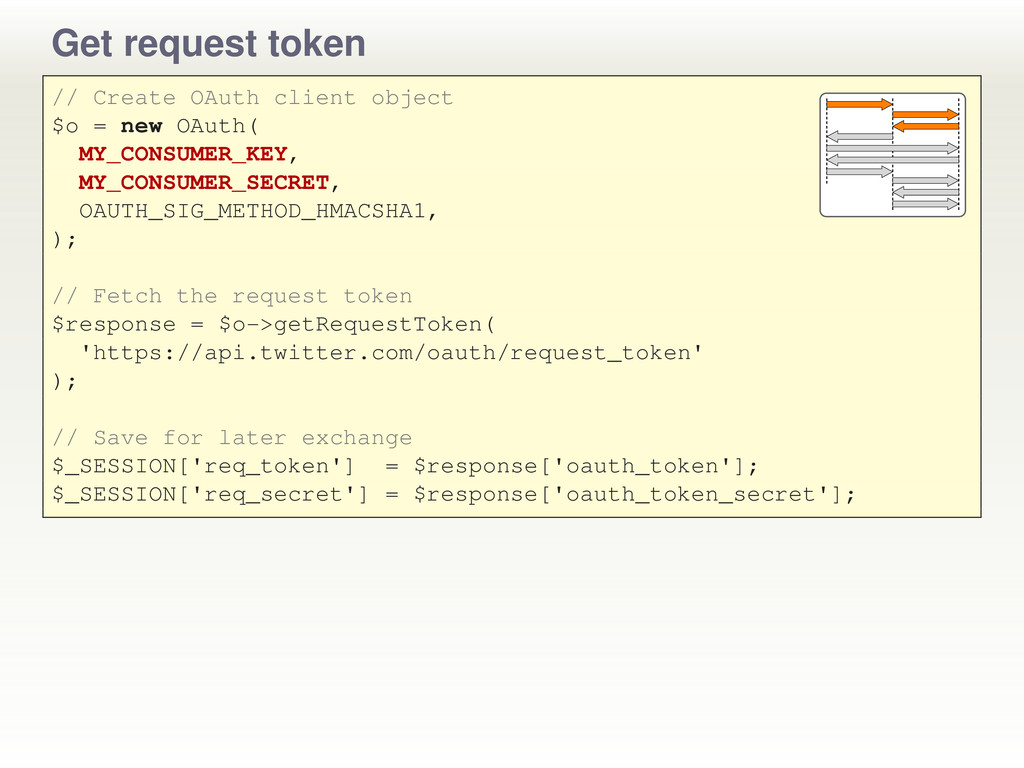
  9. Get request token // Create OAuth client object $o =

    new OAuth( MY_CONSUMER_KEY, MY_CONSUMER_SECRET, OAUTH_SIG_METHOD_HMACSHA1, ); // Fetch the request token $response = $o->getRequestToken( 'https://api.twitter.com/oauth/request_token' ); // Save for later exchange $_SESSION['req_token'] = $response['oauth_token']; $_SESSION['req_secret'] = $response['oauth_token_secret'];
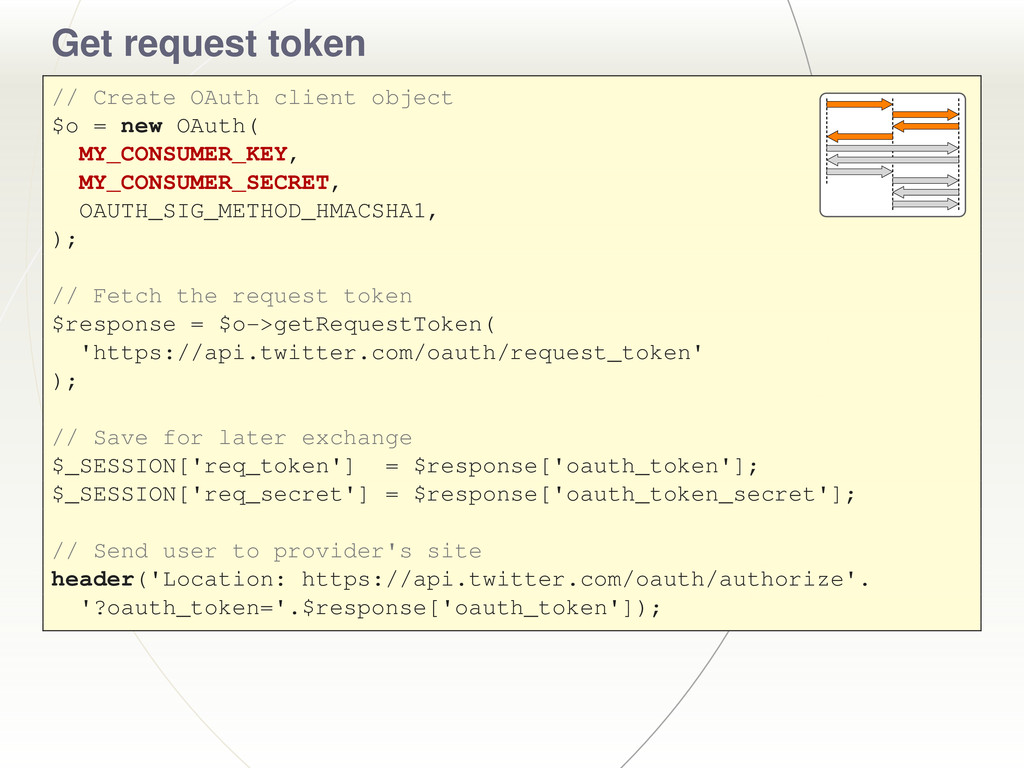
  10. Get request token // Create OAuth client object $o =

    new OAuth( MY_CONSUMER_KEY, MY_CONSUMER_SECRET, OAUTH_SIG_METHOD_HMACSHA1, ); // Fetch the request token $response = $o->getRequestToken( 'https://api.twitter.com/oauth/request_token' ); // Save for later exchange $_SESSION['req_token'] = $response['oauth_token']; $_SESSION['req_secret'] = $response['oauth_token_secret']; // Send user to provider's site header('Location: https://api.twitter.com/oauth/authorize'. '?oauth_token='.$response['oauth_token']);
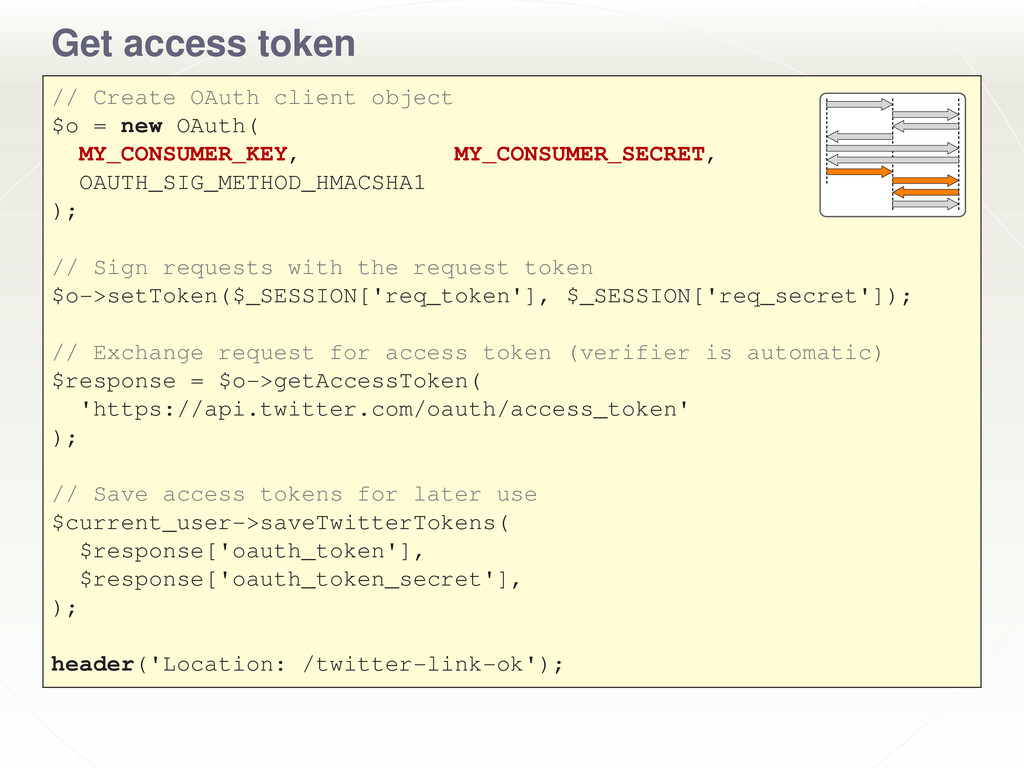
  11. Get access token // Create OAuth client object $o =

    new OAuth( MY_CONSUMER_KEY, MY_CONSUMER_SECRET, OAUTH_SIG_METHOD_HMACSHA1 ); // Sign requests with the request token $o->setToken($_SESSION['req_token'], $_SESSION['req_secret']);
  12. Get access token // Create OAuth client object $o =

    new OAuth( MY_CONSUMER_KEY, MY_CONSUMER_SECRET, OAUTH_SIG_METHOD_HMACSHA1 ); // Sign requests with the request token $o->setToken($_SESSION['req_token'], $_SESSION['req_secret']); // Exchange request for access token (verifier is automatic) $response = $o->getAccessToken( 'https://api.twitter.com/oauth/access_token' ); // Save access tokens for later use $current_user->saveTwitterTokens( $response['oauth_token'], $response['oauth_token_secret'], ); header('Location: /twitter-link-ok');
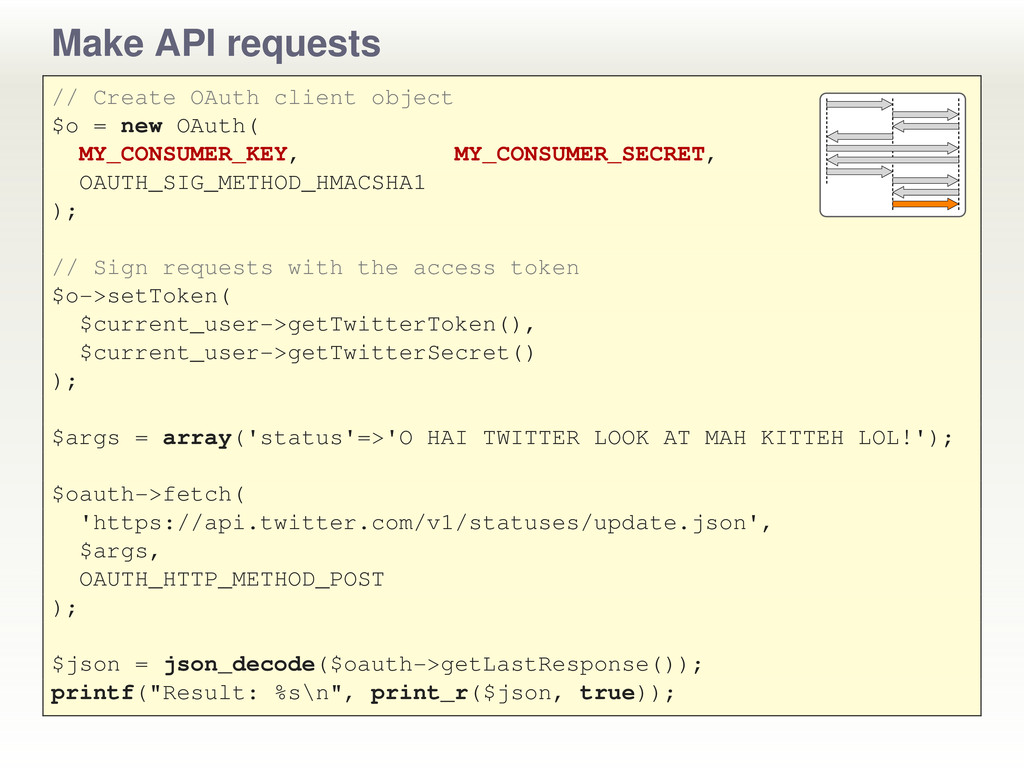
  13. Make API requests // Create OAuth client object $o =

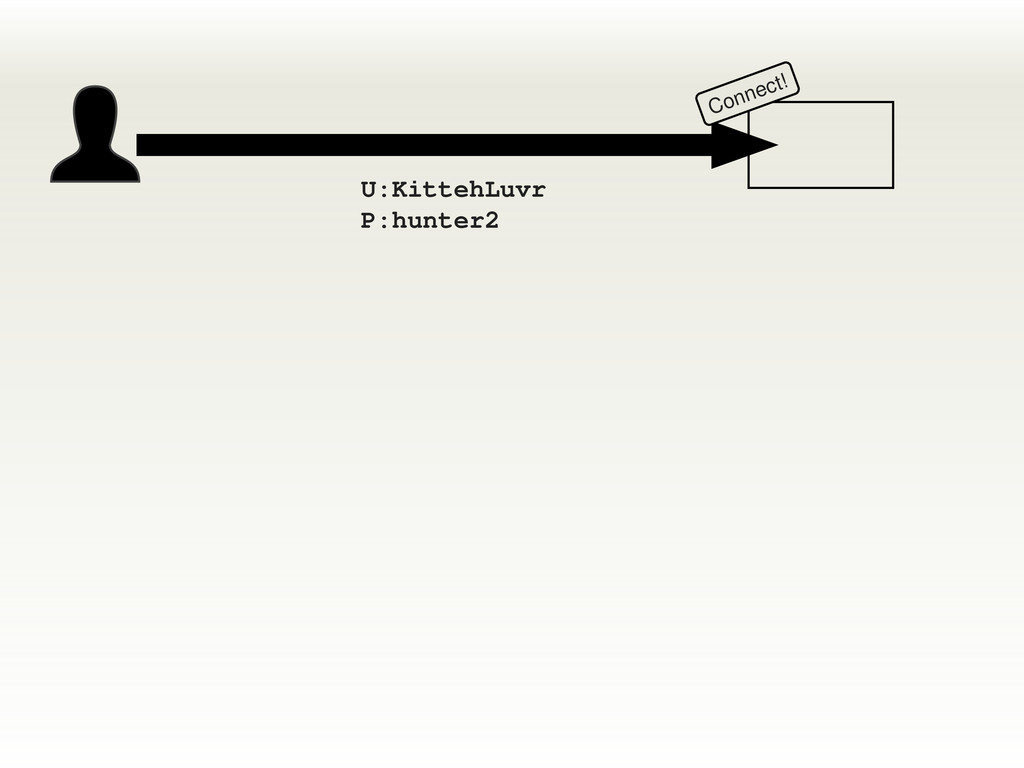
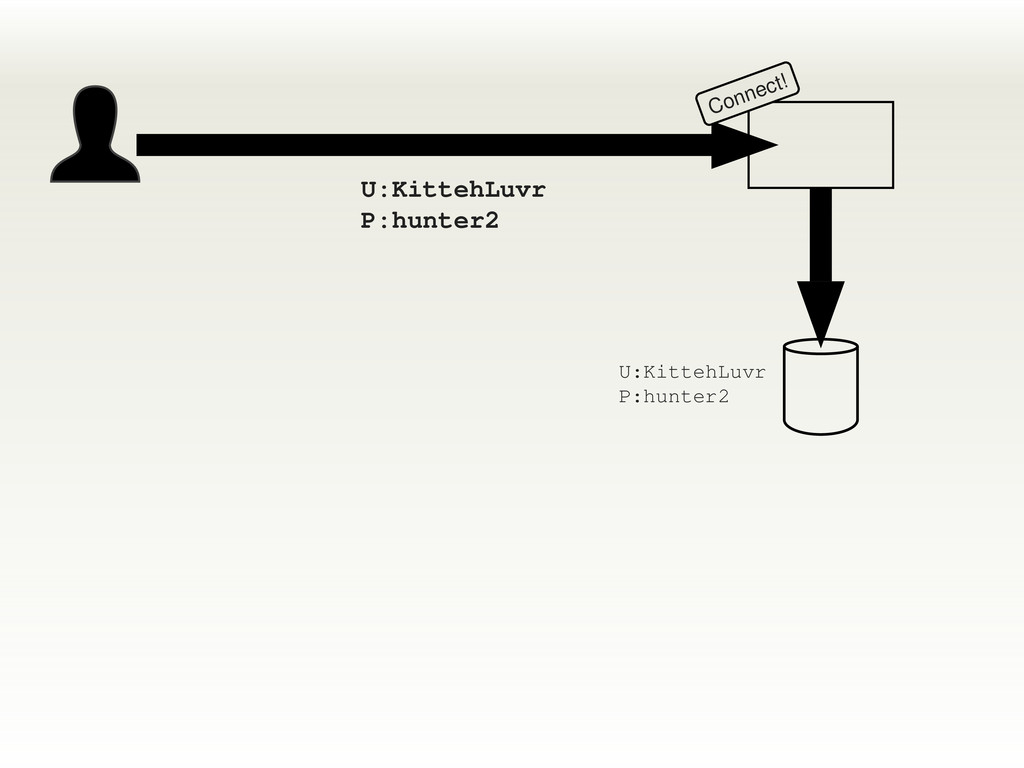
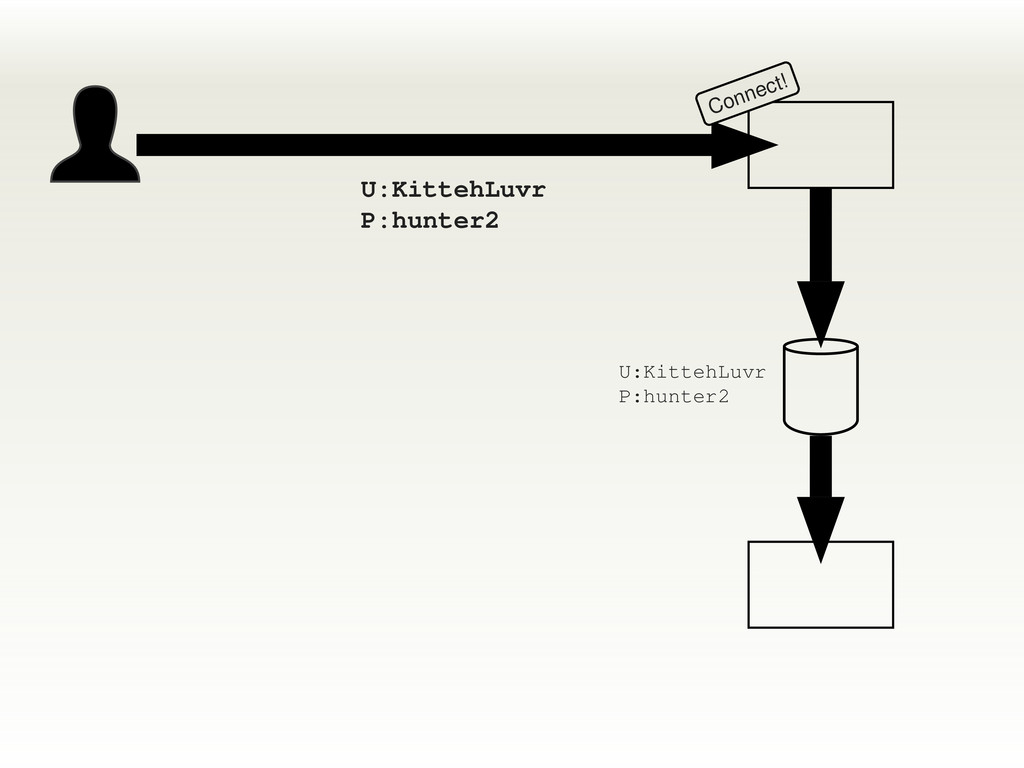
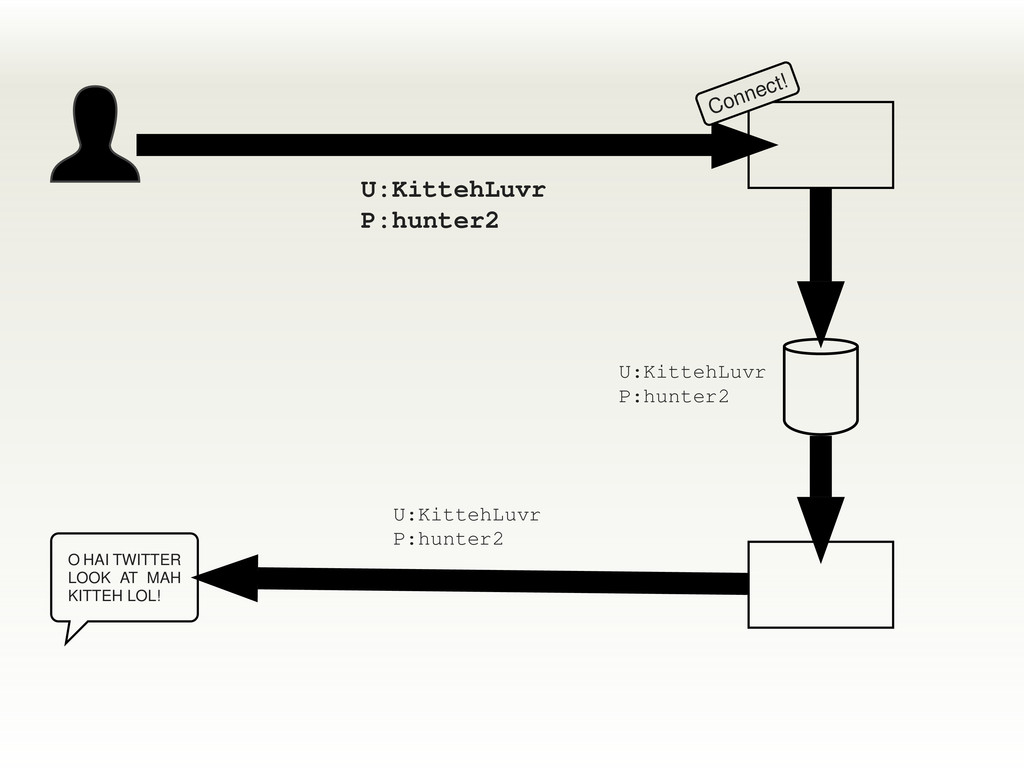
    new OAuth( MY_CONSUMER_KEY, MY_CONSUMER_SECRET, OAUTH_SIG_METHOD_HMACSHA1 ); // Sign requests with the access token $o->setToken( $current_user->getTwitterToken(), $current_user->getTwitterSecret() ); $args = array('status'=>'O HAI TWITTER LOOK AT MAH KITTEH LOL!'); $oauth->fetch( 'https://api.twitter.com/v1/statuses/update.json', $args, OAUTH_HTTP_METHOD_POST ); $json = json_decode($oauth->getLastResponse()); printf("Result: %s\n", print_r($json, true));
  14. Very easy to be a Consumer Many design decisions to

    make as a Provider A fair amount of work, and not always easy to change your mind
  15. Very easy to be a Consumer Many design decisions to

    make as a Provider A fair amount of work, and not always easy to change your mind For example. . .
  16. How large a range of timestamps do you allow? What

    permission granularity do you provide?
  17. How large a range of timestamps do you allow? What

    permission granularity do you provide? What format and length are tokens/secrets?
  18. How large a range of timestamps do you allow? What

    permission granularity do you provide? What format and length are tokens/secrets? Do you identify actions as coming from particular consumers? (e.g. Twitter)
  19. How large a range of timestamps do you allow? What

    permission granularity do you provide? What format and length are tokens/secrets? Do you identify actions as coming from particular consumers? (e.g. Twitter) What about attacks? Phishing, DoS, clickjacking, CSRF
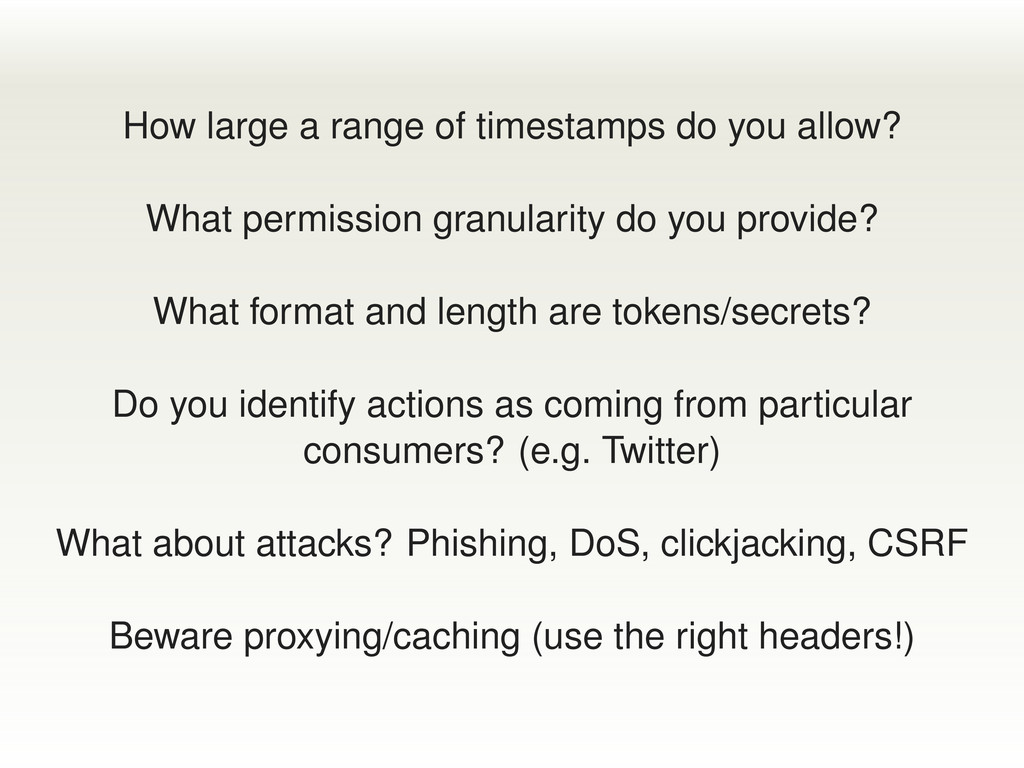
  20. How large a range of timestamps do you allow? What

    permission granularity do you provide? What format and length are tokens/secrets? Do you identify actions as coming from particular consumers? (e.g. Twitter) What about attacks? Phishing, DoS, clickjacking, CSRF Beware proxying/caching (use the right headers!)
  21. Links OAuth Spec: http://oauth.net/ Intro/tutorial: http://hueniverse.com/ PECL extension: http://pecl.php.net/oauth/ Me:

    http://twitter.com/dmi http://www.dmi.me.uk/talks/ http://www.dmi.me.uk/code/php/ Slides: http://slideshare.net/ingramd

More Decks by Dave Ingram

Other Decks in Programming