platform for an application that needs to interact with multiple external services. Since we cannot predict how long external services will take to process each request, the system must support long-running operations. Because this platform is a complement to the main application, integration processing must not directly affect the performance of the core system.
such as payment providers, shipping services, and notification platforms. • New integrations should be added without affecting the rest of the system. • Integration failures must not stop the core business operations.
APIs. • The module must receive and process responses from external systems. • The system must handle different integration types (REST APIs, webhooks, messaging systems). • The module must retry failed requests when external services are temporarily unavailable. • The module must log all integration requests and responses.
communicate with external services. • The system must support asynchronous processing for long-running integrations. • All communication with external services must use HTTPS. • The system must implement timeout and retry mechanisms.
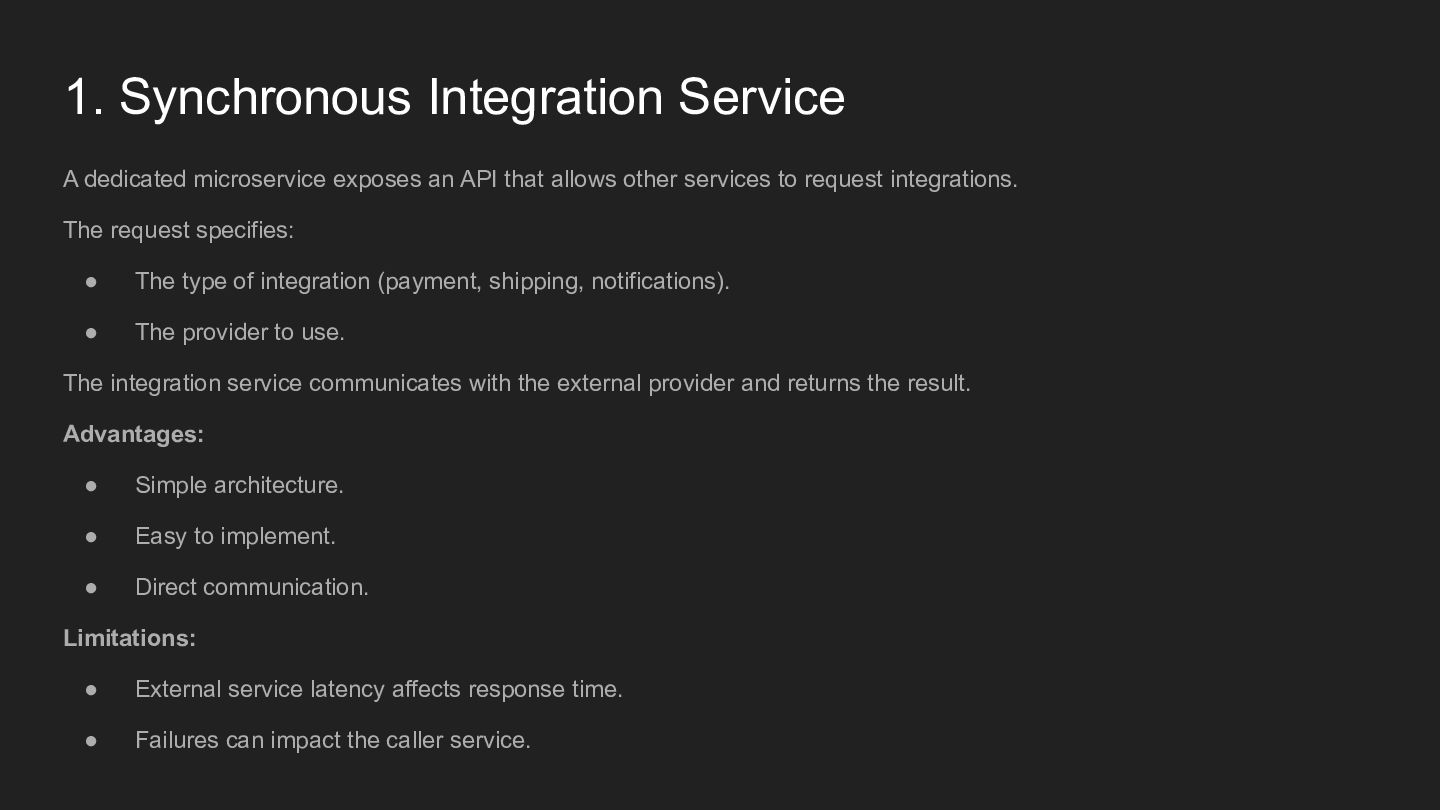
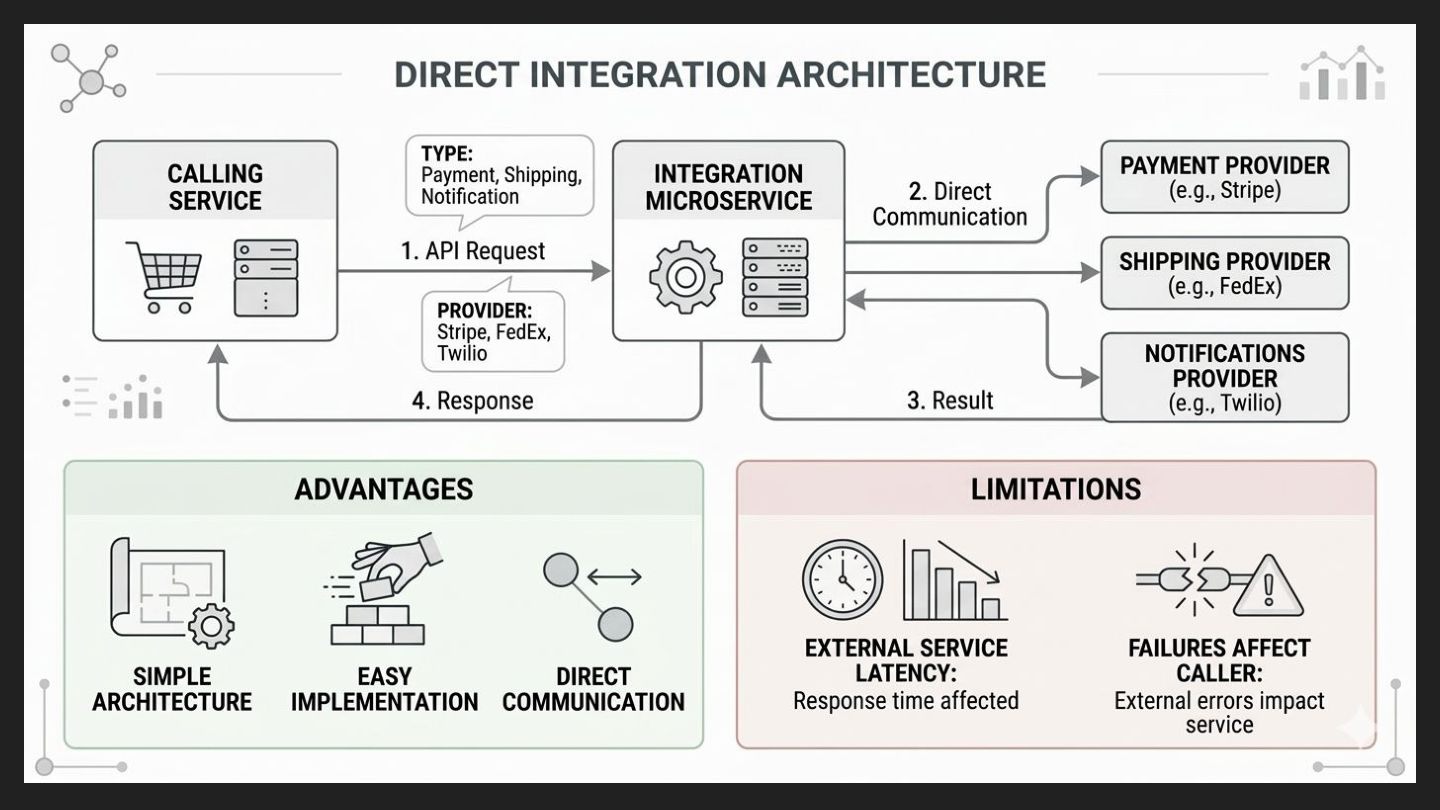
that allows other services to request integrations. The request specifies: • The type of integration (payment, shipping, notifications). • The provider to use. The integration service communicates with the external provider and returns the result. Advantages: • Simple architecture. • Easy to implement. • Direct communication. Limitations: • External service latency affects response time. • Failures can impact the caller service.
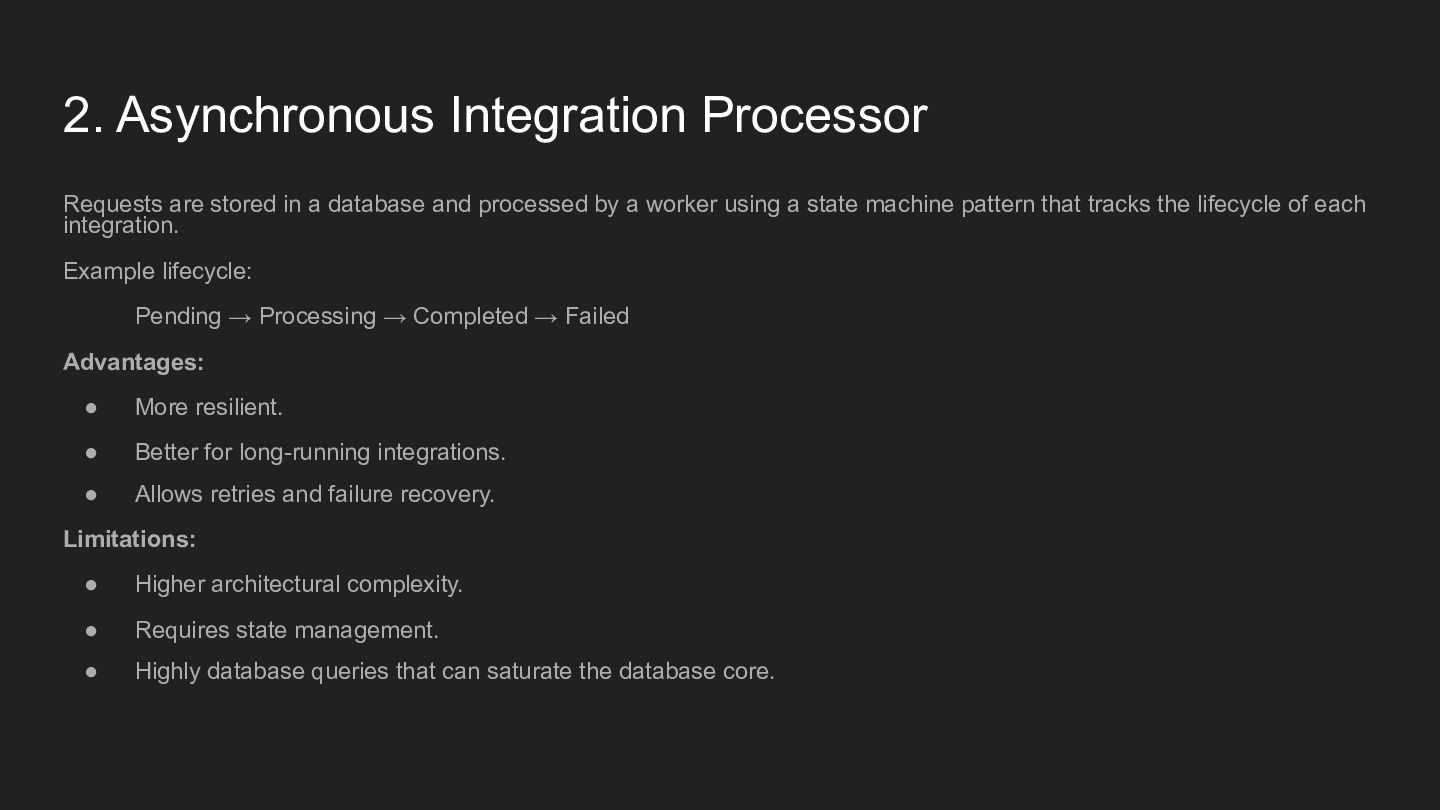
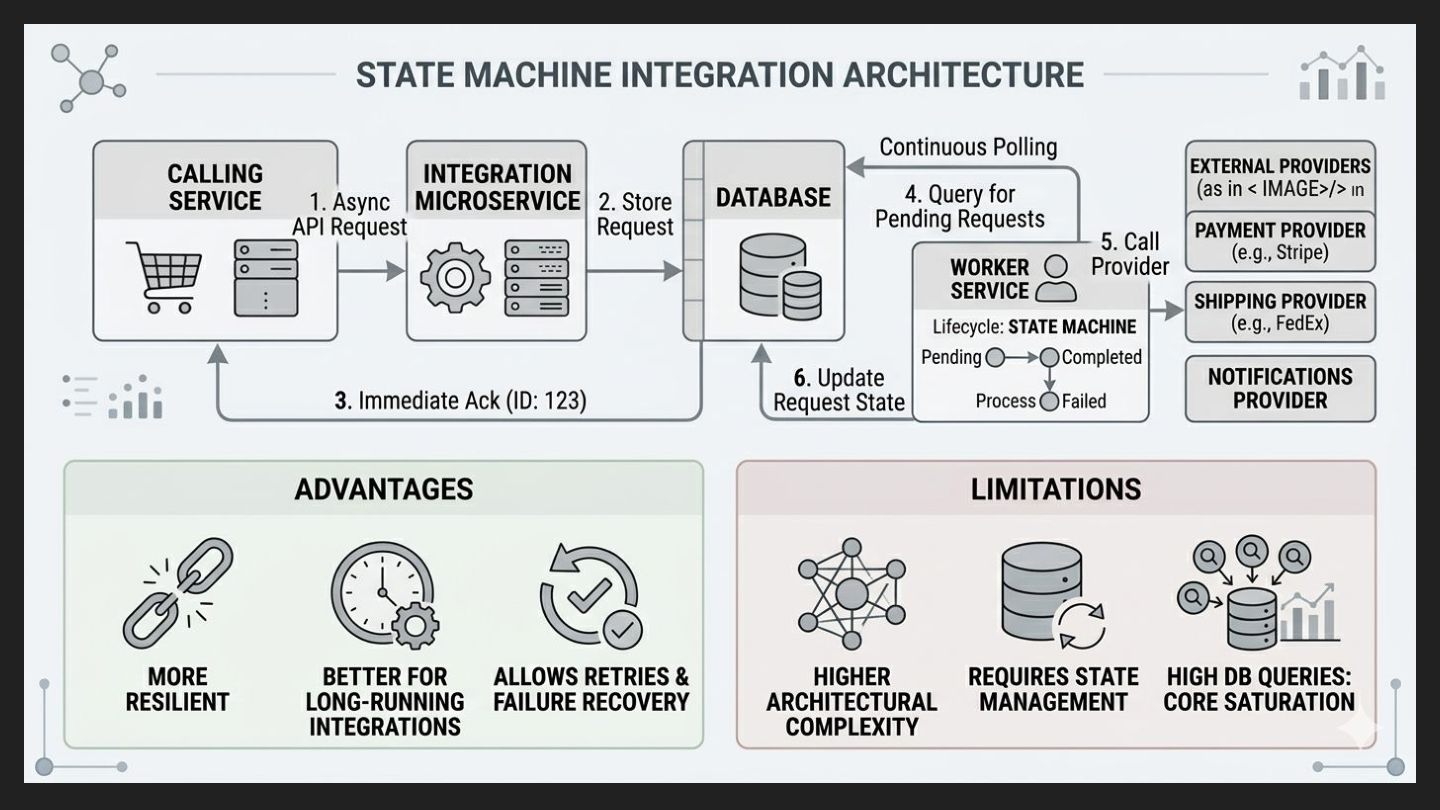
and processed by a worker using a state machine pattern that tracks the lifecycle of each integration. Example lifecycle: Pending → Processing → Completed → Failed Advantages: • More resilient. • Better for long-running integrations. • Allows retries and failure recovery. Limitations: • Higher architectural complexity. • Requires state management. • Highly database queries that can saturate the database core.
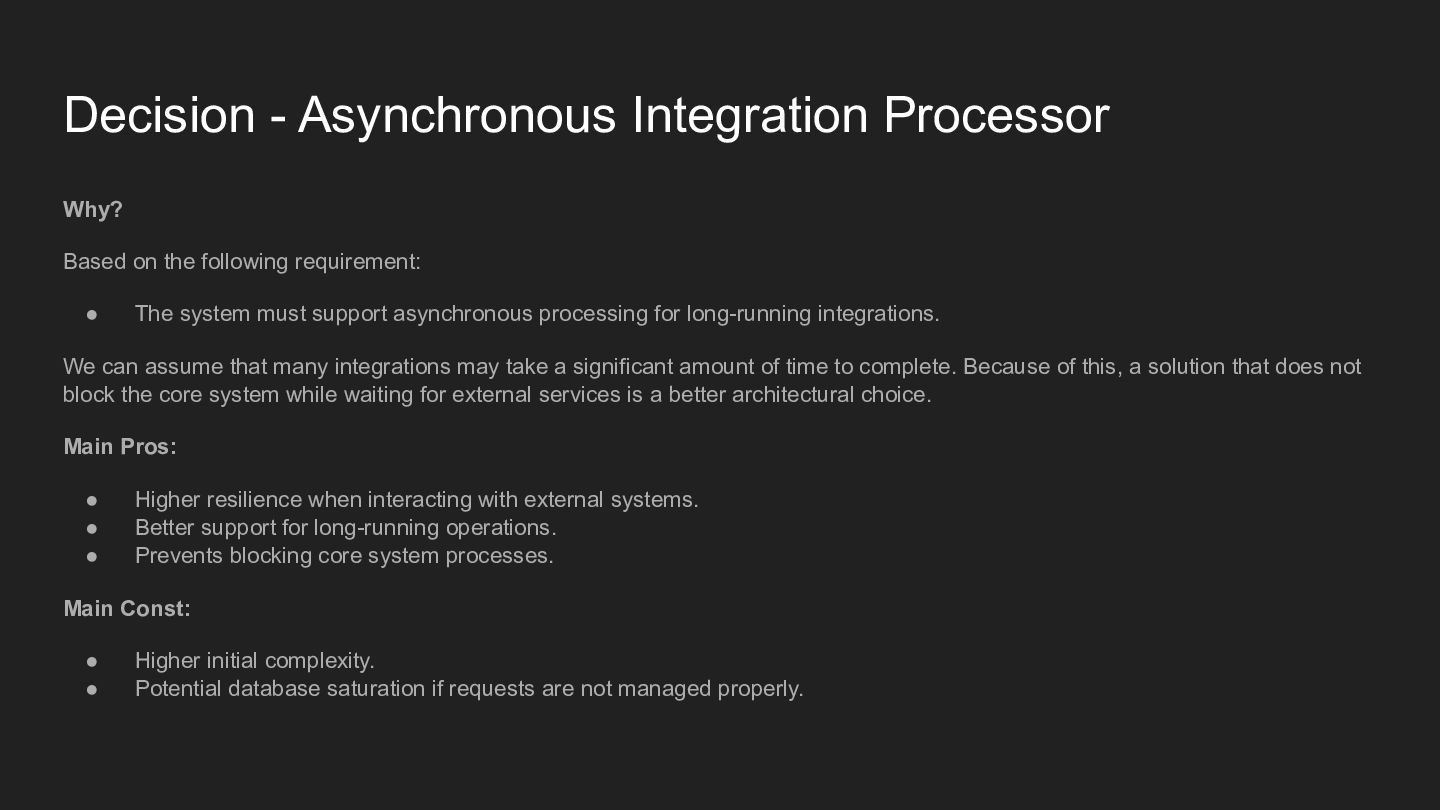
requirement: • The system must support asynchronous processing for long-running integrations. We can assume that many integrations may take a significant amount of time to complete. Because of this, a solution that does not block the core system while waiting for external services is a better architectural choice. Main Pros: • Higher resilience when interacting with external systems. • Better support for long-running operations. • Prevents blocking core system processes. Main Const: • Higher initial complexity. • Potential database saturation if requests are not managed properly.

 SiteGround - Reliable hosting with speed, security, and support you can count on.


 sansan33
 ks91
ks91
 cscengineer
 atsushieno
 geekplus_tech
 iktakahiro
 harukasakihara
 findy_eventslides
 sutetotanuki
 har1101
 honzajavorek
 aleyda
 eileencodes
 codingconduct
 tmiket
 inesmontani
 mclloyd
 ipullrank
 leimatthew05
 varn
varn
 skoyamalab