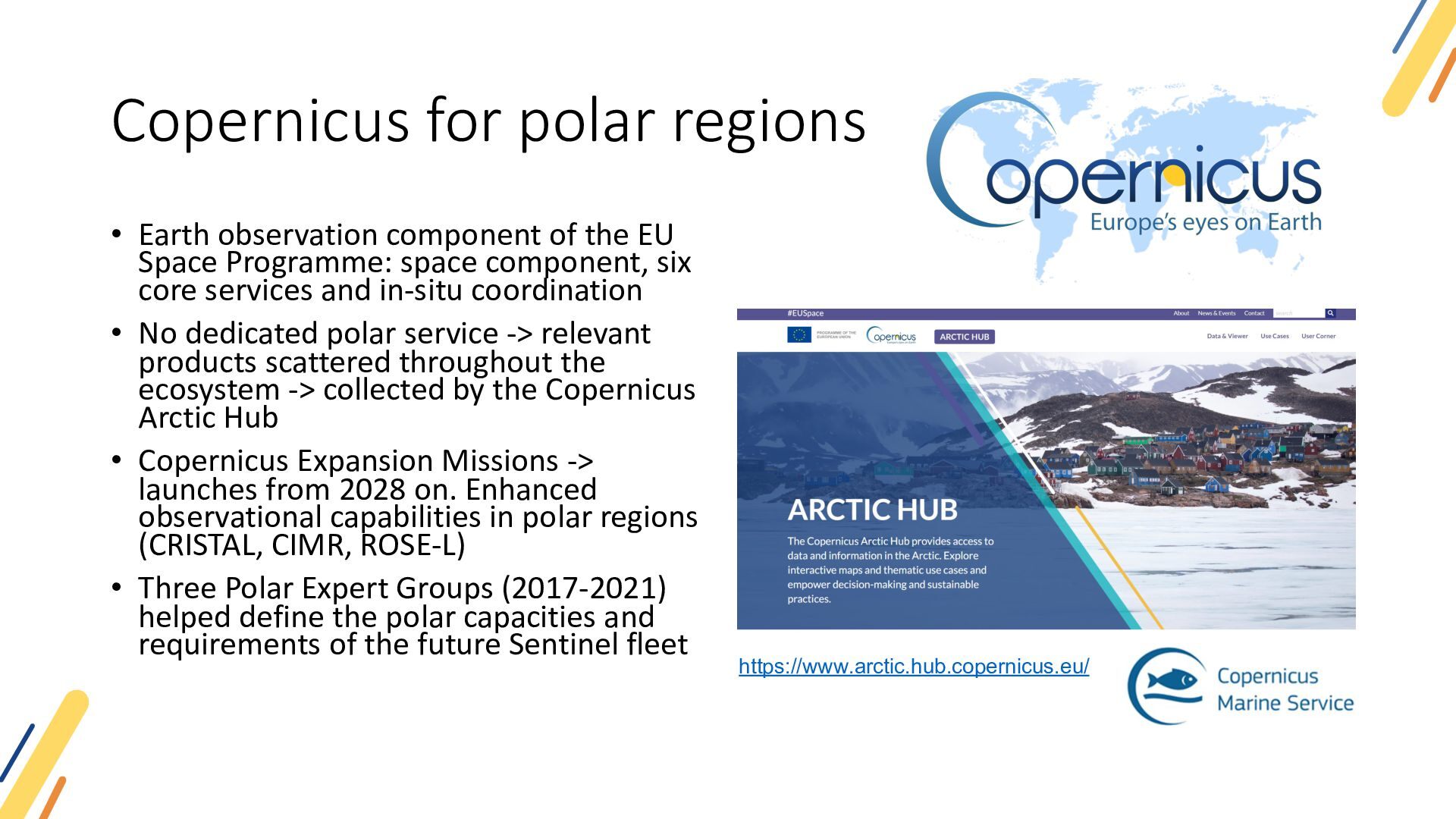
EU Space Programme: space component, six core services and in-situ coordination • No dedicated polar service -> relevant products scattered throughout the ecosystem -> collected by the Copernicus Arctic Hub • Copernicus Expansion Missions -> launches from 2028 on. Enhanced observational capabilities in polar regions (CRISTAL, CIMR, ROSE-L) • Three Polar Expert Groups (2017-2021) helped define the polar capacities and requirements of the future Sentinel fleet https://www.arctic.hub.copernicus.eu/
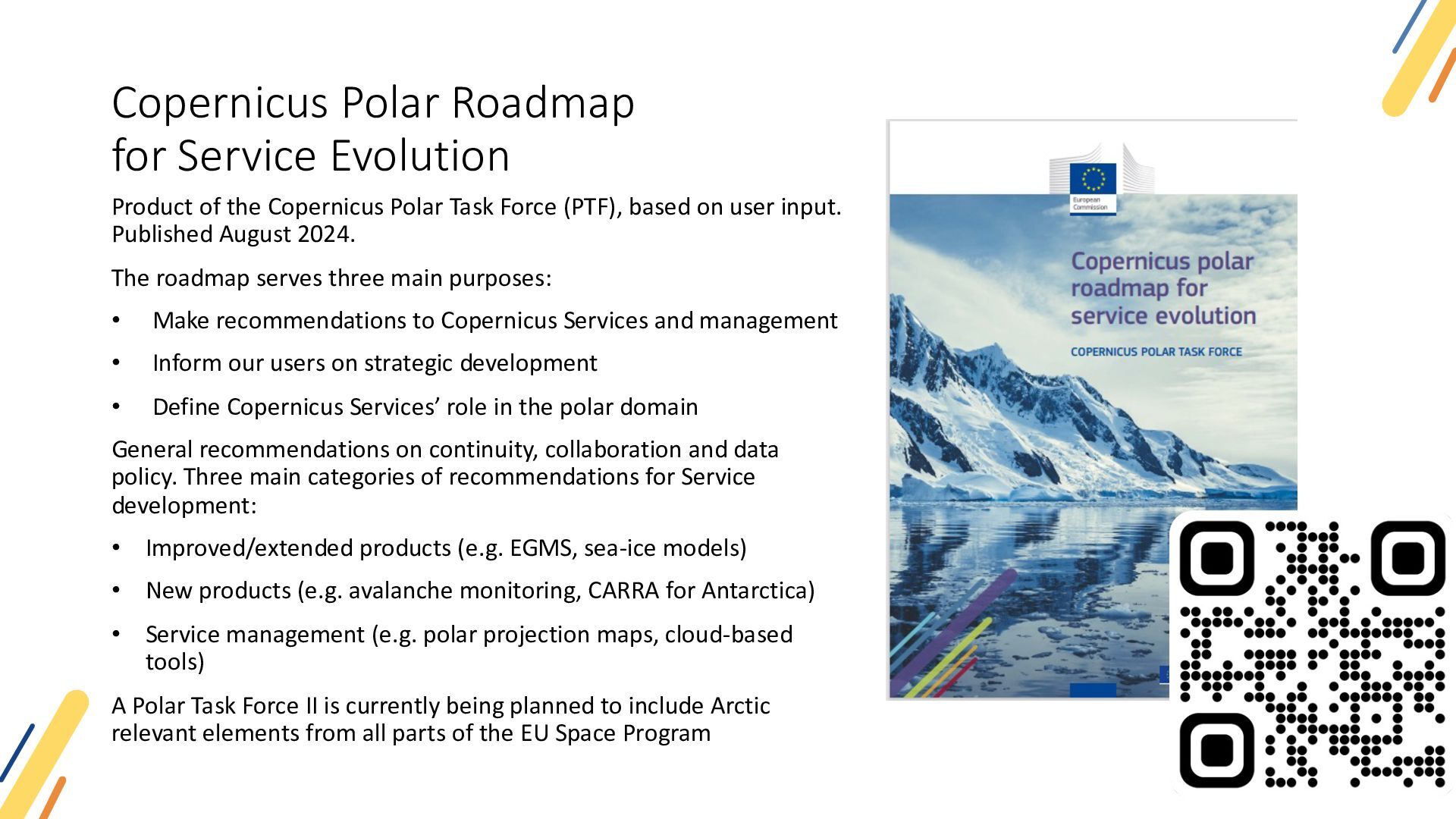
Polar Task Force (PTF), based on user input. Published August 2024. The roadmap serves three main purposes: • Make recommendations to Copernicus Services and management • Inform our users on strategic development • Define Copernicus Services’ role in the polar domain General recommendations on continuity, collaboration and data policy. Three main categories of recommendations for Service development: • Improved/extended products (e.g. EGMS, sea-ice models) • New products (e.g. avalanche monitoring, CARRA for Antarctica) • Service management (e.g. polar projection maps, cloud-based tools) A Polar Task Force II is currently being planned to include Arctic relevant elements from all parts of the EU Space Program
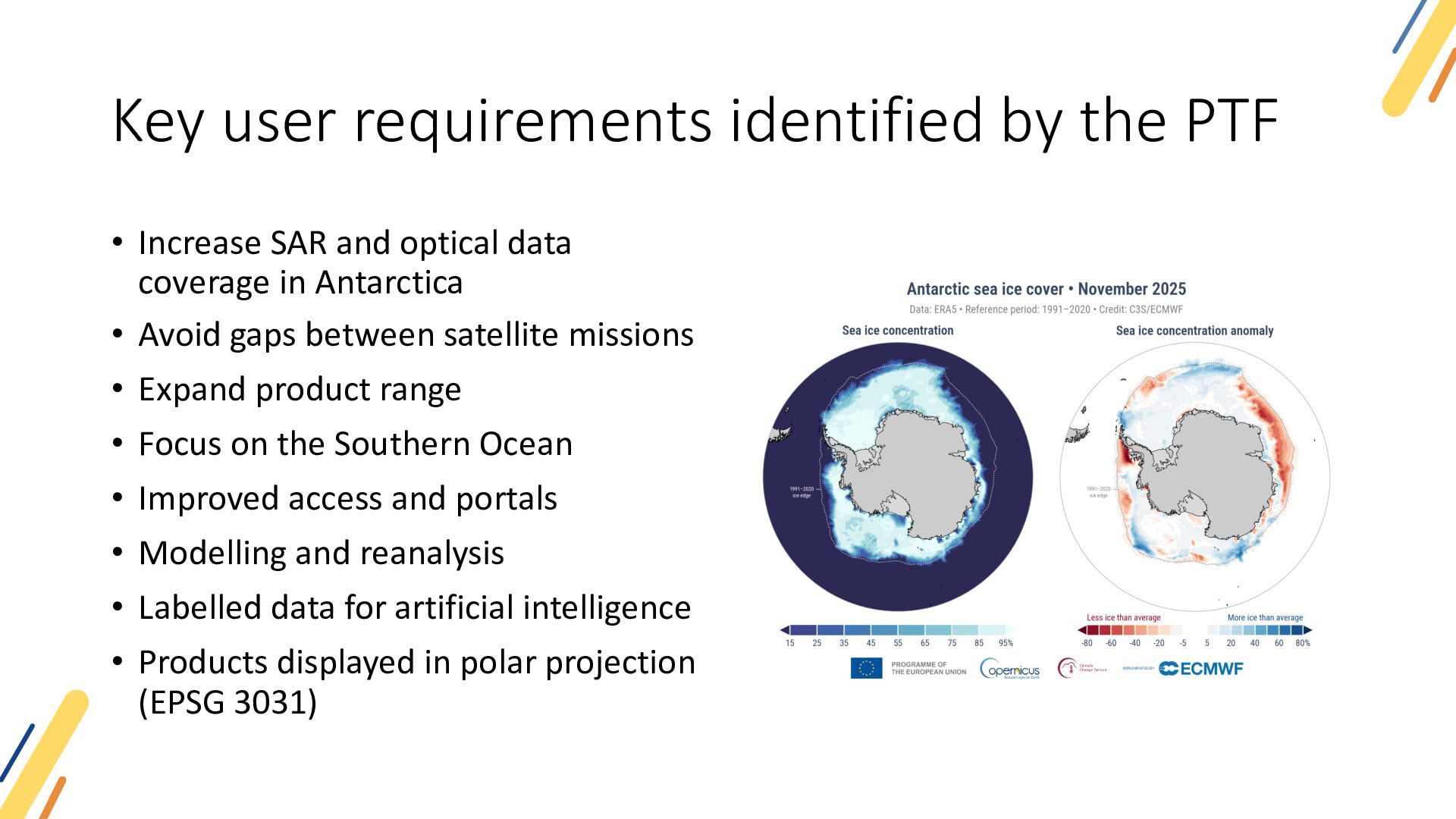
and optical data coverage in Antarctica • Avoid gaps between satellite missions • Expand product range • Focus on the Southern Ocean • Improved access and portals • Modelling and reanalysis • Labelled data for artificial intelligence • Products displayed in polar projection (EPSG 3031)


 ipfevents
 naospon
 rmaruy
 tagtag
 michielstock
 takusamar
 hashimoto_kei
.jpg) lychee1223
lychee1223
 trycycle
 voginip
 i2tsuki
 ppillc
 szymonslowik
 tanoku
 soudai
 oripsolob
 inesmontani
 helmedeiros
 marktimemedia
.png) helenjbeal
helenjbeal
 philnash
 nonsquared
 bkeepers