TYC 8th Energy Materials workshop: From Electron and Phonon Interactions to Net Zero
1 June 2026 @ 1:30 pm – 3 June 2026 @ 4:30 pm
Venue: The Great Hall, King’s College London, Strand
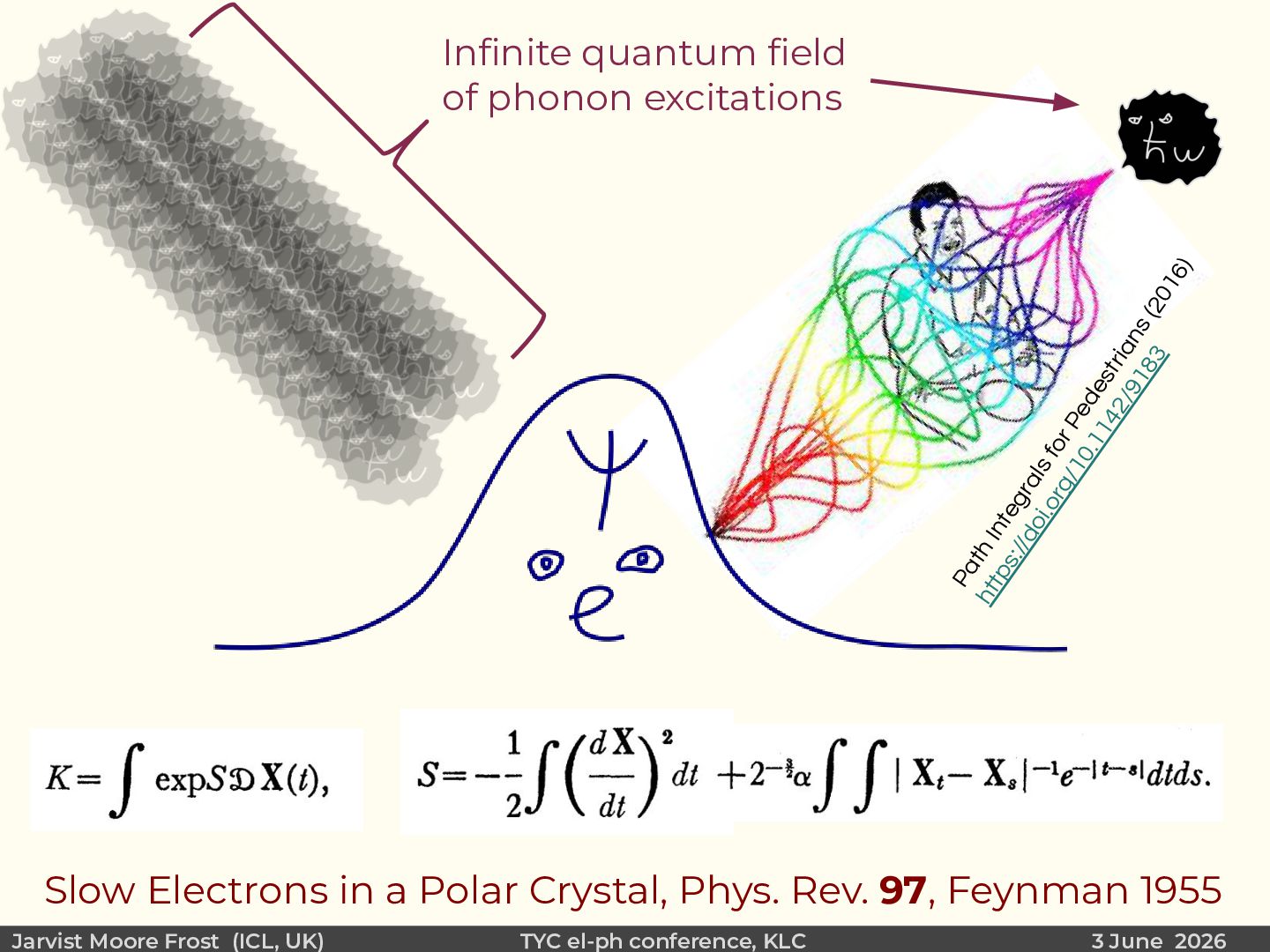
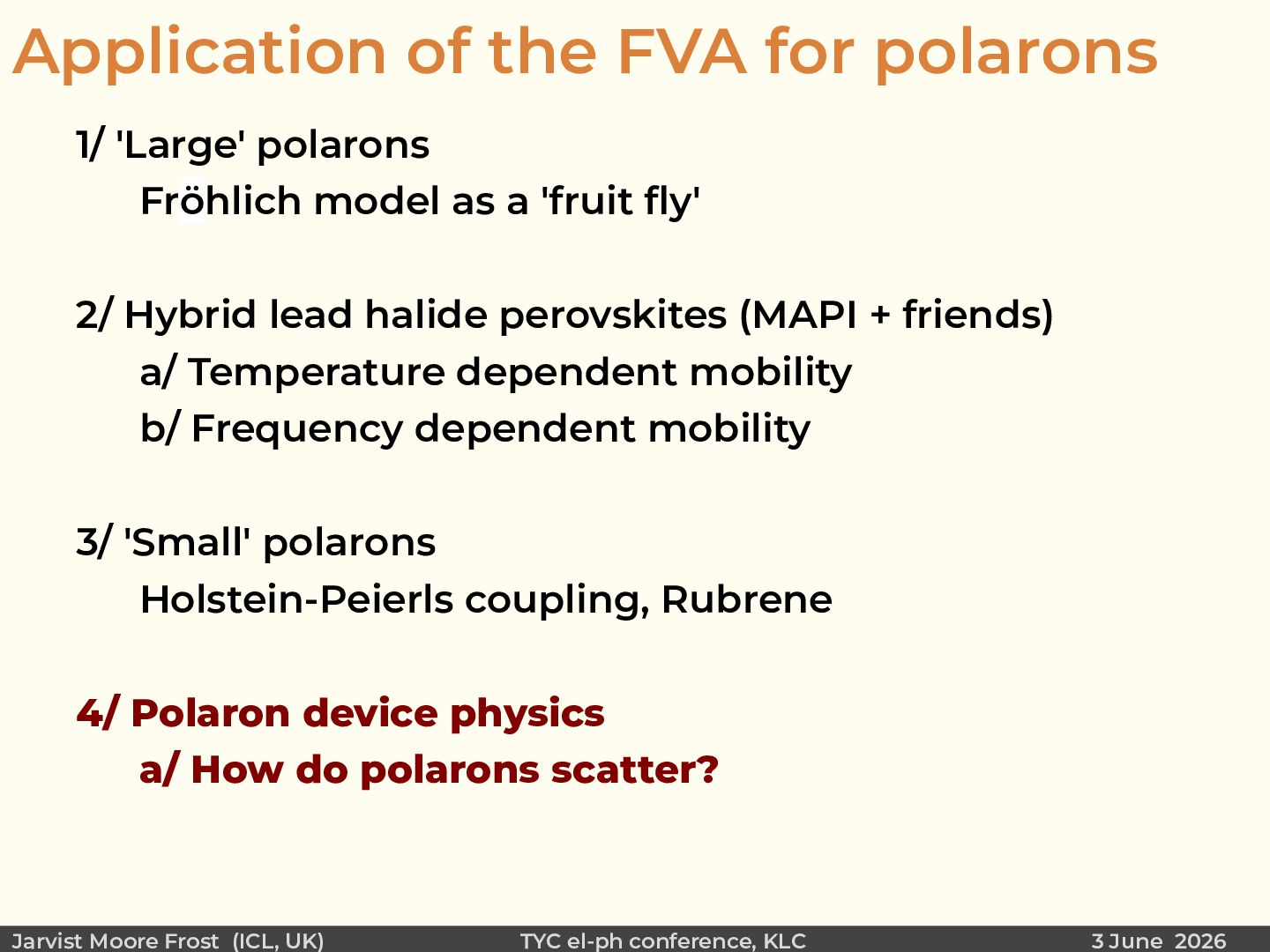
Path integral polarons for real semiconductors
Jarvist Moore Frost, Imperial College London [contributed]
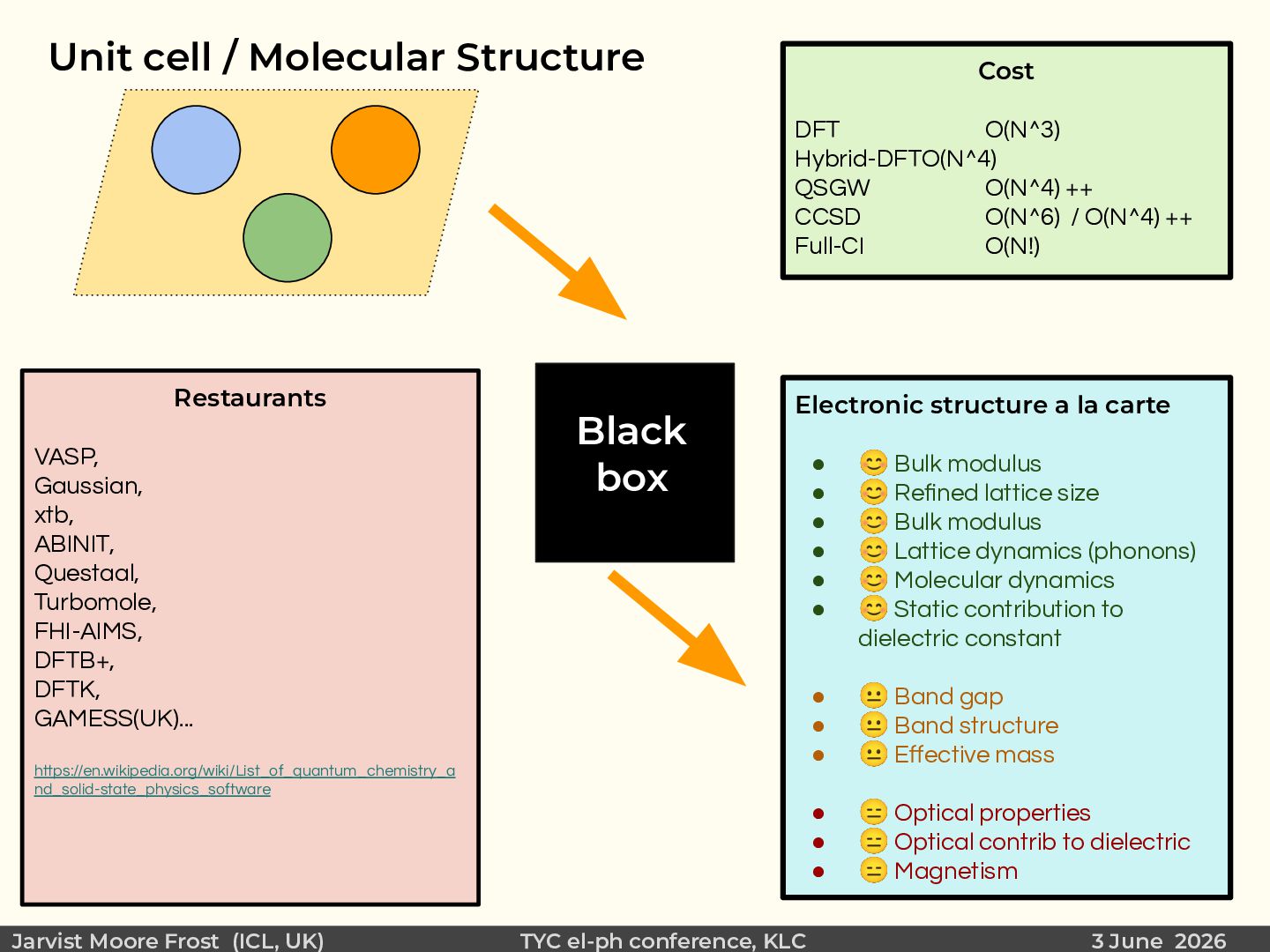
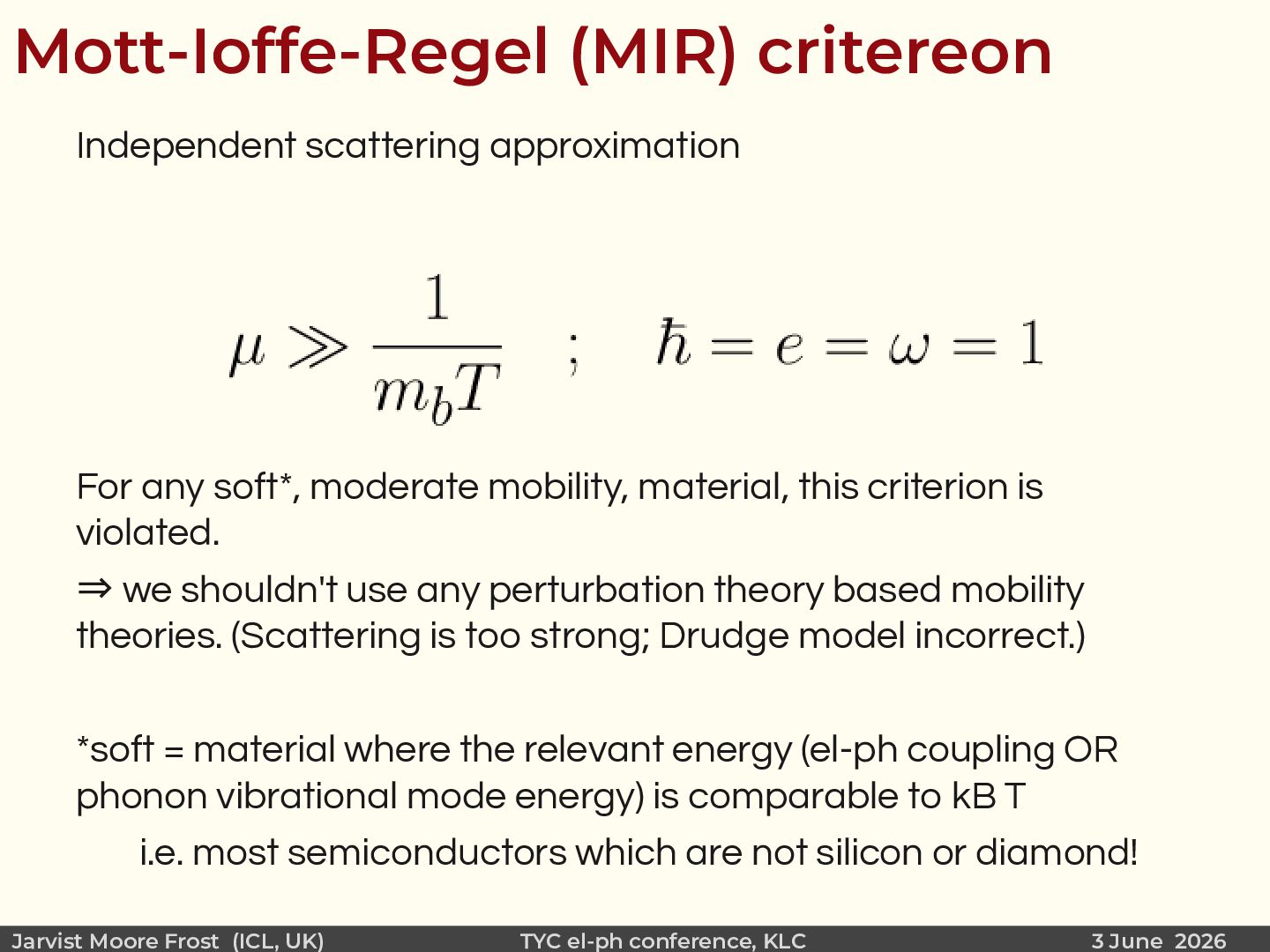
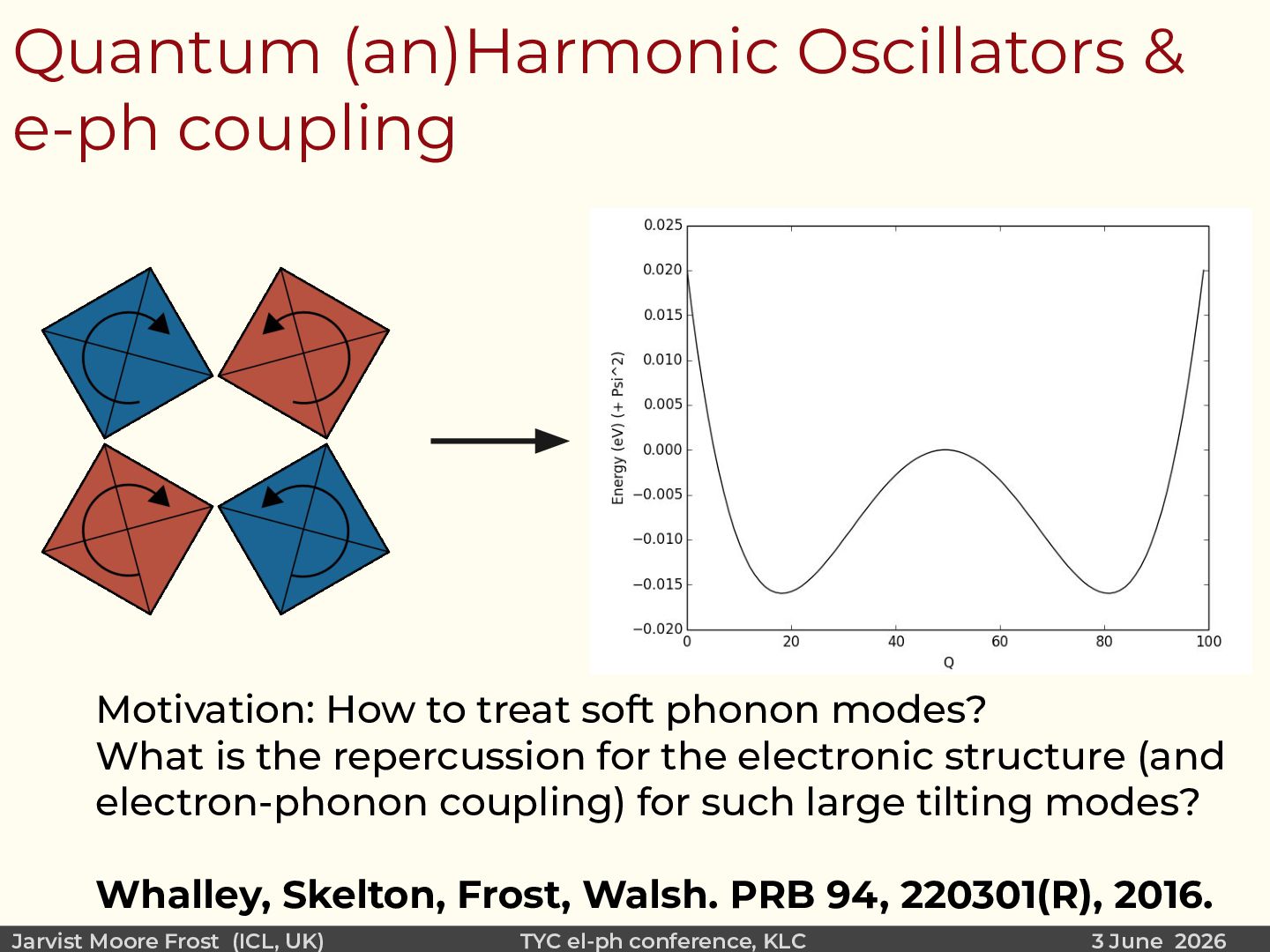
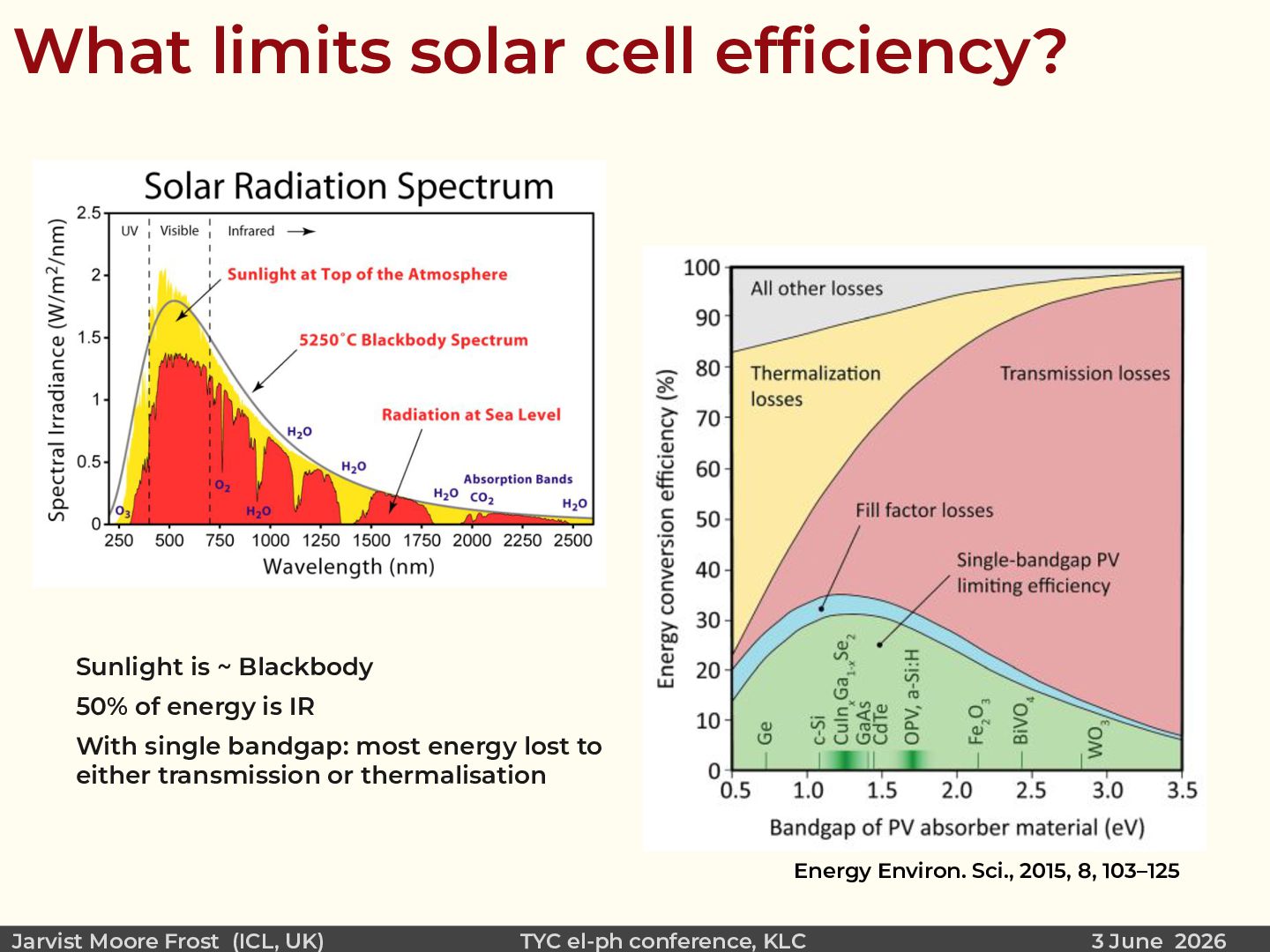
Most technically relevant behaviours of semiconductors for energy materials are emergent phenomena. Rather than being direct quantum observables, they arise due to the competition between different, similar strength, processes, and are transient and finite-temperature. This poses a considerable challenge for materials modelling.
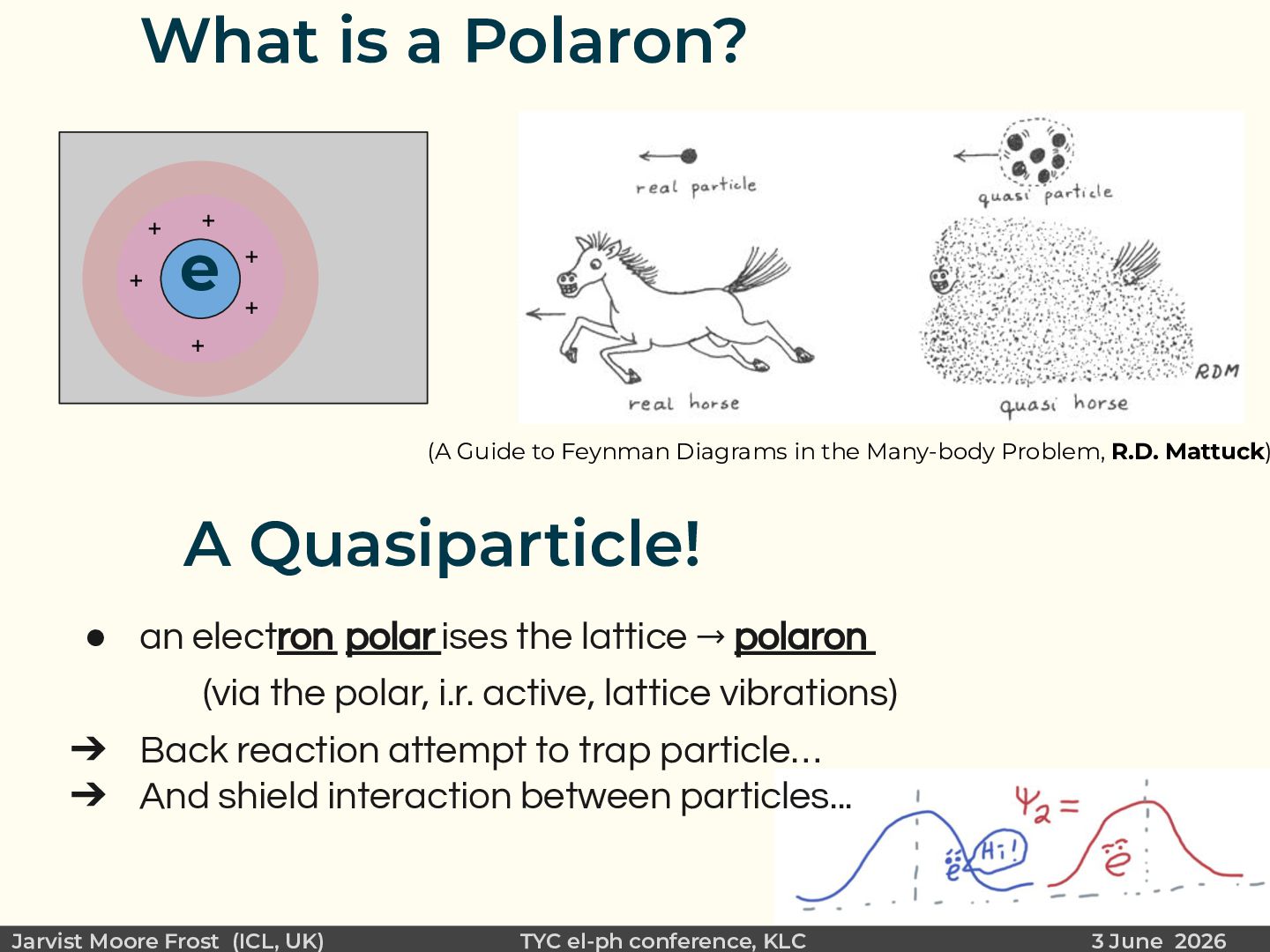
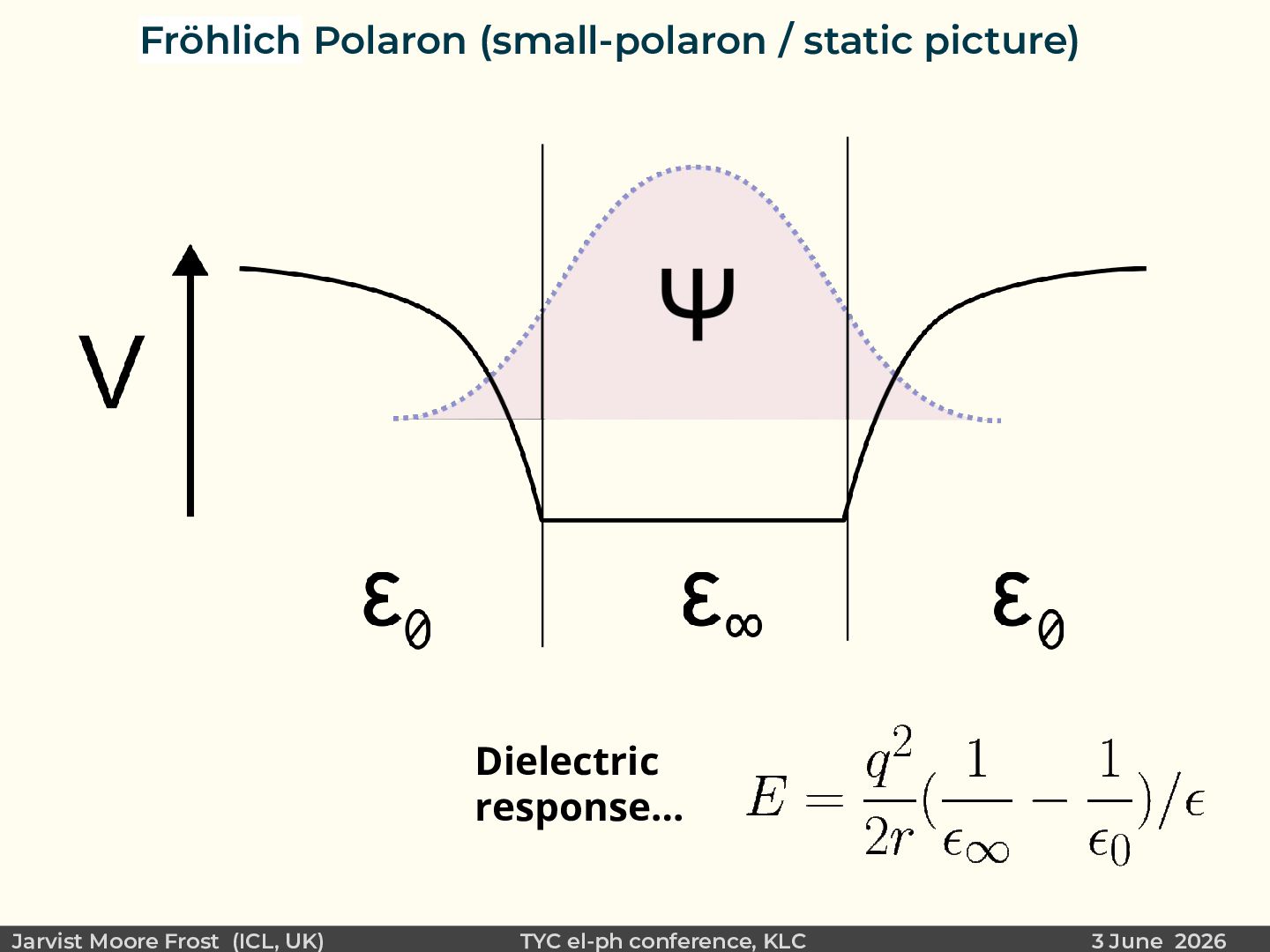
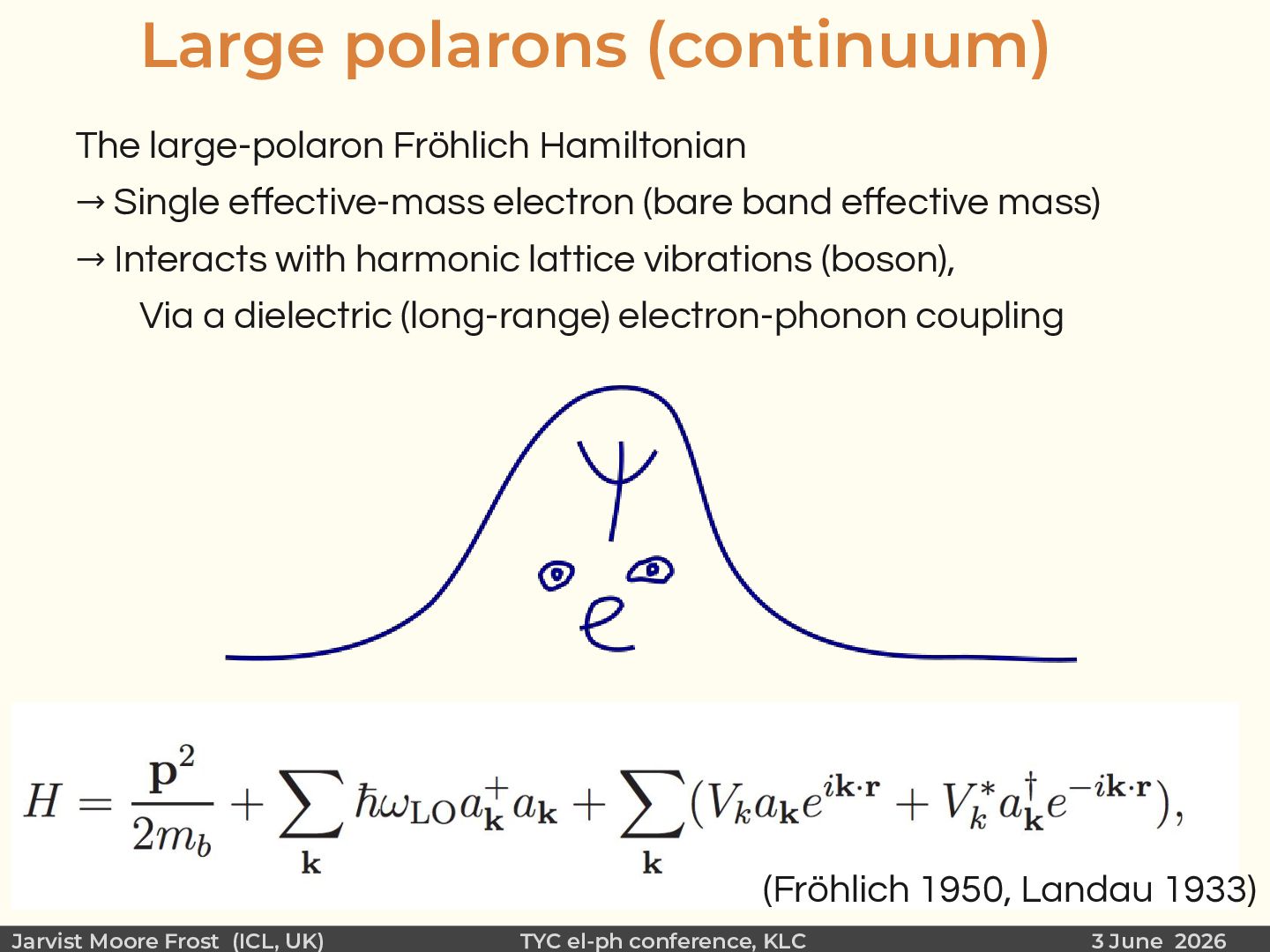
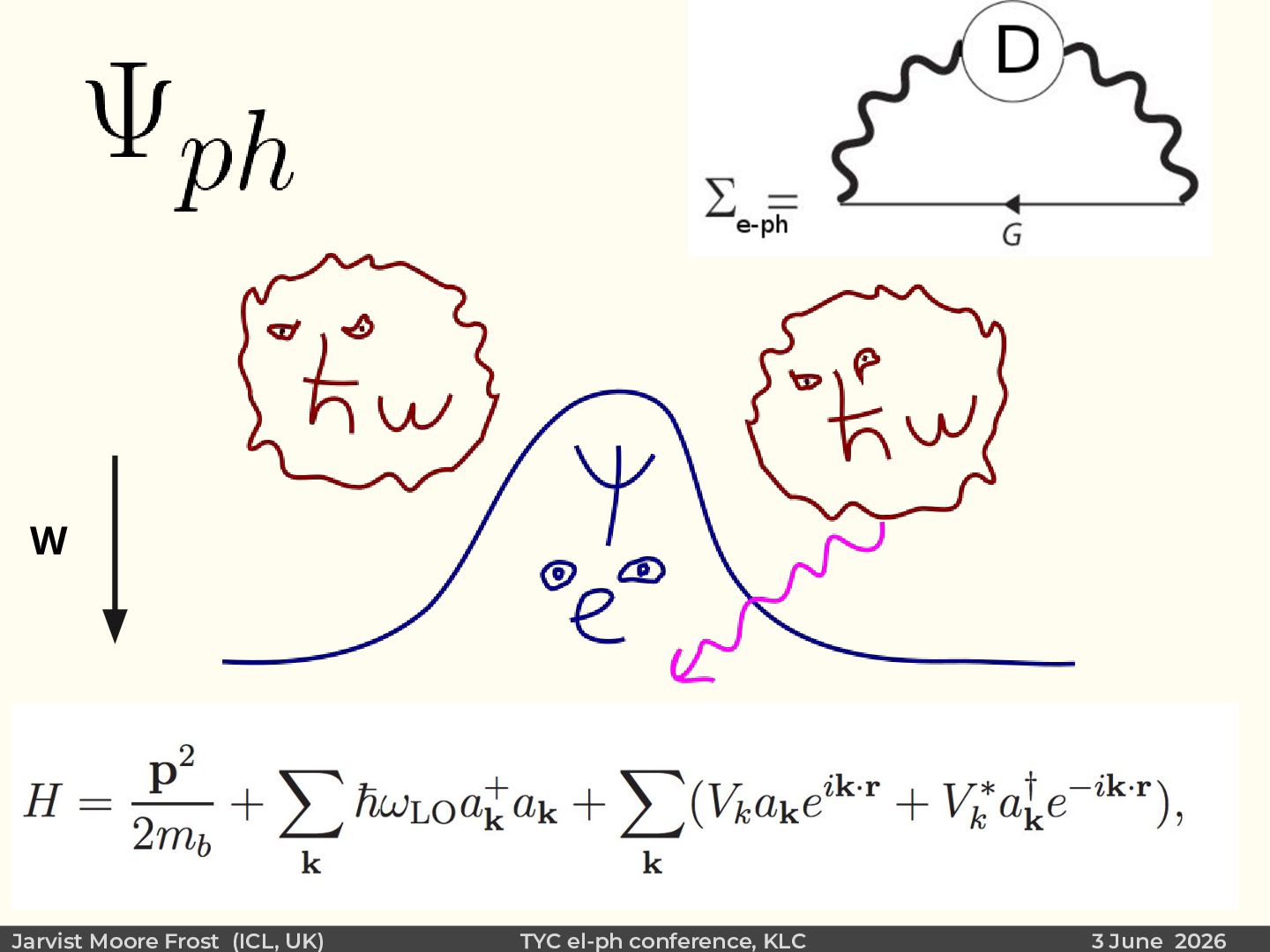
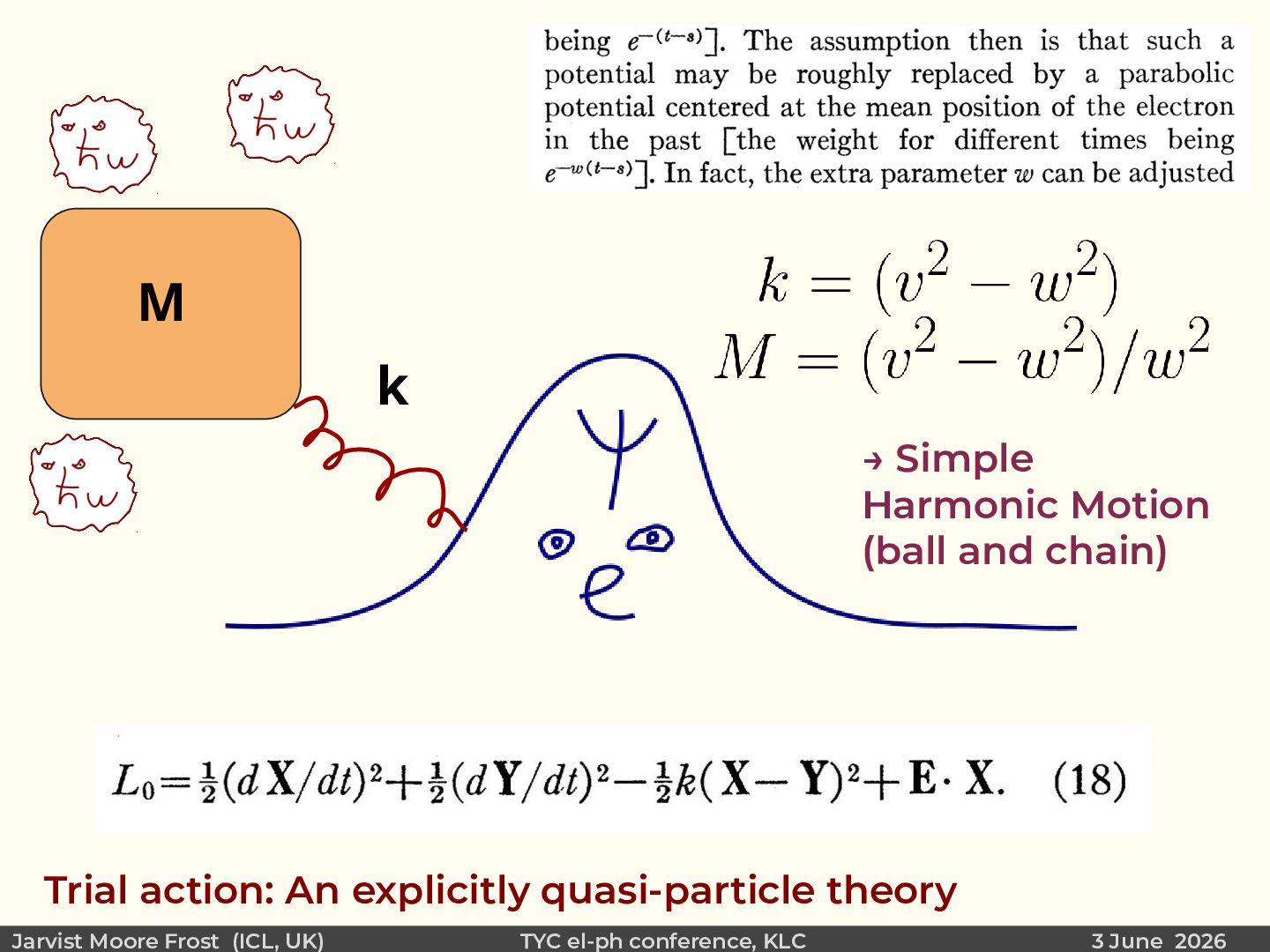
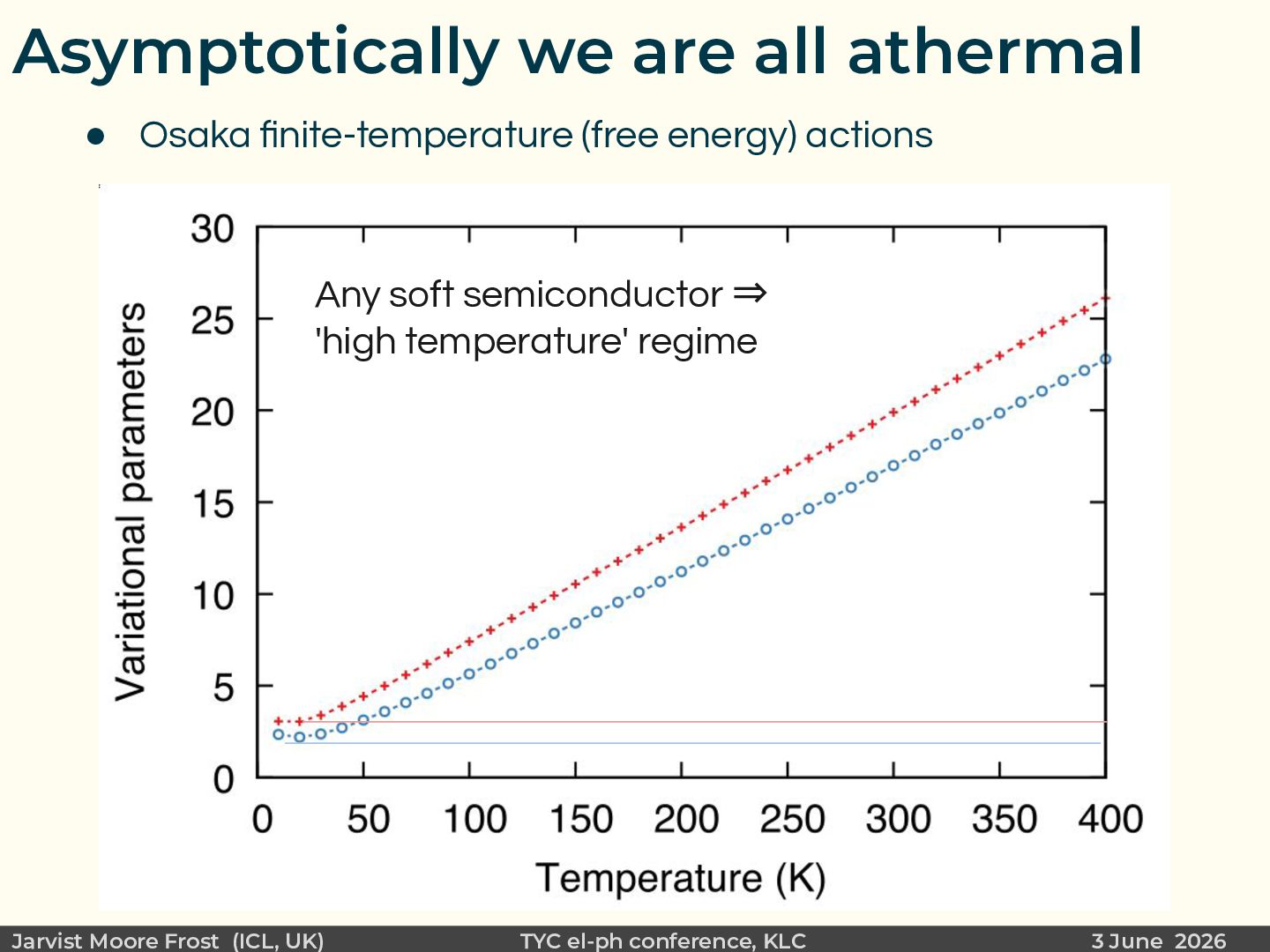
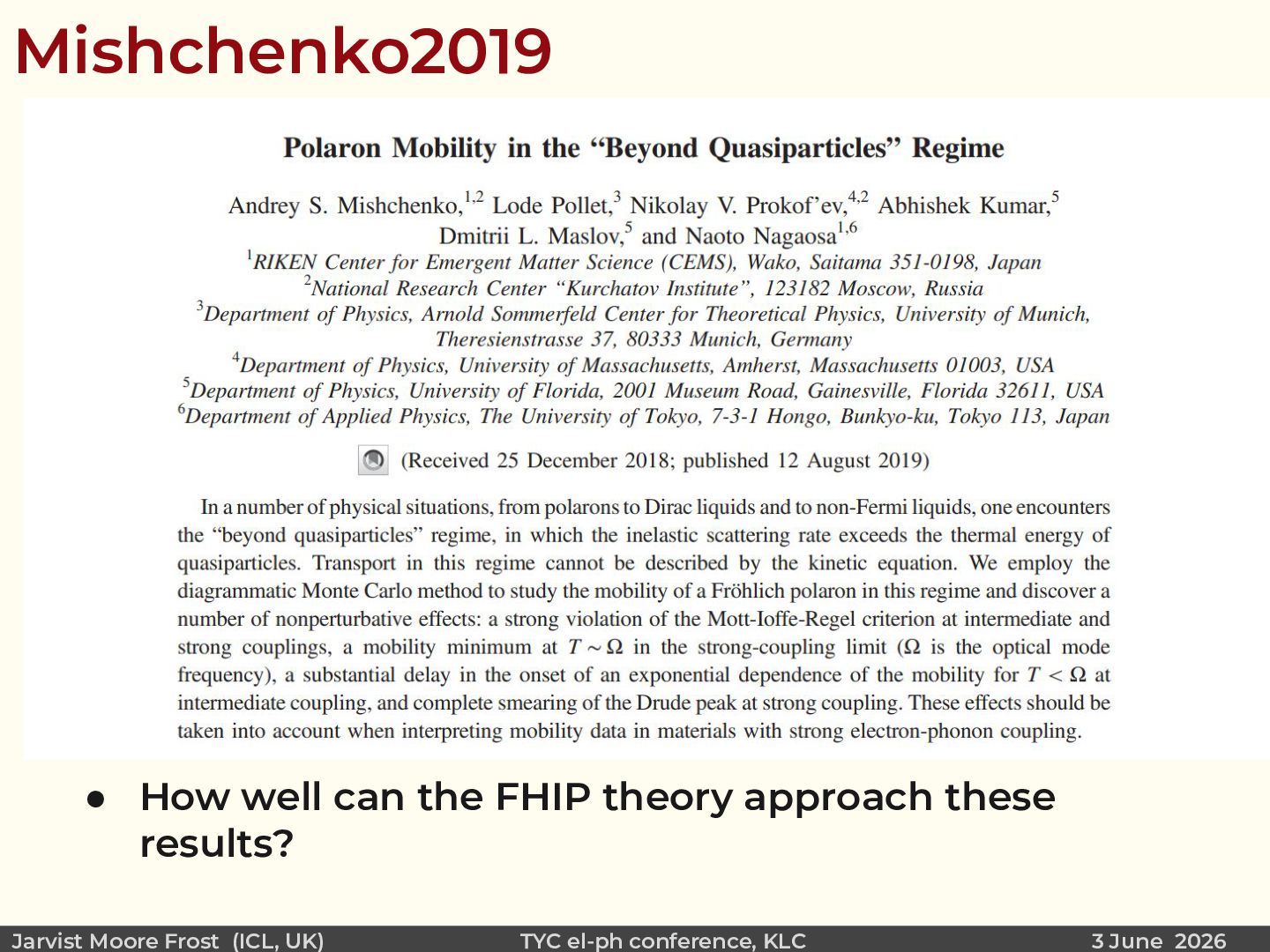
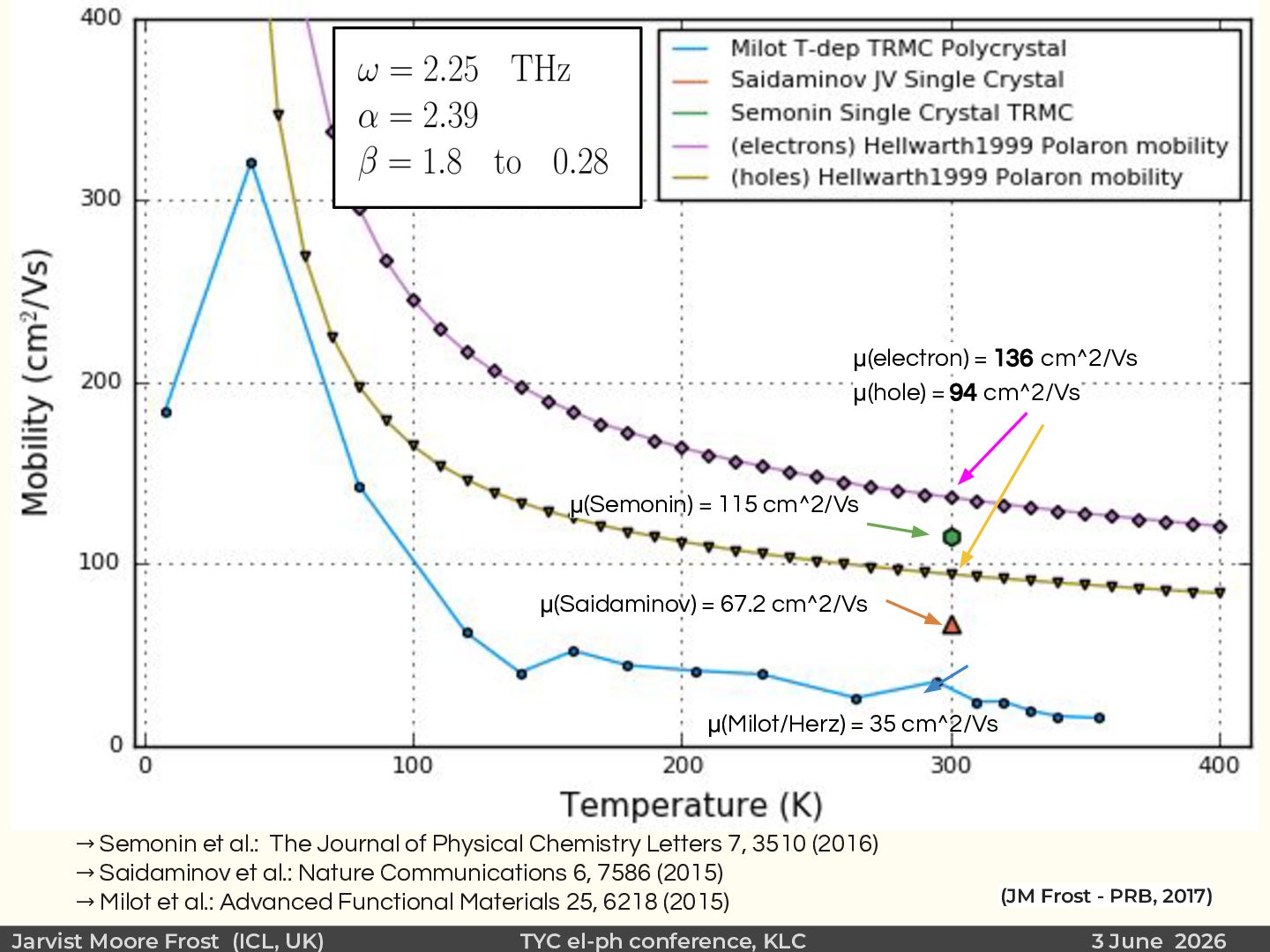
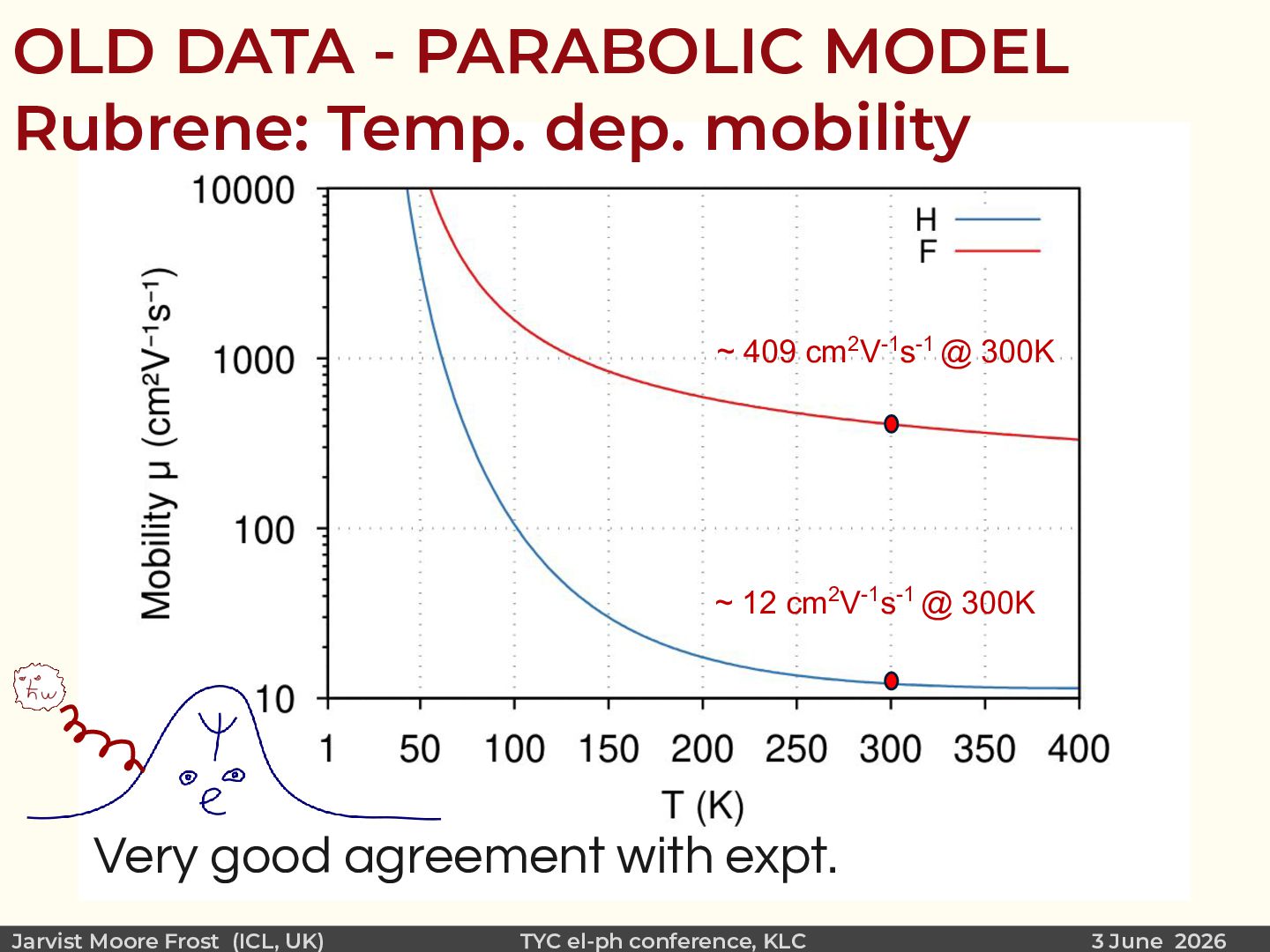
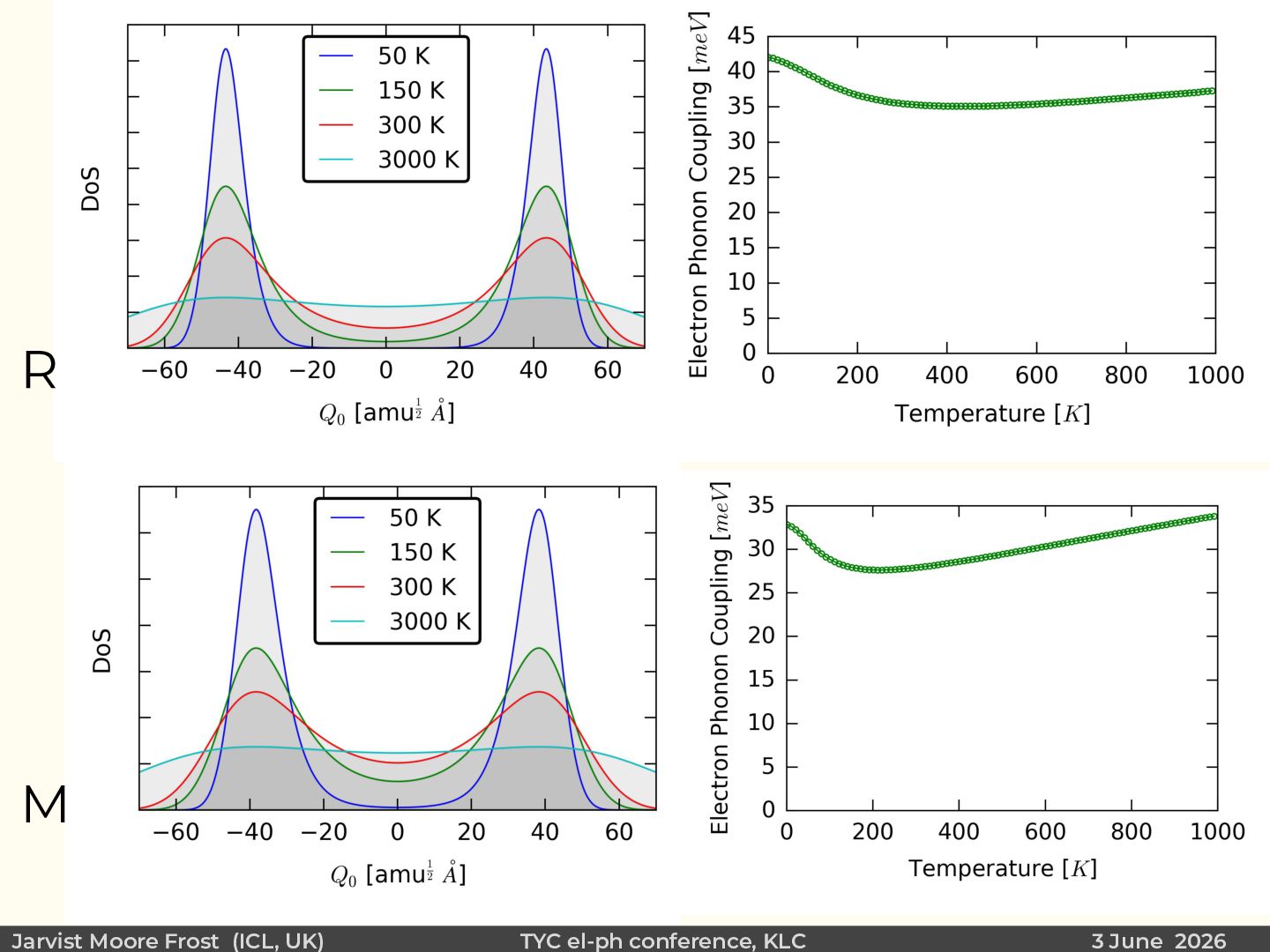
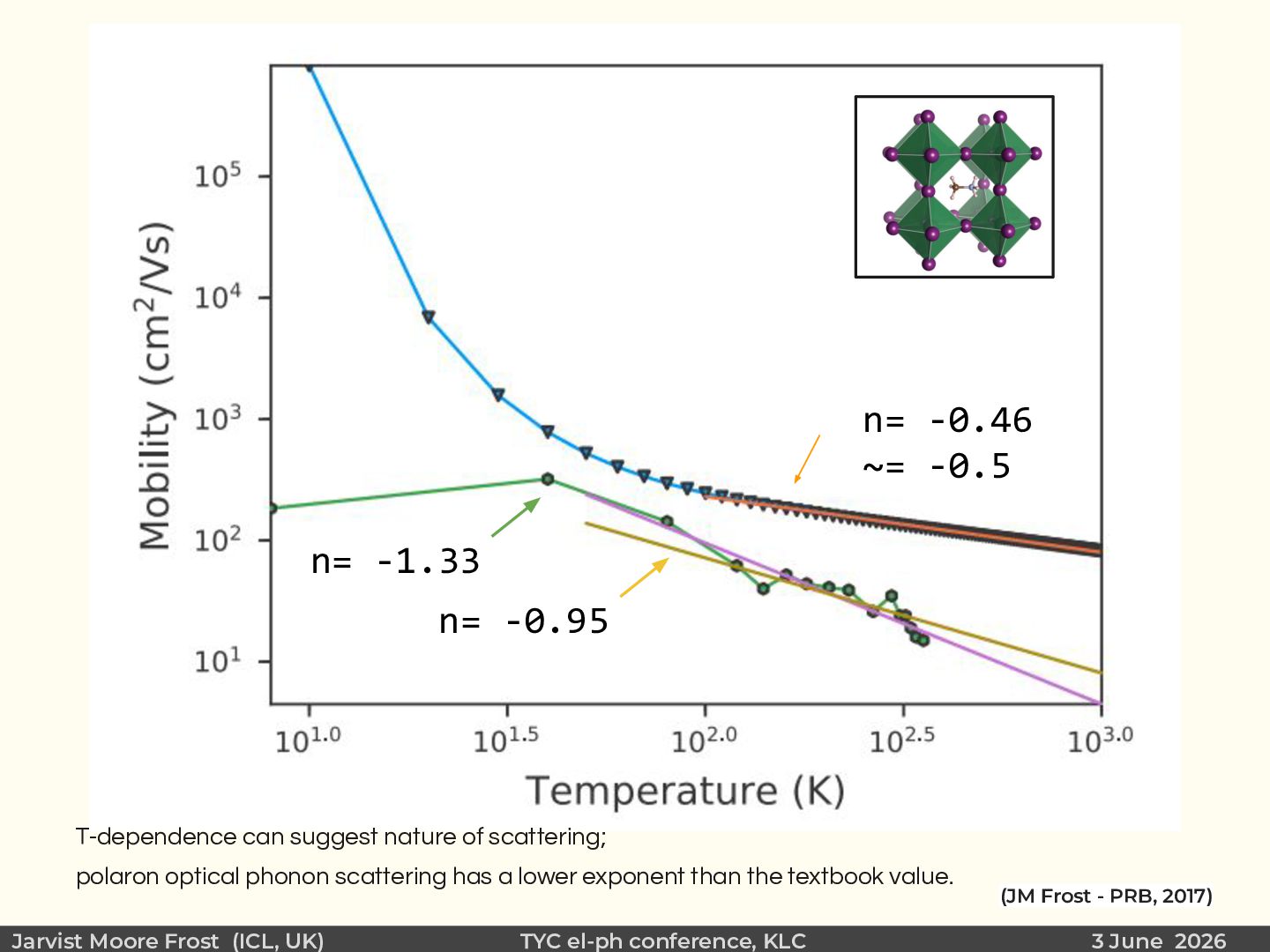
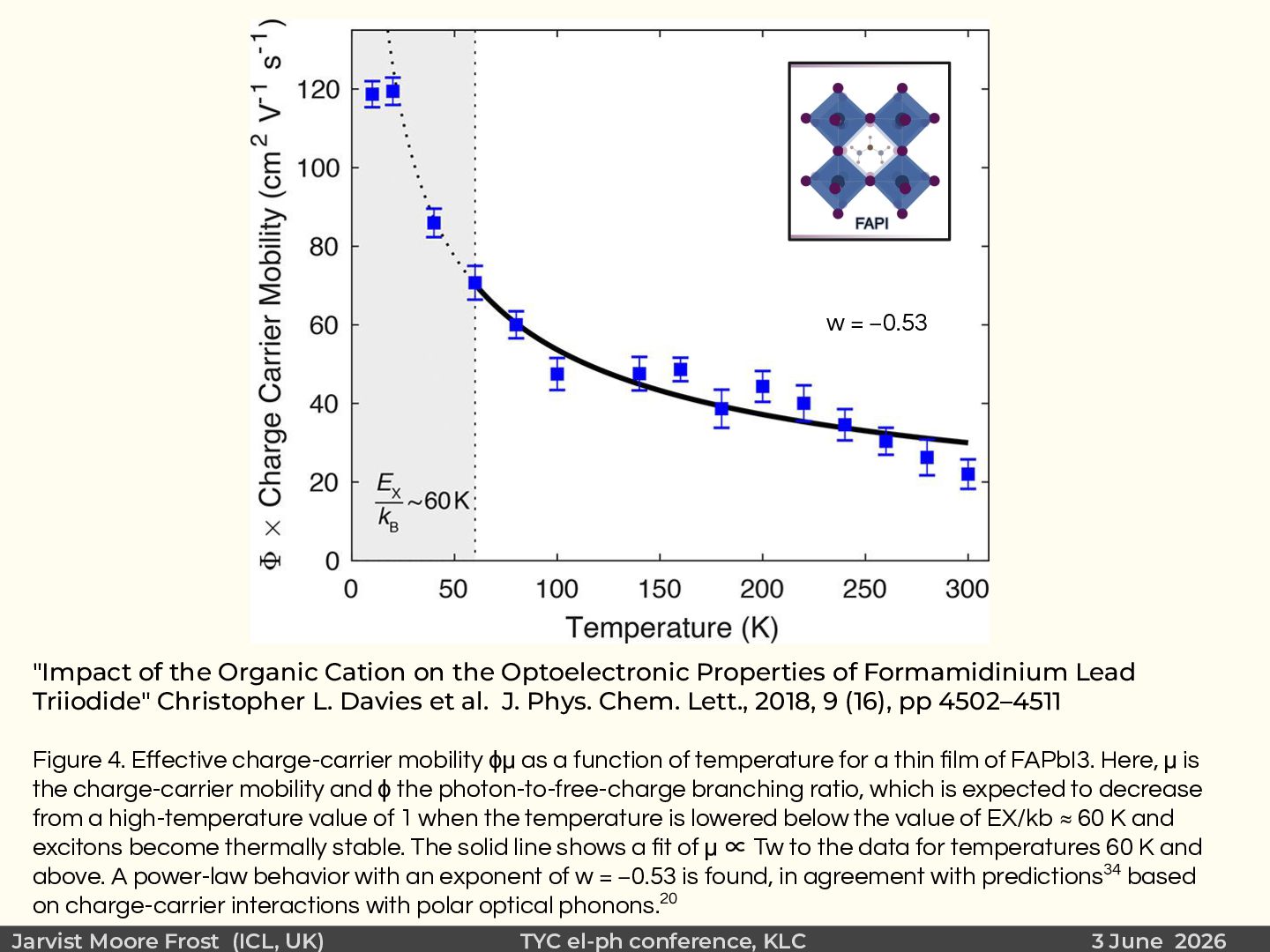
A particular recent focus of ours has been the charge-carrier mobility in polar semiconductors. The charge-carrier polarises the lattice, and the back-reaction attempts to localise the charge carrier. Trulythis is a finite-temperature quantum field-theory problem (as phonons can be created and destroyed).
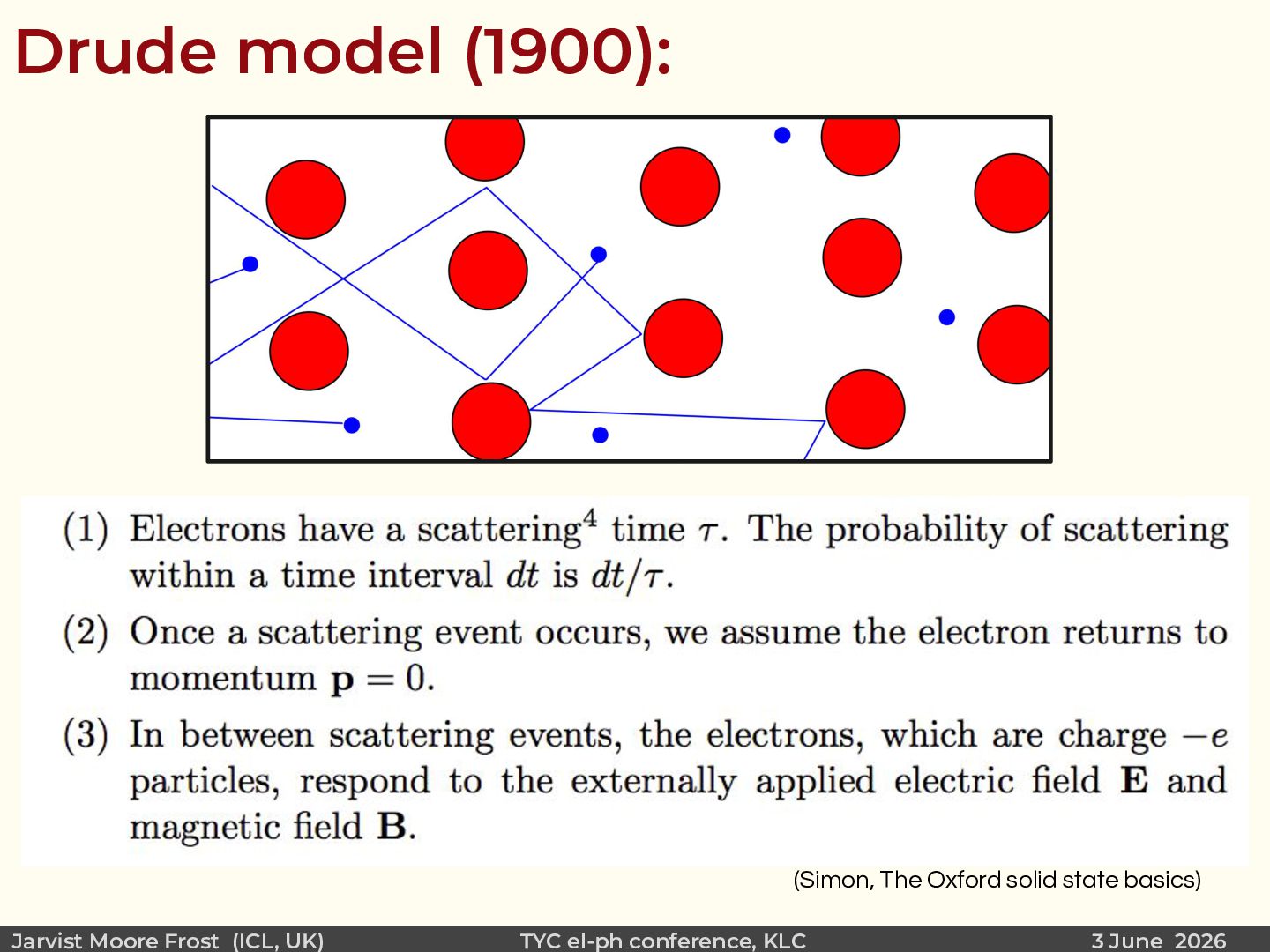
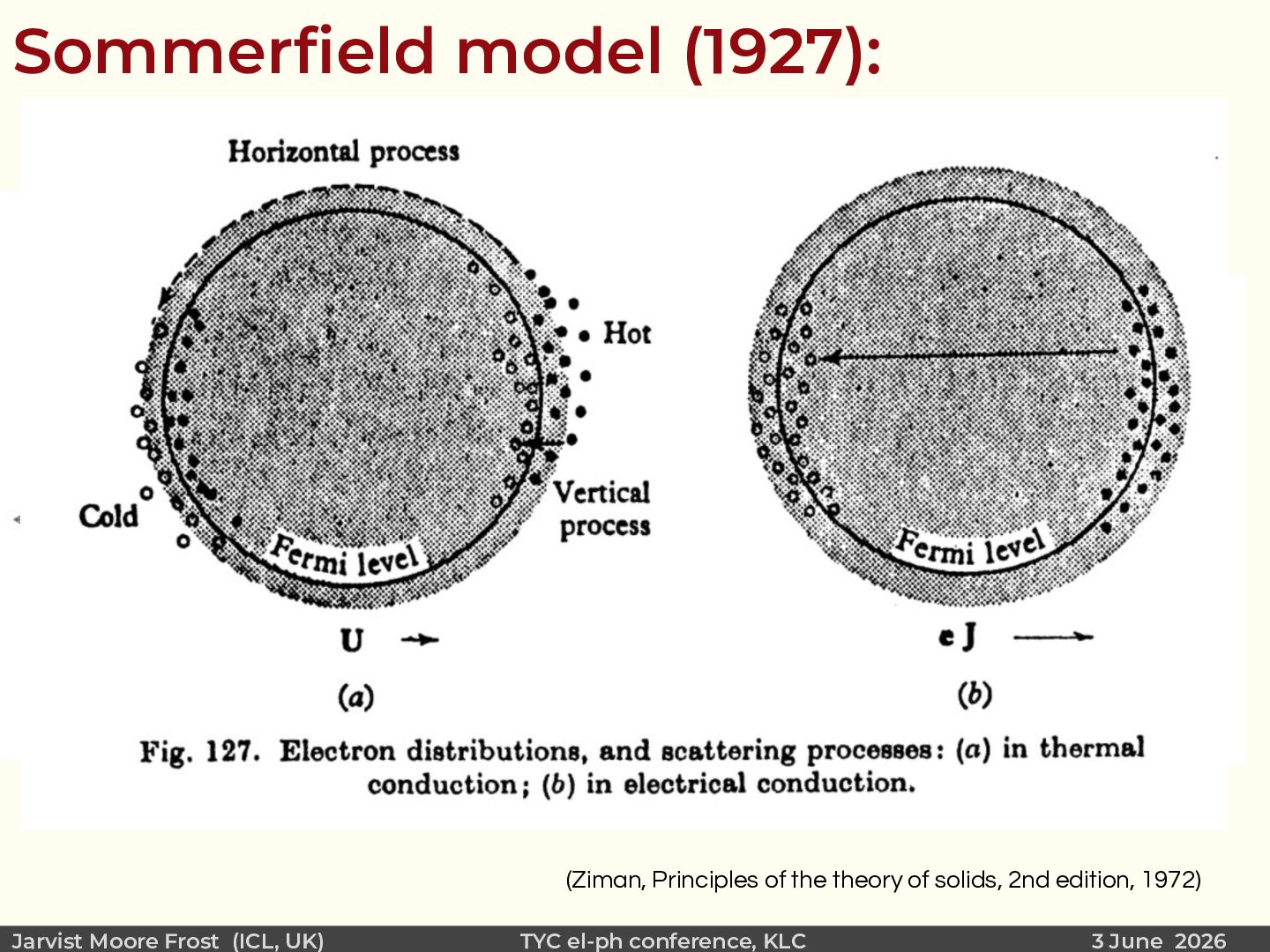
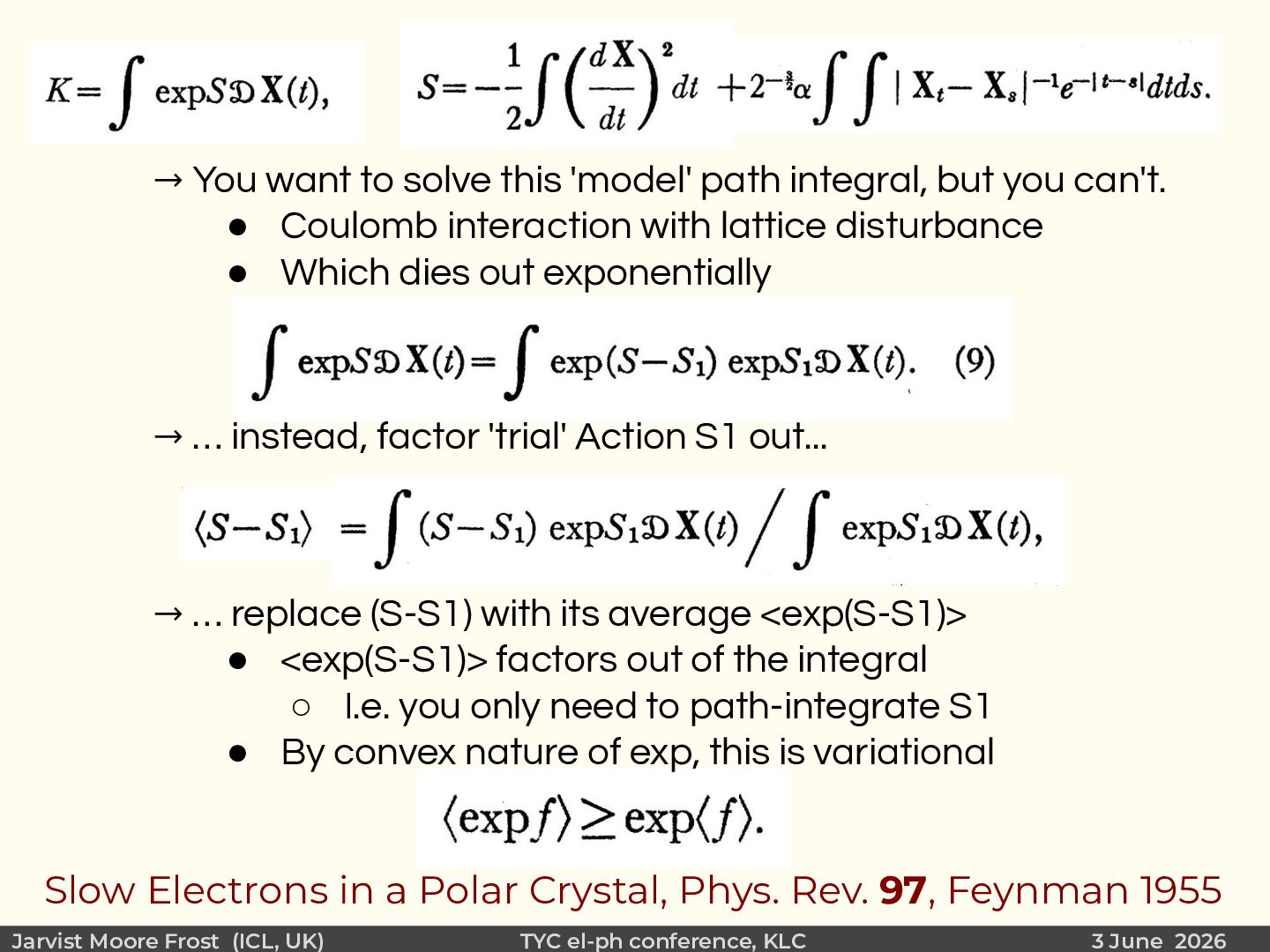
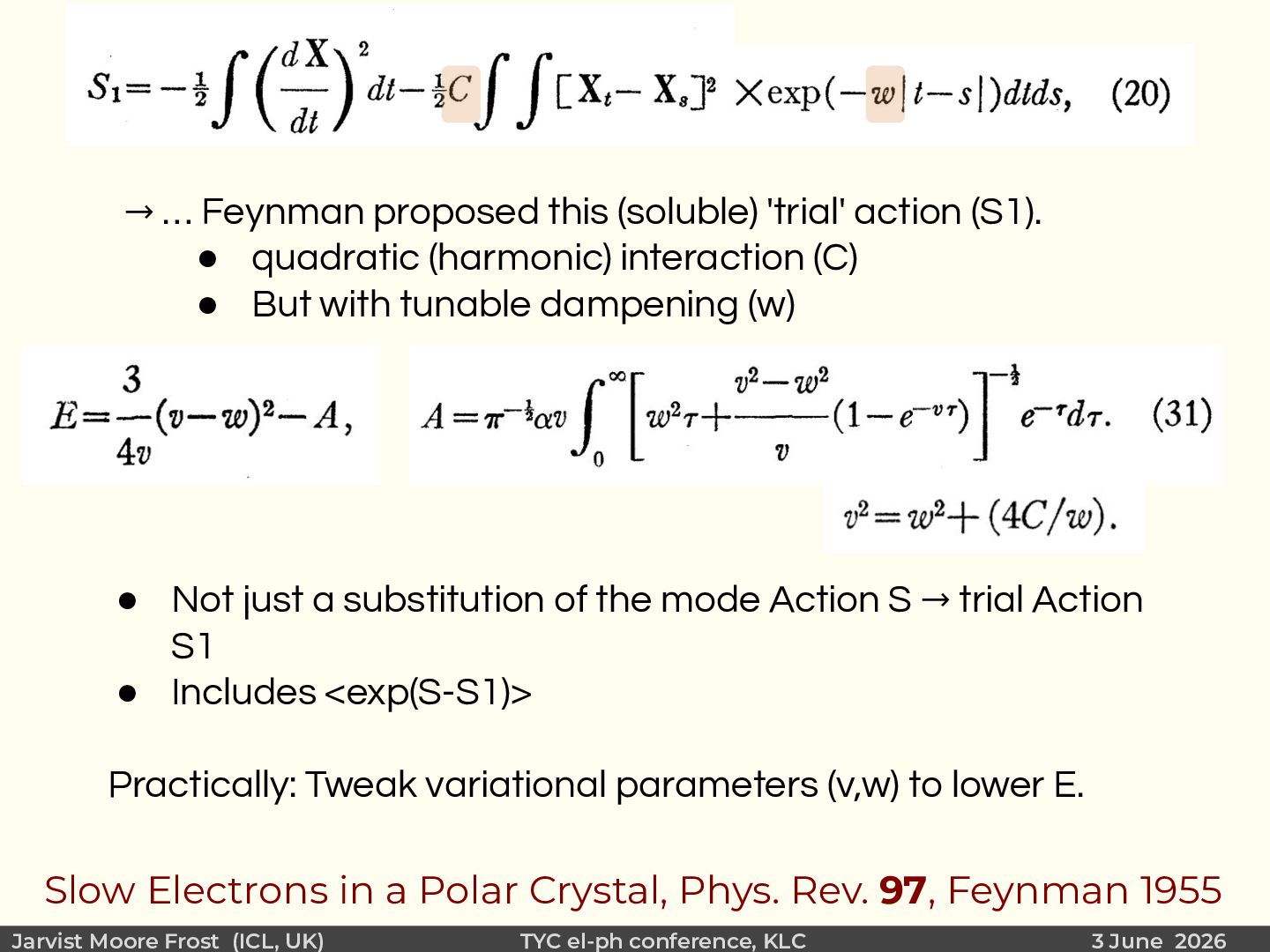
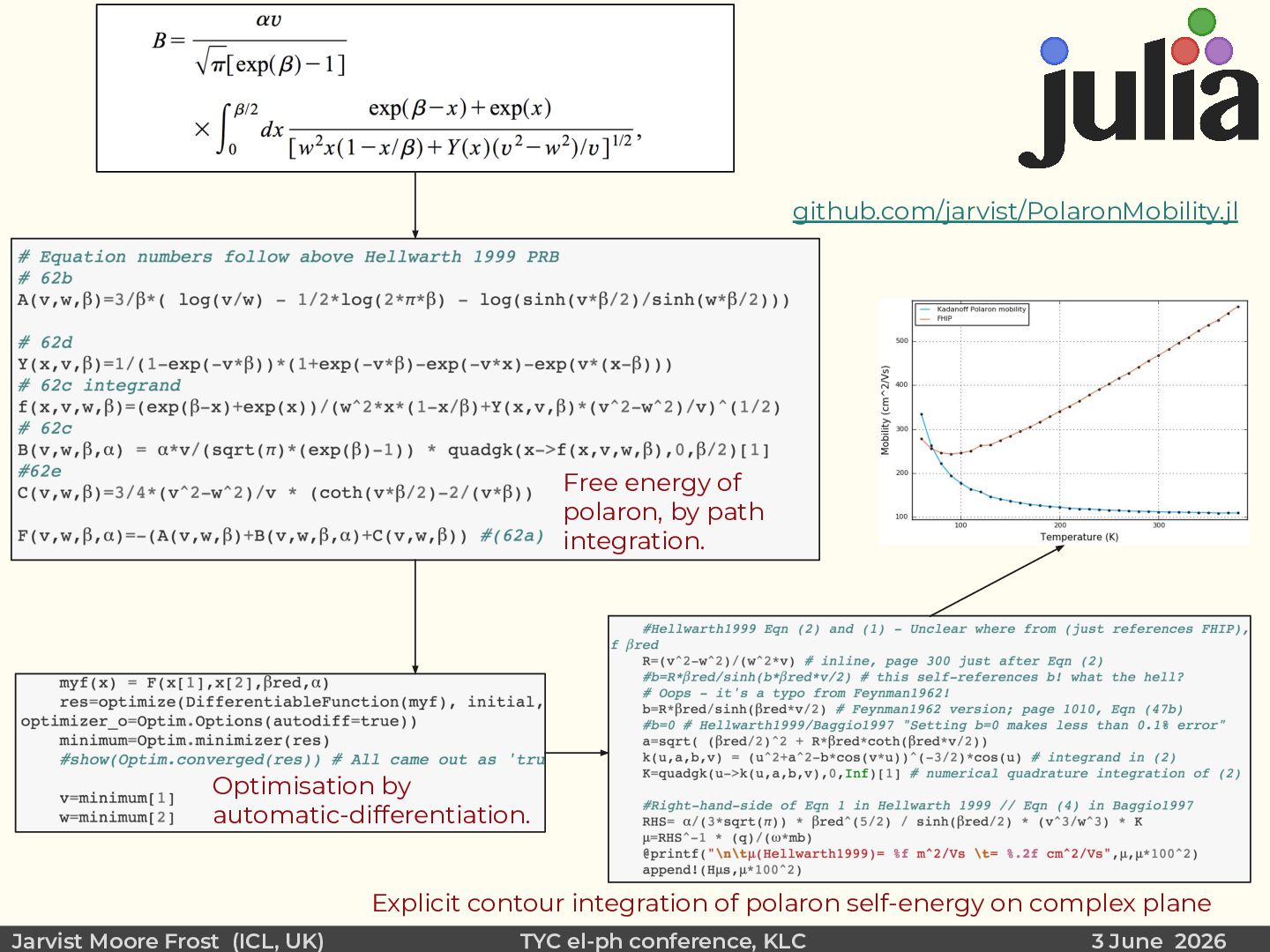
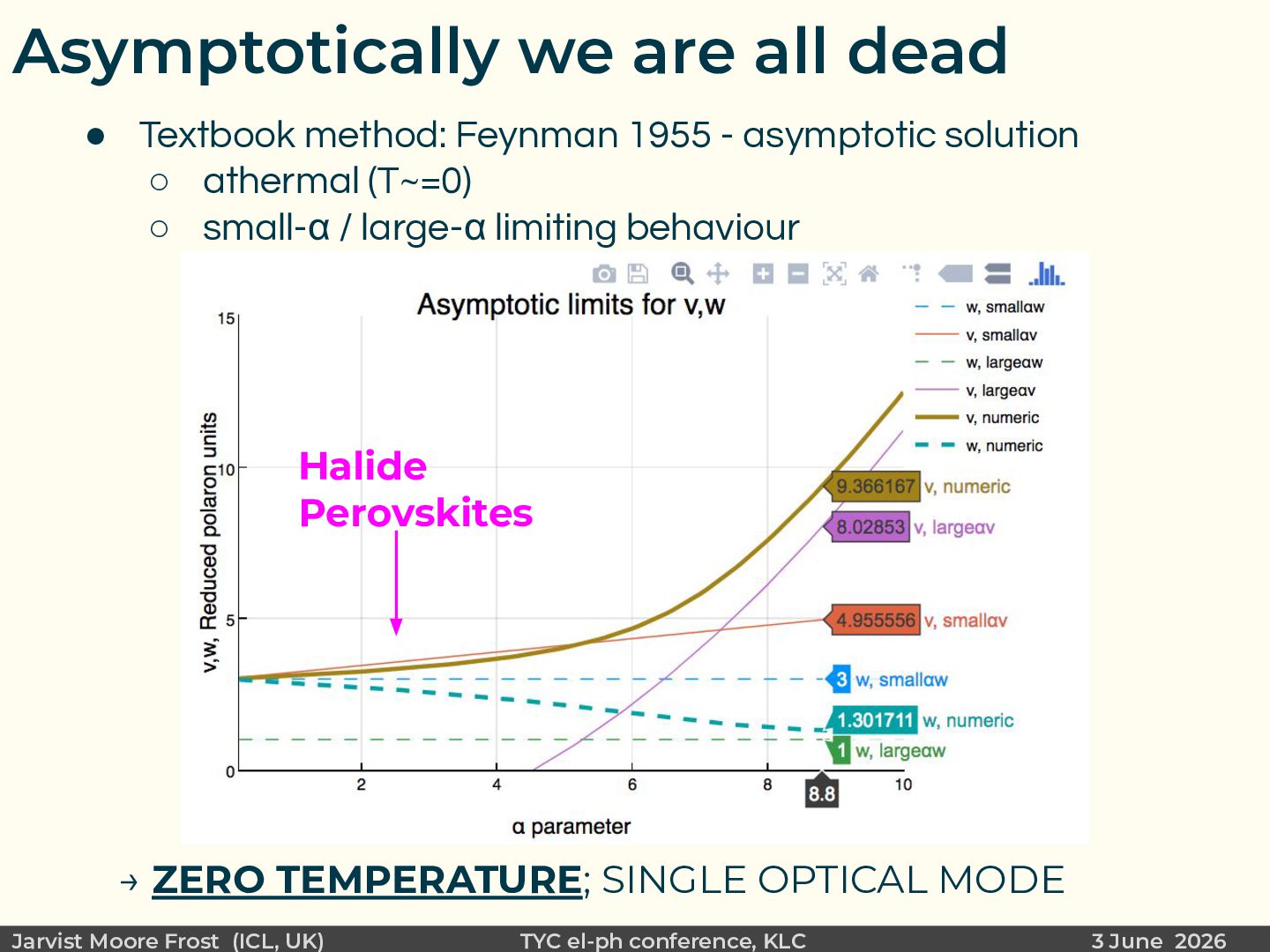
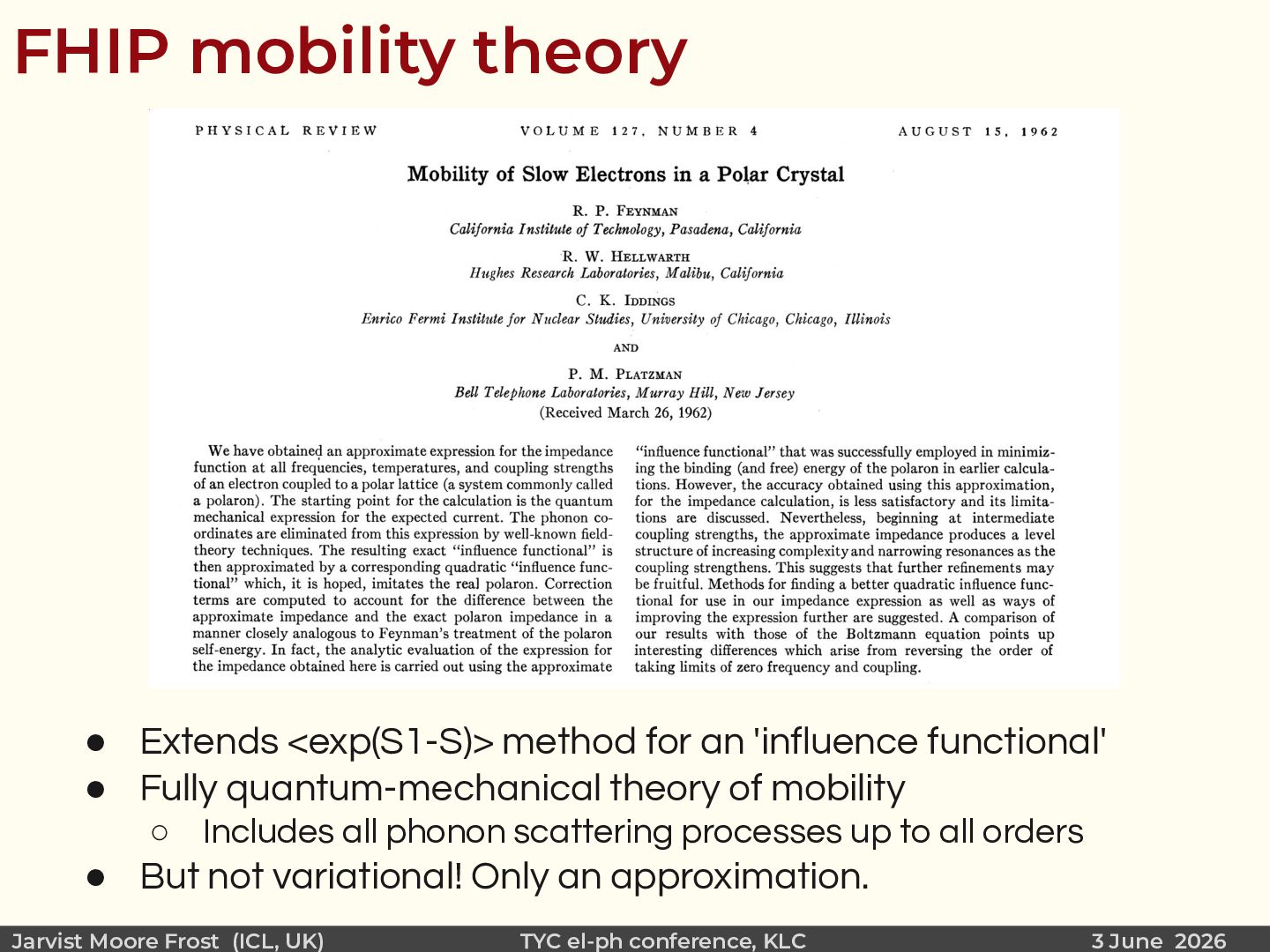
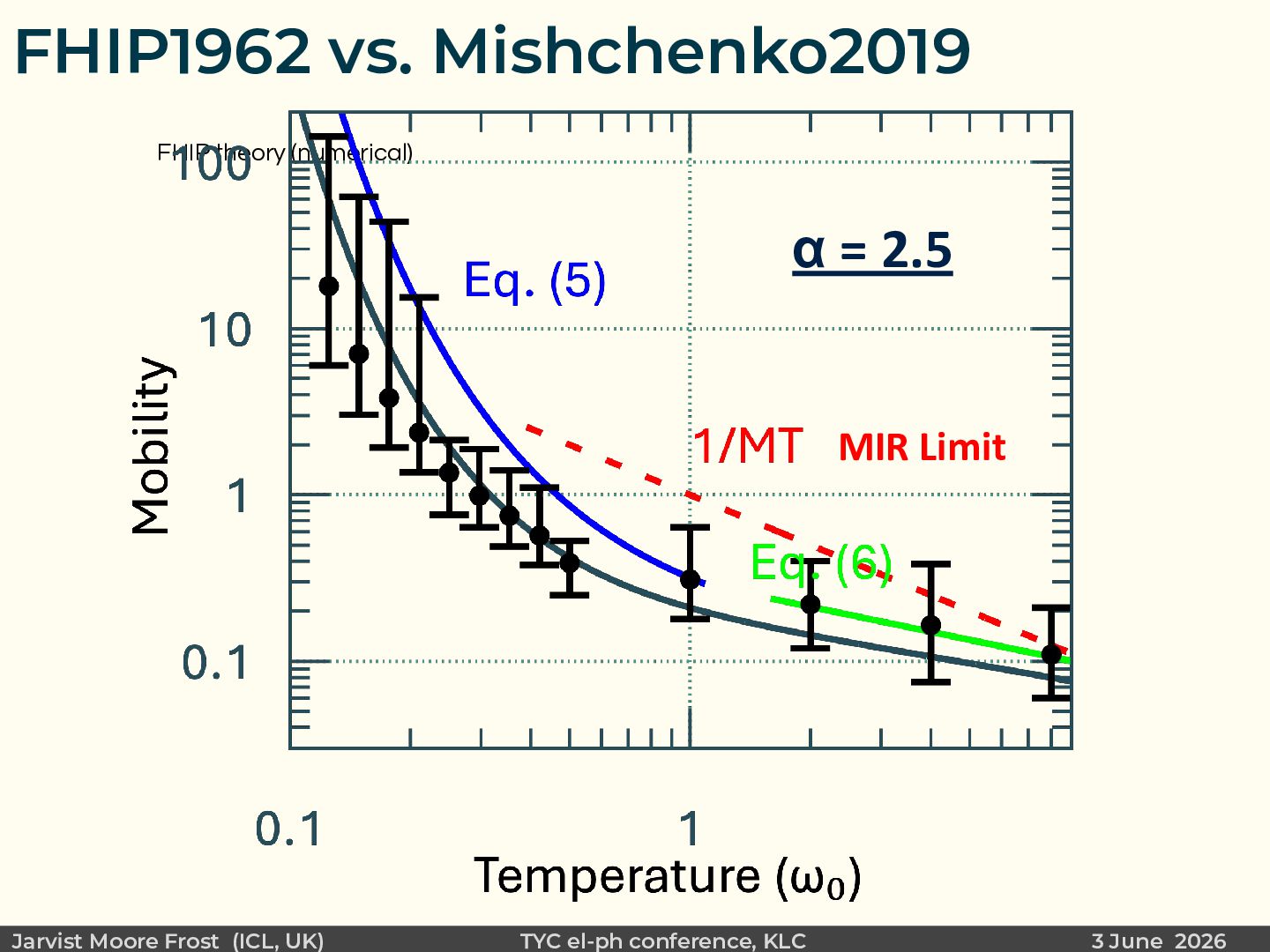
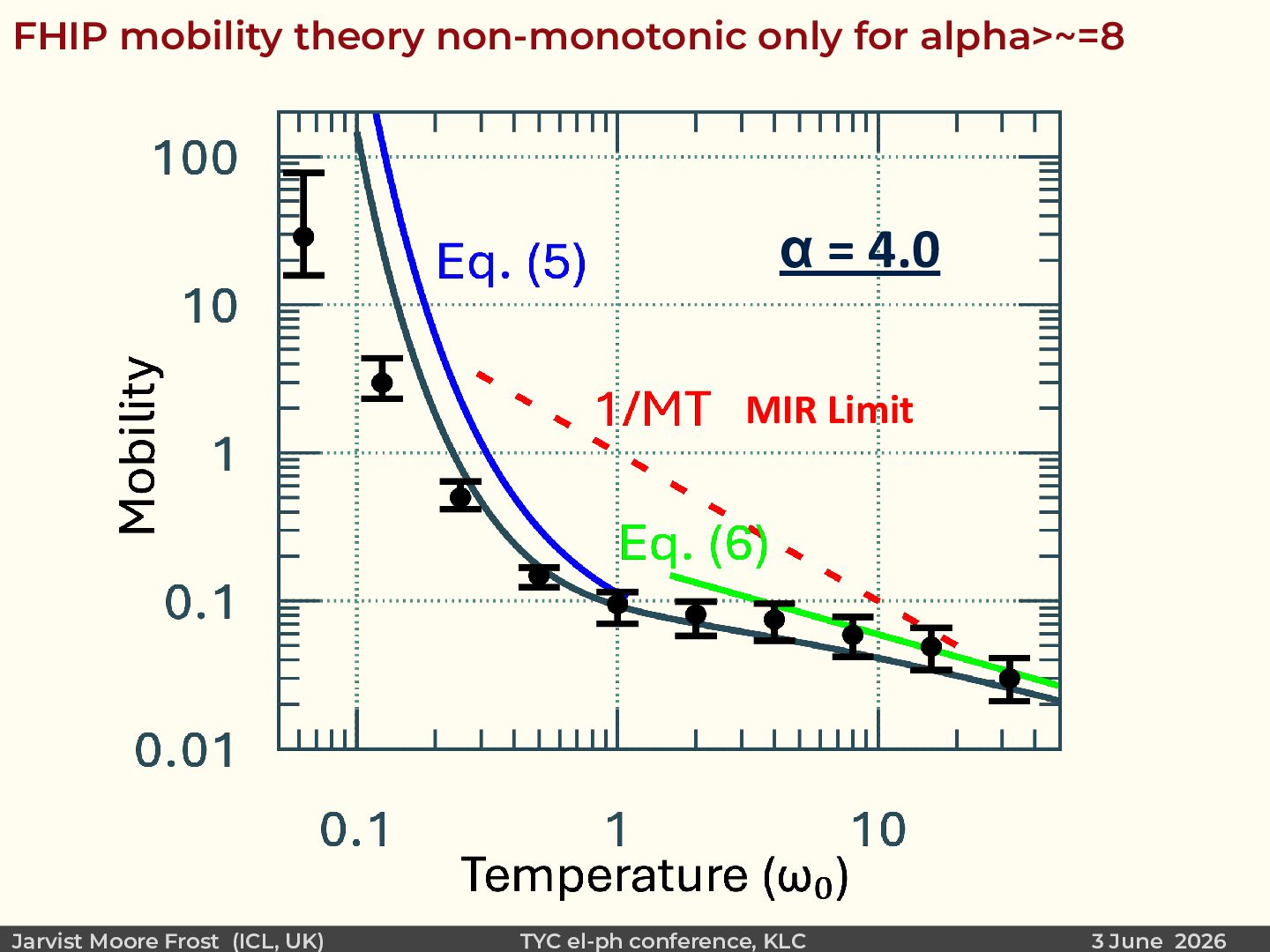
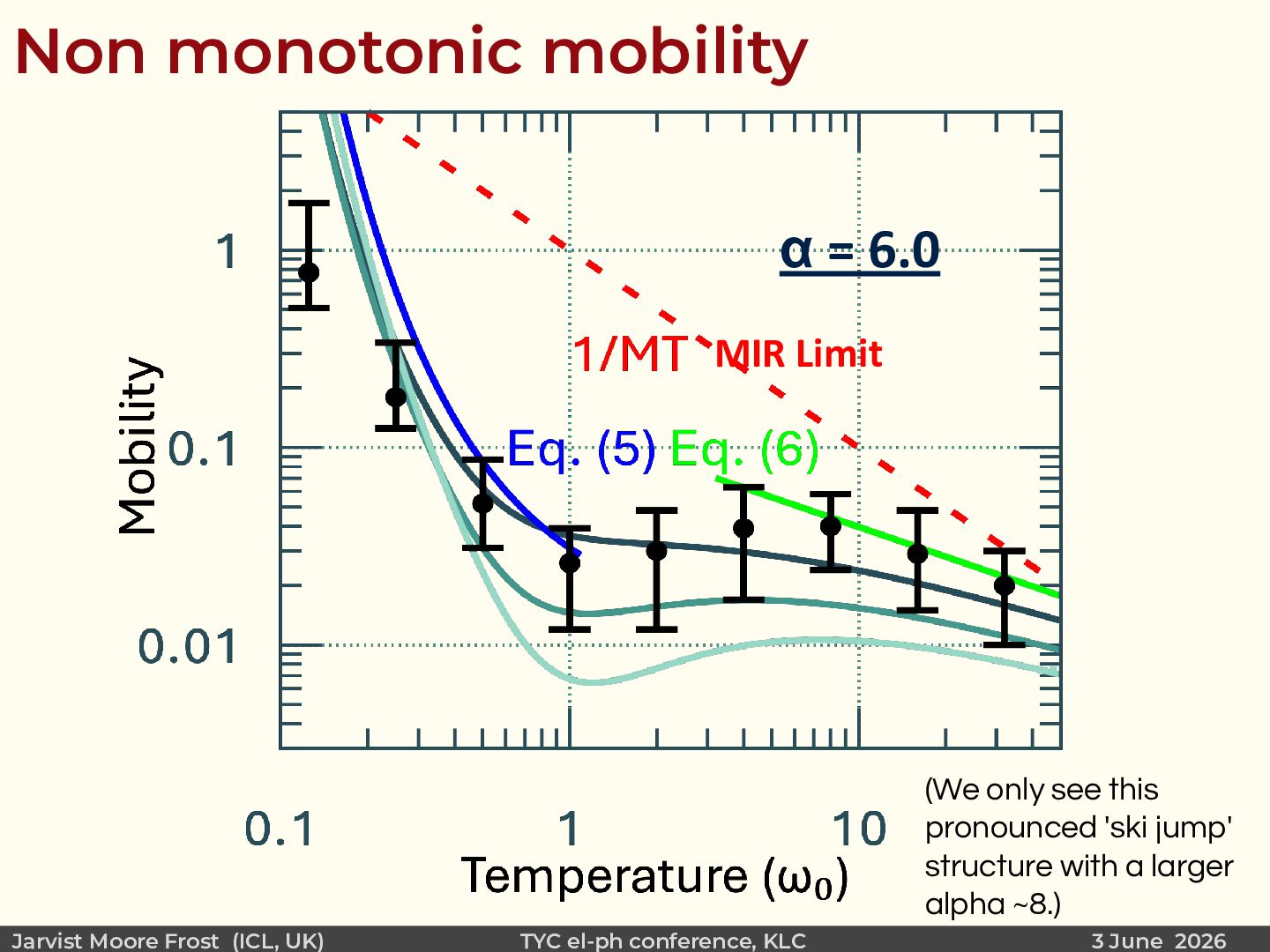
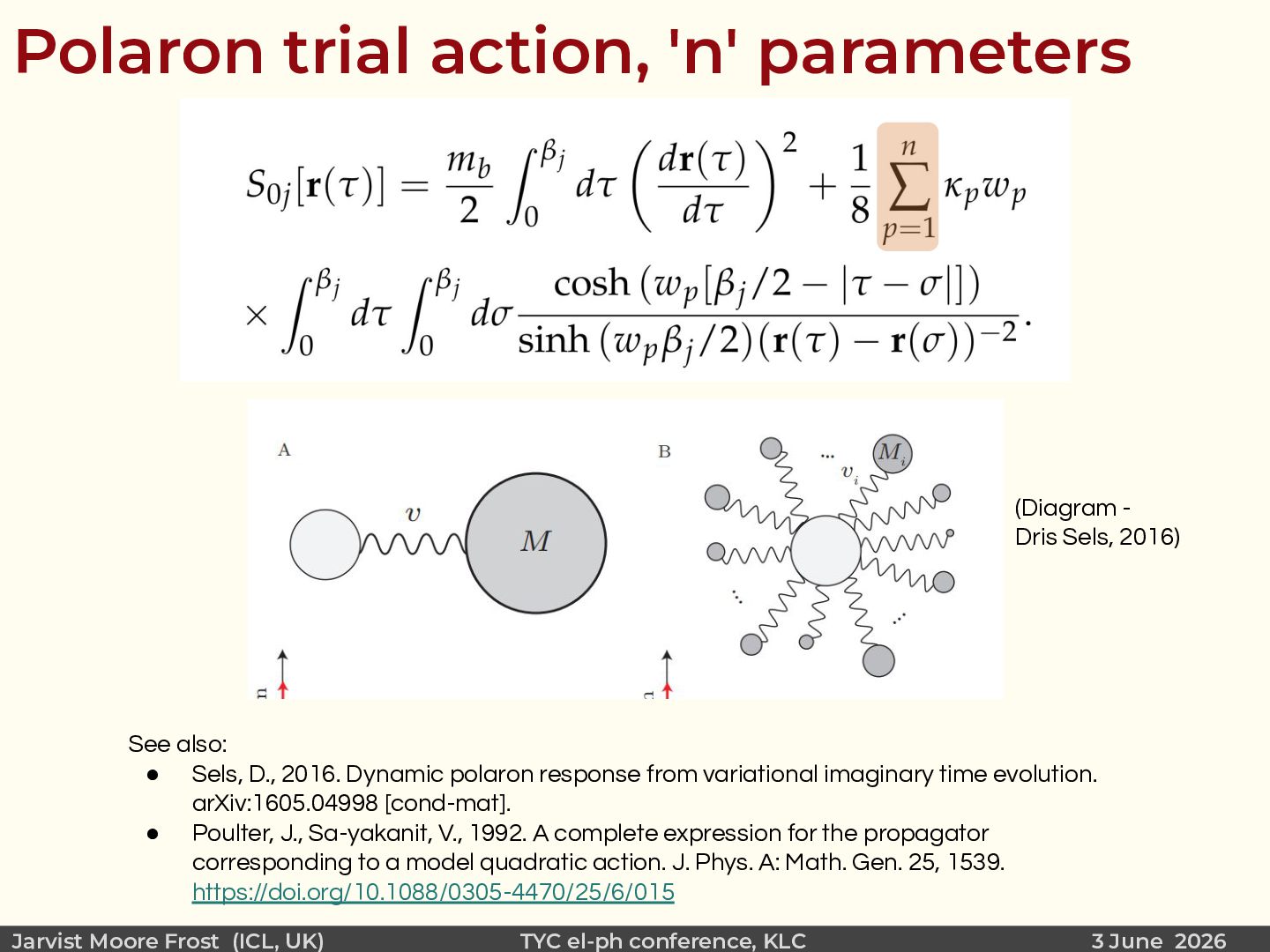
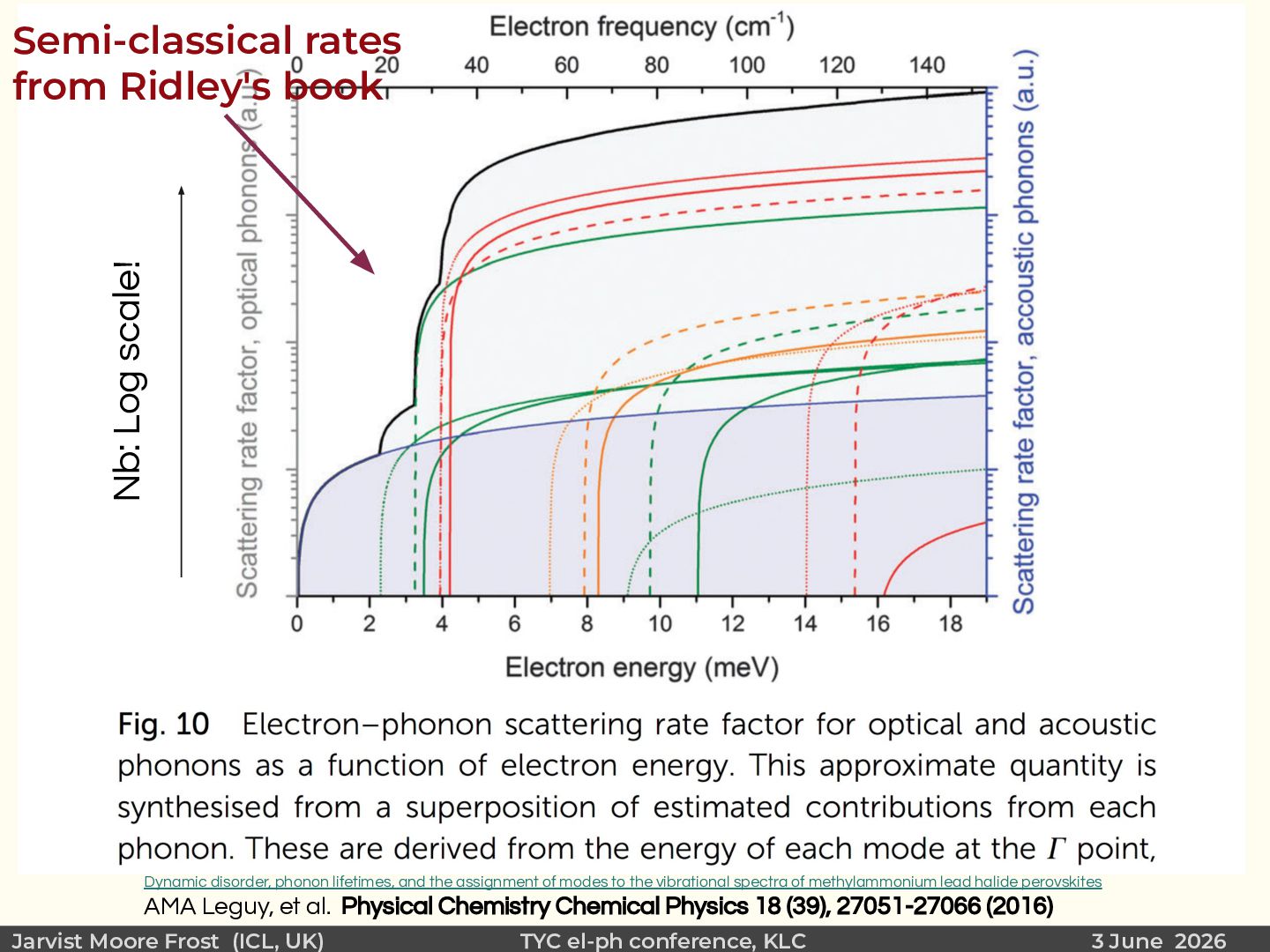
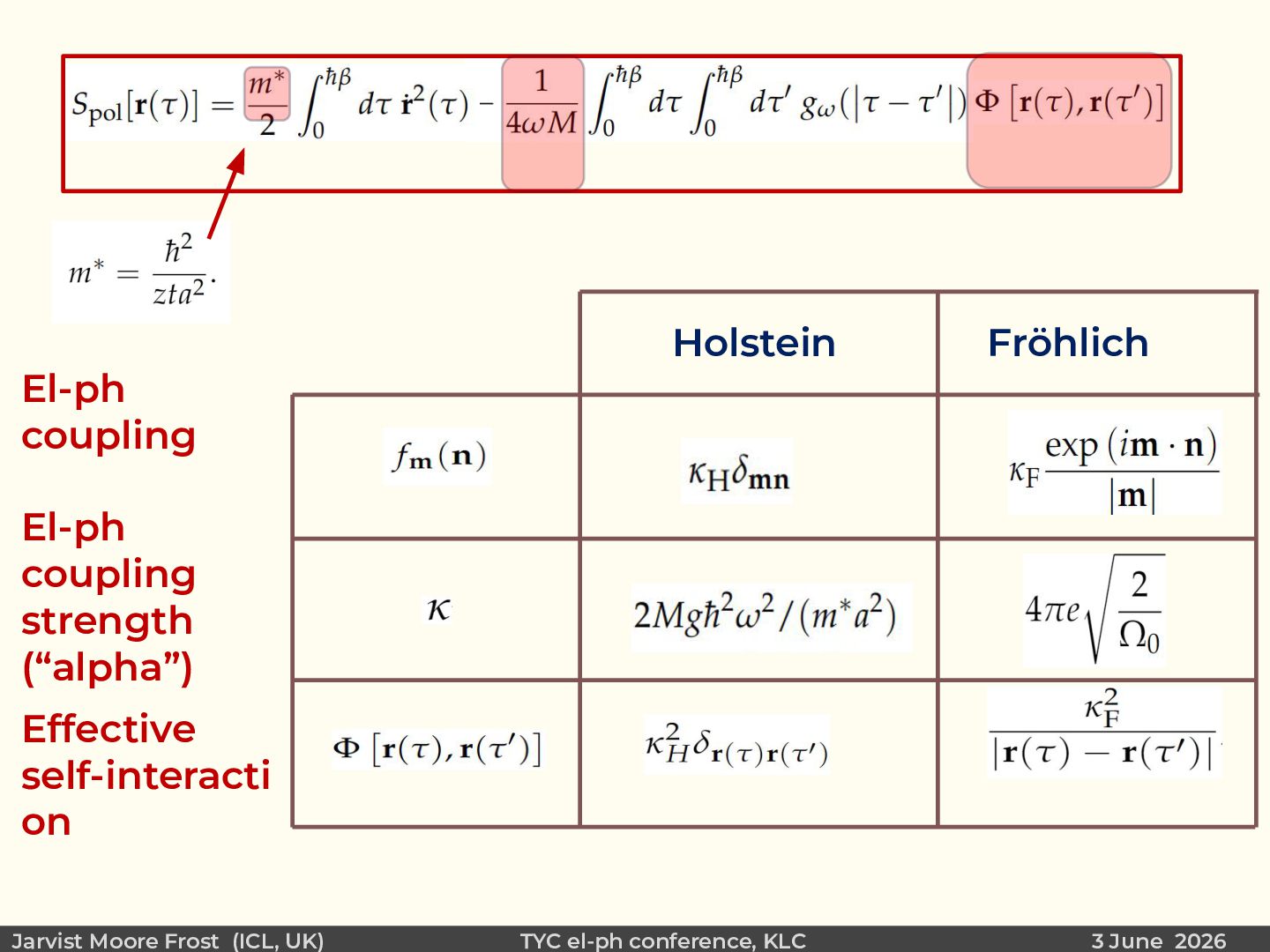
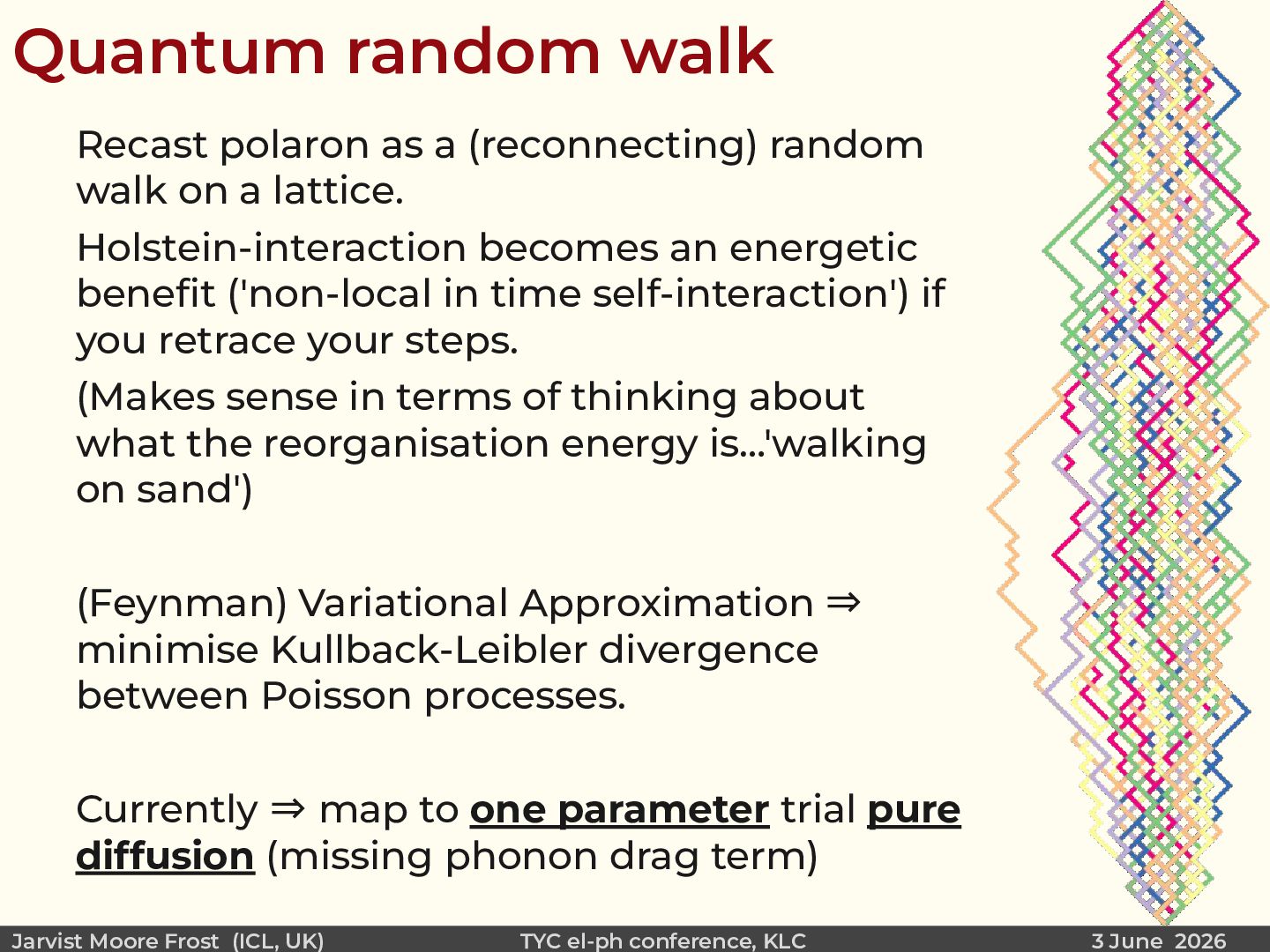
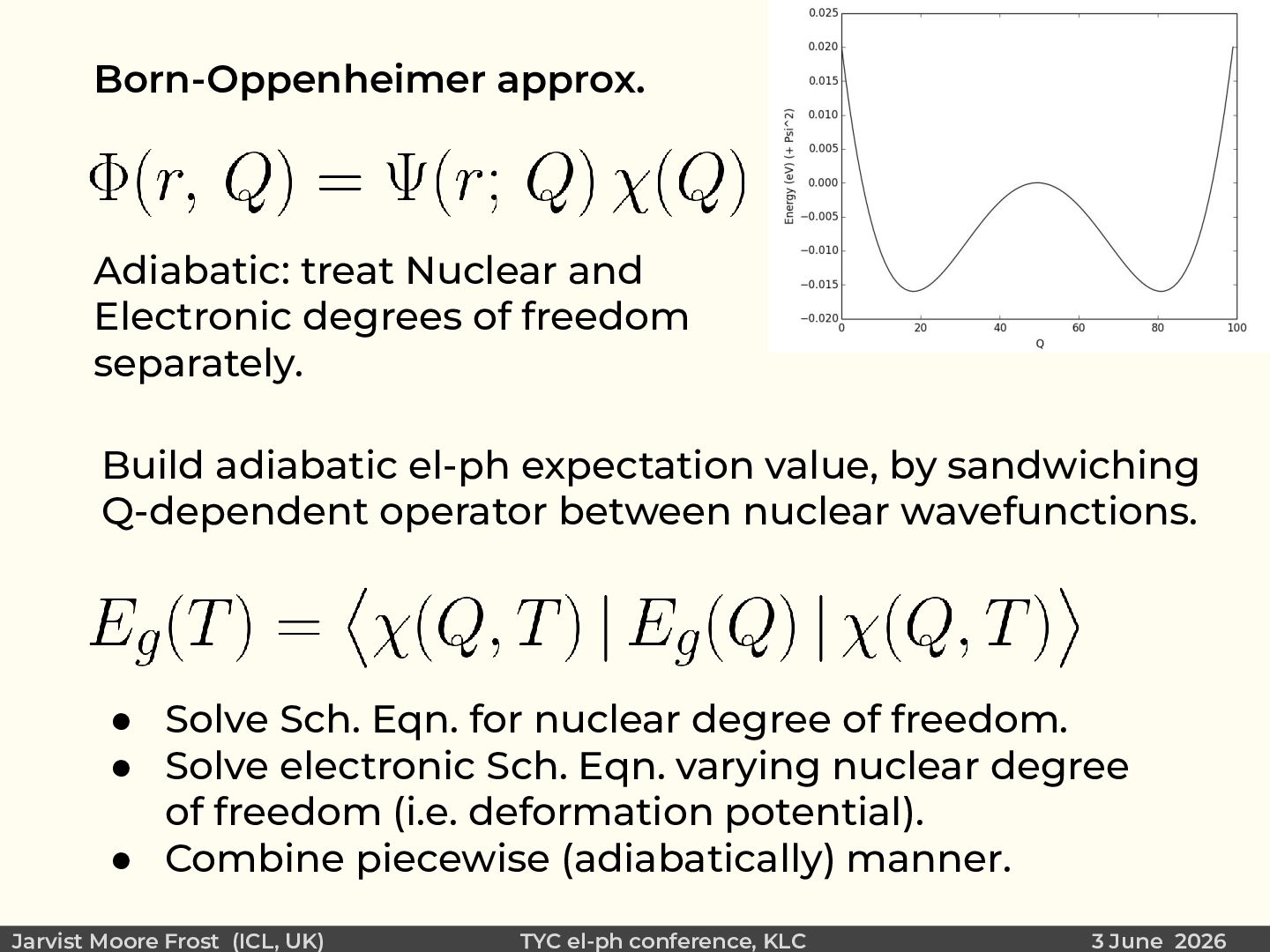
Most modelling is limited to semi-classical rate theory-based models (such as Marcus theory;Boltzmann transport equation).Our computational tool of choice is the Feynman path integral variational approximation.
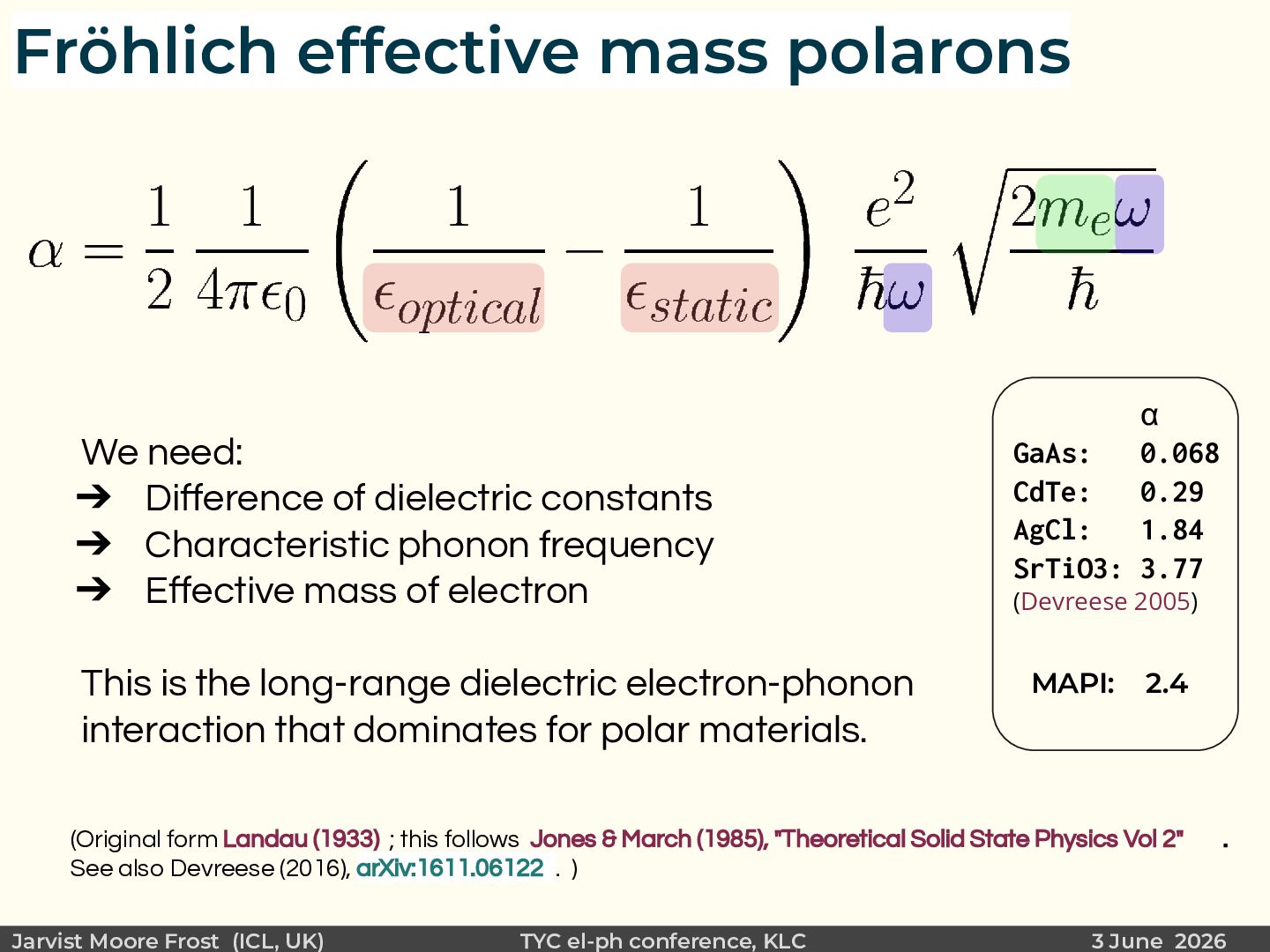
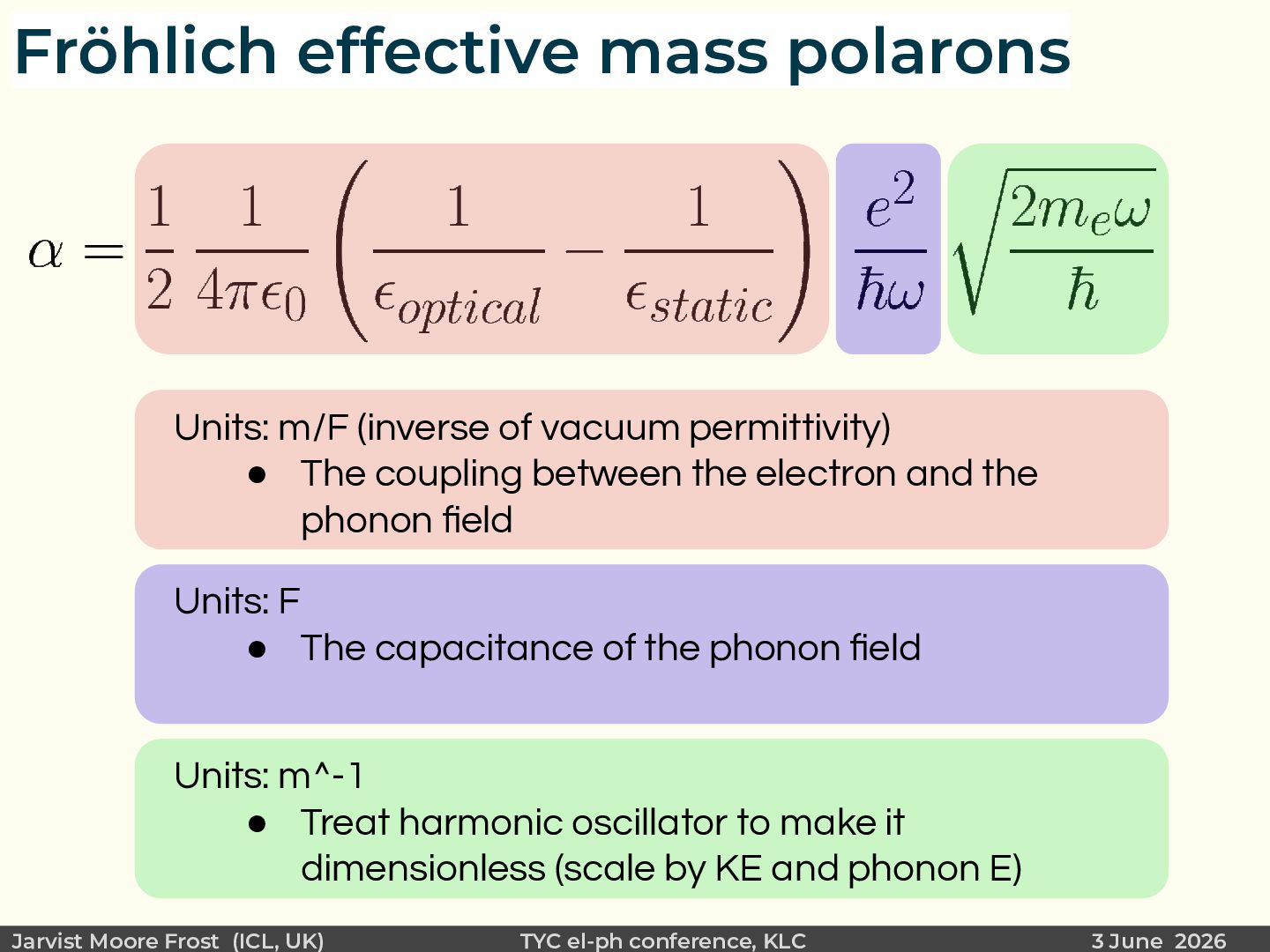
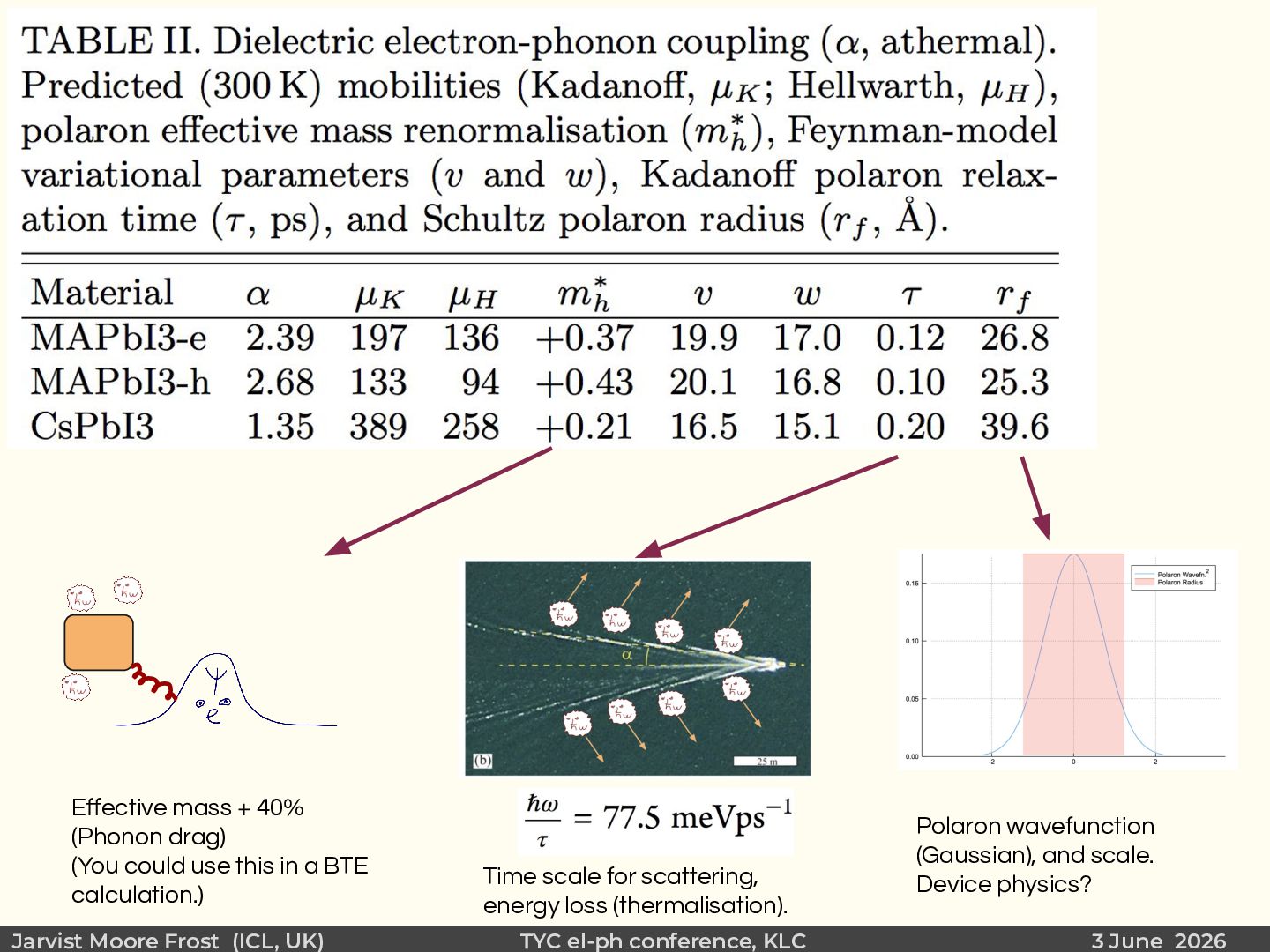
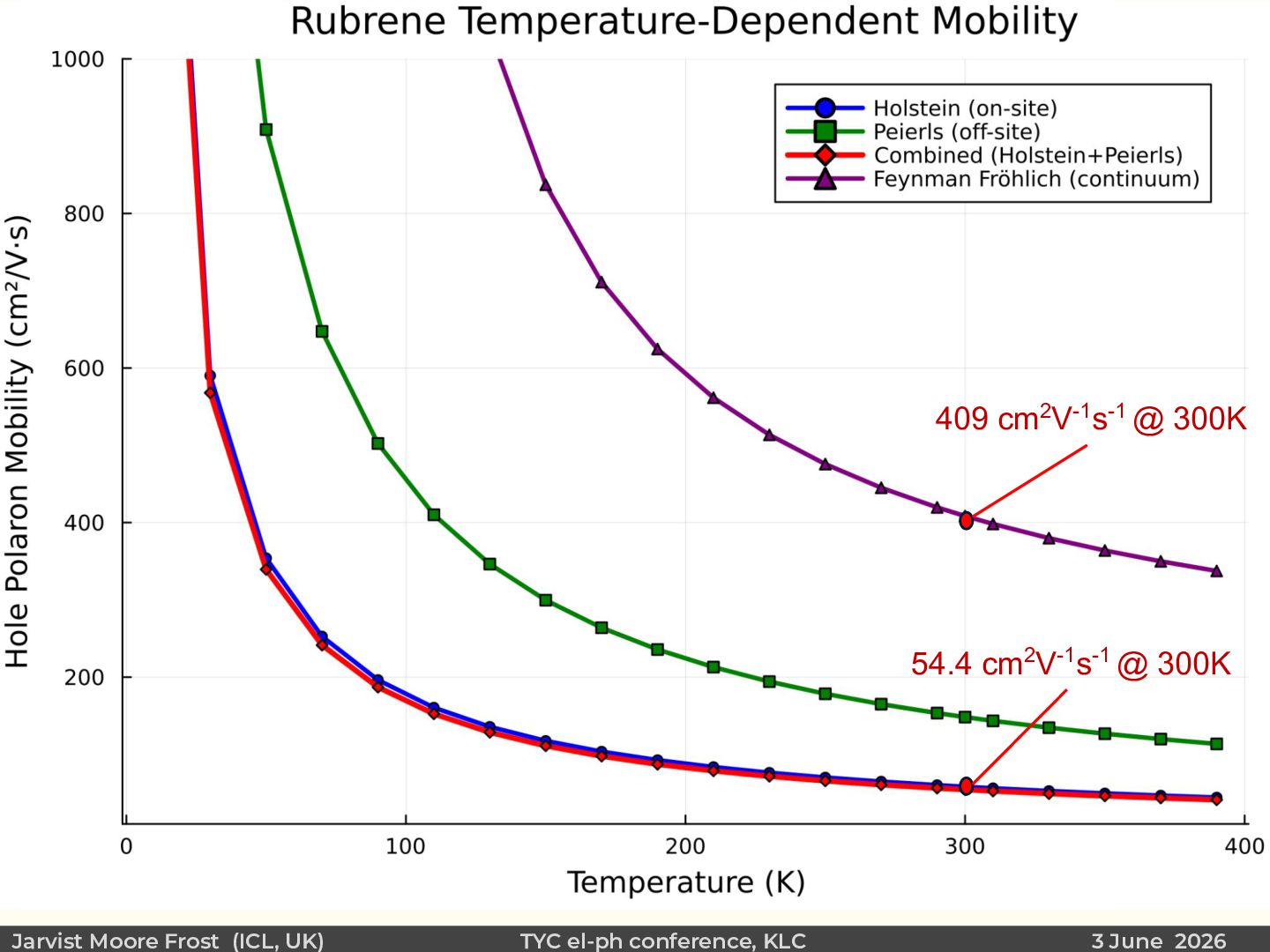
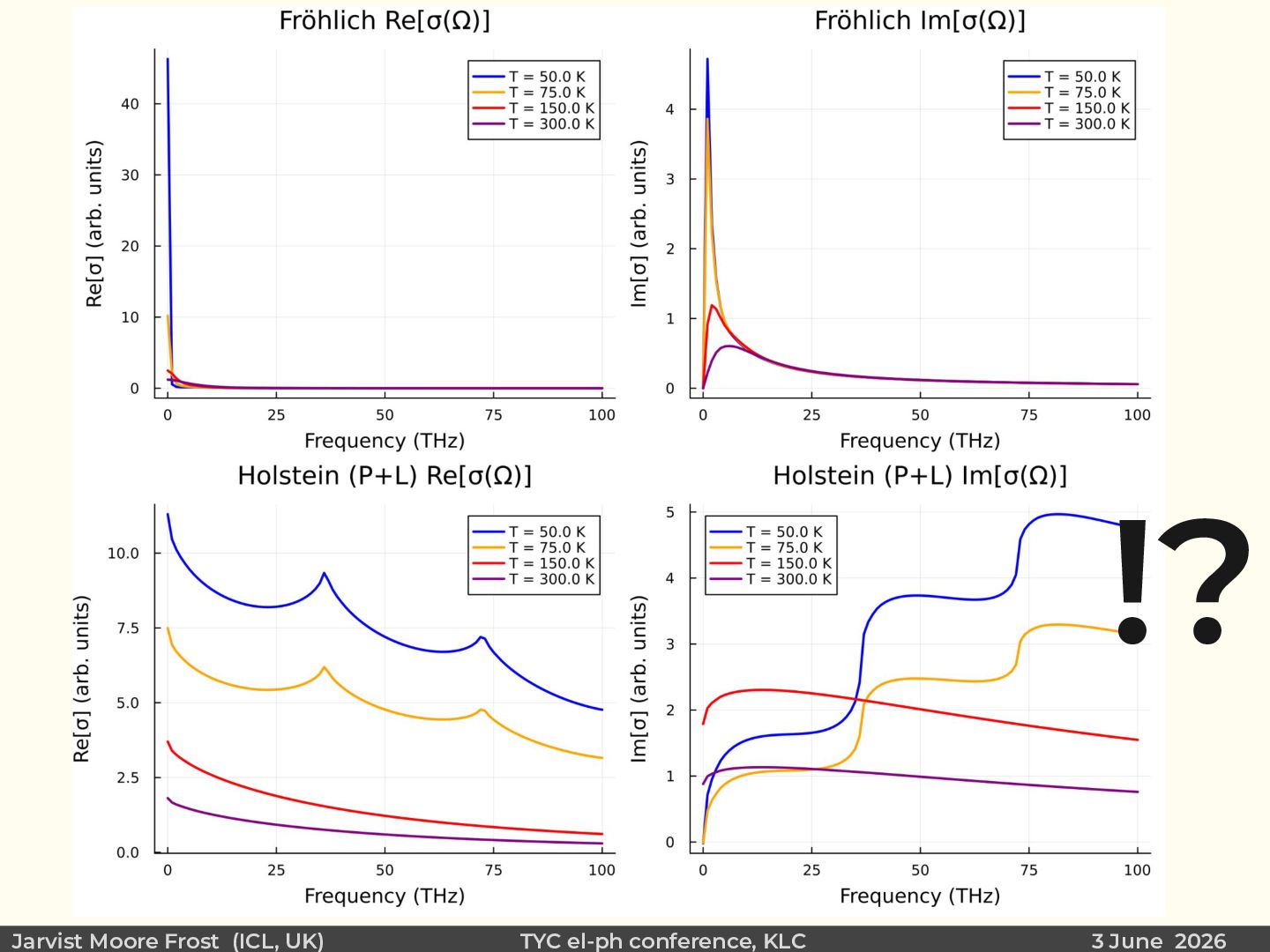
Once the model Hamiltonian parameters are set by electronic structure calculations on the material of interest, we use this finite-temperature quantum-field-theory theory to make direct quantitative predictions of finite temperature charge-carrier response in both inorganic and organic semiconductors.
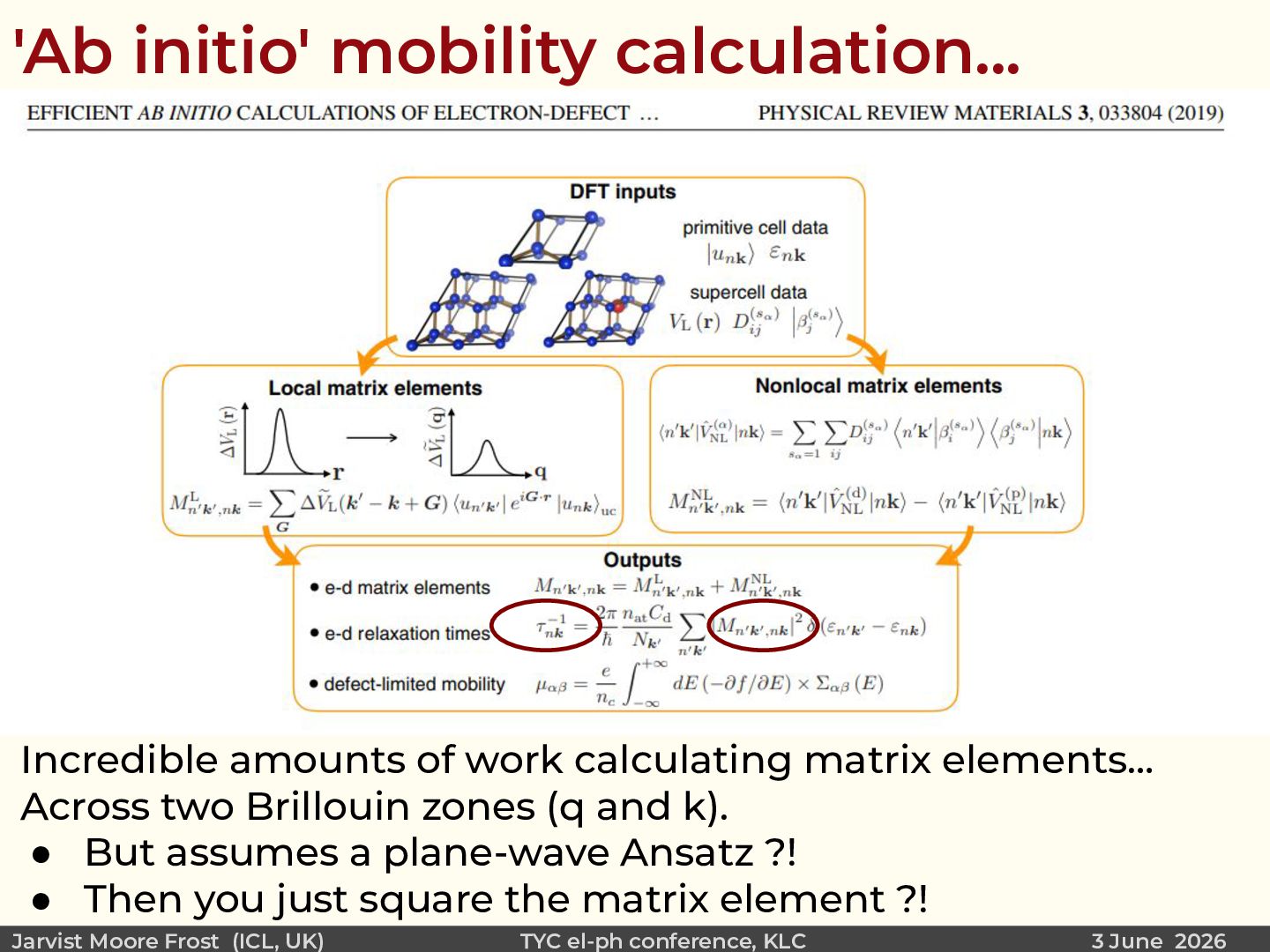
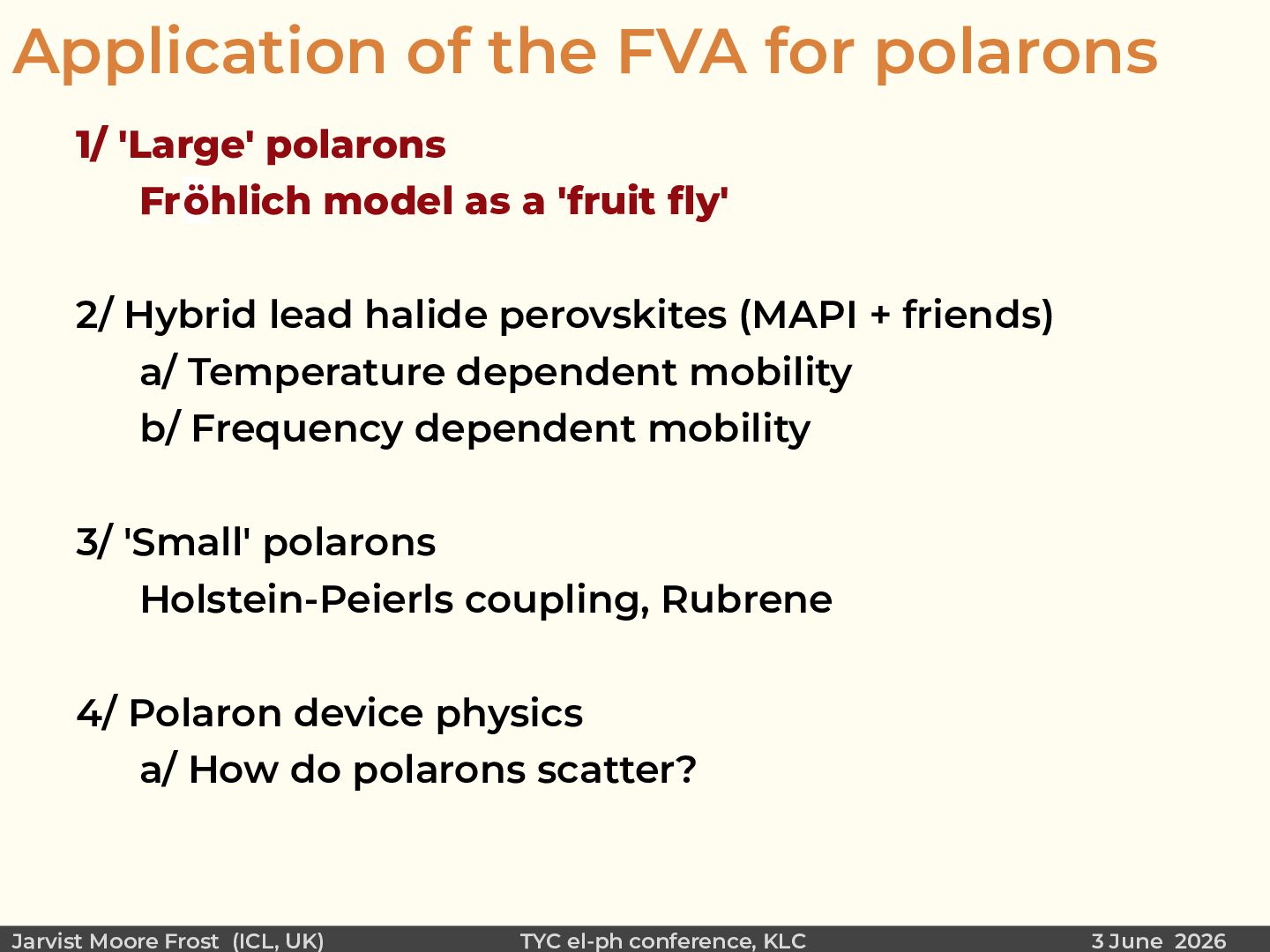
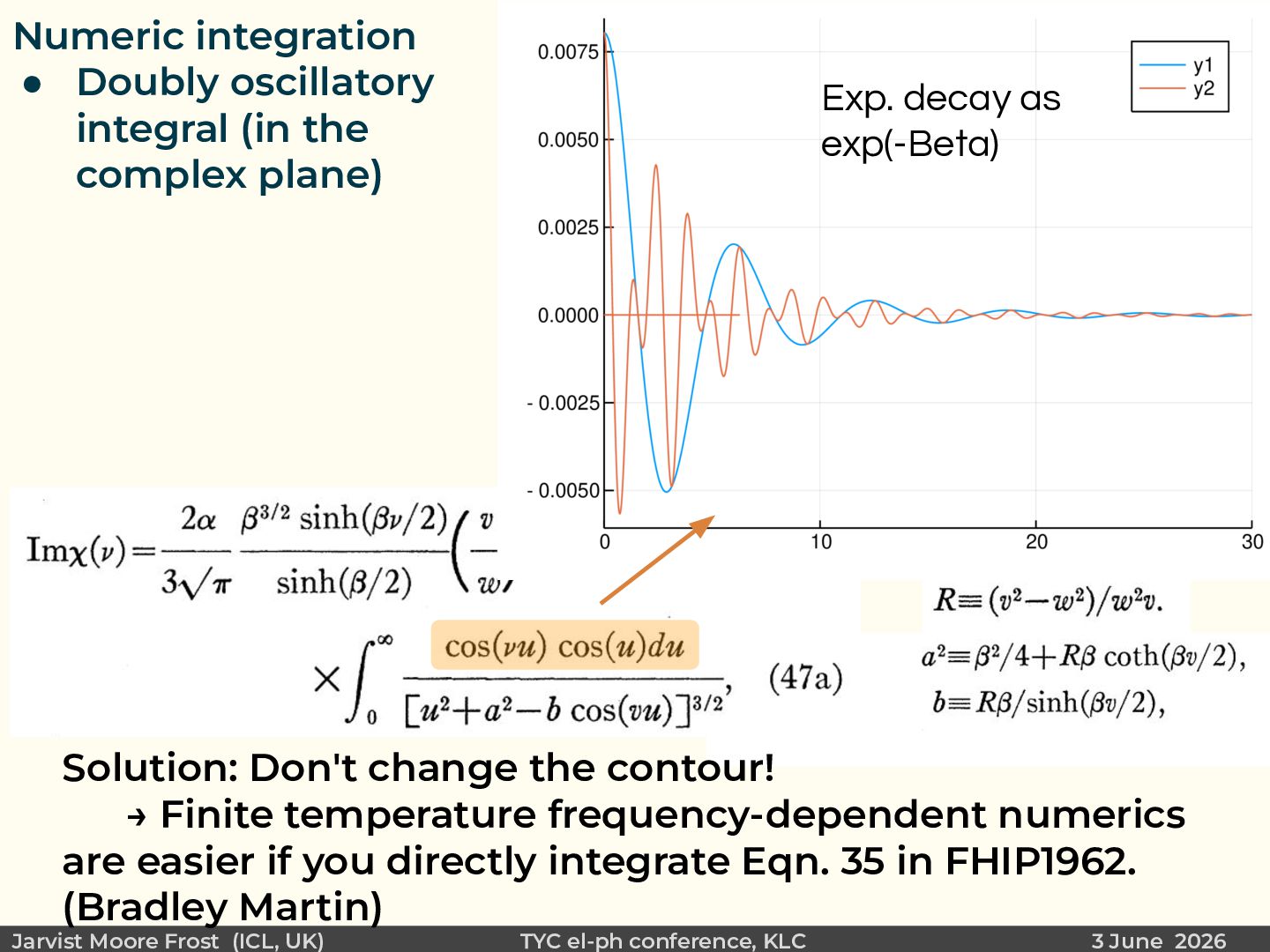
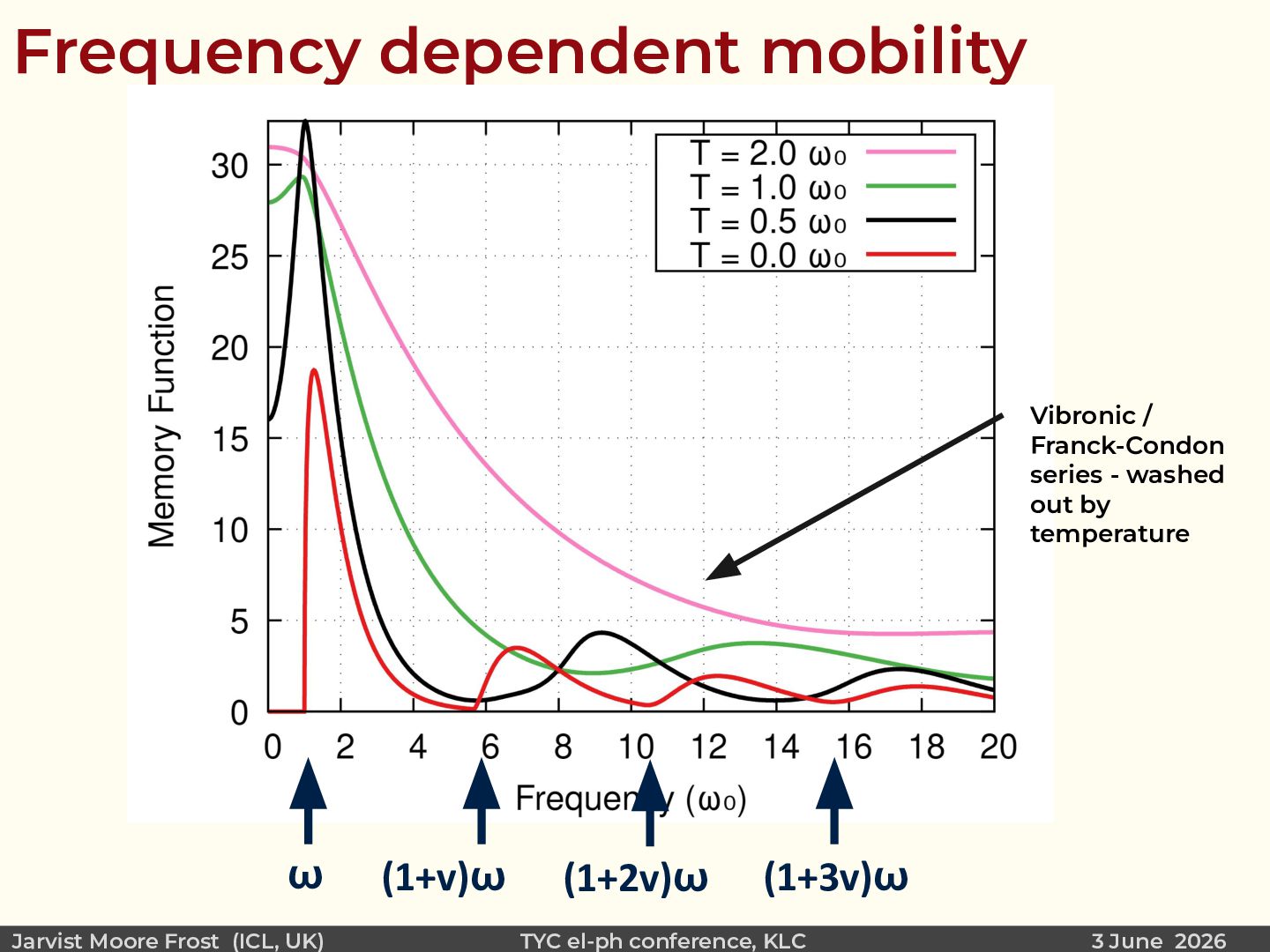
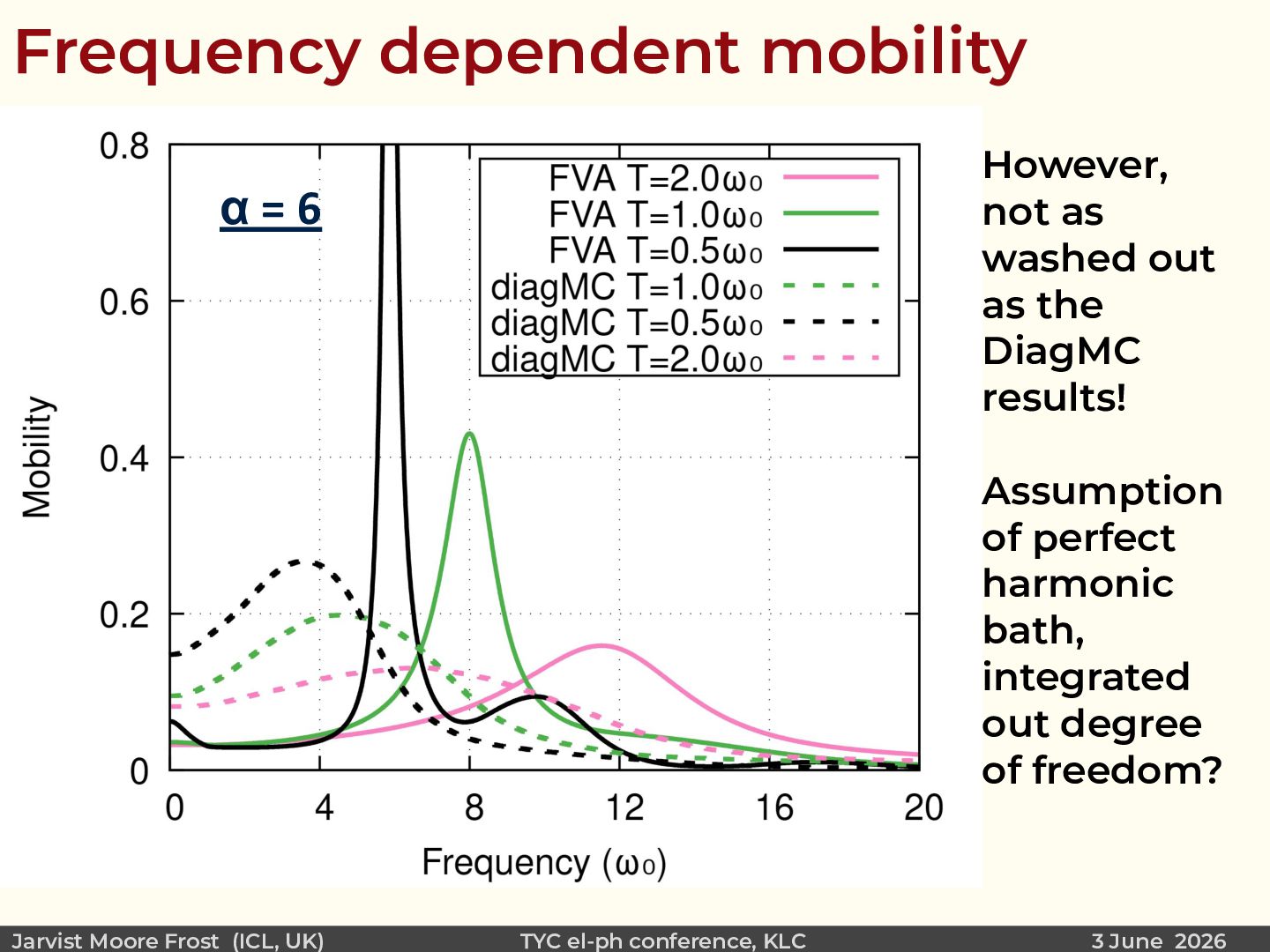
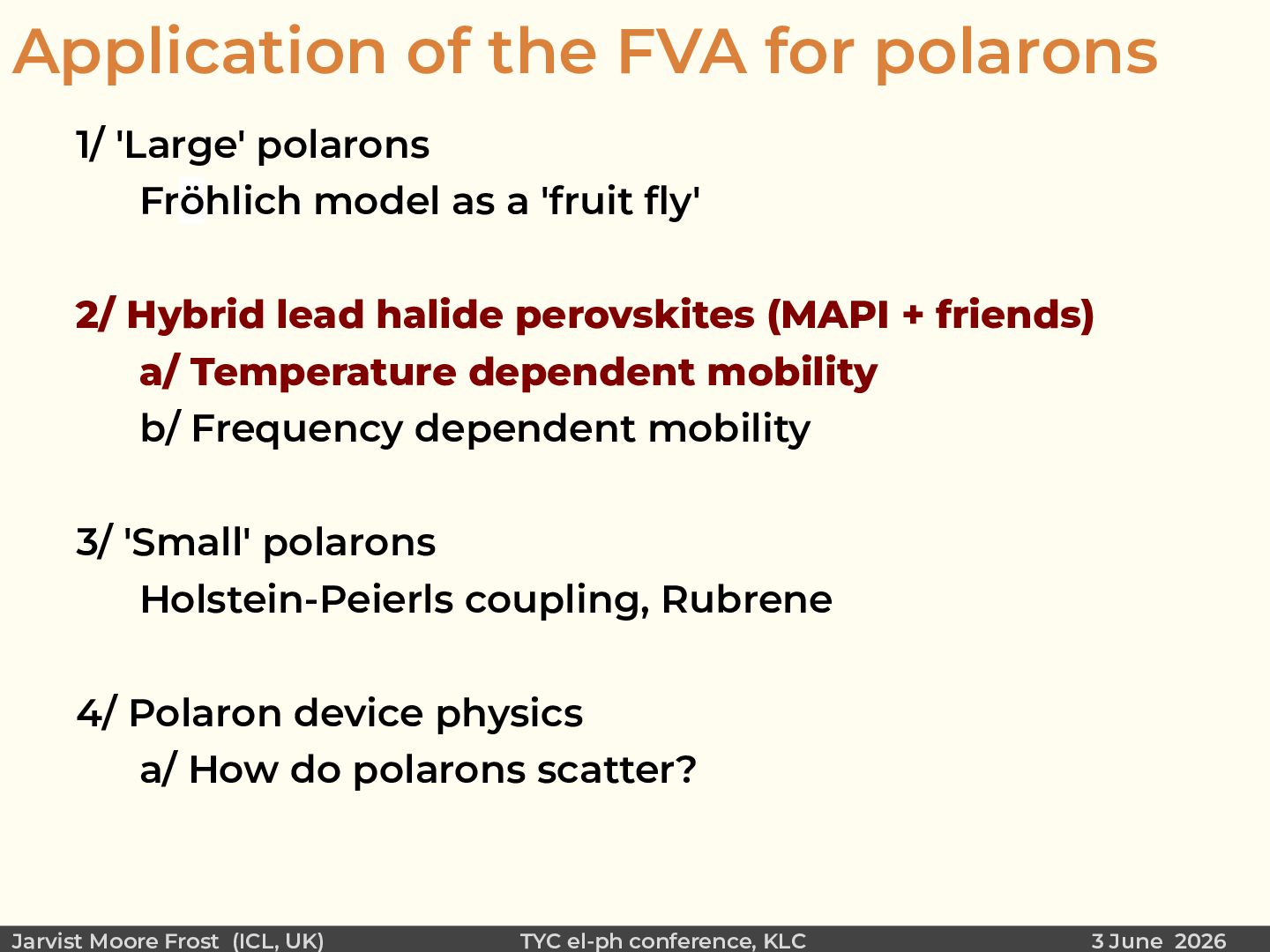
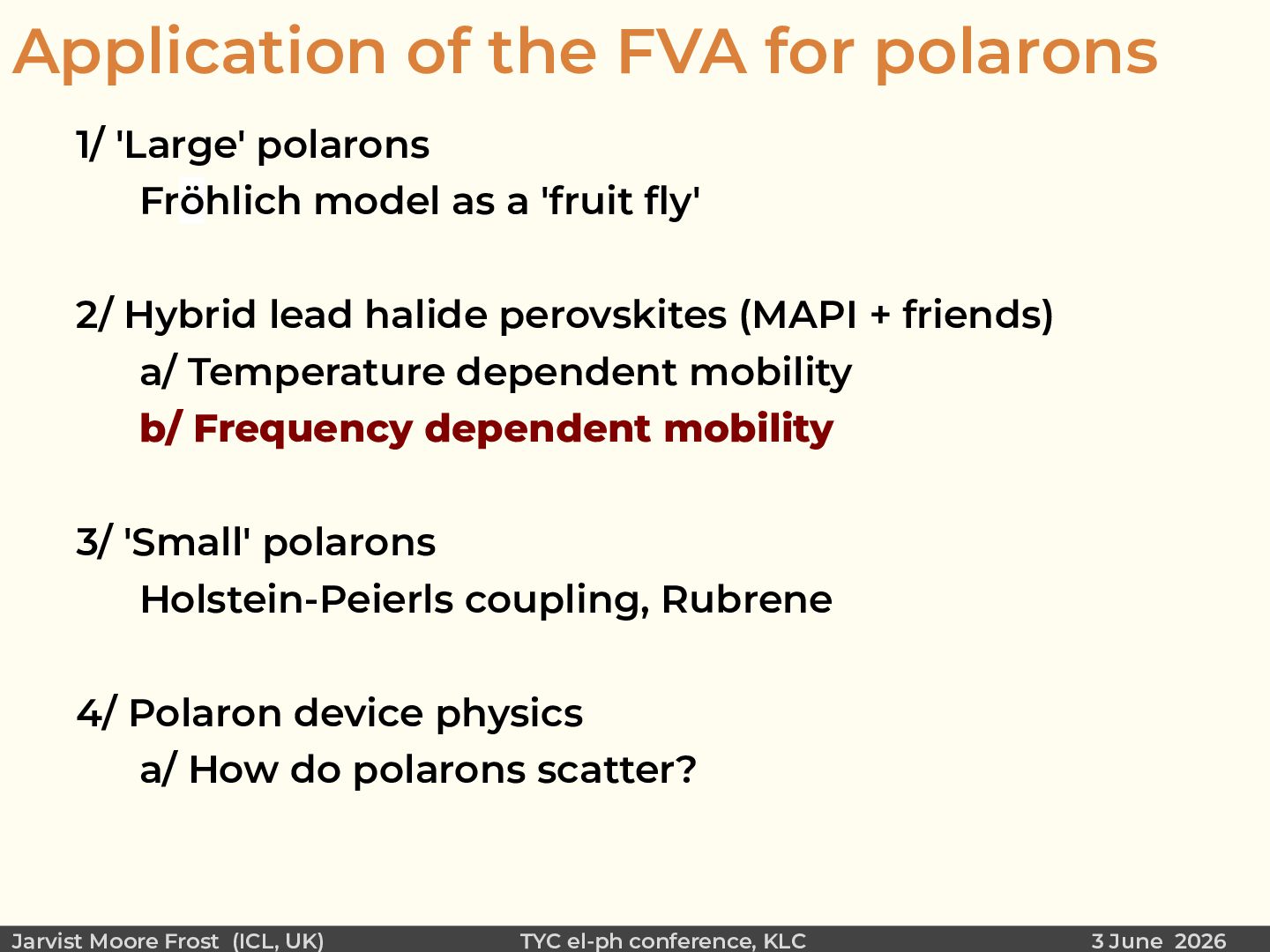
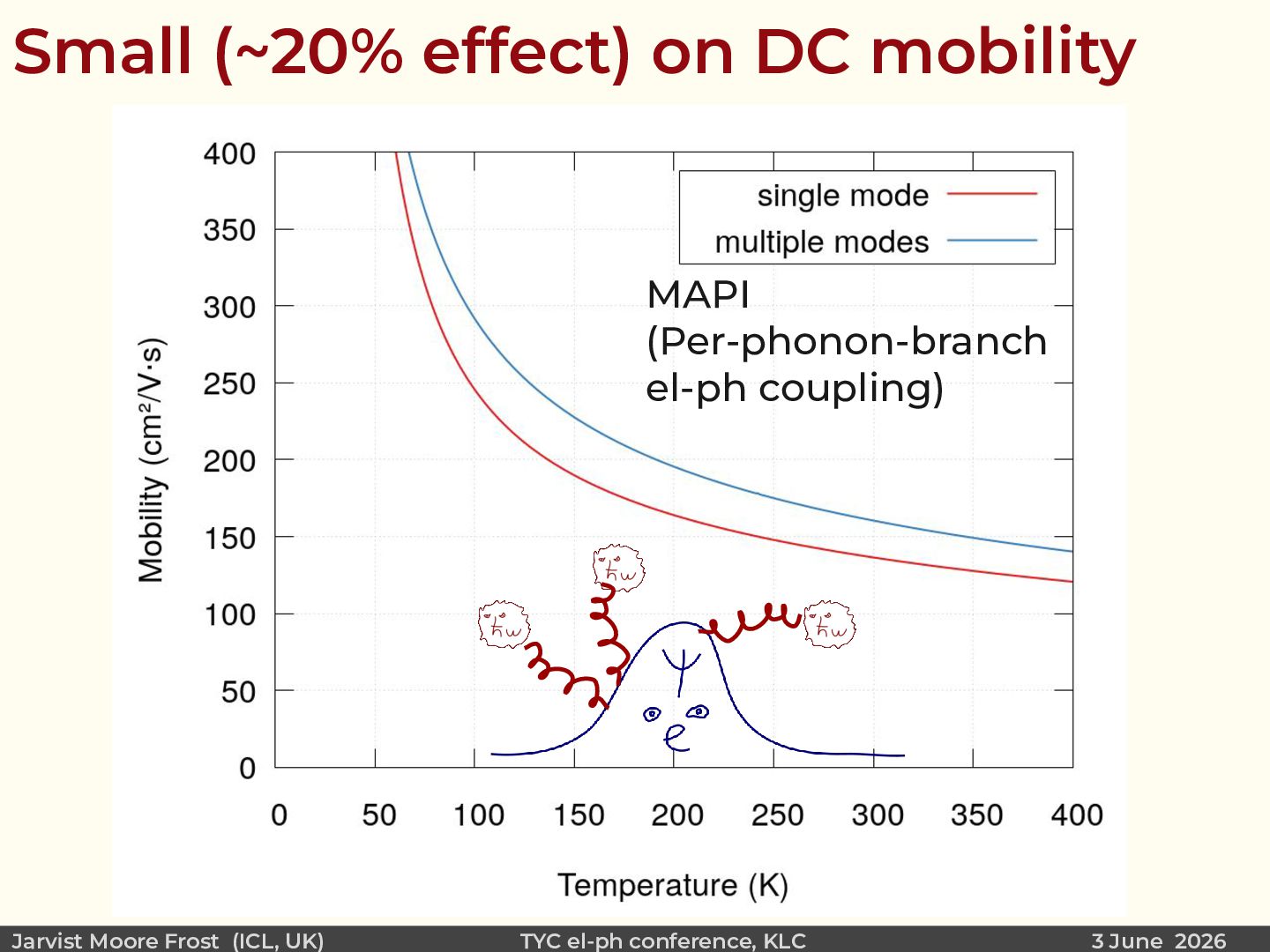
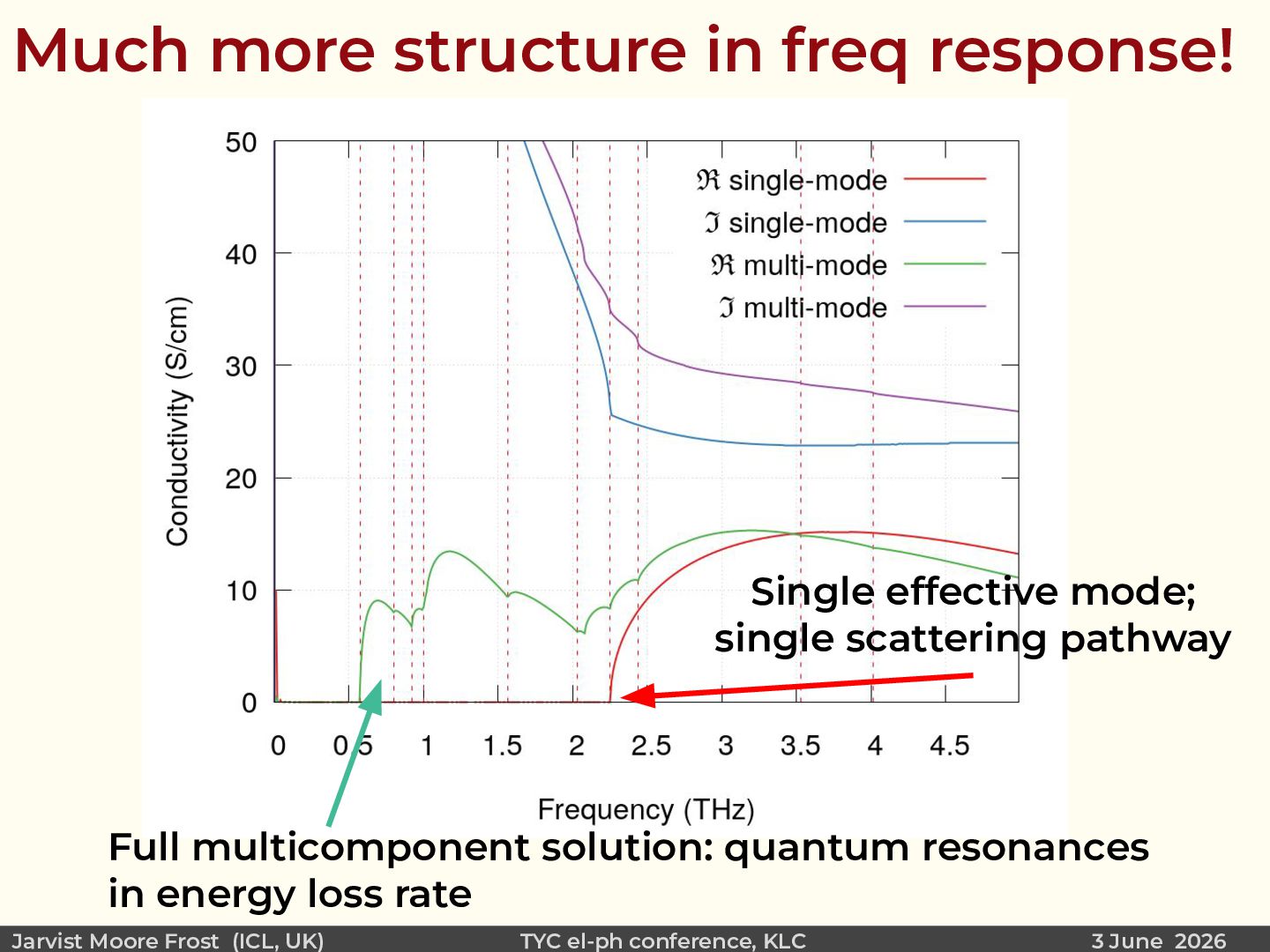
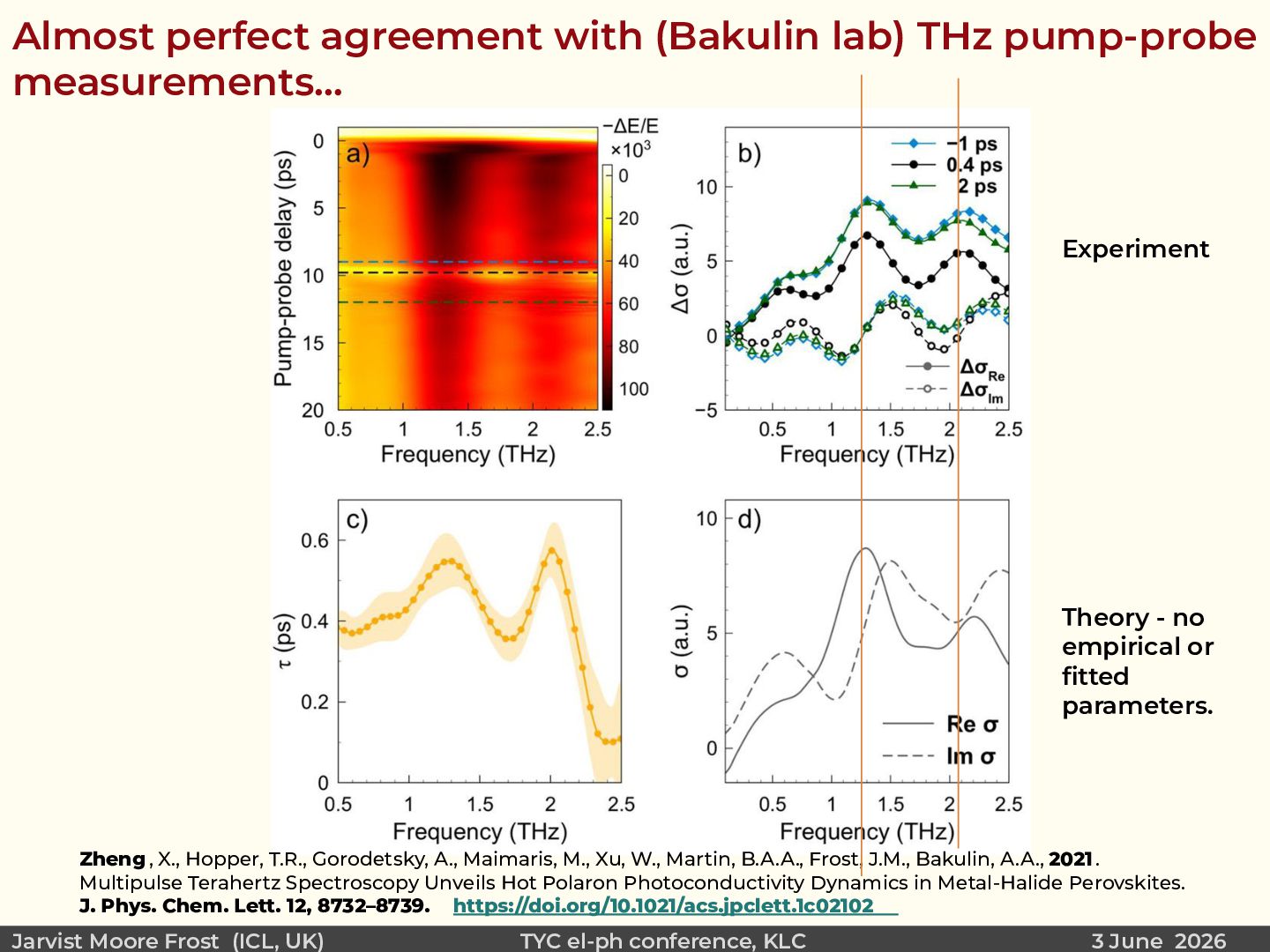
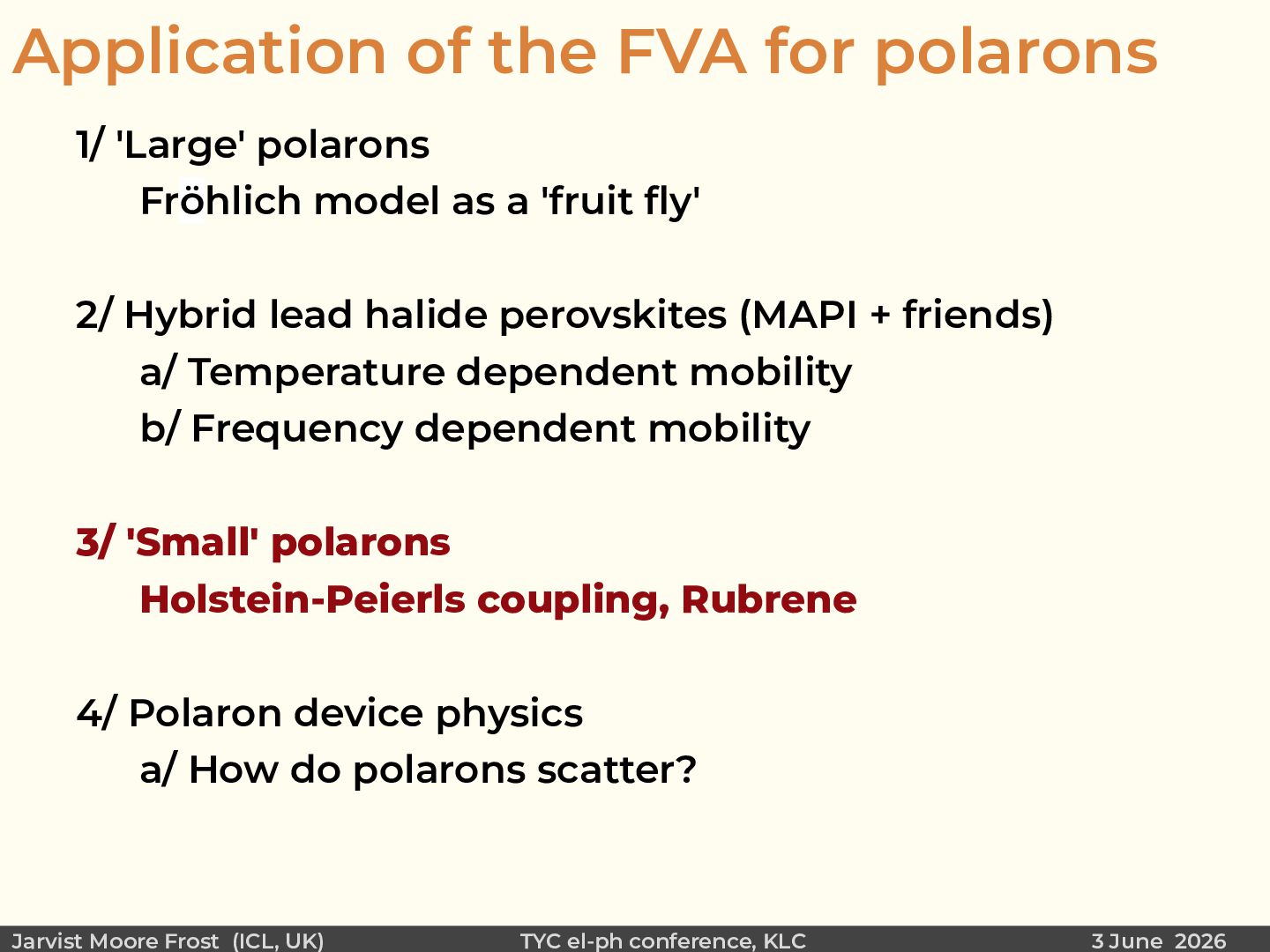
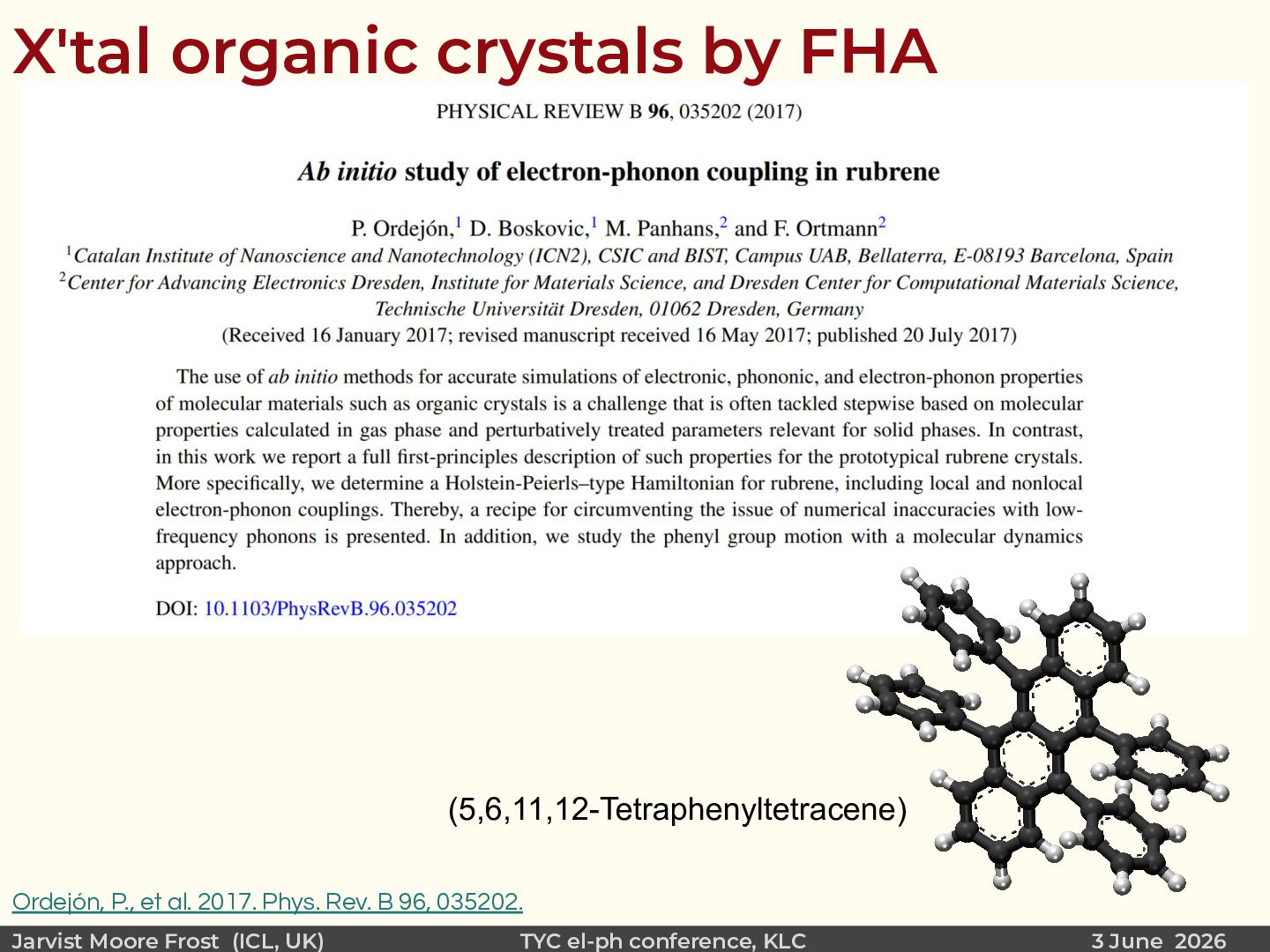
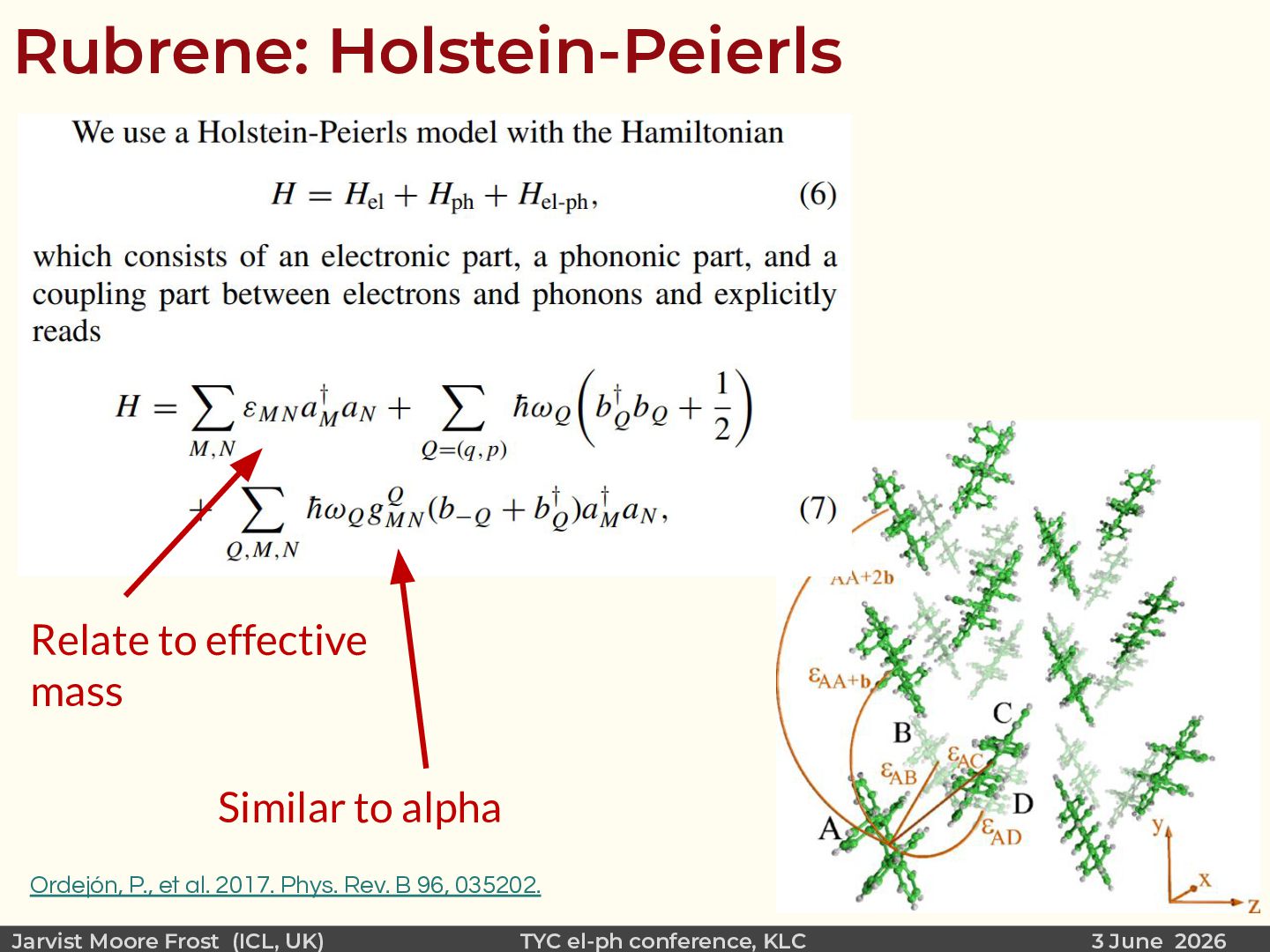
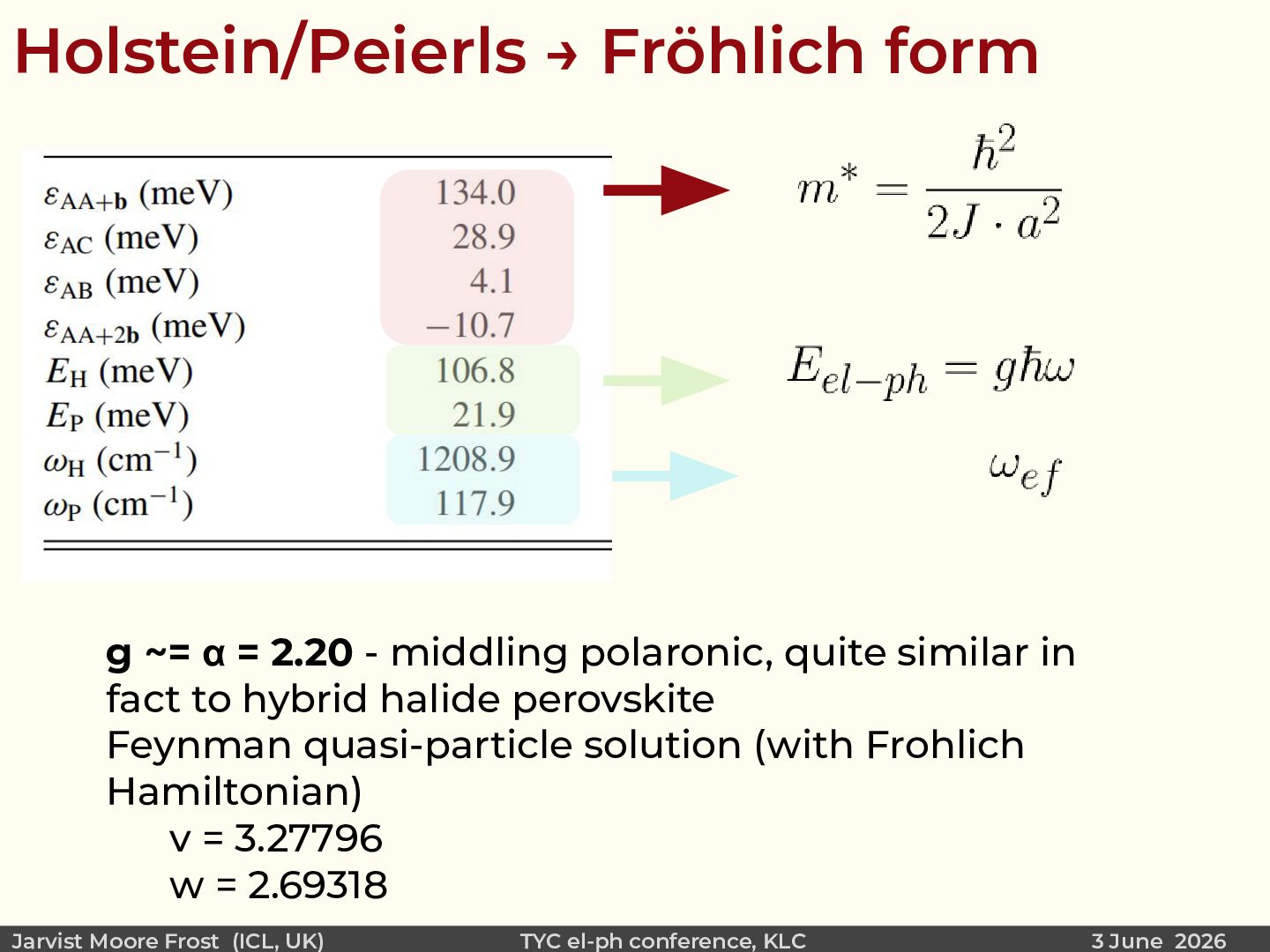
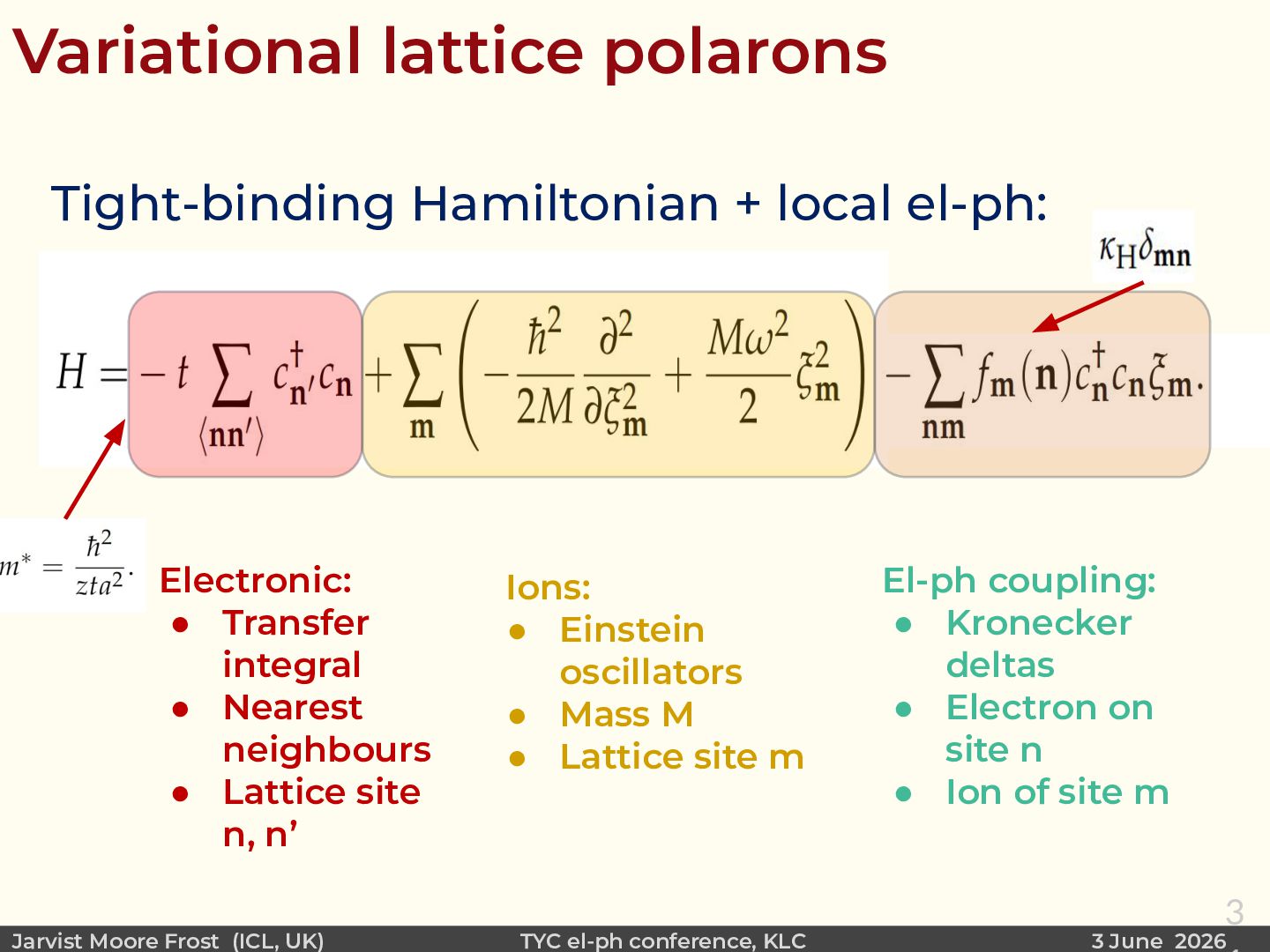
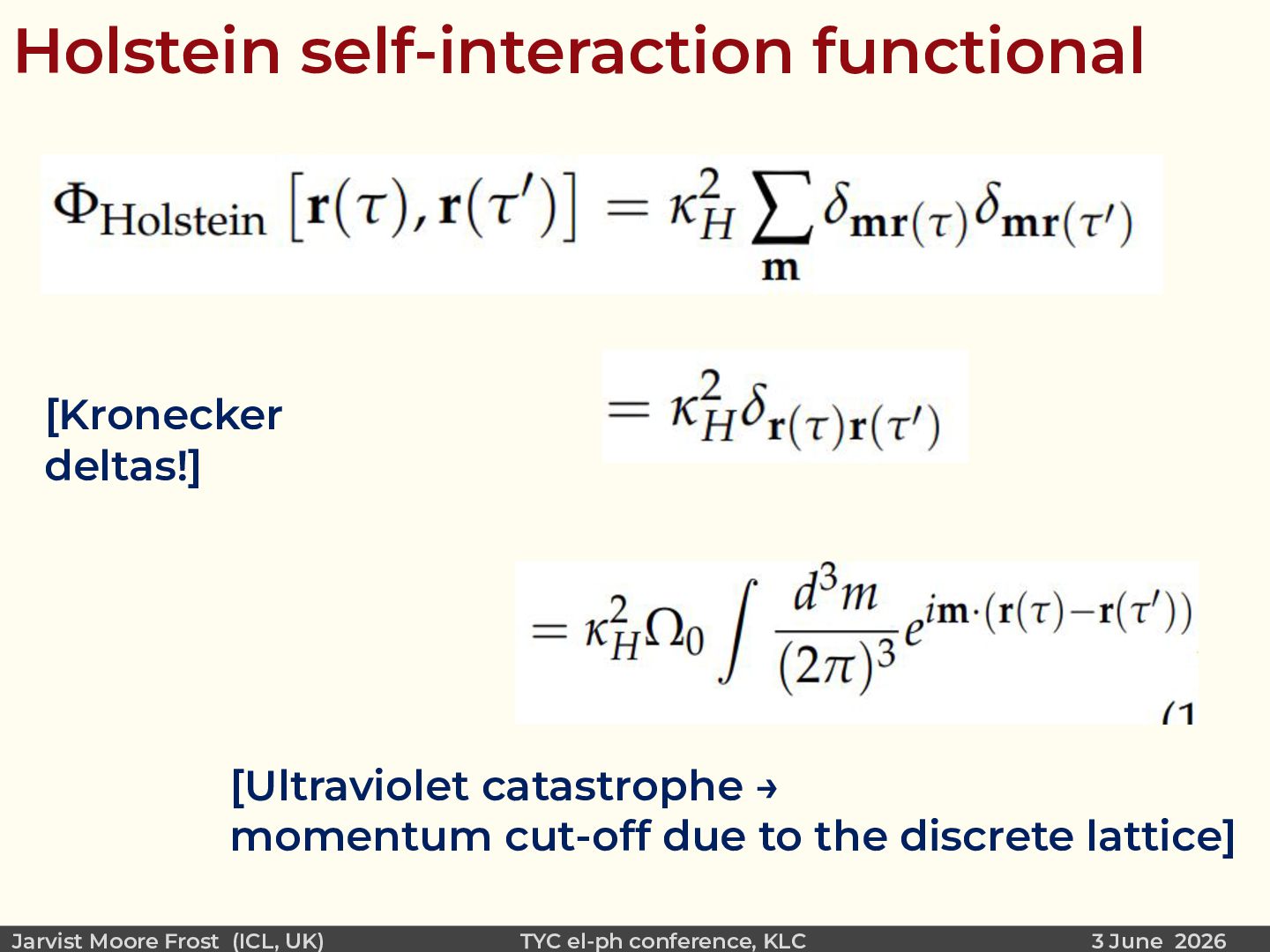
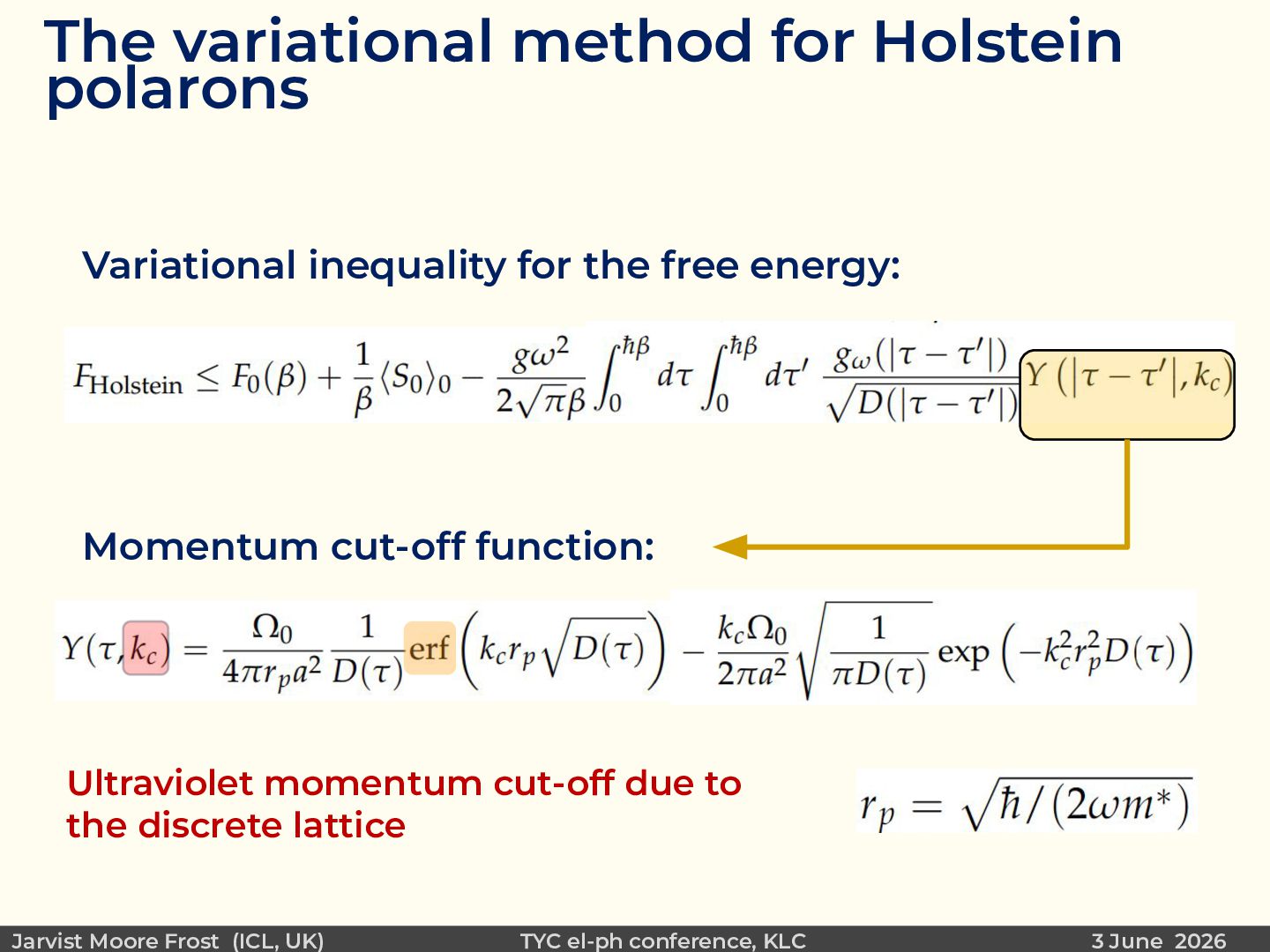
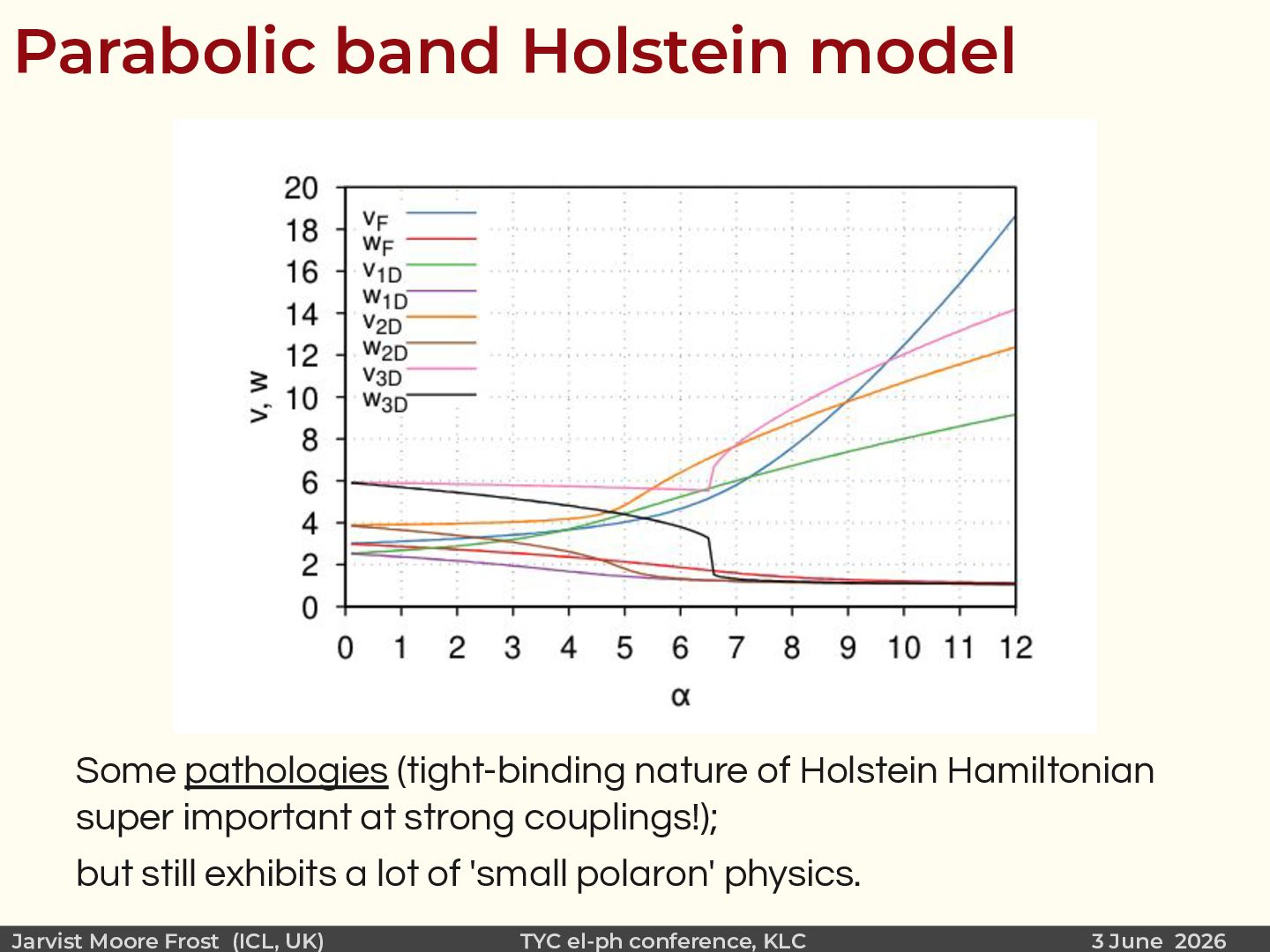
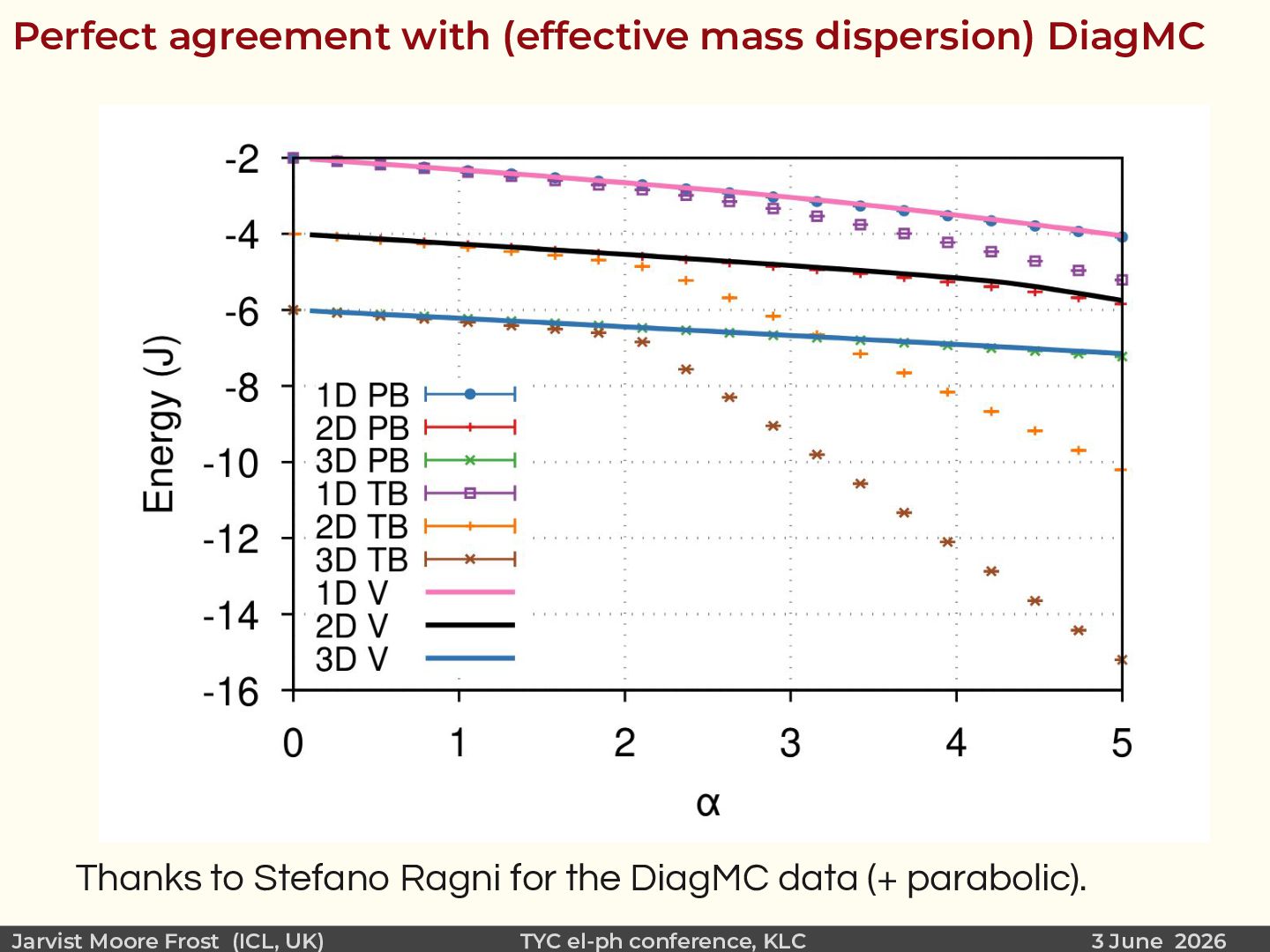
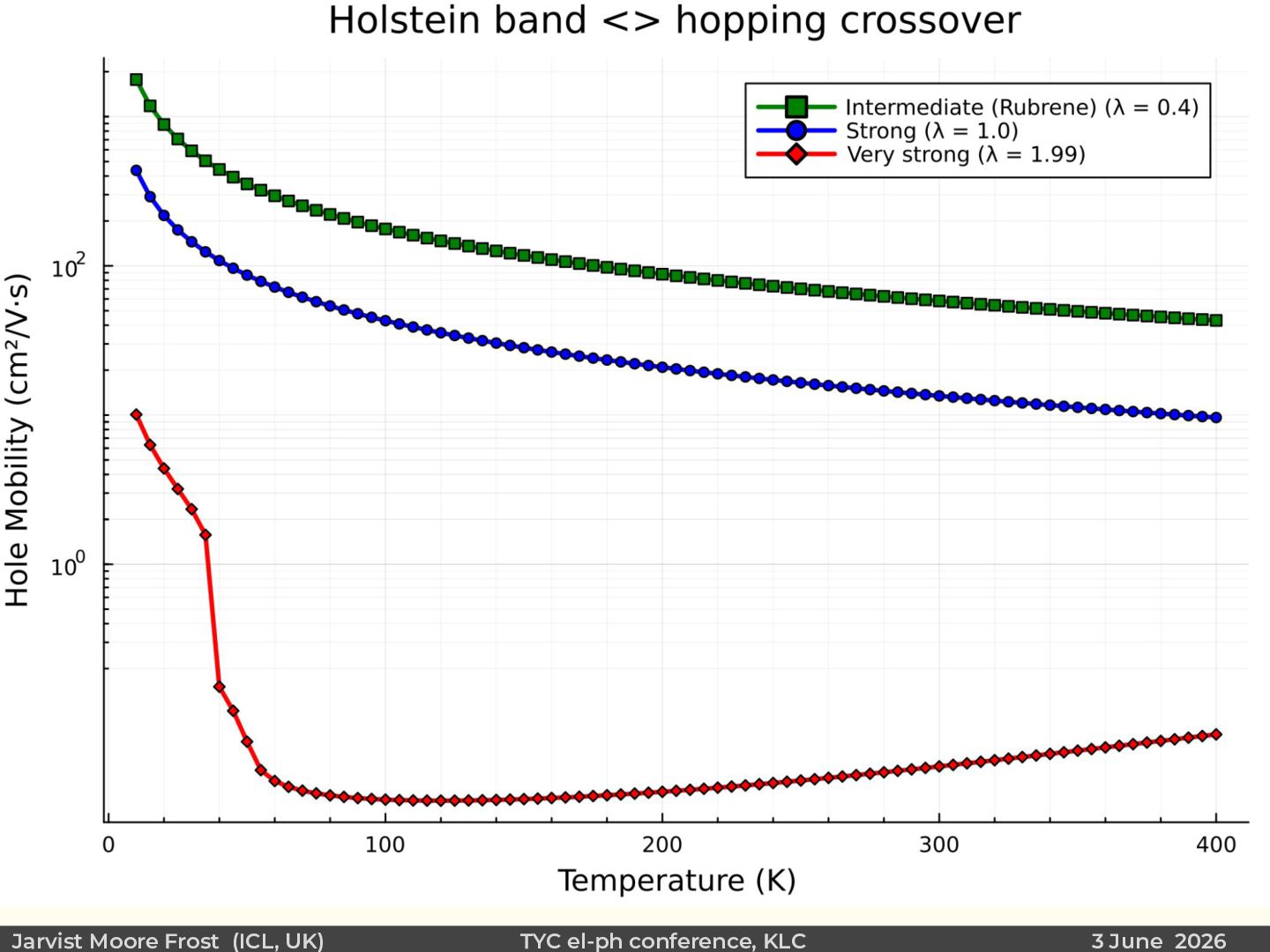
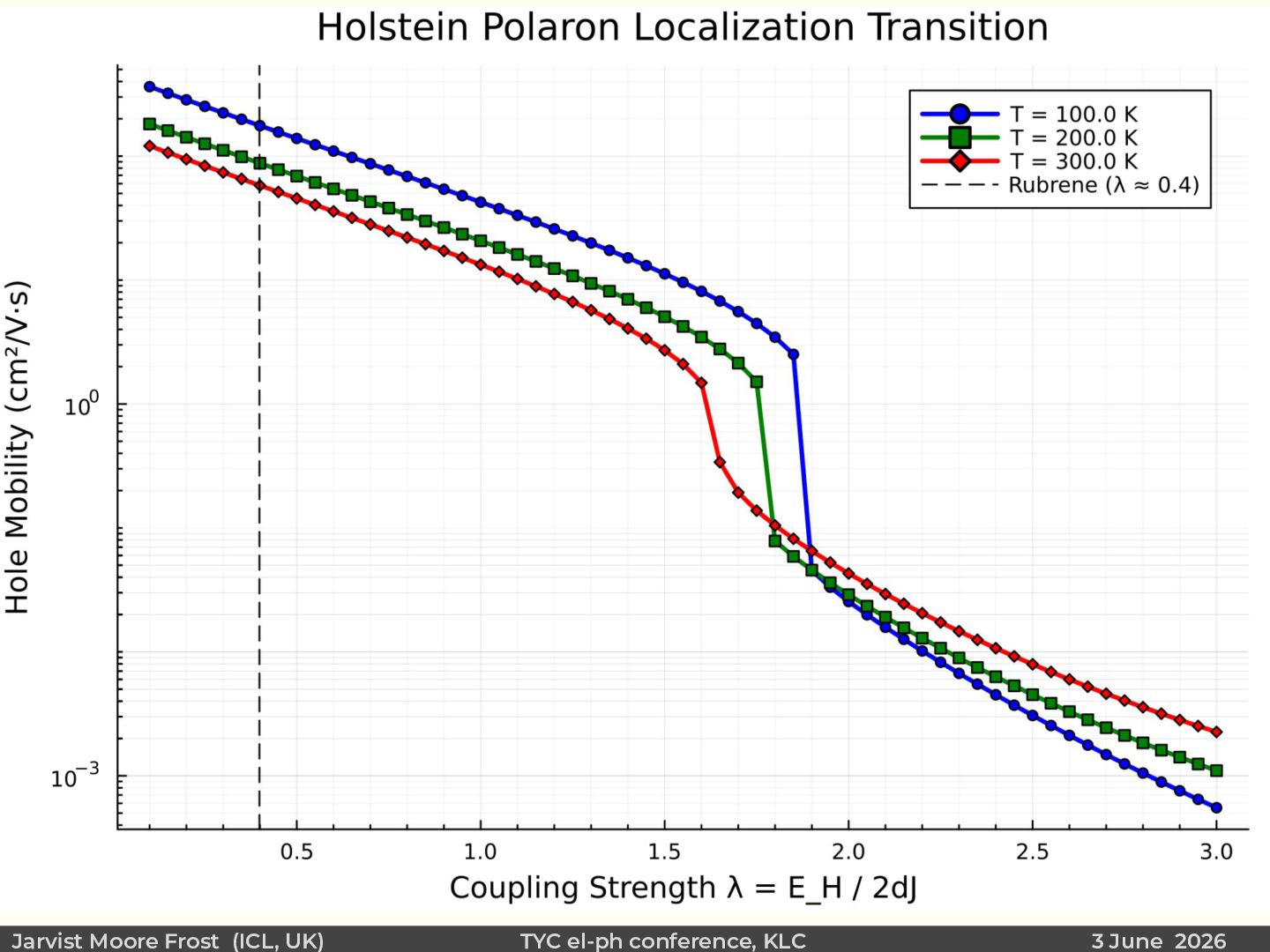
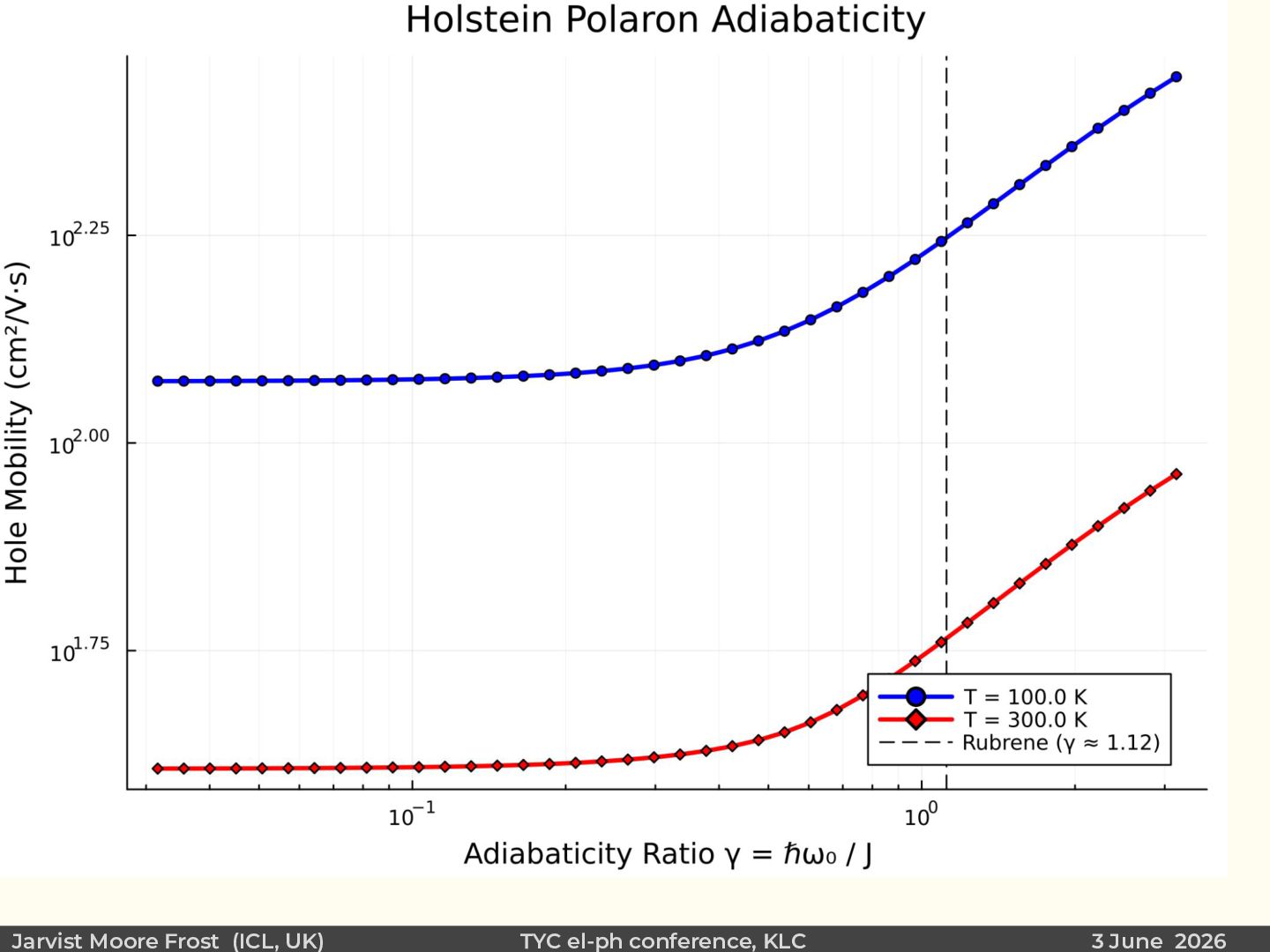
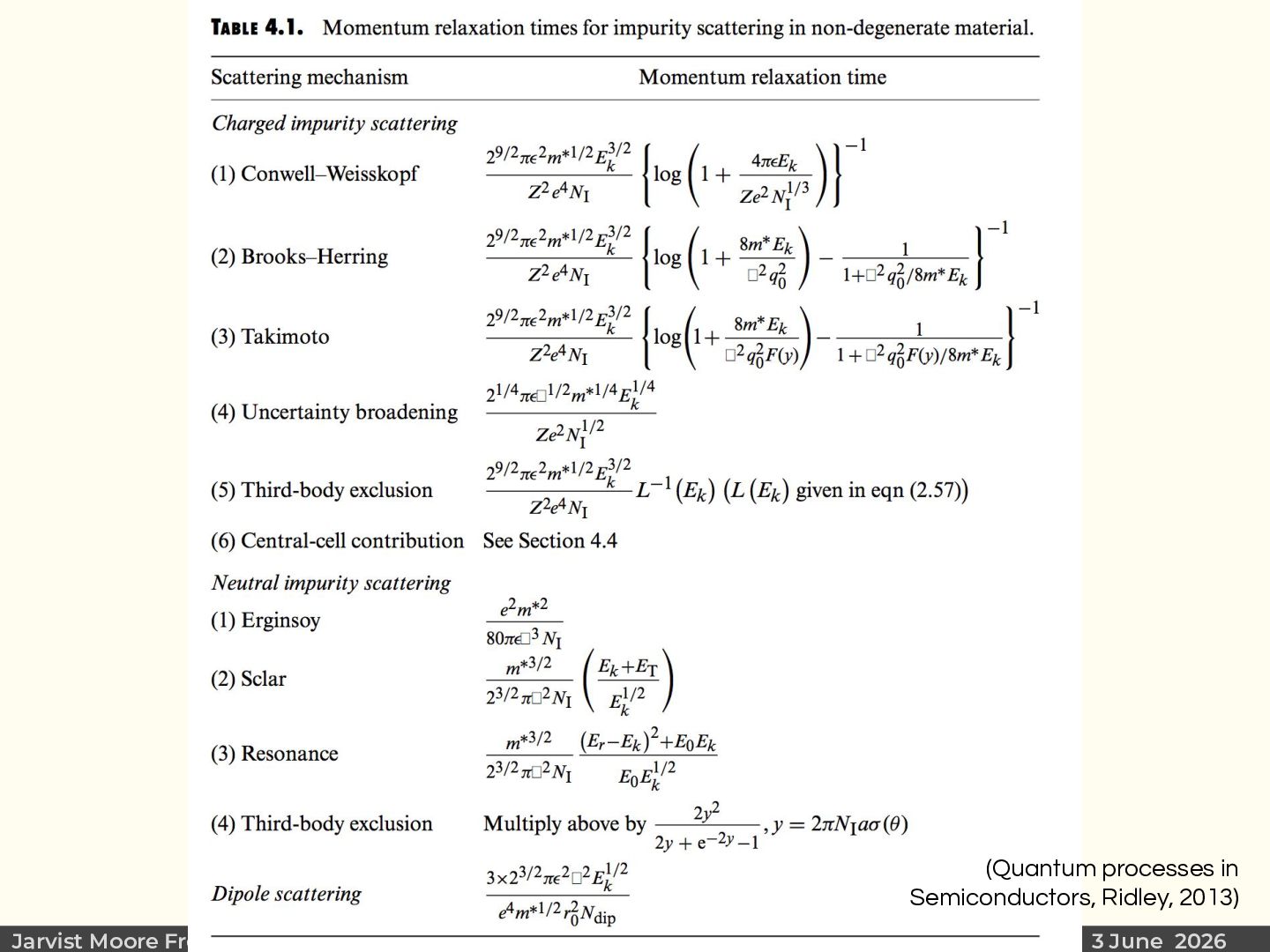
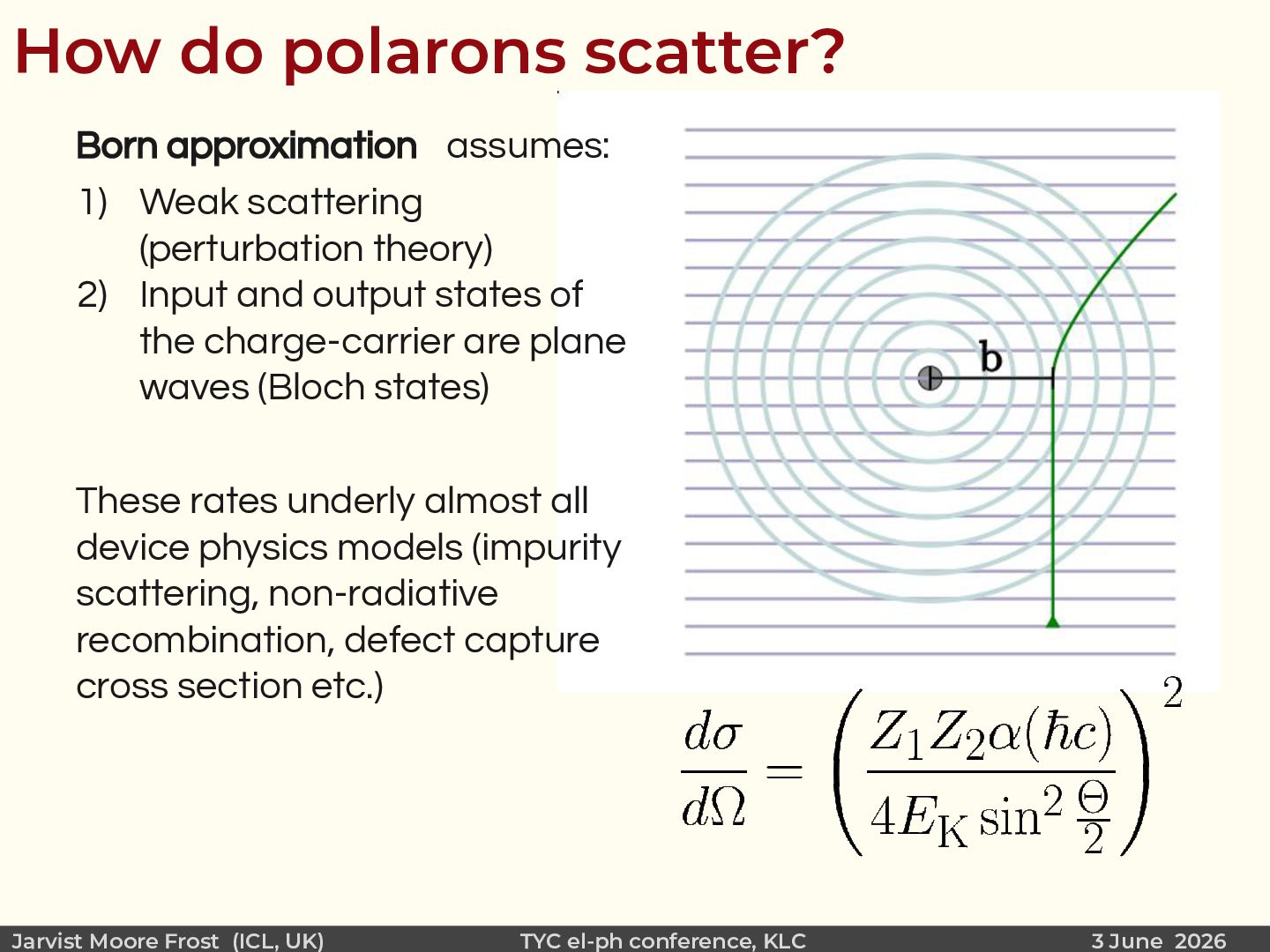
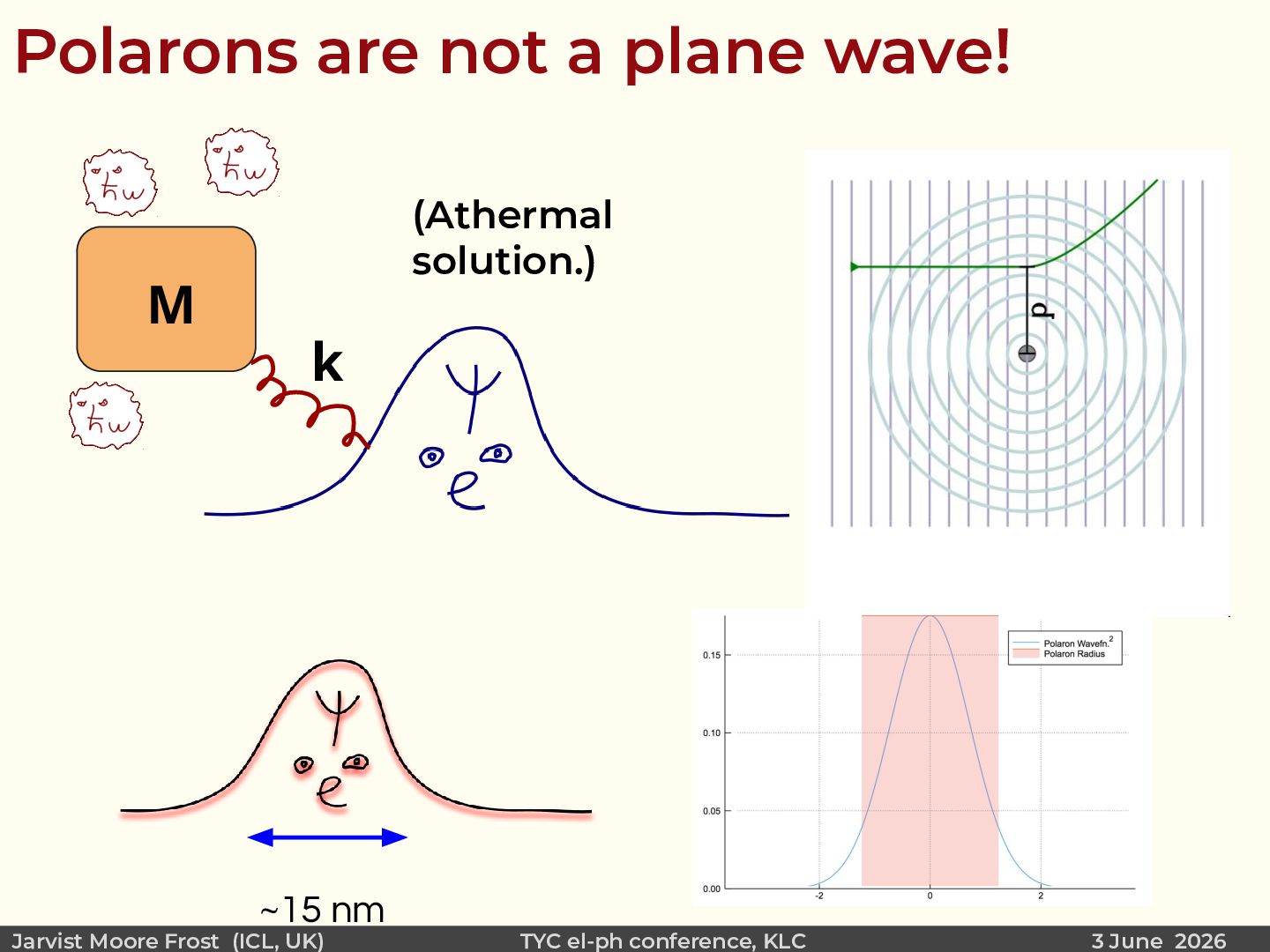
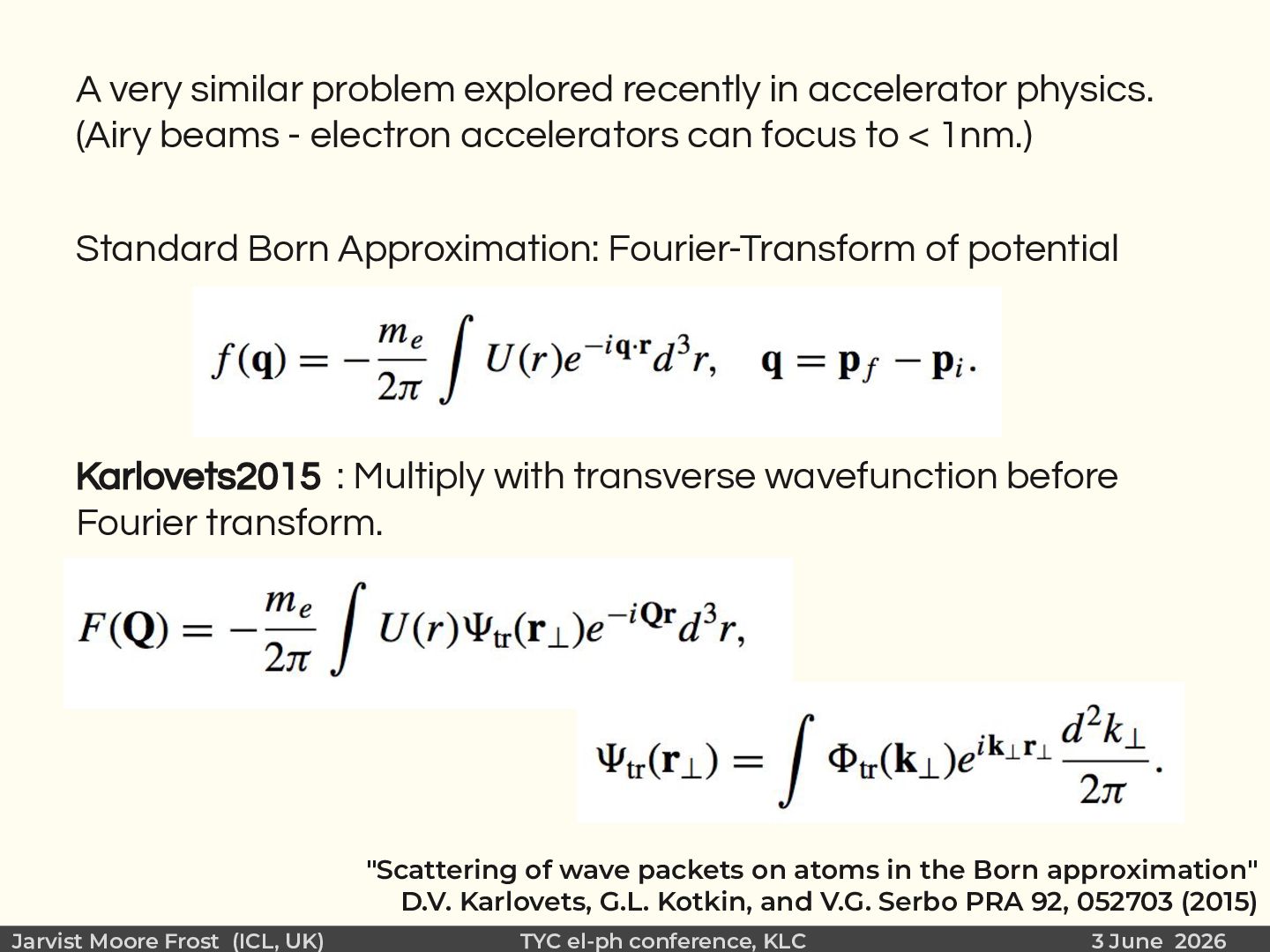
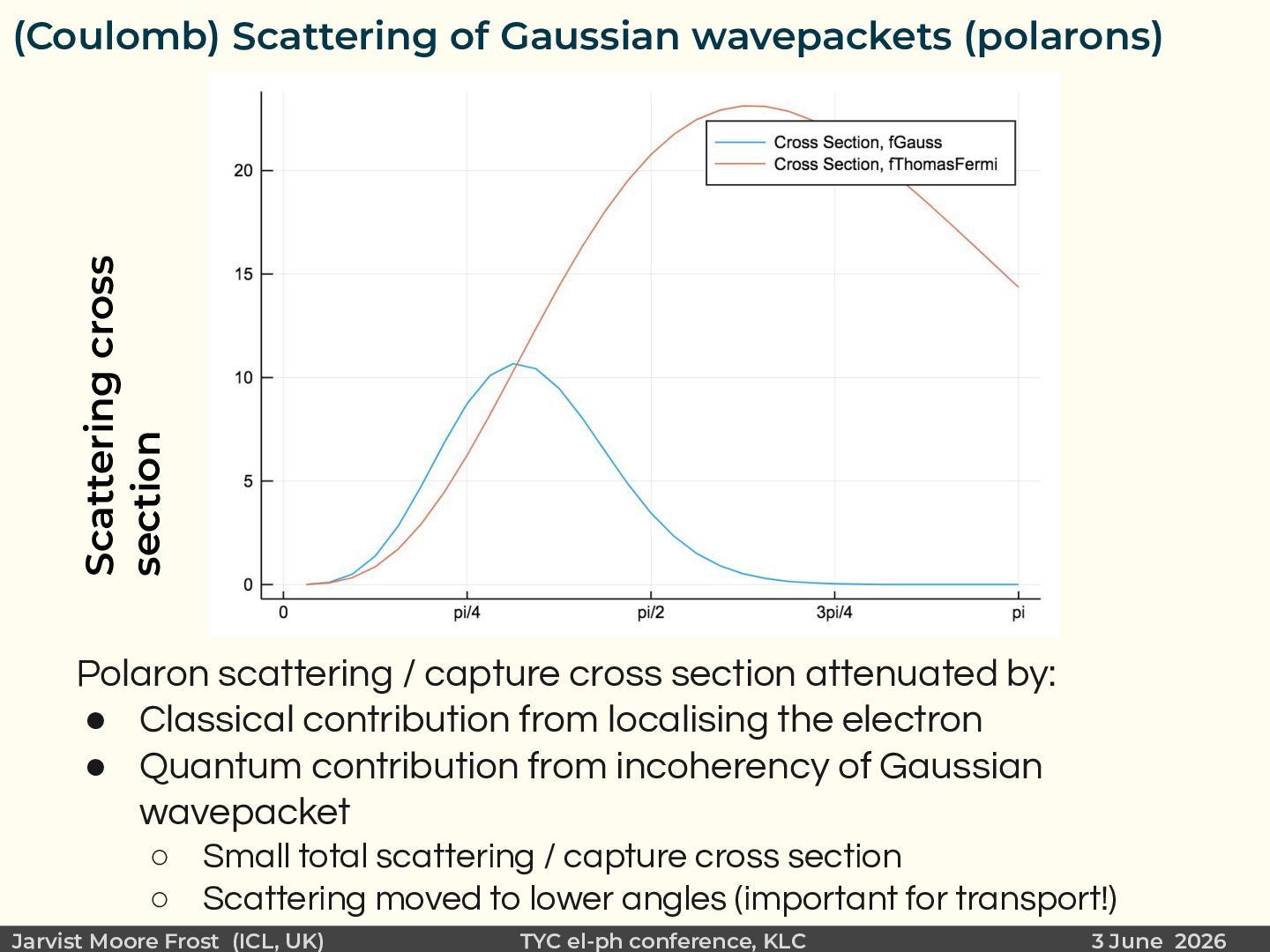
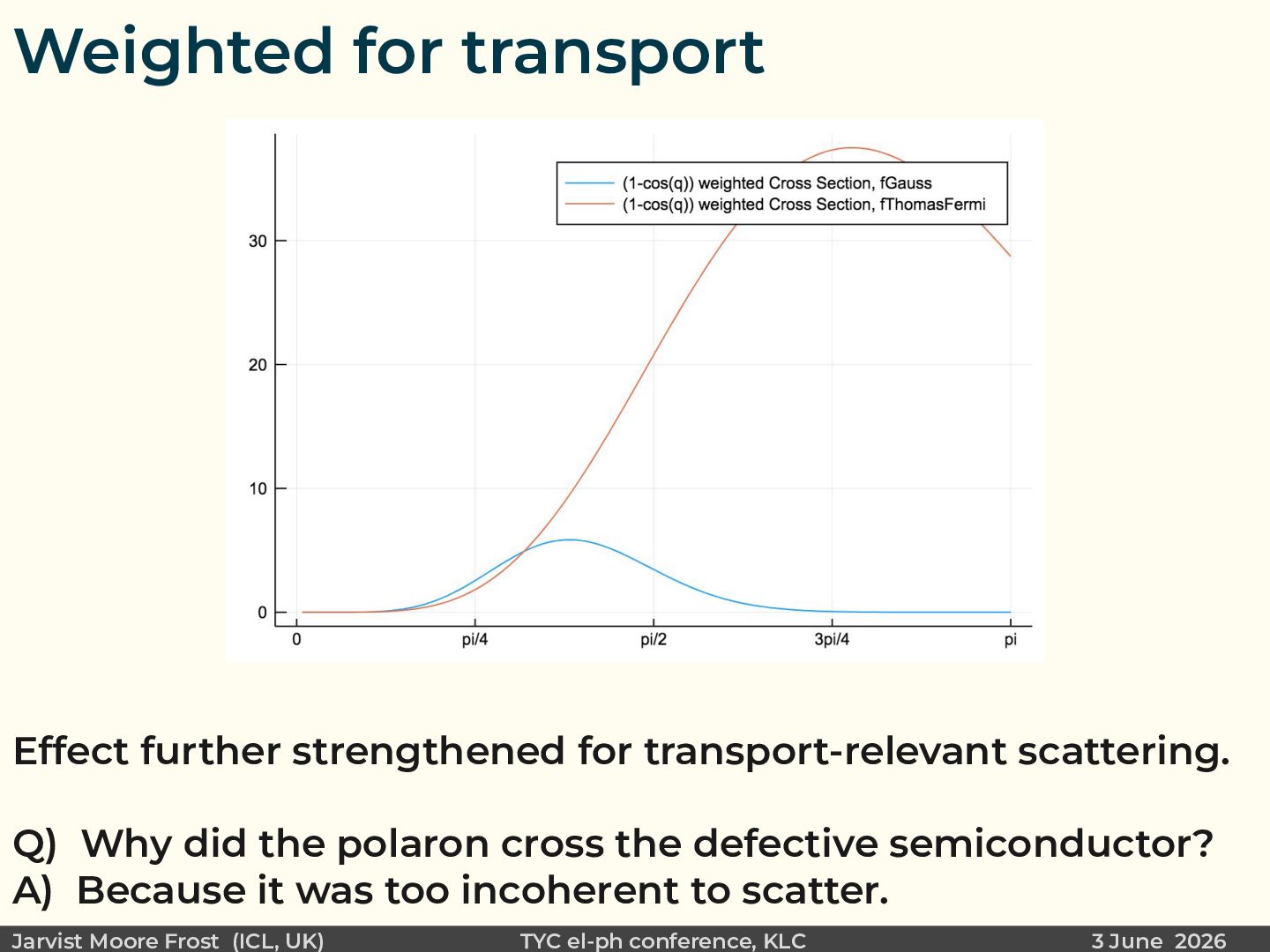
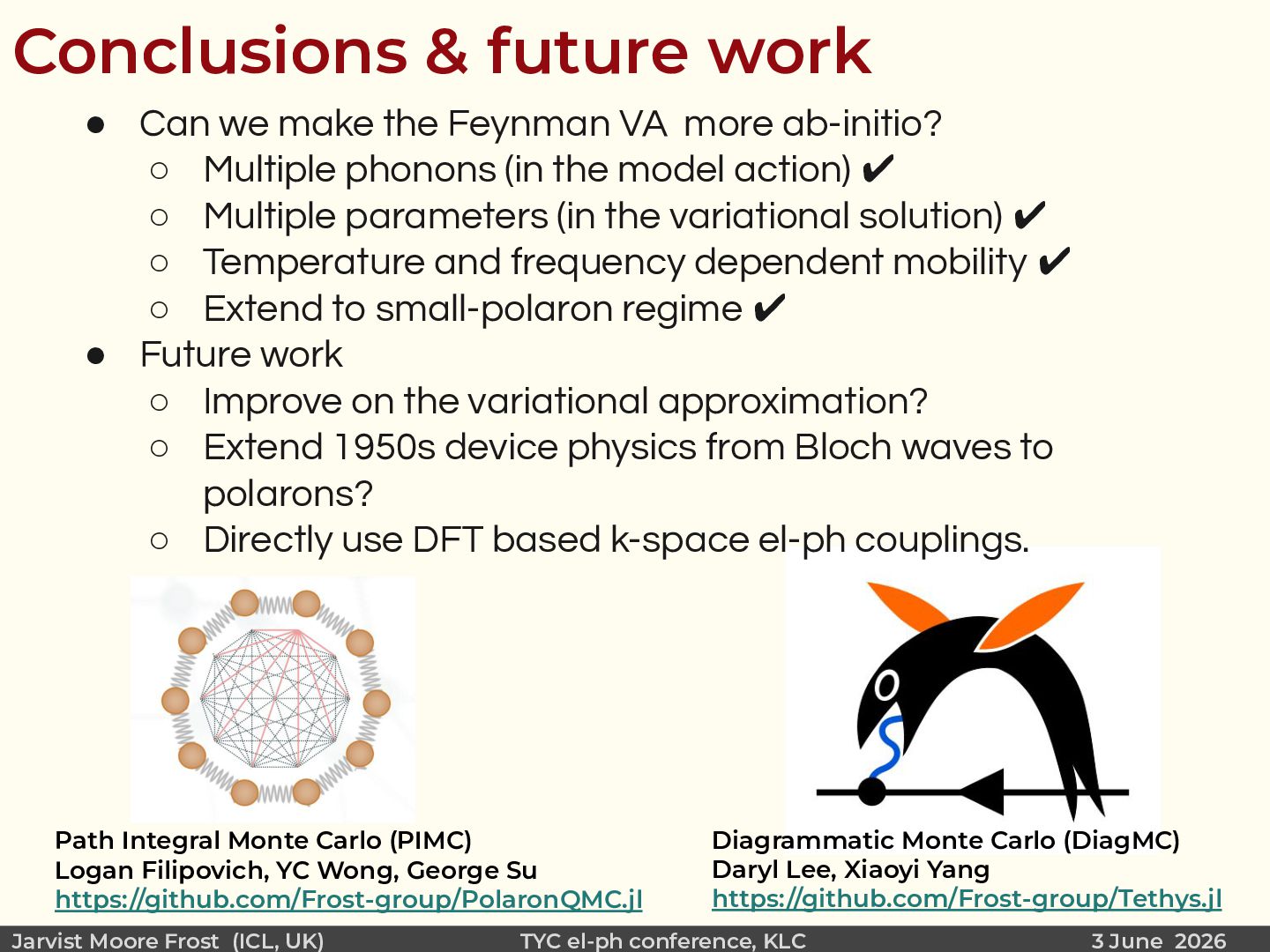
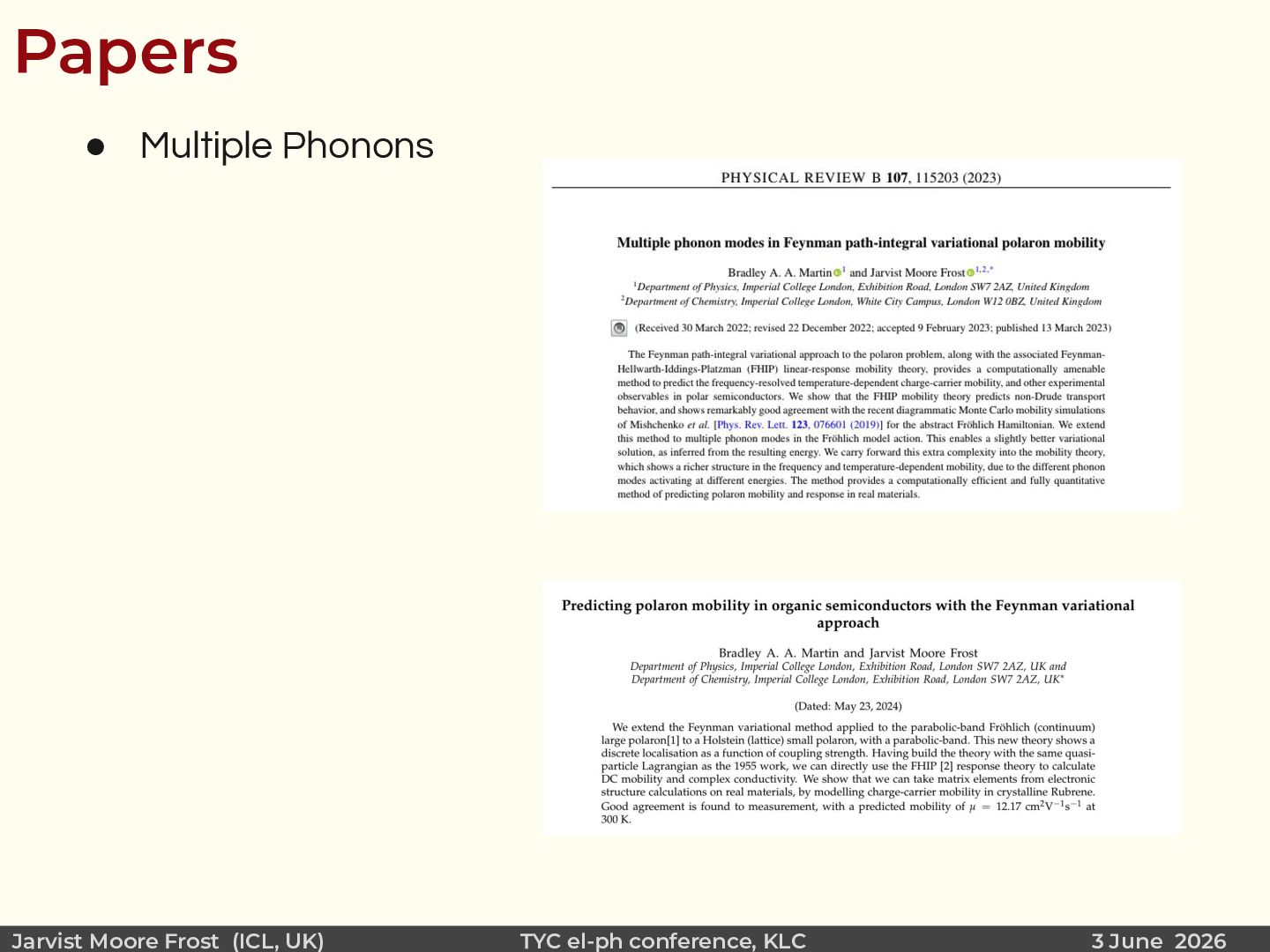
We extended the Feynman variational method for the solid-state Froehlich Hamiltonian to multiple phonon modes and multiple quasiparticles in the variational solution and developed the numerics to predict finite-temperature frequency-dependent observables (particularly optical absorption and polaron mobility), of more complicated multi-phonon branched semiconductors as are often proposed as future inorganic photovoltaic materials [PRB 107 115203].We developed a Feynman variational method for the Holstein Hamiltonian, allowing us to use the same machinery to simulate ’small’ polarons in organic materials [arXiv: 2207.06846]. Finally, I will describehow this picture of the Feynman dynamic polaron localisation can be used to correct quantumscattering form-factors that otherwise rely on (incorrectly) fully delocalised Bloch waves[unpublished].
[PRB 107 115203] https://doi.org/10.1103/PhysRevB.107.115203
[arXiv: 2207.06846] https://arxiv.org/abs/2207.06846


 jarvist
 tasusu
 nagano
 trycycle
 nozakijcom
 akasan
 institutdelelevage
 syuchimu
 uxyall
 axbom
axbom
 mfonobong
 lcolladotor
 baasie
 stuffmc
 rasmusluckow
 letsgokoyo
 sugarenia
 leimatthew05
 reverentgeek