Upgrade to Pro — share decks privately, control downloads, hide ads and more …

The Startup Classroom: An Entrepreneurial Proje...

The Startup Classroom: An Entrepreneurial Project-Based Learning Toolkit for Tech Educators

Fulbright Distinguished Award International Teacher 2024-2025 - Educator Project. Within the 4-month program, I dedicated myself to initiating a project that can be implemented in the Taiwan K12 educational system. As a high school technology teacher, I always use project-based learning to inspire students in the classroom to create and innovate!

Avatar for Joannie Huang

Joannie Huang

December 10, 2025

More Decks by Joannie Huang

Other Decks in Education

Transcript

  1. The Startup Classroom: An Entrepreneurial Project-Based Learning Toolkit for Tech

    Educators Chung-Ying(Joannie), Huang Computer Science Teacher (New Taipei City QingShan Elementary & Junior High School) Faculty Advisor: Dr. David Miller Partner Teacher: Mr. Darin Ledwith (Rush-Henrietta Senior High School) A Project-Based Curriculum Integrating an Entrepreneurial Mindset for Educators
  2. Rationale ...enabling every child to succeed developing individual strengths and

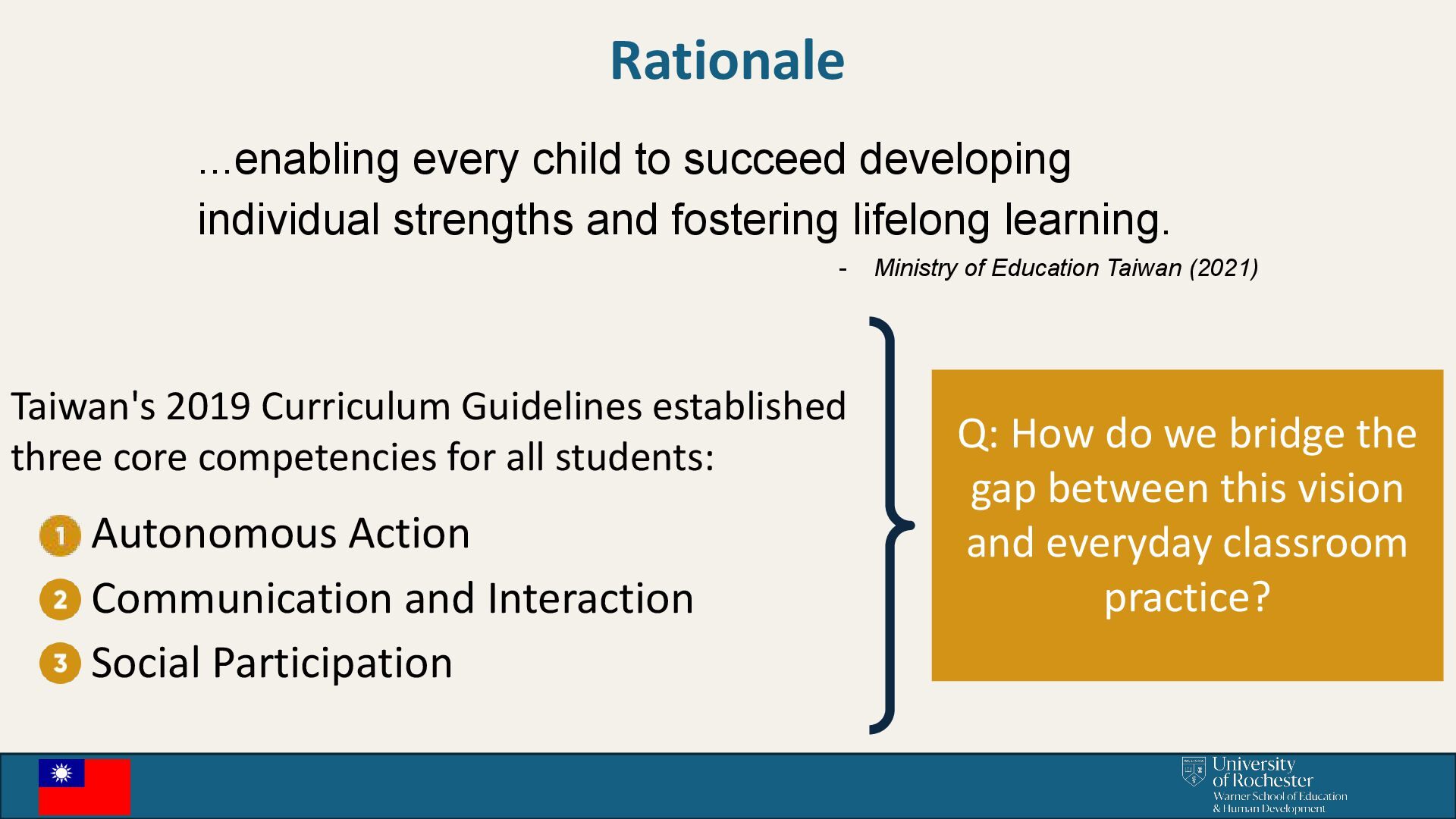
    fostering lifelong learning. - Ministry of Education Taiwan (2021) Taiwan's 2019 Curriculum Guidelines established three core competencies for all students: Autonomous Action Communication and Interaction Social Participation Q: How do we bridge the gap between this vision and everyday classroom practice?
  3. The Classroom Challenge: From Theory to Application Core Problem Statement

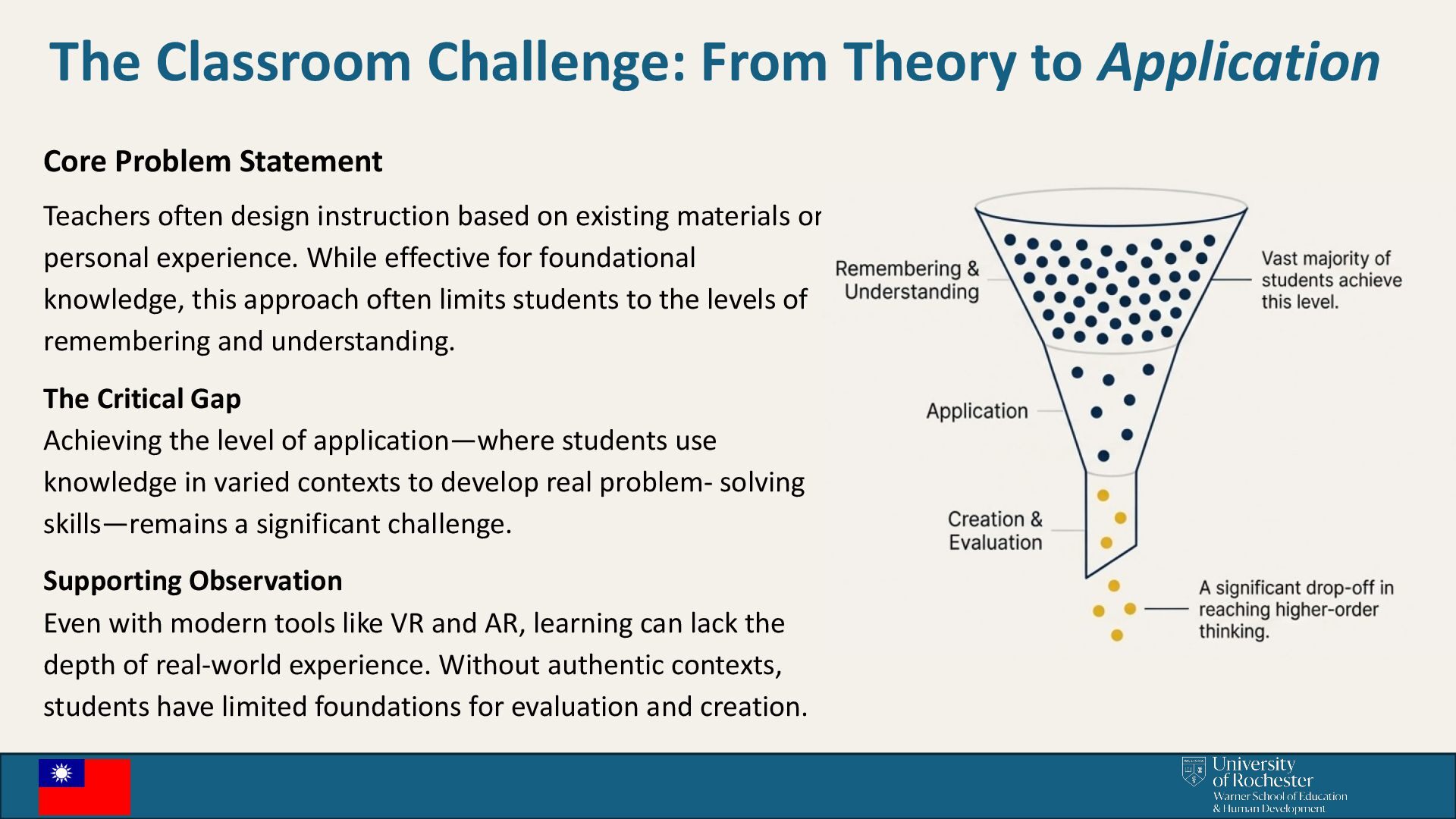
    Teachers often design instruction based on existing materials or personal experience. While effective for foundational knowledge, this approach often limits students to the levels of remembering and understanding. The Critical Gap Achieving the level of application—where students use knowledge in varied contexts to develop real problem- solving skills—remains a significant challenge. Supporting Observation Even with modern tools like VR and AR, learning can lack the depth of real-world experience. Without authentic contexts, students have limited foundations for evaluation and creation.
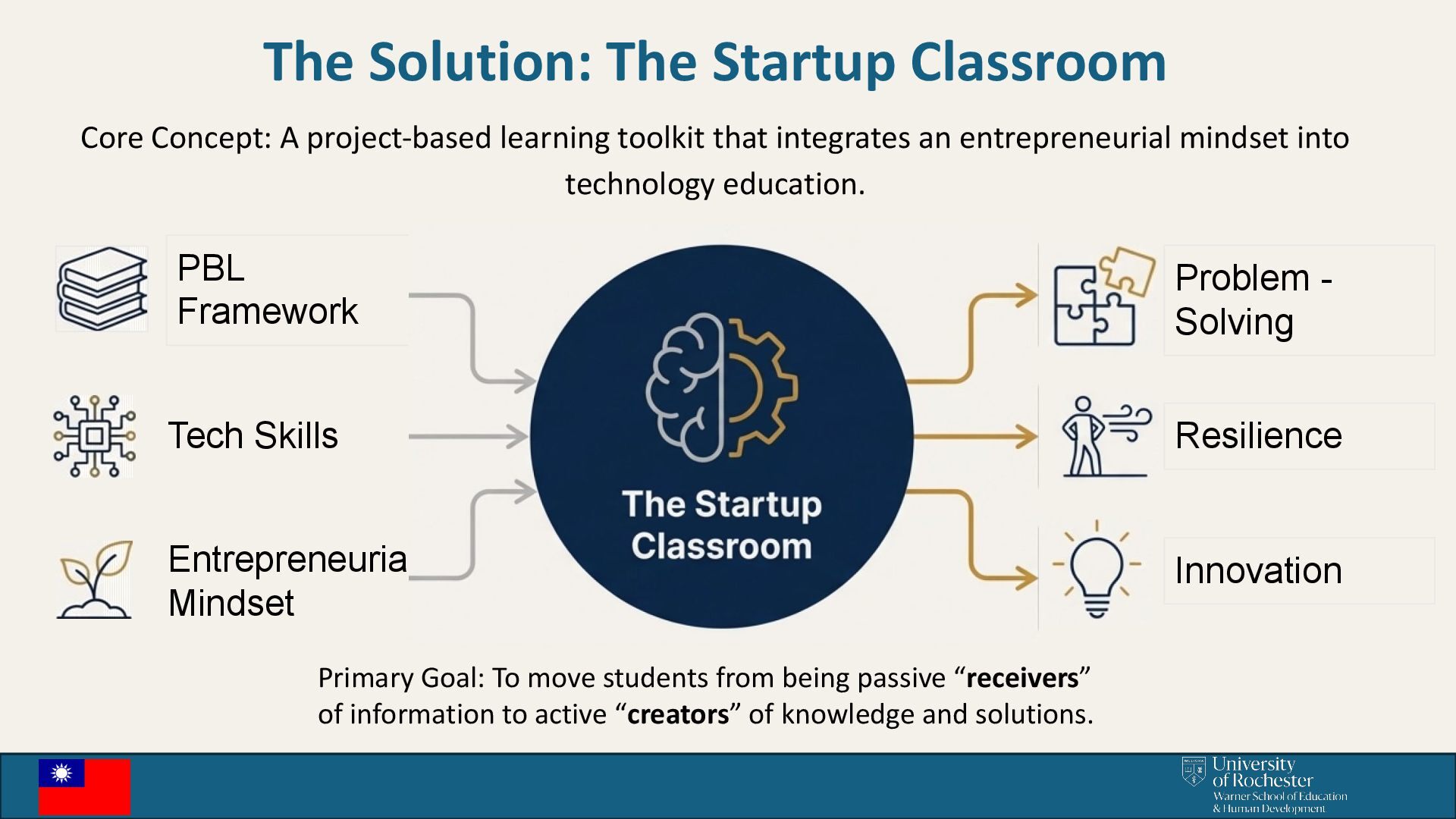
  4. The Solution: The Startup Classroom Core Concept: A project-based learning

    toolkit that integrates an entrepreneurial mindset into technology education. PBL Framework Tech Skills Entrepreneurial Mindset Problem - Solving Resilience Innovation Primary Goal: To move students from being passive “receivers” of information to active “creators” of knowledge and solutions.
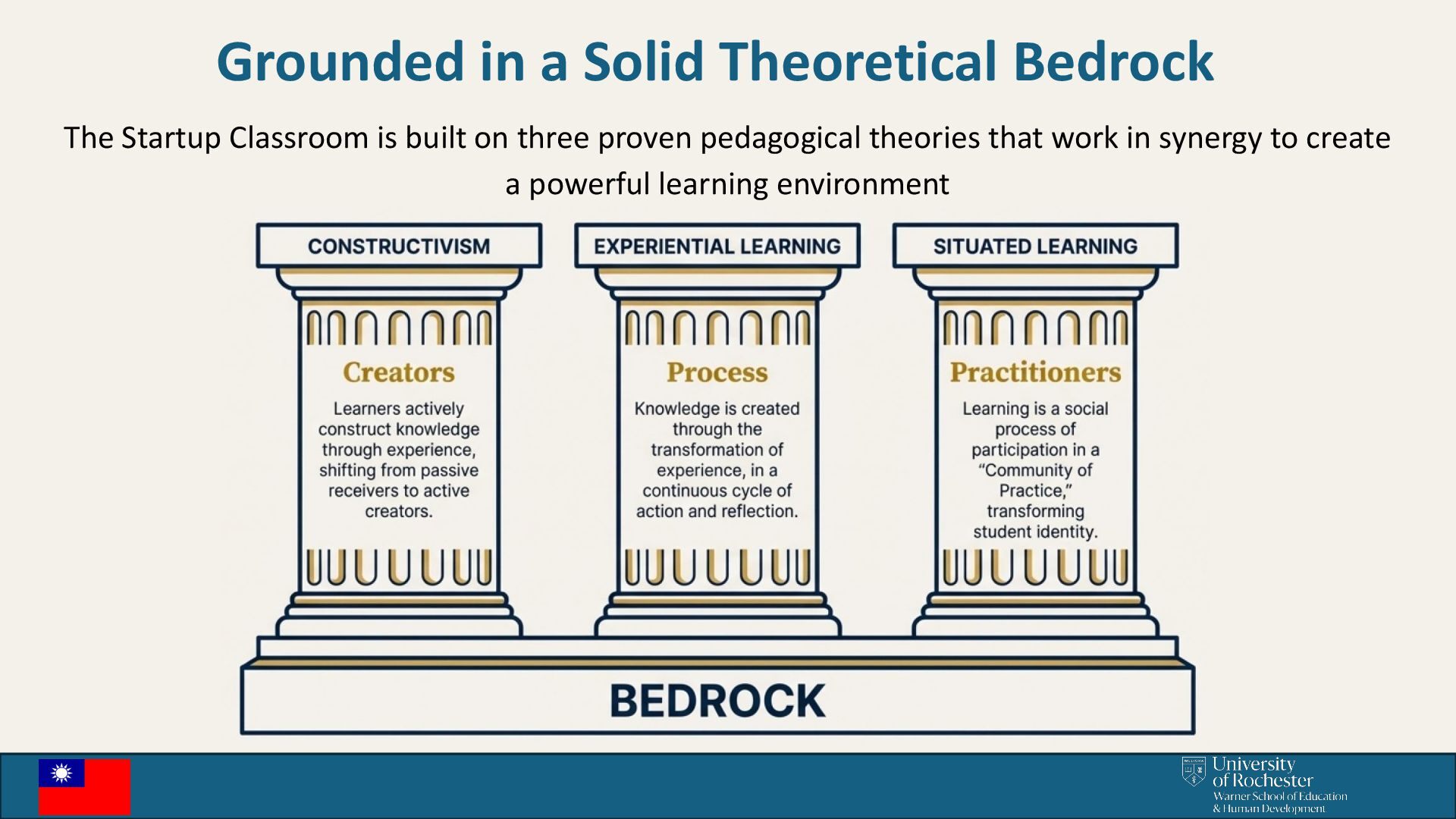
  5. Grounded in a Solid Theoretical Bedrock The Startup Classroom is

    built on three proven pedagogical theories that work in synergy to create a powerful learning environment
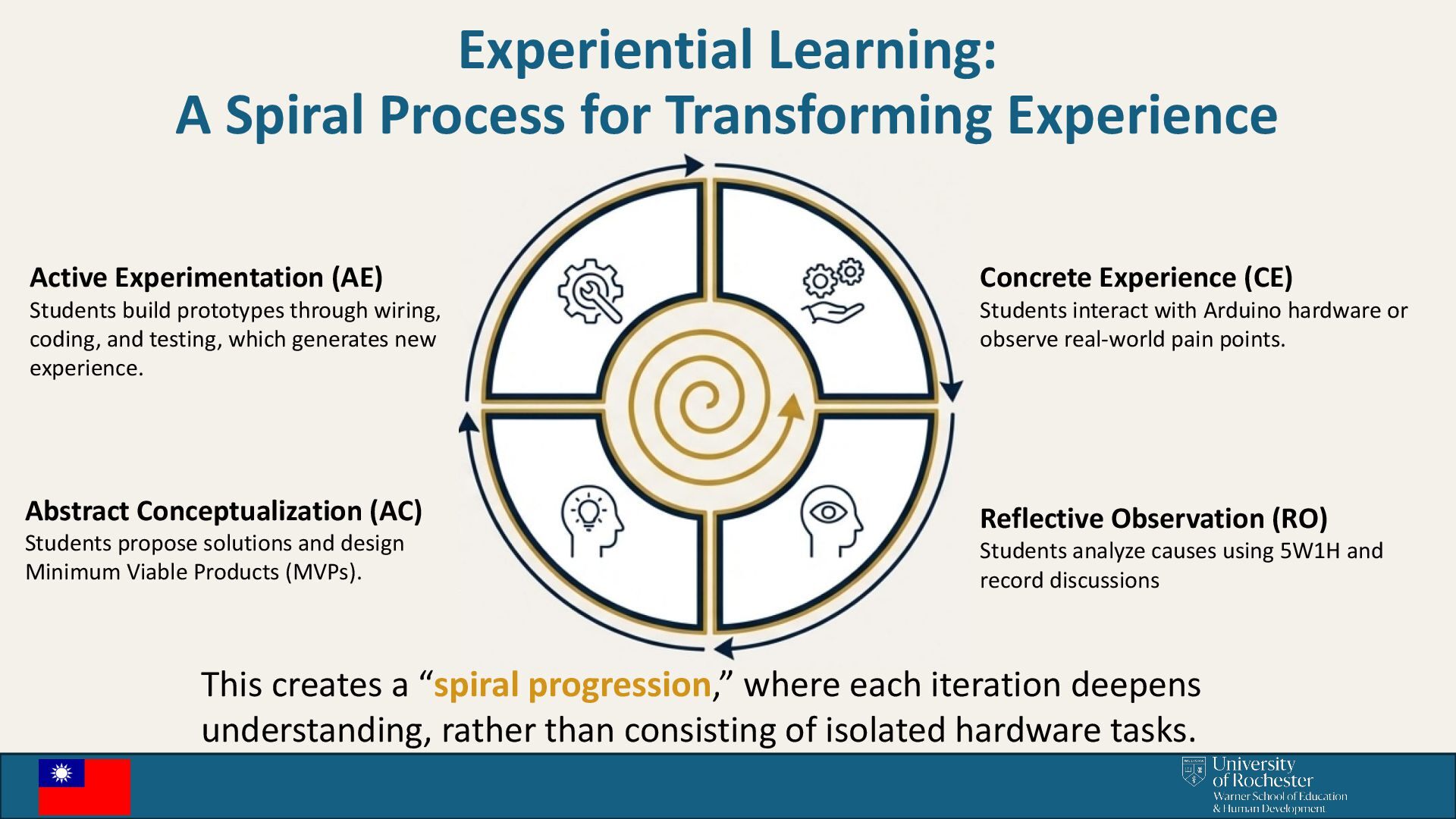
  6. Experiential Learning: A Spiral Process for Transforming Experience Active Experimentation

    (AE) Students build prototypes through wiring, coding, and testing, which generates new experience. Abstract Conceptualization (AC) Students propose solutions and design Minimum Viable Products (MVPs). Concrete Experience (CE) Students interact with Arduino hardware or observe real-world pain points. Reflective Observation (RO) Students analyze causes using 5W1H and record discussions This creates a “spiral progression,” where each iteration deepens understanding, rather than consisting of isolated hardware tasks.
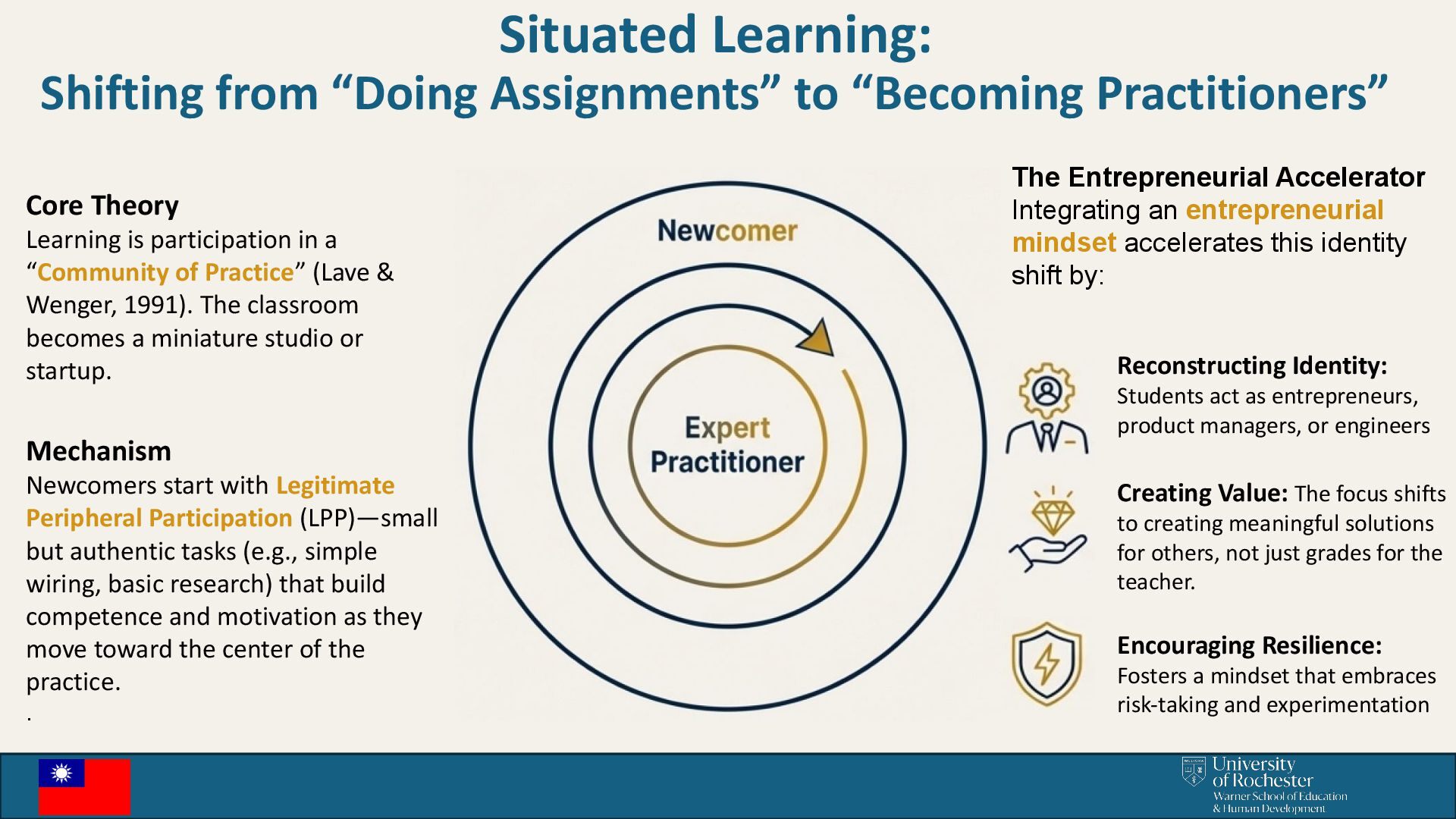
  7. Situated Learning: Shifting from “Doing Assignments” to “Becoming Practitioners” Core

    Theory Learning is participation in a “Community of Practice” (Lave & Wenger, 1991). The classroom becomes a miniature studio or startup. Mechanism Newcomers start with Legitimate Peripheral Participation (LPP)—small but authentic tasks (e.g., simple wiring, basic research) that build competence and motivation as they move toward the center of the practice. . The Entrepreneurial Accelerator Integrating an entrepreneurial mindset accelerates this identity shift by: Reconstructing Identity: Students act as entrepreneurs, product managers, or engineers Creating Value: The focus shifts to creating meaningful solutions for others, not just grades for the teacher. Encouraging Resilience: Fosters a mindset that embraces risk-taking and experimentation
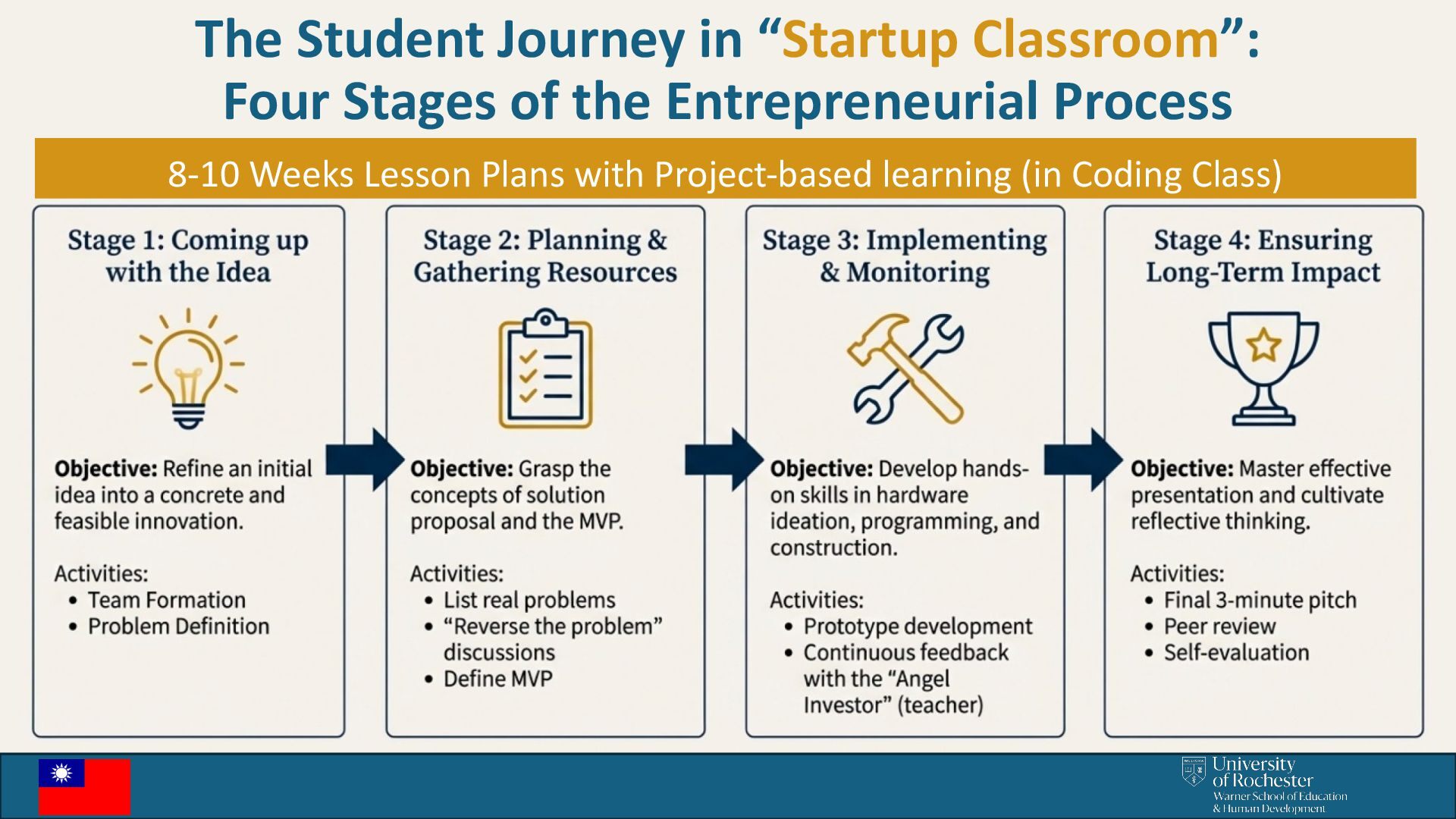
  8. The Student Journey in “Startup Classroom”: Four Stages of the

    Entrepreneurial Process 8-10 Weeks Lesson Plans with Project-based learning (in Coding Class)
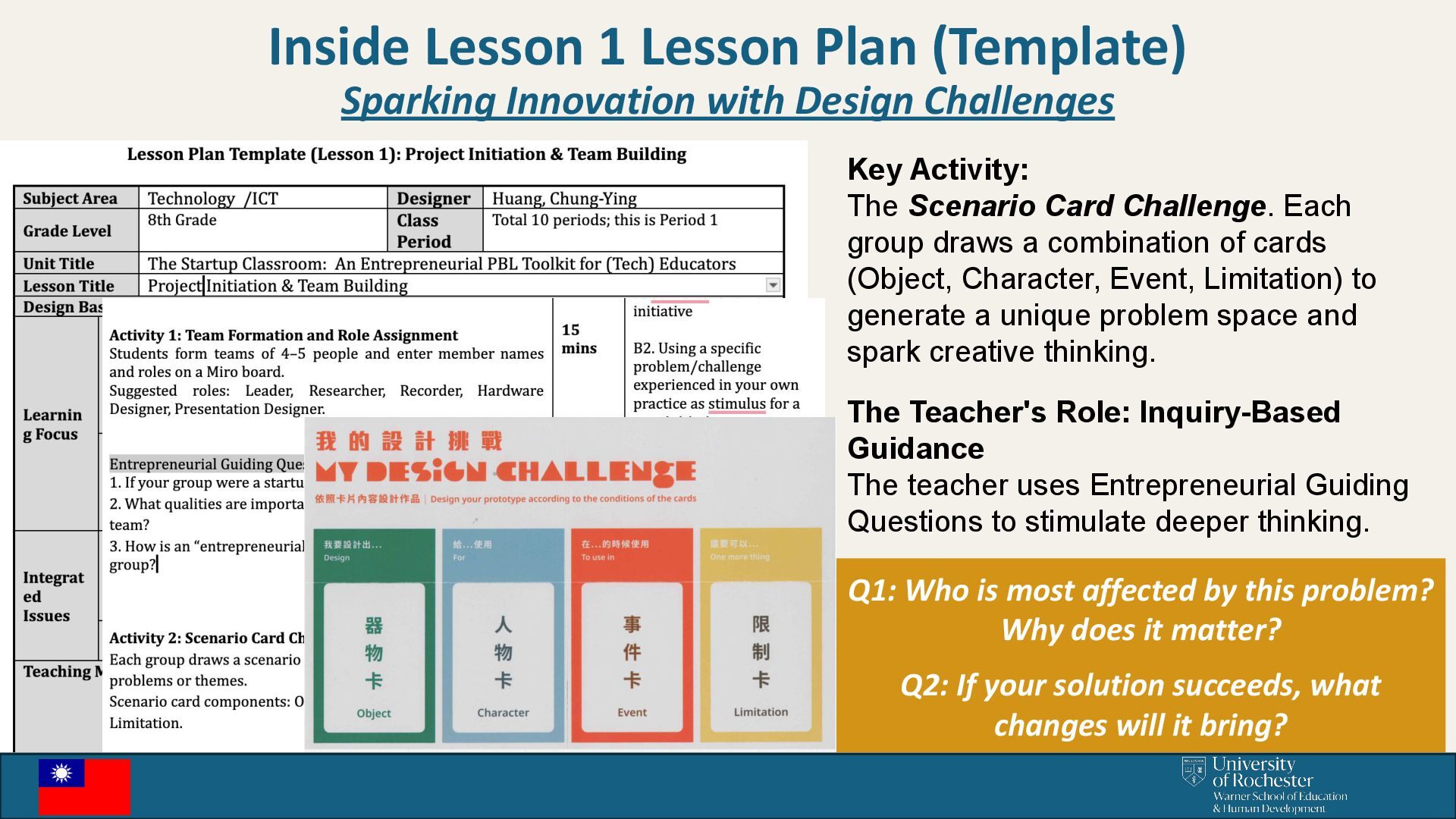
  9. Inside Lesson 1 Lesson Plan (Template) Sparking Innovation with Design

    Challenges Key Activity: The Scenario Card Challenge. Each group draws a combination of cards (Object, Character, Event, Limitation) to generate a unique problem space and spark creative thinking. The Teacher's Role: Inquiry-Based Guidance The teacher uses Entrepreneurial Guiding Questions to stimulate deeper thinking. Q1: Who is most affected by this problem? Why does it matter? Q2: If your solution succeeds, what changes will it bring?
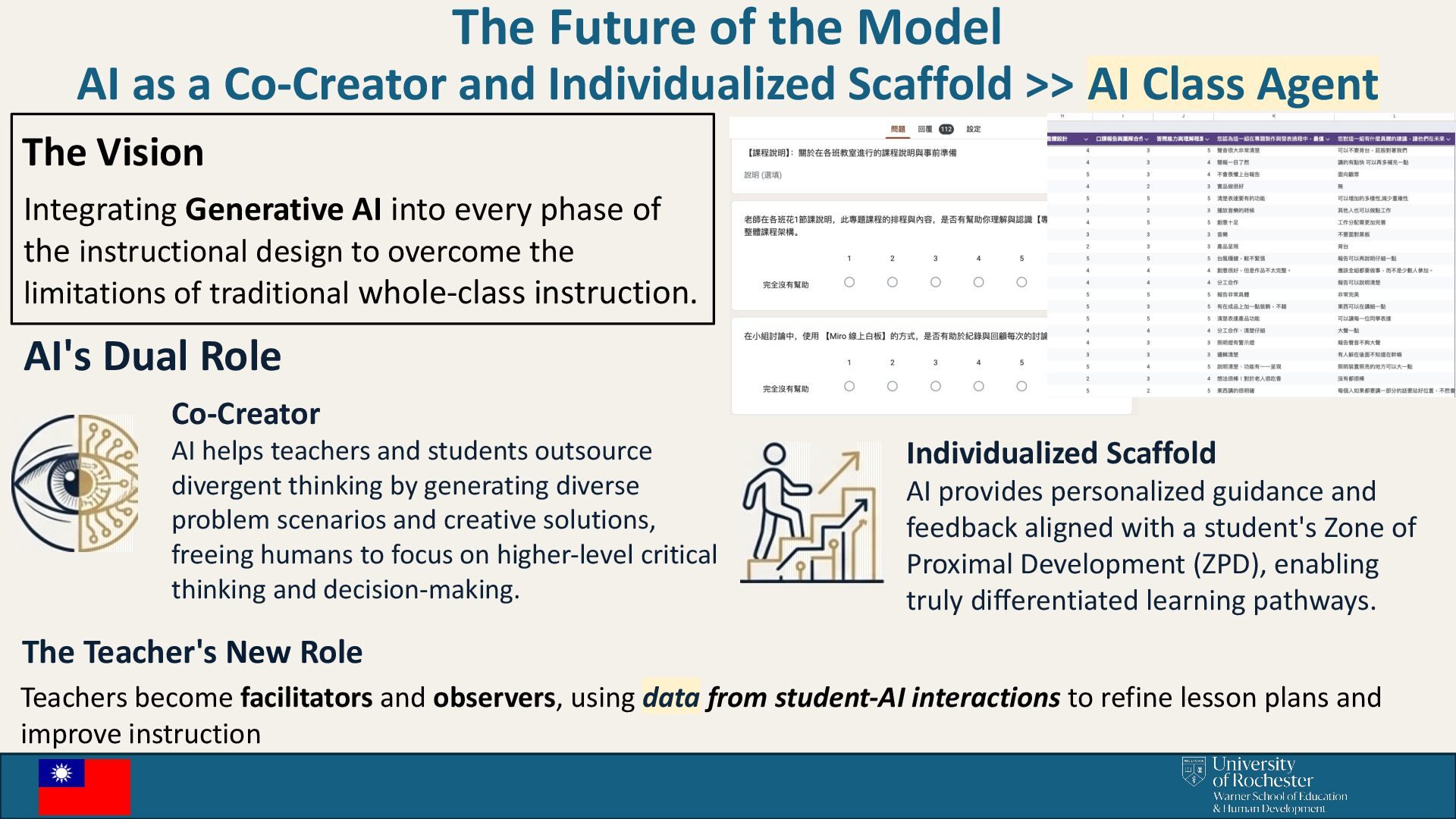
  10. The Future of the Model AI as a Co-Creator and

    Individualized Scaffold >> AI Class Agent The Vision Integrating Generative AI into every phase of the instructional design to overcome the limitations of traditional whole-class instruction. Co-Creator AI helps teachers and students outsource divergent thinking by generating diverse problem scenarios and creative solutions, freeing humans to focus on higher-level critical thinking and decision-making. AI's Dual Role Individualized Scaffold AI provides personalized guidance and feedback aligned with a student's Zone of Proximal Development (ZPD), enabling truly differentiated learning pathways. The Teacher's New Role Teachers become facilitators and observers, using data from student-AI interactions to refine lesson plans and improve instruction
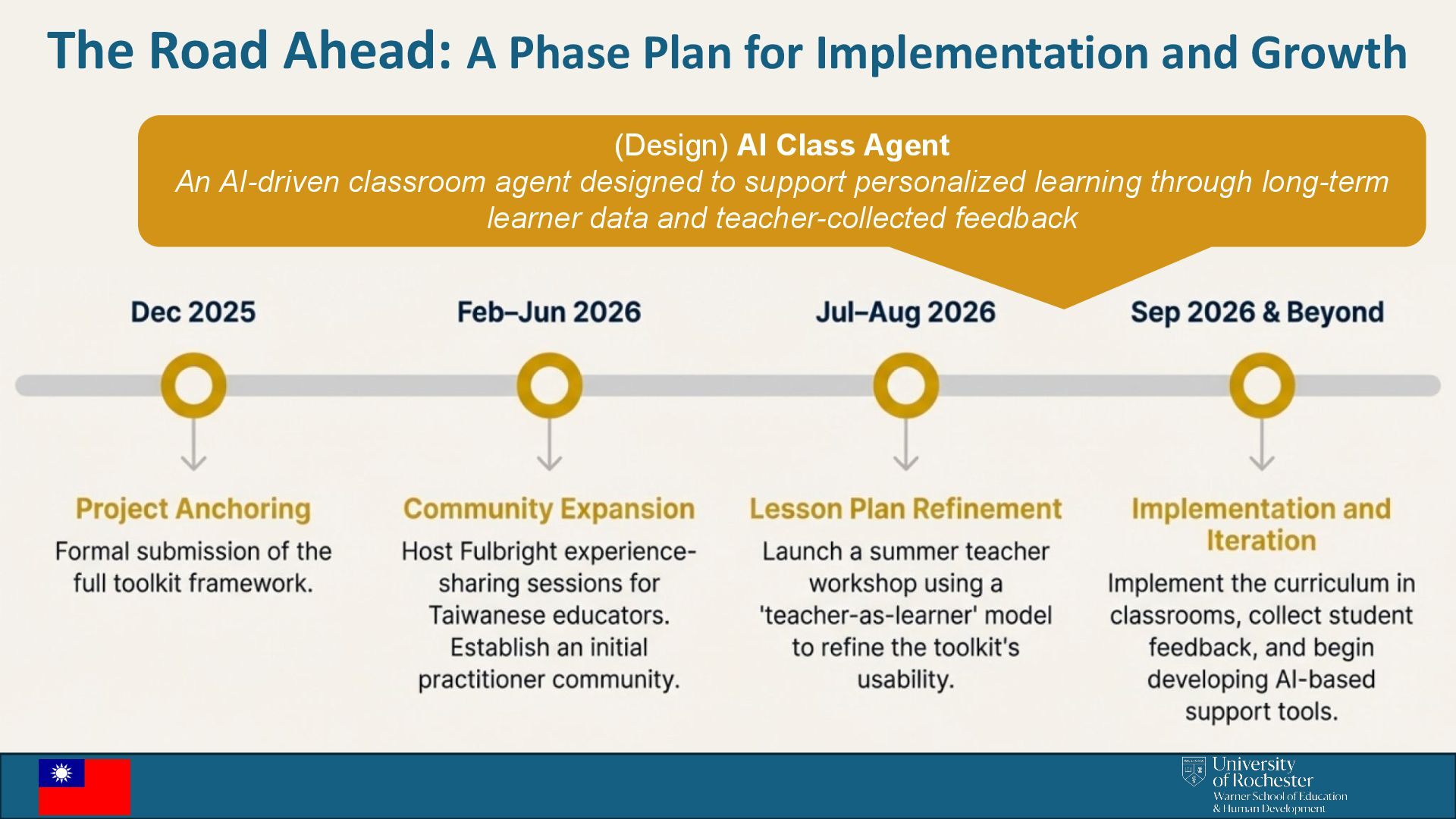
  11. The Road Ahead: A Phase Plan for Implementation and Growth

    (Design) AI Class Agent An AI-driven classroom agent designed to support personalized learning through long-term learner data and teacher-collected feedback
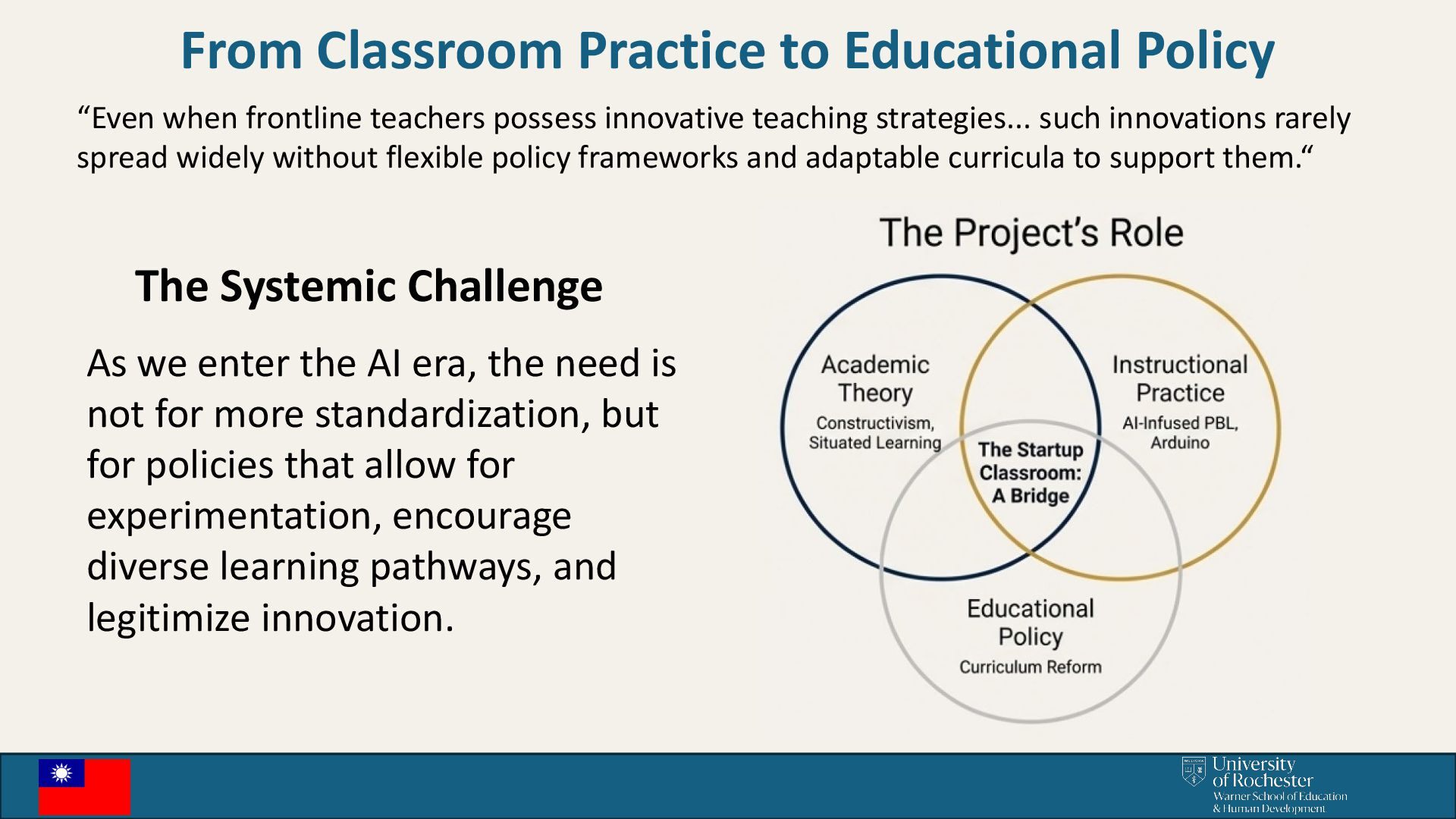
  12. From Classroom Practice to Educational Policy “Even when frontline teachers

    possess innovative teaching strategies... such innovations rarely spread widely without flexible policy frameworks and adaptable curricula to support them.“ The Systemic Challenge As we enter the AI era, the need is not for more standardization, but for policies that allow for experimentation, encourage diverse learning pathways, and legitimize innovation.
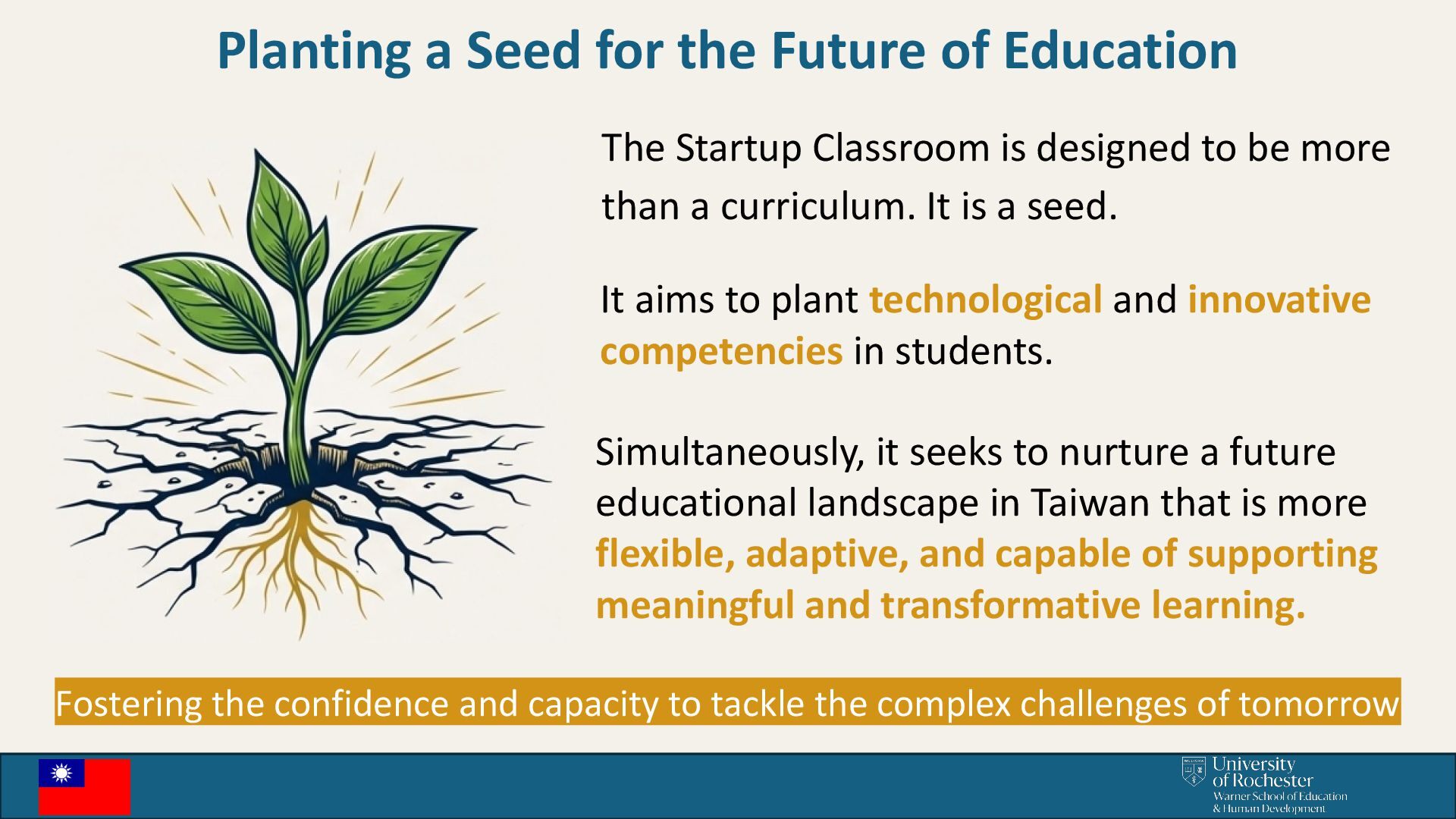
  13. Planting a Seed for the Future of Education The Startup

    Classroom is designed to be more than a curriculum. It is a seed. It aims to plant technological and innovative competencies in students. Simultaneously, it seeks to nurture a future educational landscape in Taiwan that is more flexible, adaptive, and capable of supporting meaningful and transformative learning. Fostering the confidence and capacity to tackle the complex challenges of tomorrow
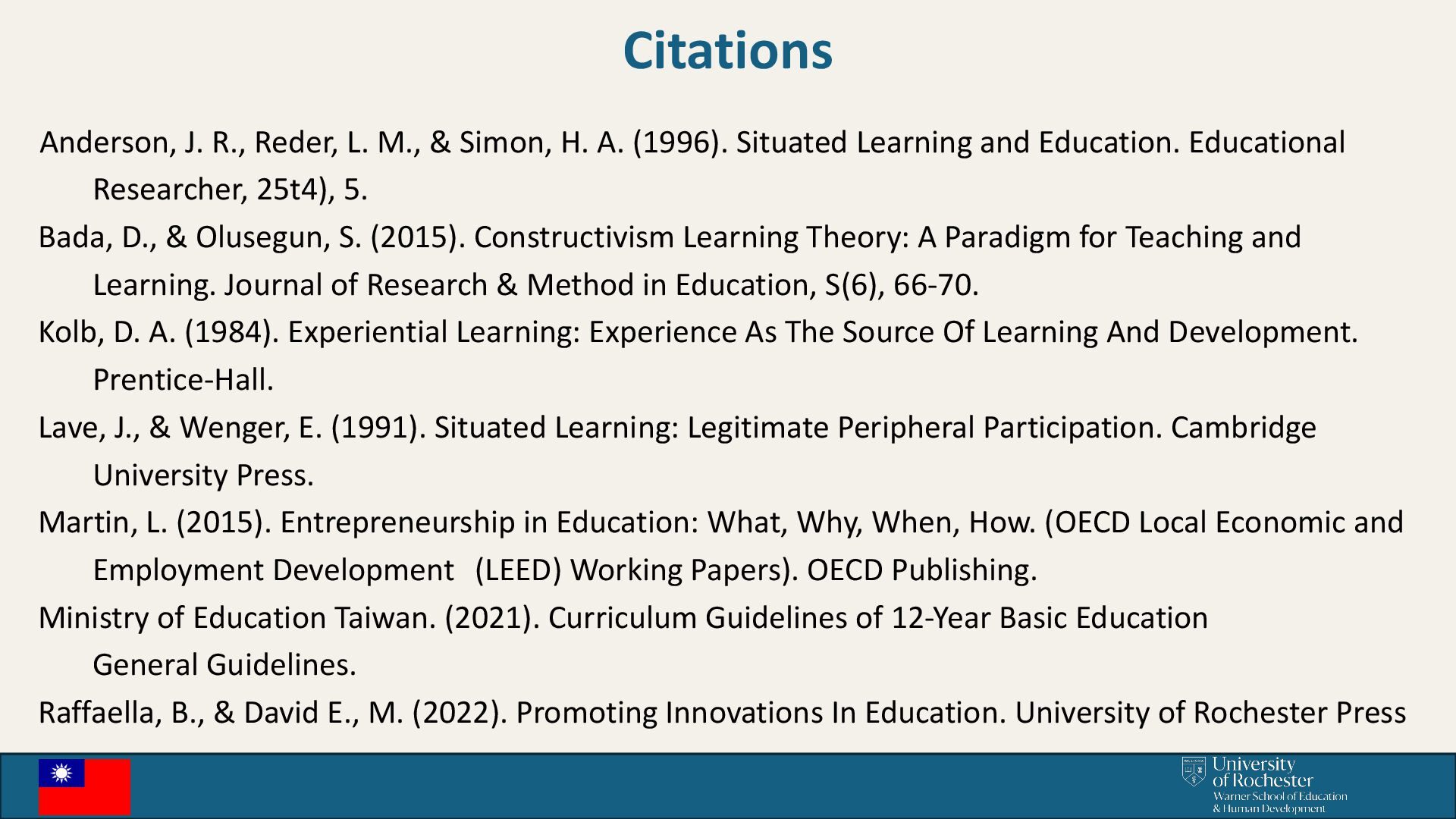
  14. Citations Anderson, J. R., Reder, L. M., & Simon, H.

    A. (1996). Situated Learning and Education. Educational Researcher, 25t4), 5. Bada, D., & Olusegun, S. (2015). Constructivism Learning Theory: A Paradigm for Teaching and Learning. Journal of Research & Method in Education, S(6), 66-70. Kolb, D. A. (1984). Experiential Learning: Experience As The Source Of Learning And Development. Prentice-Hall. Lave, J., & Wenger, E. (1991). Situated Learning: Legitimate Peripheral Participation. Cambridge University Press. Martin, L. (2015). Entrepreneurship in Education: What, Why, When, How. (OECD Local Economic and Employment Development (LEED) Working Papers). OECD Publishing. Ministry of Education Taiwan. (2021). Curriculum Guidelines of 12-Year Basic Education General Guidelines. Raffaella, B., & David E., M. (2022). Promoting Innovations In Education. University of Rochester Press