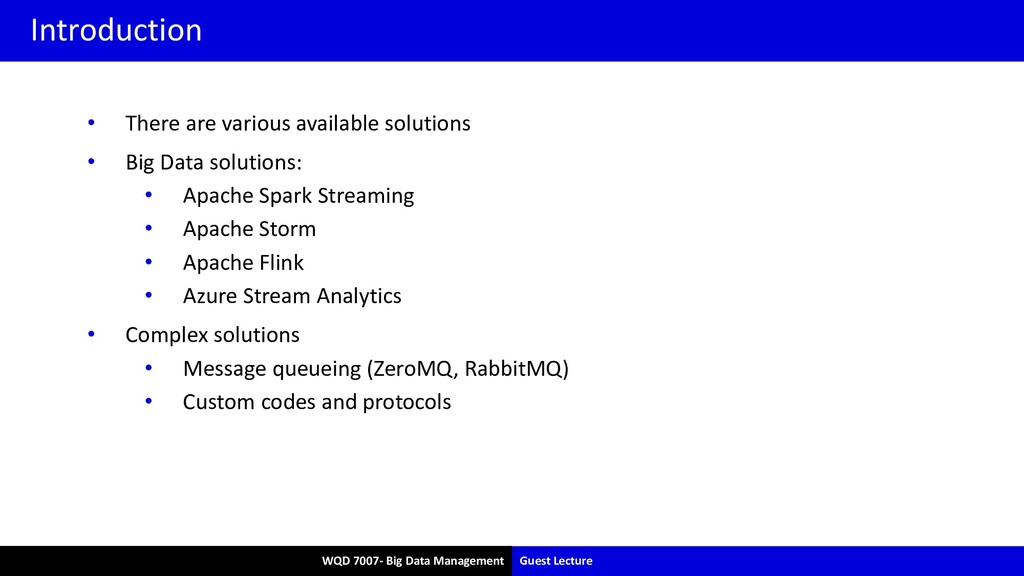
Recap • Introduction • Use case and demo Acknowledgement: Some portion of the contents in this slide deck is adapted from Matthew Rocklin’s talk, Streaming Processing with Dask, at PyData 2017. Thank you ☺
(20 April 2021) Share your real-world use cases on database, data warehouse and data lake. How does your company or yourself utilize them to manage data? What problems do your company/yourself face along the way?
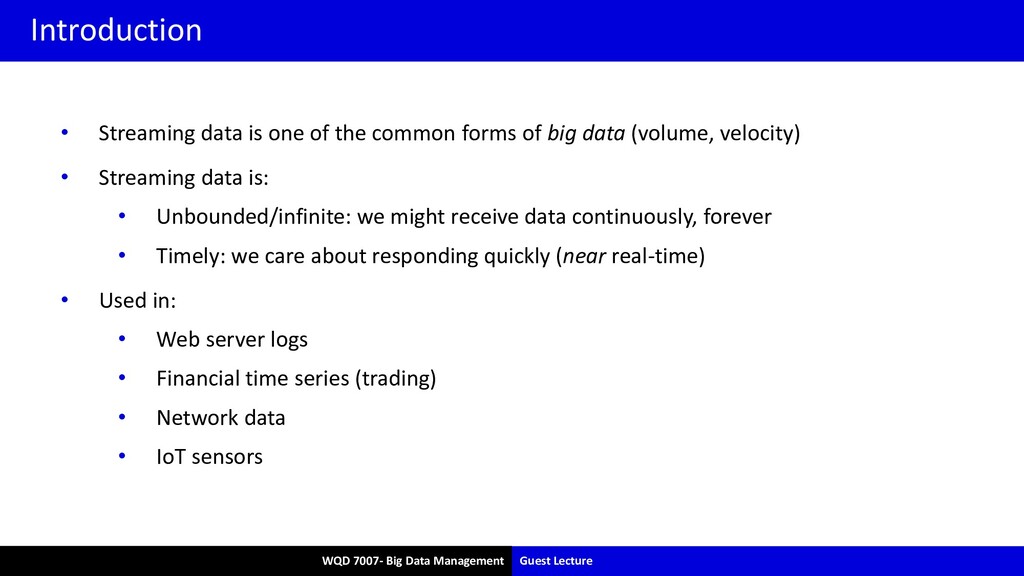
Streaming data is one of the common forms of big data (volume, velocity) • Streaming data is: • Unbounded/infinite: we might receive data continuously, forever • Timely: we care about responding quickly (near real-time) • Used in: • Web server logs • Financial time series (trading) • Network data • IoT sensors
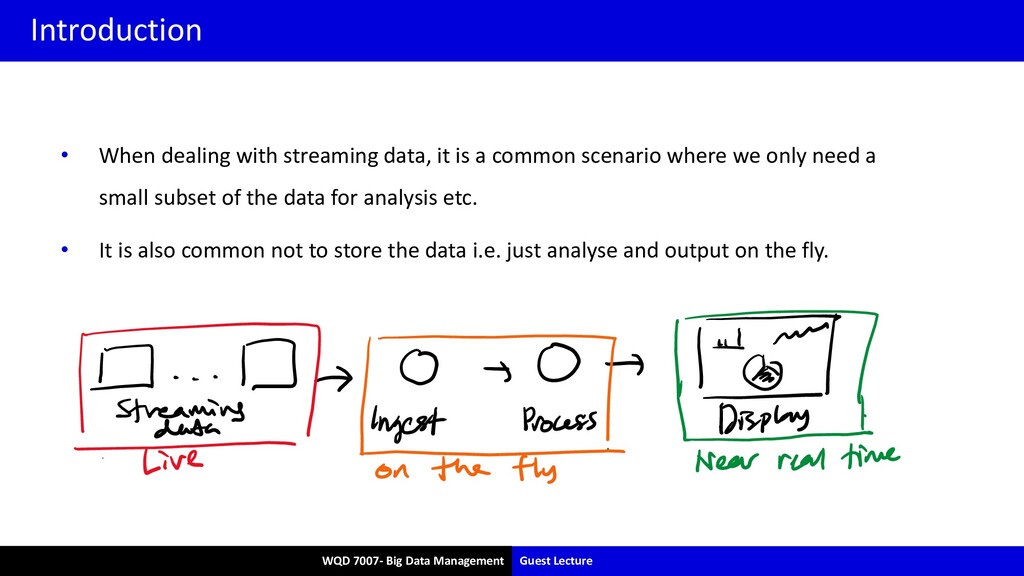
When dealing with streaming data, it is a common scenario where we only need a small subset of the data for analysis etc. • It is also common not to store the data i.e. just analyse and output on the fly.
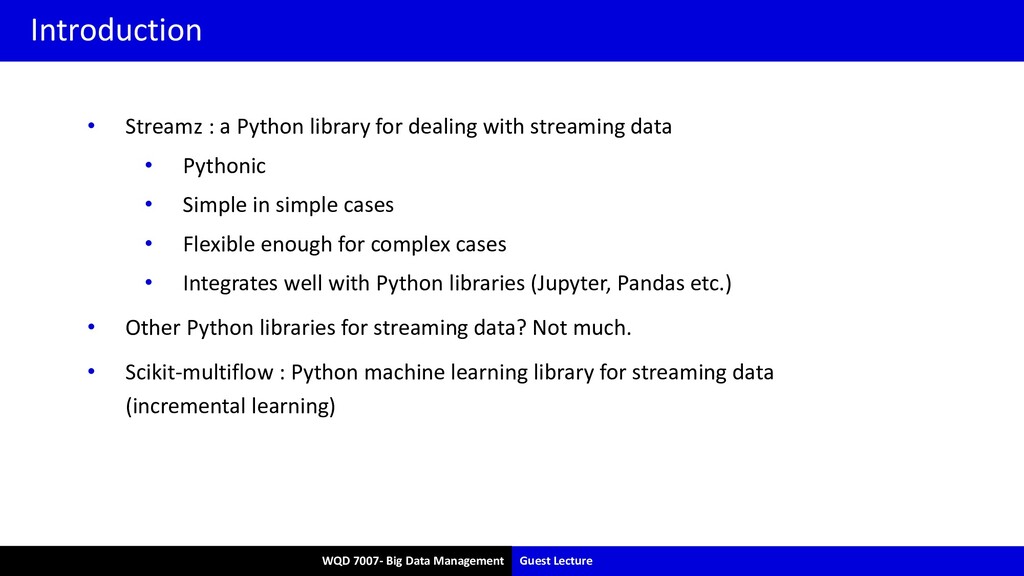
Streamz : a Python library for dealing with streaming data • Pythonic • Simple in simple cases • Flexible enough for complex cases • Integrates well with Python libraries (Jupyter, Pandas etc.) • Other Python libraries for streaming data? Not much. • Scikit-multiflow : Python machine learning library for streaming data (incremental learning)
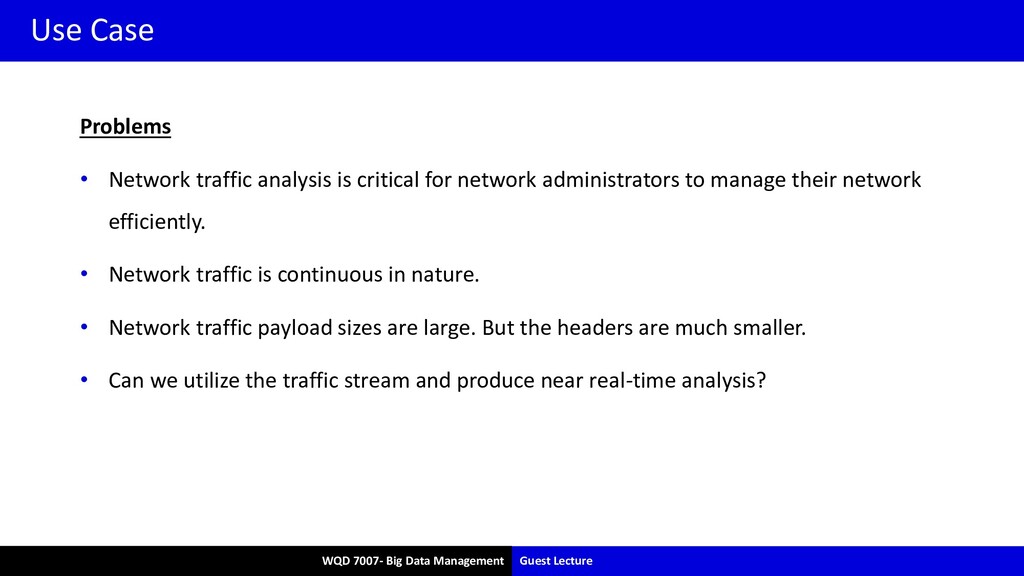
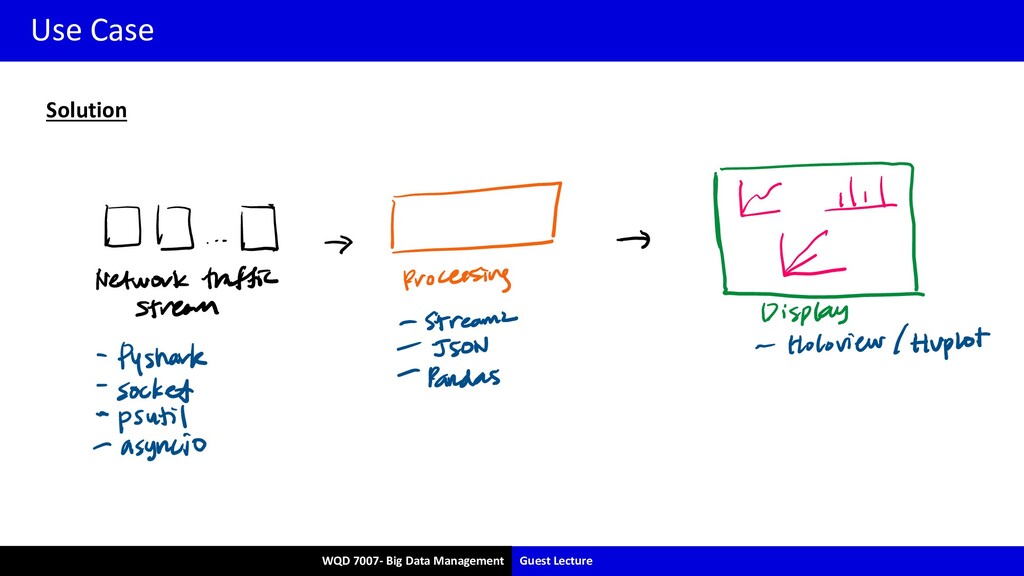
Problems • Network traffic analysis is critical for network administrators to manage their network efficiently. • Network traffic is continuous in nature. • Network traffic payload sizes are large. But the headers are much smaller. • Can we utilize the traffic stream and produce near real-time analysis?
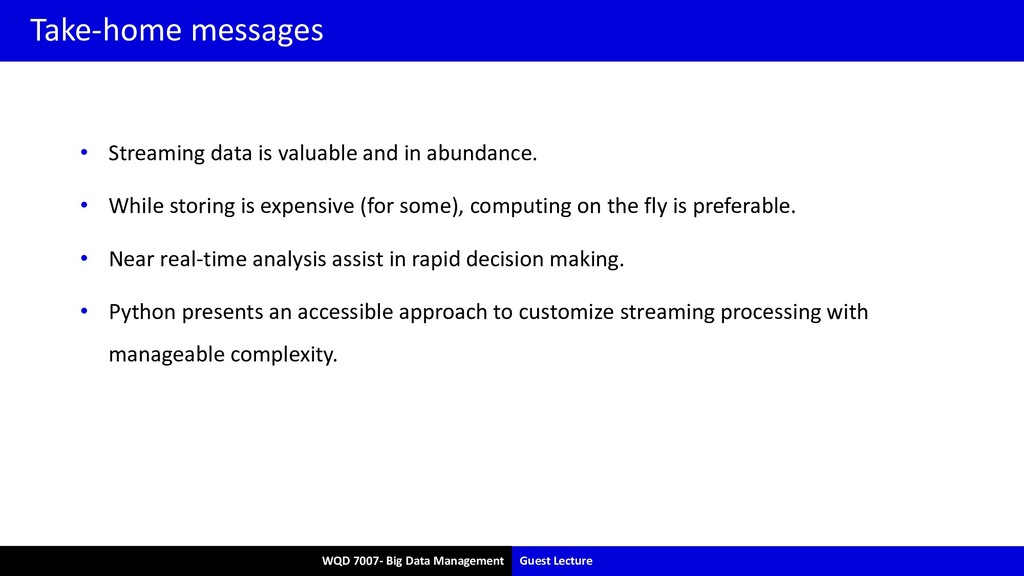
• Streaming data is valuable and in abundance. • While storing is expensive (for some), computing on the fly is preferable. • Near real-time analysis assist in rapid decision making. • Python presents an accessible approach to customize streaming processing with manageable complexity.


 mfaizmzaki
.png) codatum
codatum
 hlum
hlum
 htan
htan
 sudoakiy
 recruitengineers
 pauli
pauli
 mewuto
 nttcom
 masakane55
 riyaamemiya
 baseballyama
 chack411
 mayatellez
 nikkihalliwell
 erikaheidi
 bkeepers
 nwiizo
 rkaga
rkaga
 mfonobong
 jeffersonlam
 szymonslowik
 speakerdeck
 portentint
 katarinadahlin