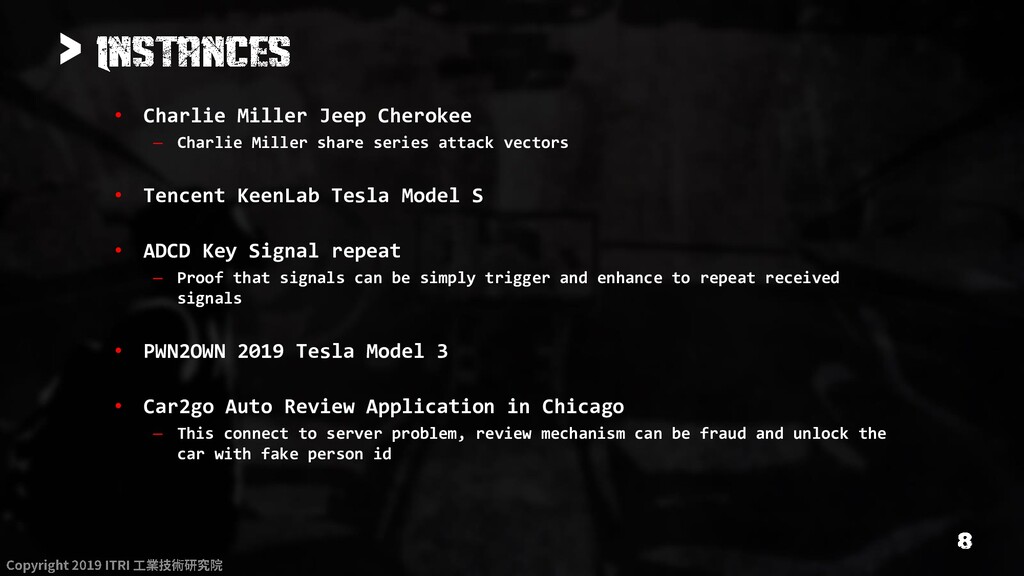
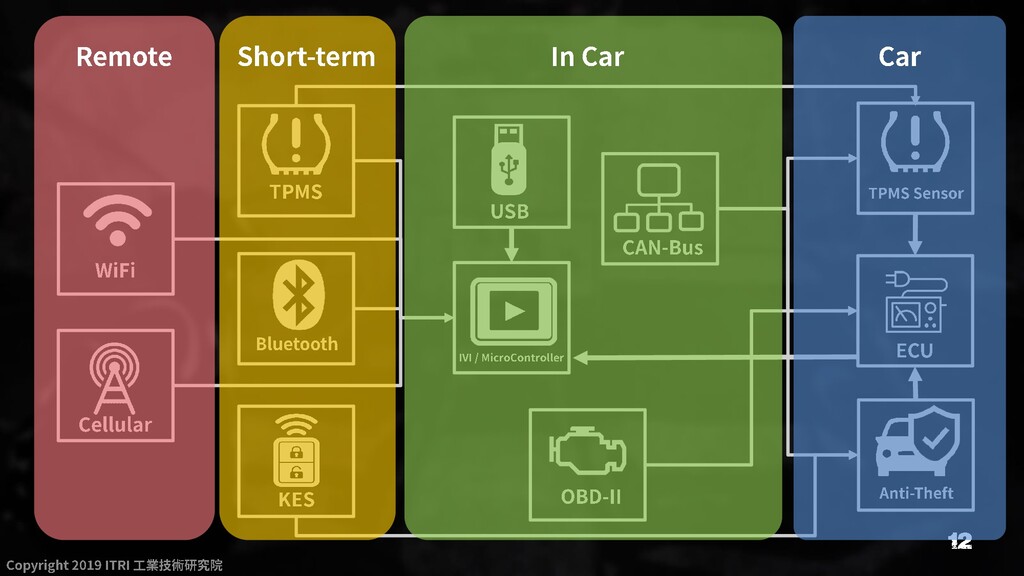
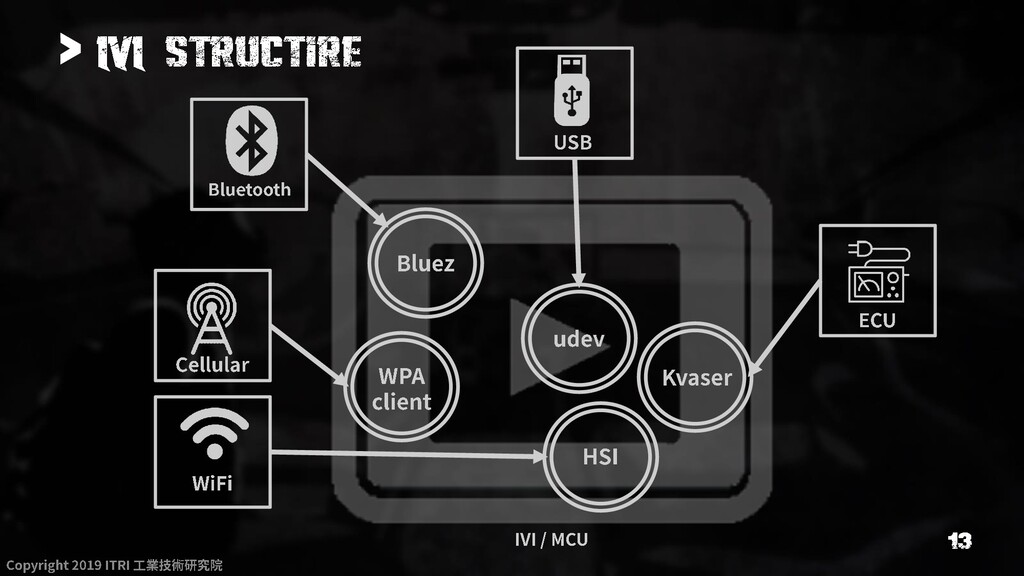
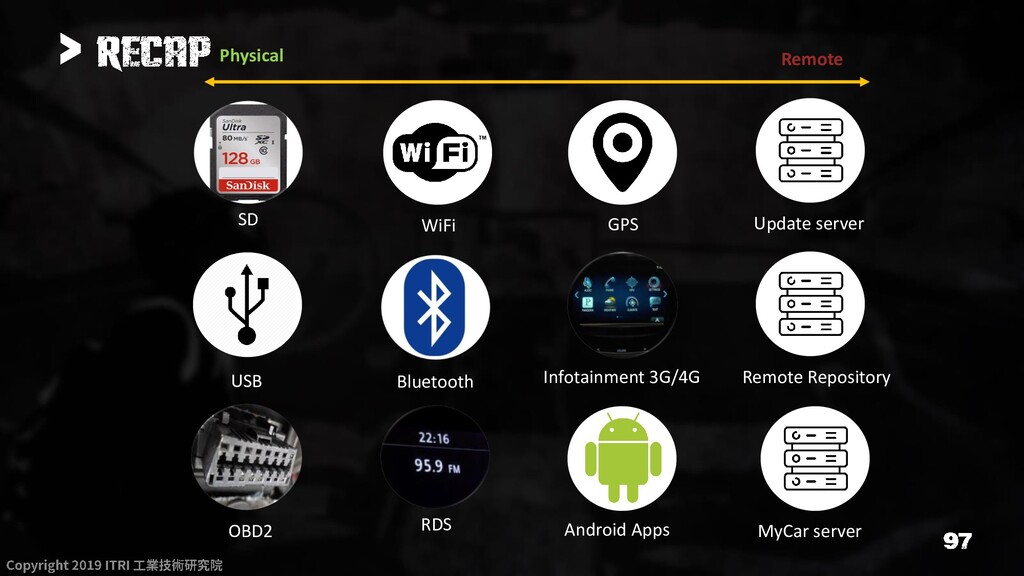
series attack vectors • Tencent KeenLab Tesla Model S • ADCD Key Signal repeat – Proof that signals can be simply trigger and enhance to repeat received signals • PWN2OWN 2019 Tesla Model 3 • Car2go Auto Review Application in Chicago – This connect to server problem, review mechanism can be fraud and unlock the car with fake person id
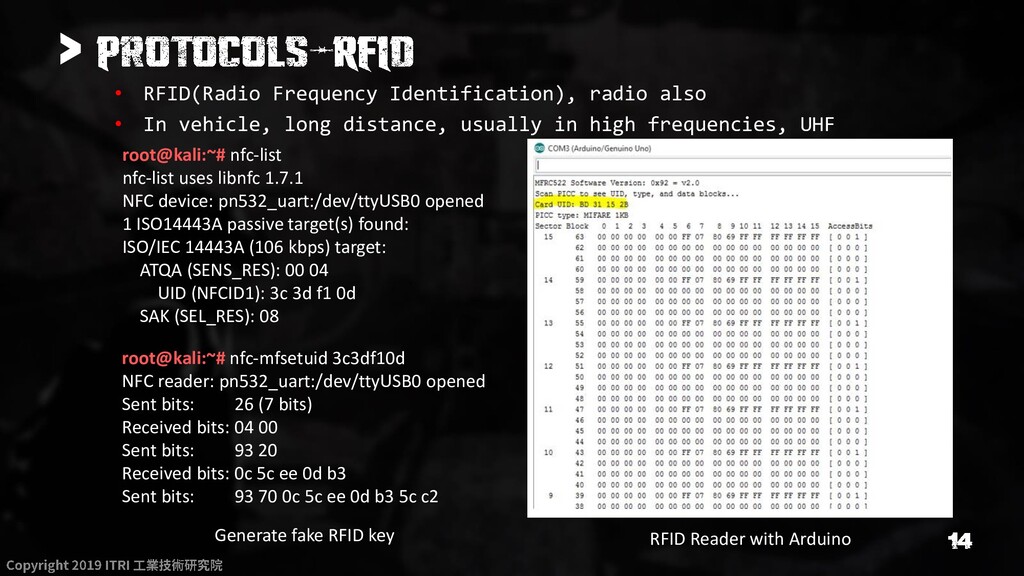
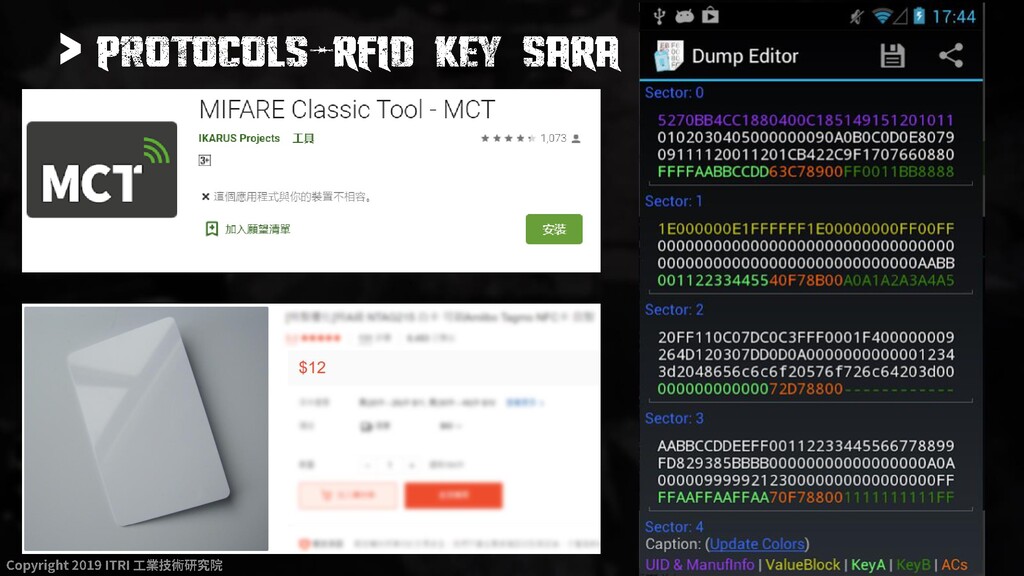
long distance, usually in high frequencies, UHF root@kali:~# nfc-list nfc-list uses libnfc 1.7.1 NFC device: pn532_uart:/dev/ttyUSB0 opened 1 ISO14443A passive target(s) found: ISO/IEC 14443A (106 kbps) target: ATQA (SENS_RES): 00 04 UID (NFCID1): 3c 3d f1 0d SAK (SEL_RES): 08 root@kali:~# nfc-mfsetuid 3c3df10d NFC reader: pn532_uart:/dev/ttyUSB0 opened Sent bits: 26 (7 bits) Received bits: 04 00 Sent bits: 93 20 Received bits: 0c 5c ee 0d b3 Sent bits: 93 70 0c 5c ee 0d b3 5c c2 Generate fake RFID key RFID Reader with Arduino
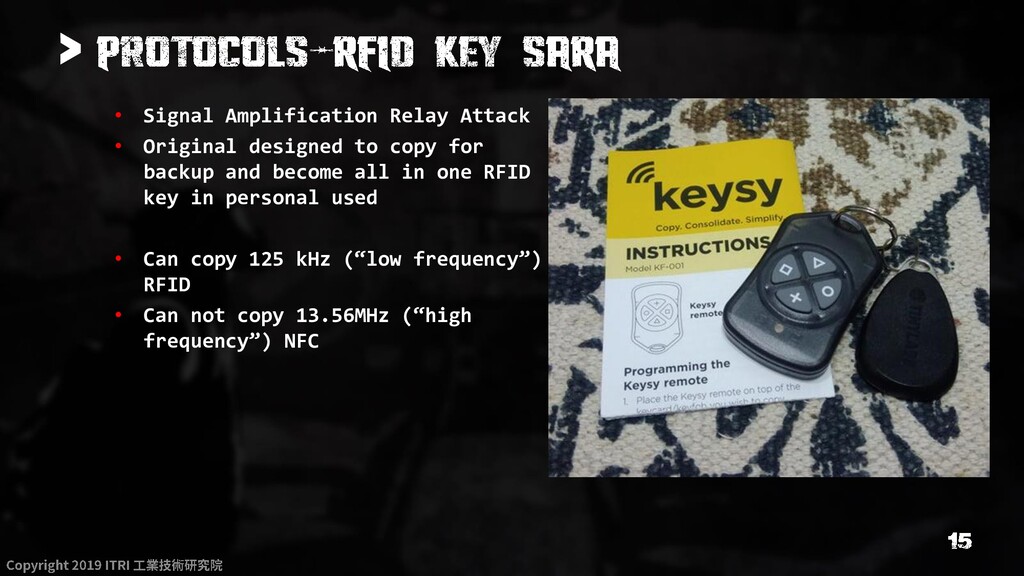
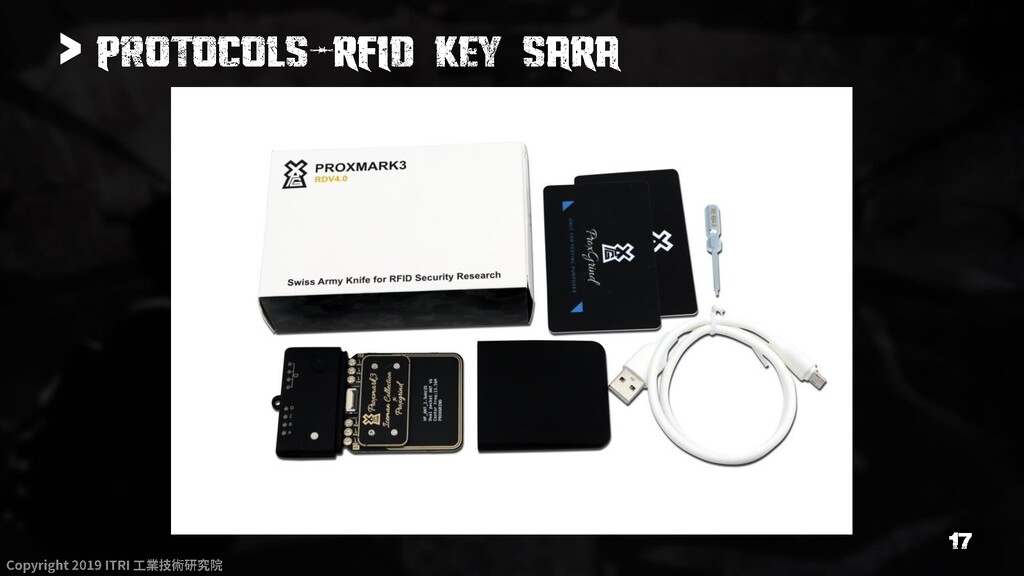
copy for backup and become all in one RFID key in personal used • Can copy 125 kHz (“low frequency”) RFID • Can not copy 13.56MHz (“high frequency”) NFC
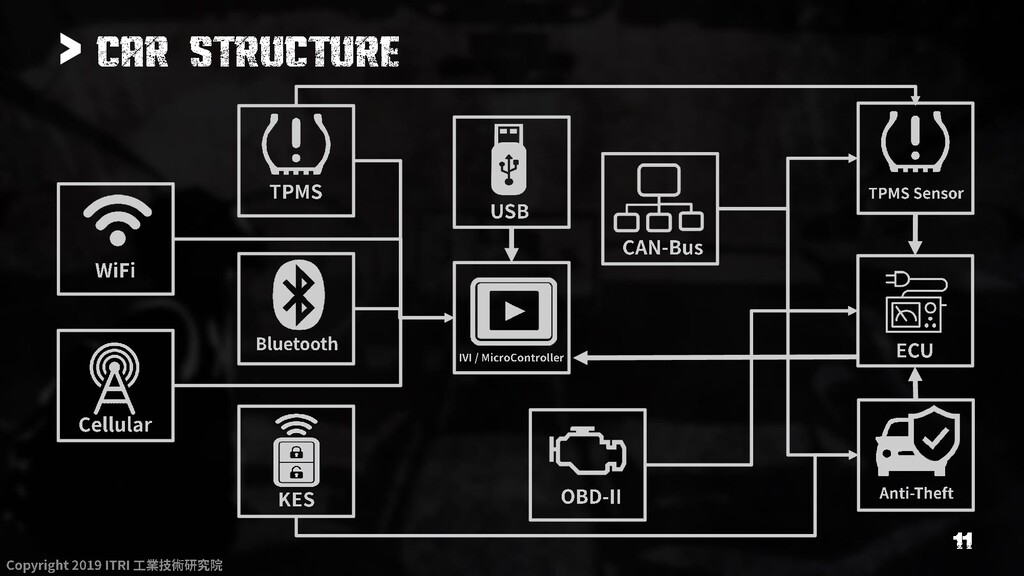
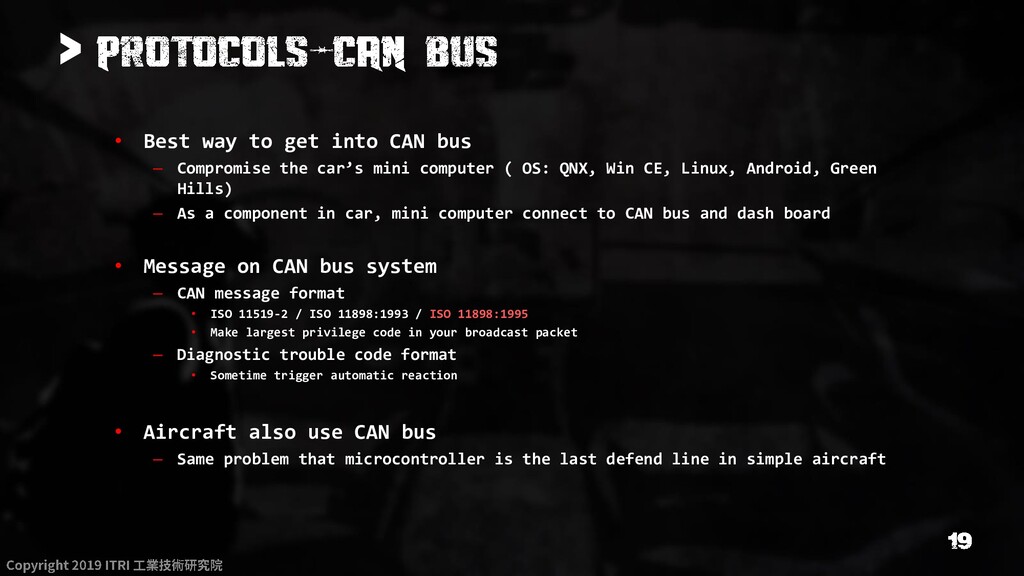
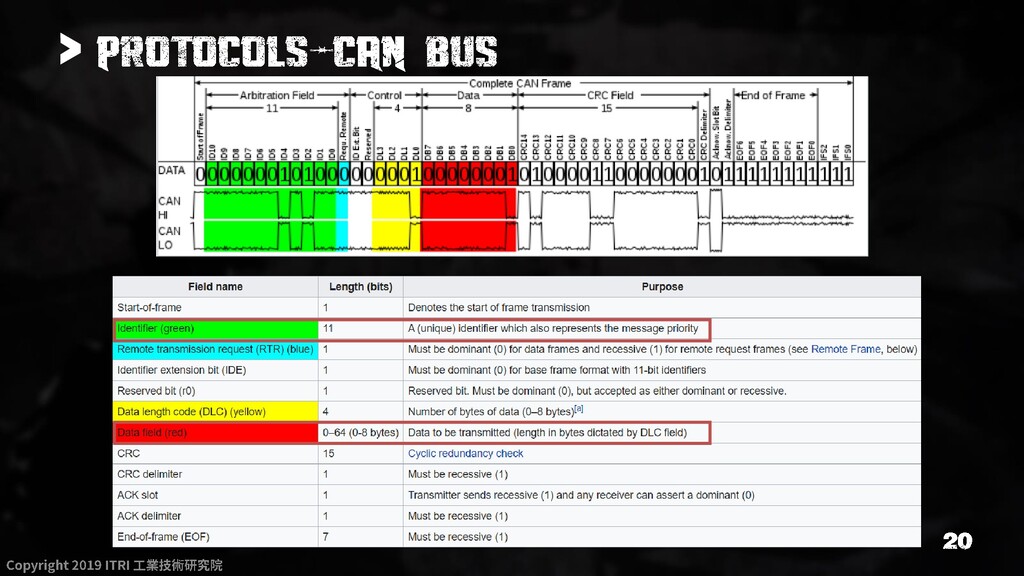
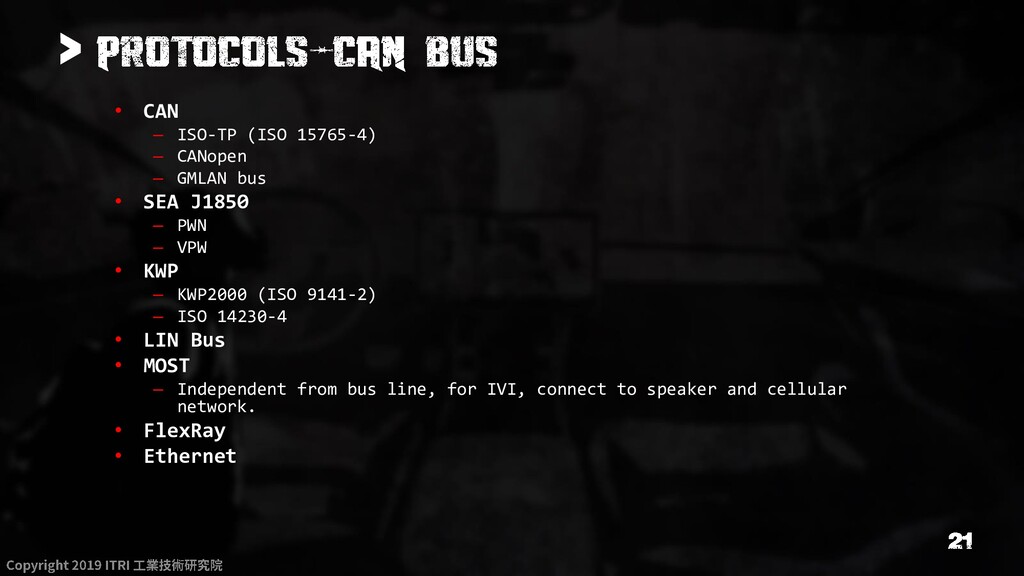
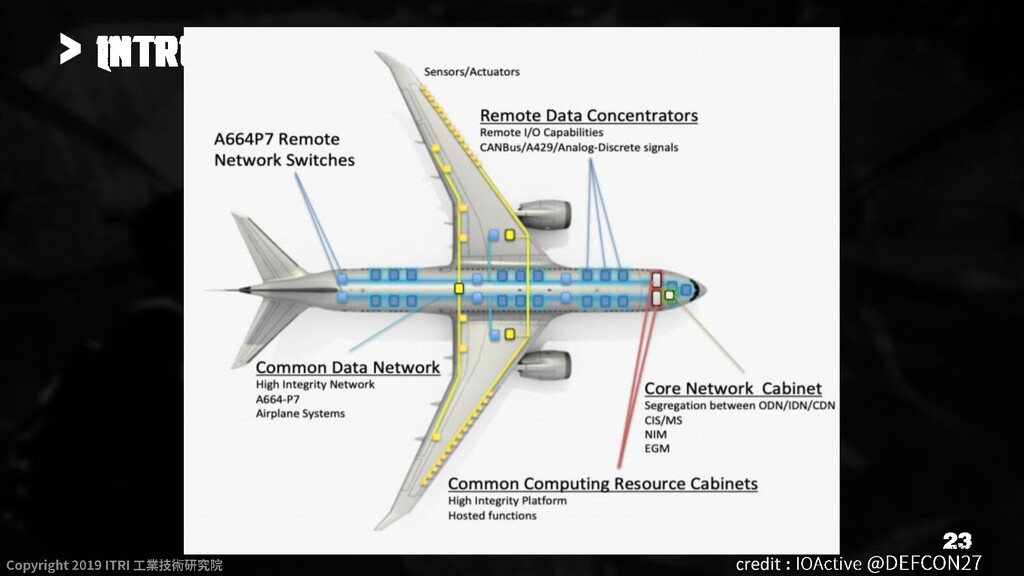
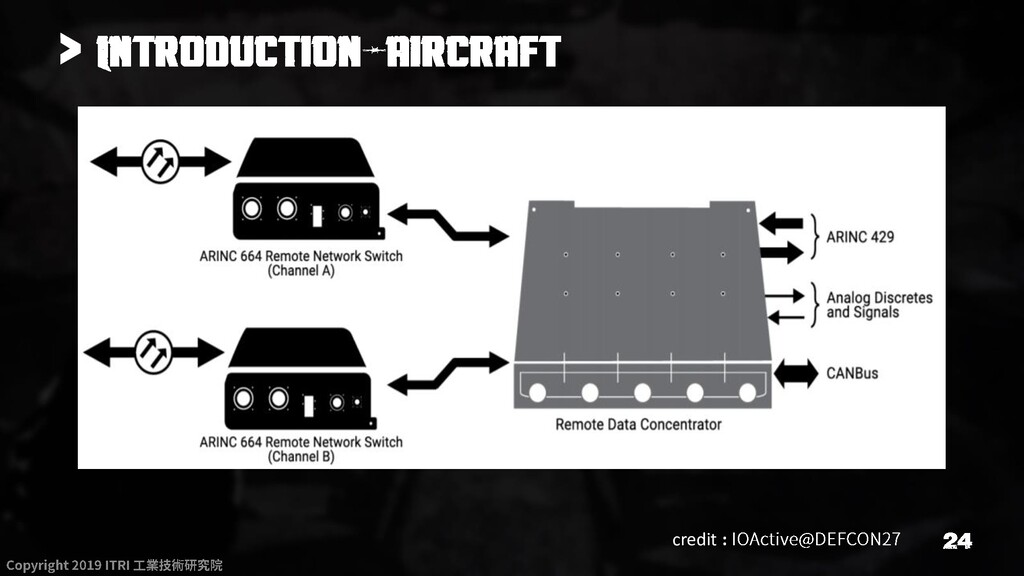
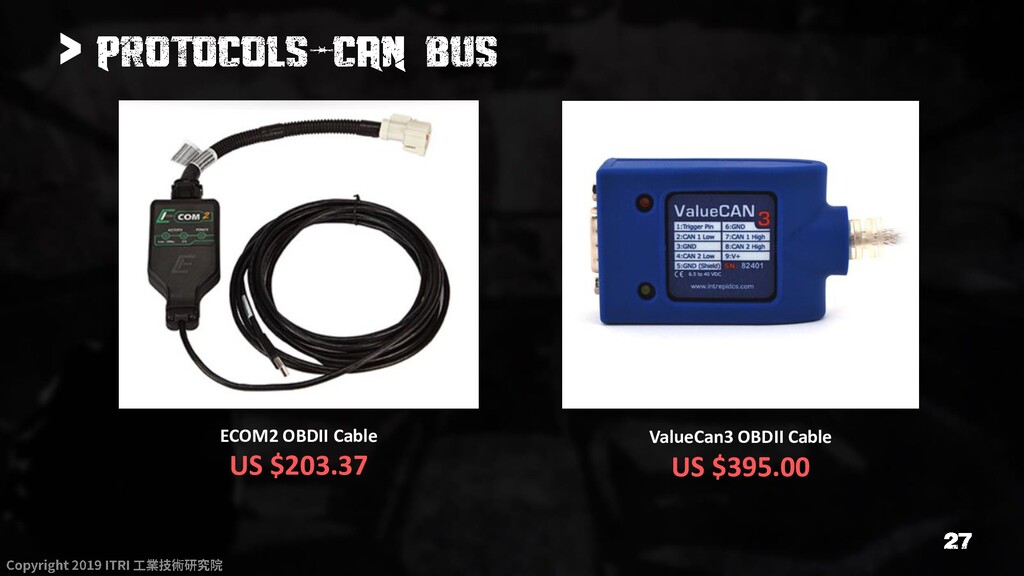
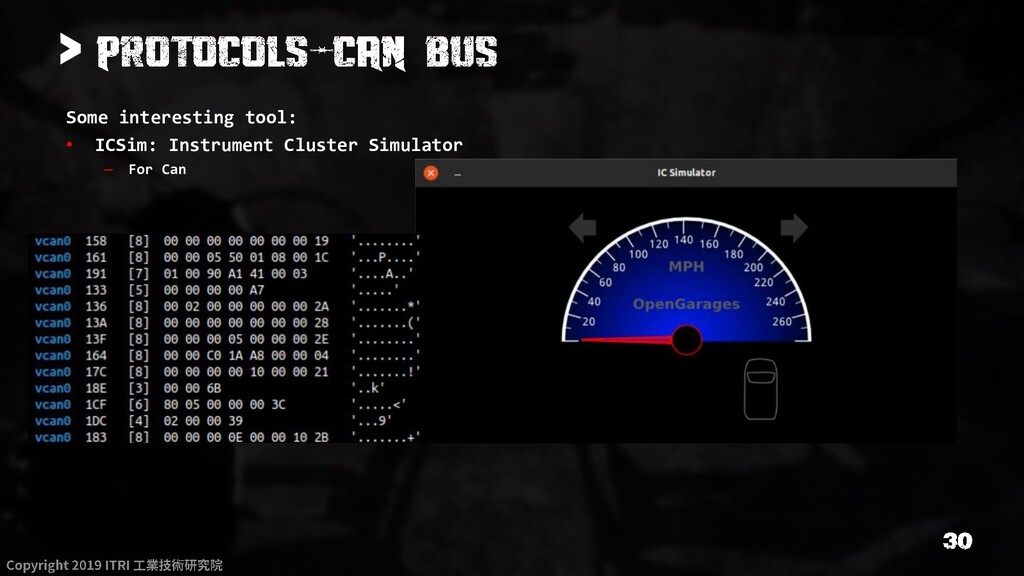
Compromise the car’s mini computer ( OS: QNX, Win CE, Linux, Android, Green Hills) – As a component in car, mini computer connect to CAN bus and dash board • Message on CAN bus system – CAN message format • ISO 11519-2 / ISO 11898:1993 / ISO 11898:1995 • Make largest privilege code in your broadcast packet – Diagnostic trouble code format • Sometime trigger automatic reaction • Aircraft also use CAN bus – Same problem that microcontroller is the last defend line in simple aircraft
GMLAN bus • SEA J1850 – PWN – VPW • KWP – KWP2000 (ISO 9141-2) – ISO 14230-4 • LIN Bus • MOST – Independent from bus line, for IVI, connect to speaker and cellular network. • FlexRay • Ethernet
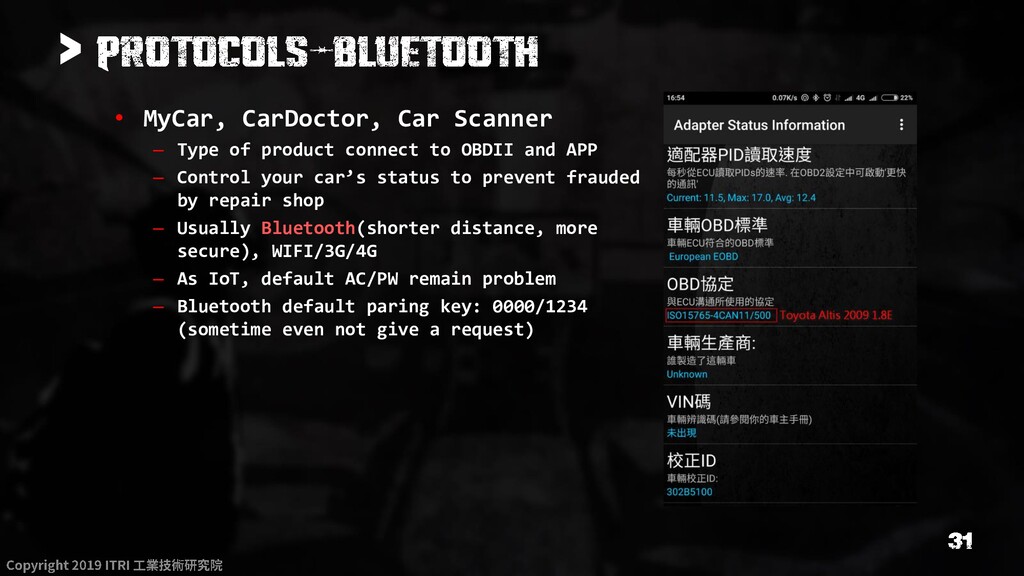
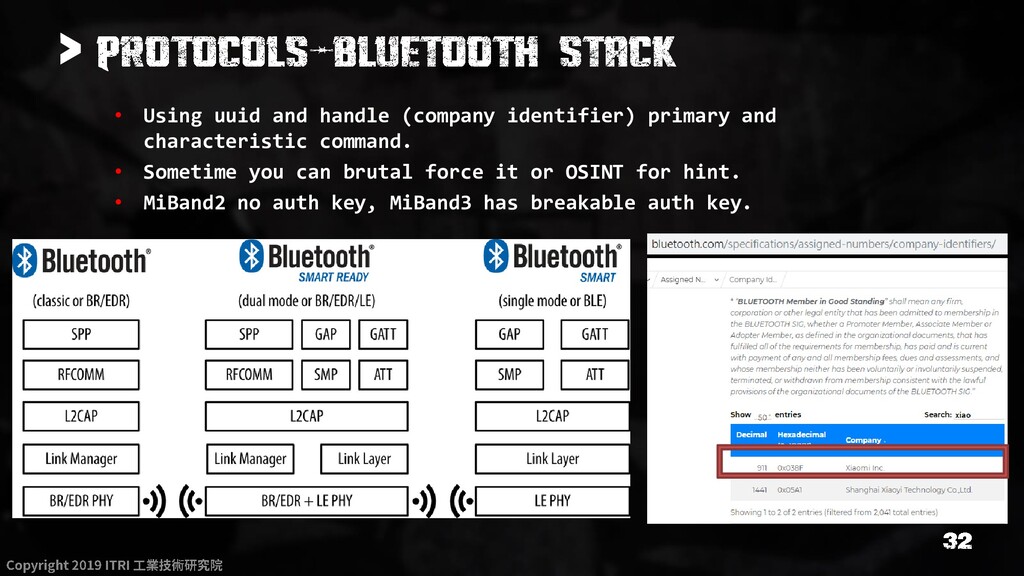
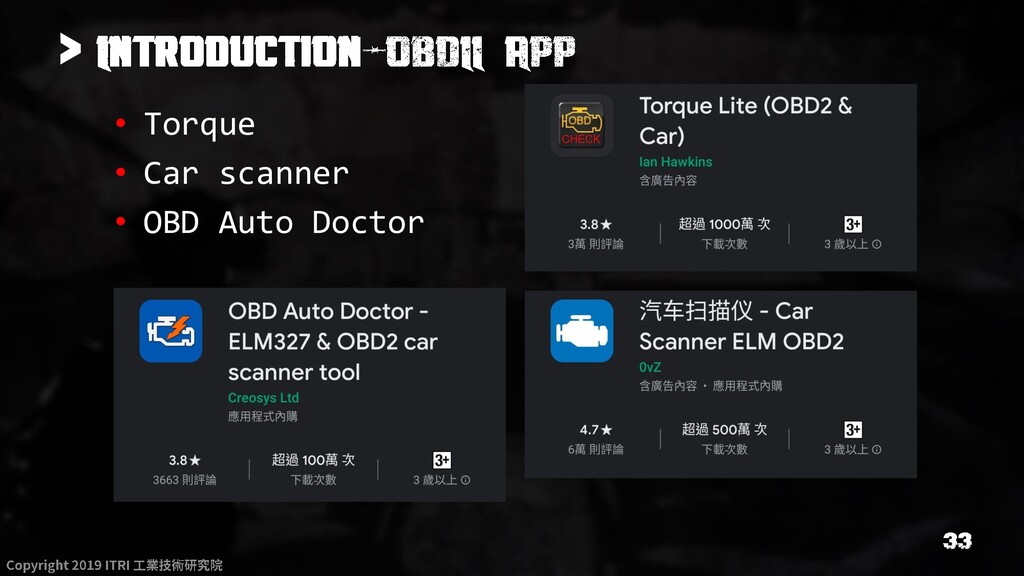
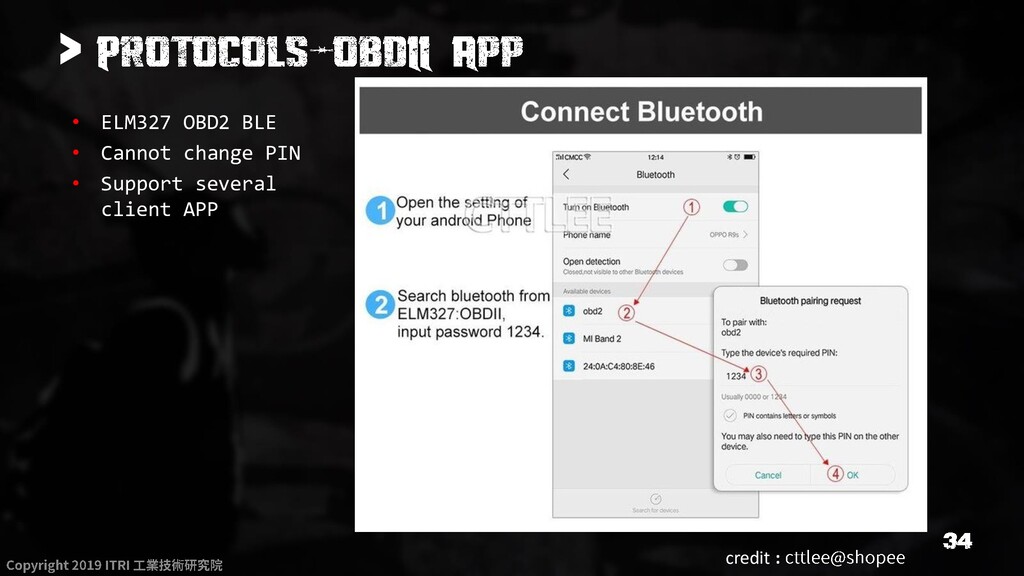
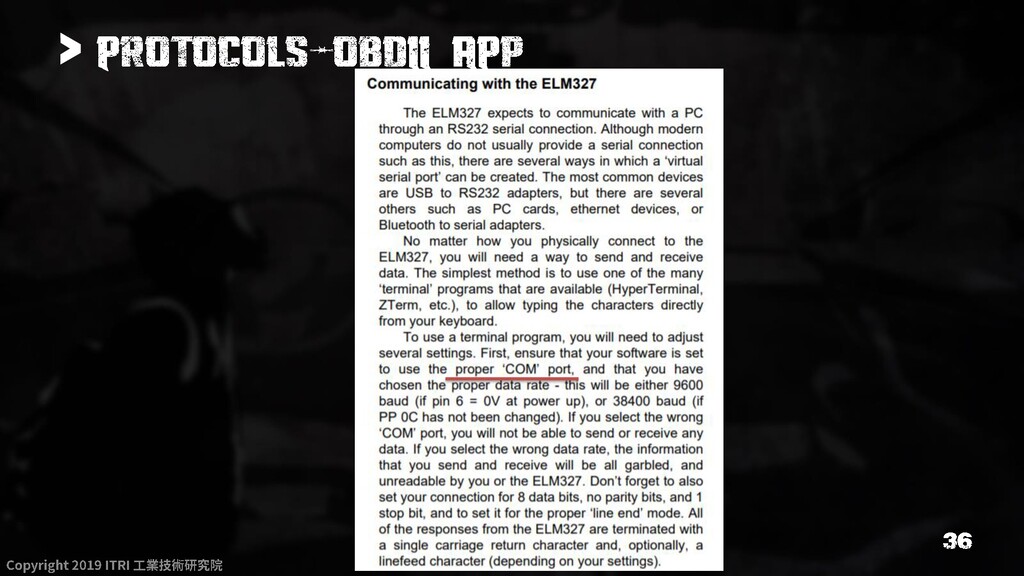
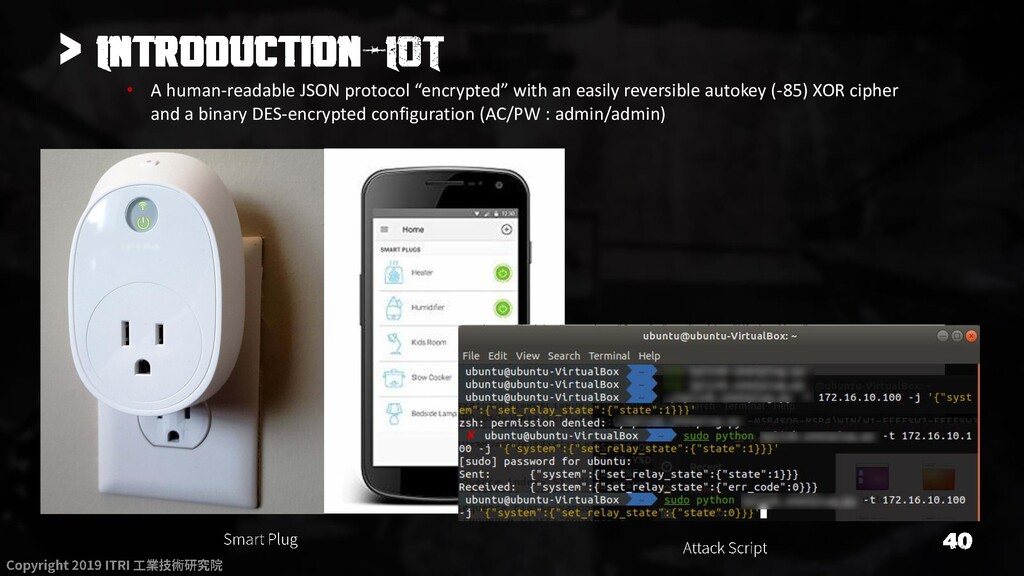
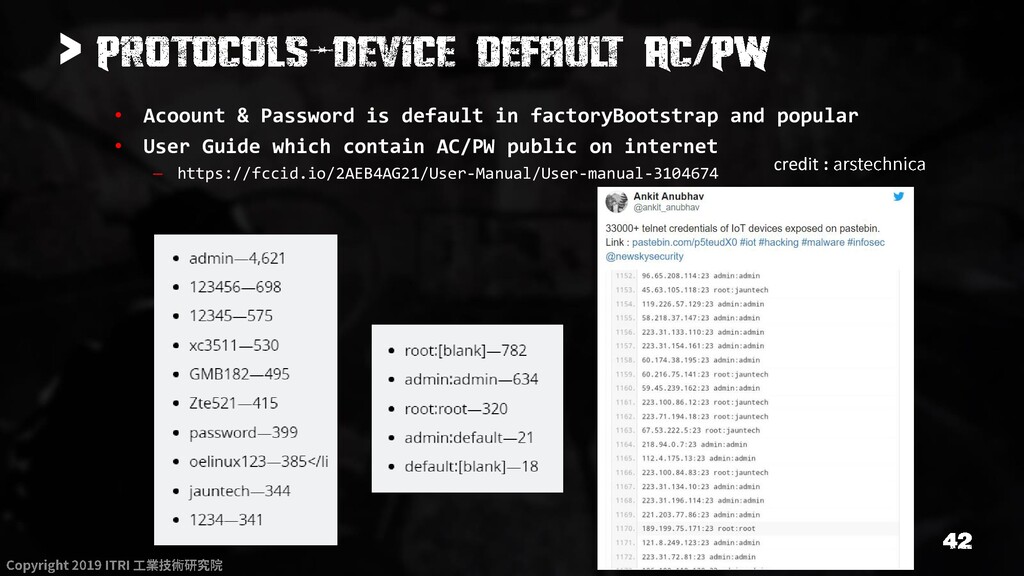
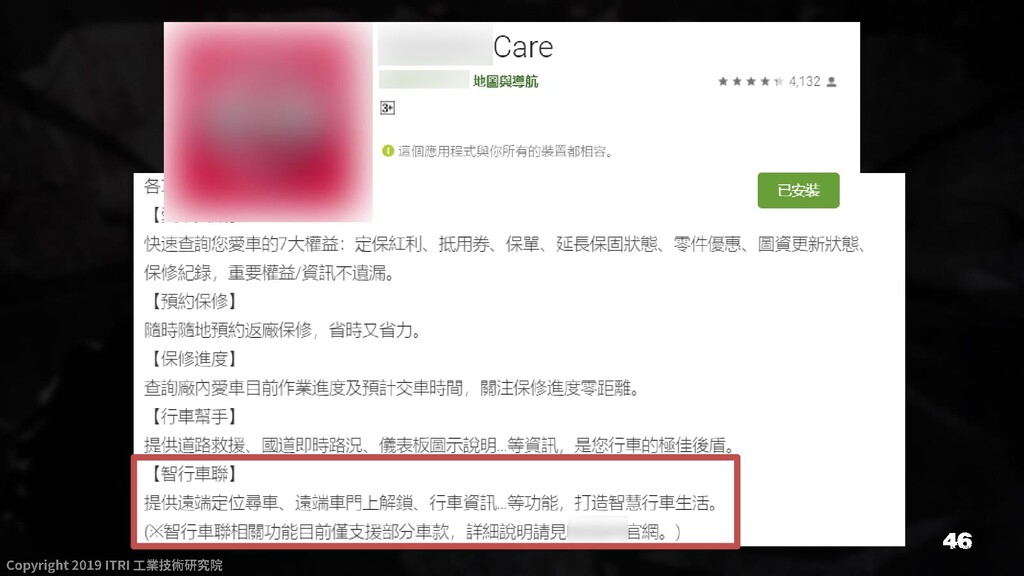
connect to OBDII and APP – Control your car’s status to prevent frauded by repair shop – Usually Bluetooth(shorter distance, more secure), WIFI/3G/4G – As IoT, default AC/PW remain problem – Bluetooth default paring key: 0000/1234 (sometime even not give a request)
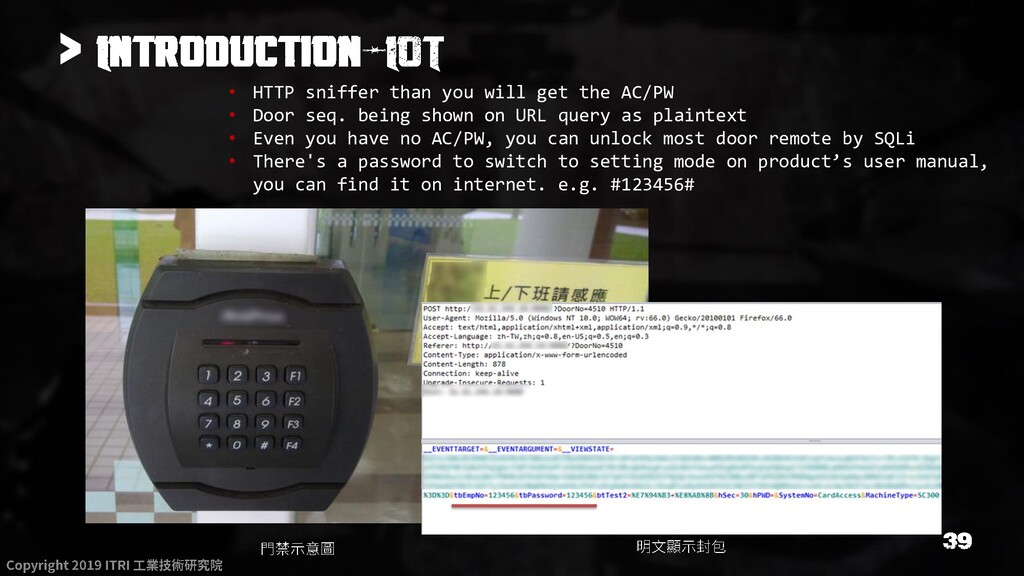
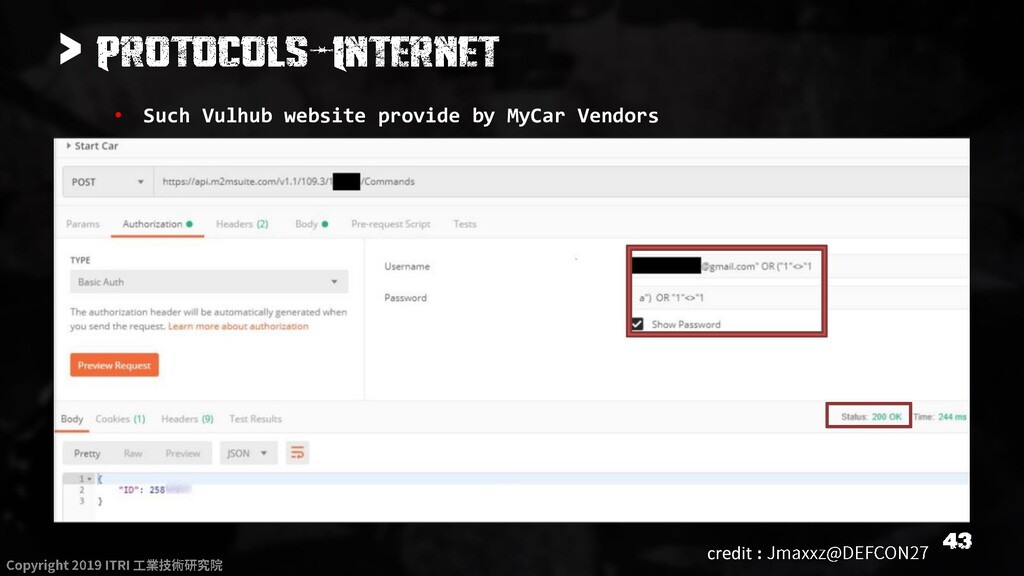
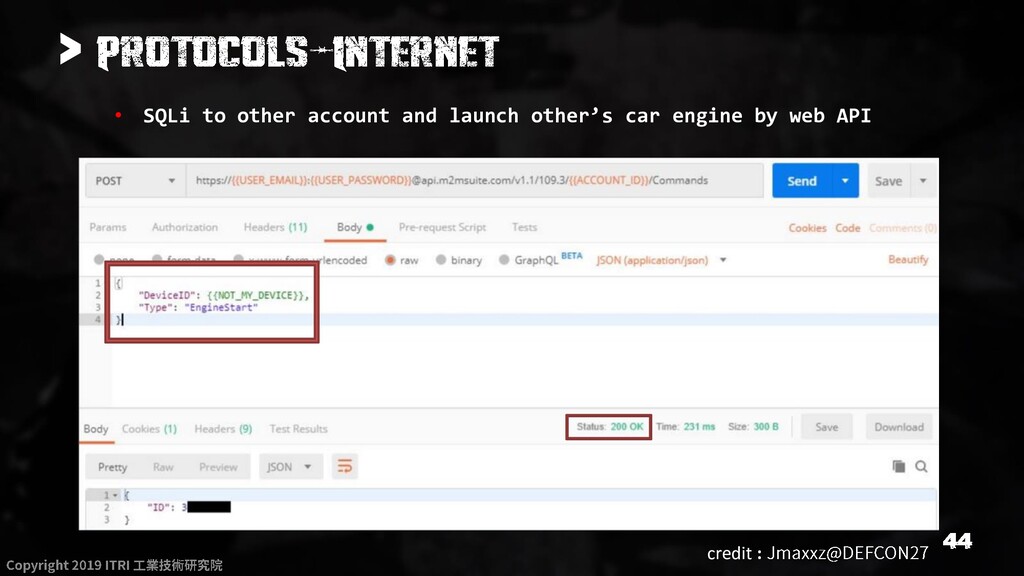
• Door seq. being shown on URL query as plaintext • Even you have no AC/PW, you can unlock most door remote by SQLi • There's a password to switch to setting mode on product’s user manual, you can find it on internet. e.g. #123456#
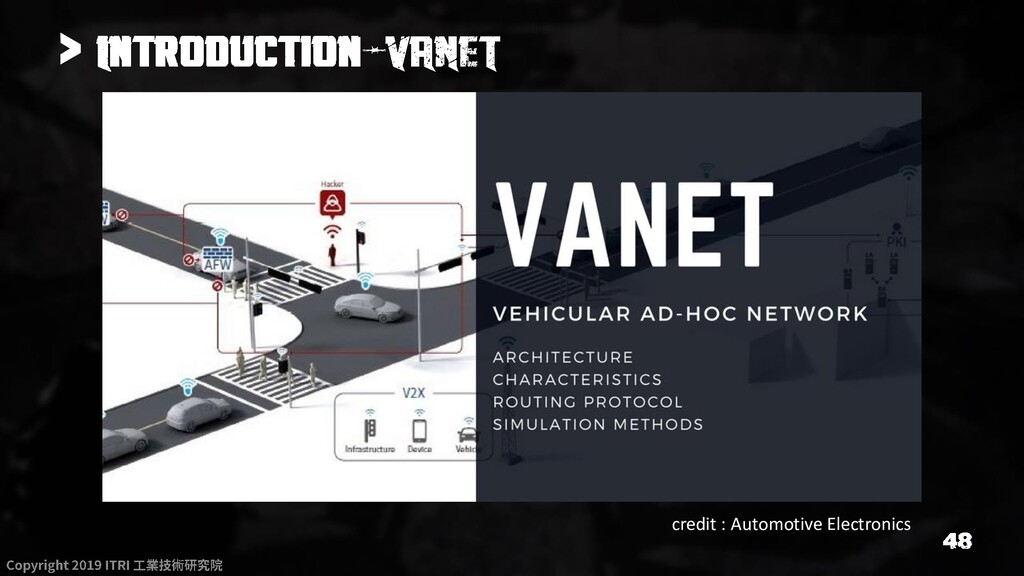
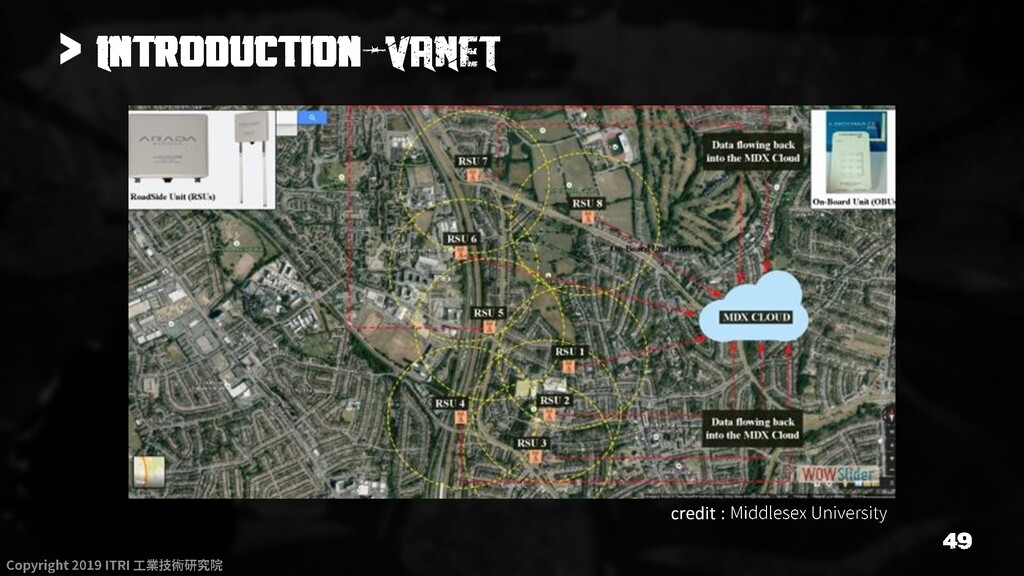
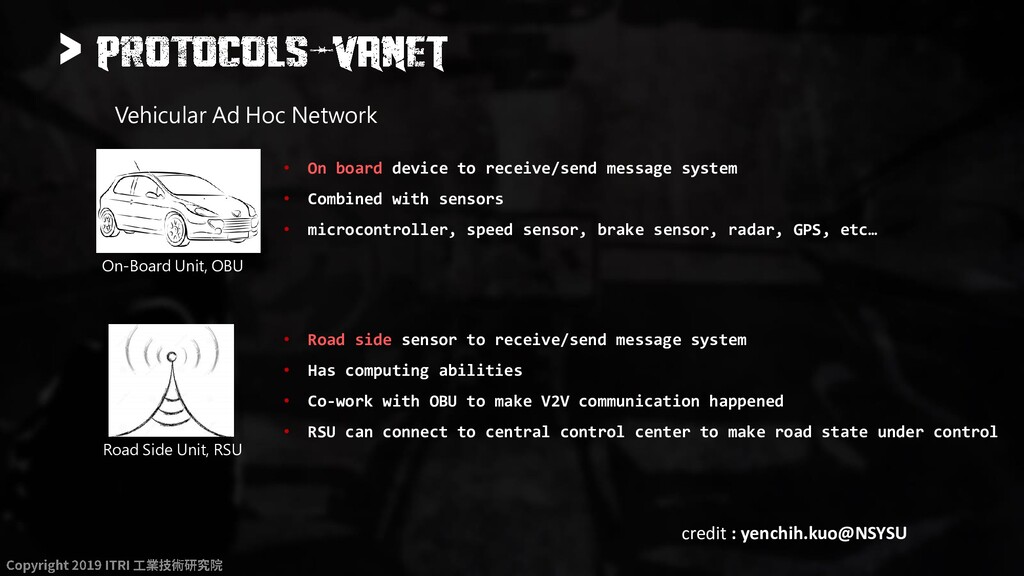
RSU • On board device to receive/send message system • Combined with sensors • microcontroller, speed sensor, brake sensor, radar, GPS, etc… • Road side sensor to receive/send message system • Has computing abilities • Co-work with OBU to make V2V communication happened • RSU can connect to central control center to make road state under control > credit : yenchih.kuo@NSYSU
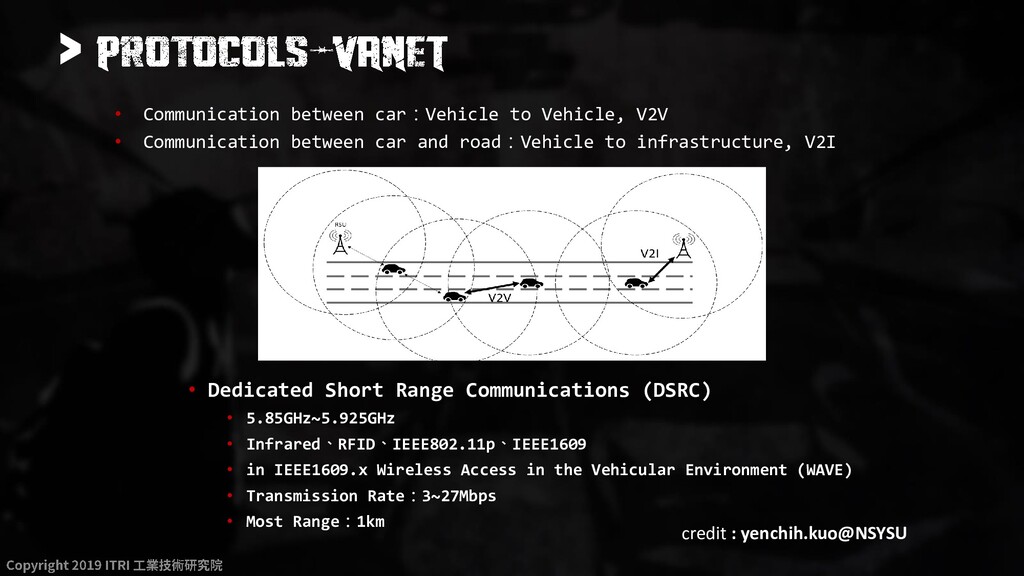
car and road:Vehicle to infrastructure, V2I • Dedicated Short Range Communications (DSRC) • 5.85GHz~5.925GHz • Infrared、RFID、IEEE802.11p、IEEE1609 • in IEEE1609.x Wireless Access in the Vehicular Environment (WAVE) • Transmission Rate:3~27Mbps • Most Range:1km > credit : yenchih.kuo@NSYSU
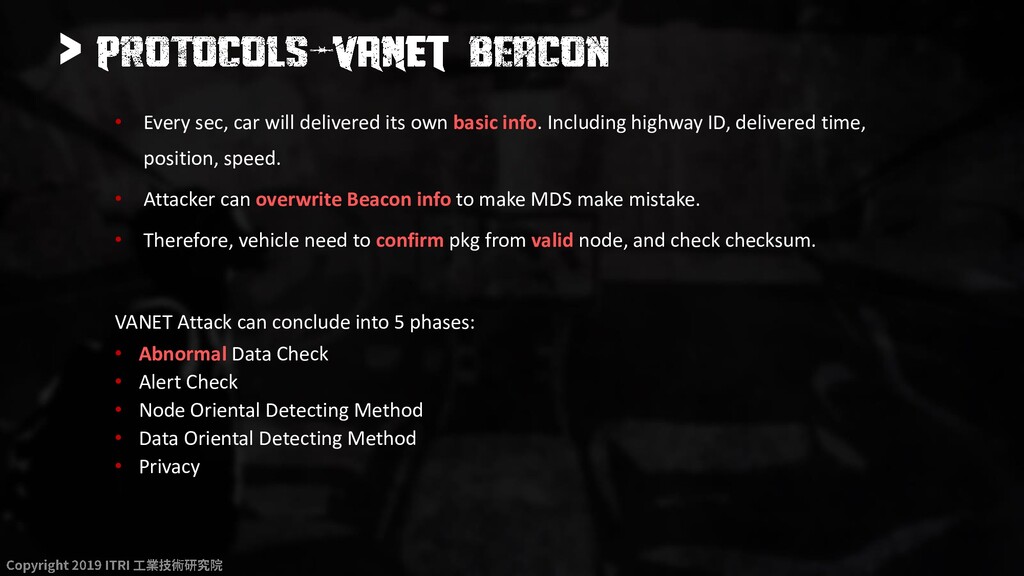
info. Including highway ID, delivered time, position, speed. • Attacker can overwrite Beacon info to make MDS make mistake. • Therefore, vehicle need to confirm pkg from valid node, and check checksum. VANET Attack can conclude into 5 phases: • Abnormal Data Check • Alert Check • Node Oriental Detecting Method • Data Oriental Detecting Method • Privacy
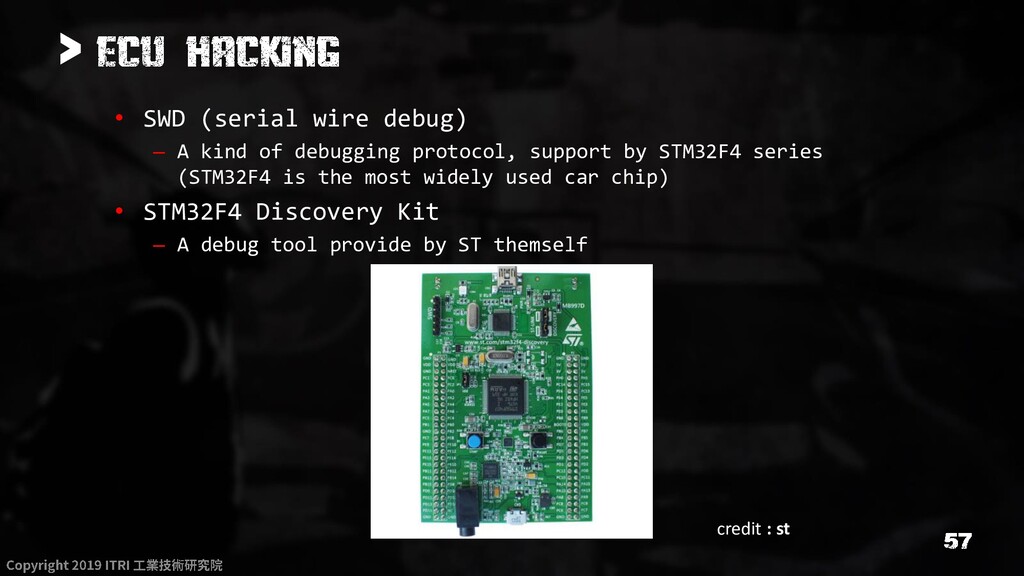
debugging protocol, support by STM32F4 series (STM32F4 is the most widely used car chip) • STM32F4 Discovery Kit – A debug tool provide by ST themself credit : st
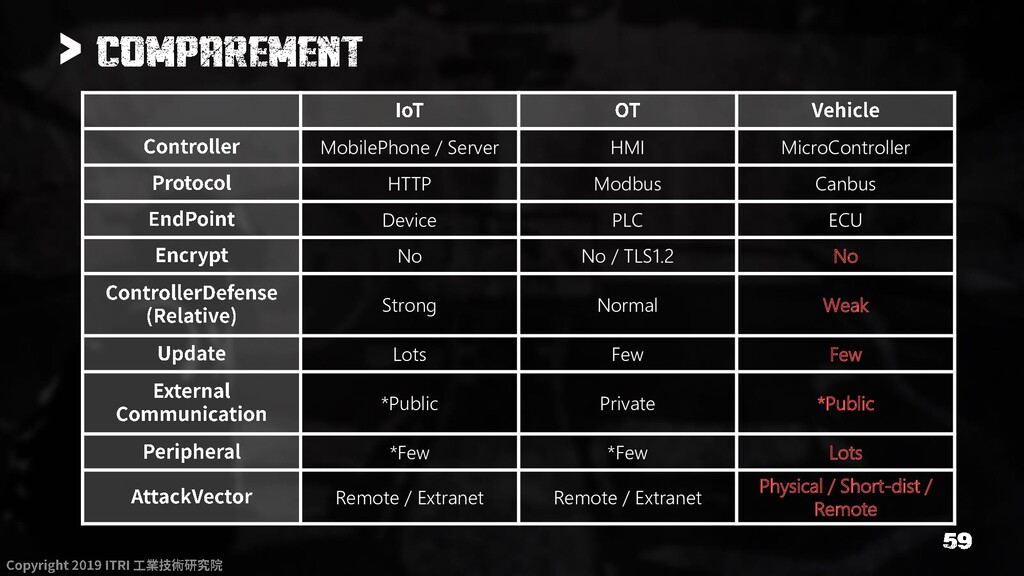
PLC ECU No No / TLS1.2 No Strong Normal Weak Lots Few Few *Public Private *Public *Few *Few Lots Remote / Extranet Remote / Extranet Physical / Short-dist / Remote
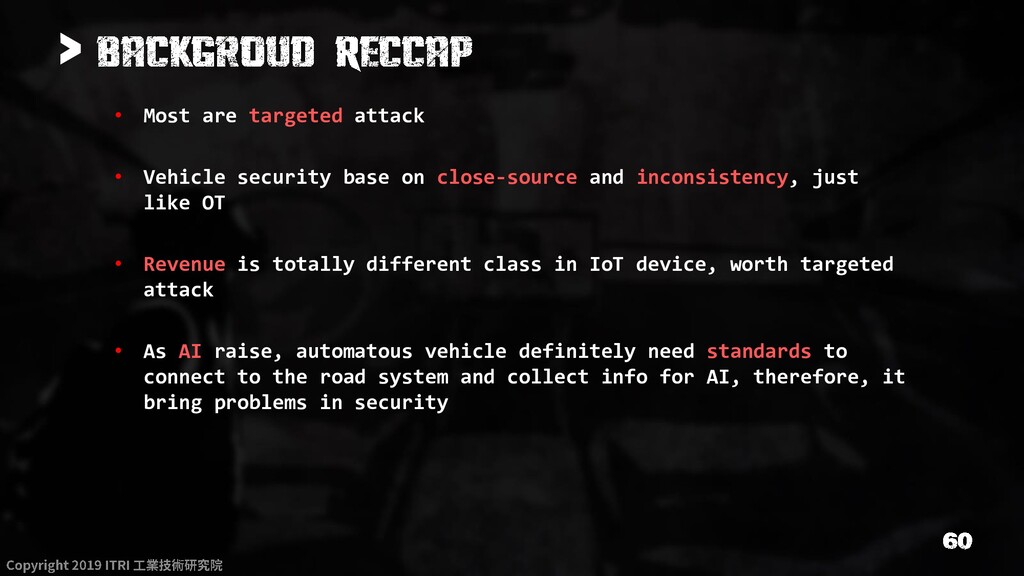
on close-source and inconsistency, just like OT • Revenue is totally different class in IoT device, worth targeted attack • As AI raise, automatous vehicle definitely need standards to connect to the road system and collect info for AI, therefore, it bring problems in security
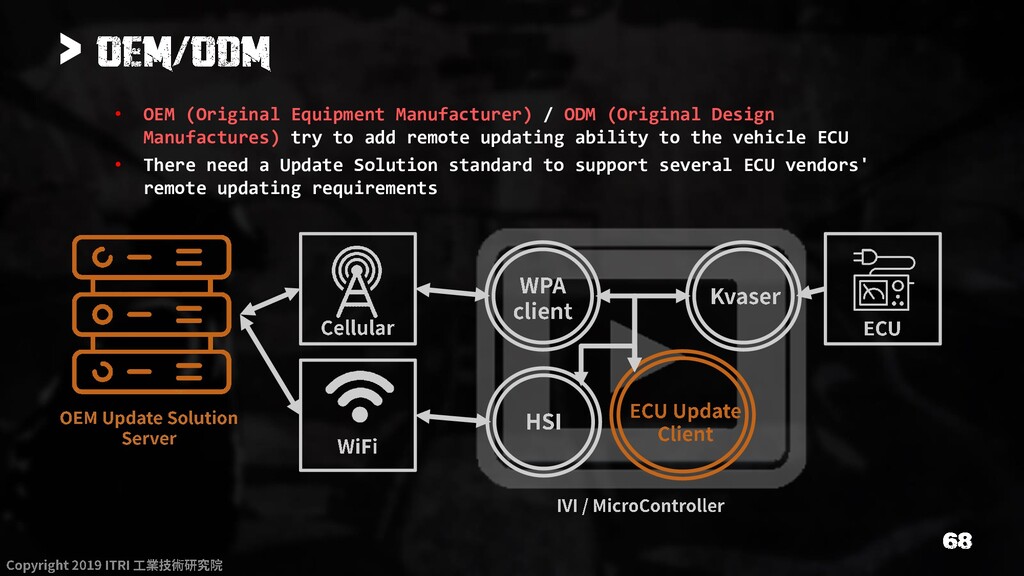
Manufactures) try to add remote updating ability to the vehicle ECU • There need a Update Solution standard to support several ECU vendors' remote updating requirements
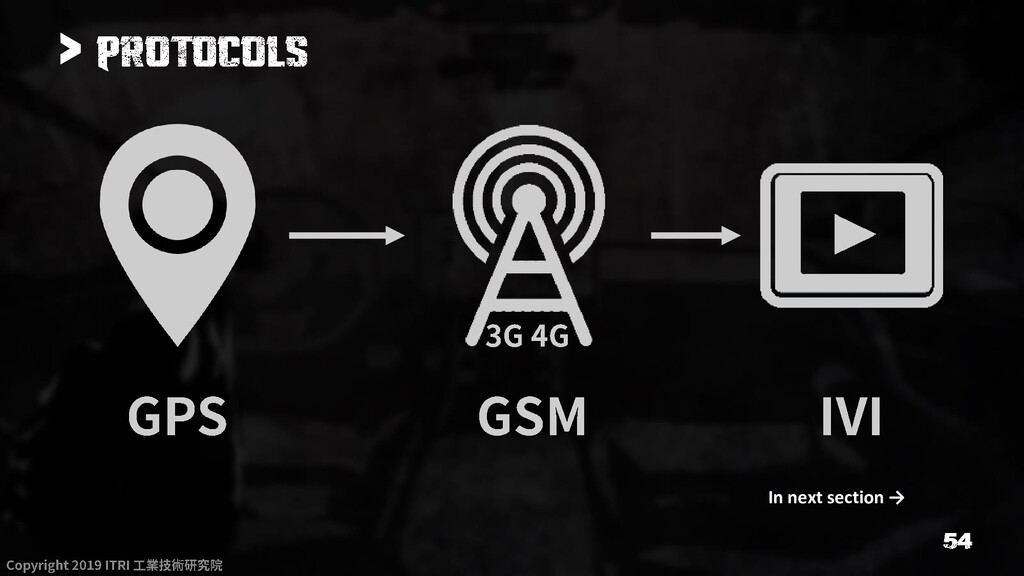
Device Management (DM), to remote implement UPDATE, MANAGE, CONTROL and BACKUP. Car Vendors can use this protocol to remote control version update and retrieve data. • Automotive Grade Linux (AGL) is sub-org under The Linux Foundation which engage in cross industry requirements for internet of car. Recently, AGL try to defined OMA DM 2.0 to become car communication standard. • Tesla convince that their protocol is too rough and their last line in security protection is Black Box, open source will make their products in risk.
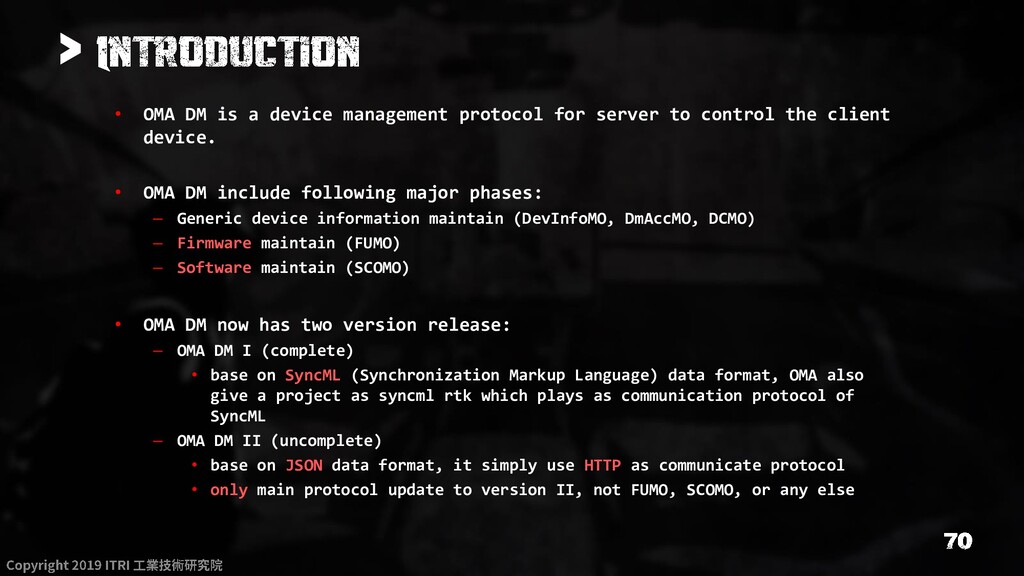
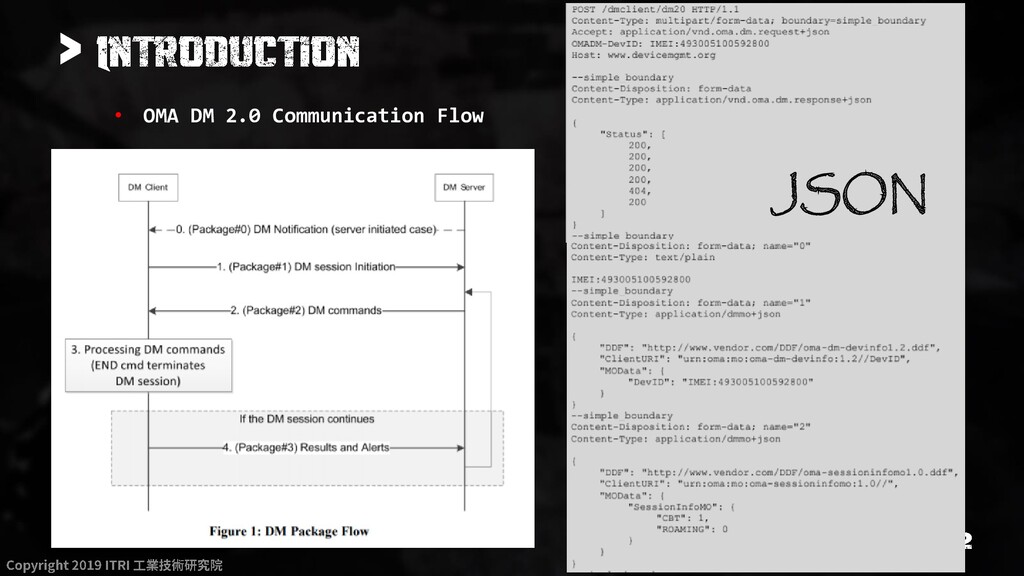
server to control the client device. • OMA DM include following major phases: – Generic device information maintain (DevInfoMO, DmAccMO, DCMO) – Firmware maintain (FUMO) – Software maintain (SCOMO) • OMA DM now has two version release: – OMA DM I (complete) • base on SyncML (Synchronization Markup Language) data format, OMA also give a project as syncml rtk which plays as communication protocol of SyncML – OMA DM II (uncomplete) • base on JSON data format, it simply use HTTP as communicate protocol • only main protocol update to version II, not FUMO, SCOMO, or any else
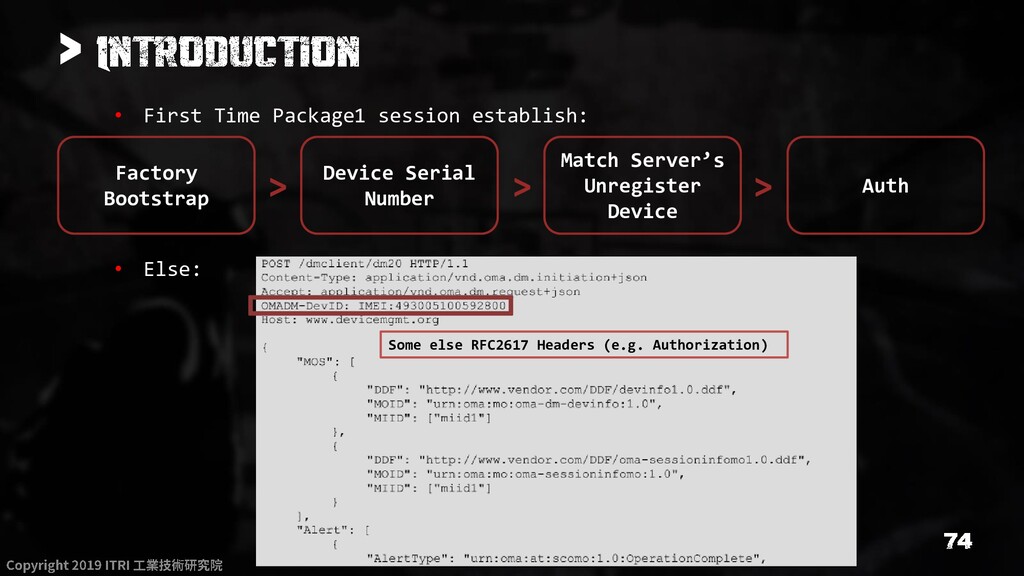
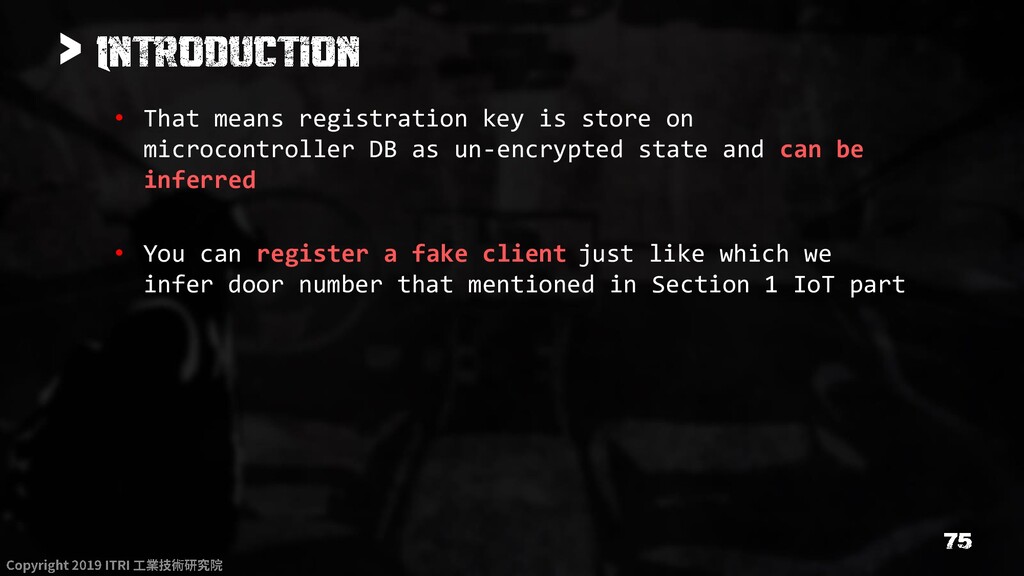
DB as un-encrypted state and can be inferred • You can register a fake client just like which we infer door number that mentioned in Section 1 IoT part
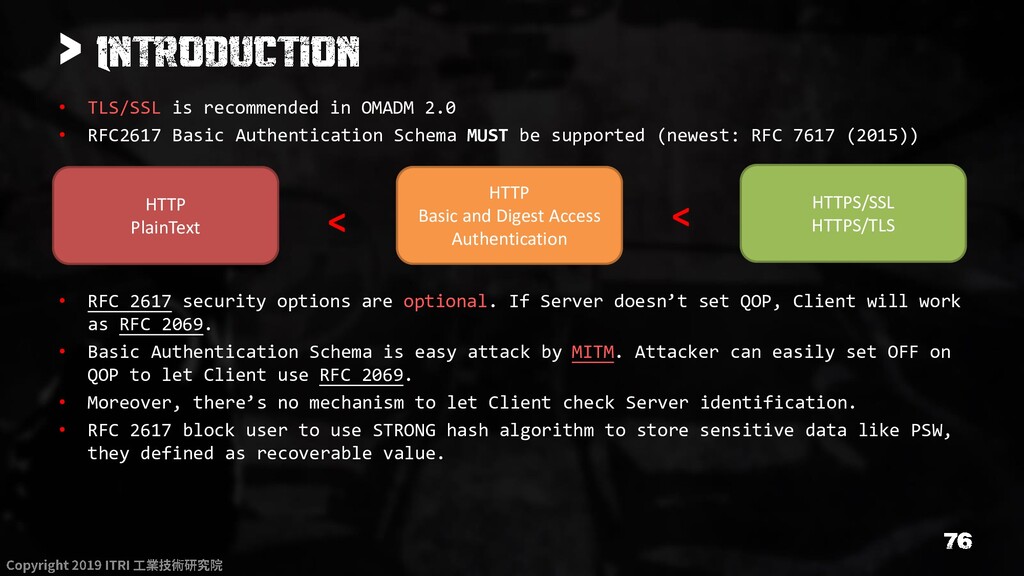
Basic Authentication Schema MUST be supported (newest: RFC 7617 (2015)) • RFC 2617 security options are optional. If Server doesn’t set QOP, Client will work as RFC 2069. • Basic Authentication Schema is easy attack by MITM. Attacker can easily set OFF on QOP to let Client use RFC 2069. • Moreover, there’s no mechanism to let Client check Server identification. • RFC 2617 block user to use STRONG hash algorithm to store sensitive data like PSW, they defined as recoverable value. HTTP PlainText HTTP Basic and Digest Access Authentication HTTPS/SSL HTTPS/TLS < <
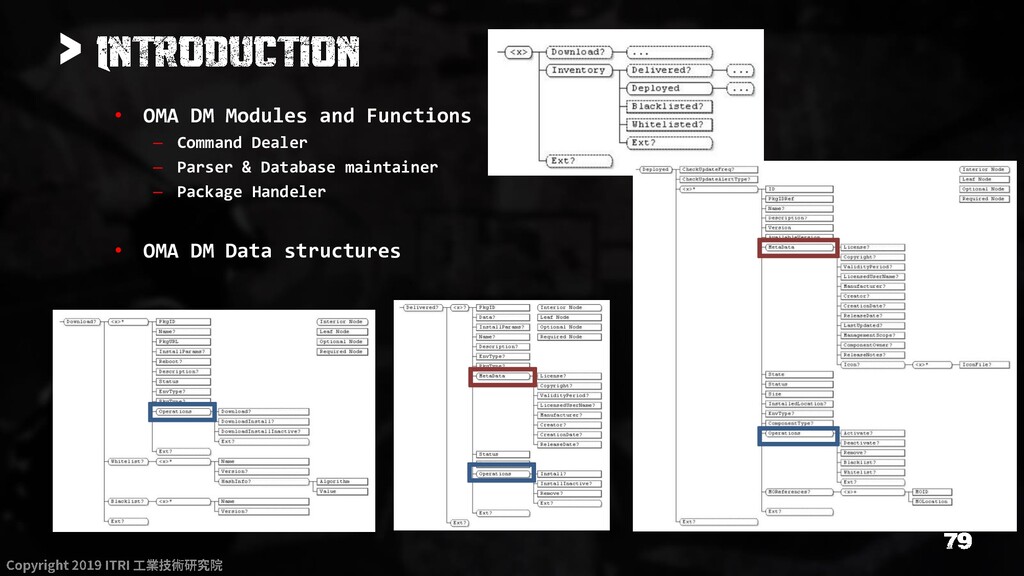
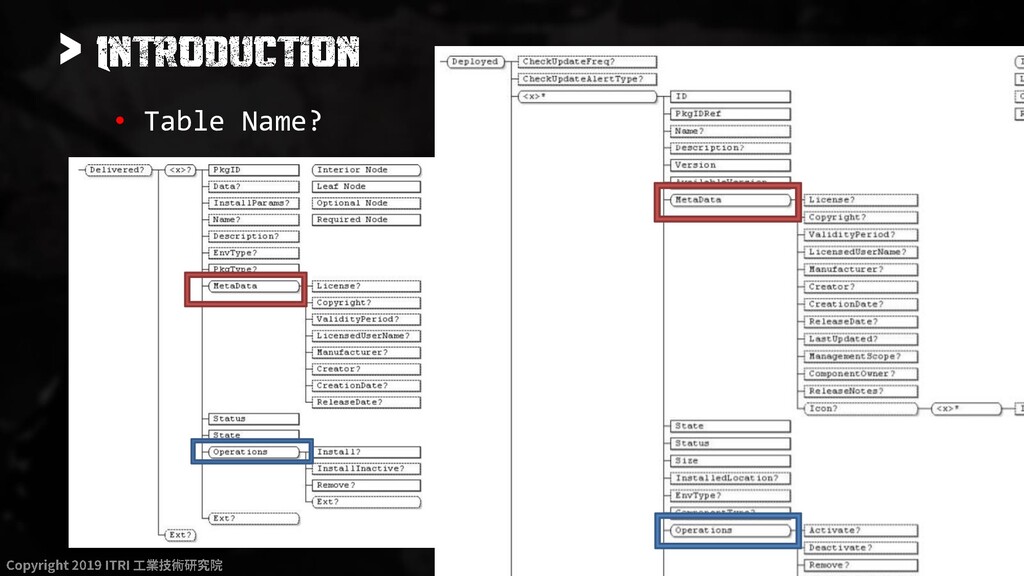
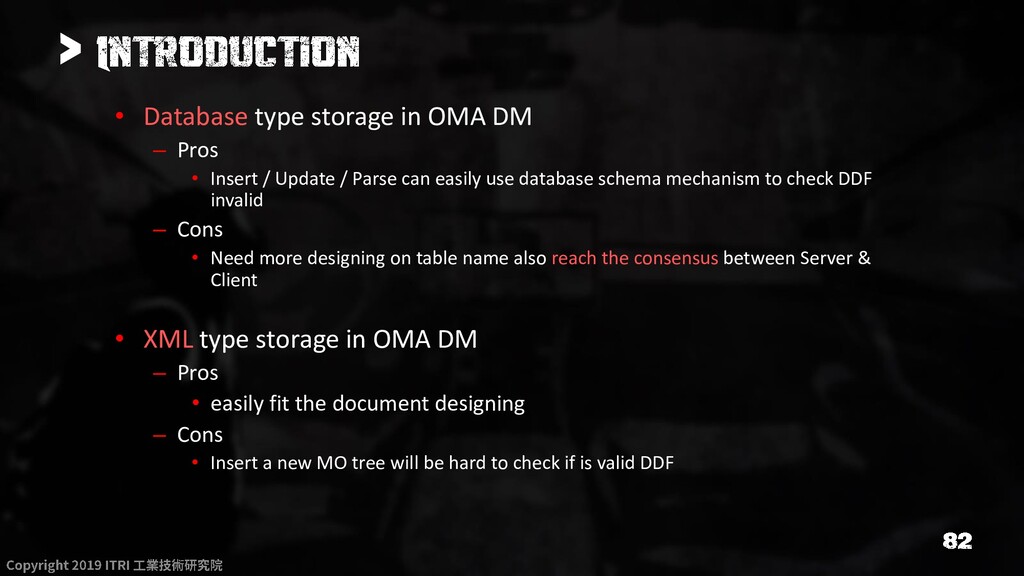
• Insert / Update / Parse can easily use database schema mechanism to check DDF invalid – Cons • Need more designing on table name also reach the consensus between Server & Client • XML type storage in OMA DM – Pros • easily fit the document designing – Cons • Insert a new MO tree will be hard to check if is valid DDF
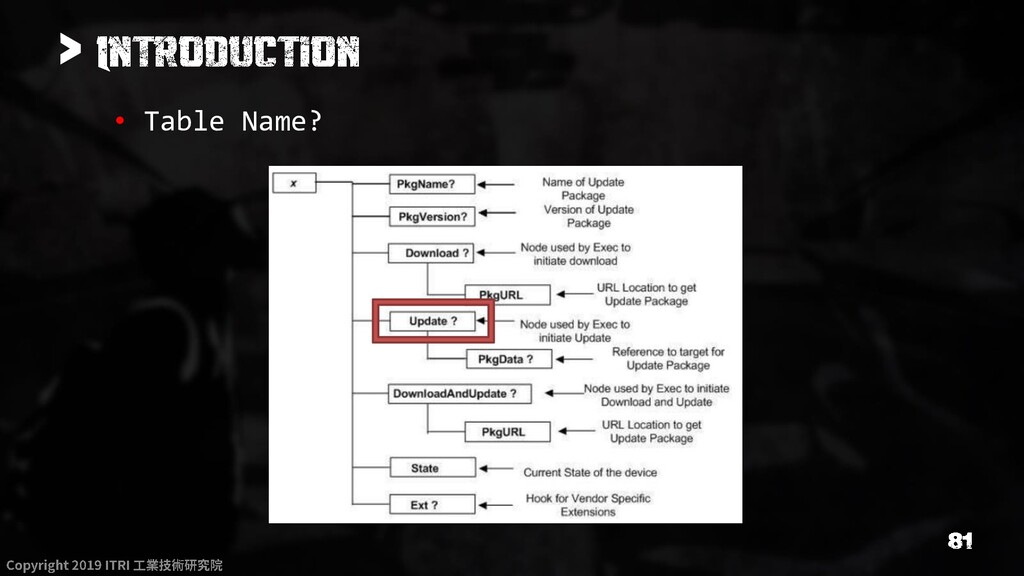
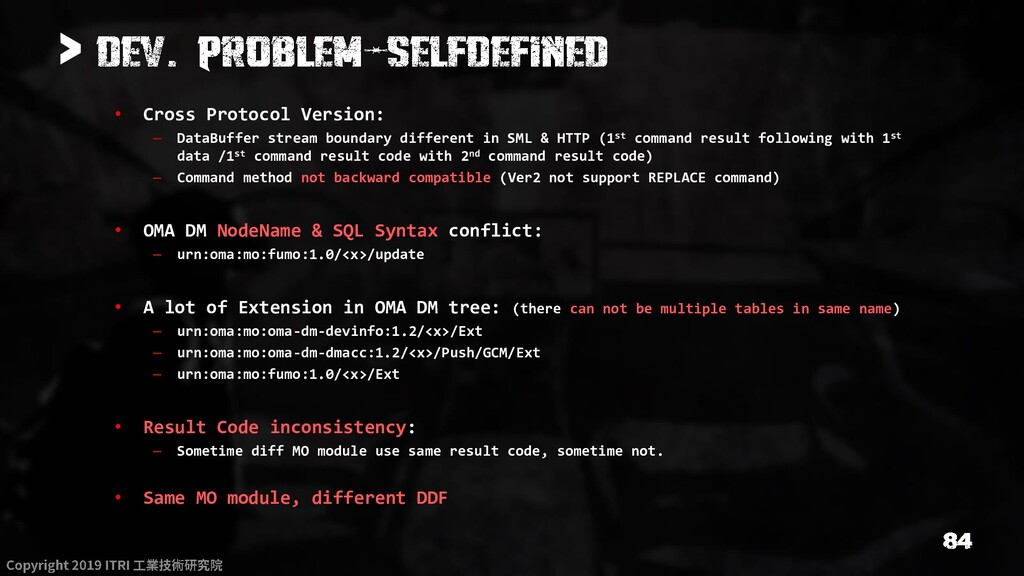
in SML & HTTP (1st command result following with 1st data /1st command result code with 2nd command result code) – Command method not backward compatible (Ver2 not support REPLACE command) • OMA DM NodeName & SQL Syntax conflict: – urn:oma:mo:fumo:1.0/<x>/update • A lot of Extension in OMA DM tree: (there can not be multiple tables in same name) – urn:oma:mo:oma-dm-devinfo:1.2/<x>/Ext – urn:oma:mo:oma-dm-dmacc:1.2/<x>/Push/GCM/Ext – urn:oma:mo:fumo:1.0/<x>/Ext • Result Code inconsistency: – Sometime diff MO module use same result code, sometime not. • Same MO module, different DDF
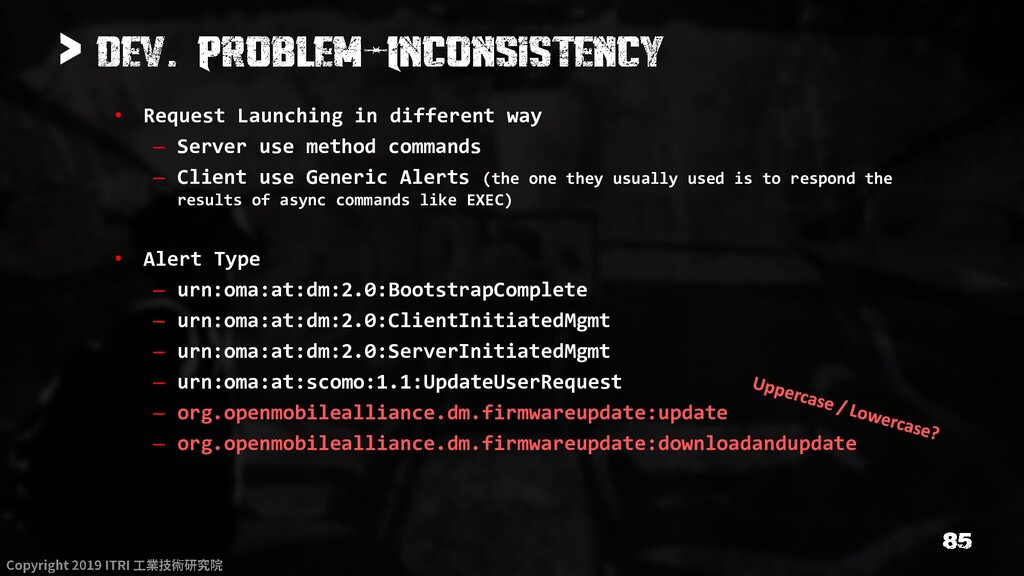
method commands – Client use Generic Alerts (the one they usually used is to respond the results of async commands like EXEC) • Alert Type – urn:oma:at:dm:2.0:BootstrapComplete – urn:oma:at:dm:2.0:ClientInitiatedMgmt – urn:oma:at:dm:2.0:ServerInitiatedMgmt – urn:oma:at:scomo:1.1:UpdateUserRequest – org.openmobilealliance.dm.firmwareupdate:update – org.openmobilealliance.dm.firmwareupdate:downloadandupdate
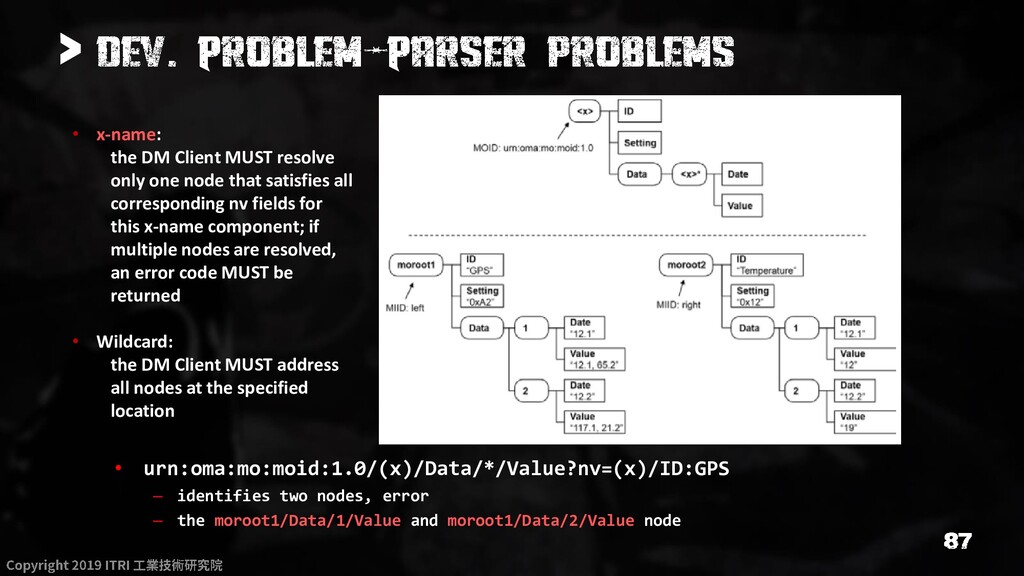
• urn:oma:mo:moid:1.0/left/Data/1/Value – identifies one nodes; the moroot1/Data/1/Value • Ellipsis: Usually use on MIID, this regards as only one node/value come up as result. • Real Name: The actually node name.
moroot1/Data/1/Value and moroot1/Data/2/Value node • x-name: the DM Client MUST resolve only one node that satisfies all corresponding nv fields for this x-name component; if multiple nodes are resolved, an error code MUST be returned • Wildcard: the DM Client MUST address all nodes at the specified location
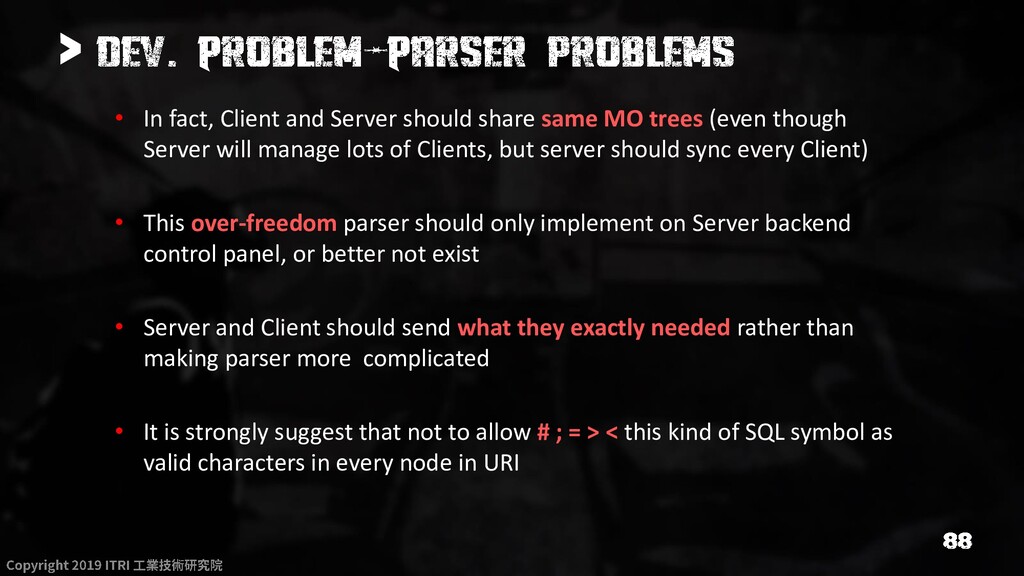
MO trees (even though Server will manage lots of Clients, but server should sync every Client) • This over-freedom parser should only implement on Server backend control panel, or better not exist • Server and Client should send what they exactly needed rather than making parser more complicated • It is strongly suggest that not to allow # ; = > < this kind of SQL symbol as valid characters in every node in URI
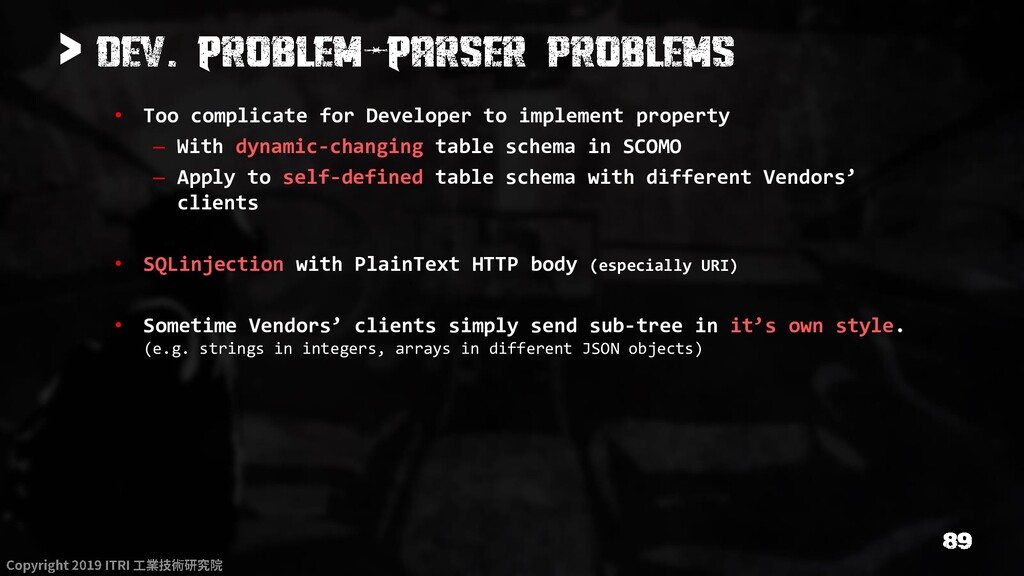
With dynamic-changing table schema in SCOMO – Apply to self-defined table schema with different Vendors’ clients • SQLinjection with PlainText HTTP body (especially URI) • Sometime Vendors’ clients simply send sub-tree in it’s own style. (e.g. strings in integers, arrays in different JSON objects)
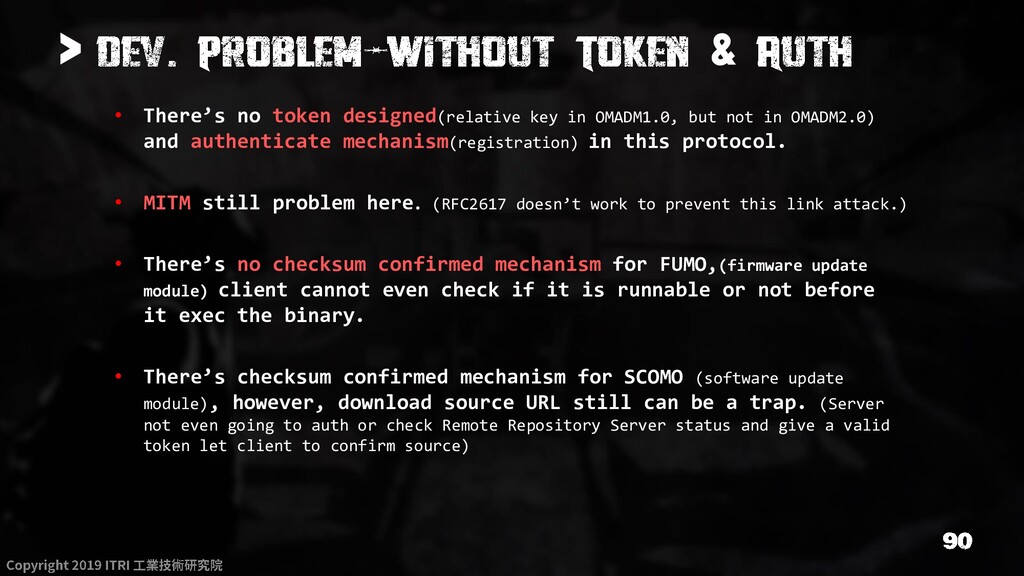
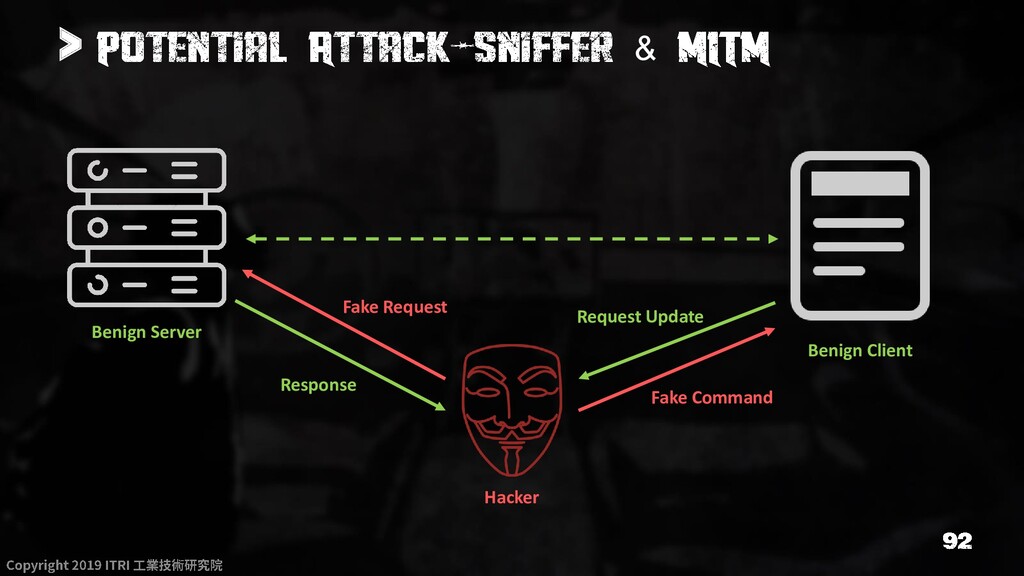
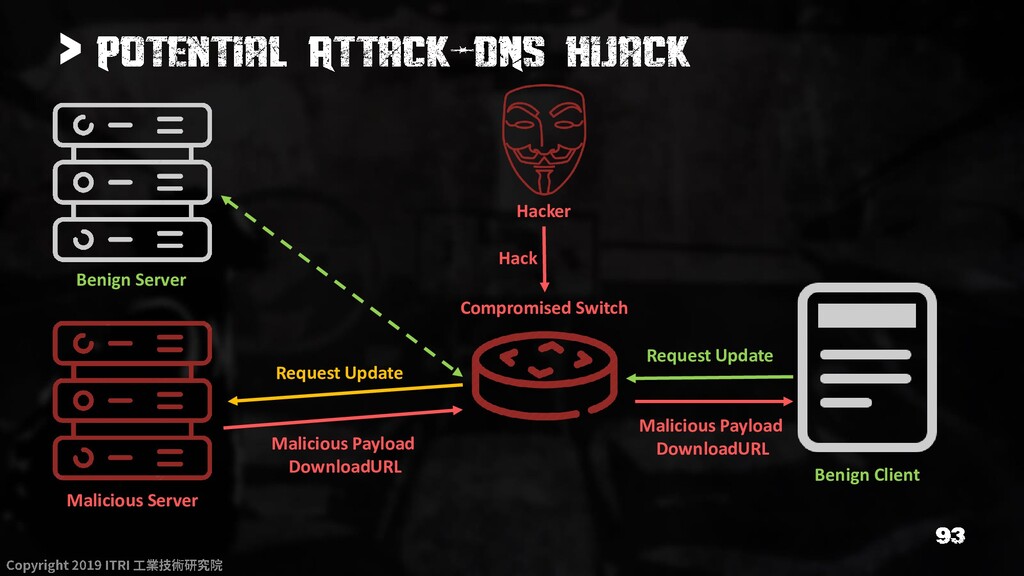
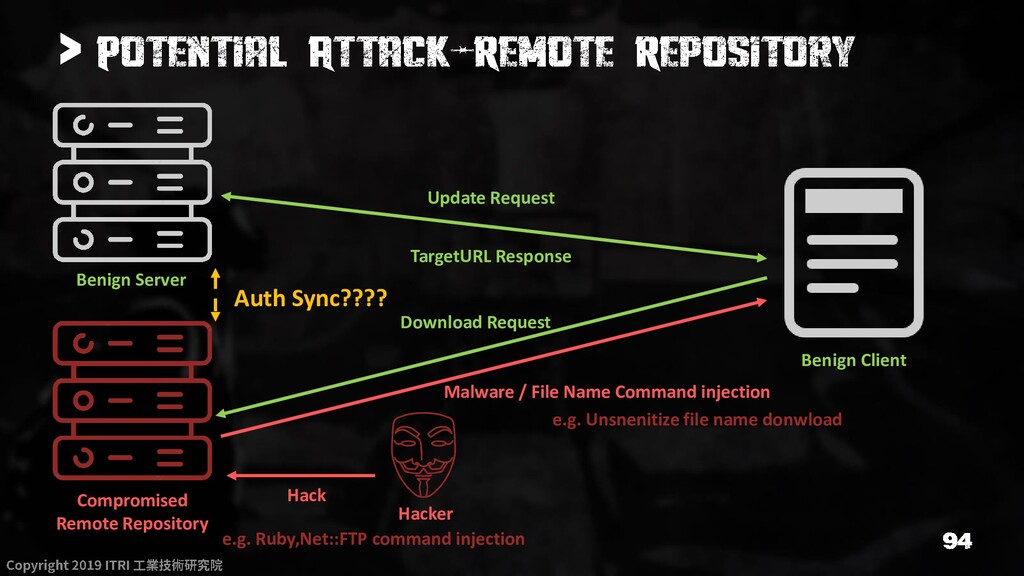
but not in OMADM2.0) and authenticate mechanism(registration) in this protocol. • MITM still problem here. (RFC2617 doesn’t work to prevent this link attack.) • There’s no checksum confirmed mechanism for FUMO,(firmware update module) client cannot even check if it is runnable or not before it exec the binary. • There’s checksum confirmed mechanism for SCOMO (software update module), however, download source URL still can be a trap. (Server not even going to auth or check Remote Repository Server status and give a valid token let client to confirm source)
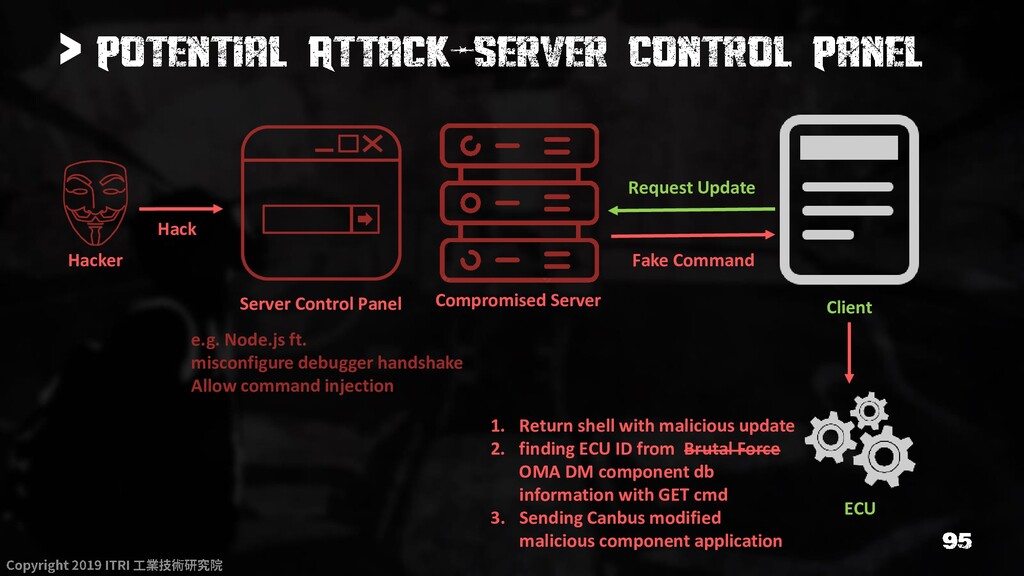
Control Panel Hack ECU 1. Return shell with malicious update 2. finding ECU ID from Brutal Force OMA DM component db information with GET cmd 3. Sending Canbus modified malicious component application e.g. Node.js ft. misconfigure debugger handshake Allow command injection
default AC/PW still make serious problems • Latest Cross-Industry features (AI manufacture, AI medication, AI car) still not take Information Security as a serious problem, then come out with lots of vulnerabilities application • In past, low revenues device (PC, IoT) can be find out exploit value by black industry. Apparently, vehicle with its high value deserve to own its targeting attack, and it’s worthy • Vehicle security can be a research draft of aircraft, it’s really sensitive to country security • OMA DM 2.0 is a protocol that need to harden. Should take serious concern on security issues on its document
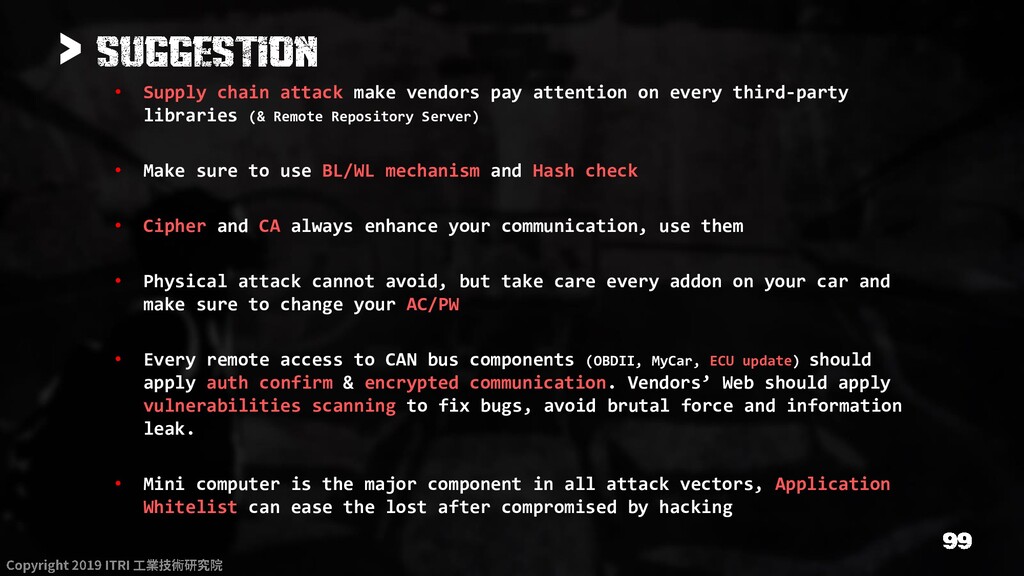
every third-party libraries (& Remote Repository Server) • Make sure to use BL/WL mechanism and Hash check • Cipher and CA always enhance your communication, use them • Physical attack cannot avoid, but take care every addon on your car and make sure to change your AC/PW • Every remote access to CAN bus components (OBDII, MyCar, ECU update) should apply auth confirm & encrypted communication. Vendors’ Web should apply vulnerabilities scanning to fix bugs, avoid brutal force and information leak. • Mini computer is the major component in all attack vectors, Application Whitelist can ease the lost after compromised by hacking


 notsurprised
 drpoonamkc
 himitu23
 frievea
 juanmartin2026
 sciencetokyo
 bunnchinn3
 bvr7352
 dragon2
 soudai
 kenichiota0711
 matshogo
 camel_404
 aleyda
 gr2m
gr2m
 inesmontani
 helmedeiros
 wayneb77
 ipullrank
 akademiya2063
 mkilby
 lara
lara
 baasie
![NotSurprised @ iThome [email protected]](https://files.speakerdeck.com/presentations/579855777a034a9dba624104f74c5c46/slide_0.jpg)