Upgrade to Pro — share decks privately, control downloads, hide ads and more …

Building Extractable Libraries in Rails - DCRUG

Building Extractable Libraries in Rails - DCRUG

version 2.0 of the slidedeck presented for DCRUG on 7/12/2012

Patrick Robertson

July 12, 2012

Transcript

49 slides
  1. Isolate Interaction with your Domain Models Use the DCI pattern

    at the glue points of your application code
  2. Rails 3 brought a wonderful convention for removing /lib from

    automatically being loaded on application boot...
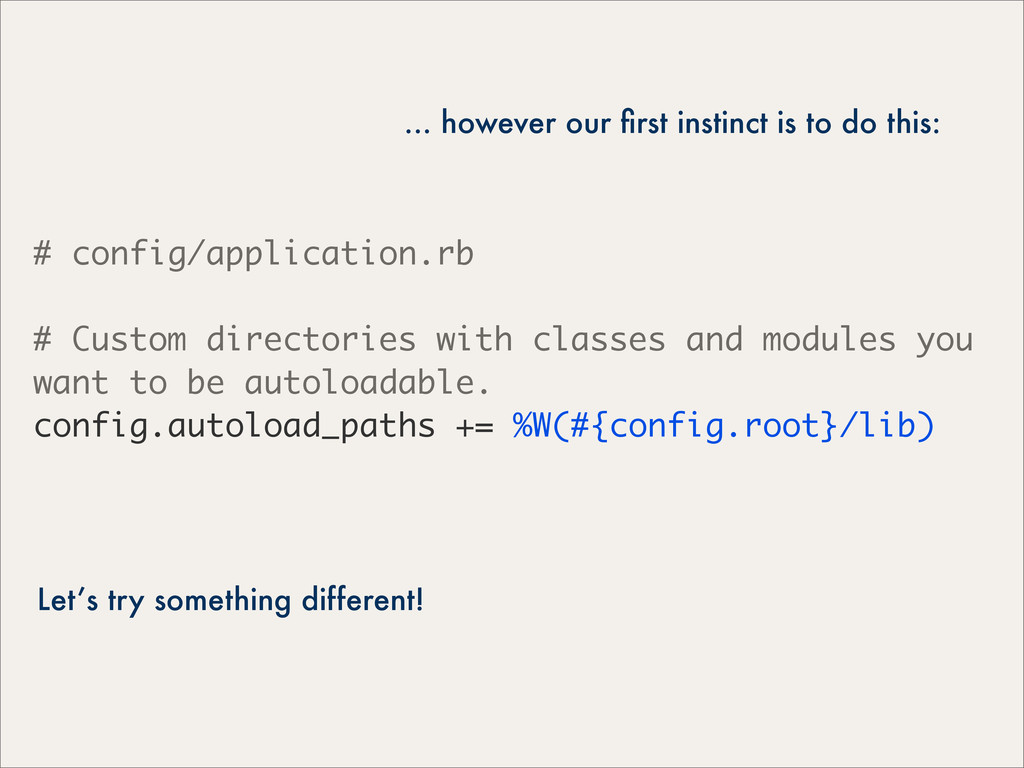
  3. ... however our first instinct is to do this: #

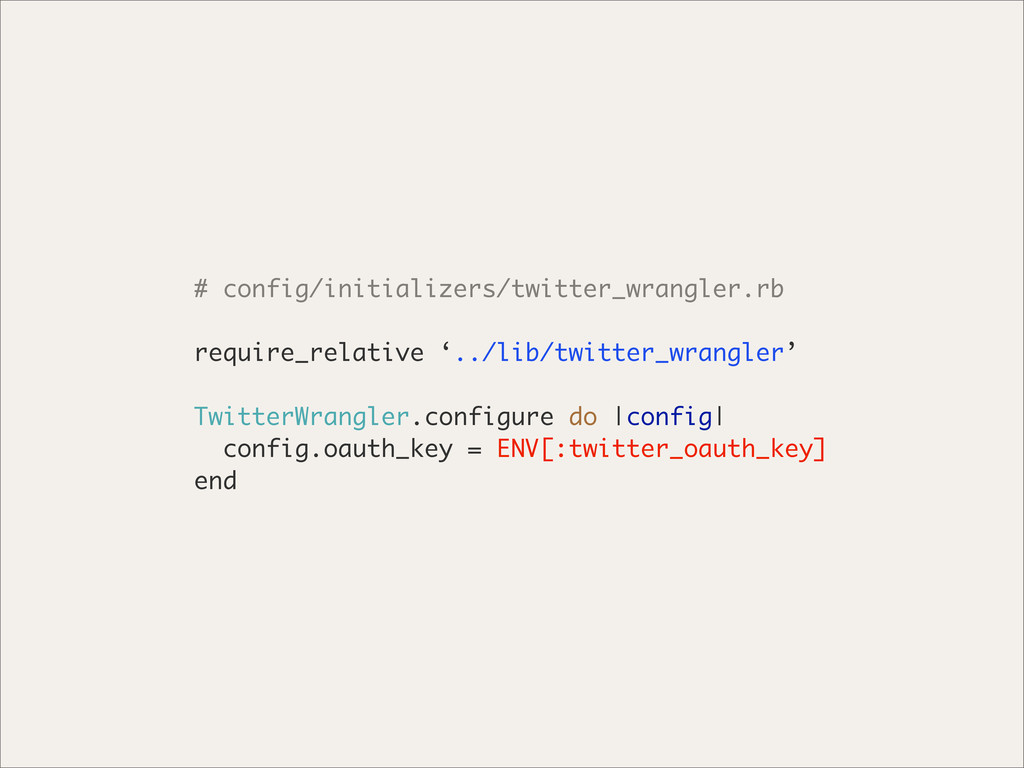
    config/application.rb # Custom directories with classes and modules you want to be autoloadable. config.autoload_paths += %W(#{config.root}/lib) Let’s try something different!
  4. We have created a namespace and setup a proper layout

    when we need to extract our code outside the application into a gem. ... in ten seconds or less :)
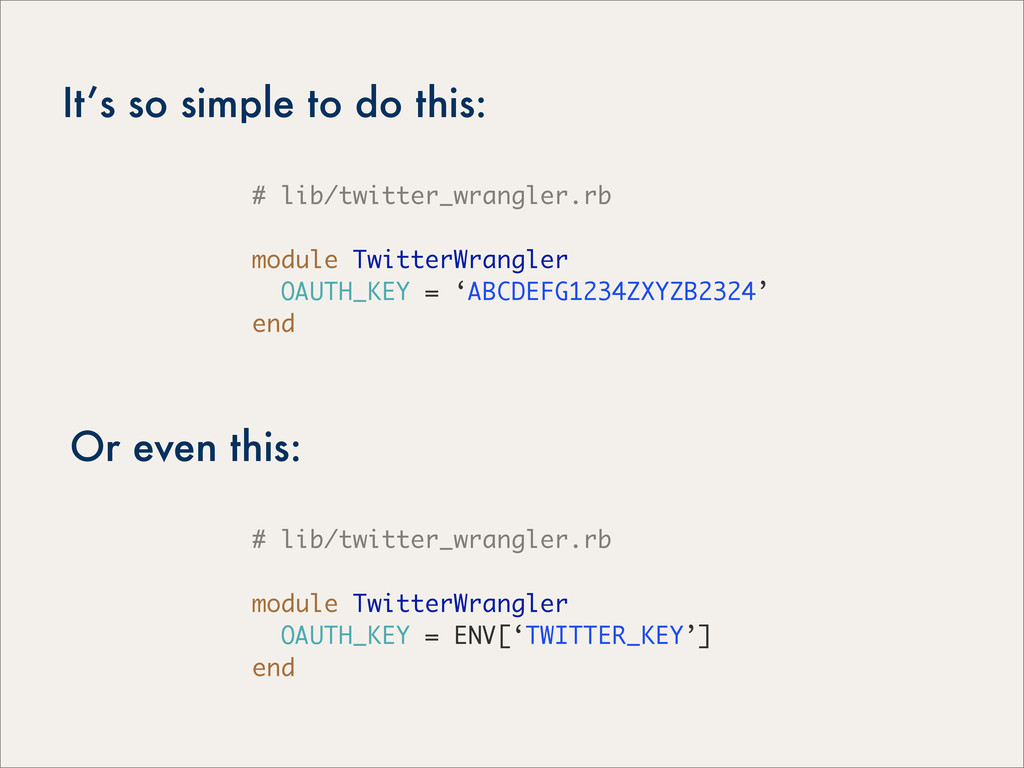
  5. It’s so simple to do this: # lib/twitter_wrangler.rb module TwitterWrangler

    OAUTH_KEY = ‘ABCDEFG1234ZXYZB2324’ end Or even this: # lib/twitter_wrangler.rb module TwitterWrangler OAUTH_KEY = ENV[‘TWITTER_KEY’] end
  6. But we already have an entry point for our library

    code. So let’s exploit the heck out of it!
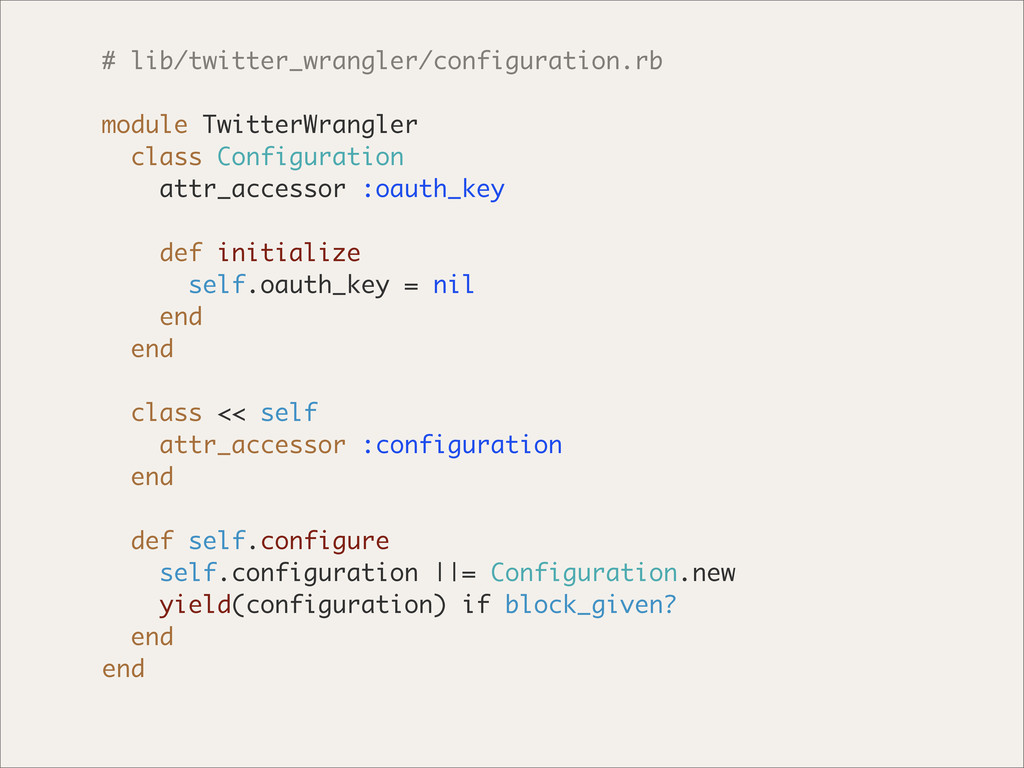
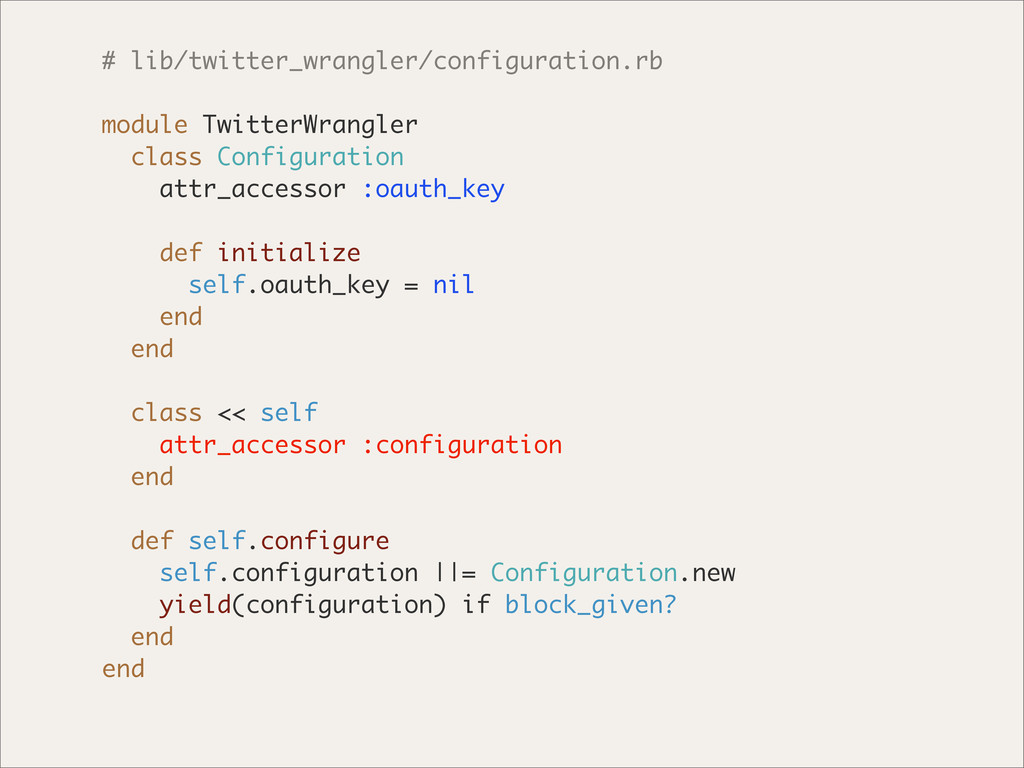
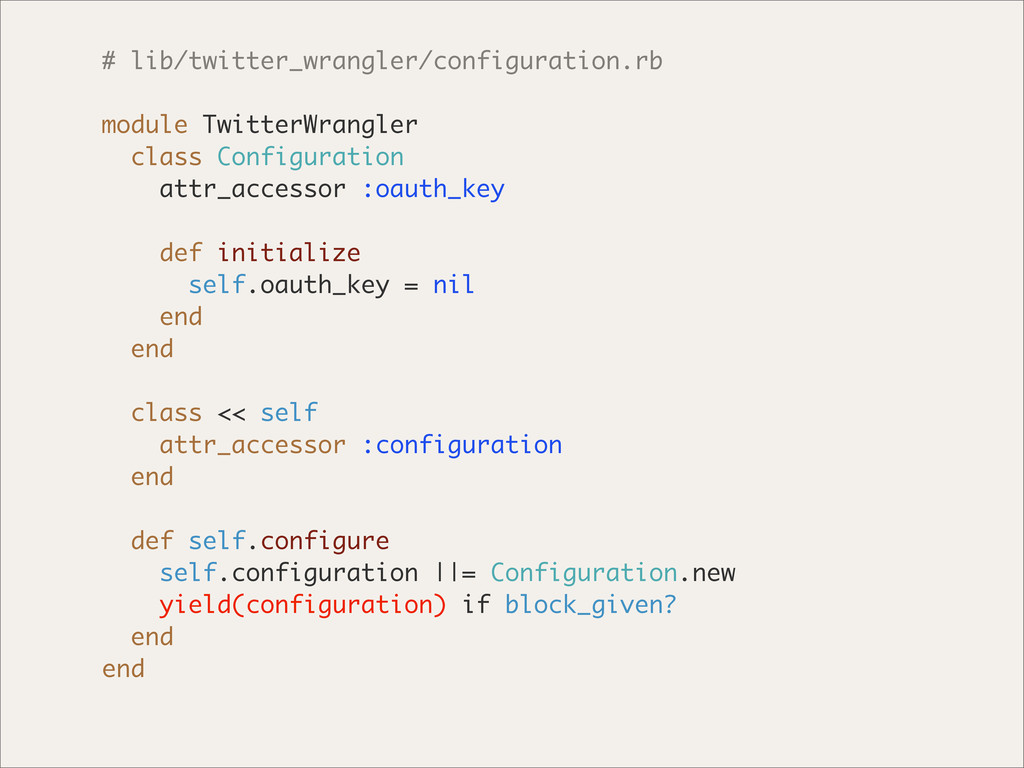
  7. # lib/twitter_wrangler/configuration.rb module TwitterWrangler class Configuration attr_accessor :oauth_key def initialize

    self.oauth_key = nil end end class << self attr_accessor :configuration end def self.configure self.configuration ||= Configuration.new yield(configuration) if block_given? end end
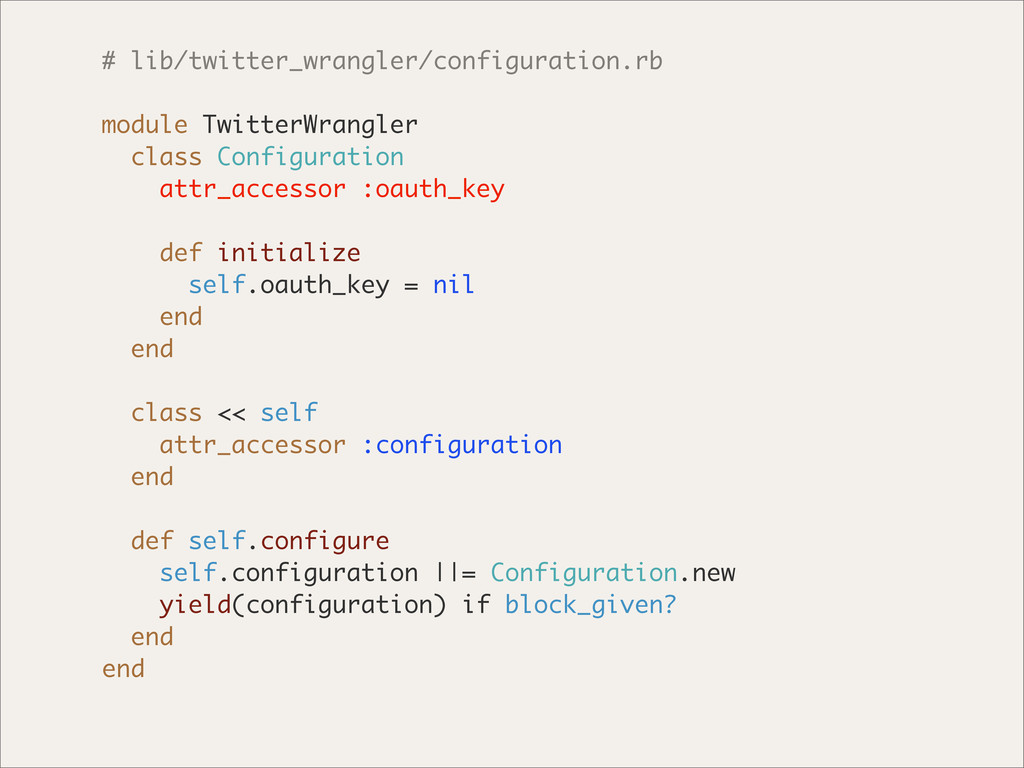
  8. # lib/twitter_wrangler/configuration.rb module TwitterWrangler class Configuration attr_accessor :oauth_key def initialize

    self.oauth_key = nil end end class << self attr_accessor :configuration end def self.configure self.configuration ||= Configuration.new yield(configuration) if block_given? end end
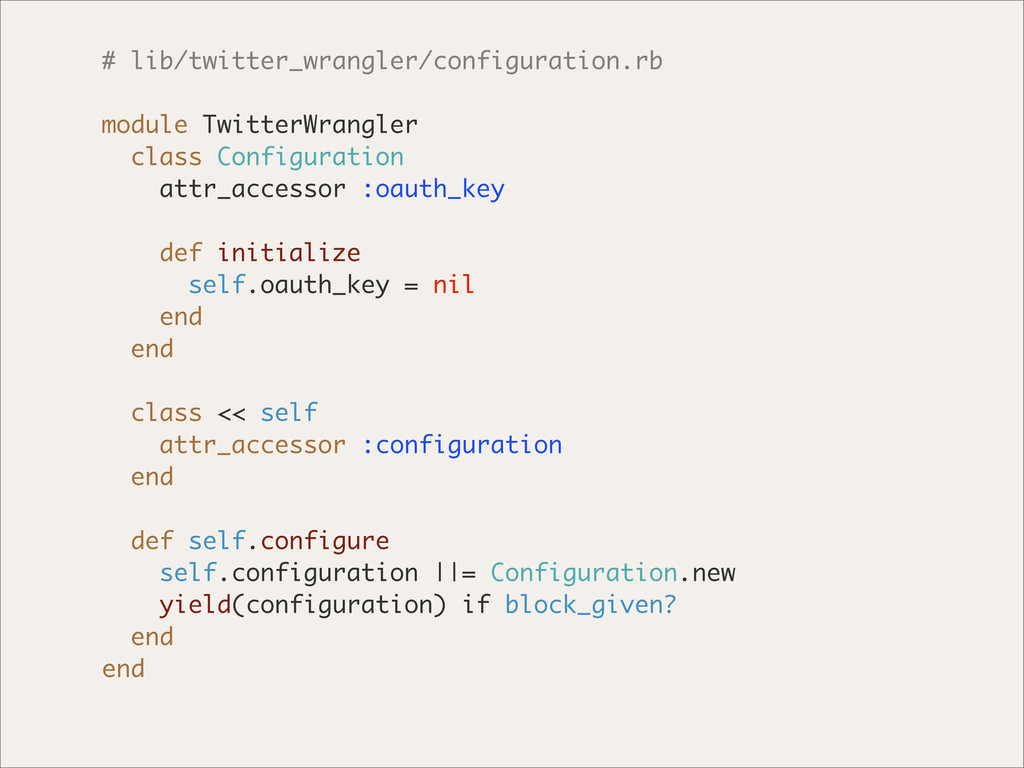
  9. # lib/twitter_wrangler/configuration.rb module TwitterWrangler class Configuration attr_accessor :oauth_key def initialize

    self.oauth_key = nil end end class << self attr_accessor :configuration end def self.configure self.configuration ||= Configuration.new yield(configuration) if block_given? end end
  10. # lib/twitter_wrangler/configuration.rb module TwitterWrangler class Configuration attr_accessor :oauth_key def initialize

    self.oauth_key = nil end end class << self attr_accessor :configuration end def self.configure self.configuration ||= Configuration.new yield(configuration) if block_given? end end
  11. # lib/twitter_wrangler/configuration.rb module TwitterWrangler class Configuration attr_accessor :oauth_key def initialize

    self.oauth_key = nil end end class << self attr_accessor :configuration end def self.configure self.configuration ||= Configuration.new yield(configuration) if block_given? end end
  12. # lib/twitter_wrangler/configuration.rb module TwitterWrangler class Configuration attr_accessor :oauth_key def initialize

    self.oauth_key = nil end end class << self attr_accessor :configuration end def self.configure self.configuration ||= Configuration.new yield(configuration) if block_given? end end
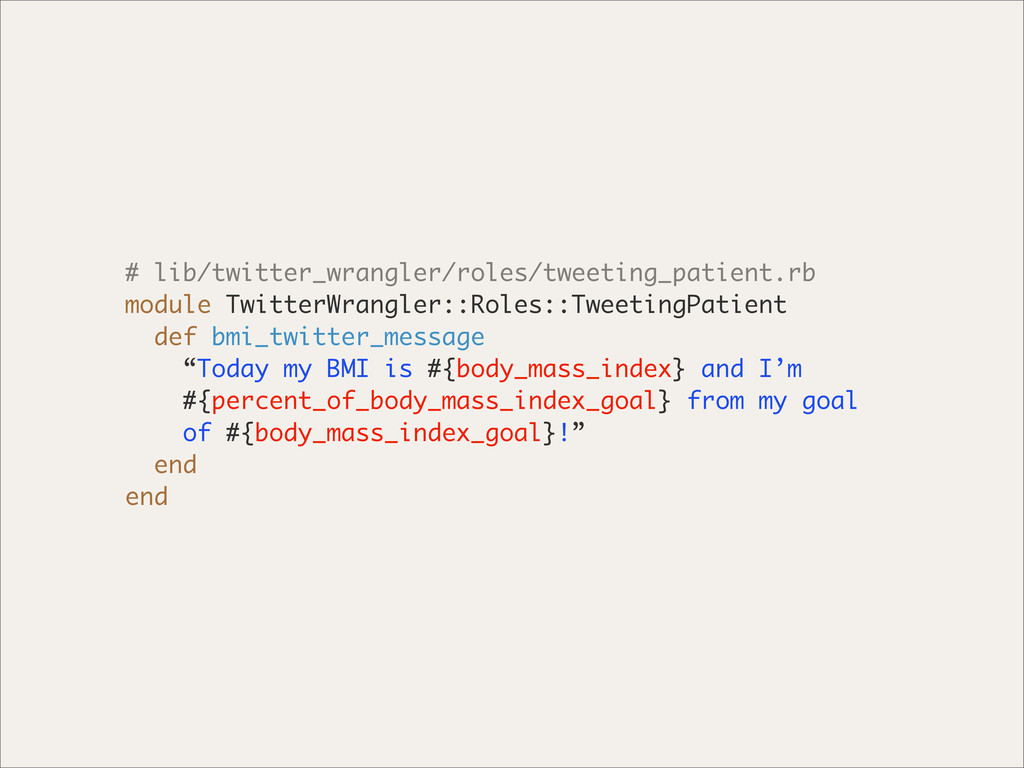
  13. # lib/twitter_wrangler/roles/tweeting_patient.rb module TwitterWrangler::Roles::TweetingPatient def bmi_twitter_message “Today my BMI is

    #{body_mass_index} and I’m #{percent_of_body_mass_index_goal} from my goal of #{body_mass_index_goal}!” end end
  14. # lib/twitter_wrangler/support/fake_patient.rb class FakePatient def body_mass_index;27;end def percent_of_body_mass_index_goal;”95%”;end def body_mass_index_goal;25;end

    end # spec/twitter_wrangler/roles/tweeting_patient_spec.rb describe TweetingPatient do let(:patient) { FakePatient.new } before { FakePatient.extend TweetingPatient } it ‘asserts some fantastic things’ do #GLORIOUS SPECS end end
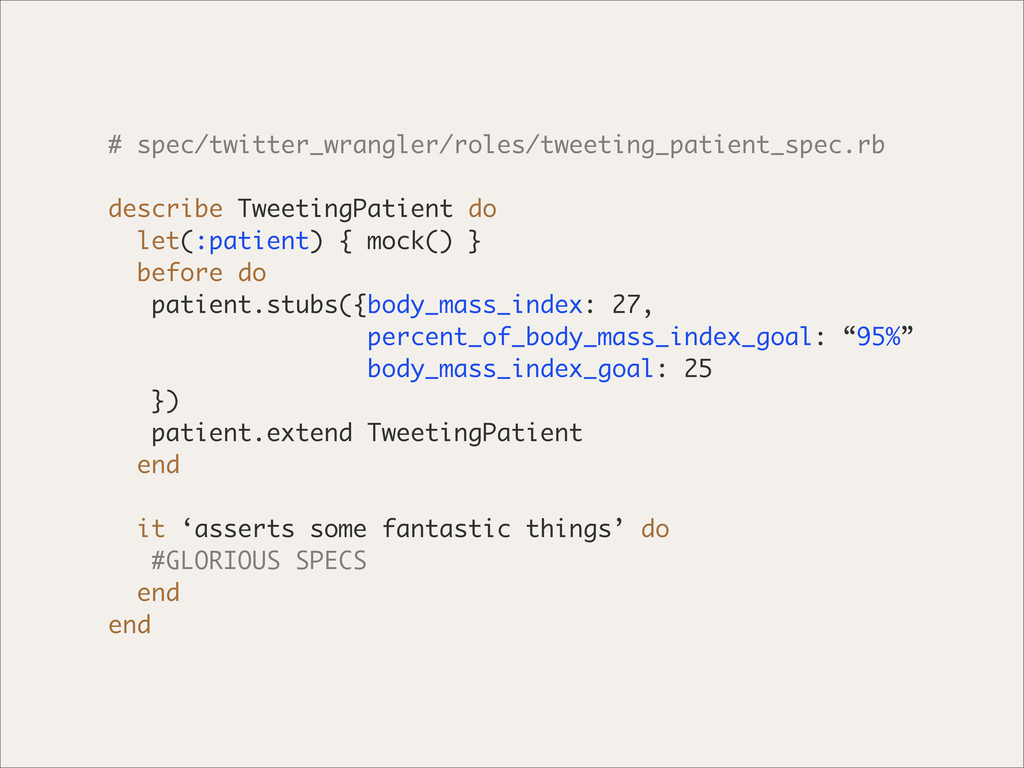
  15. # spec/twitter_wrangler/roles/tweeting_patient_spec.rb describe TweetingPatient do let(:patient) { mock() } before

    do patient.stubs({body_mass_index: 27, percent_of_body_mass_index_goal: “95%” body_mass_index_goal: 25 }) patient.extend TweetingPatient end it ‘asserts some fantastic things’ do #GLORIOUS SPECS end end
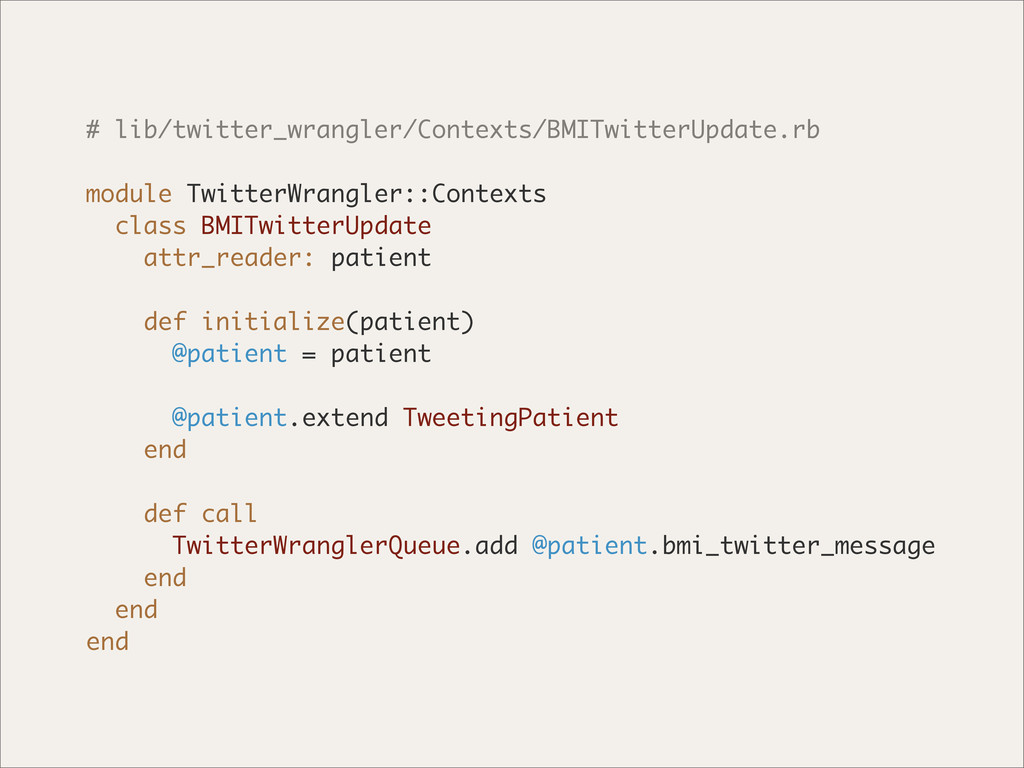
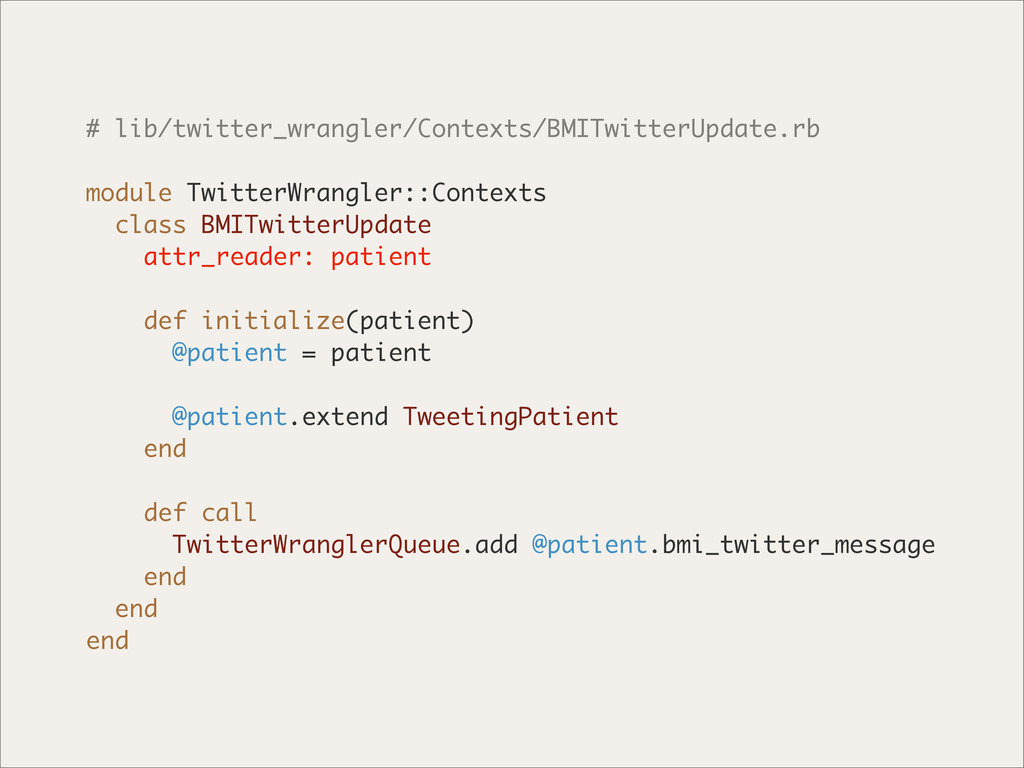
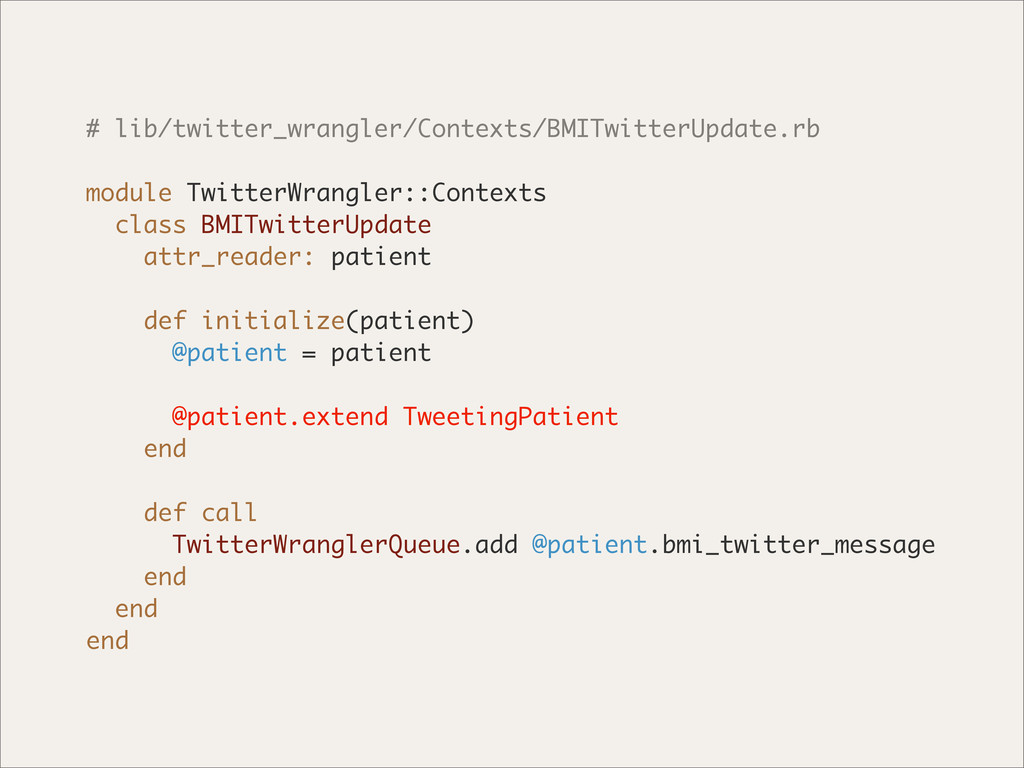
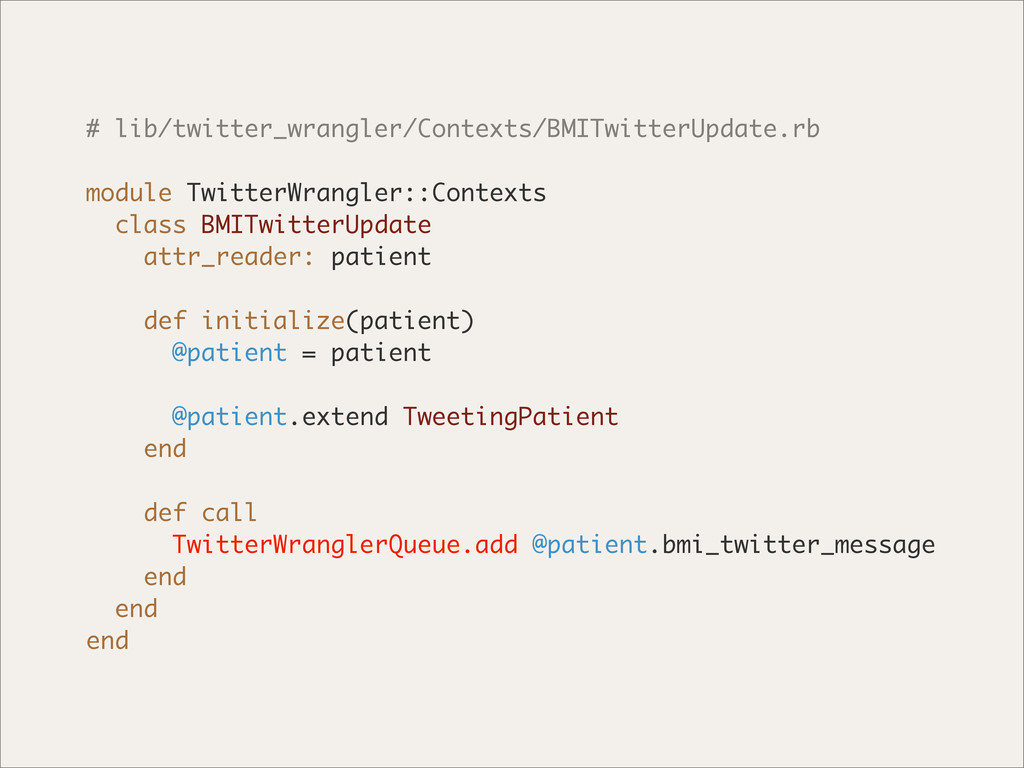
  16. # lib/twitter_wrangler/Contexts/BMITwitterUpdate.rb module TwitterWrangler::Contexts class BMITwitterUpdate attr_reader: patient def initialize(patient)

    @patient = patient @patient.extend TweetingPatient end def call TwitterWranglerQueue.add @patient.bmi_twitter_message end end end
  17. # lib/twitter_wrangler/Contexts/BMITwitterUpdate.rb module TwitterWrangler::Contexts class BMITwitterUpdate attr_reader: patient def initialize(patient)

    @patient = patient @patient.extend TweetingPatient end def call TwitterWranglerQueue.add @patient.bmi_twitter_message end end end
  18. # lib/twitter_wrangler/Contexts/BMITwitterUpdate.rb module TwitterWrangler::Contexts class BMITwitterUpdate attr_reader: patient def initialize(patient)

    @patient = patient @patient.extend TweetingPatient end def call TwitterWranglerQueue.add @patient.bmi_twitter_message end end end
  19. # lib/twitter_wrangler/Contexts/BMITwitterUpdate.rb module TwitterWrangler::Contexts class BMITwitterUpdate attr_reader: patient def initialize(patient)

    @patient = patient @patient.extend TweetingPatient end def call TwitterWranglerQueue.add @patient.bmi_twitter_message end end end
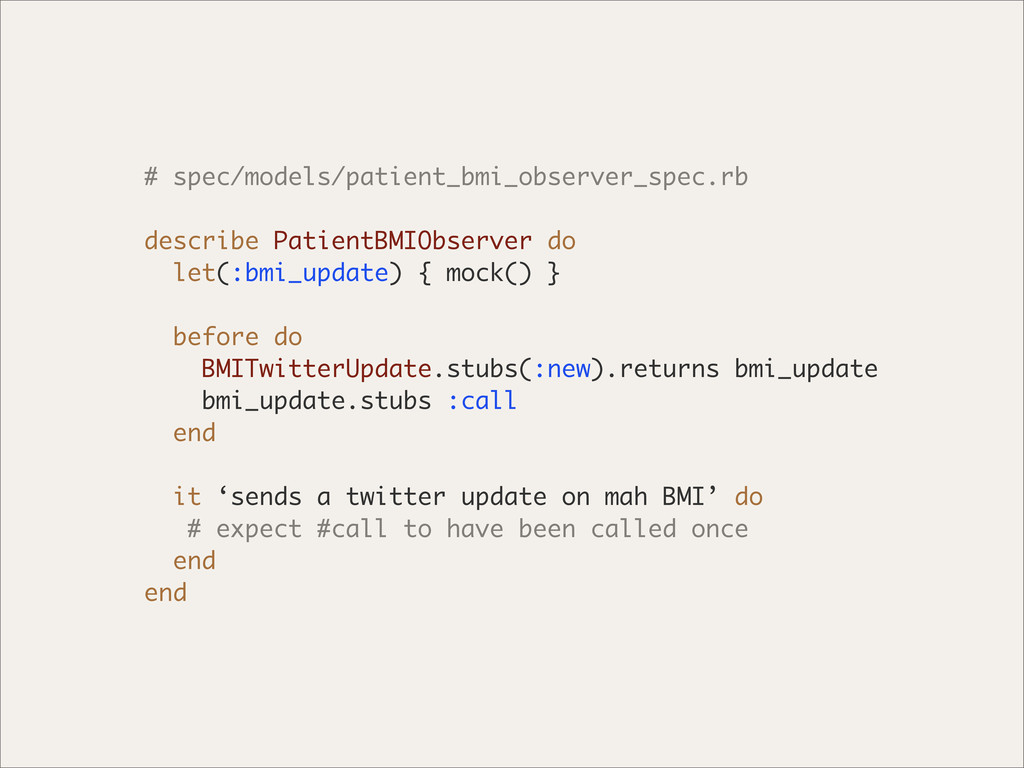
  20. # spec/models/patient_bmi_observer_spec.rb describe PatientBMIObserver do let(:bmi_update) { mock() } before

    do BMITwitterUpdate.stubs(:new).returns bmi_update bmi_update.stubs :call end it ‘sends a twitter update on mah BMI’ do # expect #call to have been called once end end
  21. # spec/models/patient_bmi_observer_spec.rb describe PatientBMIObserver do let(:bmi_update) { mock() } before

    do BMITwitterUpdate.stubs(:new).returns bmi_update bmi_update.stubs :call end it ‘sends a twitter update on mah BMI’ do # expect #call to have been called once end end
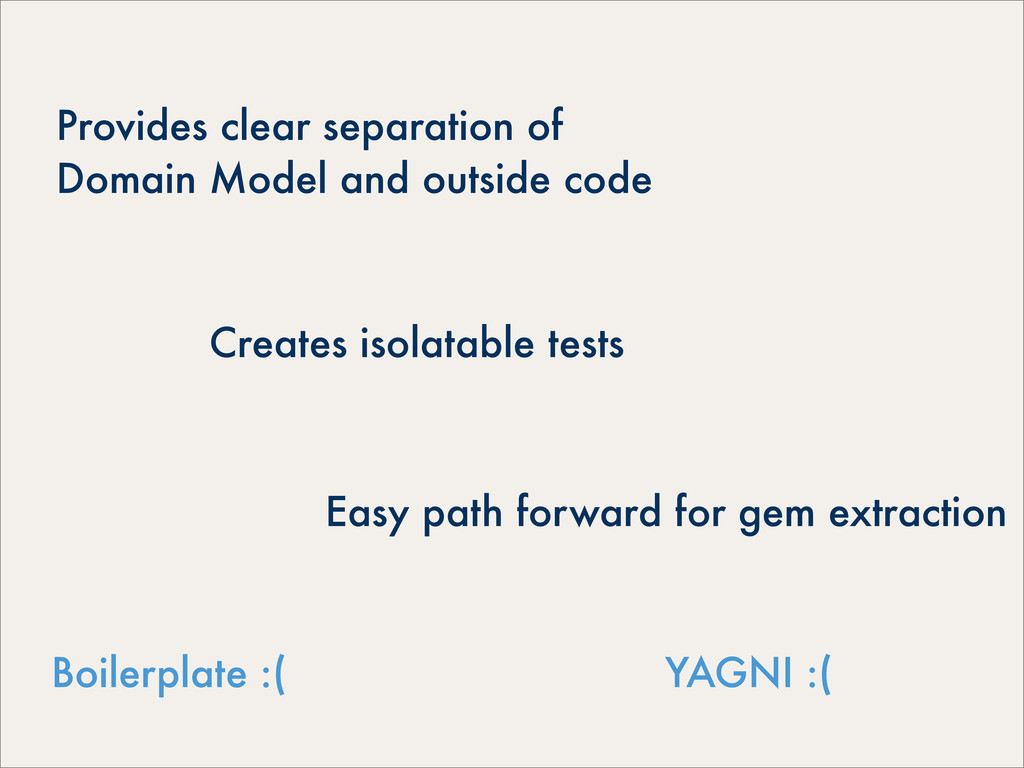
  22. Provides clear separation of Domain Model and outside code Creates

    isolatable tests Easy path forward for gem extraction Boilerplate :( YAGNI :(

More Decks by Patrick Robertson

Other Decks in Programming