Upgrade to Pro — share decks privately, control downloads, hide ads and more …

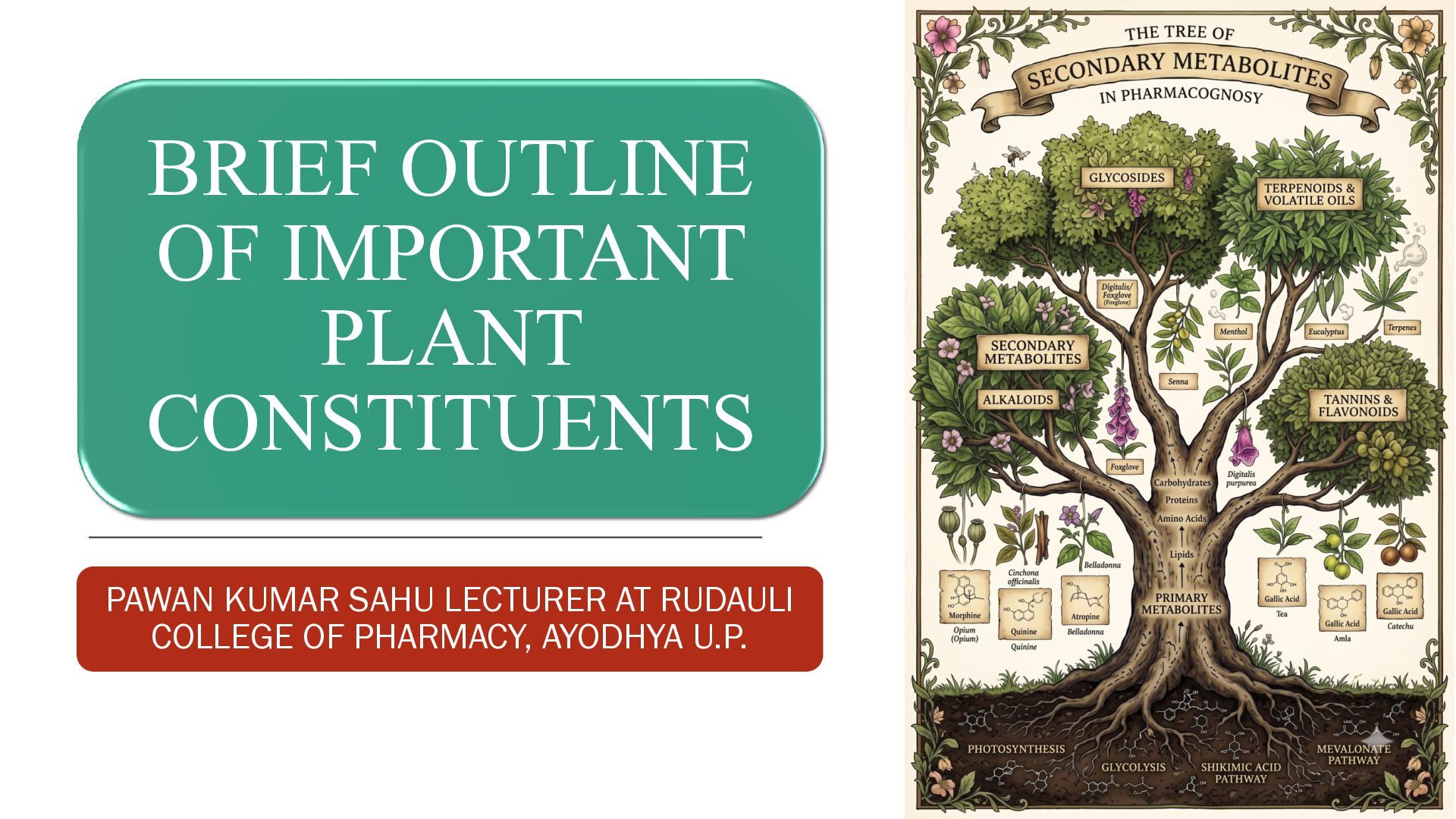
BRIEF OUTLINE OF IMPORTANT PLANT CONSTITUENTS

BRIEF OUTLINE OF IMPORTANT PLANT CONSTITUENTS

This outline provides a brief overview of the key chemical groups found in plants that have medicinal or industrial importance. Plant constituents are generally divided into two main categories: primary and secondary metabolites.

**I. Primary Plant Constituents (Essential for Life)**
These compounds are basic building blocks and are essential for the fundamental survival and growth processes of the plant, such as photosynthesis, respiration, and protein synthesis. While vital to plants, they are usually of less interest as specific drug molecules, though they serve as nutrients and industrial excipients.

* **1. Carbohydrates:**
* **Description:** Organic compounds consisting of carbon, hydrogen, and oxygen, typically with a 2:1 hydrogen-to-oxygen ratio. They serve as primary sources of energy and structural components.
* **Subgroups & Examples:**
* **Monosaccharides:** Simple sugars like glucose (grape sugar) and fructose (fruit sugar).
* **Disaccharides:** Double sugars like sucrose (table sugar from cane/beet).
* **Polysaccharides:** Complex molecules like starch (energy storage in tubers, grains), cellulose (structural material, plant fiber), and gums/mucilages (protective exudates used as thickeners).
* **2. Lipids (Fats & Oils):**
* **Description:** Organic compounds that are insoluble in water but soluble in organic solvents. They are composed mainly of fatty acids and glycerol.
* **Types & Uses:**
* **Fixed Oils/Fats:** Non-volatile. Serve as energy storage in seeds (e.g., olive oil, almond oil, coconut oil). Used as nutritives and emollient vehicles in pharmacy.
* **Waxes:** Esters of fatty acids and high molecular weight alcohols. Harder than fats (e.g., jojoba oil).
* **3. Proteins:**
* **Description:** Large, complex molecules composed of long chains of amino acids linked by peptide bonds. They are fundamental to cell structure and function.
* **Uses:** Nutritious, but individual plant proteins are rarely used as specific drugs; some enzymes (catalytic proteins) are medically important (e.g., papain from papaya).

**II. Secondary Plant Constituents (Medicinal & Chemical Markers)**
These are chemical compounds produced by plants for functions that are not strictly essential for fundamental survival, such as defense against herbivores and pests, communication, or UV protection. However, many secondary metabolites possess potent biological activities and are the main source of plant-derived medicines, flavors, and fragrances.

* **1. Alkaloids:**
* **Description:** A large and diverse class of natural organic compounds that always contain basic nitrogen atoms (alkaline). Most possess complex ring structures and have strong, physiological effects on mammals. Many are bitter-tasting as a defense mechanism.
* **Examples & Uses:**
* **Morphine (from Opium Poppy):** Potent analgesic (pain reliever).
* **Quinine (from Cinchona bark):** Anti-malarial.
* **Caffeine (from Coffee, Tea, Cola):** Central nervous system stimulant.
* **Atropine (from Belladonna):** Muscle relaxant, pupil dilator.
* **2. Glycosides:**
* **Description:** A group of compounds consisting of two parts: a sugar portion (called the glycone) linked via a glycosidic bond to a non-sugar organic molecule (called the aglycone or genin). The genin portion usually holds the biological activity, while the sugar helps in plant transport and storage.
* **Examples & Subgroups:**
* **Cardiac Glycosides:** Affect heart muscle contraction (e.g., digoxin from foxglove).
* **Anthraquinone Glycosides:** Often used as purgatives (e.g., sennosides from senna, aloin from aloe).
* **Flavonoid Glycosides:** Diverse, often with antioxidant properties (e.g., rutin).
* **3. Terpenoids (Isoprenoids):**
* **Description:** A vast and structurally varied class derived from five-carbon isoprene units. They encompass compounds ranging from simple fragrance molecules to complex ring structures.
* **Examples & Subgroups:**
* **Monoterpenes & Sesquiterpenes:** The main components of essential (volatile) oils, responsible for aroma and therapeutic effects like antiseptic, anti-inflammatory, and antispasmodic actions (e.g., peppermint, lavender).
* **Diterpenes:** Larger, non-volatile. Some are anti-cancer (e.g., paclitaxel from yew).
* **Triterpenes/Steroids:** Form compounds like cholesterol, phytohormones, and saponins. (e.g., ginseng).
* **4. Phenolics & Polyphenols:**
* **Description:** Organic compounds containing at least one phenol group (an aromatic ring with a hydroxyl group attached). This broad group is known for diverse colors and strong antioxidant properties.
* **Examples & Subgroups:**
* **Flavonoids:** Ubiquitous yellow/orange/red pigments (often glycosides) with antioxidant and circulatory benefits (e.g., in grapes, citrus).
* **Tannins:** Complex, astringent molecules that can precipitate proteins. Plants use them for anti-feedant defense. Medically used for treating wounds and diarrhea (e.g., in oak bark, tea).
* **Coumarins:** Fragrant molecules (like sweet-clover scent), some with blood-thinning properties (e.g., warfarin is synthetic coumarin derivative).
* **5. Essential (Volatile) Oils:**
* **Description:** Concentrated, aromatic, volatile liquids obtained from plants through steam distillation. They are typically complex mixtures of many different terpenoid and phenolic compounds.
* **Uses:** Aromatic, flavoring, and diverse medicinal actions (e.g., antibacterial, antifungal, anti-inflammatory).
* **6. Resins:**
* **Description:** Amorphous, transparent, solid or semi-solid secretions of complex chemical nature. They are often sticky and insoluble in water, but dissolve in organic solvents. Plants often use them to seal wounds or defend against decay.
* **Examples & Types:**
* **Hard Resins:** (e.g., amber, colophony).
* **Oleoresins:** Naturally mixed with volatile oil (e.g., copaiba balsam).
* **Gum Resins:** Naturally mixed with carbohydrate gums (e.g., myrrh).
* **Uses:** Fragrances, incense, varnishes, and some medicinal actions (e.g., stimulant, antiseptic).

Avatar for Pawan Kumar Sahu

Pawan Kumar Sahu

September 29, 2026

More Decks by Pawan Kumar Sahu

Other Decks in Education

Transcript

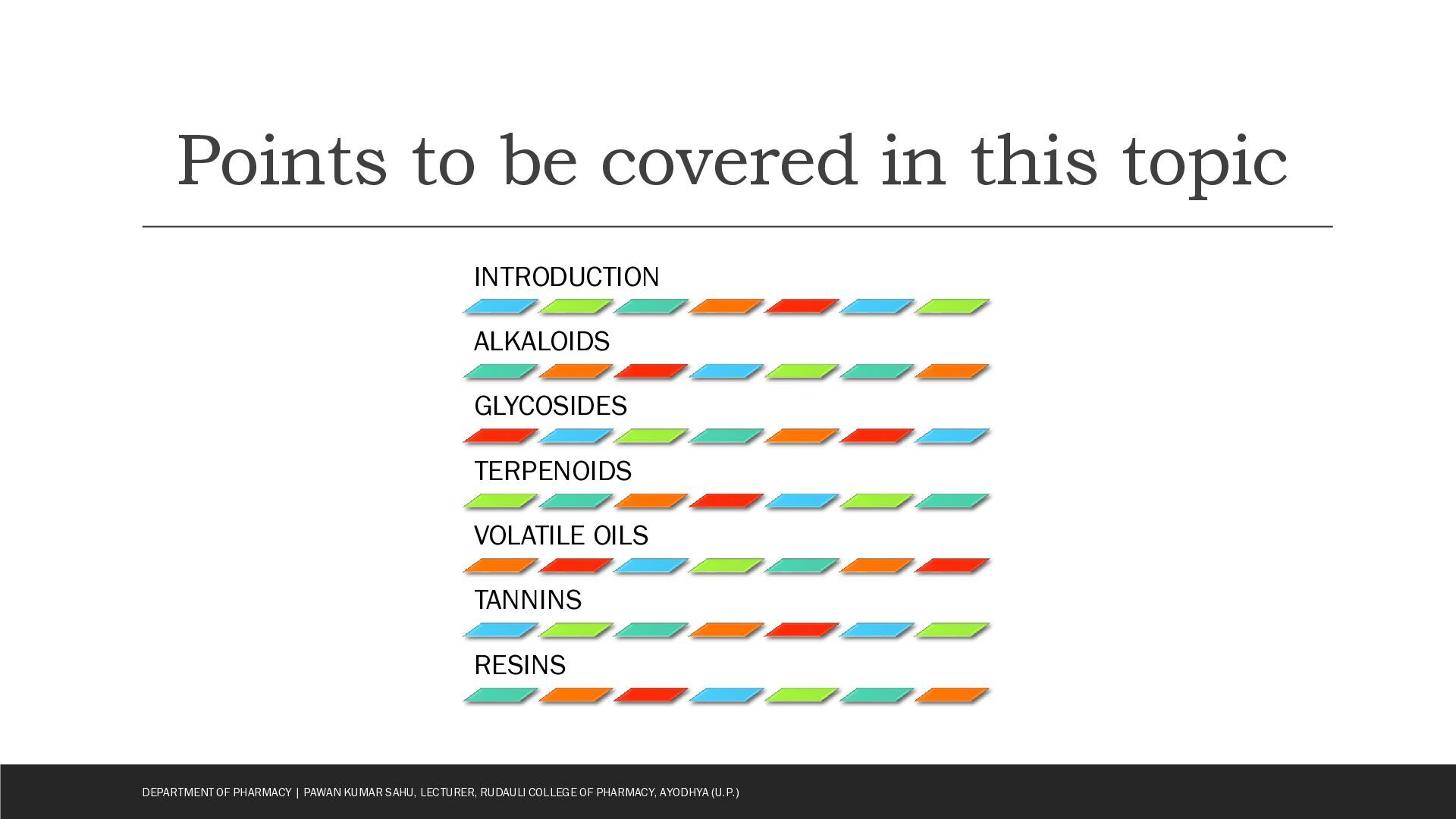
  1. Points to be covered in this topic INTRODUCTION ALKALOIDS GLYCOSIDES

    TERPENOIDS VOLATILE OILS TANNINS RESINS DEPARTMENT OF PHARMACY | PAWAN KUMAR SAHU, LECTURER, RUDAULI COLLEGE OF PHARMACY, AYODHYA (U.P.)
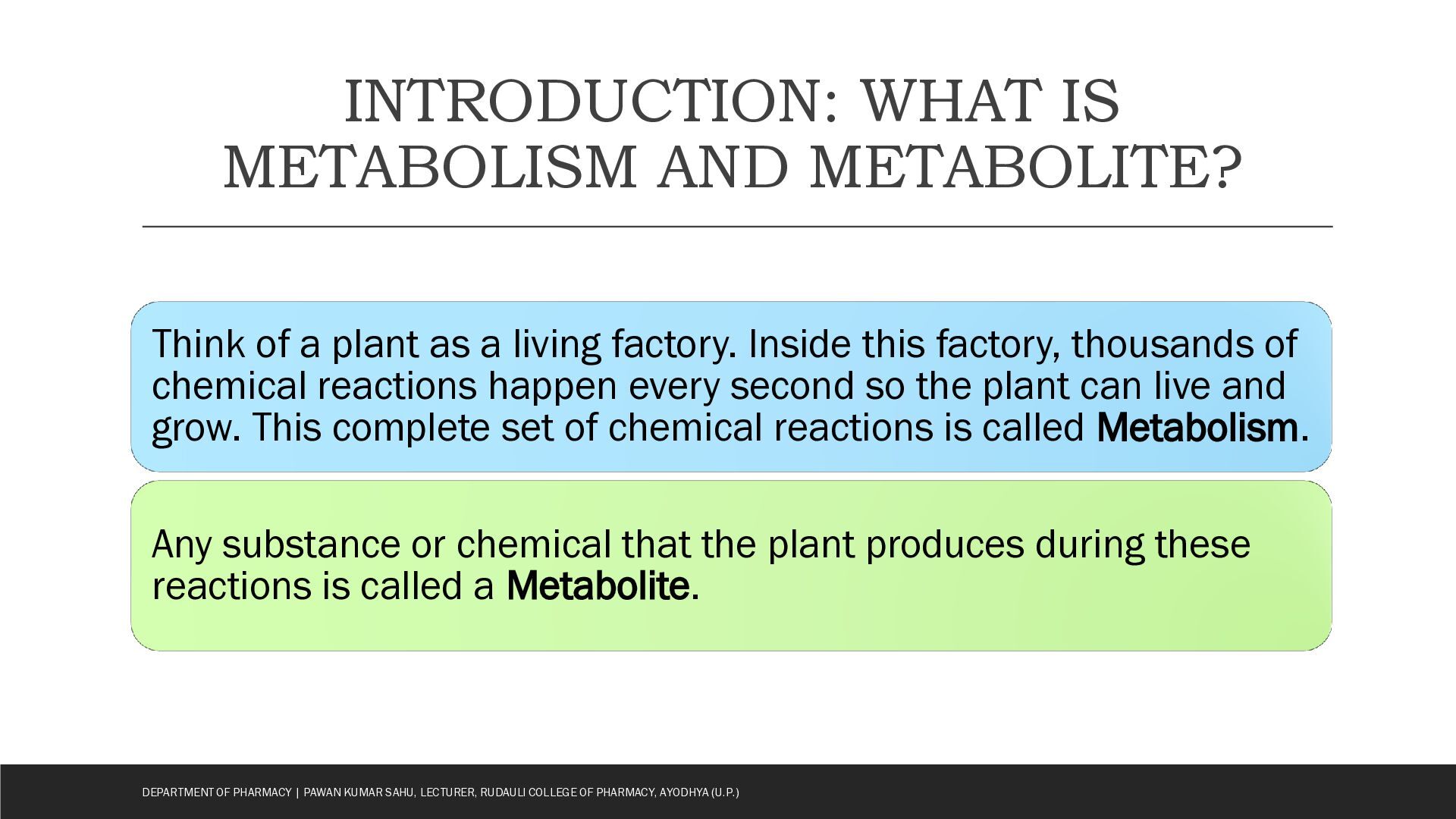
  2. INTRODUCTION: WHAT IS METABOLISM AND METABOLITE? Think of a plant
    as a living factory. Inside this factory, thousands of chemical reactions happen every second so the plant can live and grow. This complete set of chemical reactions is called Metabolism. Any substance or chemical that the plant produces during these reactions is called a Metabolite. DEPARTMENT OF PHARMACY | PAWAN KUMAR SAHU, LECTURER, RUDAULI COLLEGE OF PHARMACY, AYODHYA (U.P.)
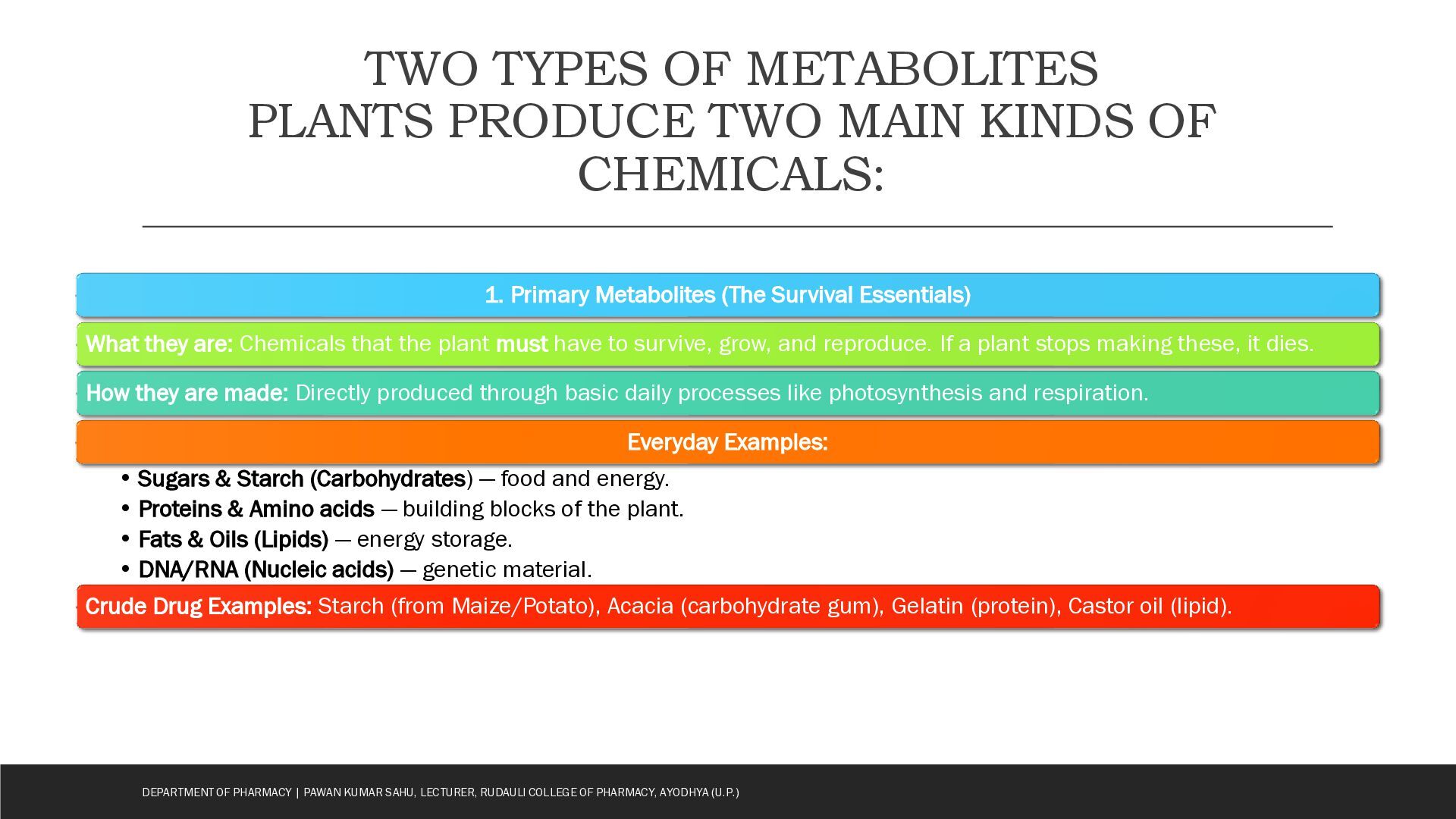
  3. TWO TYPES OF METABOLITES PLANTS PRODUCE TWO MAIN KINDS OF

    CHEMICALS: 1. Primary Metabolites (The Survival Essentials) What they are: Chemicals that the plant must have to survive, grow, and reproduce. If a plant stops making these, it dies. How they are made: Directly produced through basic daily processes like photosynthesis and respiration. Everyday Examples: • Sugars & Starch (Carbohydrates) — food and energy. • Proteins & Amino acids — building blocks of the plant. • Fats & Oils (Lipids) — energy storage. • DNA/RNA (Nucleic acids) — genetic material. Crude Drug Examples: Starch (from Maize/Potato), Acacia (carbohydrate gum), Gelatin (protein), Castor oil (lipid). DEPARTMENT OF PHARMACY | PAWAN KUMAR SAHU, LECTURER, RUDAULI COLLEGE OF PHARMACY, AYODHYA (U.P.)
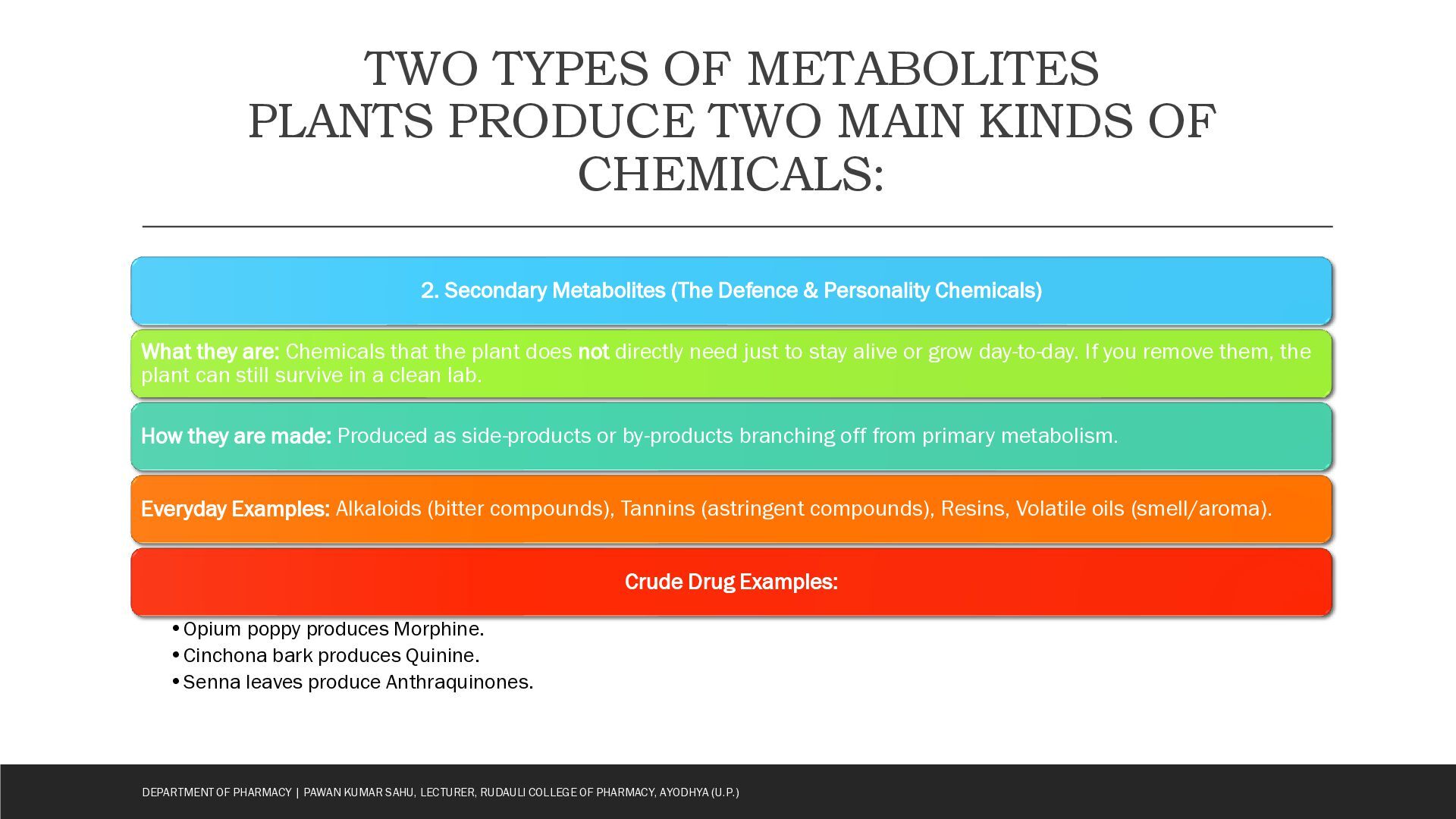
  4. TWO TYPES OF METABOLITES PLANTS PRODUCE TWO MAIN KINDS OF

    CHEMICALS: 2. Secondary Metabolites (The Defence & Personality Chemicals) What they are: Chemicals that the plant does not directly need just to stay alive or grow day-to-day. If you remove them, the plant can still survive in a clean lab. How they are made: Produced as side-products or by-products branching off from primary metabolism. Everyday Examples: Alkaloids (bitter compounds), Tannins (astringent compounds), Resins, Volatile oils (smell/aroma). Crude Drug Examples: •Opium poppy produces Morphine. •Cinchona bark produces Quinine. •Senna leaves produce Anthraquinones. DEPARTMENT OF PHARMACY | PAWAN KUMAR SAHU, LECTURER, RUDAULI COLLEGE OF PHARMACY, AYODHYA (U.P.)
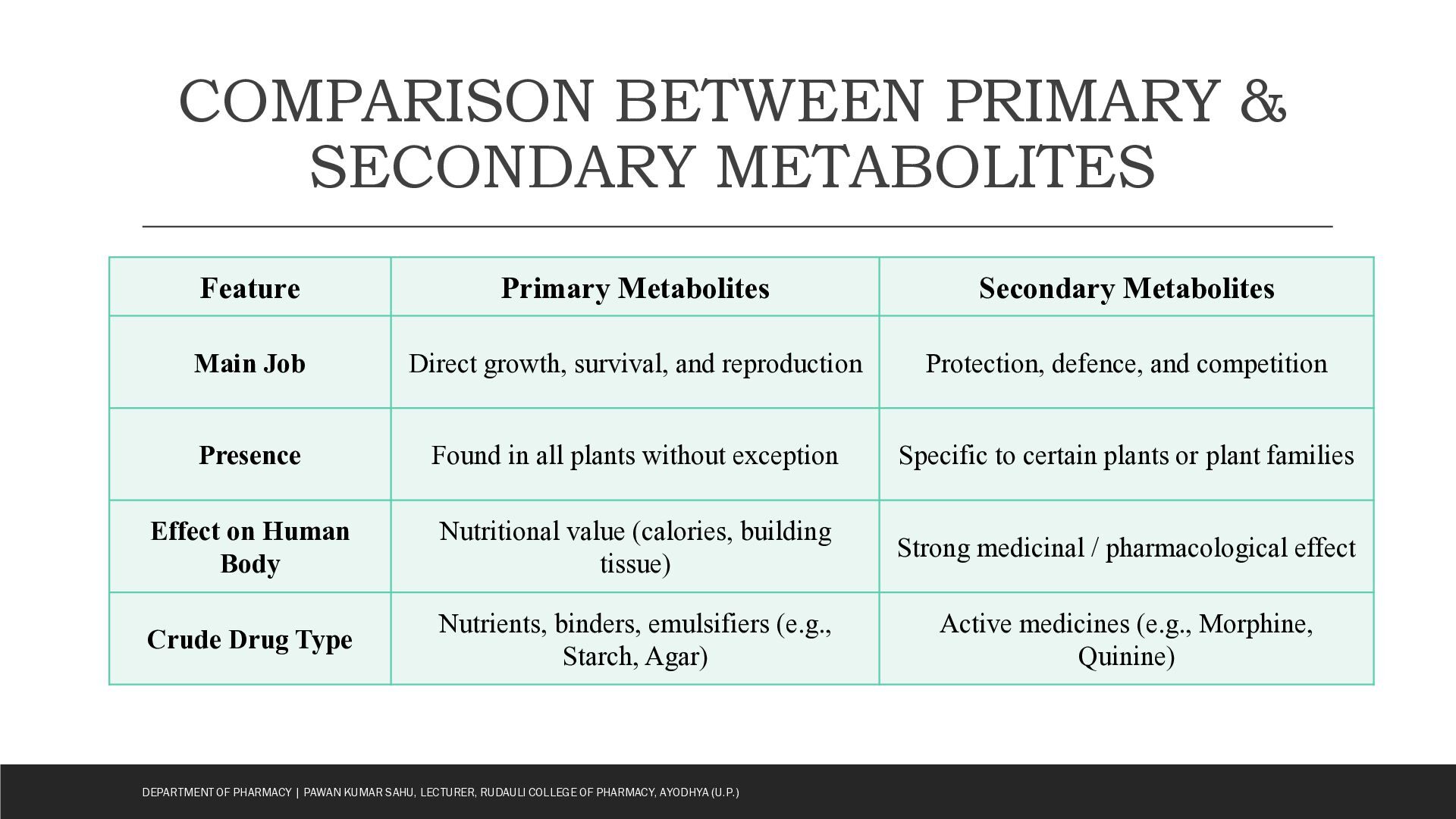
  5. COMPARISON BETWEEN PRIMARY & SECONDARY METABOLITES Feature Primary Metabolites Secondary

    Metabolites Main Job Direct growth, survival, and reproduction Protection, defence, and competition Presence Found in all plants without exception Specific to certain plants or plant families Effect on Human Body Nutritional value (calories, building tissue) Strong medicinal / pharmacological effect Crude Drug Type Nutrients, binders, emulsifiers (e.g., Starch, Agar) Active medicines (e.g., Morphine, Quinine) DEPARTMENT OF PHARMACY | PAWAN KUMAR SAHU, LECTURER, RUDAULI COLLEGE OF PHARMACY, AYODHYA (U.P.)
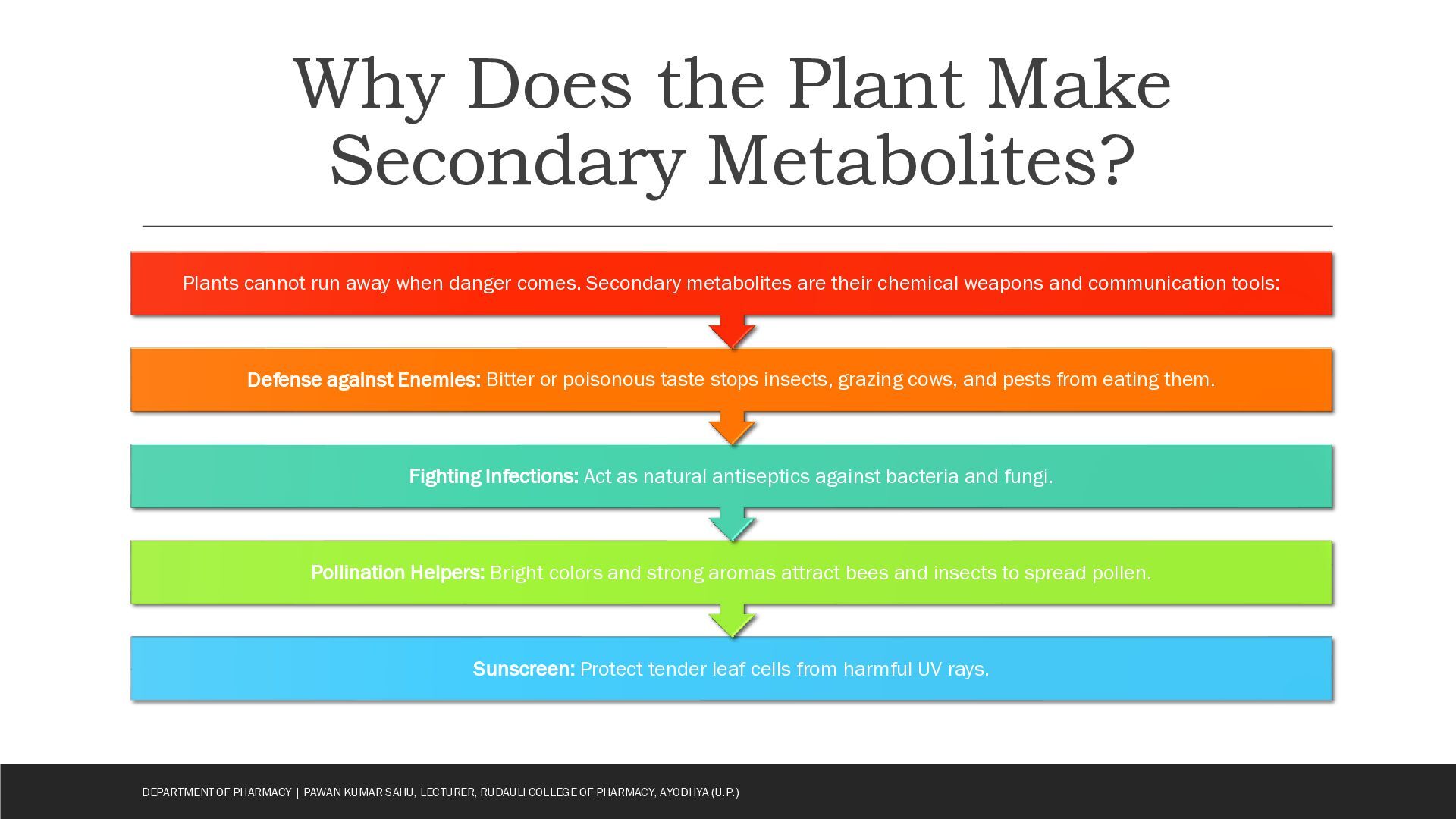
  6. Why Does the Plant Make Secondary Metabolites? Plants cannot run

    away when danger comes. Secondary metabolites are their chemical weapons and communication tools: Defense against Enemies: Bitter or poisonous taste stops insects, grazing cows, and pests from eating them. Fighting Infections: Act as natural antiseptics against bacteria and fungi. Pollination Helpers: Bright colors and strong aromas attract bees and insects to spread pollen. Sunscreen: Protect tender leaf cells from harmful UV rays. DEPARTMENT OF PHARMACY | PAWAN KUMAR SAHU, LECTURER, RUDAULI COLLEGE OF PHARMACY, AYODHYA (U.P.)
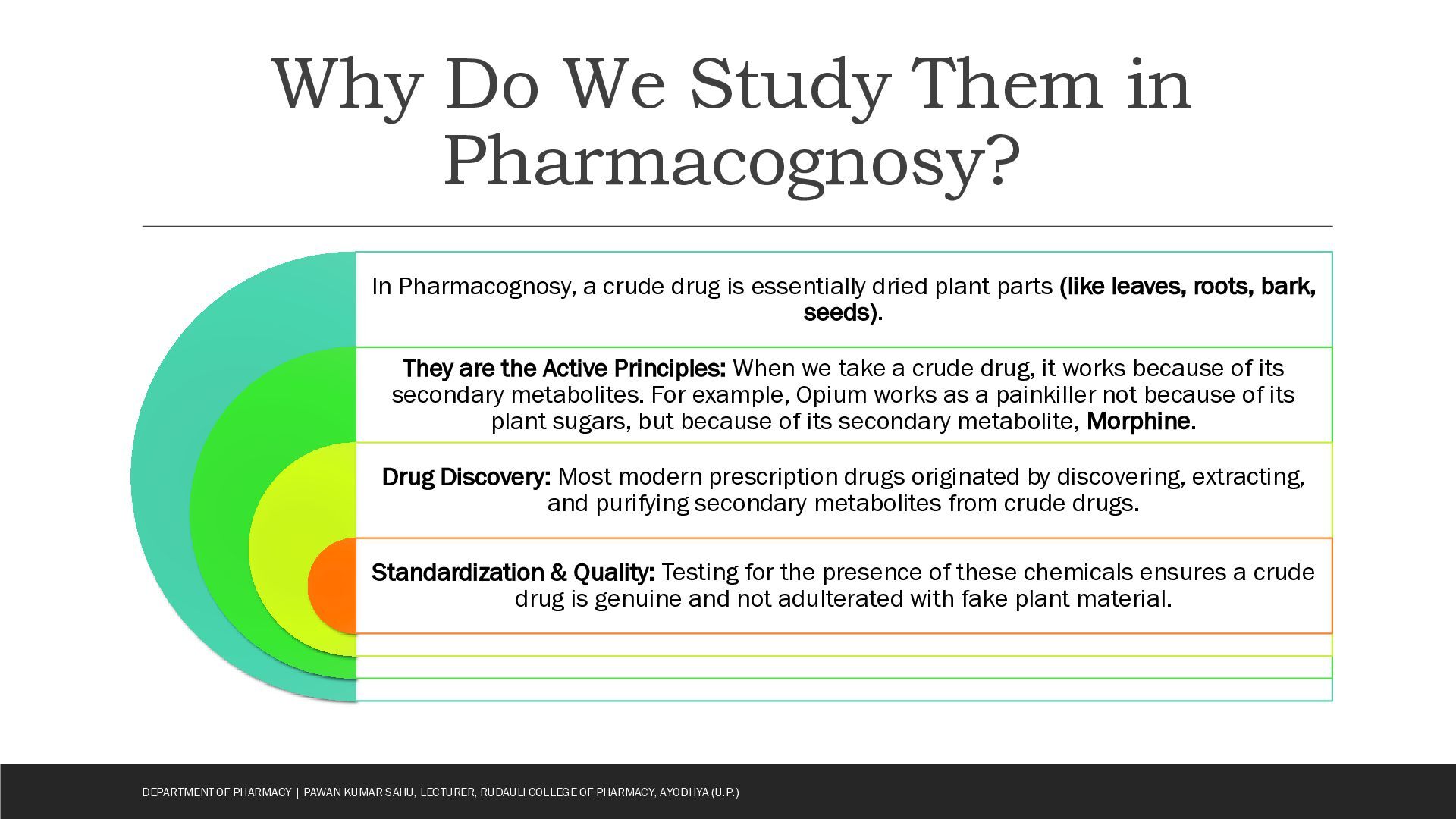
  7. Why Do We Study Them in Pharmacognosy? In Pharmacognosy, a

    crude drug is essentially dried plant parts (like leaves, roots, bark, seeds). They are the Active Principles: When we take a crude drug, it works because of its secondary metabolites. For example, Opium works as a painkiller not because of its plant sugars, but because of its secondary metabolite, Morphine. Drug Discovery: Most modern prescription drugs originated by discovering, extracting, and purifying secondary metabolites from crude drugs. Standardization & Quality: Testing for the presence of these chemicals ensures a crude drug is genuine and not adulterated with fake plant material. DEPARTMENT OF PHARMACY | PAWAN KUMAR SAHU, LECTURER, RUDAULI COLLEGE OF PHARMACY, AYODHYA (U.P.)
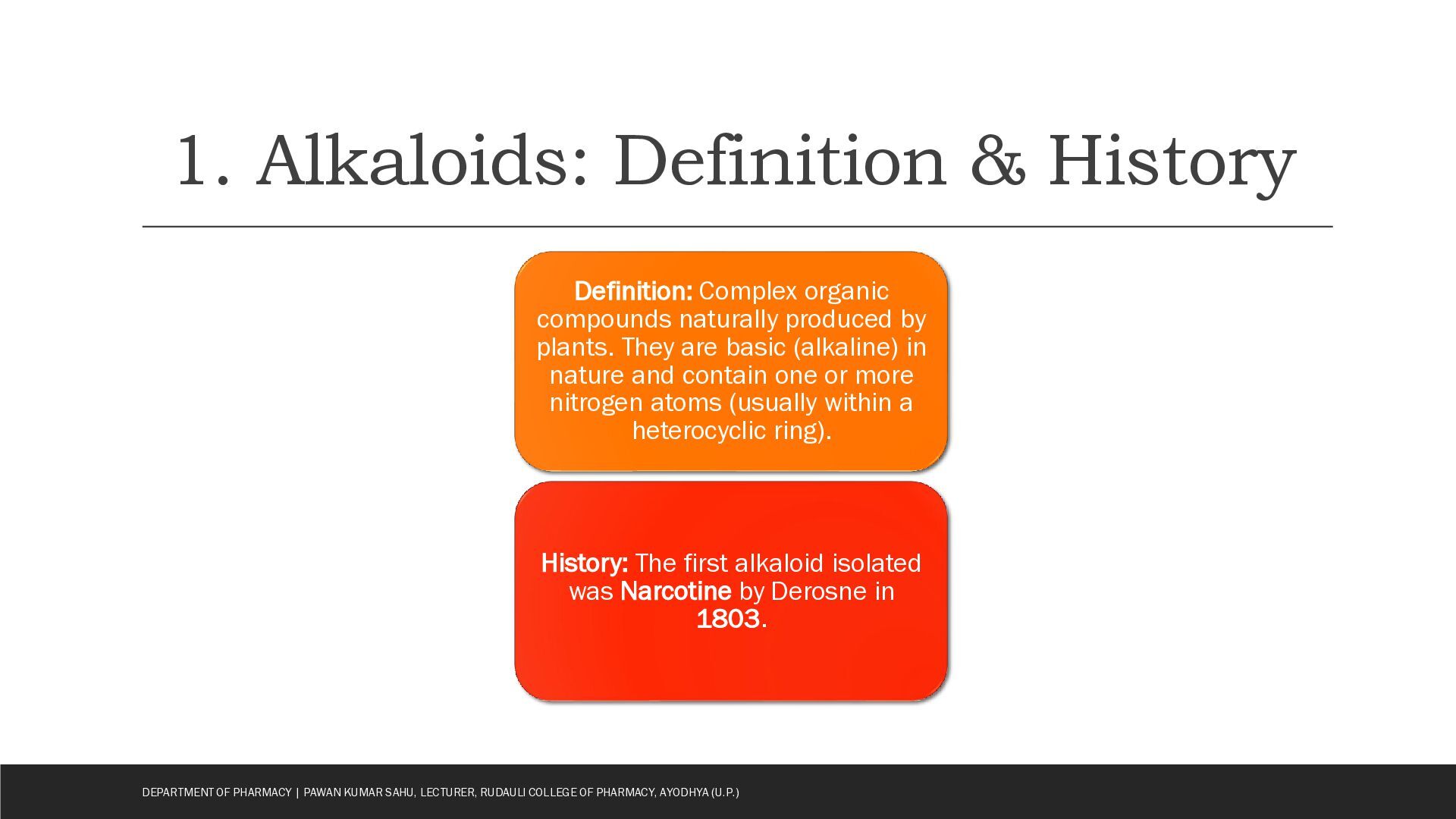
  8. 1. Alkaloids: Definition & History Definition: Complex organic compounds naturally

    produced by plants. They are basic (alkaline) in nature and contain one or more nitrogen atoms (usually within a heterocyclic ring). History: The first alkaloid isolated was Narcotine by Derosne in 1803. DEPARTMENT OF PHARMACY | PAWAN KUMAR SAHU, LECTURER, RUDAULI COLLEGE OF PHARMACY, AYODHYA (U.P.)
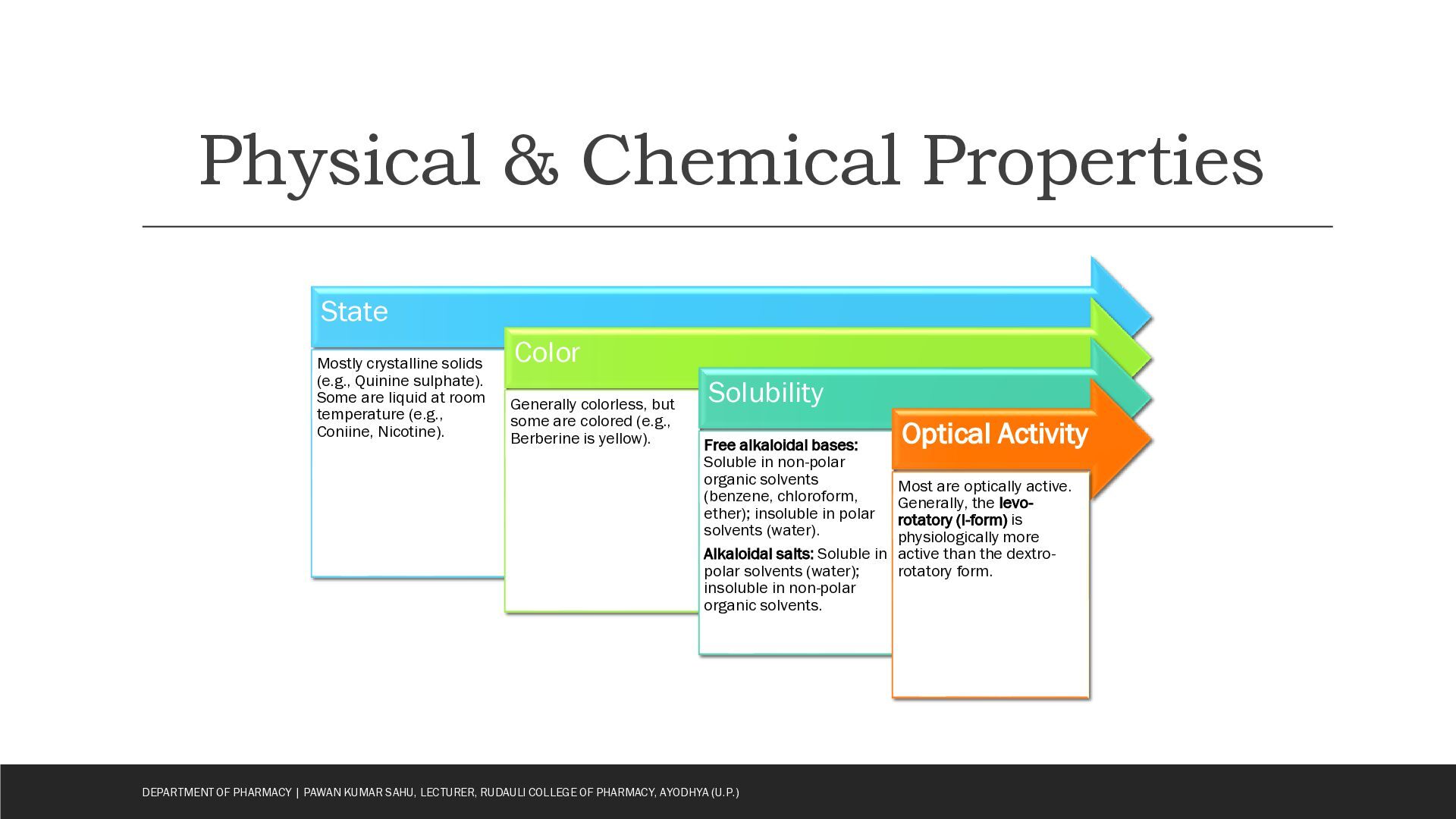
  9. Physical & Chemical Properties State Mostly crystalline solids (e.g., Quinine

    sulphate). Some are liquid at room temperature (e.g., Coniine, Nicotine). Color Generally colorless, but some are colored (e.g., Berberine is yellow). Solubility Optical Activity Free alkaloidal bases: Soluble in non-polar organic solvents Most are optically active. (benzene, chloroform, Generally, the levoether); insoluble in polar rotatory (l-form) is solvents (water). physiologically more Alkaloidal salts: Soluble in active than the dextropolar solvents (water); rotatory form. insoluble in non-polar organic solvents. DEPARTMENT OF PHARMACY | PAWAN KUMAR SAHU, LECTURER, RUDAULI COLLEGE OF PHARMACY, AYODHYA (U.P.)
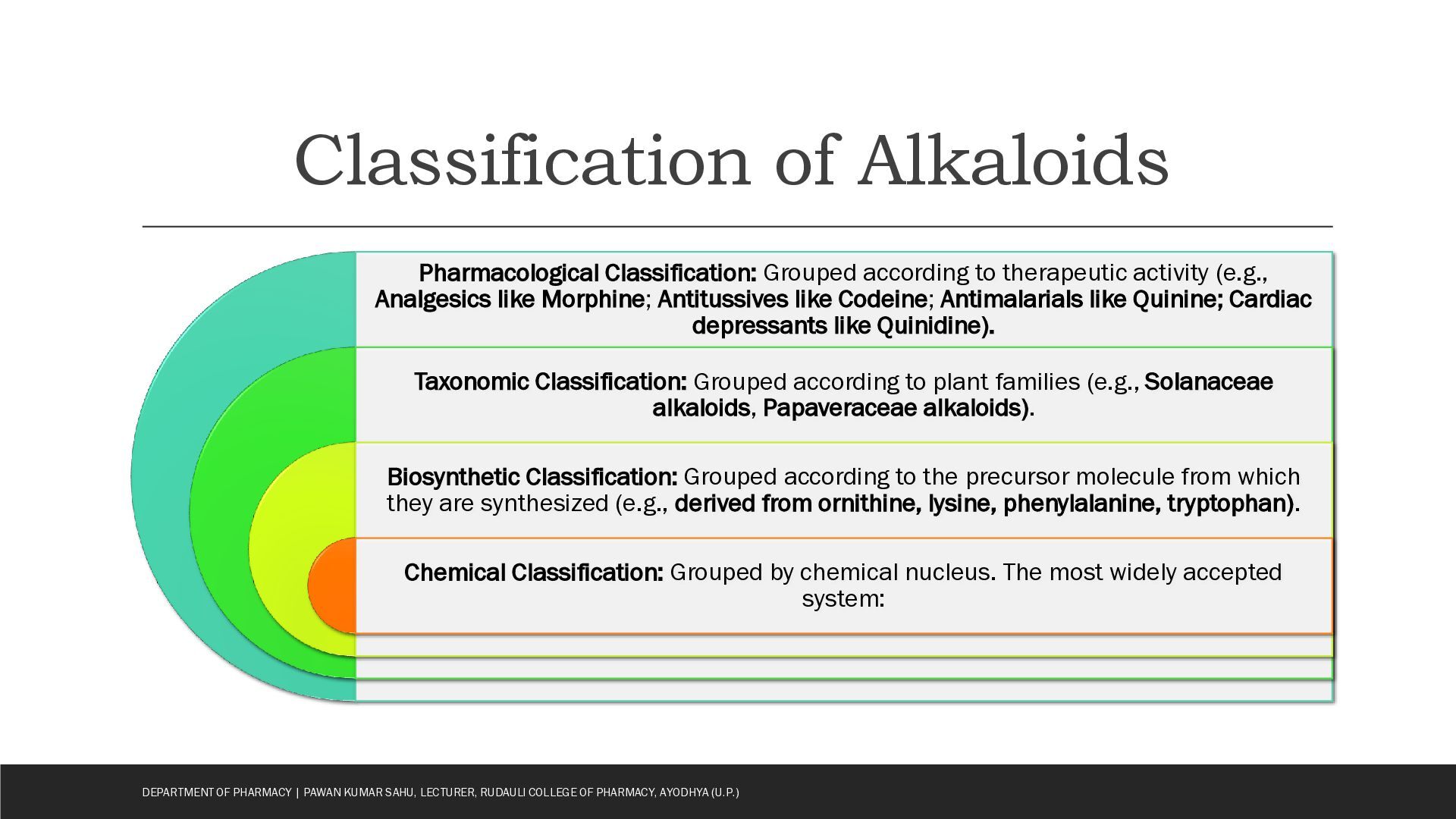
  10. Classification of Alkaloids Pharmacological Classification: Grouped according to therapeutic activity

    (e.g., Analgesics like Morphine; Antitussives like Codeine; Antimalarials like Quinine; Cardiac depressants like Quinidine). Taxonomic Classification: Grouped according to plant families (e.g., Solanaceae alkaloids, Papaveraceae alkaloids). Biosynthetic Classification: Grouped according to the precursor molecule from which they are synthesized (e.g., derived from ornithine, lysine, phenylalanine, tryptophan). Chemical Classification: Grouped by chemical nucleus. The most widely accepted system: DEPARTMENT OF PHARMACY | PAWAN KUMAR SAHU, LECTURER, RUDAULI COLLEGE OF PHARMACY, AYODHYA (U.P.)
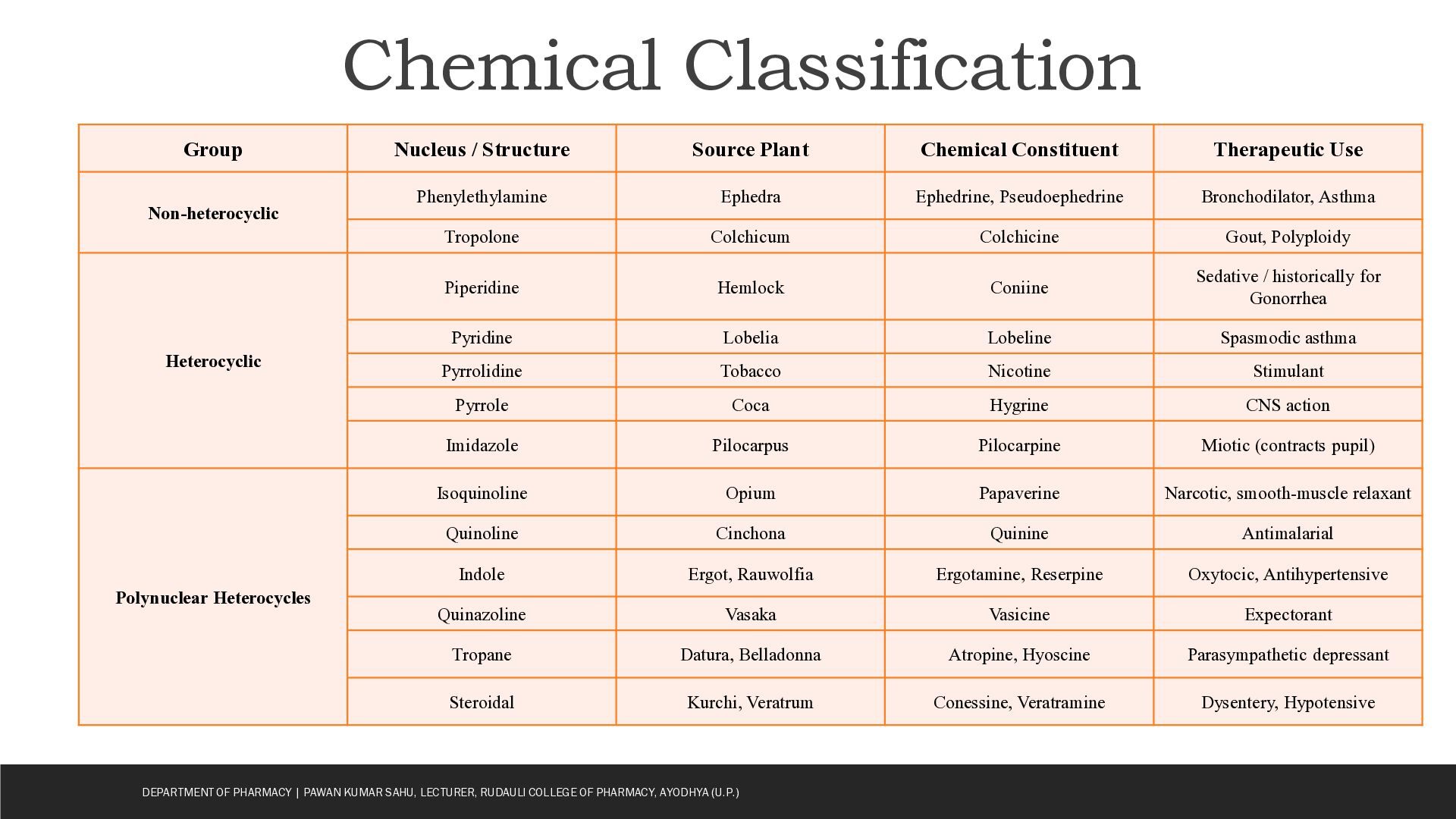
  11. Chemical Classification Group Non-heterocyclic Heterocyclic Polynuclear Heterocycles Nucleus / Structure

    Source Plant Chemical Constituent Therapeutic Use Phenylethylamine Ephedra Ephedrine, Pseudoephedrine Bronchodilator, Asthma Tropolone Colchicum Colchicine Gout, Polyploidy Piperidine Hemlock Coniine Sedative / historically for Gonorrhea Pyridine Lobelia Lobeline Spasmodic asthma Pyrrolidine Tobacco Nicotine Stimulant Pyrrole Coca Hygrine CNS action Imidazole Pilocarpus Pilocarpine Miotic (contracts pupil) Isoquinoline Opium Papaverine Narcotic, smooth-muscle relaxant Quinoline Cinchona Quinine Antimalarial Indole Ergot, Rauwolfia Ergotamine, Reserpine Oxytocic, Antihypertensive Quinazoline Vasaka Vasicine Expectorant Tropane Datura, Belladonna Atropine, Hyoscine Parasympathetic depressant Steroidal Kurchi, Veratrum Conessine, Veratramine Dysentery, Hypotensive DEPARTMENT OF PHARMACY | PAWAN KUMAR SAHU, LECTURER, RUDAULI COLLEGE OF PHARMACY, AYODHYA (U.P.)
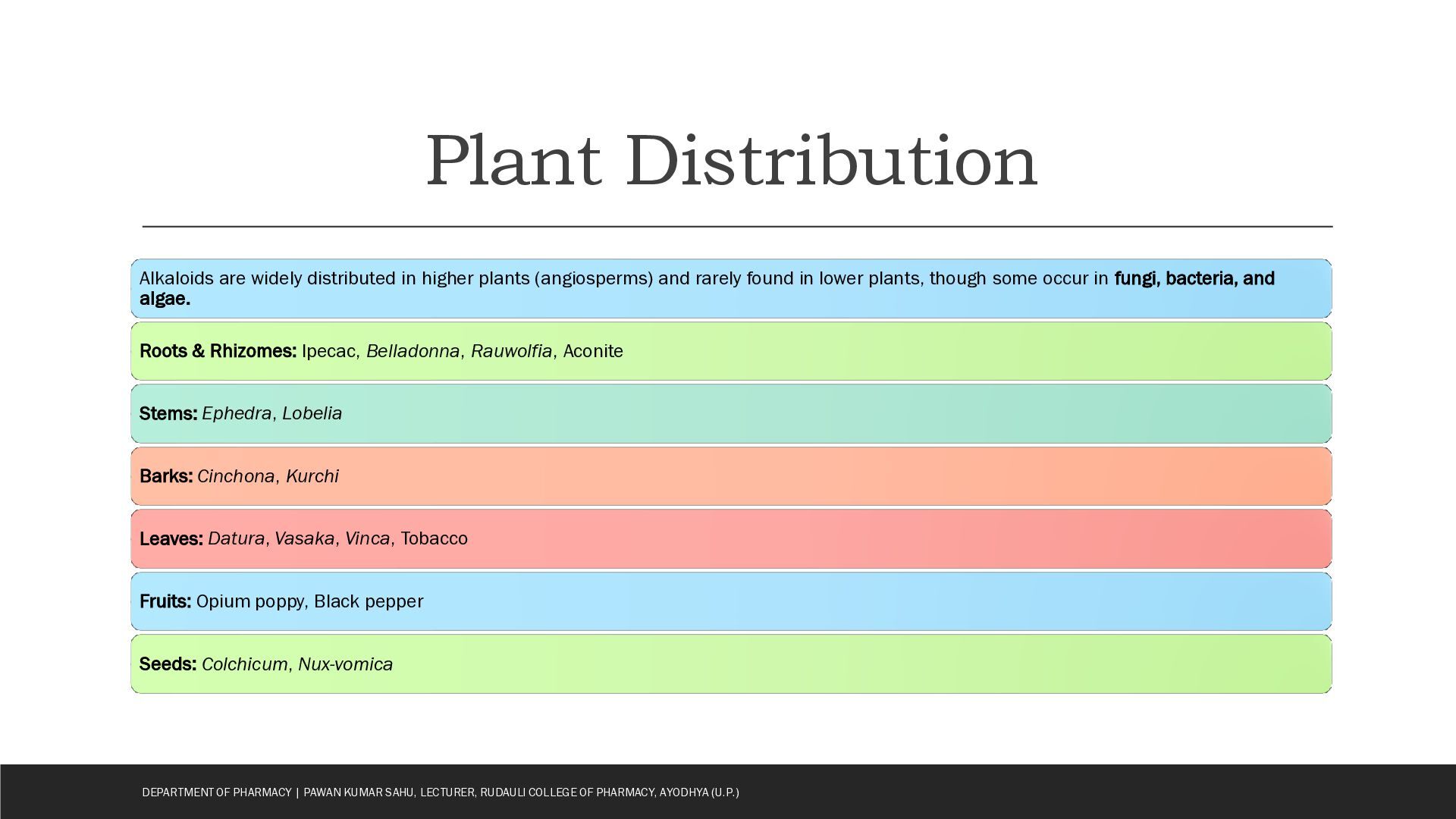
  12. Plant Distribution Alkaloids are widely distributed in higher plants (angiosperms)

    and rarely found in lower plants, though some occur in fungi, bacteria, and algae. Roots & Rhizomes: Ipecac, Belladonna, Rauwolfia, Aconite Stems: Ephedra, Lobelia Barks: Cinchona, Kurchi Leaves: Datura, Vasaka, Vinca, Tobacco Fruits: Opium poppy, Black pepper Seeds: Colchicum, Nux-vomica DEPARTMENT OF PHARMACY | PAWAN KUMAR SAHU, LECTURER, RUDAULI COLLEGE OF PHARMACY, AYODHYA (U.P.)
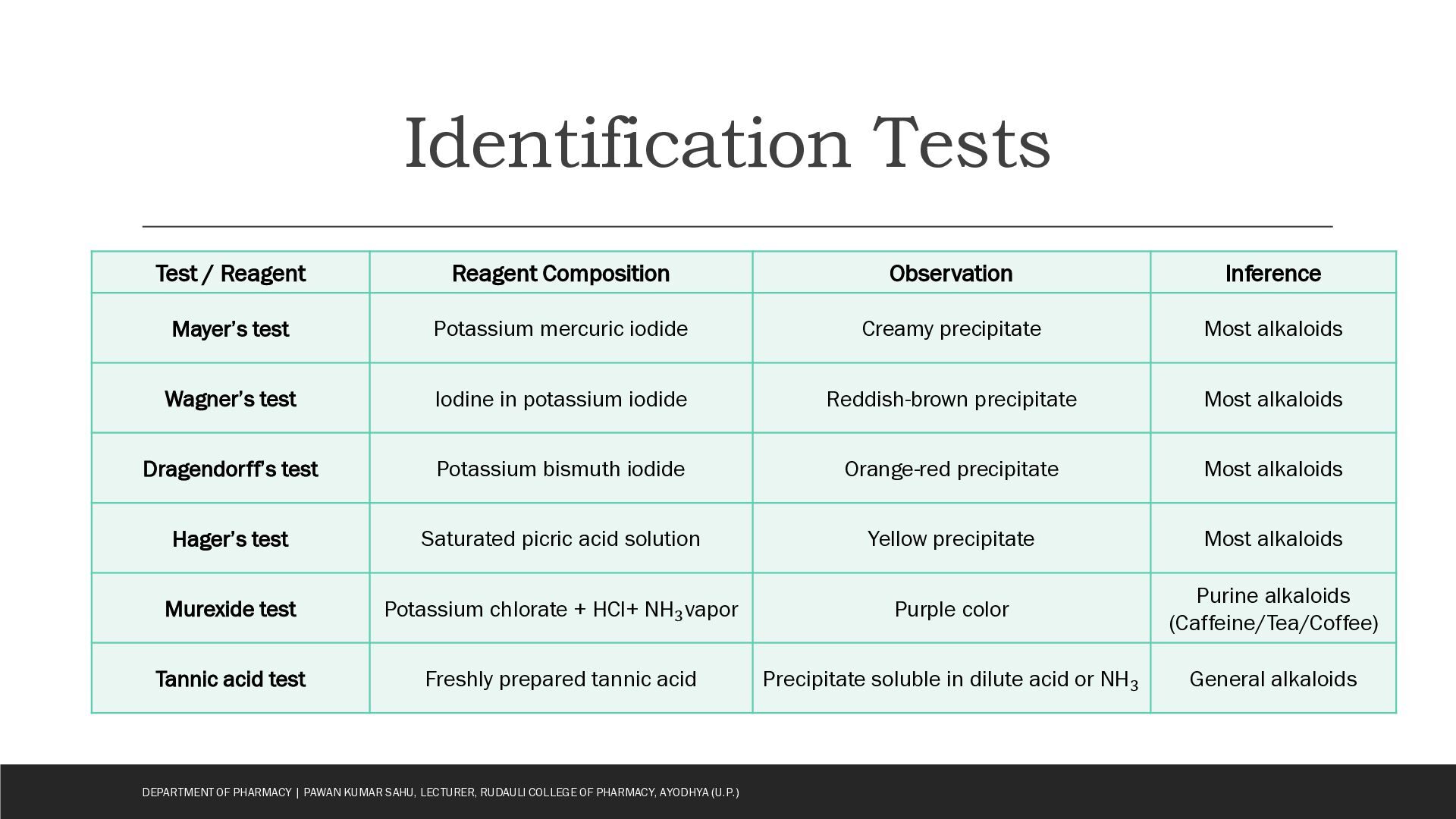
  13. Identification Tests Test / Reagent Reagent Composition Observation Inference Mayer’s

    test Potassium mercuric iodide Creamy precipitate Most alkaloids Wagner’s test Iodine in potassium iodide Reddish-brown precipitate Most alkaloids Dragendorff’s test Potassium bismuth iodide Orange-red precipitate Most alkaloids Hager’s test Saturated picric acid solution Yellow precipitate Most alkaloids Murexide test Potassium chlorate + HCl+ NH3 vapor Purple color Purine alkaloids (Caffeine/Tea/Coffee) Tannic acid test Freshly prepared tannic acid Precipitate soluble in dilute acid or NH3 General alkaloids DEPARTMENT OF PHARMACY | PAWAN KUMAR SAHU, LECTURER, RUDAULI COLLEGE OF PHARMACY, AYODHYA (U.P.)
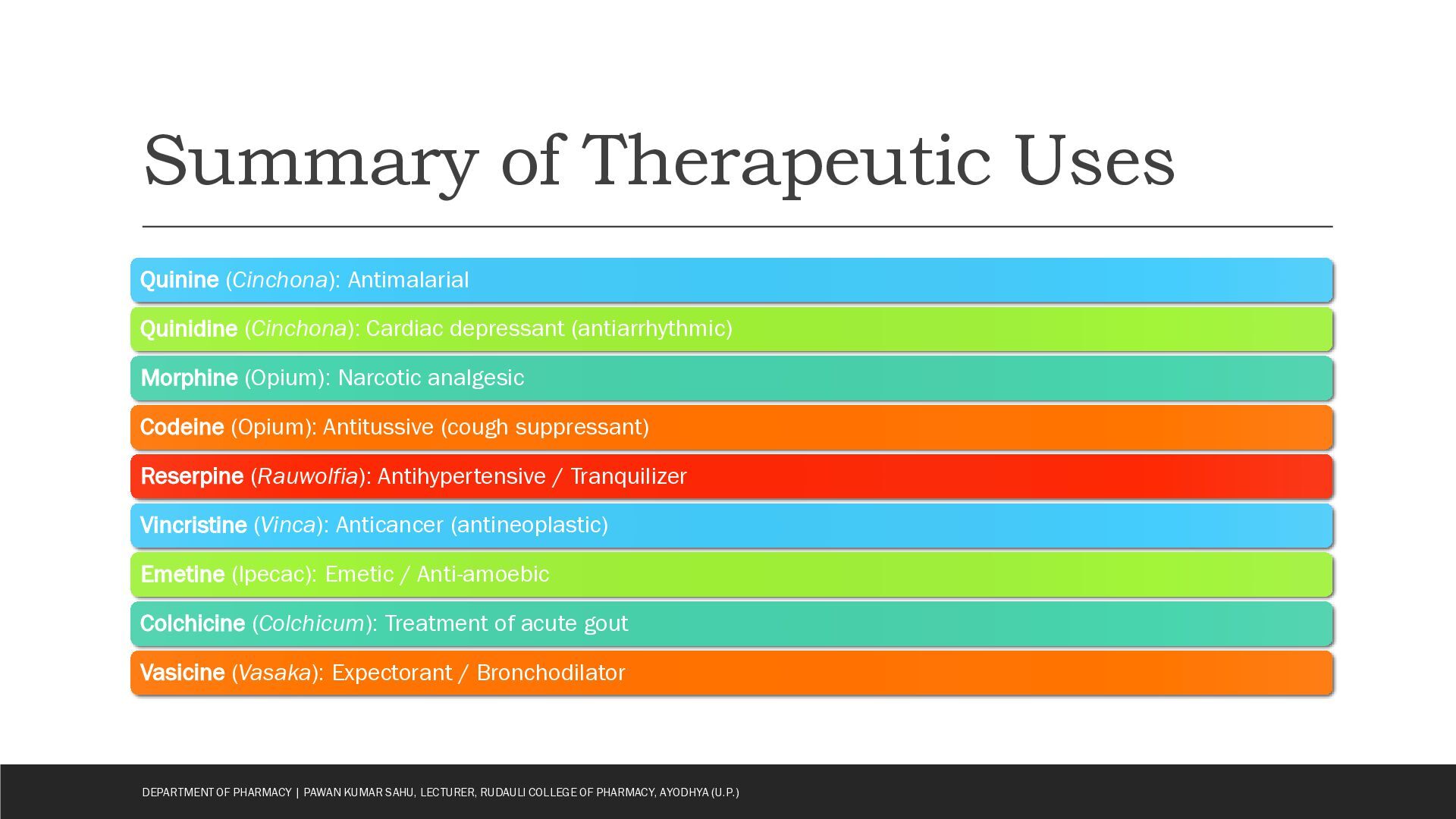
  14. Summary of Therapeutic Uses Quinine (Cinchona): Antimalarial Quinidine (Cinchona): Cardiac

    depressant (antiarrhythmic) Morphine (Opium): Narcotic analgesic Codeine (Opium): Antitussive (cough suppressant) Reserpine (Rauwolfia): Antihypertensive / Tranquilizer Vincristine (Vinca): Anticancer (antineoplastic) Emetine (Ipecac): Emetic / Anti-amoebic Colchicine (Colchicum): Treatment of acute gout Vasicine (Vasaka): Expectorant / Bronchodilator DEPARTMENT OF PHARMACY | PAWAN KUMAR SAHU, LECTURER, RUDAULI COLLEGE OF PHARMACY, AYODHYA (U.P.)
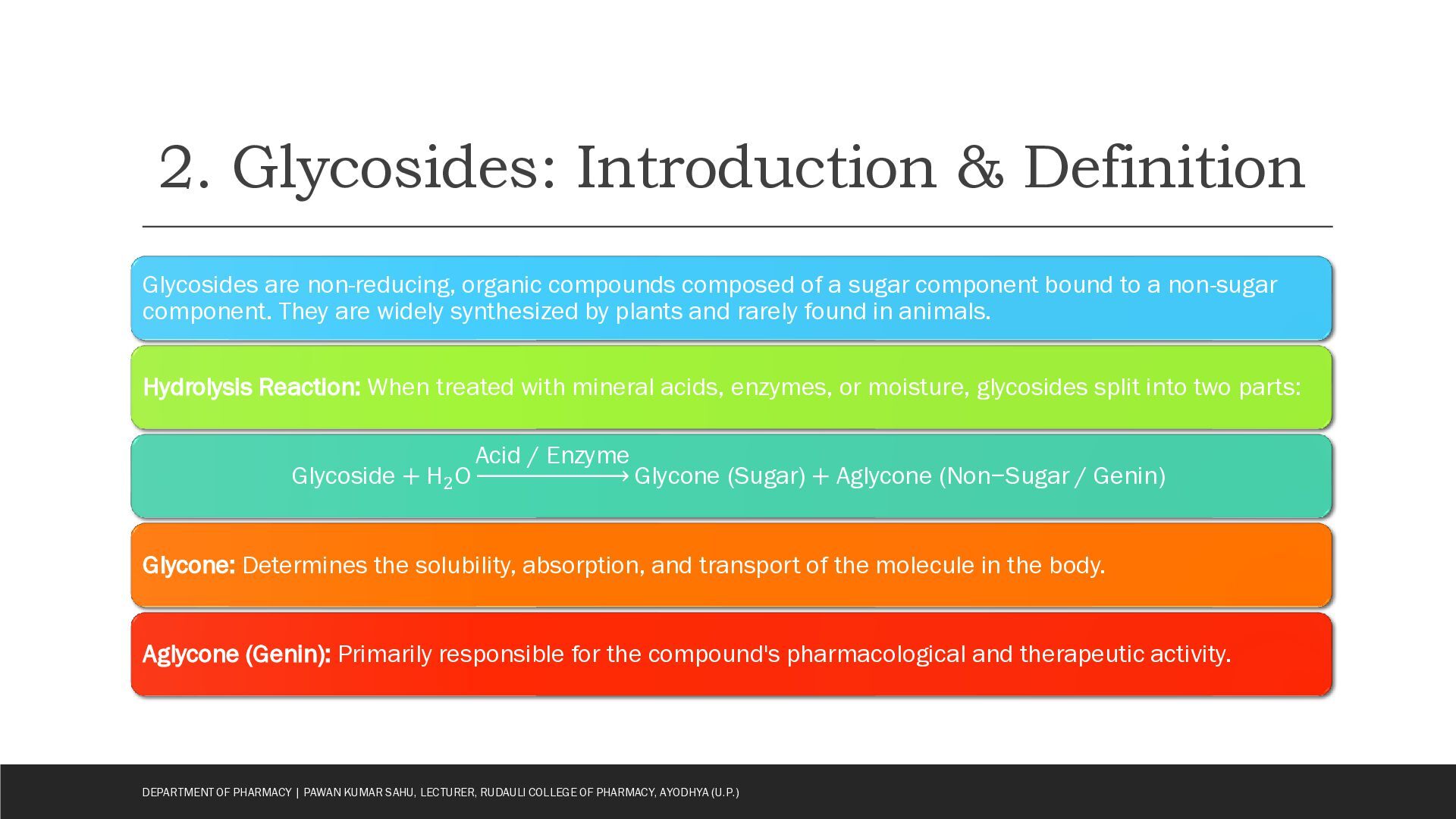
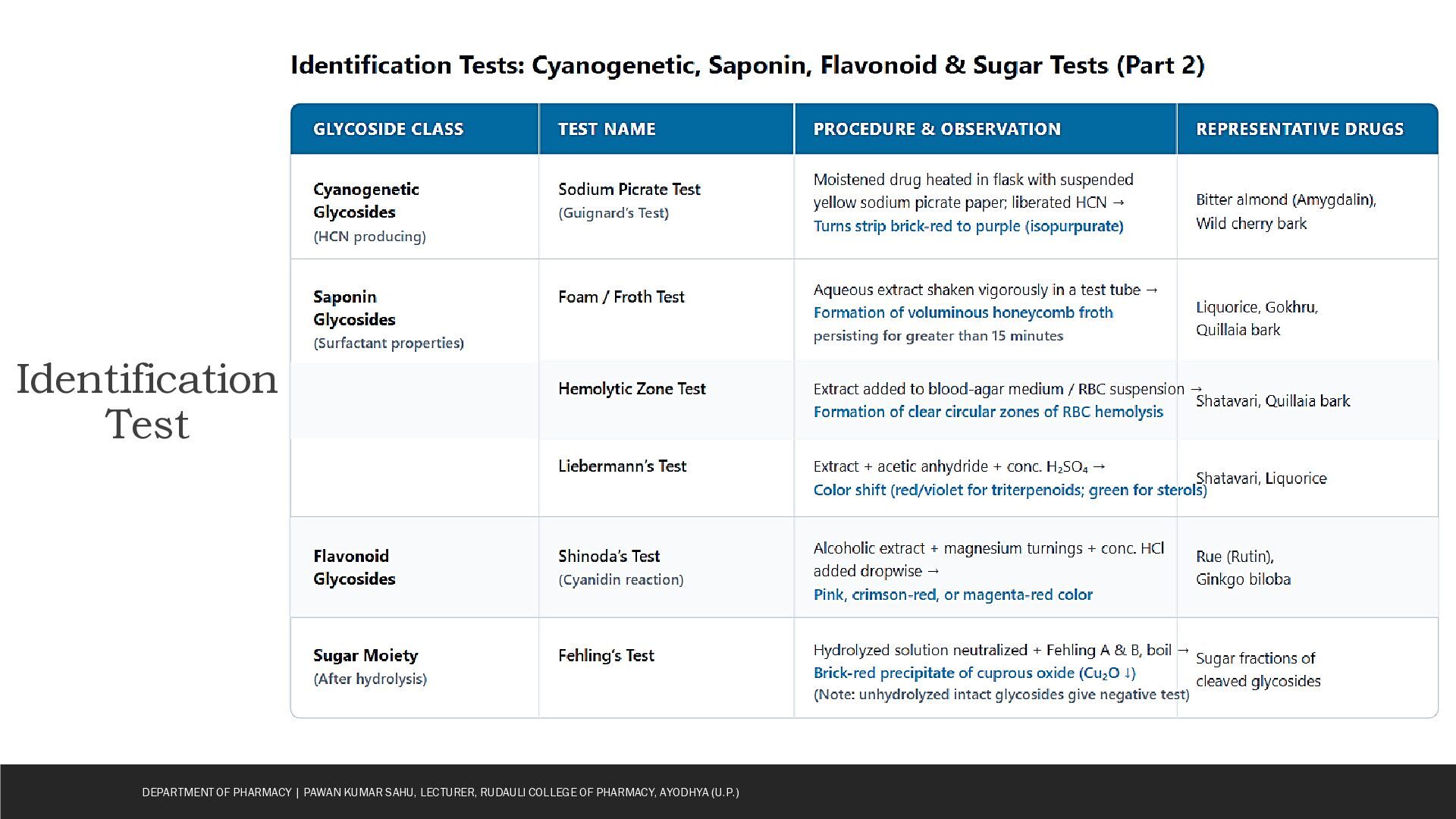
  15. 2. Glycosides: Introduction & Definition Glycosides are non-reducing, organic compounds

    composed of a sugar component bound to a non-sugar component. They are widely synthesized by plants and rarely found in animals. Hydrolysis Reaction: When treated with mineral acids, enzymes, or moisture, glycosides split into two parts: Glycoside plus H sub 2 , O goes to upper limit □ open paren Acid , over , Enzyme close paren , Glycone (Sugar) plus Aglycone (Non−Sugar / Genin) Glycoside + H2 O Acid / Enzyme Glycone (Sugar) + Aglycone (Non−Sugar / Genin) Glycone: Determines the solubility, absorption, and transport of the molecule in the body. Aglycone (Genin): Primarily responsible for the compound's pharmacological and therapeutic activity. DEPARTMENT OF PHARMACY | PAWAN KUMAR SAHU, LECTURER, RUDAULI COLLEGE OF PHARMACY, AYODHYA (U.P.)
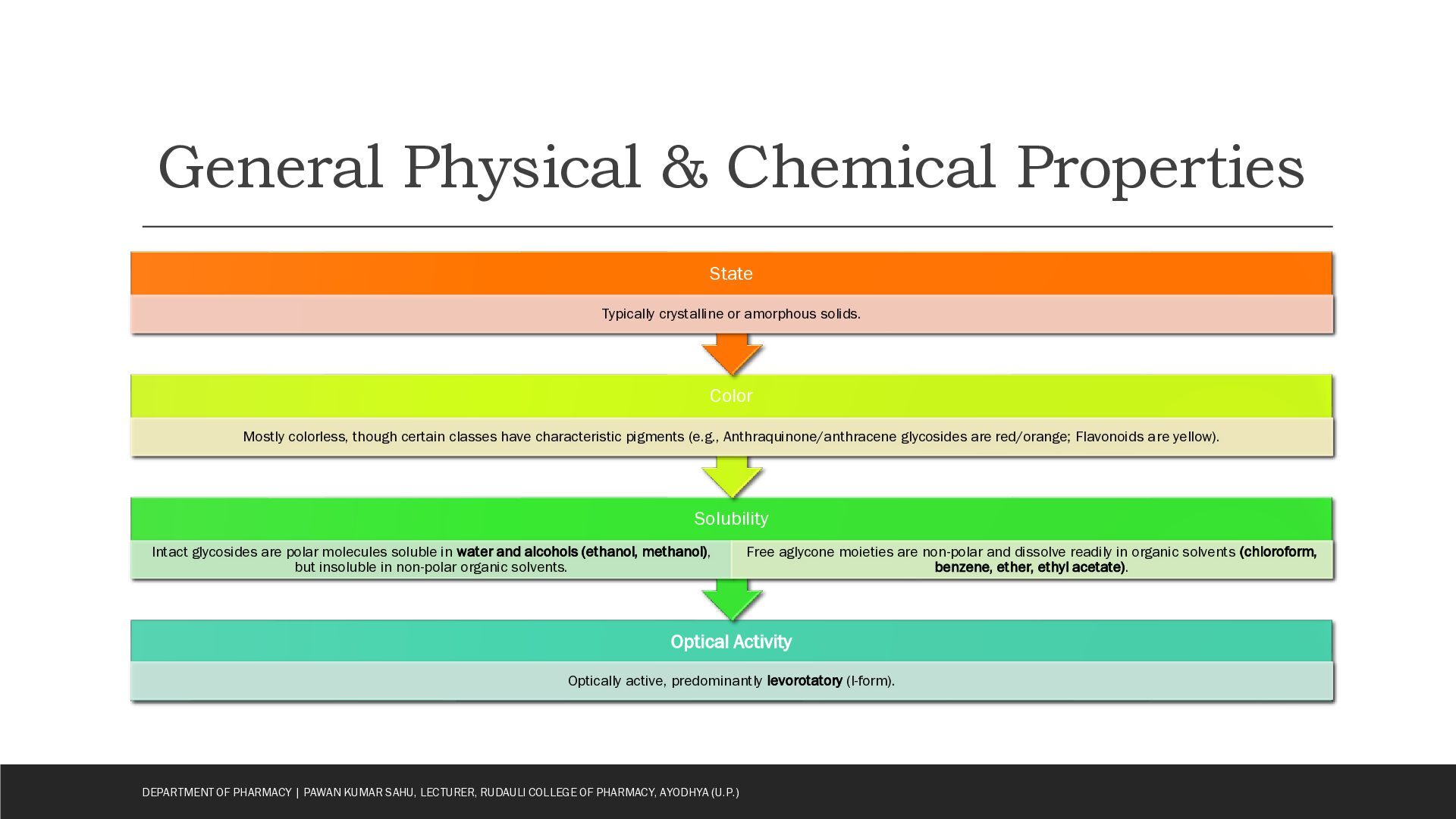
  16. General Physical & Chemical Properties State Typically crystalline or amorphous

    solids. Color Mostly colorless, though certain classes have characteristic pigments (e.g., Anthraquinone/anthracene glycosides are red/orange; Flavonoids are yellow). Solubility Intact glycosides are polar molecules soluble in water and alcohols (ethanol, methanol), but insoluble in non-polar organic solvents. Free aglycone moieties are non-polar and dissolve readily in organic solvents (chloroform, benzene, ether, ethyl acetate). Optical Activity Optically active, predominantly levorotatory (l-form). DEPARTMENT OF PHARMACY | PAWAN KUMAR SAHU, LECTURER, RUDAULI COLLEGE OF PHARMACY, AYODHYA (U.P.)
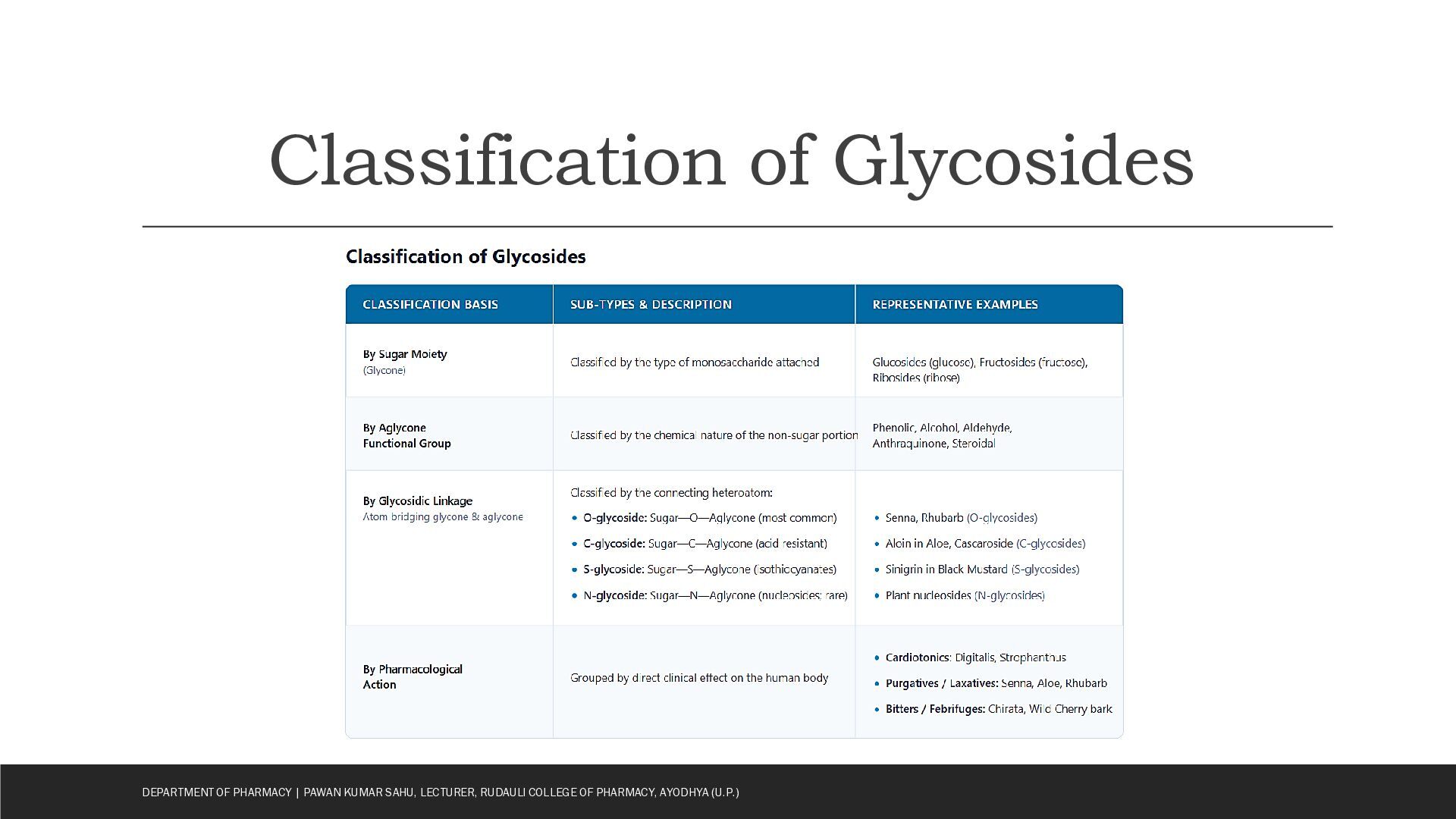
  17. Classification of Glycosides DEPARTMENT OF PHARMACY | PAWAN KUMAR SAHU,

    LECTURER, RUDAULI COLLEGE OF PHARMACY, AYODHYA (U.P.)
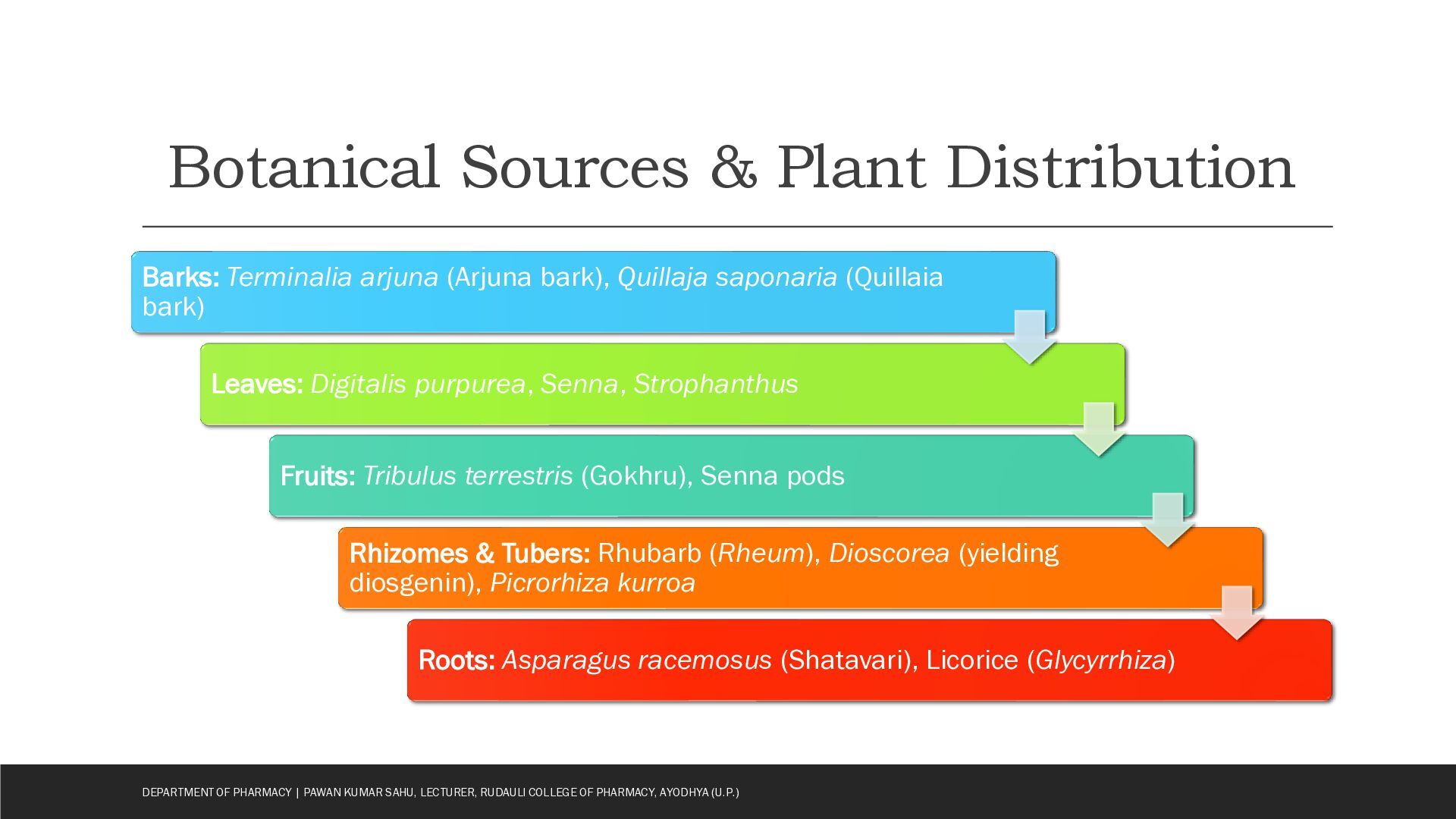
  18. Botanical Sources & Plant Distribution Barks: Terminalia arjuna (Arjuna bark),

    Quillaja saponaria (Quillaia bark) Leaves: Digitalis purpurea, Senna, Strophanthus Fruits: Tribulus terrestris (Gokhru), Senna pods Rhizomes & Tubers: Rhubarb (Rheum), Dioscorea (yielding diosgenin), Picrorhiza kurroa Roots: Asparagus racemosus (Shatavari), Licorice (Glycyrrhiza) DEPARTMENT OF PHARMACY | PAWAN KUMAR SAHU, LECTURER, RUDAULI COLLEGE OF PHARMACY, AYODHYA (U.P.)
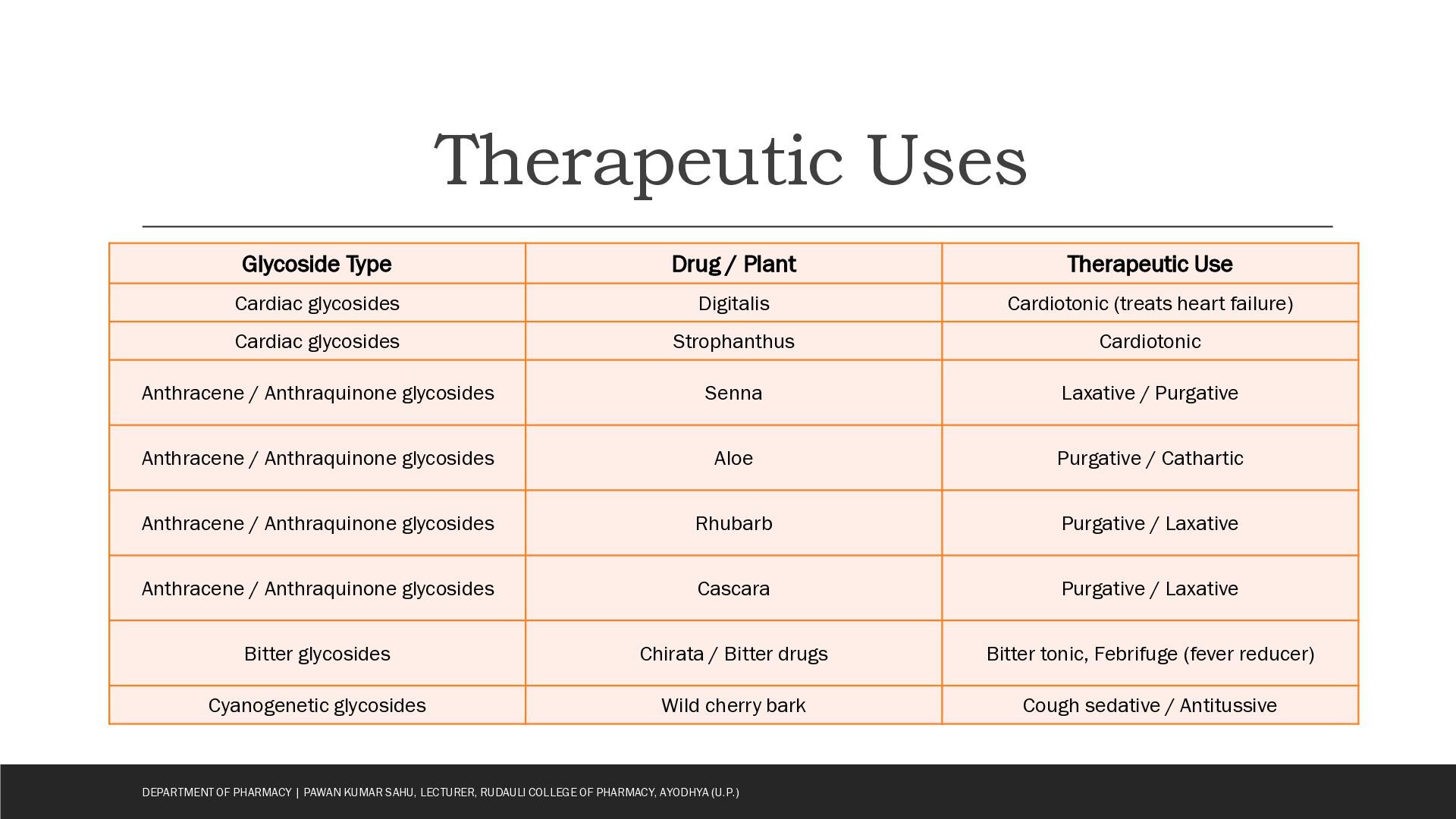
  19. Therapeutic Uses Glycoside Type Drug / Plant Therapeutic Use Cardiac

    glycosides Digitalis Cardiotonic (treats heart failure) Cardiac glycosides Strophanthus Cardiotonic Anthracene / Anthraquinone glycosides Senna Laxative / Purgative Anthracene / Anthraquinone glycosides Aloe Purgative / Cathartic Anthracene / Anthraquinone glycosides Rhubarb Purgative / Laxative Anthracene / Anthraquinone glycosides Cascara Purgative / Laxative Bitter glycosides Chirata / Bitter drugs Bitter tonic, Febrifuge (fever reducer) Cyanogenetic glycosides Wild cherry bark Cough sedative / Antitussive DEPARTMENT OF PHARMACY | PAWAN KUMAR SAHU, LECTURER, RUDAULI COLLEGE OF PHARMACY, AYODHYA (U.P.)
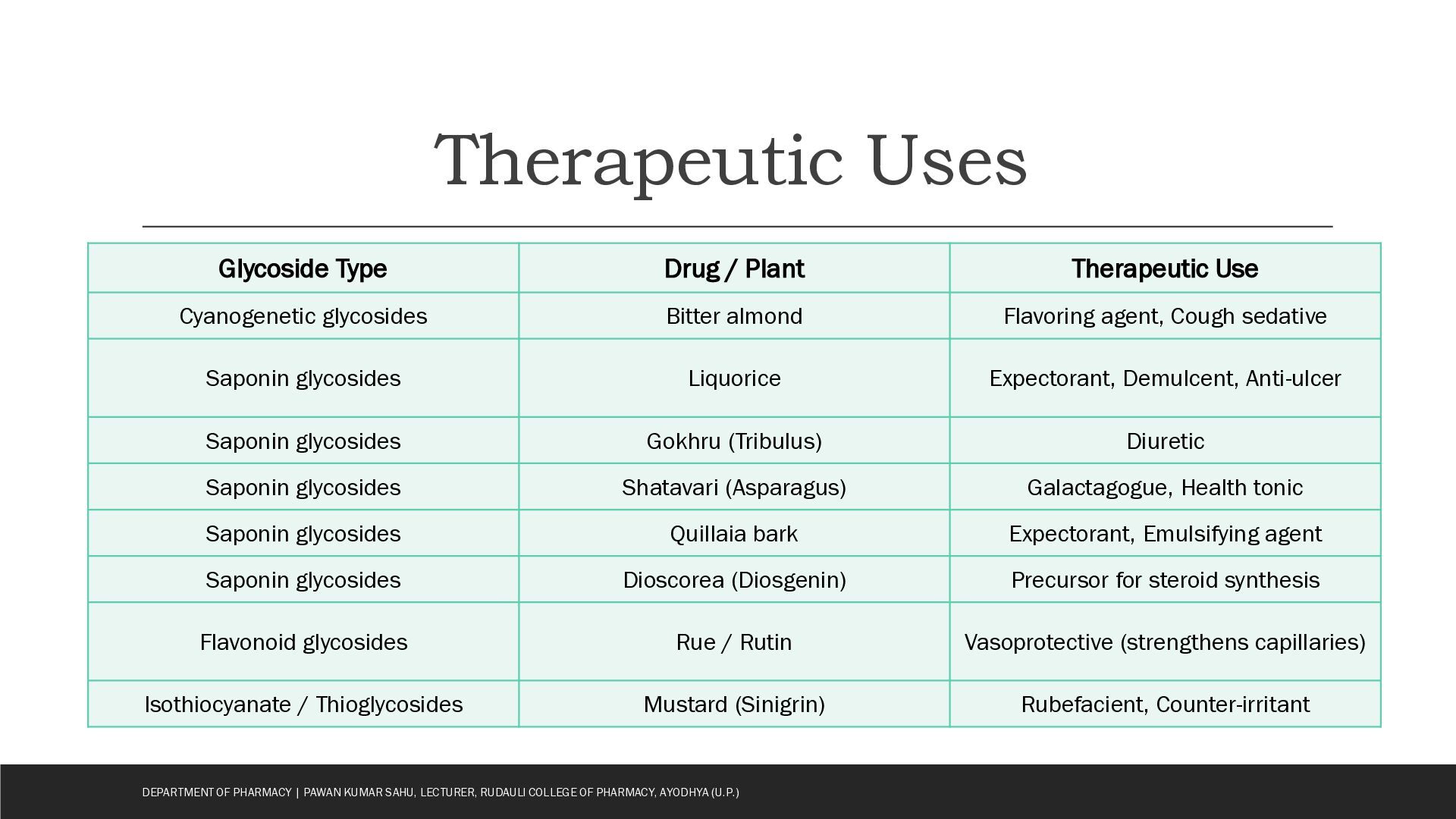
  20. Therapeutic Uses Glycoside Type Drug / Plant Therapeutic Use Cyanogenetic

    glycosides Bitter almond Flavoring agent, Cough sedative Saponin glycosides Liquorice Expectorant, Demulcent, Anti-ulcer Saponin glycosides Gokhru (Tribulus) Diuretic Saponin glycosides Shatavari (Asparagus) Galactagogue, Health tonic Saponin glycosides Quillaia bark Expectorant, Emulsifying agent Saponin glycosides Dioscorea (Diosgenin) Precursor for steroid synthesis Flavonoid glycosides Rue / Rutin Vasoprotective (strengthens capillaries) Isothiocyanate / Thioglycosides Mustard (Sinigrin) Rubefacient, Counter-irritant DEPARTMENT OF PHARMACY | PAWAN KUMAR SAHU, LECTURER, RUDAULI COLLEGE OF PHARMACY, AYODHYA (U.P.)
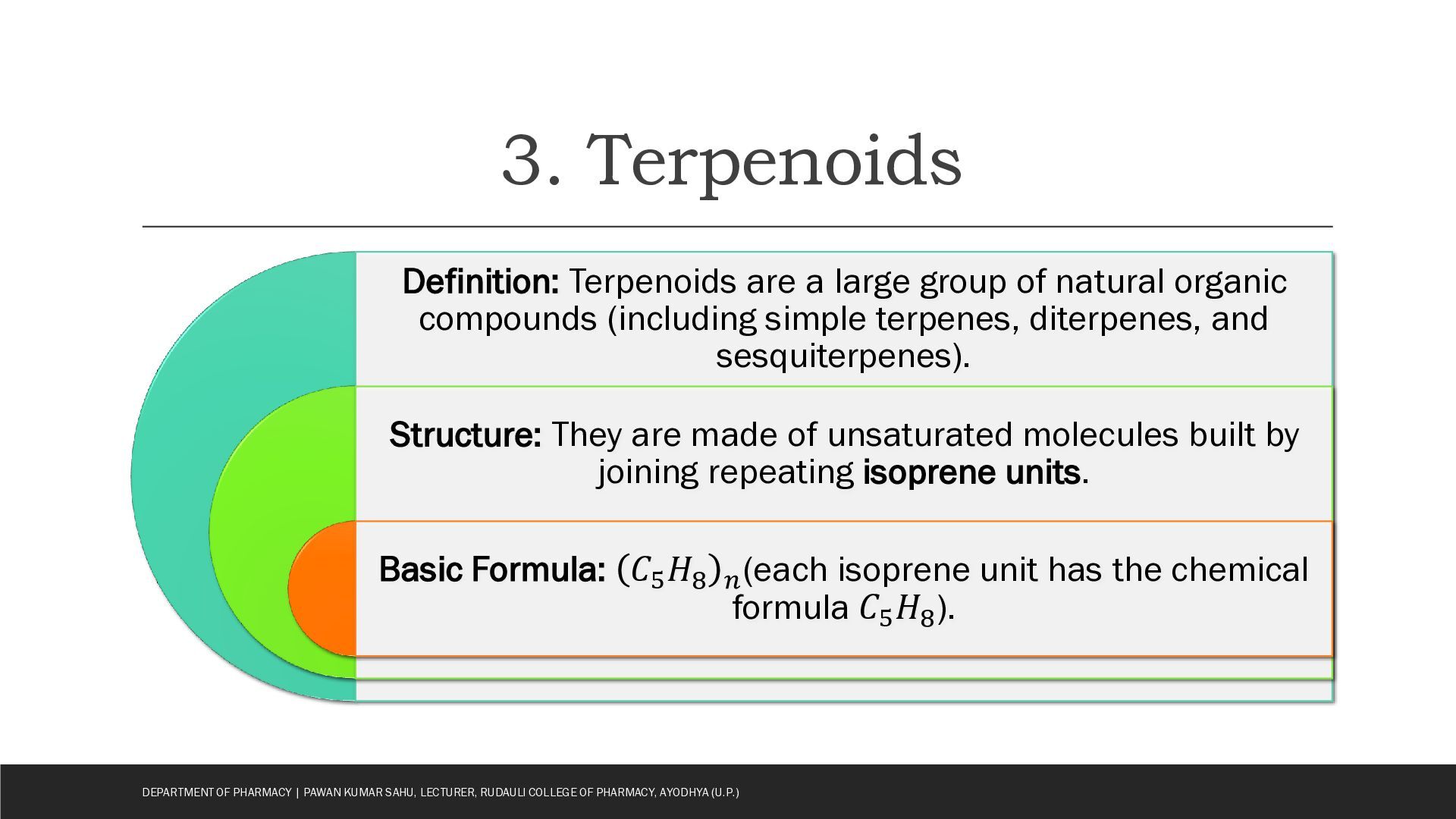
  21. 3. Terpenoids Definition: Terpenoids are a large group of natural

    organic compounds (including simple terpenes, diterpenes, and sesquiterpenes). Structure: They are made of unsaturated molecules built by joining repeating isoprene units. Basic Formula: 𝐶5 𝐻8 𝑛 (each isoprene unit has the chemical formula 𝐶5 𝐻8 ). open paren cap C sub 5 , cap H sub 8 , , close paren sub n cap C sub 5 , cap H sub 8 DEPARTMENT OF PHARMACY | PAWAN KUMAR SAHU, LECTURER, RUDAULI COLLEGE OF PHARMACY, AYODHYA (U.P.)
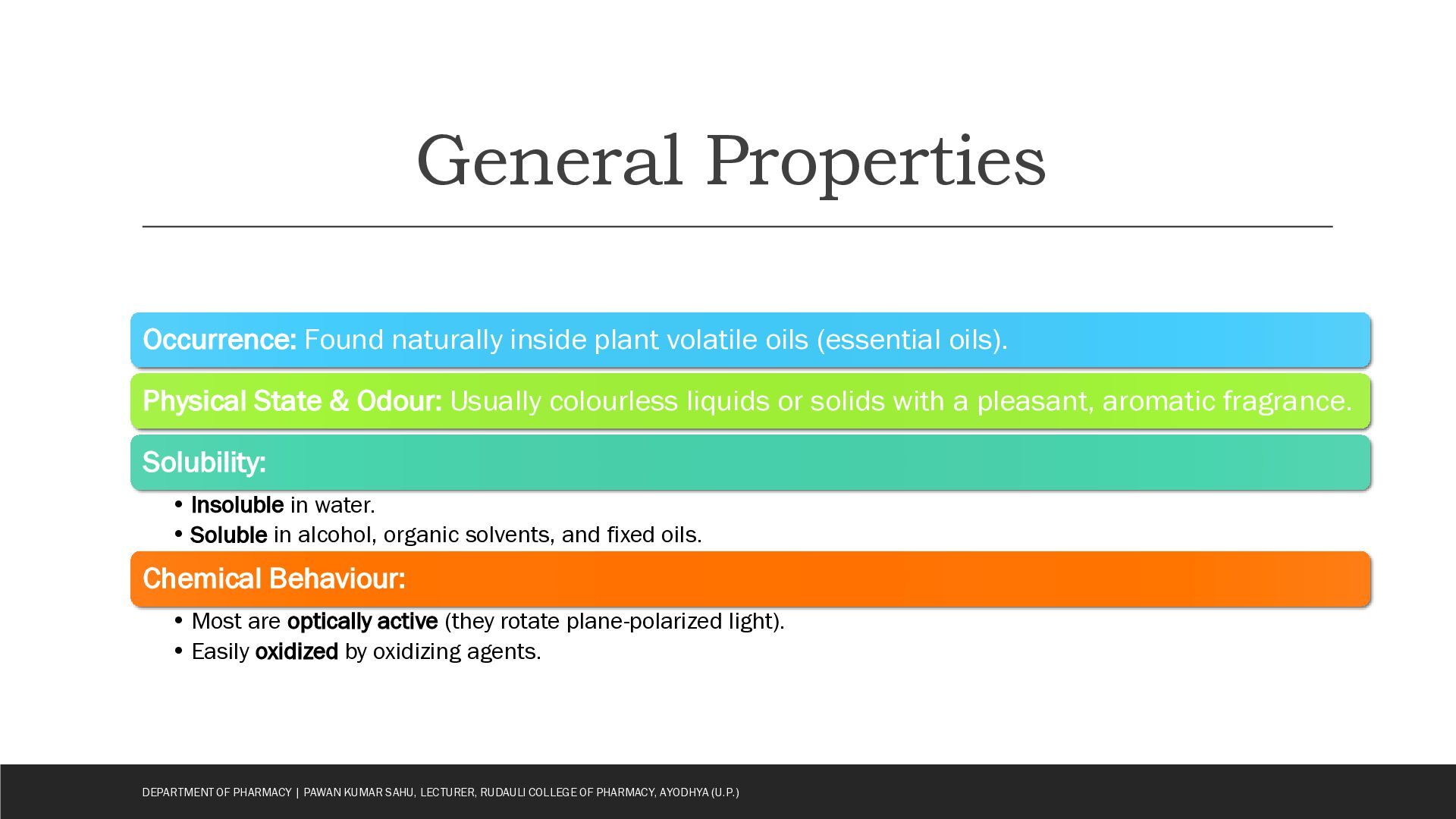
  22. General Properties Occurrence: Found naturally inside plant volatile oils (essential

    oils). Physical State & Odour: Usually colourless liquids or solids with a pleasant, aromatic fragrance. Solubility: • Insoluble in water. • Soluble in alcohol, organic solvents, and fixed oils. Chemical Behaviour: • Most are optically active (they rotate plane-polarized light). • Easily oxidized by oxidizing agents. DEPARTMENT OF PHARMACY | PAWAN KUMAR SAHU, LECTURER, RUDAULI COLLEGE OF PHARMACY, AYODHYA (U.P.)
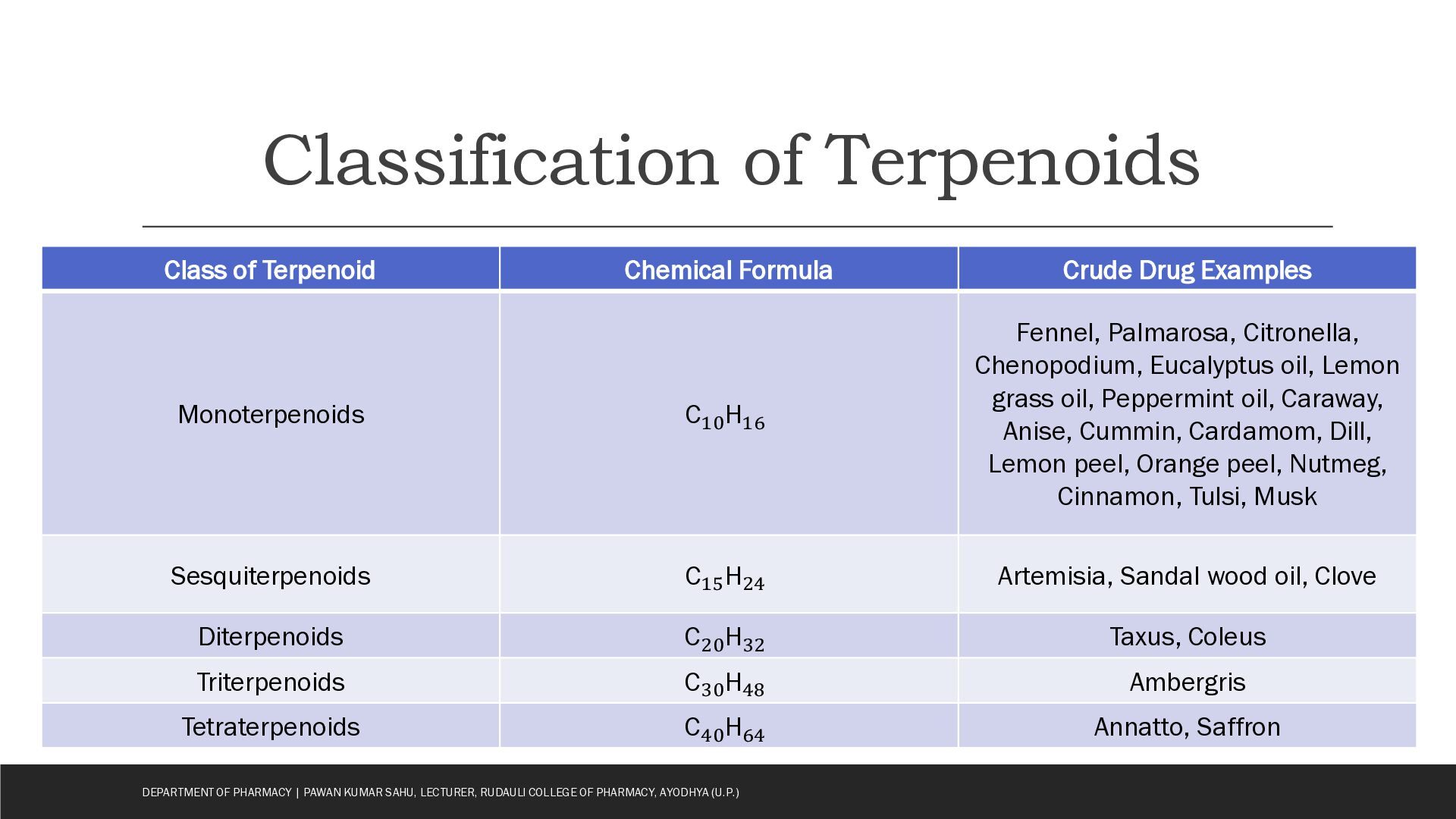
  23. Classification of Terpenoids Class of Terpenoid Chemical Formula Crude Drug

    Examples Monoterpenoids C10 H16 Fennel, Palmarosa, Citronella, Chenopodium, Eucalyptus oil, Lemon grass oil, Peppermint oil, Caraway, Anise, Cummin, Cardamom, Dill, Lemon peel, Orange peel, Nutmeg, Cinnamon, Tulsi, Musk Sesquiterpenoids C15 H24 Artemisia, Sandal wood oil, Clove Diterpenoids C20 H32 Taxus, Coleus Triterpenoids C30 H48 Ambergris Tetraterpenoids C40 H64 Annatto, Saffron DEPARTMENT OF PHARMACY | PAWAN KUMAR SAHU, LECTURER, RUDAULI COLLEGE OF PHARMACY, AYODHYA (U.P.)
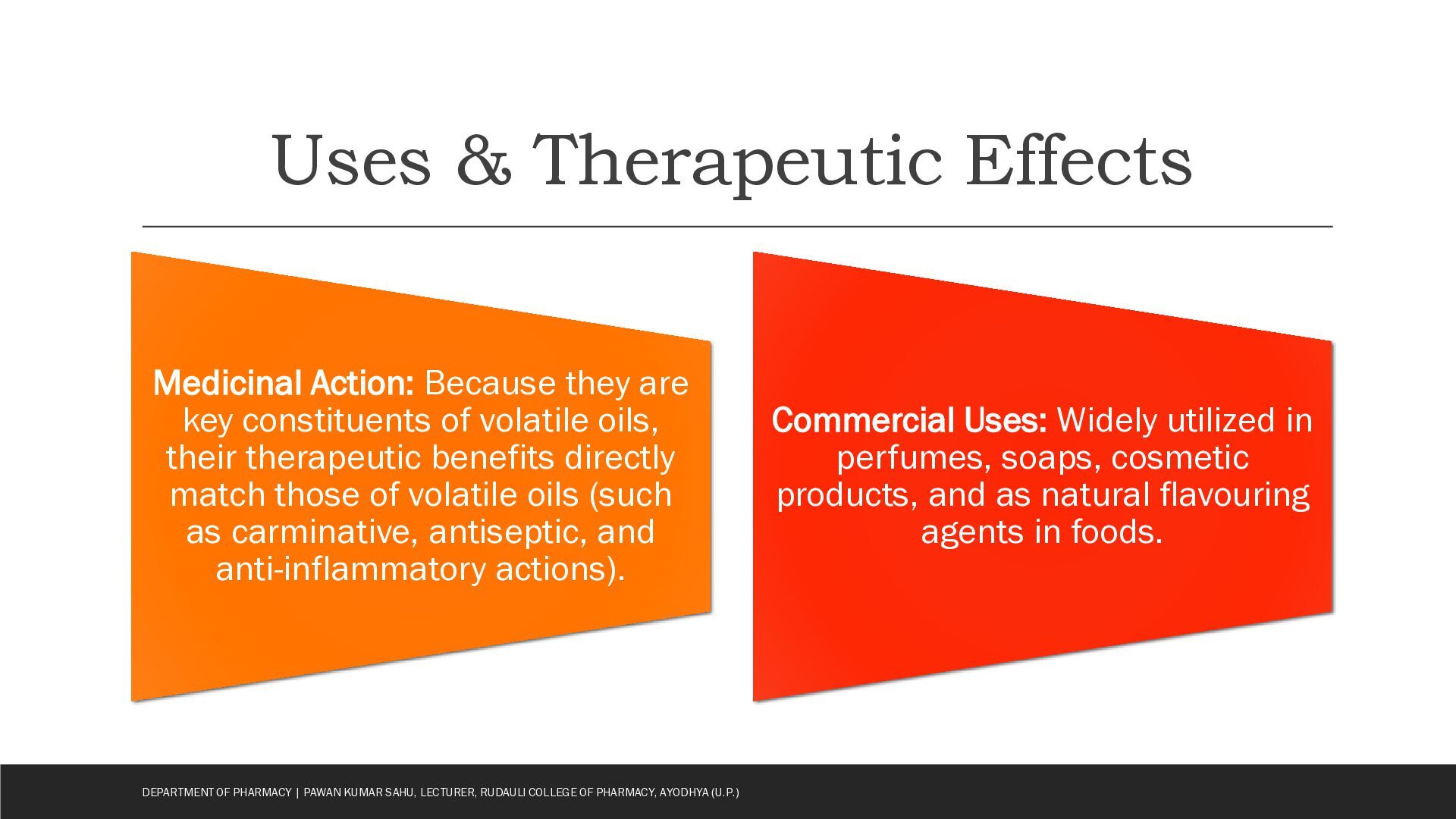
  24. Uses & Therapeutic Effects Medicinal Action: Because they are key

    constituents of volatile oils, their therapeutic benefits directly match those of volatile oils (such as carminative, antiseptic, and anti-inflammatory actions). DEPARTMENT OF PHARMACY | PAWAN KUMAR SAHU, LECTURER, RUDAULI COLLEGE OF PHARMACY, AYODHYA (U.P.) Commercial Uses: Widely utilized in perfumes, soaps, cosmetic products, and as natural flavouring agents in foods.
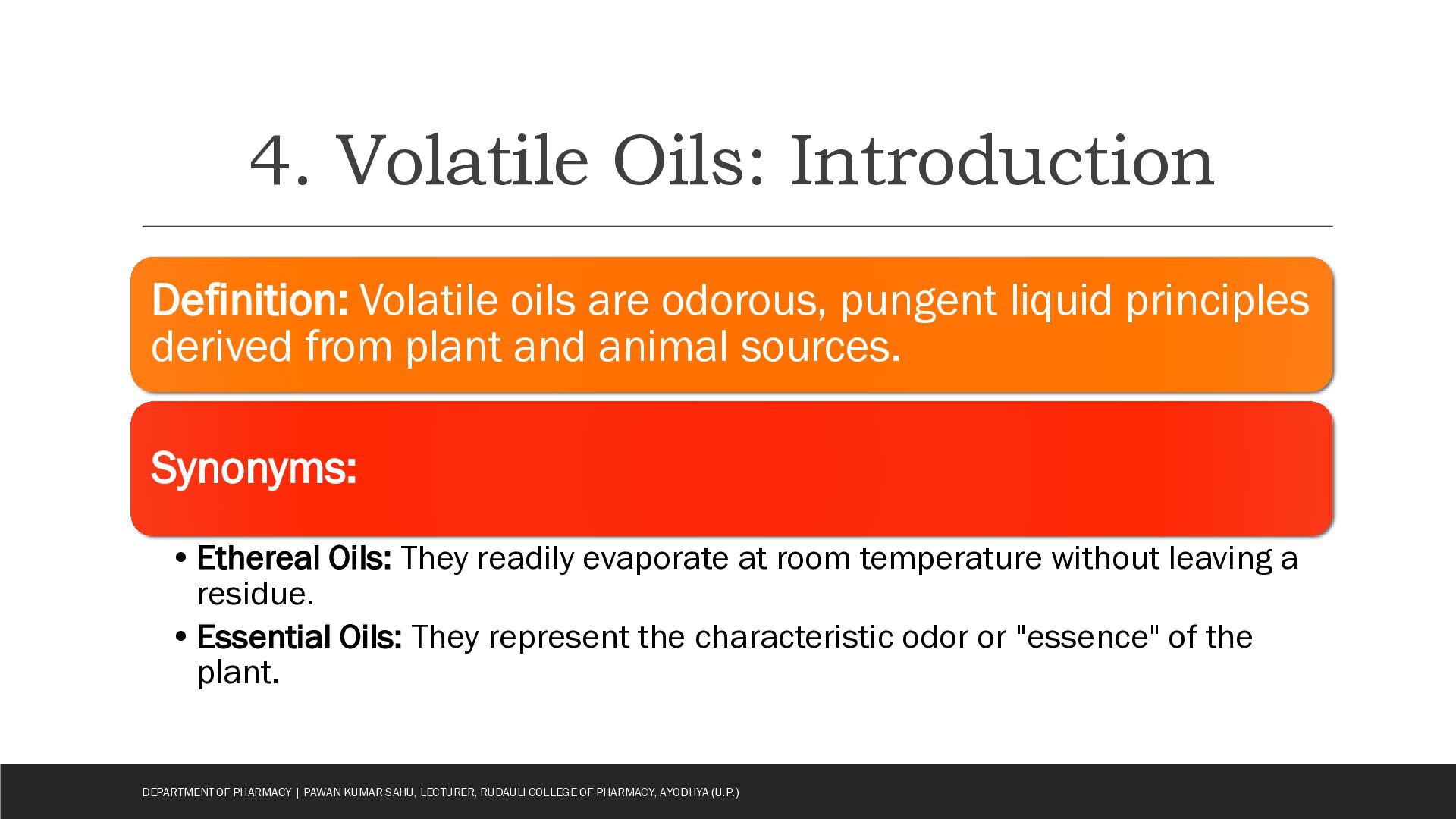
  25. 4. Volatile Oils: Introduction Definition: Volatile oils are odorous, pungent

    liquid principles derived from plant and animal sources. Synonyms: • Ethereal Oils: They readily evaporate at room temperature without leaving a residue. • Essential Oils: They represent the characteristic odor or "essence" of the plant. DEPARTMENT OF PHARMACY | PAWAN KUMAR SAHU, LECTURER, RUDAULI COLLEGE OF PHARMACY, AYODHYA (U.P.)
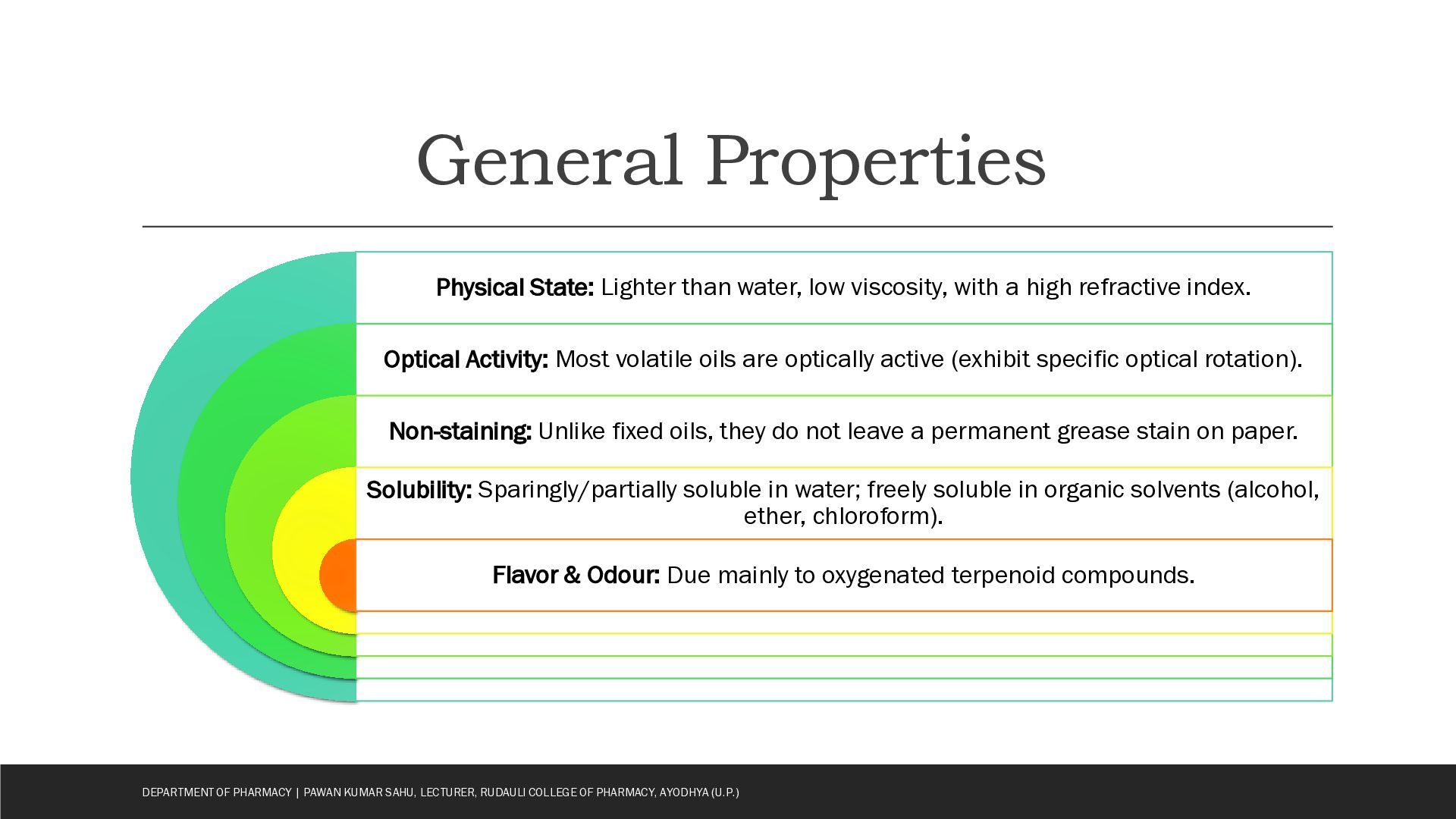
  26. General Properties Physical State: Lighter than water, low viscosity, with

    a high refractive index. Optical Activity: Most volatile oils are optically active (exhibit specific optical rotation). Non-staining: Unlike fixed oils, they do not leave a permanent grease stain on paper. Solubility: Sparingly/partially soluble in water; freely soluble in organic solvents (alcohol, ether, chloroform). Flavor & Odour: Due mainly to oxygenated terpenoid compounds. DEPARTMENT OF PHARMACY | PAWAN KUMAR SAHU, LECTURER, RUDAULI COLLEGE OF PHARMACY, AYODHYA (U.P.)
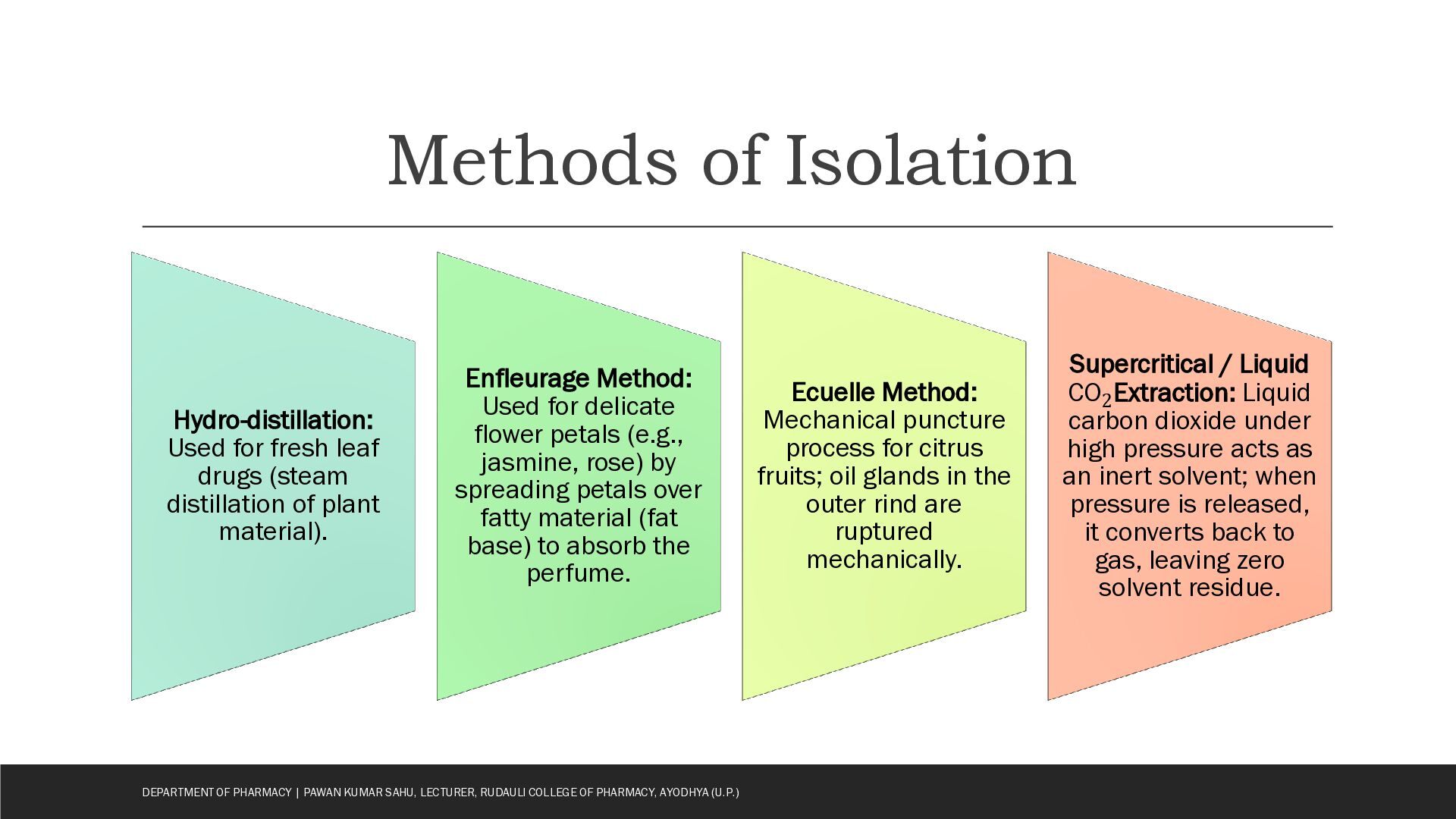
  27. Methods of Isolation Hydro-distillation: Used for fresh leaf drugs (steam

    distillation of plant material). Enfleurage Method: Used for delicate flower petals (e.g., jasmine, rose) by spreading petals over fatty material (fat base) to absorb the perfume. DEPARTMENT OF PHARMACY | PAWAN KUMAR SAHU, LECTURER, RUDAULI COLLEGE OF PHARMACY, AYODHYA (U.P.) Ecuelle Method: Mechanical puncture process for citrus fruits; oil glands in the outer rind are ruptured mechanically. Supercritical / Liquid CO2 Extraction: Liquid carbon dioxide under high pressure acts as an inert solvent; when pressure is released, it converts back to gas, leaving zero solvent residue. subscript base , CO , end base , sub 2
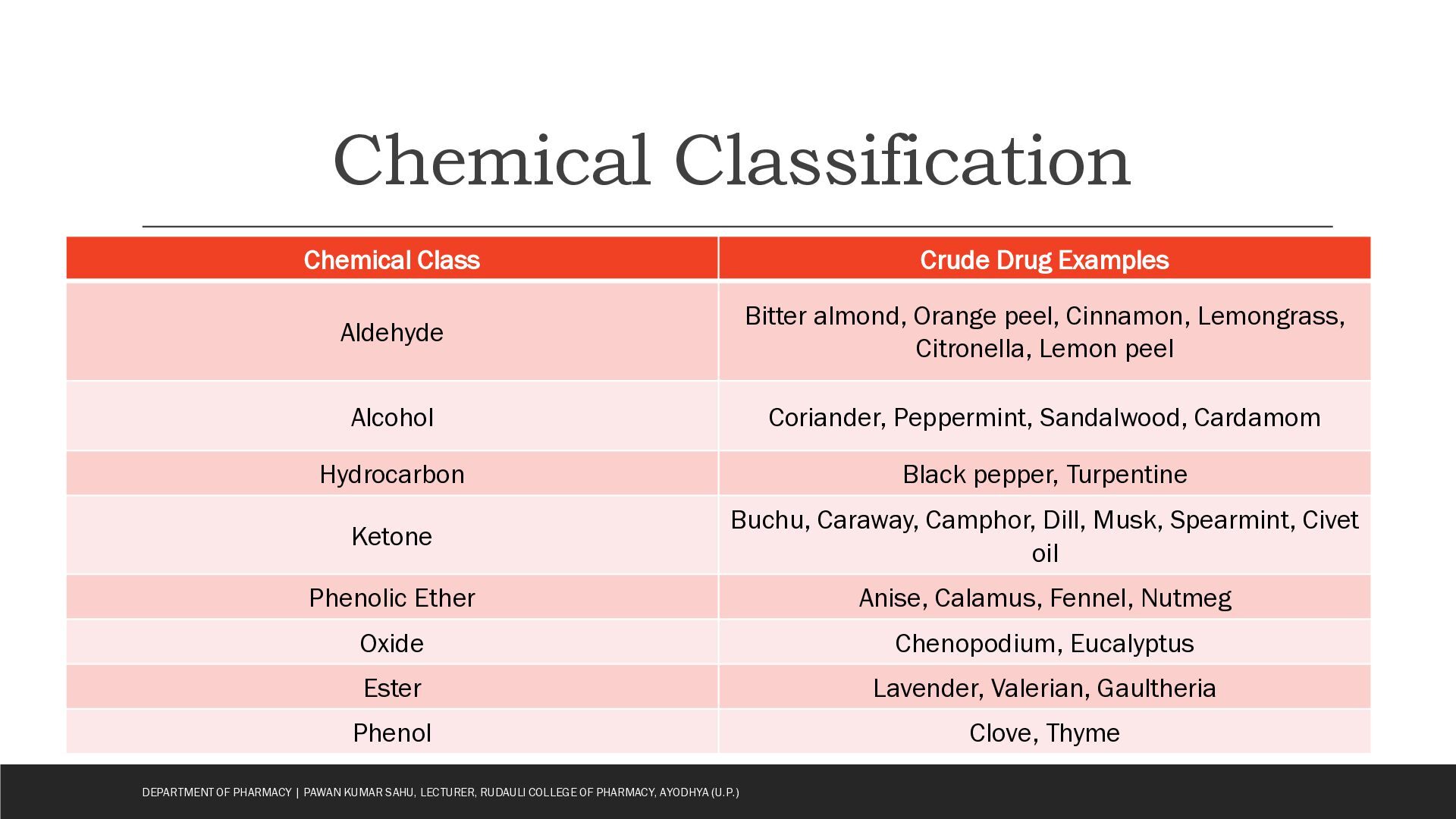
  28. Chemical Classification Chemical Class Crude Drug Examples Aldehyde Bitter almond,

    Orange peel, Cinnamon, Lemongrass, Citronella, Lemon peel Alcohol Coriander, Peppermint, Sandalwood, Cardamom Hydrocarbon Black pepper, Turpentine Ketone Buchu, Caraway, Camphor, Dill, Musk, Spearmint, Civet oil Phenolic Ether Anise, Calamus, Fennel, Nutmeg Oxide Chenopodium, Eucalyptus Ester Lavender, Valerian, Gaultheria Phenol Clove, Thyme DEPARTMENT OF PHARMACY | PAWAN KUMAR SAHU, LECTURER, RUDAULI COLLEGE OF PHARMACY, AYODHYA (U.P.)
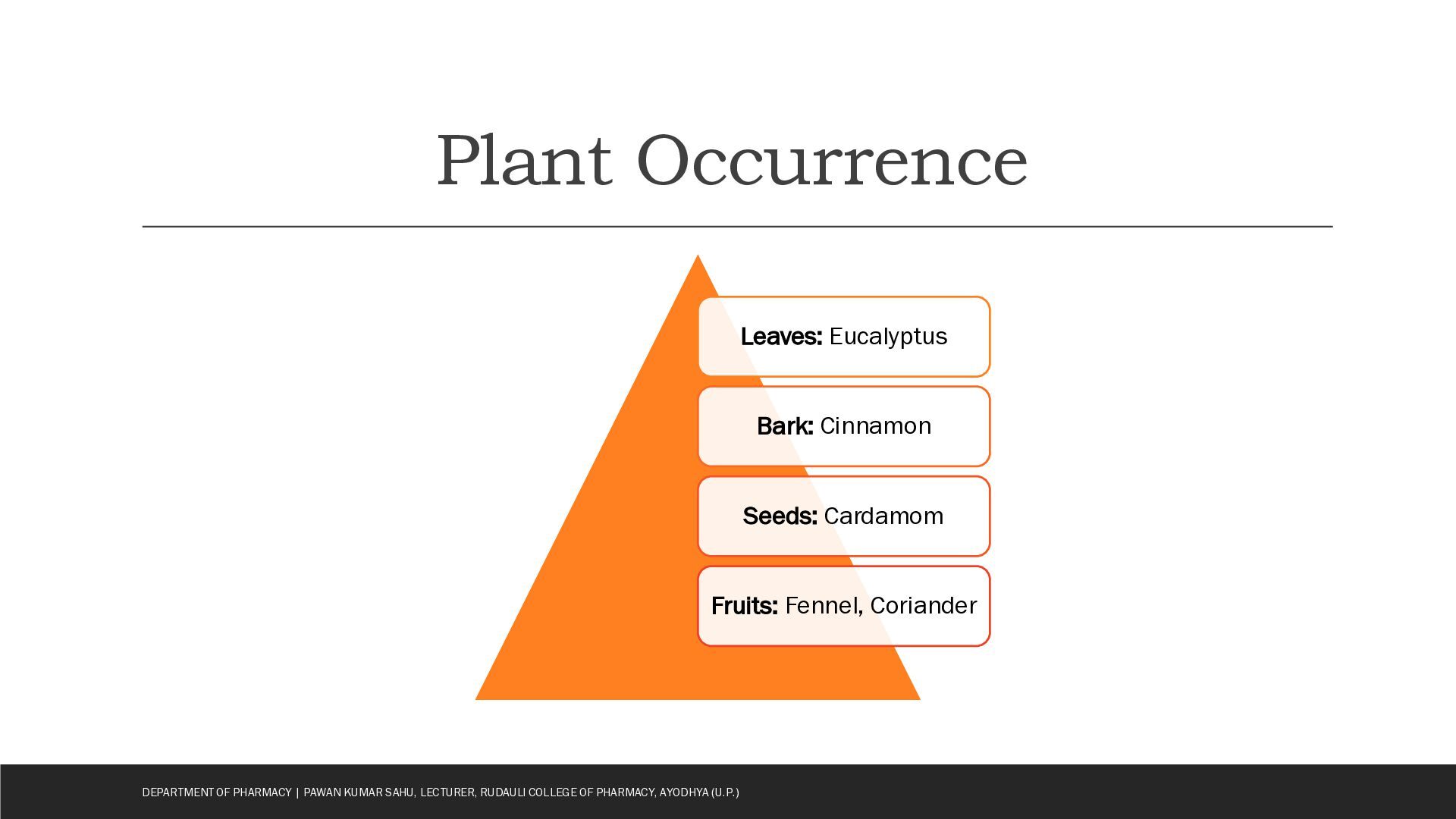
  29. Plant Occurrence Leaves: Eucalyptus Bark: Cinnamon Seeds: Cardamom Fruits: Fennel,

    Coriander DEPARTMENT OF PHARMACY | PAWAN KUMAR SAHU, LECTURER, RUDAULI COLLEGE OF PHARMACY, AYODHYA (U.P.)
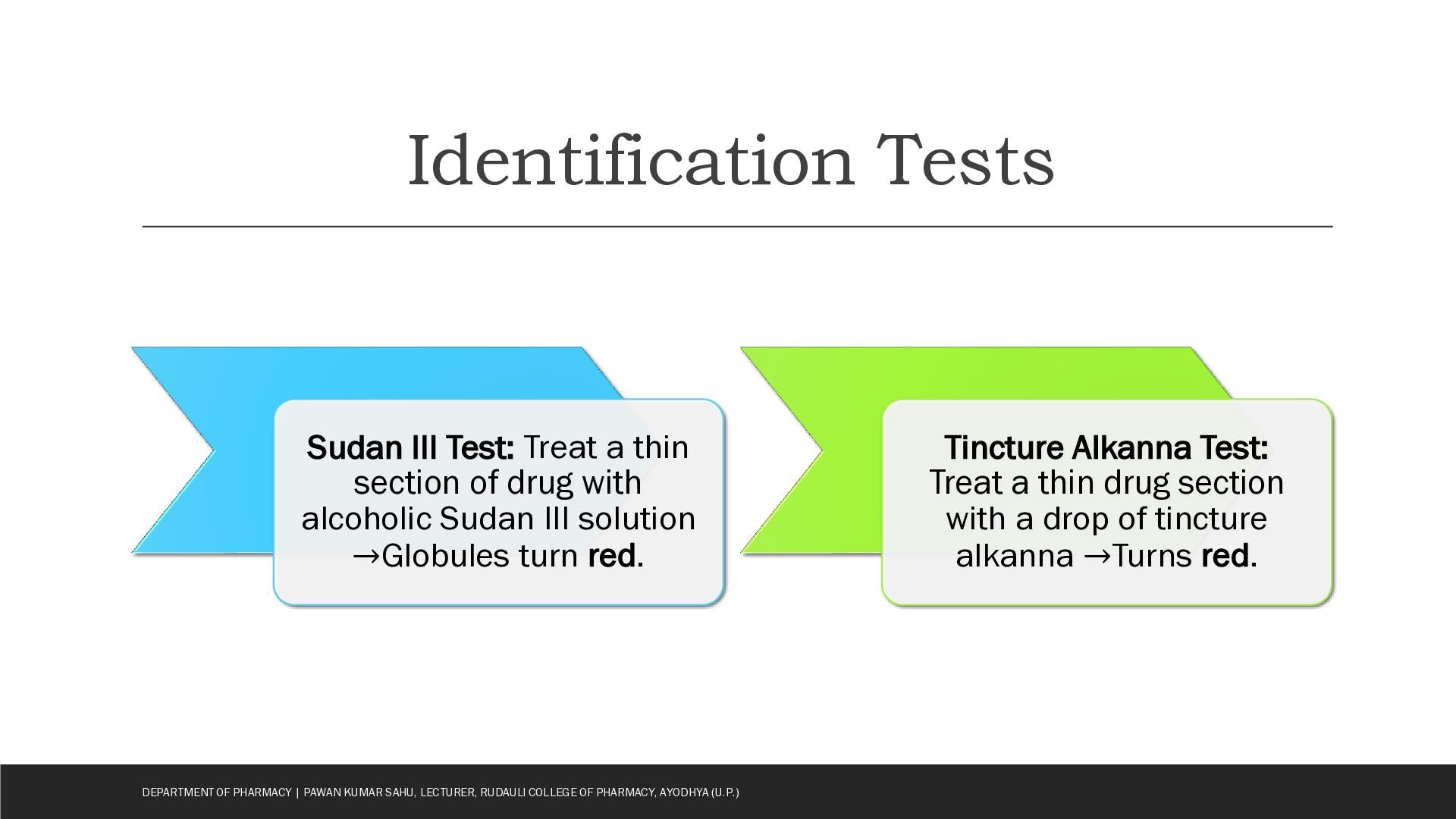
  30. Identification Tests Sudan III Test: Treat a thin section of

    drug with alcoholic Sudan III solution →Globules turn red. start equation goes to DEPARTMENT OF PHARMACY | PAWAN KUMAR SAHU, LECTURER, RUDAULI COLLEGE OF PHARMACY, AYODHYA (U.P.) Tincture Alkanna Test: Treat a thin drug section with a drop of tincture alkanna →Turns red. start equation goes to
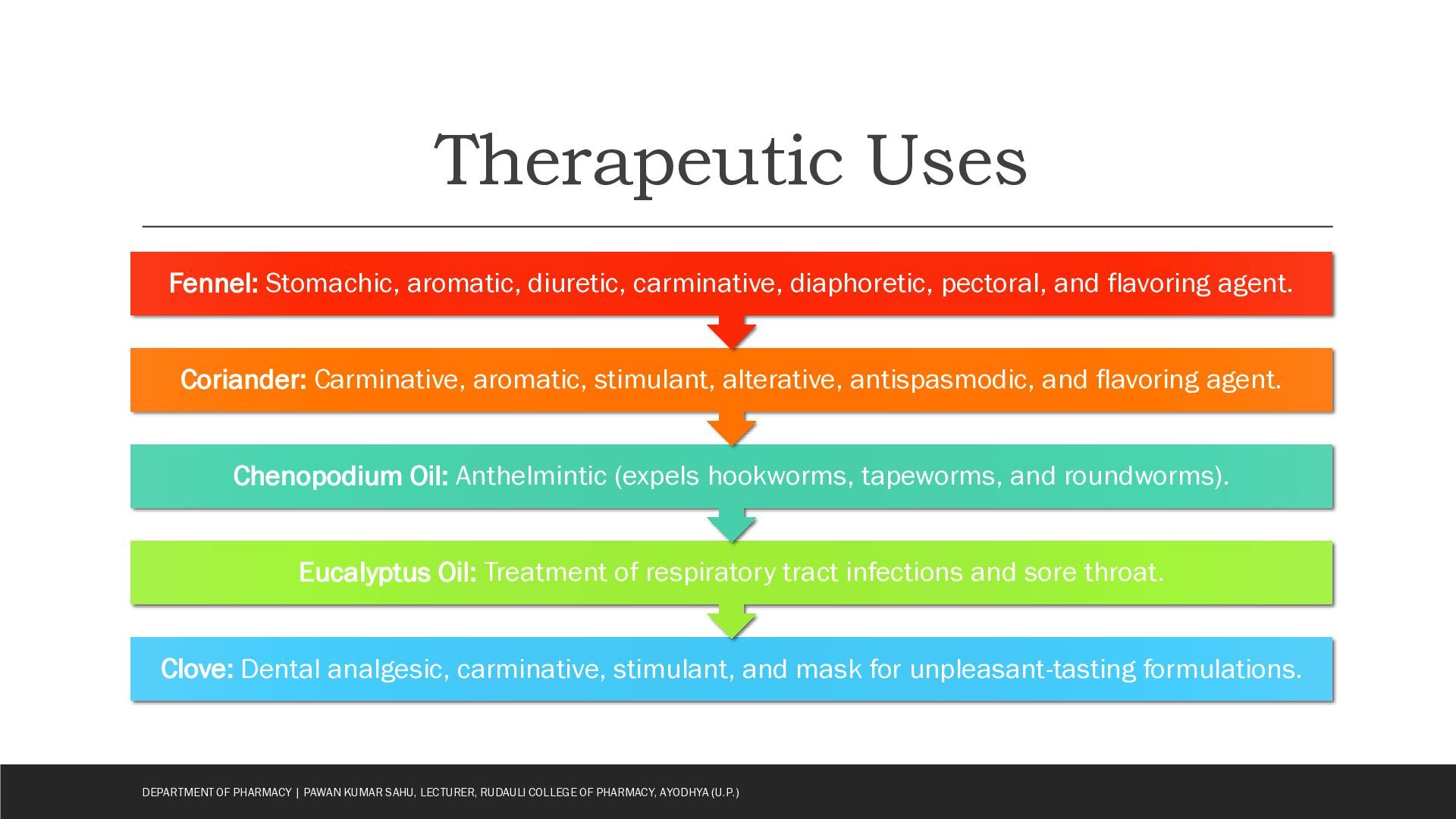
  31. Therapeutic Uses Fennel: Stomachic, aromatic, diuretic, carminative, diaphoretic, pectoral, and

    flavoring agent. Coriander: Carminative, aromatic, stimulant, alterative, antispasmodic, and flavoring agent. Chenopodium Oil: Anthelmintic (expels hookworms, tapeworms, and roundworms). Eucalyptus Oil: Treatment of respiratory tract infections and sore throat. Clove: Dental analgesic, carminative, stimulant, and mask for unpleasant-tasting formulations. DEPARTMENT OF PHARMACY | PAWAN KUMAR SAHU, LECTURER, RUDAULI COLLEGE OF PHARMACY, AYODHYA (U.P.)
  32. 5. Tannins Definition: Complex, non-nitrogenous, polyphenolic organic plant metabolites having

    astringent taste. Key Function: Capable of precipitating proteins; traditionally used for tanning animal hides into leather. DEPARTMENT OF PHARMACY | PAWAN KUMAR SAHU, LECTURER, RUDAULI COLLEGE OF PHARMACY, AYODHYA (U.P.)
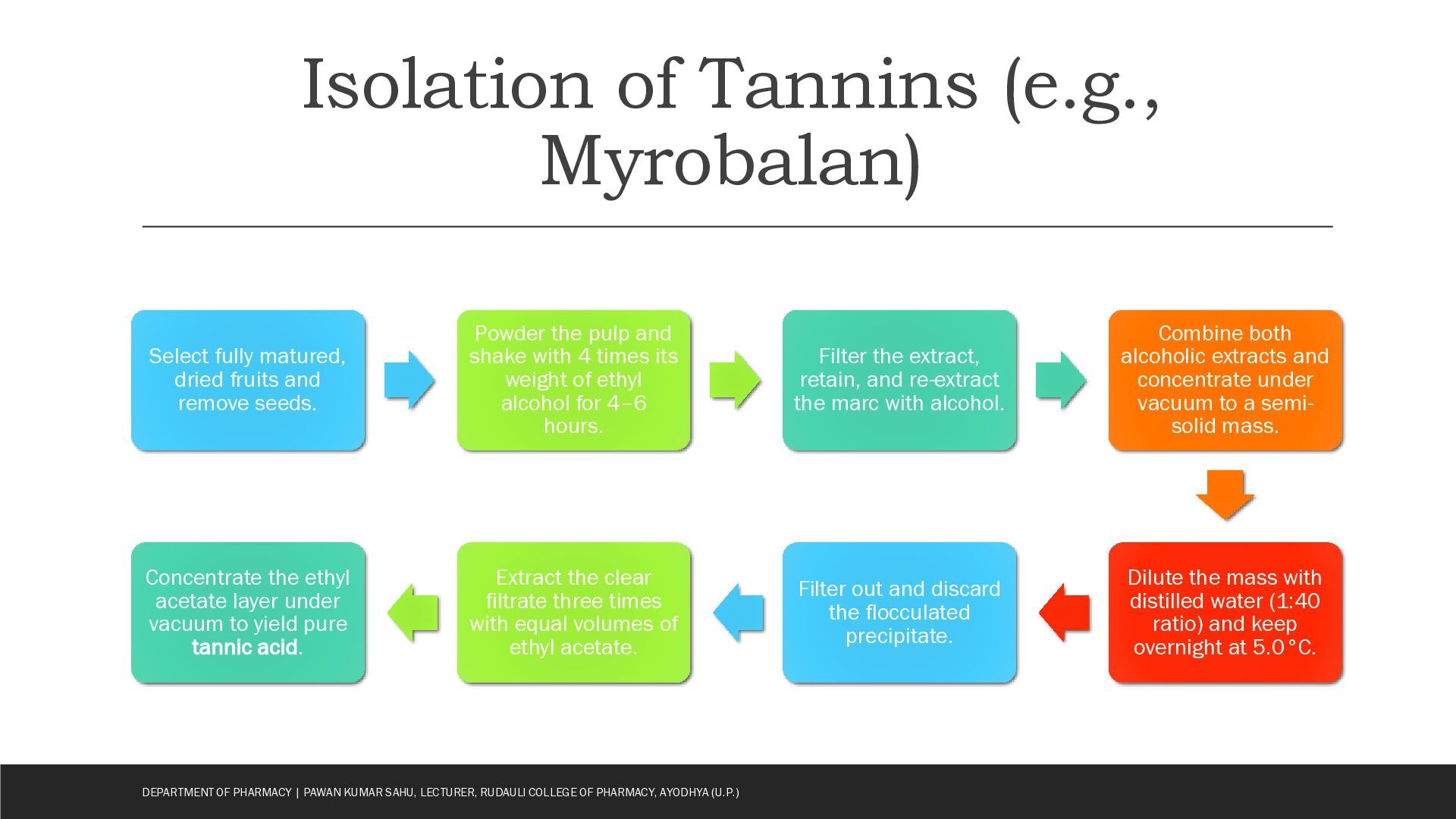
  33. Isolation of Tannins (e.g., Myrobalan) Select fully matured, dried fruits

    and remove seeds. Powder the pulp and shake with 4 times its weight of ethyl alcohol for 4–6 hours. Filter the extract, retain, and re-extract the marc with alcohol. Combine both alcoholic extracts and concentrate under vacuum to a semisolid mass. Concentrate the ethyl acetate layer under vacuum to yield pure tannic acid. Extract the clear filtrate three times with equal volumes of ethyl acetate. Filter out and discard the flocculated precipitate. Dilute the mass with distilled water (1:40 ratio) and keep overnight at 5.0°C. DEPARTMENT OF PHARMACY | PAWAN KUMAR SAHU, LECTURER, RUDAULI COLLEGE OF PHARMACY, AYODHYA (U.P.)
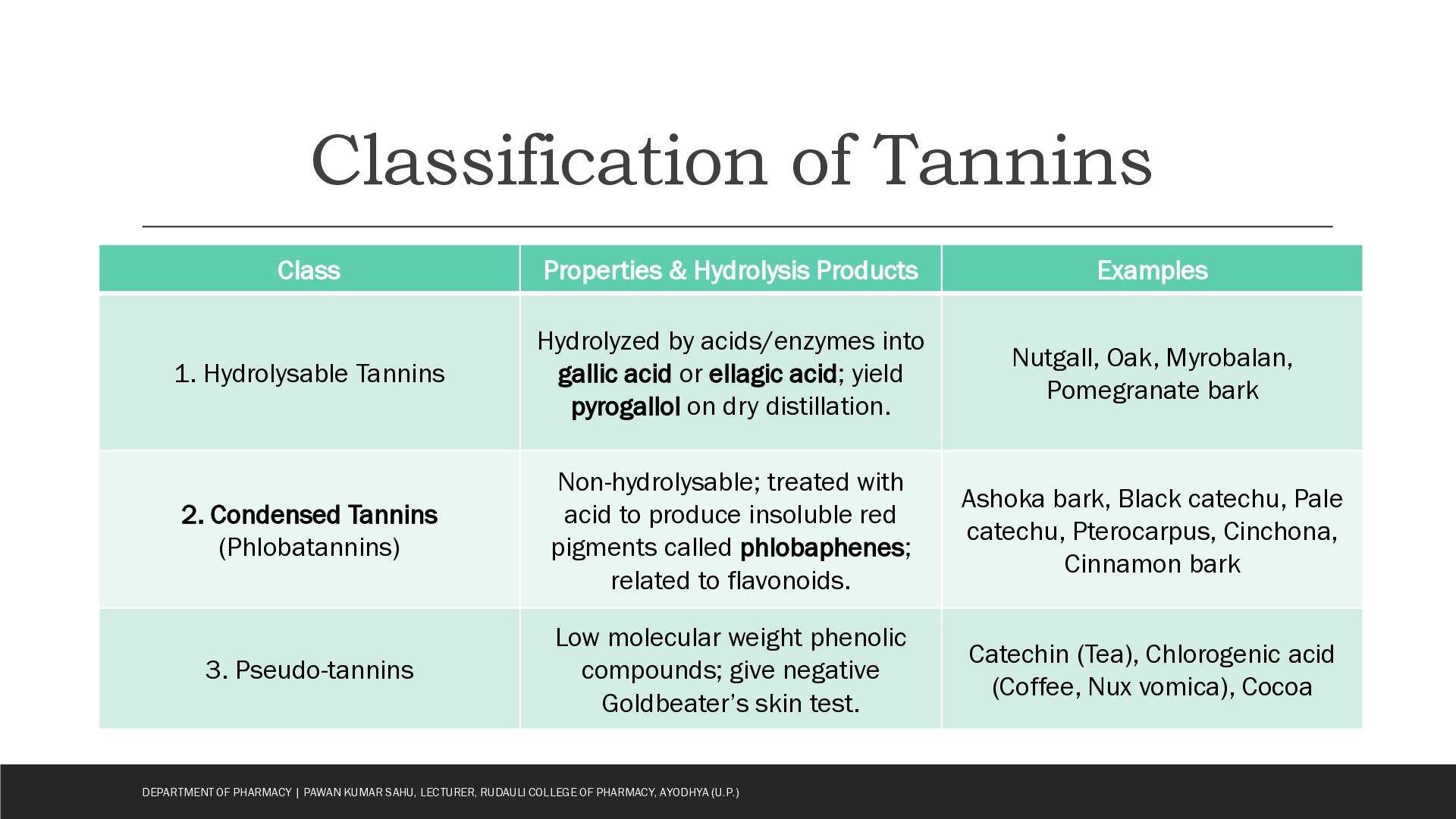
  34. Classification of Tannins Class Properties & Hydrolysis Products Examples 1.

    Hydrolysable Tannins Hydrolyzed by acids/enzymes into gallic acid or ellagic acid; yield pyrogallol on dry distillation. Nutgall, Oak, Myrobalan, Pomegranate bark 2. Condensed Tannins (Phlobatannins) Non-hydrolysable; treated with acid to produce insoluble red pigments called phlobaphenes; related to flavonoids. Ashoka bark, Black catechu, Pale catechu, Pterocarpus, Cinchona, Cinnamon bark 3. Pseudo-tannins Low molecular weight phenolic compounds; give negative Goldbeater’s skin test. Catechin (Tea), Chlorogenic acid (Coffee, Nux vomica), Cocoa DEPARTMENT OF PHARMACY | PAWAN KUMAR SAHU, LECTURER, RUDAULI COLLEGE OF PHARMACY, AYODHYA (U.P.)
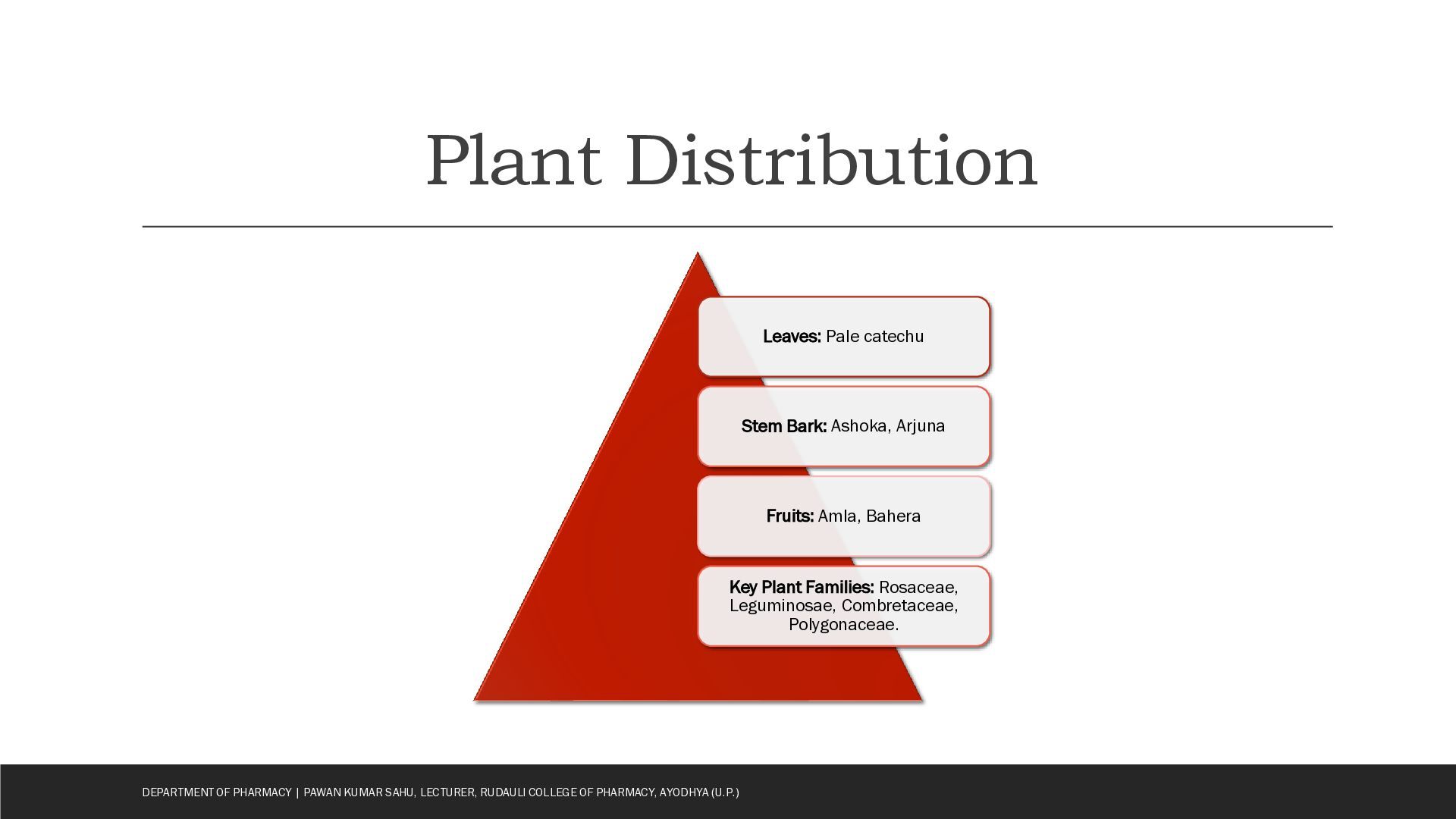
  35. Plant Distribution Leaves: Pale catechu Stem Bark: Ashoka, Arjuna Fruits:

    Amla, Bahera Key Plant Families: Rosaceae, Leguminosae, Combretaceae, Polygonaceae. DEPARTMENT OF PHARMACY | PAWAN KUMAR SAHU, LECTURER, RUDAULI COLLEGE OF PHARMACY, AYODHYA (U.P.)
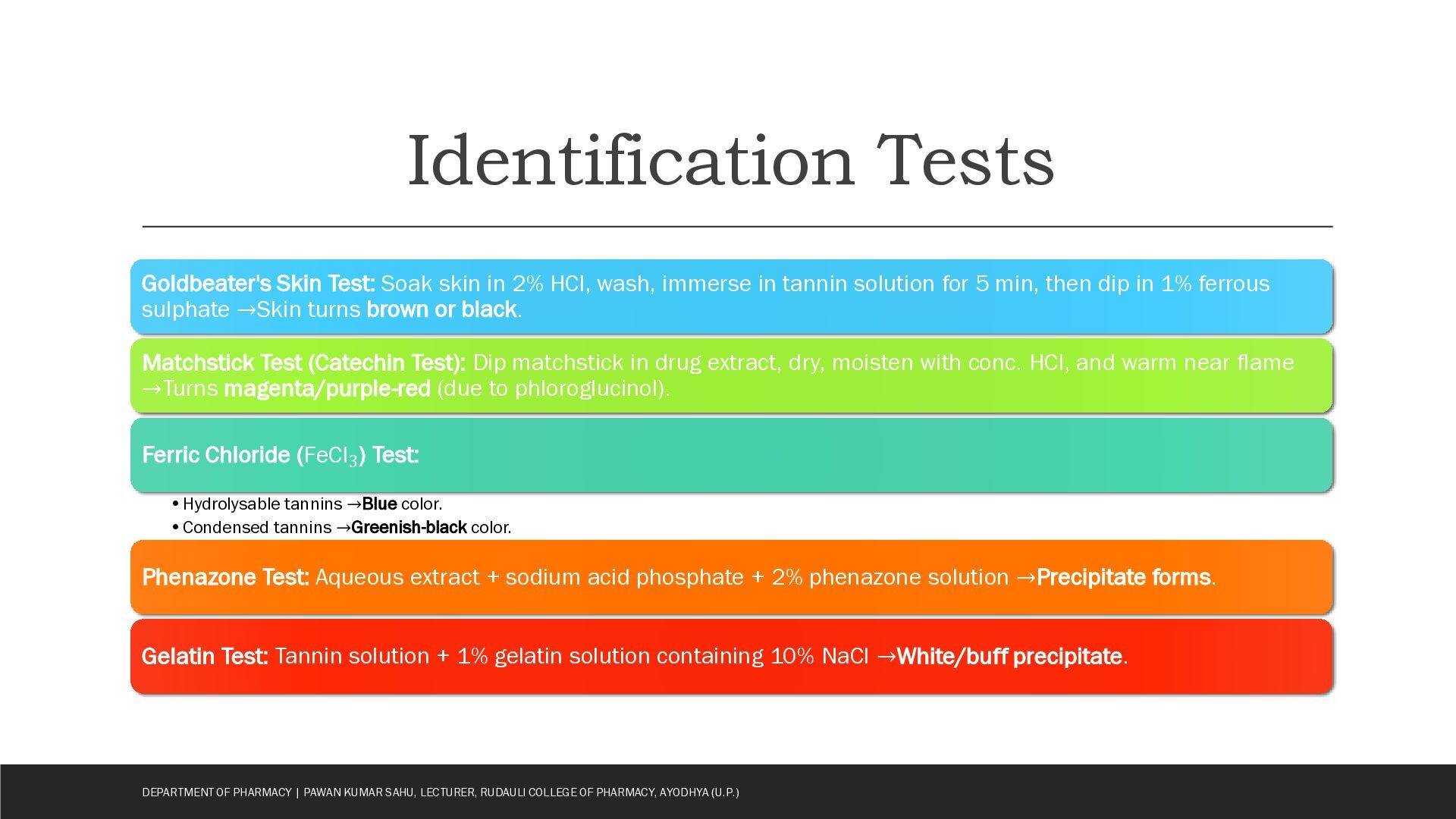
  36. Identification Tests Goldbeater's Skin Test: Soak skin in 2% HCl,

    wash, immerse in tannin solution for 5 min, then dip in 1% ferrous sulphate →Skin turns brown or black. HCl start equation goes to Matchstick Test (Catechin Test): Dip matchstick in drug extract, dry, moisten with conc. HCl, and warm near flame →Turns magenta/purple-red (due to phloroglucinol). HCl start equation goes to Ferric Chloride (FeCl3 ) Test: subscript base , FeCl , end base , sub 3 •Hydrolysable tannins →Blue color. •Condensed tannins →Greenish-black color. start equation goes to start equation goes to Phenazone Test: Aqueous extract + sodium acid phosphate + 2% phenazone solution →Precipitate forms. start equation goes to Gelatin Test: Tannin solution + 1% gelatin solution containing 10% NaCl →White/buff precipitate. NaCl goes to DEPARTMENT OF PHARMACY | PAWAN KUMAR SAHU, LECTURER, RUDAULI COLLEGE OF PHARMACY, AYODHYA (U.P.)
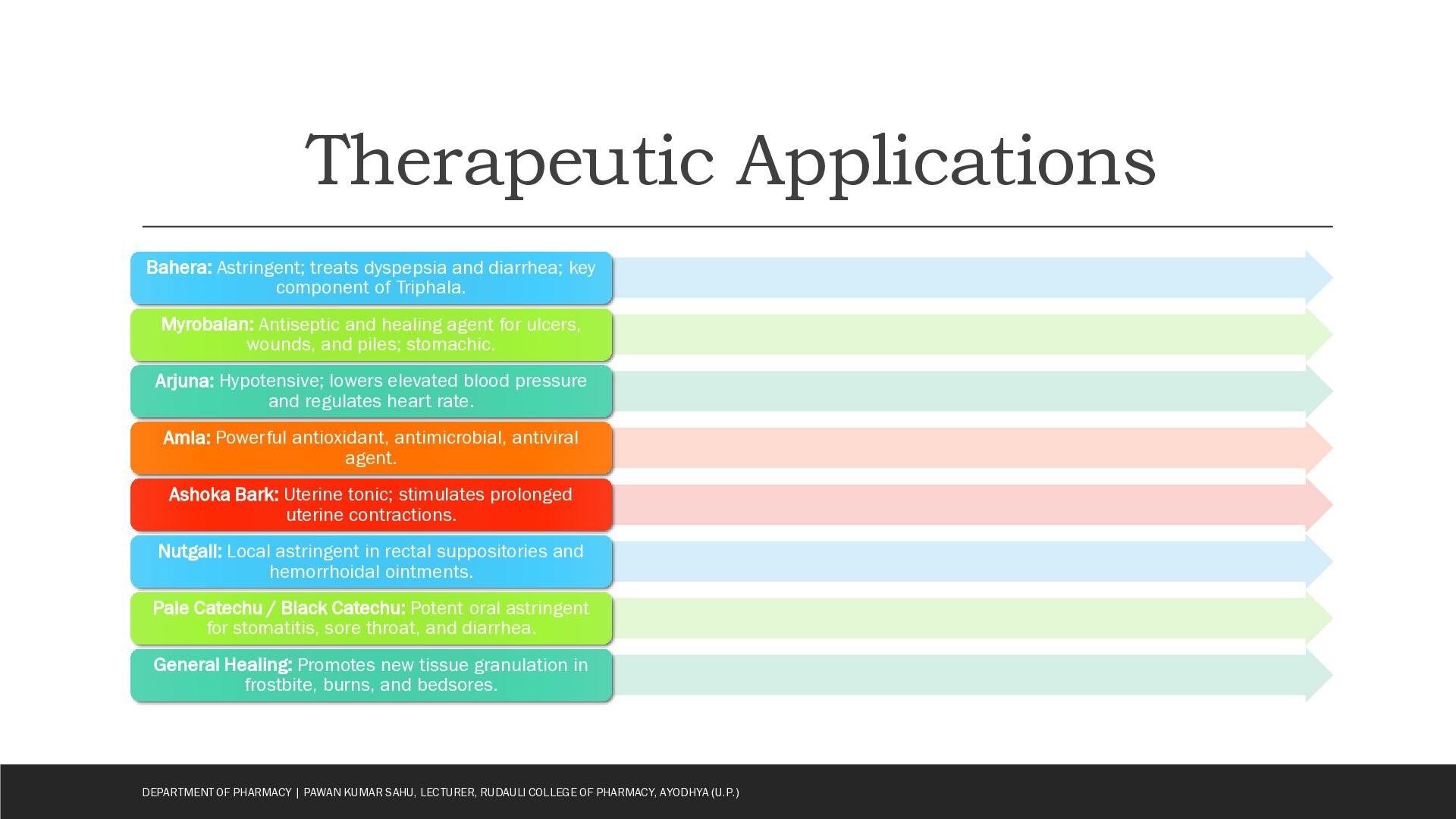
  37. Therapeutic Applications Bahera: Astringent; treats dyspepsia and diarrhea; key component

    of Triphala. Myrobalan: Antiseptic and healing agent for ulcers, wounds, and piles; stomachic. Arjuna: Hypotensive; lowers elevated blood pressure and regulates heart rate. Amla: Powerful antioxidant, antimicrobial, antiviral agent. Ashoka Bark: Uterine tonic; stimulates prolonged uterine contractions. Nutgall: Local astringent in rectal suppositories and hemorrhoidal ointments. Pale Catechu / Black Catechu: Potent oral astringent for stomatitis, sore throat, and diarrhea. General Healing: Promotes new tissue granulation in frostbite, burns, and bedsores. DEPARTMENT OF PHARMACY | PAWAN KUMAR SAHU, LECTURER, RUDAULI COLLEGE OF PHARMACY, AYODHYA (U.P.)
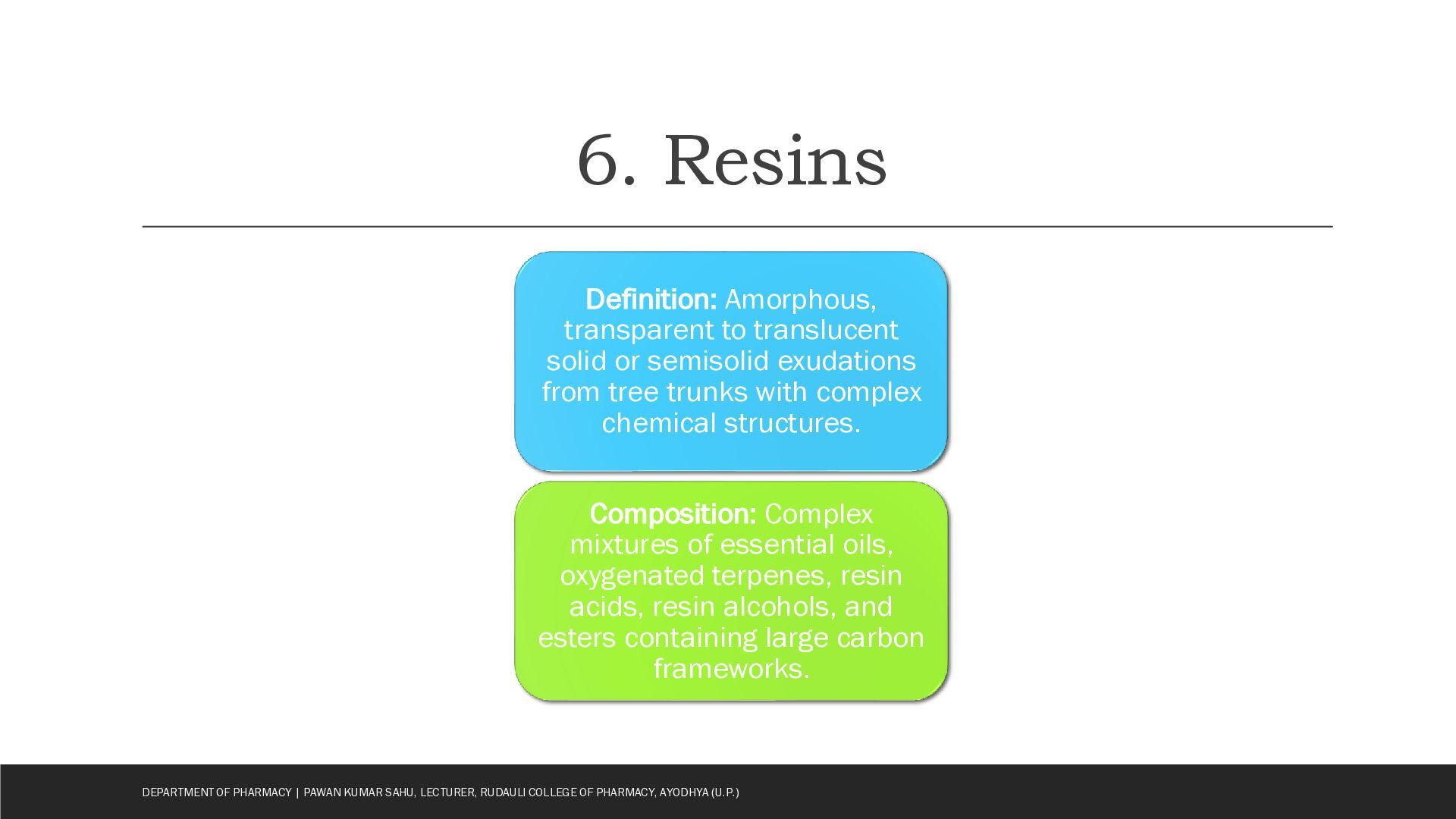
  38. 6. Resins Definition: Amorphous, transparent to translucent solid or semisolid

    exudations from tree trunks with complex chemical structures. Composition: Complex mixtures of essential oils, oxygenated terpenes, resin acids, resin alcohols, and esters containing large carbon frameworks. DEPARTMENT OF PHARMACY | PAWAN KUMAR SAHU, LECTURER, RUDAULI COLLEGE OF PHARMACY, AYODHYA (U.P.)
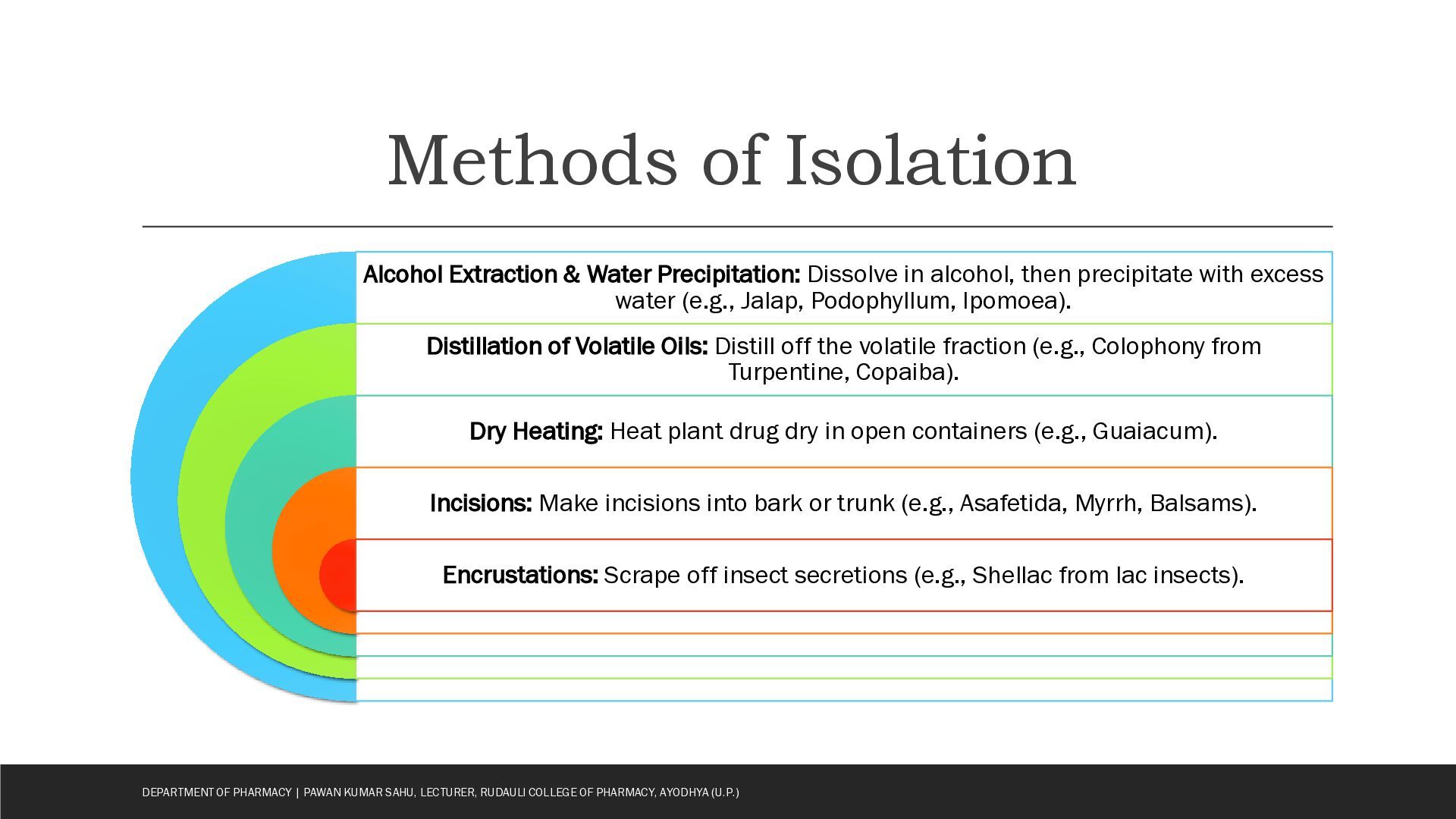
  39. Methods of Isolation Alcohol Extraction & Water Precipitation: Dissolve in

    alcohol, then precipitate with excess water (e.g., Jalap, Podophyllum, Ipomoea). Distillation of Volatile Oils: Distill off the volatile fraction (e.g., Colophony from Turpentine, Copaiba). Dry Heating: Heat plant drug dry in open containers (e.g., Guaiacum). Incisions: Make incisions into bark or trunk (e.g., Asafetida, Myrrh, Balsams). Encrustations: Scrape off insect secretions (e.g., Shellac from lac insects). DEPARTMENT OF PHARMACY | PAWAN KUMAR SAHU, LECTURER, RUDAULI COLLEGE OF PHARMACY, AYODHYA (U.P.)
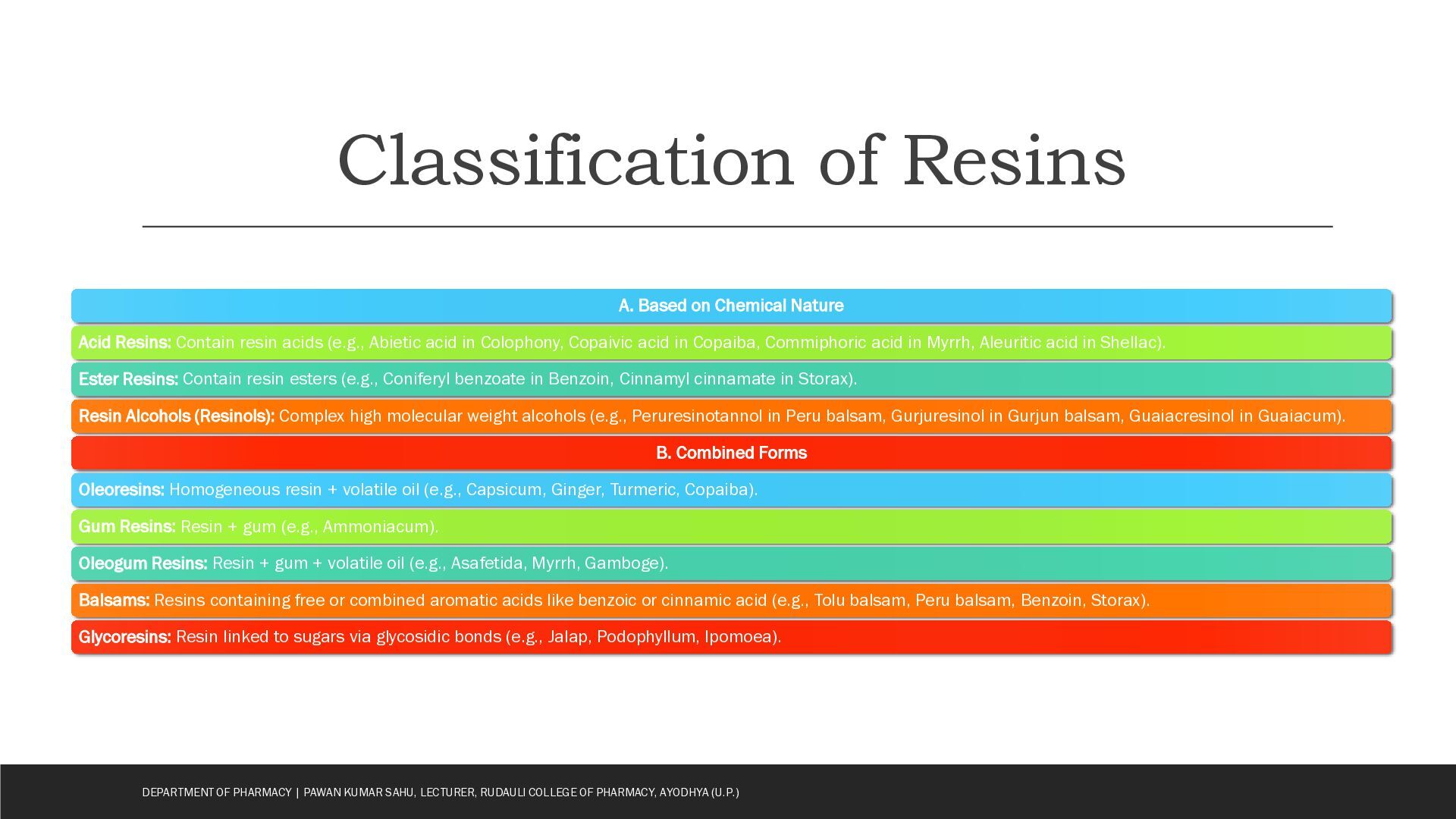
  40. Classification of Resins A. Based on Chemical Nature Acid Resins:

    Contain resin acids (e.g., Abietic acid in Colophony, Copaivic acid in Copaiba, Commiphoric acid in Myrrh, Aleuritic acid in Shellac). Ester Resins: Contain resin esters (e.g., Coniferyl benzoate in Benzoin, Cinnamyl cinnamate in Storax). Resin Alcohols (Resinols): Complex high molecular weight alcohols (e.g., Peruresinotannol in Peru balsam, Gurjuresinol in Gurjun balsam, Guaiacresinol in Guaiacum). B. Combined Forms Oleoresins: Homogeneous resin + volatile oil (e.g., Capsicum, Ginger, Turmeric, Copaiba). Gum Resins: Resin + gum (e.g., Ammoniacum). Oleogum Resins: Resin + gum + volatile oil (e.g., Asafetida, Myrrh, Gamboge). Balsams: Resins containing free or combined aromatic acids like benzoic or cinnamic acid (e.g., Tolu balsam, Peru balsam, Benzoin, Storax). Glycoresins: Resin linked to sugars via glycosidic bonds (e.g., Jalap, Podophyllum, Ipomoea). DEPARTMENT OF PHARMACY | PAWAN KUMAR SAHU, LECTURER, RUDAULI COLLEGE OF PHARMACY, AYODHYA (U.P.)
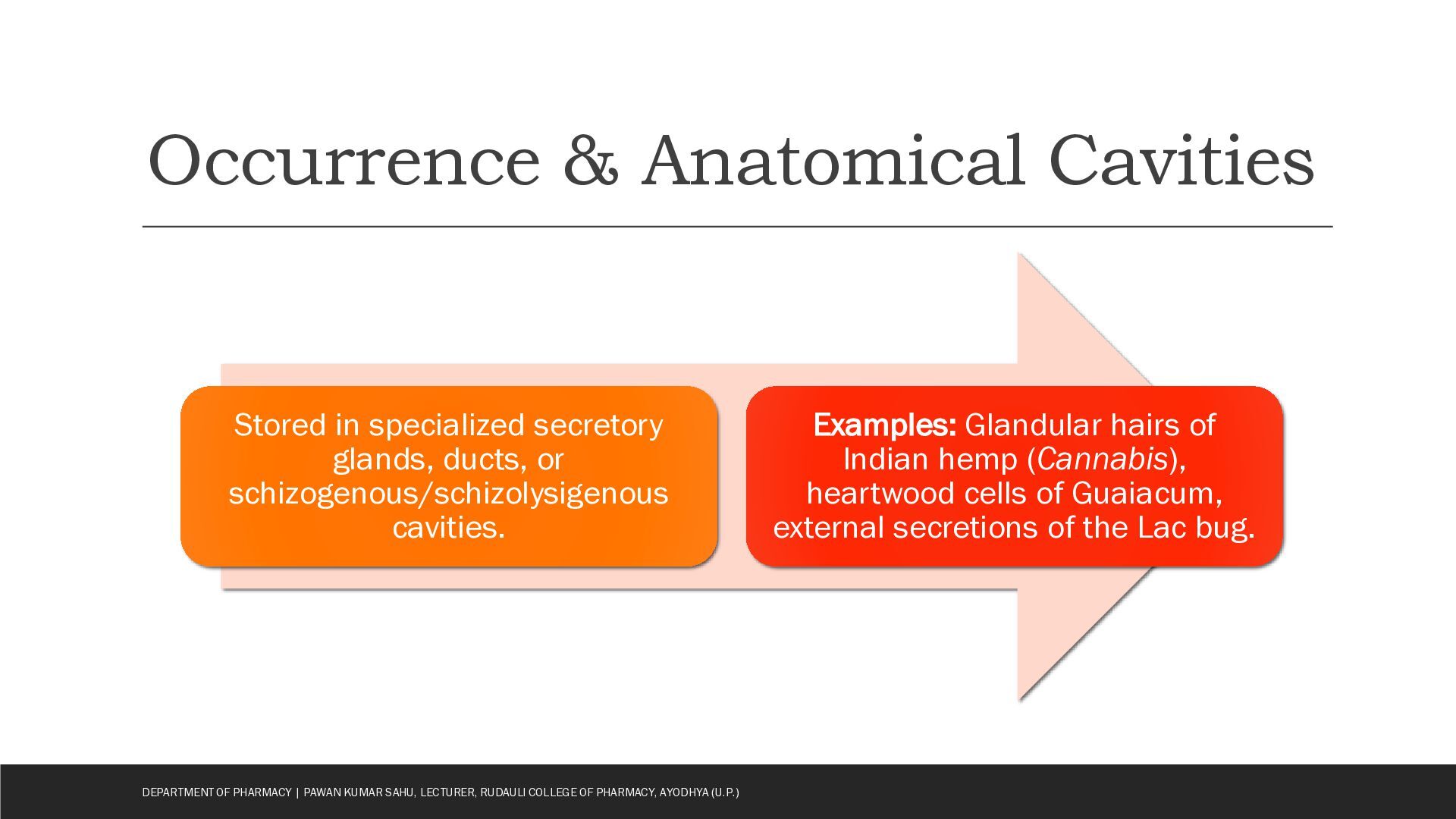
  41. Occurrence & Anatomical Cavities Stored in specialized secretory glands, ducts,

    or schizogenous/schizolysigenous cavities. DEPARTMENT OF PHARMACY | PAWAN KUMAR SAHU, LECTURER, RUDAULI COLLEGE OF PHARMACY, AYODHYA (U.P.) Examples: Glandular hairs of Indian hemp (Cannabis), heartwood cells of Guaiacum, external secretions of the Lac bug.
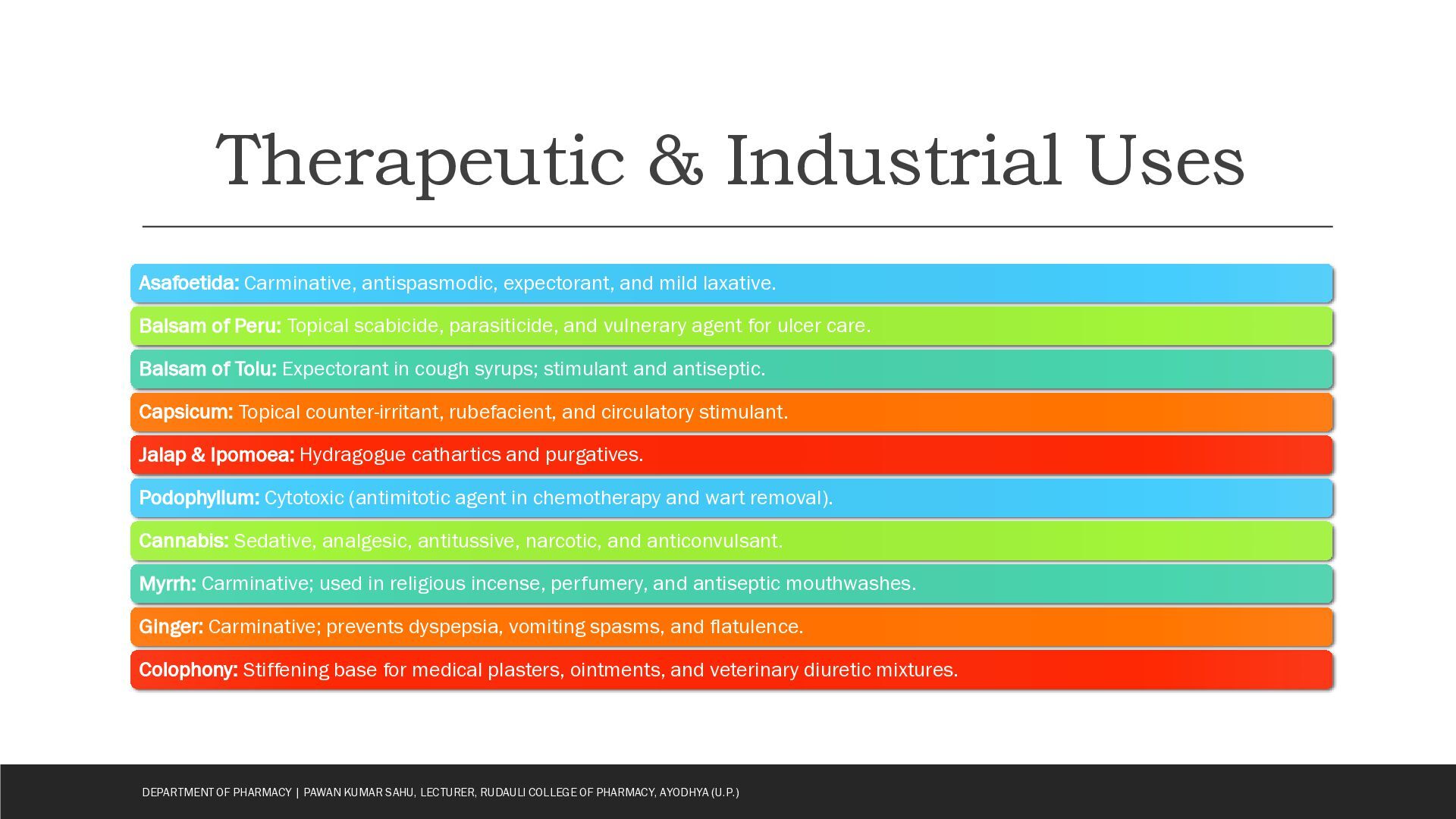
  42. Therapeutic & Industrial Uses Asafoetida: Carminative, antispasmodic, expectorant, and mild

    laxative. Balsam of Peru: Topical scabicide, parasiticide, and vulnerary agent for ulcer care. Balsam of Tolu: Expectorant in cough syrups; stimulant and antiseptic. Capsicum: Topical counter-irritant, rubefacient, and circulatory stimulant. Jalap & Ipomoea: Hydragogue cathartics and purgatives. Podophyllum: Cytotoxic (antimitotic agent in chemotherapy and wart removal). Cannabis: Sedative, analgesic, antitussive, narcotic, and anticonvulsant. Myrrh: Carminative; used in religious incense, perfumery, and antiseptic mouthwashes. Ginger: Carminative; prevents dyspepsia, vomiting spasms, and flatulence. Colophony: Stiffening base for medical plasters, ointments, and veterinary diuretic mixtures. DEPARTMENT OF PHARMACY | PAWAN KUMAR SAHU, LECTURER, RUDAULI COLLEGE OF PHARMACY, AYODHYA (U.P.)
  43. THANK YOU DEPARTMENT OF PHARMACY | PAWAN KUMAR SAHU, LECTURER,

    RUDAULI COLLEGE OF PHARMACY, AYODHYA (U.P.)