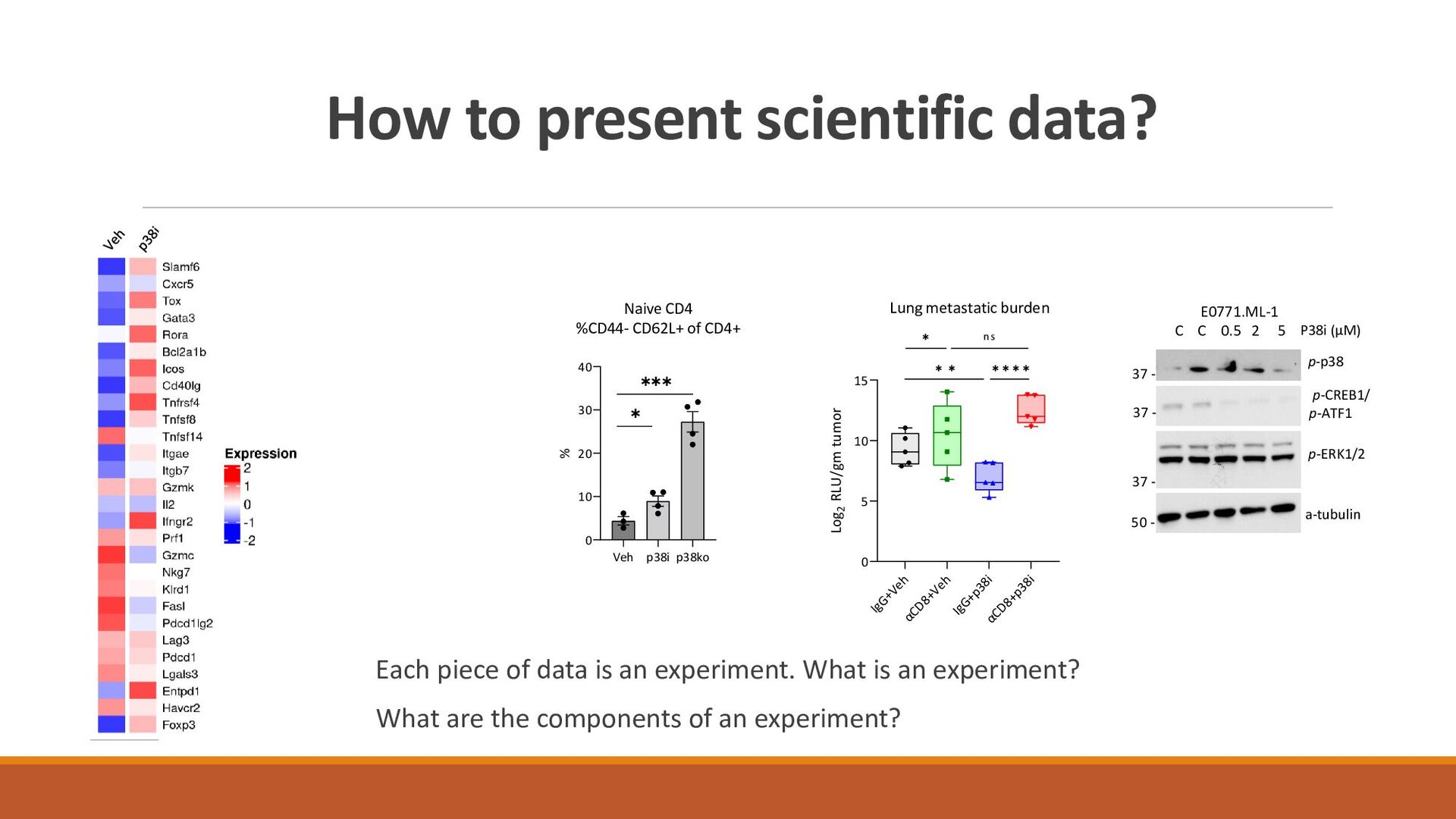
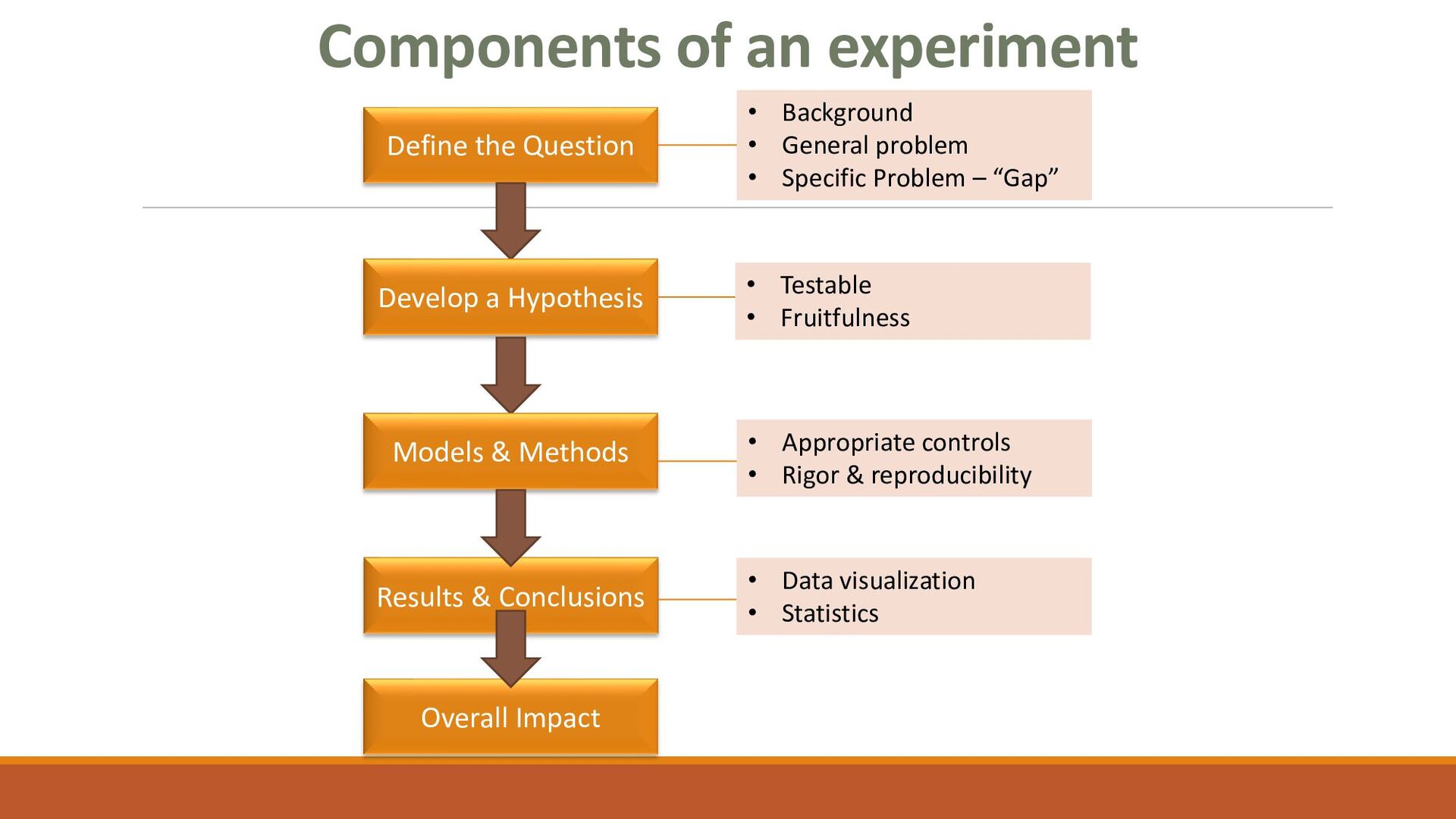
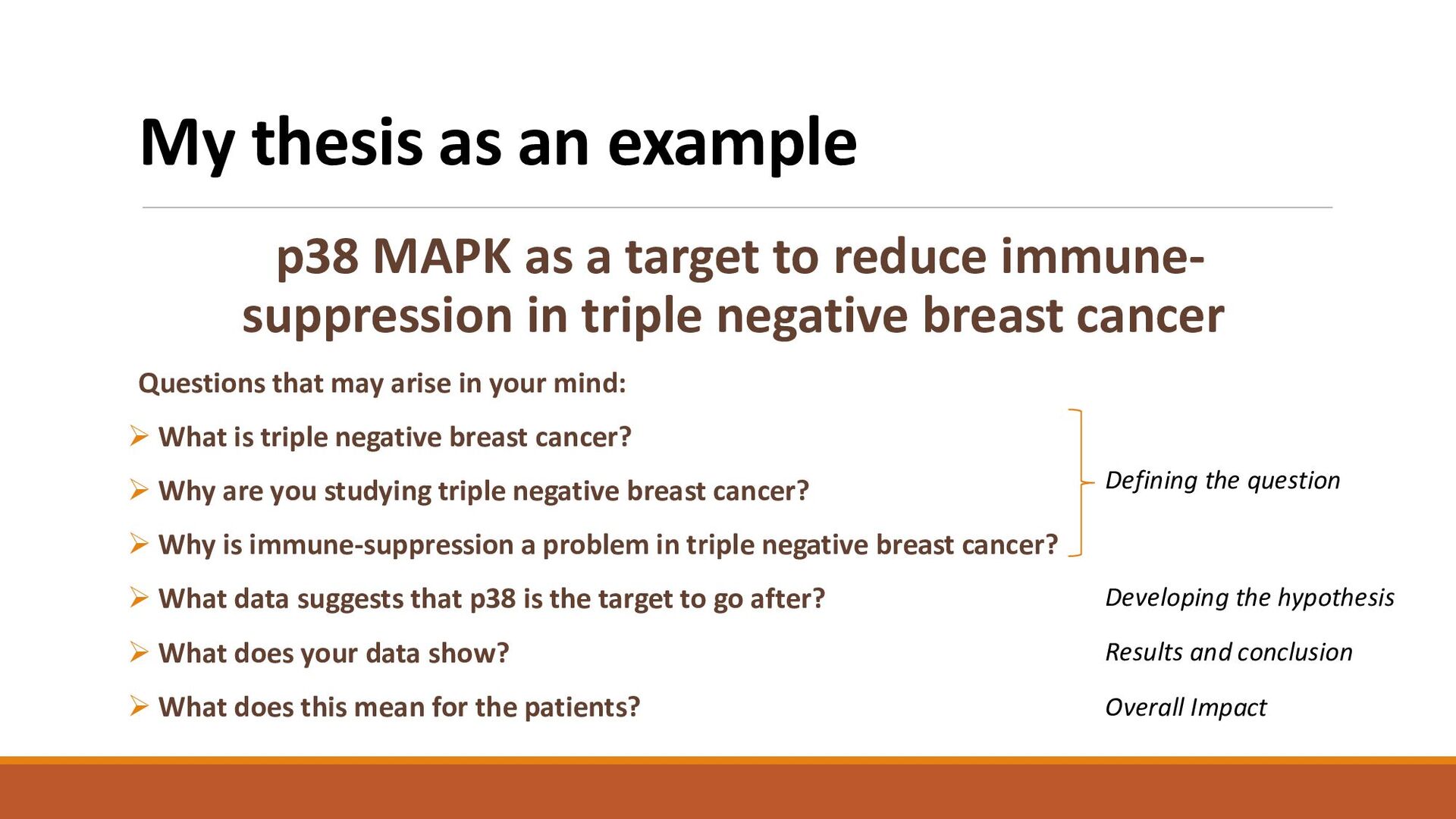
to reduce immune- suppression in triple negative breast cancer Questions that may arise in your mind: ➢ What is triple negative breast cancer? ➢ Why are you studying triple negative breast cancer? ➢ Why is immune-suppression a problem in triple negative breast cancer? ➢ What data suggests that p38 is the target to go after? ➢ What does your data show? ➢ What does this mean for the patients? Defining the question Developing the hypothesis Results and conclusion Overall Impact
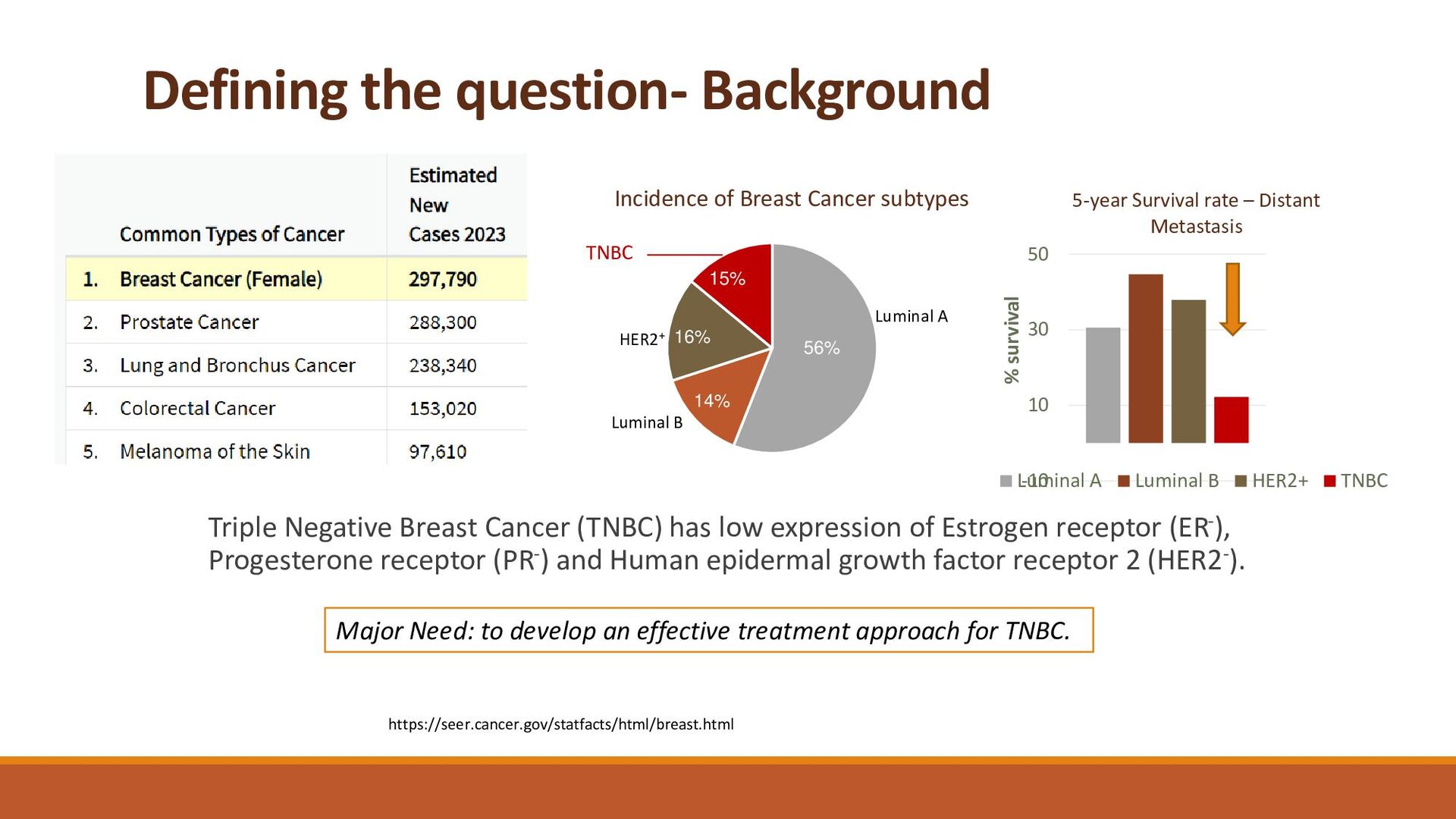
the question- Background Triple Negative Breast Cancer (TNBC) has low expression of Estrogen receptor (ER-), Progesterone receptor (PR-) and Human epidermal growth factor receptor 2 (HER2-). -10 10 30 50 % survival 5-year Survival rate – Distant Metastasis Luminal A Luminal B HER2+ TNBC TNBC Luminal A Luminal B HER2+ https://seer.cancer.gov/statfacts/html/breast.html Major Need: to develop an effective treatment approach for TNBC.
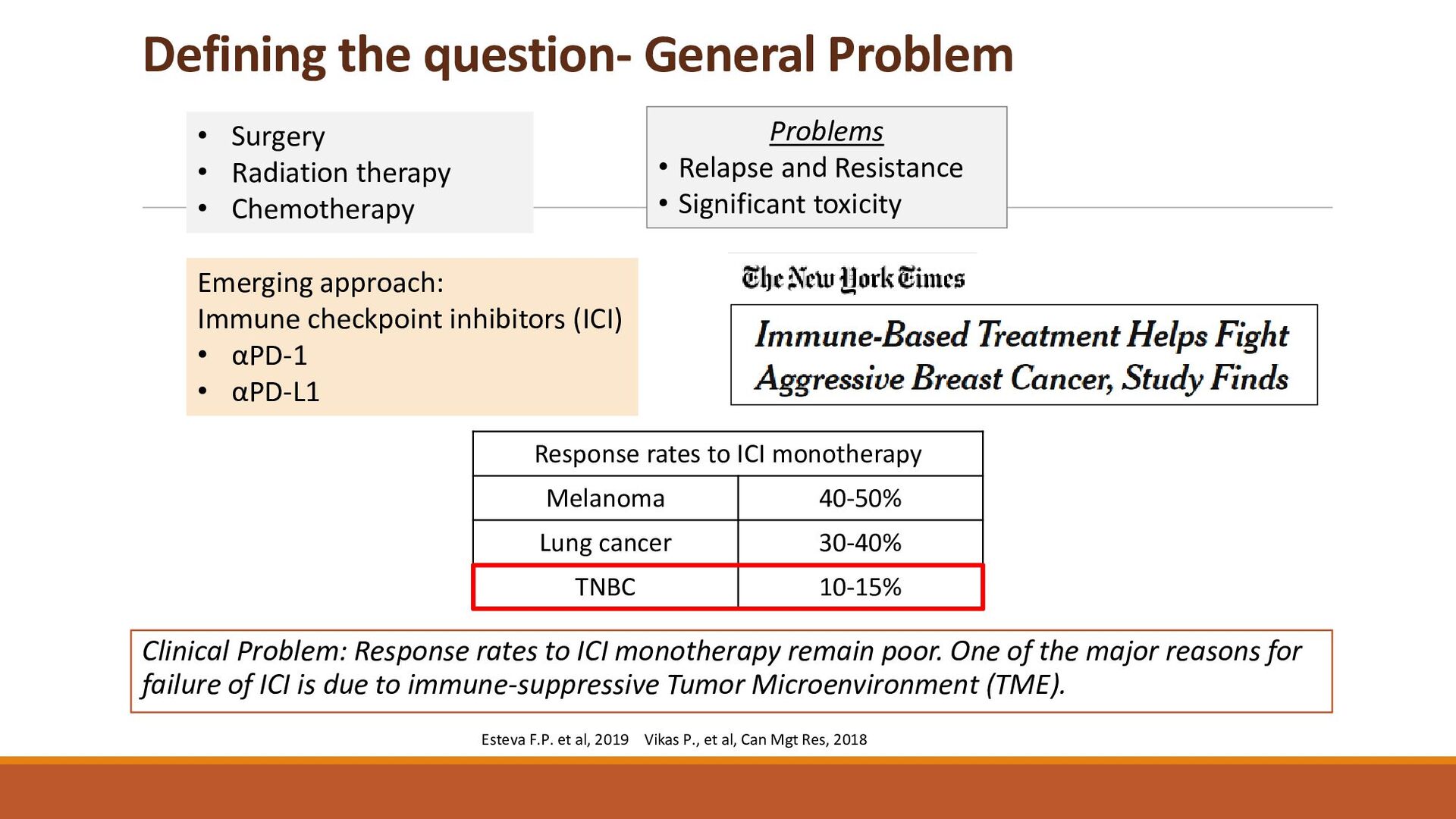
ICI monotherapy remain poor. One of the major reasons for failure of ICI is due to immune-suppressive Tumor Microenvironment (TME). • Surgery • Radiation therapy • Chemotherapy Problems • Relapse and Resistance • Significant toxicity Response rates to ICI monotherapy Melanoma 40-50% Lung cancer 30-40% TNBC 10-15% Esteva F.P. et al, 2019 Vikas P., et al, Can Mgt Res, 2018 Emerging approach: Immune checkpoint inhibitors (ICI) • αPD-1 • αPD-L1
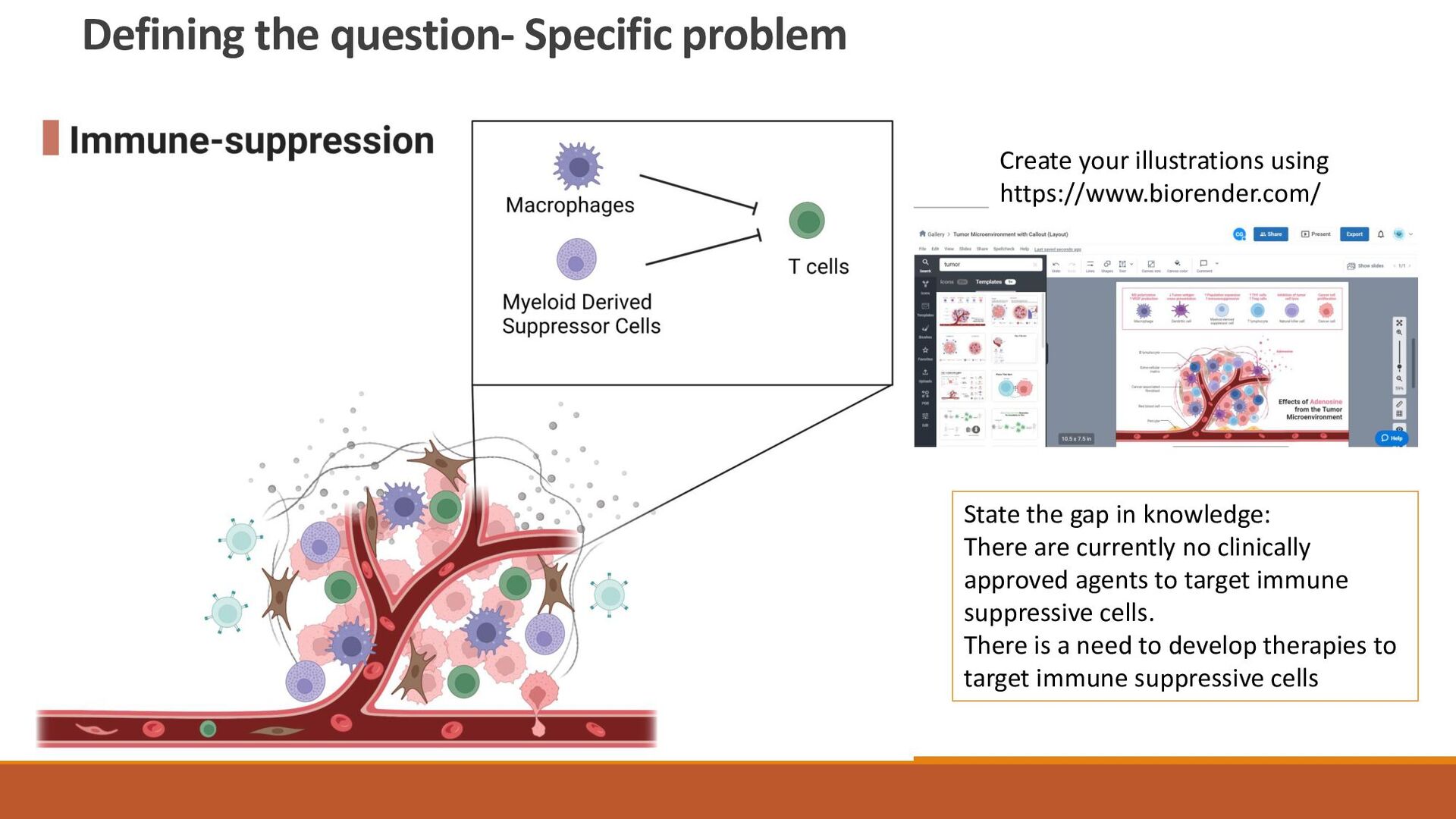
suppressive cells Create your illustrations using https://www.biorender.com/ State the gap in knowledge: There are currently no clinically approved agents to target immune suppressive cells. There is a need to develop therapies to target immune suppressive cells
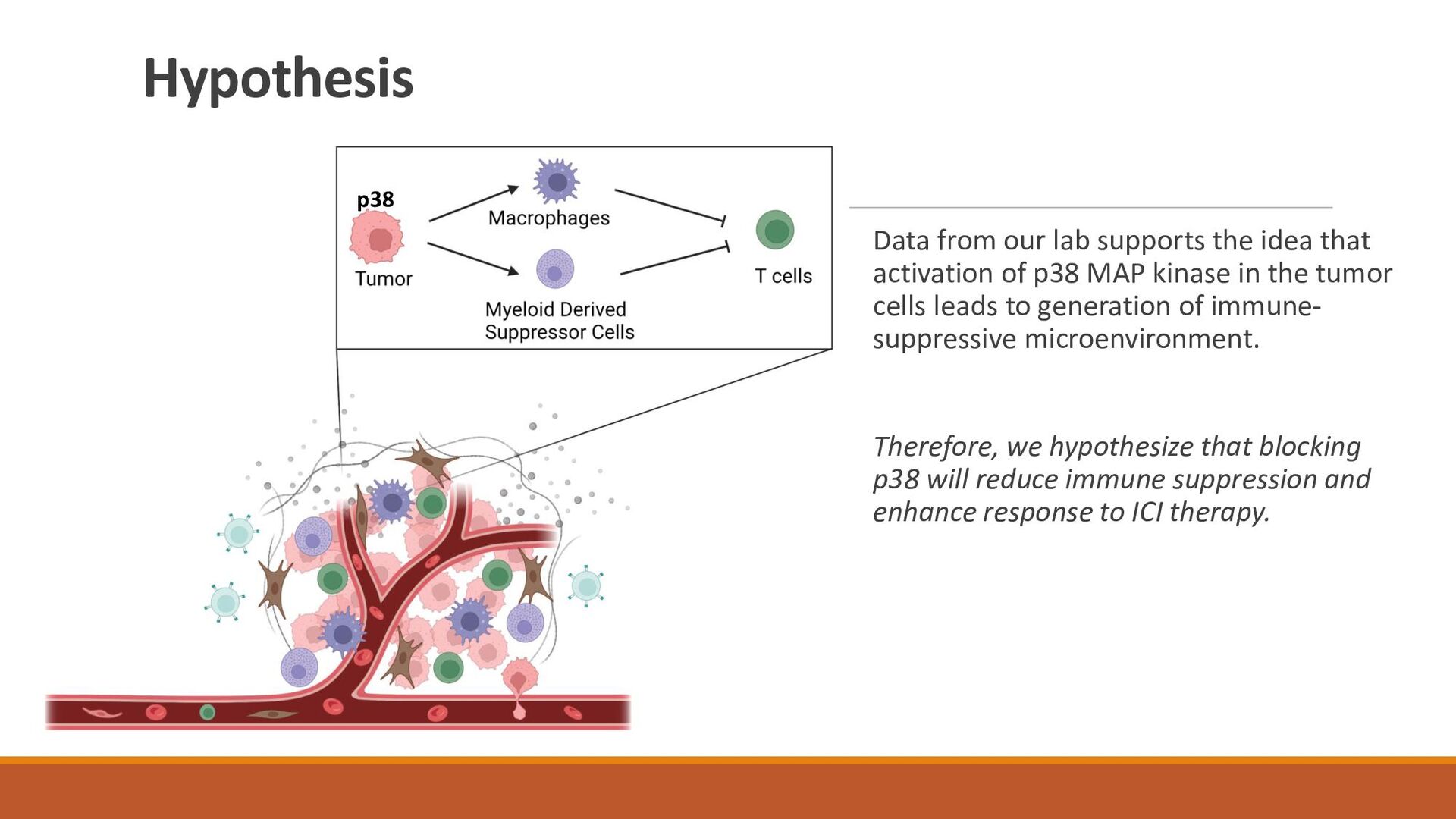
of p38 MAP kinase in the tumor cells leads to generation of immune- suppressive microenvironment. Therefore, we hypothesize that blocking p38 will reduce immune suppression and enhance response to ICI therapy. p38


 prajan
 palkan
 mkilby
 skipperchong
 tammyeverts
 garrettdimon
 mongodb
 raygrieselhuber
 techseoconnect
 destraynor
 akademiya2063
 axbom
axbom