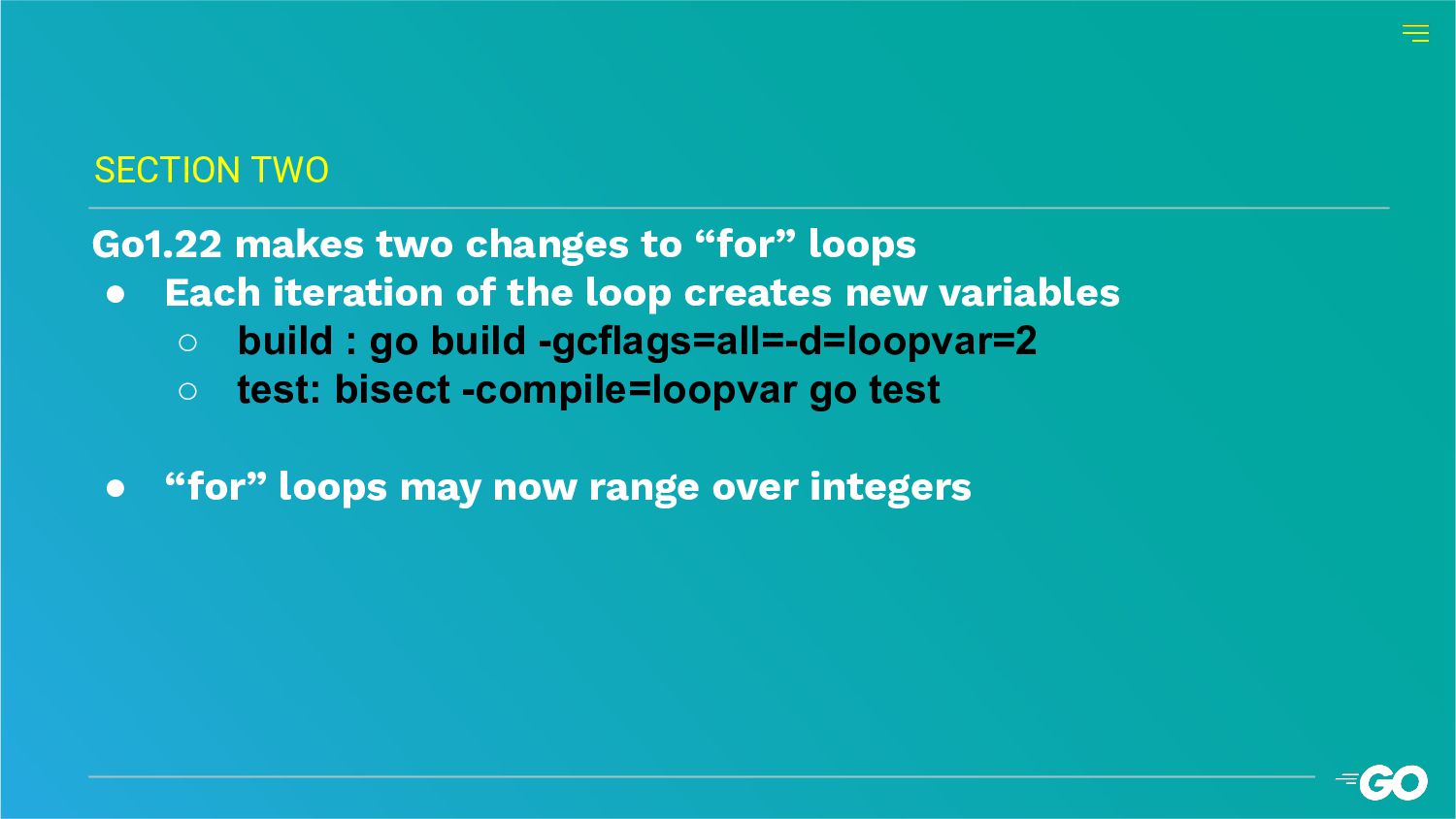
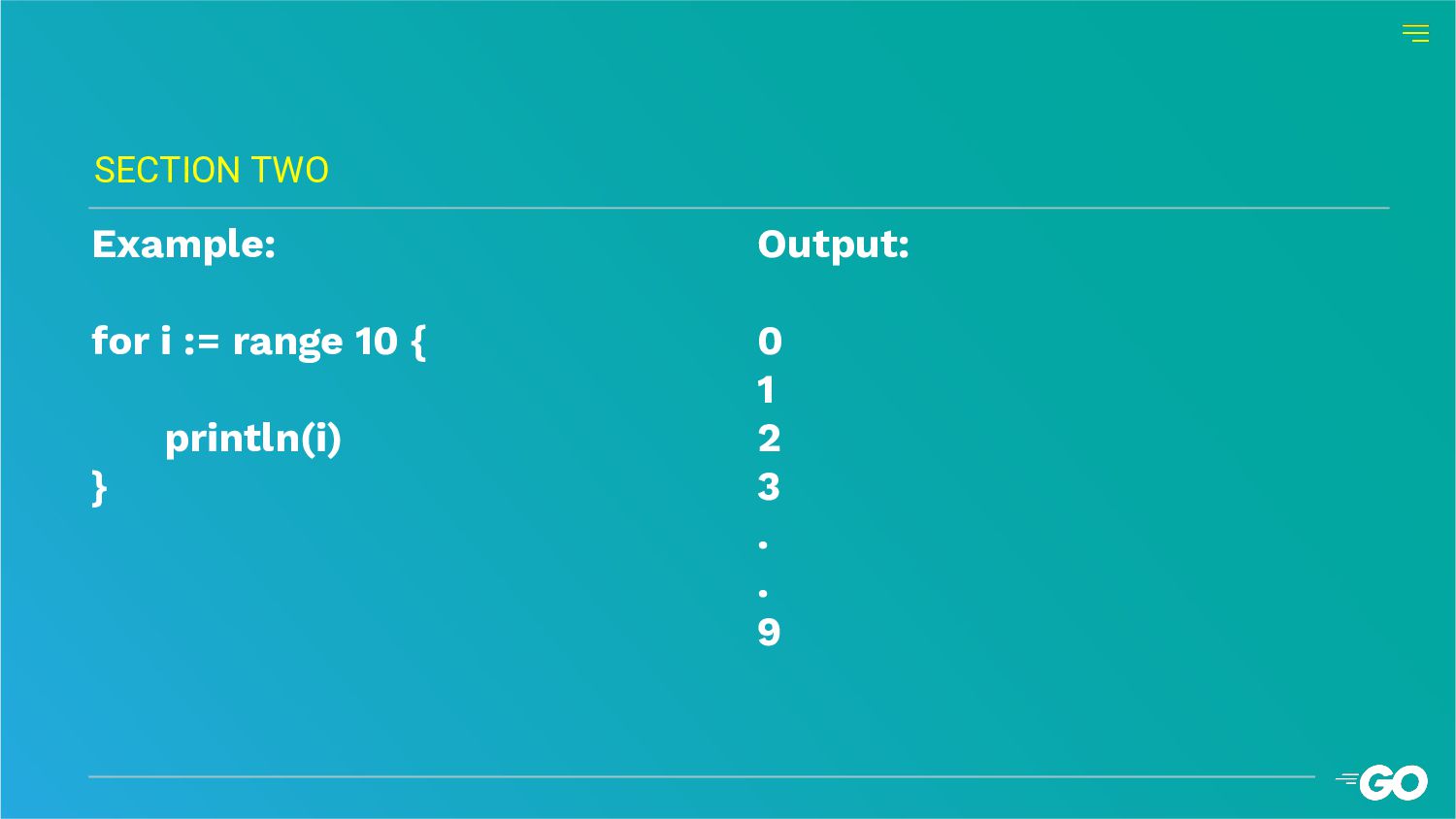
of the loop creates new variables ◦ build : go build -gcflags=all=-d=loopvar=2 ◦ test: bisect -compile=loopvar go test • “for” loops may now range over integers SECTION TWO
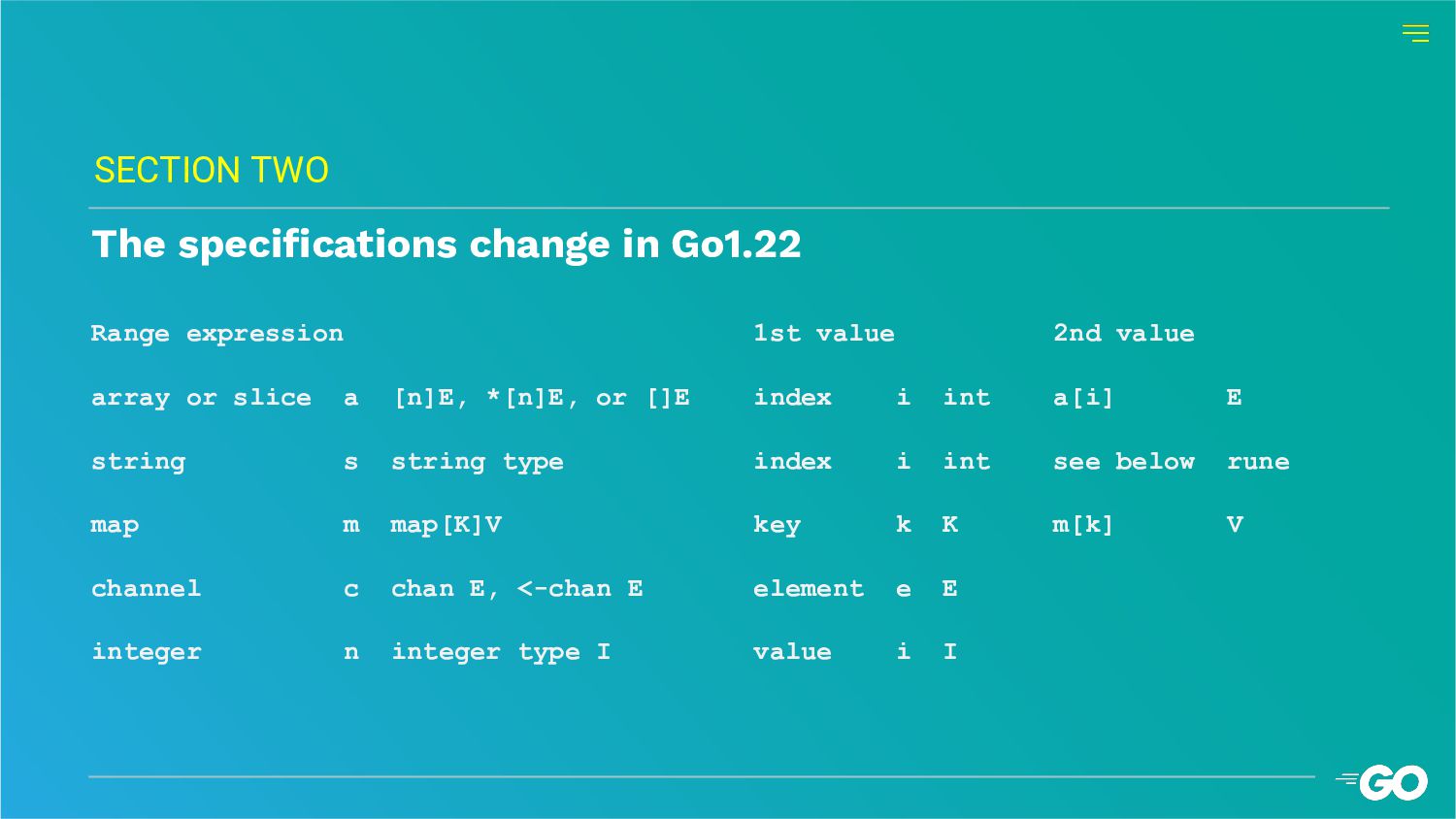
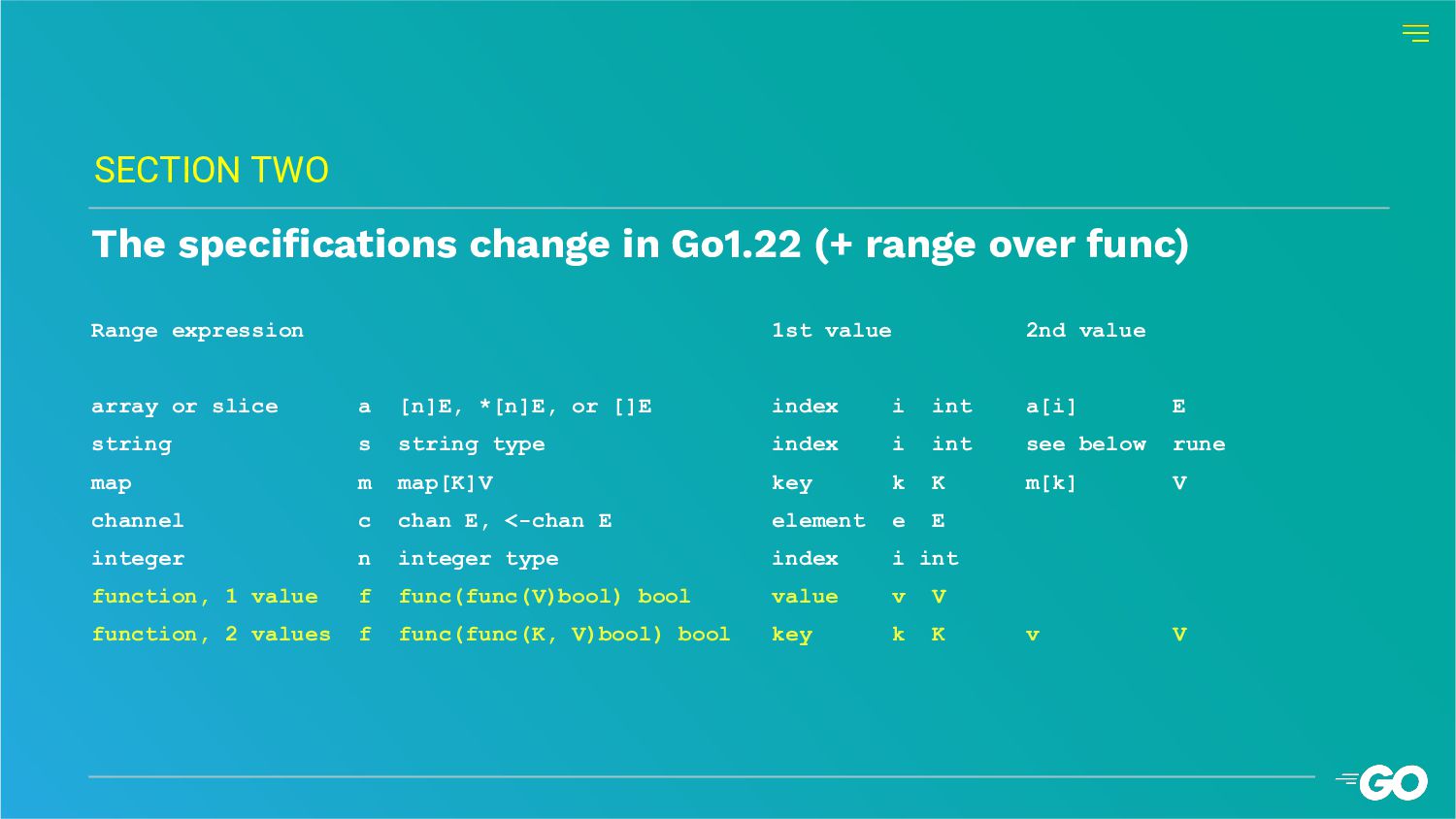
value array or slice a [n]E, *[n]E, or []E index i int a[i] E string s string type index i int see below rune map m map[K]V key k K m[k] V channel c chan E, <-chan E element e E integer n integer type I value i I SECTION TWO
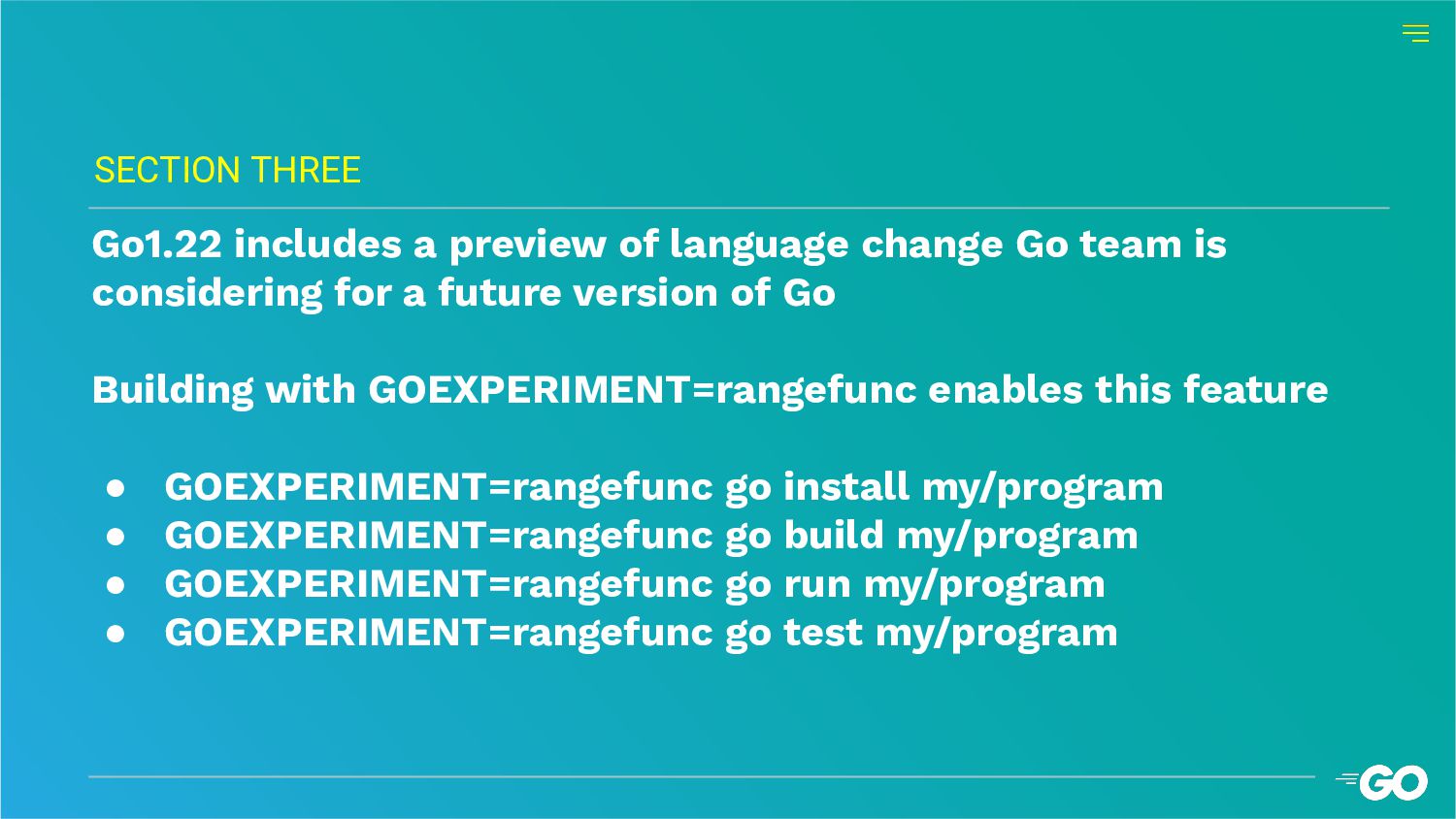
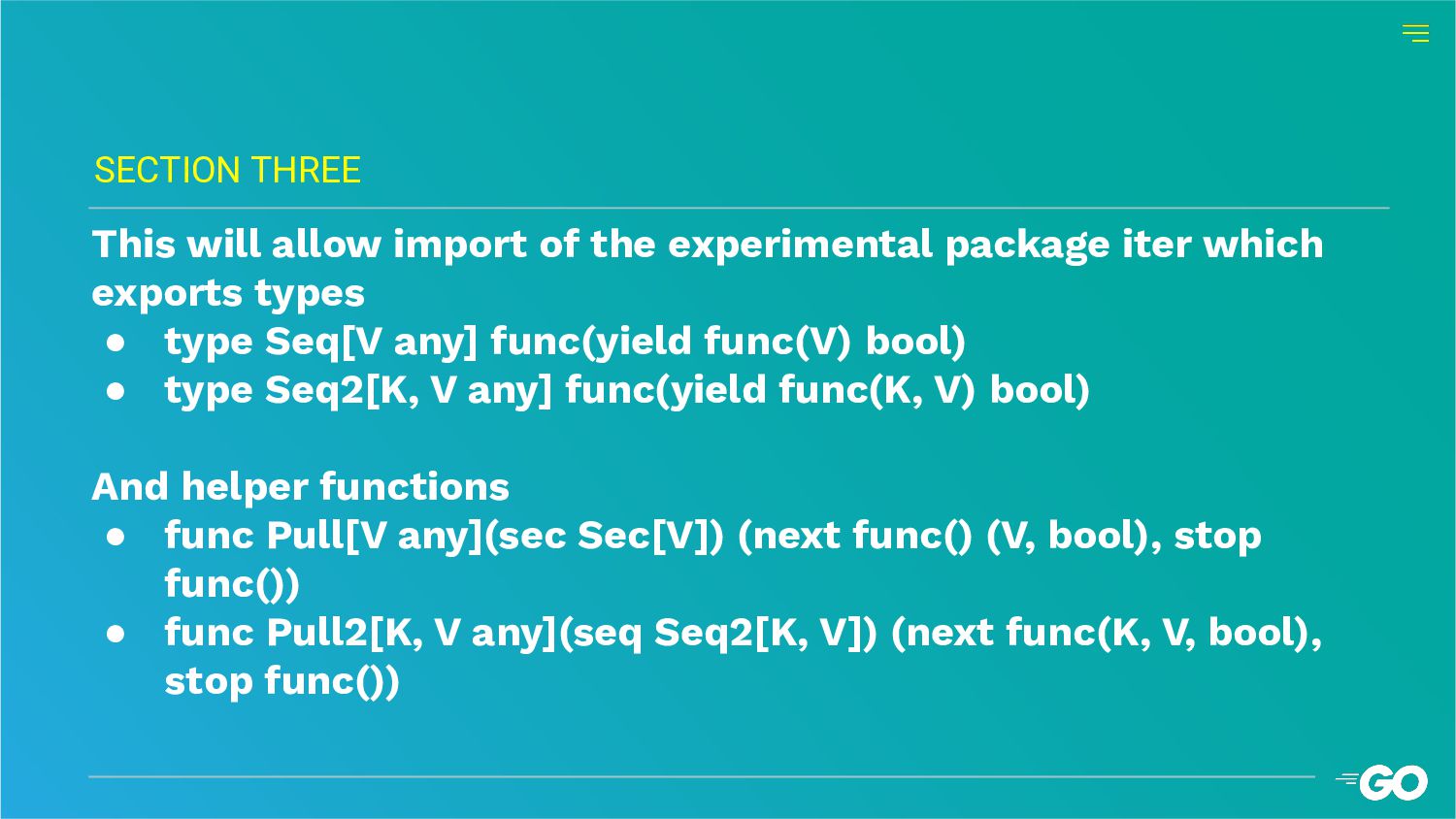
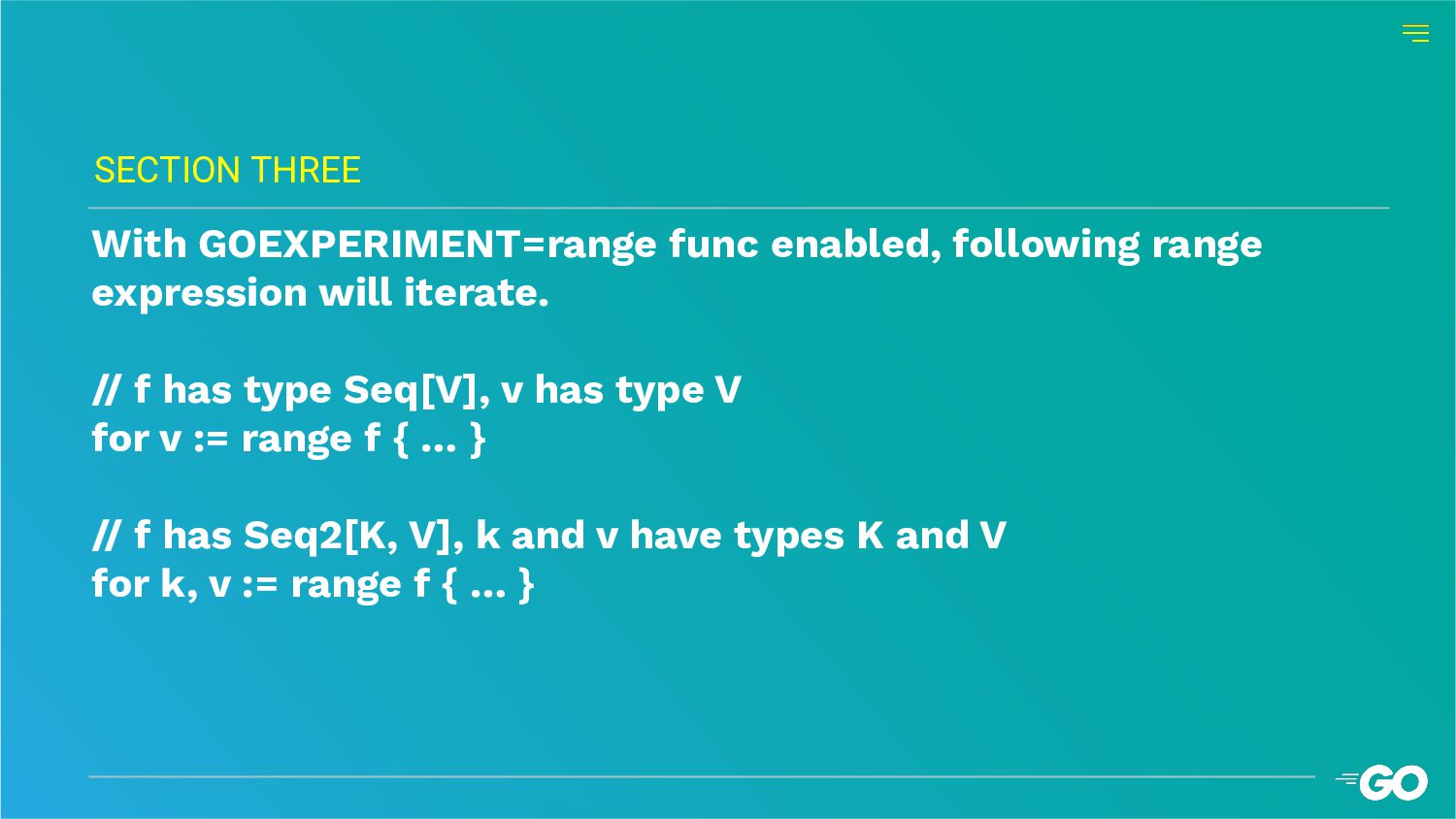
considering for a future version of Go Building with GOEXPERIMENT=rangefunc enables this feature • GOEXPERIMENT=rangefunc go install my/program • GOEXPERIMENT=rangefunc go build my/program • GOEXPERIMENT=rangefunc go run my/program • GOEXPERIMENT=rangefunc go test my/program SECTION THREE
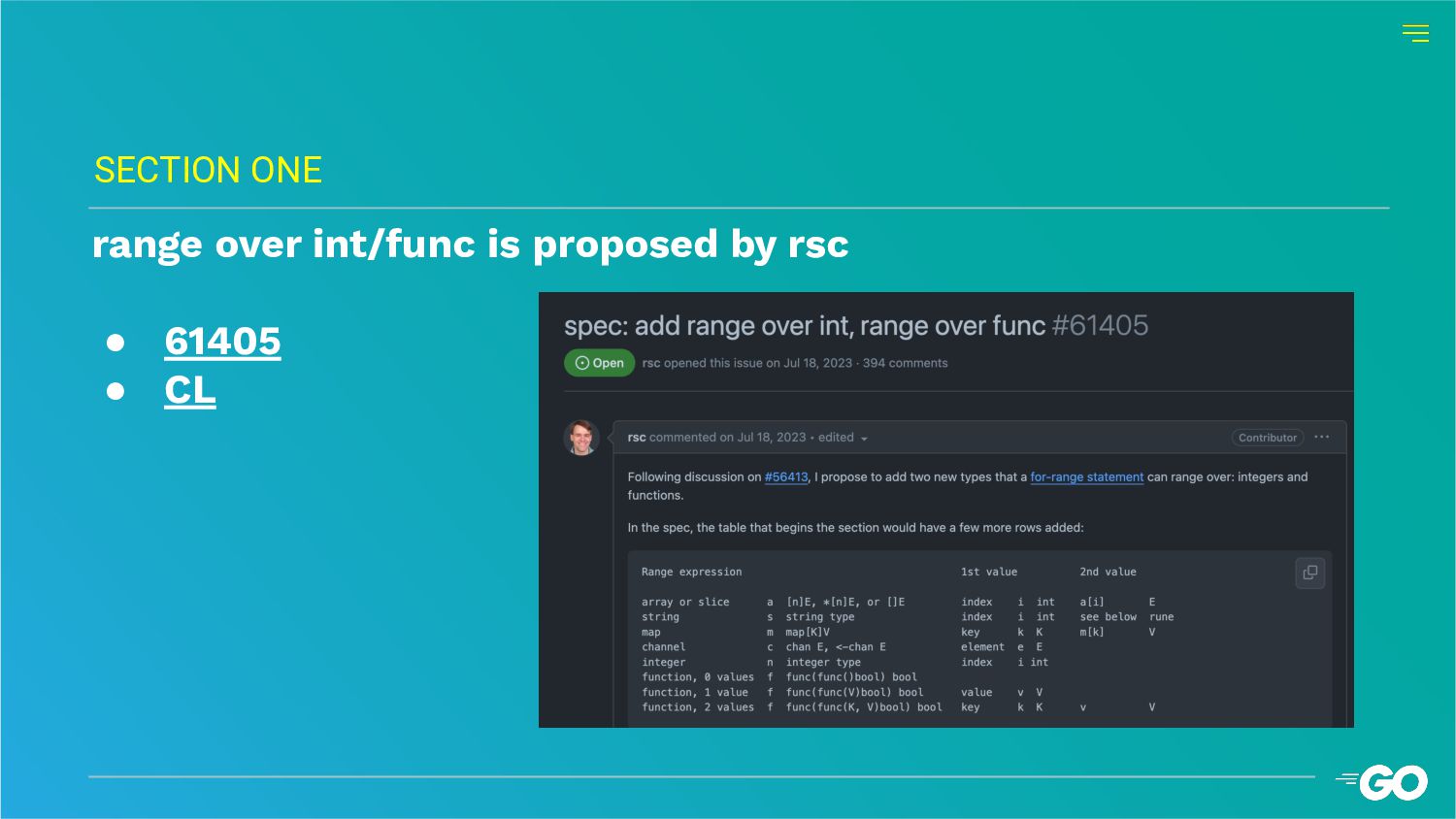
expression 1st value 2nd value array or slice a [n]E, *[n]E, or []E index i int a[i] E string s string type index i int see below rune map m map[K]V key k K m[k] V channel c chan E, <-chan E element e E integer n integer type index i int function, 1 value f func(func(V)bool) bool value v V function, 2 values f func(func(K, V)bool) bool key k K v V SECTION TWO
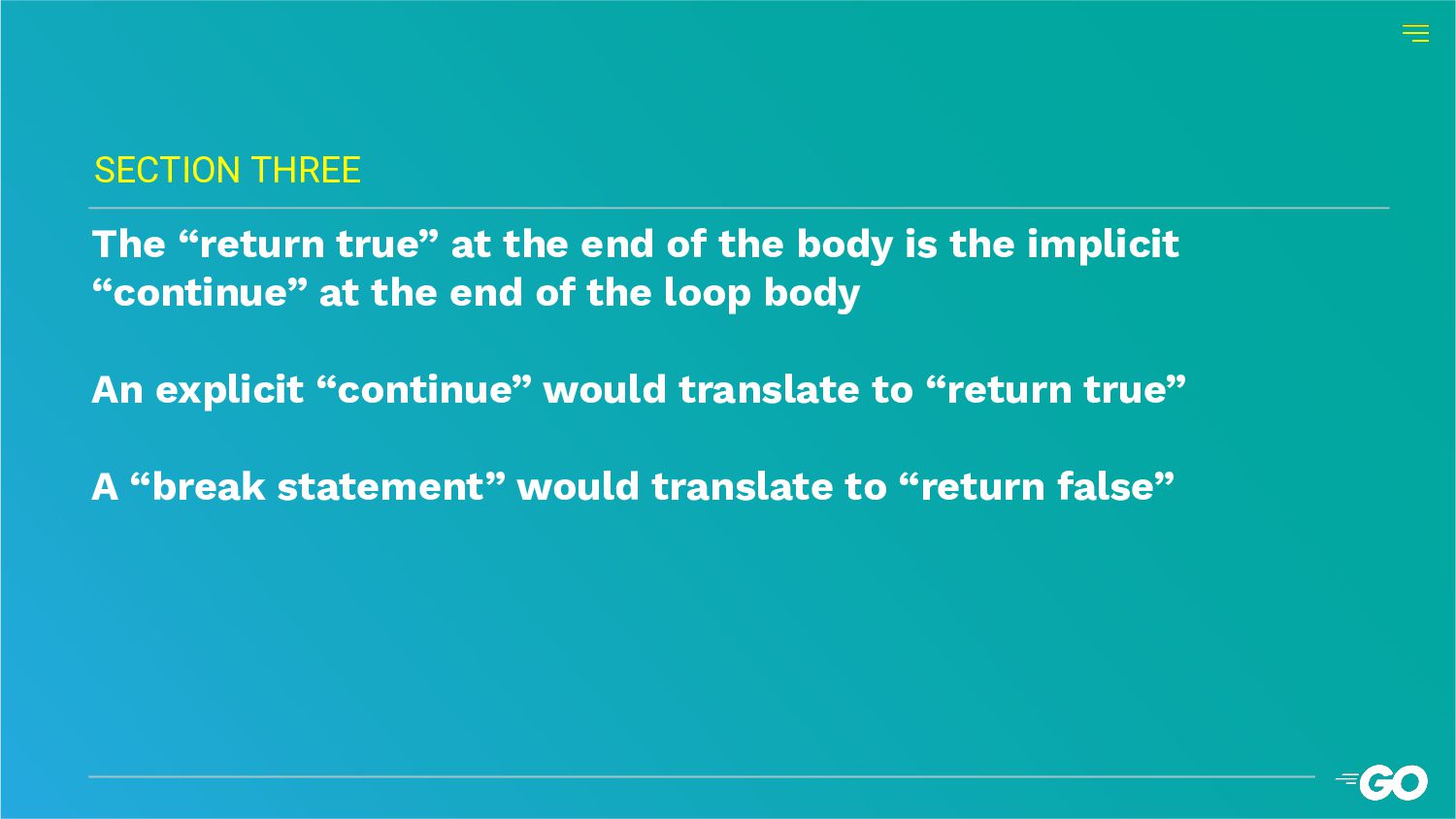
the implicit “continue” at the end of the loop body An explicit “continue” would translate to “return true” A “break statement” would translate to “return false” SECTION THREE
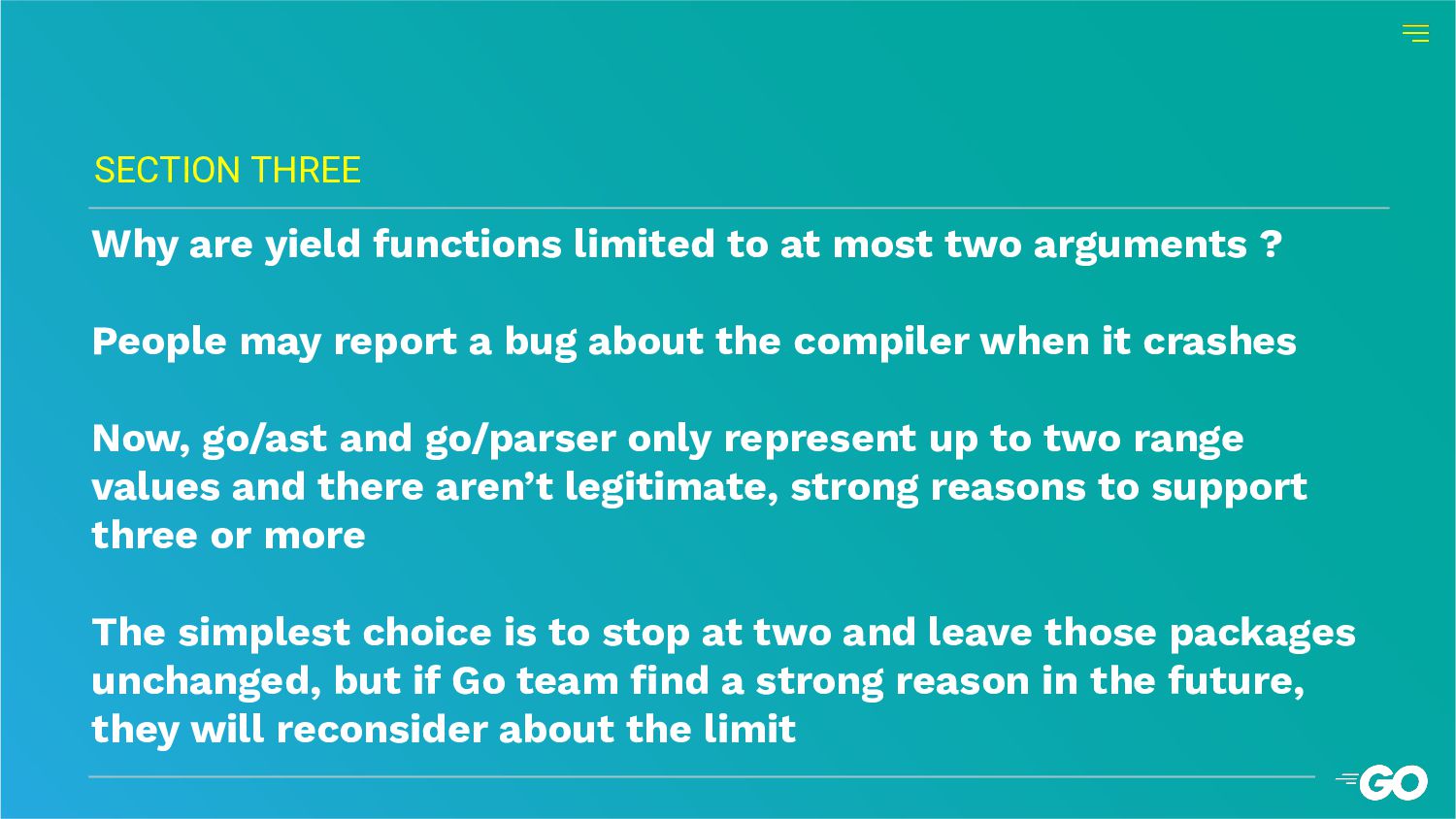
? People may report a bug about the compiler when it crashes Now, go/ast and go/parser only represent up to two range values and there aren’t legitimate, strong reasons to support three or more The simplest choice is to stop at two and leave those packages unchanged, but if Go team find a strong reason in the future, they will reconsider about the limit SECTION THREE
flags to migrate from Go1.21 to Go1.22 range over func is still in progress, but you can enable with GOEXPERIMENT=rangefunc For more detail, you can see here SUMMARY


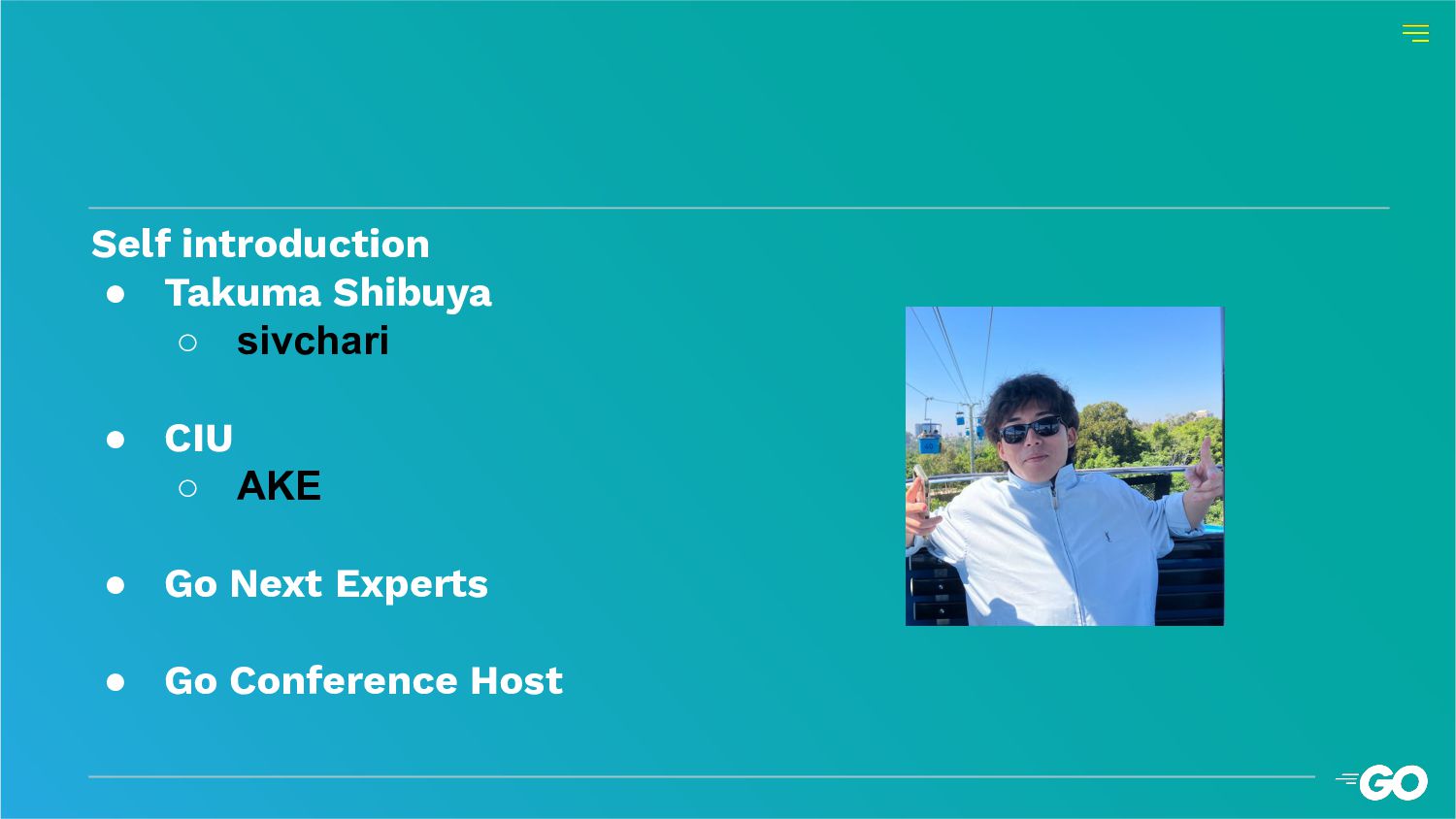
 sivchari
 baasie
 rkaga
 marktimemedia
 dougneiner
 leimatthew05
 ivargrimstad
 pwiseman
 cargoodrich
 marcelosomers
 mfonobong
 geshan
 lfama
 func(func(int, E)](https://files.speakerdeck.com/presentations/3fdf5eaaae3d4f9ca84157b090051f31/slide_13.jpg)