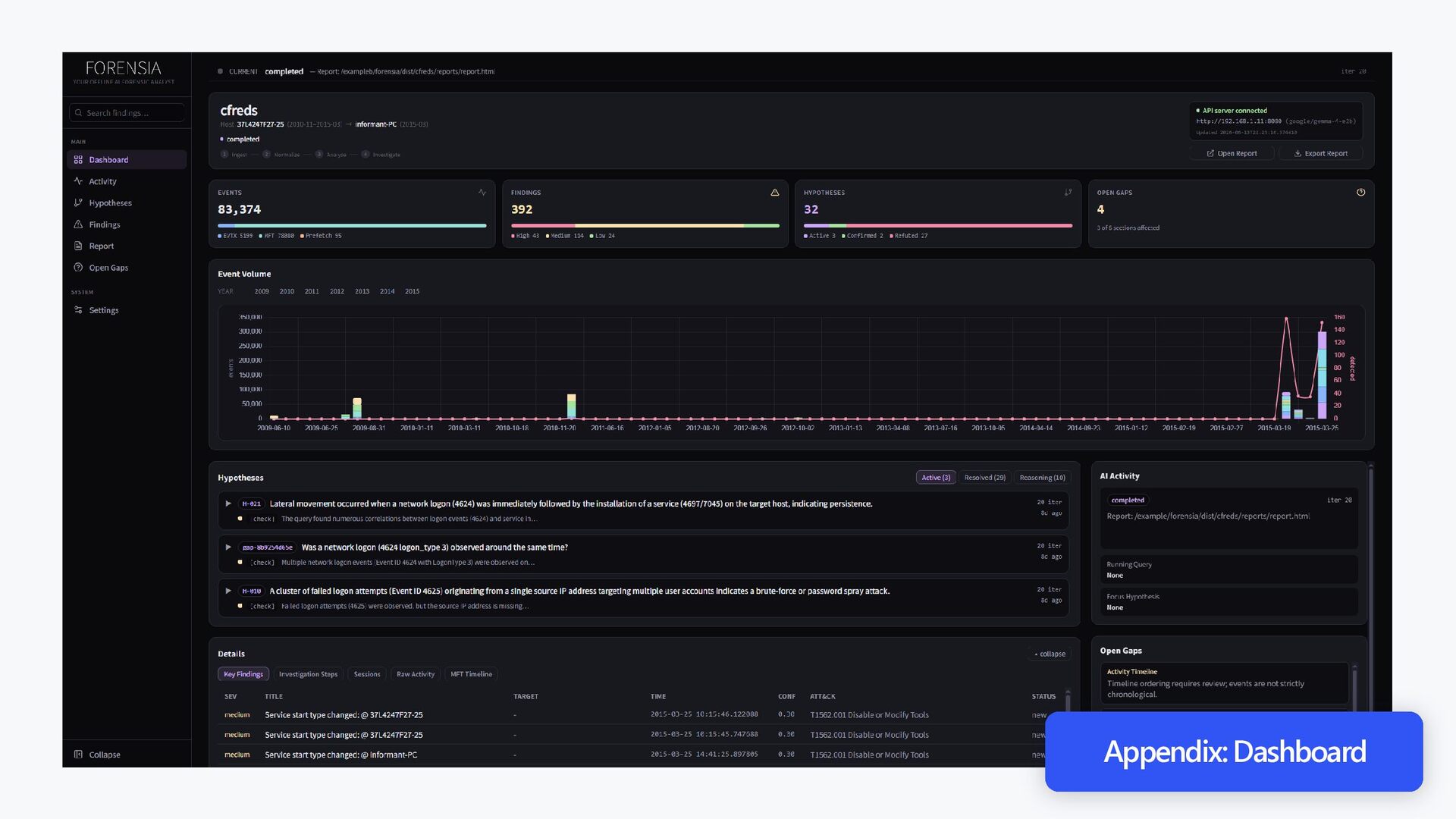
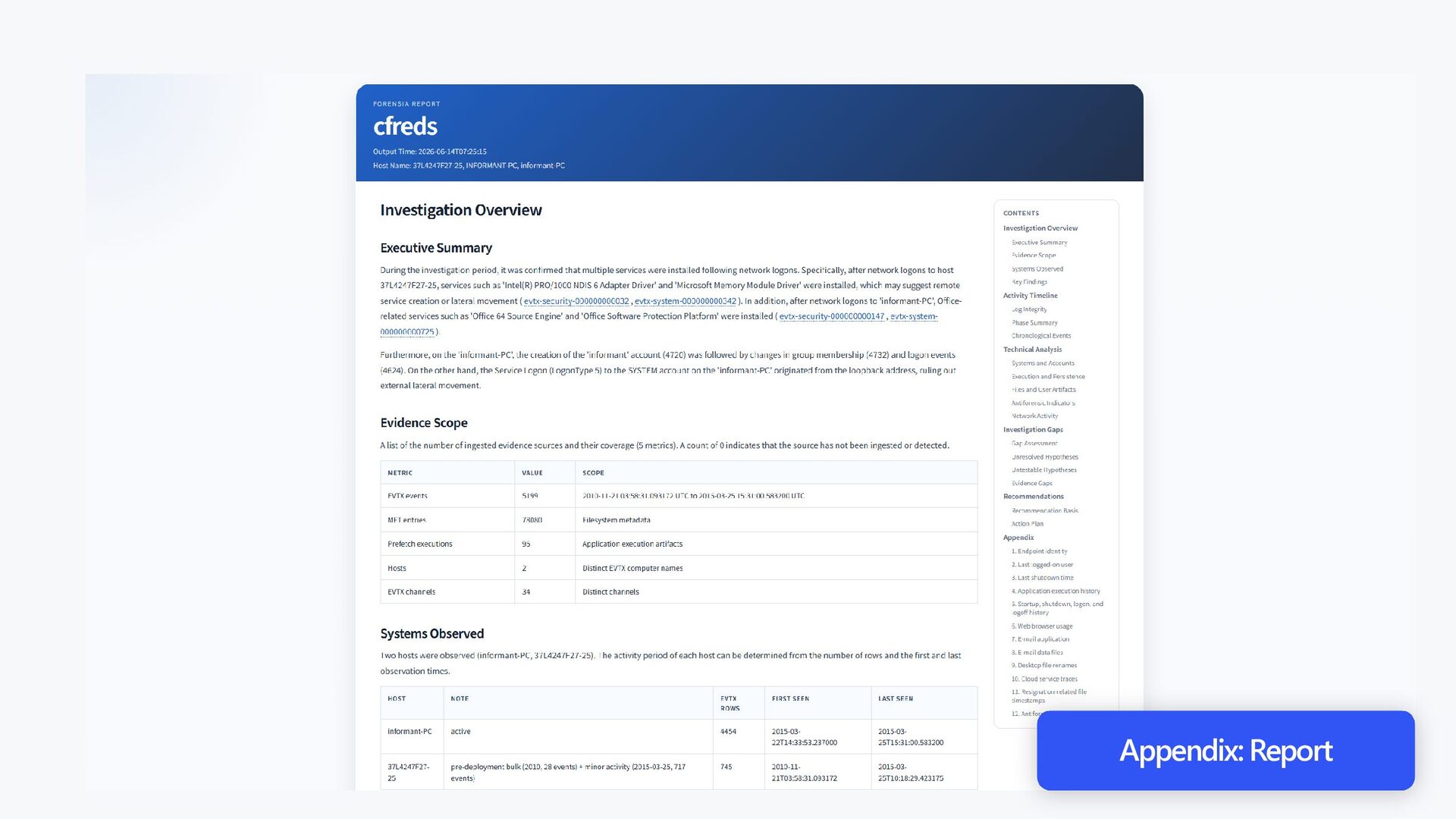
that assists forensic investigations. I'll share the design principles behind it and the lessons learned during development. github.com/sumeshi/forensia 02
evidence raises a basic question: how far can we allow the data to be replicated? Is opting out of training enough? Is Bedrock acceptable? What about rented GPUs? Can we still claim full control of the data? For now, local deployment is the clearest answer. 03
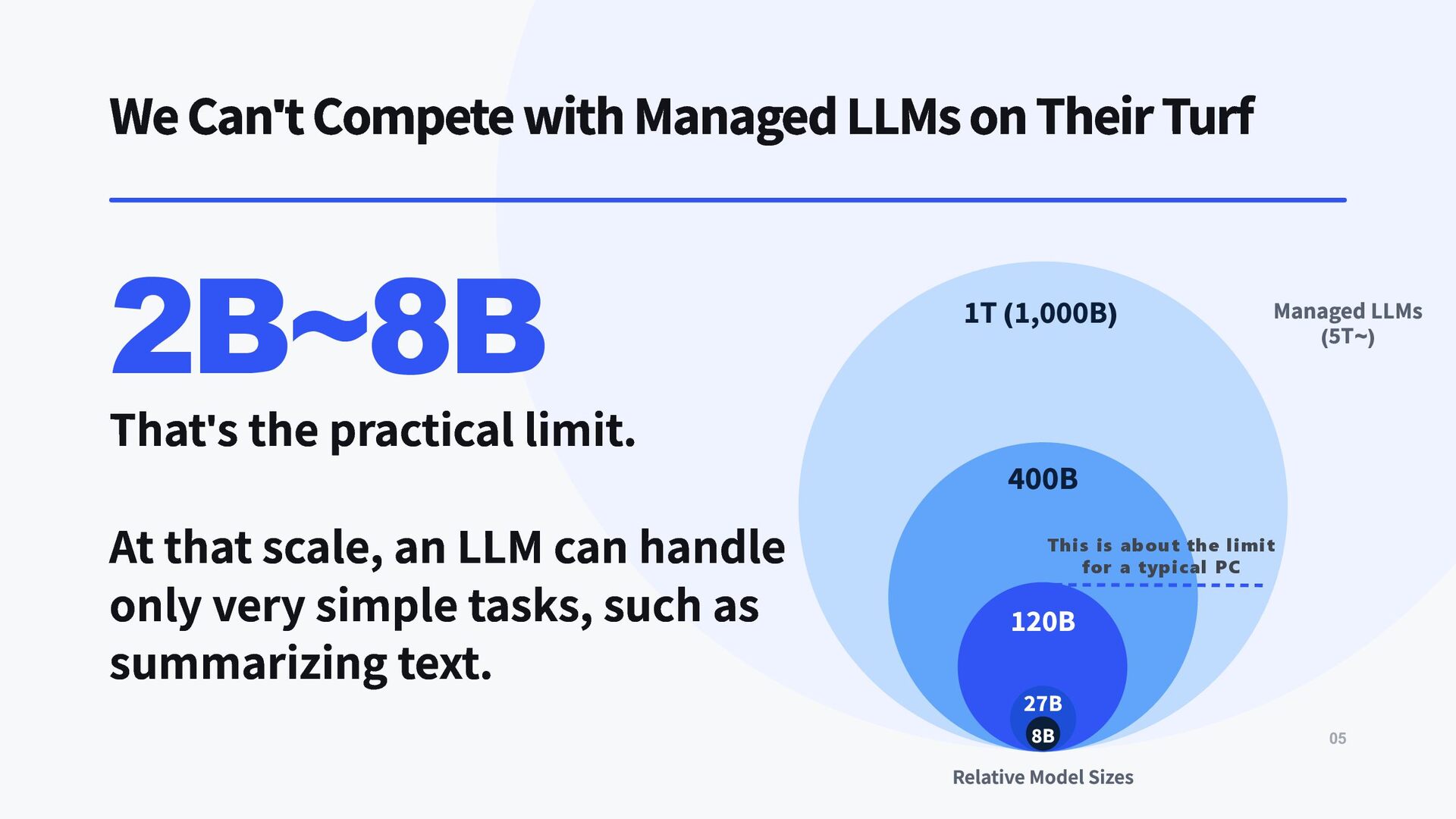
That's the practical limit. At that scale, an LLM can handle only very simple tasks, such as summarizing text. 1T (1,000B) Managed LLMs (5T~) 400B This is about the limit for a typical PC 120B 27B 8B Relative Model Sizes 05
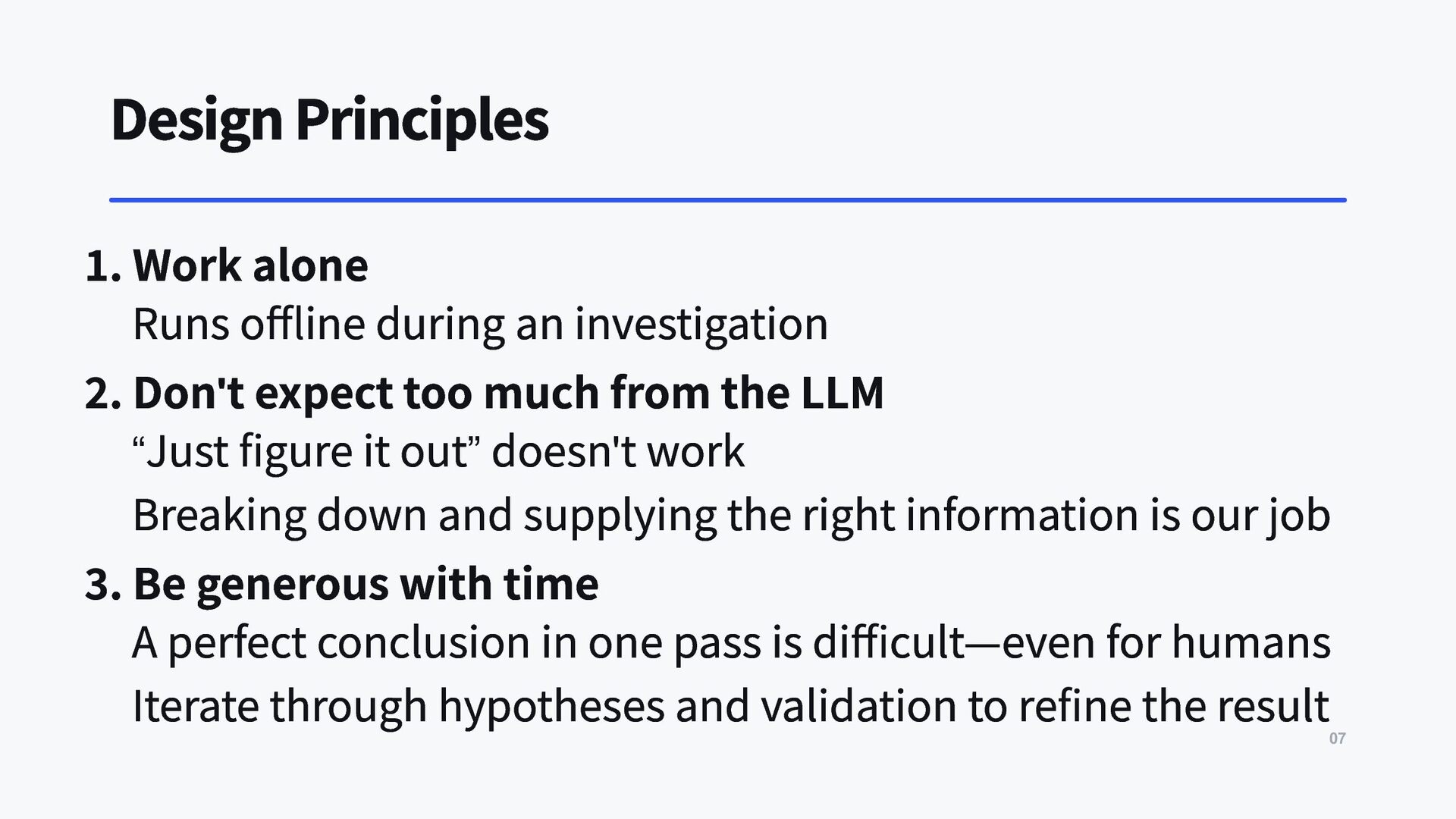
2. Don't expect too much from the LLM “Just figure it out” doesn't work Breaking down and supplying the right information is our job 3. Be generous with time A perfect conclusion in one pass is difficult—even for humans Iterate through hypotheses and validation to refine the result 07
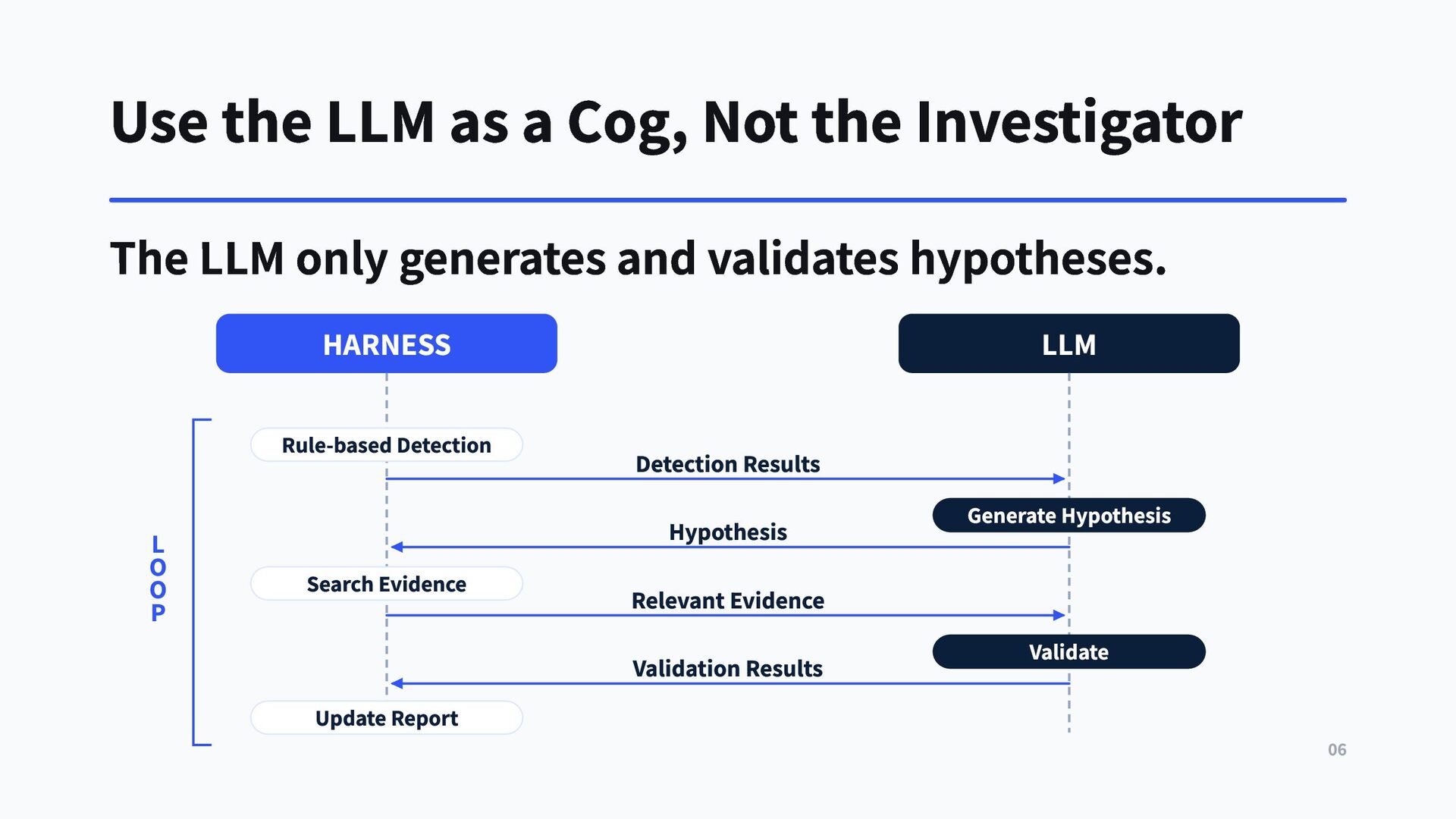
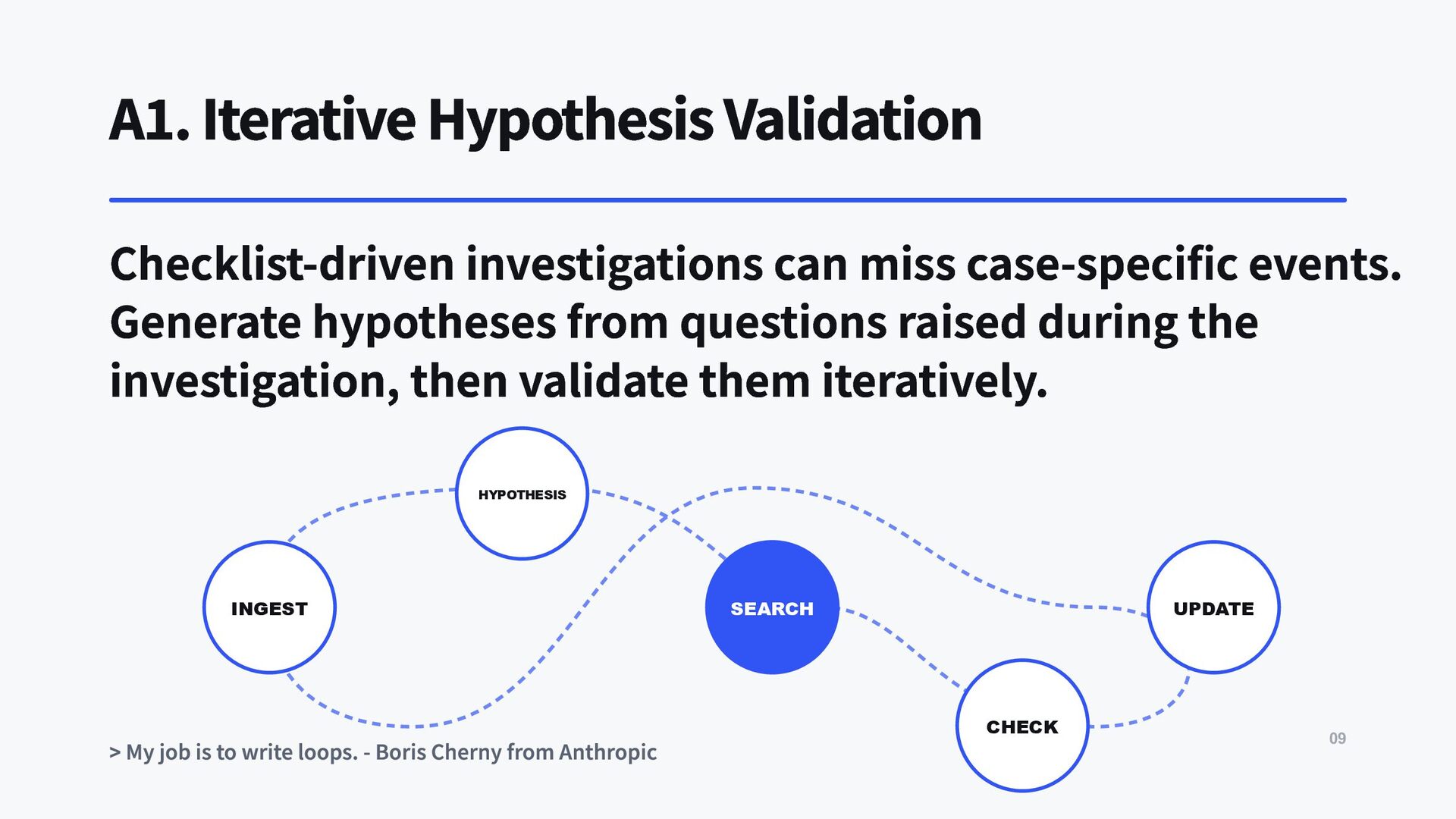
Generate hypotheses from questions raised during the investigation, then validate them iteratively. HYPOTHESIS INGEST > My job is to write loops. - Boris Cherny from Anthropic SEARCH UPDATE CHECK 09
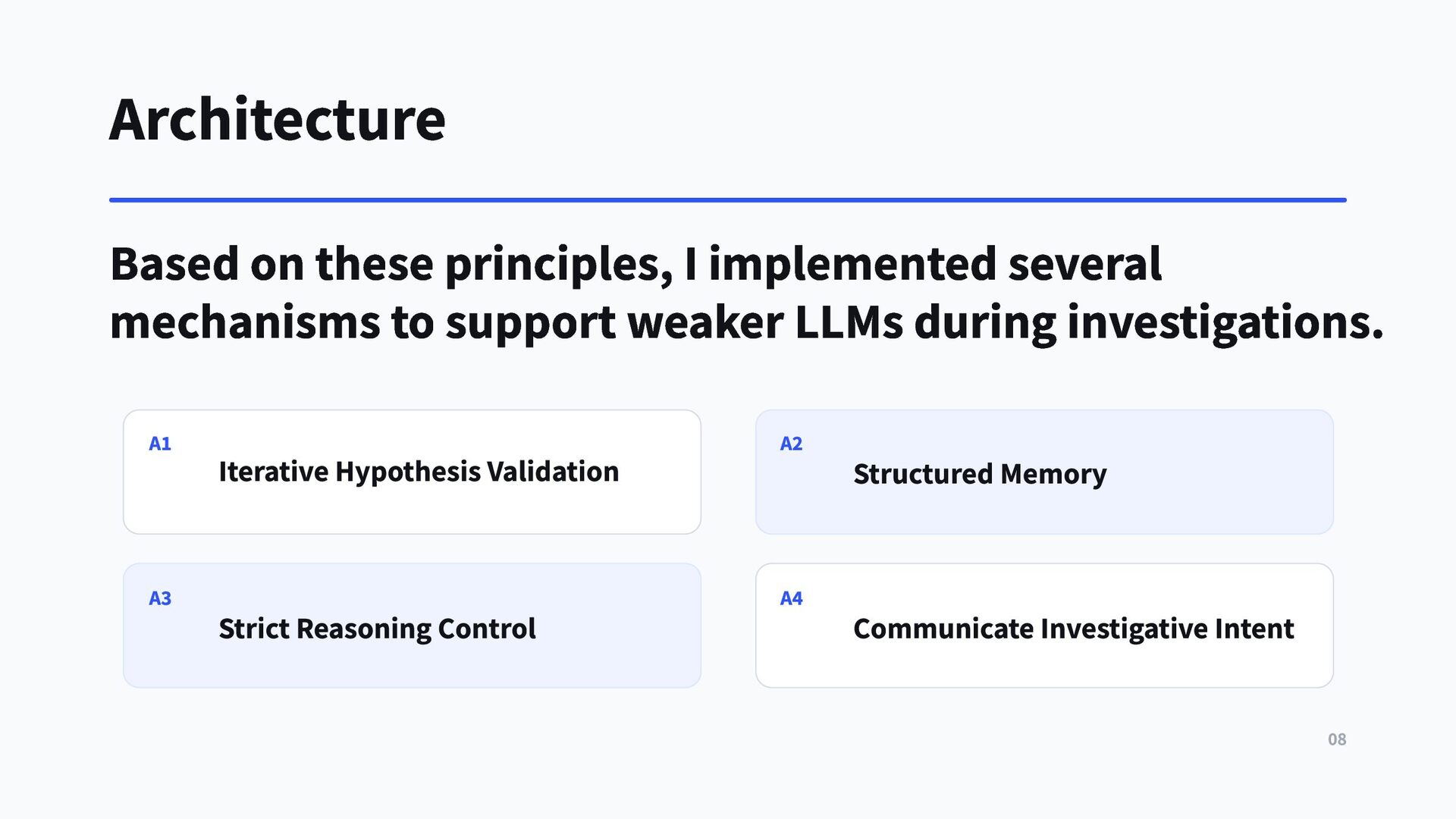
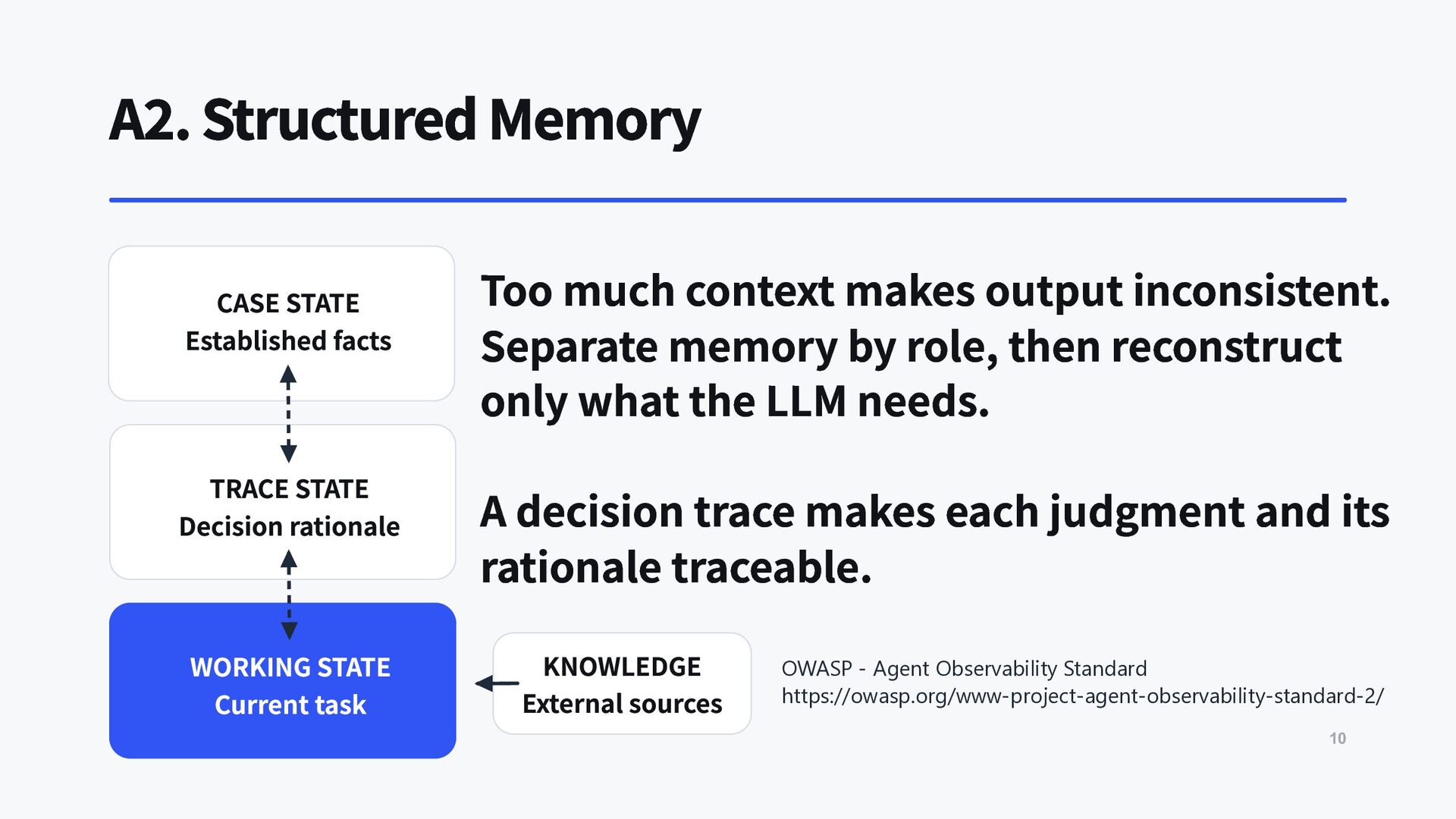
rationale WORKING STATE Current task Too much context makes output inconsistent. Separate memory by role, then reconstruct only what the LLM needs. A decision trace makes each judgment and its rationale traceable. KNOWLEDGE External sources OWASP - Agent Observability Standard https://owasp.org/www-project-agent-observability-standard-2/ 10
stable and accurate: use strict prompts, constrain output content and format, and provide only enough context to prevent mix-ups and reasoning drift. This classic approach still works for weaker models. 11
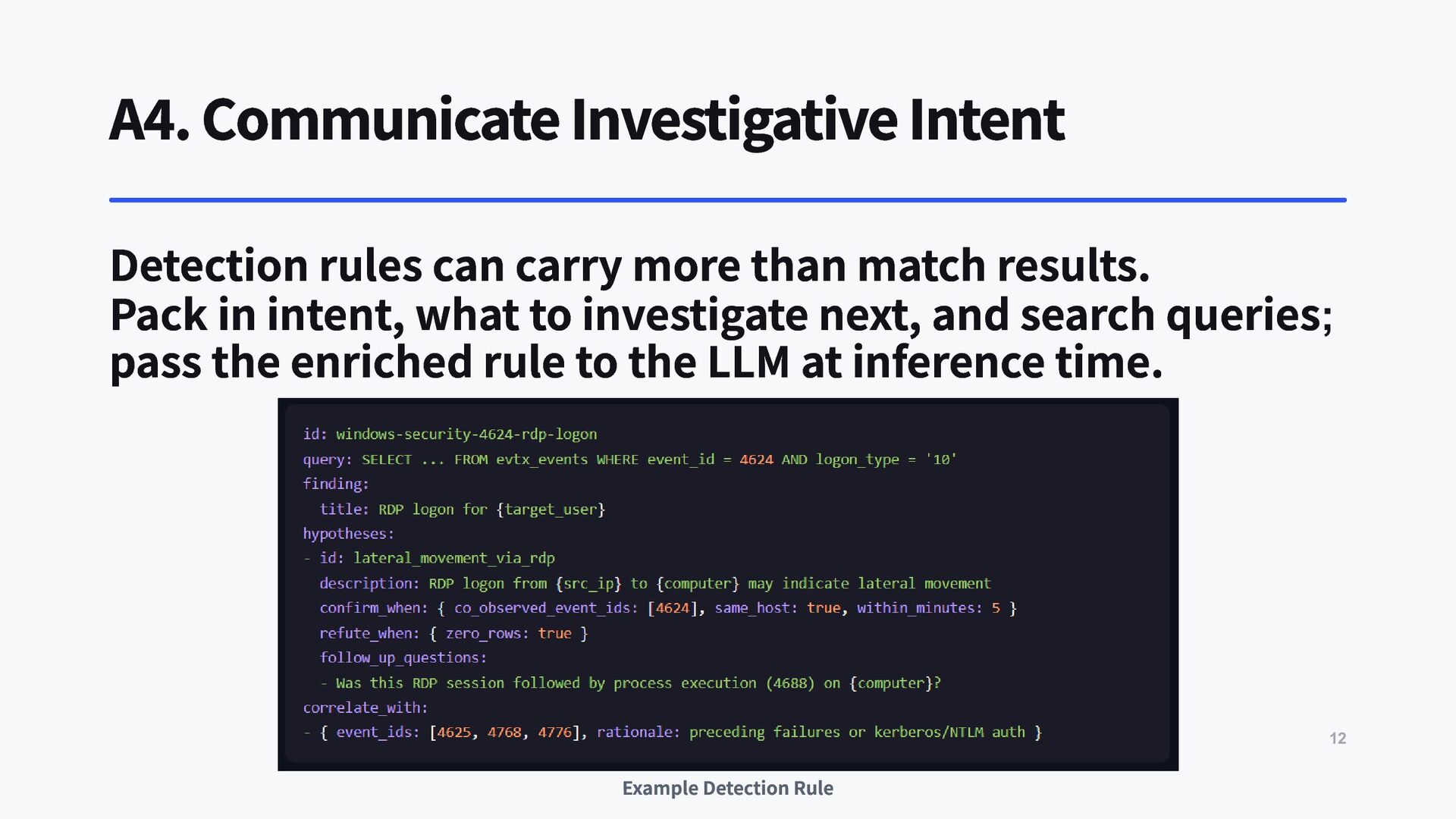
match results. Pack in intent, what to investigate next, and search queries; pass the enriched rule to the LLM at inference time. 12 Example Detection Rule
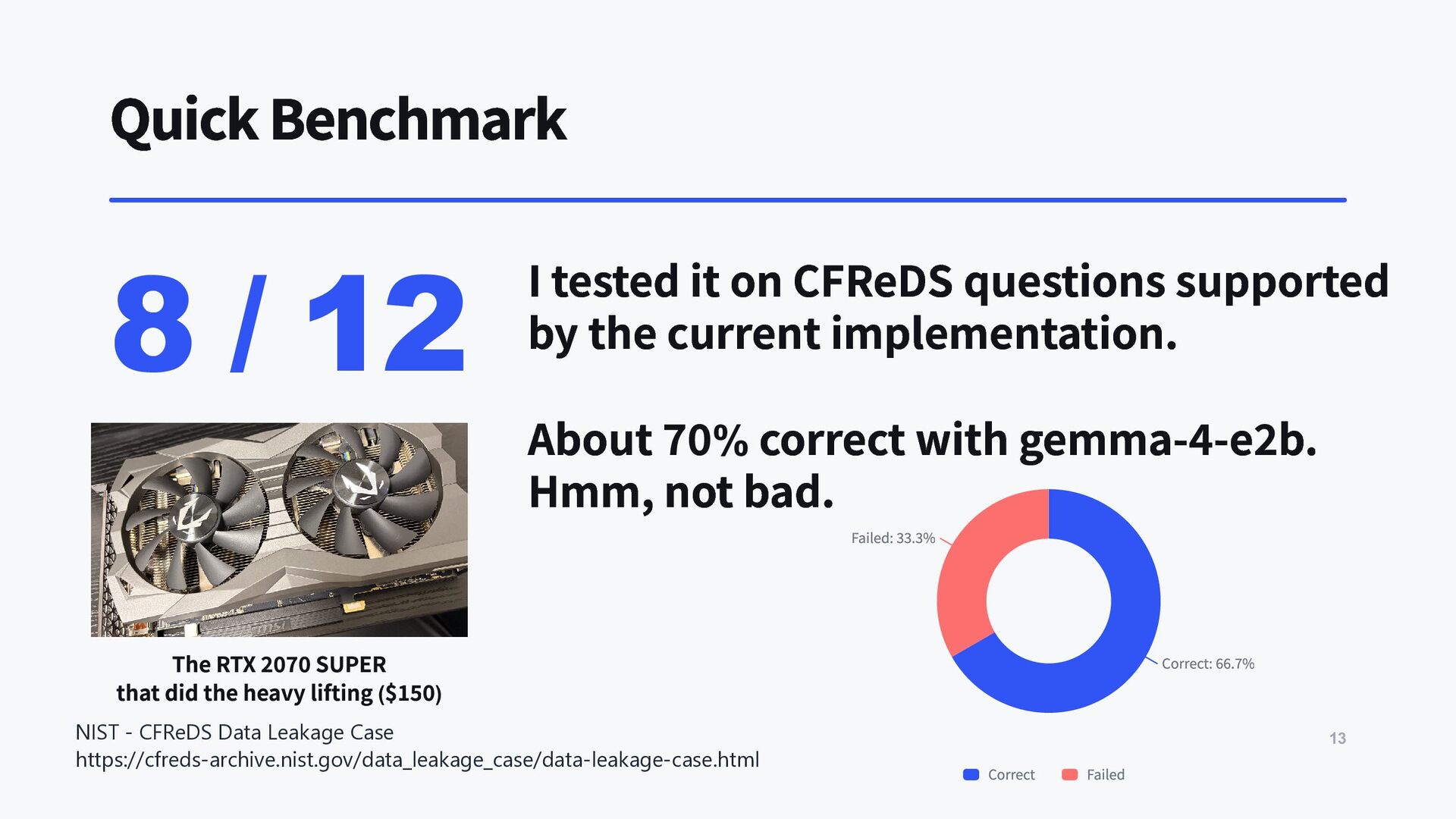
the current implementation. 8 / 12 About 70% correct with gemma-4-e2b. Hmm, not bad. Failed: 33.3% The RTX 2070 SUPER that did the heavy lifting ($150) NIST - CFReDS Data Leakage Case https://cfreds-archive.nist.gov/data_leakage_case/data-leakage-case.html Correct: 66.7% 13 Correct Failed
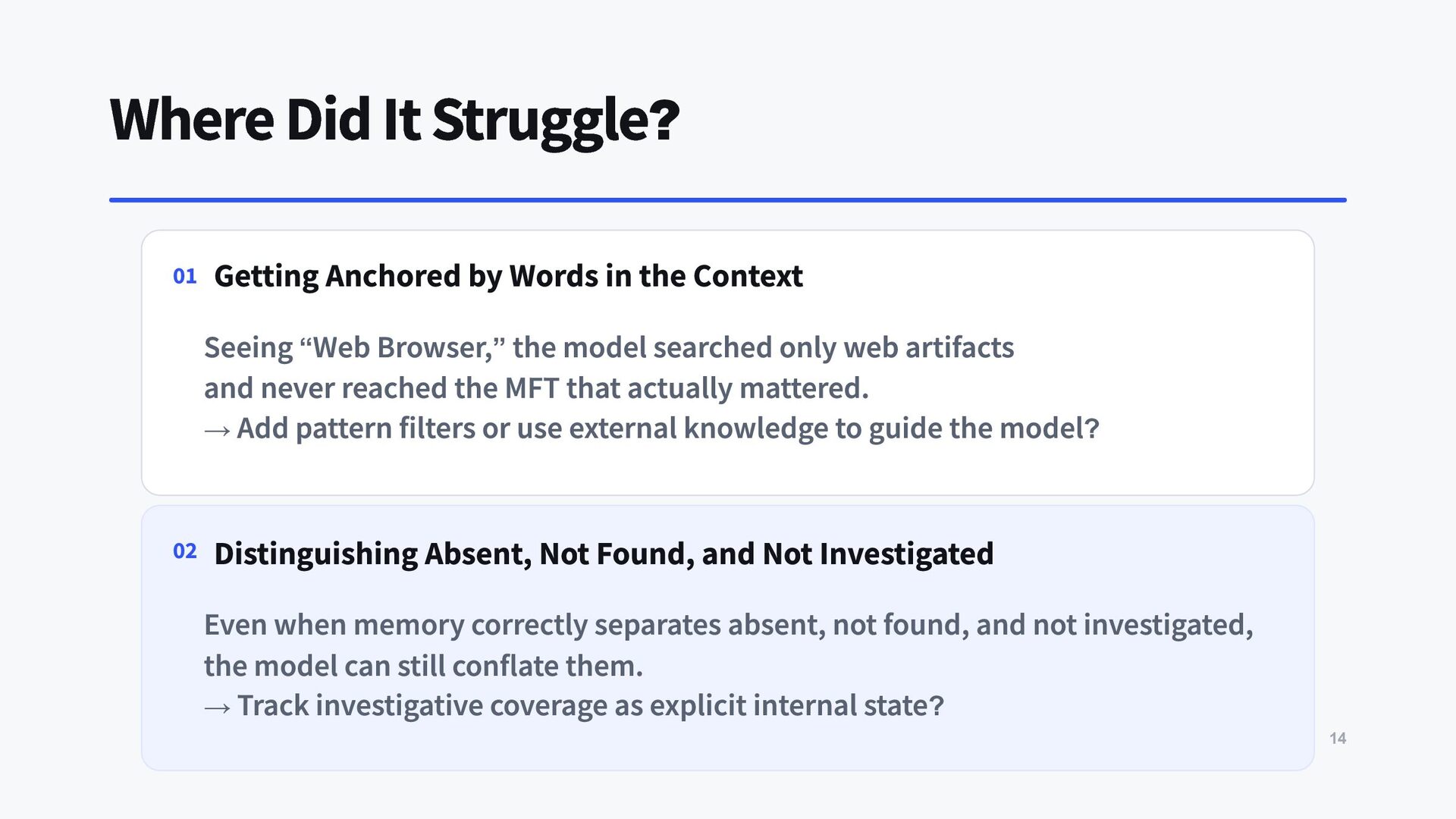
the Context Seeing “Web Browser,” the model searched only web artifacts and never reached the MFT that actually mattered. → Add pattern filters or use external knowledge to guide the model? 02 Distinguishing Absent, Not Found, and Not Investigated Even when memory correctly separates absent, not found, and not investigated, the model can still conflate them. → Track investigative coverage as explicit internal state? 14
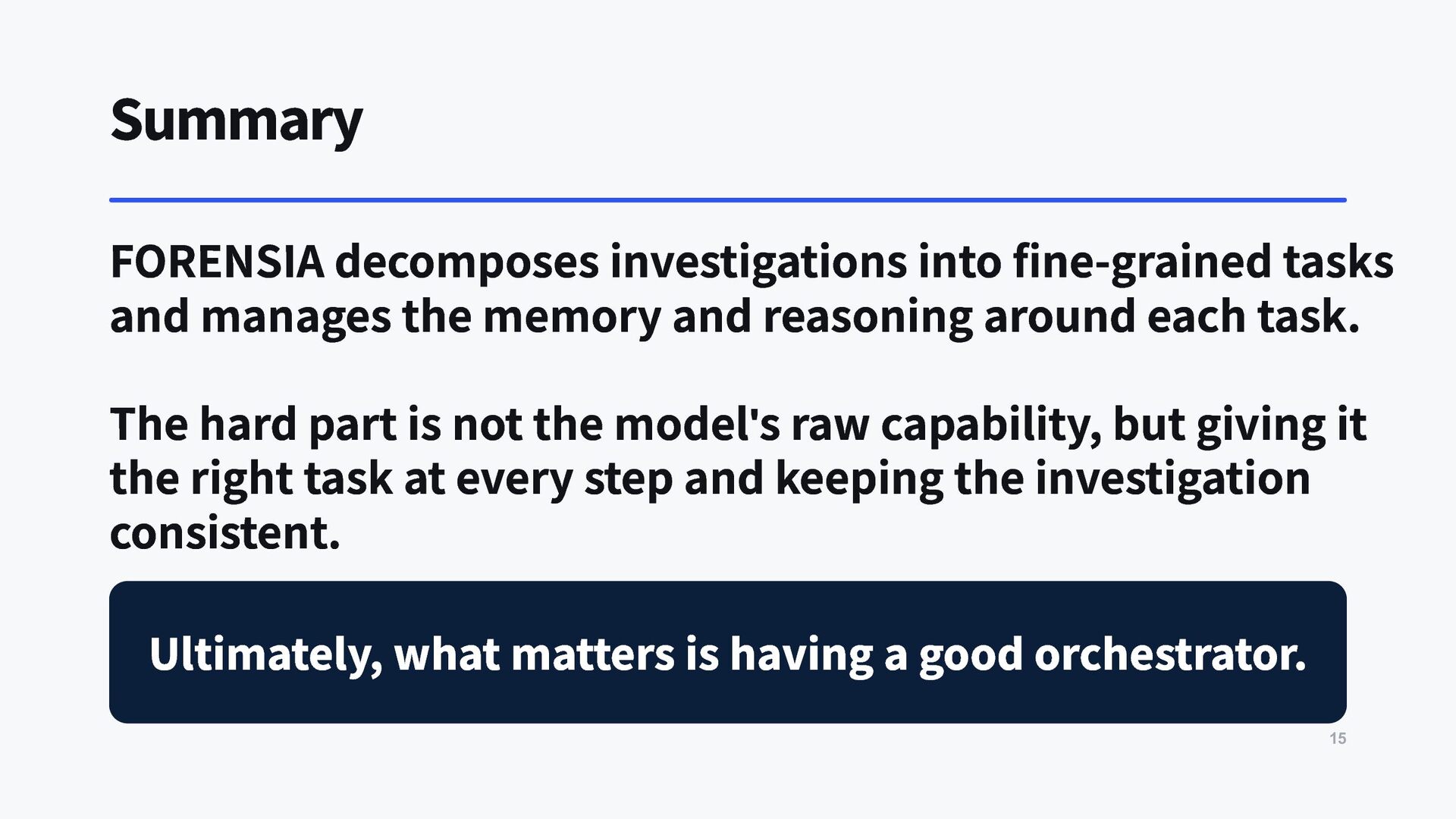
memory and reasoning around each task. The hard part is not the model's raw capability, but giving it the right task at every step and keeping the investigation consistent. Ultimately, what matters is having a good orchestrator. 15


 sumeshi
 recruitengineers
.png) codatum
codatum
 kakakakakku
 oracle4engineer
 mananyuki
 harutiro
 philipz
 sansantech
 jozono
 nttcom
 tammyeverts
 szymonslowik
 andyhume
 morganepeng
 deanohume
 gurzu
gurzu
 mlcsv
mlcsv
 katiecoart
 akihiro_kokubo
 kimpetersen
 shpigford
 brettharned