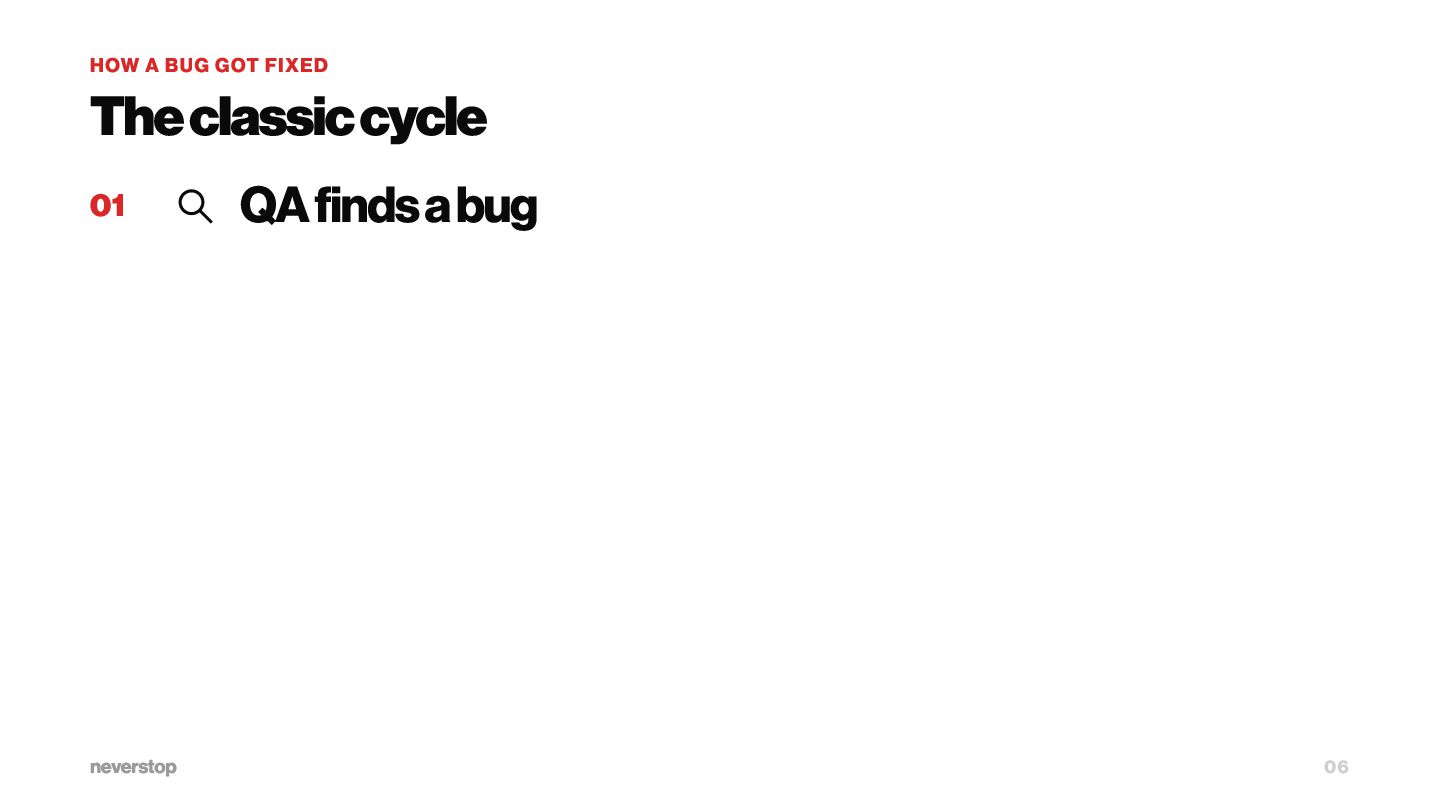
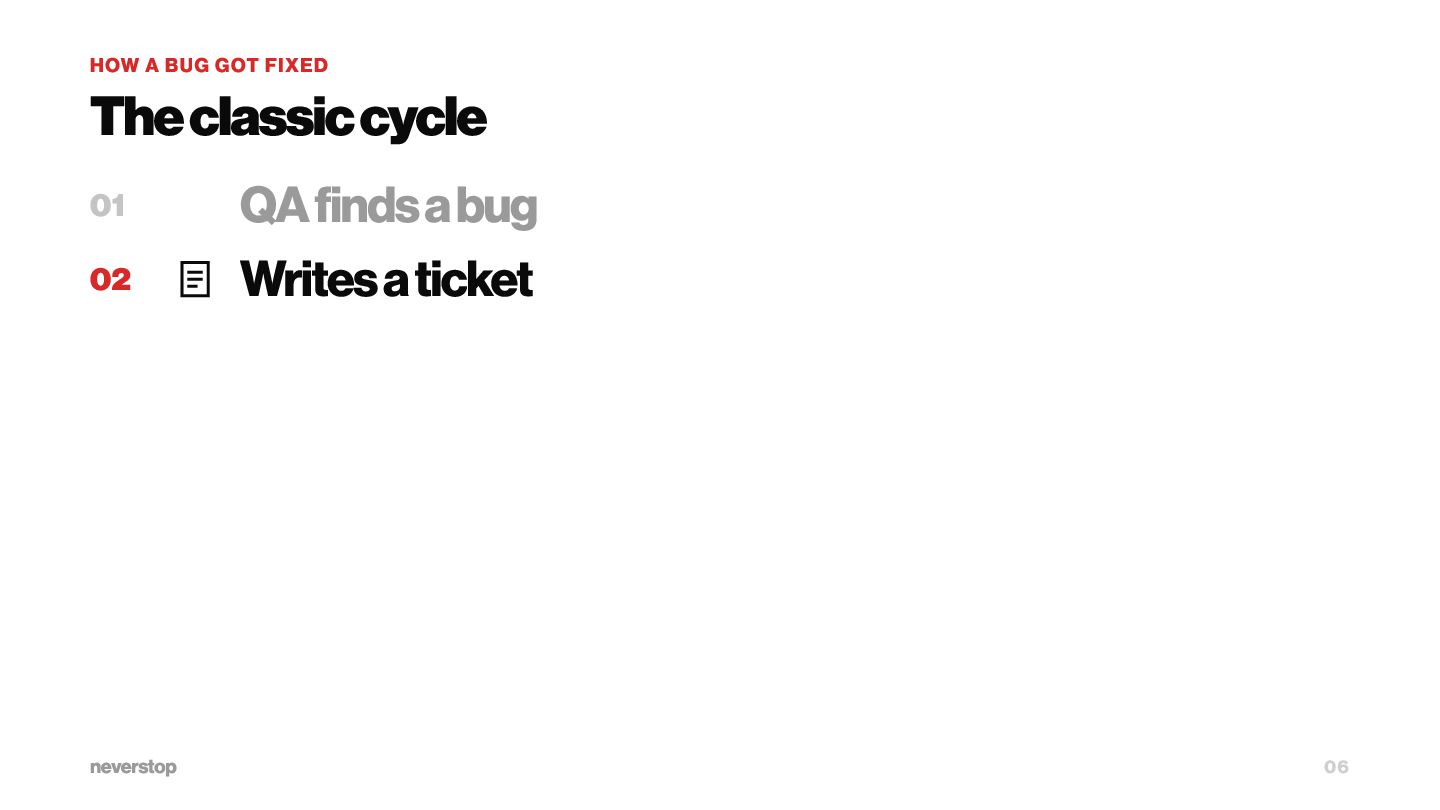
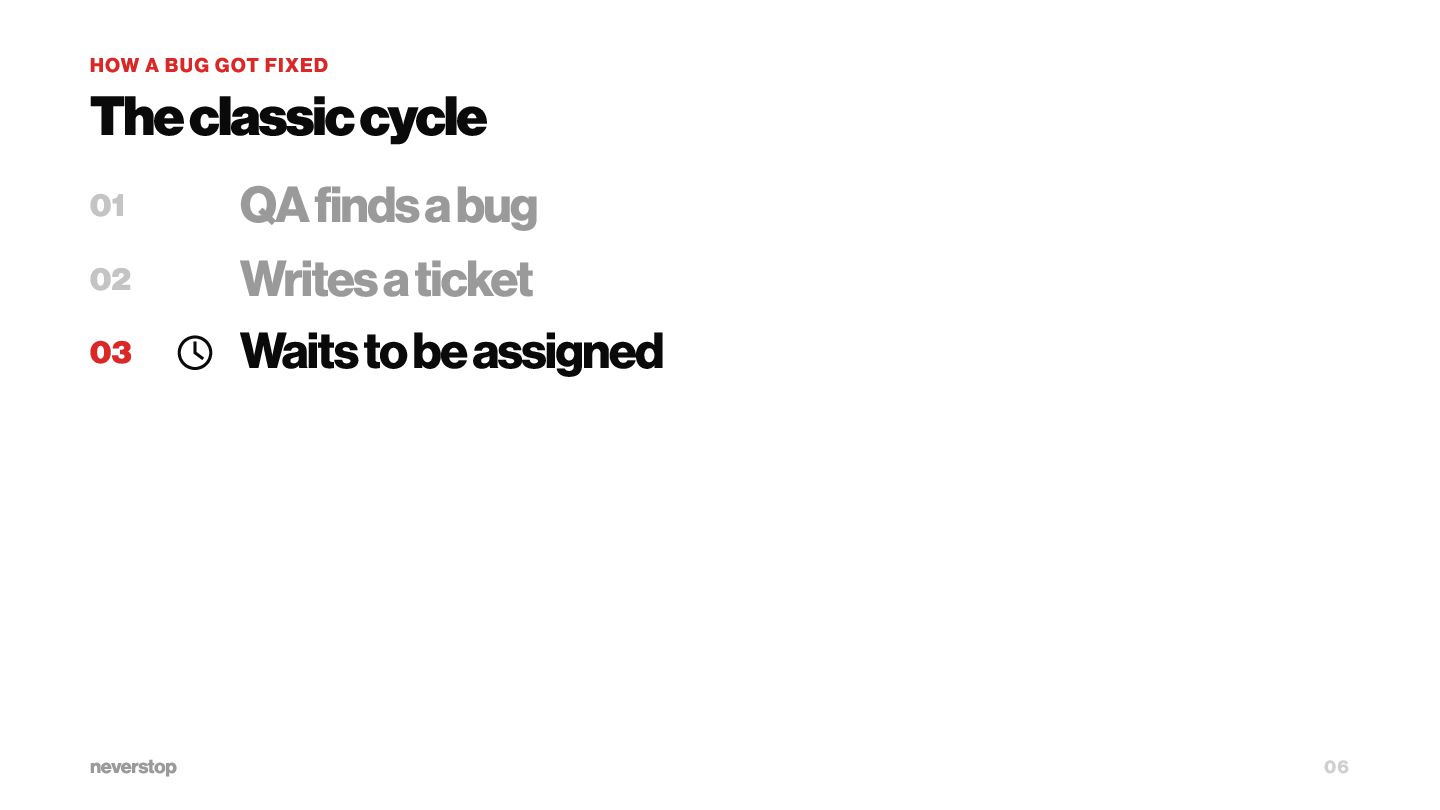
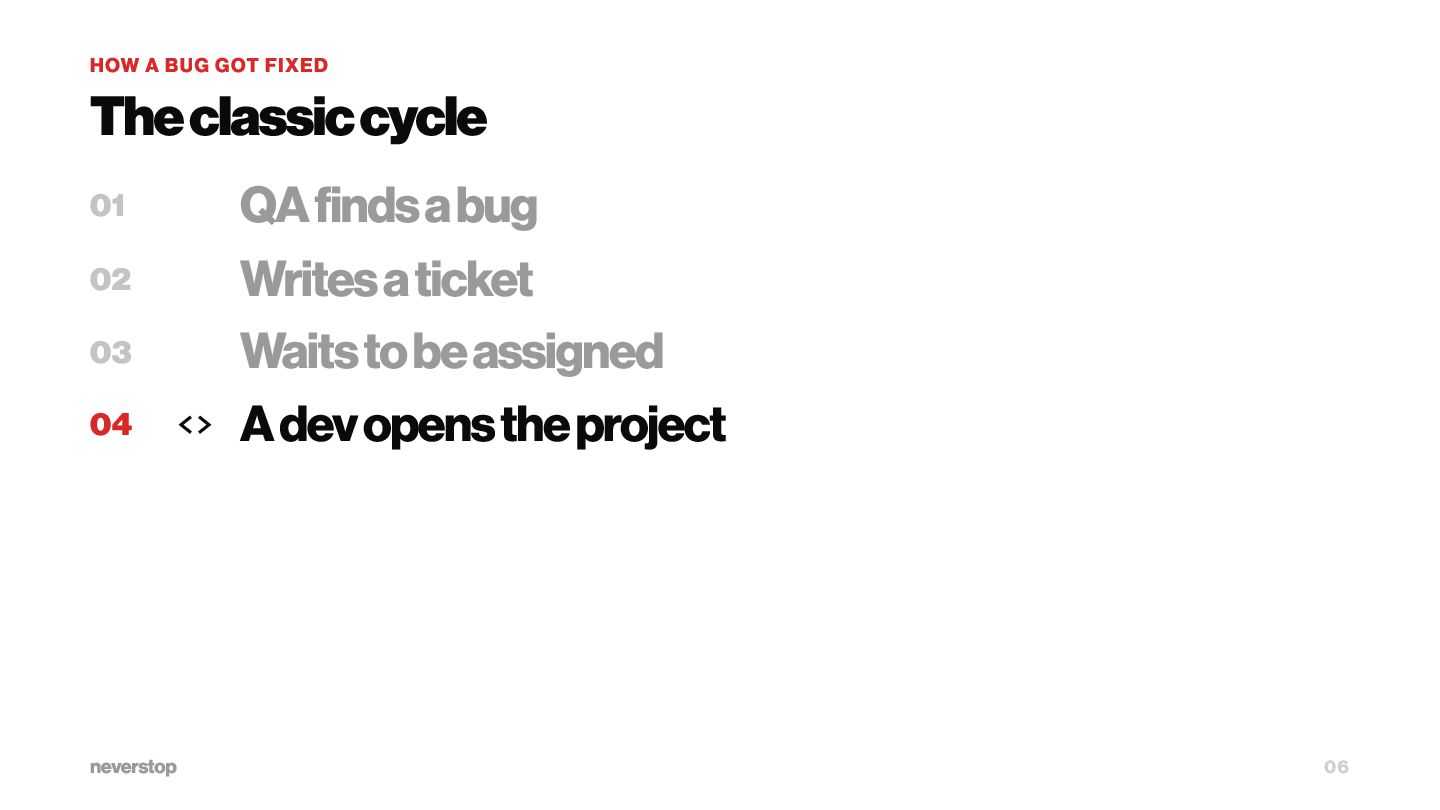
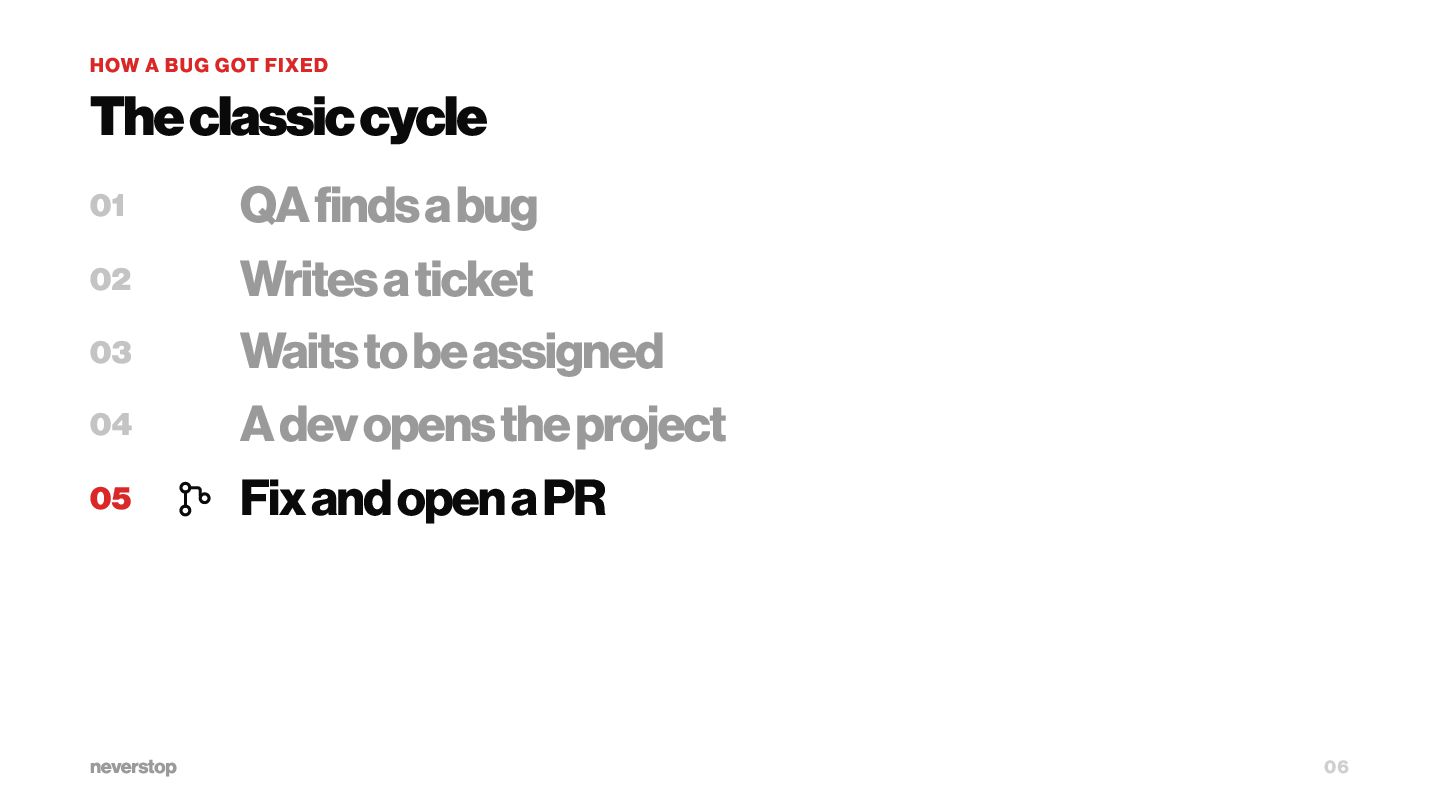
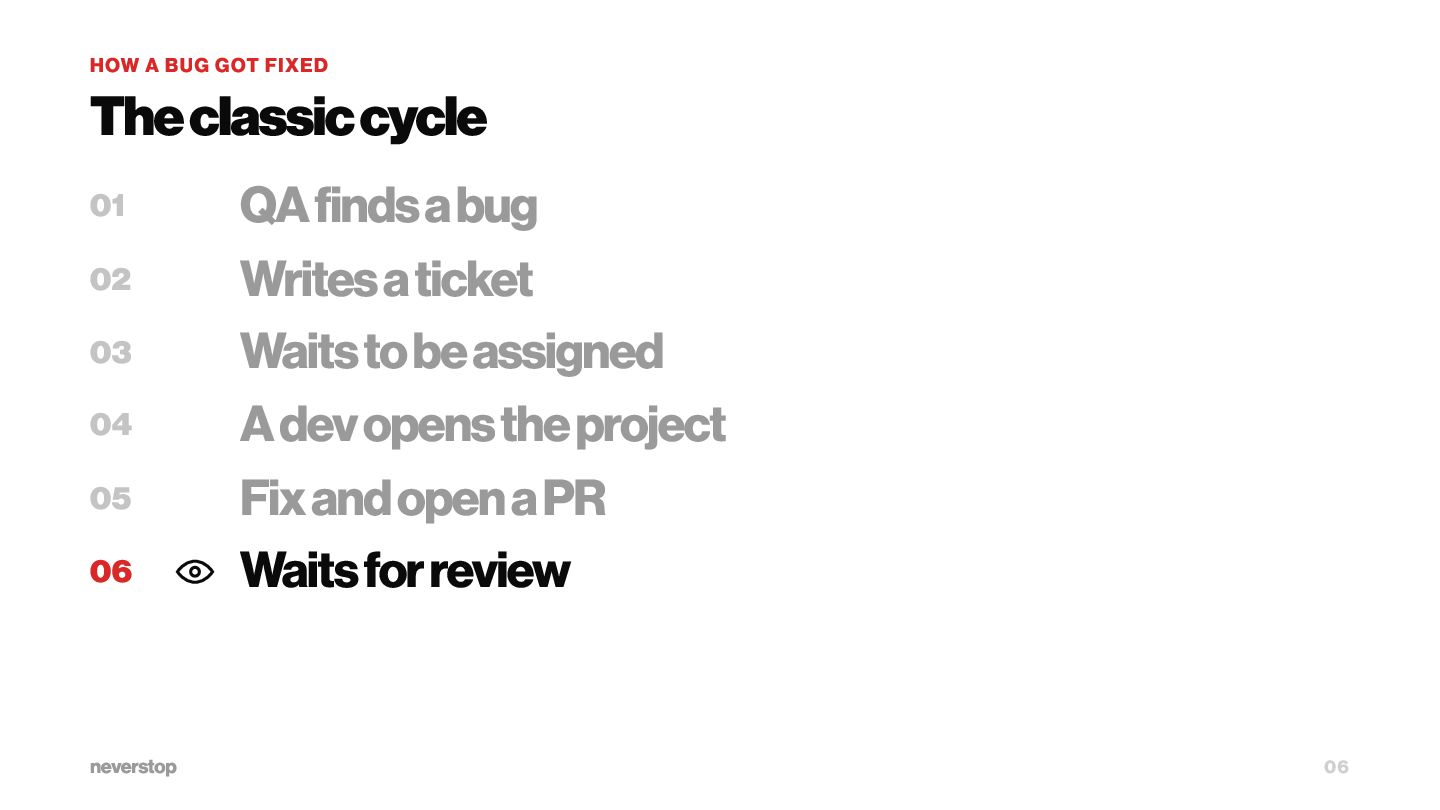
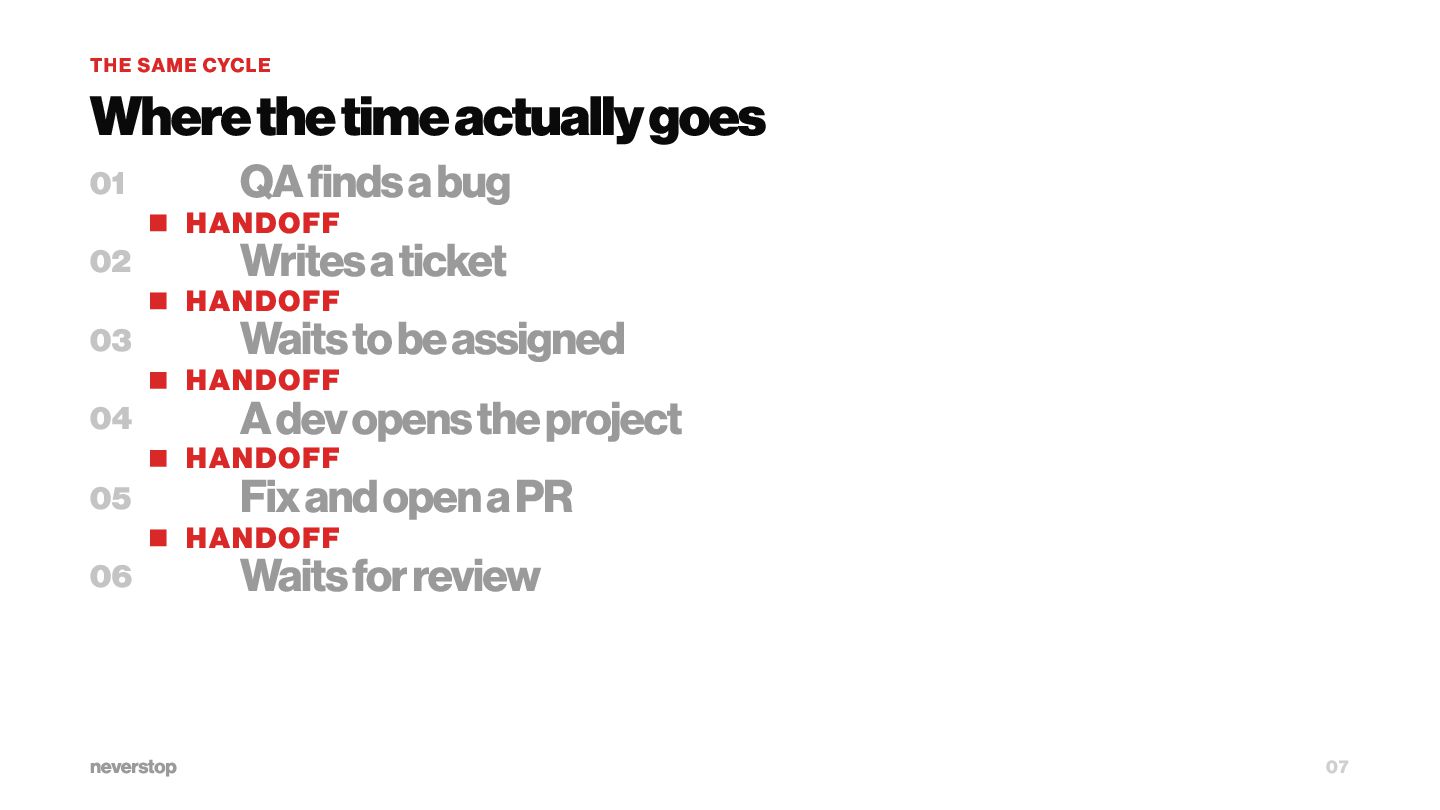
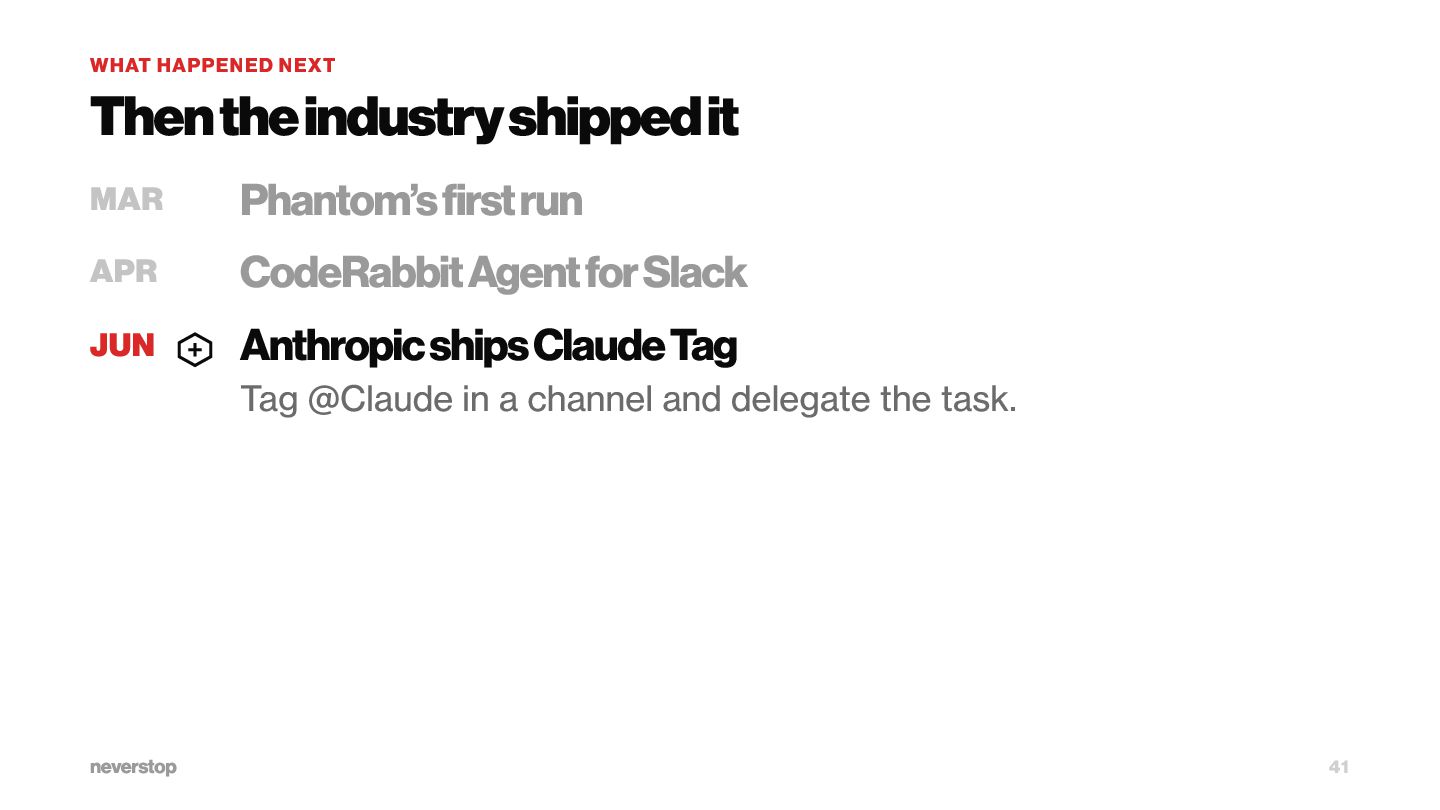
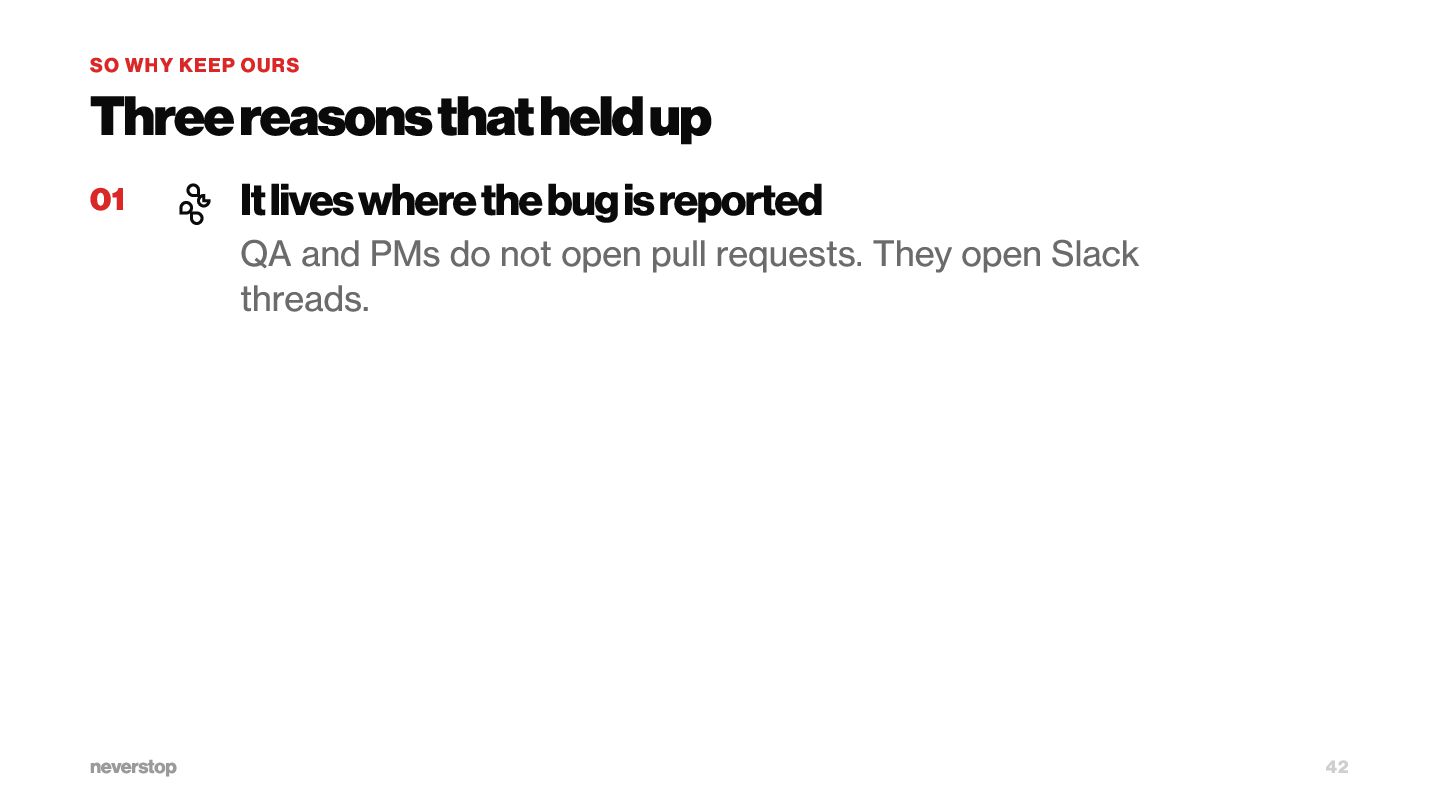
Our team ships fast. New features, bug fixes, hotfixes, all moving through the pipeline constantly. But we kept hitting the same bottleneck: QA finds a bug, opens a ticket, a dev picks it up, opens the project, makes the fix, opens a PR, waits for review. For small fixes this cycle felt heavier than the fix itself.
So we asked a simple question: what if QA could get a bug fixed without leaving Slack?
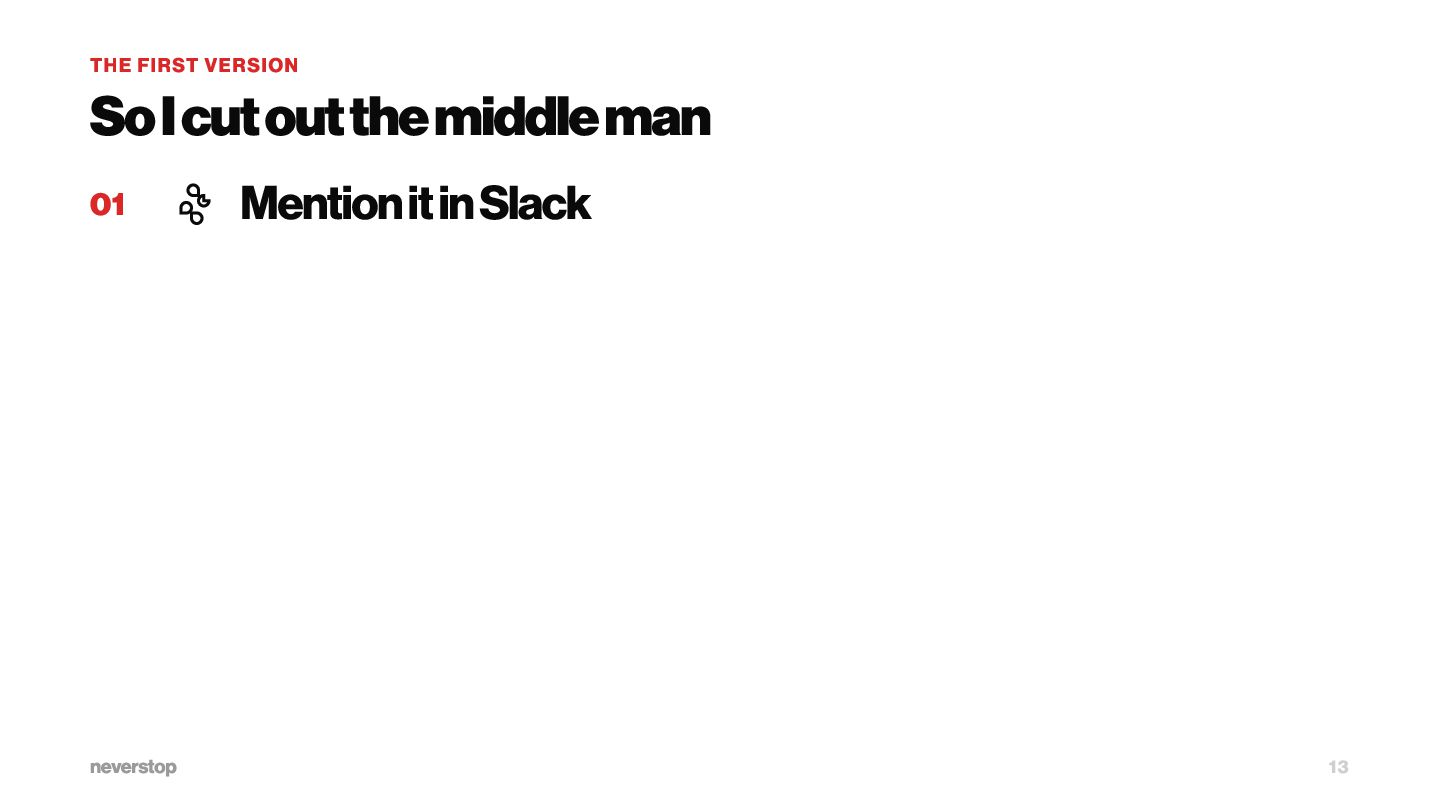
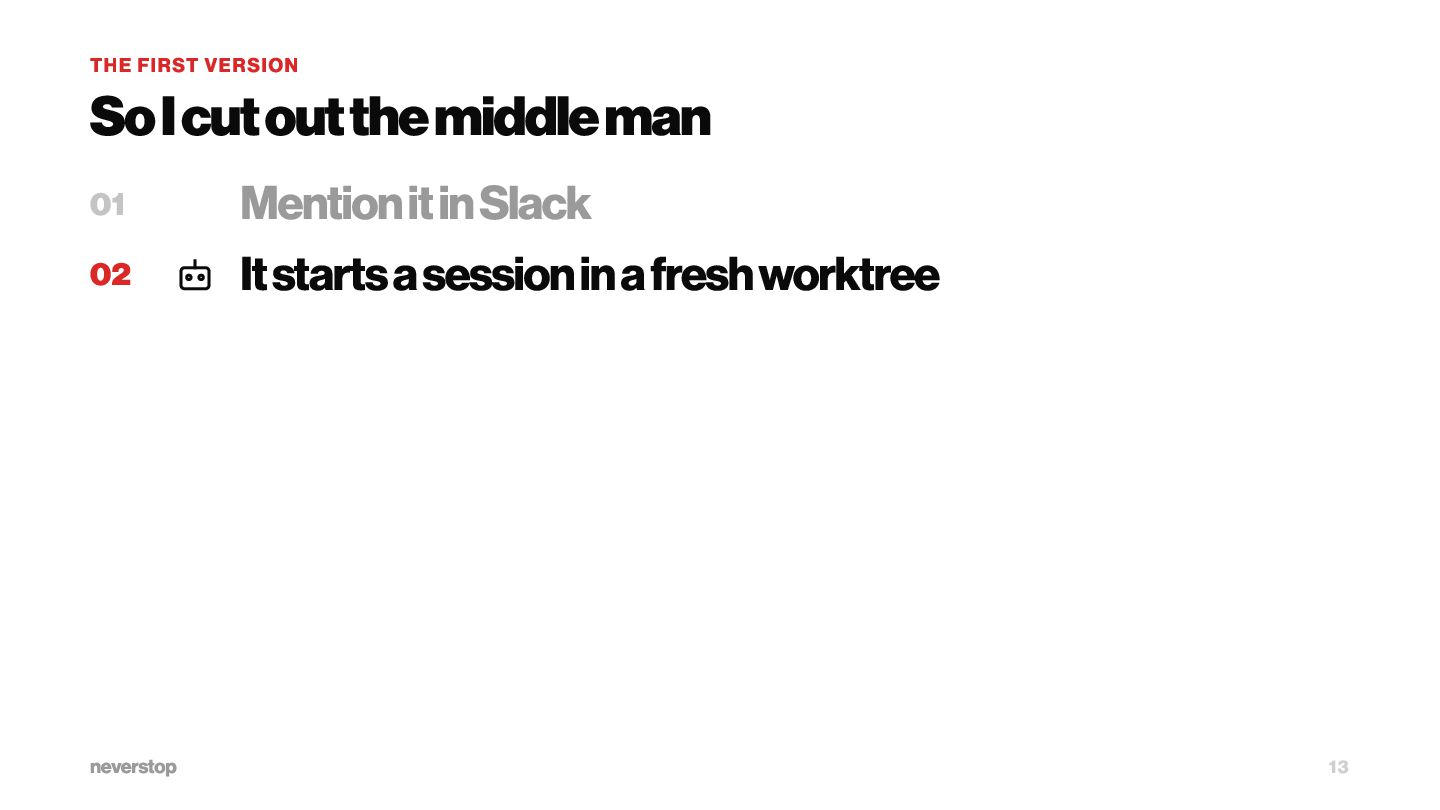
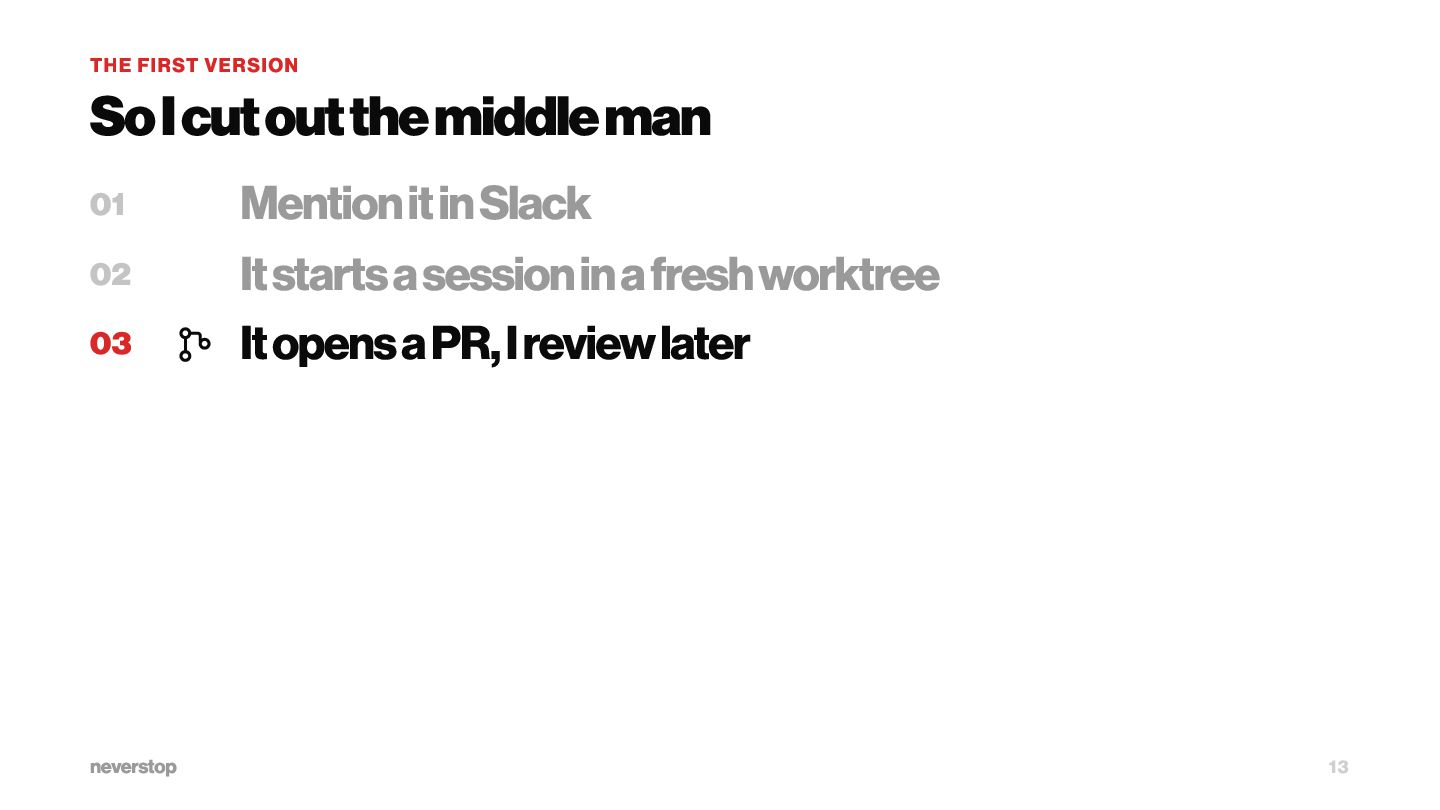
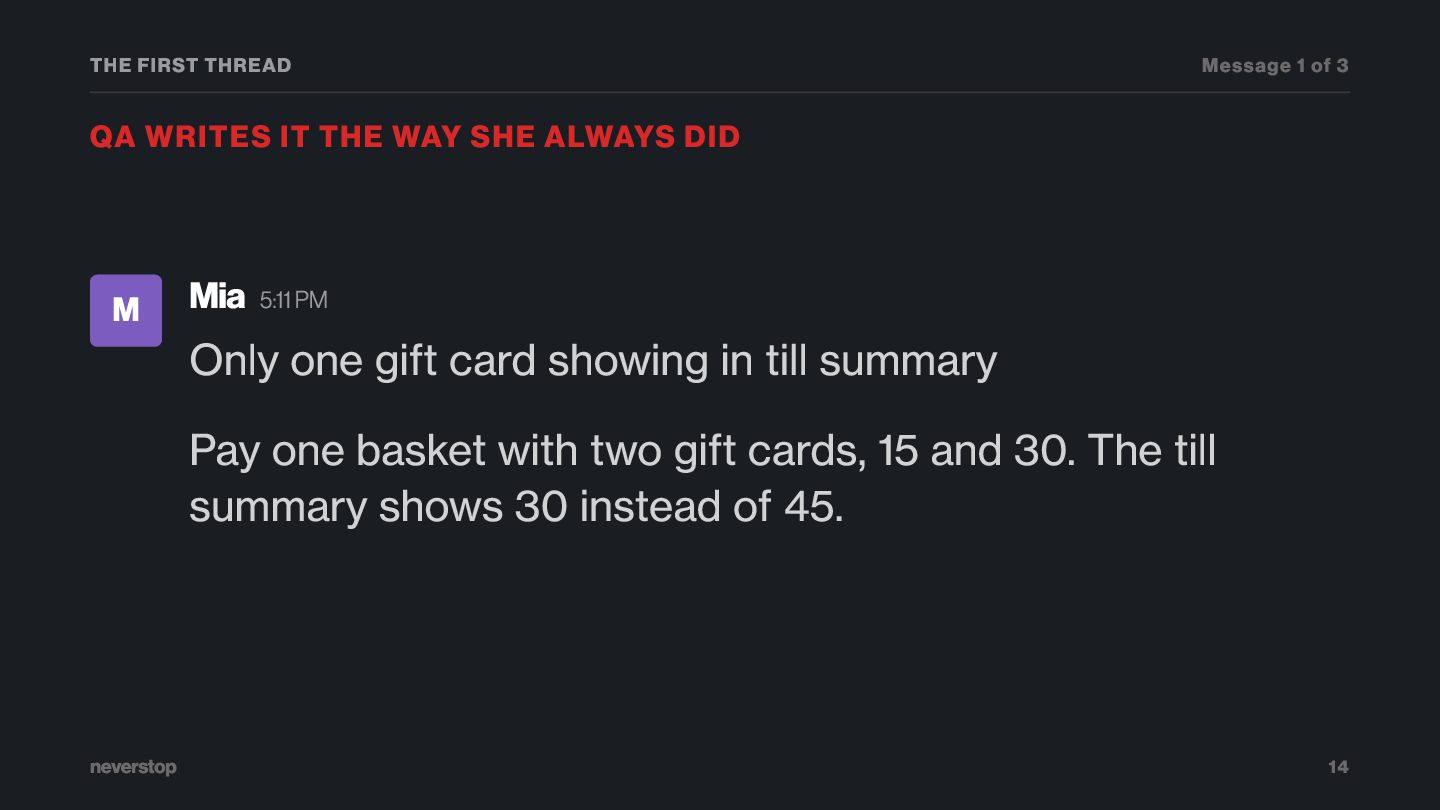
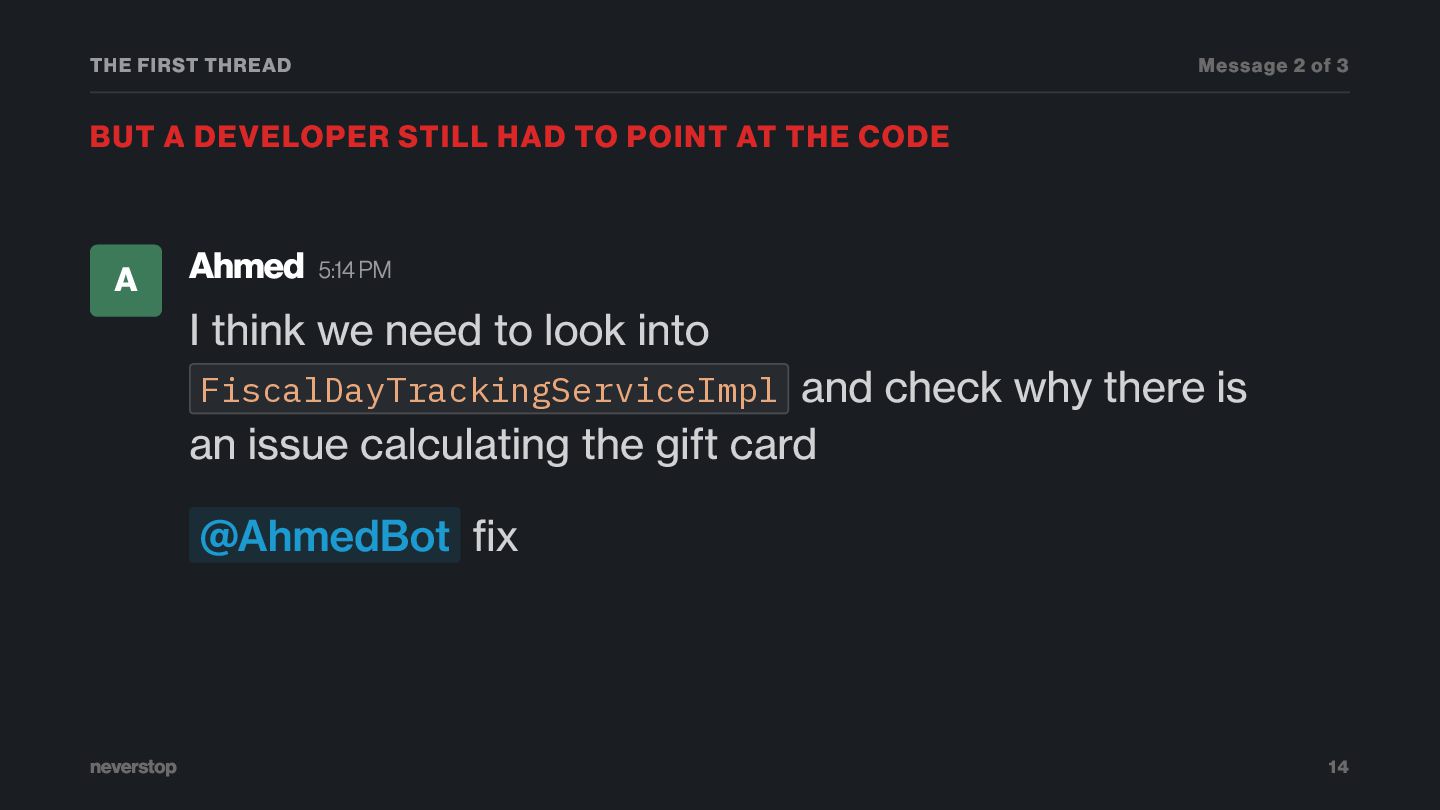
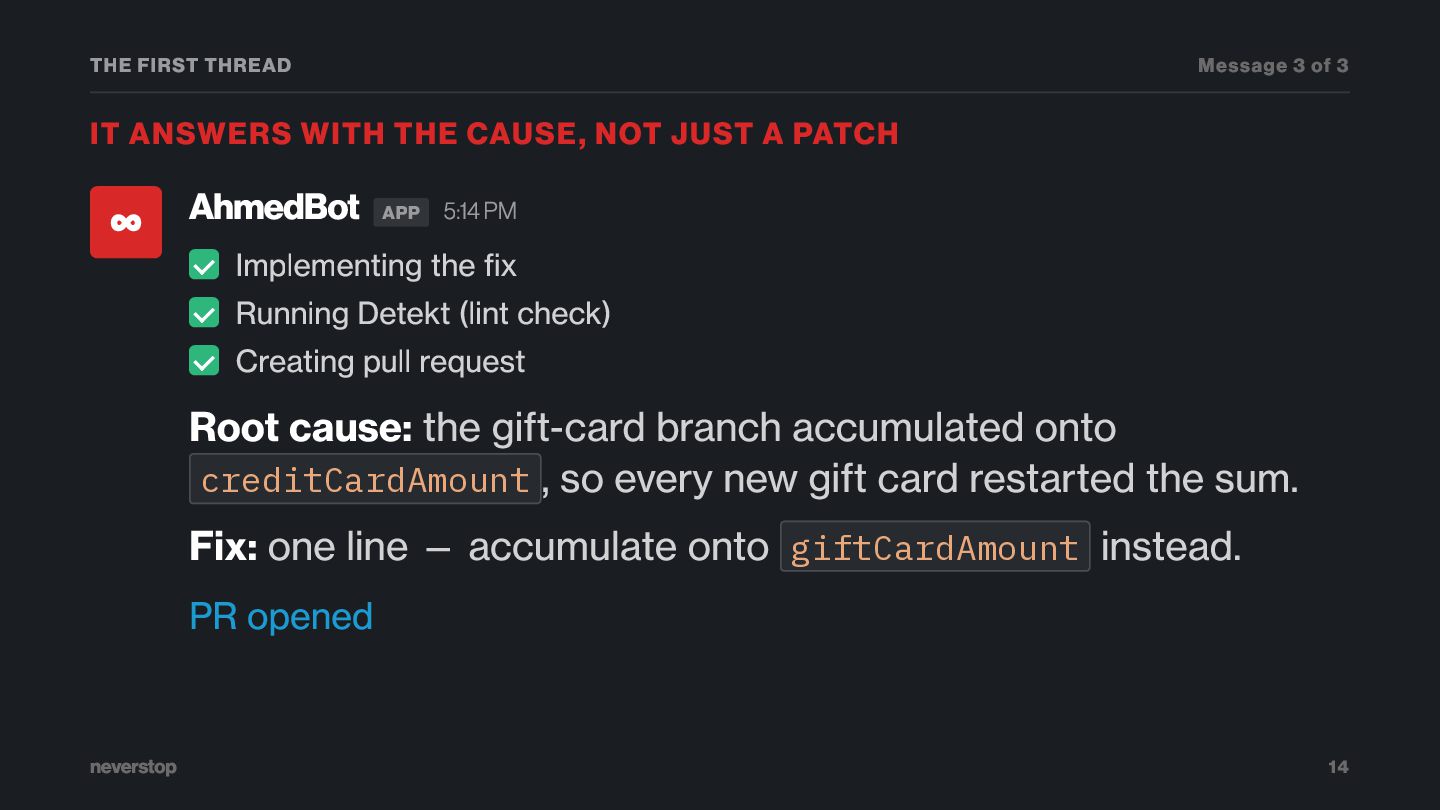
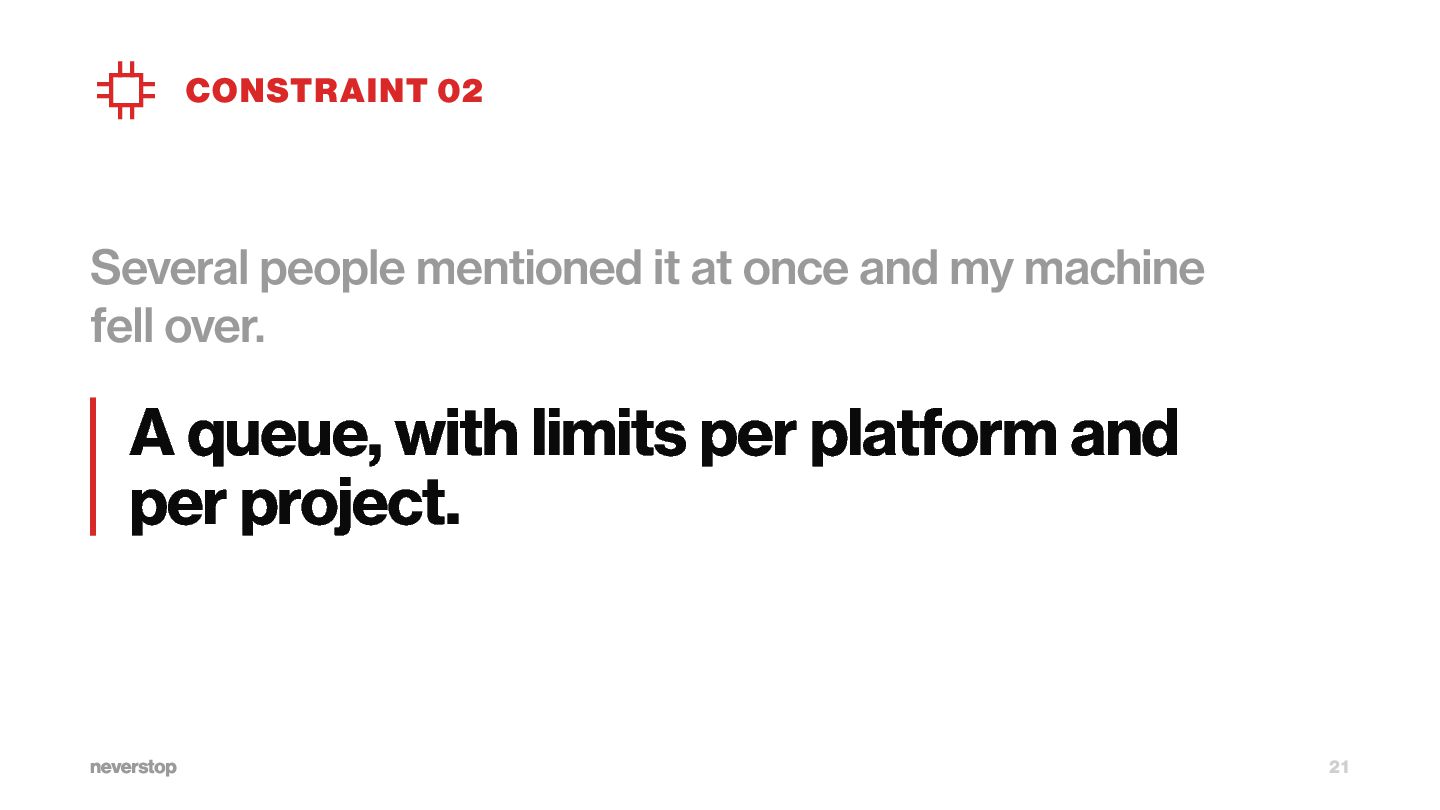
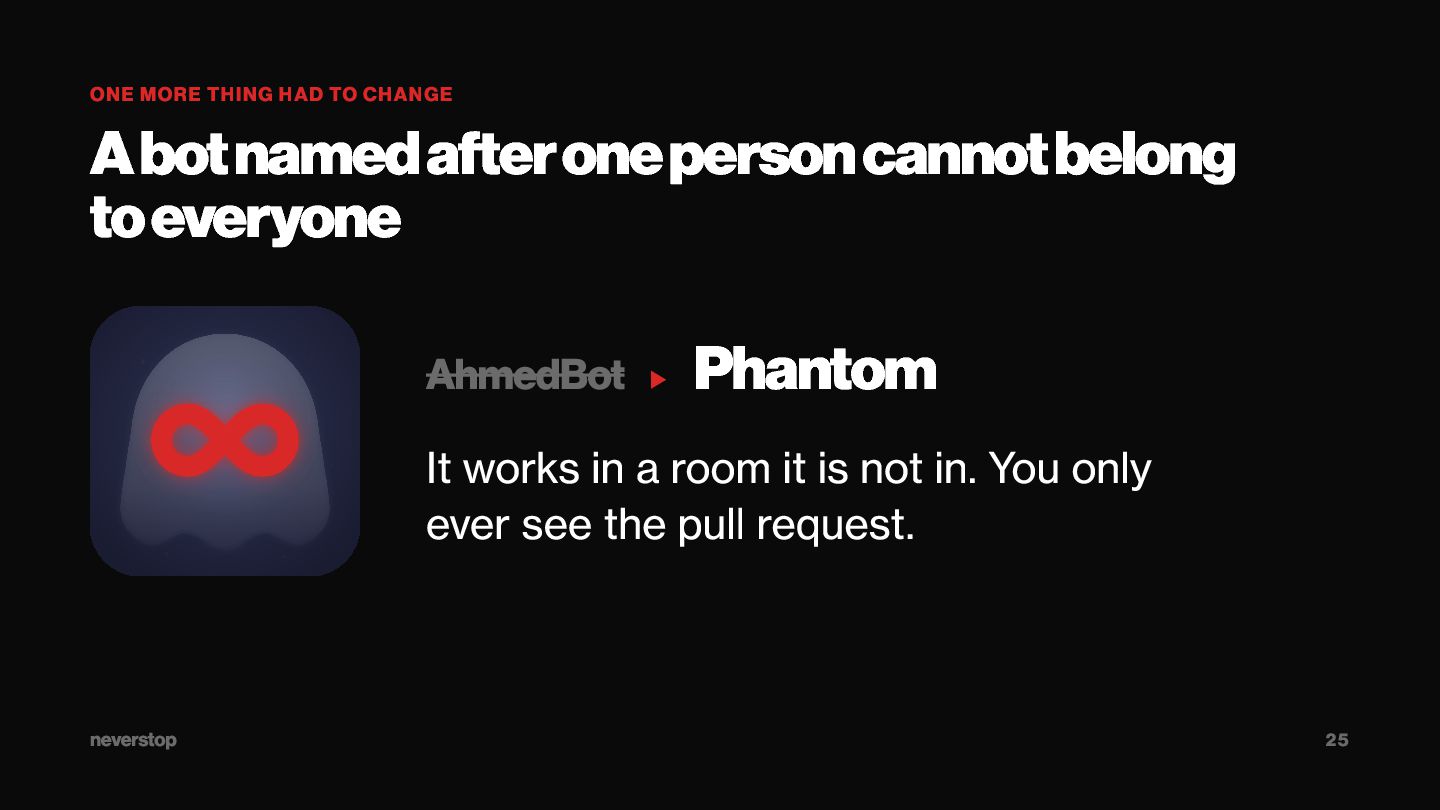
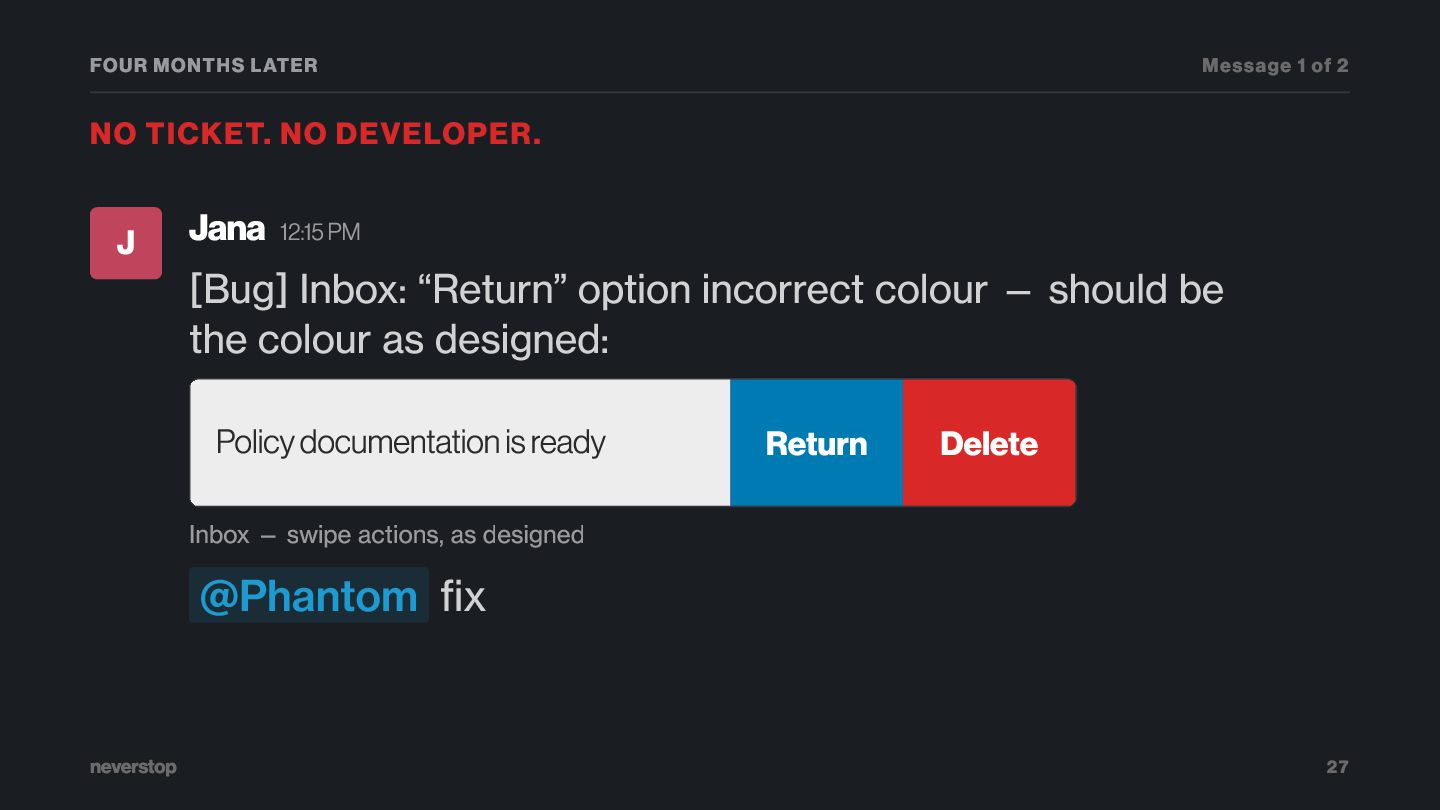
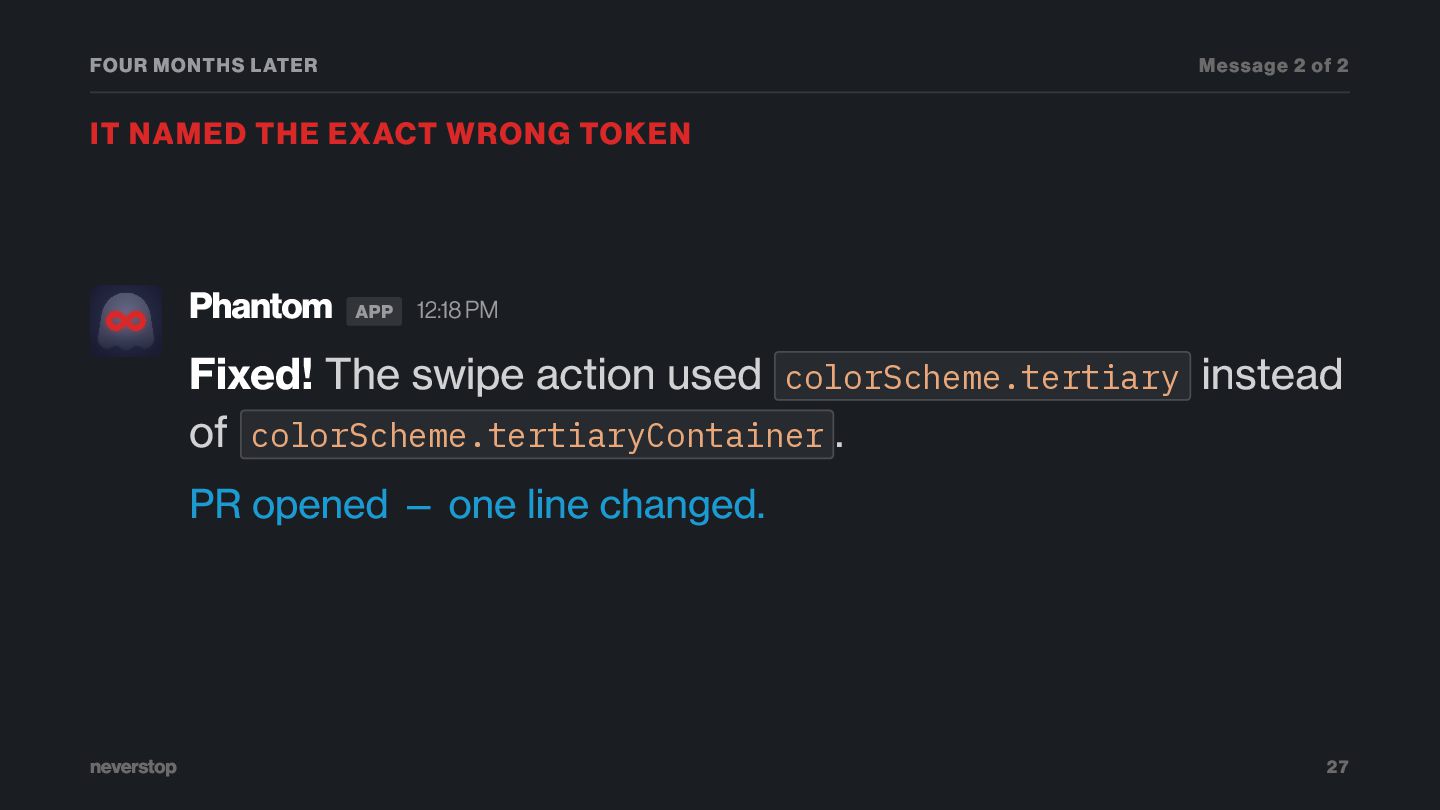
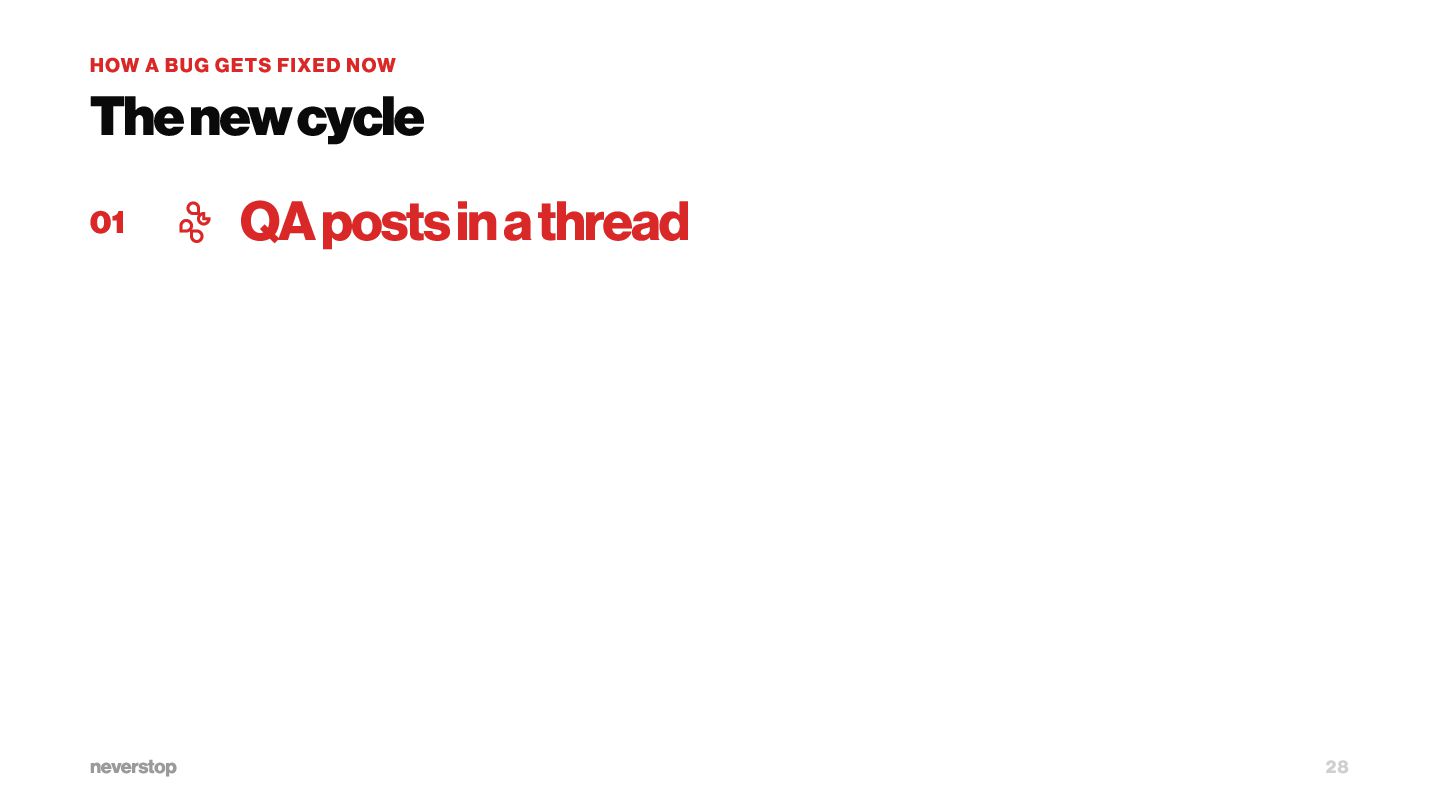
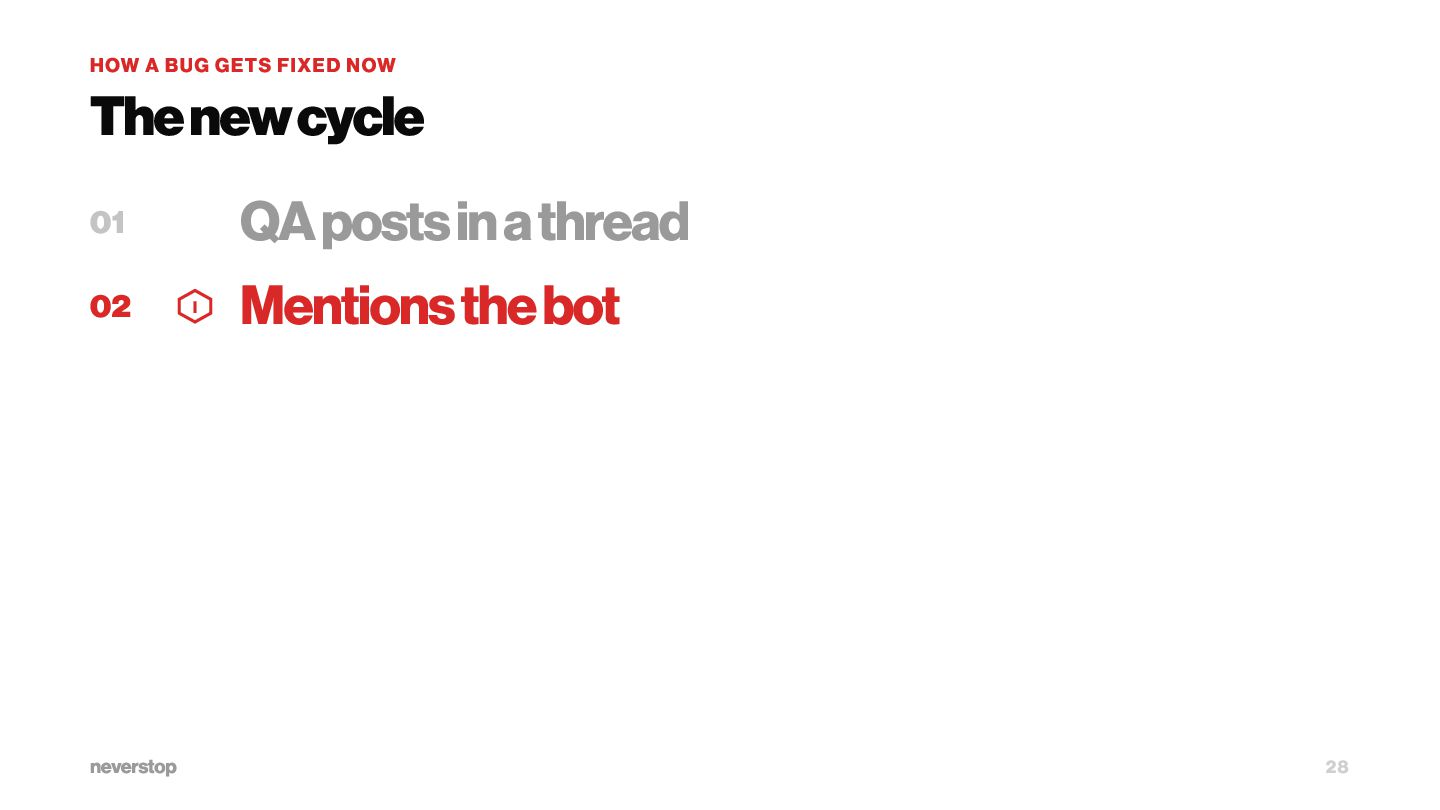
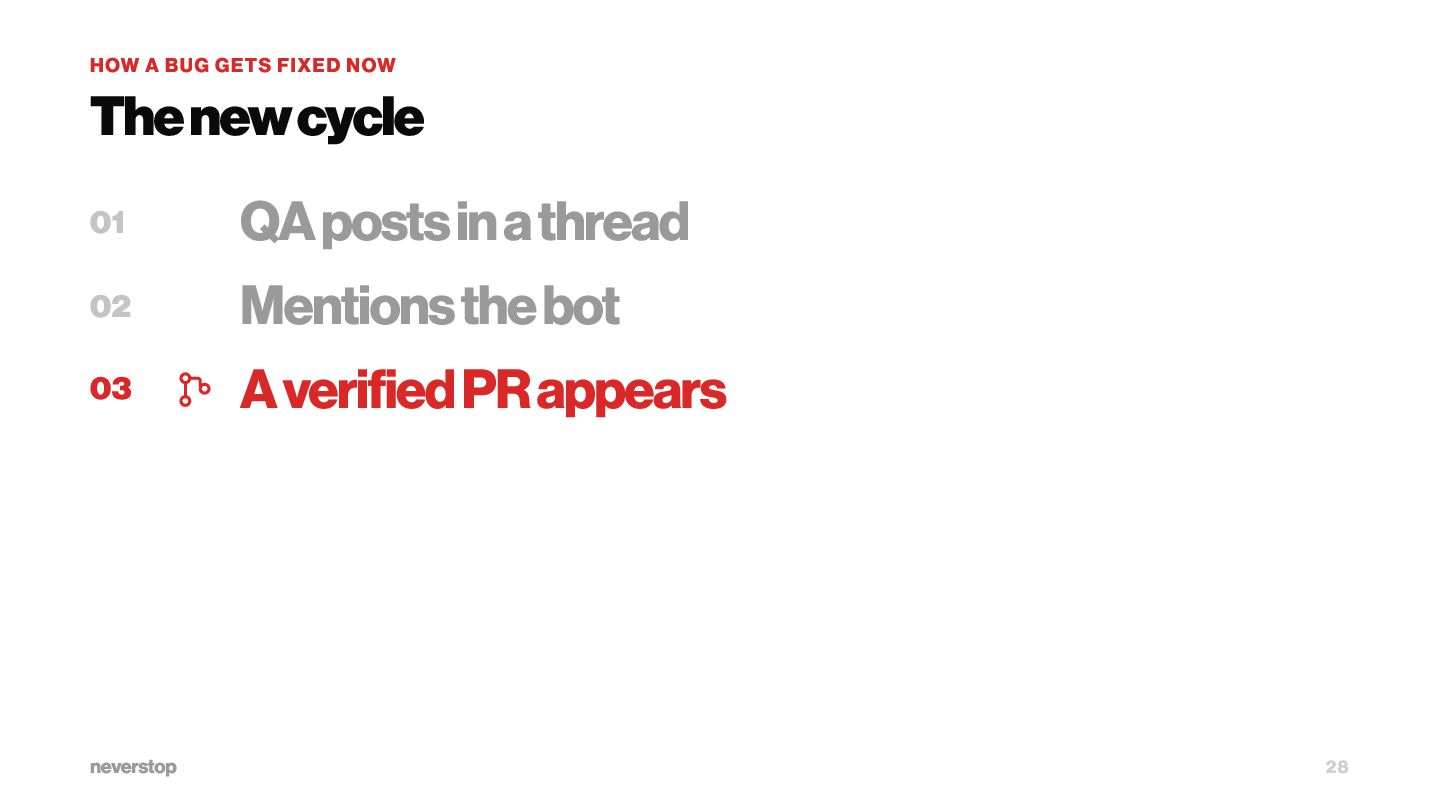
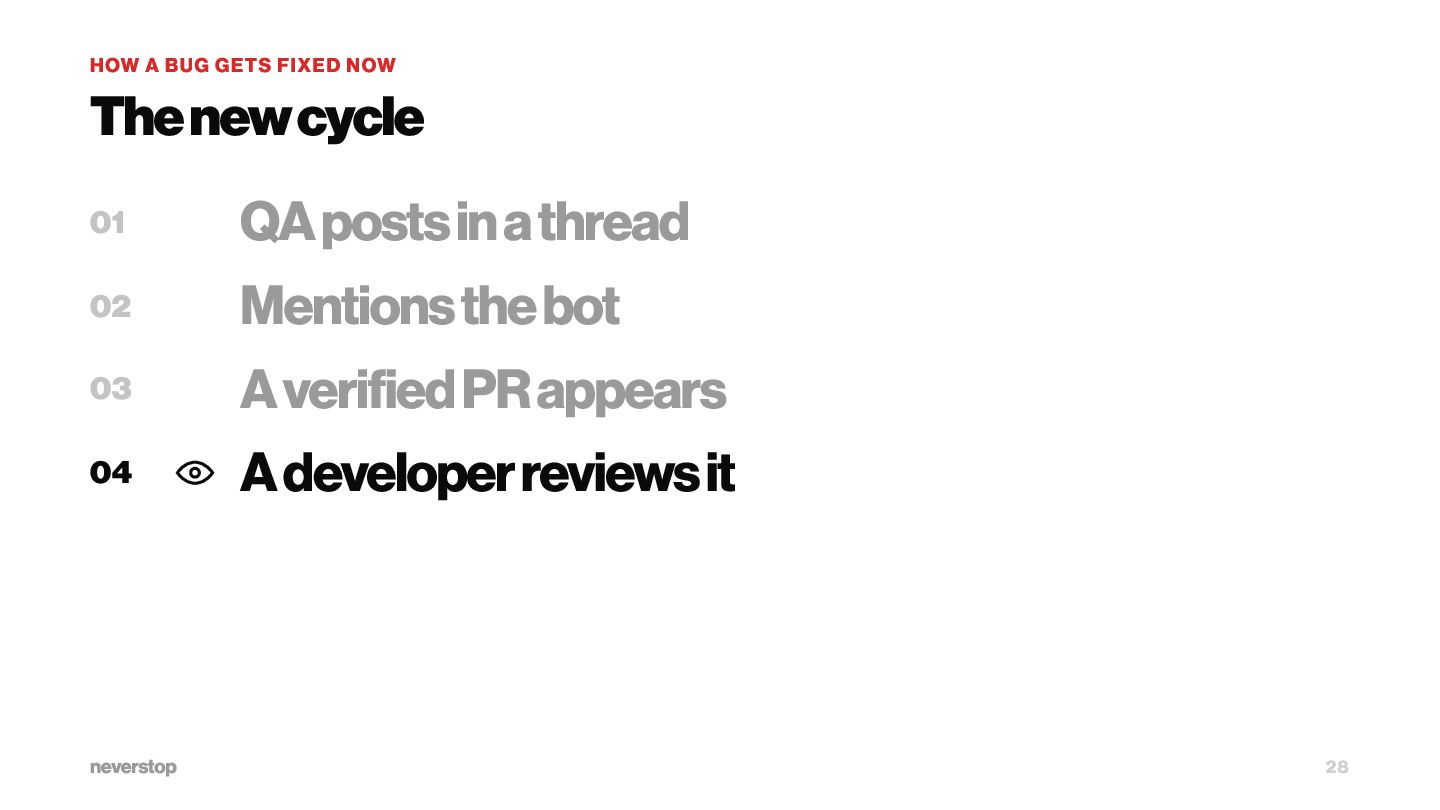
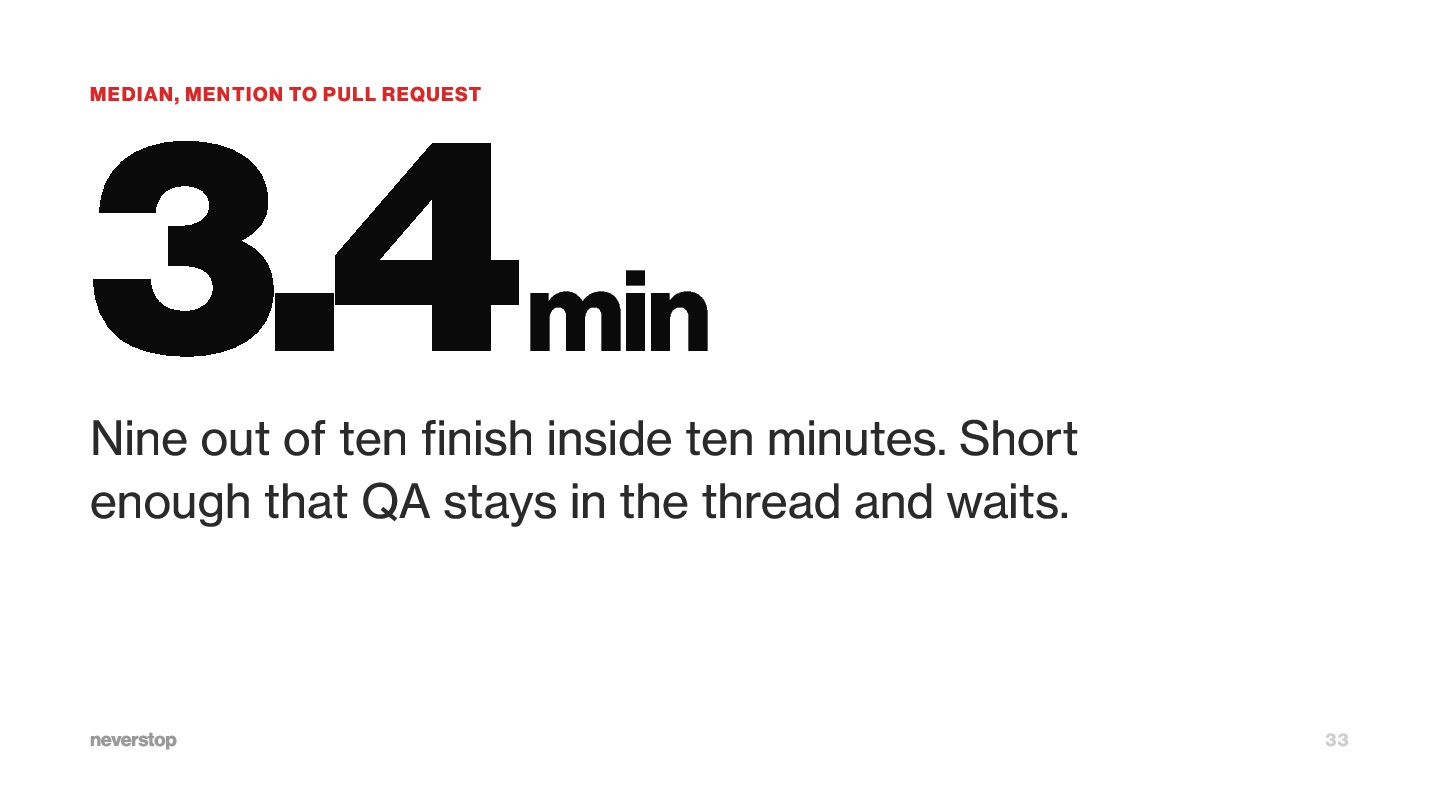
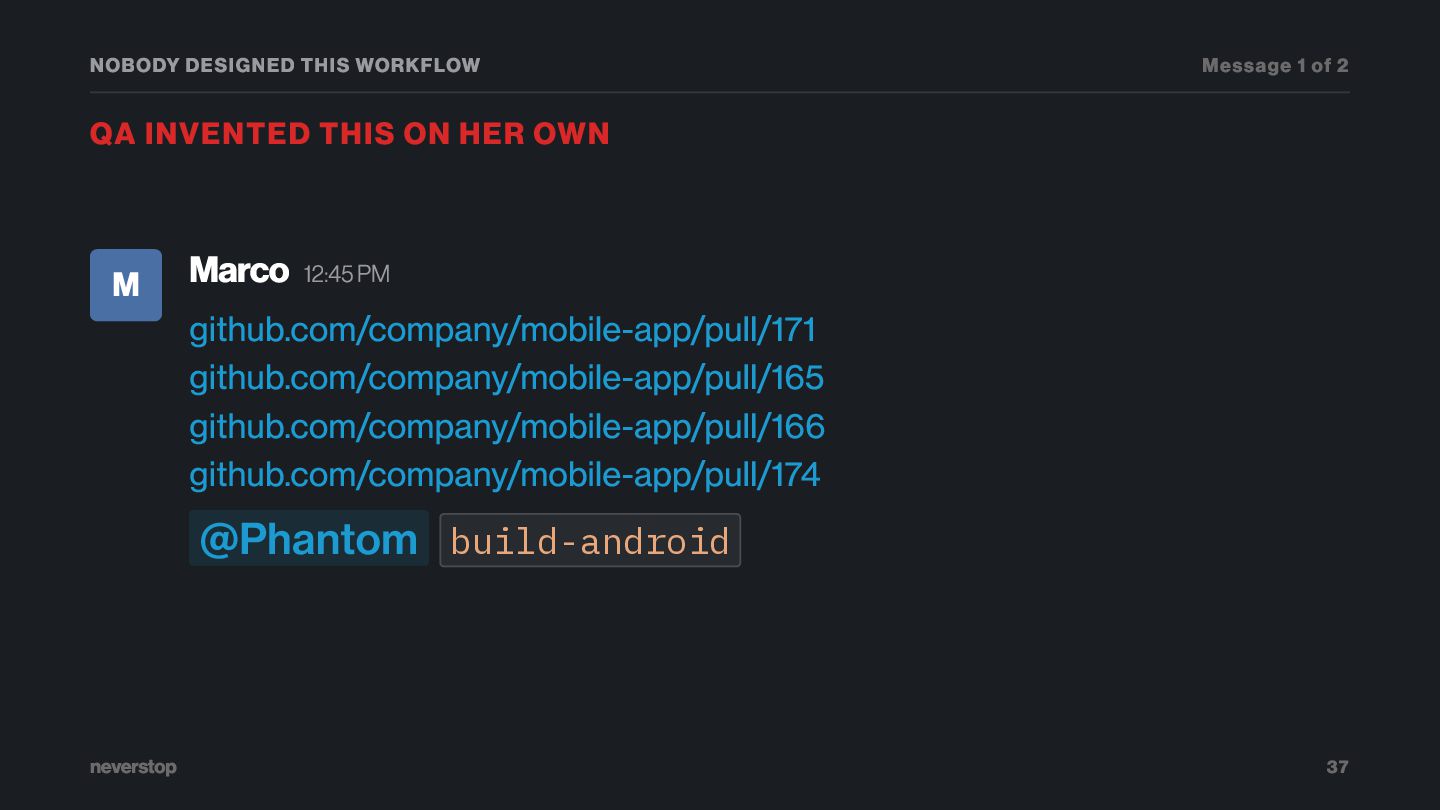
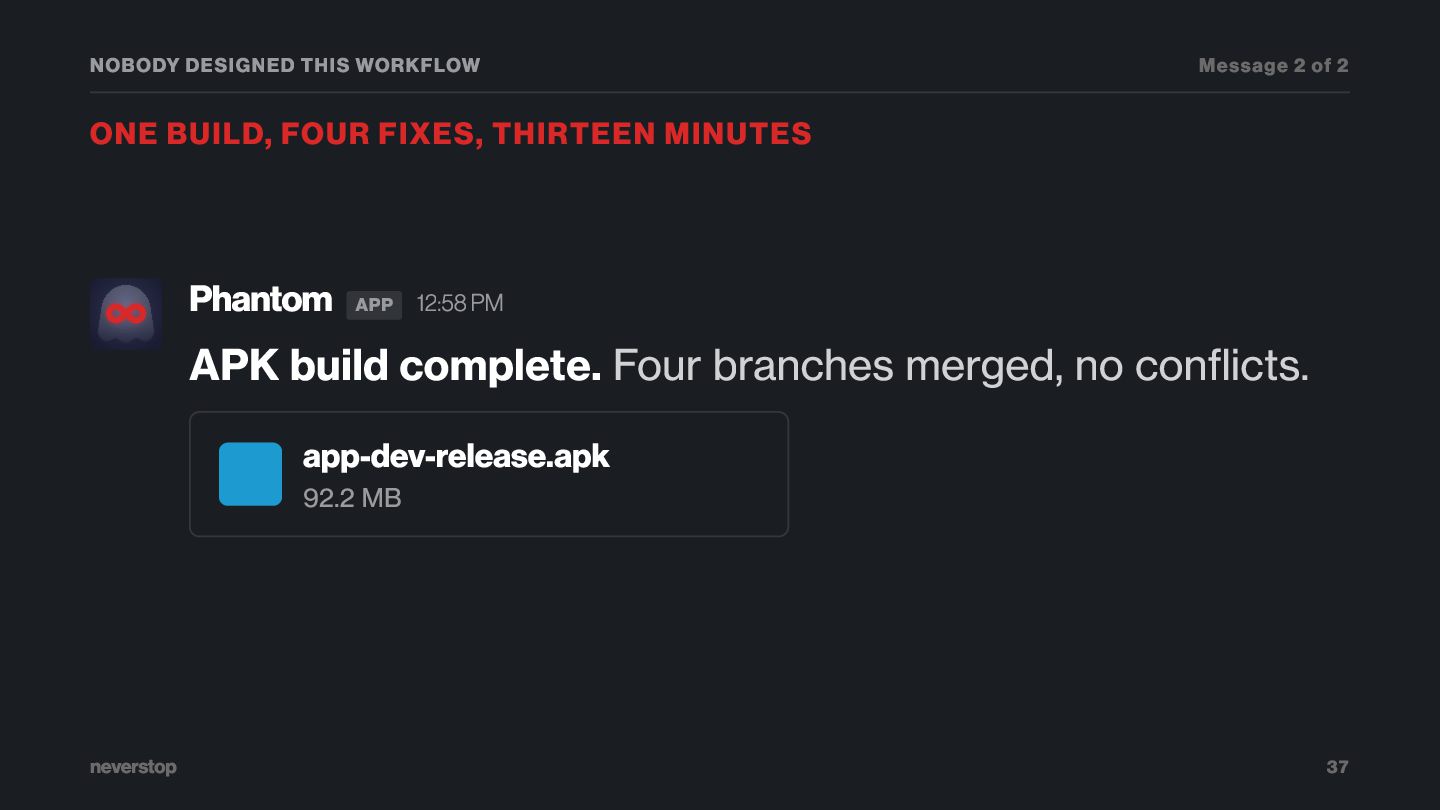
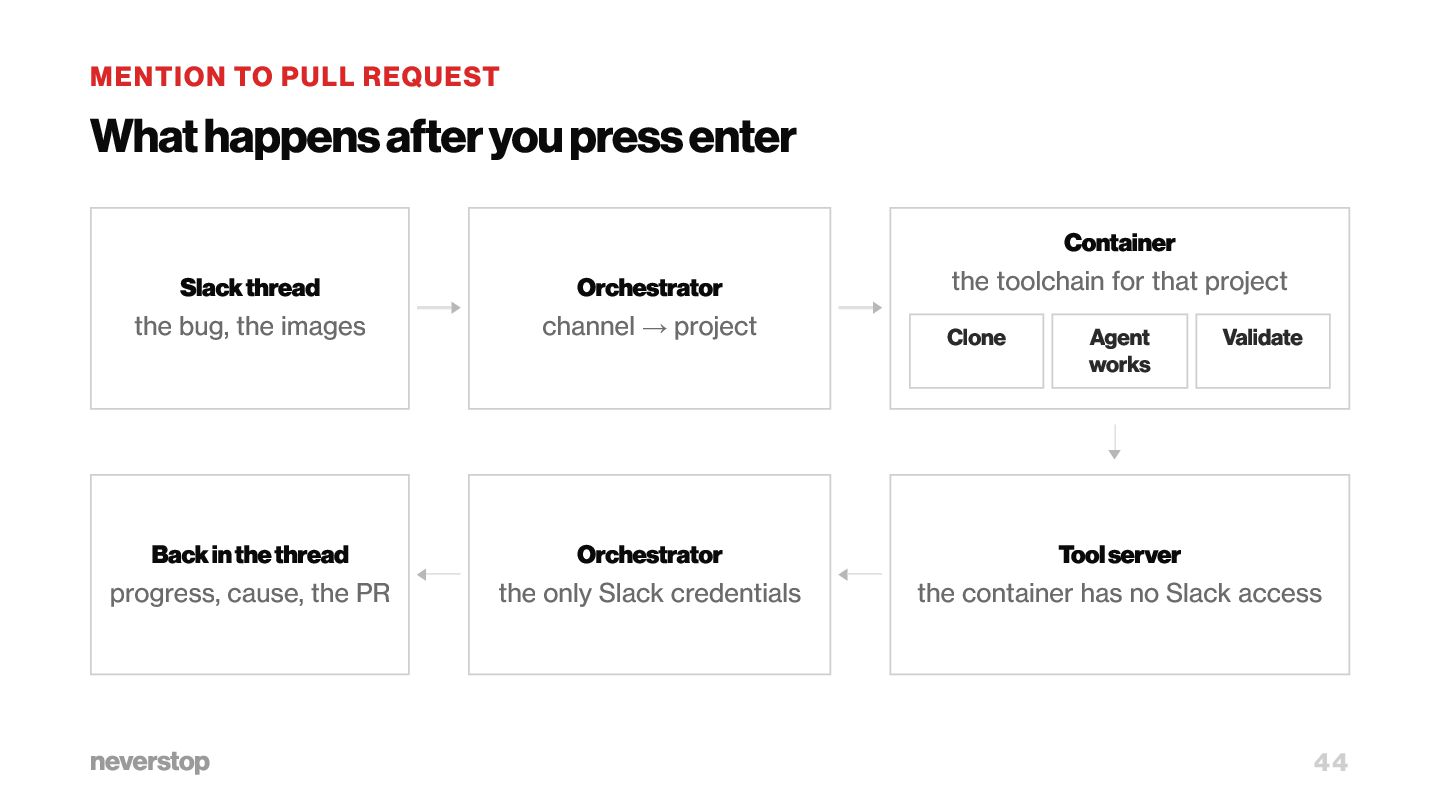
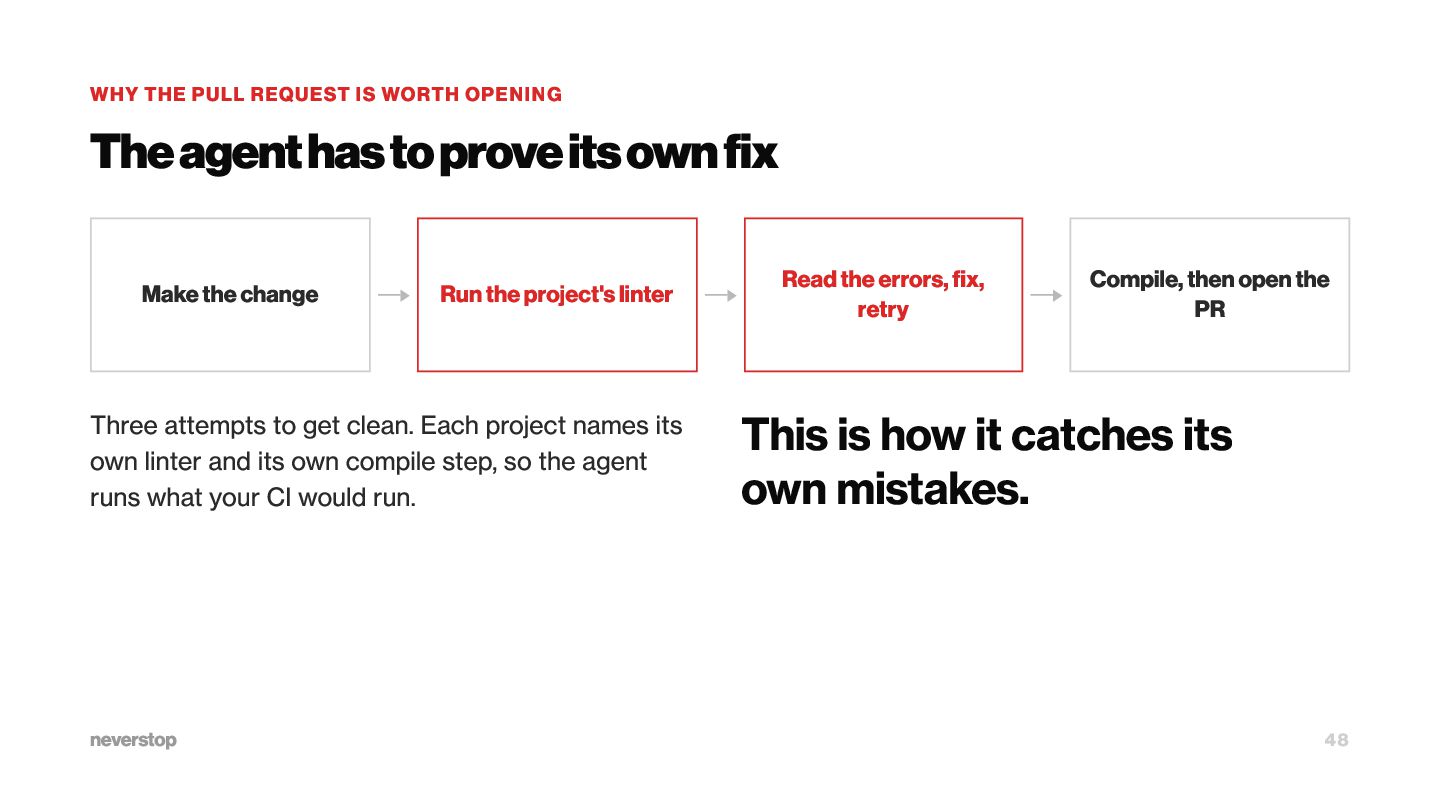
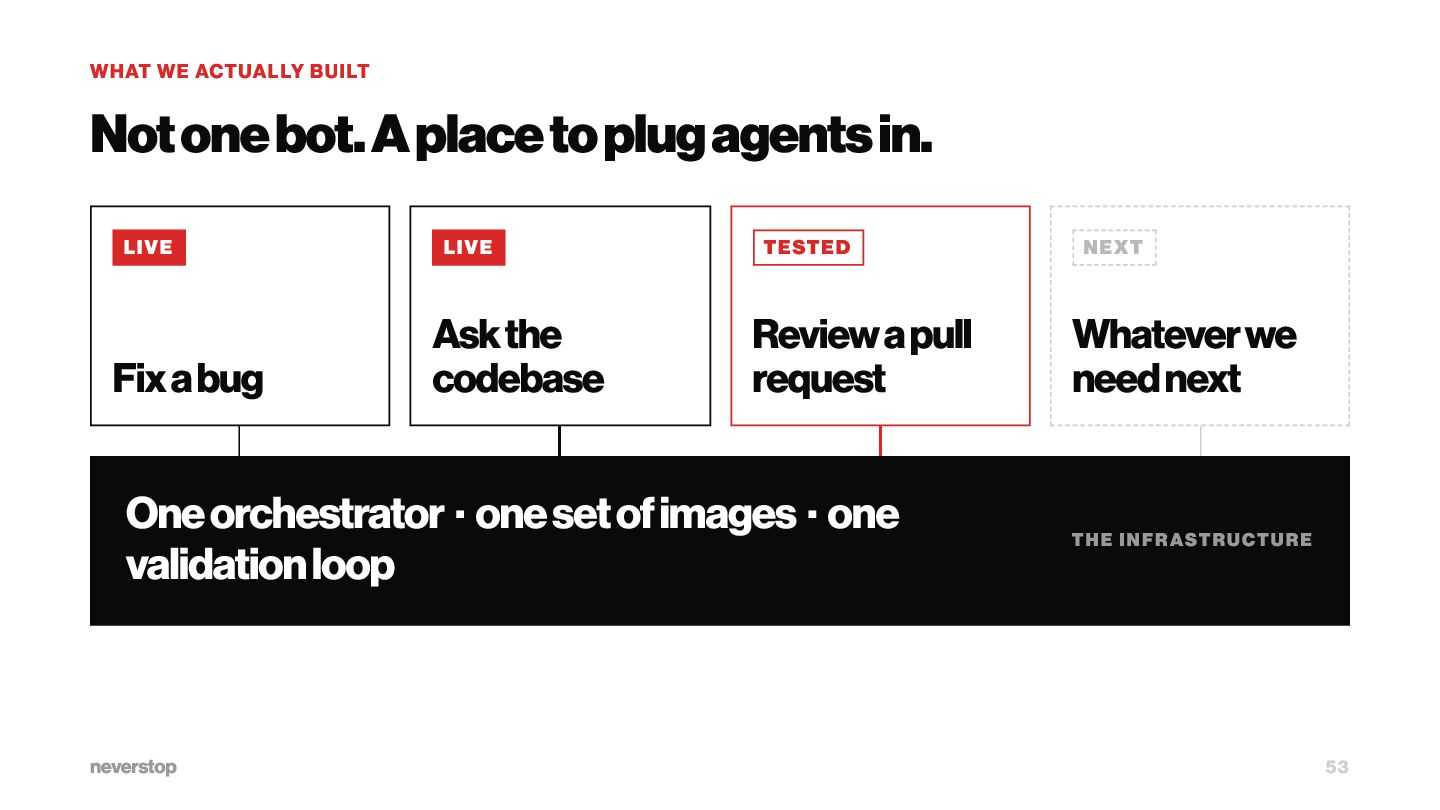
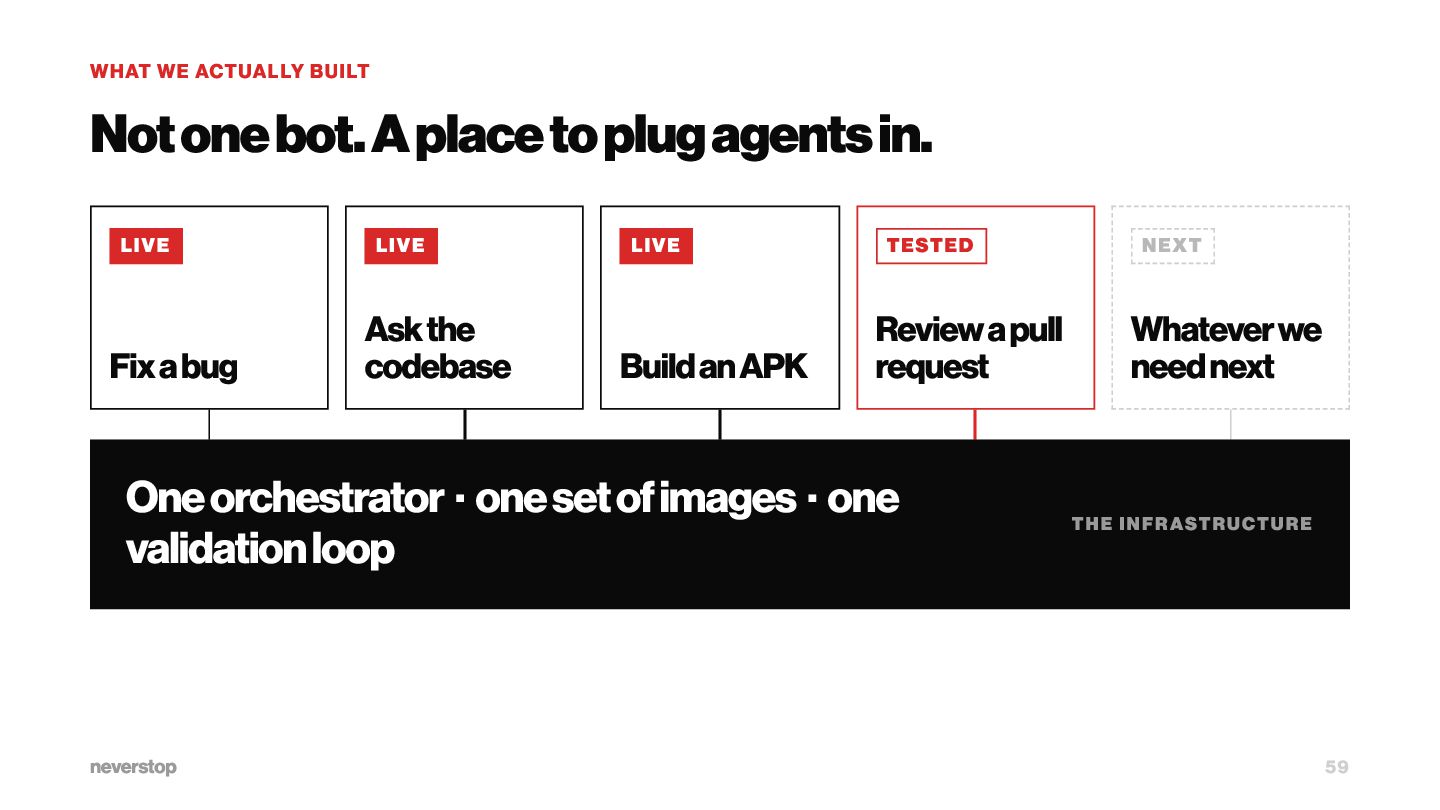
We built an AI agent that lives inside Slack. QA opens a thread with the bug details, a dev adds technical context if needed, and someone mentions the bot. From there, the agent reads the full thread, clones the repo, makes the fix, runs linters and tests, verifies the build passes, and opens a PR. No one had to open an IDE.
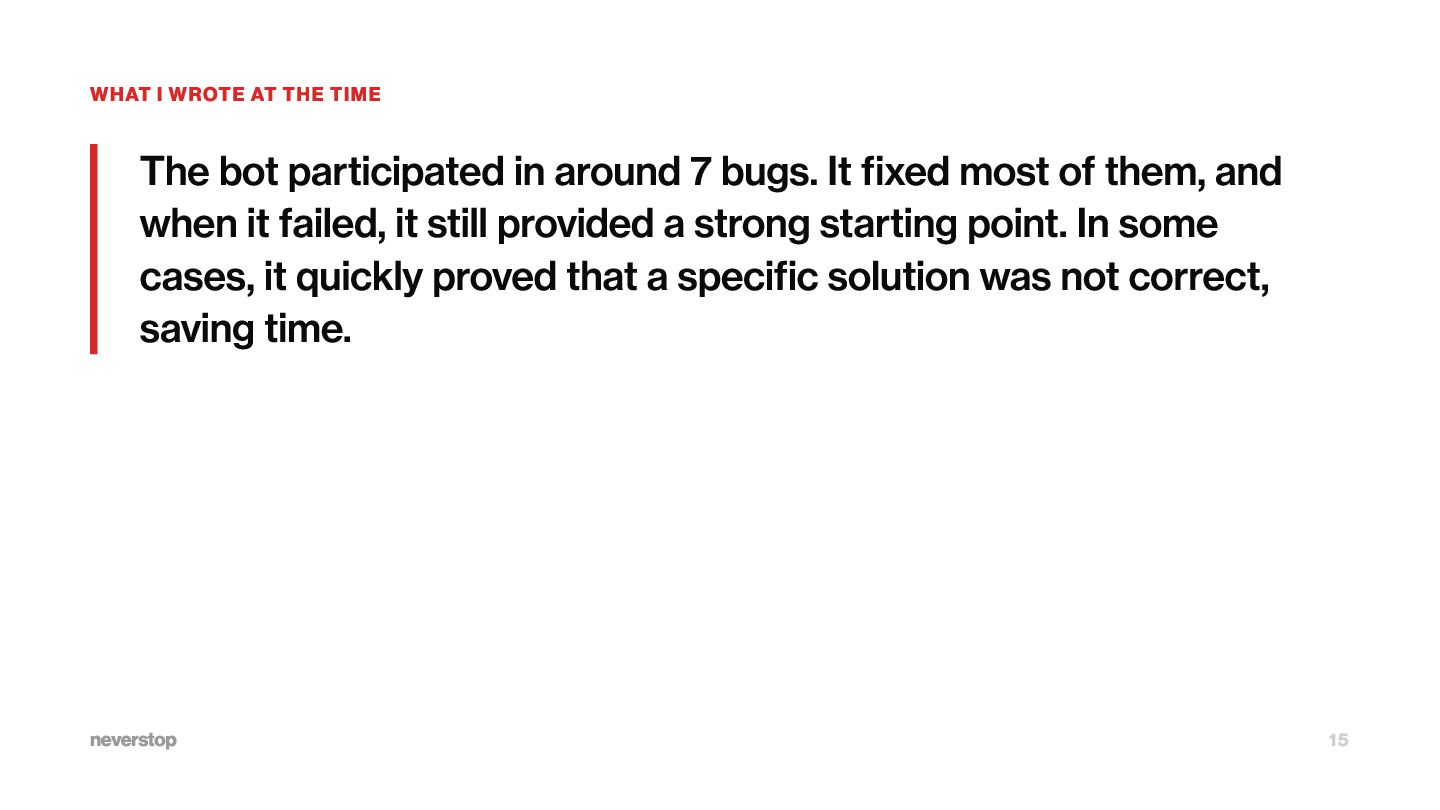
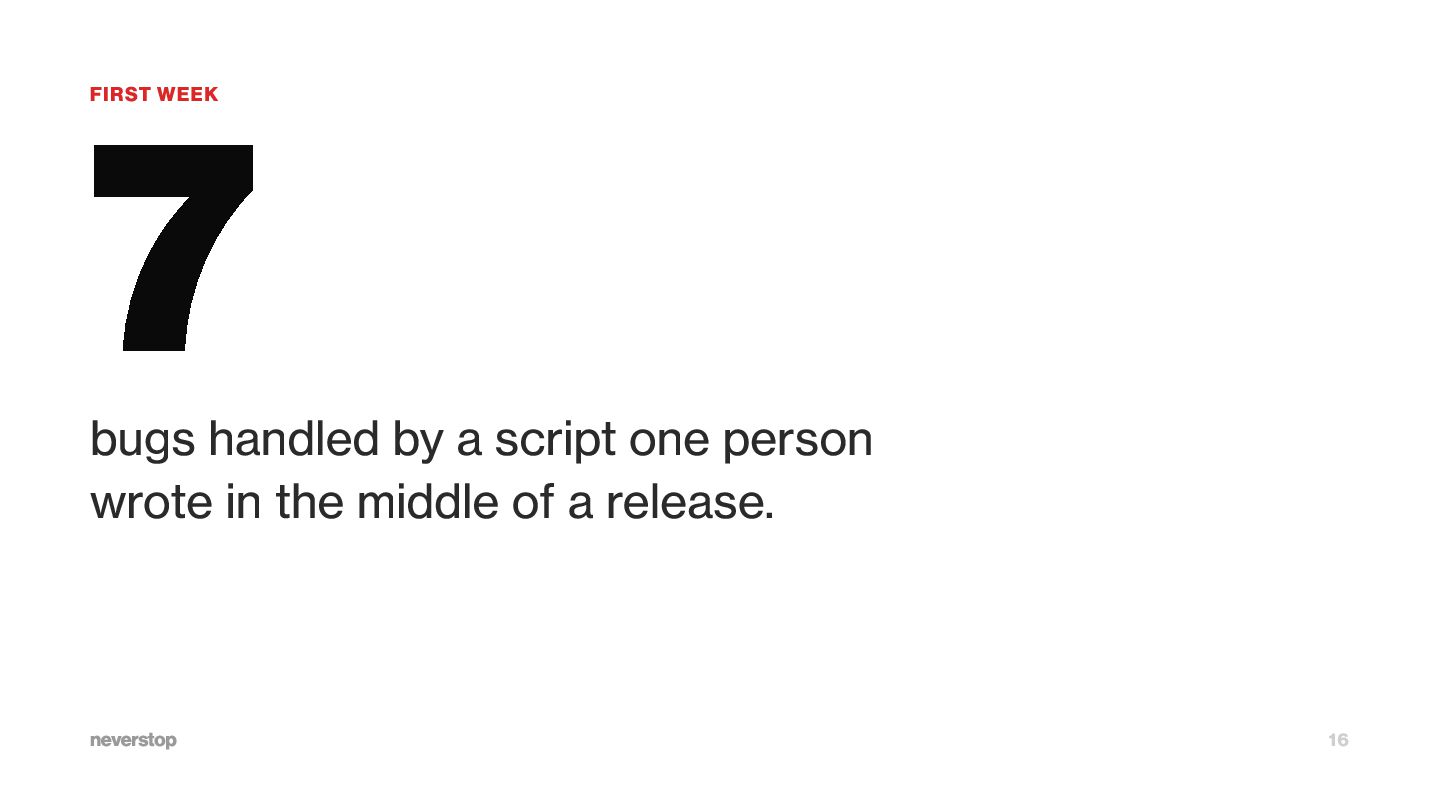
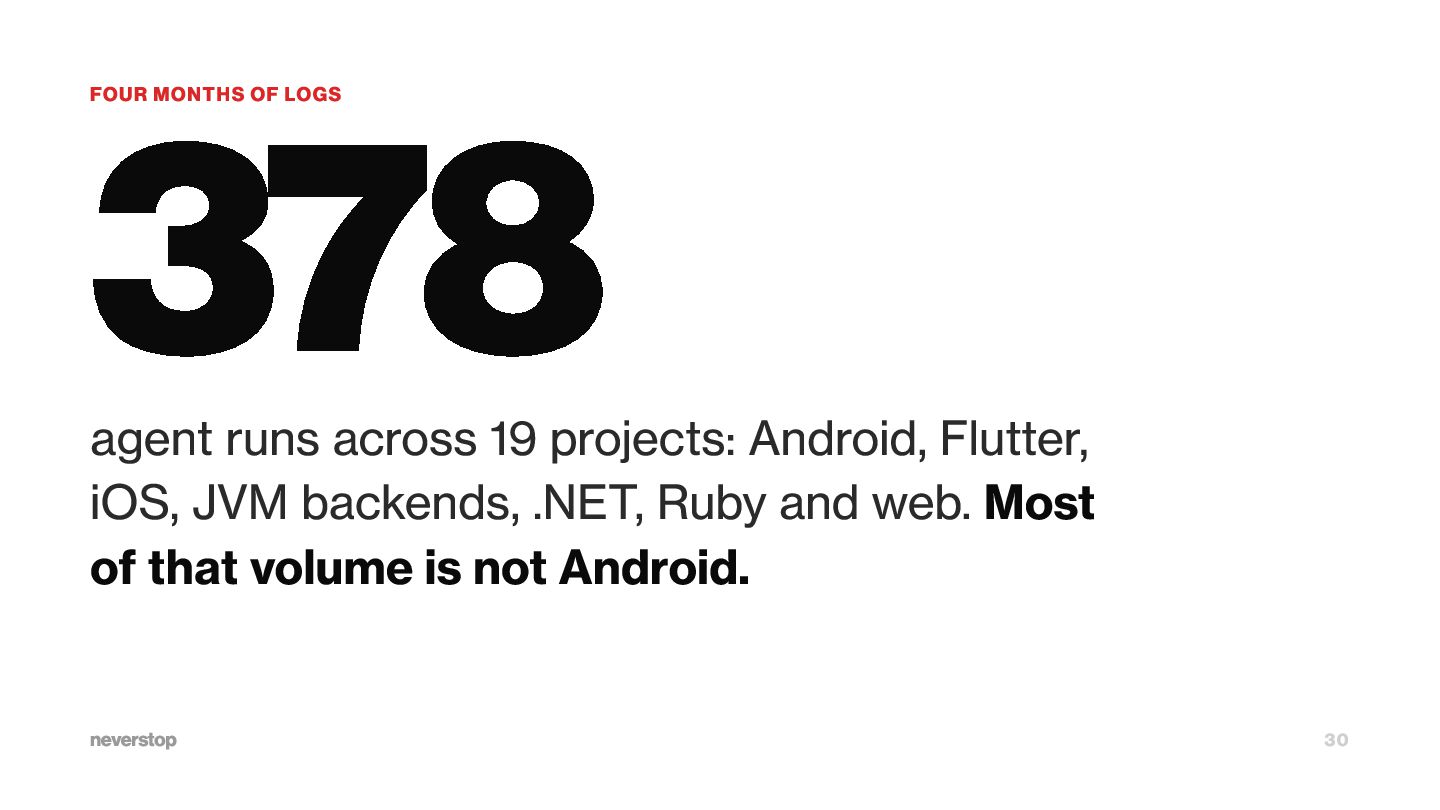
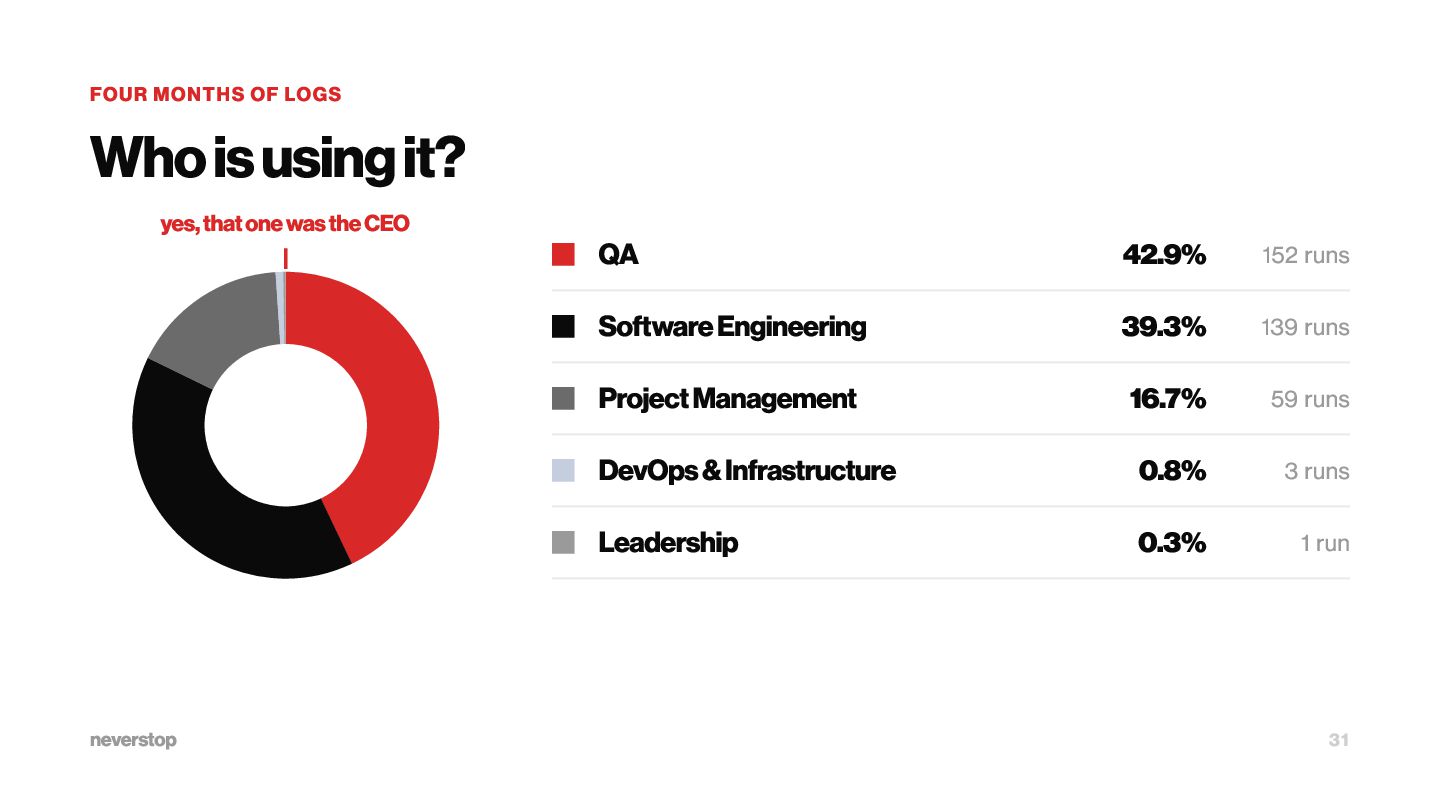
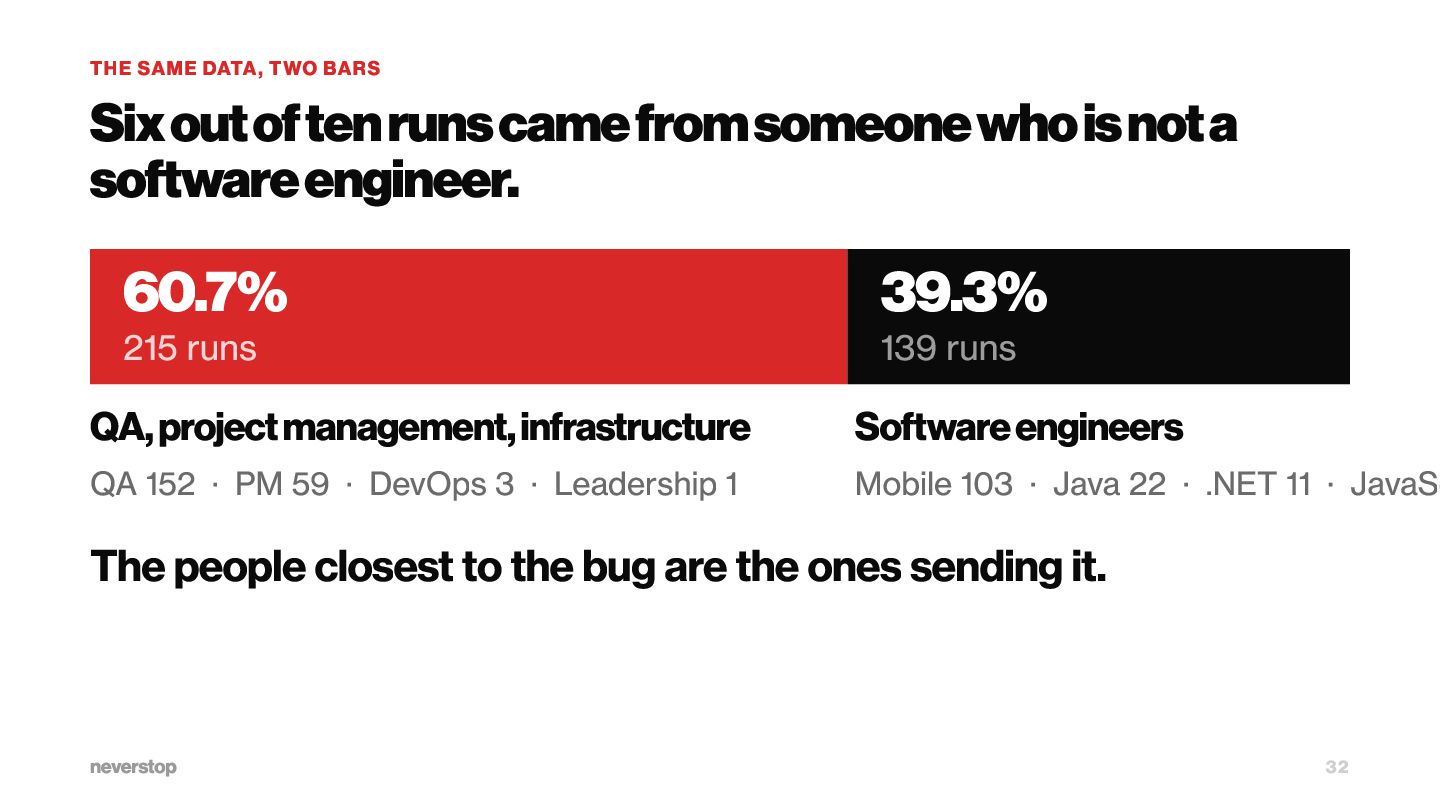
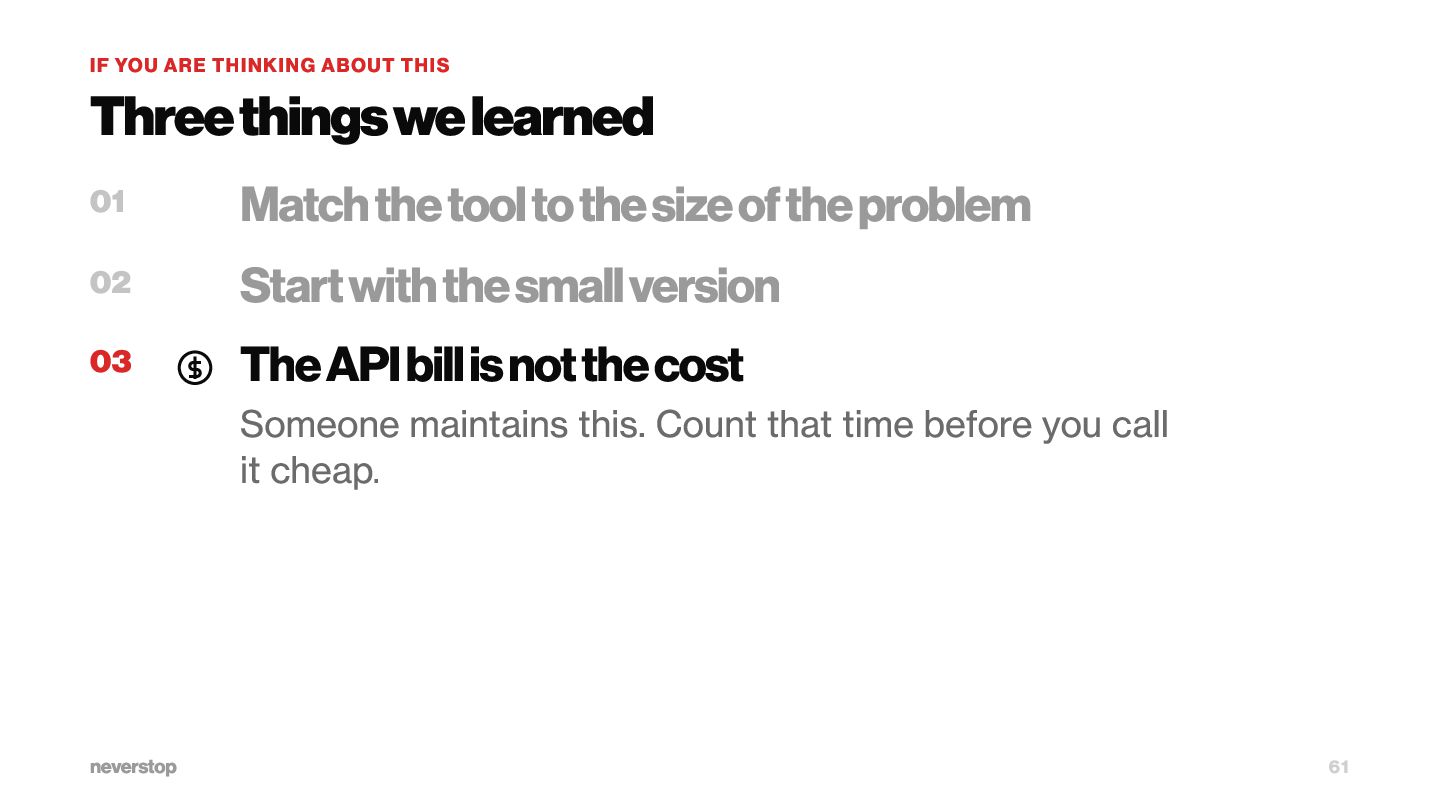
In the first 3 days on our first project, 20 bugs were fixed this way. Today it runs across 10 projects.
In this talk I'll walk through how we built this system and what we learned along the way:
• How we designed the agent to read Slack threads, understand context from screenshots and messages, and translate that into code changes
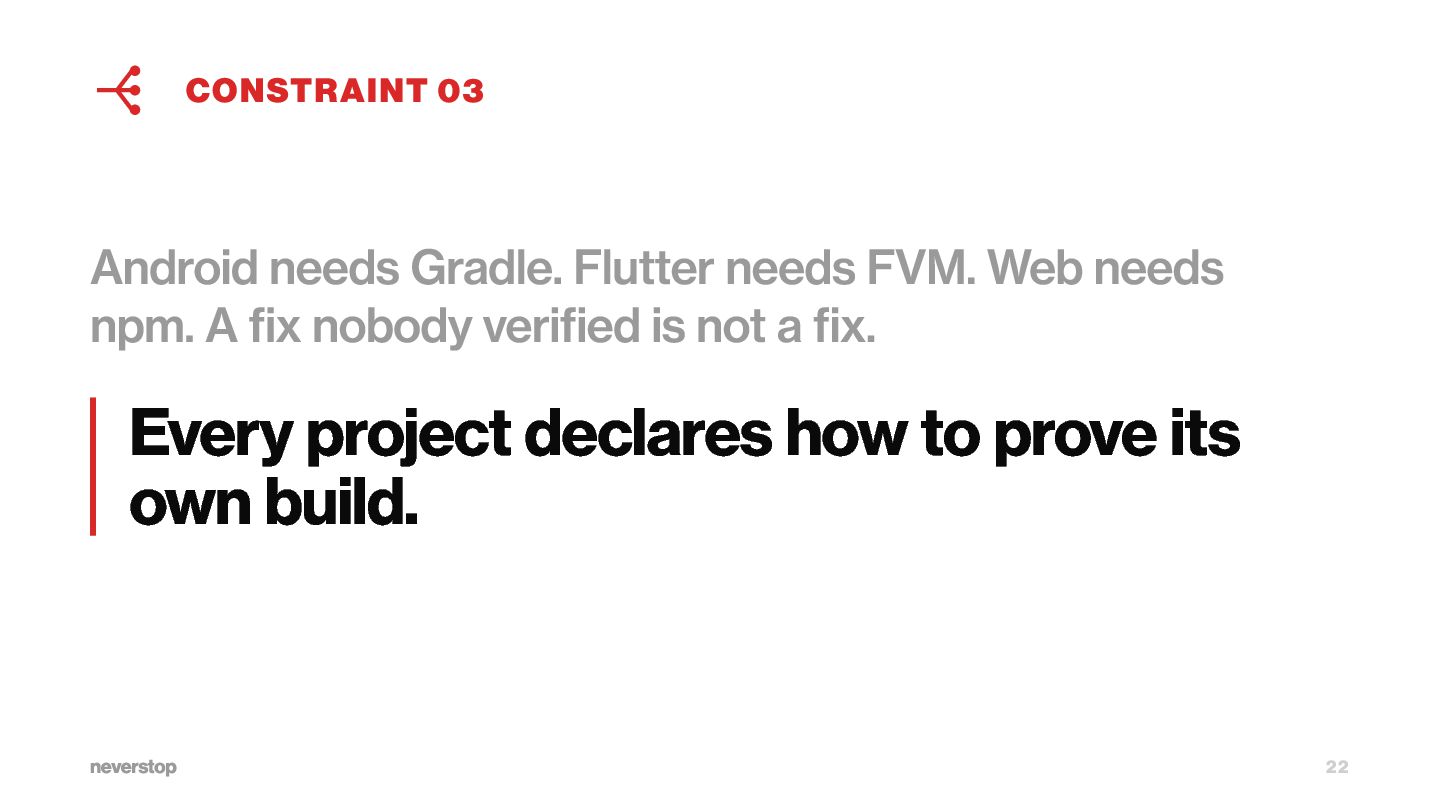
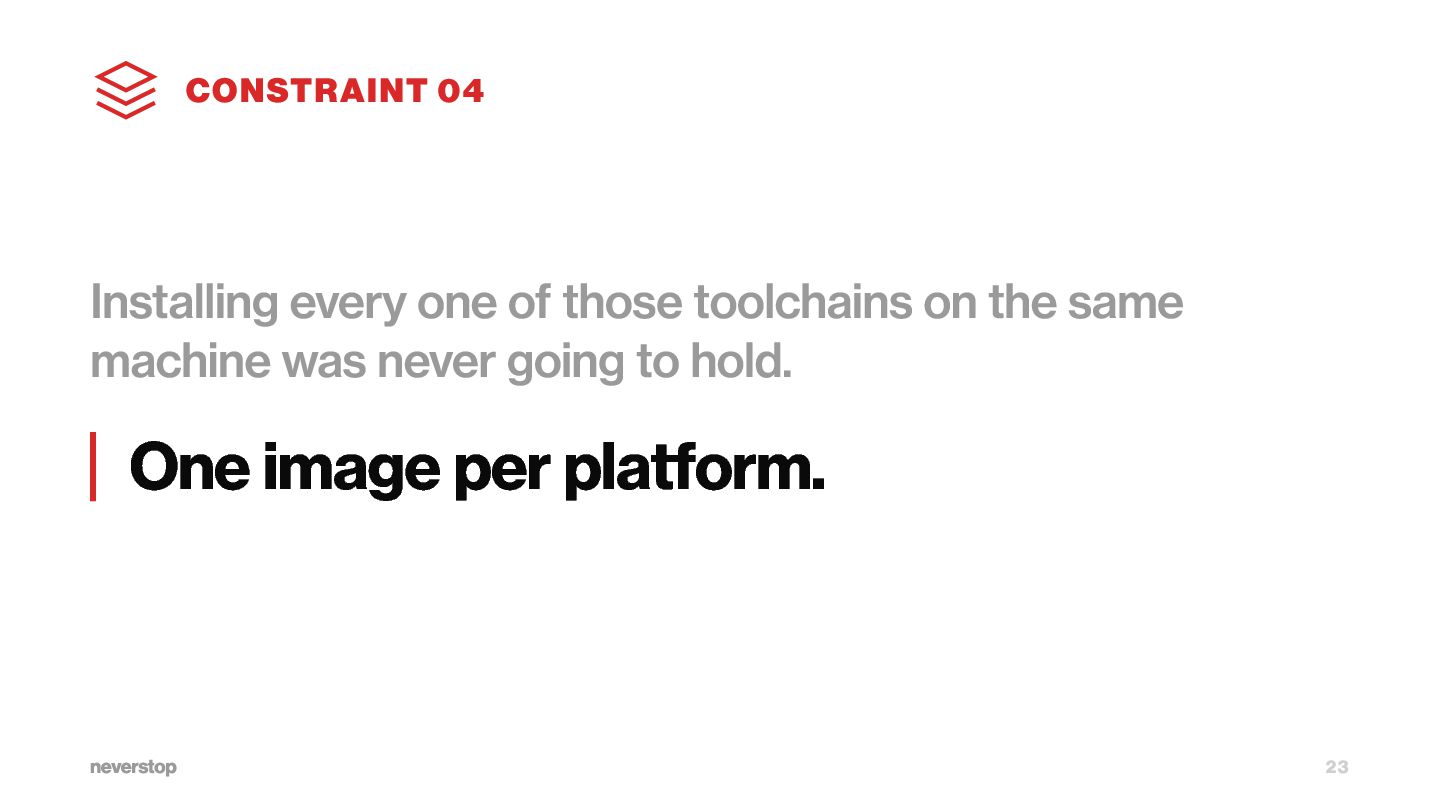
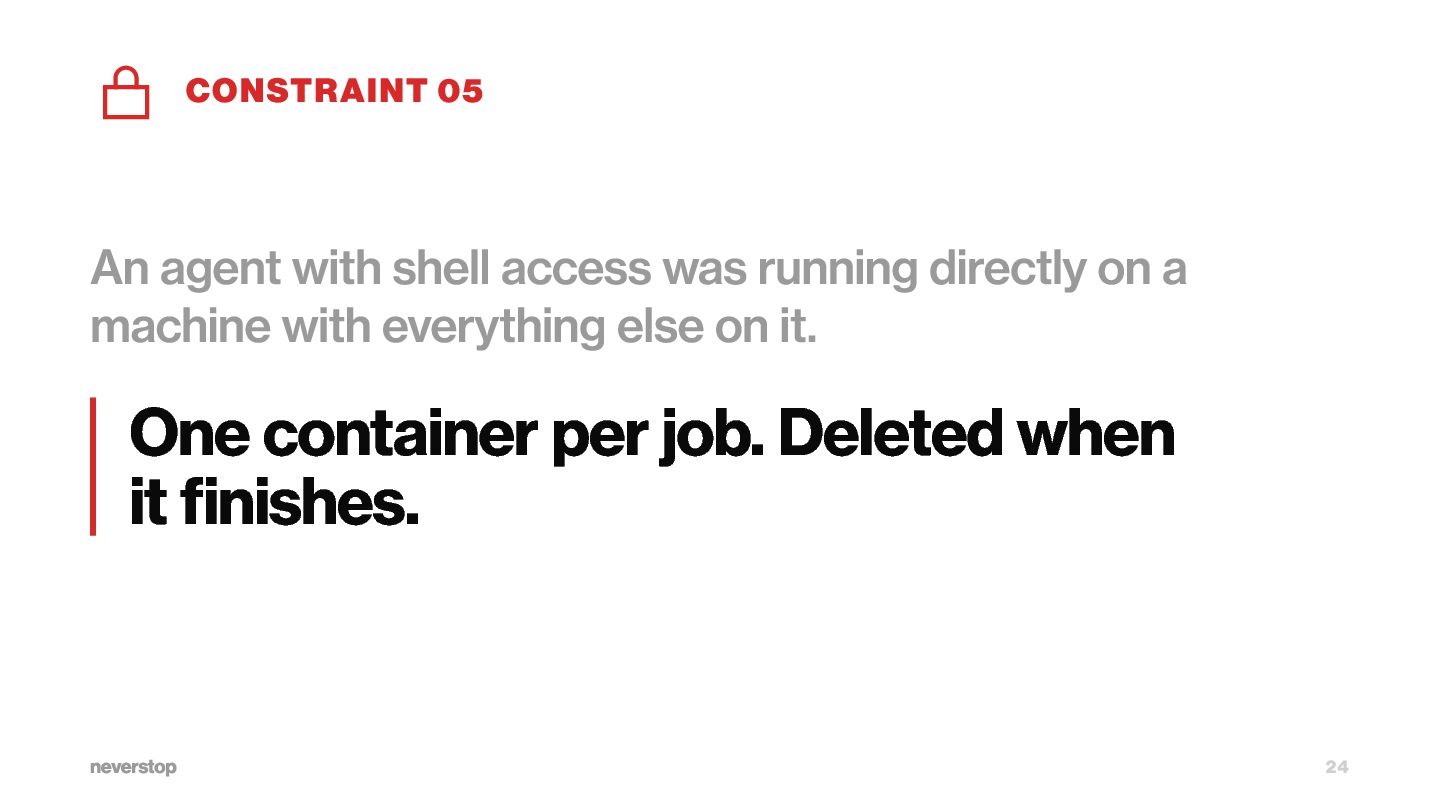
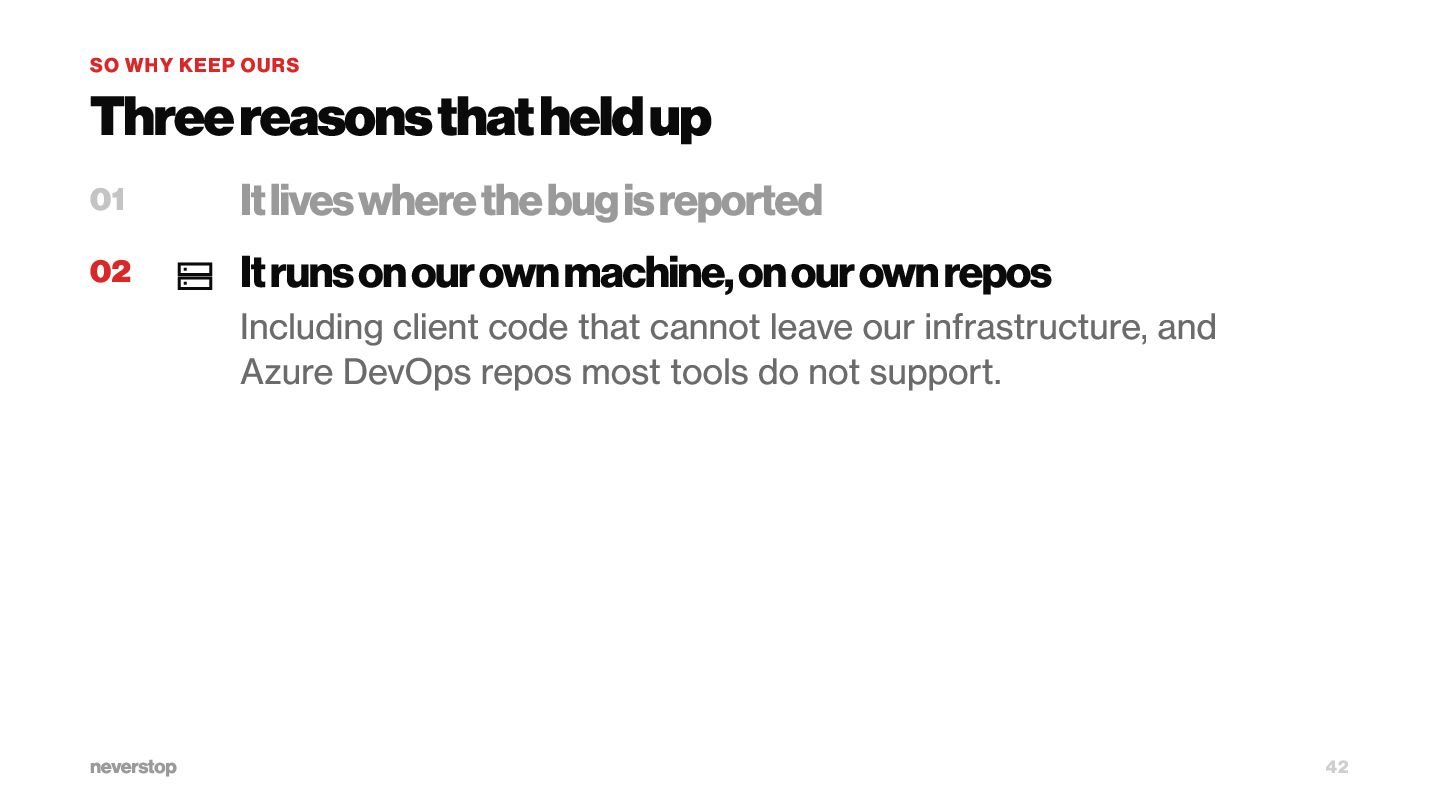
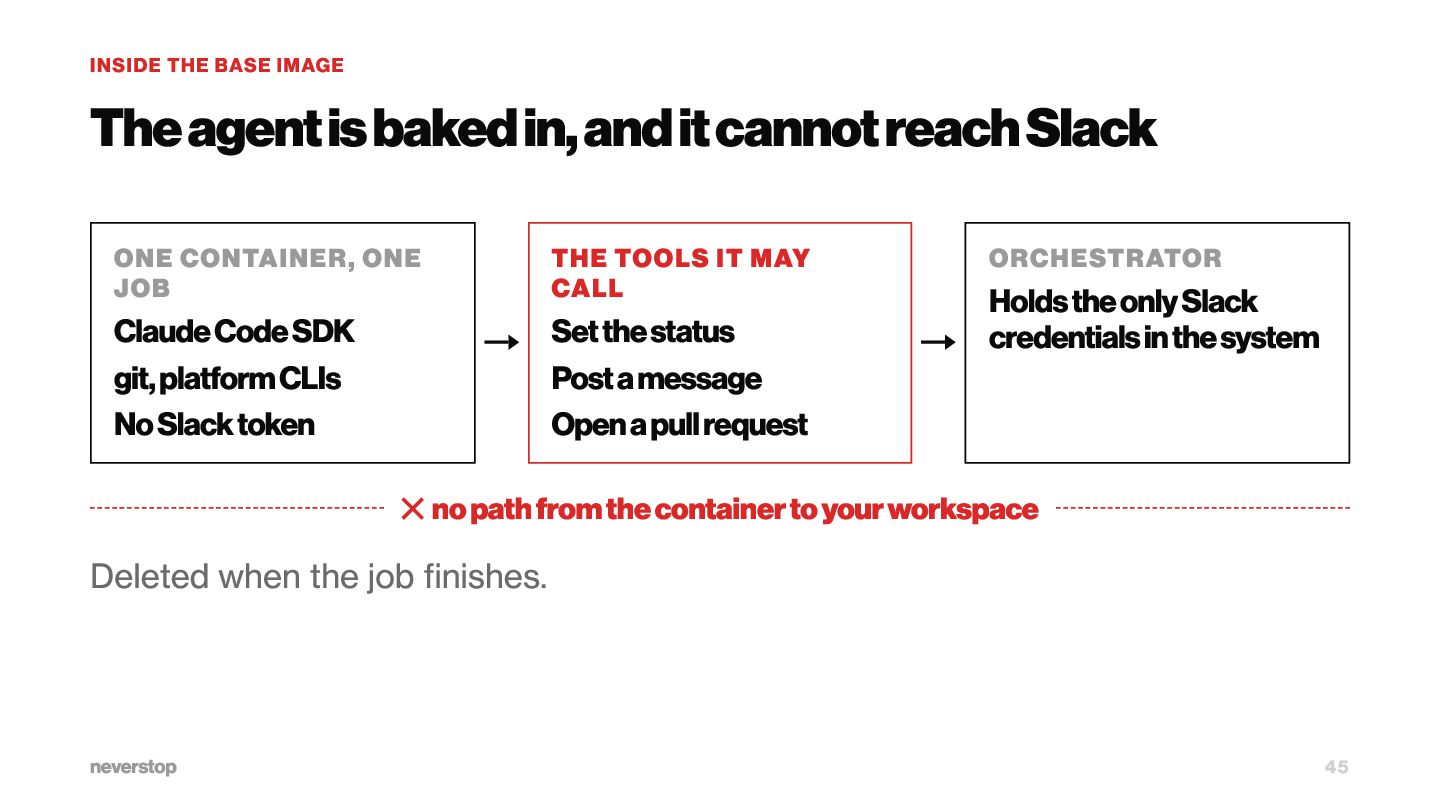
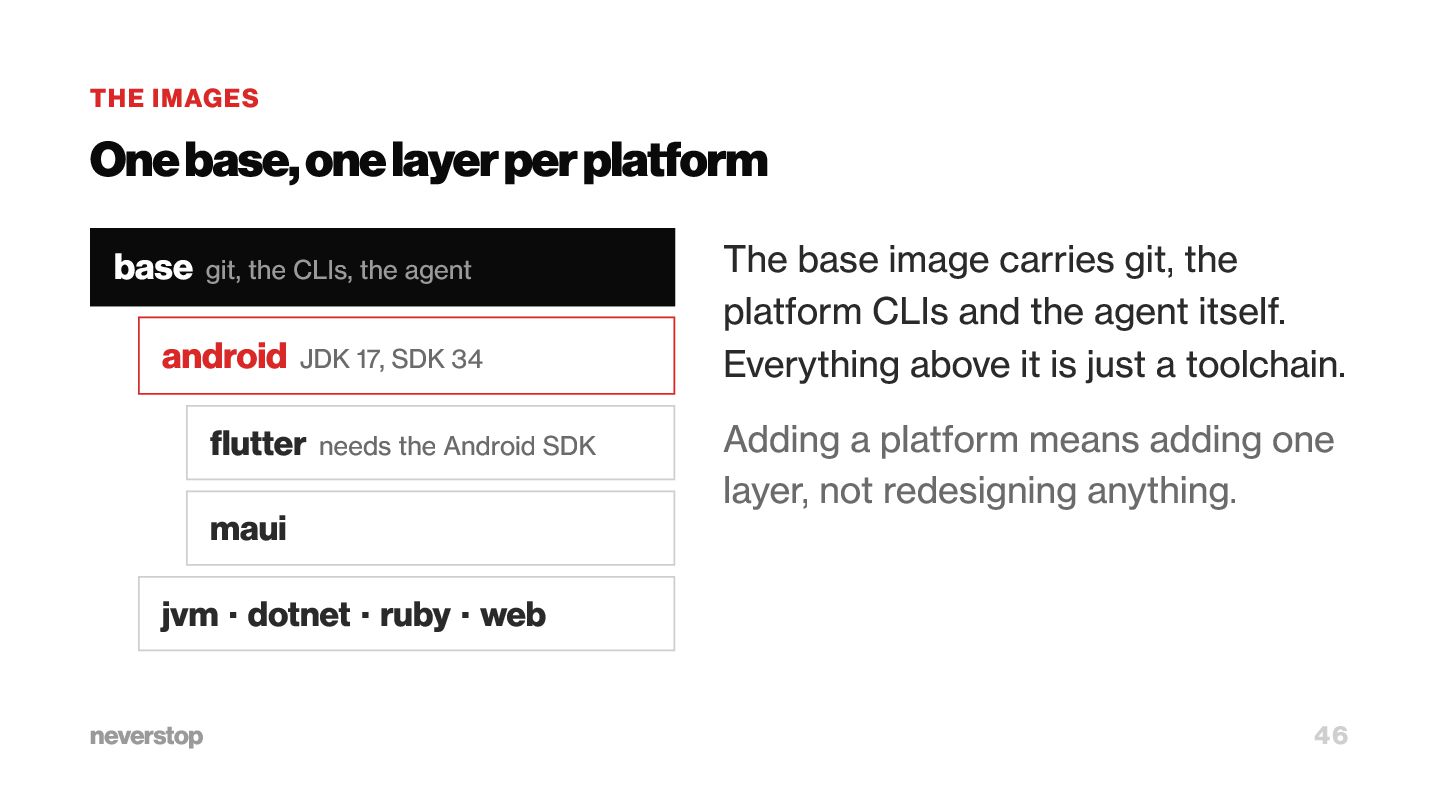
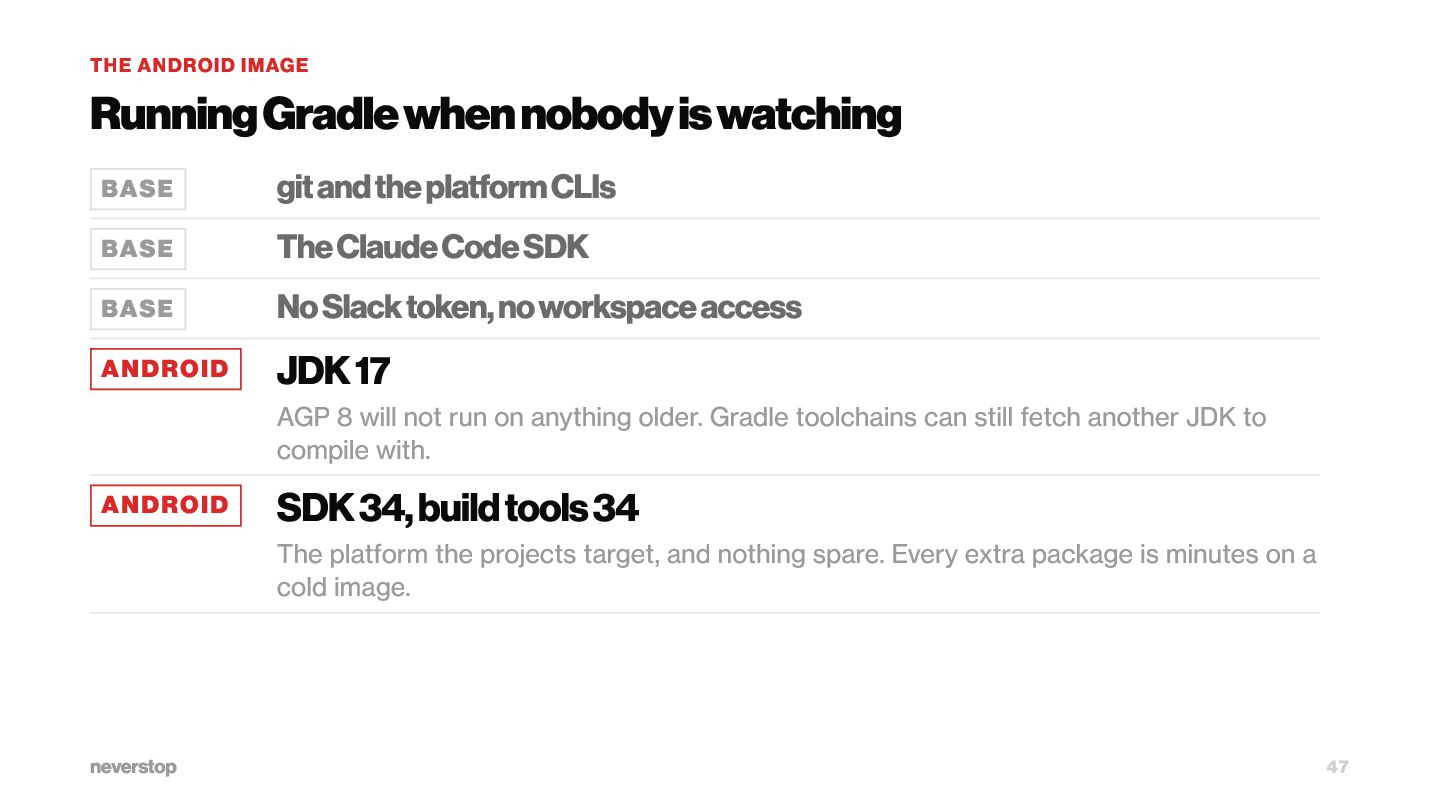
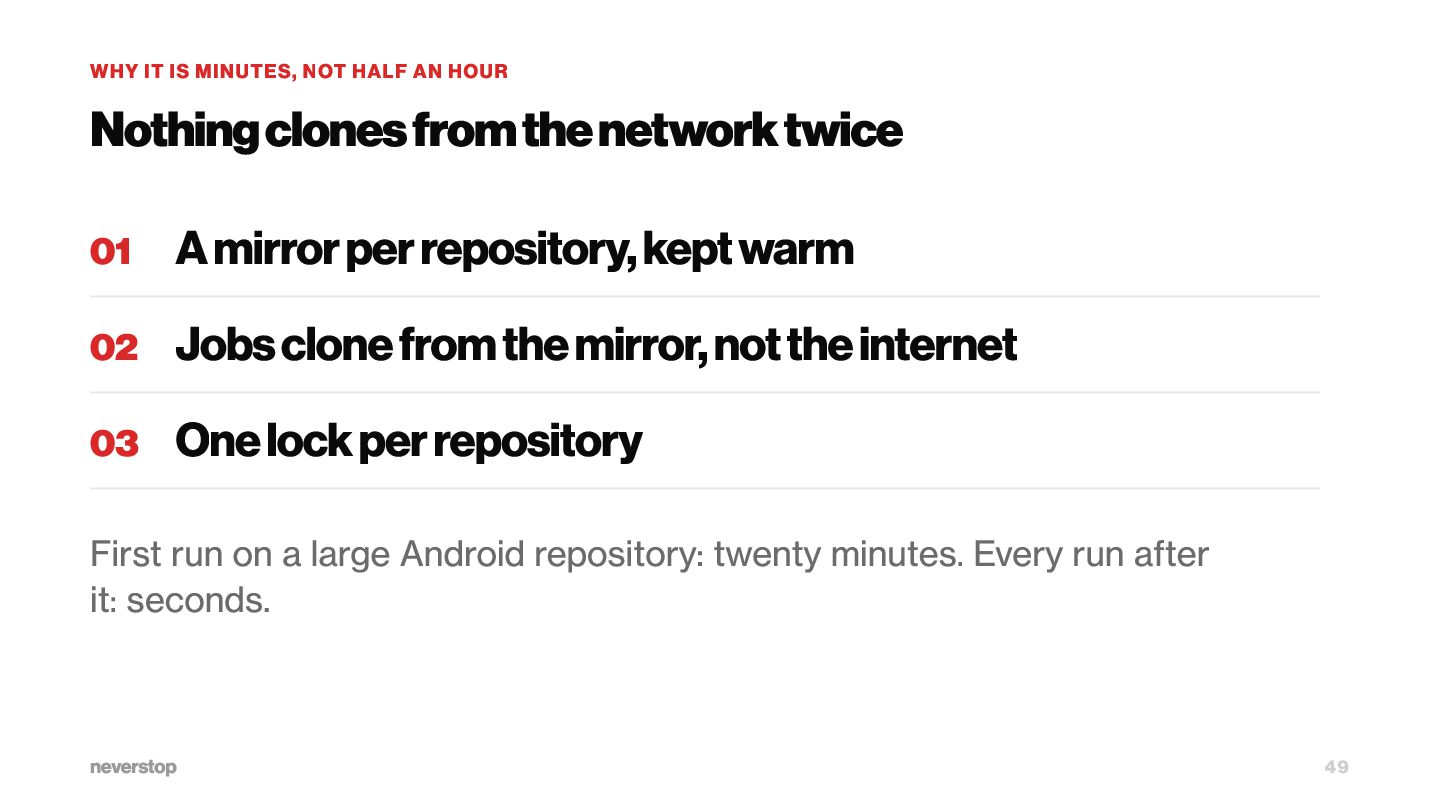
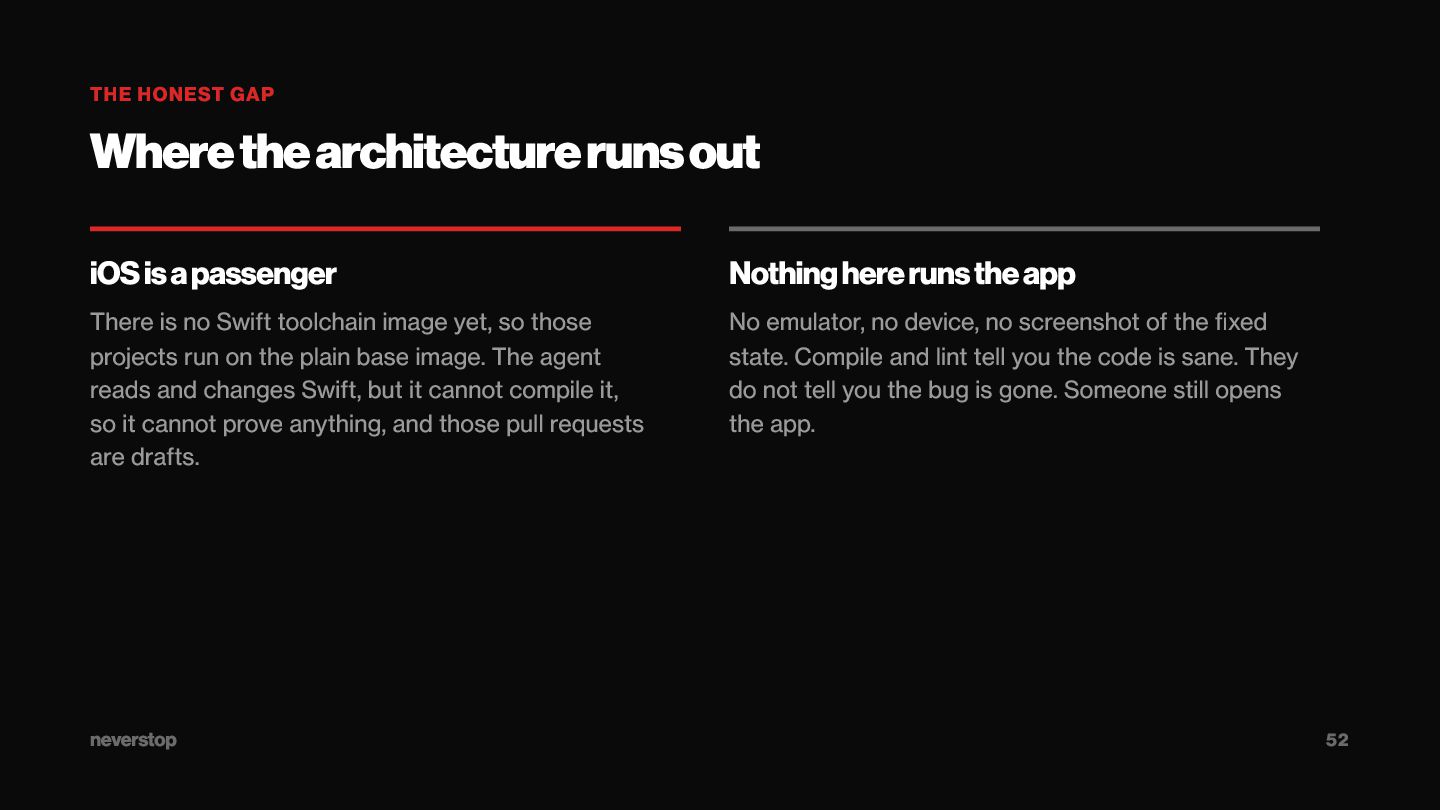
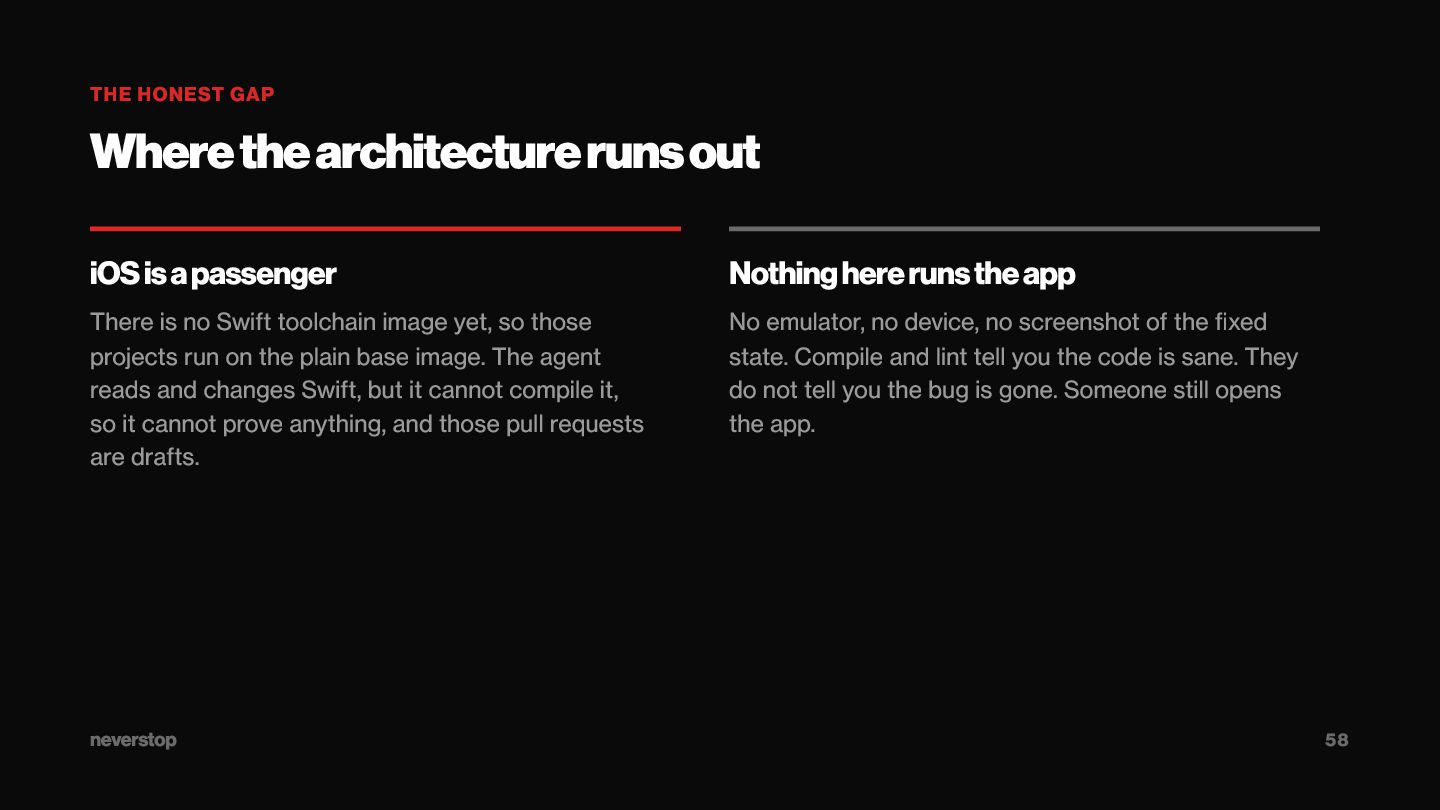
• Why we used Docker containers per job, with dedicated images for each platform (Android SDK, Flutter, .NET, Ruby) to keep everything isolated and reproducible
• The Android-specific challenges: Gradle builds inside containers, SDK setup, running verification without emulators
• Connecting the agent to external tools through MCP, and why authentication turned out to be one of the hardest problems to solve, especially with services like Figma
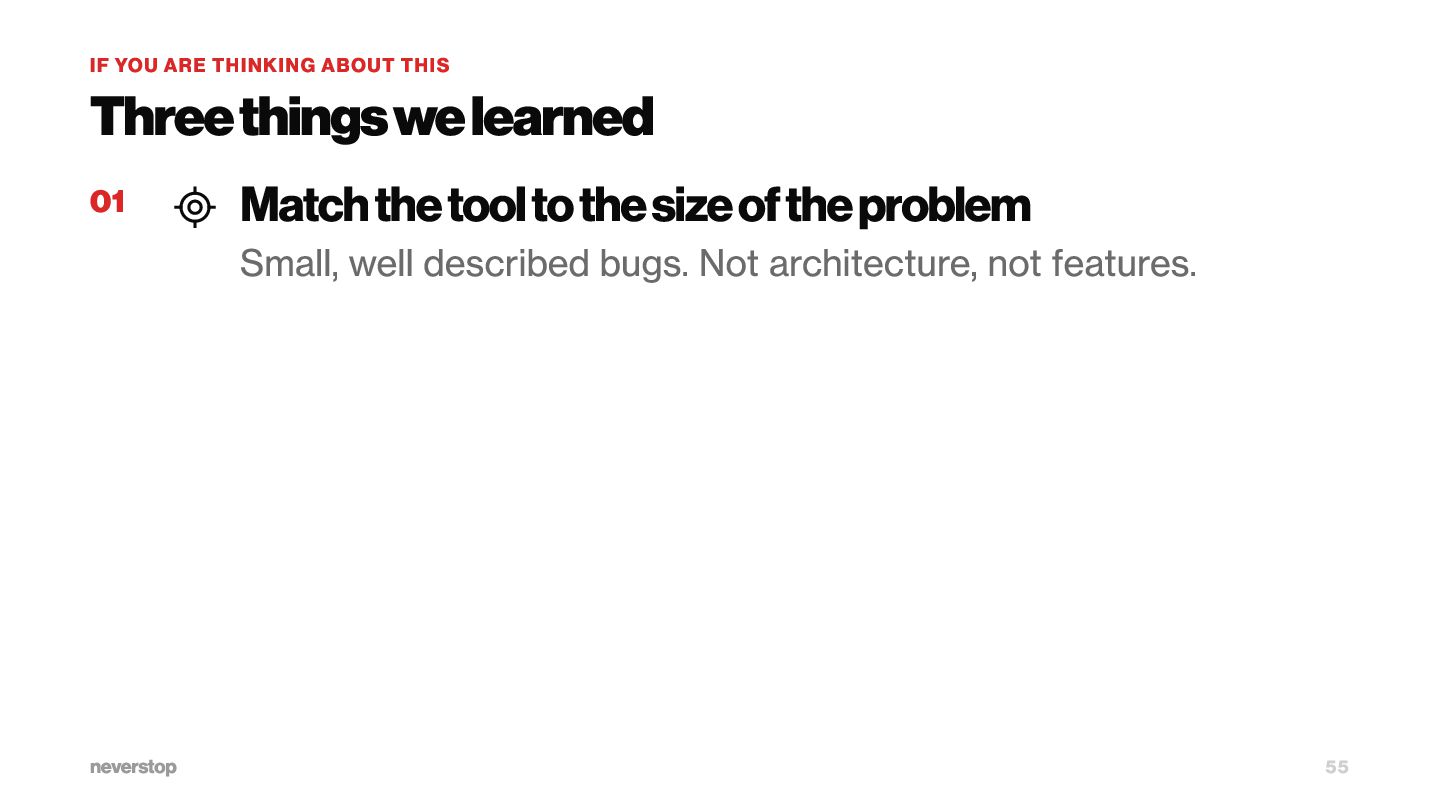
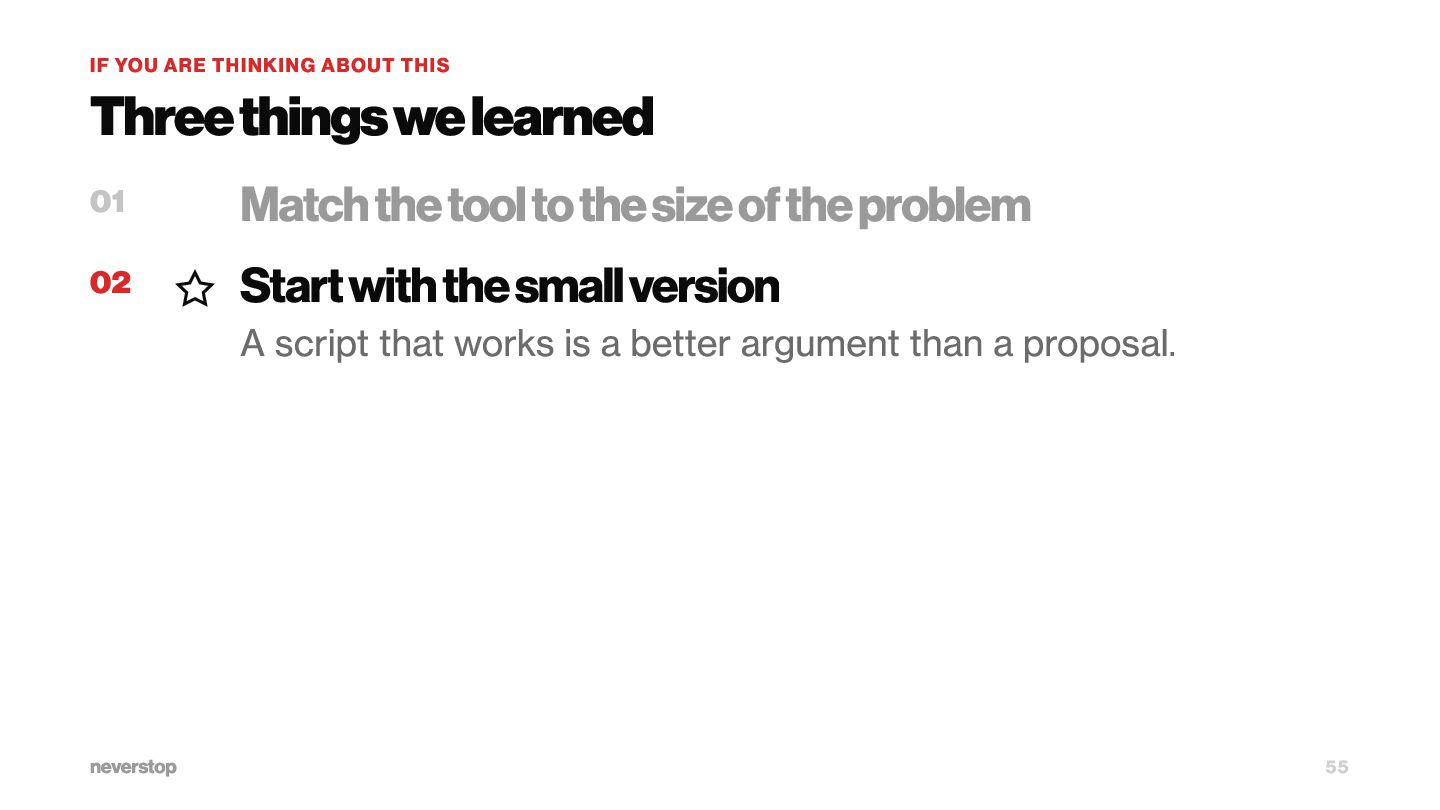
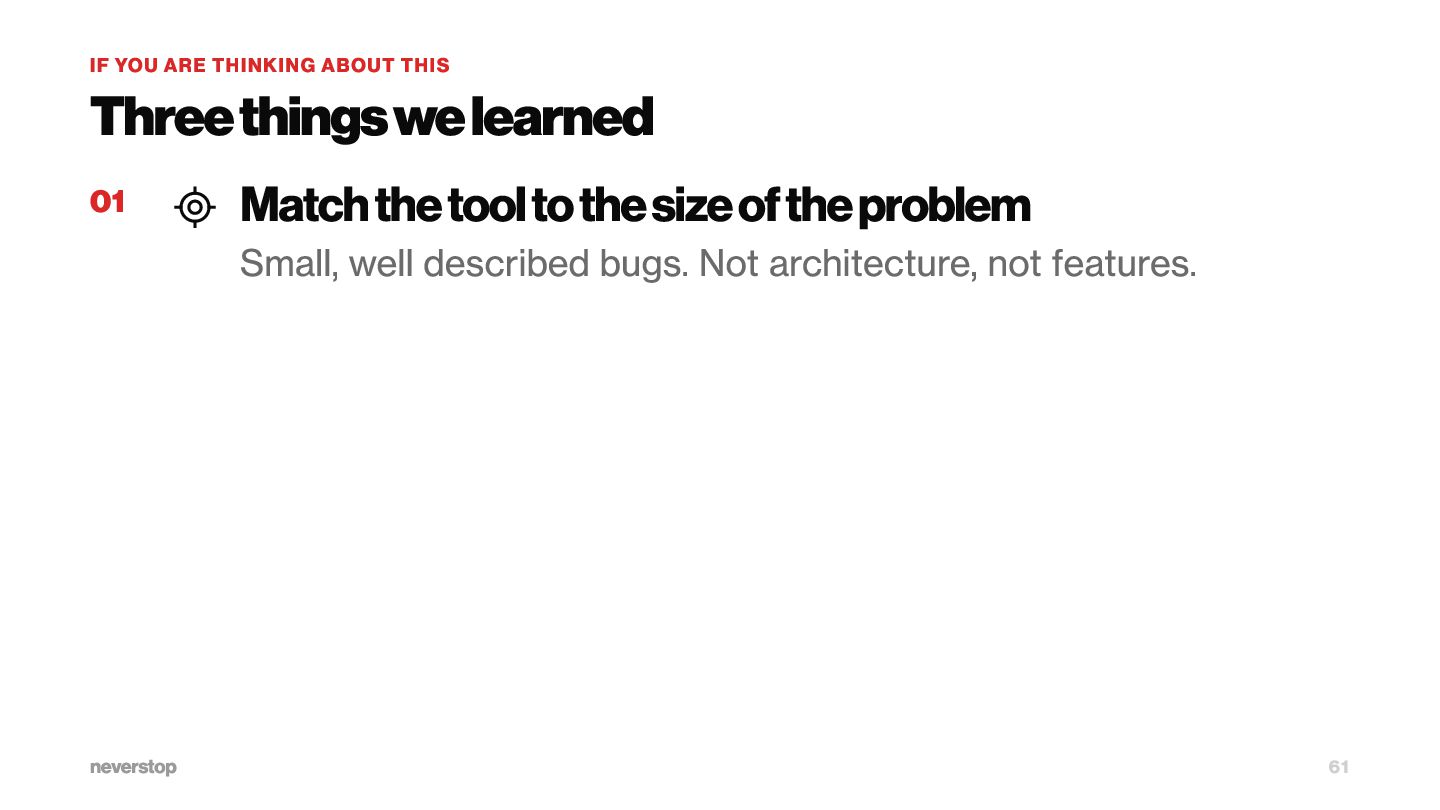
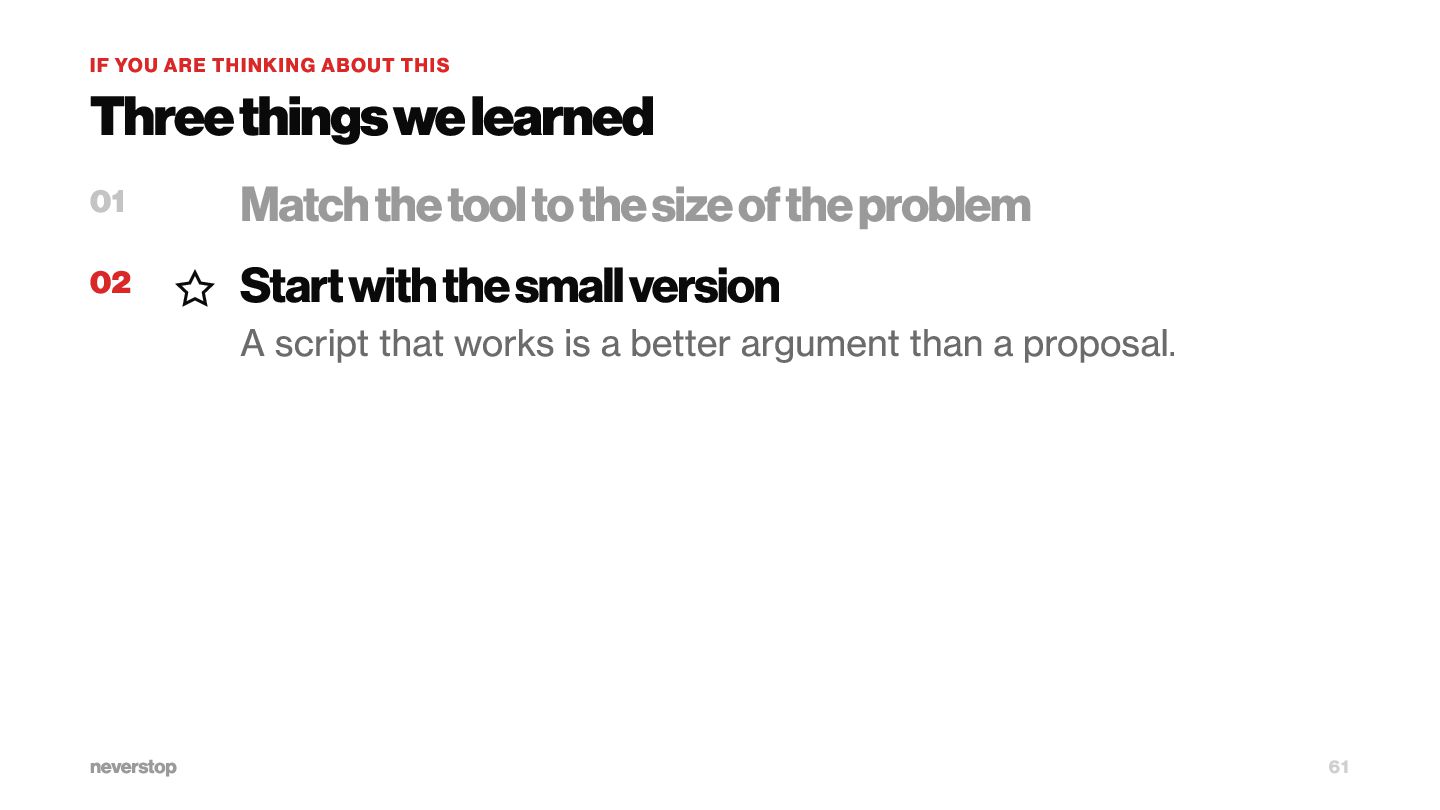
• What went well and what we'd do differently next time


 thisaay
 palkan
 minodriven
 monolithic_adam
 akit37
 hollycummins
 naokihaba
 junhat6
 andpad
 kobakei
 kenkino
 teyamagu
 hschwentner
 pedronauck
 honnibal
 michaelherold
 productmarketing
 varn
varn
 mfonobong
 philnash
 dugsong
 ivargrimstad
 davidcarrasco
 minecr
 reverentgeek