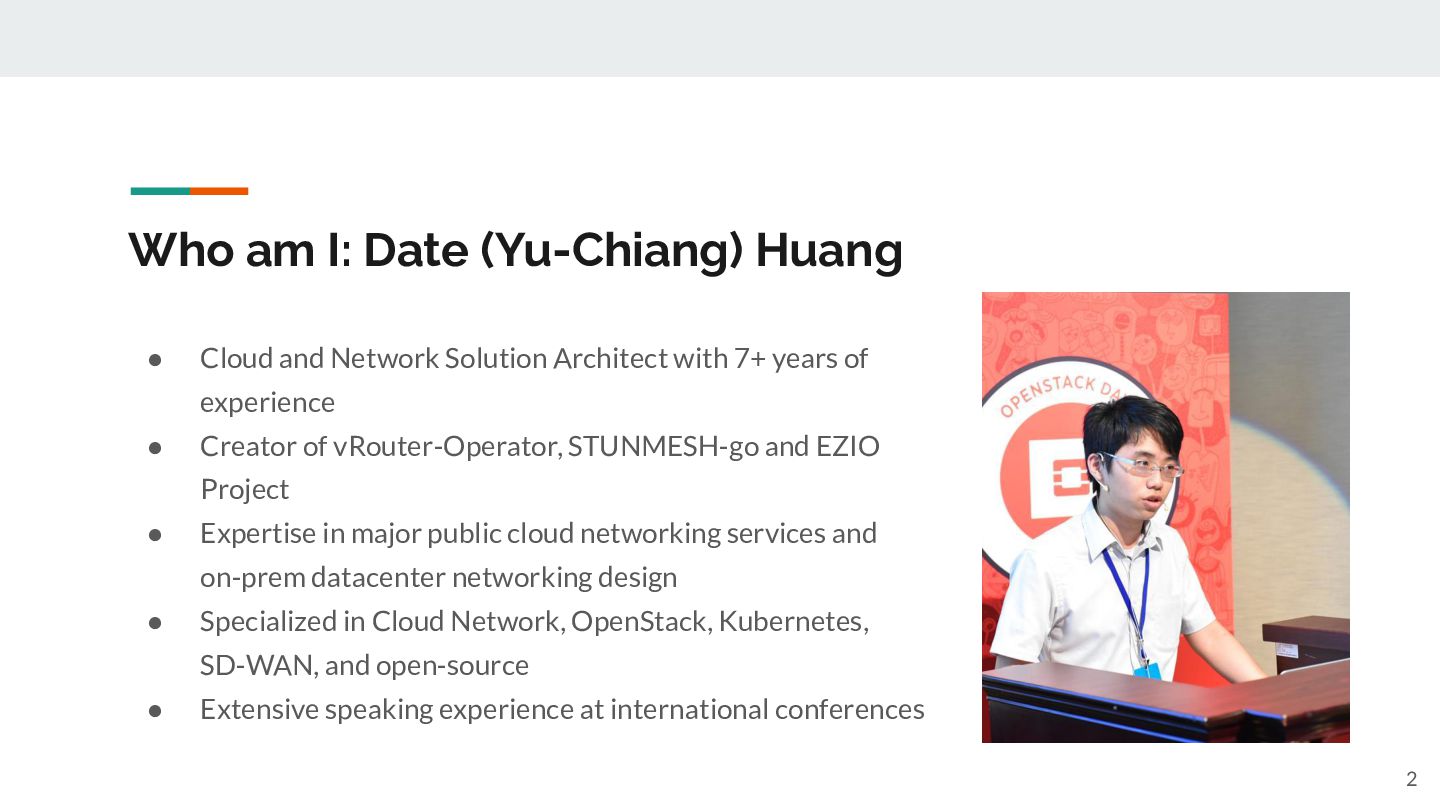
Solution Architect with 7+ years of experience • Creator of vRouter-Operator, STUNMESH-go and EZIO Project • Expertise in major public cloud networking services and on-prem datacenter networking design • Specialized in Cloud Network, OpenStack, Kubernetes, SD-WAN, and open-source • Extensive speaking experience at international conferences 2
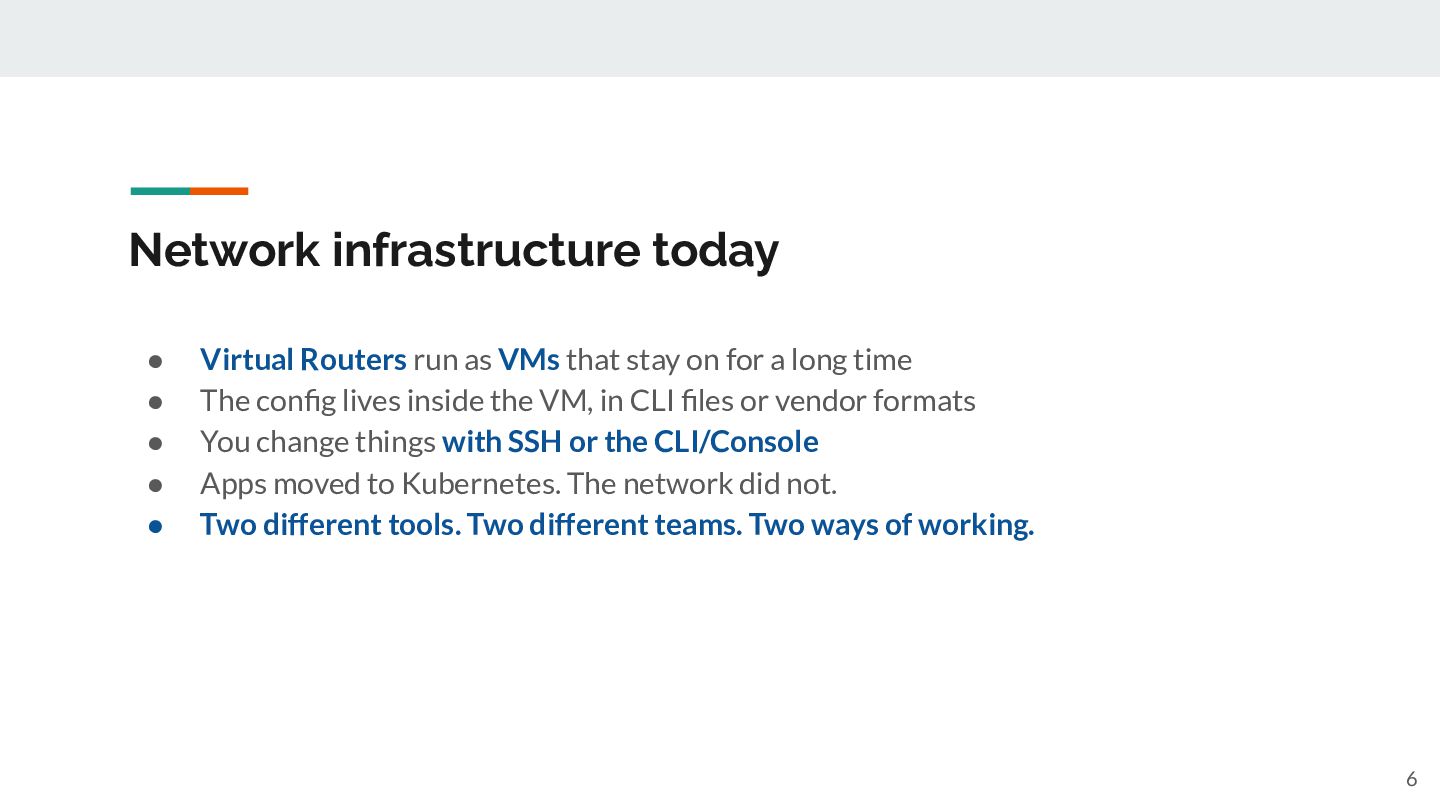
stay on for a long time • The config lives inside the VM, in CLI files or vendor formats • You change things with SSH or the CLI/Console • Apps moved to Kubernetes. The network did not. • Two different tools. Two different teams. Two ways of working. 6
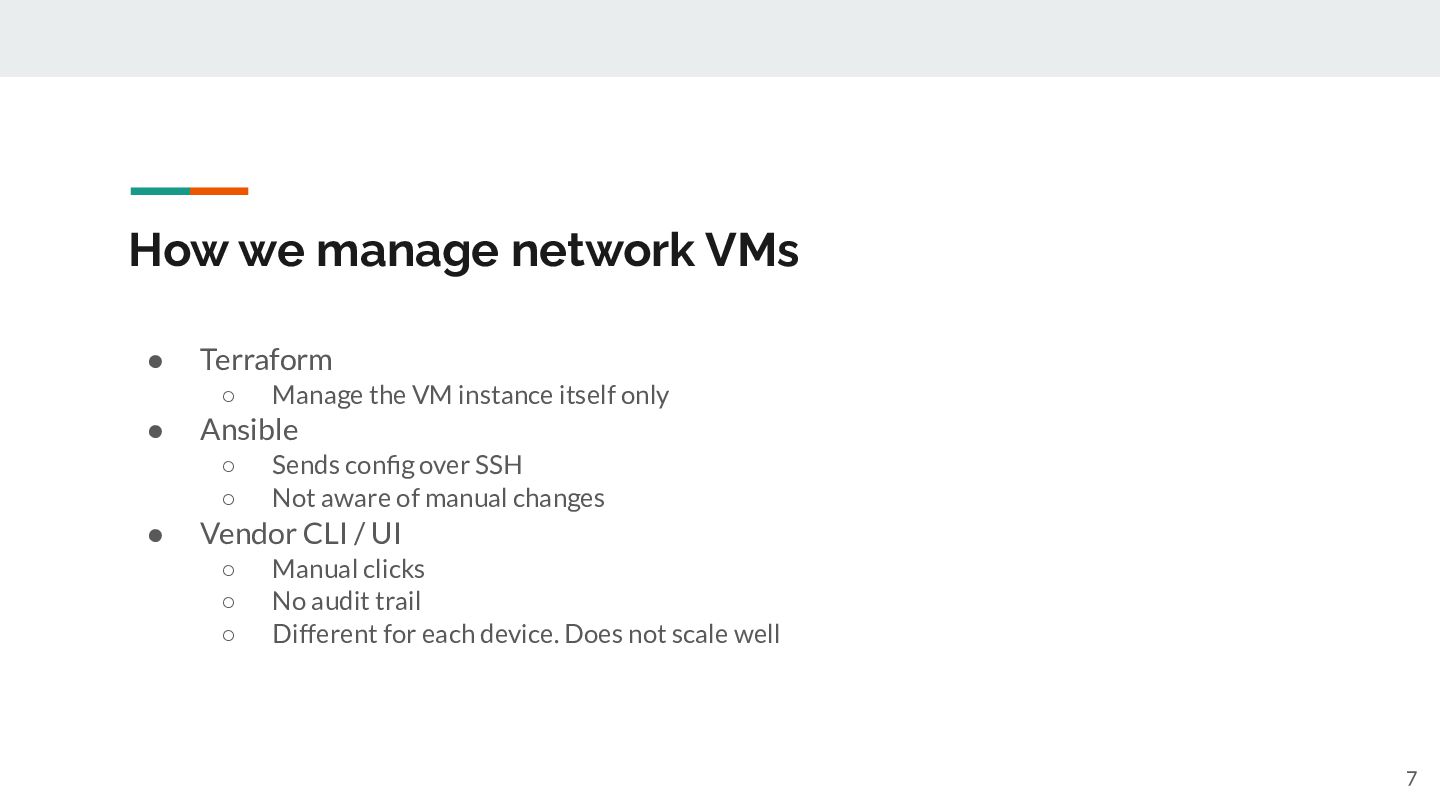
VM instance itself only • Ansible ◦ Sends config over SSH ◦ Not aware of manual changes • Vendor CLI / UI ◦ Manual clicks ◦ No audit trail ◦ Different for each device. Does not scale well 7
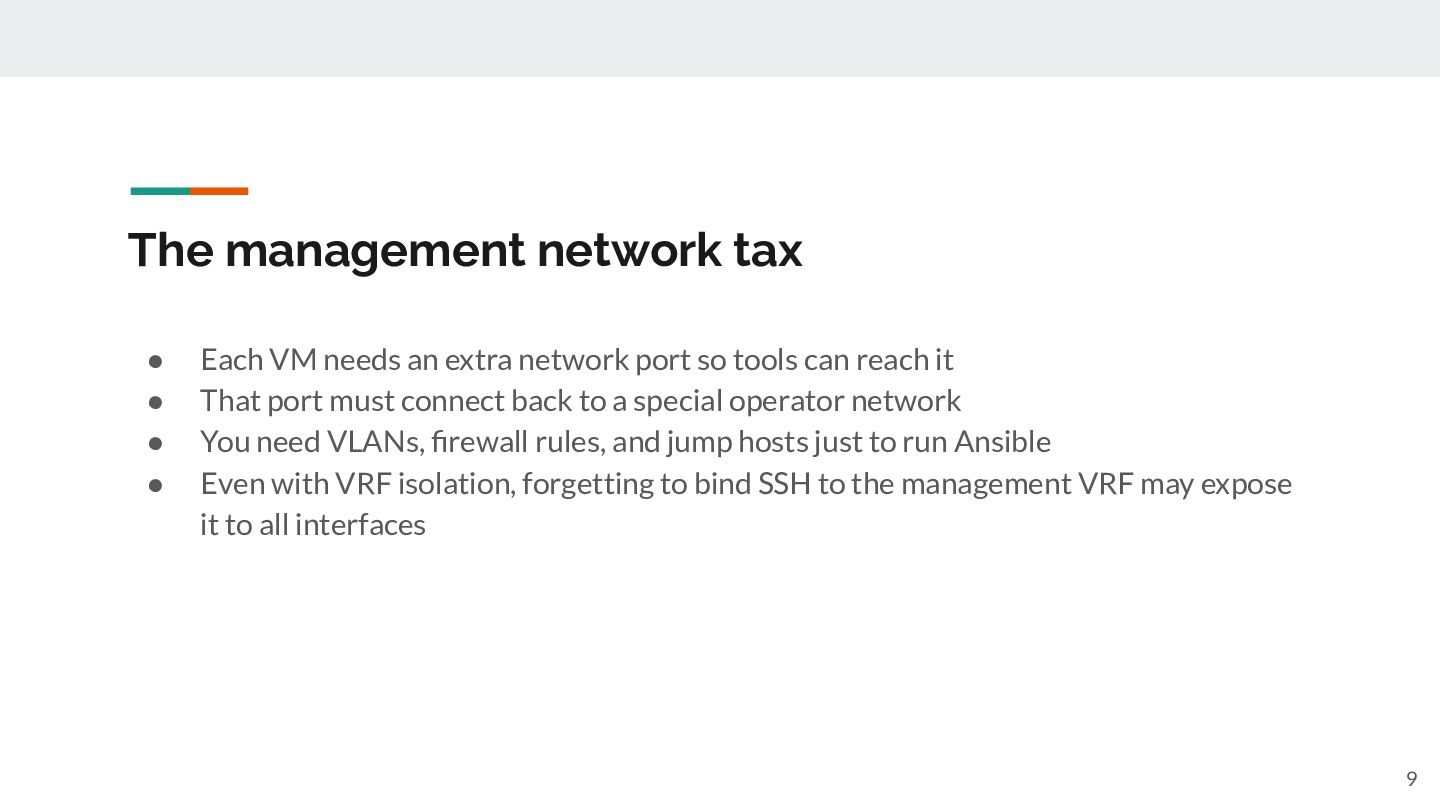
network port so tools can reach it • That port must connect back to a special operator network • You need VLANs, firewall rules, and jump hosts just to run Ansible • Even with VRF isolation, forgetting to bind SSH to the management VRF may expose it to all interfaces 9
to fix one small thing at 2am • That change is never saved back to the repo • Months later, Ansible runs and breaks production • There is no single source of truth (SSOT). ◦ The VM? ◦ The playbook? ◦ Human memory? 11
logs, if they still exist • Of course, you have AAA, but which one is the latest? ◦ Config in the VM? ◦ Config in the script? ◦ Config in the Git repo? • Ansible history, if and only if everyone used it every time • VyOS can roll back config, but which version is the correct one? • This is very different from how app teams work 12
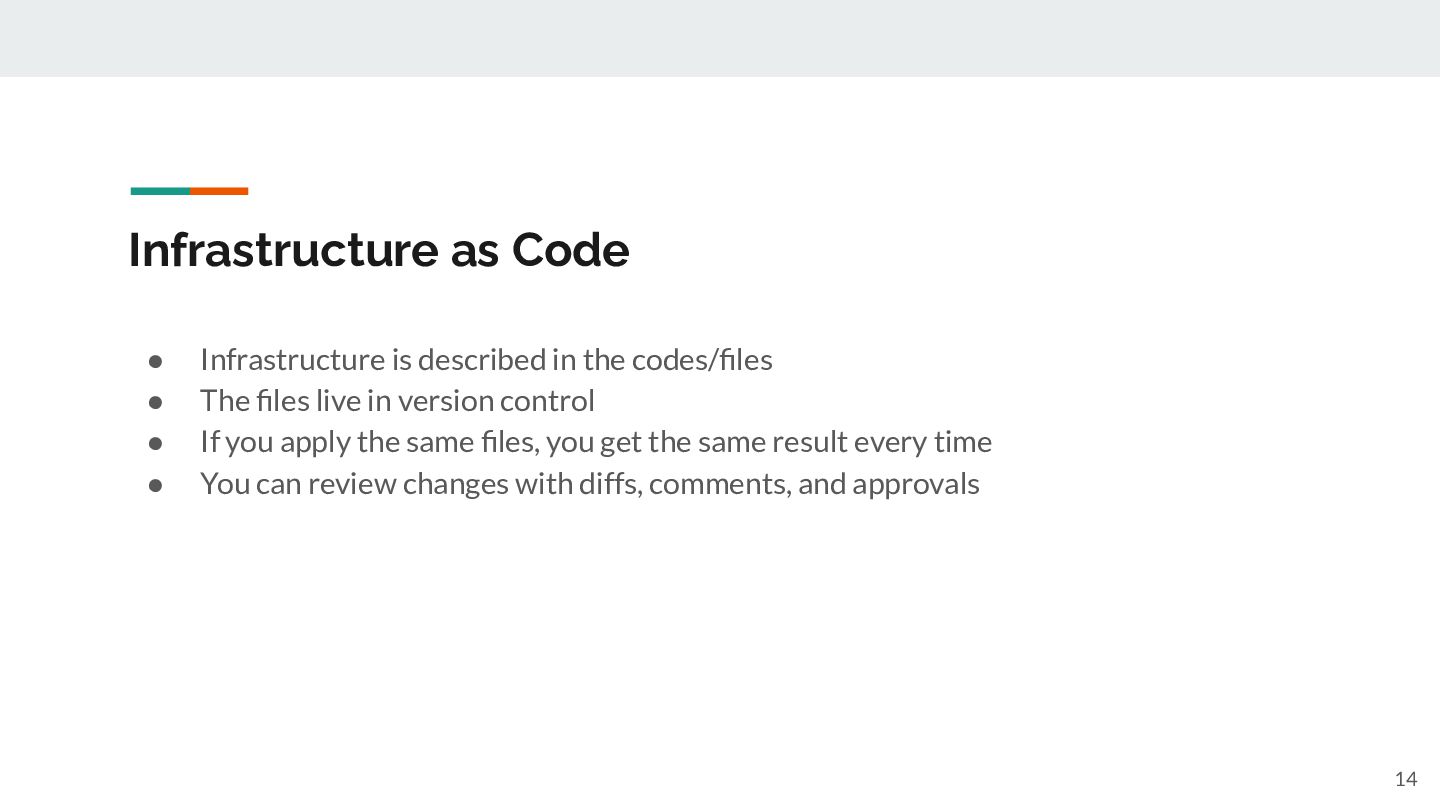
• The files live in version control • If you apply the same files, you get the same result every time • You can review changes with diffs, comments, and approvals 14
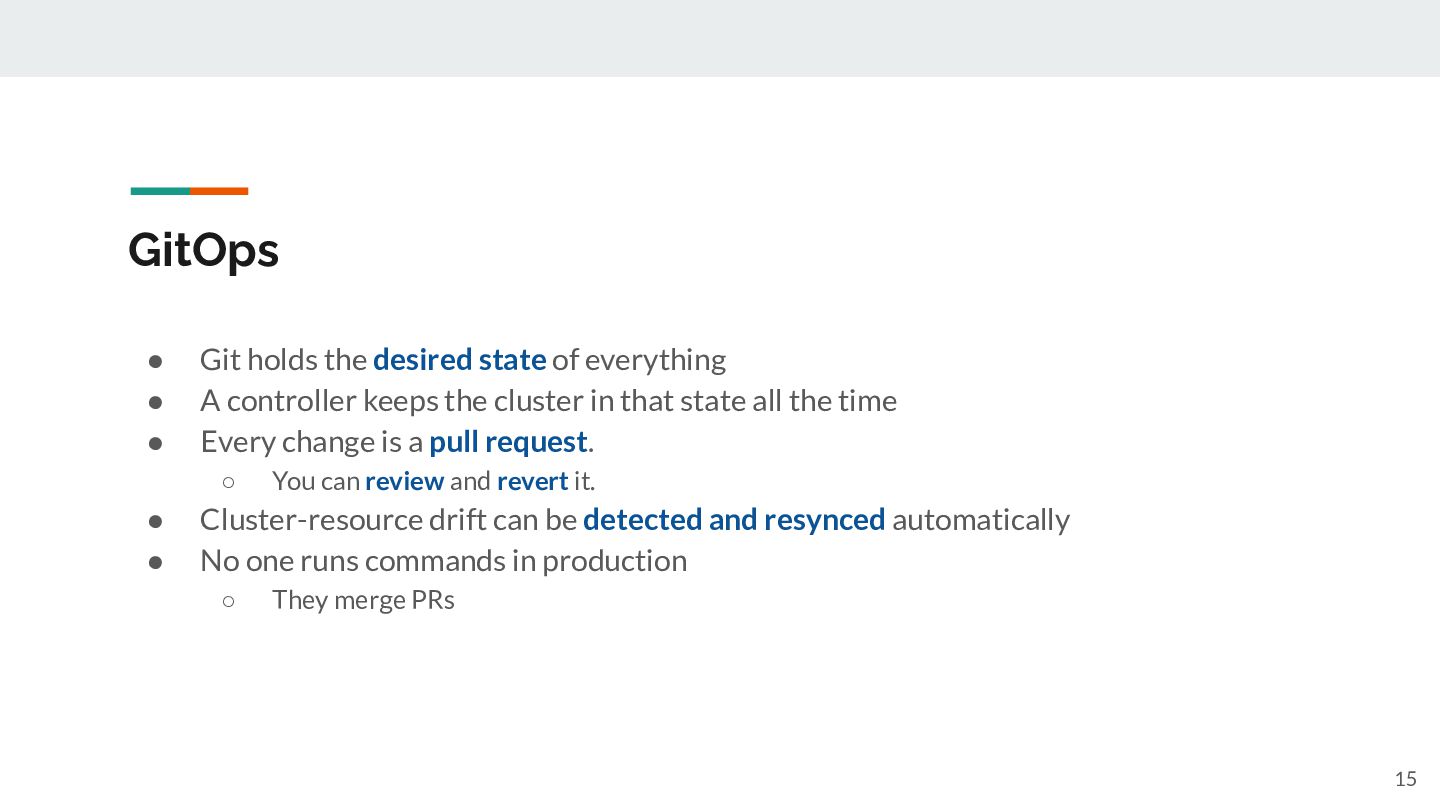
A controller keeps the cluster in that state all the time • Every change is a pull request. ◦ You can review and revert it. • Cluster-resource drift can be detected and resynced automatically • No one runs commands in production ◦ They merge PRs 15
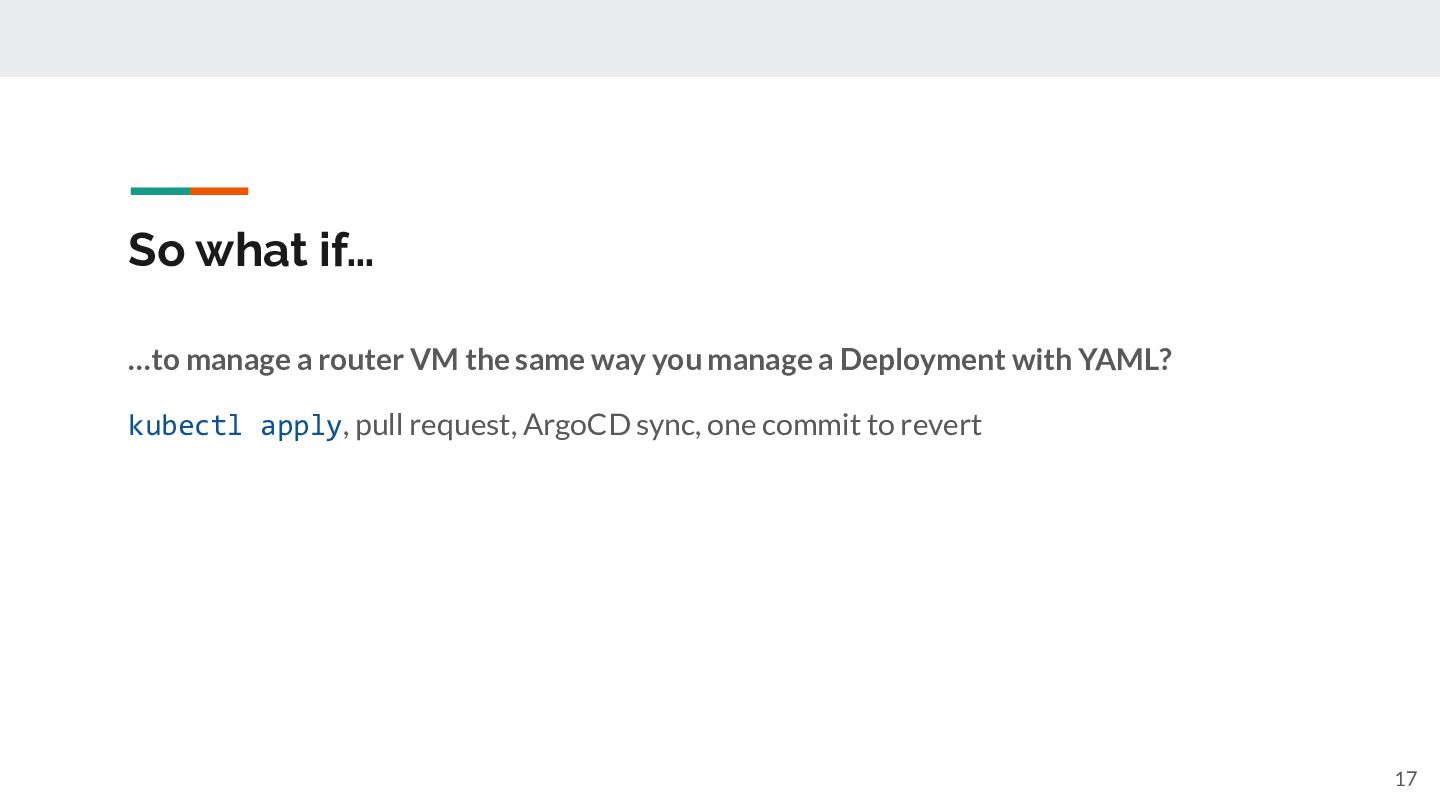
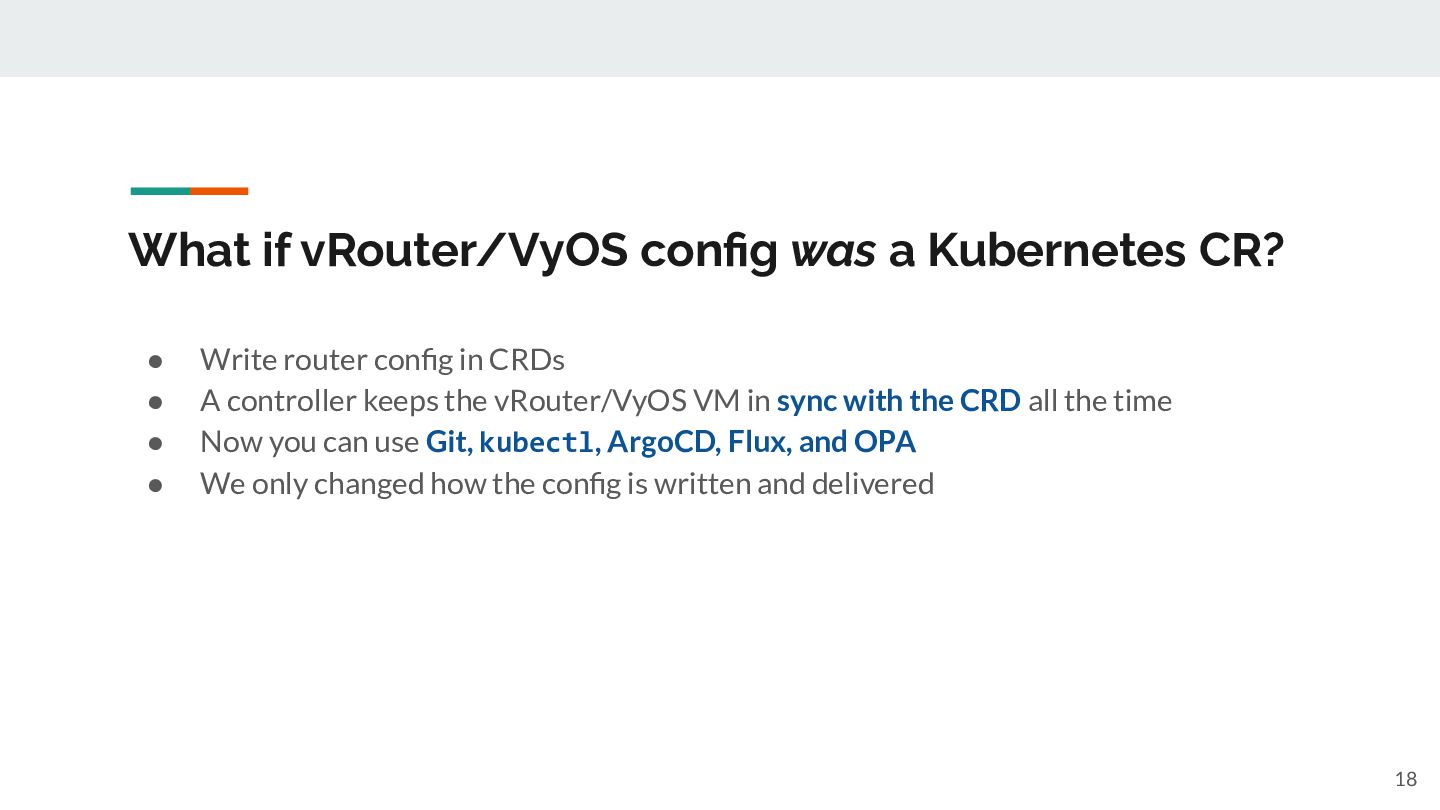
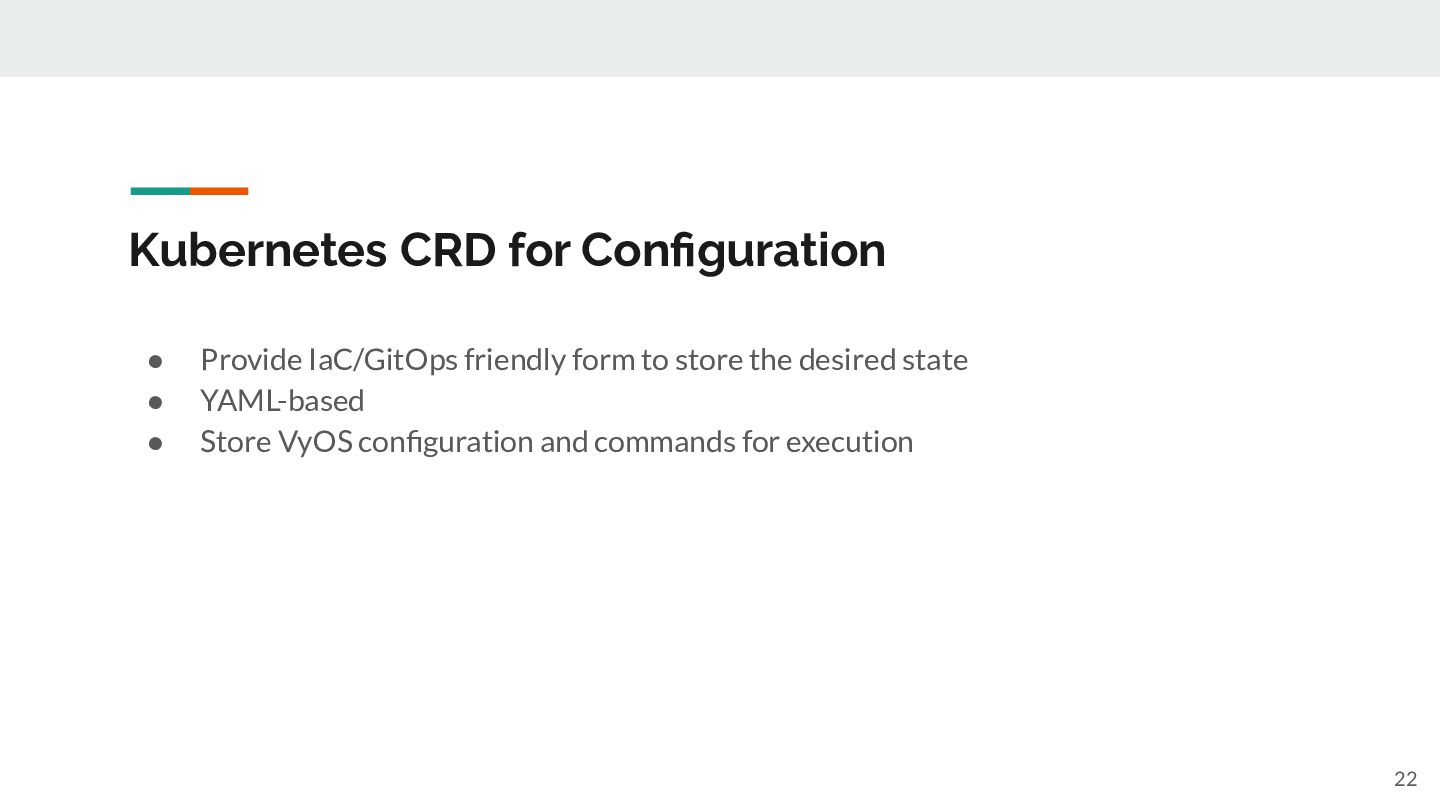
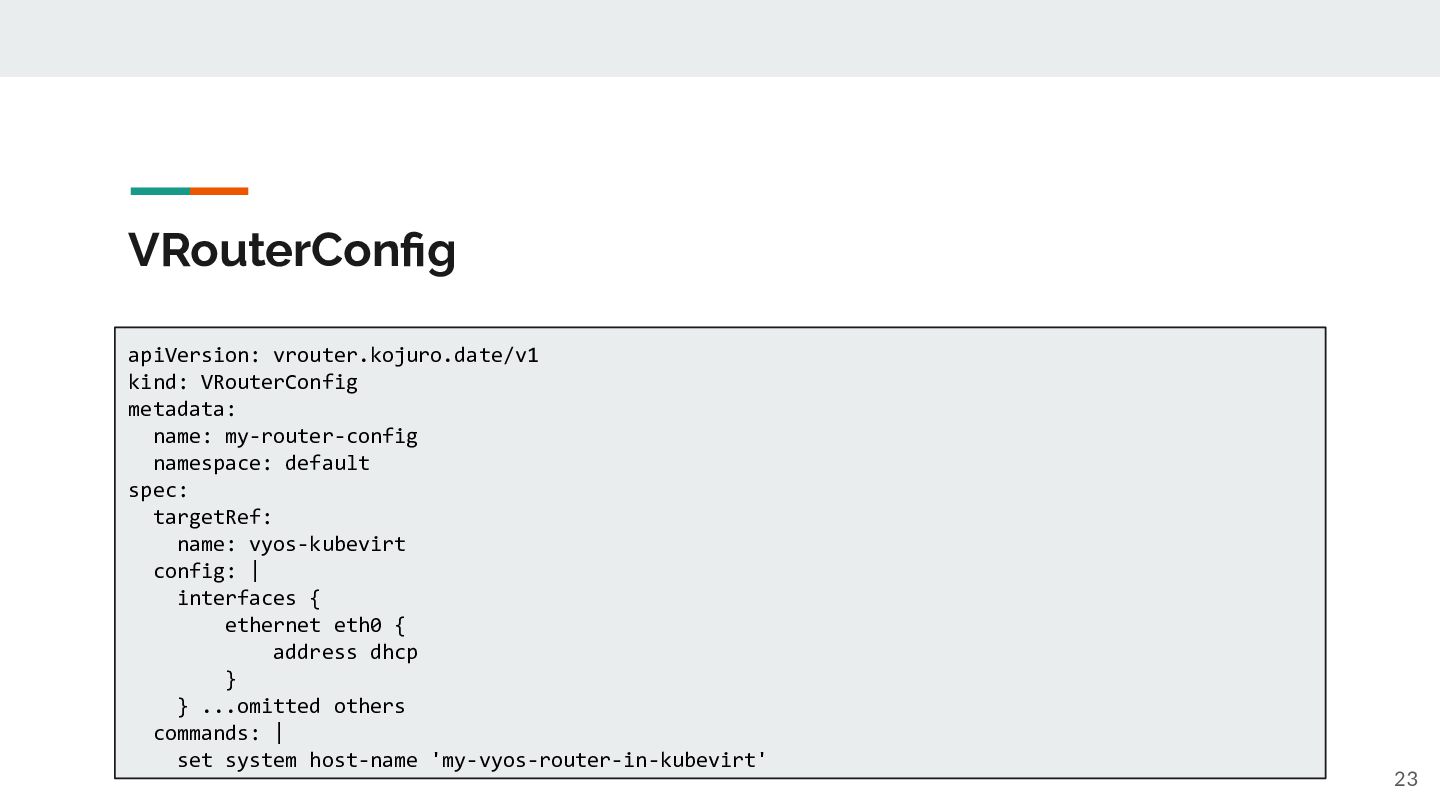
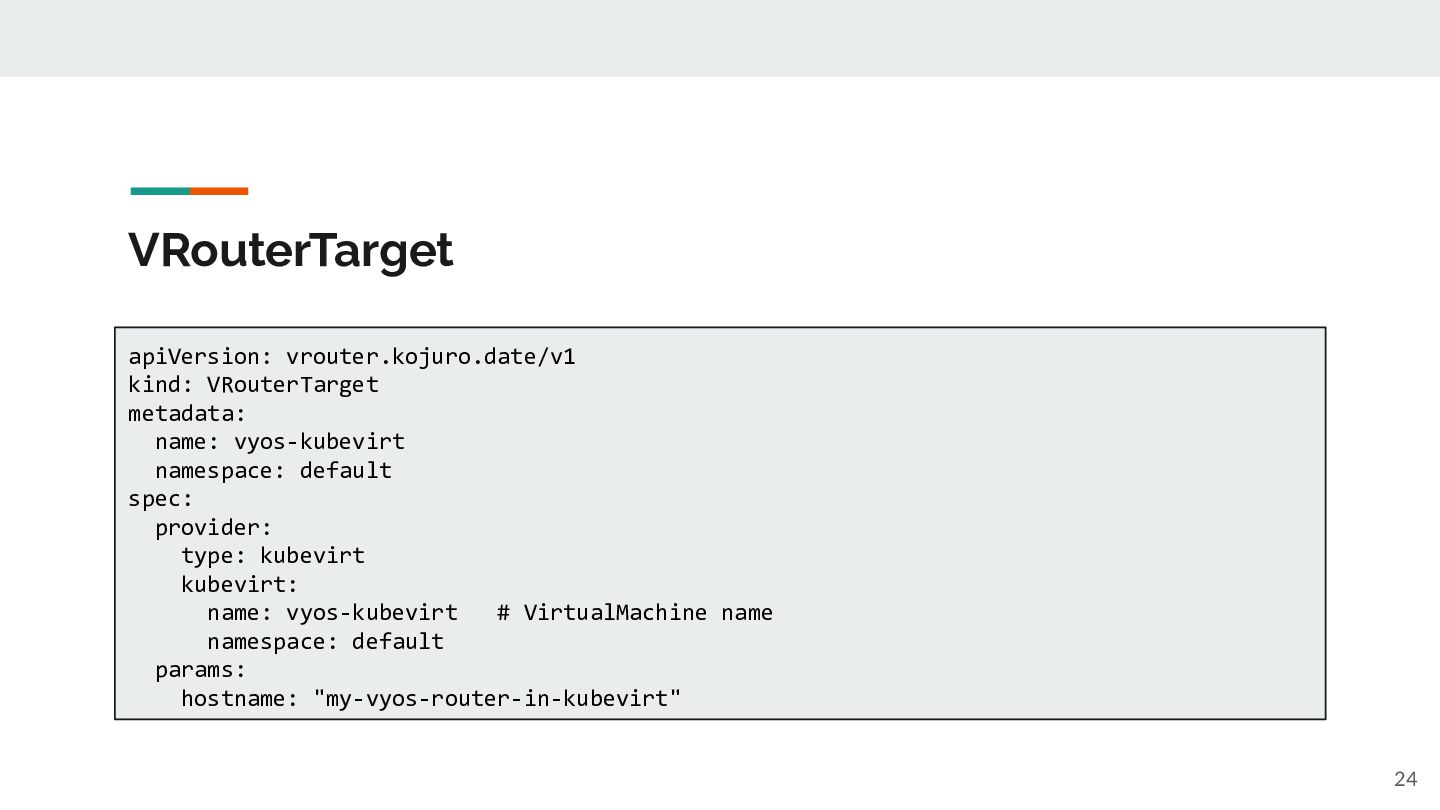
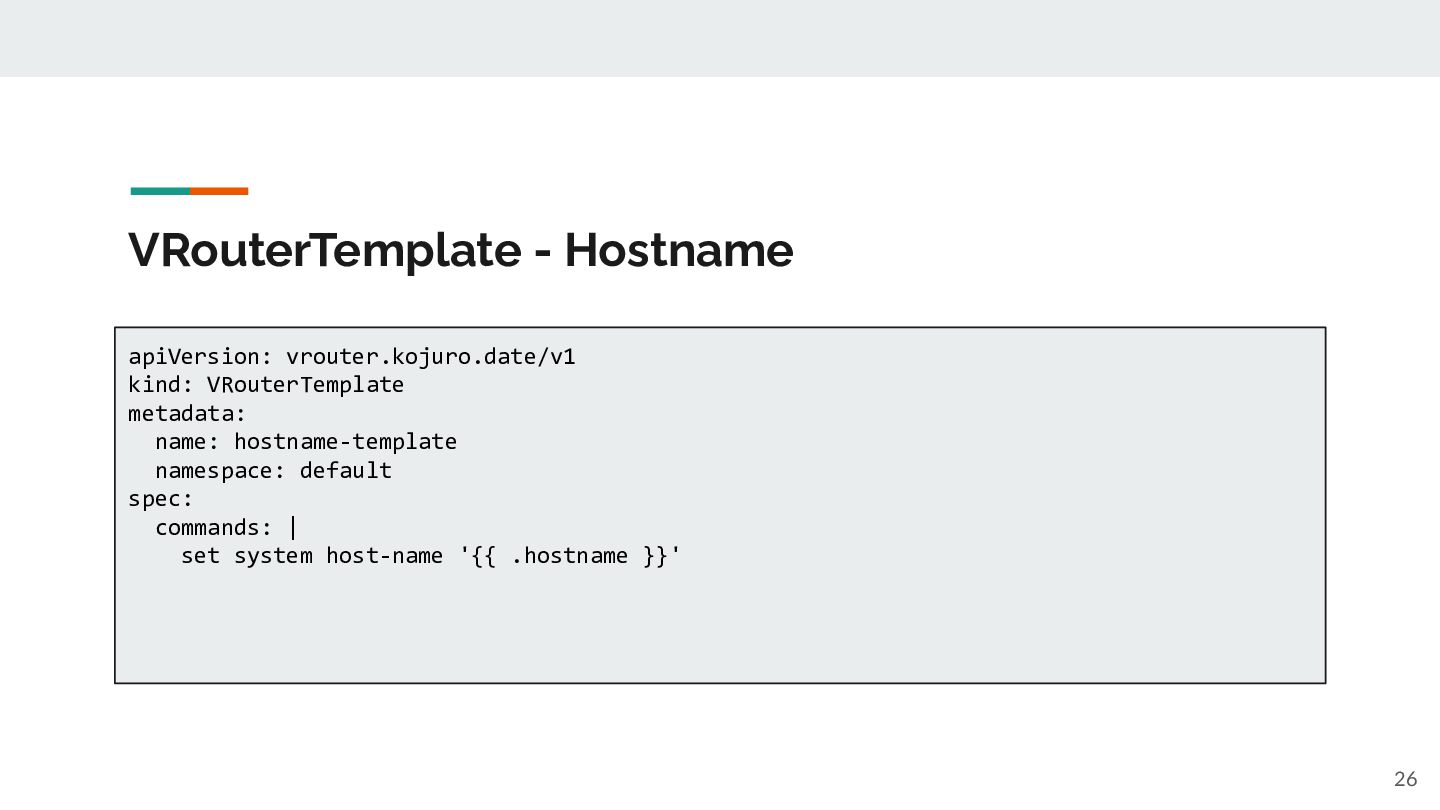
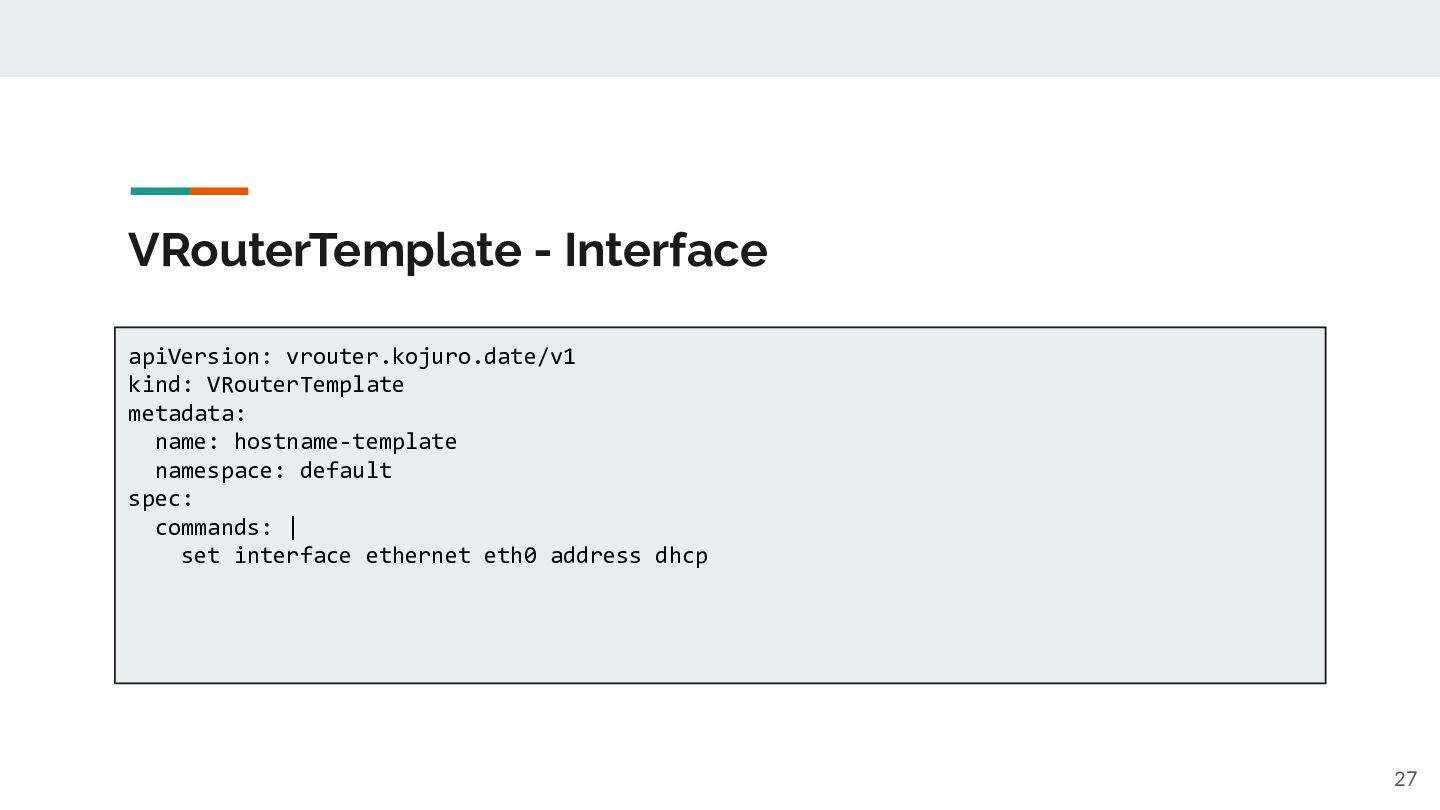
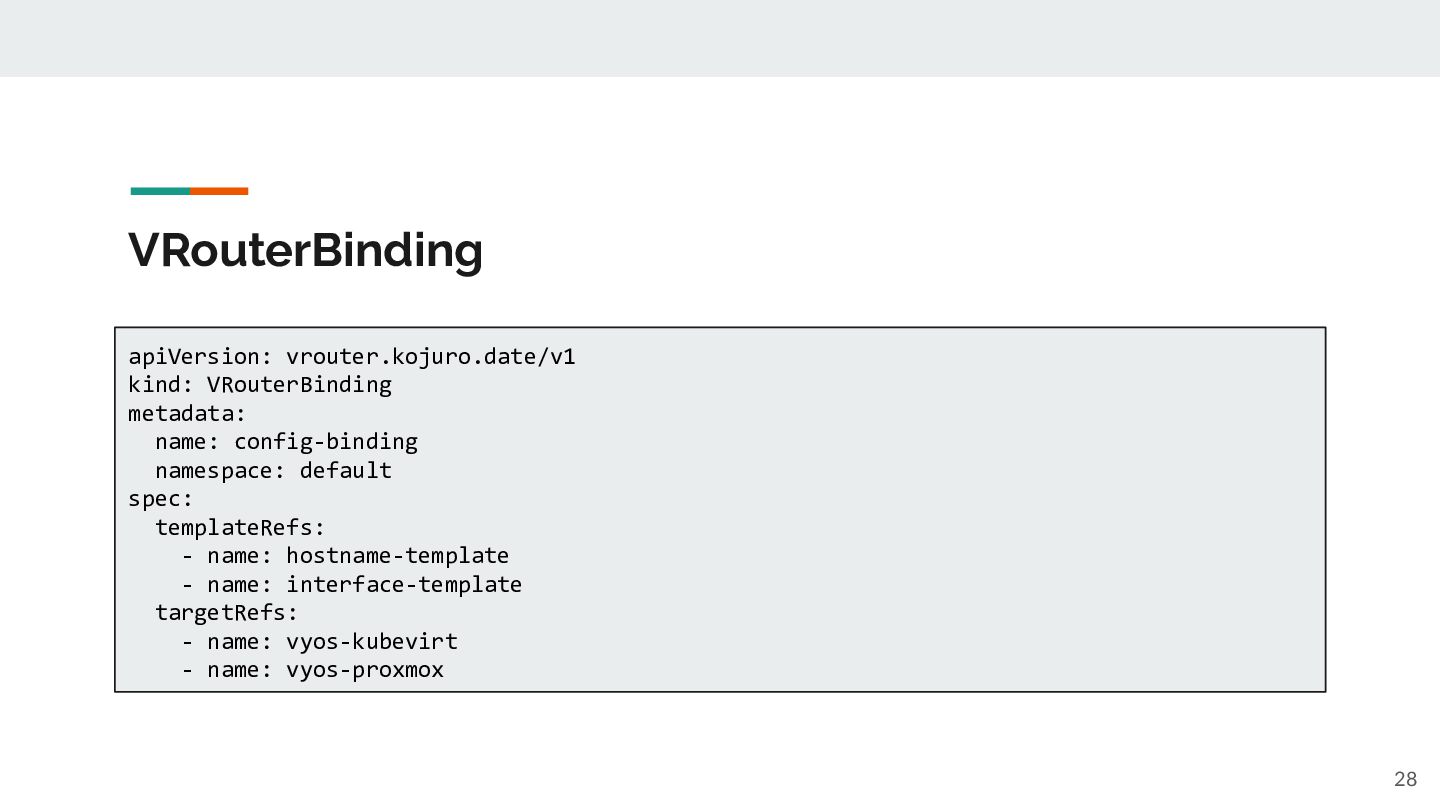
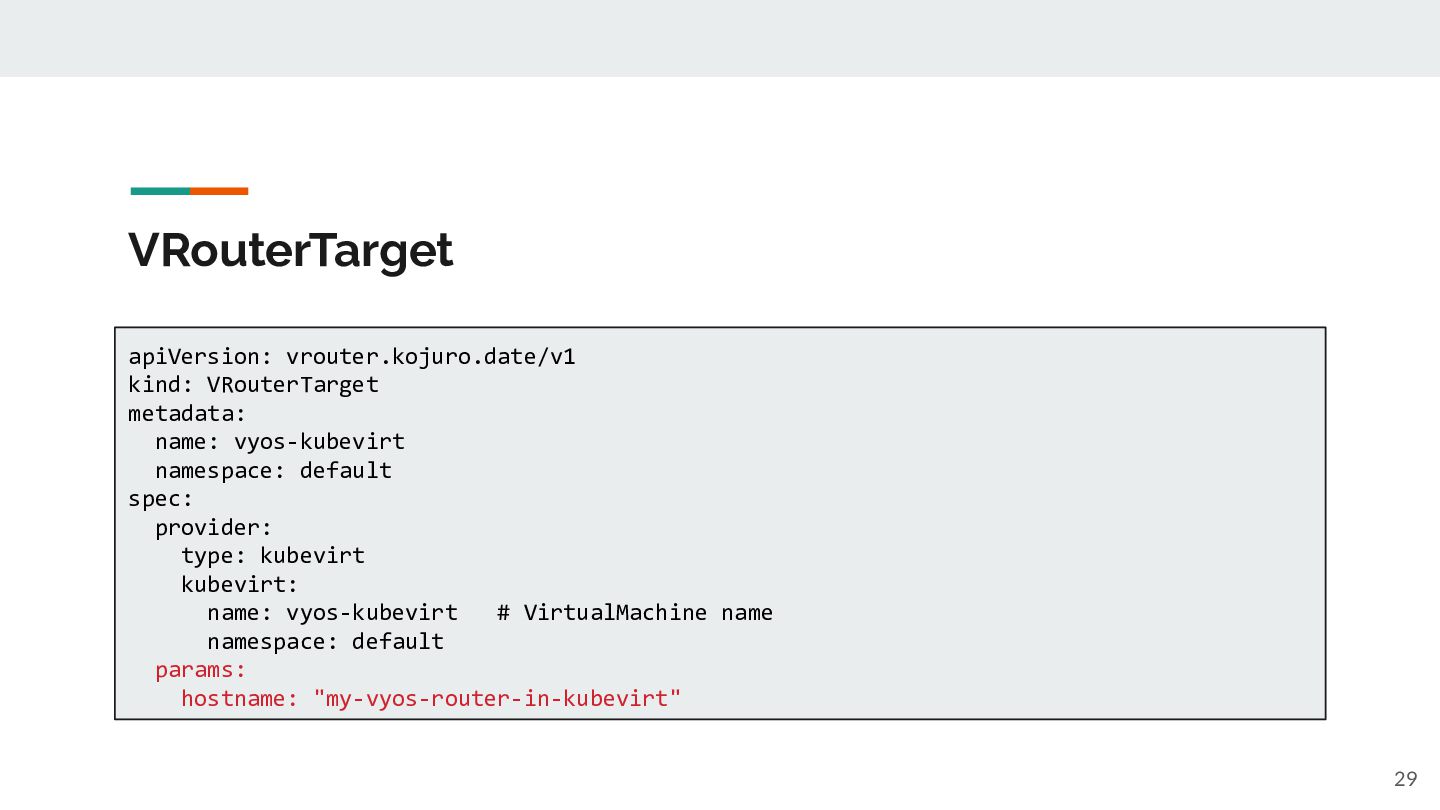
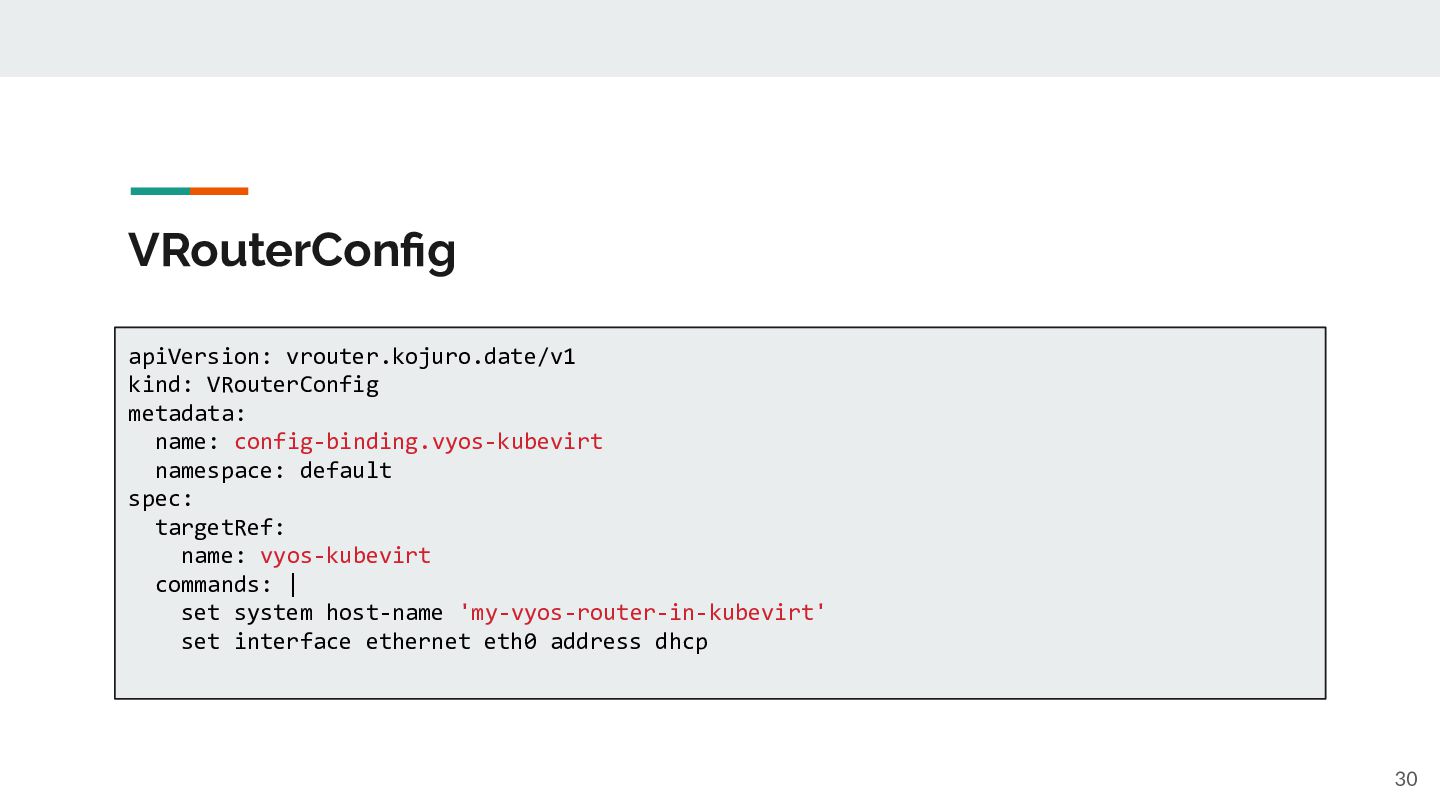
router config in CRDs • A controller keeps the vRouter/VyOS VM in sync with the CRD all the time • Now you can use Git, kubectl, ArgoCD, Flux, and OPA • We only changed how the config is written and delivered 18
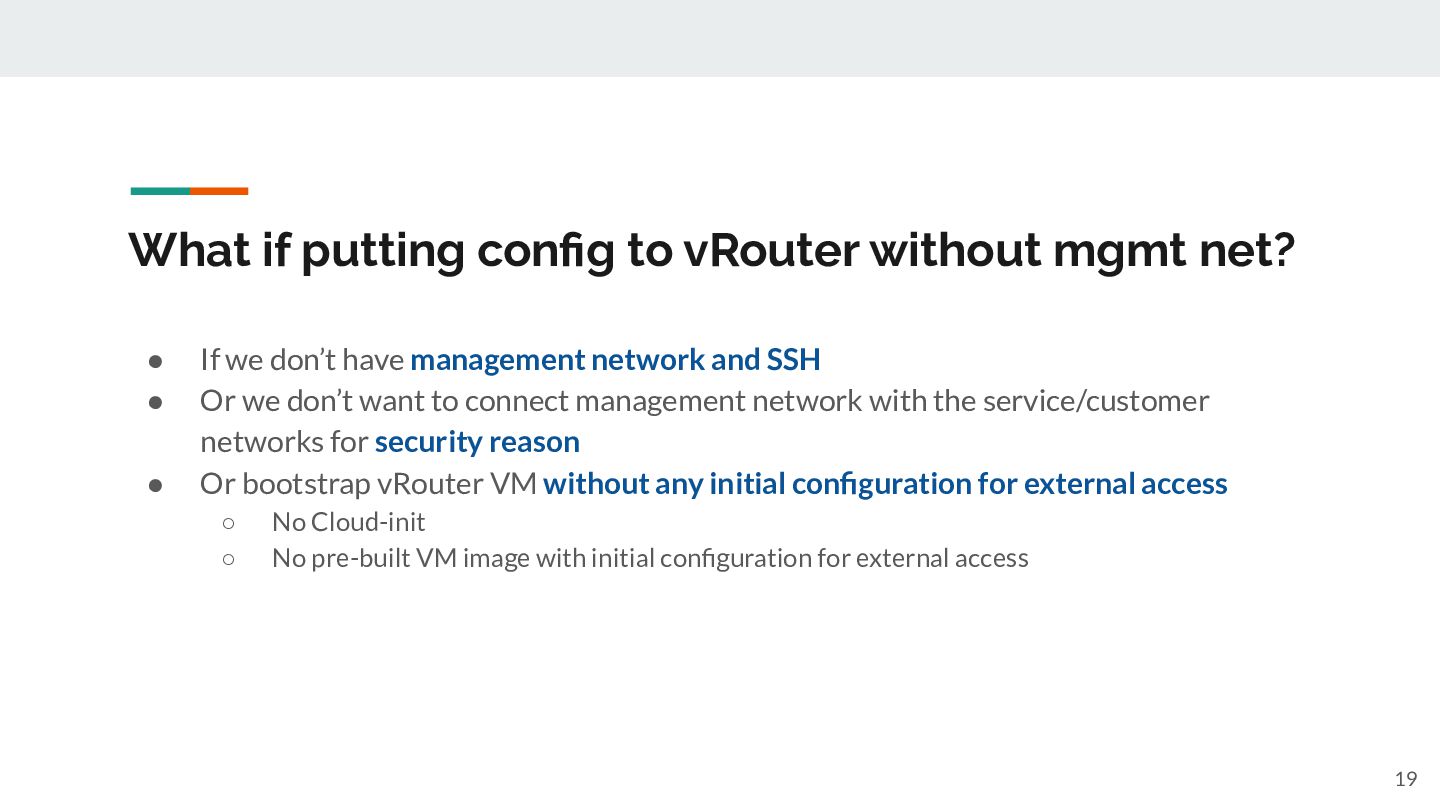
If we don’t have management network and SSH • Or we don’t want to connect management network with the service/customer networks for security reason • Or bootstrap vRouter VM without any initial configuration for external access ◦ No Cloud-init ◦ No pre-built VM image with initial configuration for external access 19
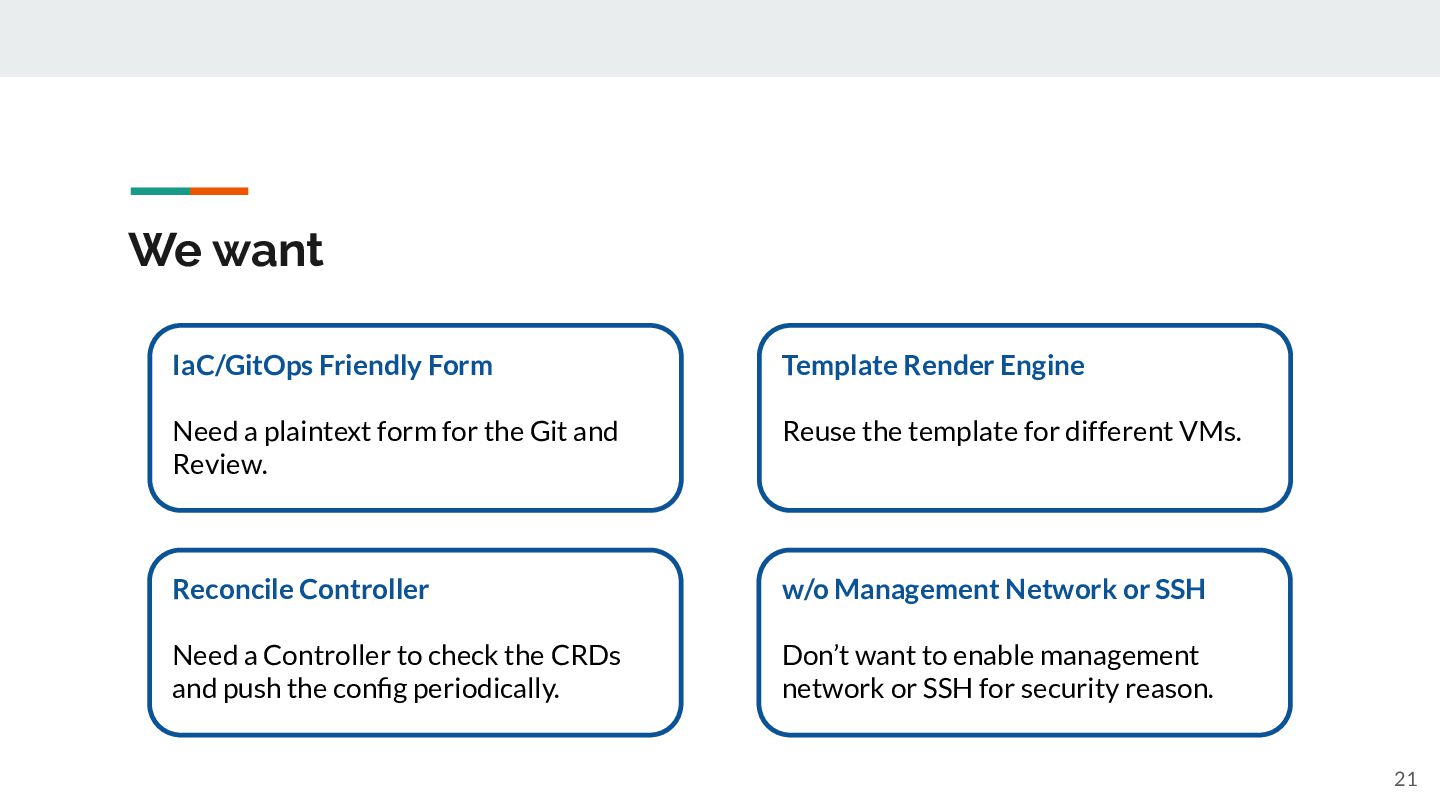
the Git and Review. Template Render Engine Reuse the template for different VMs. Reconcile Controller Need a Controller to check the CRDs and push the config periodically. w/o Management Network or SSH Don’t want to enable management network or SSH for security reason. 21
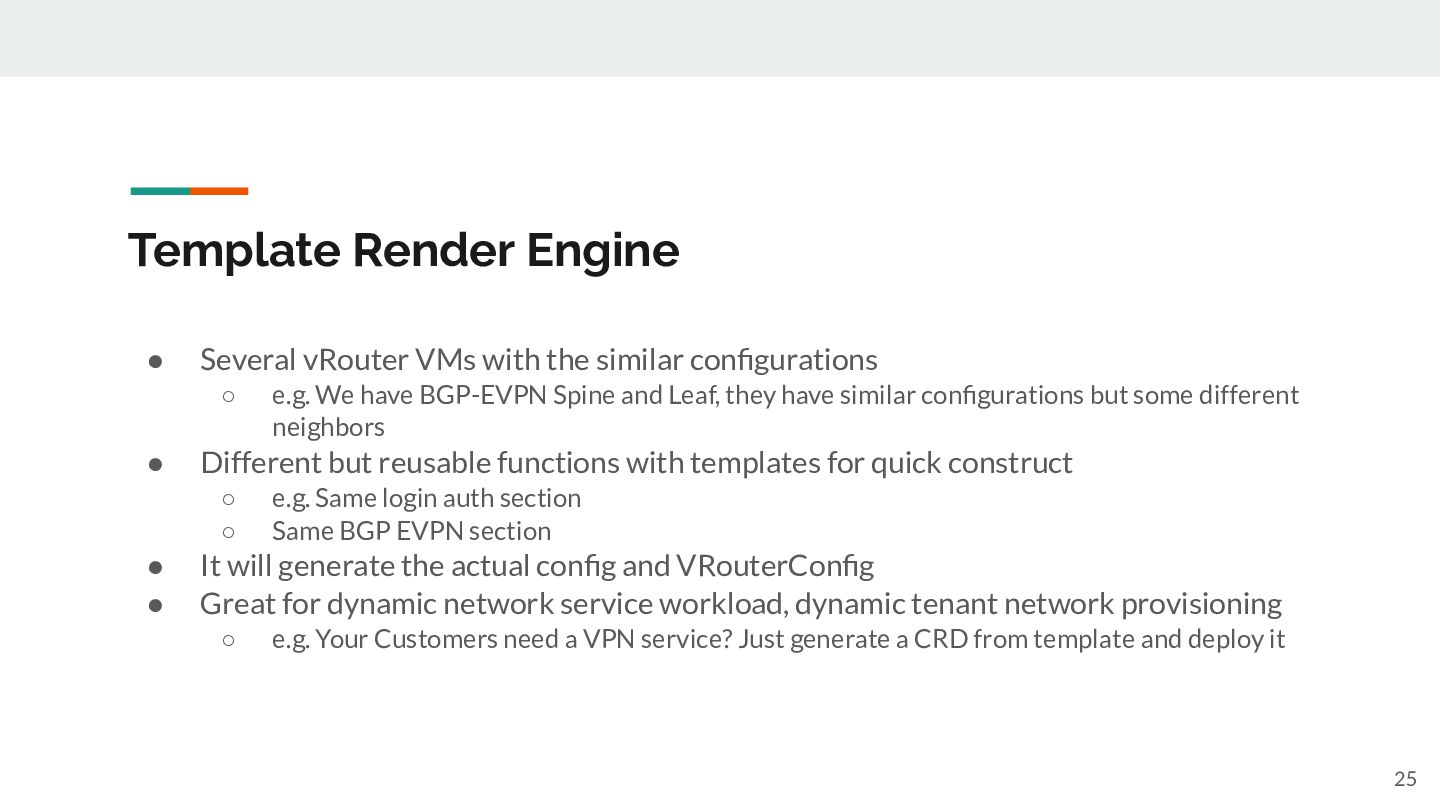
configurations ◦ e.g. We have BGP-EVPN Spine and Leaf, they have similar configurations but some different neighbors • Different but reusable functions with templates for quick construct ◦ e.g. Same login auth section ◦ Same BGP EVPN section • It will generate the actual config and VRouterConfig • Great for dynamic network service workload, dynamic tenant network provisioning ◦ e.g. Your Customers need a VPN service? Just generate a CRD from template and deploy it 25
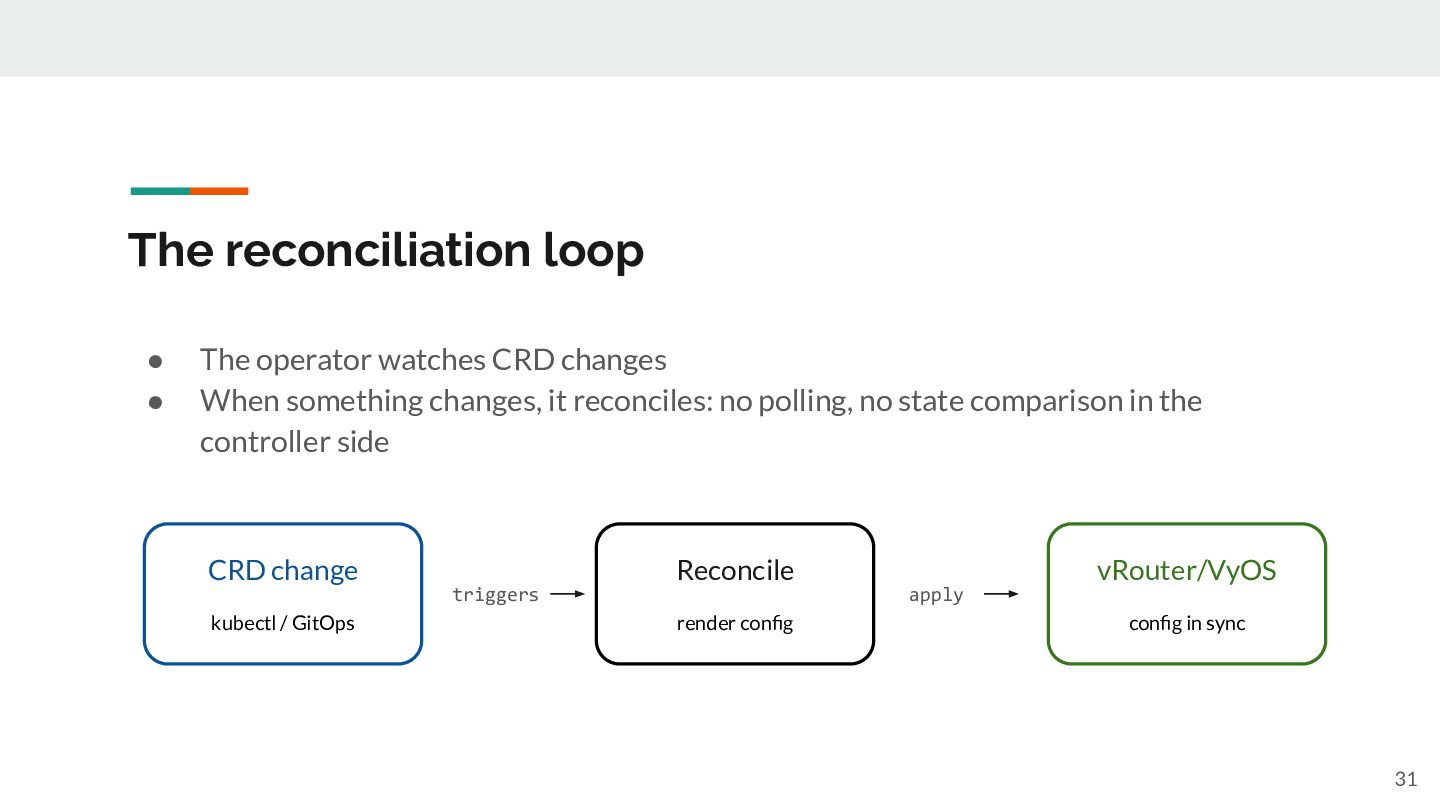
When something changes, it reconciles: no polling, no state comparison in the controller side CRD change kubectl / GitOps Reconcile render config vRouter/VyOS config in sync triggers apply 31
feature ◦ The host talks to the VM over a virtio channel - request-response only; the guest cannot initiate • No IP address needed • No SSH session • No open management port inside the VM • VyOS already includes qemu-guest-agent. No custom image needed 34
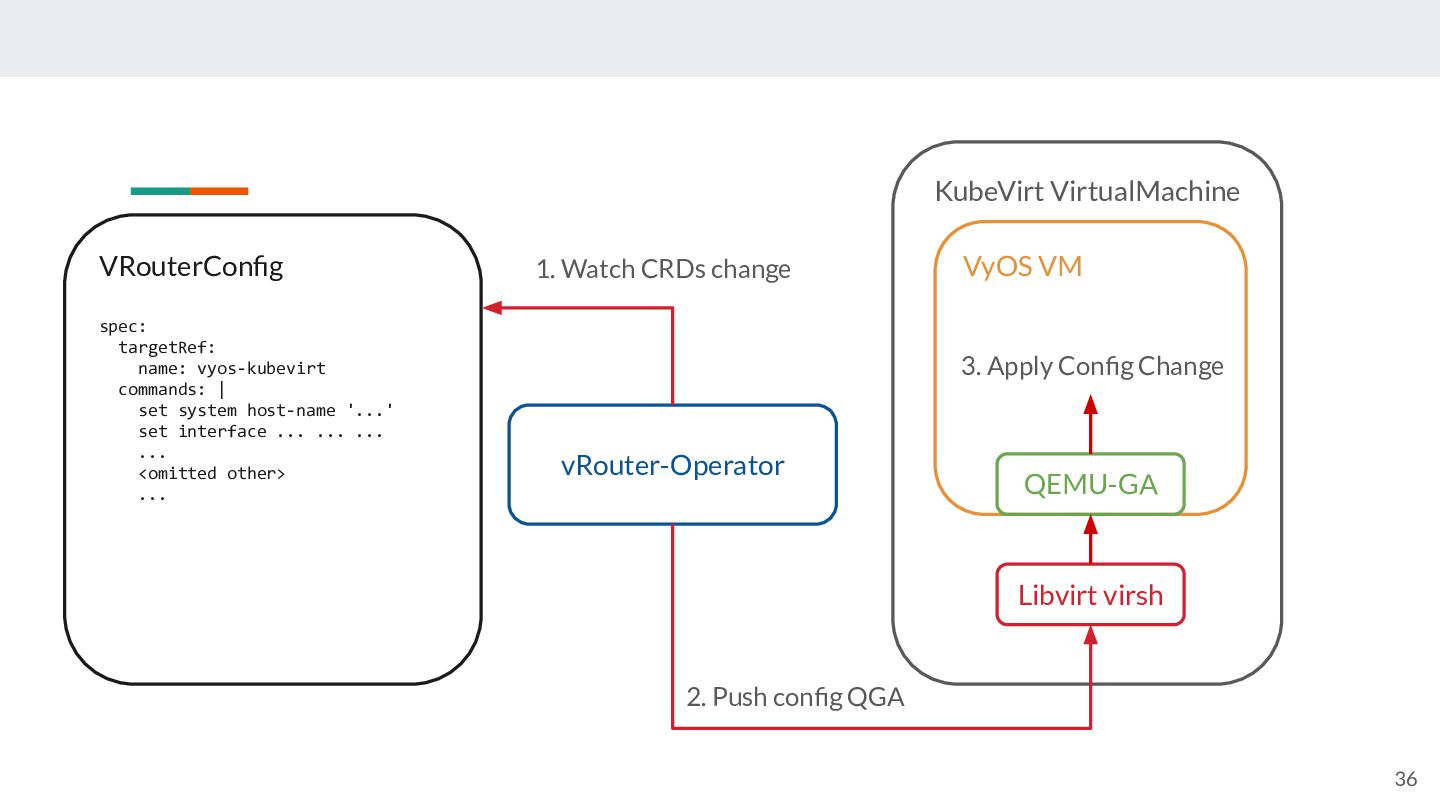
VyOS VMs in KubeVirt via QGA • Even the VM doesn’t have initial config to allow external access. • Even you mess up your router, you still can push a new config to rollback the system ◦ e.g. If you remove your all network configs accidentally, vRouter-Operator can roll it back! • This works the same on KubeVirt and on Proxmox VE 35
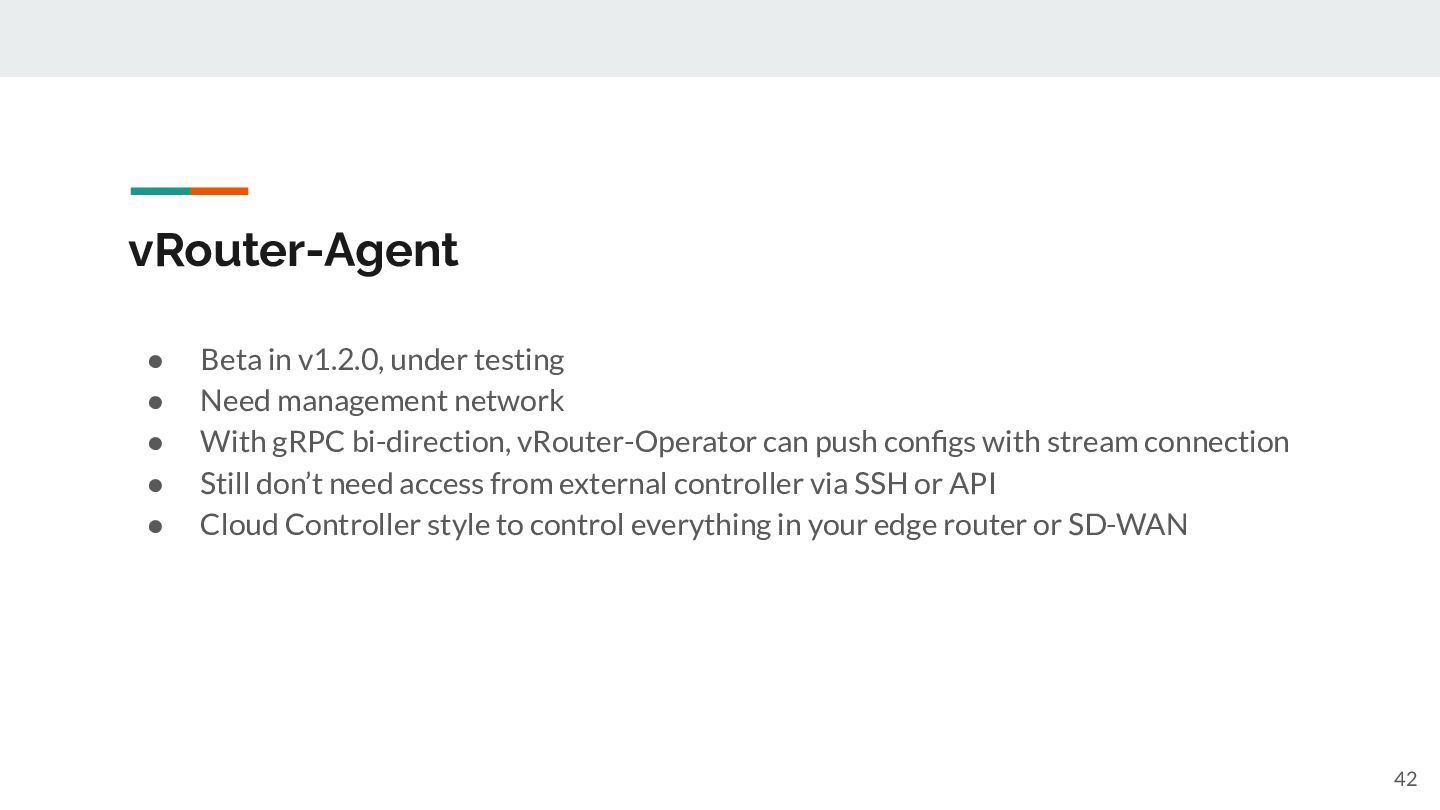
network • With gRPC bi-direction, vRouter-Operator can push configs with stream connection • Still don’t need access from external controller via SSH or API • Cloud Controller style to control everything in your edge router or SD-WAN 42


 tjjh89017
 sorah
sorah
 satoshi256kbyte
 guaca
guaca
 taiseiue
 minodriven
 optim
optim
 lynnswap
 siroemk
 palkan
 yub0n
yub0n
 akihisaikeda
 kishida
.png) helenjbeal
helenjbeal
 tenderlove
 cassininazir
 codingconduct
 aarron
 ryanjones
 ipullrank
 inesmontani
 rabernat
 axbom
axbom
 honzajavorek
 takai
takai