Upgrade to Pro
— share decks privately, control downloads, hide ads and more …
Speaker Deck
Sign up for free
Menu
Search
Features
All features
Private URLs
Password Protection
Custom URLS
Scheduled publishing
Remove Branding
Restrict embedding
Deck Collections
Notes
Features
All features
Private URLs
Password Protection
Custom URLS
Scheduled publishing
Remove Branding
Restrict embedding
Deck Collections
Notes
Explore
Featured decks
Featured speakers
Programming
Technology
Storyboards
Explore
Featured decks
Featured speakers
Programming
Technology
Storyboards
Pricing
Search
Sign in
Sign up for free
Actor Systems In Rust: Techniques and Tradeoffs
Search
Sponsored
·
Ship Features Fearlessly
Turn features on and off without deploys. Used by thousands of Ruby developers.
→
Andrew J. Stone
November 16, 2017
Programming
360
1
Share
Embed
Copy iframe code
Copy JS code
Copy link
Start on current slide
Actor Systems In Rust: Techniques and Tradeoffs
Andrew J. Stone
November 16, 2017
More Decks by Andrew J. Stone
See All by Andrew J. Stone
Actor Systems in Rust (Boston Rust Meetup Version)
ajs
0
99
Implementation and Verification of a Consensus Protocol in Erlang
ajs
0
270
Other Decks in Programming
See All in Programming
The Rails Doctrine Decade
koic
2
600
設計次第でAIコードの読む量は減らせる / designing-for-code-reading
minodriven
35
17k
Lambda durable functionsでHuman in the Loopを楽に…楽に……
har1101
0
120
3回つくってわかった、 定期実行ジョブ基盤の本質情報
takai
0
520
Kotlinの15年とServer-Side Kotlin
n_takehata
1
160
Railsバージョンを4倍にした話
optim
0
460
KiroのSpecで「五目並べ」を作ってみる
satoshi256kbyte
1
380
複雑なUIコンポーネントとの ⻑い付き合い⽅:波及するバグからテスト戦略を経て、安全な再設計へ
mixplace
0
430
月間100万人のサービス刷新で、 技術選定をHonoに振り切った話
yutobara
8
6.7k
なぜCTOを降りてFDEを選んだのか?〜なぜプロダクト企業がFDEで顧客の現場に踏み込むのか〜
gonta
1
220
When benchmarks go bad - what I learned from measuring performance wrong
hollycummins
0
220
iOS 27でニュースアプリはどう変わる!? 〜日経電子版の新機能対応と、開発事例から〜
lynnswap
7
13k
Featured
See All Featured
The Illustrated Guide to Node.js - THAT Conference 2024
reverentgeek
1
570
Embracing the Ebb and Flow
colly
88
5.2k
jQuery: Nuts, Bolts and Bling
dougneiner
66
8.6k
[RailsConf 2023 Opening Keynote] The Magic of Rails
eileencodes
31
10k
XXLCSS - How to scale CSS and keep your sanity
sugarenia
250
1.3M
Faster Mobile Websites
deanohume
310
32k
Scaling GitHub
holman
464
140k
Context Engineering - Making Every Token Count
addyosmani
9
1.2k
The innovator’s Mindset - Leading Through an Era of Exponential Change - McGill University 2025
jdejongh
PRO
1
380
The Impact of AI in SEO - AI Overviews June 2024 Edition
aleyda
6
1.2k
Google's AI Overviews - The New Search
badams
0
1.6k
Reflections from 52 weeks, 52 projects
jeffersonlam
356
22k
Transcript
Actor Systems in Rust: Techniques and Tradeoffs Andrew J. Stone
Haret Distributed Coordinator and KV Store
Haret Multiple Independent Consensus Groups
Haret Protocol Viewstamped Replication Revisited for Consensus
Haret Backend • Versioned persistent trie per consensus group •
CAS on entire subtrees • Typed Leaves • Blob • Queue • Set
[email protected]
[email protected]
[email protected]
p1 p2 p3 Request (1) Prepare (2)
PrepareOk (3) Prepare (2) PrepareOk (3) Reply (4)
Actors Processes That Communicate Only via Asynchronous Msg Passing
Actors Straightforward Representation of Peers in a Consensus Group
Rabble Actor Abstractions for Implementing Distributed Algorithms
Rabble Dynamic Cluster Membership, Transport and Msg Routing
Rabble Designed for Testability
Rabble A Work in Progress
Rabble Provides a clean way to implement VRR in Haret
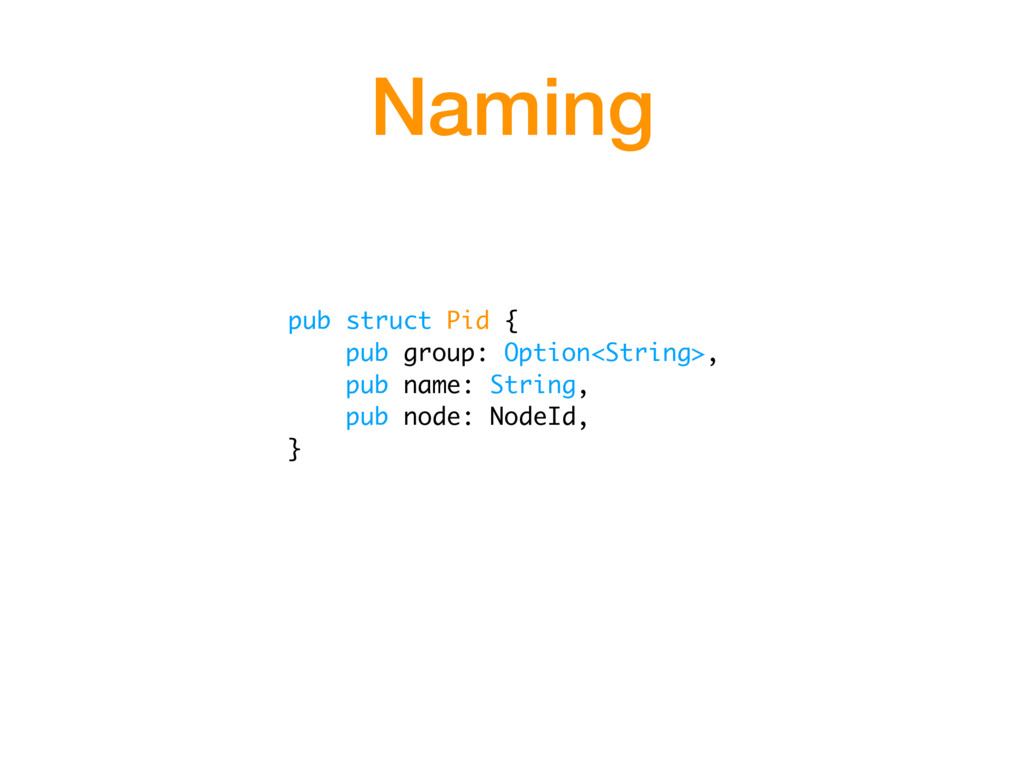
Naming pub struct Pid { pub group: Option<String>, pub name:
String, pub node: NodeId, }
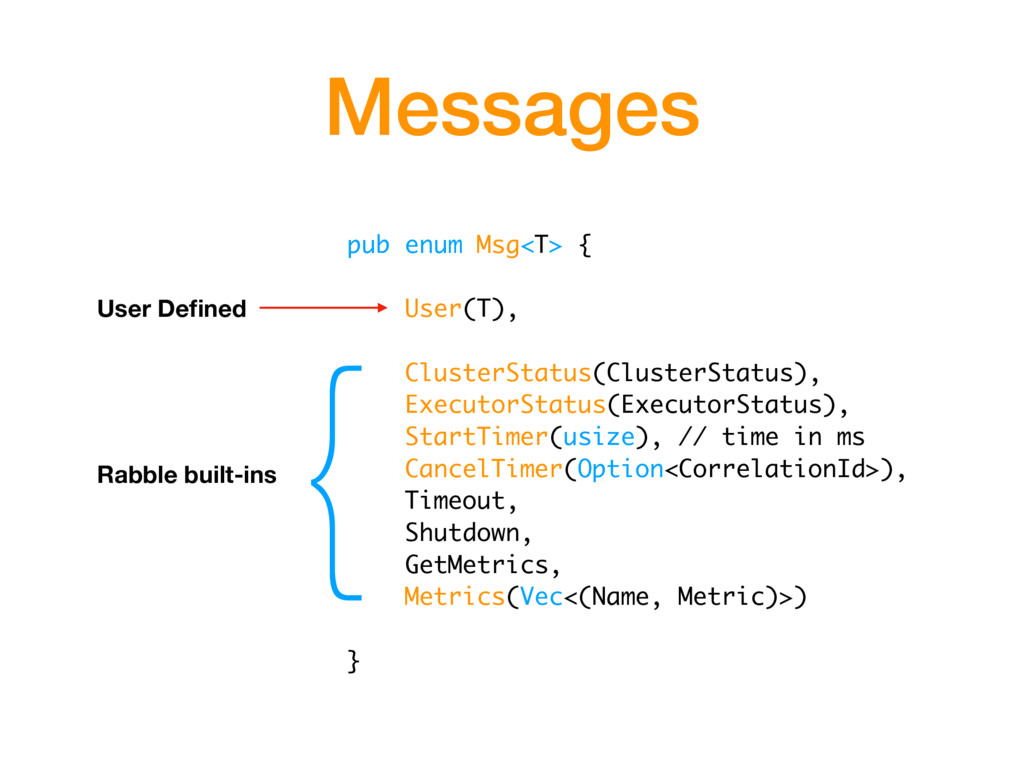
Messages pub enum Msg<T> { User(T), ClusterStatus(ClusterStatus), ExecutorStatus(ExecutorStatus), StartTimer(usize), //
time in ms CancelTimer(Option<CorrelationId>), Timeout, Shutdown, GetMetrics, Metrics(Vec<(Name, Metric)>) } { Rabble built-ins User Defined
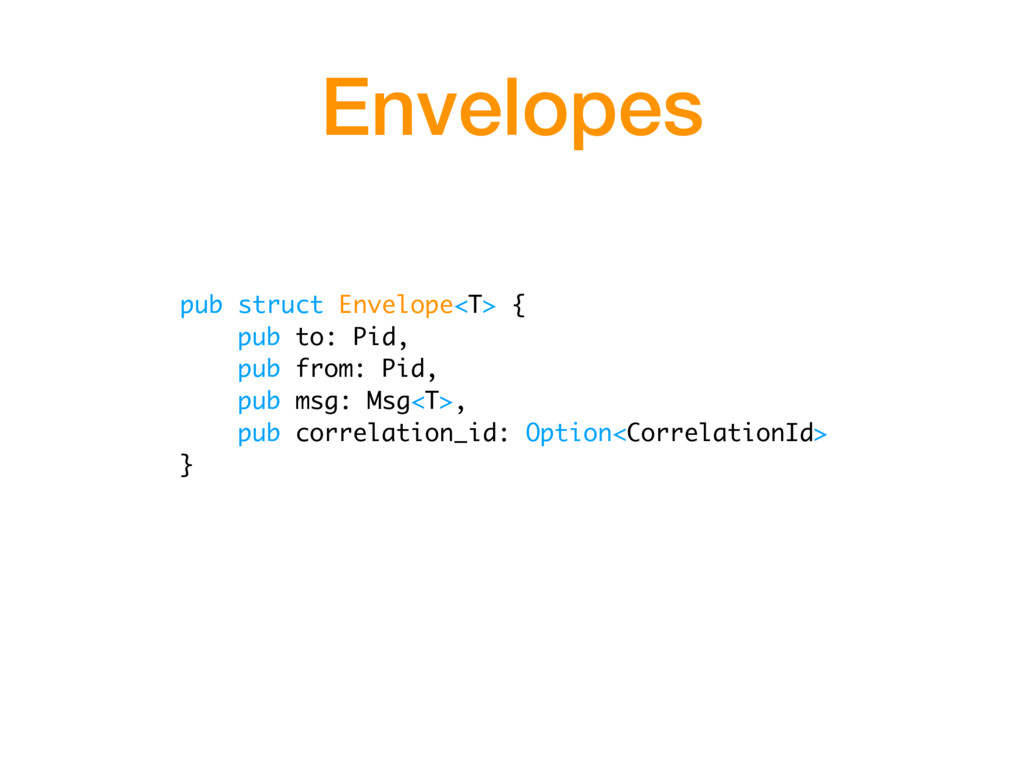
Envelopes pub struct Envelope<T> { pub to: Pid, pub from:
Pid, pub msg: Msg<T>, pub correlation_id: Option<CorrelationId> }
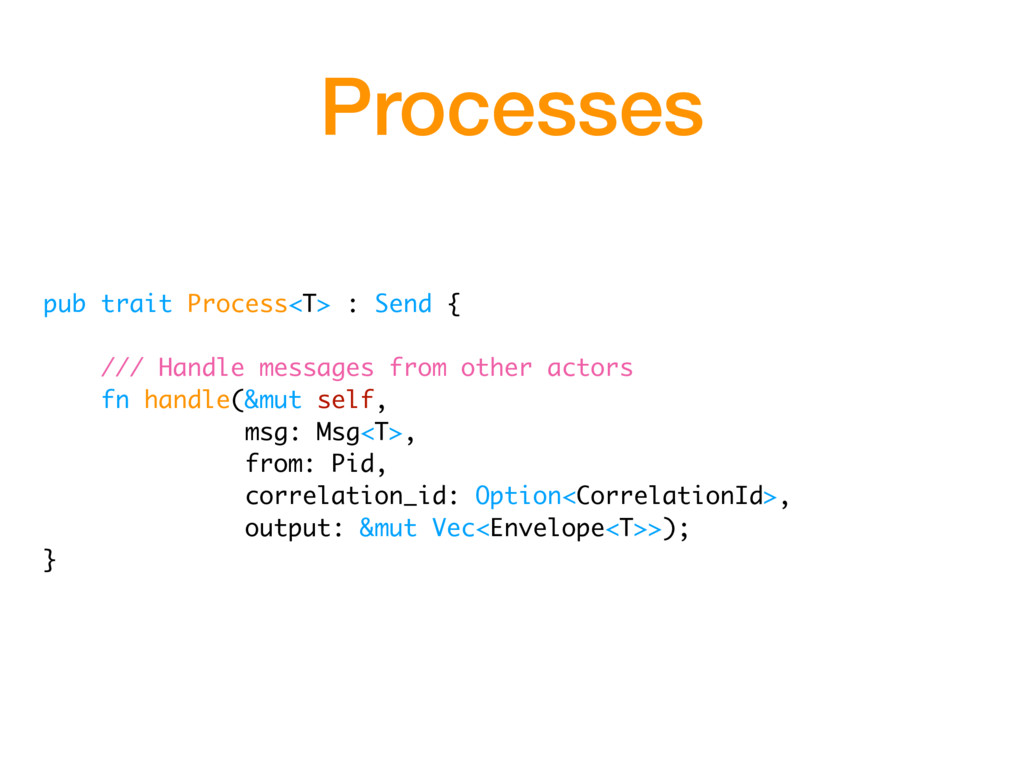
pub trait Process<T> : Send { /// Handle messages from
other actors fn handle(&mut self, msg: Msg<T>, from: Pid, correlation_id: Option<CorrelationId>, output: &mut Vec<Envelope<T>>); } Processes
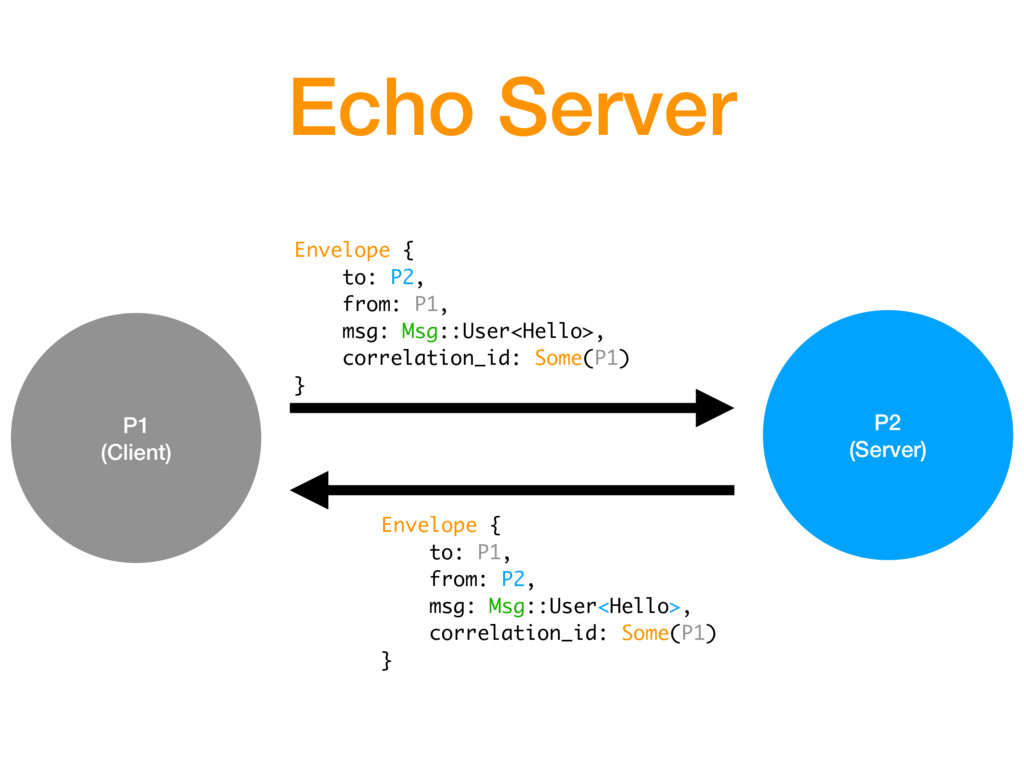
Echo Server P1 (Client) Envelope { to: P2, from: P1,
msg: Msg::User<Hello>, correlation_id: Some(P1) } Envelope { to: P1, from: P2, msg: Msg::User<Hello>, correlation_id: Some(P1) } P2 (Server)
impl Process<T> for EchoServer<T> { fn handle(&mut self, msg: Msg<T>,
from: Pid, cid: Option<CorrelationId>, output: &mut Vec<Envelope<T>>) { match msg { Msg::User(Hello) => { let to = from; // P1 let from = self.pid.clone(); // P2 let msg = Msg::User(Hello); let reply = Envelope::new(to, from, msg, cid); output.push(reply); }, _ => () } }
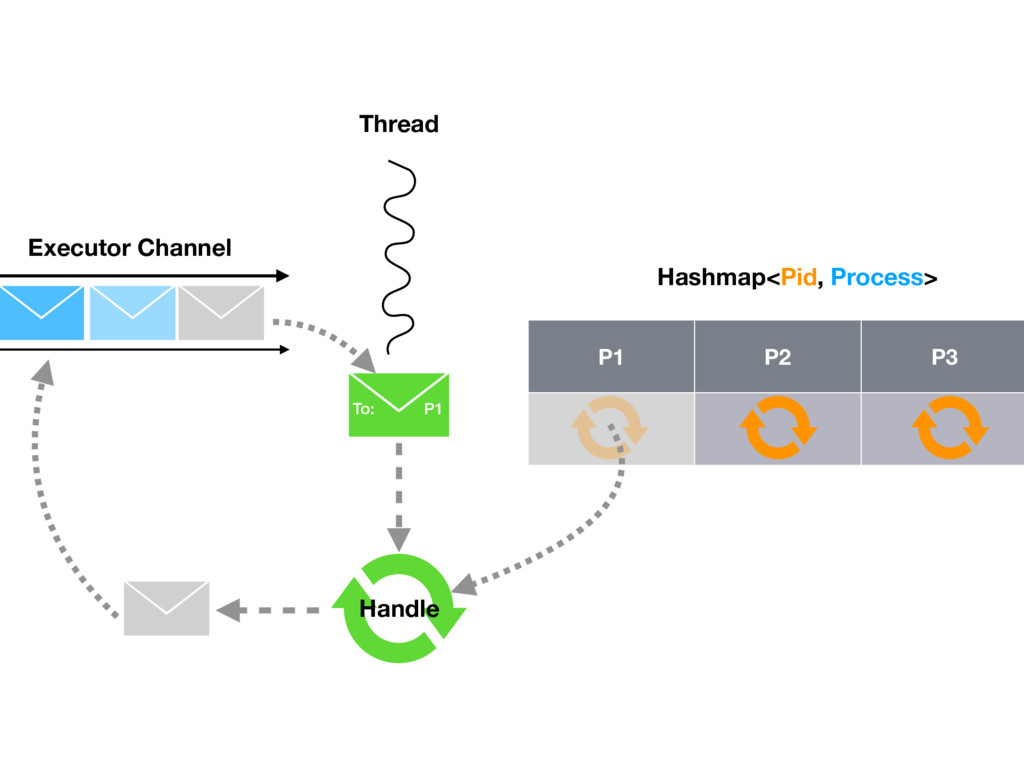
Executor Locates and Runs Processes
P1 P2 P3 Hashmap<Pid, Process> Executor Channel To: P1 Thread
Handle
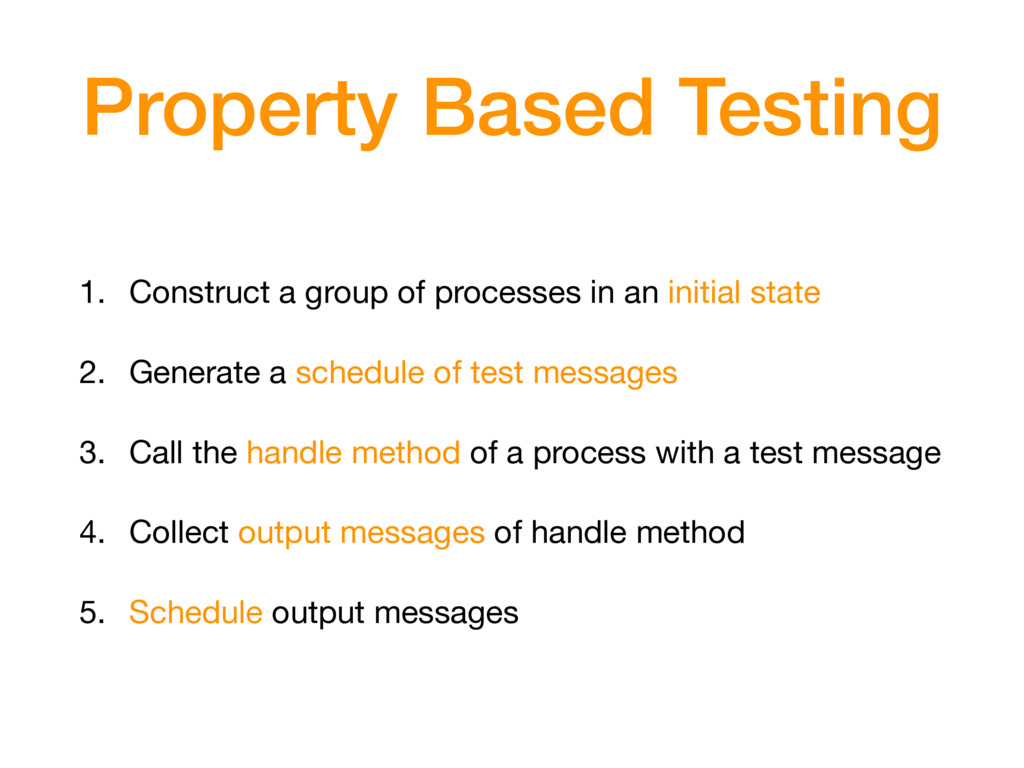
Property Based Testing 1. Construct a group of processes in
an initial state 2. Generate a schedule of test messages 3. Call the handle method of a process with a test message 4. Collect output messages of handle method 5. Schedule output messages
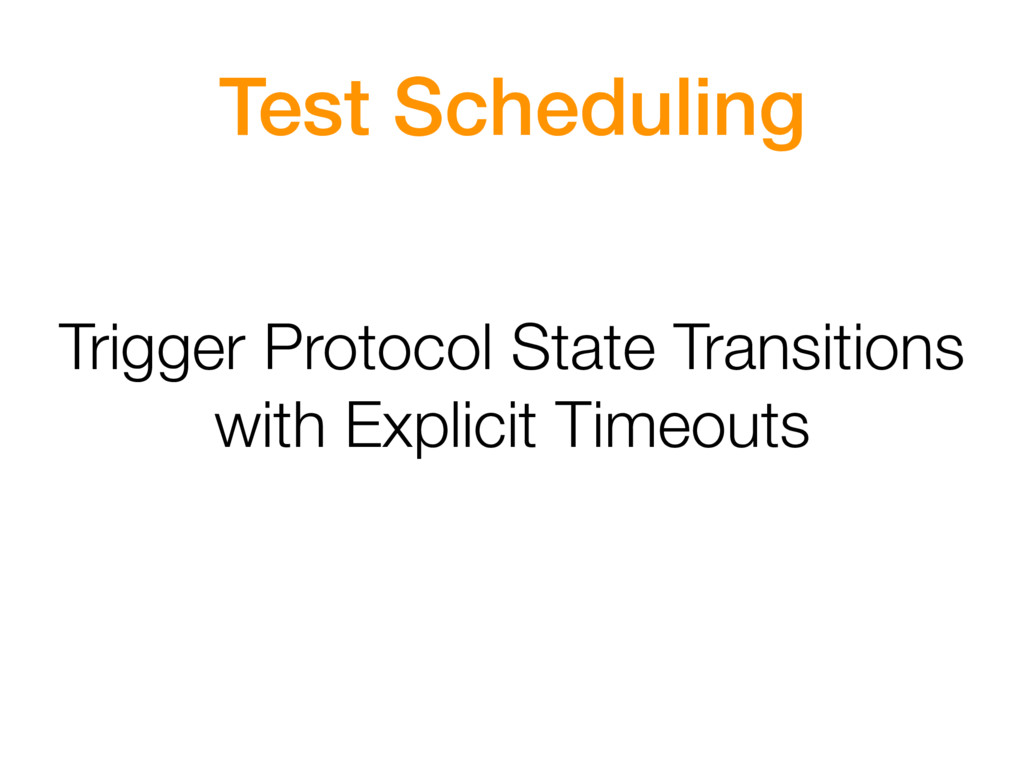
Test Scheduling Trigger Protocol State Transitions with Explicit Timeouts
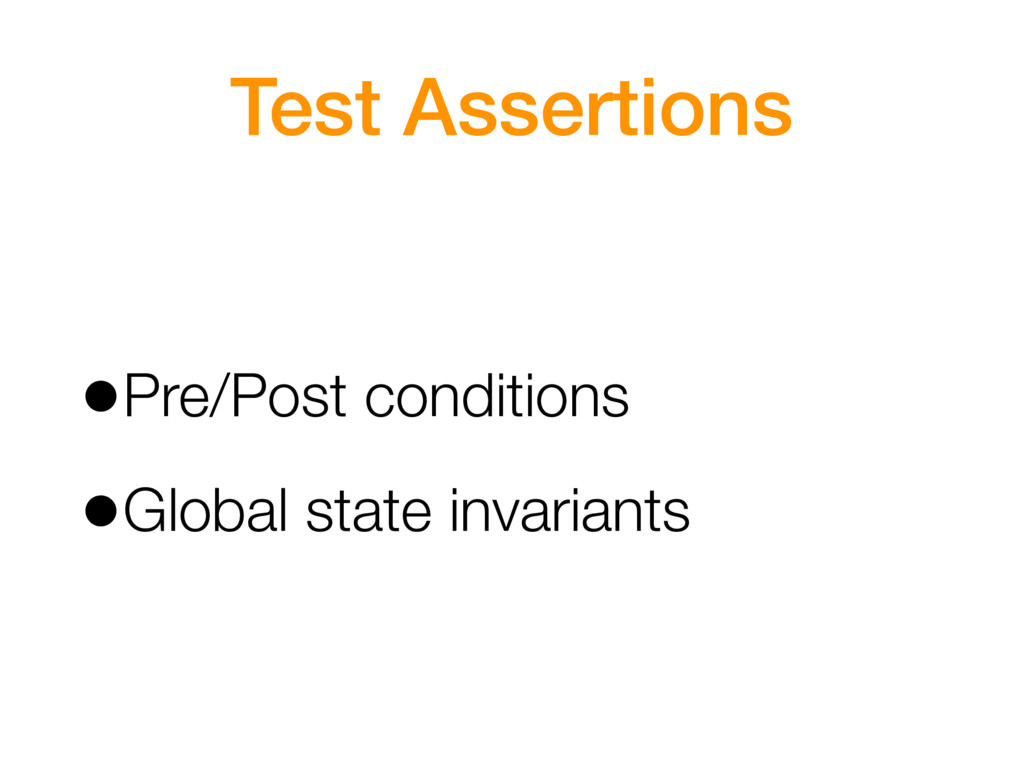
Test Assertions •Pre/Post conditions •Global state invariants
Failing Tests Failing Schedules Run as a Regression Suite
Debugging Each Message Receipt is One Step in a Test
Schedule
Cluster Server Non-blocking Single Threaded Server with TCP Connections to
every node
Membership Dynamic Membership Maintained in an Observed-Remove Set
Services Actors that Run Blocking and CPU Intensive Operations
Takeaways
Takeaway Dynamic Messaging is Complex Expensive, and Unergonomic for Distributed
Actors in Rust
Takeaway Writing Good Schedulers is Hard
Takeaway Design your systems to make deterministic testing easier
Takeaway Compromise and Pragmatism allow a good enough solution that
works NOW
Links • https://github.com/andrewjstone/rabble • https://github.com/andrewjstone/orset • https://github.com/vmware/haret
Thanks! Tom Santero Justin Sheehy VMware


 ajs
ajs
 koic
koic
 minodriven
 har1101
 takai
takai
 n_takehata
 optim
optim
 satoshi256kbyte
 mixplace
 yutobara
 gonta
gonta
 hollycummins
 lynnswap
 reverentgeek
 colly
colly
 dougneiner
 eileencodes
 sugarenia
 deanohume
 holman
 addyosmani
 jdejongh
 aleyda
 badams
 jeffersonlam


![[email protected] [email protected] [email protected] p1 p2 p3 Request (1) Prepare (2)](https://files.speakerdeck.com/presentations/0fe08a3ab73f431d8578cfb367b3187b/slide_5.jpg)