Share
Embed
What AI Means for Brands: How to Stay Visible, Relevant, and Chosen
Let’s go through key AI search shifts that impact how we optimize and how can we win in this new AI search landscape.

Aleyda Solis
March 12, 2026
Transcript
73 slides
-
By Aleyda Solis from Orainti at Friends of Search What
AI Means for Brands How to Stay Visible, Relevant, and Chosen -
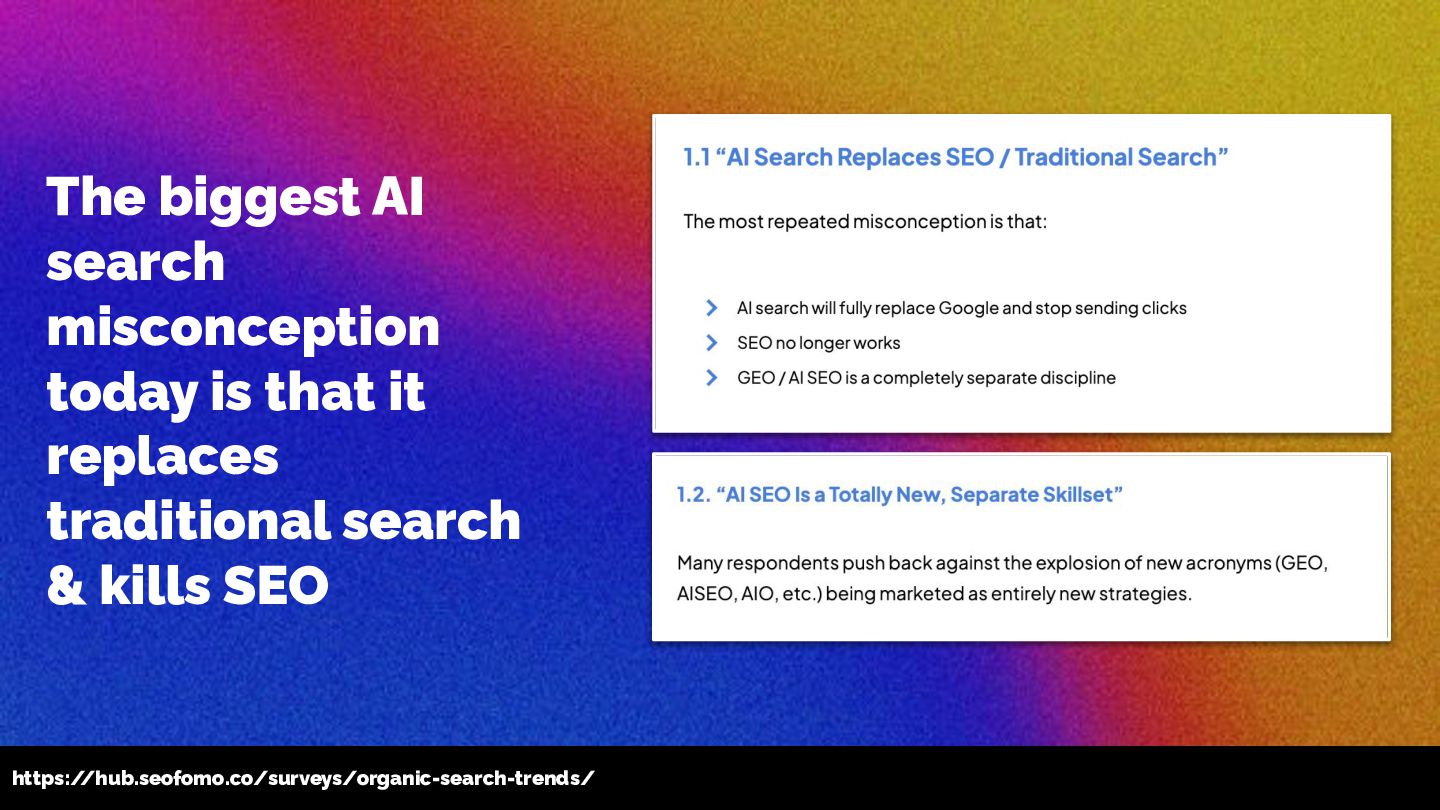
The biggest AI search misconception today is that it replaces
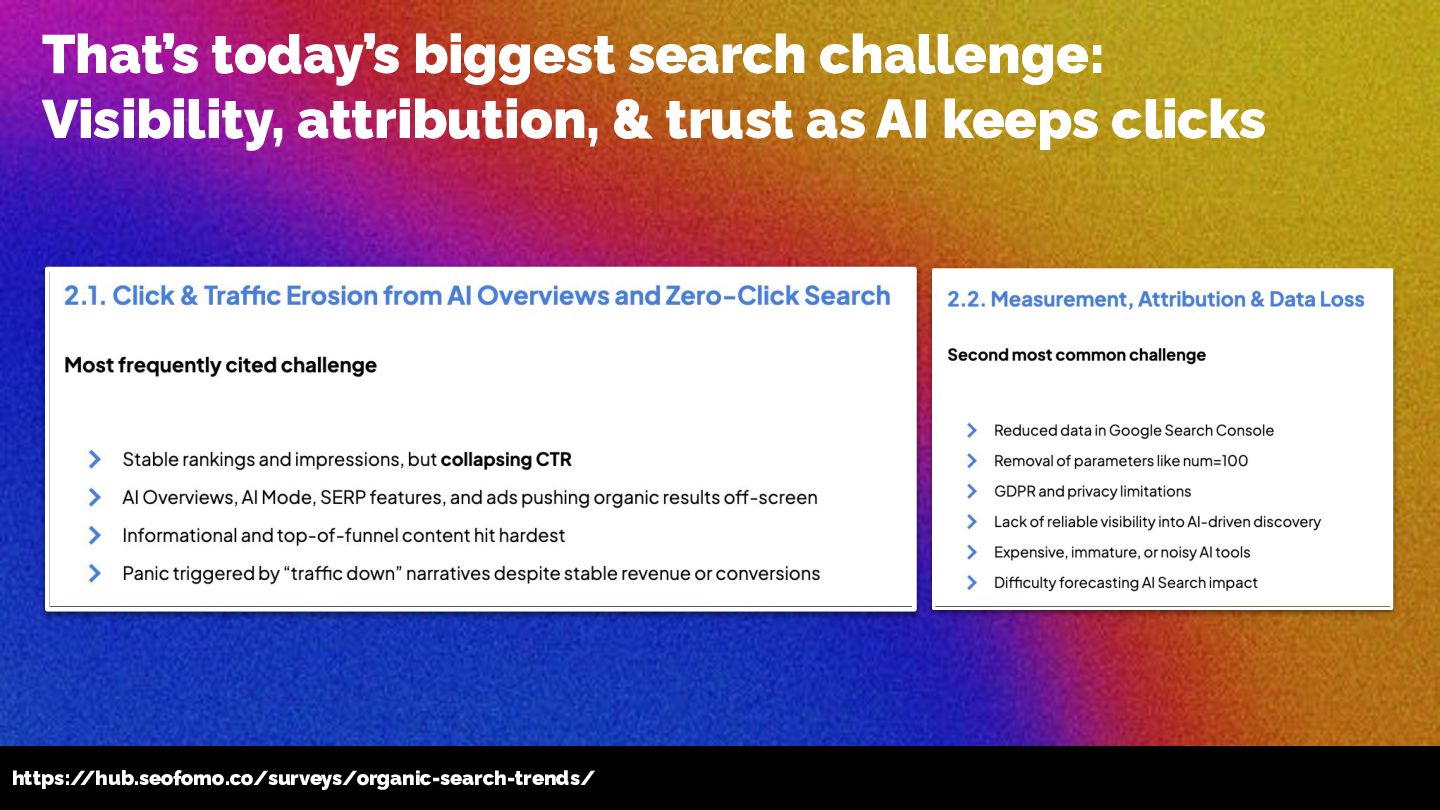
traditional search & kills SEO https:/ /hub.seofomo.co/surveys/organic-search-trends/ -
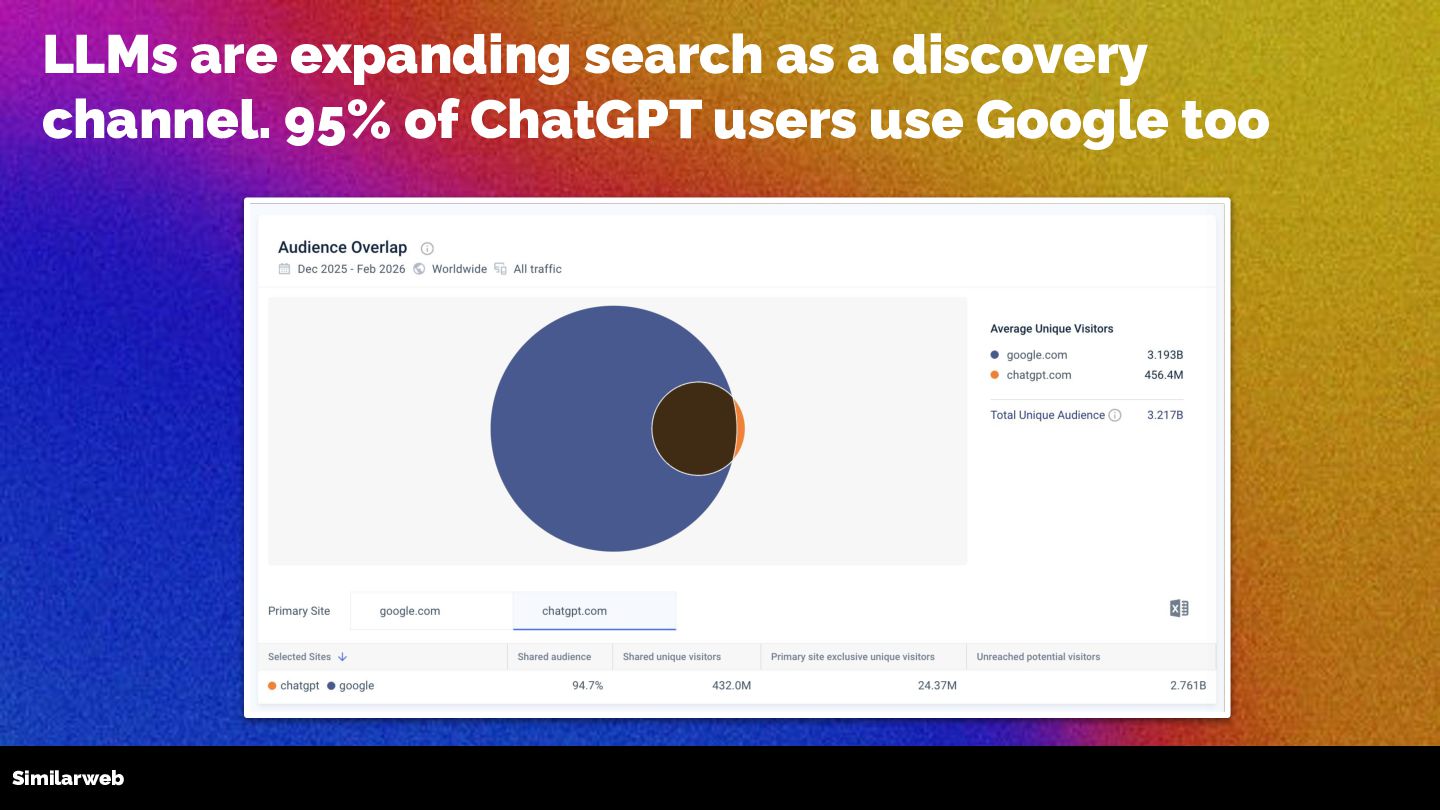
Similarweb LLMs are expanding search as a discovery channel. 95%
of ChatGPT users use Google too -
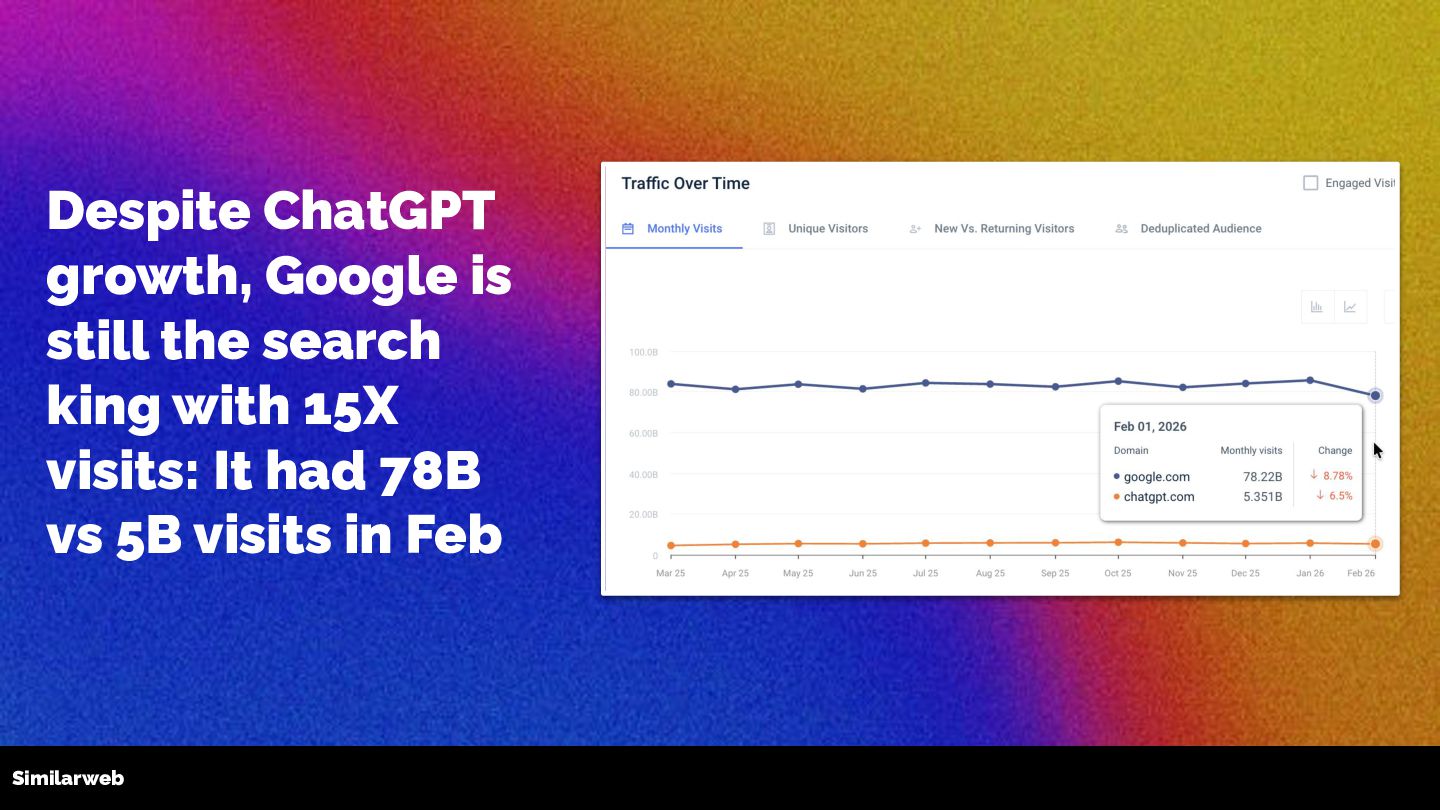
Similarweb Despite ChatGPT growth, Google is still the search king
with 15X visits: It had 78B vs 5B visits in Feb -
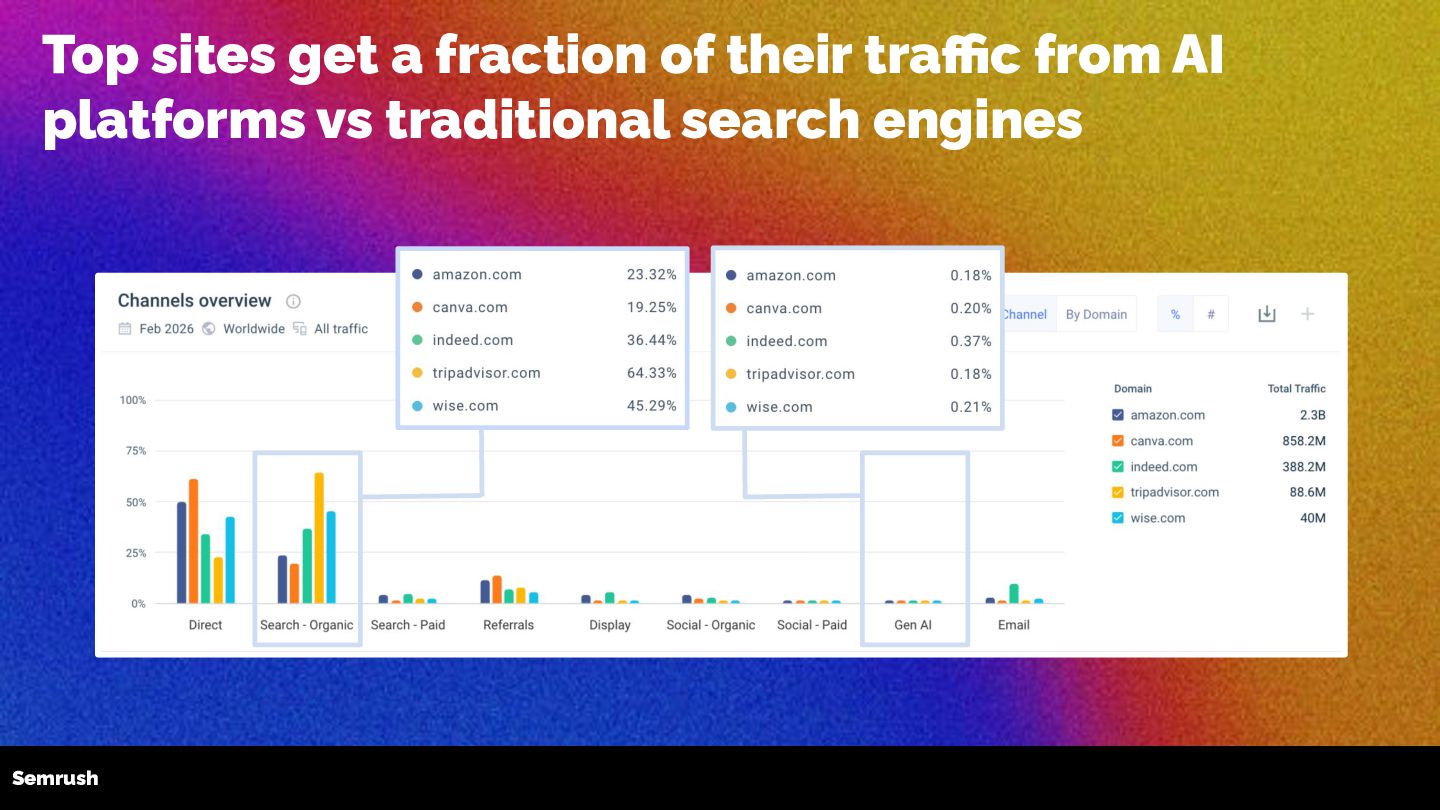
Semrush Top sites get a fraction of their traffic from
AI platforms vs traditional search engines -
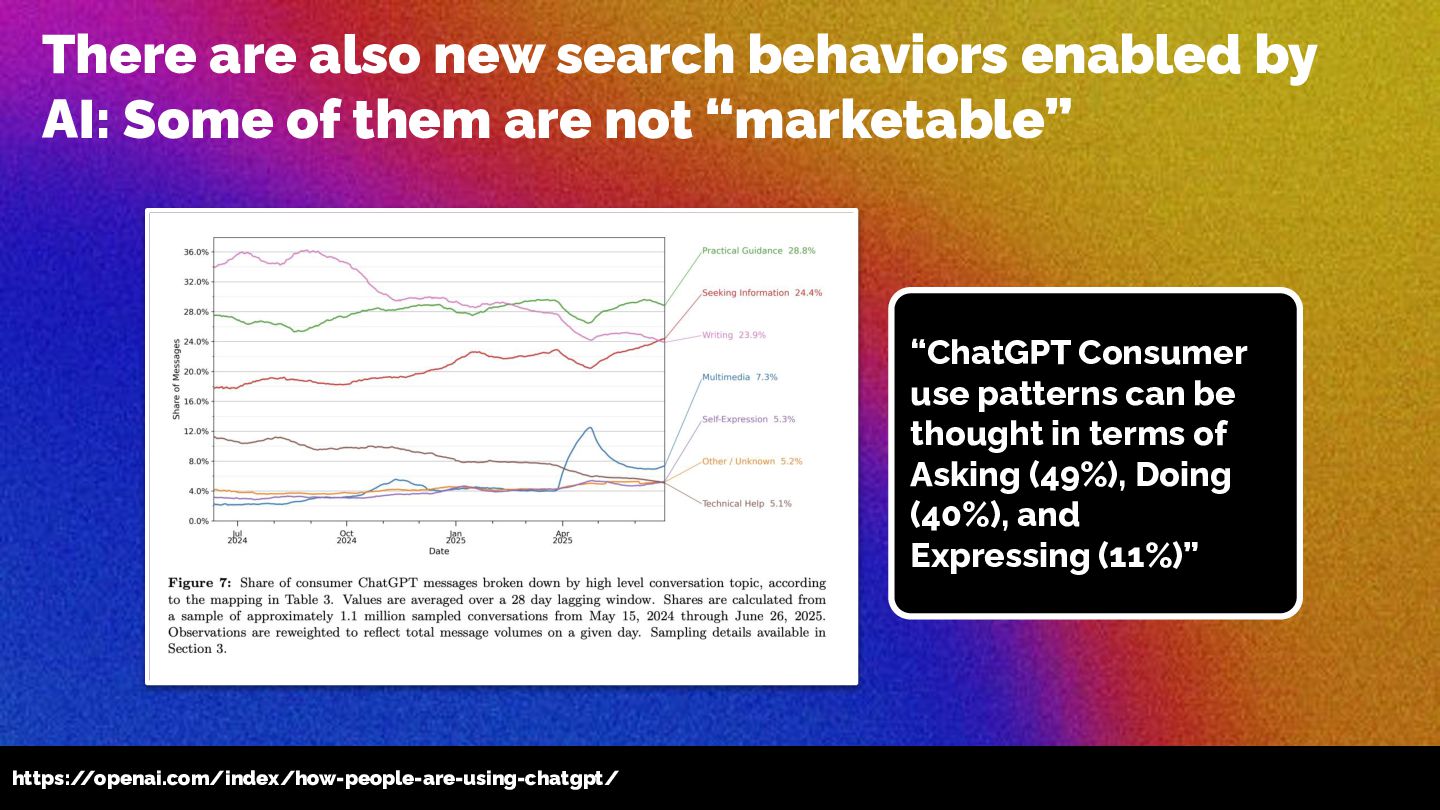
https:/ /openai.com/index/how-people-are-using-chatgpt/ There are also new search behaviors enabled by
AI: Some of them are not “marketable” “ChatGPT Consumer use patterns can be thought in terms of Asking (49%), Doing (40%), and Expressing (11%)” -
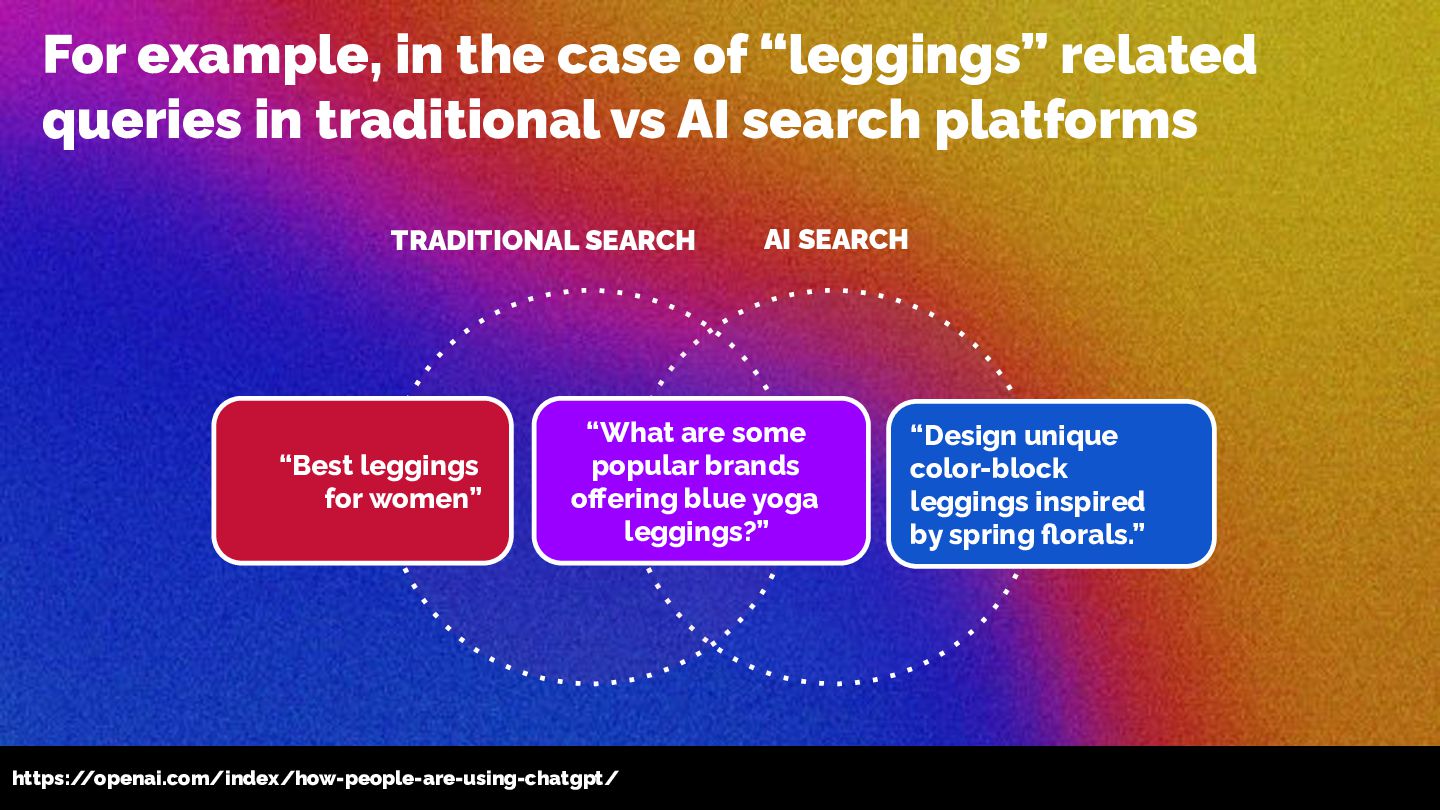
https:/ /openai.com/index/how-people-are-using-chatgpt/ For example, in the case of “leggings” related
queries in traditional vs AI search platforms TRADITIONAL SEARCH AI SEARCH “Best leggings for women” “What are some popular brands offering blue yoga leggings?” “Design unique color-block leggings inspired by spring florals.” -
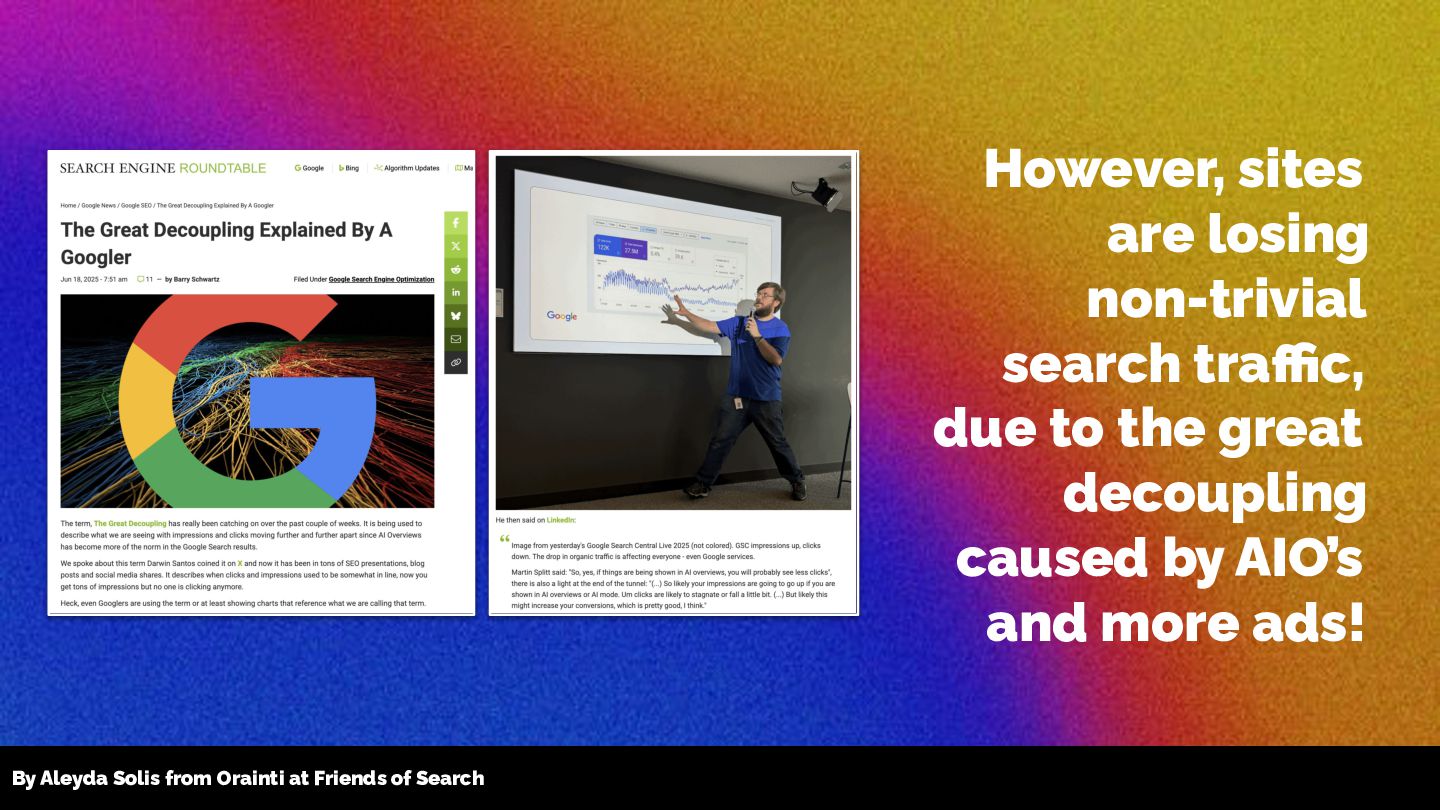
However, sites are losing non-trivial search traffic, due to the
great decoupling caused by AIO’s and more ads! By Aleyda Solis from Orainti at Friends of Search -
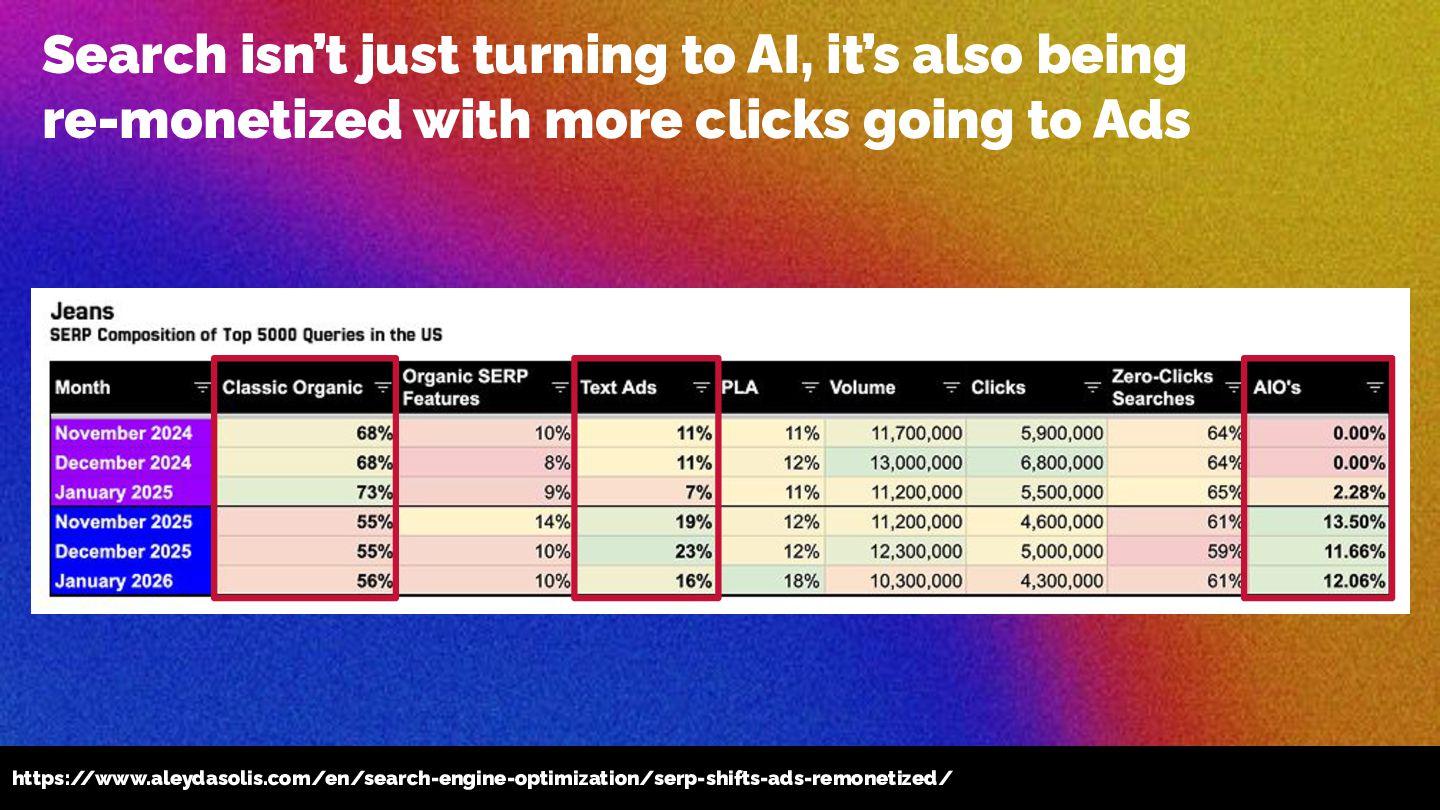
https:/ /www.aleydasolis.com/en/search-engine-optimization/serp-shifts-ads-remonetized/ Search isn’t just turning to AI, it’s also
being re-monetized with more clicks going to Ads -
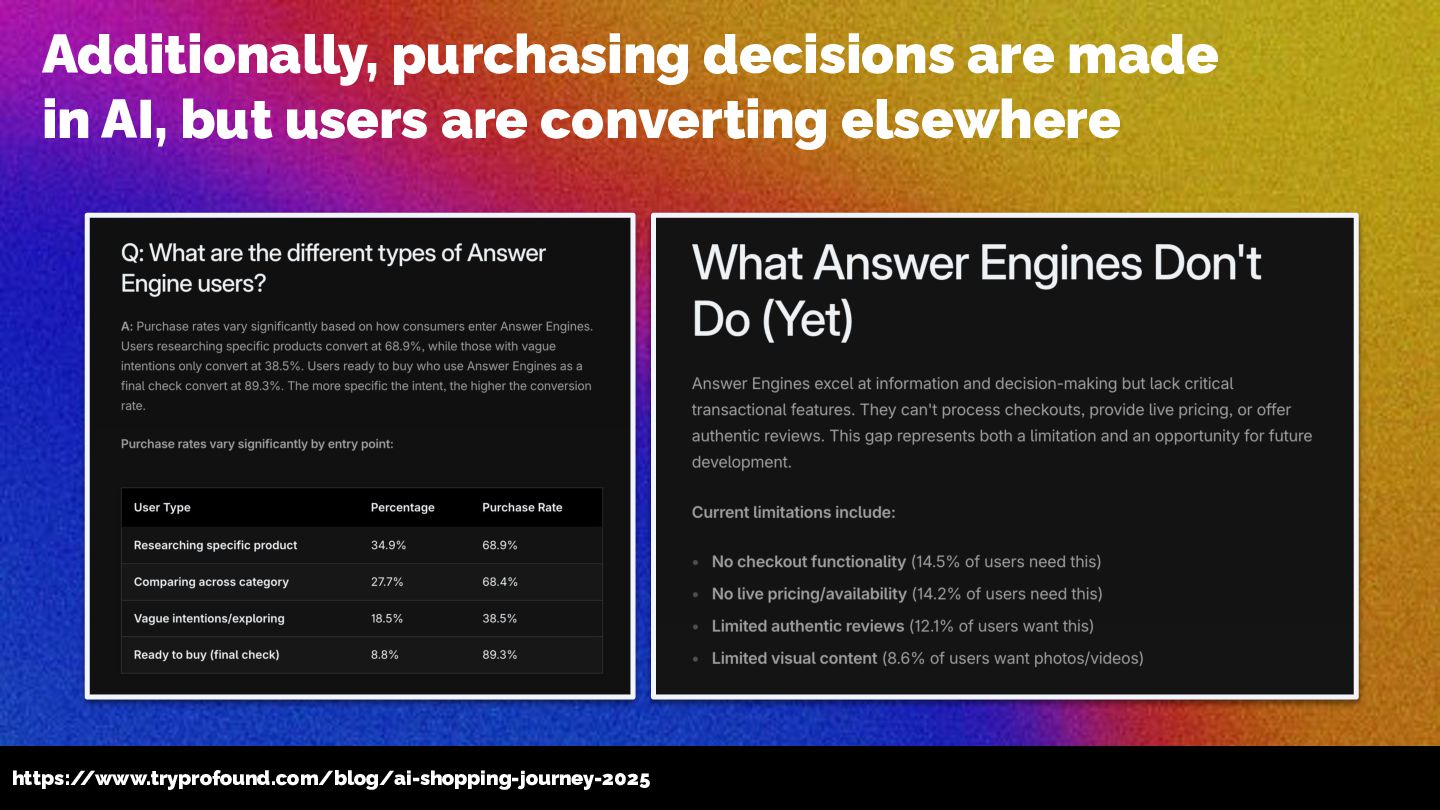
https:/ /www.tryprofound.com/blog/ai-shopping-journey-2025 Additionally, purchasing decisions are made in AI, but
users are converting elsewhere -
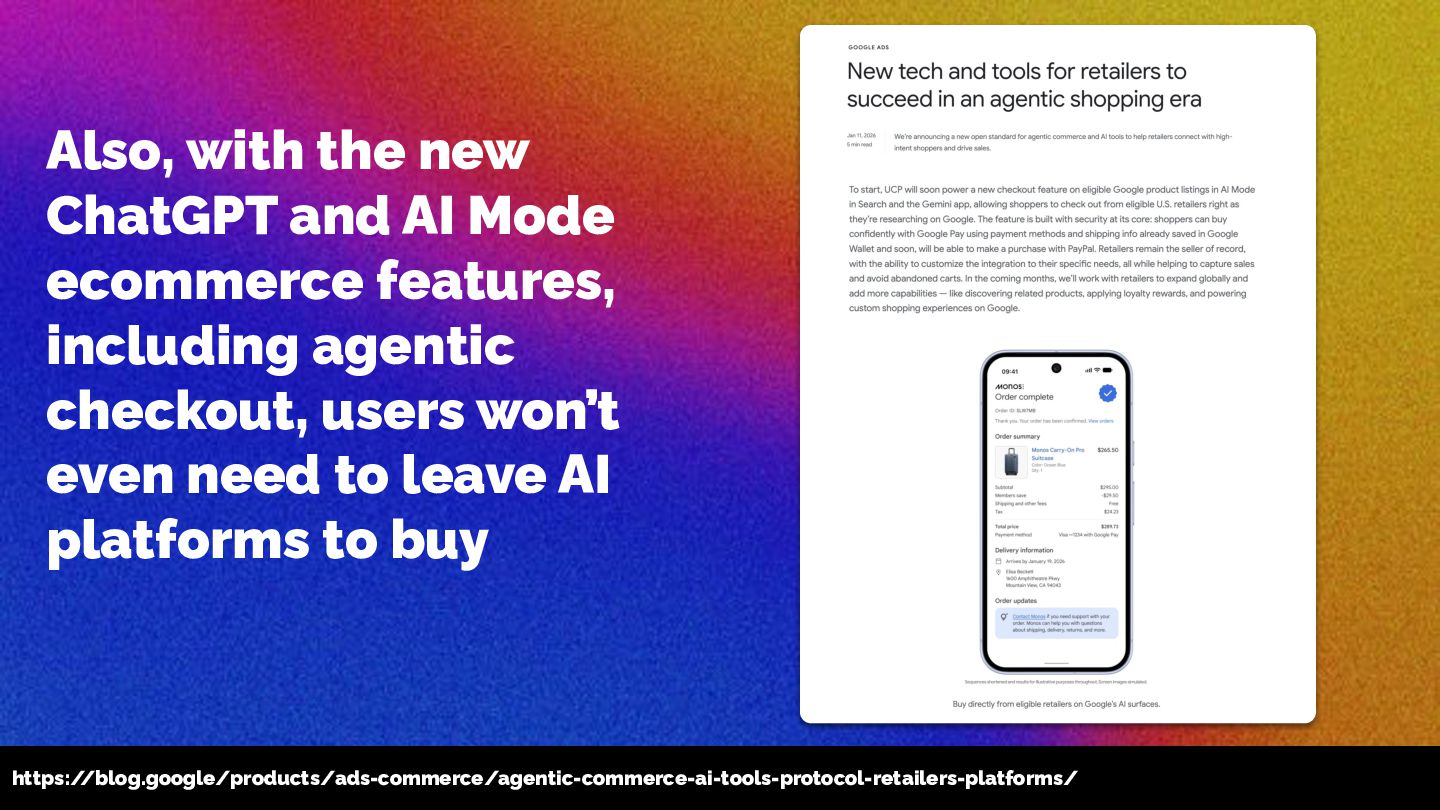
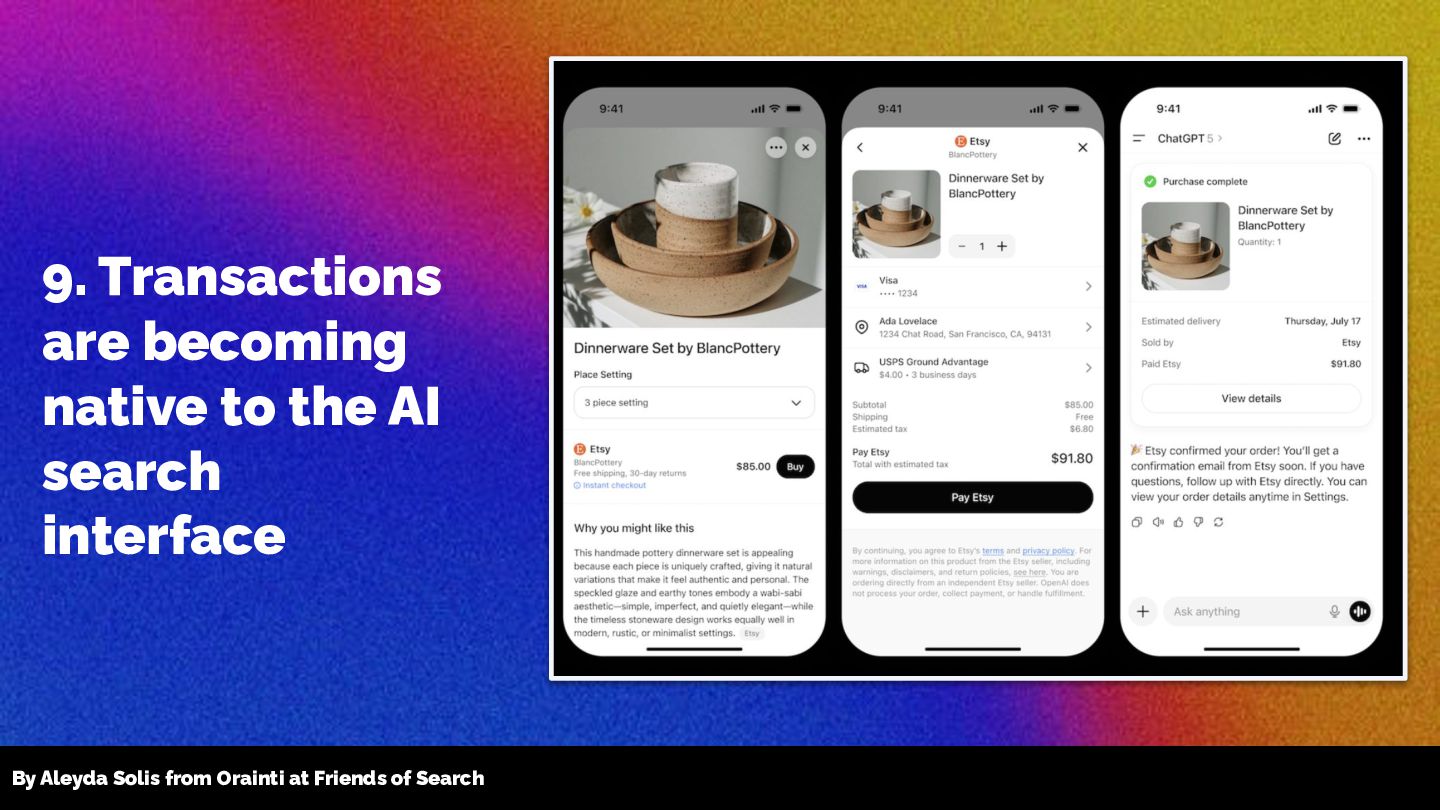
https:/ /blog.google/products/ads-commerce/agentic-commerce-ai-tools-protocol-retailers-platforms/ Also, with the new ChatGPT and AI Mode
ecommerce features, including agentic checkout, users won’t even need to leave AI platforms to buy -
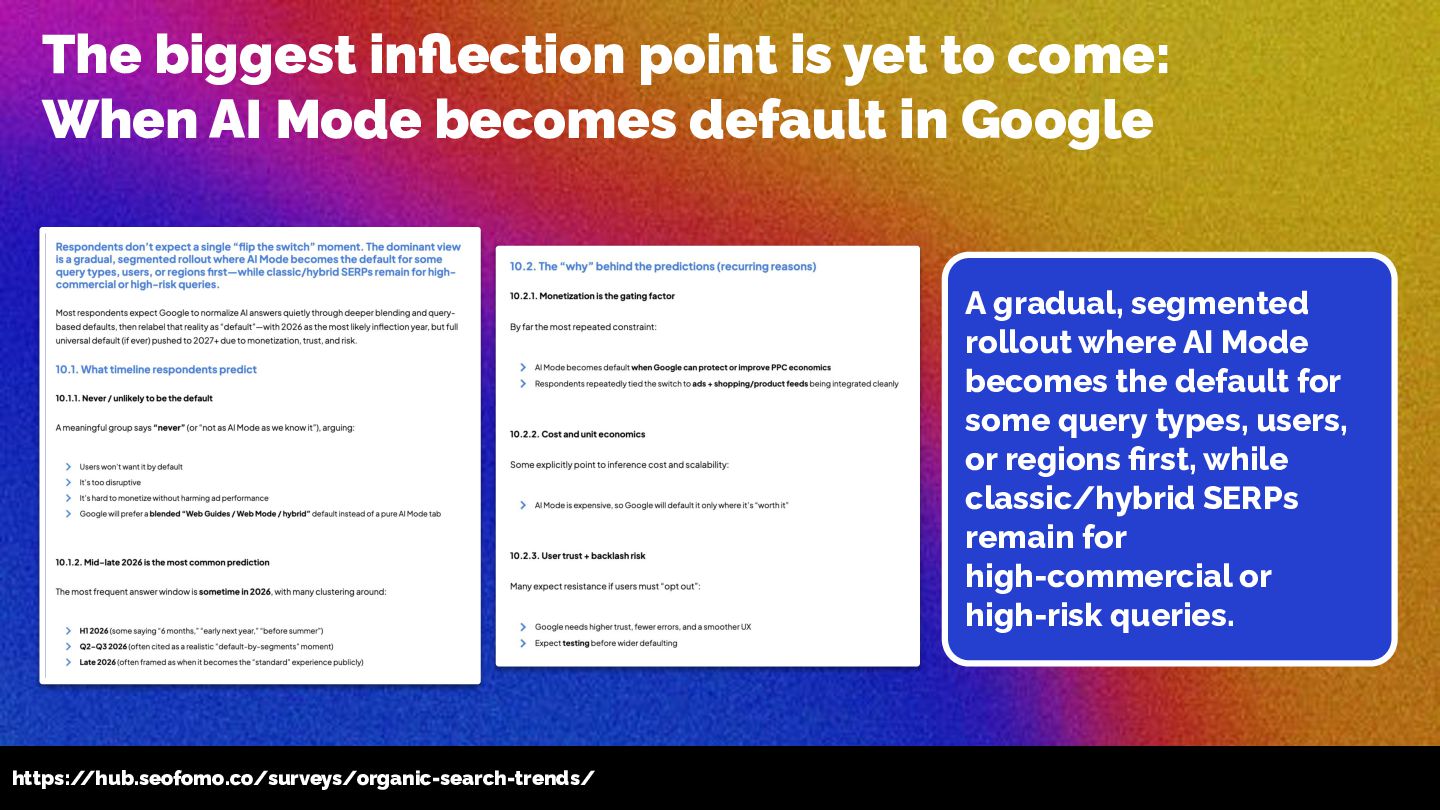
The biggest inflection point is yet to come: When AI
Mode becomes default in Google https:/ /hub.seofomo.co/surveys/organic-search-trends/ A gradual, segmented rollout where AI Mode becomes the default for some query types, users, or regions first, while classic/hybrid SERPs remain for high-commercial or high-risk queries. -
How all of this impacts SEO? Is it dead then?
By Aleyda Solis from Orainti at Friends of Search -
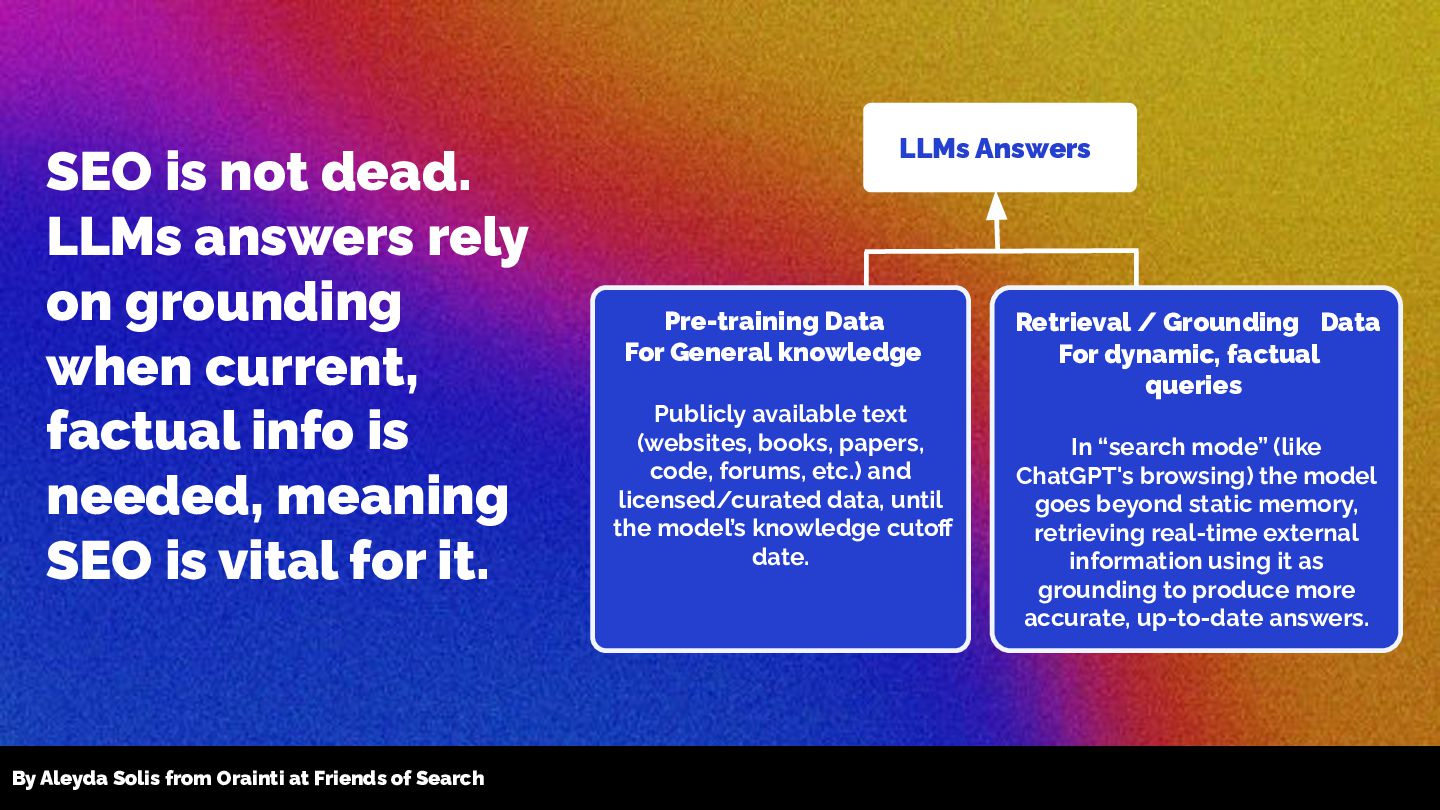
SEO is not dead. LLMs answers rely on grounding when
current, factual info is needed, meaning SEO is vital for it. LLMs Answers Retrieval / Grounding Data For dynamic, factual queries In “search mode” (like ChatGPT's browsing) the model goes beyond static memory, retrieving real-time external information using it as grounding to produce more accurate, up-to-date answers. Pre-training Data For General knowledge Publicly available text (websites, books, papers, code, forums, etc.) and licensed/curated data, until the model’s knowledge cutoff date. By Aleyda Solis from Orainti at Friends of Search -
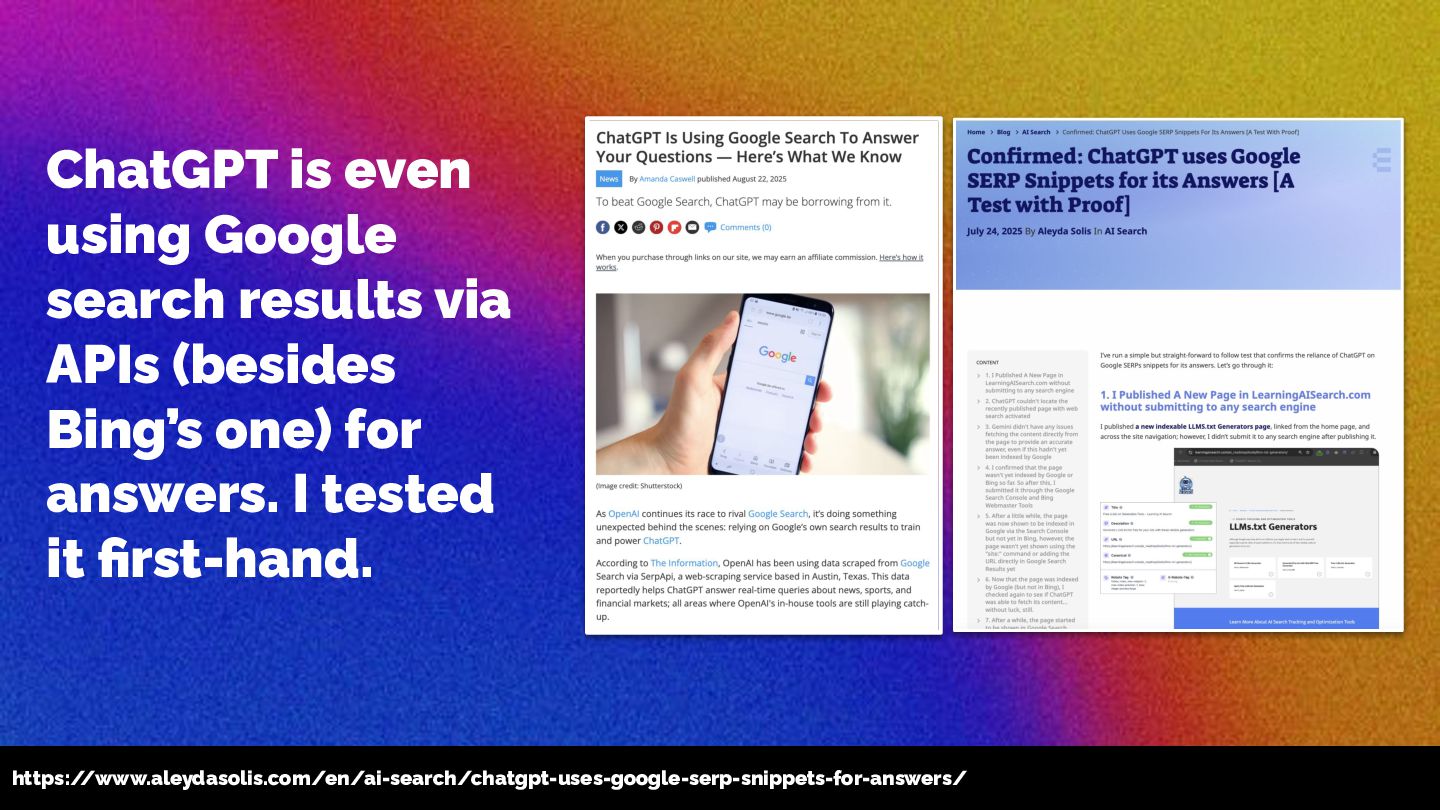
https:/ /www.aleydasolis.com/en/ai-search/chatgpt-uses-google-serp-snippets-for-answers/ ChatGPT is even using Google search results via
APIs (besides Bing’s one) for answers. I tested it first-hand. -
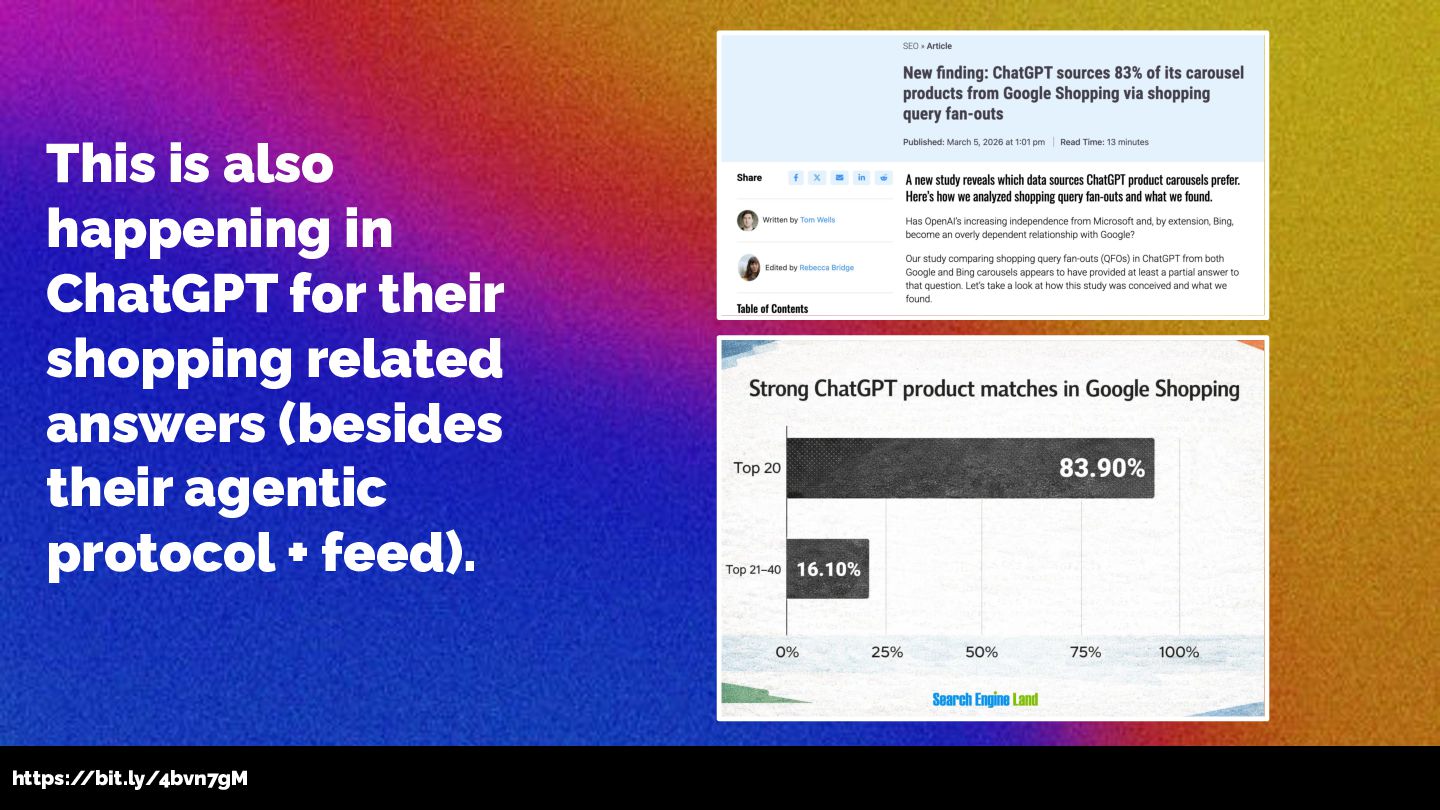
https:/ /bit.ly/4bvn7gM This is also happening in ChatGPT for their
shopping related answers (besides their agentic protocol + feed). -
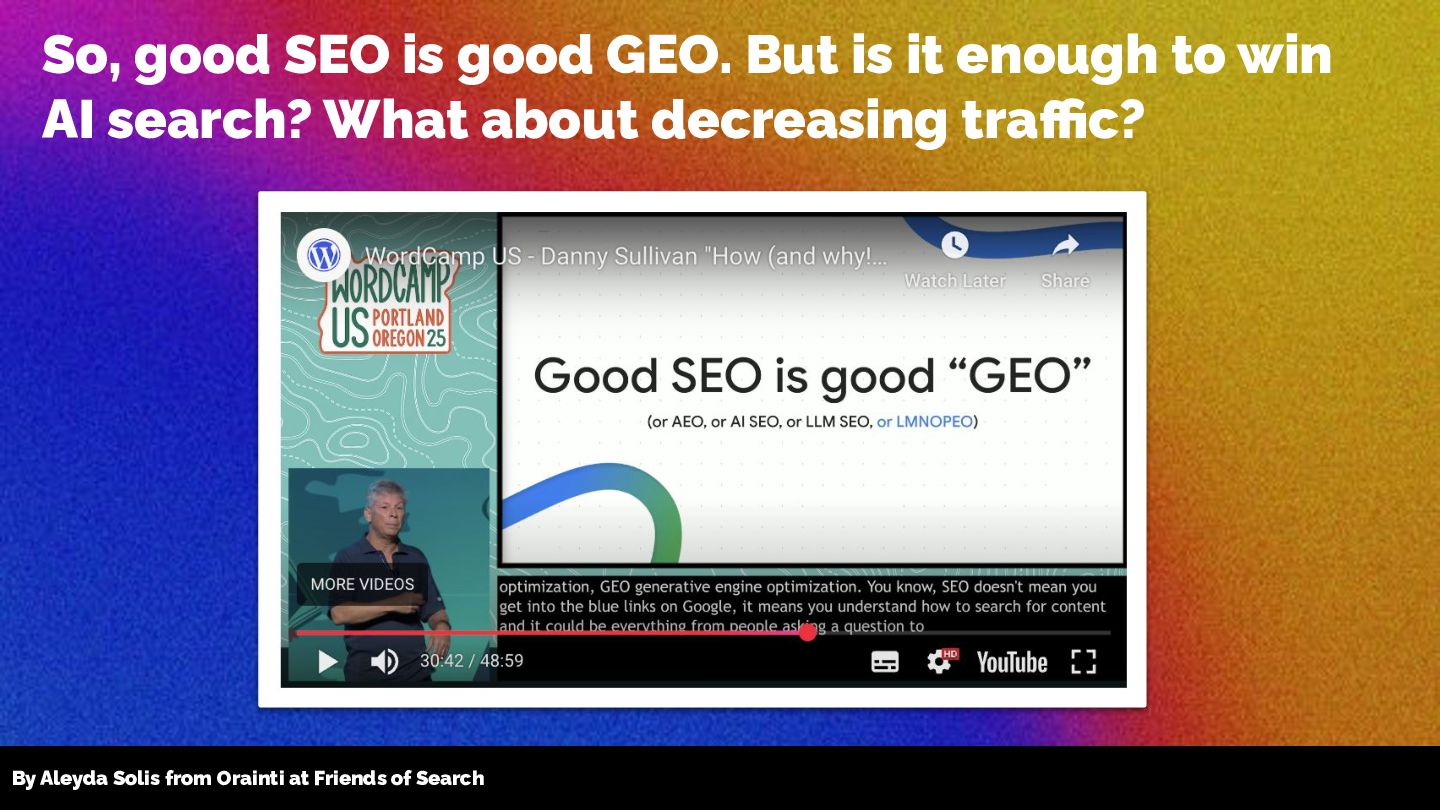
So, good SEO is good GEO. But is it enough
to win AI search? What about decreasing traffic? By Aleyda Solis from Orainti at Friends of Search -
By Aleyda Solis from Orainti at Friends of Search Let’s
go through key AI search shifts that impact how we optimize -
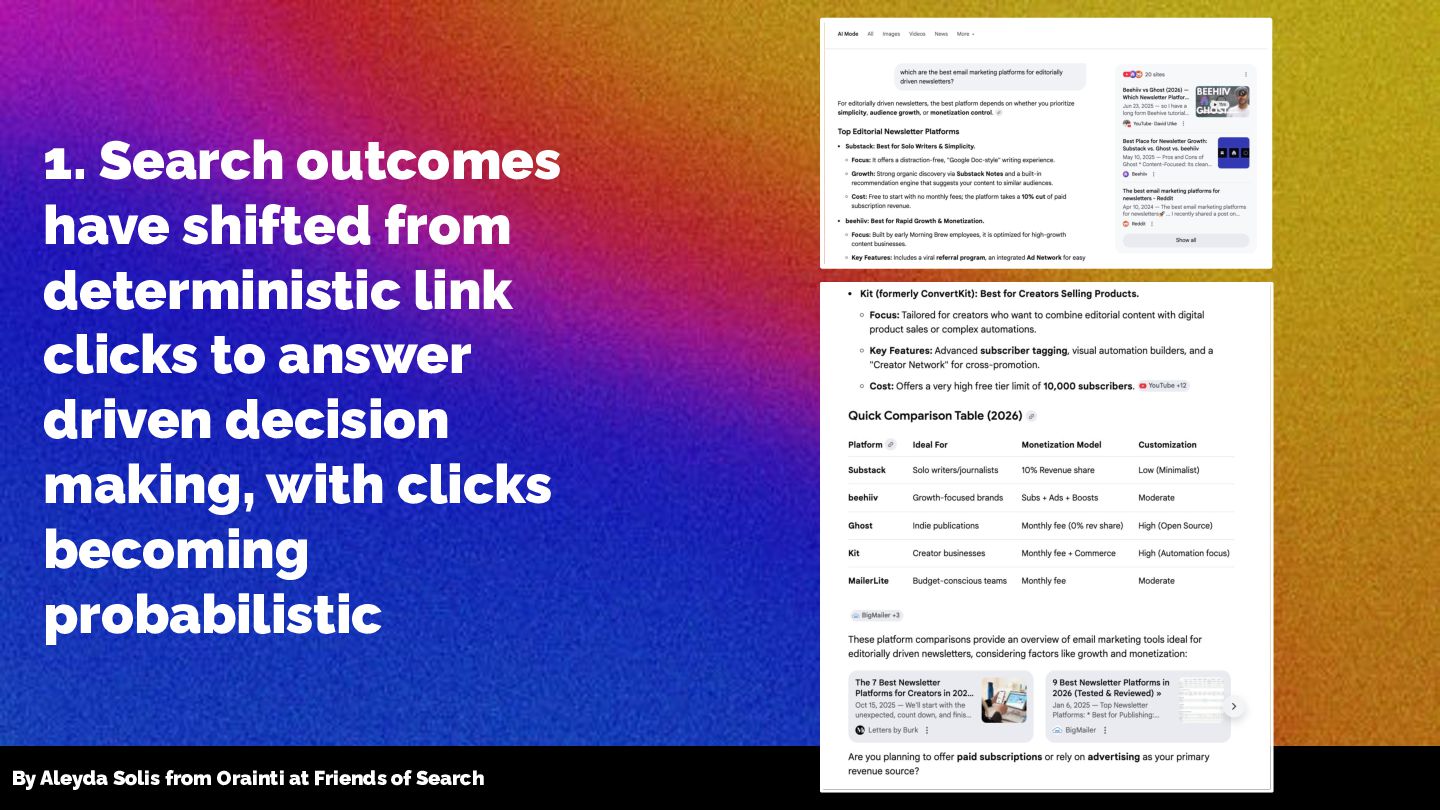
By Aleyda Solis from Orainti at Friends of Search 1.
Search outcomes have shifted from deterministic link clicks to answer driven decision making, with clicks becoming probabilistic -
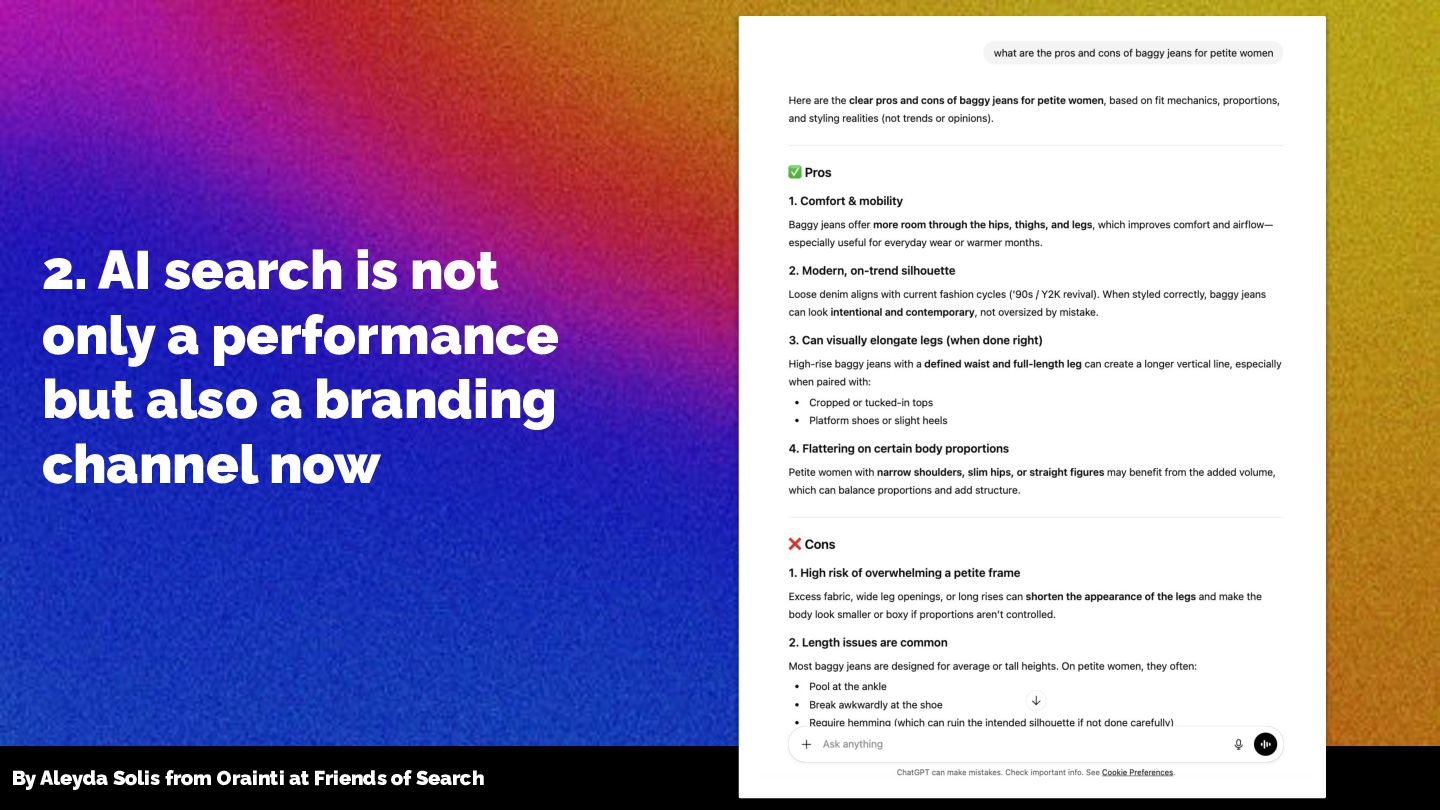
By Aleyda Solis from Orainti at Friends of Search 2.
AI search is not only a performance but also a branding channel now -
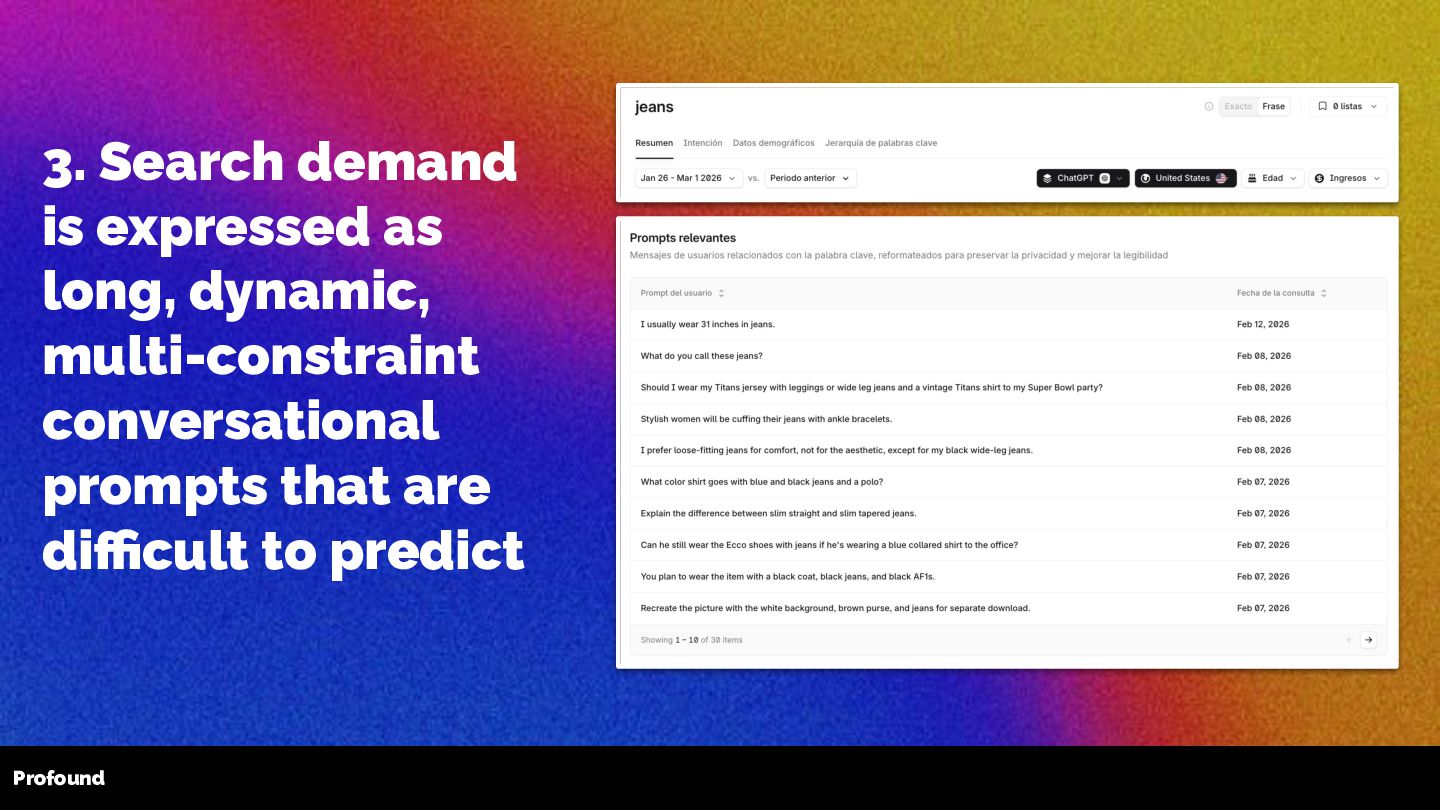
Profound 3. Search demand is expressed as long, dynamic, multi-constraint
conversational prompts that are difficult to predict -
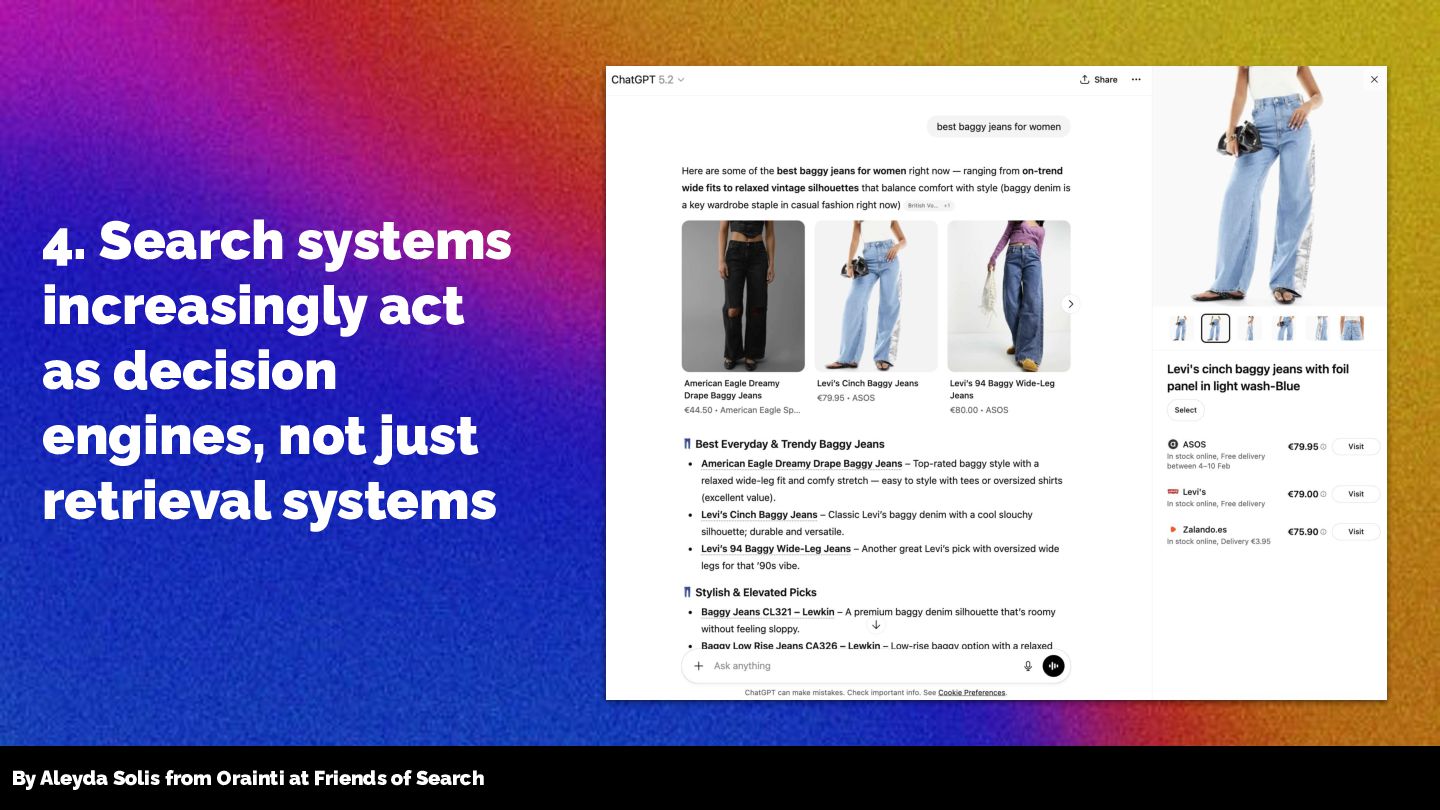
4. Search systems increasingly act as decision engines, not just
retrieval systems By Aleyda Solis from Orainti at Friends of Search -
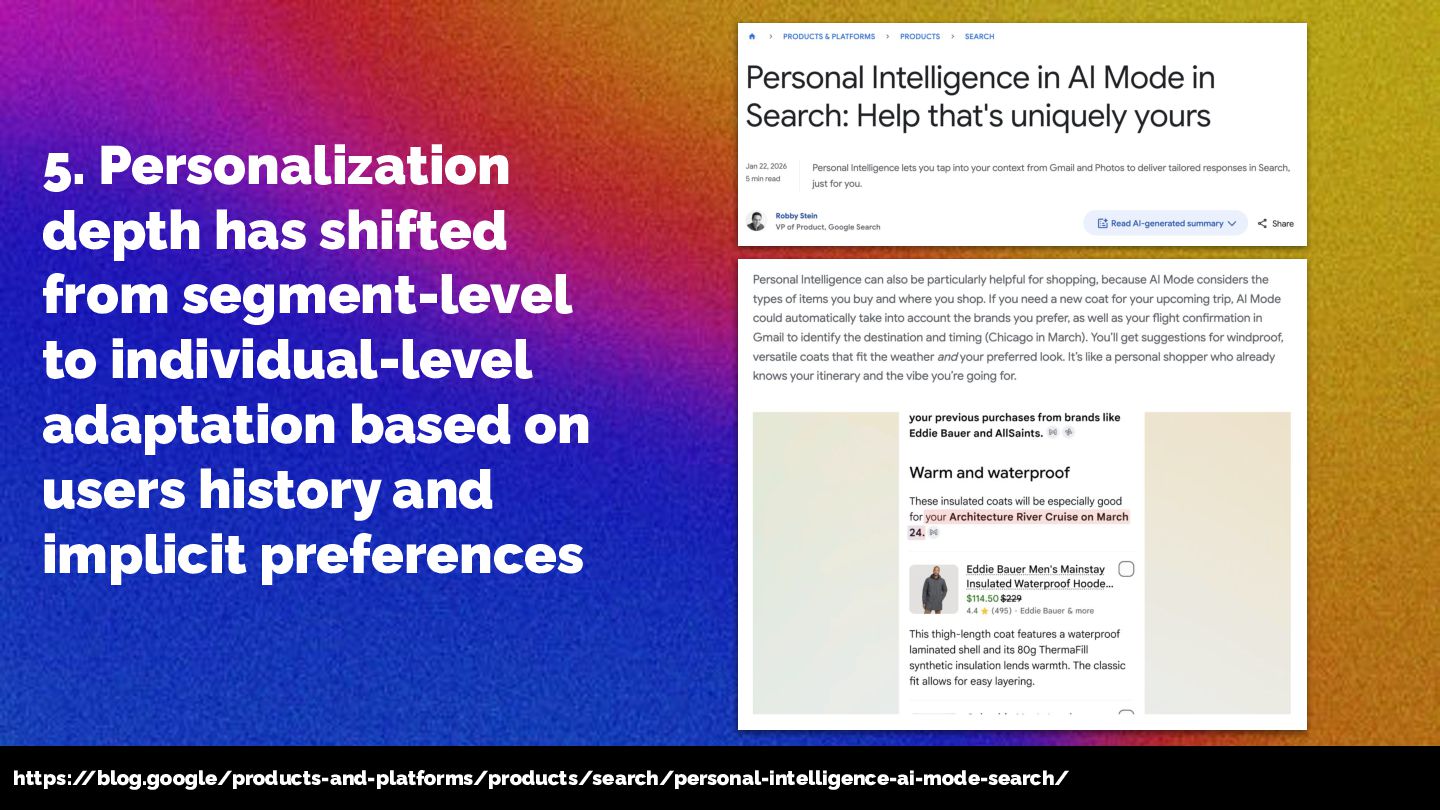
5. Personalization depth has shifted from segment-level to individual-level adaptation
based on users history and implicit preferences https:/ /blog.google/products-and-platforms/products/search/personal-intelligence-ai-mode-search/ -
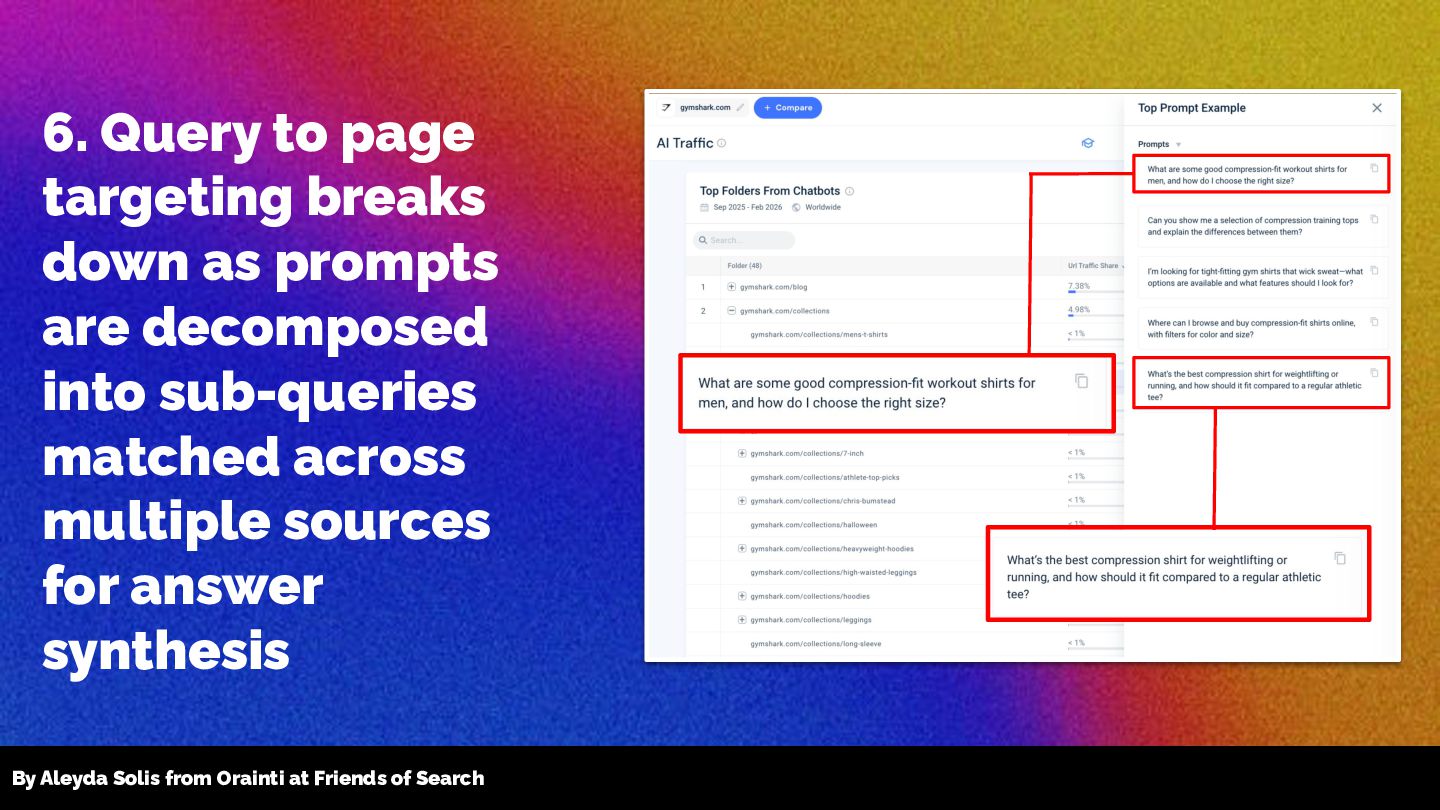
6. Query to page targeting breaks down as prompts are
decomposed into sub-queries matched across multiple sources for answer synthesis By Aleyda Solis from Orainti at Friends of Search -
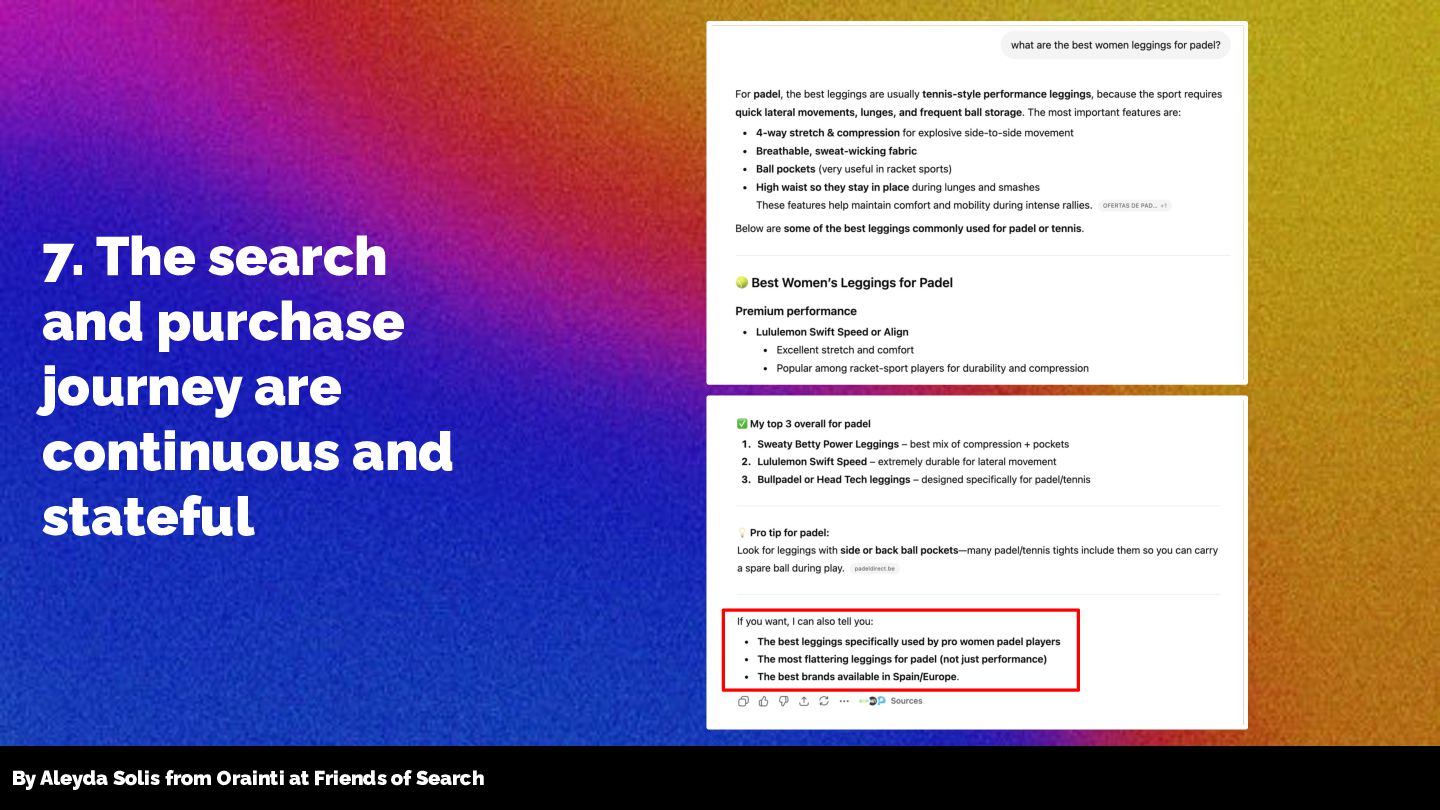
7. The search and purchase journey are continuous and stateful
By Aleyda Solis from Orainti at Friends of Search -
9. Transactions are becoming native to the AI search interface
By Aleyda Solis from Orainti at Friends of Search -
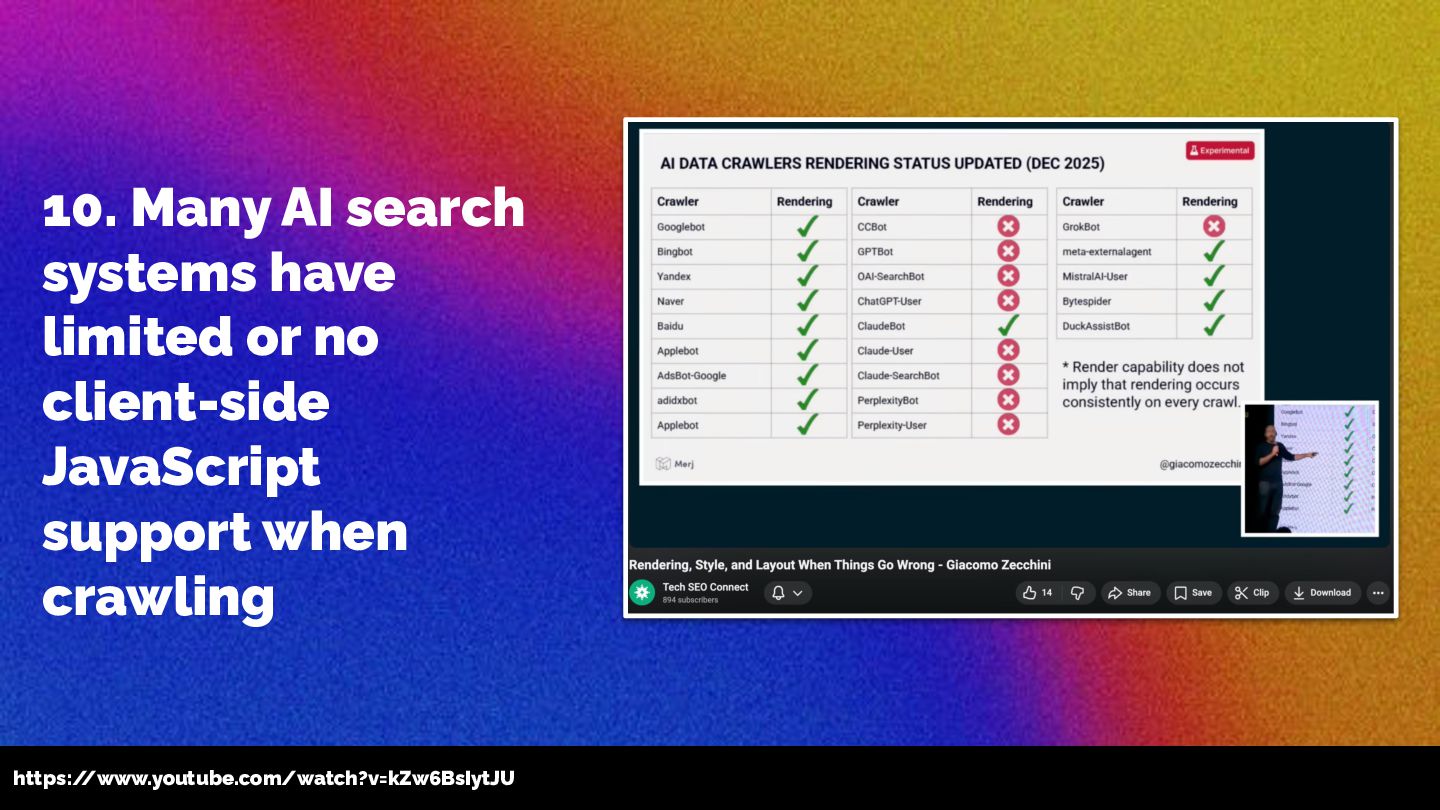
https:/ /www.youtube.com/watch?v=kZw6BsIytJU 10. Many AI search systems have limited or
no client-side JavaScript support when crawling -
How can we win in this new AI search landscape?
By Aleyda Solis from Orainti at Friends of Search -
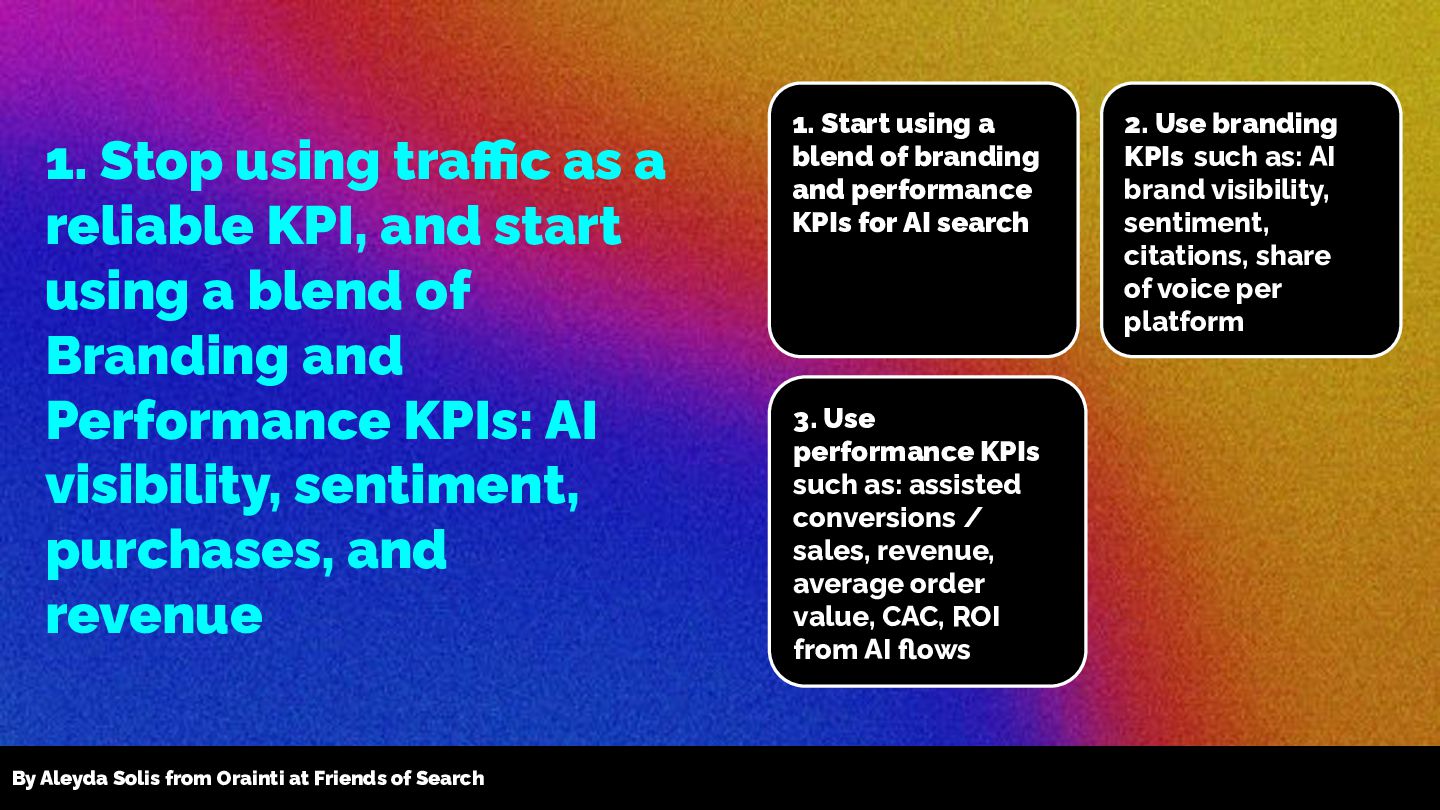
1. Stop using traffic as a reliable KPI, and start
using a blend of Branding and Performance KPIs: AI visibility, sentiment, purchases, and revenue 1. Start using a blend of branding and performance KPIs for AI search 2. Use branding KPIs such as: AI brand visibility, sentiment, citations, share of voice per platform 3. Use performance KPIs such as: assisted conversions / sales, revenue, average order value, CAC, ROI from AI flows By Aleyda Solis from Orainti at Friends of Search -
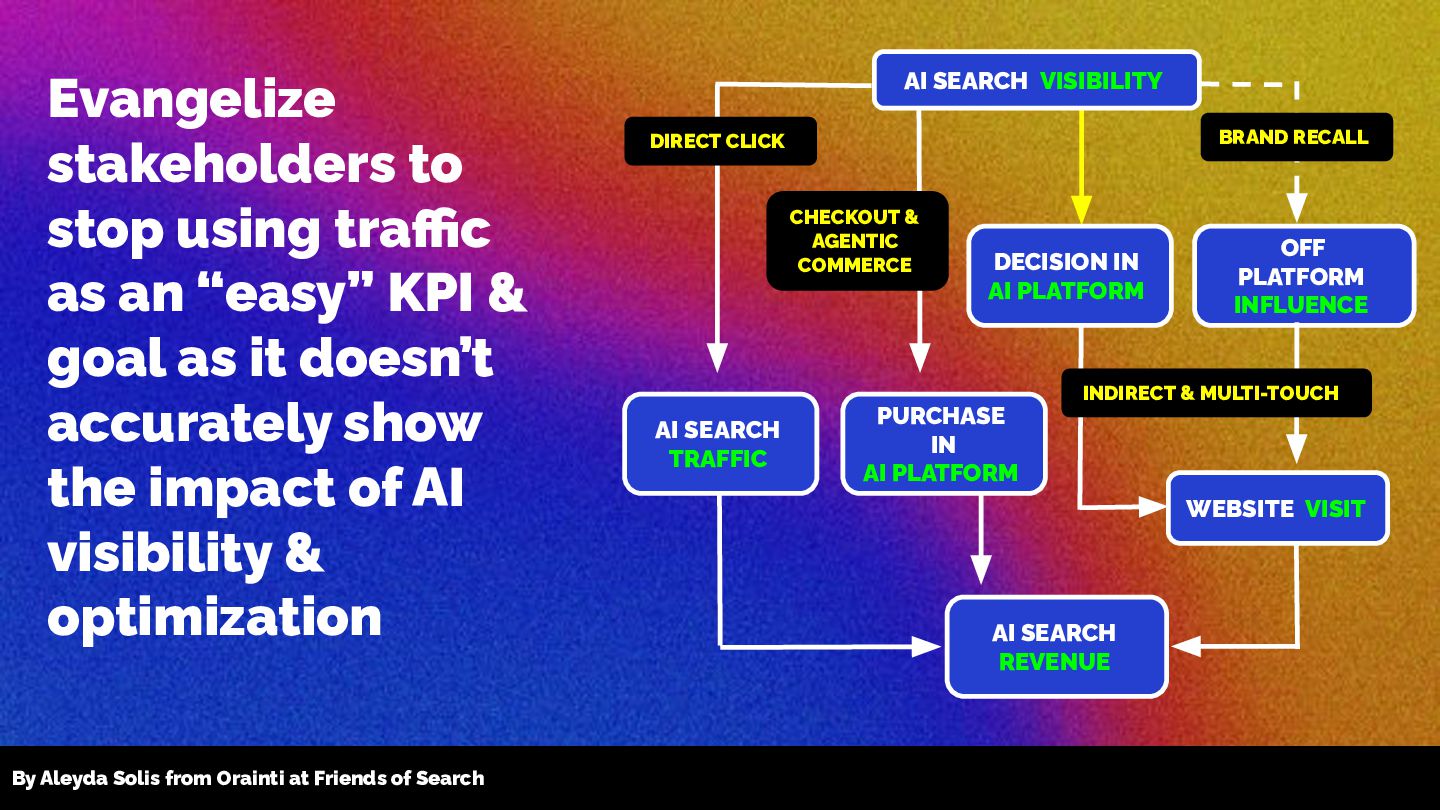
By Aleyda Solis from Orainti at Friends of Search Evangelize
stakeholders to stop using traffic as an “easy” KPI & goal as it doesn’t accurately show the impact of AI visibility & optimization DIRECT CLICK BRAND RECALL AI SEARCH REVENUE AI SEARCH TRAFFIC OFF PLATFORM INFLUENCE DECISION IN AI PLATFORM WEBSITE VISIT INDIRECT & MULTI-TOUCH AI SEARCH VISIBILITY PURCHASE IN AI PLATFORM CHECKOUT & AGENTIC COMMERCE -
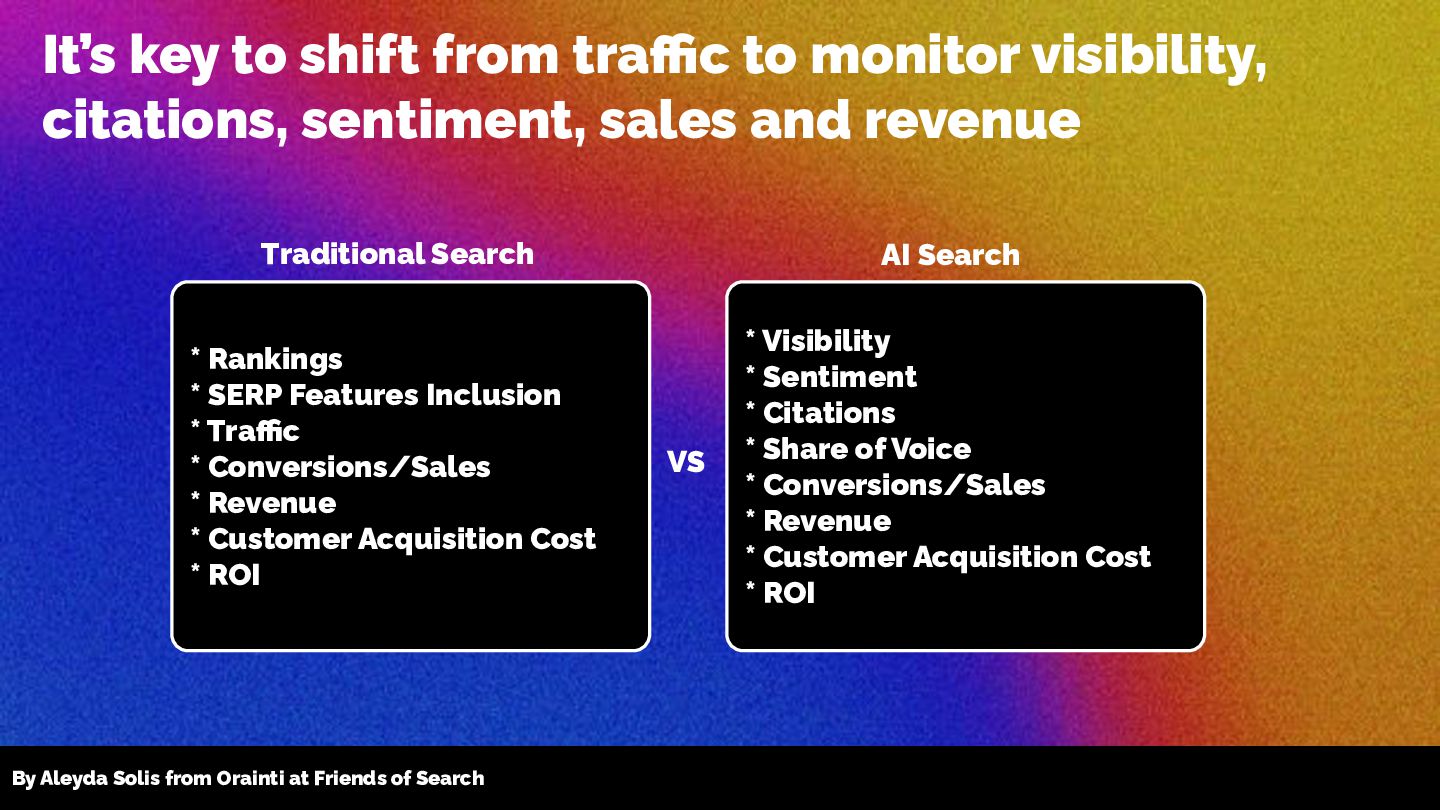
* Rankings * SERP Features Inclusion * Traffic * Conversions/Sales
* Revenue * Customer Acquisition Cost * ROI * Visibility * Sentiment * Citations * Share of Voice * Conversions/Sales * Revenue * Customer Acquisition Cost * ROI VS Traditional Search AI Search It’s key to shift from traffic to monitor visibility, citations, sentiment, sales and revenue By Aleyda Solis from Orainti at Friends of Search -
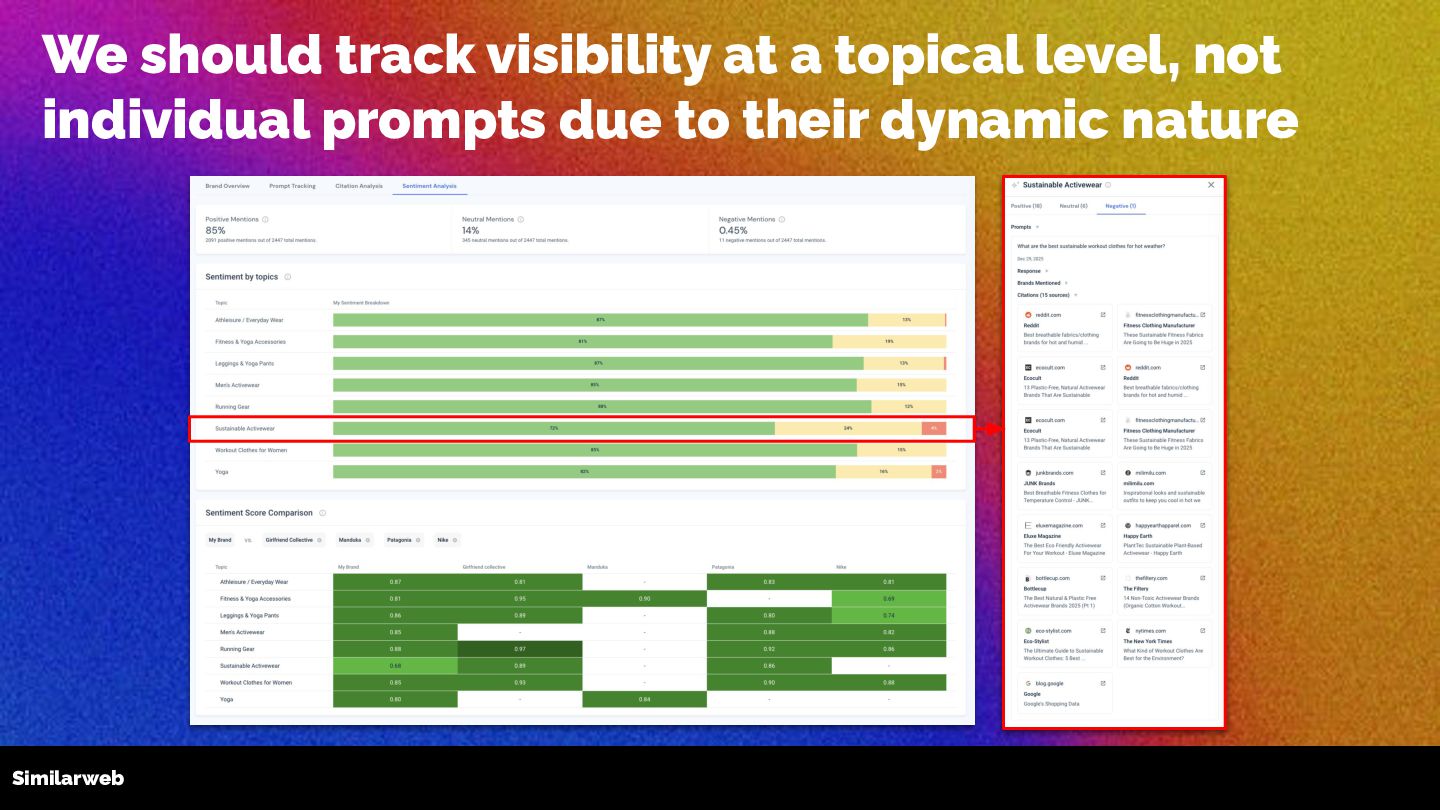
Similarweb We should track visibility at a topical level, not
individual prompts due to their dynamic nature -
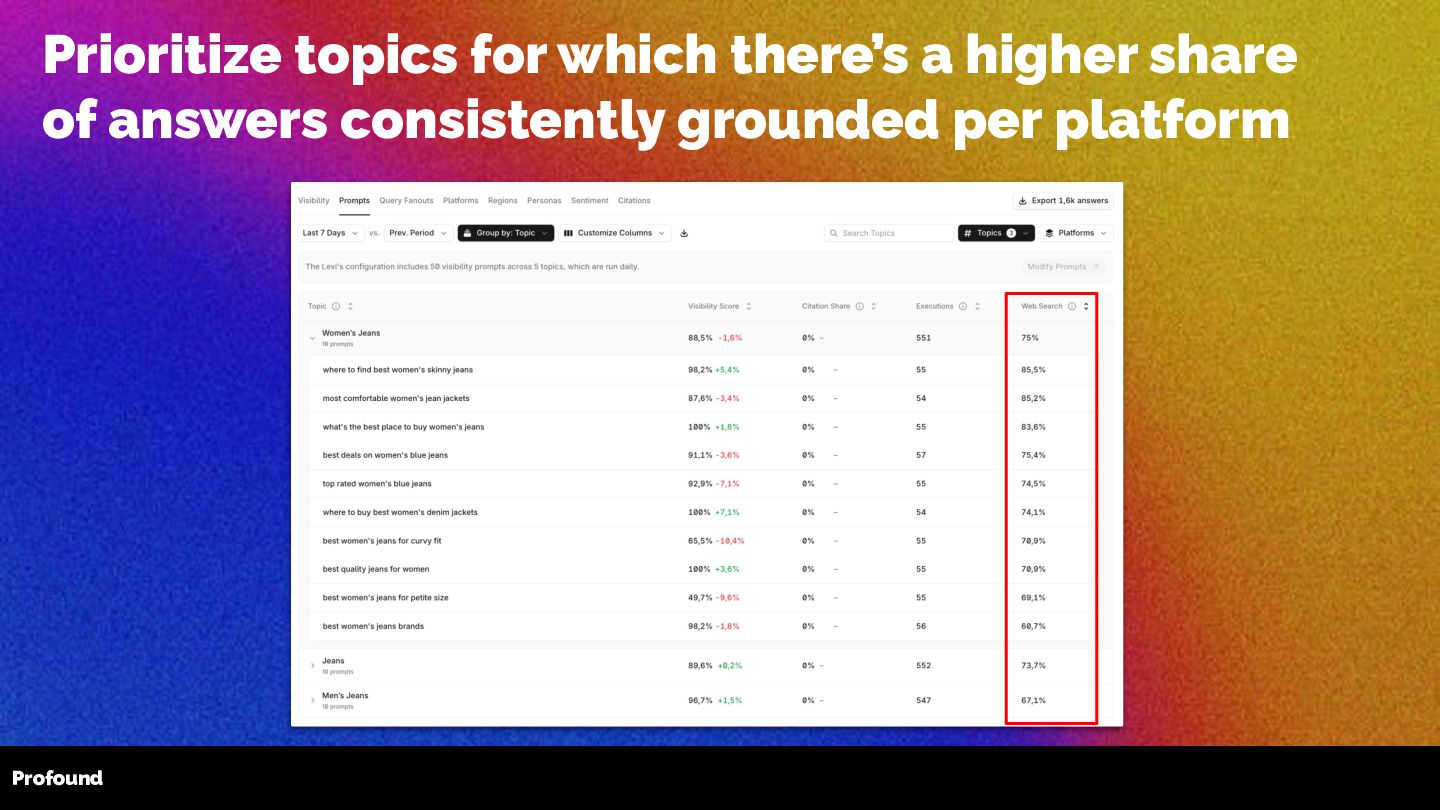
Profound Prioritize topics for which there’s a higher share of
answers consistently grounded per platform -
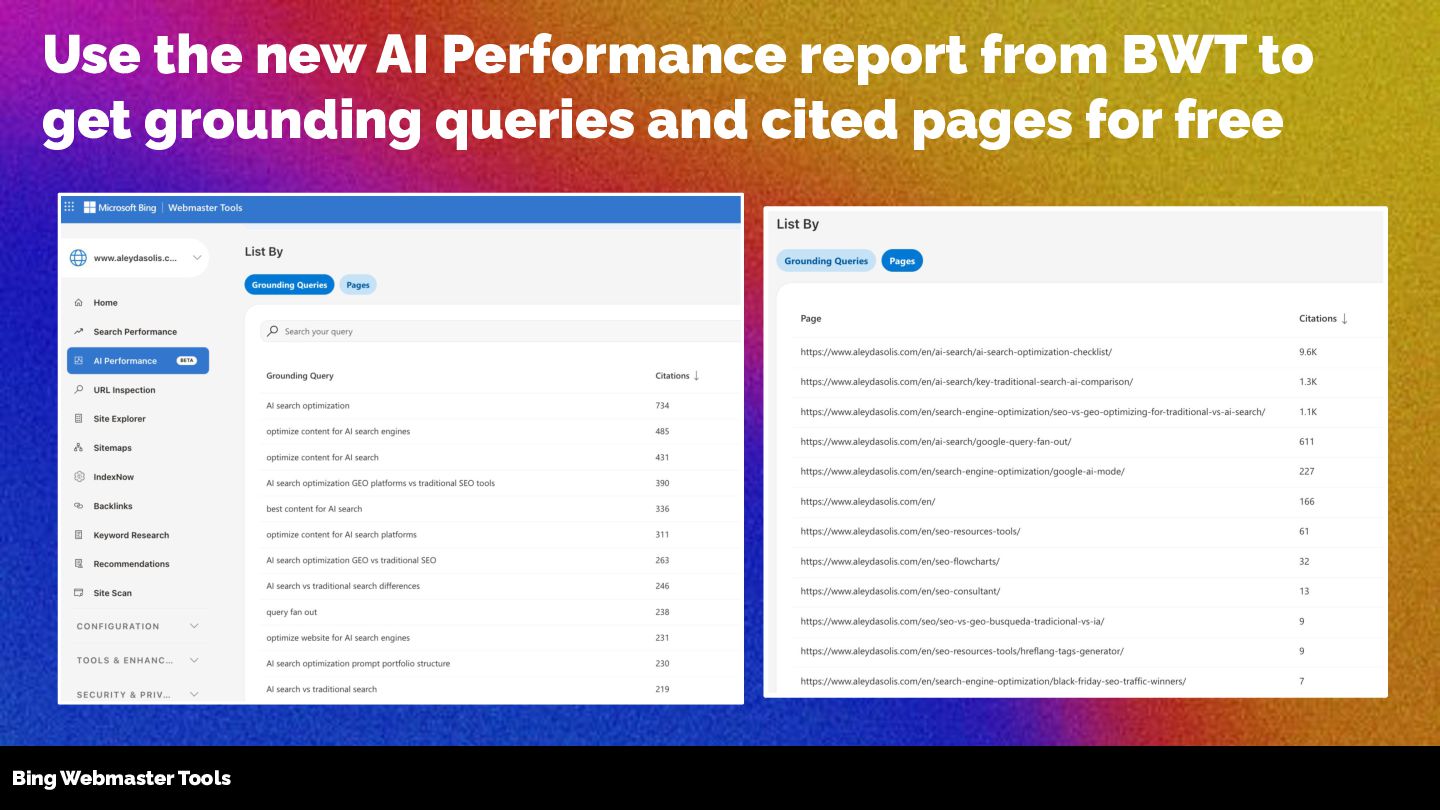
Use the new AI Performance report from BWT to get
grounding queries and cited pages for free Bing Webmaster Tools -
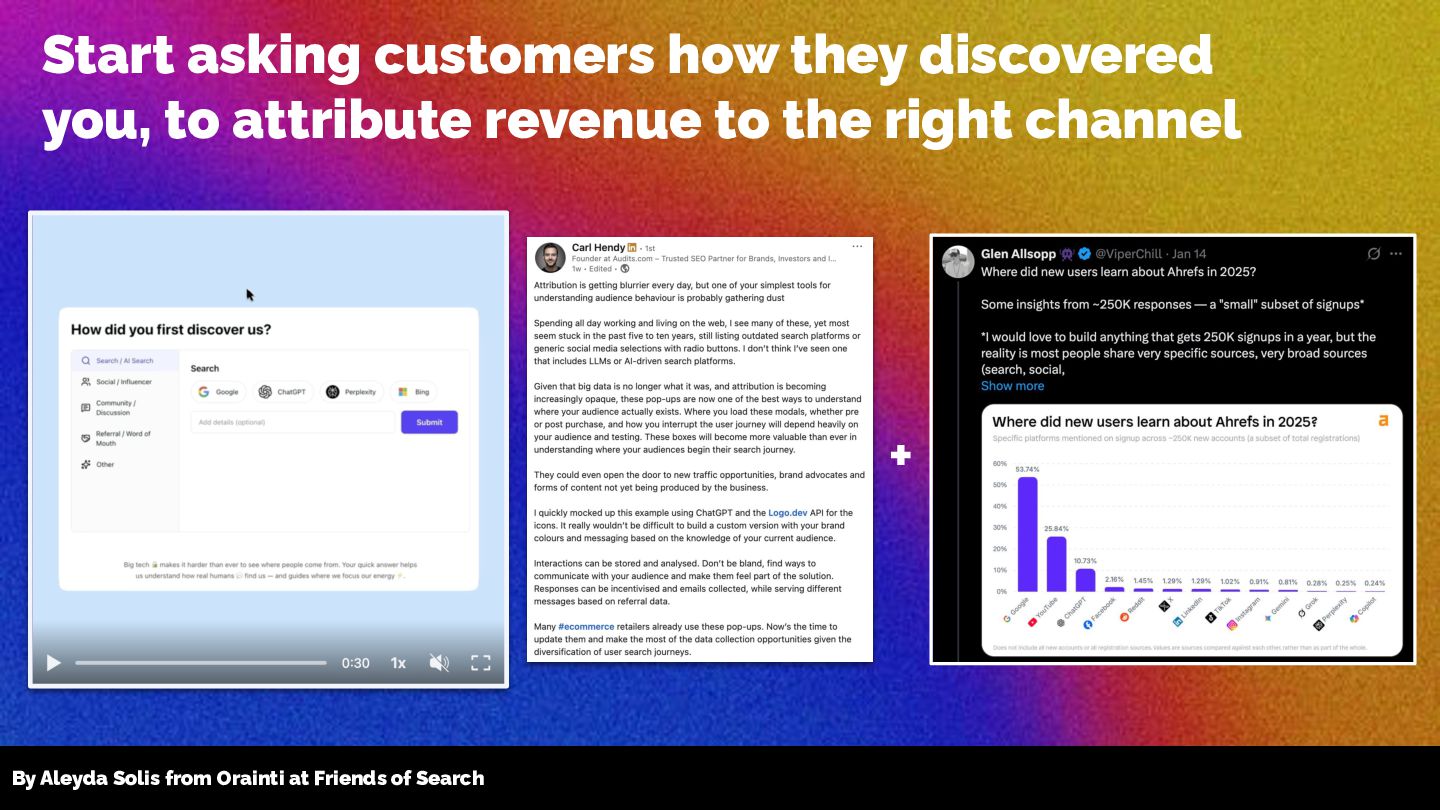
Start asking customers how they discovered you, to attribute revenue
to the right channel + By Aleyda Solis from Orainti at Friends of Search -
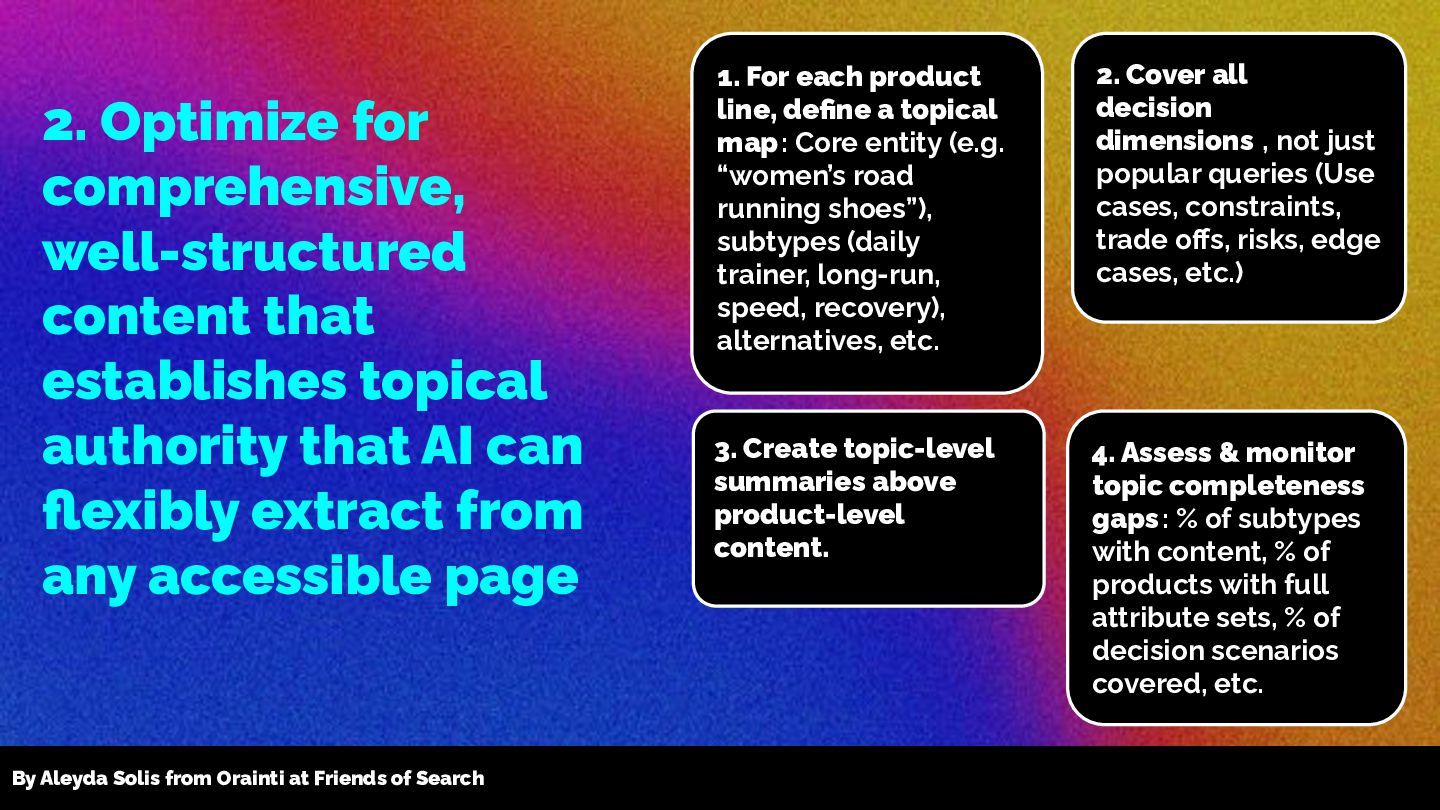
2. Optimize for comprehensive, well-structured content that establishes topical authority
that AI can flexibly extract from any accessible page 1. For each product line, define a topical map: Core entity (e.g. “women’s road running shoes”), subtypes (daily trainer, long-run, speed, recovery), alternatives, etc. 2. Cover all decision dimensions , not just popular queries (Use cases, constraints, trade offs, risks, edge cases, etc.) 3. Create topic-level summaries above product-level content. 4. Assess & monitor topic completeness gaps: % of subtypes with content, % of products with full attribute sets, % of decision scenarios covered, etc. By Aleyda Solis from Orainti at Friends of Search -
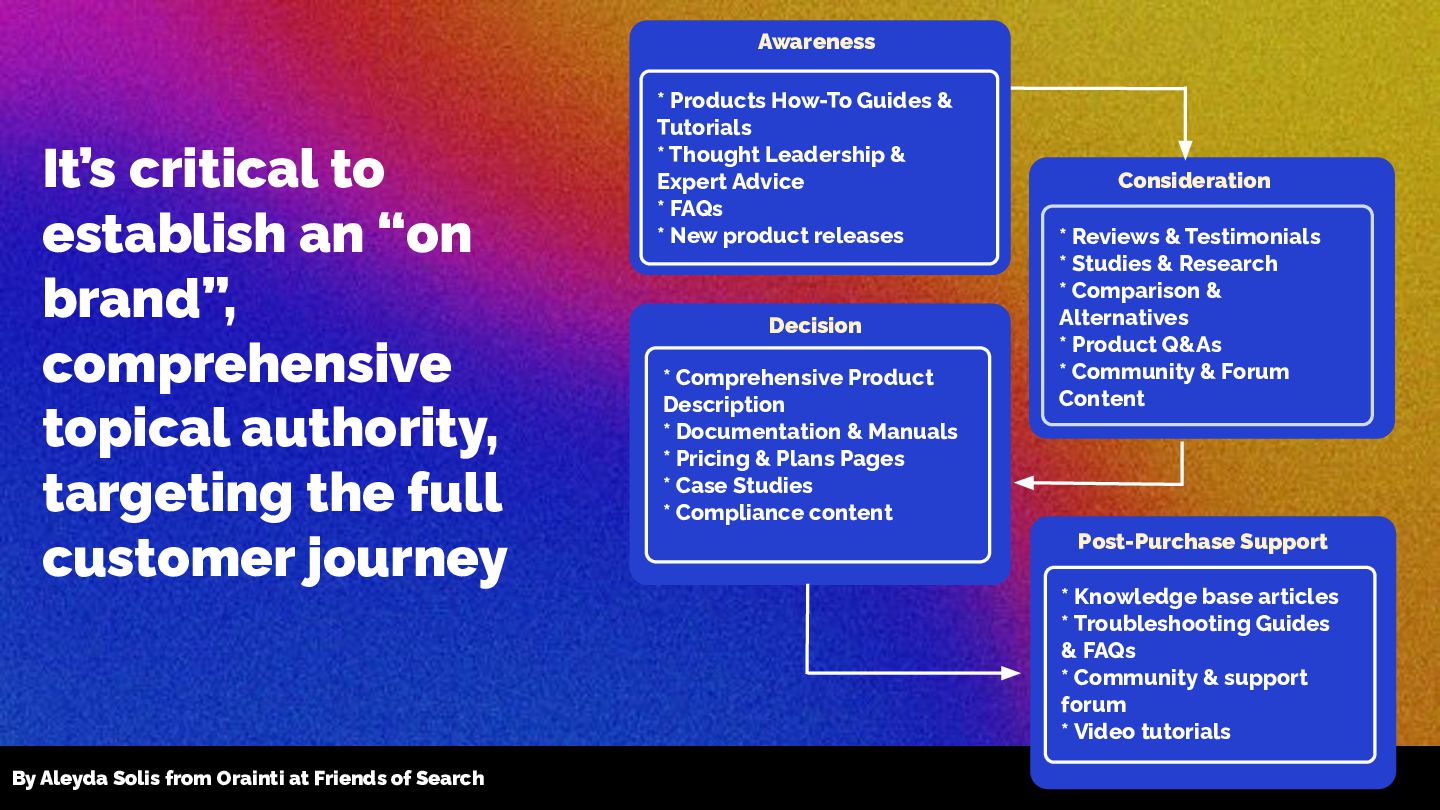
By Aleyda Solis from Orainti at Friends of Search It’s
critical to establish an “on brand”, comprehensive topical authority, targeting the full customer journey Consideration * Reviews & Testimonials * Studies & Research * Comparison & Alternatives * Product Q&As * Community & Forum Content Decision * Comprehensive Product Description * Documentation & Manuals * Pricing & Plans Pages * Case Studies * Compliance content * Knowledge base articles * Troubleshooting Guides & FAQs * Community & support forum * Video tutorials Post-Purchase Support * Products How-To Guides & Tutorials * Thought Leadership & Expert Advice * FAQs * New product releases Awareness -
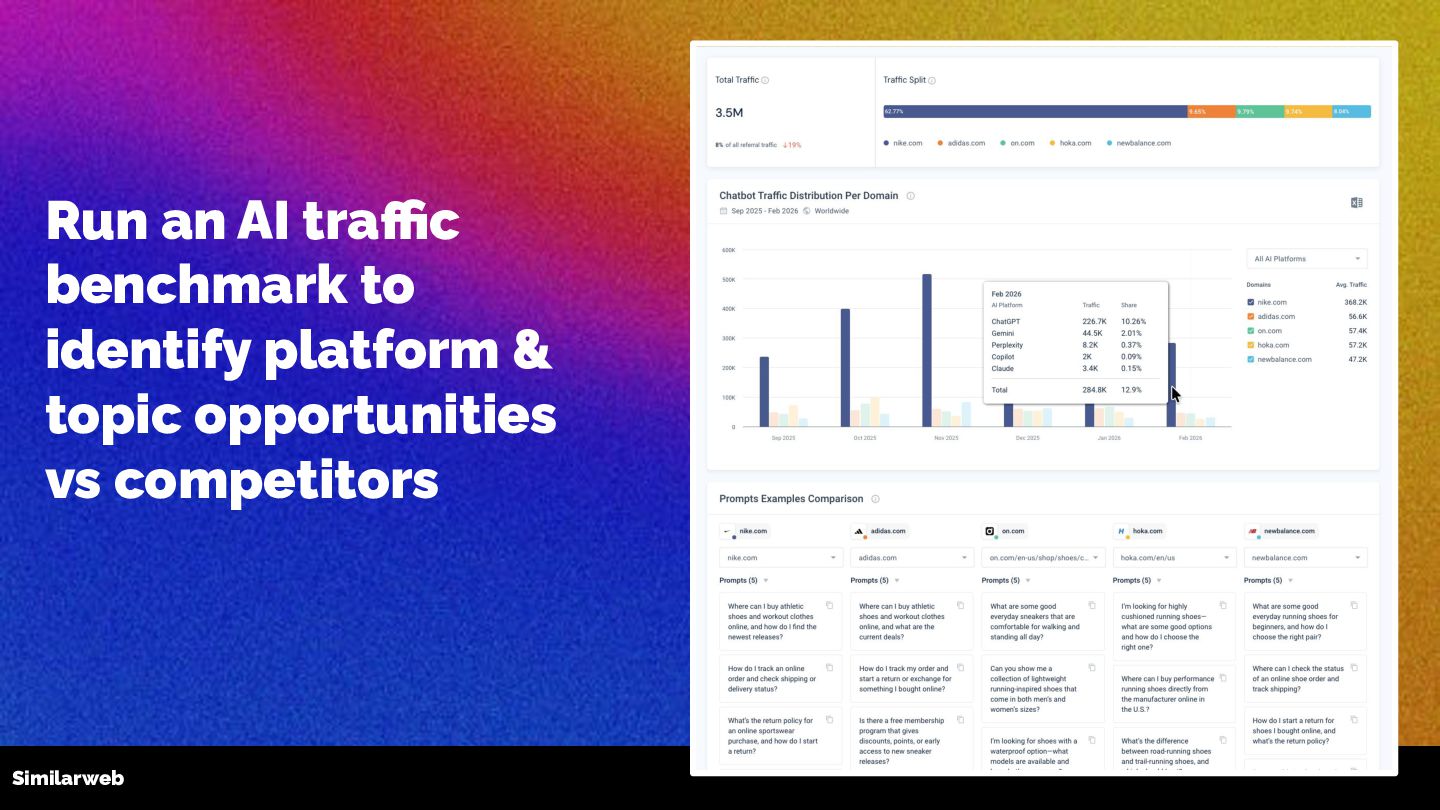
Similarweb Run an AI traffic benchmark to identify platform &
topic opportunities vs competitors -
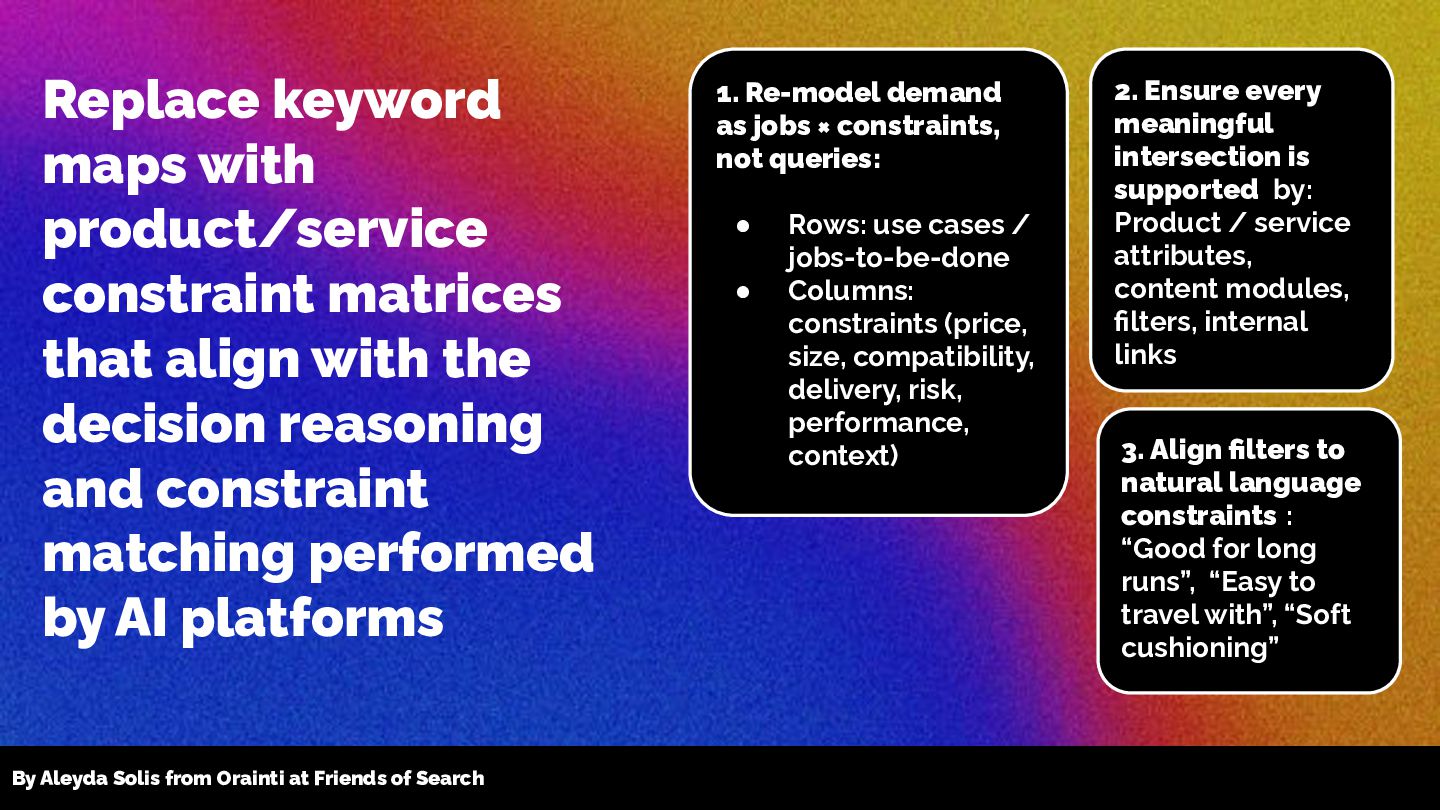
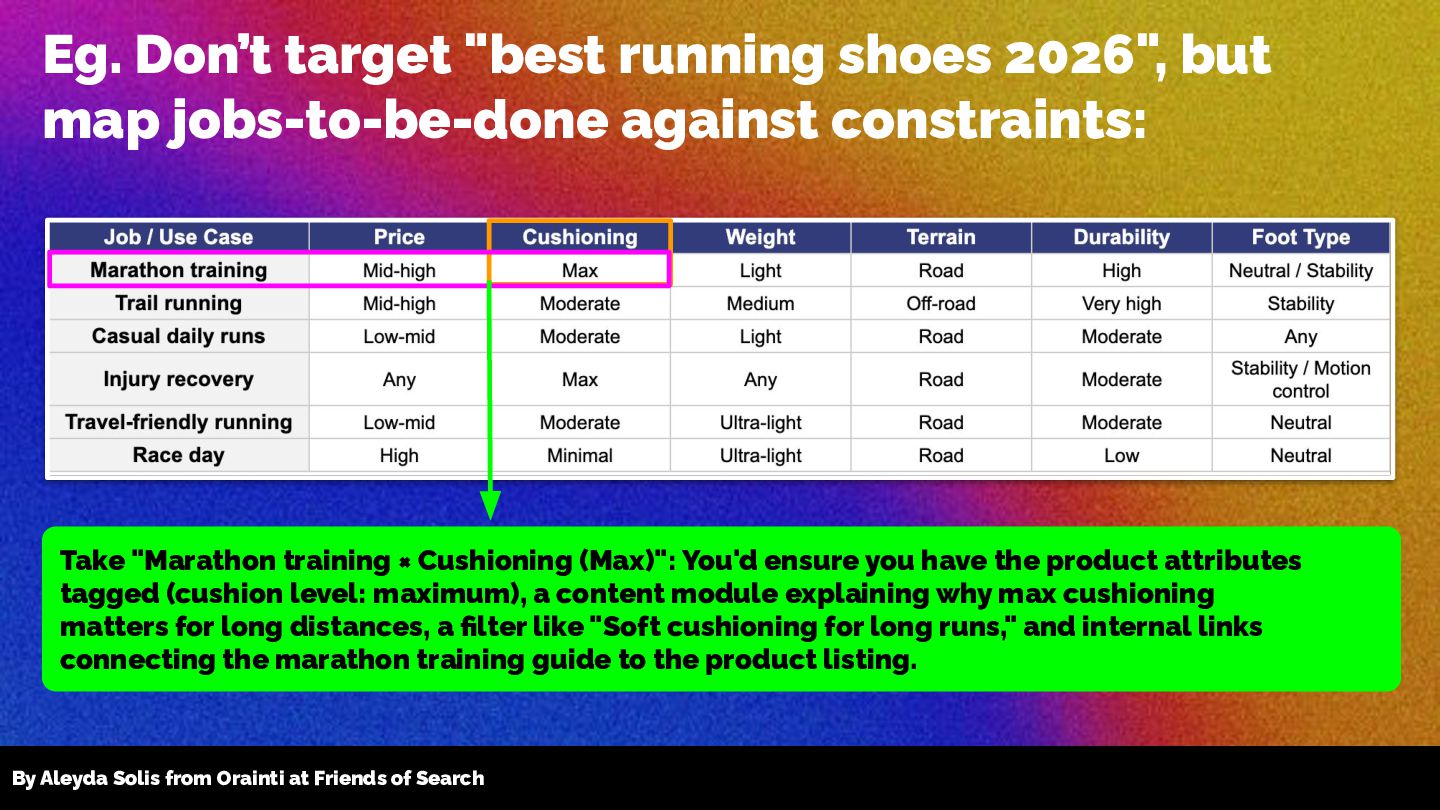
Replace keyword maps with product/service constraint matrices that align with
the decision reasoning and constraint matching performed by AI platforms 1. Re-model demand as jobs × constraints, not queries: • Rows: use cases / jobs-to-be-done • Columns: constraints (price, size, compatibility, delivery, risk, performance, context) 2. Ensure every meaningful intersection is supported by: Product / service attributes, content modules, filters, internal links 3. Align filters to natural language constraints : “Good for long runs”, “Easy to travel with”, “Soft cushioning” By Aleyda Solis from Orainti at Friends of Search -
By Aleyda Solis from Orainti at Friends of Search Eg.
Don’t target "best running shoes 2026", but map jobs-to-be-done against constraints: Take "Marathon training × Cushioning (Max)": You'd ensure you have the product attributes tagged (cushion level: maximum), a content module explaining why max cushioning matters for long distances, a filter like "Soft cushioning for long runs," and internal links connecting the marathon training guide to the product listing. -
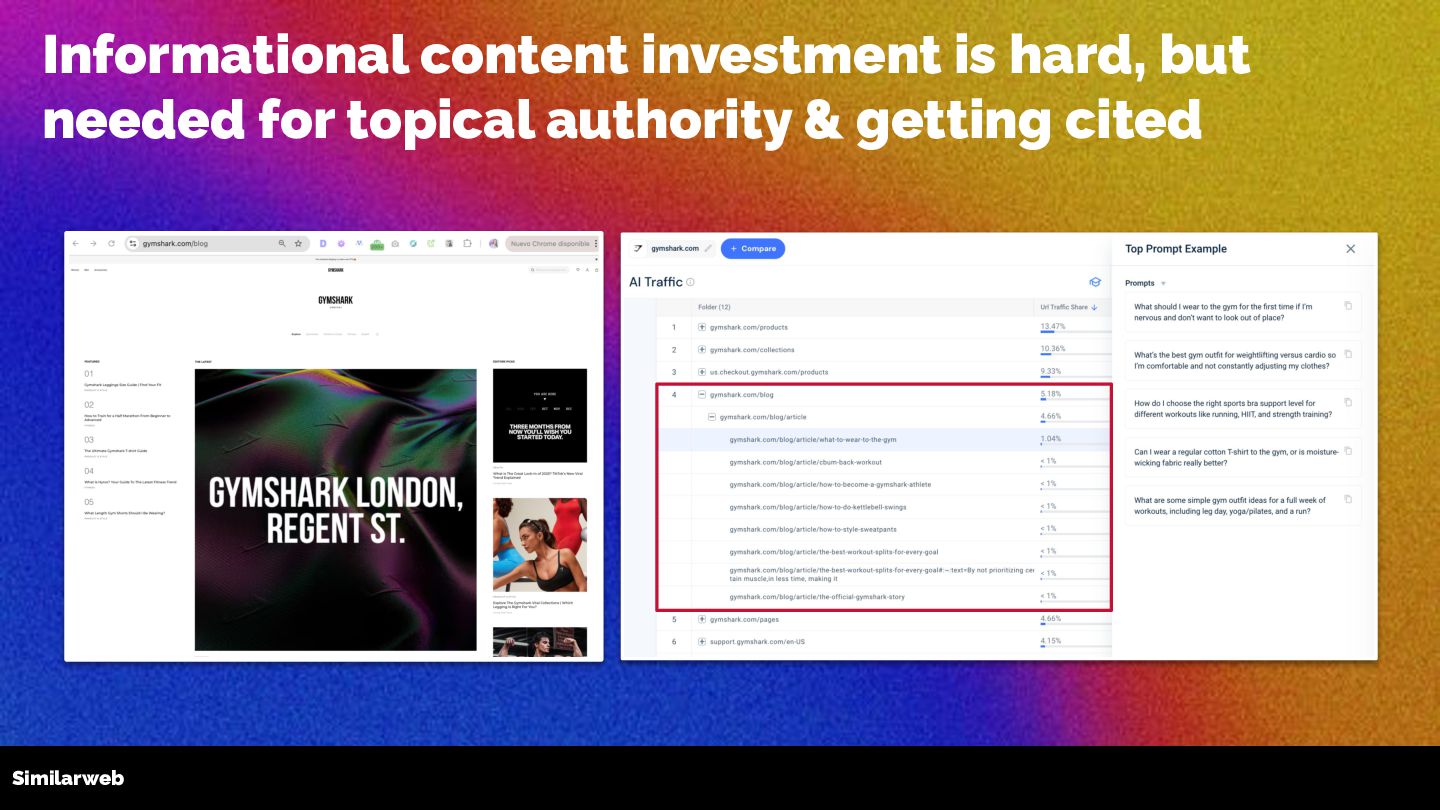
Similarweb Informational content investment is hard, but needed for topical
authority & getting cited -
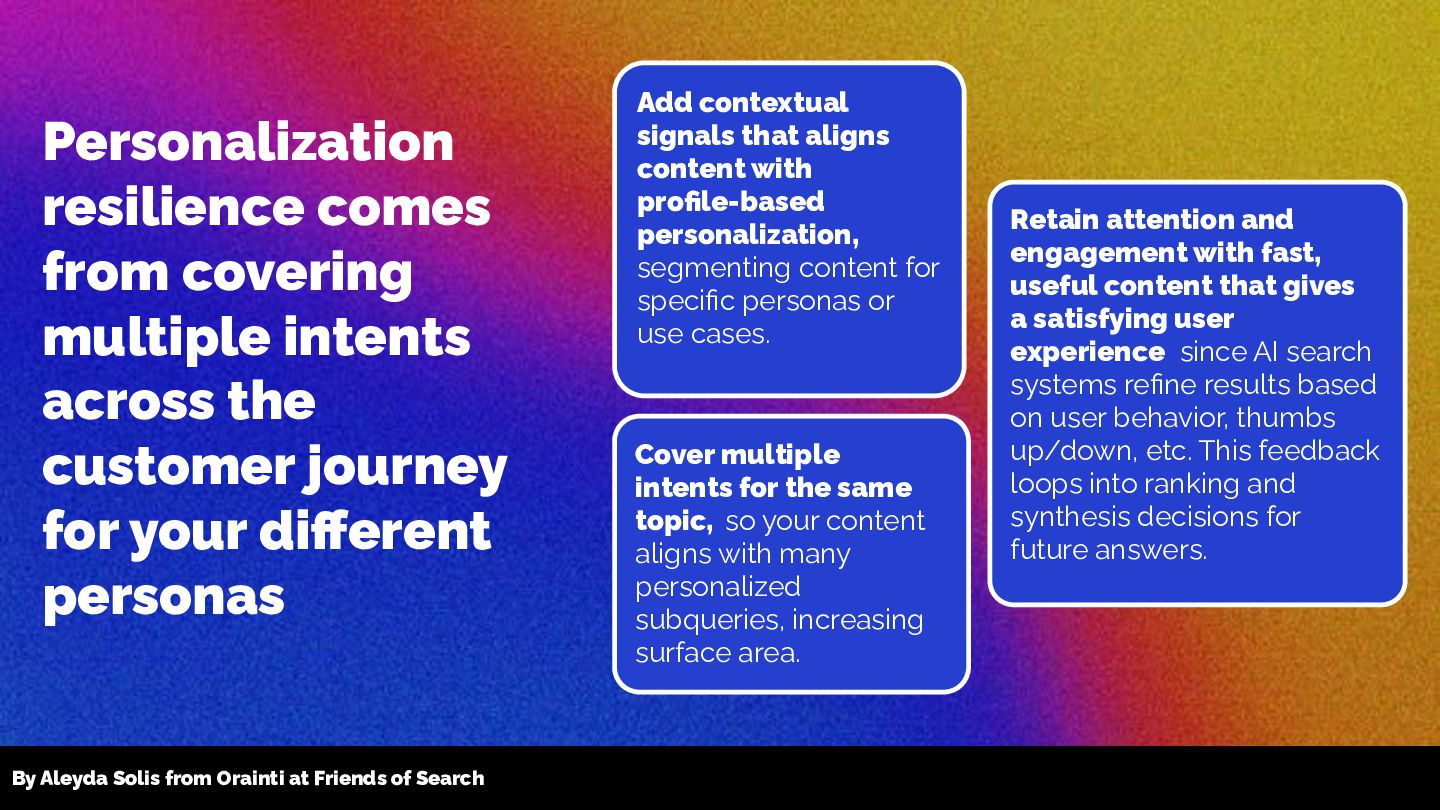
Cover multiple intents for the same topic, so your content
aligns with many personalized subqueries, increasing surface area. Add contextual signals that aligns content with profile-based personalization, segmenting content for specific personas or use cases. Retain attention and engagement with fast, useful content that gives a satisfying user experience since AI search systems refine results based on user behavior, thumbs up/down, etc. This feedback loops into ranking and synthesis decisions for future answers. Personalization resilience comes from covering multiple intents across the customer journey for your different personas By Aleyda Solis from Orainti at Friends of Search -
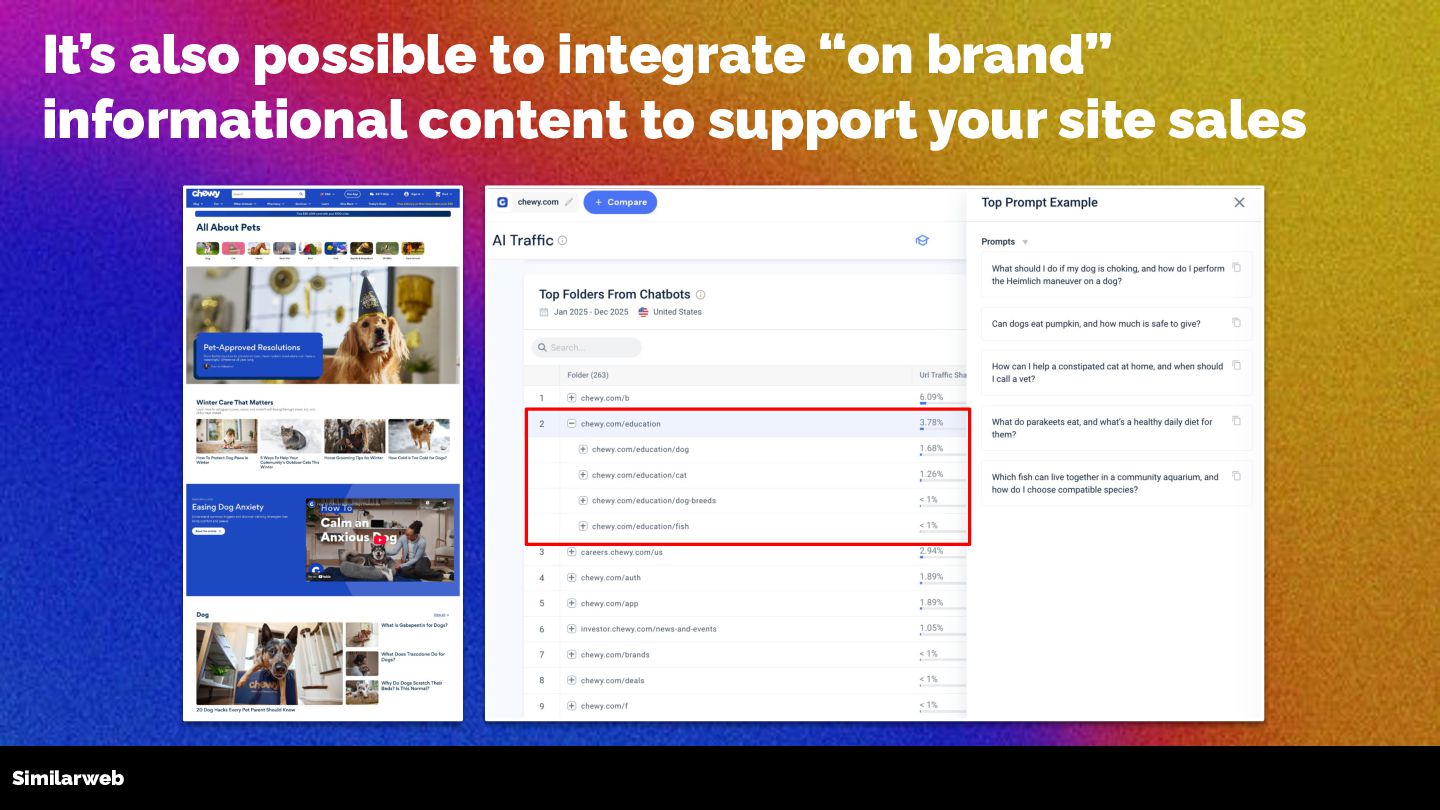
It’s also possible to integrate “on brand” informational content to
support your site sales Similarweb -
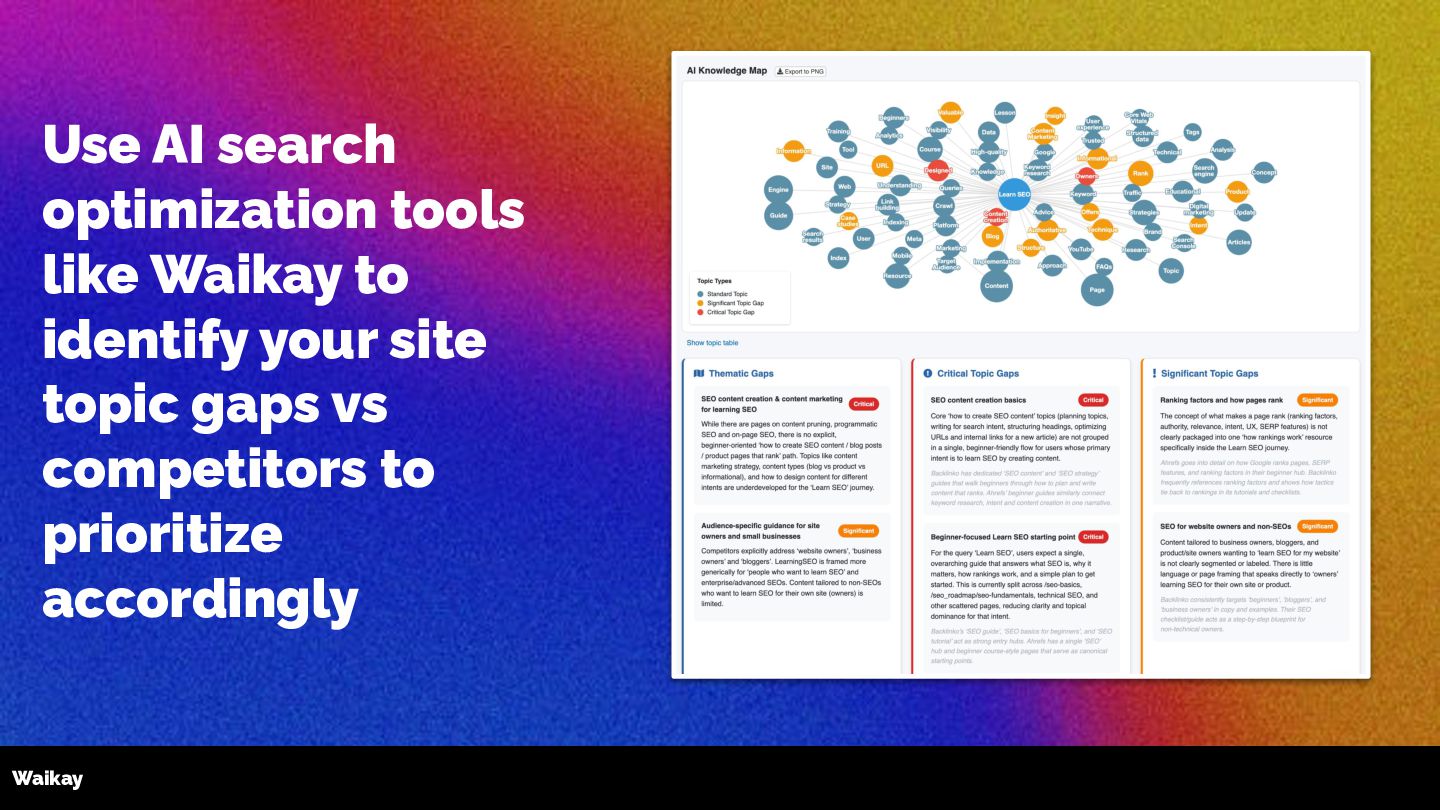
Waikay Use AI search optimization tools like Waikay to identify
your site topic gaps vs competitors to prioritize accordingly -
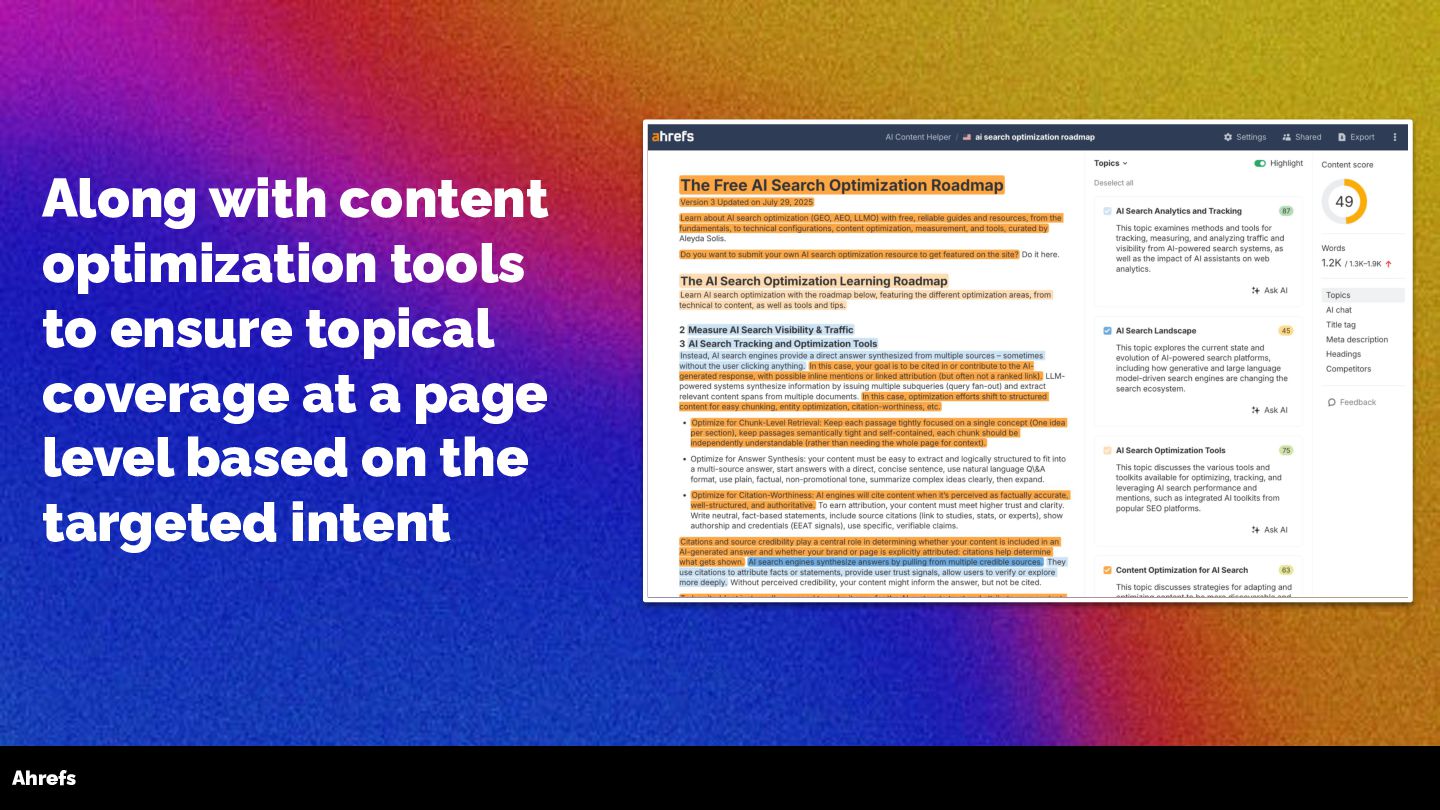
Ahrefs Along with content optimization tools to ensure topical coverage
at a page level based on the targeted intent -
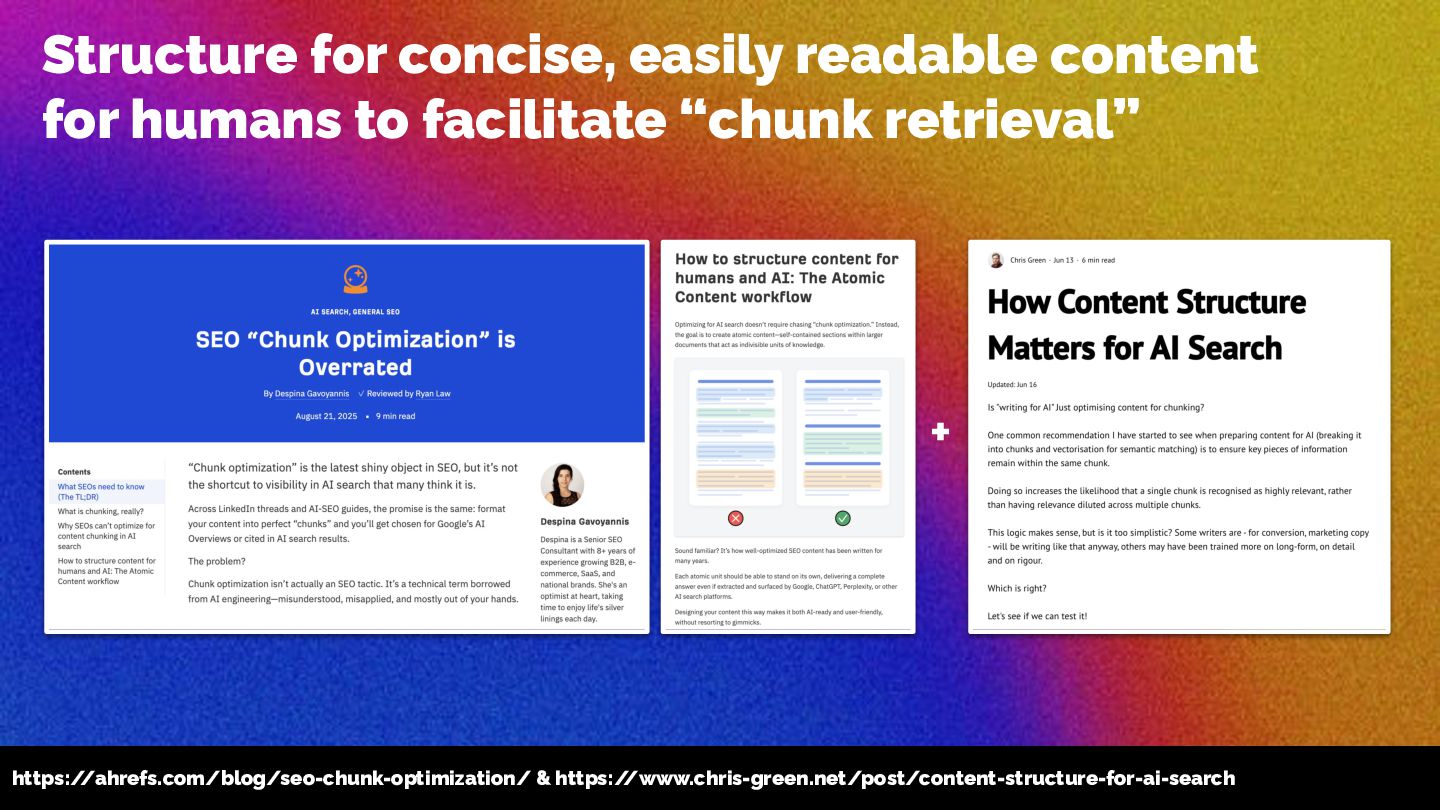
https:/ /ahrefs.com/blog/seo-chunk-optimization/ & https:/ /www.chris-green.net/post/content-structure-for-ai-search Structure for concise, easily readable
content for humans to facilitate “chunk retrieval” + -
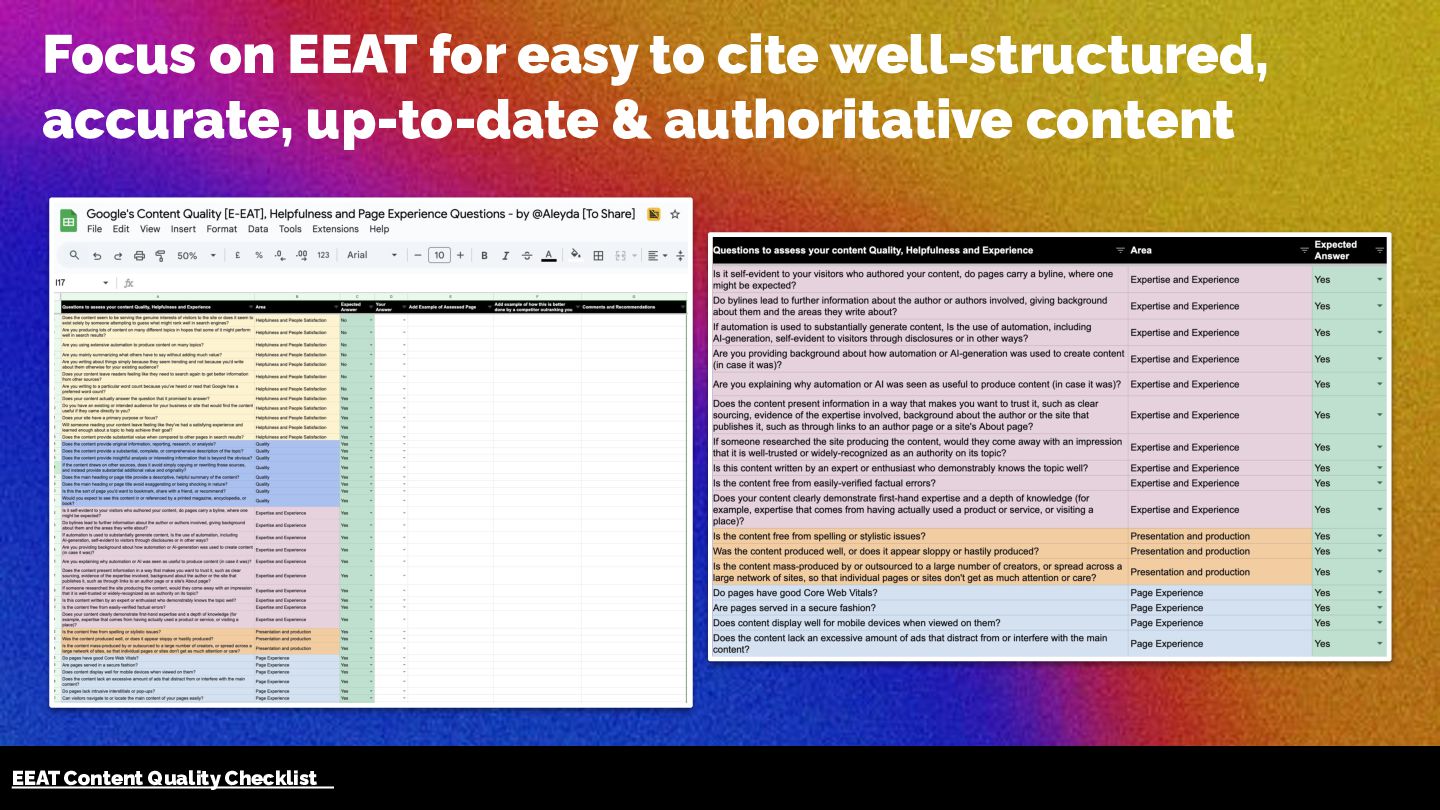
EEAT Content Quality Checklist Focus on EEAT for easy to
cite well-structured, accurate, up-to-date & authoritative content -
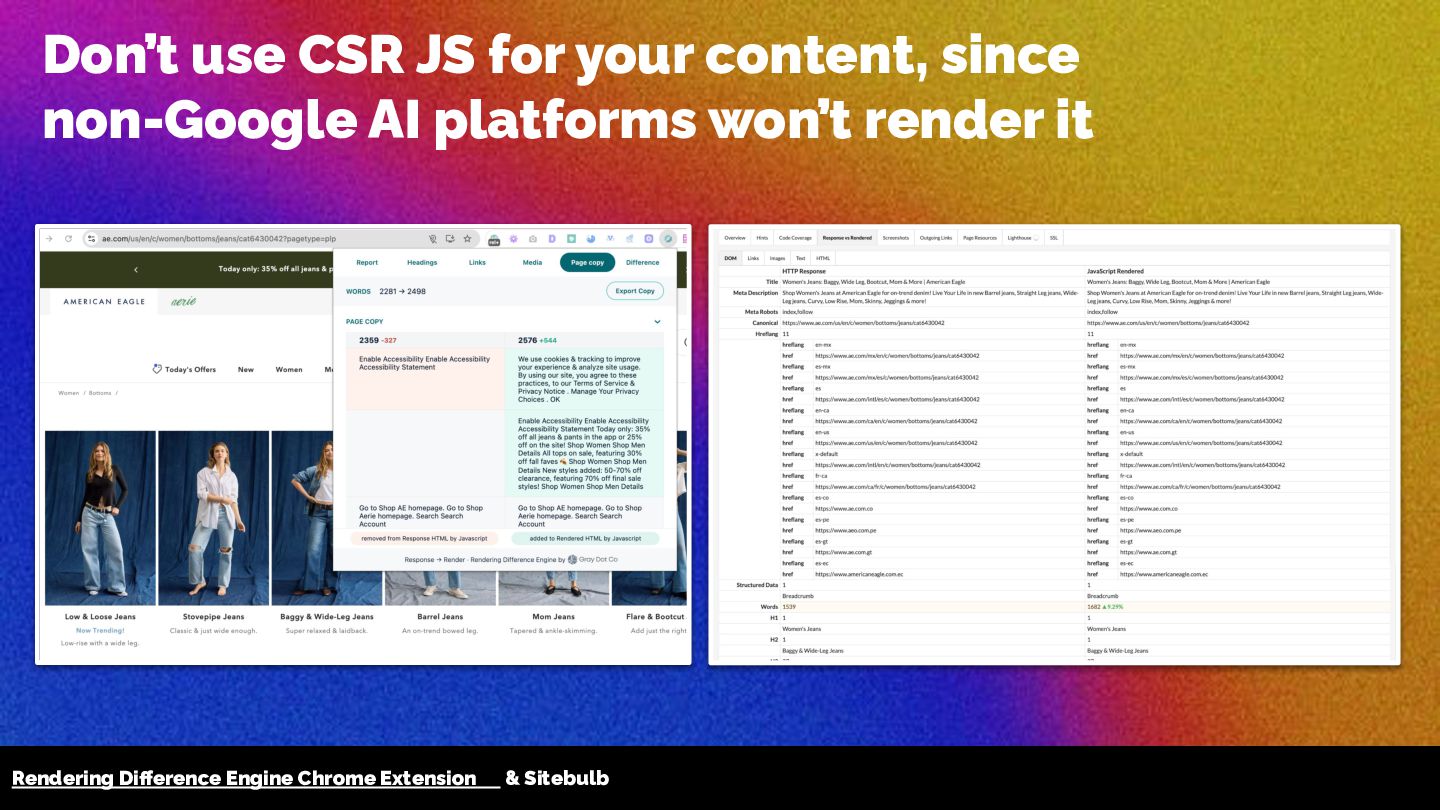
Rendering Difference Engine Chrome Extension & Sitebulb Don’t use CSR
JS for your content, since non-Google AI platforms won’t render it -
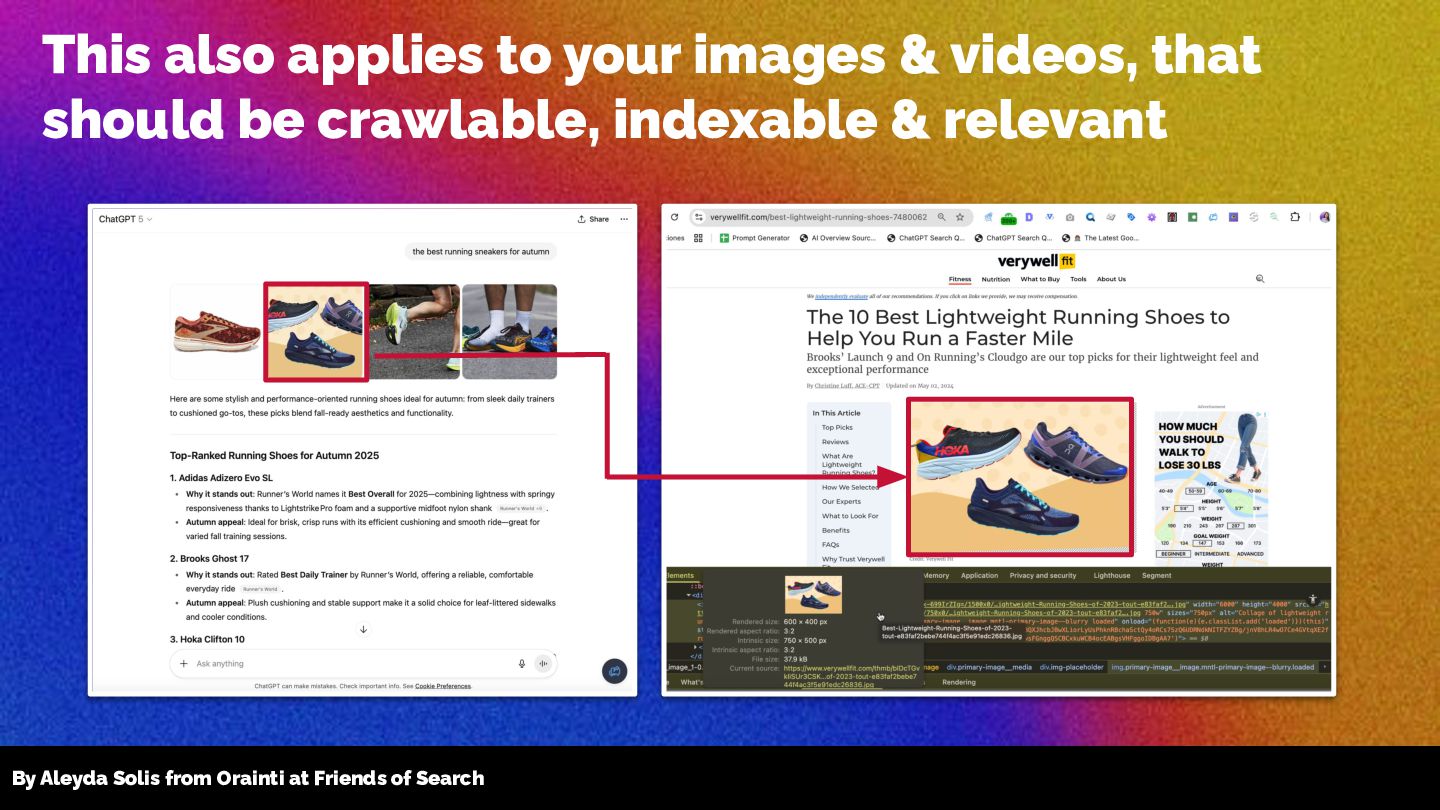
This also applies to your images & videos, that should
be crawlable, indexable & relevant By Aleyda Solis from Orainti at Friends of Search -
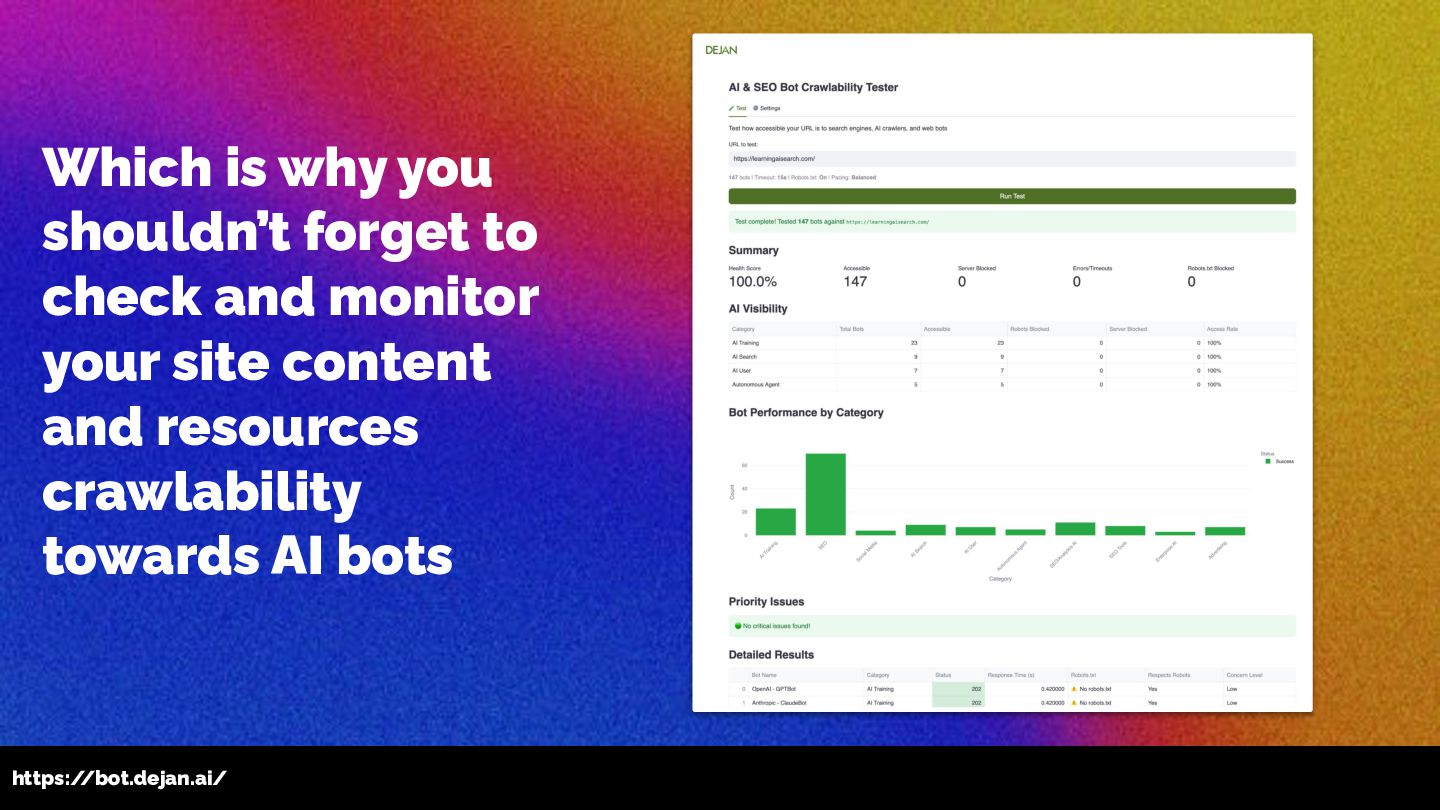
Which is why you shouldn’t forget to check and monitor
your site content and resources crawlability towards AI bots https:/ /bot.dejan.ai/ -
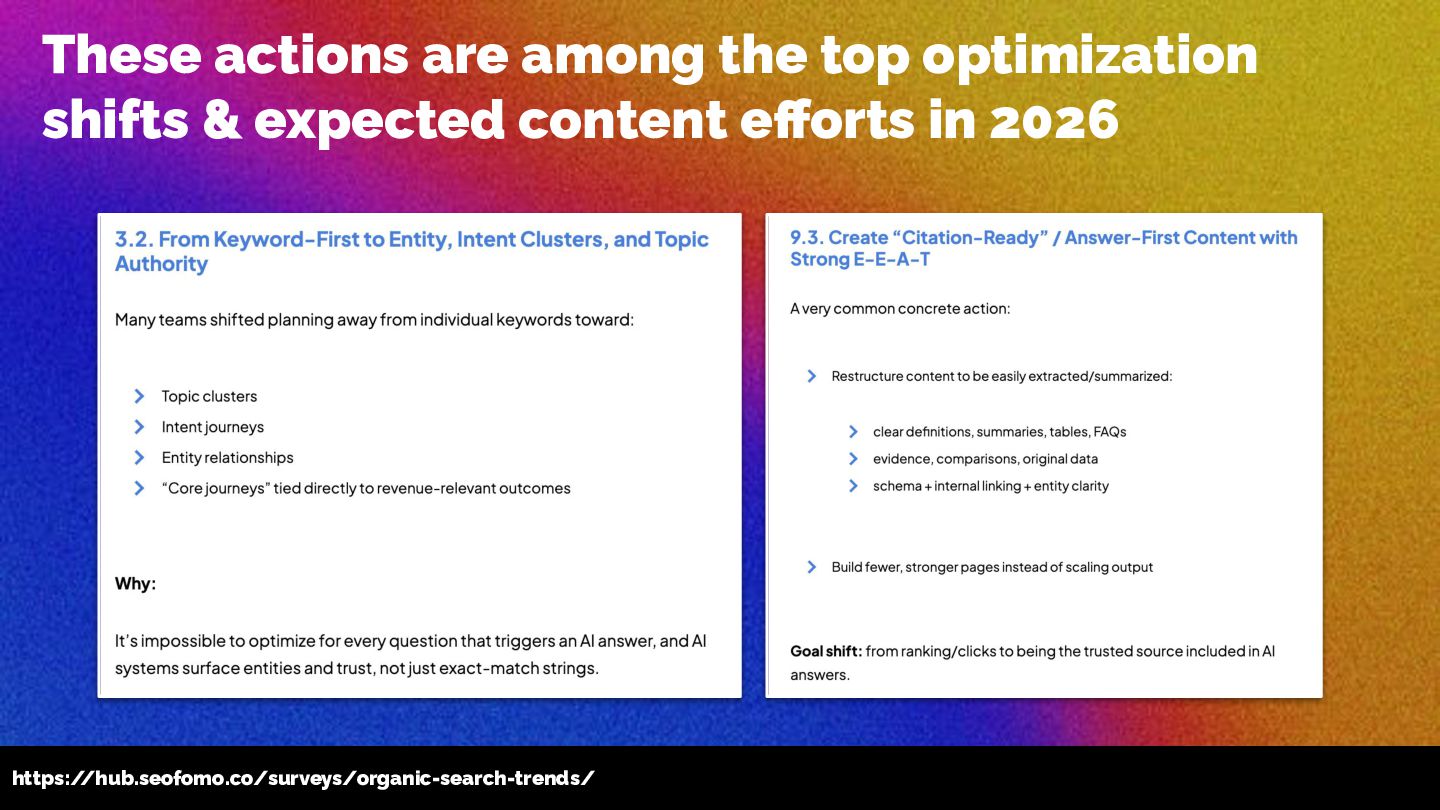
https:/ /hub.seofomo.co/surveys/organic-search-trends/ These actions are among the top optimization shifts
& expected content efforts in 2026 -
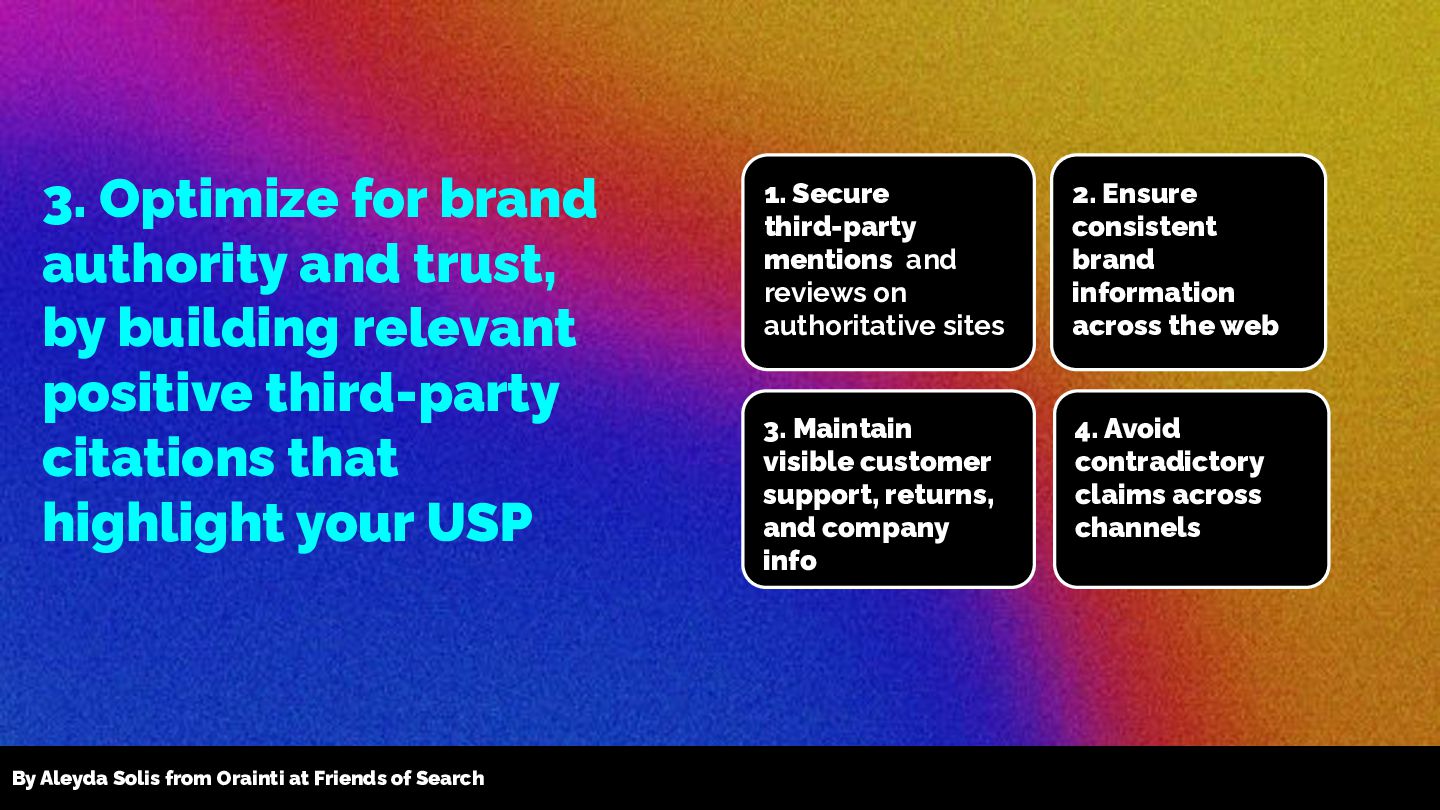
3. Optimize for brand authority and trust, by building relevant
positive third-party citations that highlight your USP 1. Secure third-party mentions and reviews on authoritative sites 2. Ensure consistent brand information across the web 3. Maintain visible customer support, returns, and company info 4. Avoid contradictory claims across channels By Aleyda Solis from Orainti at Friends of Search -
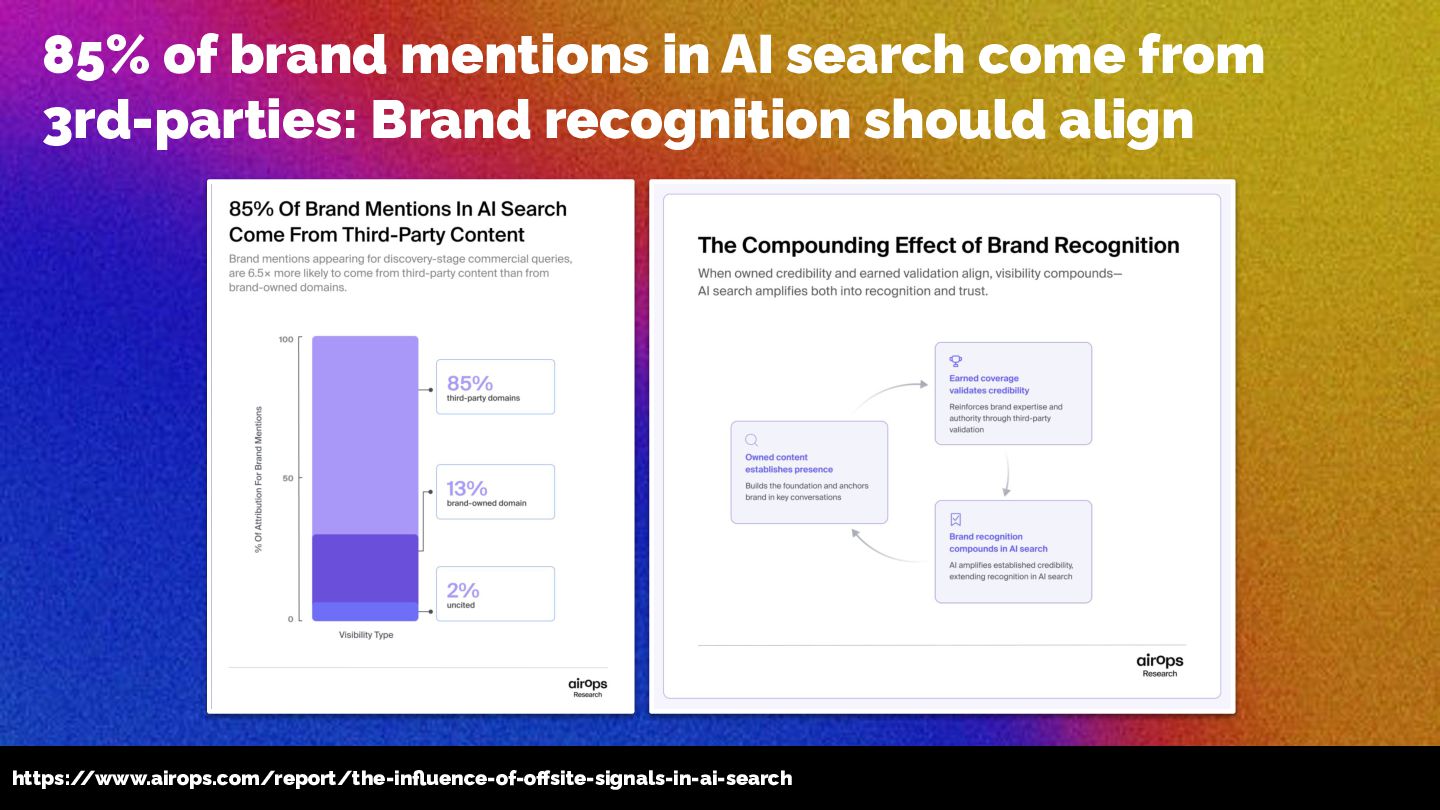
https:/ /www.airops.com/report/the-influence-of-offsite-signals-in-ai-search 85% of brand mentions in AI search come
from 3rd-parties: Brand recognition should align -
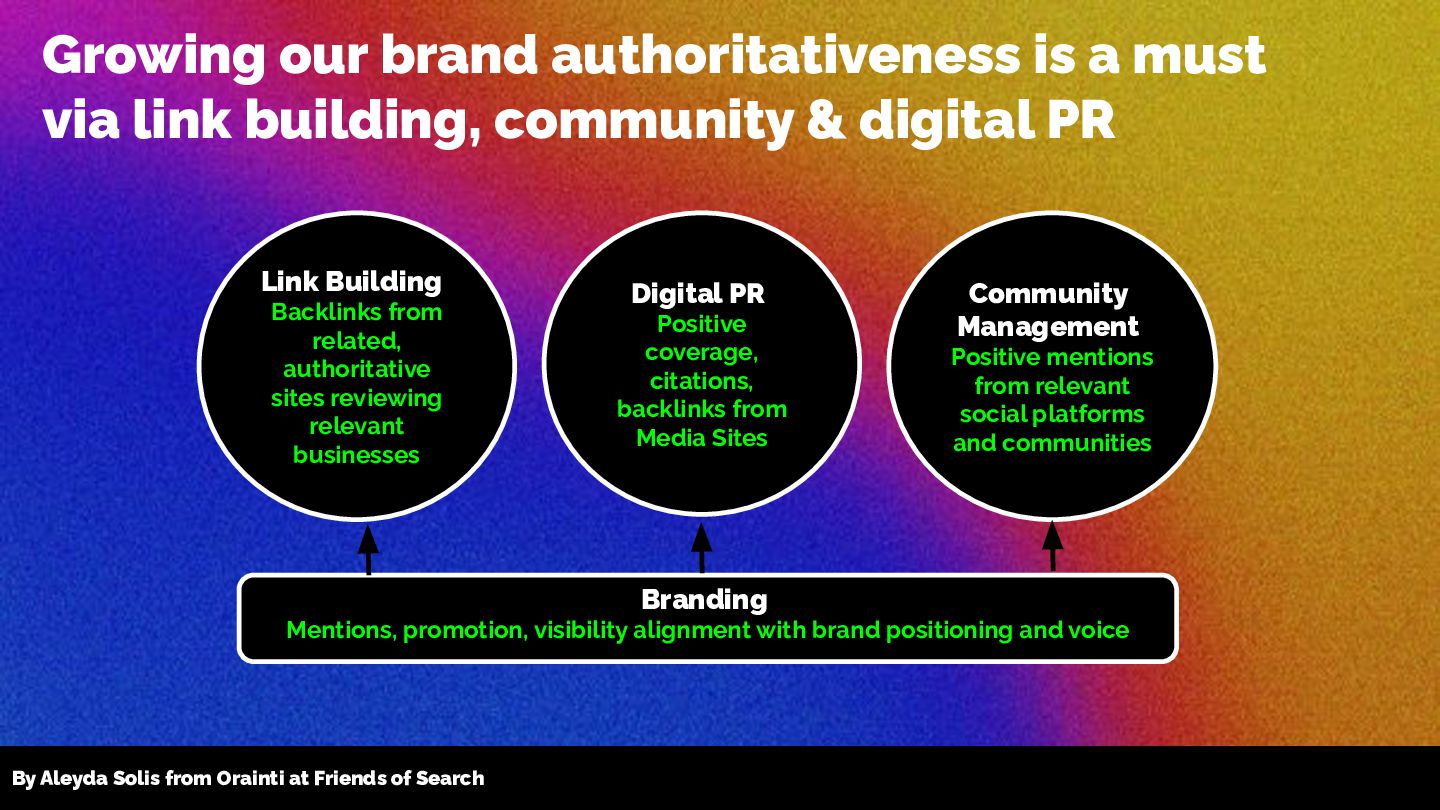
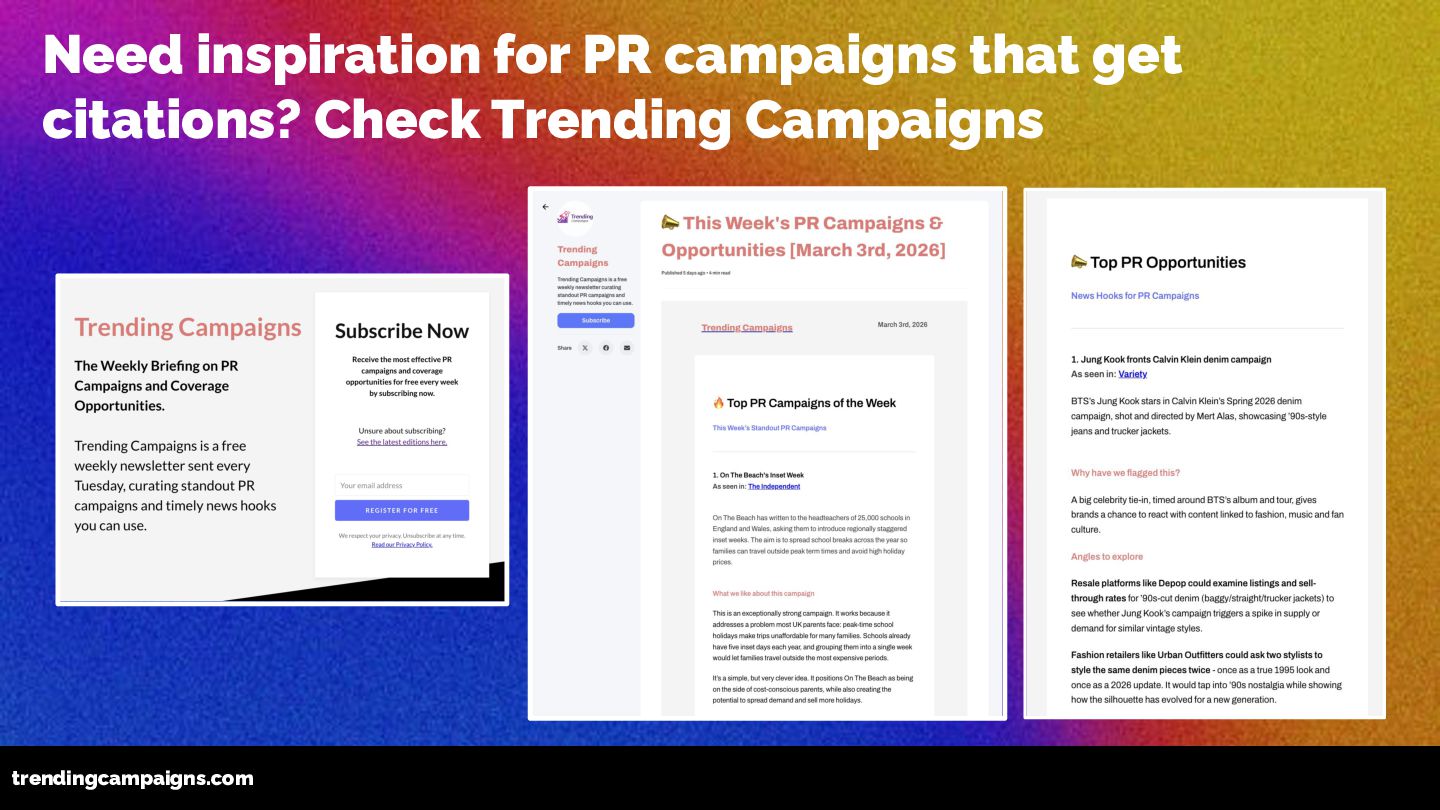
Growing our brand authoritativeness is a must via link building,
community & digital PR Digital PR Positive coverage, citations, backlinks from Media Sites Community Management Positive mentions from relevant social platforms and communities Link Building Backlinks from related, authoritative sites reviewing relevant businesses Branding Mentions, promotion, visibility alignment with brand positioning and voice By Aleyda Solis from Orainti at Friends of Search -
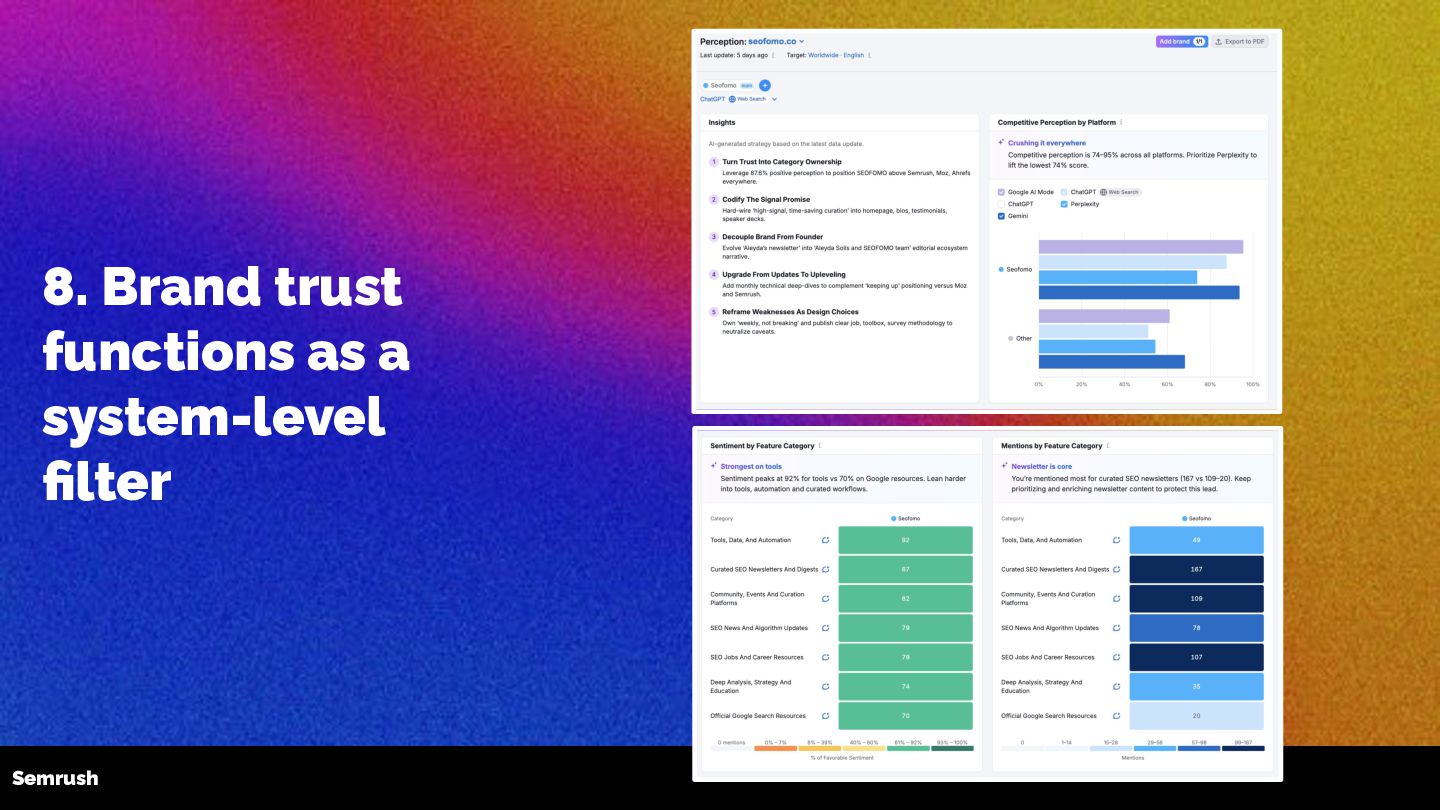
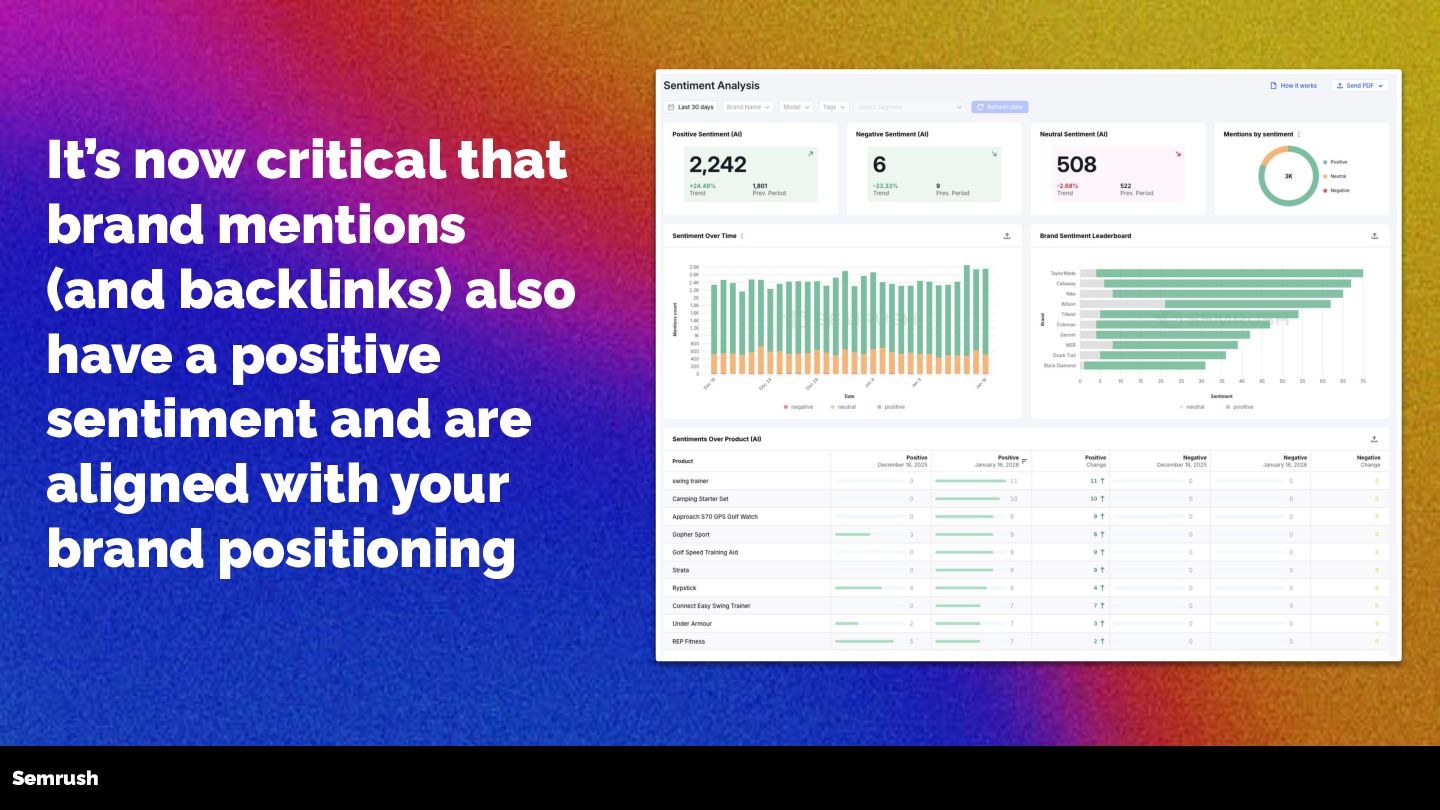
Semrush It’s now critical that brand mentions (and backlinks) also
have a positive sentiment and are aligned with your brand positioning -
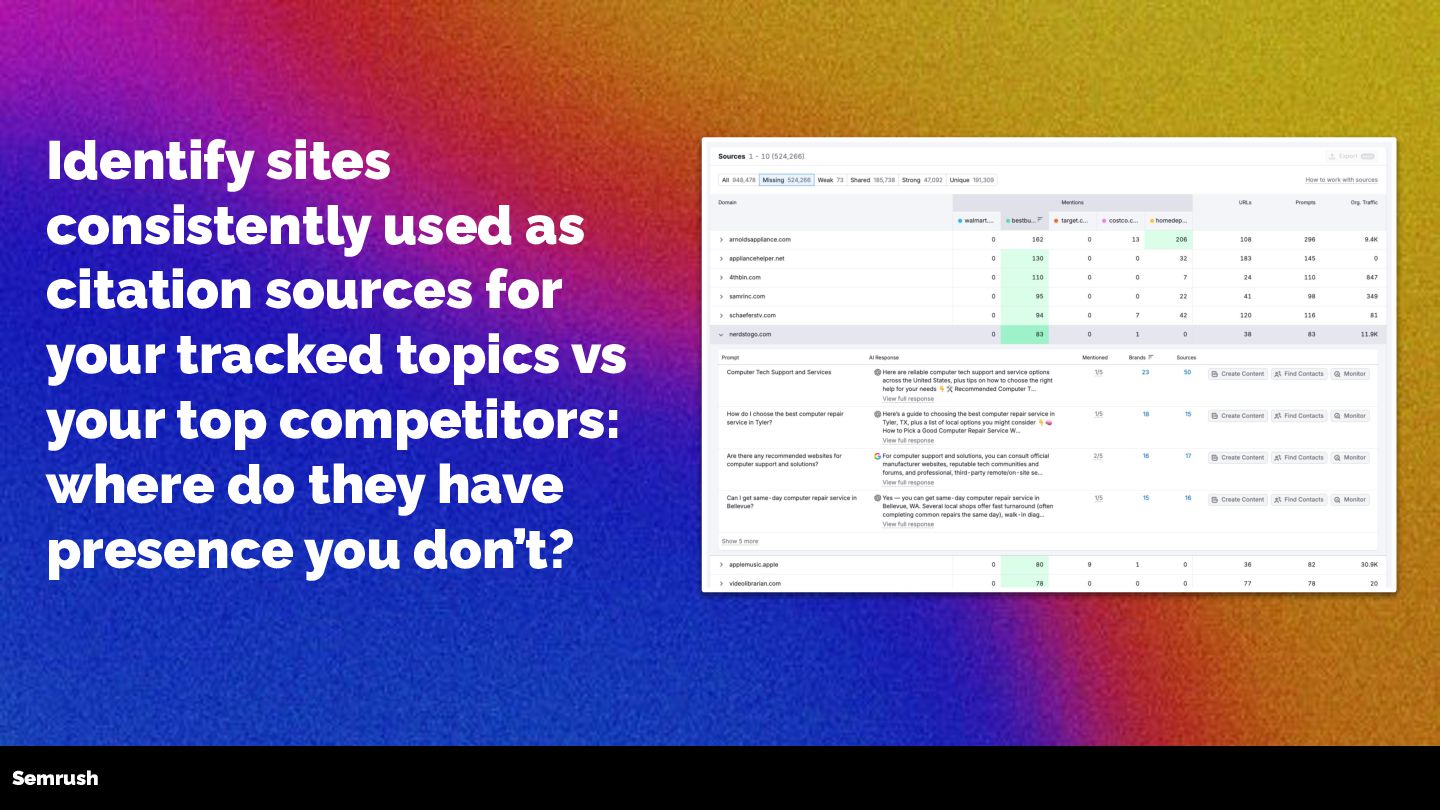
Identify sites consistently used as citation sources for your tracked
topics vs your top competitors: where do they have presence you don’t? Semrush -
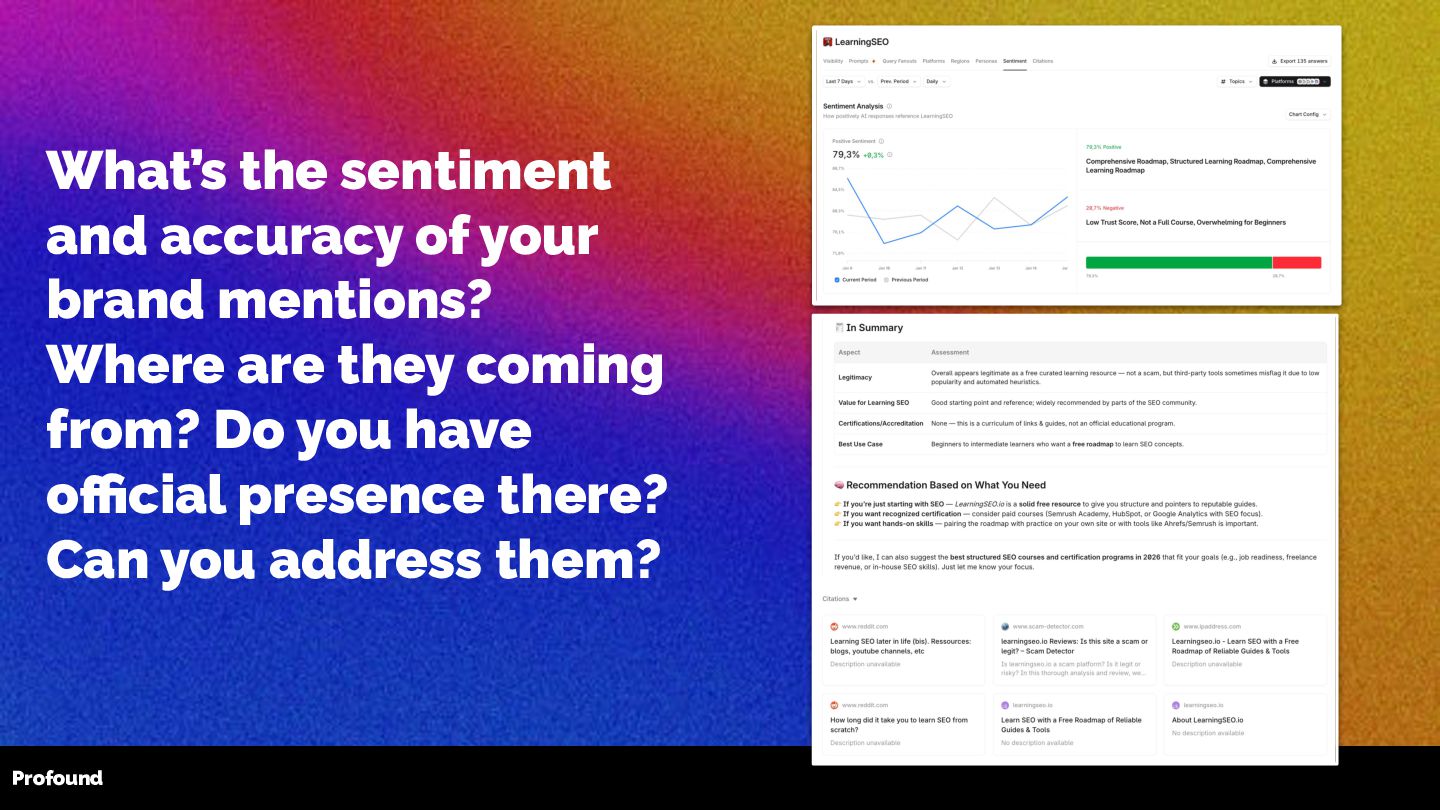
Profound What’s the sentiment and accuracy of your brand mentions?
Where are they coming from? Do you have official presence there? Can you address them? -
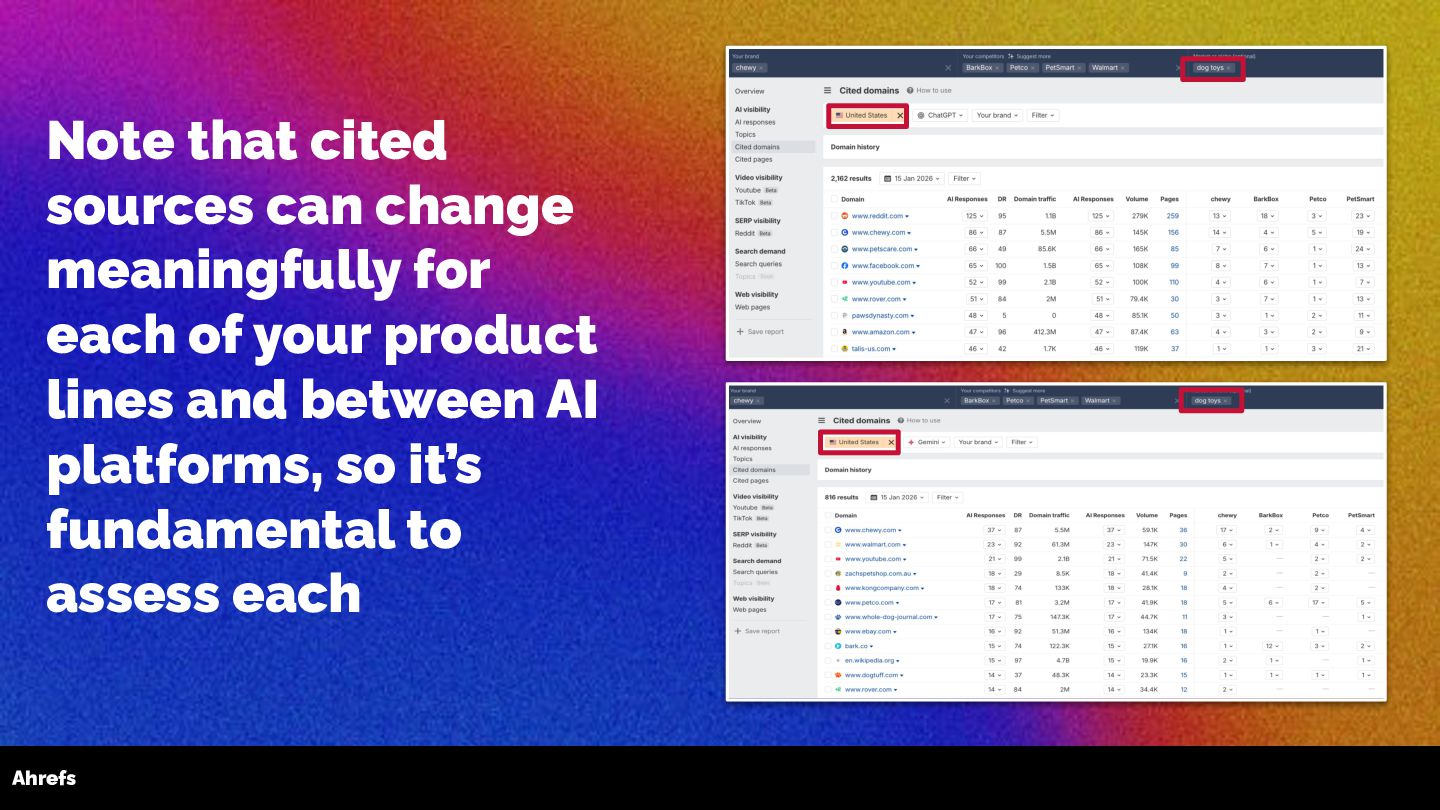
Ahrefs Note that cited sources can change meaningfully for each
of your product lines and between AI platforms, so it’s fundamental to assess each -
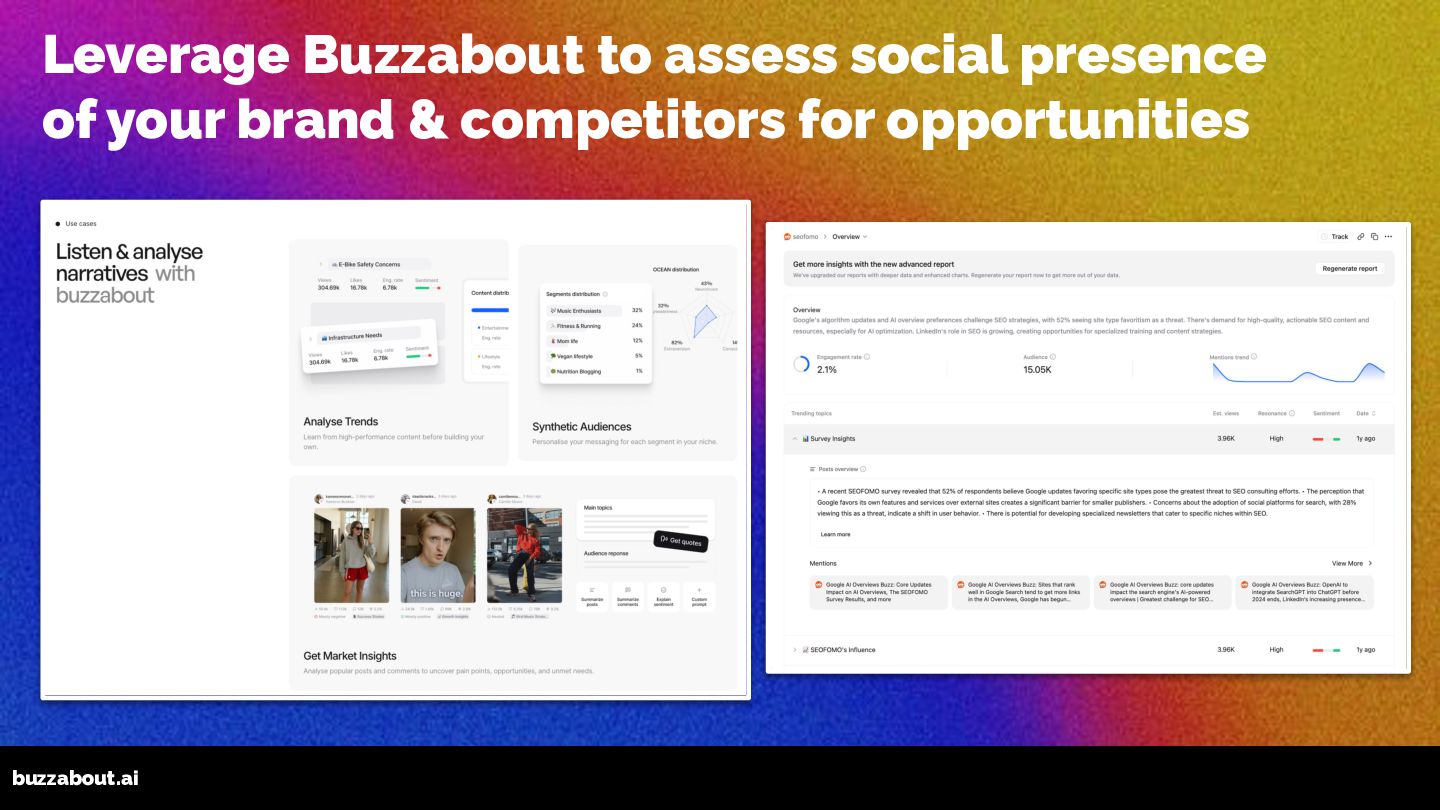
buzzabout.ai Leverage Buzzabout to assess social presence of your brand
& competitors for opportunities -
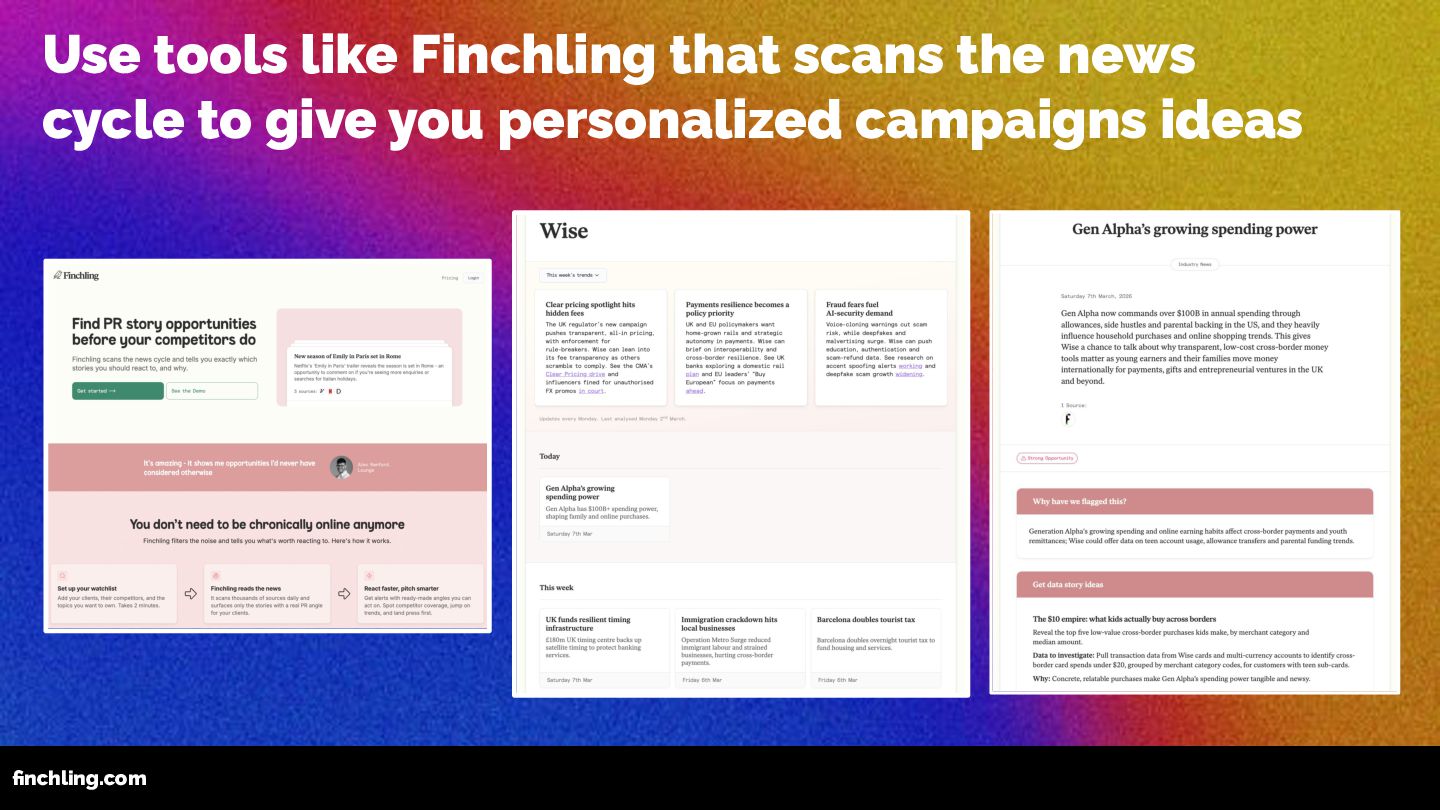
finchling.com Use tools like Finchling that scans the news cycle
to give you personalized campaigns ideas -
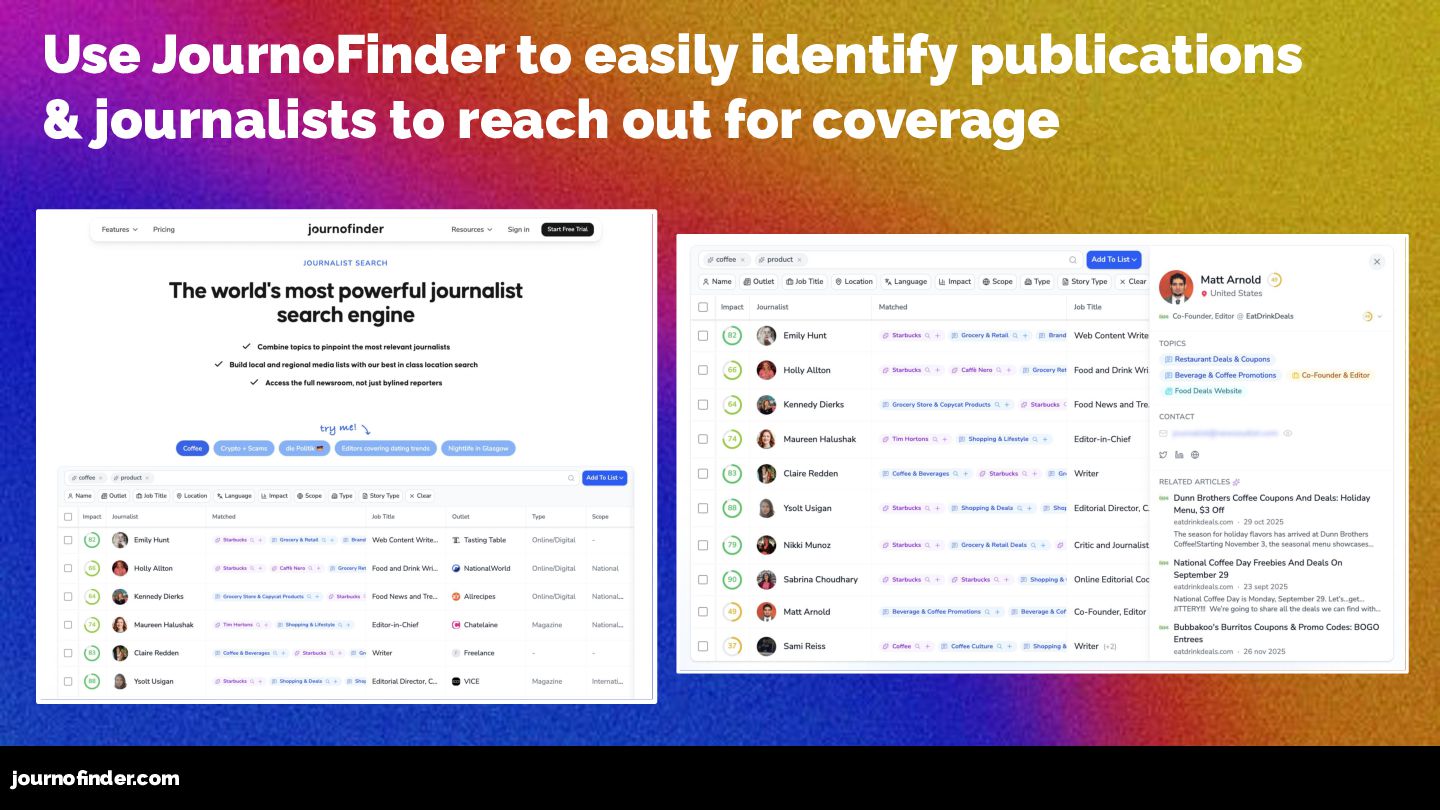
journofinder.com Use JournoFinder to easily identify publications & journalists to
reach out for coverage -
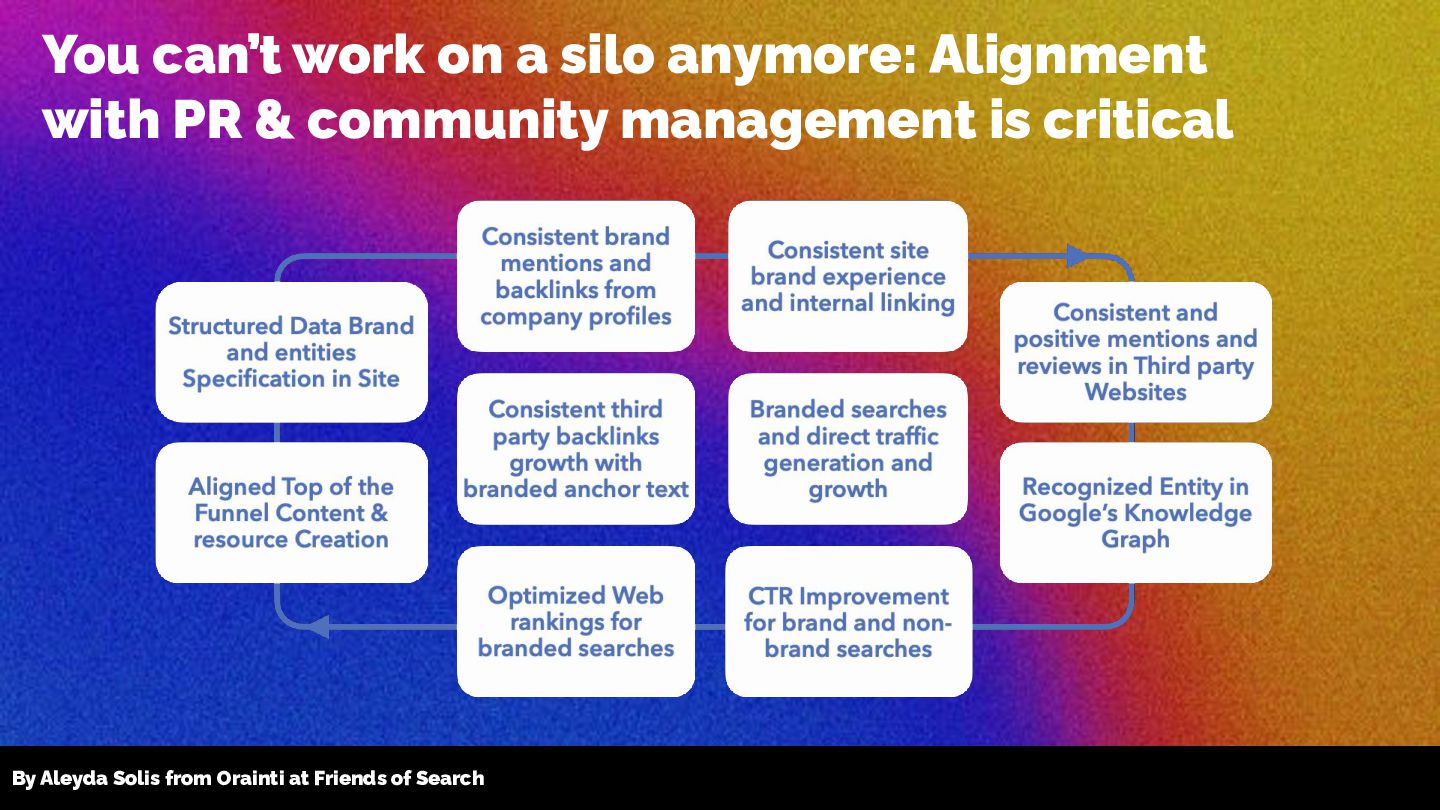
By Aleyda Solis from Orainti at Friends of Search You
can’t work on a silo anymore: Alignment with PR & community management is critical -
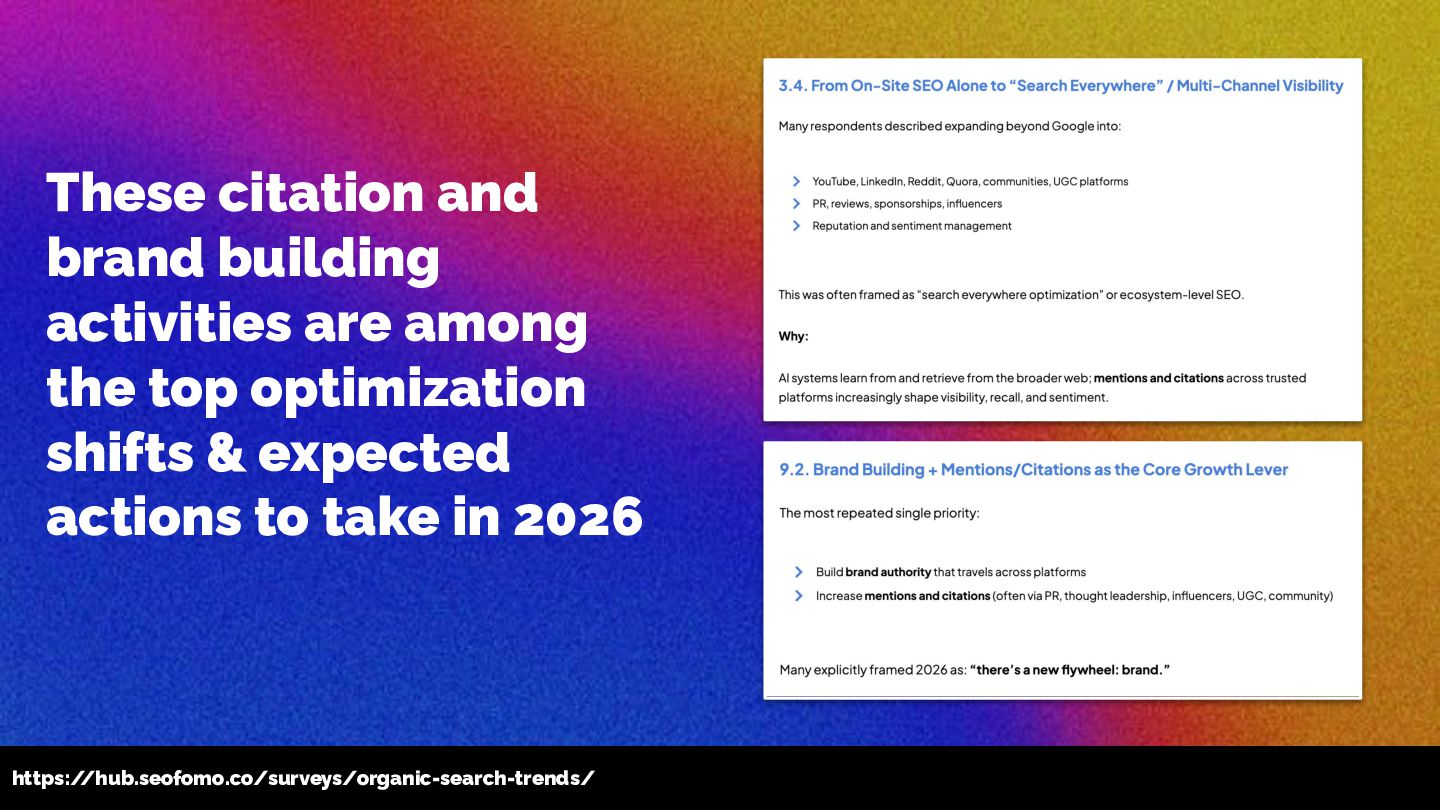
https:/ /hub.seofomo.co/surveys/organic-search-trends/ These citation and brand building activities are among
the top optimization shifts & expected actions to take in 2026 -
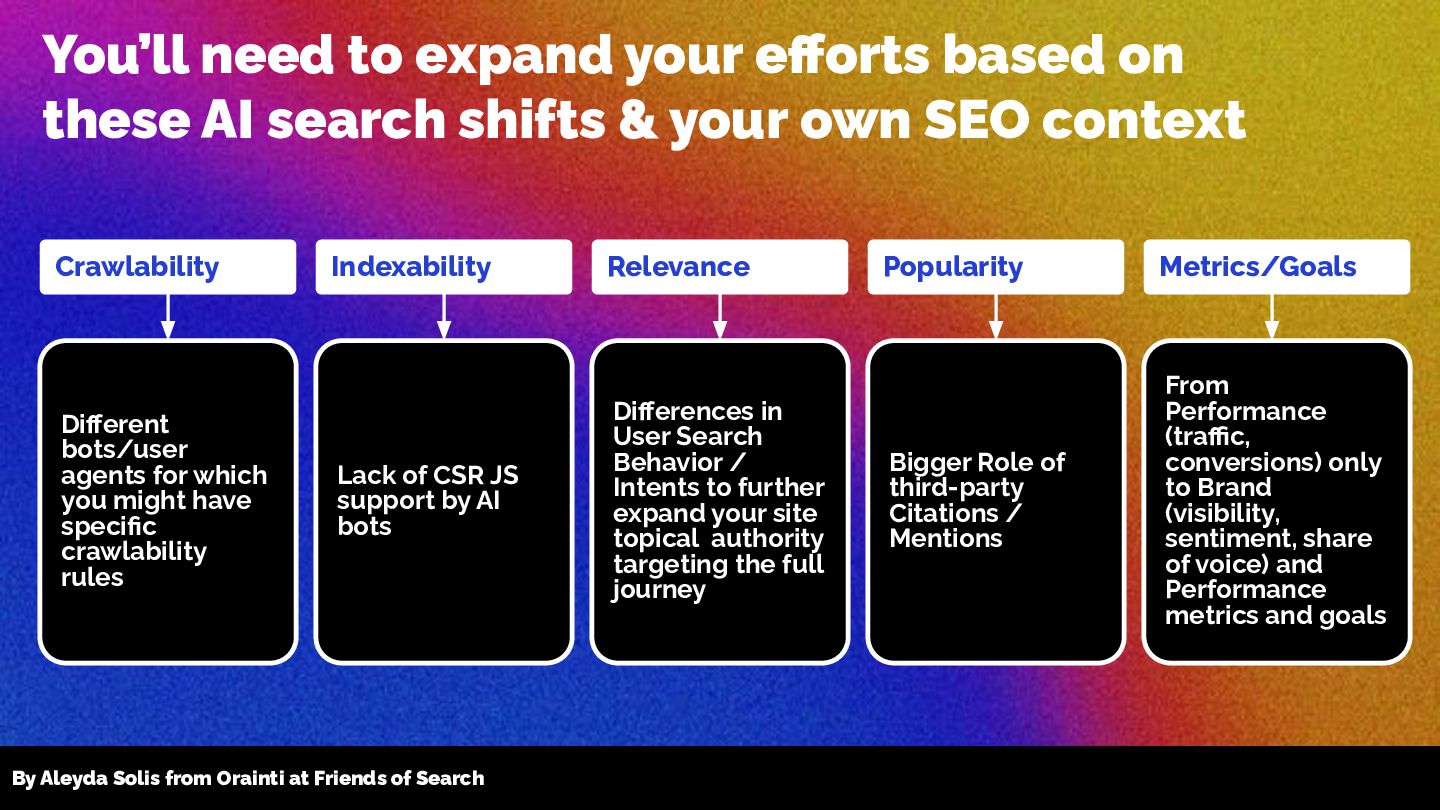
You’ll need to expand your efforts based on these AI
search shifts & your own SEO context Differences in User Search Behavior / Intents to further expand your site topical authority targeting the full journey Bigger Role of third-party Citations / Mentions Different bots/user agents for which you might have specific crawlability rules Lack of CSR JS support by AI bots From Performance (traffic, conversions) only to Brand (visibility, sentiment, share of voice) and Performance metrics and goals Crawlability Indexability Relevance Popularity Metrics/Goals By Aleyda Solis from Orainti at Friends of Search -
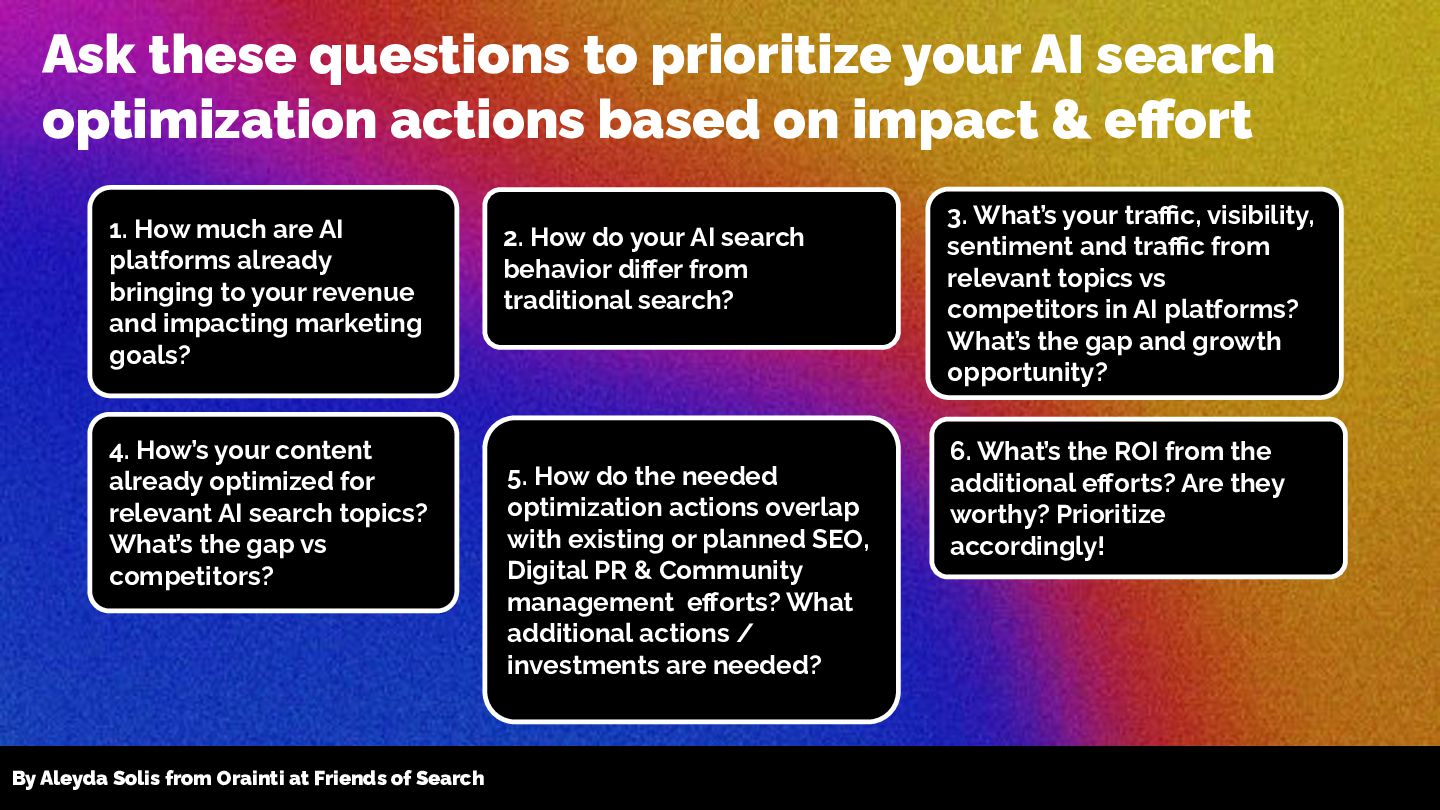
1. How much are AI platforms already bringing to your
revenue and impacting marketing goals? 2. How do your AI search behavior differ from traditional search? 3. What’s your traffic, visibility, sentiment and traffic from relevant topics vs competitors in AI platforms? What’s the gap and growth opportunity? 4. How’s your content already optimized for relevant AI search topics? What’s the gap vs competitors? 5. How do the needed optimization actions overlap with existing or planned SEO, Digital PR & Community management efforts? What additional actions / investments are needed? 6. What’s the ROI from the additional efforts? Are they worthy? Prioritize accordingly! Ask these questions to prioritize your AI search optimization actions based on impact & effort By Aleyda Solis from Orainti at Friends of Search -
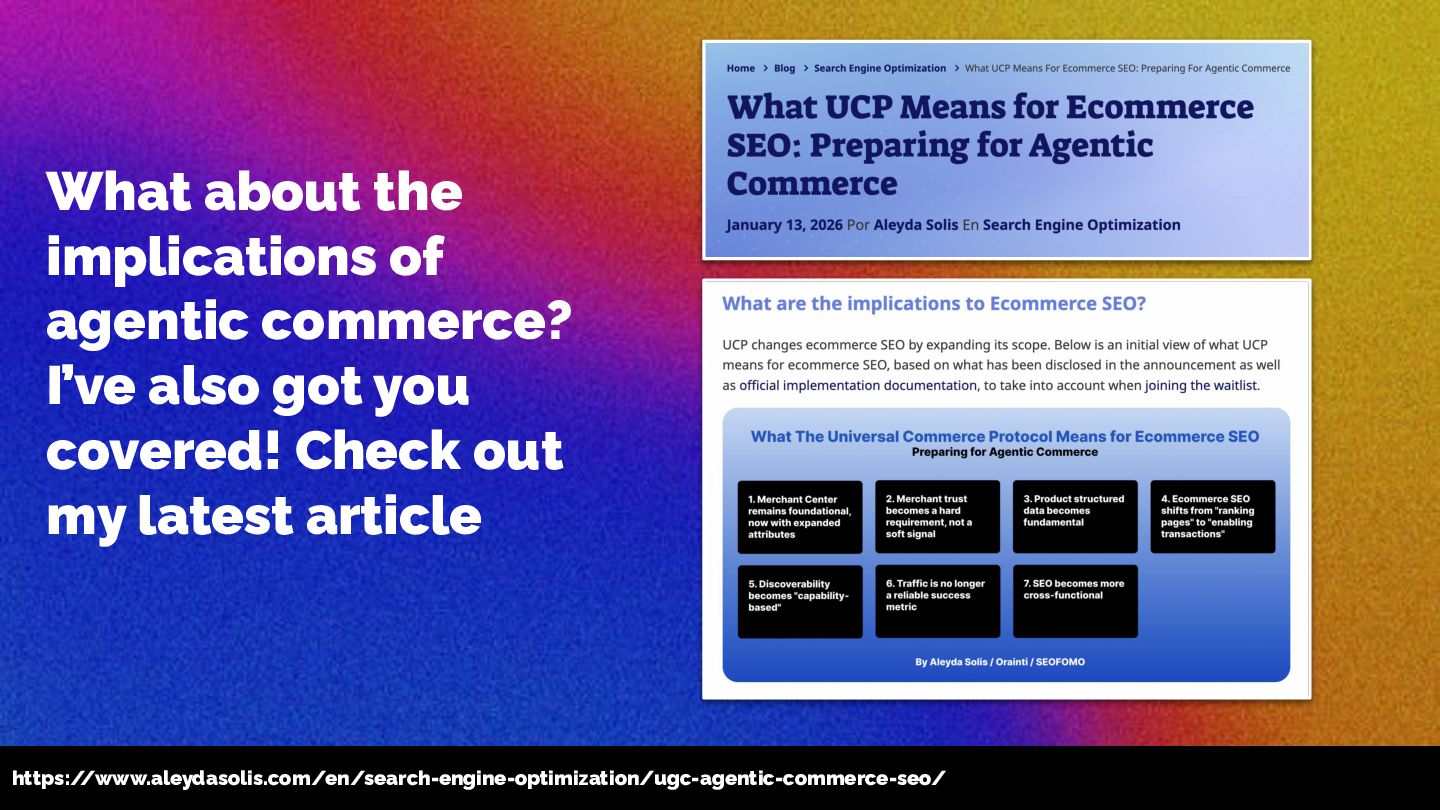
https:/ /www.aleydasolis.com/en/search-engine-optimization/ugc-agentic-commerce-seo/ What about the implications of agentic commerce? I’ve
also got you covered! Check out my latest article -
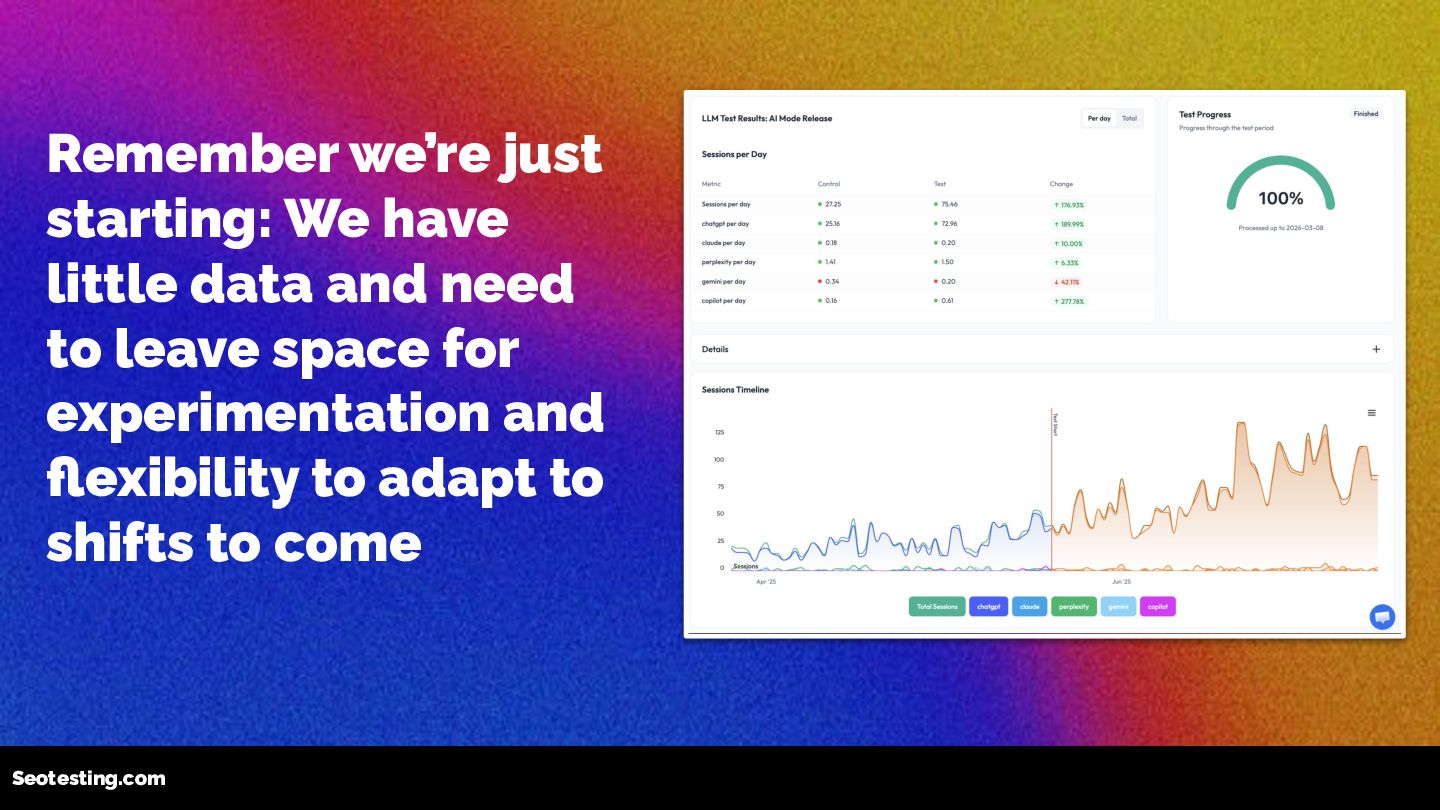
Remember we’re just starting: We have little data and need
to leave space for experimentation and flexibility to adapt to shifts to come Seotesting.com -
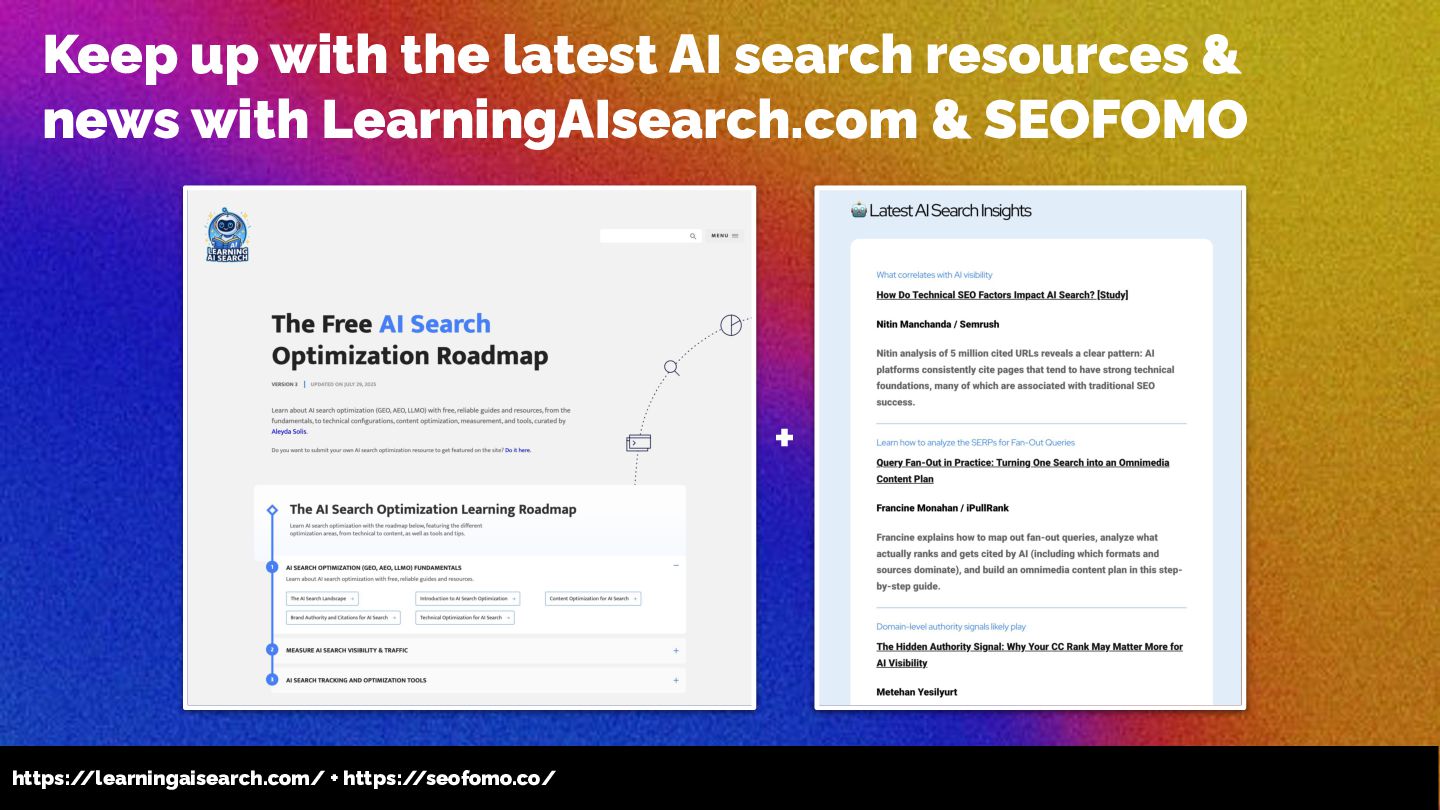
https:/ /learningaisearch.com/ + https:/ /seofomo.co/ Keep up with the latest
AI search resources & news with LearningAIsearch.com & SEOFOMO + -
By Aleyda Solis from Orainti at Friends of Search Long
Live SEO for [AI Search / AI Mode / ChatGPT / TikTok / YouTube / Baidu / Any Platform Used for Search] -
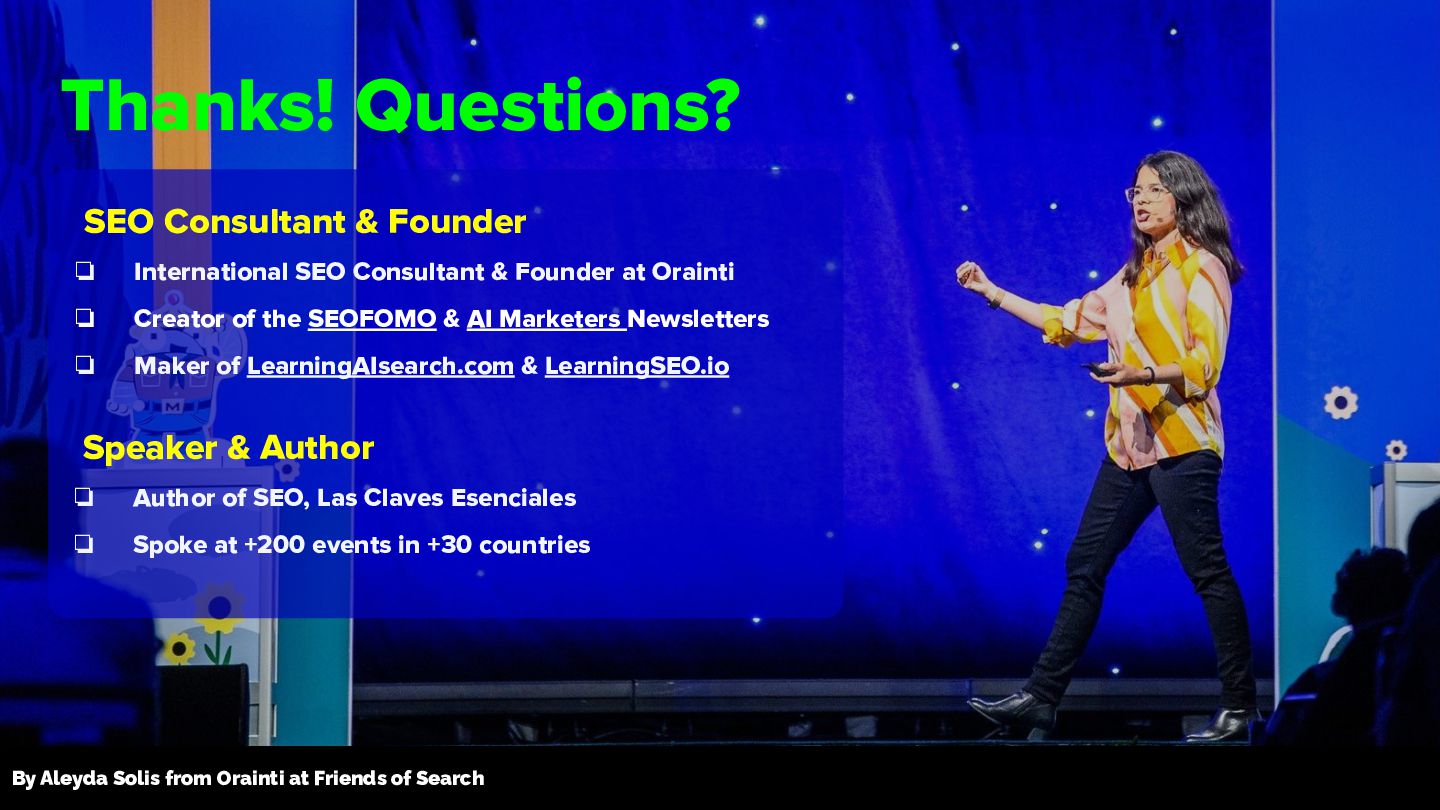
Thanks! Questions? SEO Consultant & Founder ❏ International SEO Consultant
& Founder at Orainti ❏ Creator of the SEOFOMO & AI Marketers Newsletters ❏ Maker of LearningAIsearch.com & LearningSEO.io Speaker & Author ❏ Author of SEO, Las Claves Esenciales ❏ Spoke at +200 events in +30 countries By Aleyda Solis from Orainti at Friends of Search
 aleyda
 speedyindexteam
 lisapaasche
 portentint
 marcogiordano96
 pojda
 whitworthseo
 pavelungr
 cargoodrich
 yunheechoi
 decabbit
 axbom
 lcolladotor
 cassininazir
 eileencodes
 jakevdp
 akademiya2063
 destraynor
 signer
 hatefulcrawdad
 chikuwait
 mclloyd