500,000+ lines of C++ code • No automated tests • Pretty poor design • make clean install was taking 20-30 minutes • all the classes were prefixed with “Lin”
bounded contexts in it (e.g. billing, client-facing functionality, internal functionality) • Start extracting those components one by one (rewriting them if this seems highly beneficial)
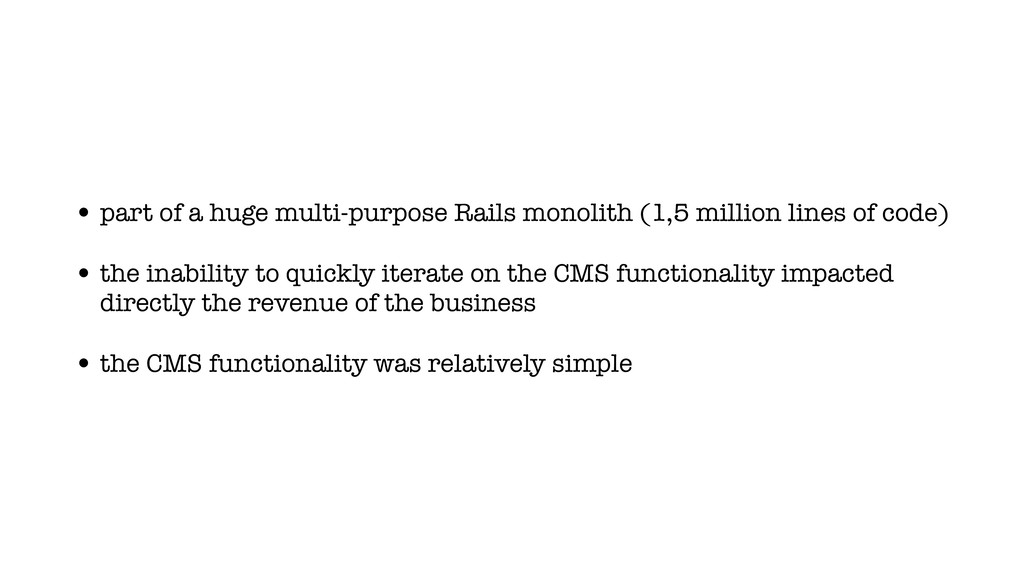
lines of code) • the inability to quickly iterate on the CMS functionality impacted directly the revenue of the business • the CMS functionality was relatively simple
• the new project was already considered legacy itself • internal conflicts within the team introduced a node.js rendering layer on top of the original CMS app, as some FE devs “disliked” Rails • the development process was still much slower than the goal we set out to achieve
• there was a lot of internal opposition in the company towards the new service because supposedly “Clojure was too weird” • eventually we rewrote the service back to node.js • no performance issues • no crashes
• features that are not aligned with the core goals of the project get rejected • supporting obscure practices get rejected • inclusion of extra runtime dependencies happen extremely rarely • remove features

 SiteGround - Reliable hosting with speed, security, and support you can count on.


 bbatsov
 exoego
 akase244
 yahir0
 hschwentner
 minodriven
 aoshi
 yukikurage
 skryukov
 rkaga
 slobodan
 hasutosasaki
 marcoroth
 codingconduct
 davidcarrasco
 katiecoart
 carmenintech
 csswizardry
 portentint
 eitanlees
 reverentgeek
 sugarenia
 keithpitt
 addyosmani
 aleyda