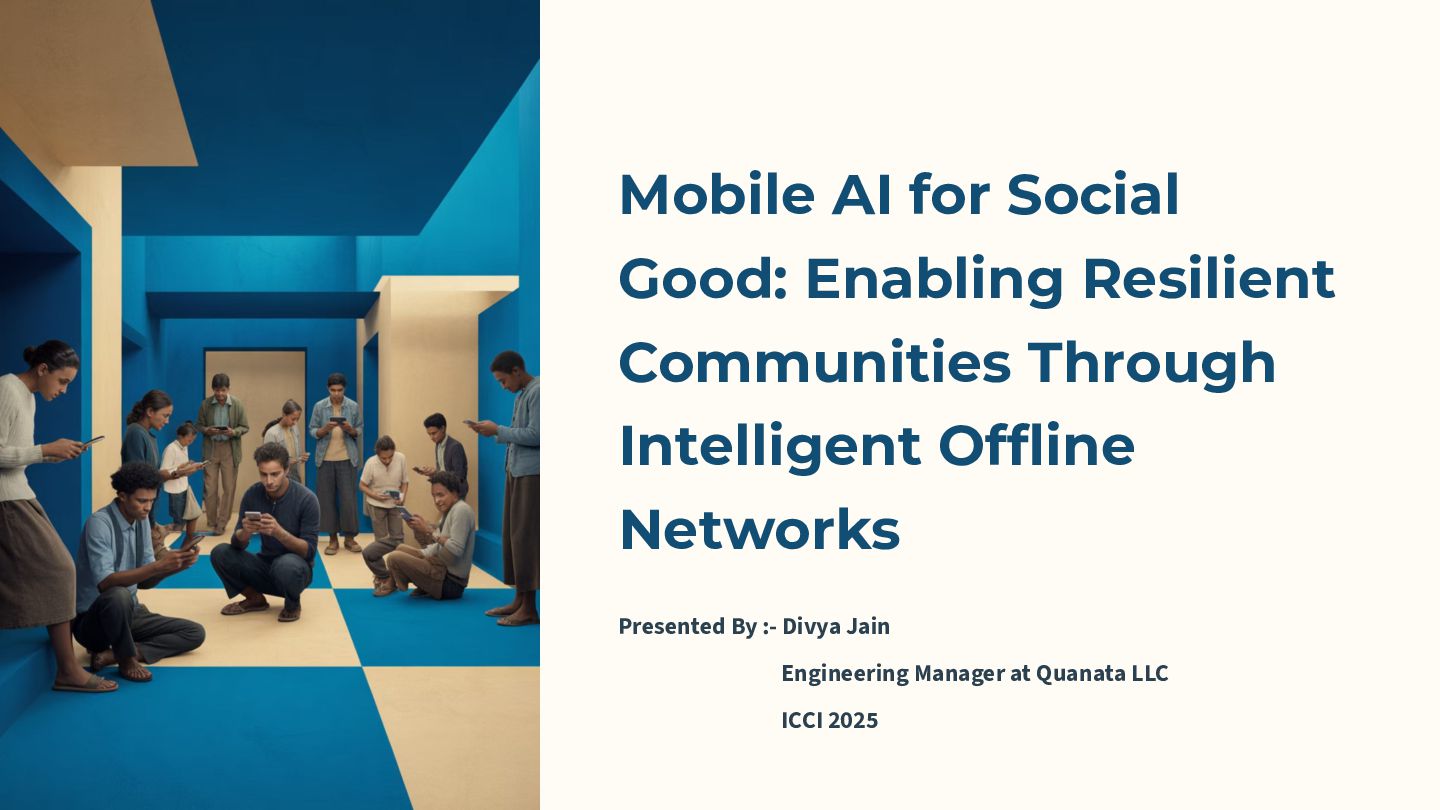
Mobile AI for Social Good: Enabling Resilient Communities Through Intelligent Offline Networks
How mobile AI and offline networks can empower the 2.9 billion people who lack reliable internet access, enabling resilient communities through technology that works independently of infrastructure.
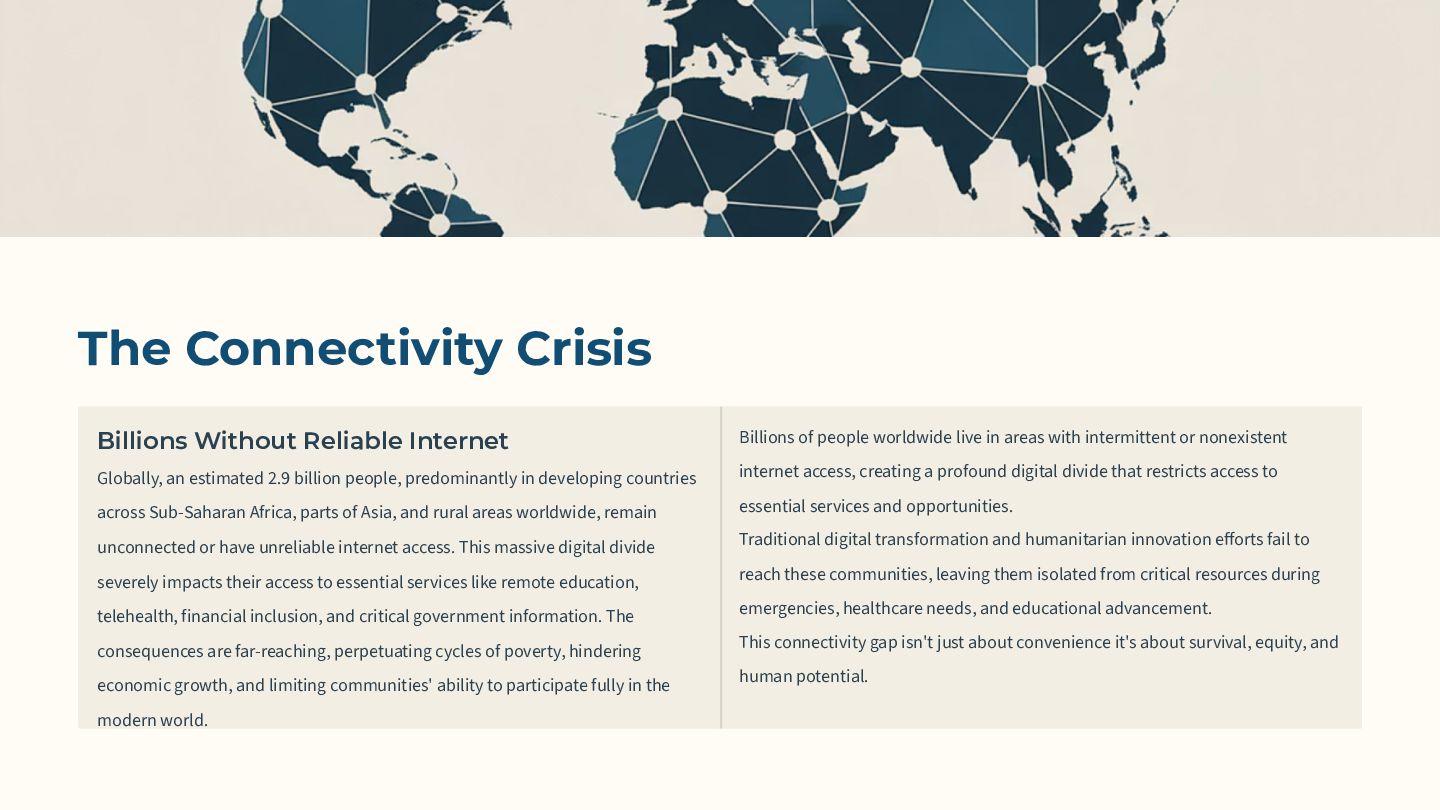
2.9 billion people, predominantly in developing countries across Sub-Saharan Africa, parts of Asia, and rural areas worldwide, remain unconnected or have unreliable internet access. This massive digital divide severely impacts their access to essential services like remote education, telehealth, financial inclusion, and critical government information. The consequences are far-reaching, perpetuating cycles of poverty, hindering economic growth, and limiting communities' ability to participate fully in the modern world. Billions of people worldwide live in areas with intermittent or nonexistent internet access, creating a profound digital divide that restricts access to essential services and opportunities. Traditional digital transformation and humanitarian innovation efforts fail to reach these communities, leaving them isolated from critical resources during emergencies, healthcare needs, and educational advancement. This connectivity gap isn't just about convenience it's about survival, equity, and human potential.
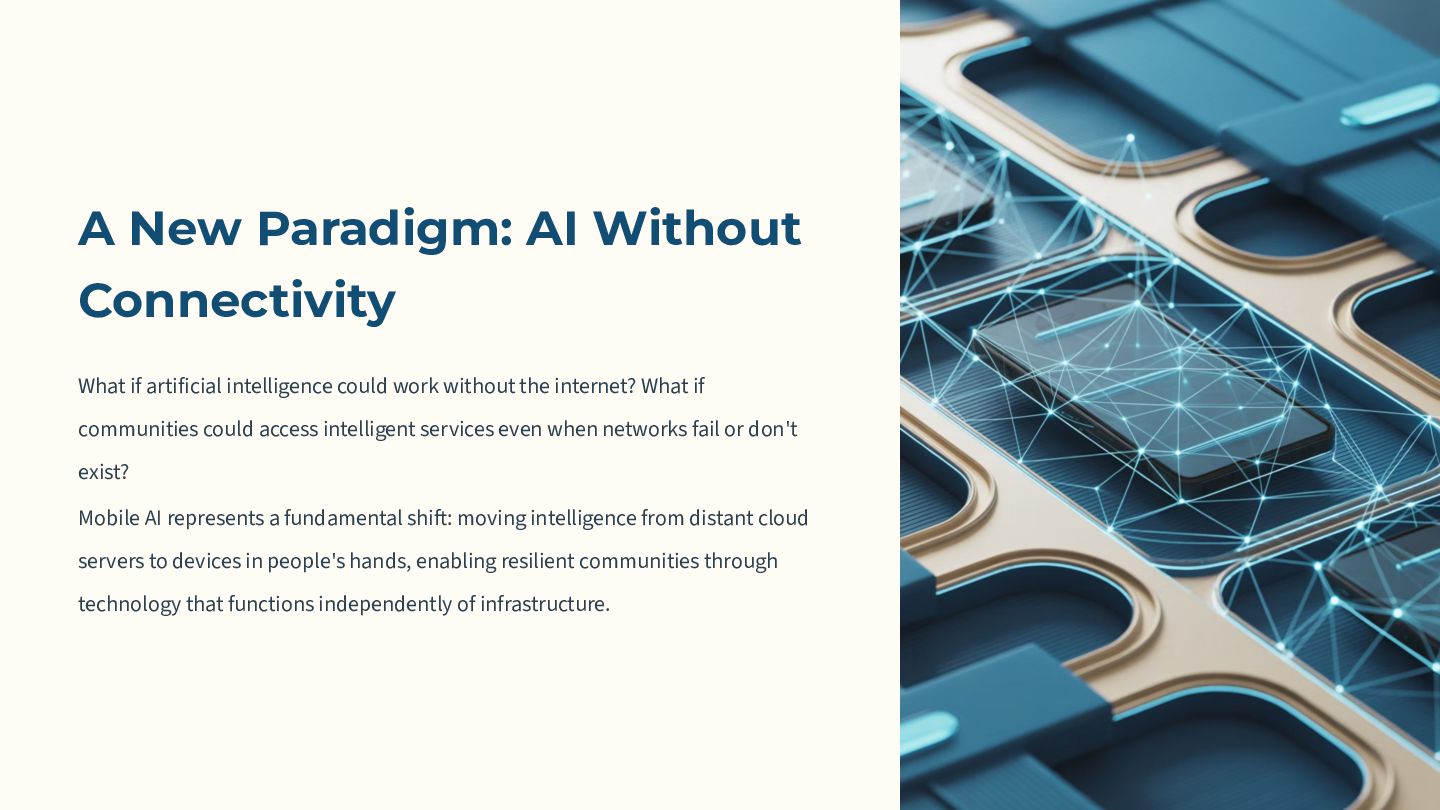
could work without the internet? What if communities could access intelligent services even when networks fail or don't exist? Mobile AI represents a fundamental shift: moving intelligence from distant cloud servers to devices in people's hands, enabling resilient communities through technology that functions independently of infrastructure.
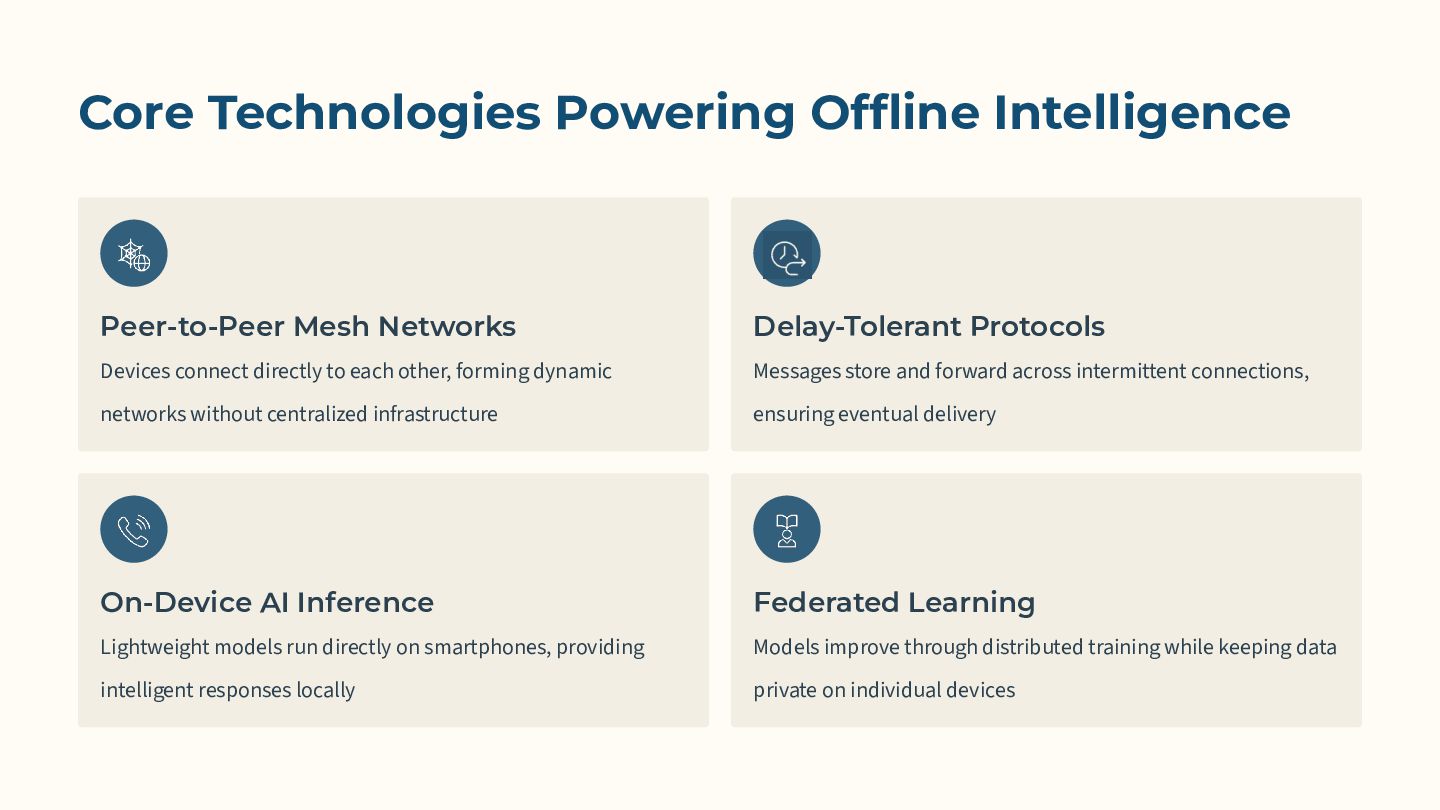
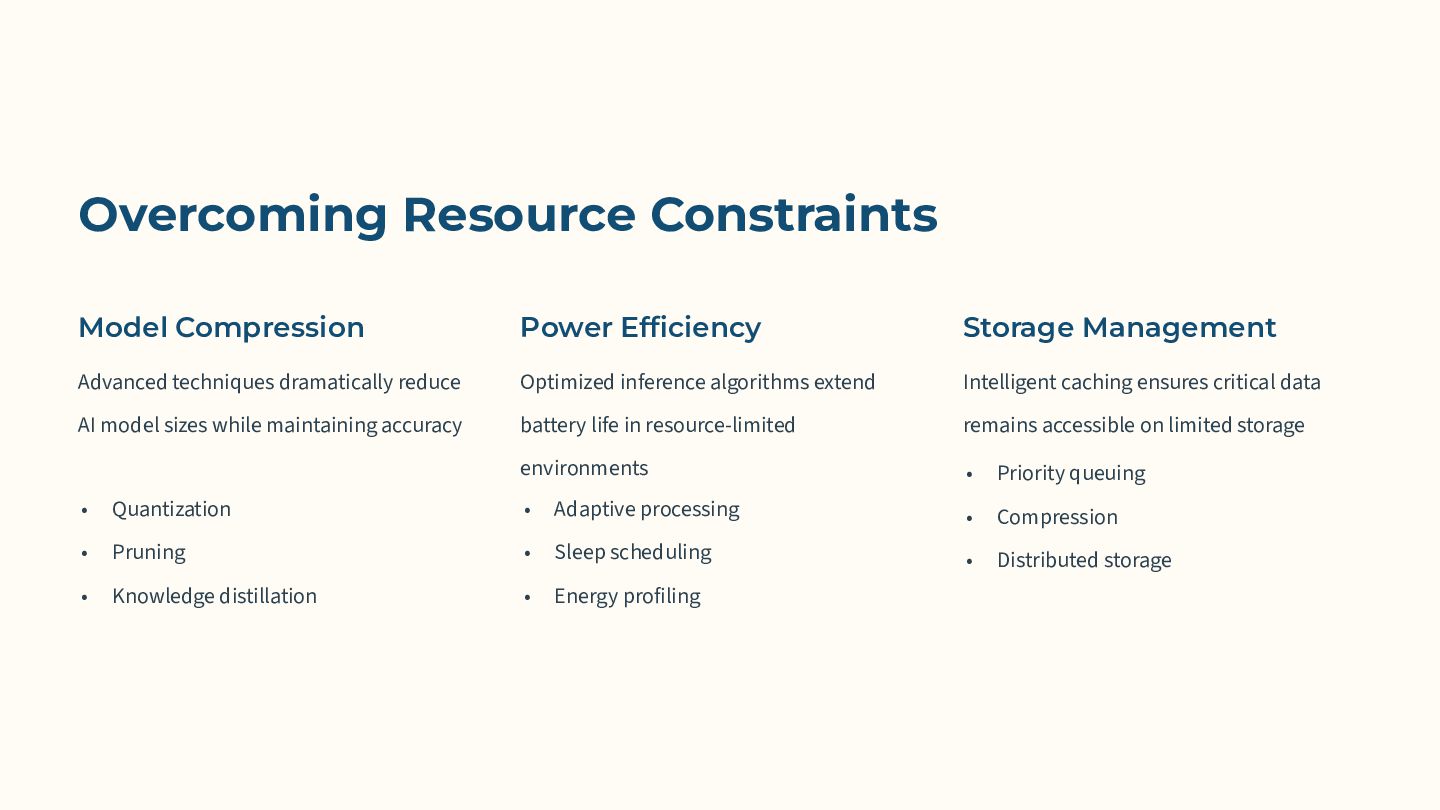
directly to each other, forming dynamic networks without centralized infrastructure Delay-Tolerant Protocols Messages store and forward across intermittent connections, ensuring eventual delivery On-Device AI Inference Lightweight models run directly on smartphones, providing intelligent responses locally Federated Learning Models improve through distributed training while keeping data private on individual devices
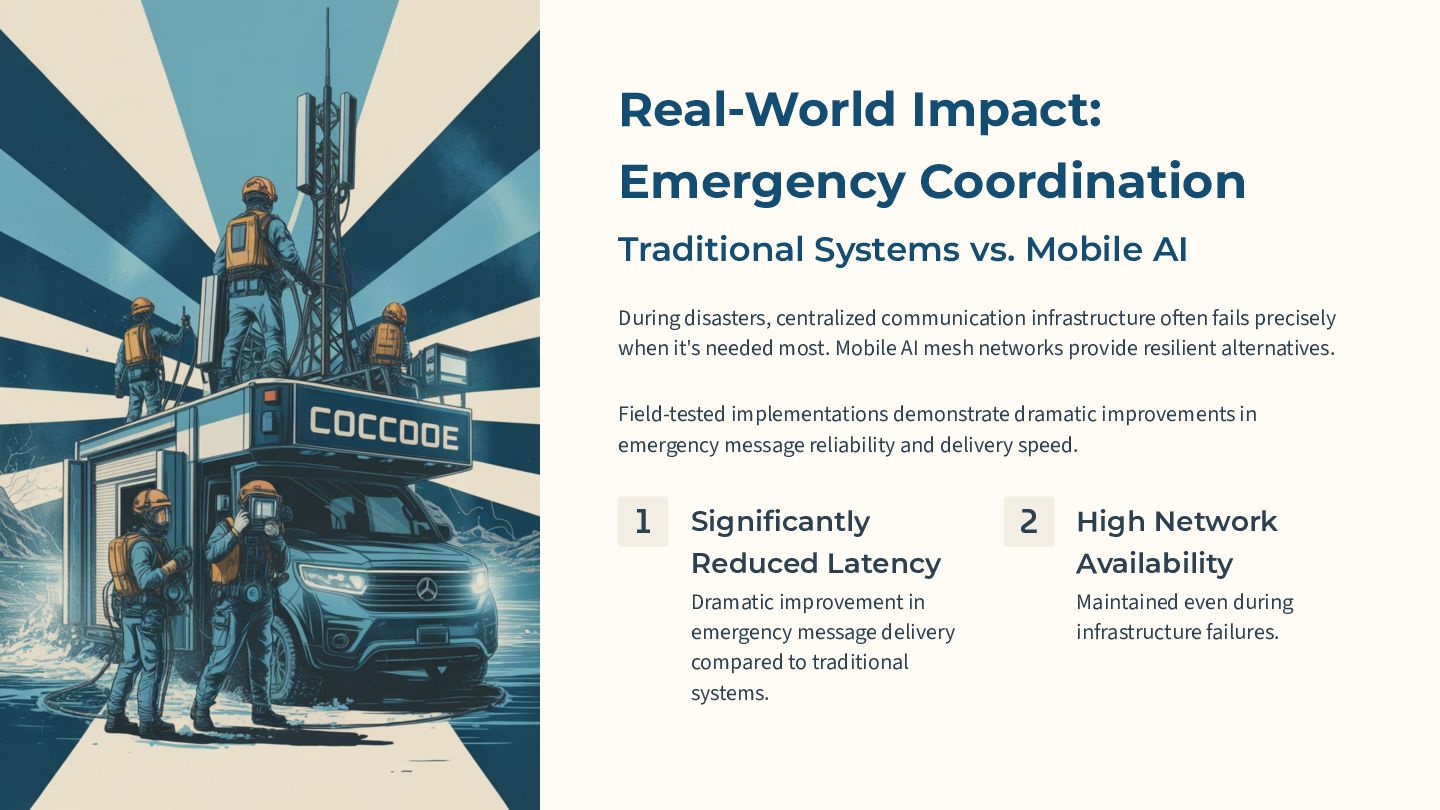
disasters, centralized communication infrastructure often fails precisely when it's needed most. Mobile AI mesh networks provide resilient alternatives. Field-tested implementations demonstrate dramatic improvements in emergency message reliability and delivery speed. 1 Significantly Reduced Latency Dramatic improvement in emergency message delivery compared to traditional systems. 2 High Network Availability Maintained even during infrastructure failures.
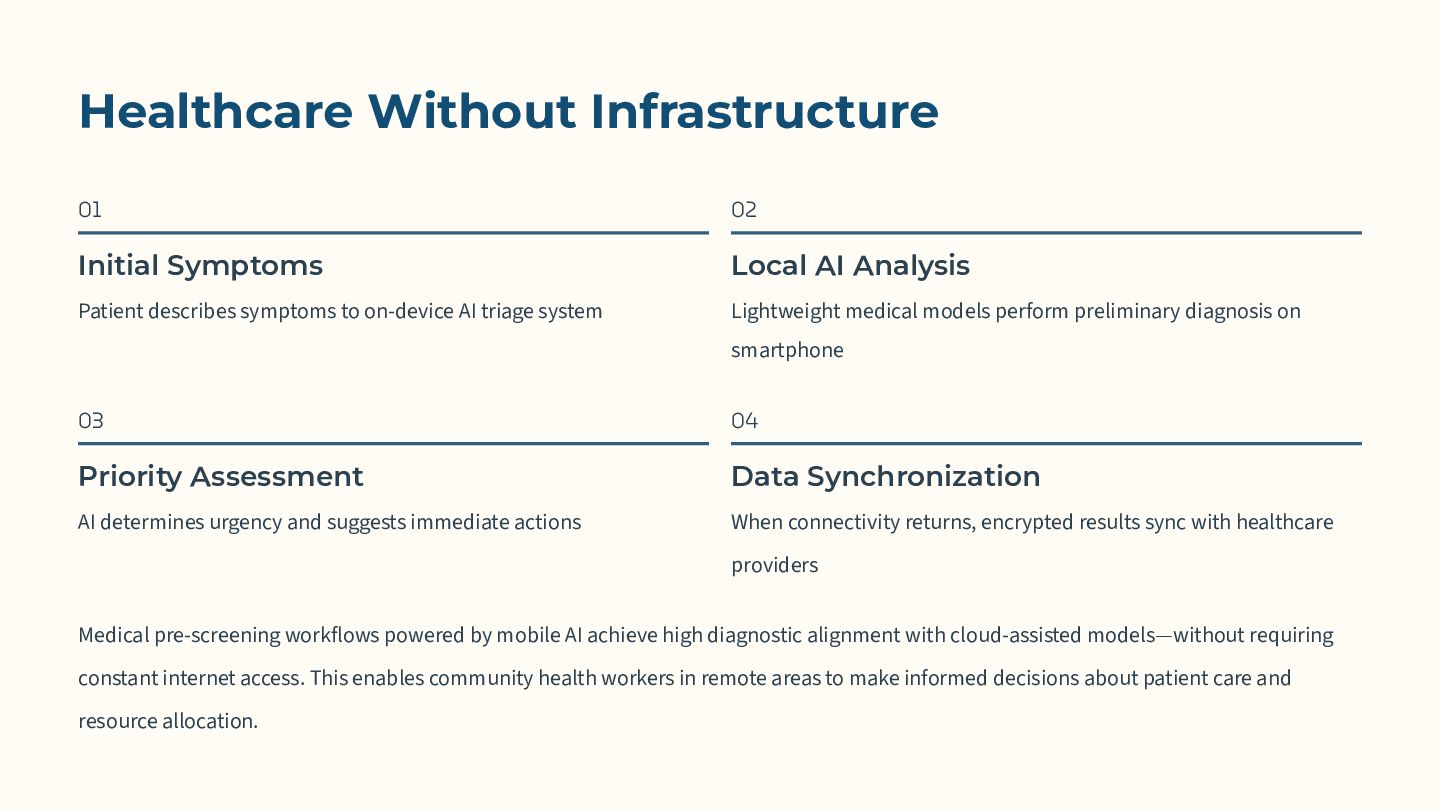
on-device AI triage system 02 Local AI Analysis Lightweight medical models perform preliminary diagnosis on smartphone 03 Priority Assessment AI determines urgency and suggests immediate actions 04 Data Synchronization When connectivity returns, encrypted results sync with healthcare providers Medical pre-screening workflows powered by mobile AI achieve high diagnostic alignment with cloud-assisted models—without requiring constant internet access. This enables community health workers in remote areas to make informed decisions about patient care and resource allocation.
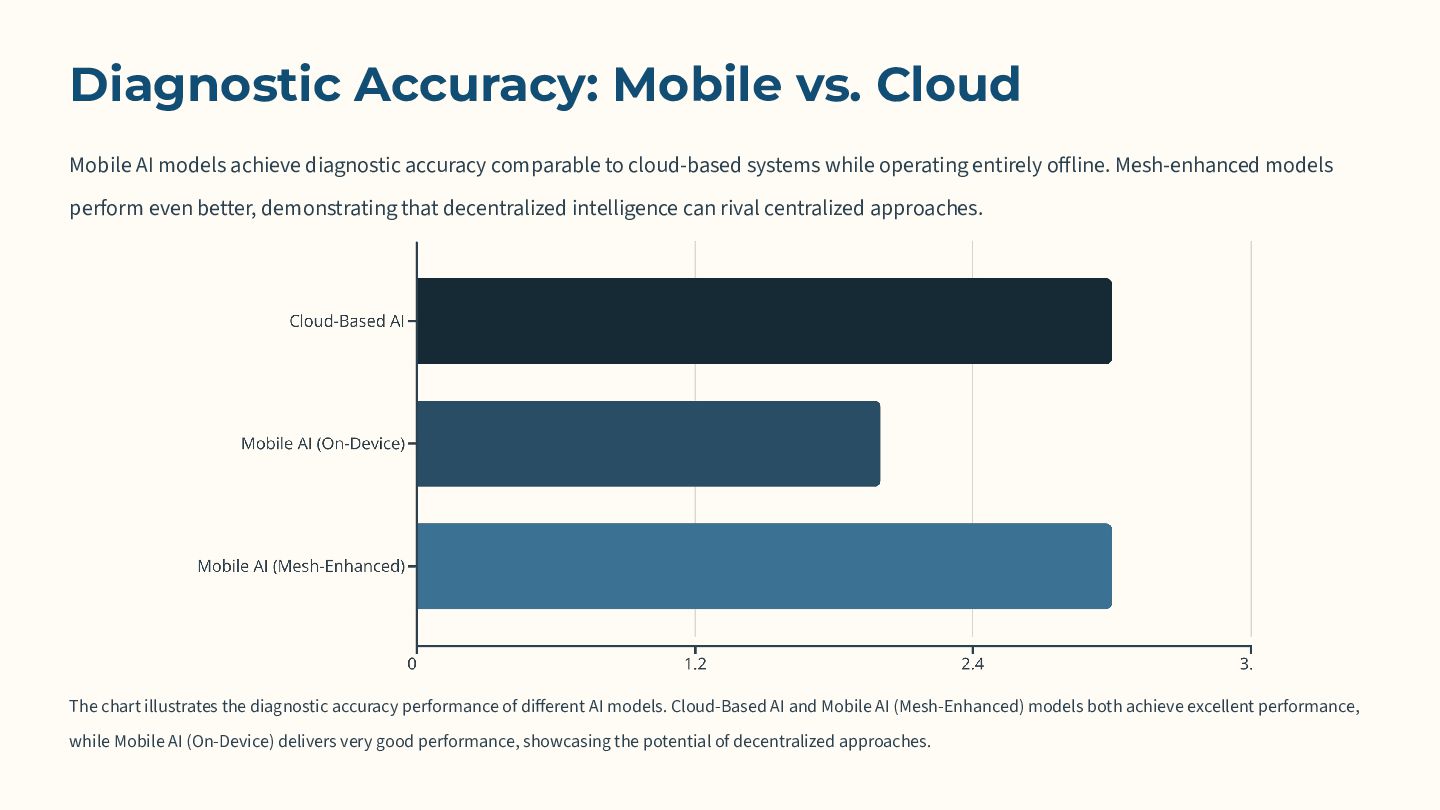
accuracy comparable to cloud-based systems while operating entirely offline. Mesh-enhanced models perform even better, demonstrating that decentralized intelligence can rival centralized approaches. The chart illustrates the diagnostic accuracy performance of different AI models. Cloud-Based AI and Mobile AI (Mesh-Enhanced) models both achieve excellent performance, while Mobile AI (On-Device) delivers very good performance, showcasing the potential of decentralized approaches.
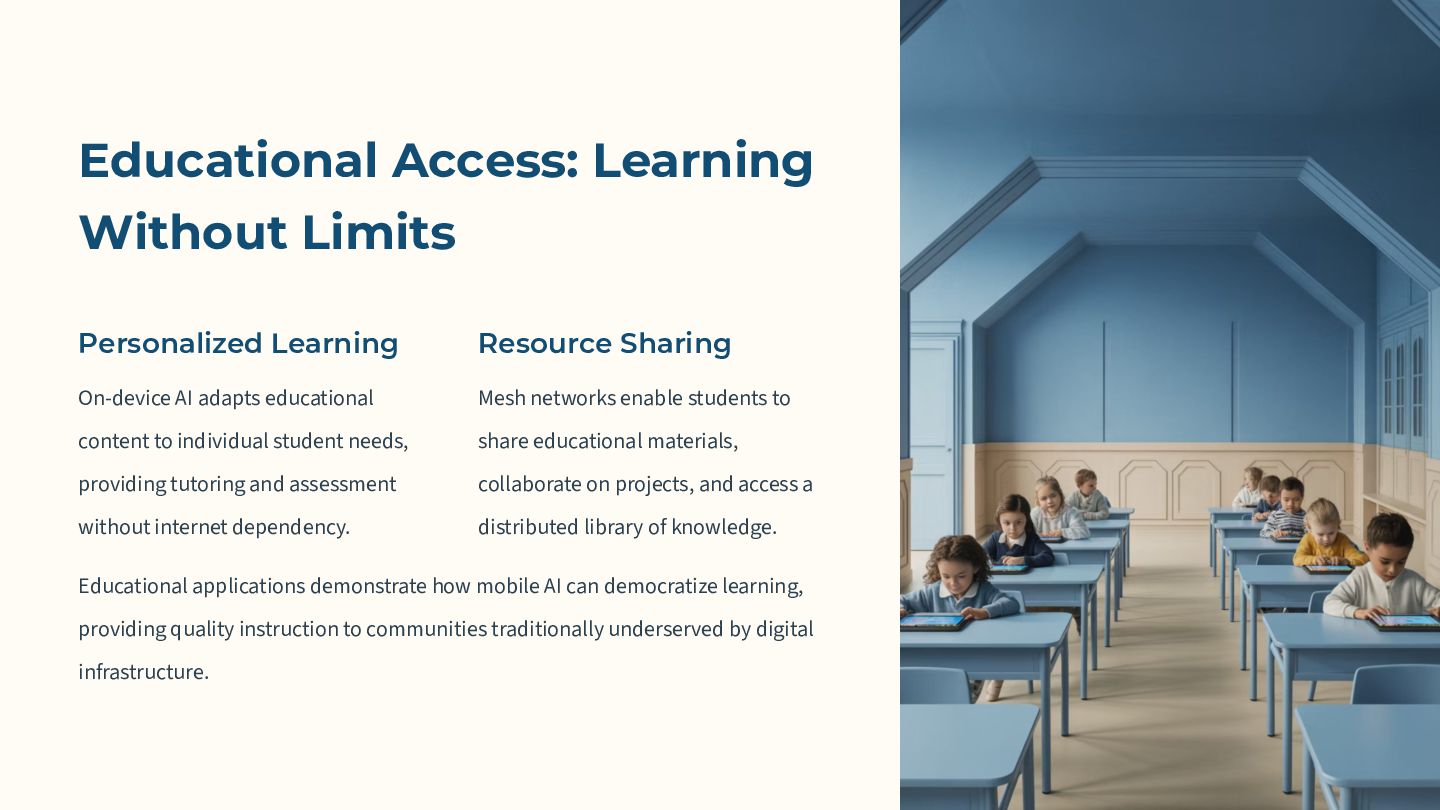
educational content to individual student needs, providing tutoring and assessment without internet dependency. Resource Sharing Mesh networks enable students to share educational materials, collaborate on projects, and access a distributed library of knowledge. Educational applications demonstrate how mobile AI can democratize learning, providing quality instruction to communities traditionally underserved by digital infrastructure.
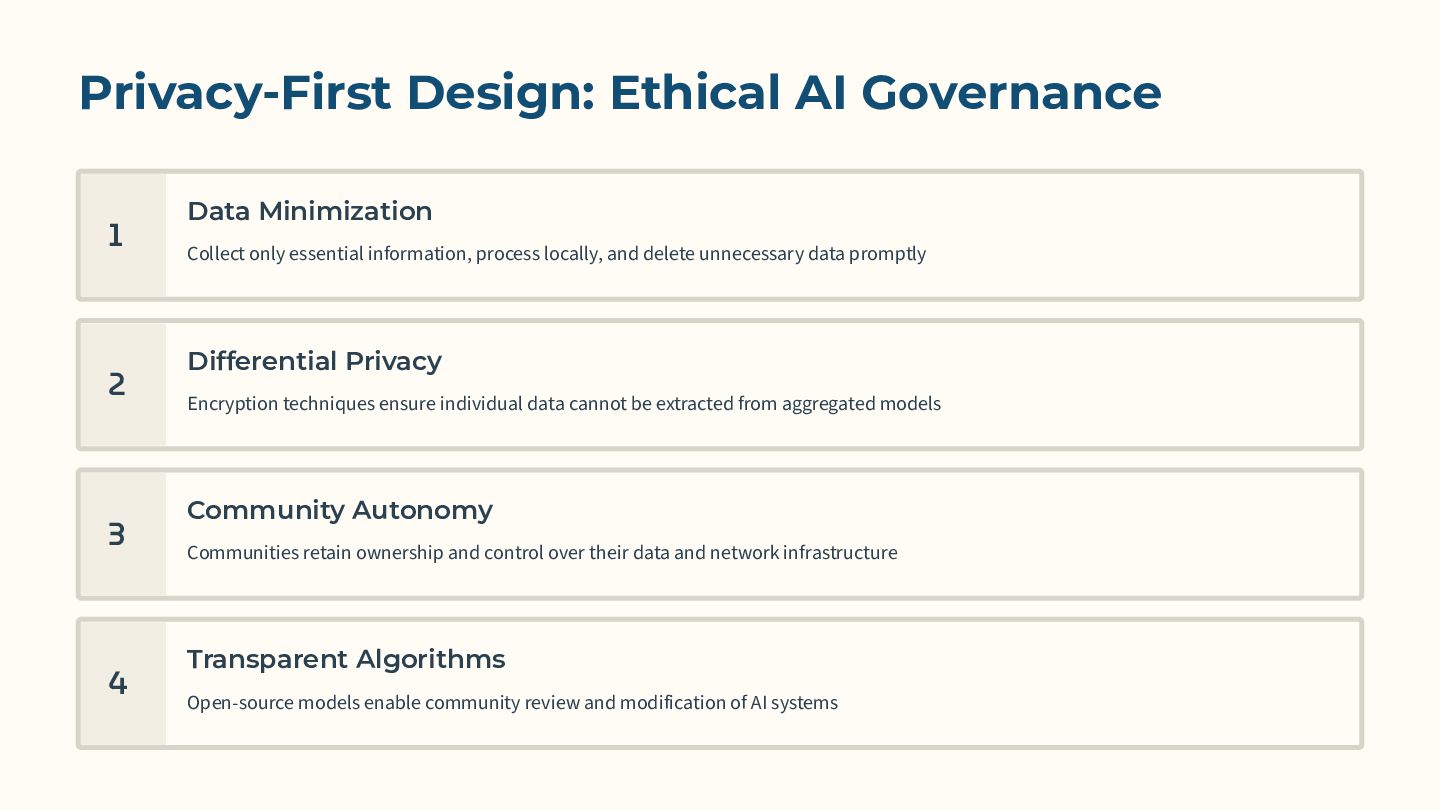
essential information, process locally, and delete unnecessary data promptly 2 Differential Privacy Encryption techniques ensure individual data cannot be extracted from aggregated models 3 Community Autonomy Communities retain ownership and control over their data and network infrastructure 4 Transparent Algorithms Open-source models enable community review and modification of AI systems
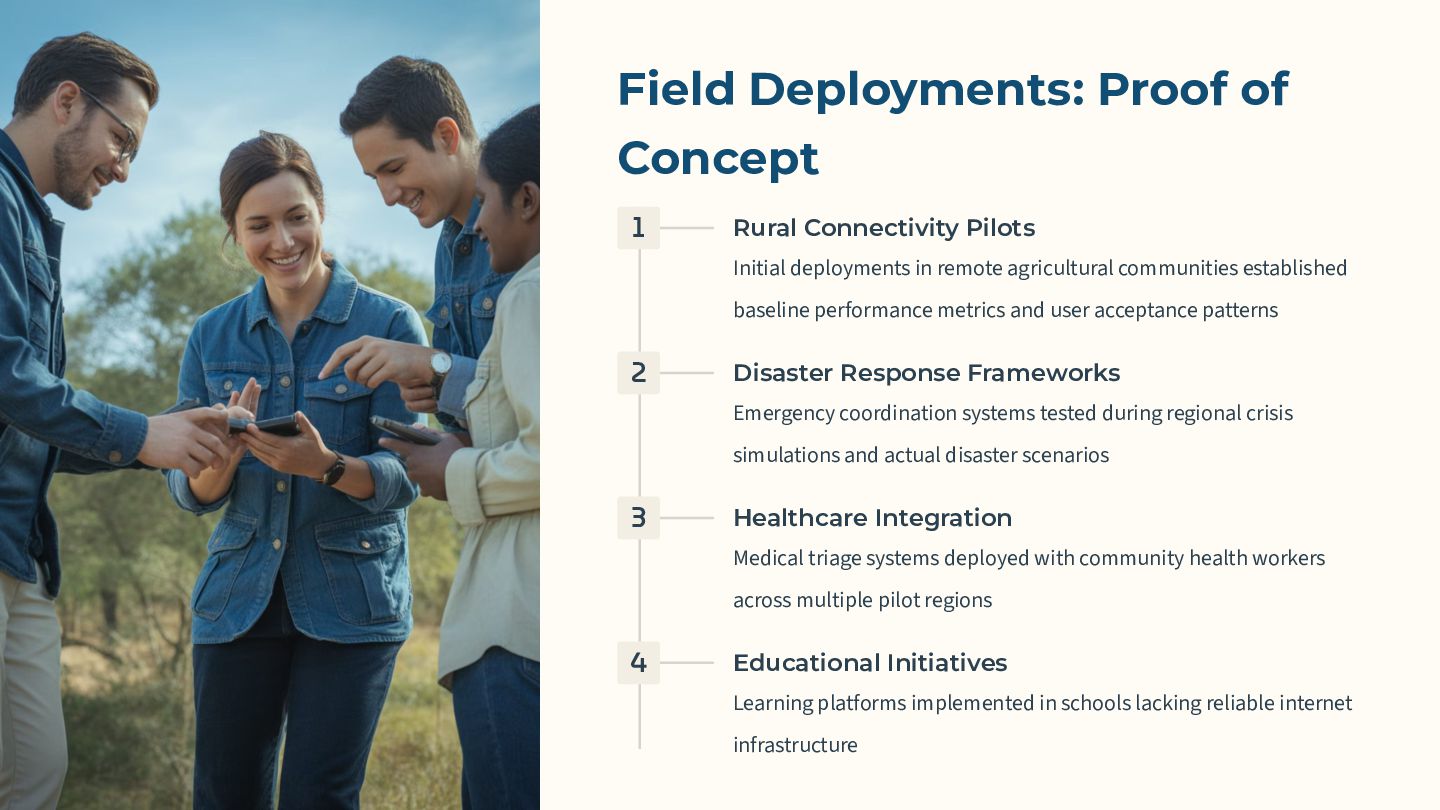
deployments in remote agricultural communities established baseline performance metrics and user acceptance patterns 2 Disaster Response Frameworks Emergency coordination systems tested during regional crisis simulations and actual disaster scenarios 3 Healthcare Integration Medical triage systems deployed with community health workers across multiple pilot regions 4 Educational Initiatives Learning platforms implemented in schools lacking reliable internet infrastructure
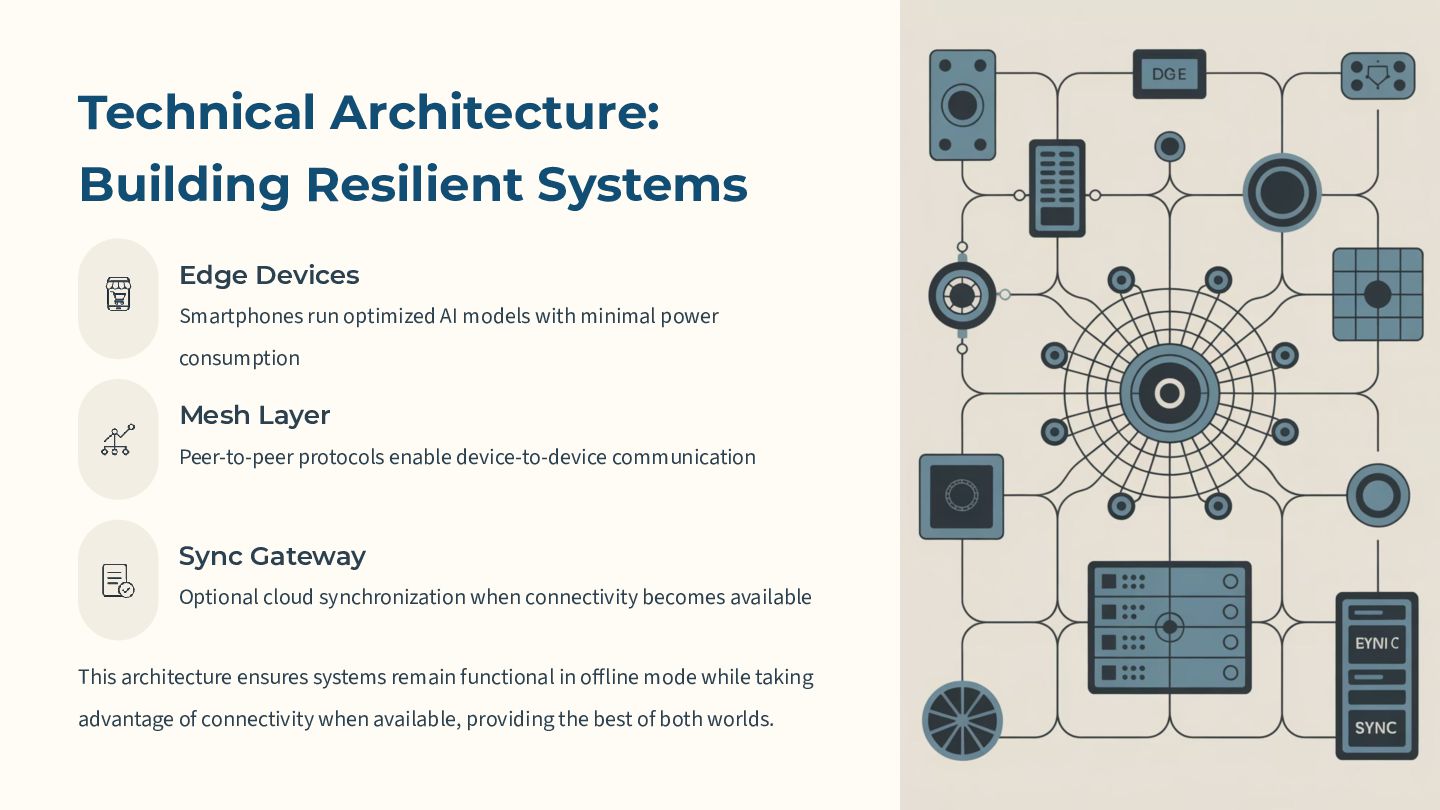
AI models with minimal power consumption Mesh Layer Peer-to-peer protocols enable device-to-device communication Sync Gateway Optional cloud synchronization when connectivity becomes available This architecture ensures systems remain functional in offline mode while taking advantage of connectivity when available, providing the best of both worlds.
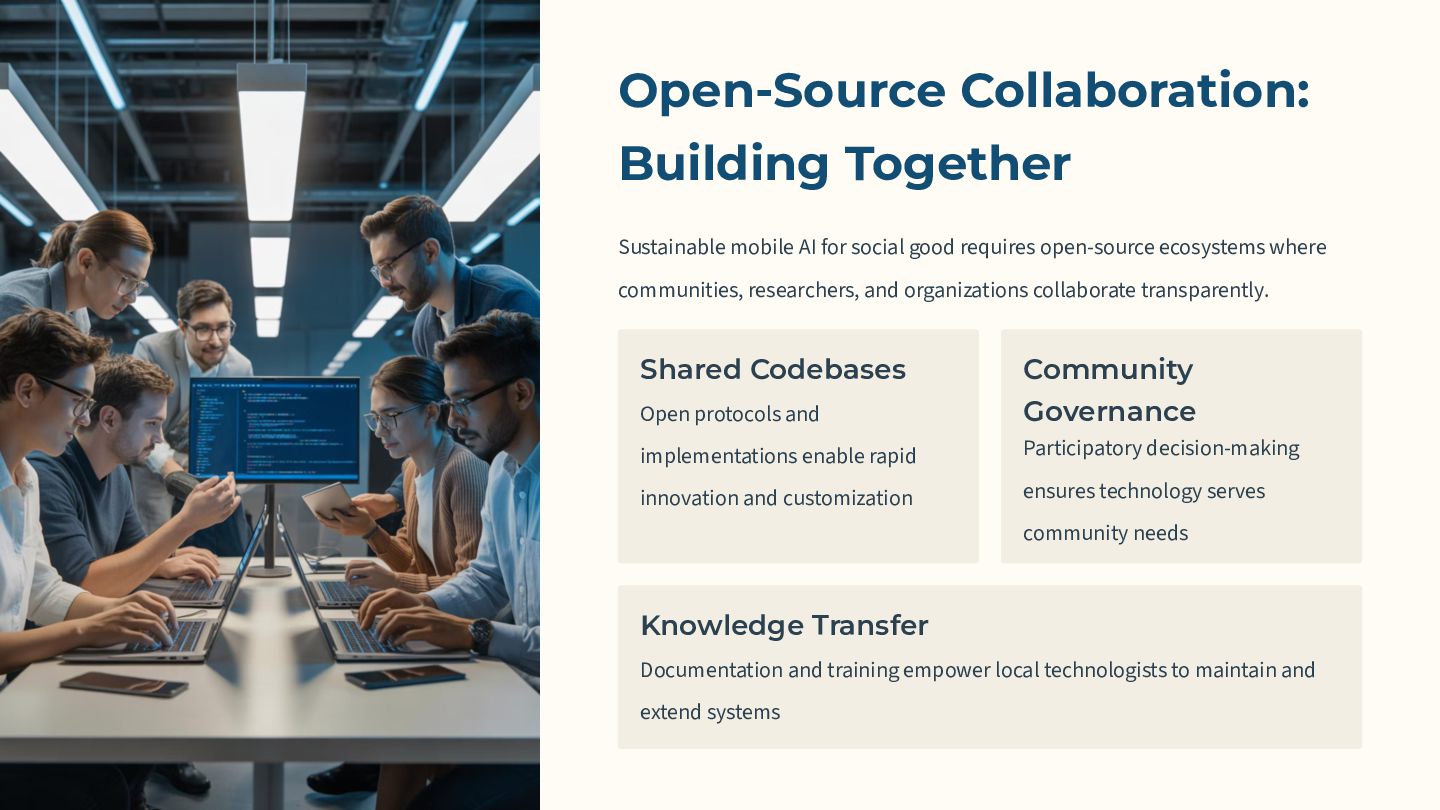
requires open-source ecosystems where communities, researchers, and organizations collaborate transparently. Shared Codebases Open protocols and implementations enable rapid innovation and customization Community Governance Participatory decision-making ensures technology serves community needs Knowledge Transfer Documentation and training empower local technologists to maintain and extend systems
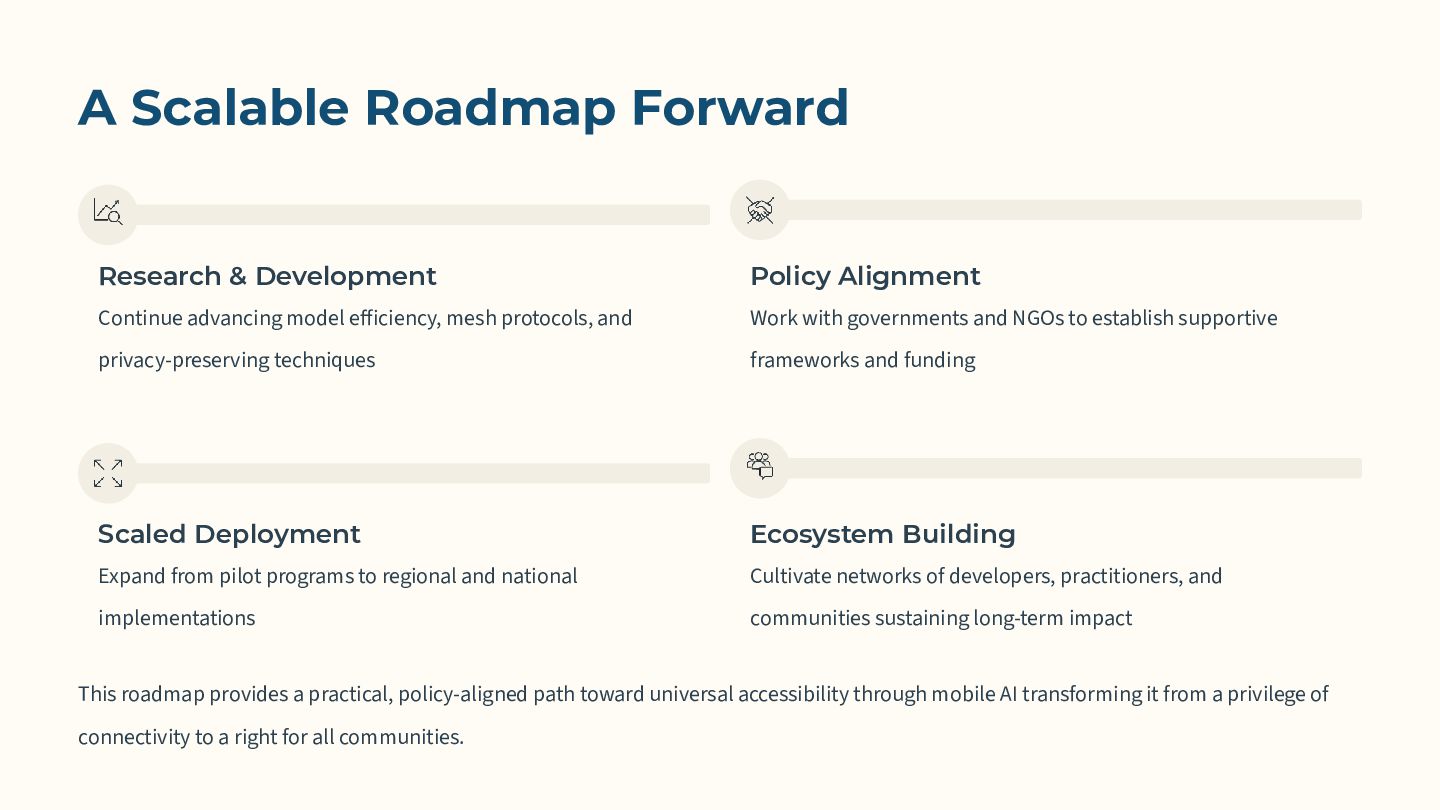
efficiency, mesh protocols, and privacy-preserving techniques Policy Alignment Work with governments and NGOs to establish supportive frameworks and funding Scaled Deployment Expand from pilot programs to regional and national implementations Ecosystem Building Cultivate networks of developers, practitioners, and communities sustaining long-term impact This roadmap provides a practical, policy-aligned path toward universal accessibility through mobile AI transforming it from a privilege of connectivity to a right for all communities.
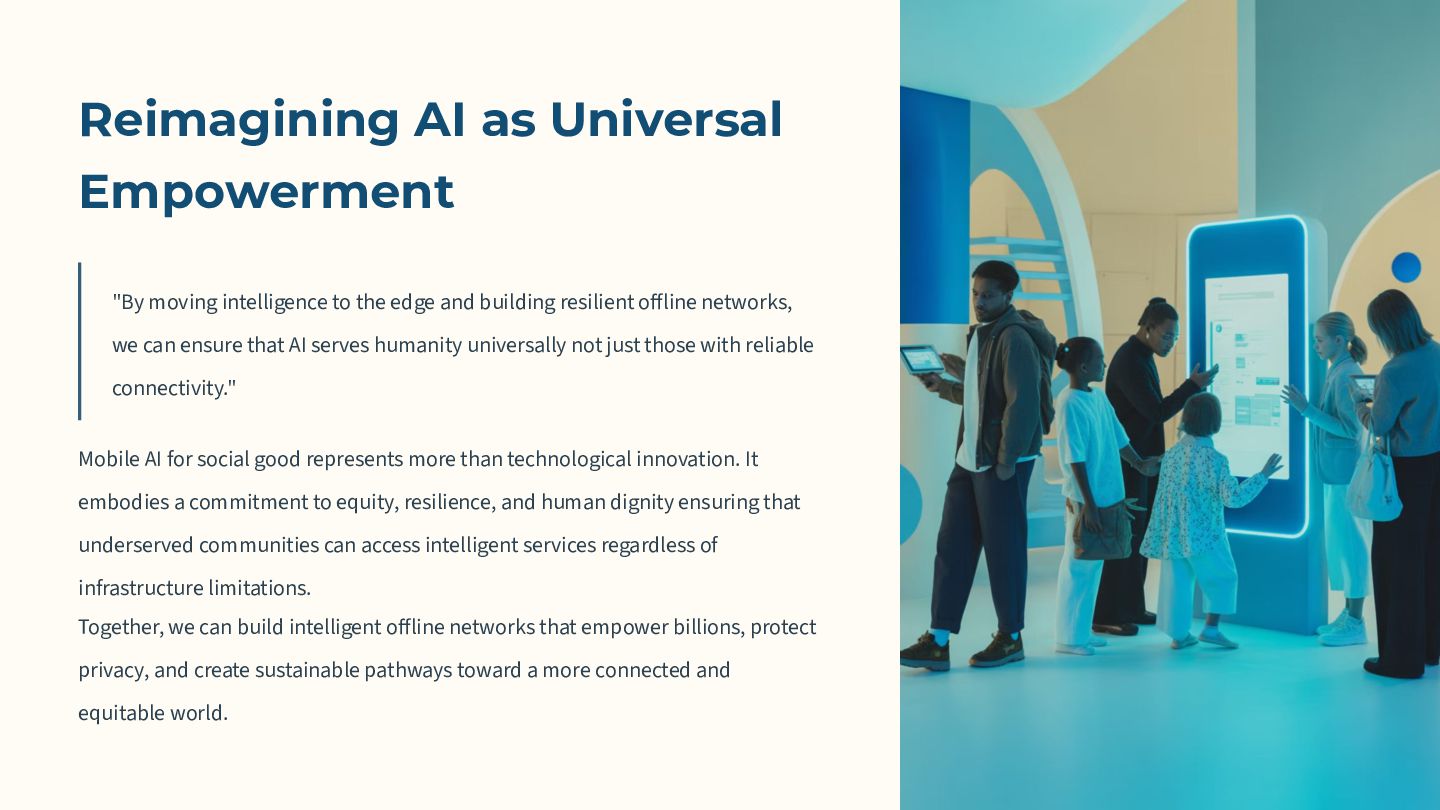
edge and building resilient offline networks, we can ensure that AI serves humanity universally not just those with reliable connectivity." Mobile AI for social good represents more than technological innovation. It embodies a commitment to equity, resilience, and human dignity ensuring that underserved communities can access intelligent services regardless of infrastructure limitations. Together, we can build intelligent offline networks that empower billions, protect privacy, and create sustainable pathways toward a more connected and equitable world.


 djain2405
 yokawasa
 kairim0
 ykagano
 mot_techtalk
 yakumo
 htan
htan
 kazuho
 nttcom
 kawametho
 kmiya84377
 hacobu
 lauravandoore
 reverentgeek
 carmenintech
 pwiseman
 palkan
 wjessup
 marktimemedia
 tenderlove
 rocio
rocio
 mlcsv
mlcsv
 coloredviolet