[cTENcf] eBPF and Go: The Core of Modern Kubern...

[cTENcf] eBPF and Go: The Core of Modern Kubernetes Networking

Explore how eBPF and Cilium are revolutionising Kubernetes networking — improving observability, security, and scalability. Learn how Go simplifies working with eBPF and unlocks practical use cases for modern cloud environments.

Donia Chaiehloudj

November 01, 2025

Annual Pro sale · Save $30

Have presentations of your own?

Share with private links, password protection, and more control over your work.

Transcript

78 slides
  1. eBPF and Go: The Core of Modern Kubernetes Networking Donia

    Chaiehloudj | @doniacld Software Engineer, Isovalent at Cisco Co-author of the book “Learn Go with Pocket-Sized Projectsˮ Nov 1, 2025 10
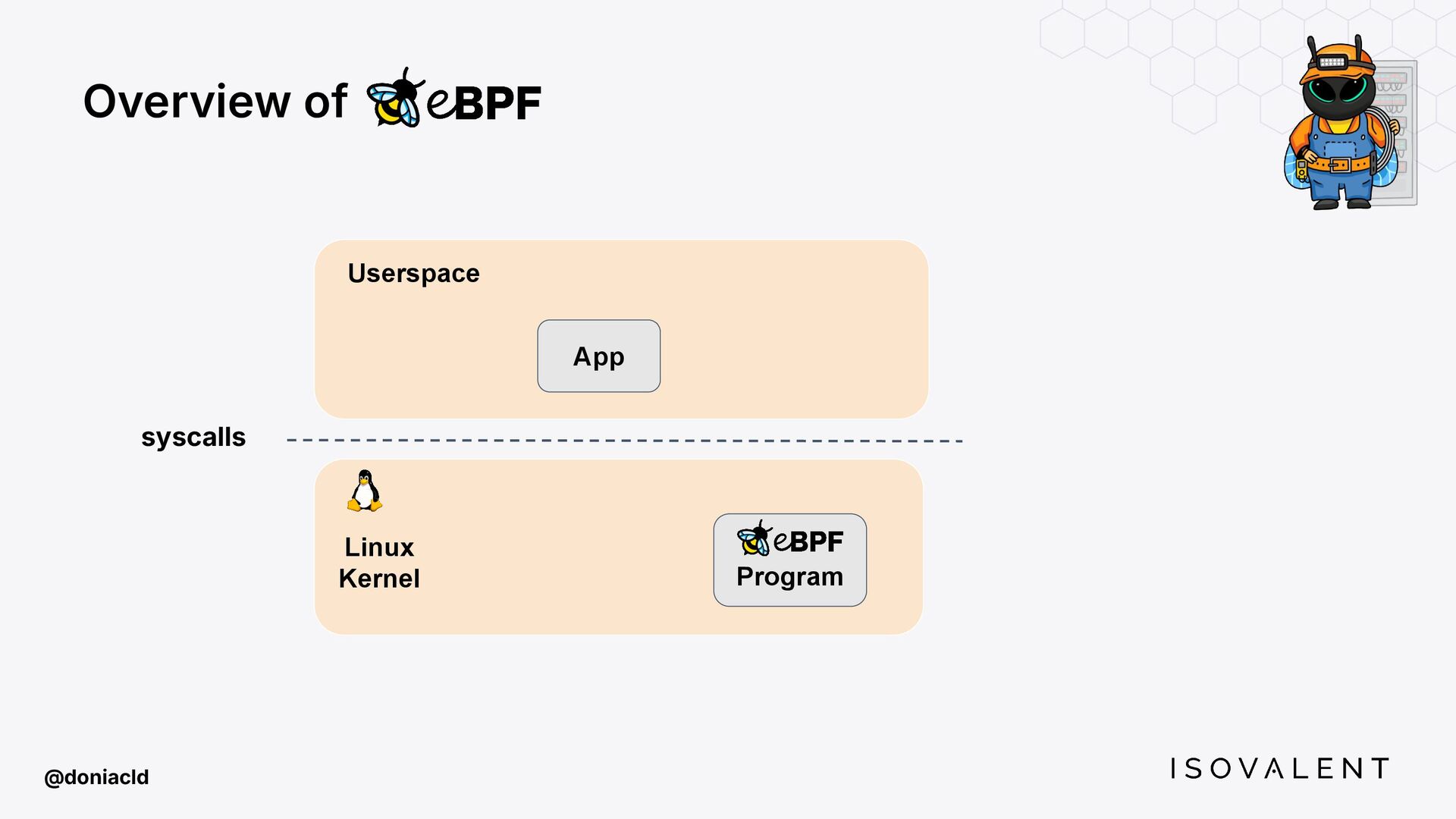
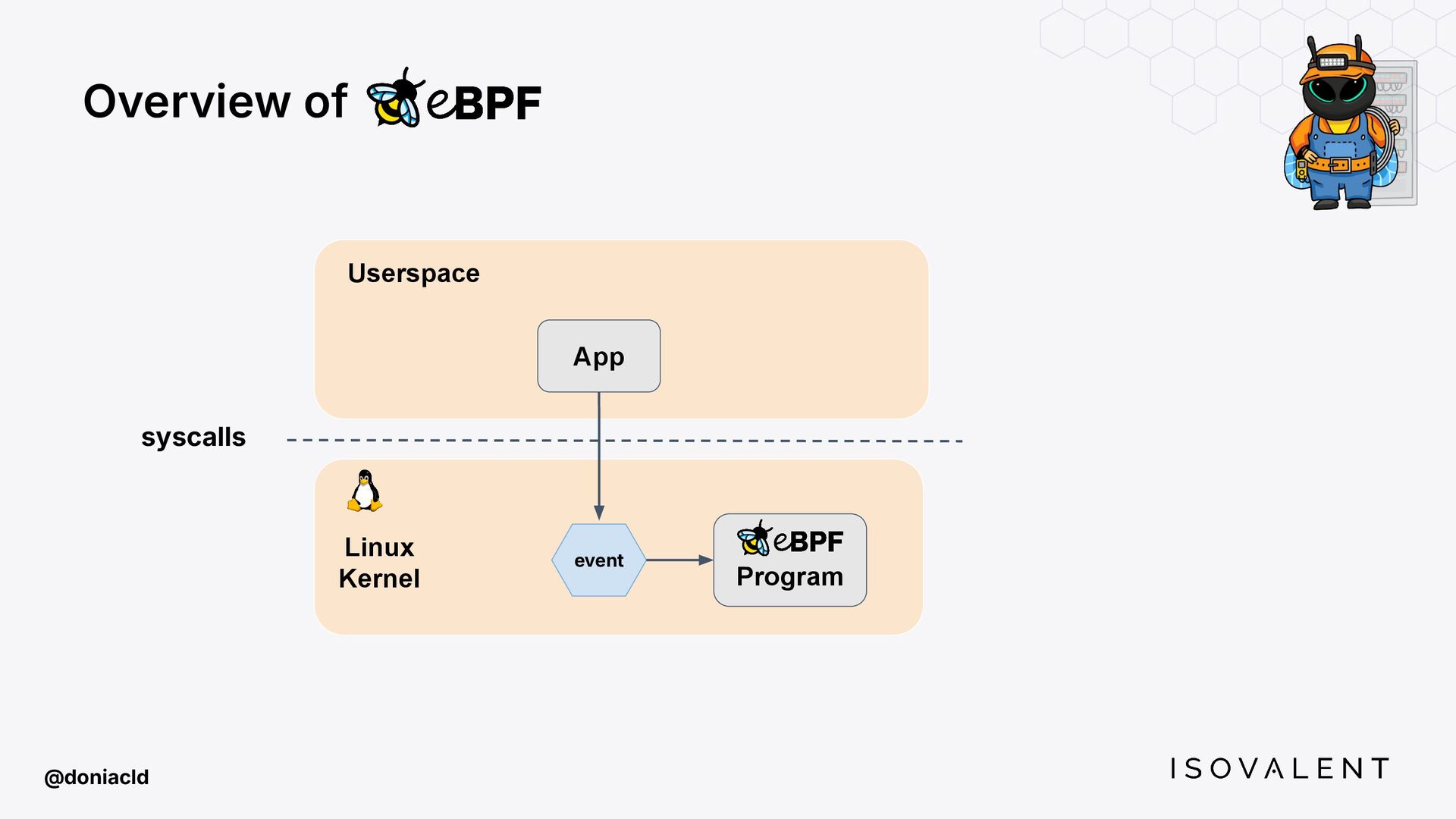
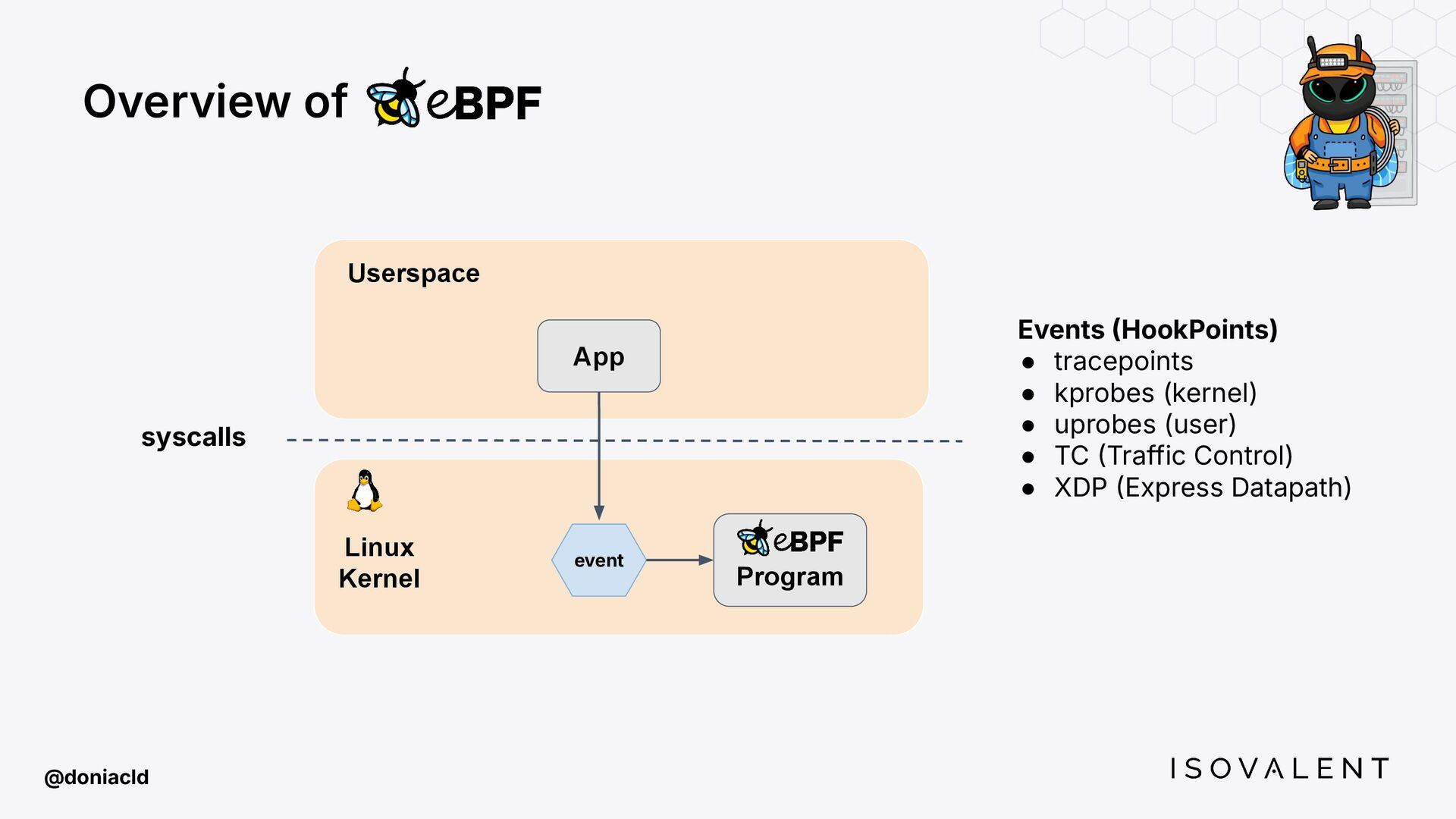
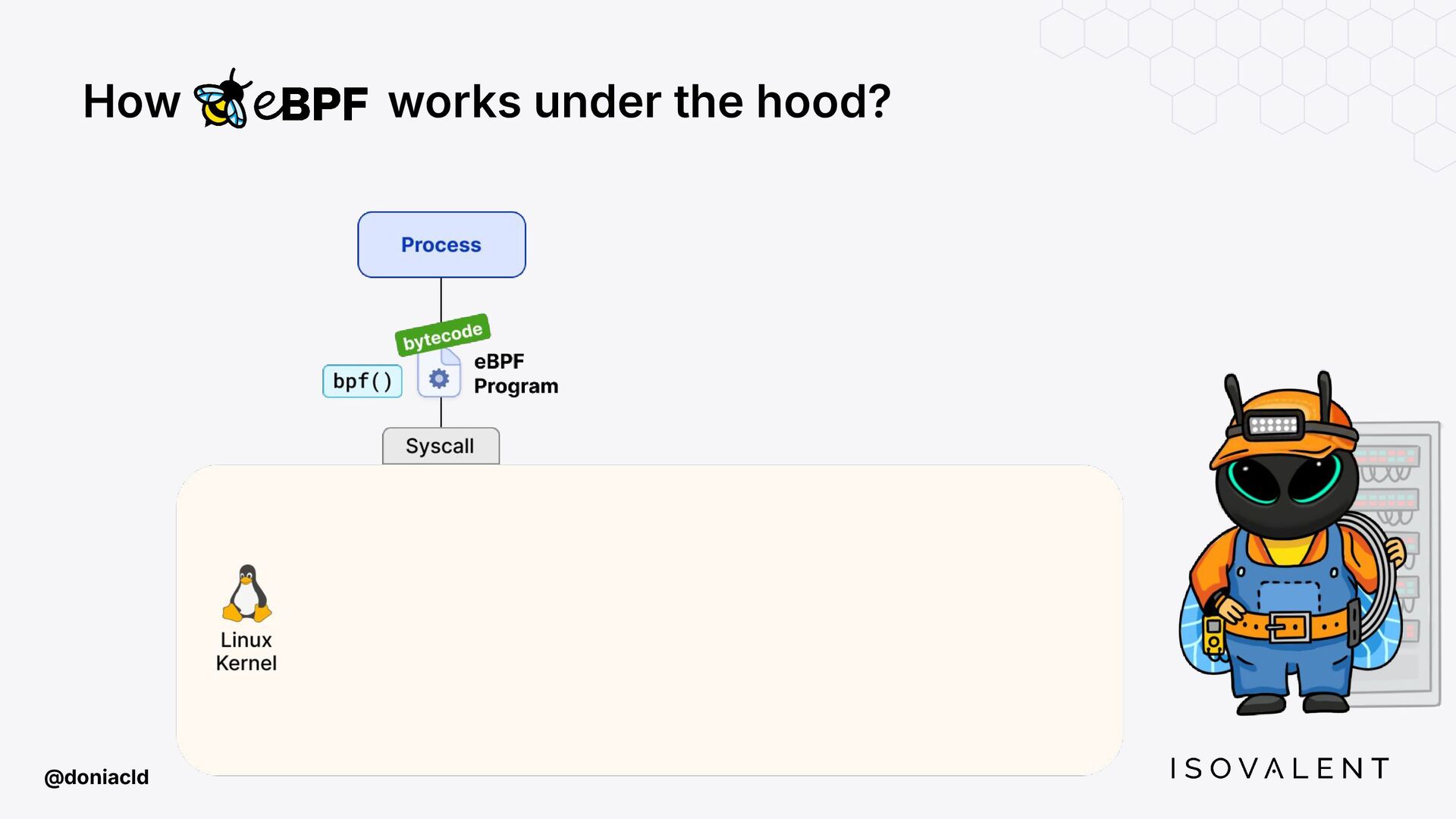
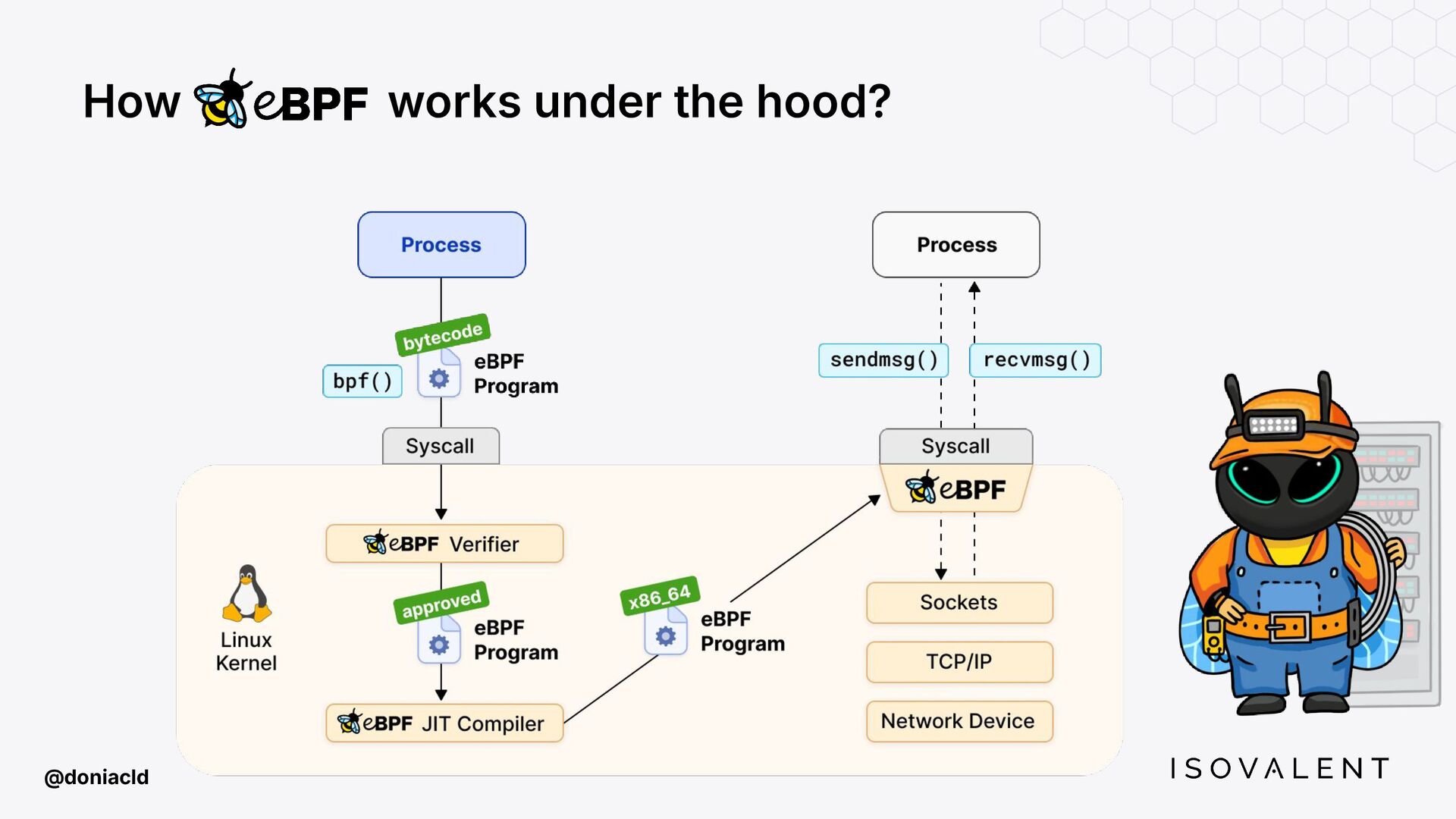
  2. Overview of @doniacld Program App Linux Kernel Userspace syscalls event
    Events HookPoints) • tracepoints • kprobes (kernel) • uprobes (user) • TC Traffic Control) • XDP Express Datapath)
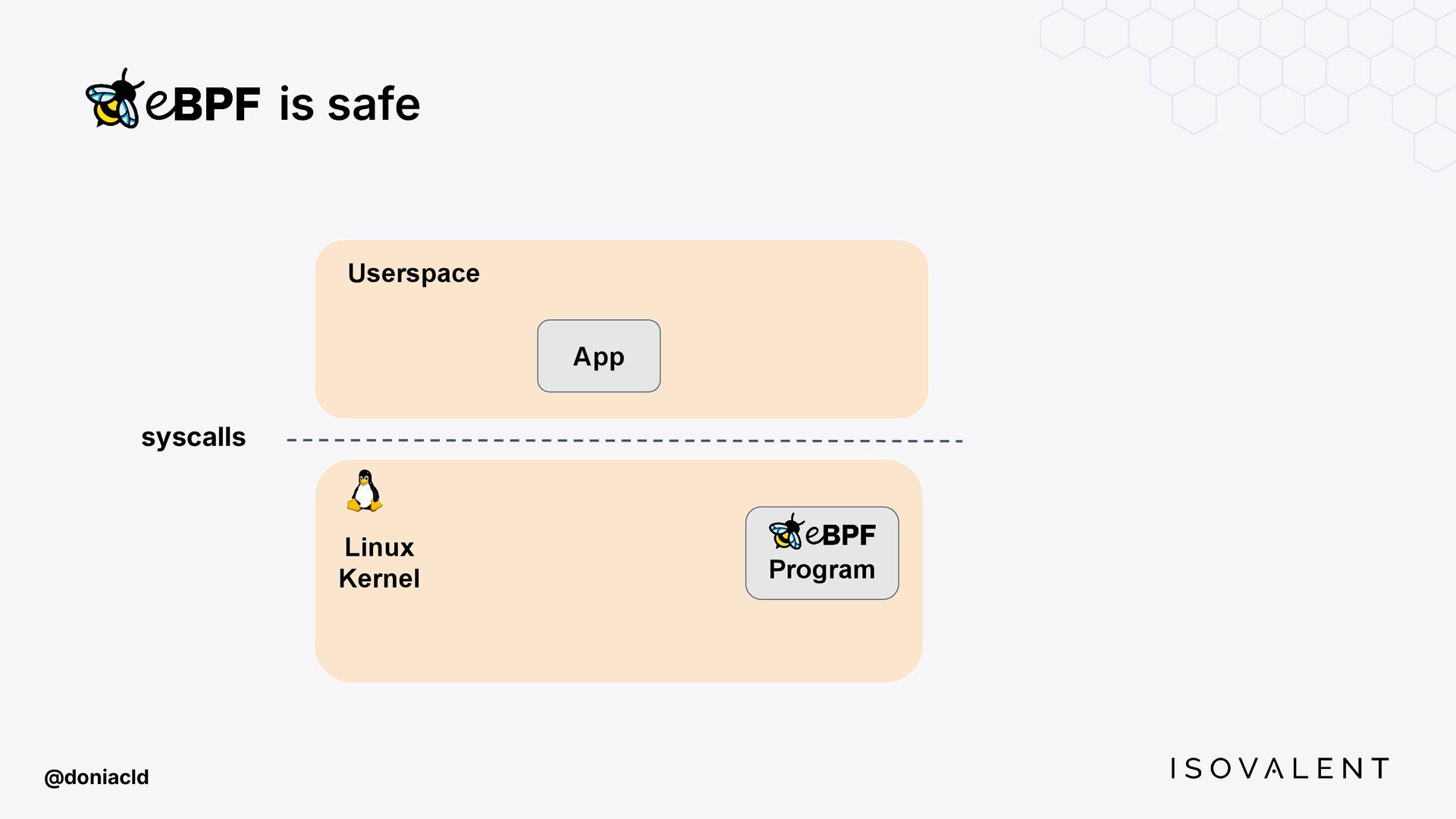
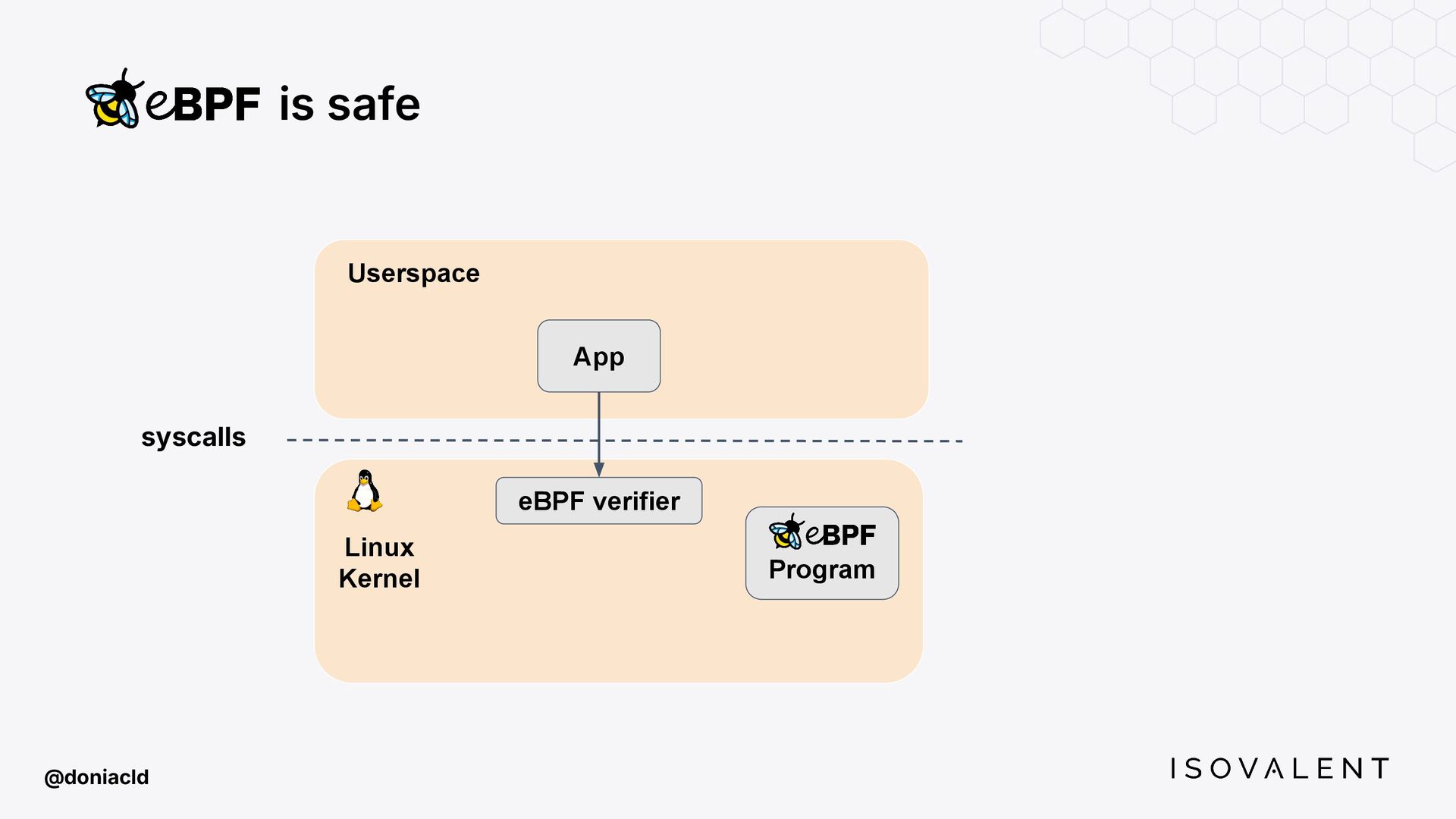
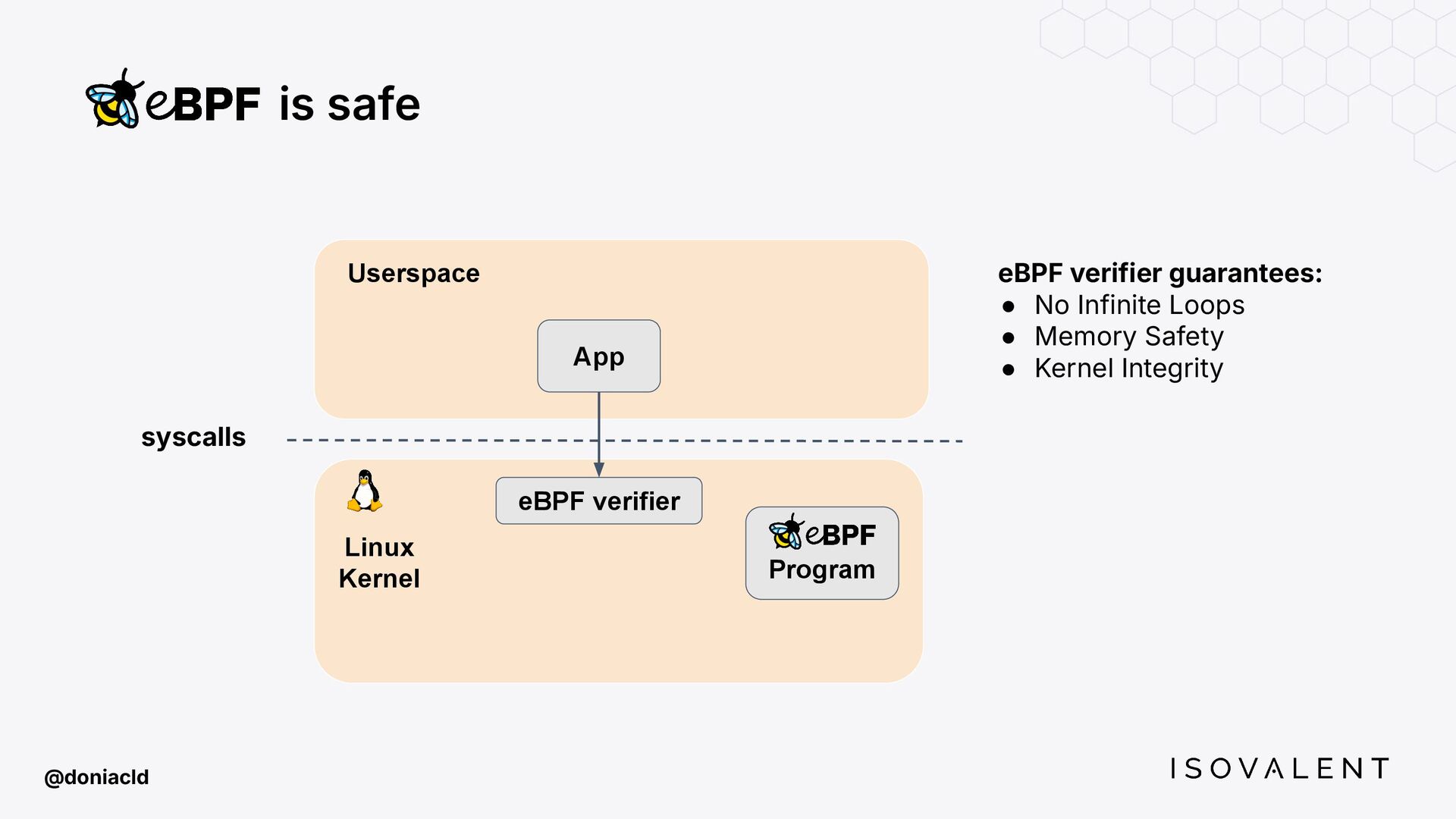
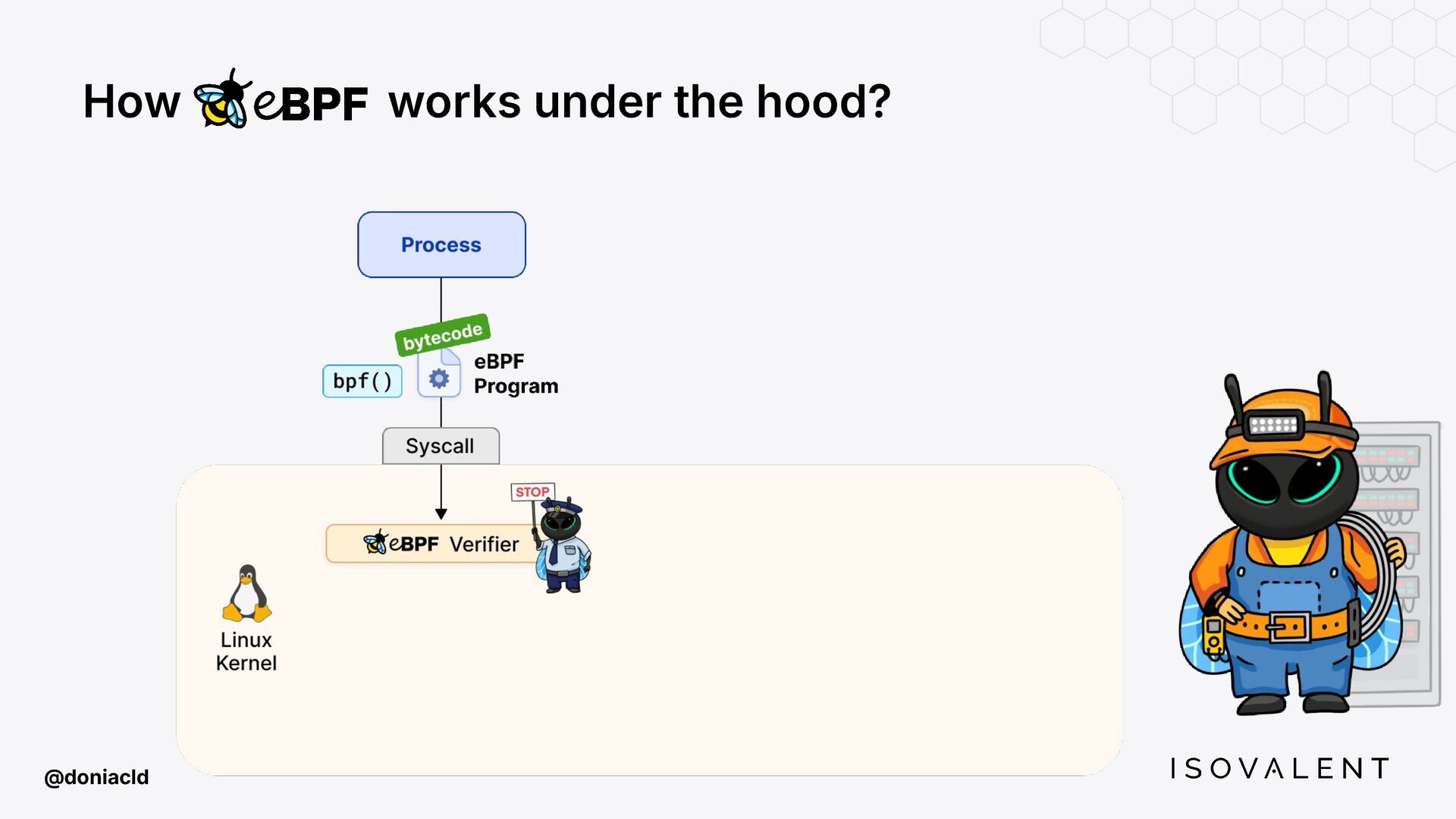
  3. is safe @doniacld Program App Linux Kernel Userspace syscalls eBPF

    verifier eBPF verifier guarantees: • No Infinite Loops • Memory Safety • Kernel Integrity
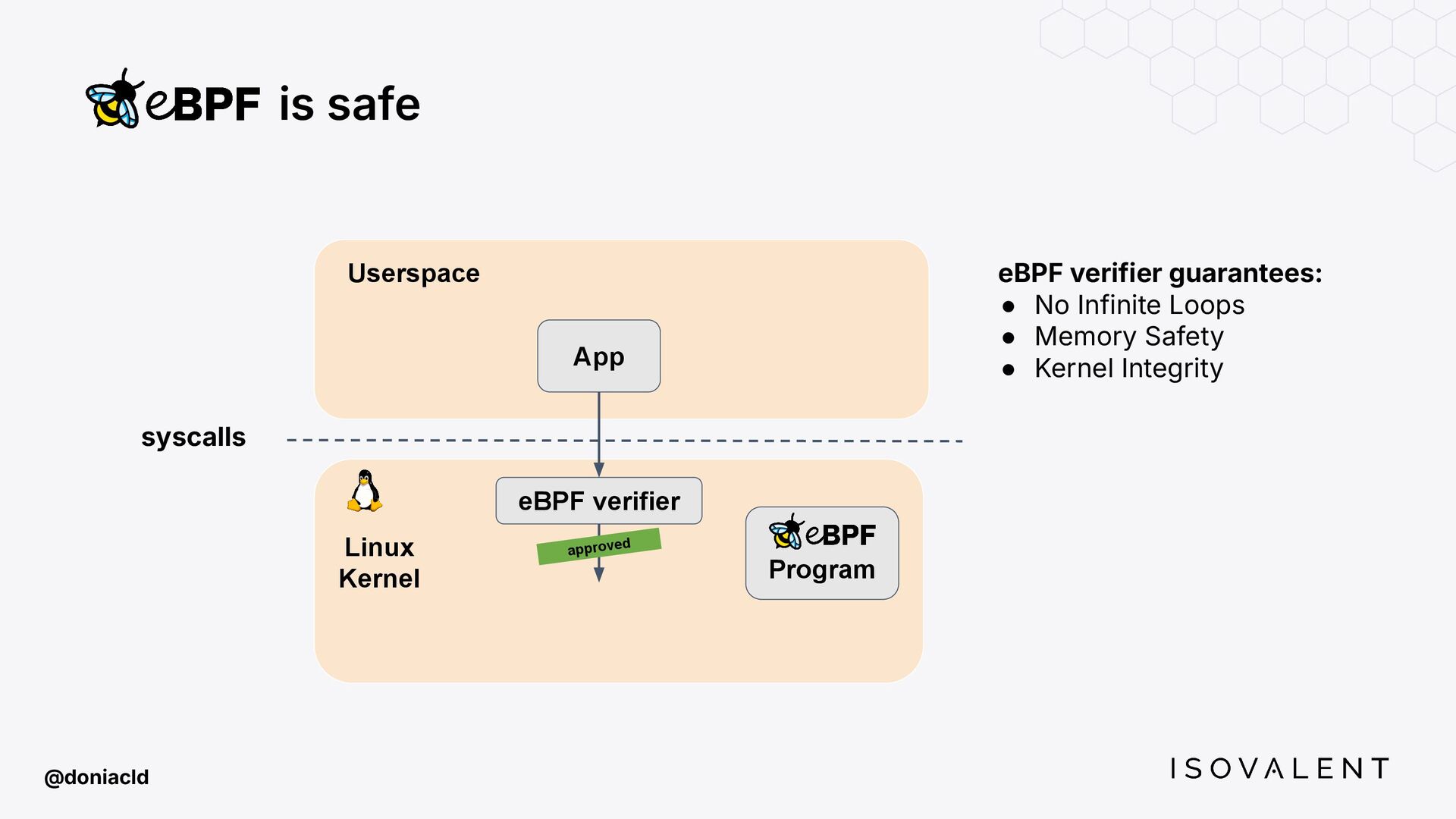
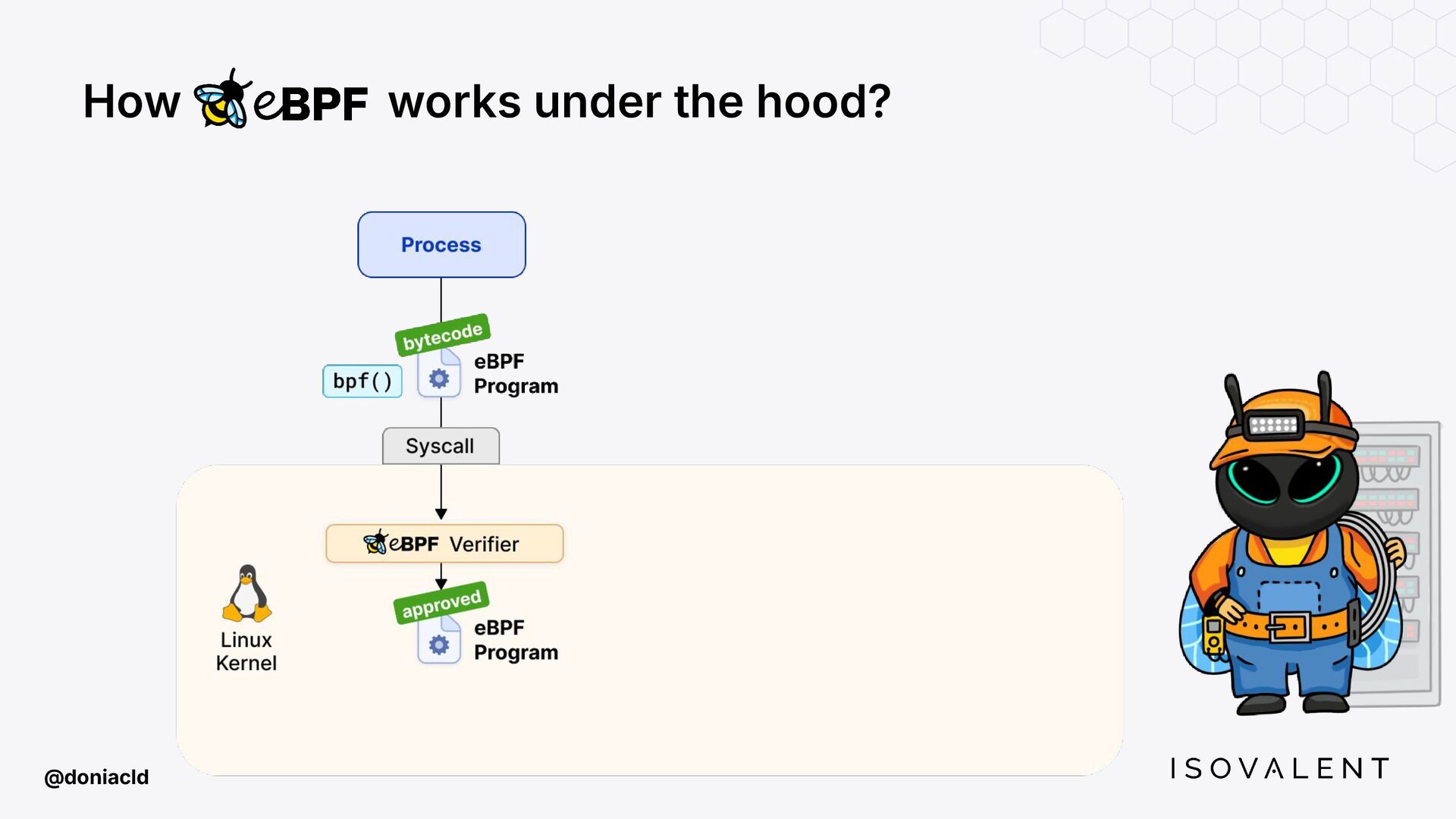
  4. is safe @doniacld Program App Linux Kernel Userspace syscalls eBPF

    verifier approved eBPF verifier guarantees: • No Infinite Loops • Memory Safety • Kernel Integrity
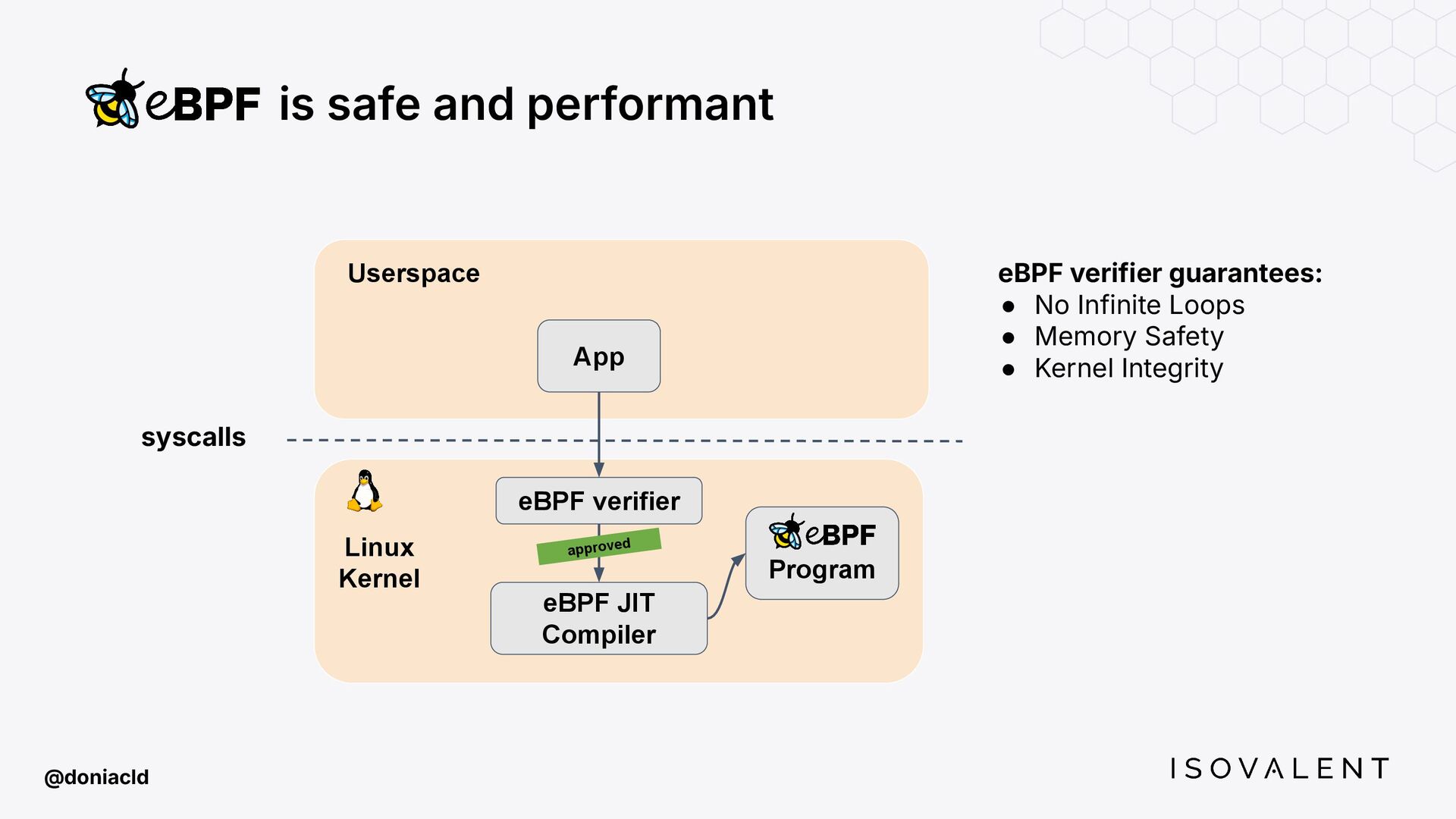
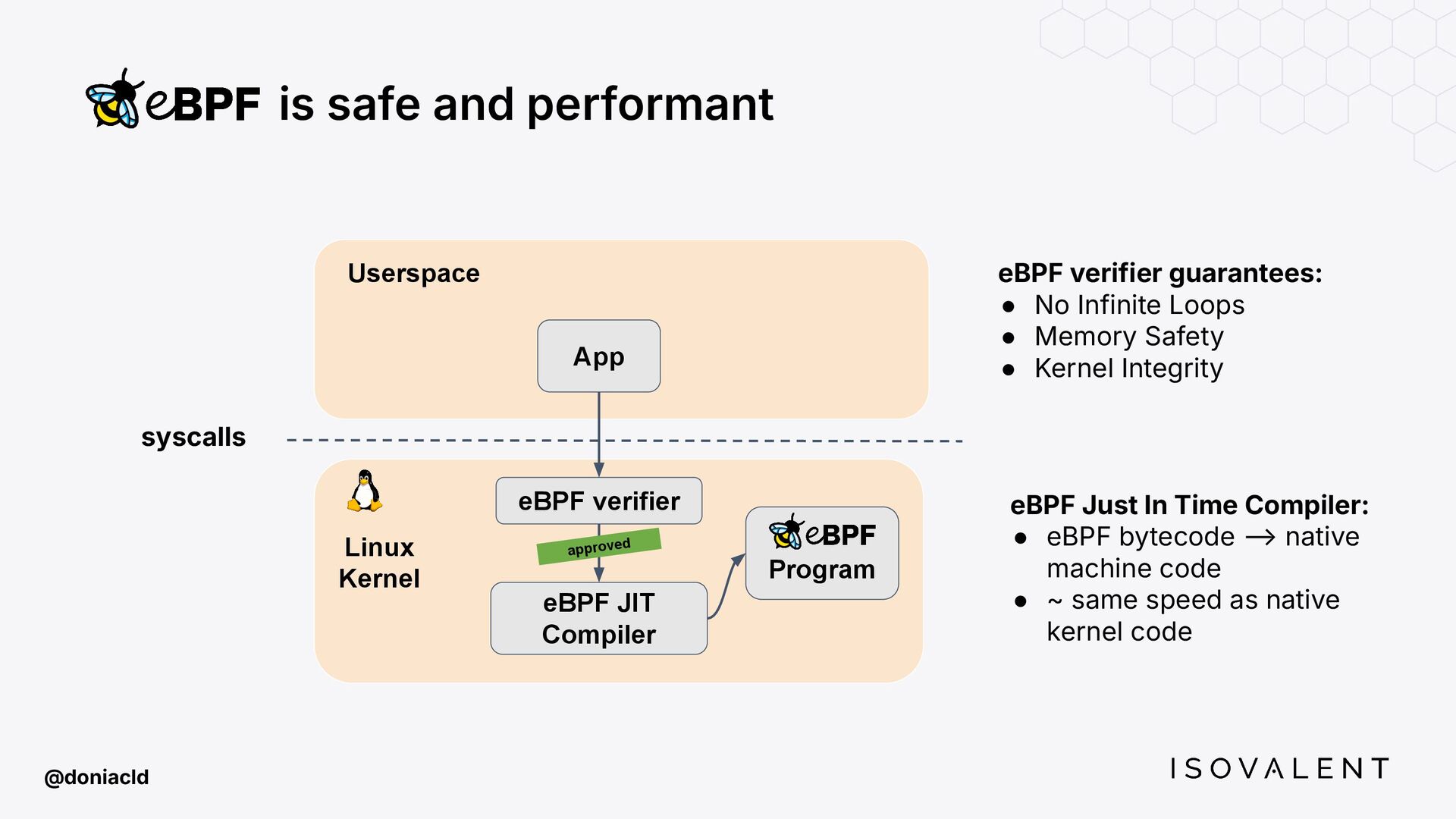
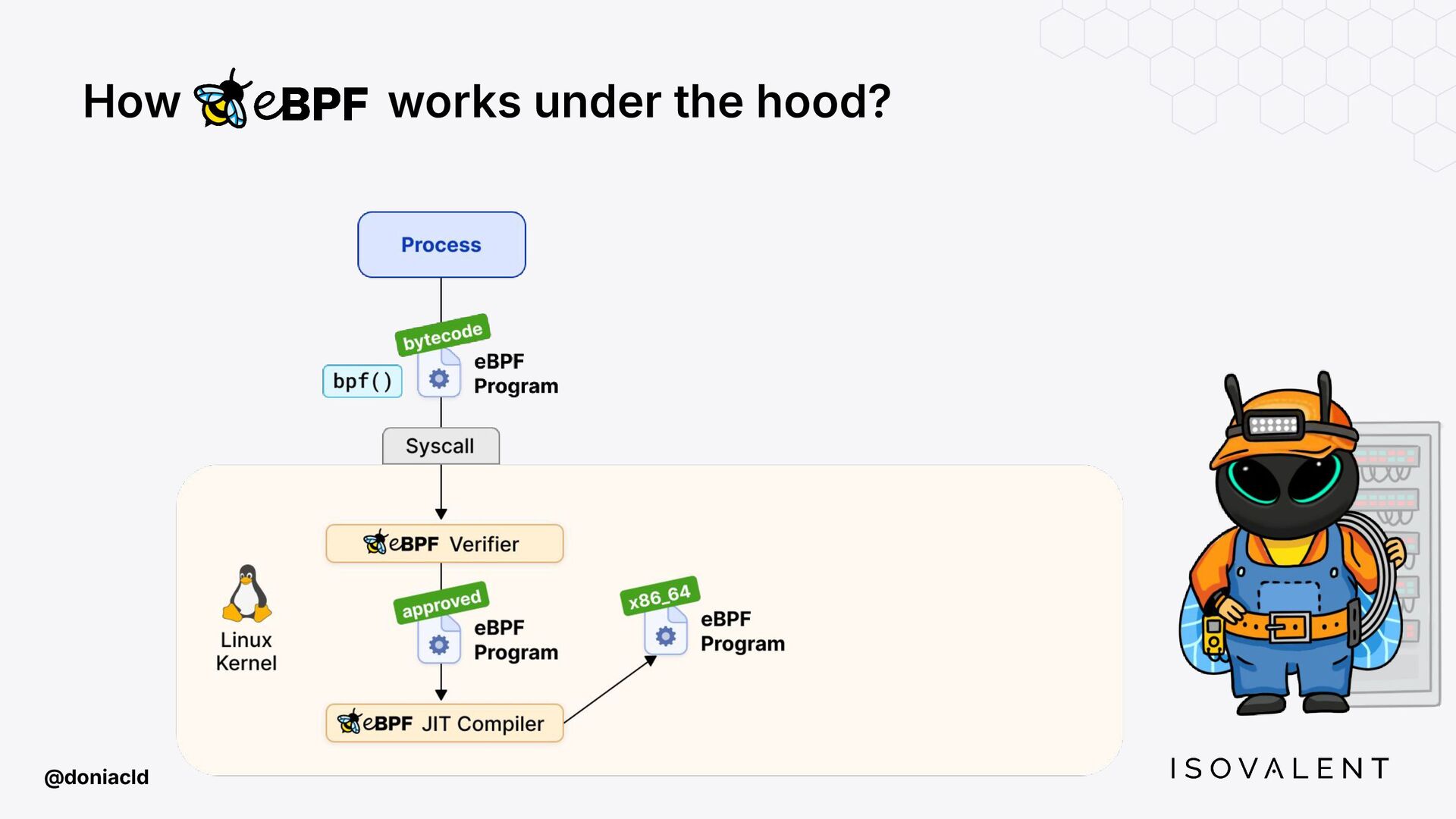
  5. is safe and performant @doniacld Program App Linux Kernel Userspace

    syscalls eBPF verifier eBPF JIT Compiler approved eBPF verifier guarantees: • No Infinite Loops • Memory Safety • Kernel Integrity
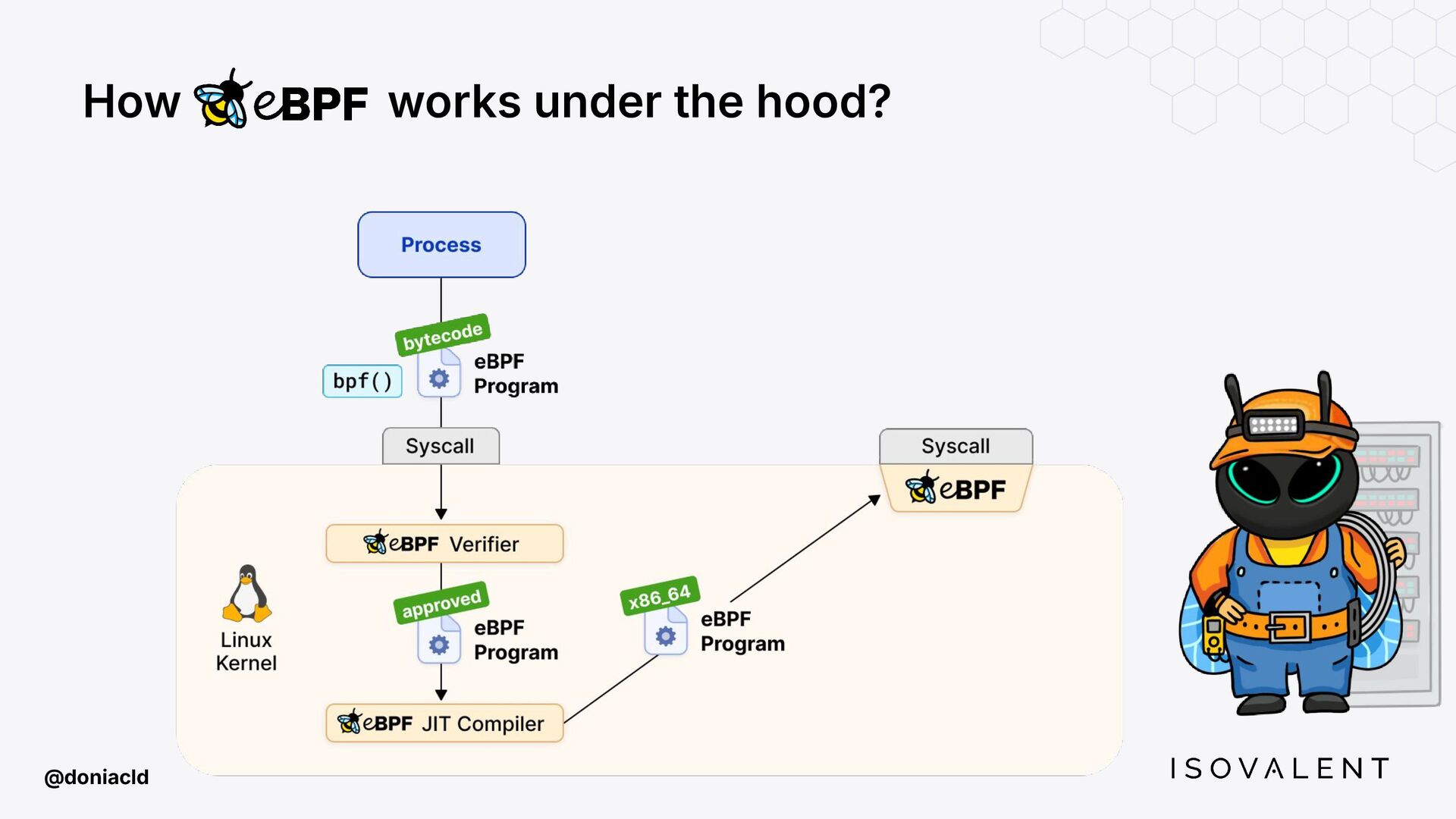
  6. is safe and performant @doniacld Program App Linux Kernel Userspace

    syscalls eBPF verifier eBPF JIT Compiler approved eBPF verifier guarantees: • No Infinite Loops • Memory Safety • Kernel Integrity eBPF Just In Time Compiler: • eBPF bytecode ⟶ native machine code • ~ same speed as native kernel code
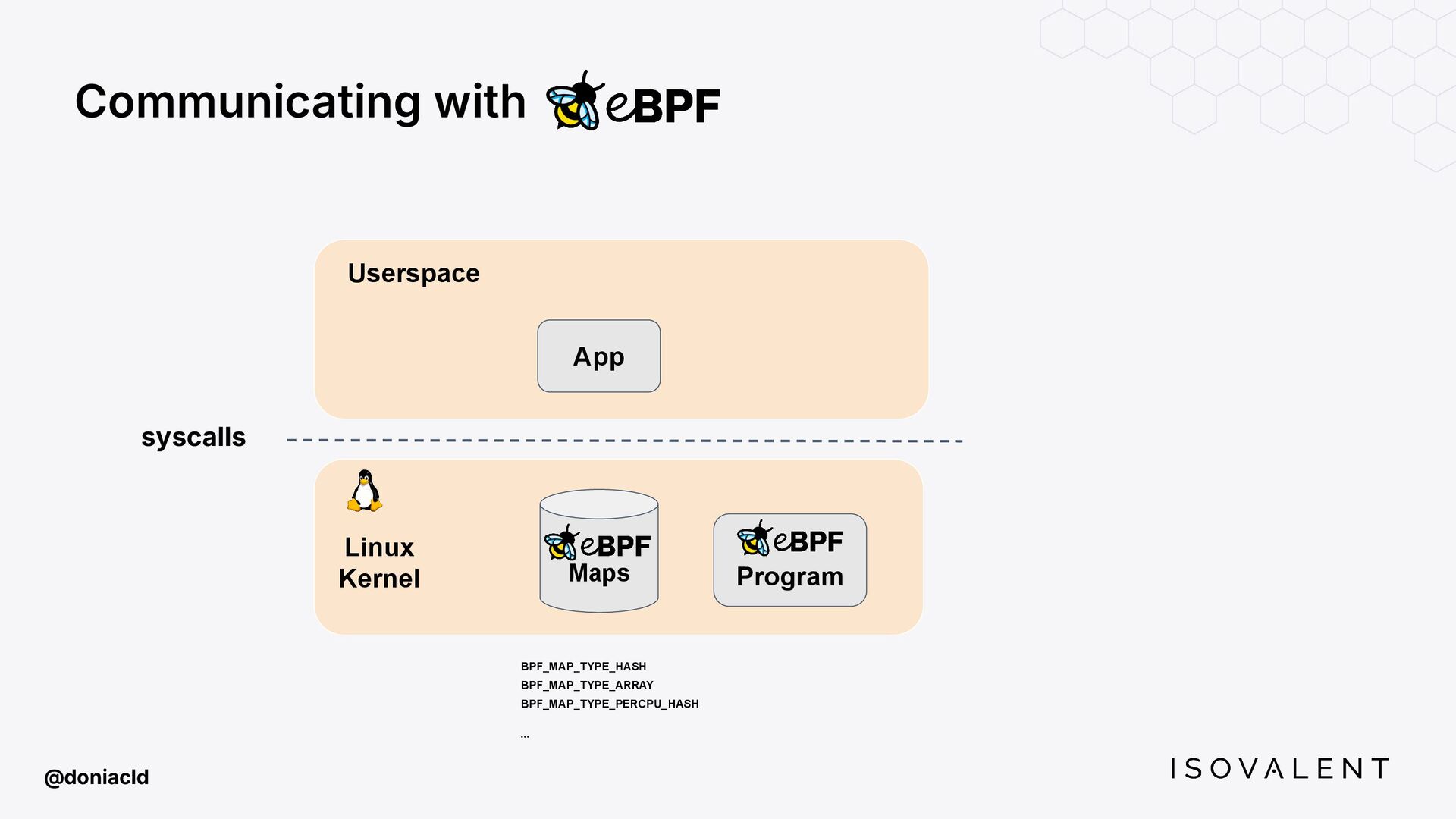
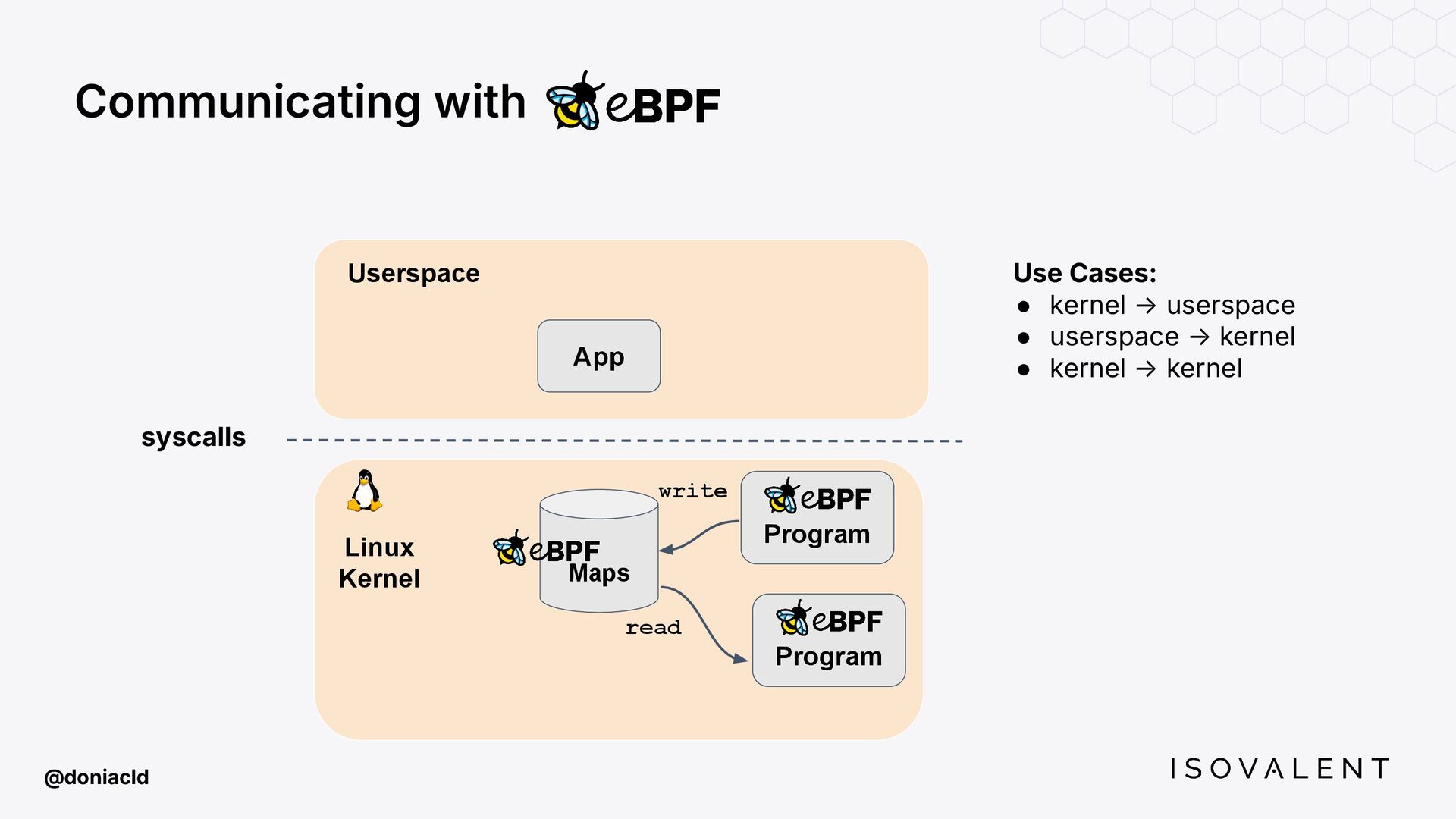
  7. @doniacld Communicating with Program App Linux Kernel Userspace syscalls Maps

    BPF_MAP_TYPE_HASH BPF_MAP_TYPE_ARRAY BPF_MAP_TYPE_PERCPU_HASH ...
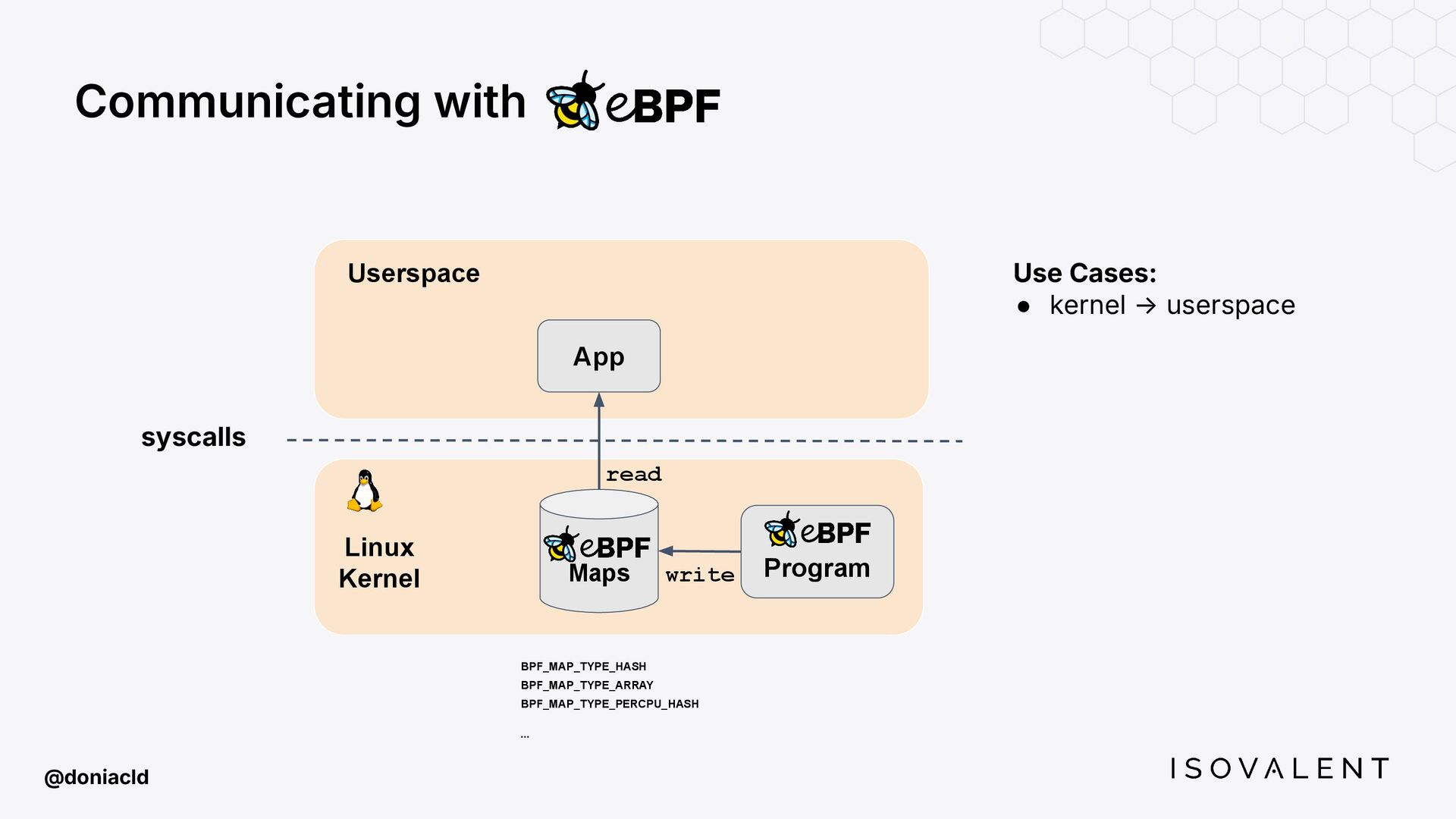
  8. @doniacld Communicating with Program App Linux Kernel Userspace syscalls Maps

    BPF_MAP_TYPE_HASH BPF_MAP_TYPE_ARRAY BPF_MAP_TYPE_PERCPU_HASH ... Use Cases: • kernel → userspace read write
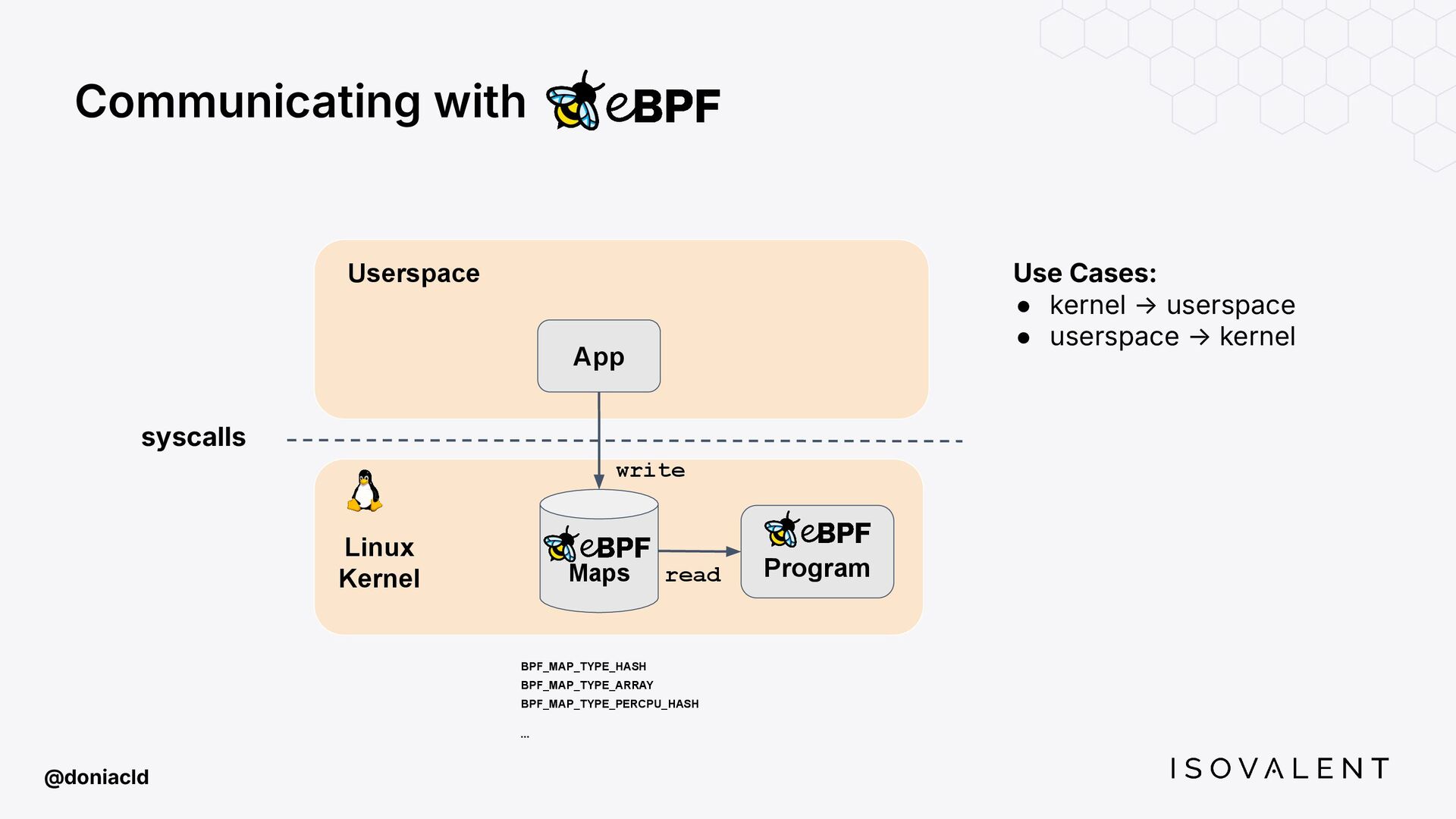
  9. @doniacld Communicating with App Linux Kernel Userspace syscalls Maps BPF_MAP_TYPE_HASH

    BPF_MAP_TYPE_ARRAY BPF_MAP_TYPE_PERCPU_HASH ... Use Cases: • kernel → userspace • userspace → kernel write read Program
  10. @doniacld Communicating with App Linux Kernel Userspace Program syscalls Maps

    Use Cases: • kernel → userspace • userspace → kernel • kernel → kernel Program write read
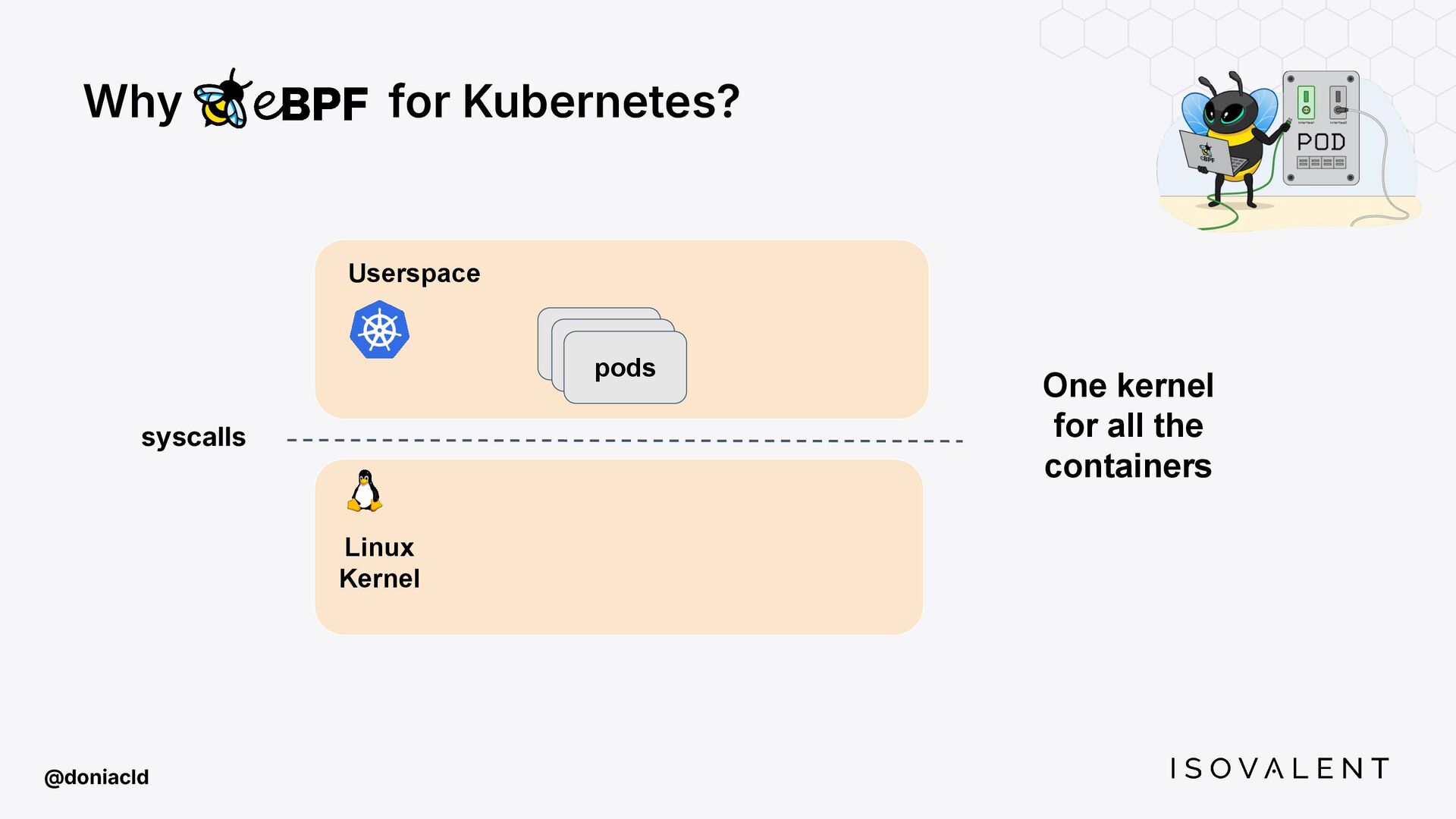
  11. Why for Kubernetes? @doniacld pod Linux Kernel Userspace pod pods

    One kernel for all the containers syscalls
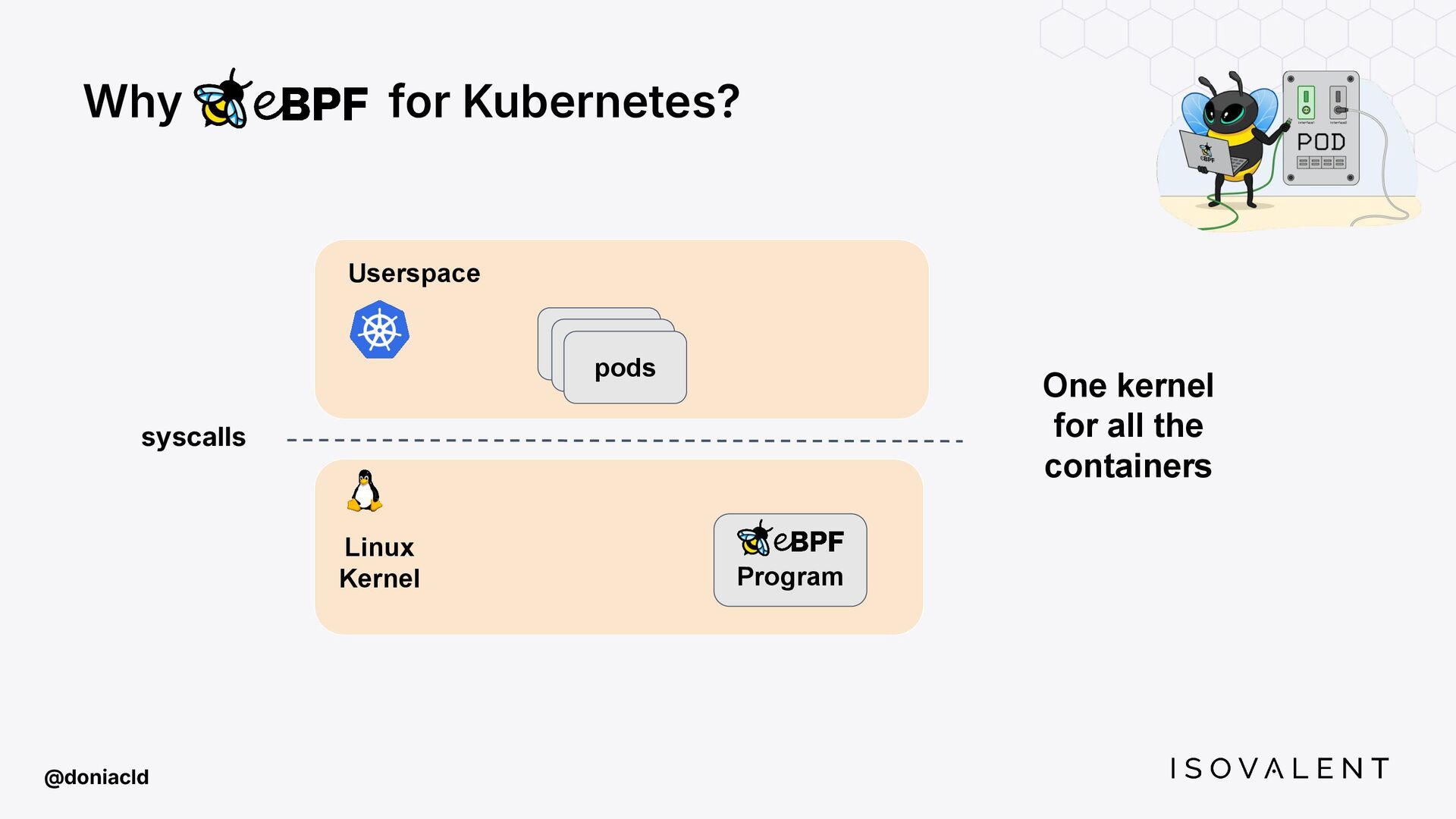
  12. Why for Kubernetes? @doniacld Program pod Linux Kernel Userspace pod

    pods syscalls One kernel for all the containers
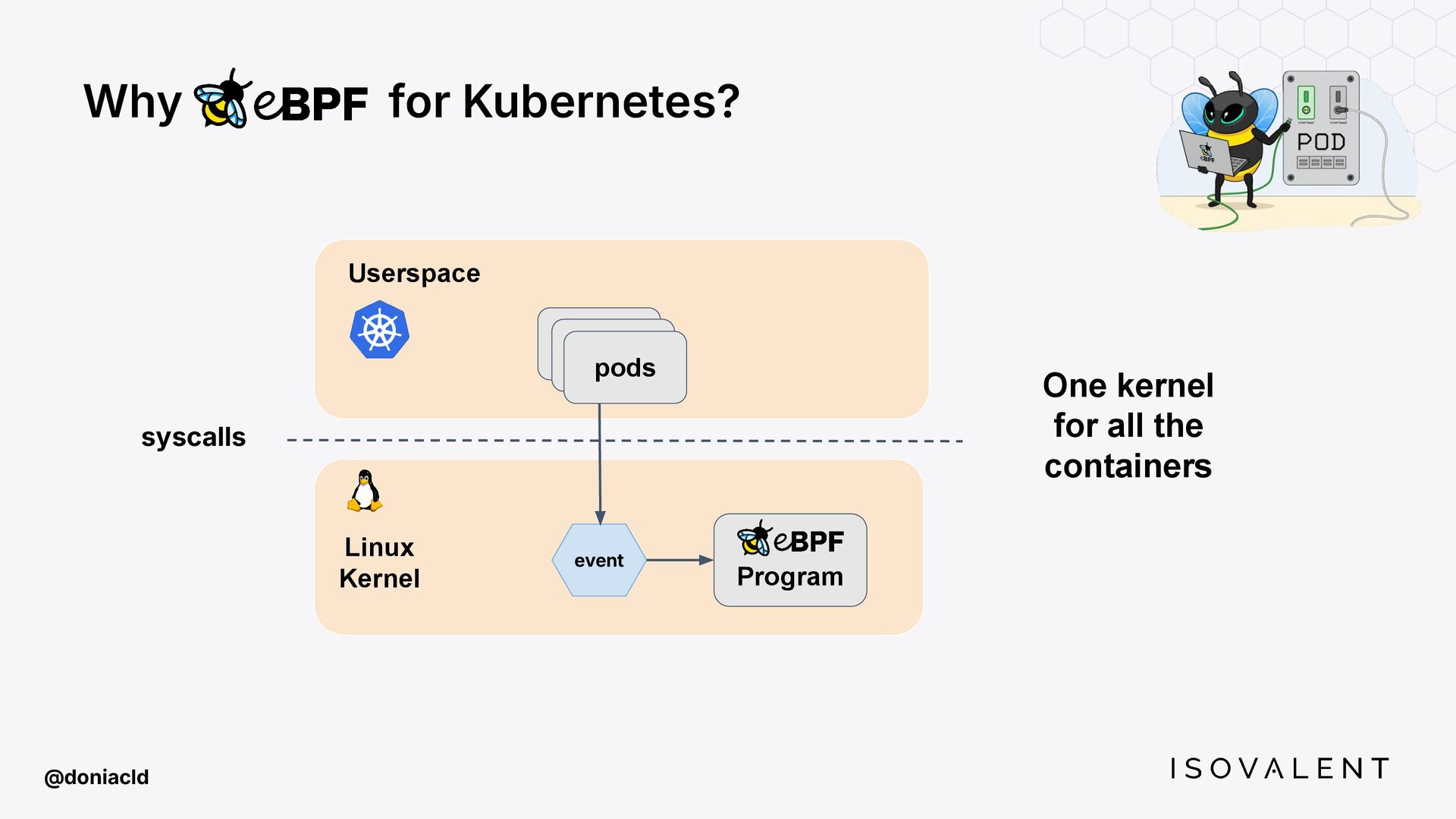
  13. Why for Kubernetes? @doniacld Program pod Linux Kernel Userspace event

    pod pods One kernel for all the containers syscalls
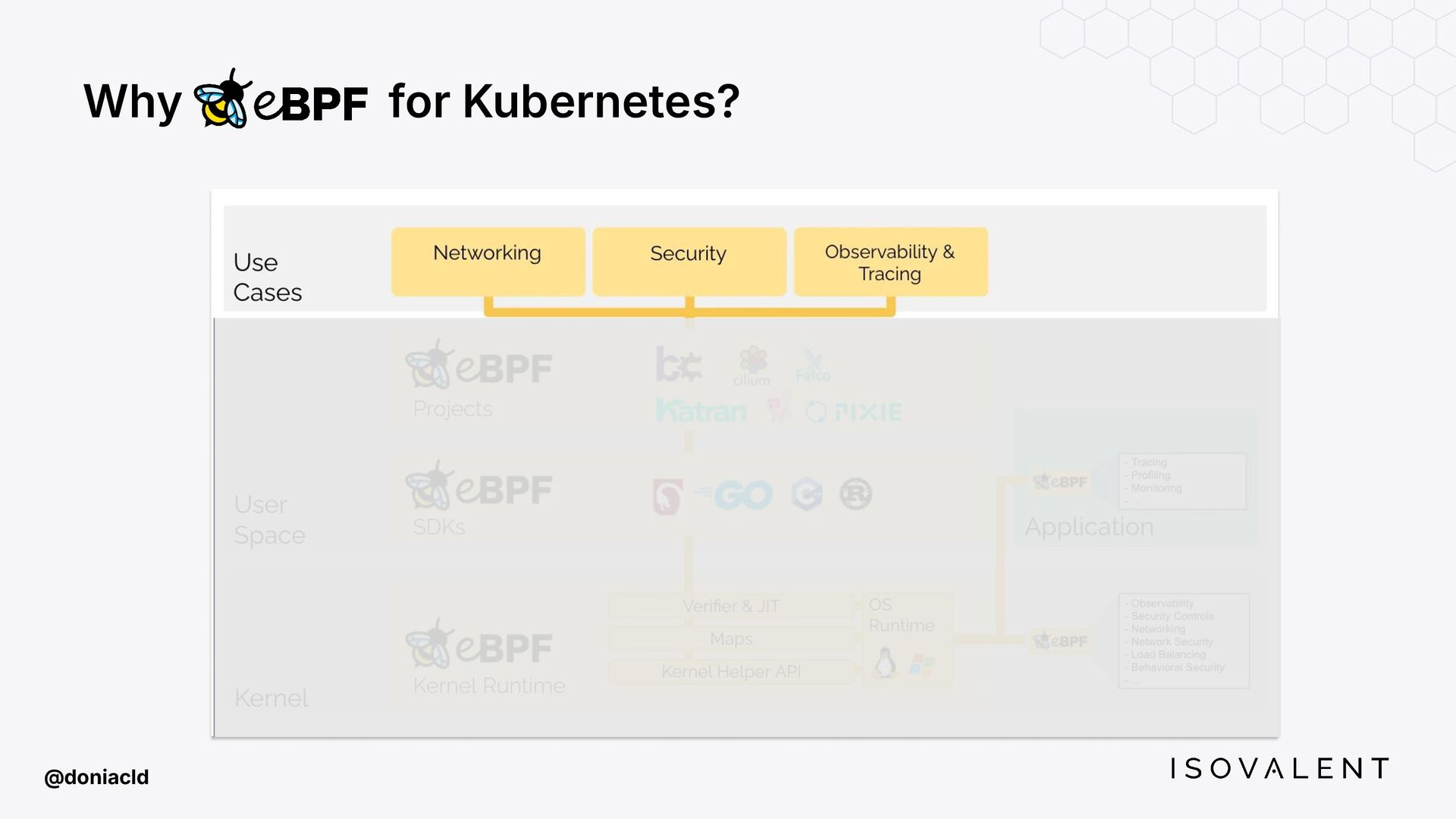
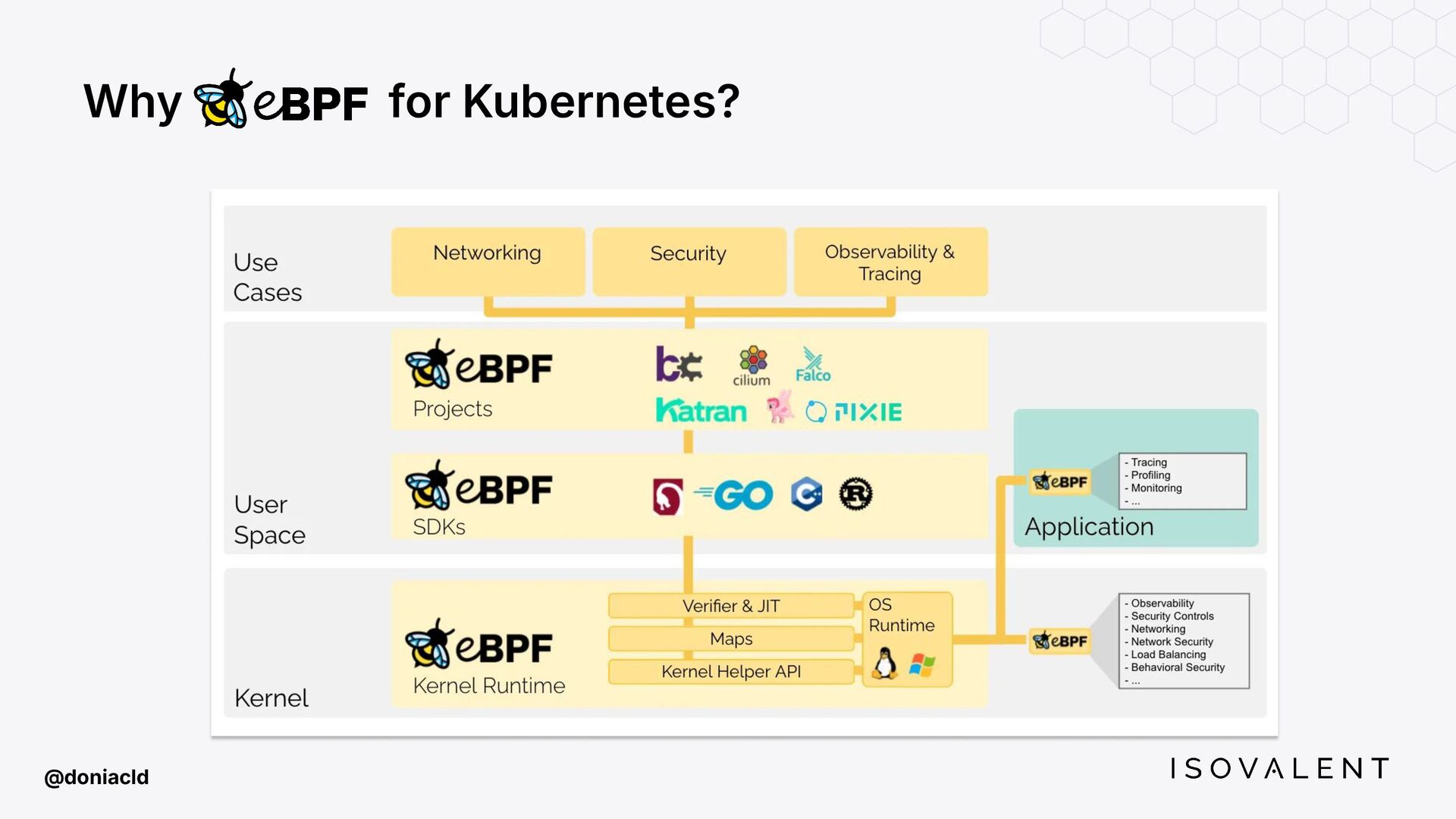
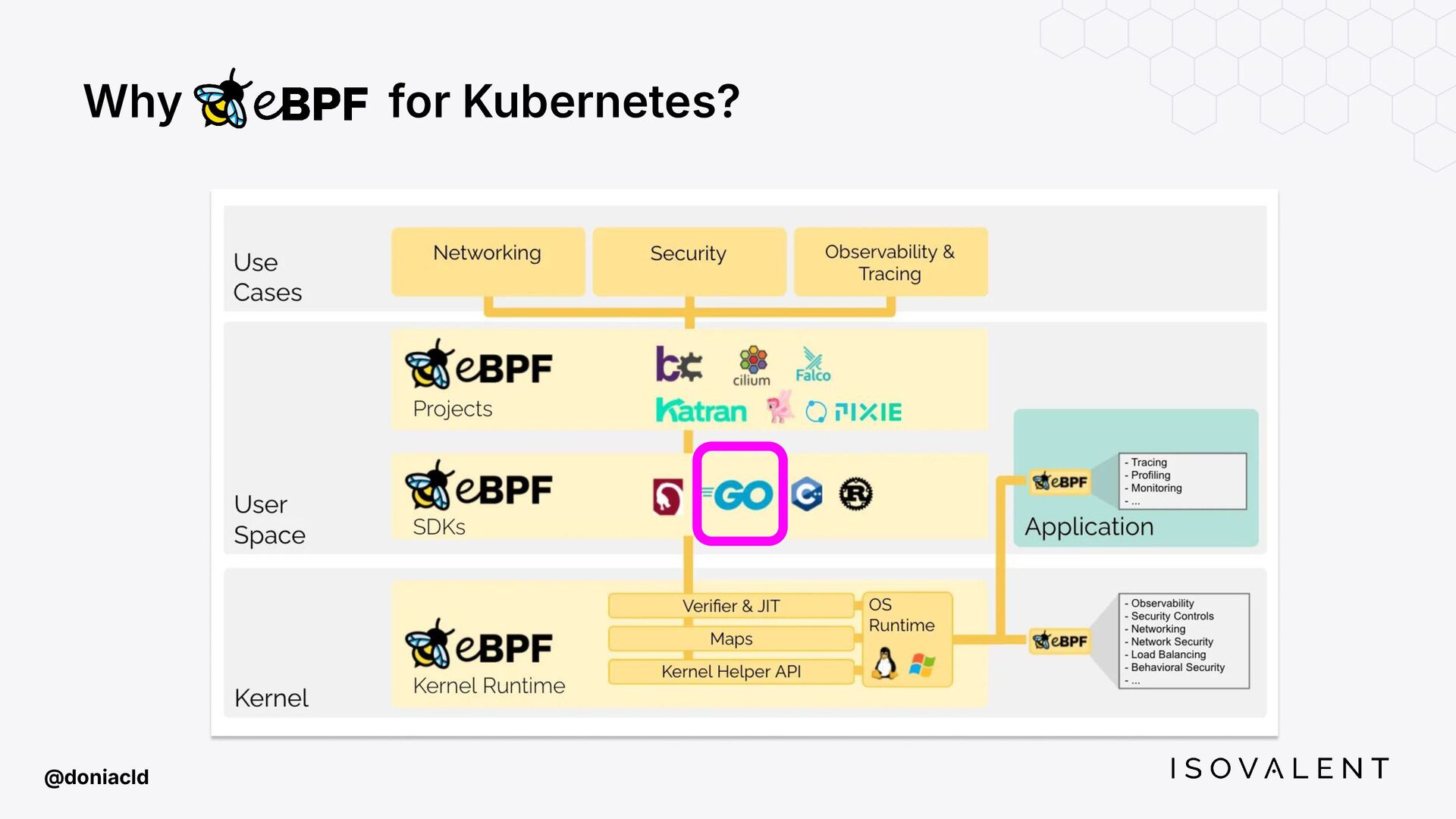
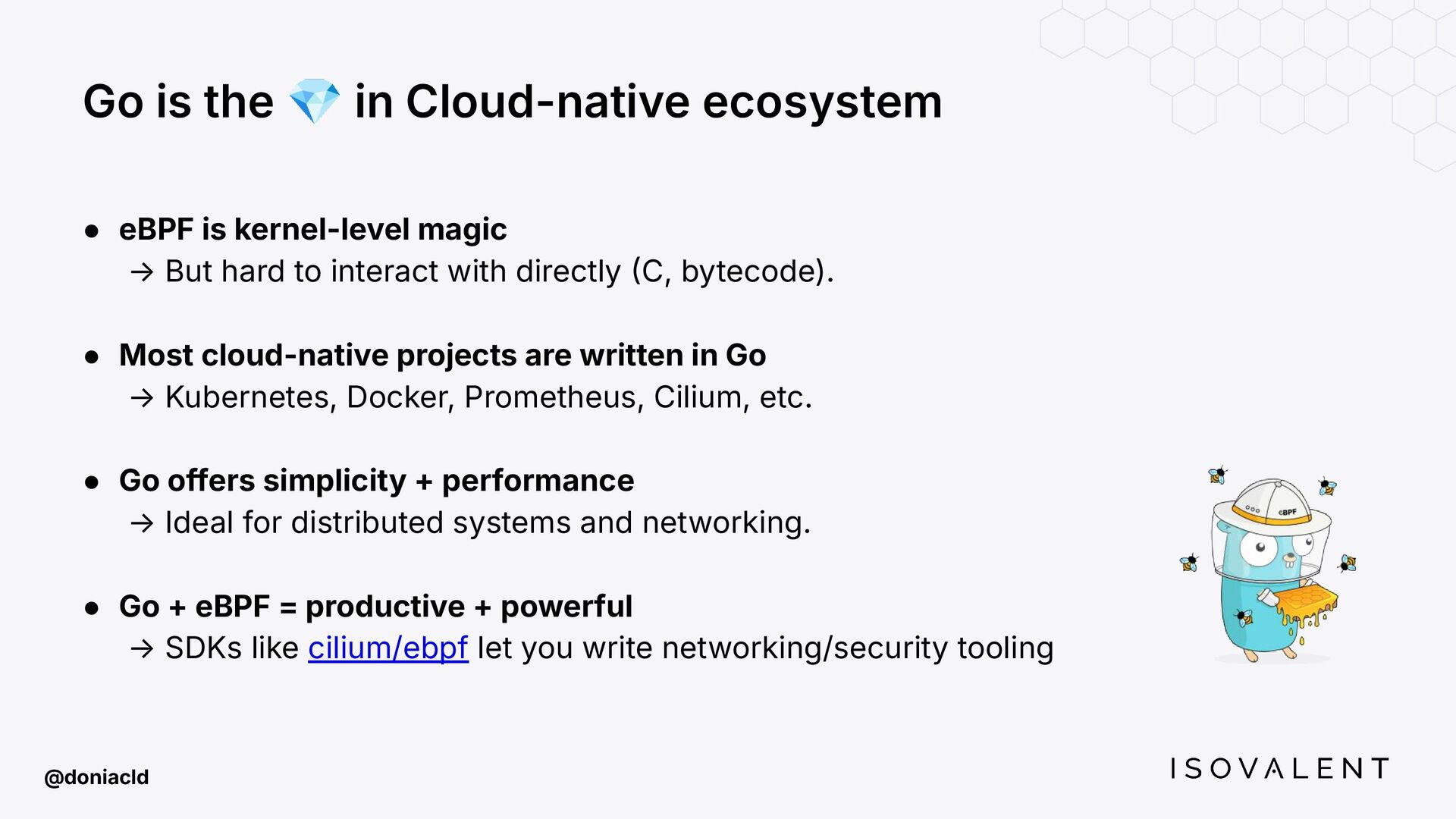
  14. @doniacld Go is the 💎 in Cloud-native ecosystem • eBPF

    is kernel-level magic → But hard to interact with directly C, bytecode). • Most cloud-native projects are written in Go → Kubernetes, Docker, Prometheus, Cilium, etc. • Go offers simplicity + performance → Ideal for distributed systems and networking. • Go + eBPF = productive + powerful → SDKs like cilium/ebpf let you write networking/security tooling
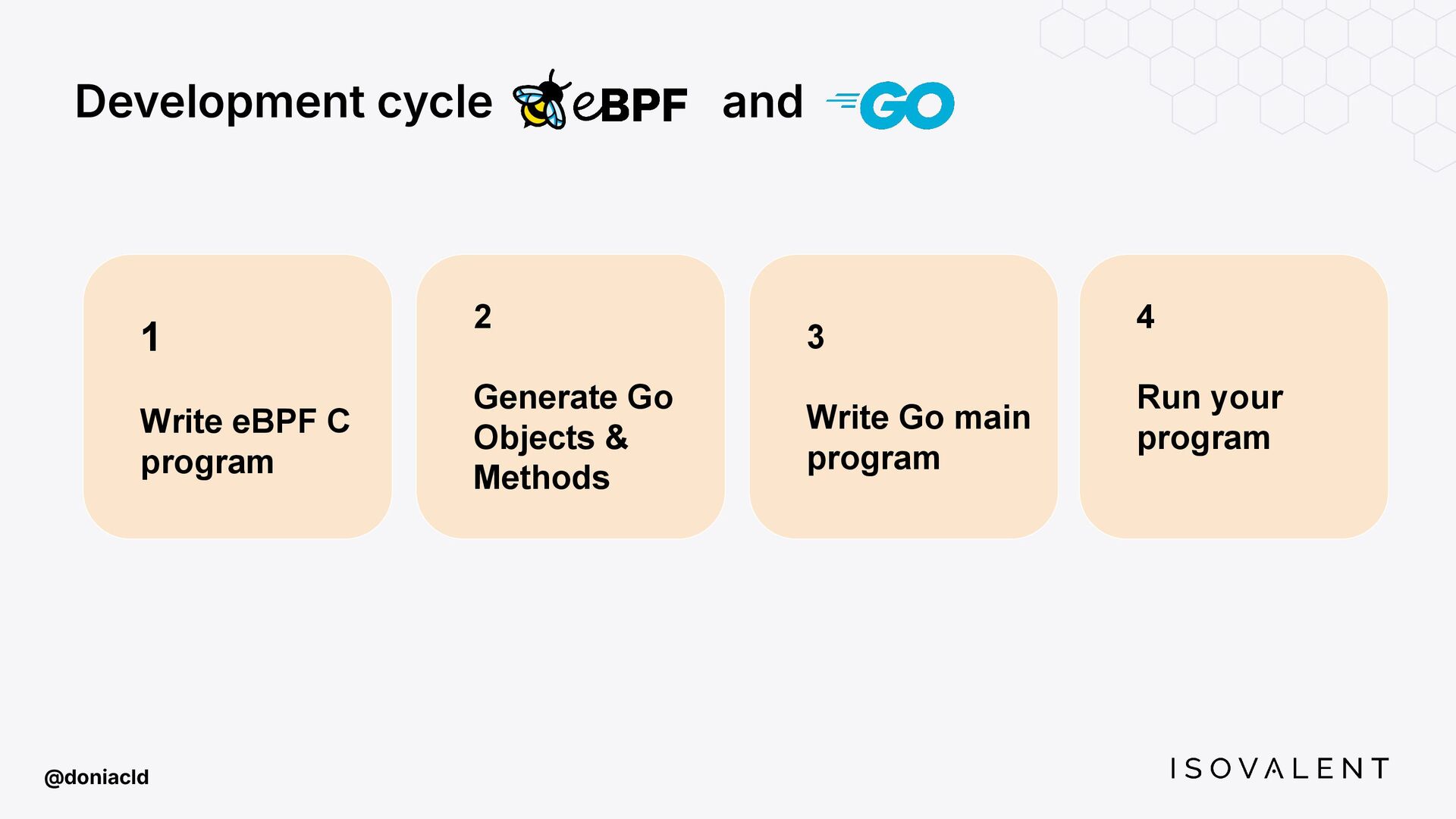
  15. @doniacld 1 Write eBPF C program 2 Generate Go Objects

    & Methods 3 Write Go main program 4 Run your program Development cycle and
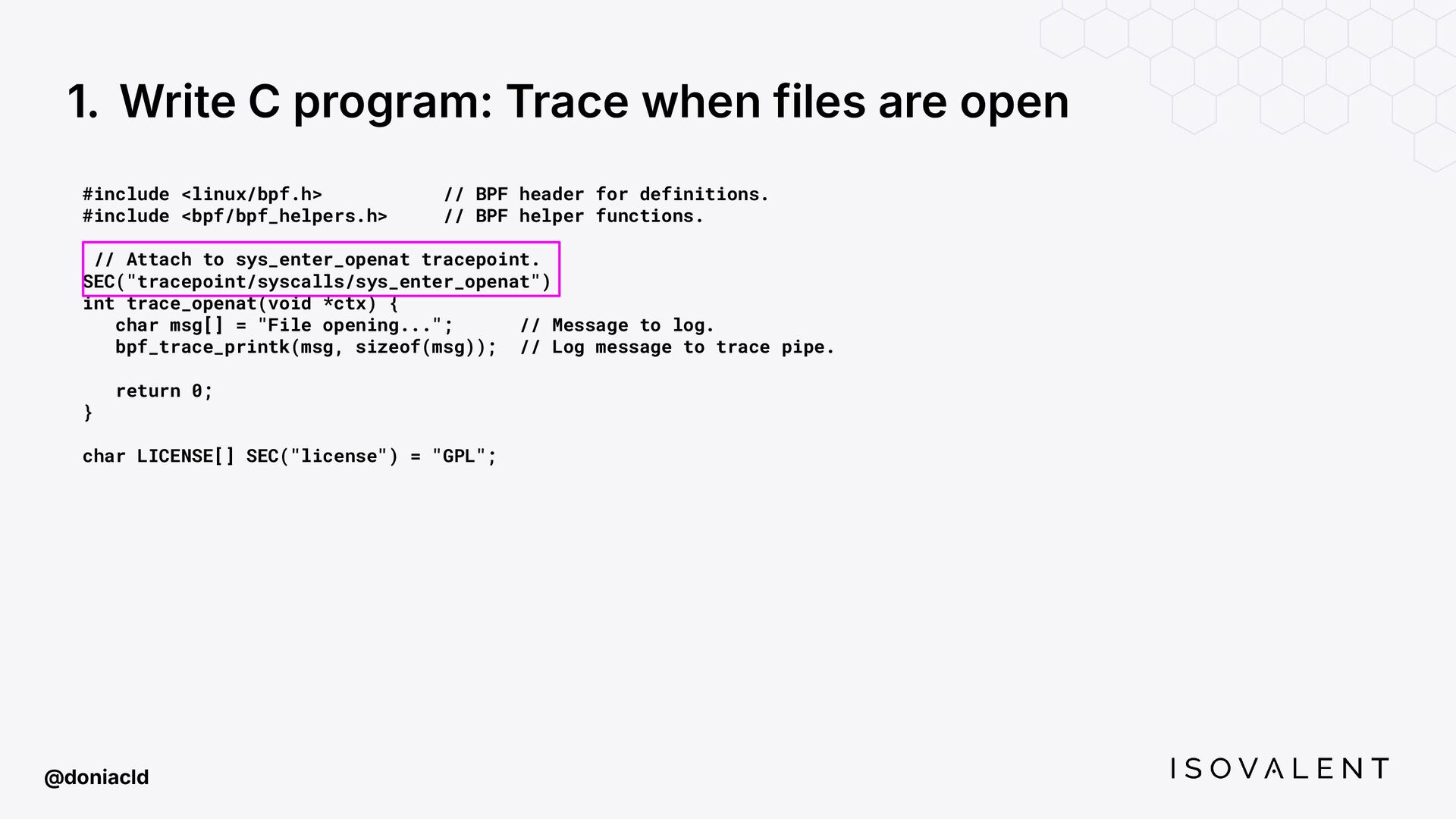
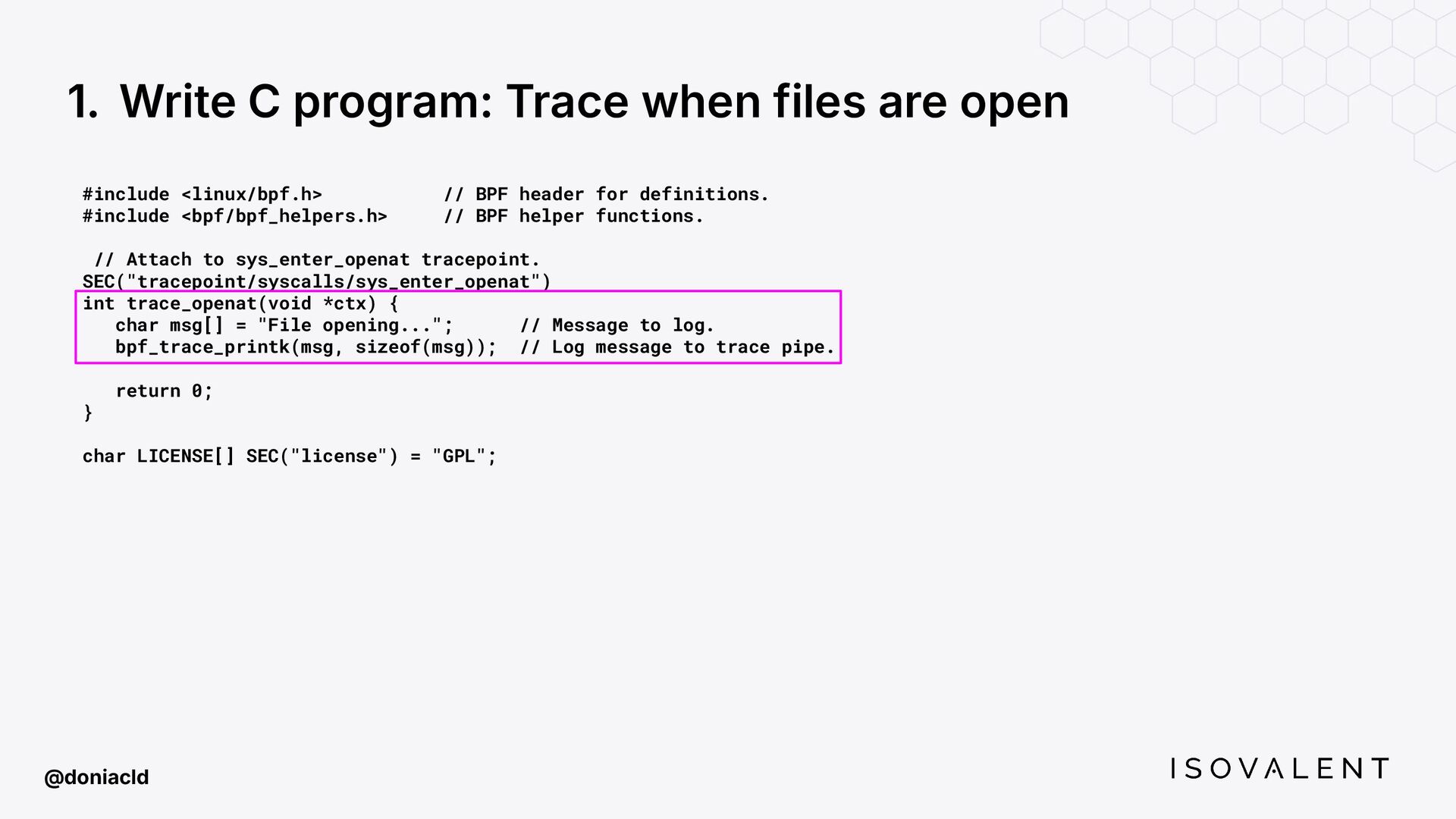
  16. 1. Write C program: Trace when files are open #include

    <linux/bpf.h> // BPF header for definitions. #include <bpf/bpf_helpers.h> // BPF helper functions. // Attach to sys_enter_openat tracepoint. SEC("tracepoint/syscalls/sys_enter_openat") int trace_openat(void *ctx) { char msg[] = "File opening..."; // Message to log. bpf_trace_printk(msg, sizeof(msg)); // Log message to trace pipe. return 0; } char LICENSE[] SEC("license") = "GPL"; @doniacld
  17. 1. Write C program: Trace when files are open #include

    <linux/bpf.h> // BPF header for definitions. #include <bpf/bpf_helpers.h> // BPF helper functions. // Attach to sys_enter_openat tracepoint. SEC("tracepoint/syscalls/sys_enter_openat") int trace_openat(void *ctx) { char msg[] = "File opening..."; // Message to log. bpf_trace_printk(msg, sizeof(msg)); // Log message to trace pipe. return 0; } char LICENSE[] SEC("license") = "GPL"; @doniacld
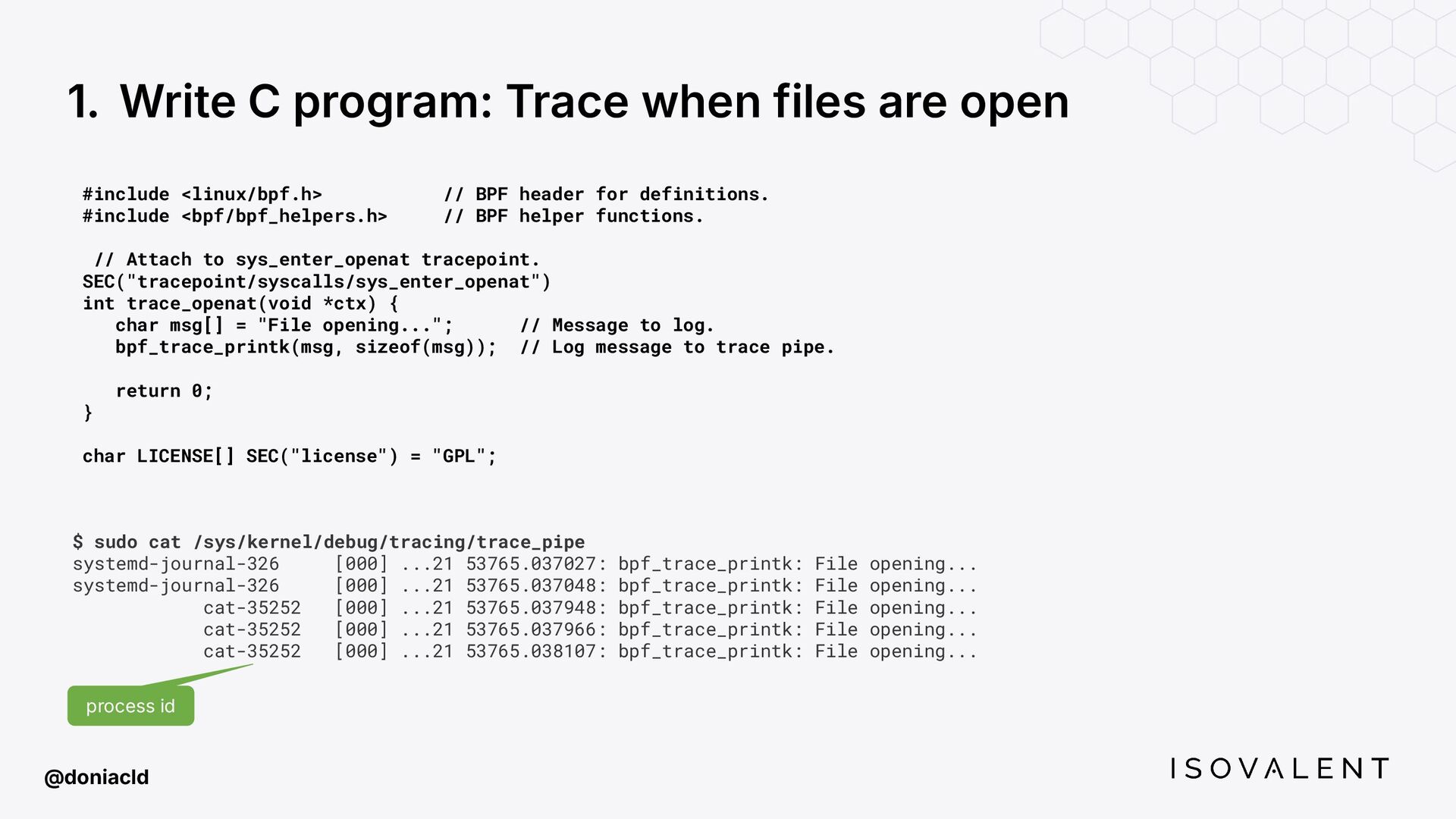
  18. 1. Write C program: Trace when files are open #include

    <linux/bpf.h> // BPF header for definitions. #include <bpf/bpf_helpers.h> // BPF helper functions. // Attach to sys_enter_openat tracepoint. SEC("tracepoint/syscalls/sys_enter_openat") int trace_openat(void *ctx) { char msg[] = "File opening..."; // Message to log. bpf_trace_printk(msg, sizeof(msg)); // Log message to trace pipe. return 0; } char LICENSE[] SEC("license") = "GPL"; @doniacld $ sudo cat /sys/kernel/debug/tracing/trace_pipe systemd-journal-326 [000] ...21 53765.037027: bpf_trace_printk: File opening... systemd-journal-326 [000] ...21 53765.037048: bpf_trace_printk: File opening... cat-35252 [000] ...21 53765.037948: bpf_trace_printk: File opening... cat-35252 [000] ...21 53765.037966: bpf_trace_printk: File opening... cat-35252 [000] ...21 53765.038107: bpf_trace_printk: File opening... process id
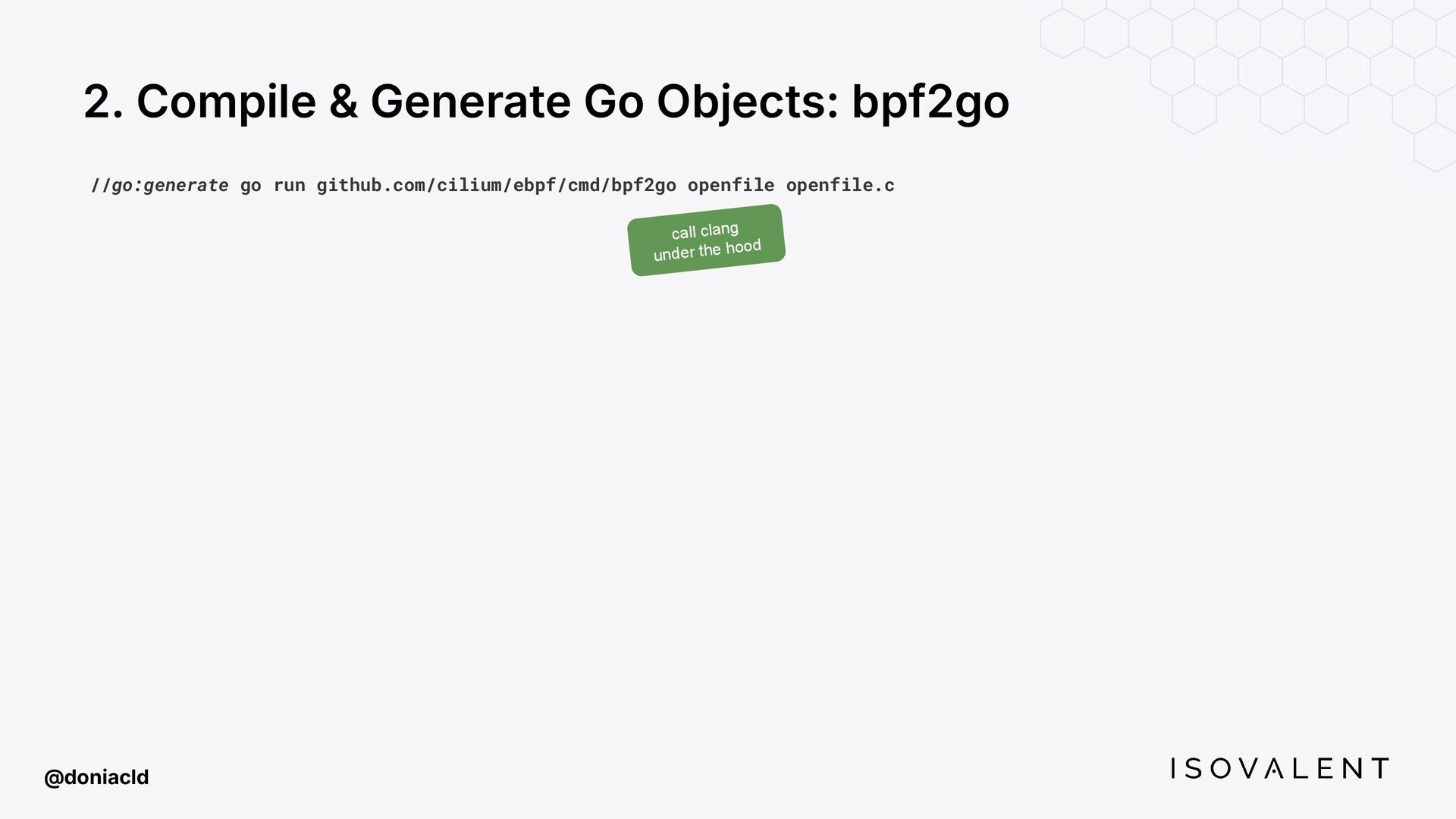
  19. 2. Compile & Generate Go Objects: bpf2go @doniacld //go:generate go

    run github.com/cilium/ebpf/cmd/bpf2go openfile openfile.c call clang under the hood
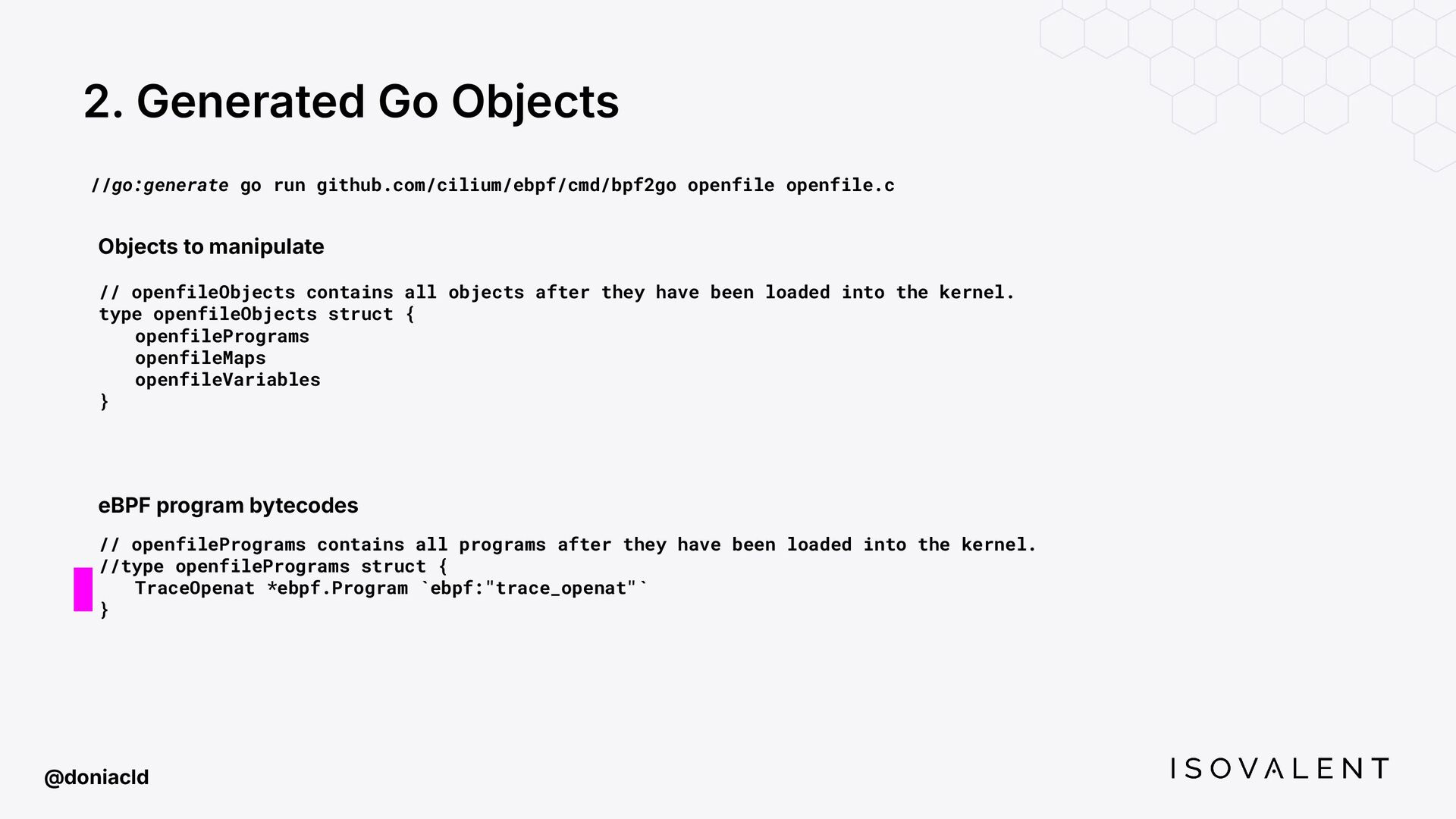
  20. @doniacld 2. Generated Go Objects // openfilePrograms contains all programs

    after they have been loaded into the kernel. //type openfilePrograms struct { TraceOpenat *ebpf.Program `ebpf:"trace_openat"` } Objects to manipulate // openfileObjects contains all objects after they have been loaded into the kernel. type openfileObjects struct { openfilePrograms openfileMaps openfileVariables } //go:generate go run github.com/cilium/ebpf/cmd/bpf2go openfile openfile.c eBPF program bytecodes
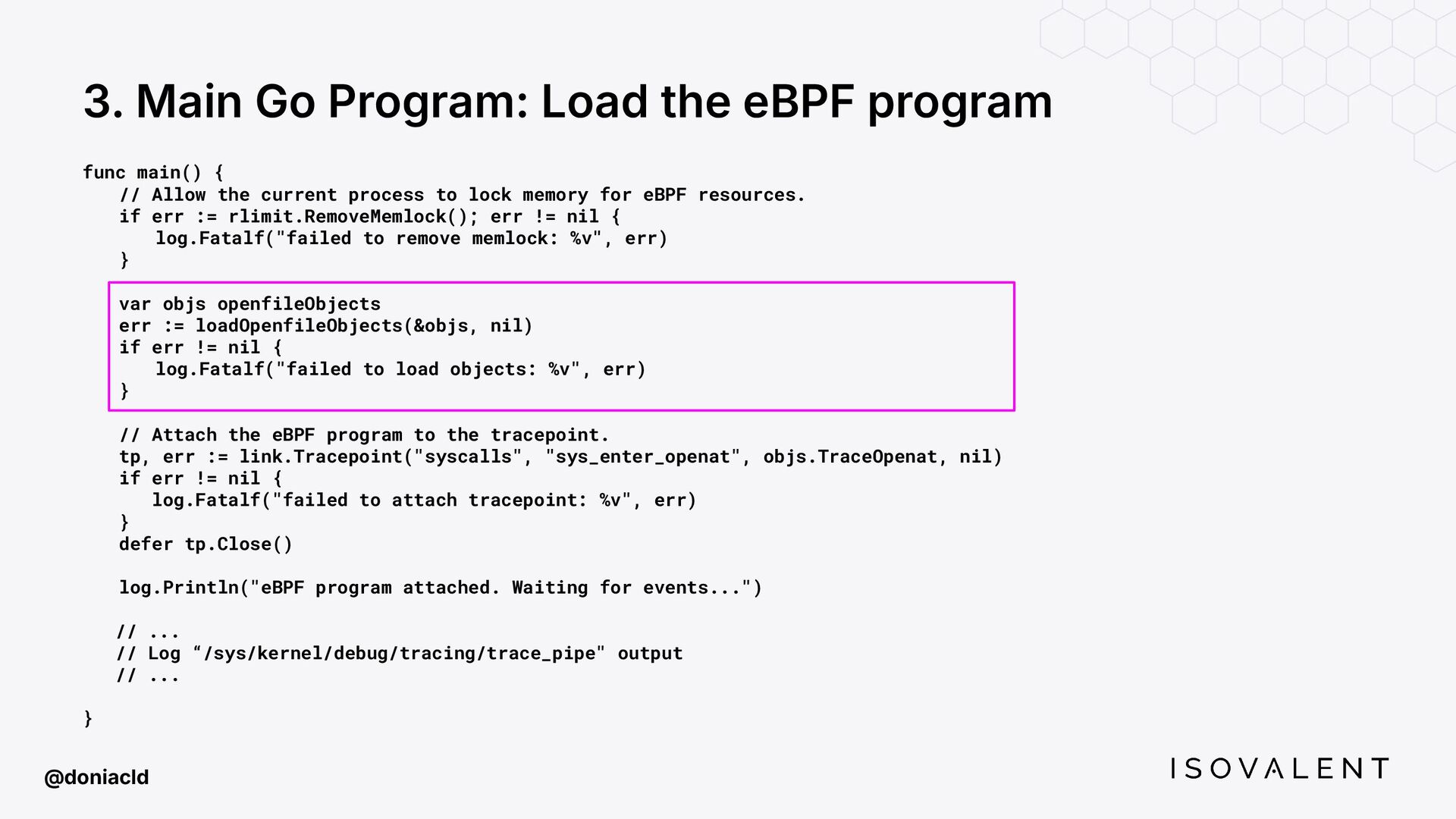
  21. @doniacld 3. Main Go Program: Load the eBPF program func

    main() { // Allow the current process to lock memory for eBPF resources. if err := rlimit.RemoveMemlock(); err != nil { log.Fatalf("failed to remove memlock: %v", err) } var objs openfileObjects err := loadOpenfileObjects(&objs, nil) if err != nil { log.Fatalf("failed to load objects: %v", err) } // Attach the eBPF program to the tracepoint. tp, err := link.Tracepoint("syscalls", "sys_enter_openat", objs.TraceOpenat, nil) if err != nil { log.Fatalf("failed to attach tracepoint: %v", err) } defer tp.Close() log.Println("eBPF program attached. Waiting for events...") // ... // Log “/sys/kernel/debug/tracing/trace_pipe" output // ... }
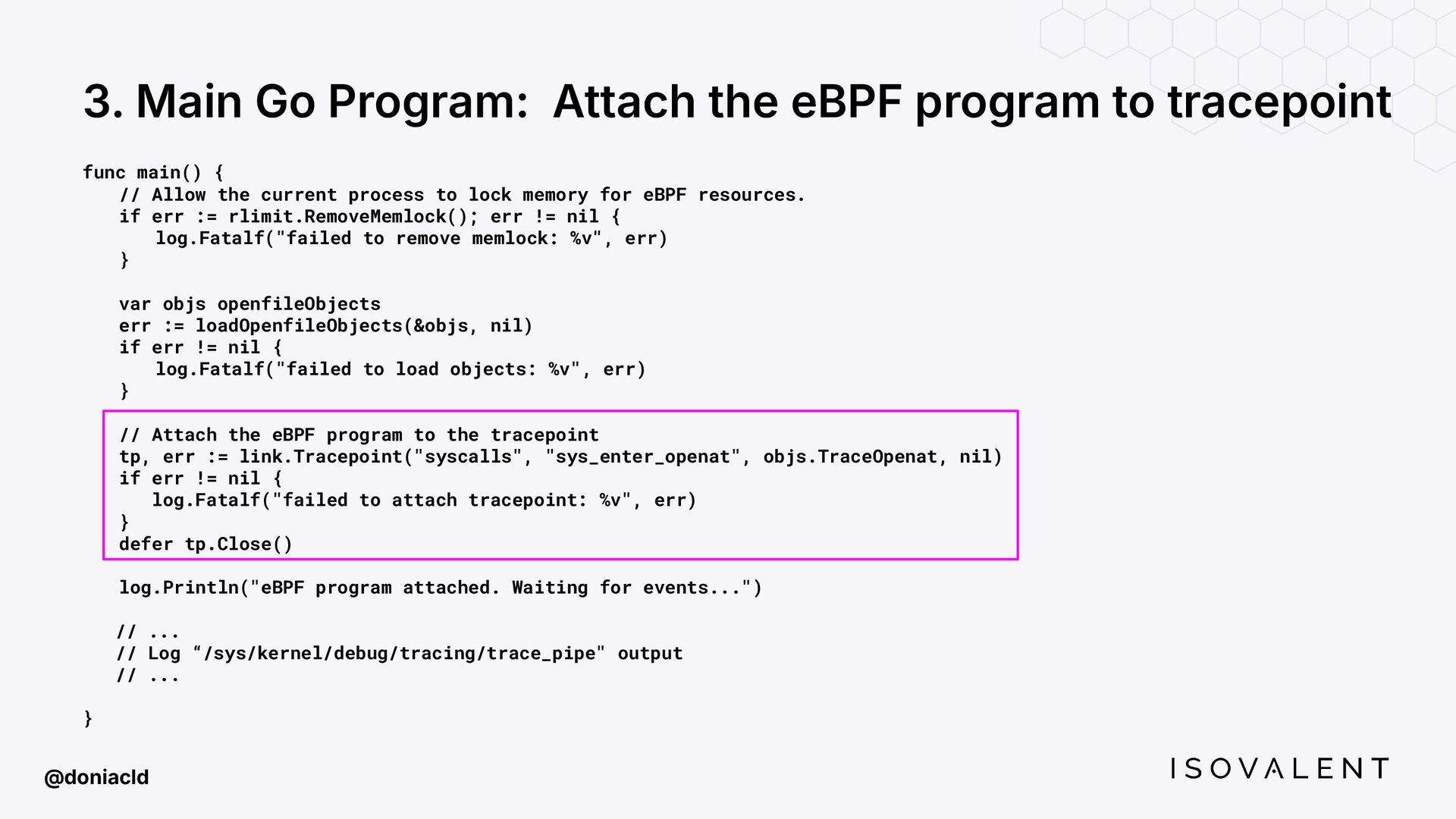
  22. @doniacld 3. Main Go Program: Attach the eBPF program to

    tracepoint func main() { // Allow the current process to lock memory for eBPF resources. if err := rlimit.RemoveMemlock(); err != nil { log.Fatalf("failed to remove memlock: %v", err) } var objs openfileObjects err := loadOpenfileObjects(&objs, nil) if err != nil { log.Fatalf("failed to load objects: %v", err) } // Attach the eBPF program to the tracepoint tp, err := link.Tracepoint("syscalls", "sys_enter_openat", objs.TraceOpenat, nil) if err != nil { log.Fatalf("failed to attach tracepoint: %v", err) } defer tp.Close() log.Println("eBPF program attached. Waiting for events...") // ... // Log “/sys/kernel/debug/tracing/trace_pipe" output // ... }
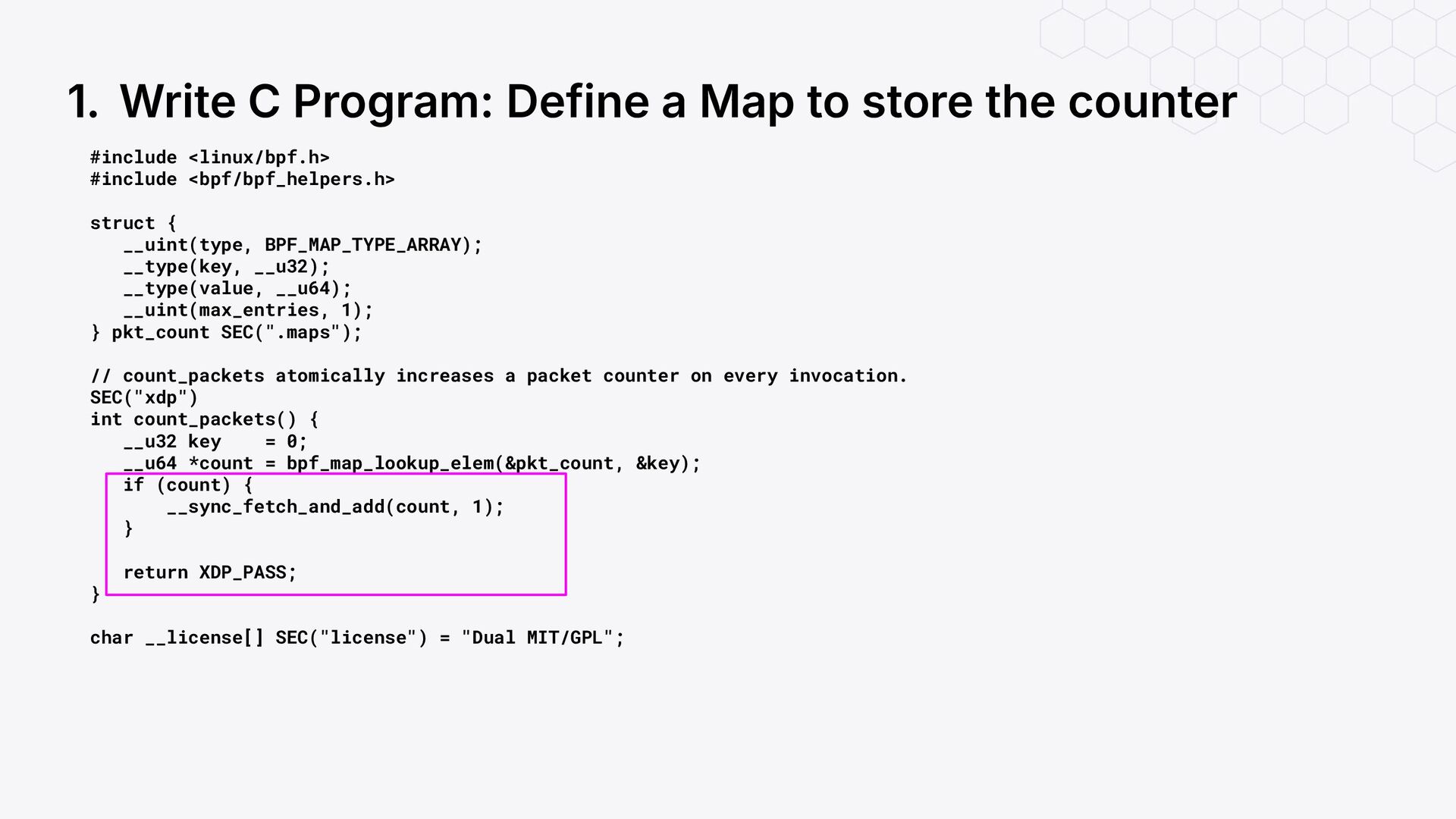
  23. 1. Write C Program: Define a Map to store the

    counter #include <linux/bpf.h> #include <bpf/bpf_helpers.h> struct { __uint(type, BPF_MAP_TYPE_ARRAY); __type(key, __u32); __type(value, __u64); __uint(max_entries, 1); } pkt_count SEC(".maps"); // count_packets atomically increases a packet counter on every invocation. SEC("xdp") int count_packets() { __u32 key = 0; __u64 *count = bpf_map_lookup_elem(&pkt_count, &key); if (count) { __sync_fetch_and_add(count, 1); } return XDP_PASS; } char __license[] SEC("license") = "Dual MIT/GPL";
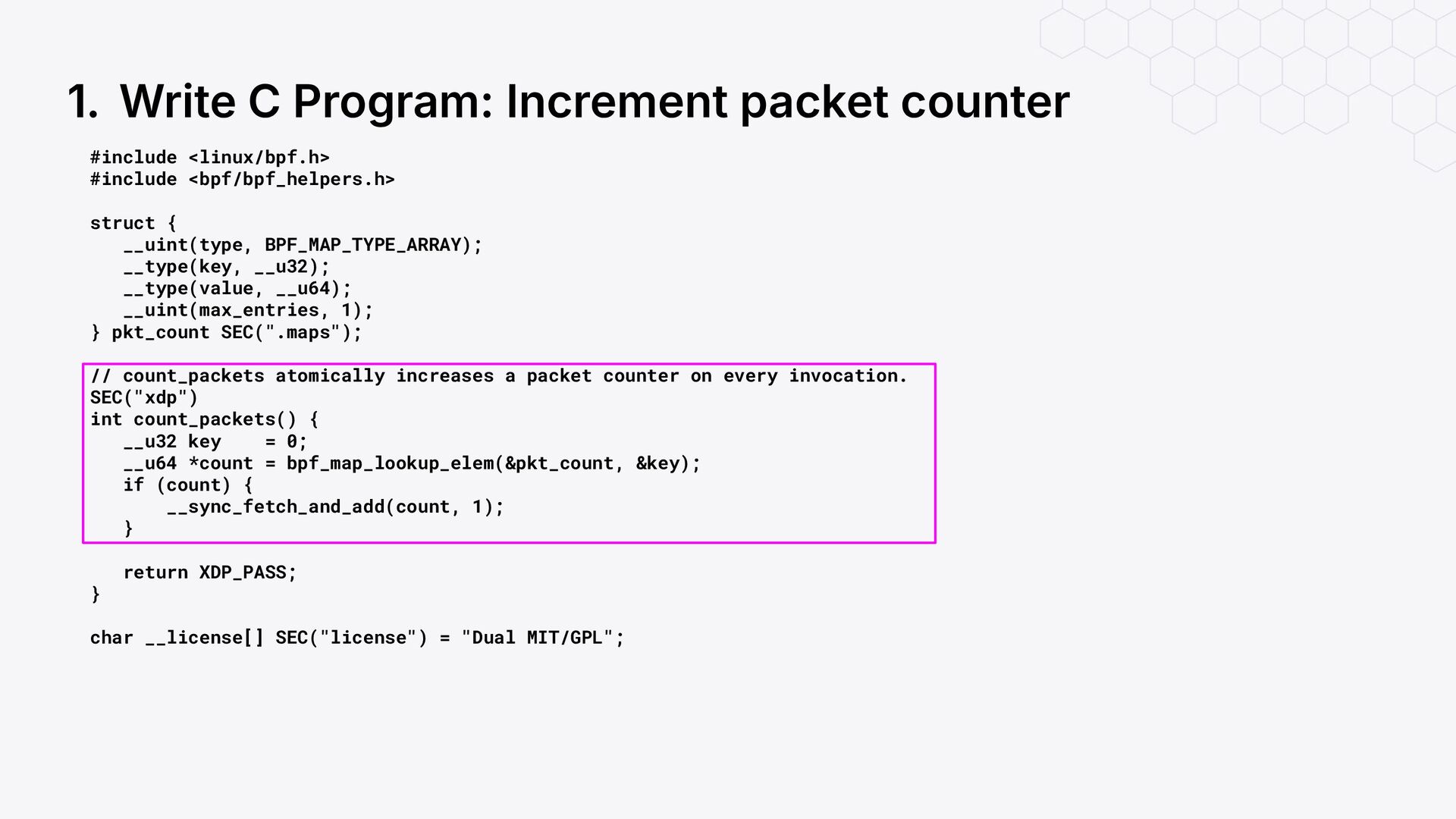
  24. 1. Write C Program: Increment packet counter #include <linux/bpf.h> #include

    <bpf/bpf_helpers.h> struct { __uint(type, BPF_MAP_TYPE_ARRAY); __type(key, __u32); __type(value, __u64); __uint(max_entries, 1); } pkt_count SEC(".maps"); // count_packets atomically increases a packet counter on every invocation. SEC("xdp") int count_packets() { __u32 key = 0; __u64 *count = bpf_map_lookup_elem(&pkt_count, &key); if (count) { __sync_fetch_and_add(count, 1); } return XDP_PASS; } char __license[] SEC("license") = "Dual MIT/GPL";
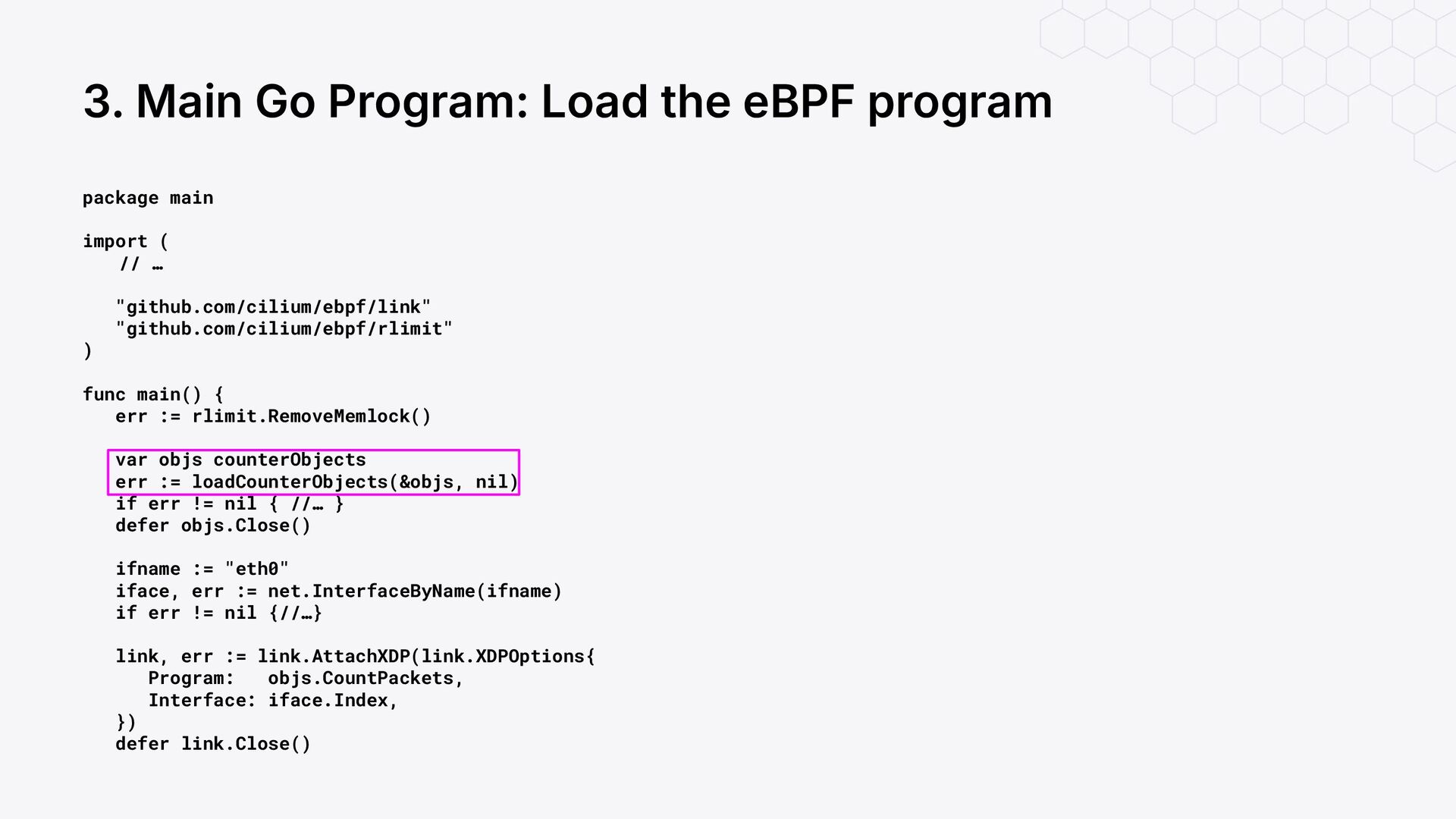
  25. 3. Main Go Program: Load the eBPF program package main

    import ( // … "github.com/cilium/ebpf/link" "github.com/cilium/ebpf/rlimit" ) func main() { err := rlimit.RemoveMemlock() var objs counterObjects err := loadCounterObjects(&objs, nil) if err != nil { //… } defer objs.Close() ifname := "eth0" iface, err := net.InterfaceByName(ifname) if err != nil {//…} link, err := link.AttachXDP(link.XDPOptions{ Program: objs.CountPackets, Interface: iface.Index, }) defer link.Close()
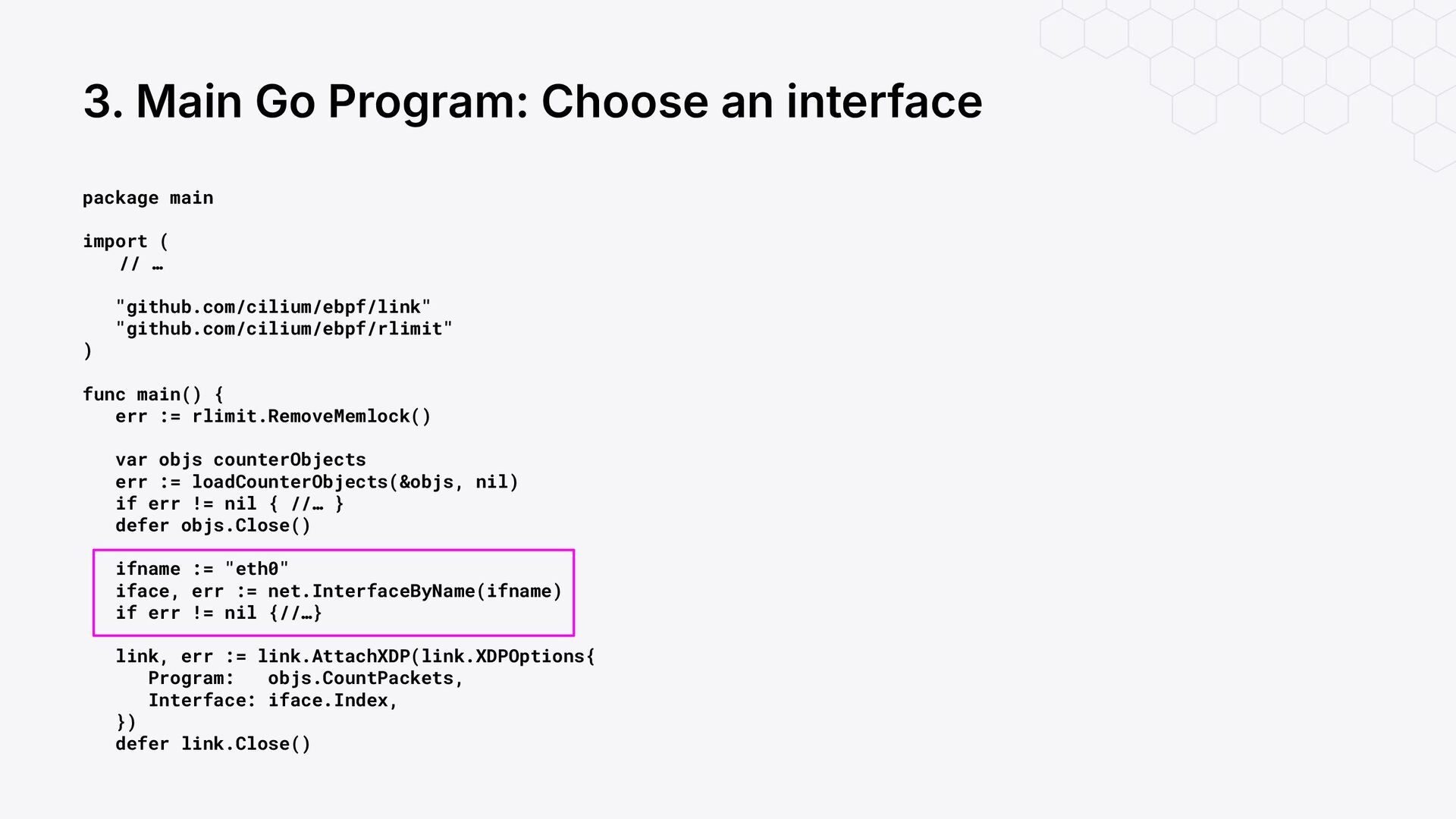
  26. 3. Main Go Program: Choose an interface package main import

    ( // … "github.com/cilium/ebpf/link" "github.com/cilium/ebpf/rlimit" ) func main() { err := rlimit.RemoveMemlock() var objs counterObjects err := loadCounterObjects(&objs, nil) if err != nil { //… } defer objs.Close() ifname := "eth0" iface, err := net.InterfaceByName(ifname) if err != nil {//…} link, err := link.AttachXDP(link.XDPOptions{ Program: objs.CountPackets, Interface: iface.Index, }) defer link.Close()
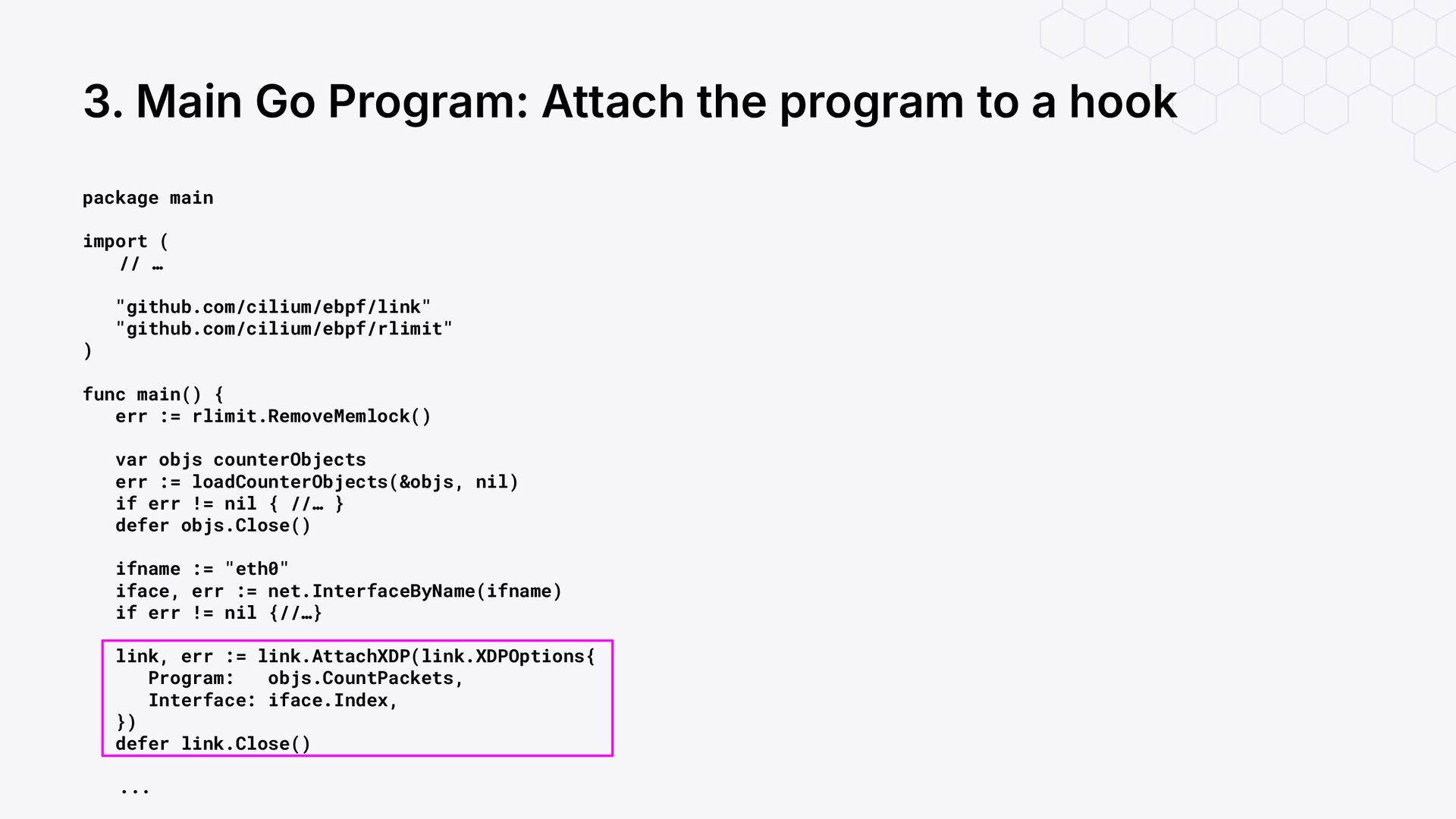
  27. 3. Main Go Program: Attach the program to a hook

    package main import ( // … "github.com/cilium/ebpf/link" "github.com/cilium/ebpf/rlimit" ) func main() { err := rlimit.RemoveMemlock() var objs counterObjects err := loadCounterObjects(&objs, nil) if err != nil { //… } defer objs.Close() ifname := "eth0" iface, err := net.InterfaceByName(ifname) if err != nil {//…} link, err := link.AttachXDP(link.XDPOptions{ Program: objs.CountPackets, Interface: iface.Index, }) defer link.Close() ...
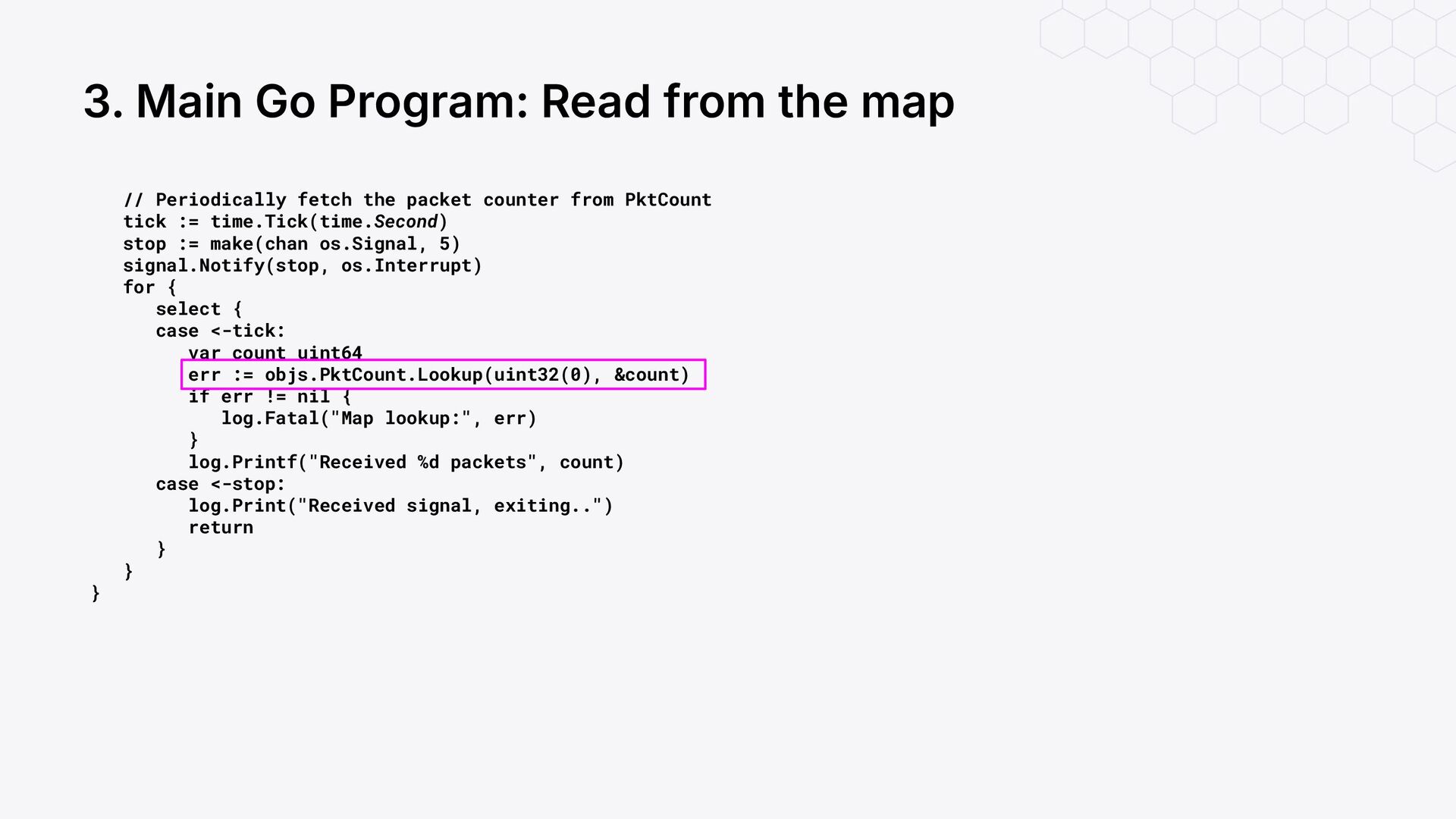
  28. 3. Main Go Program: Read from the map // Periodically

    fetch the packet counter from PktCount tick := time.Tick(time.Second) stop := make(chan os.Signal, 5) signal.Notify(stop, os.Interrupt) for { select { case <-tick: var count uint64 err := objs.PktCount.Lookup(uint32(0), &count) if err != nil { log.Fatal("Map lookup:", err) } log.Printf("Received %d packets", count) case <-stop: log.Print("Received signal, exiting..") return } } }
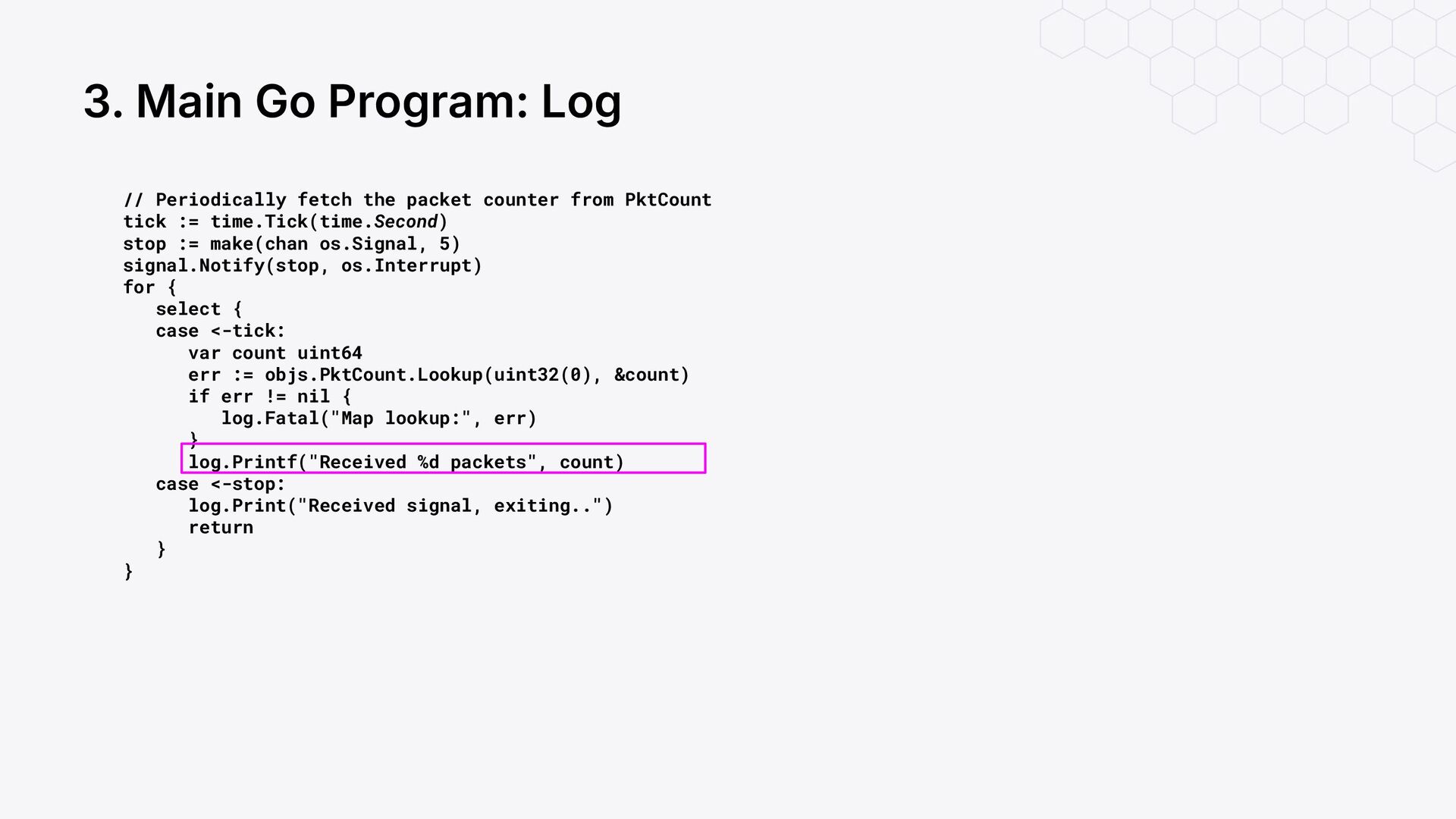
  29. 3. Main Go Program: Log // Periodically fetch the packet

    counter from PktCount tick := time.Tick(time.Second) stop := make(chan os.Signal, 5) signal.Notify(stop, os.Interrupt) for { select { case <-tick: var count uint64 err := objs.PktCount.Lookup(uint32(0), &count) if err != nil { log.Fatal("Map lookup:", err) } log.Printf("Received %d packets", count) case <-stop: log.Print("Received signal, exiting..") return } }
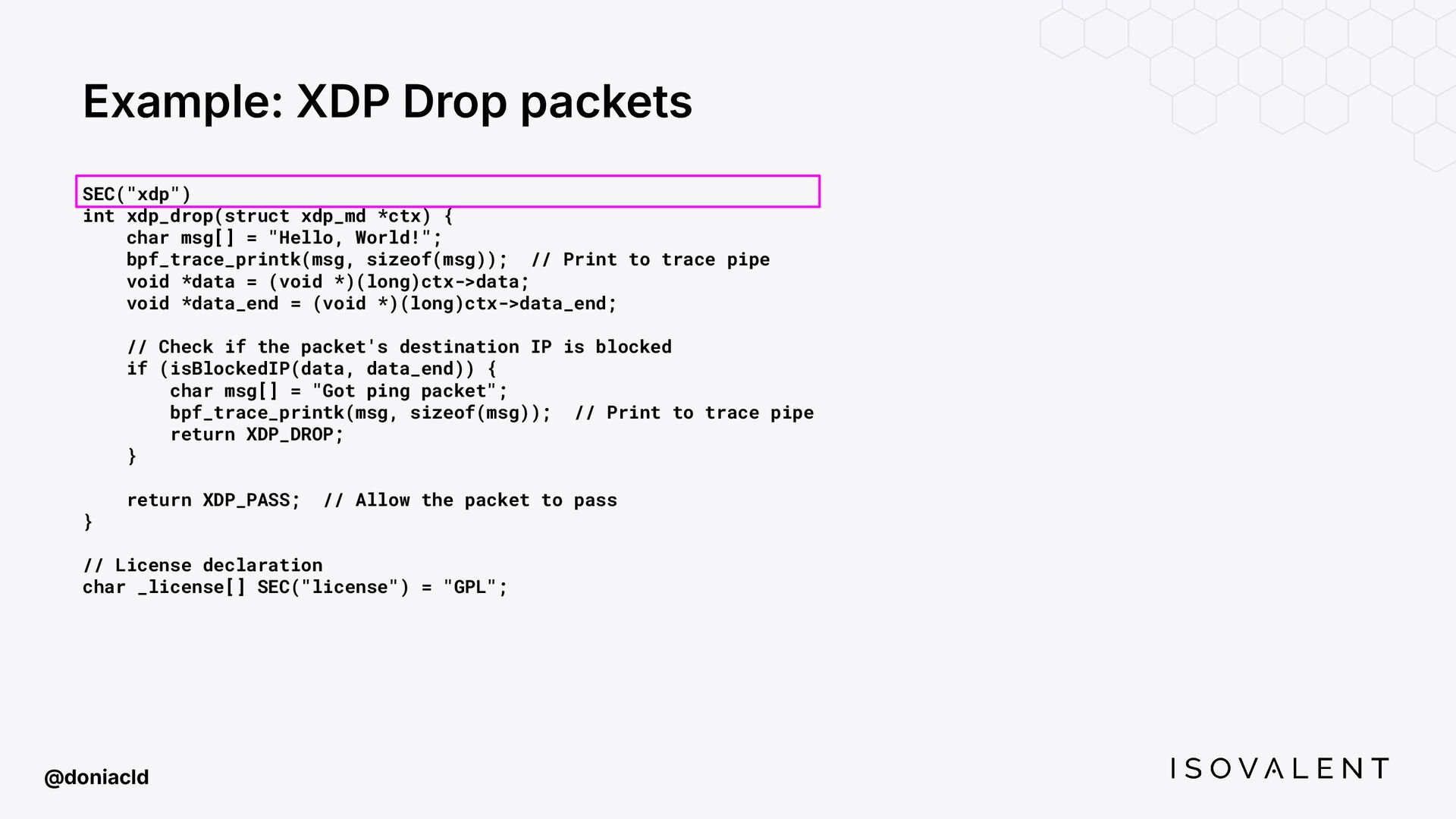
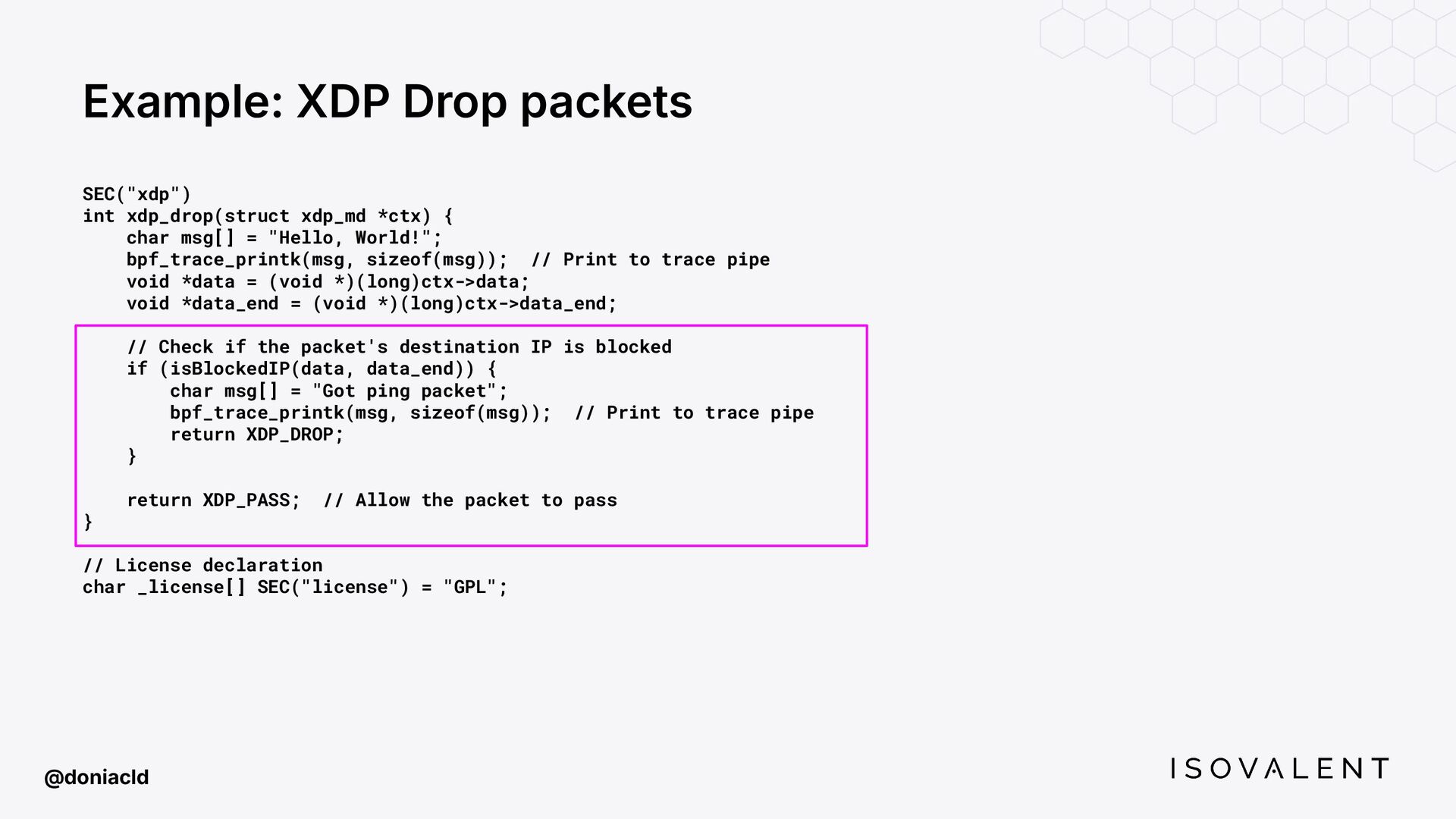
  30. Example: XDP Drop packets SEC("xdp") int xdp_drop(struct xdp_md *ctx) {

    char msg[] = "Hello, World!"; bpf_trace_printk(msg, sizeof(msg)); // Print to trace pipe void *data = (void *)(long)ctx->data; void *data_end = (void *)(long)ctx->data_end; // Check if the packet's destination IP is blocked if (isBlockedIP(data, data_end)) { char msg[] = "Got ping packet"; bpf_trace_printk(msg, sizeof(msg)); // Print to trace pipe return XDP_DROP; } return XDP_PASS; // Allow the packet to pass } // License declaration char _license[] SEC("license") = "GPL"; @doniacld
  31. Example: XDP Drop packets SEC("xdp") int xdp_drop(struct xdp_md *ctx) {

    char msg[] = "Hello, World!"; bpf_trace_printk(msg, sizeof(msg)); // Print to trace pipe void *data = (void *)(long)ctx->data; void *data_end = (void *)(long)ctx->data_end; // Check if the packet's destination IP is blocked if (isBlockedIP(data, data_end)) { char msg[] = "Got ping packet"; bpf_trace_printk(msg, sizeof(msg)); // Print to trace pipe return XDP_DROP; } return XDP_PASS; // Allow the packet to pass } // License declaration char _license[] SEC("license") = "GPL"; @doniacld
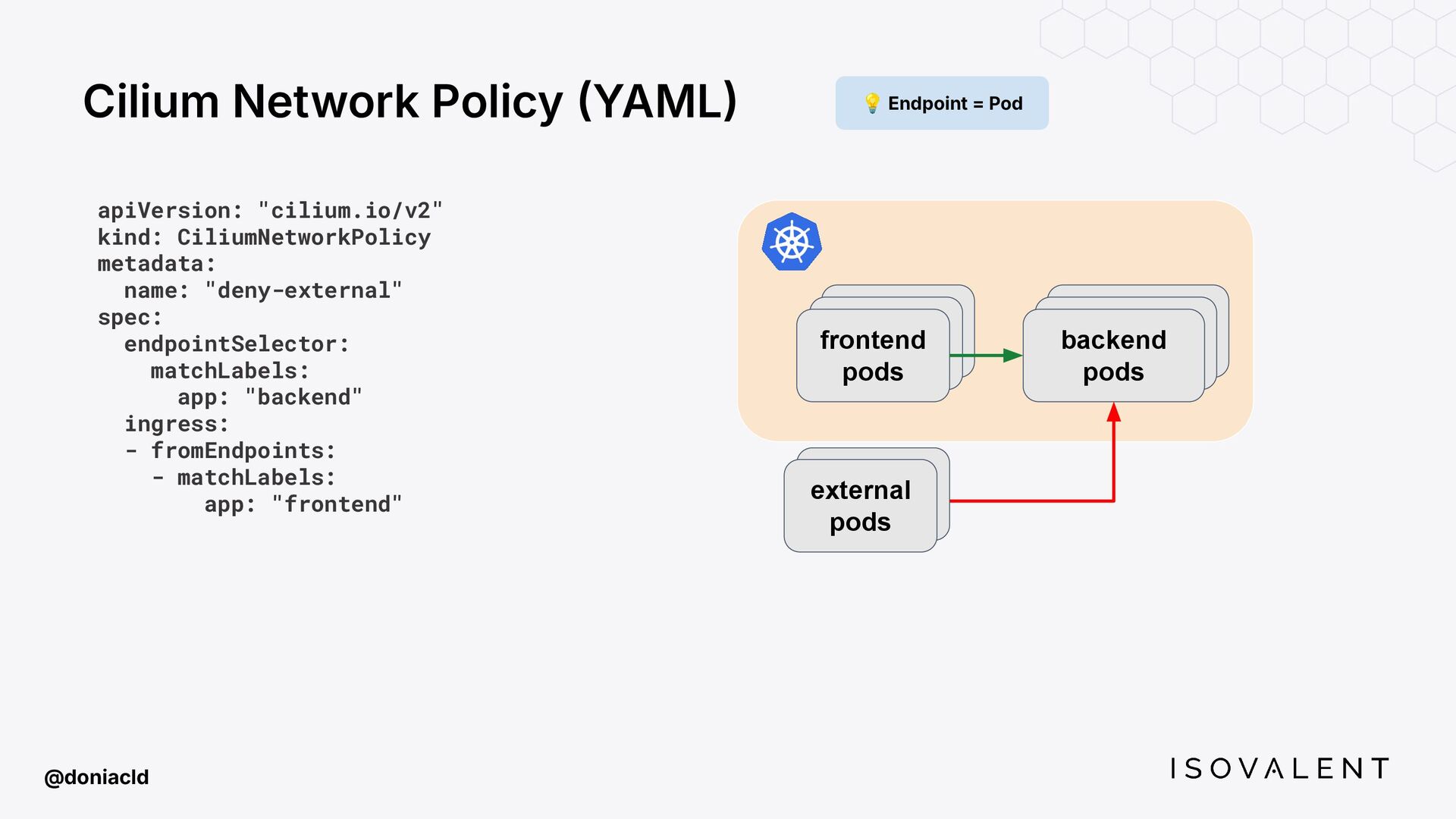
  32. Cilium Network Policy YAML @doniacld apiVersion: "cilium.io/v2" kind: CiliumNetworkPolicy metadata:

    name: "deny-external" spec: endpointSelector: matchLabels: app: "backend" ingress: - fromEndpoints: - matchLabels: app: "frontend" frontend pod backend pod frontend pod frontend pods backend pod backend pods external pod external pods 💡 Endpoint = Pod
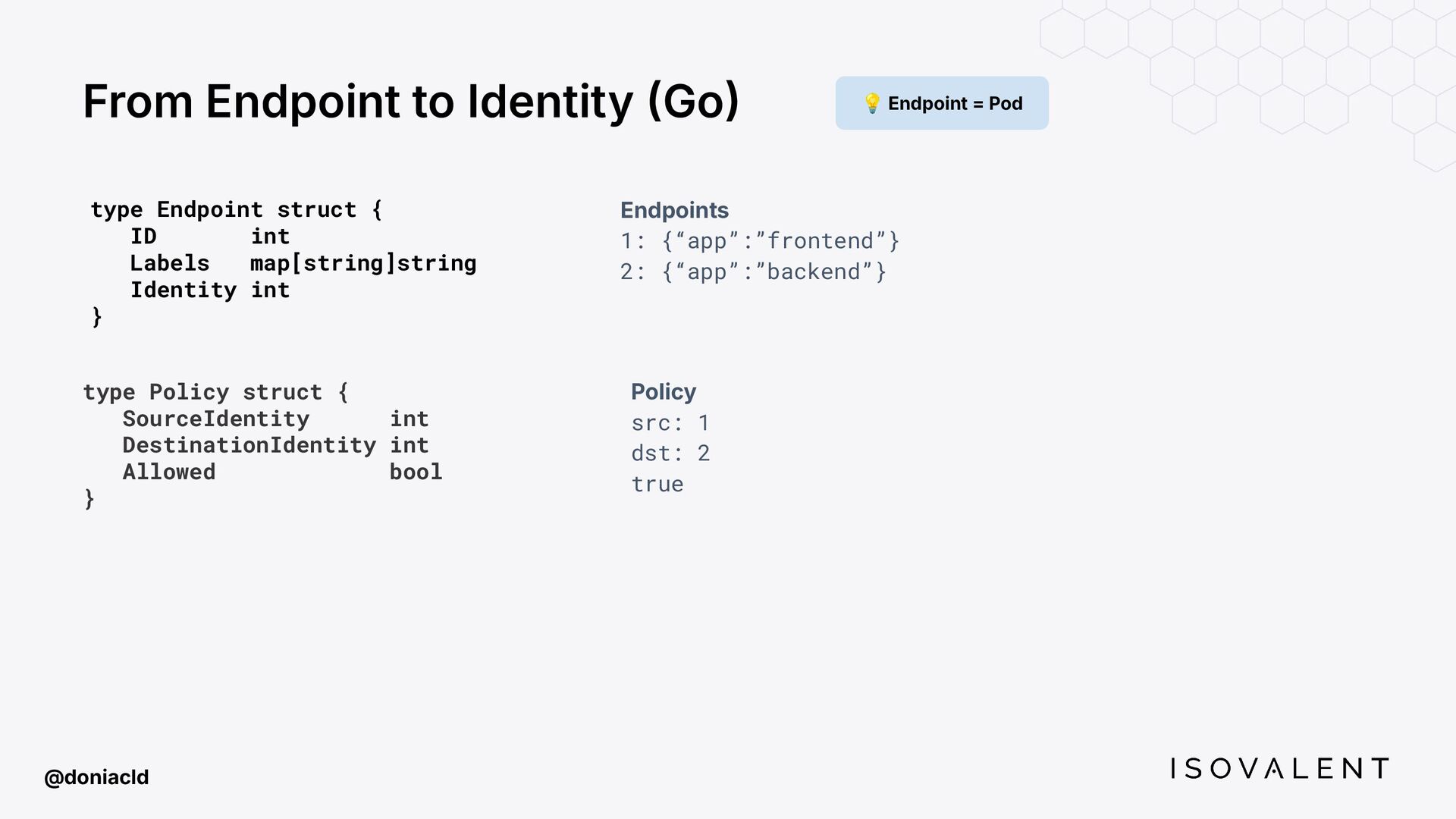
  33. From Endpoint to Identity Go @doniacld type Endpoint struct {

    ID int Labels map[string]string Identity int } 💡 Endpoint = Pod Endpoints 1: {“app”:”frontend”} 2: {“app”:”backend”} type Policy struct { SourceIdentity int DestinationIdentity int Allowed bool } Policy src: 1 dst: 2 true
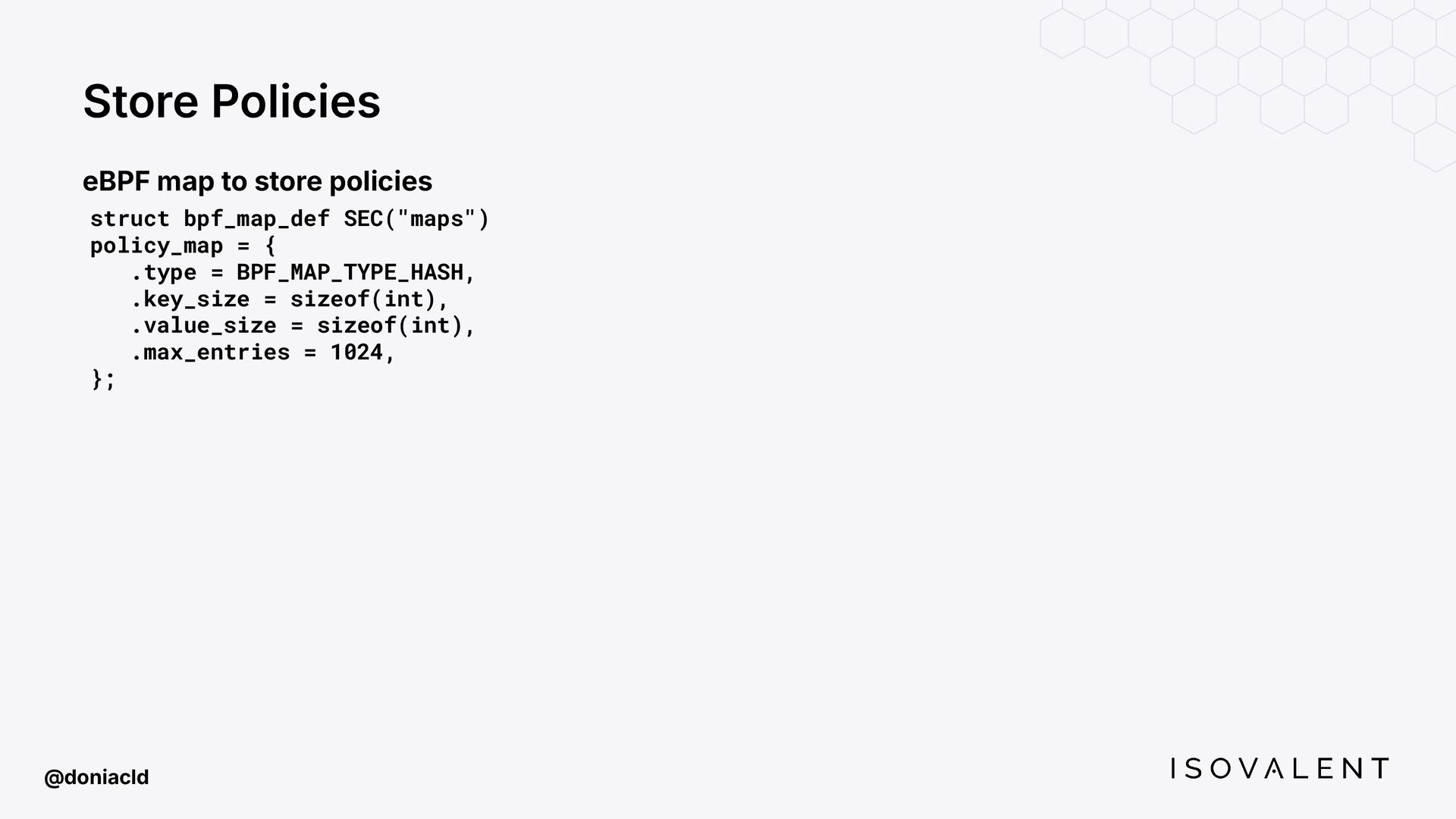
  34. Store Policies @doniacld struct bpf_map_def SEC("maps") policy_map = { .type

    = BPF_MAP_TYPE_HASH, .key_size = sizeof(int), .value_size = sizeof(int), .max_entries = 1024, }; eBPF map to store policies
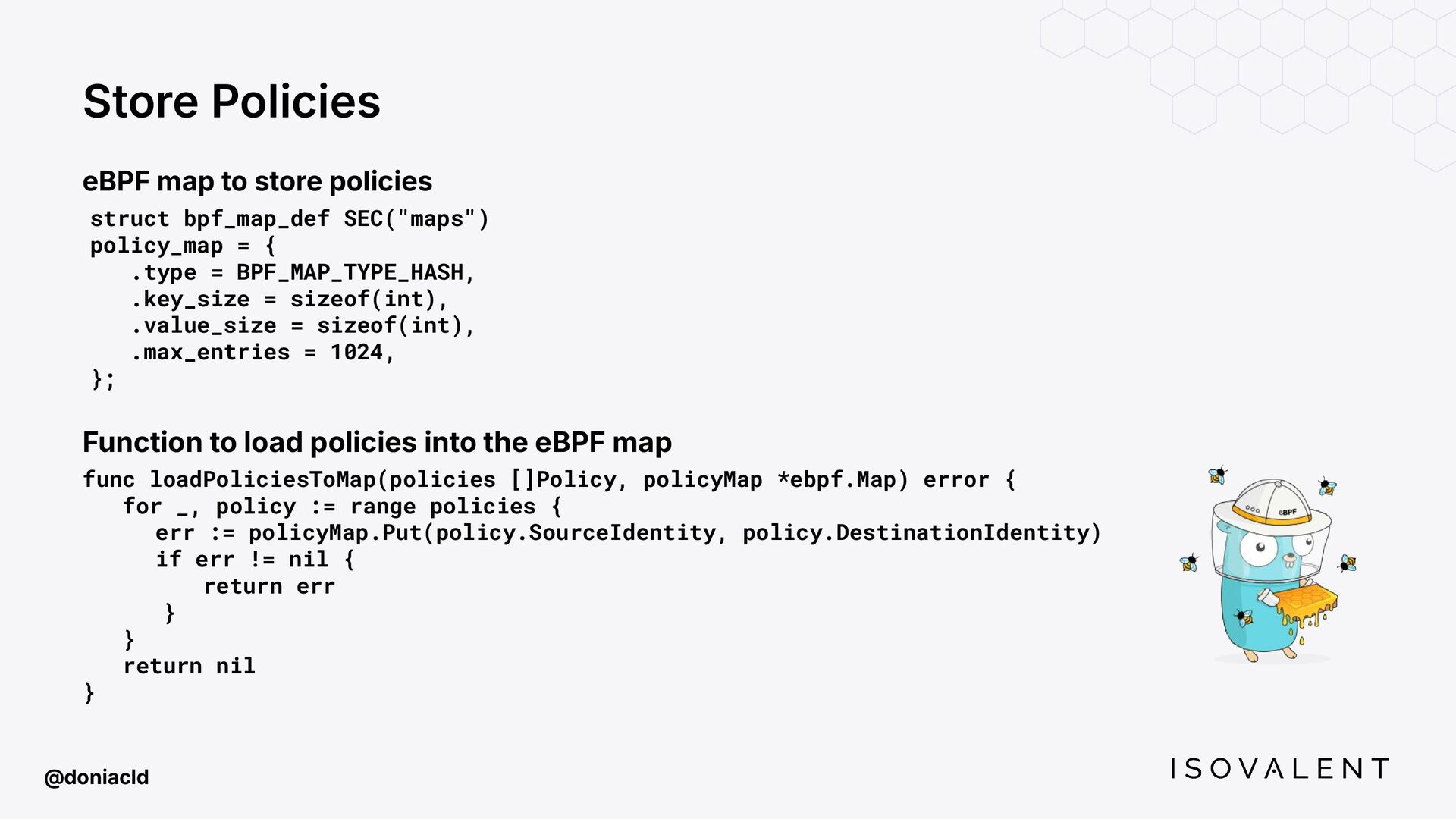
  35. Store Policies @doniacld func loadPoliciesToMap(policies []Policy, policyMap *ebpf.Map) error {

    for _, policy := range policies { err := policyMap.Put(policy.SourceIdentity, policy.DestinationIdentity) if err != nil { return err } } return nil } struct bpf_map_def SEC("maps") policy_map = { .type = BPF_MAP_TYPE_HASH, .key_size = sizeof(int), .value_size = sizeof(int), .max_entries = 1024, }; eBPF map to store policies Function to load policies into the eBPF map
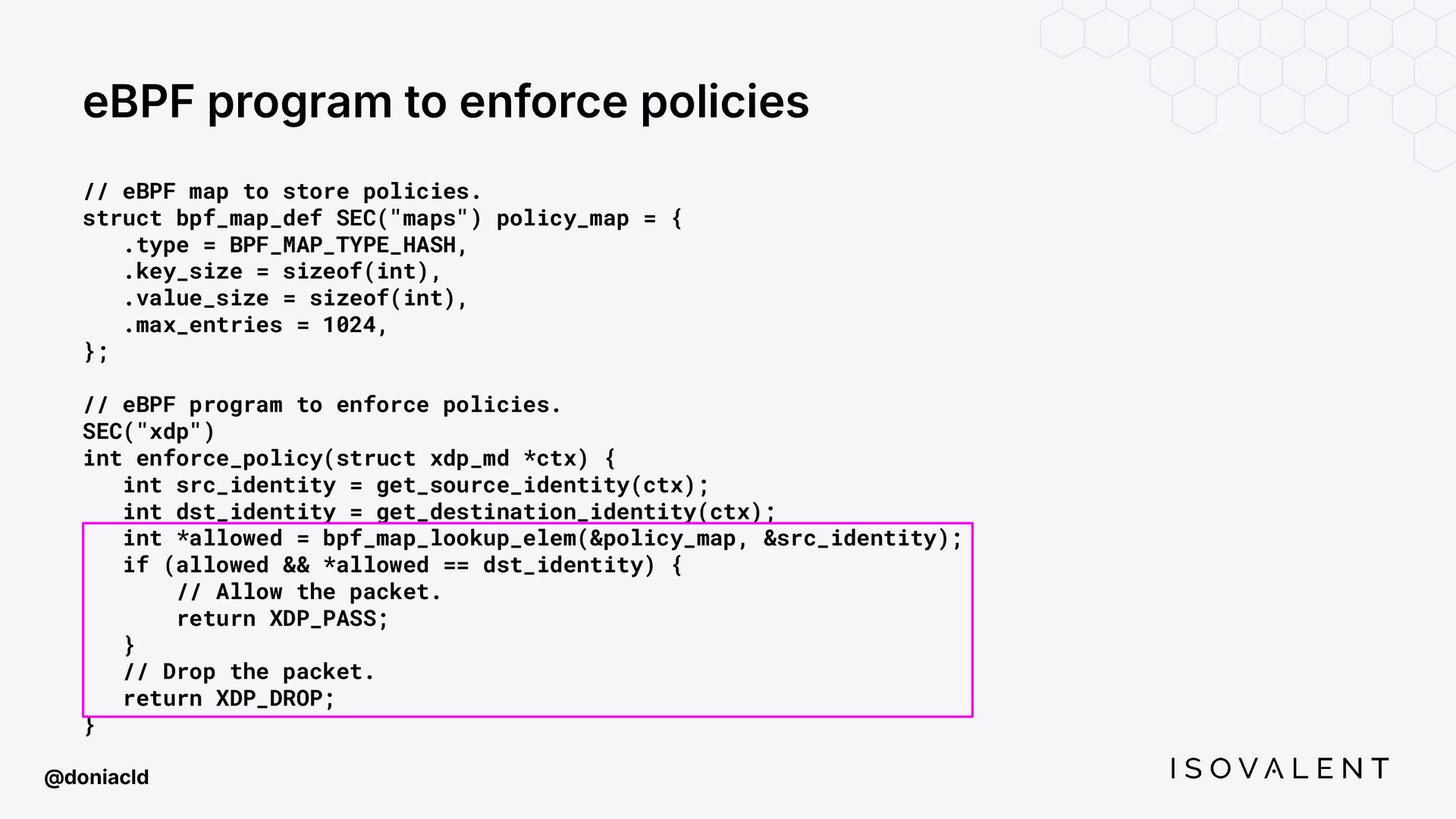
  36. eBPF program to enforce policies @doniacld // eBPF map to

    store policies. struct bpf_map_def SEC("maps") policy_map = { .type = BPF_MAP_TYPE_HASH, .key_size = sizeof(int), .value_size = sizeof(int), .max_entries = 1024, }; // eBPF program to enforce policies. SEC("xdp") int enforce_policy(struct xdp_md *ctx) { int src_identity = get_source_identity(ctx); int dst_identity = get_destination_identity(ctx); int *allowed = bpf_map_lookup_elem(&policy_map, &src_identity); if (allowed && *allowed == dst_identity) { // Allow the packet. return XDP_PASS; } // Drop the packet. return XDP_DROP; }
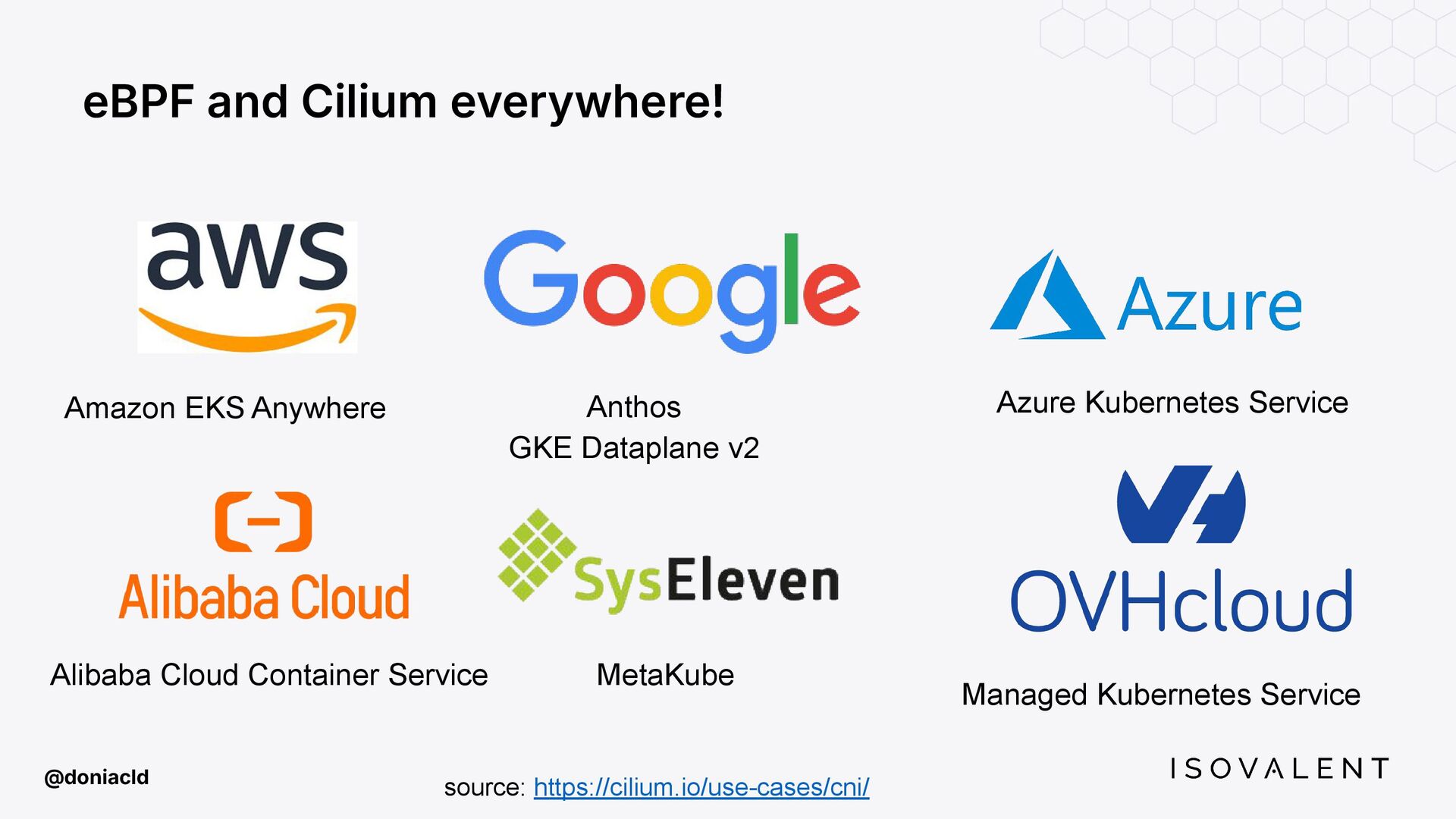
  37. eBPF and Cilium everywhere! @doniacld Amazon EKS Anywhere Anthos GKE

    Dataplane v2 Azure Kubernetes Service MetaKube Managed Kubernetes Service source: https://cilium.io/use-cases/cni/ Alibaba Cloud Container Service
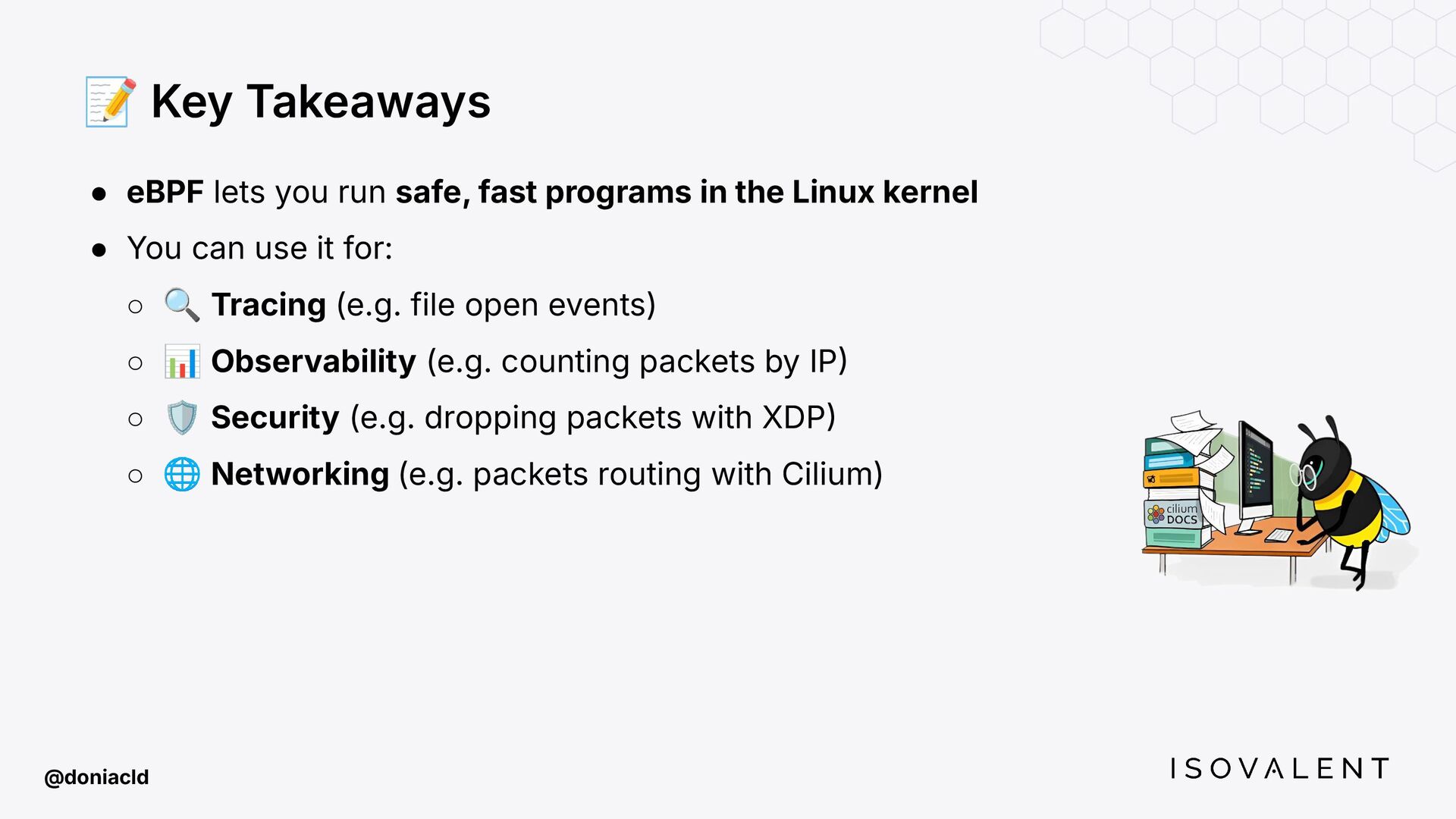
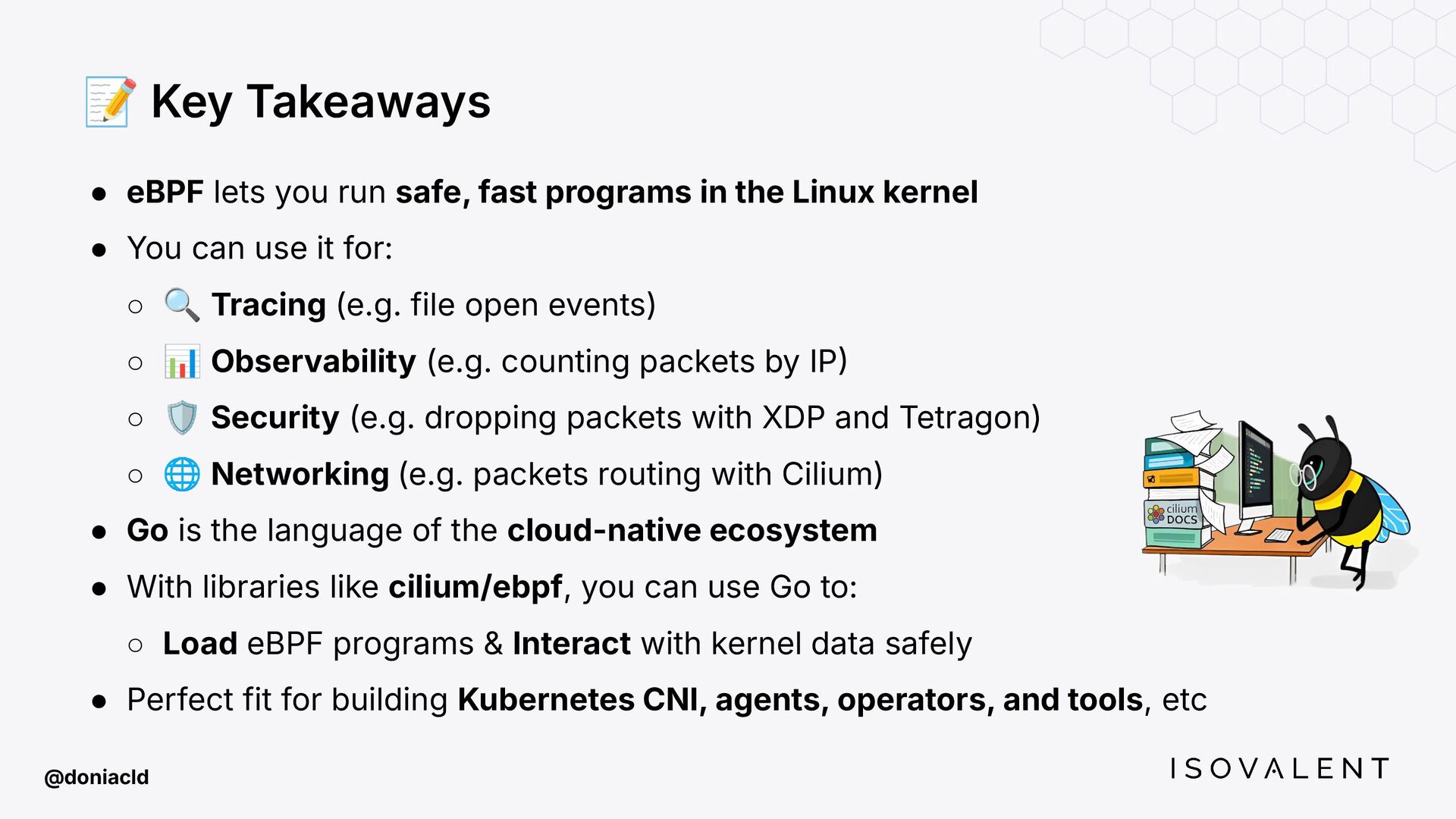
  38. 📝 Key Takeaways @doniacld • eBPF lets you run safe,

    fast programs in the Linux kernel • You can use it for: ◦ 🔍 Tracing (e.g. file open events) ◦ 📊 Observability (e.g. counting packets by IP ◦ 🛡 Security (e.g. dropping packets with XDP ◦ 🌐 Networking (e.g. packets routing with Cilium)
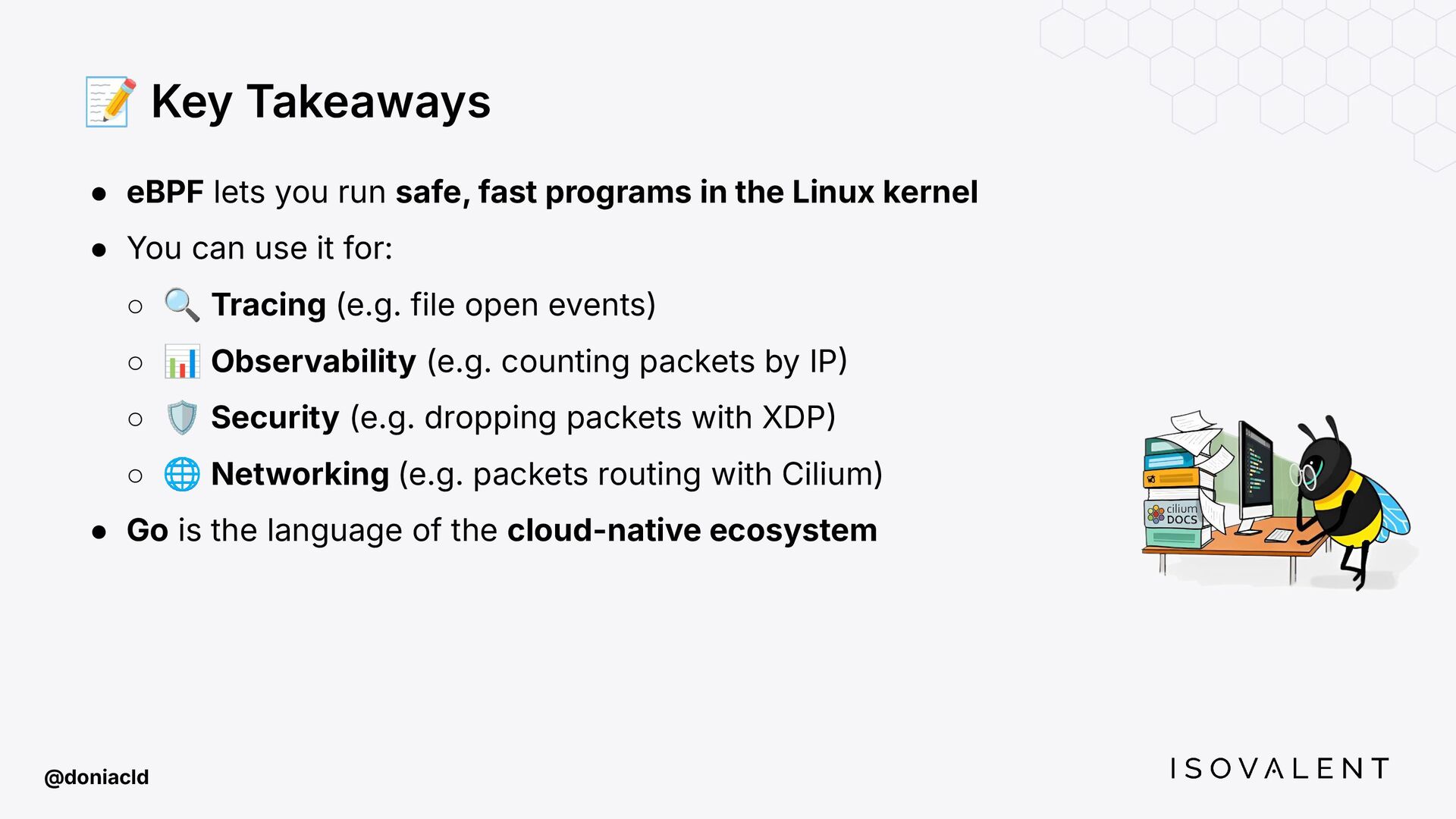
  39. 📝 Key Takeaways @doniacld • eBPF lets you run safe,

    fast programs in the Linux kernel • You can use it for: ◦ 🔍 Tracing (e.g. file open events) ◦ 📊 Observability (e.g. counting packets by IP ◦ 🛡 Security (e.g. dropping packets with XDP ◦ 🌐 Networking (e.g. packets routing with Cilium) • Go is the language of the cloud-native ecosystem
  40. 📝 Key Takeaways @doniacld • eBPF lets you run safe,

    fast programs in the Linux kernel • You can use it for: ◦ 🔍 Tracing (e.g. file open events) ◦ 📊 Observability (e.g. counting packets by IP ◦ 🛡 Security (e.g. dropping packets with XDP and Tetragon) ◦ 🌐 Networking (e.g. packets routing with Cilium) • Go is the language of the cloud-native ecosystem • With libraries like cilium/ebpf, you can use Go to: ◦ Load eBPF programs & Interact with kernel data safely • Perfect fit for building Kubernetes CNI, agents, operators, and tools, etc

More Decks by Donia Chaiehloudj

Other Decks in Technology