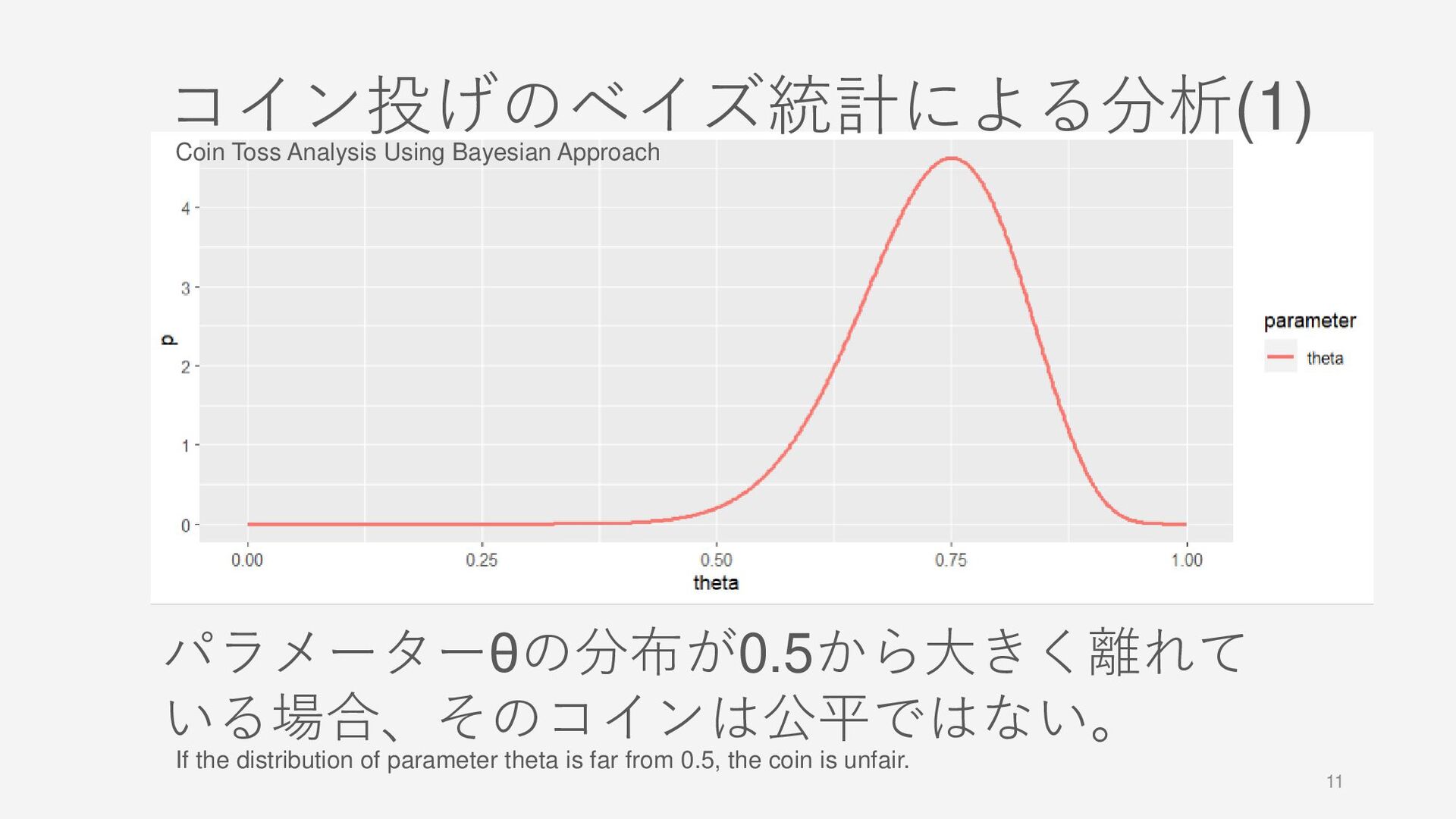
the Chi-Square Test Considered it from a Bayesian statistical perspective, leaving frequentist reasoning behind. Returned to frequentist reasoning to reevaluate it.
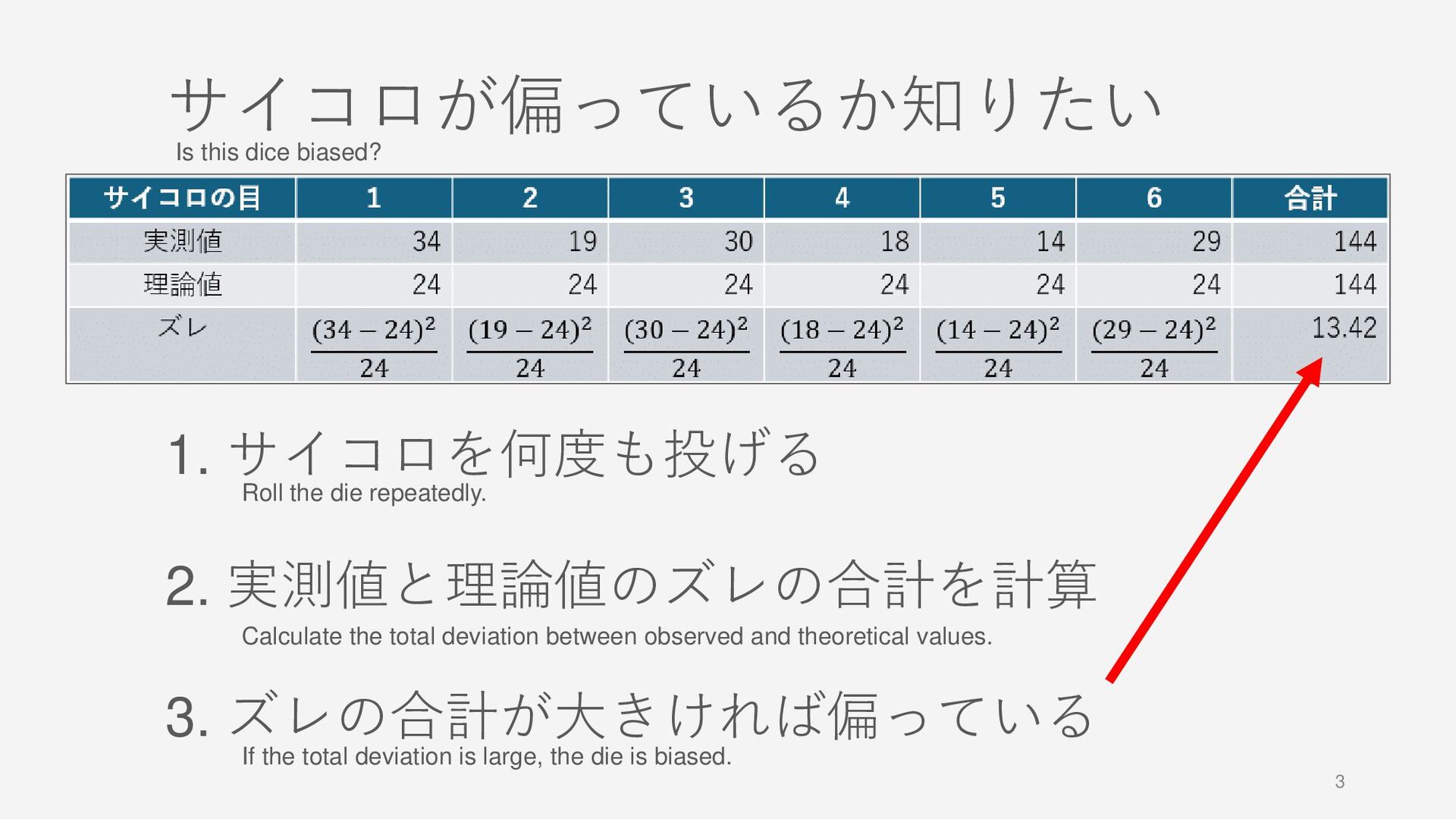
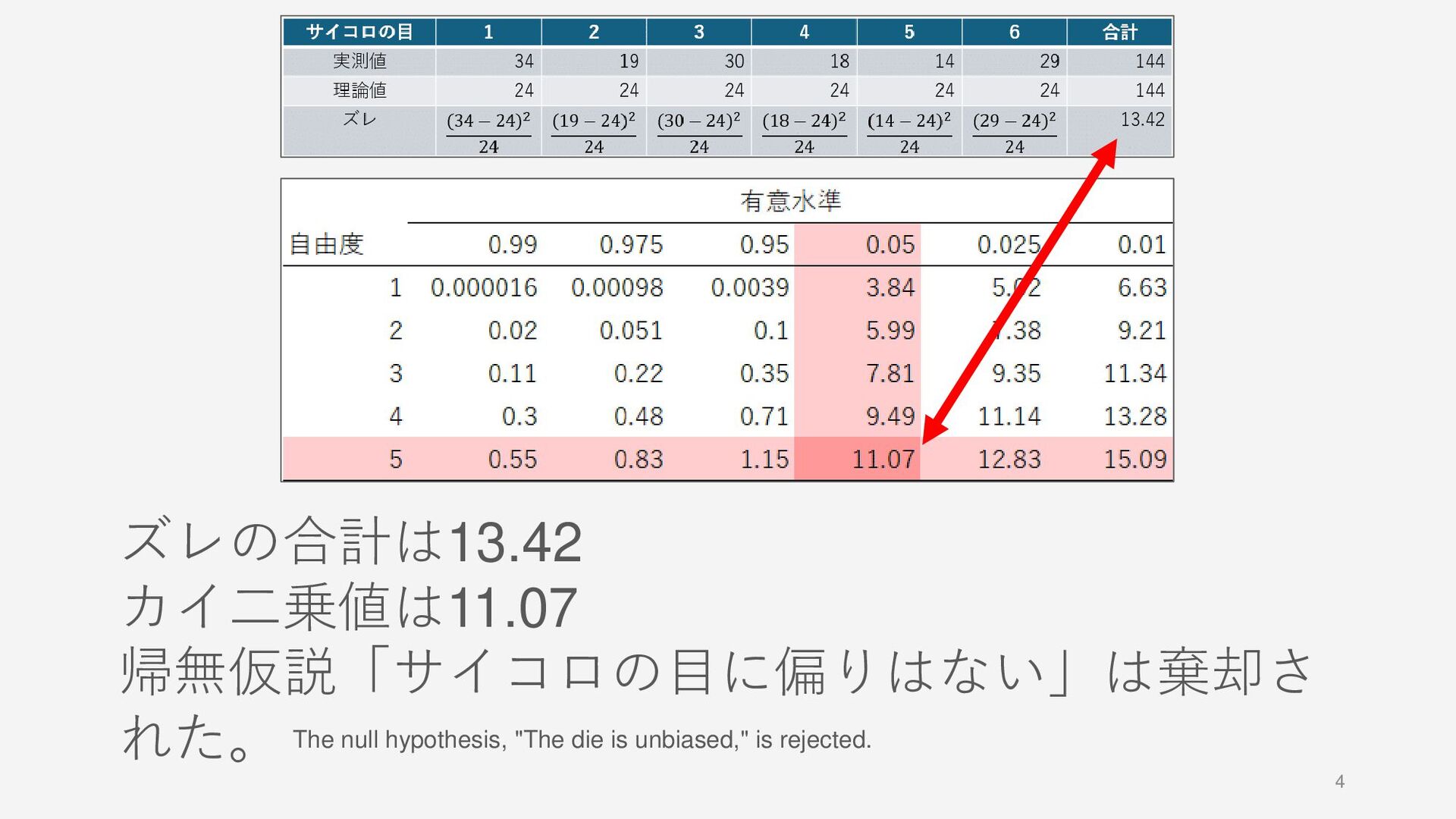
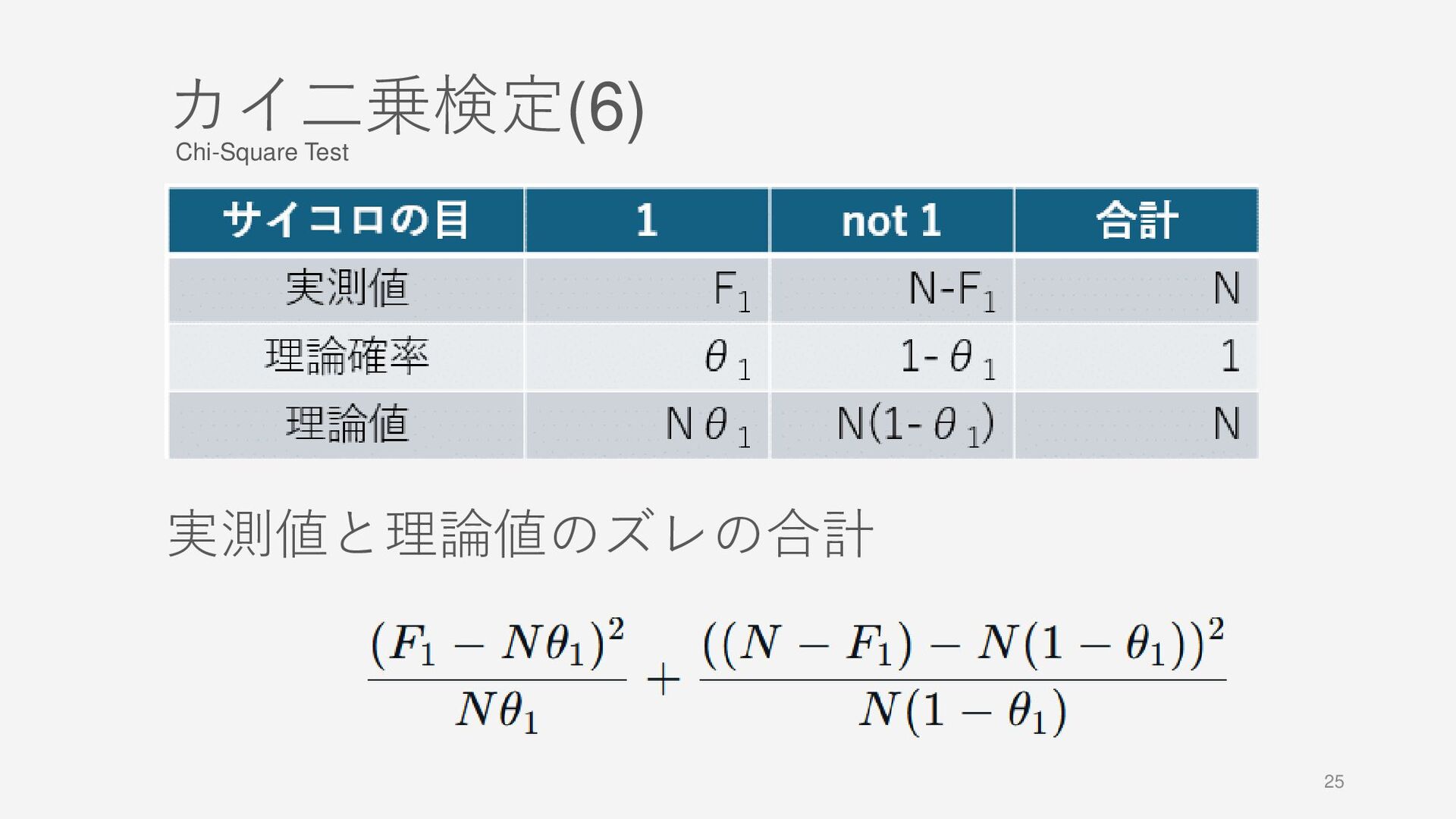
dice biased? Roll the die repeatedly. Calculate the total deviation between observed and theoretical values. If the total deviation is large, the die is biased.
Although the chi-square test successfully detected the bias in the die, does this procedure seem obvious and intuitive to you? I will present a simpler approach by considering the problem from a Bayesian perspective.
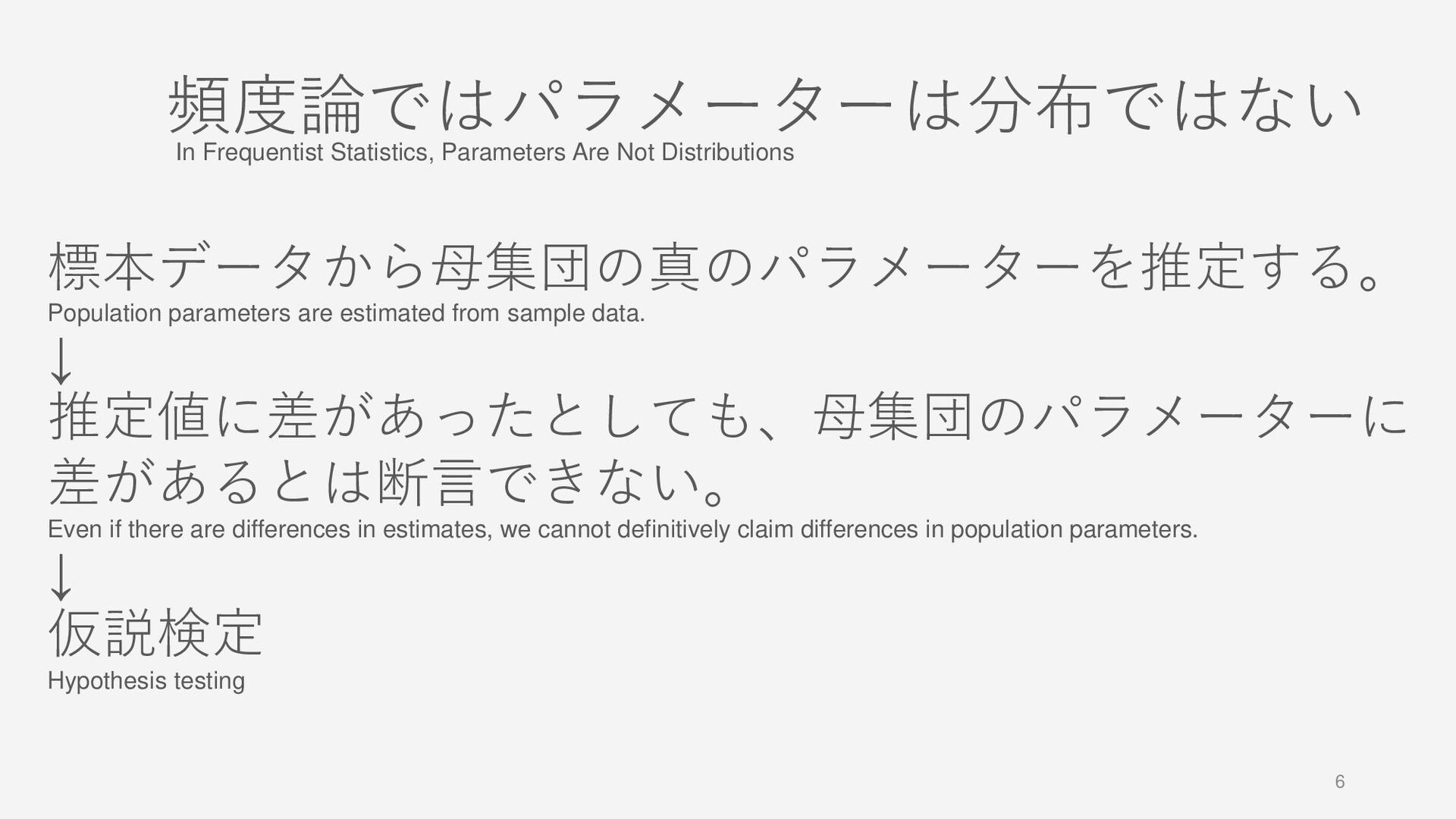
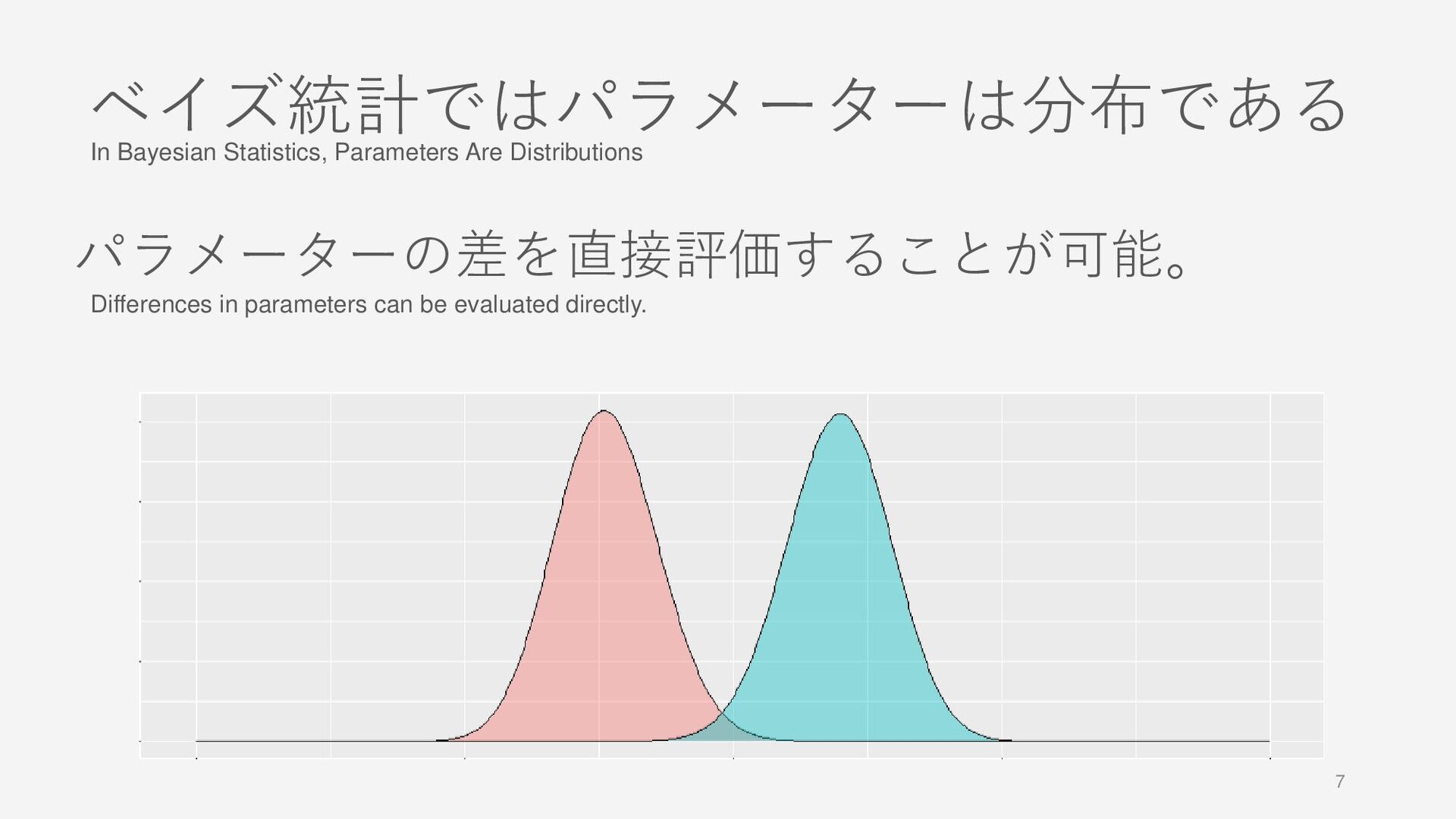
Statistics, Parameters Are Not Distributions Population parameters are estimated from sample data. Even if there are differences in estimates, we cannot definitively claim differences in population parameters. Hypothesis testing
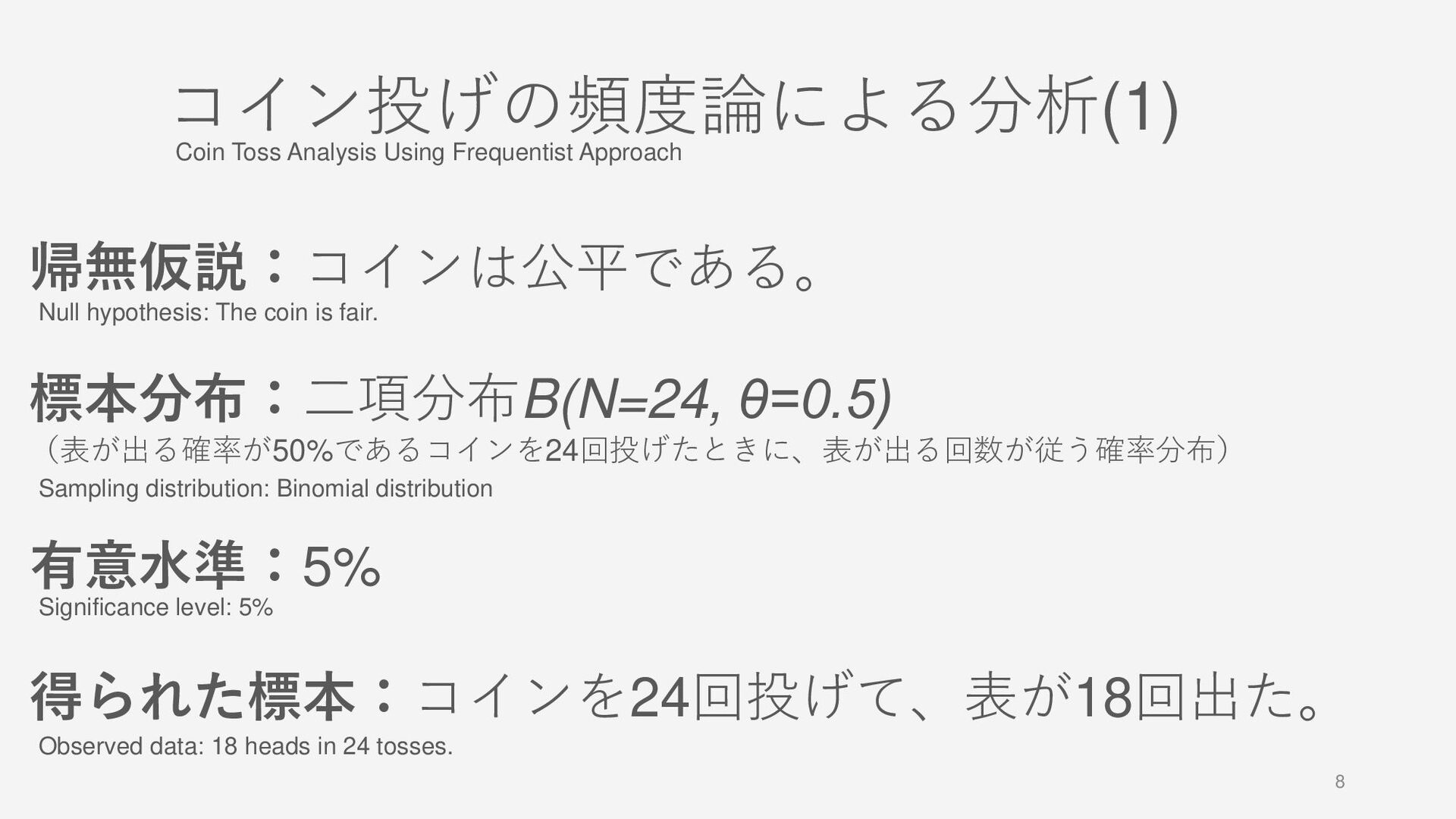
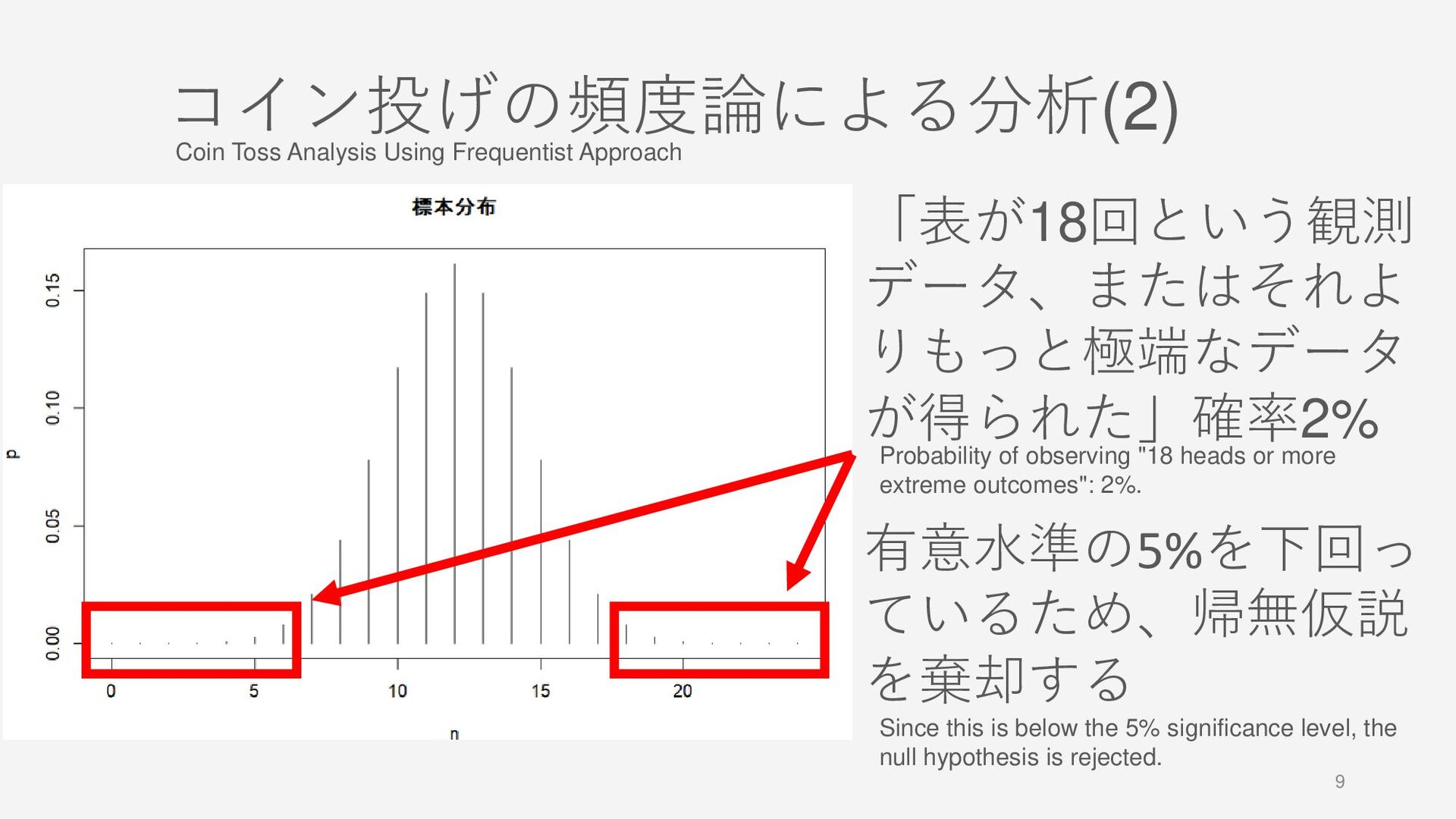
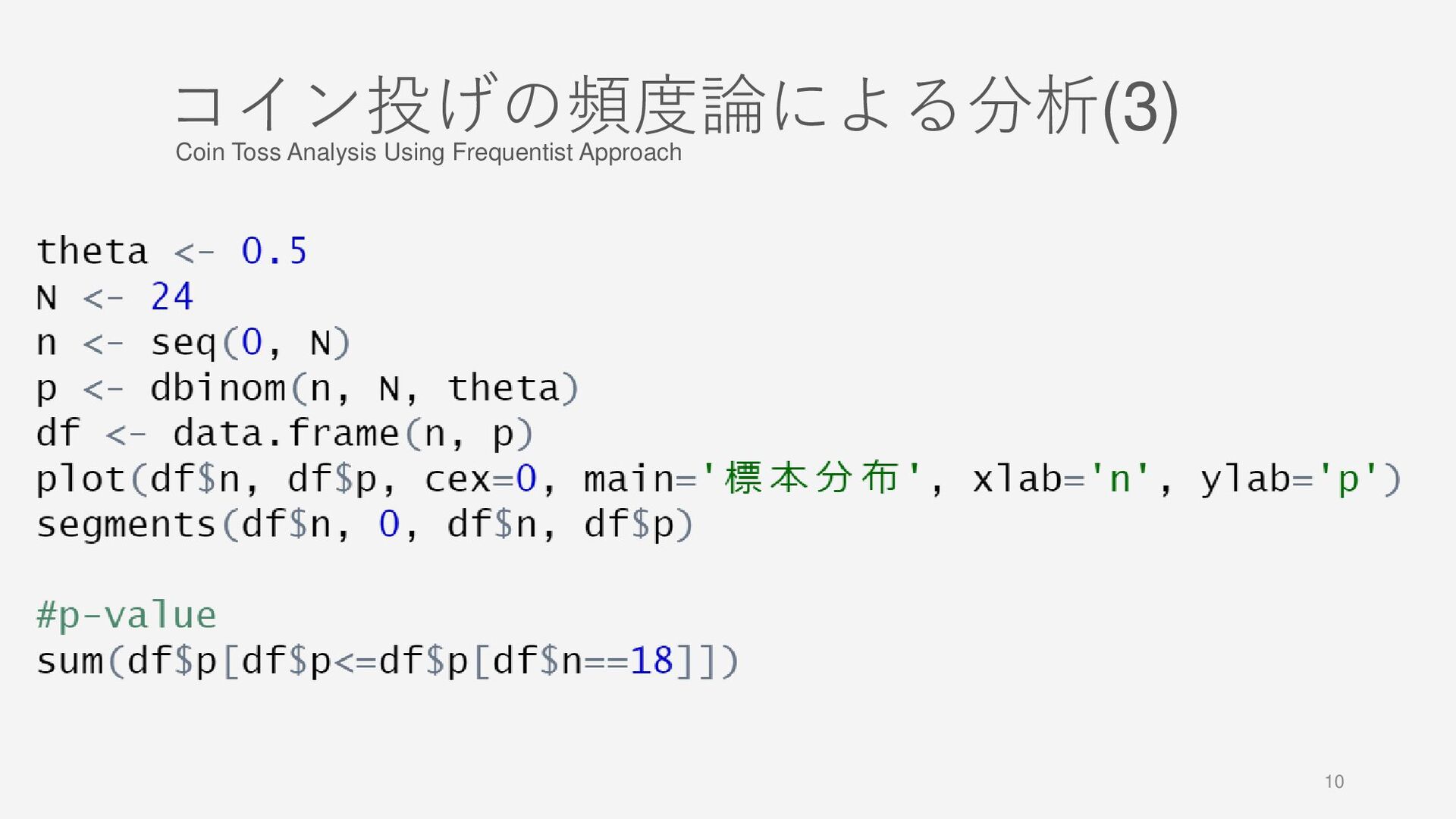
Analysis Using Frequentist Approach Null hypothesis: The coin is fair. Sampling distribution: Binomial distribution Significance level: 5% Observed data: 18 heads in 24 tosses.
Toss Analysis Using Frequentist Approach Probability of observing "18 heads or more extreme outcomes": 2%. Since this is below the 5% significance level, the null hypothesis is rejected.
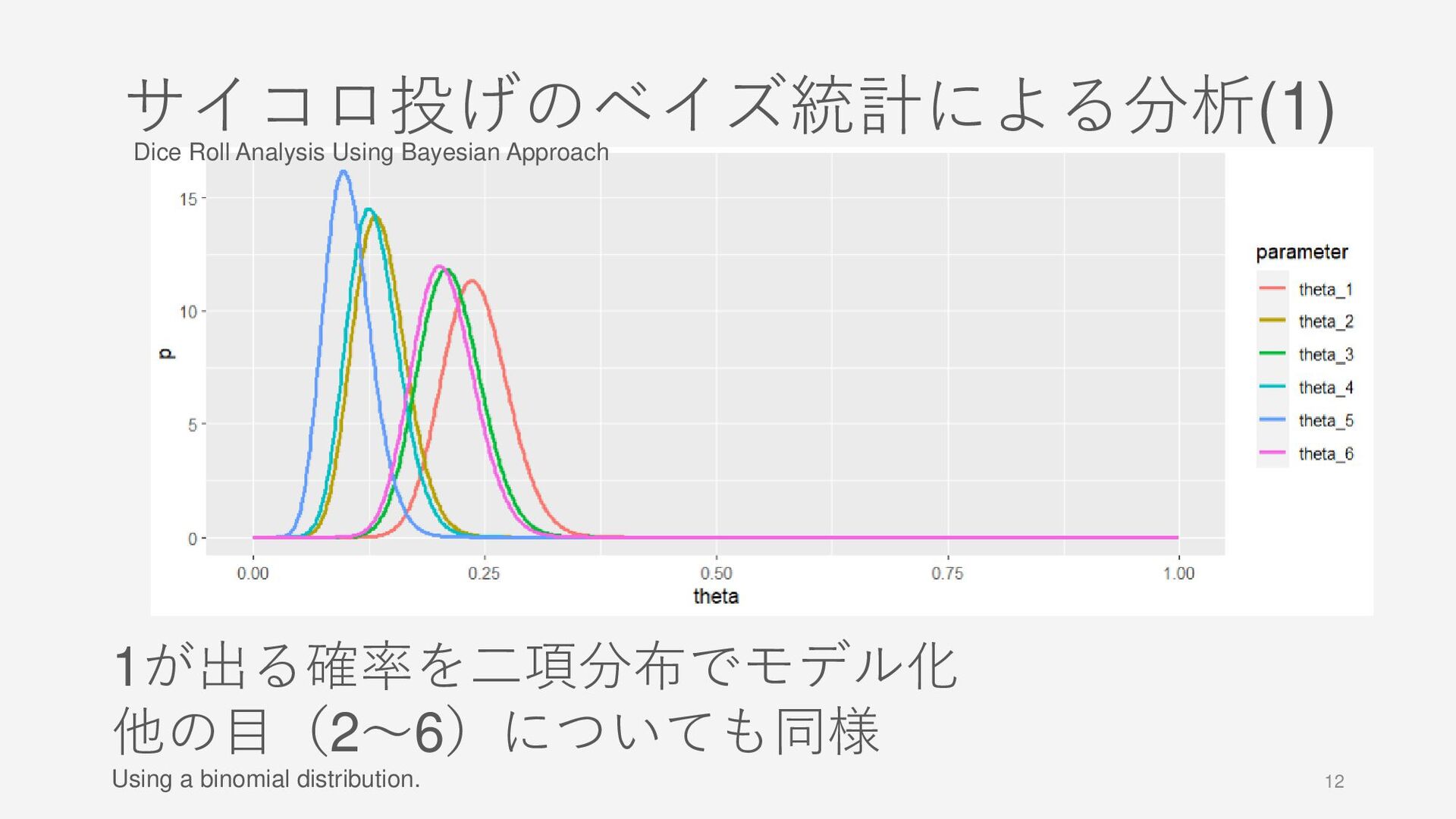
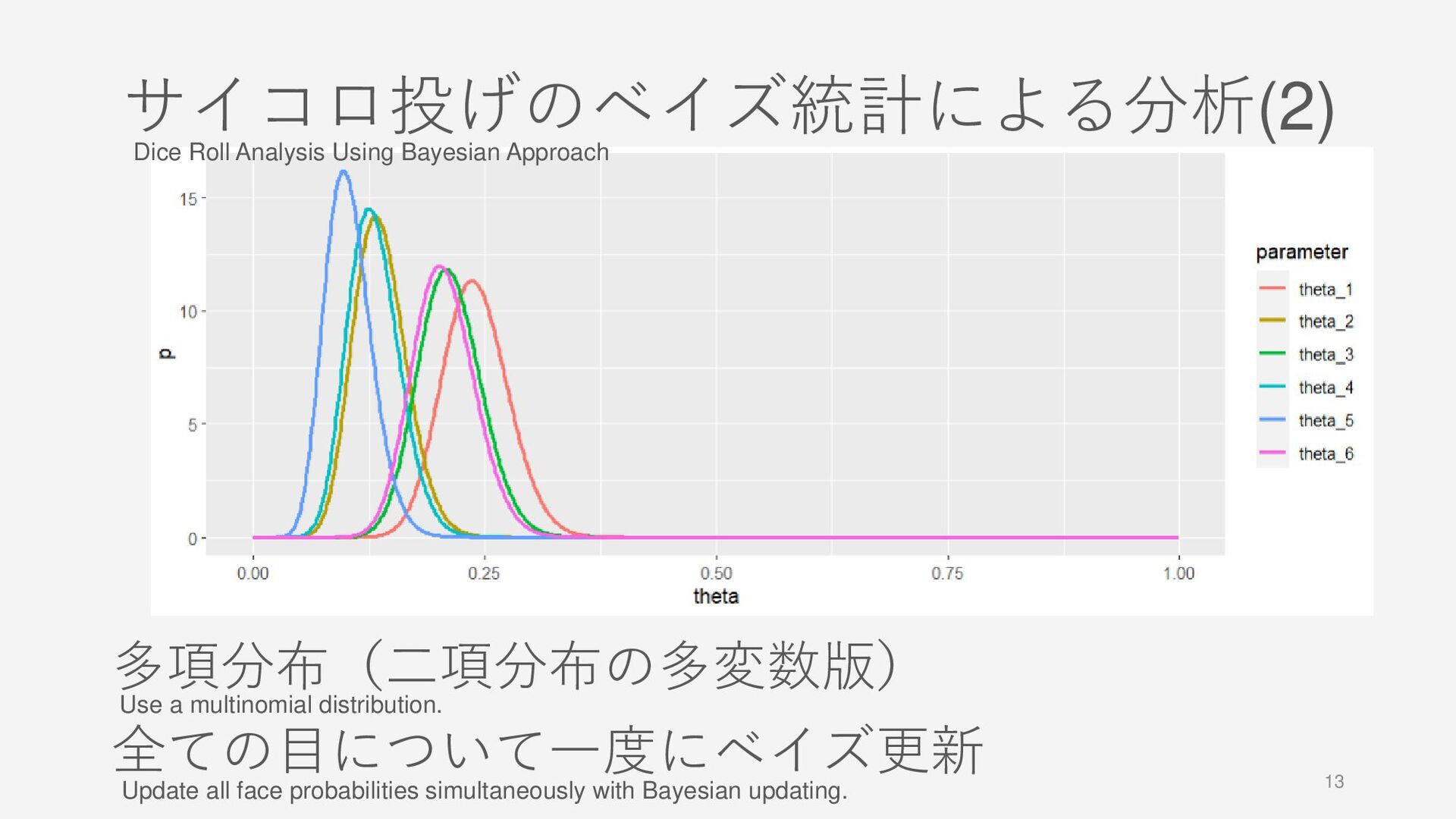
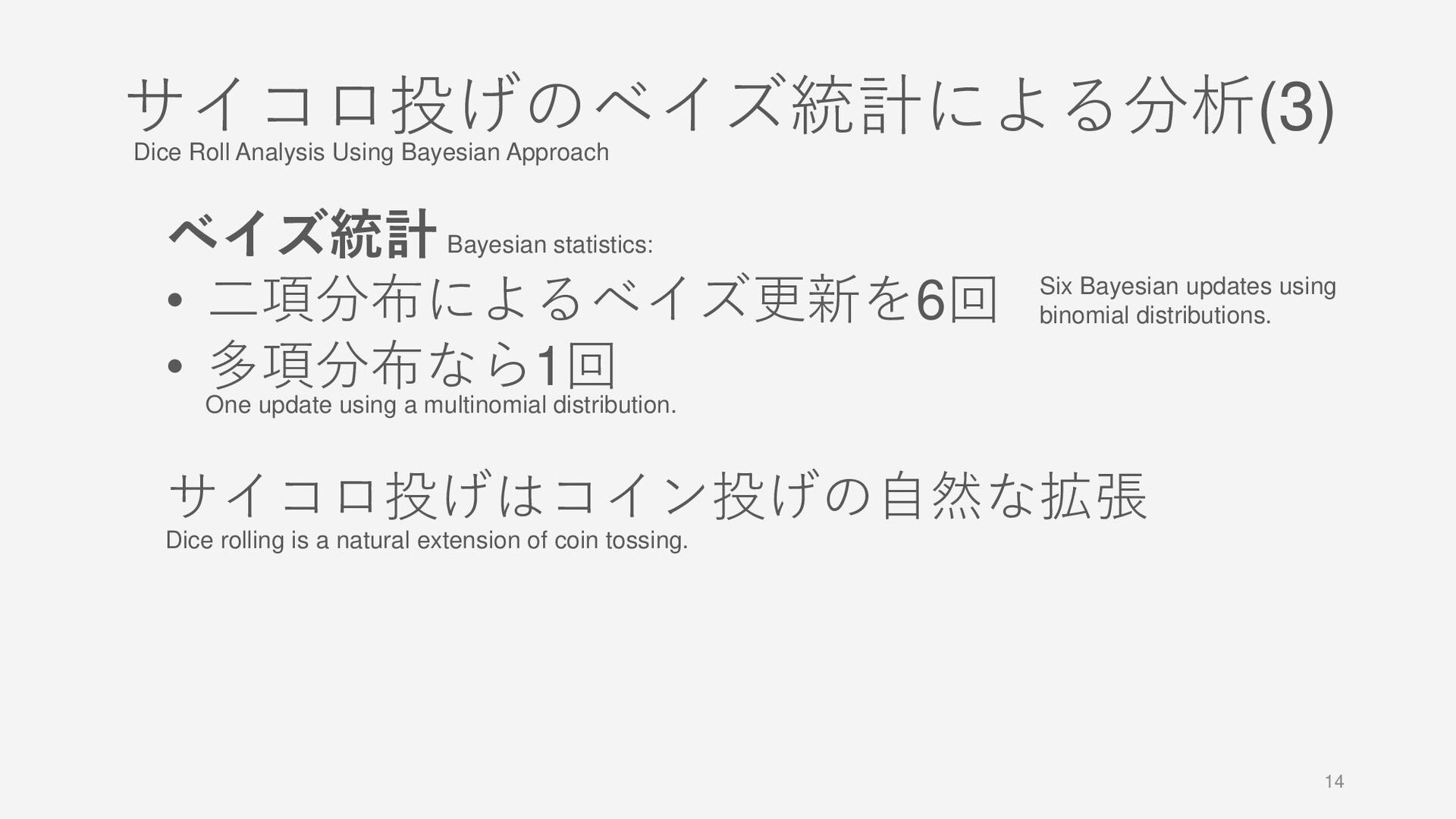
Analysis Using Bayesian Approach Bayesian statistics: Six Bayesian updates using binomial distributions. One update using a multinomial distribution. Dice rolling is a natural extension of coin tossing.
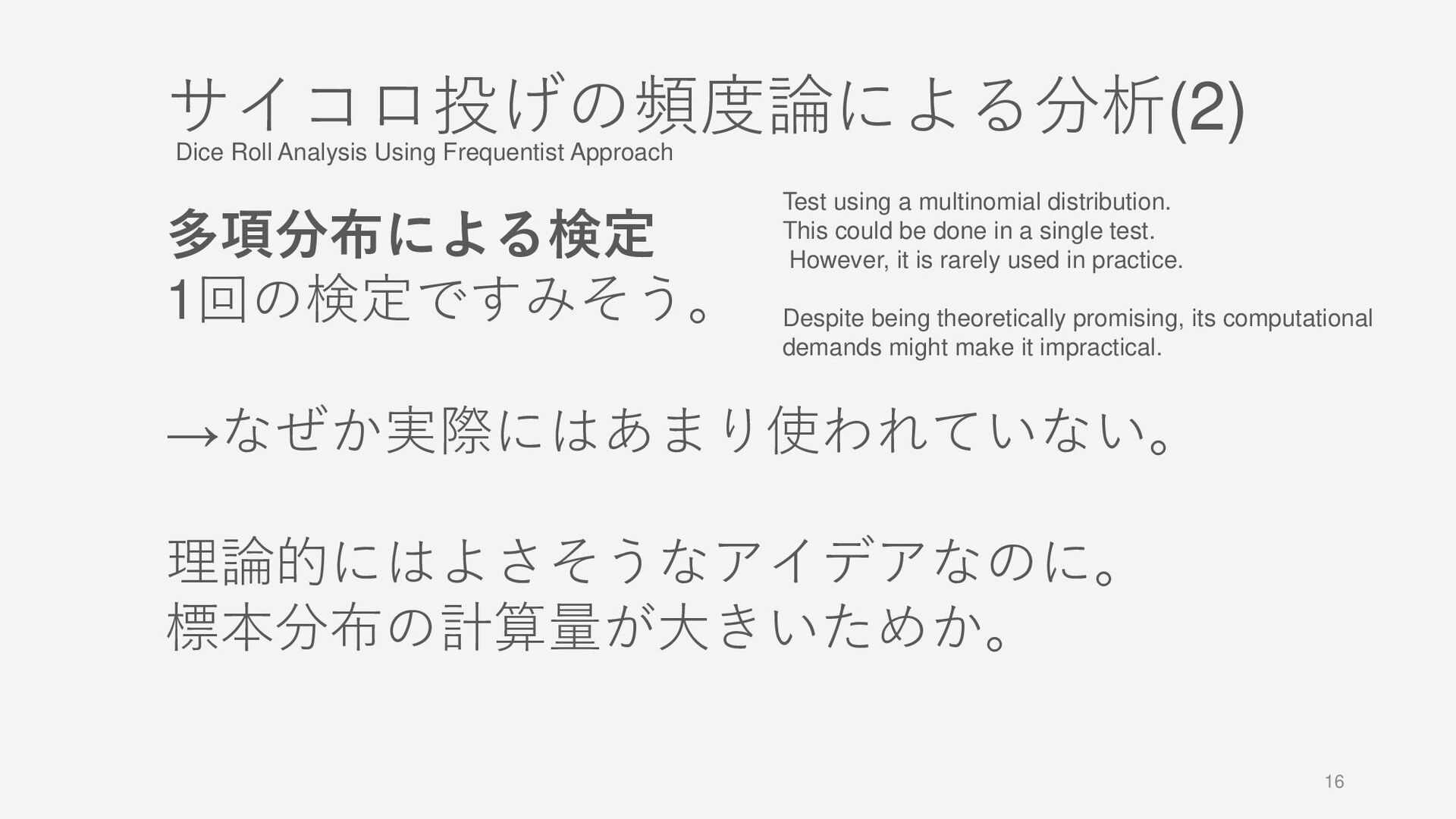
Using Frequentist Approach Test using a multinomial distribution. This could be done in a single test. However, it is rarely used in practice. Despite being theoretically promising, its computational demands might make it impractical.
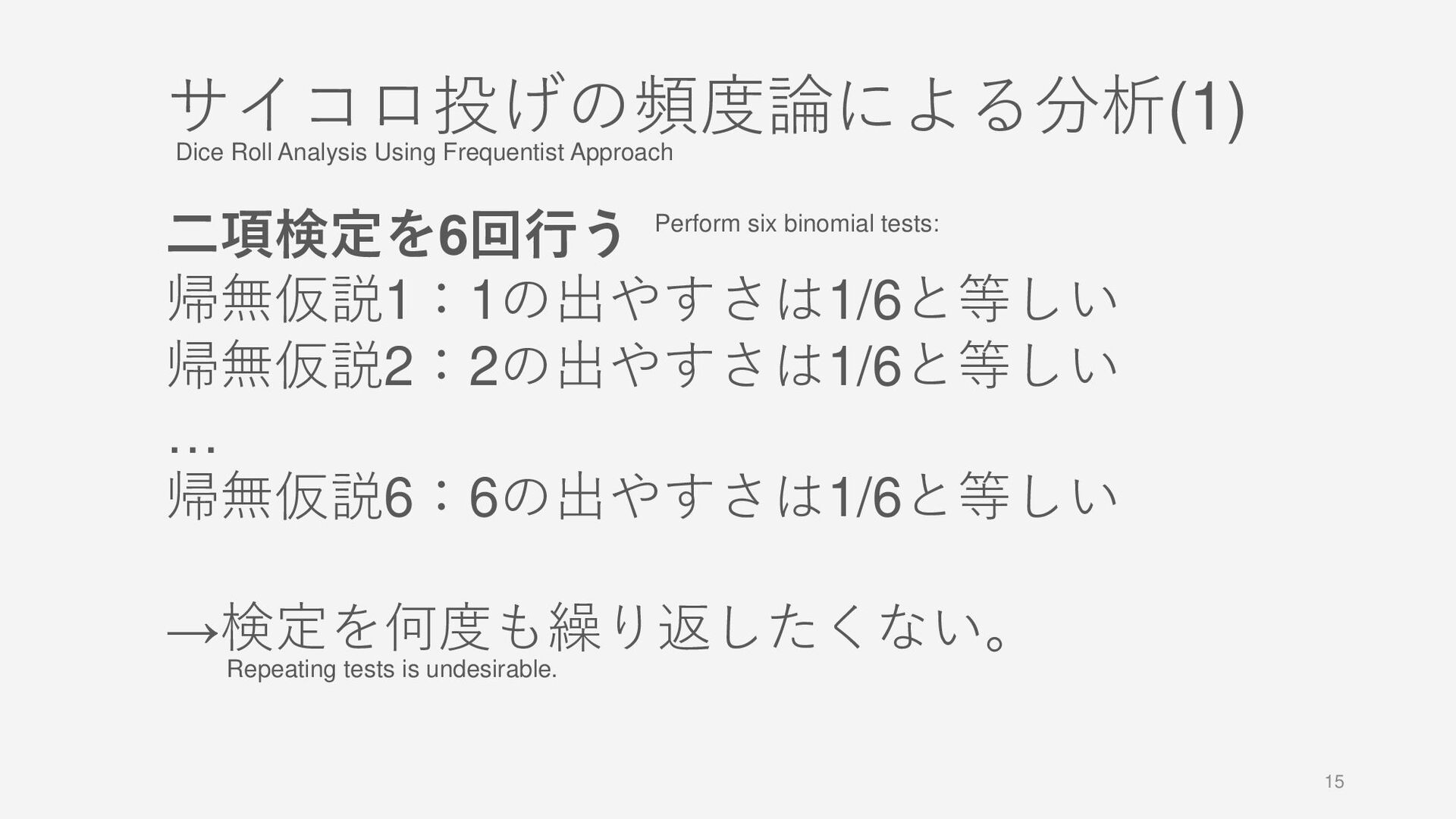
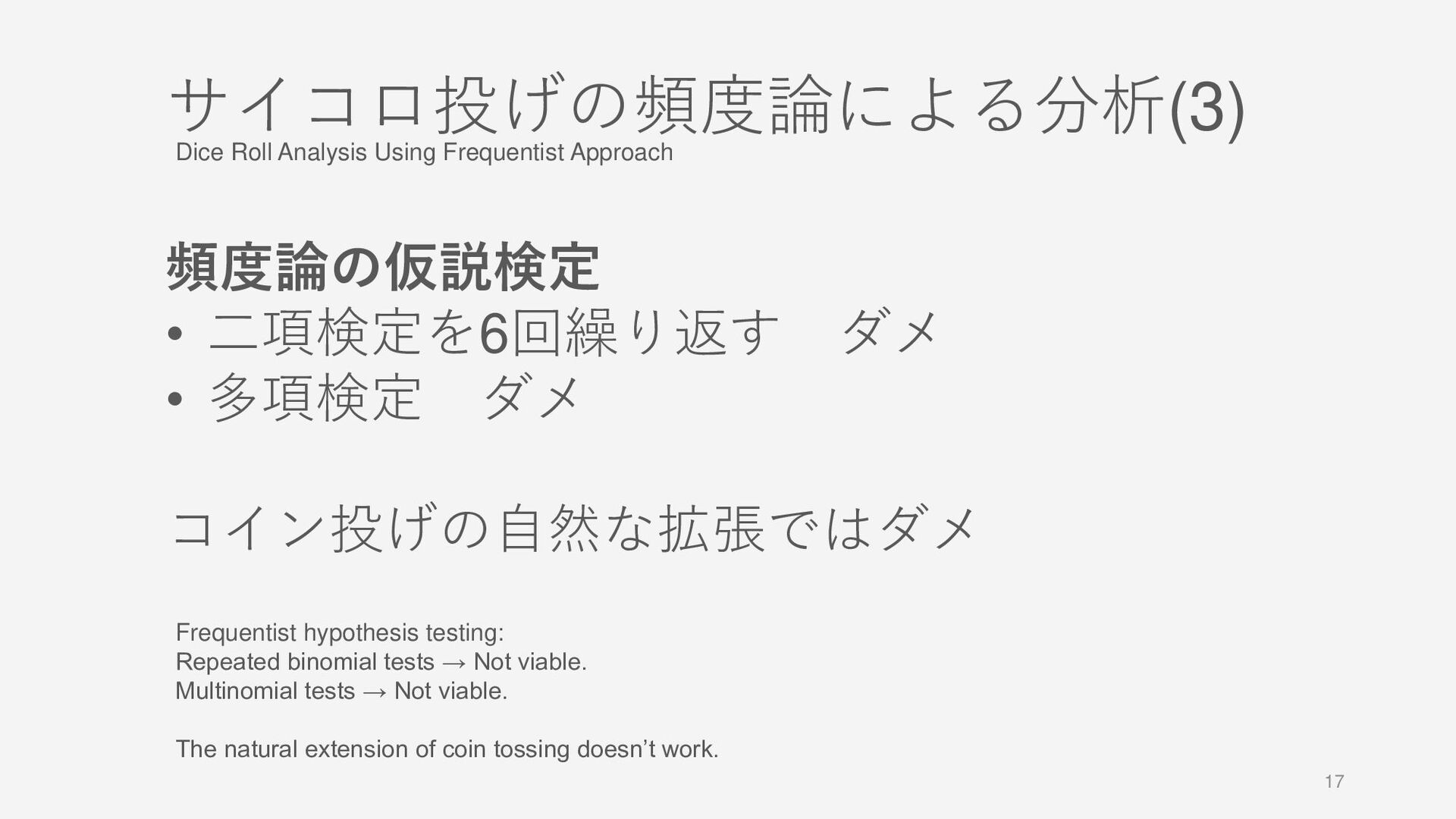
Dice Roll Analysis Using Frequentist Approach Frequentist hypothesis testing: Repeated binomial tests → Not viable. Multinomial tests → Not viable. The natural extension of coin tossing doesn’t work.
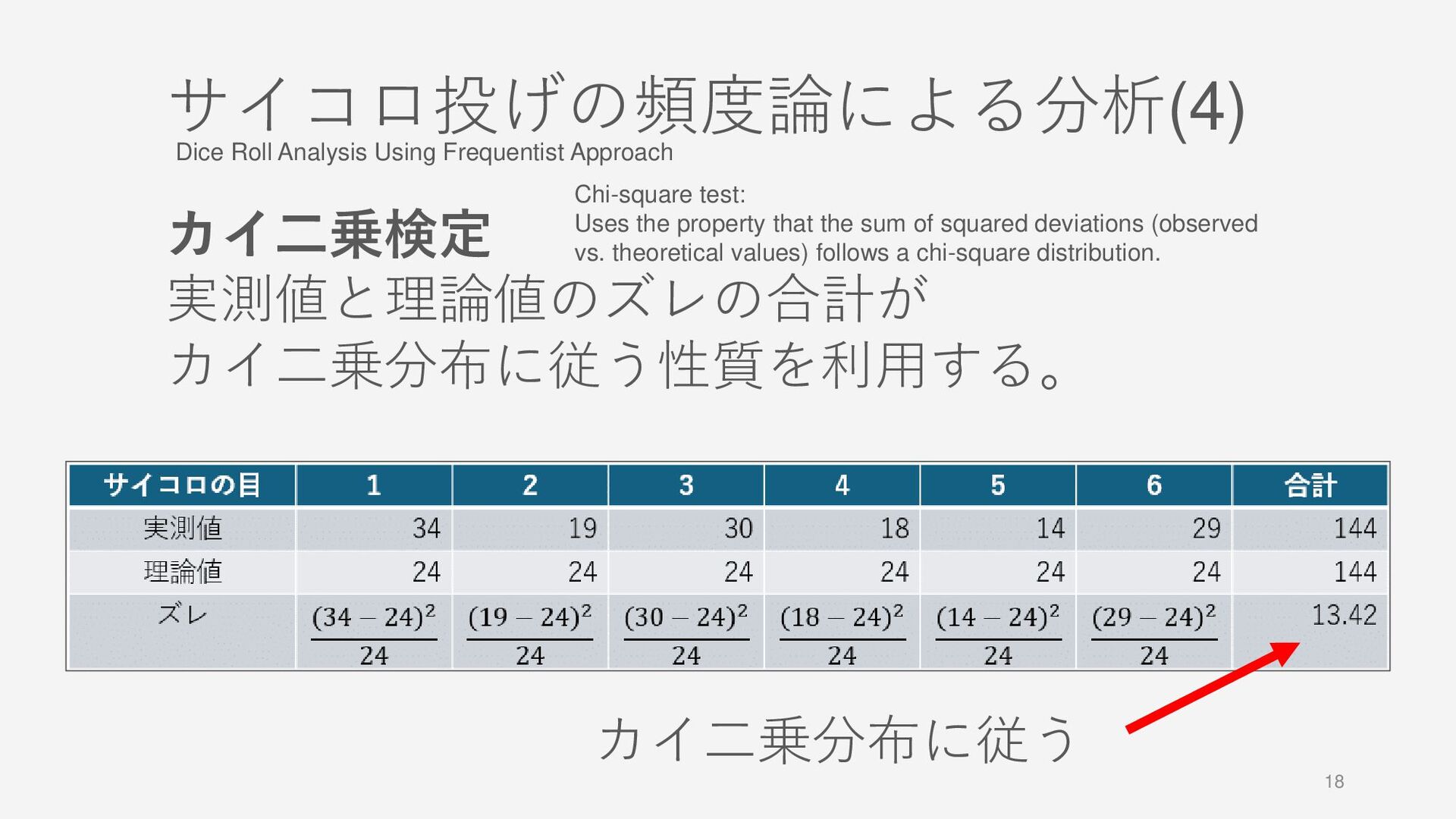
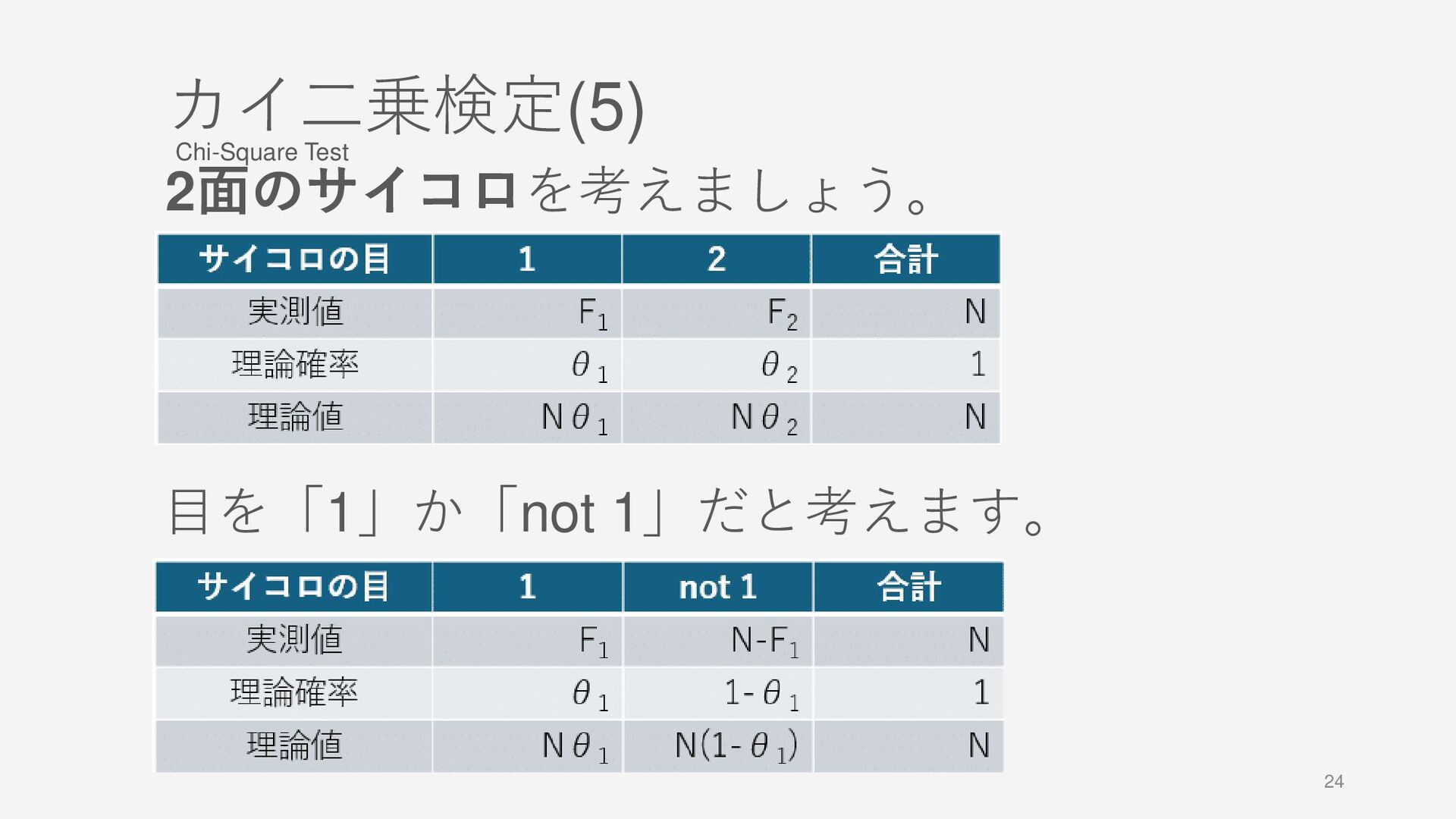
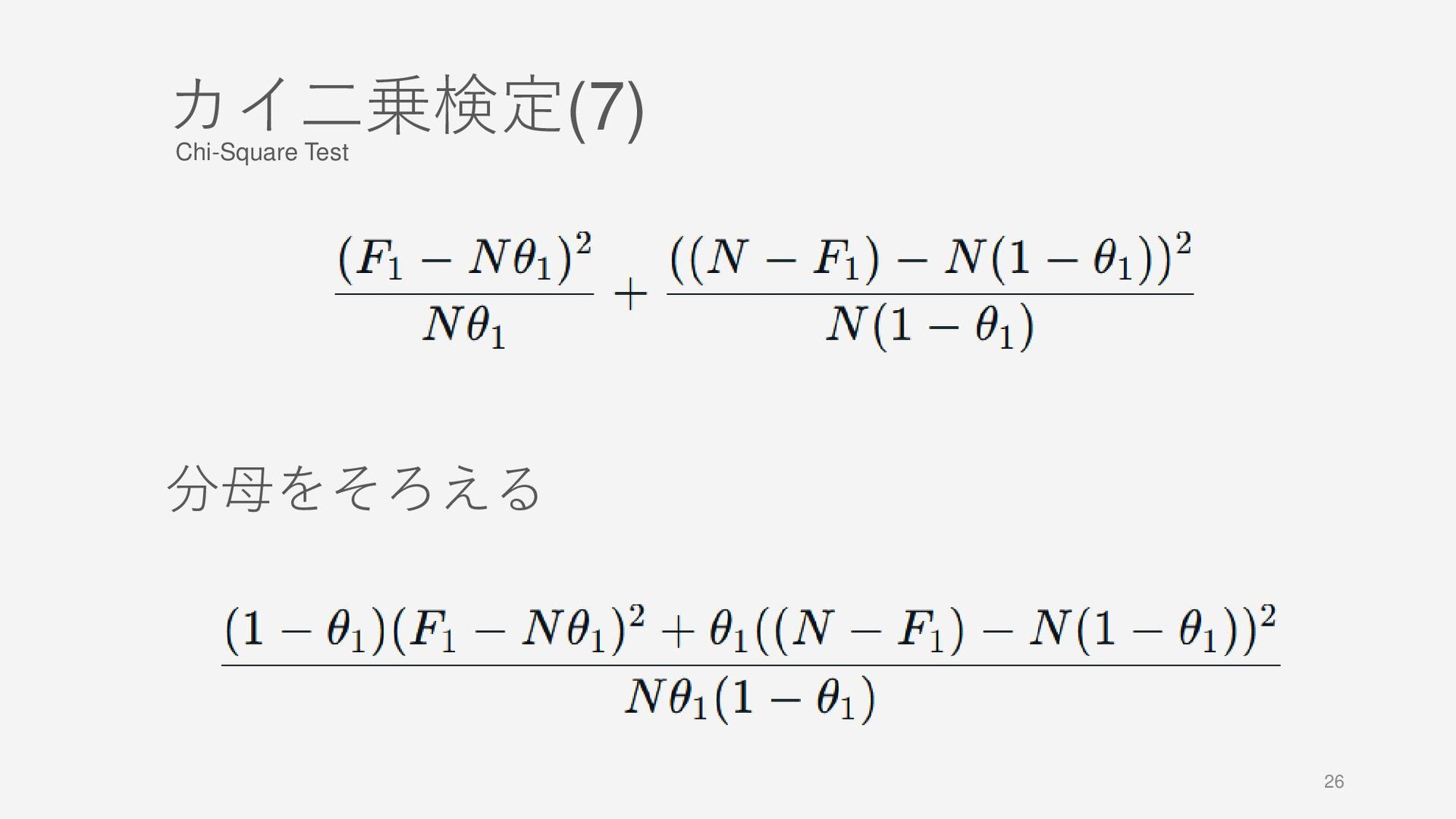
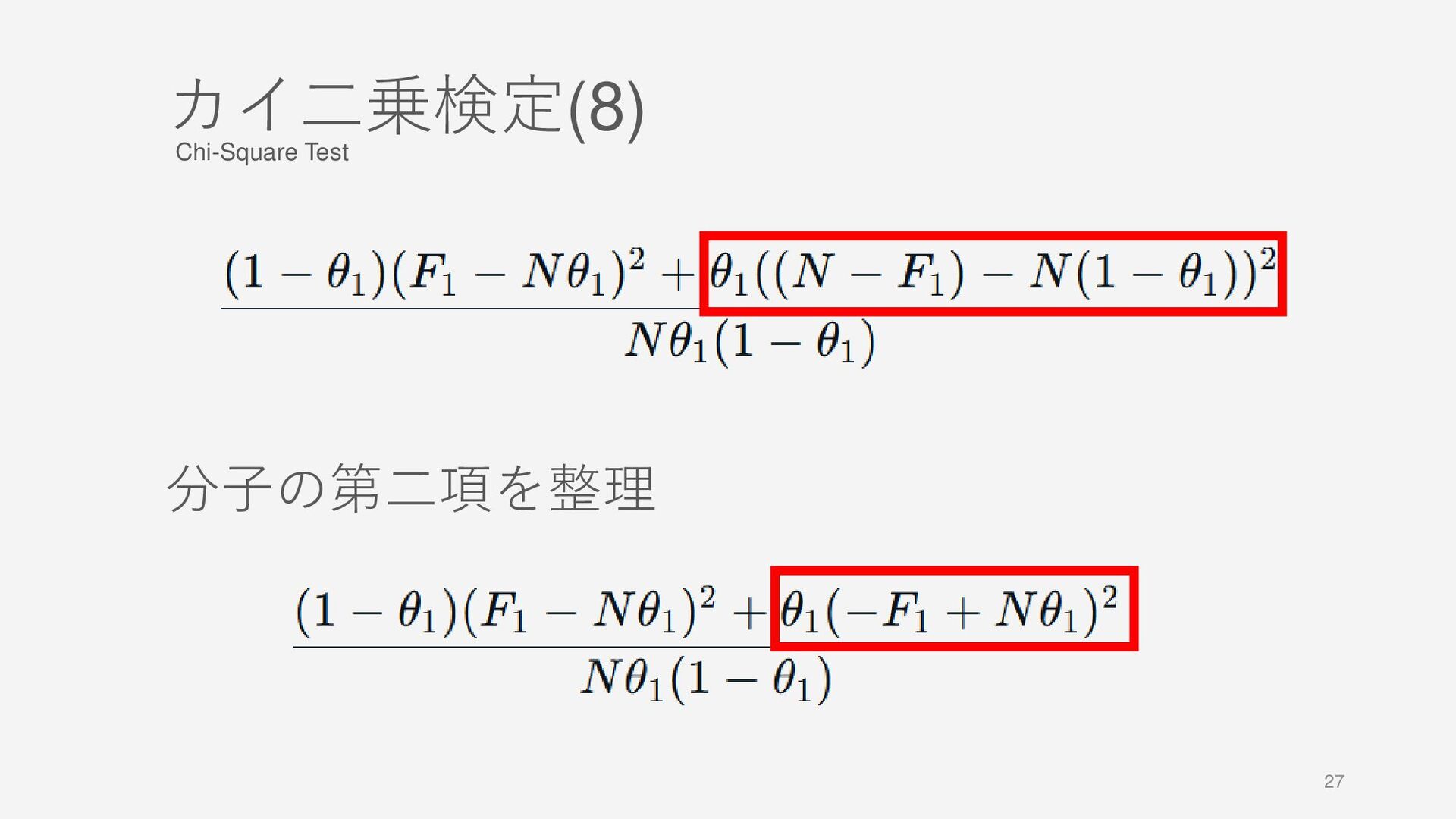
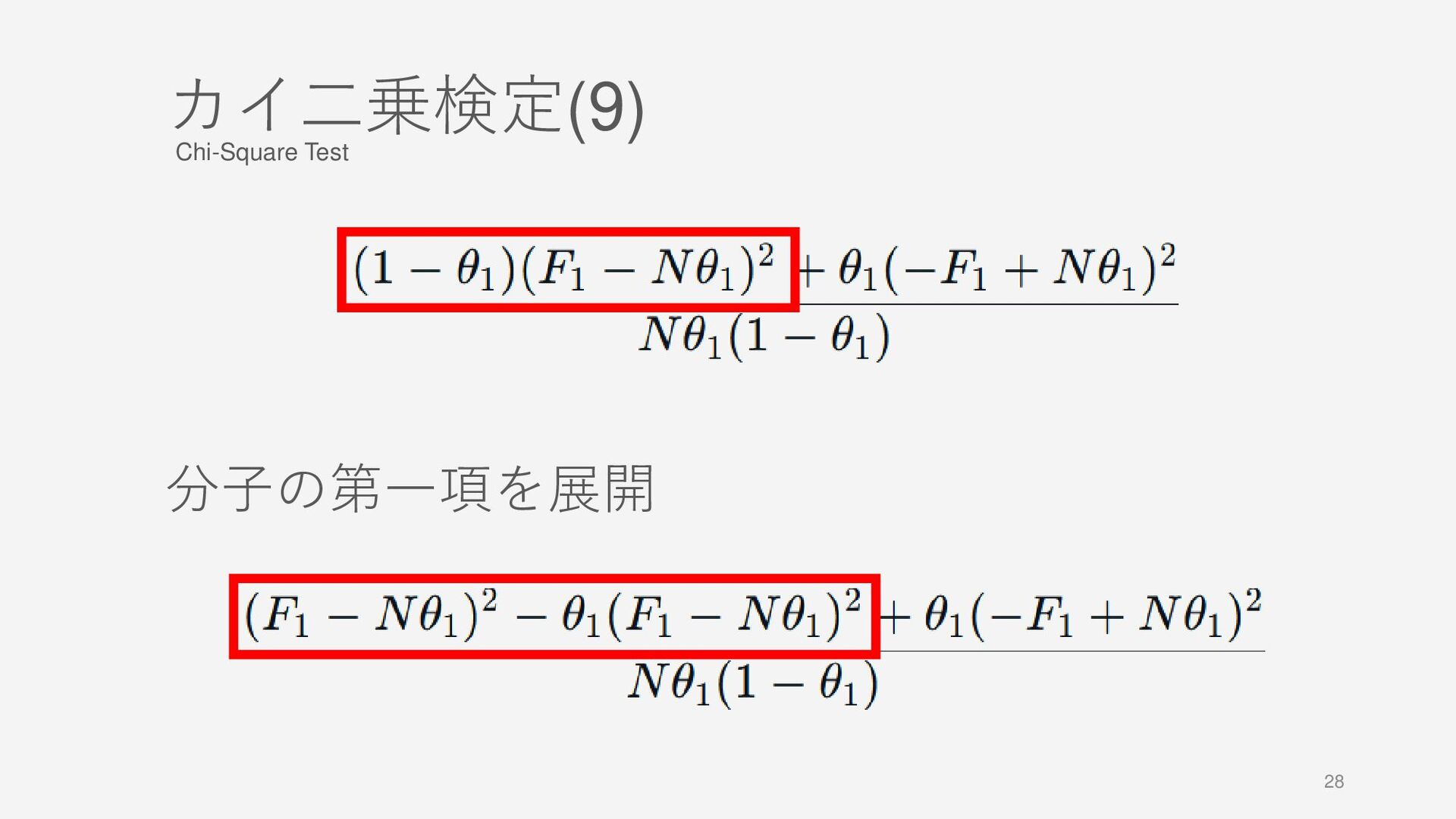
Frequentist Approach Chi-square test: Uses the property that the sum of squared deviations (observed vs. theoretical values) follows a chi-square distribution.
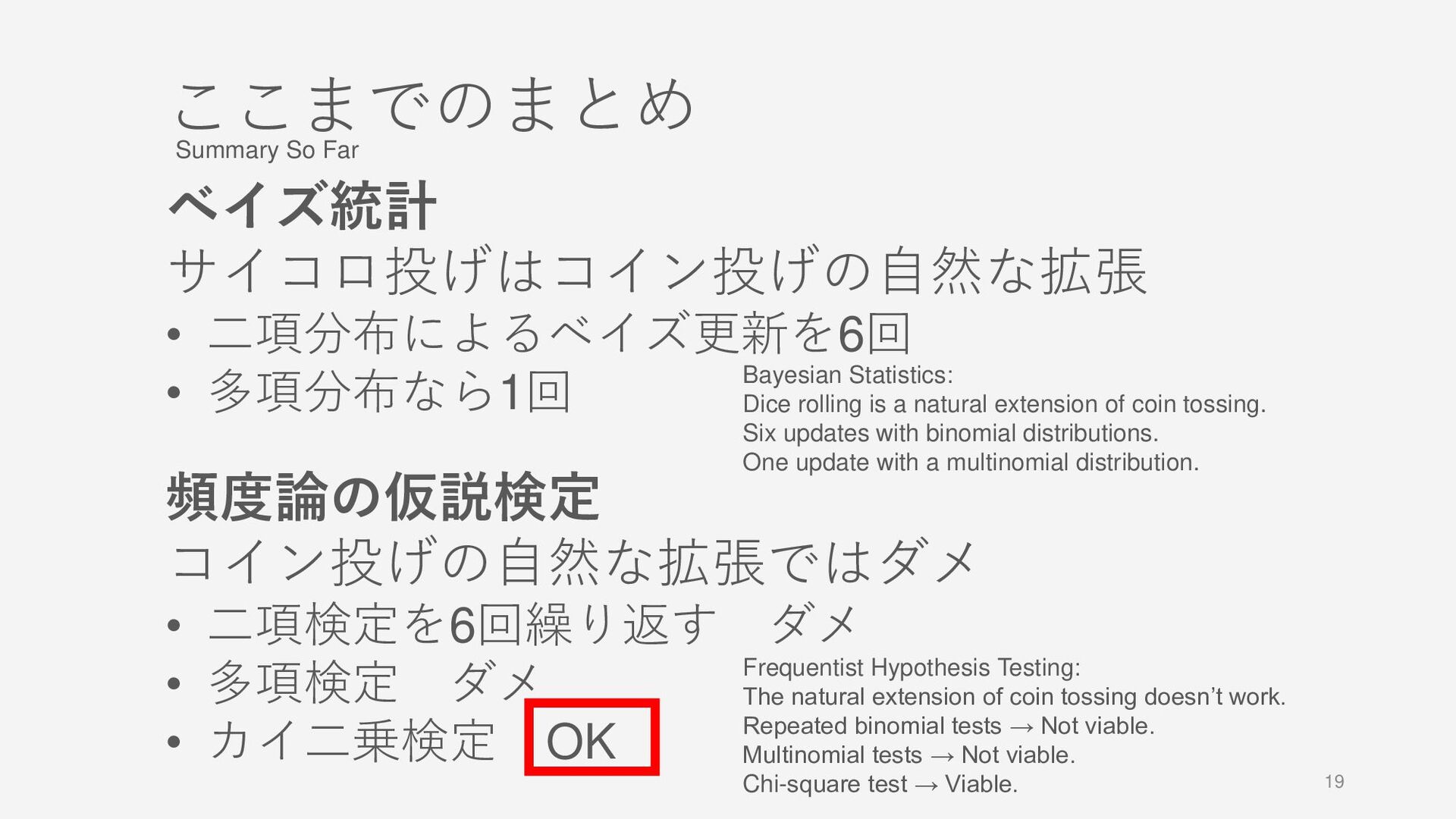
• 二項検定を6回繰り返す ダメ • 多項検定 ダメ • カイ二乗検定 OK Summary So Far Bayesian Statistics: Dice rolling is a natural extension of coin tossing. Six updates with binomial distributions. One update with a multinomial distribution. Frequentist Hypothesis Testing: The natural extension of coin tossing doesn’t work. Repeated binomial tests → Not viable. Multinomial tests → Not viable. Chi-square test → Viable.
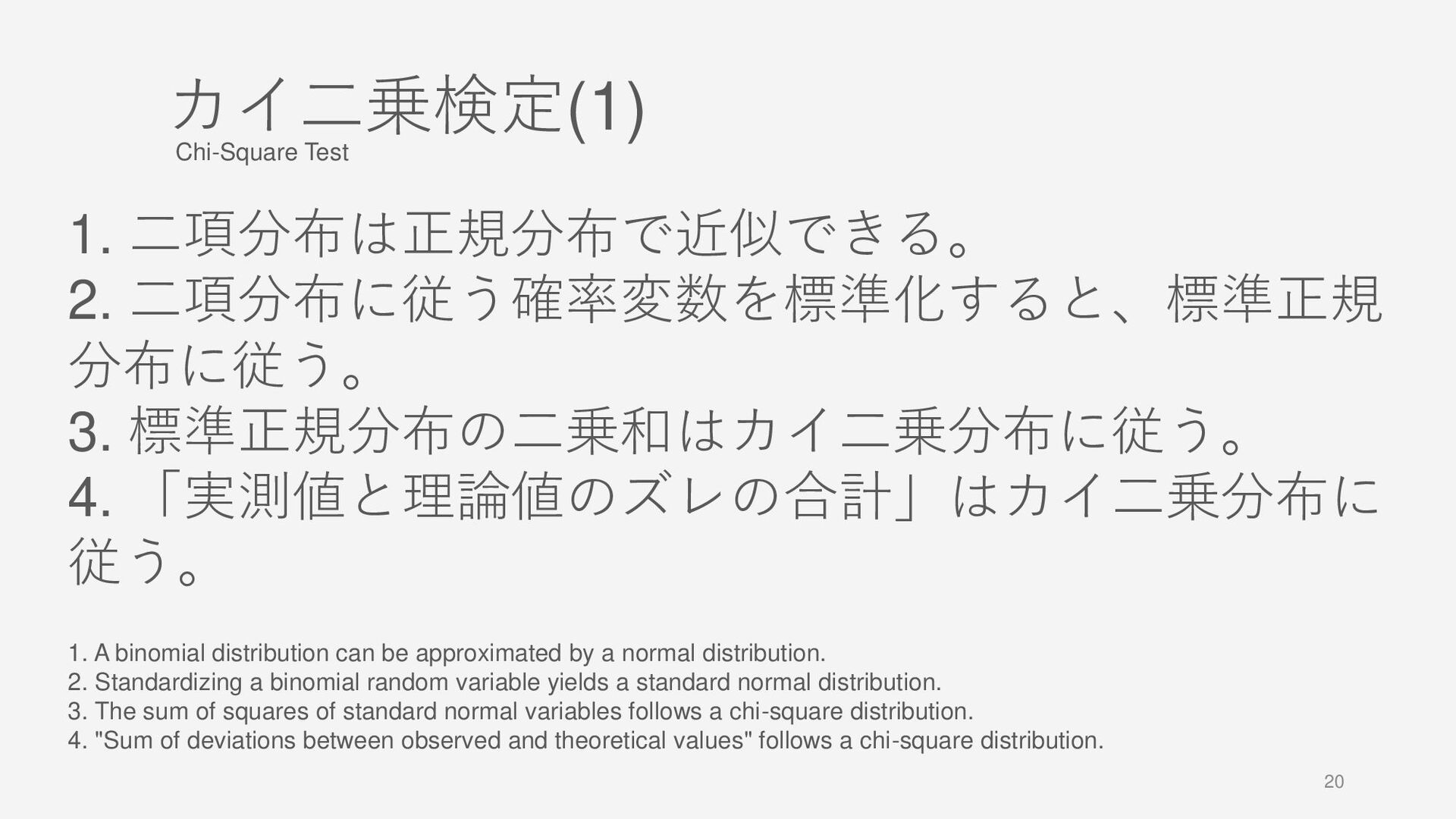
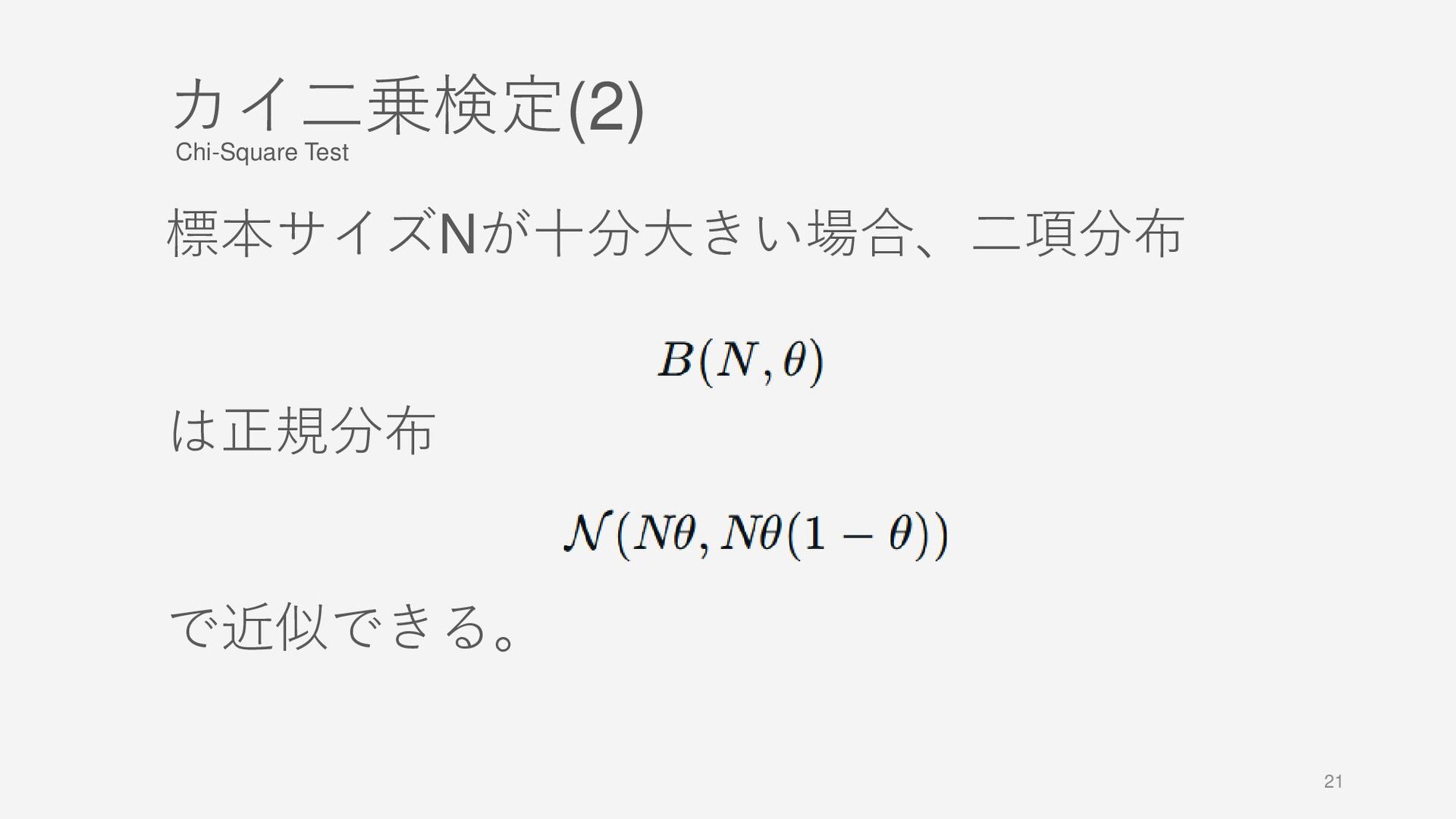
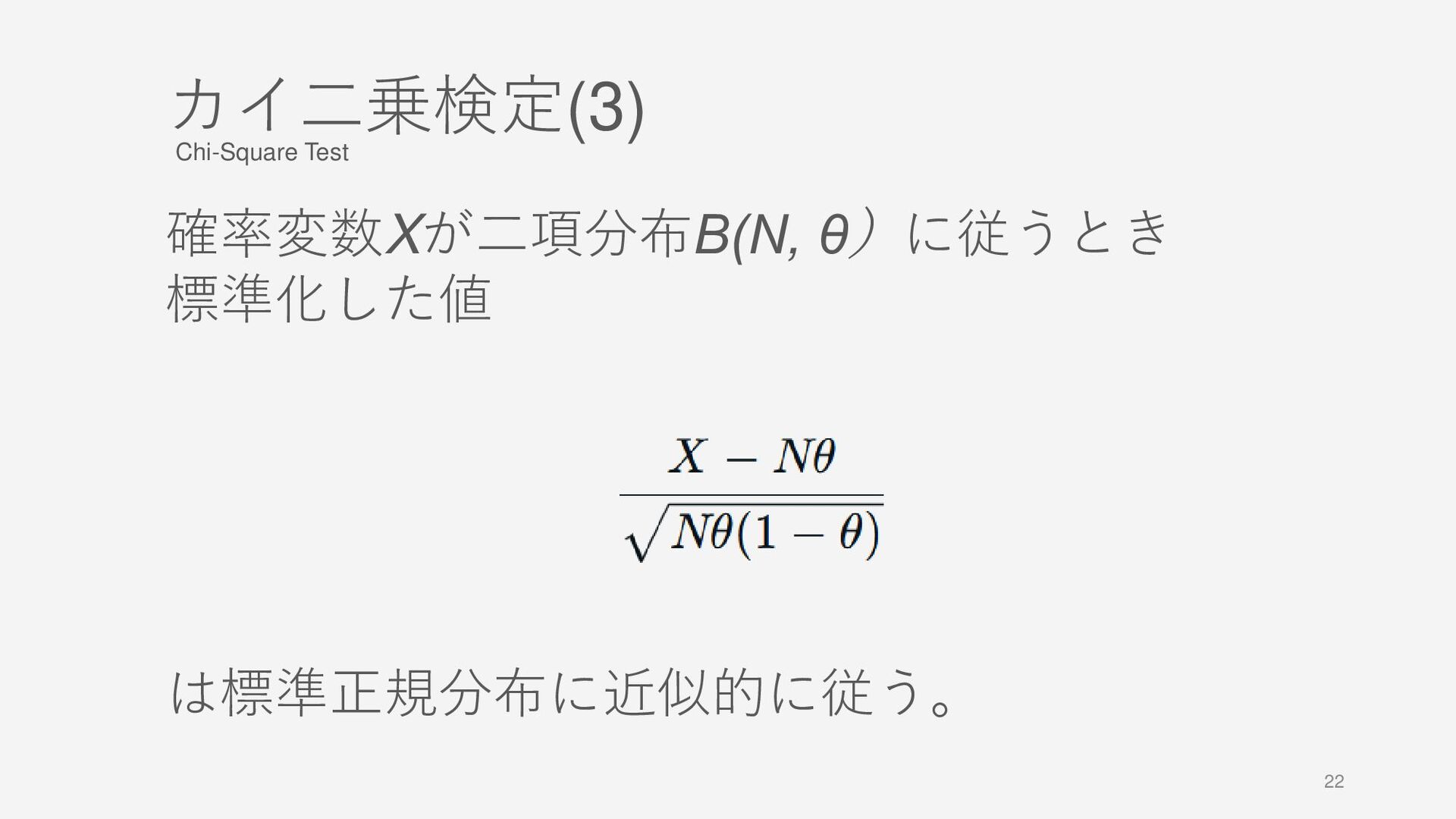
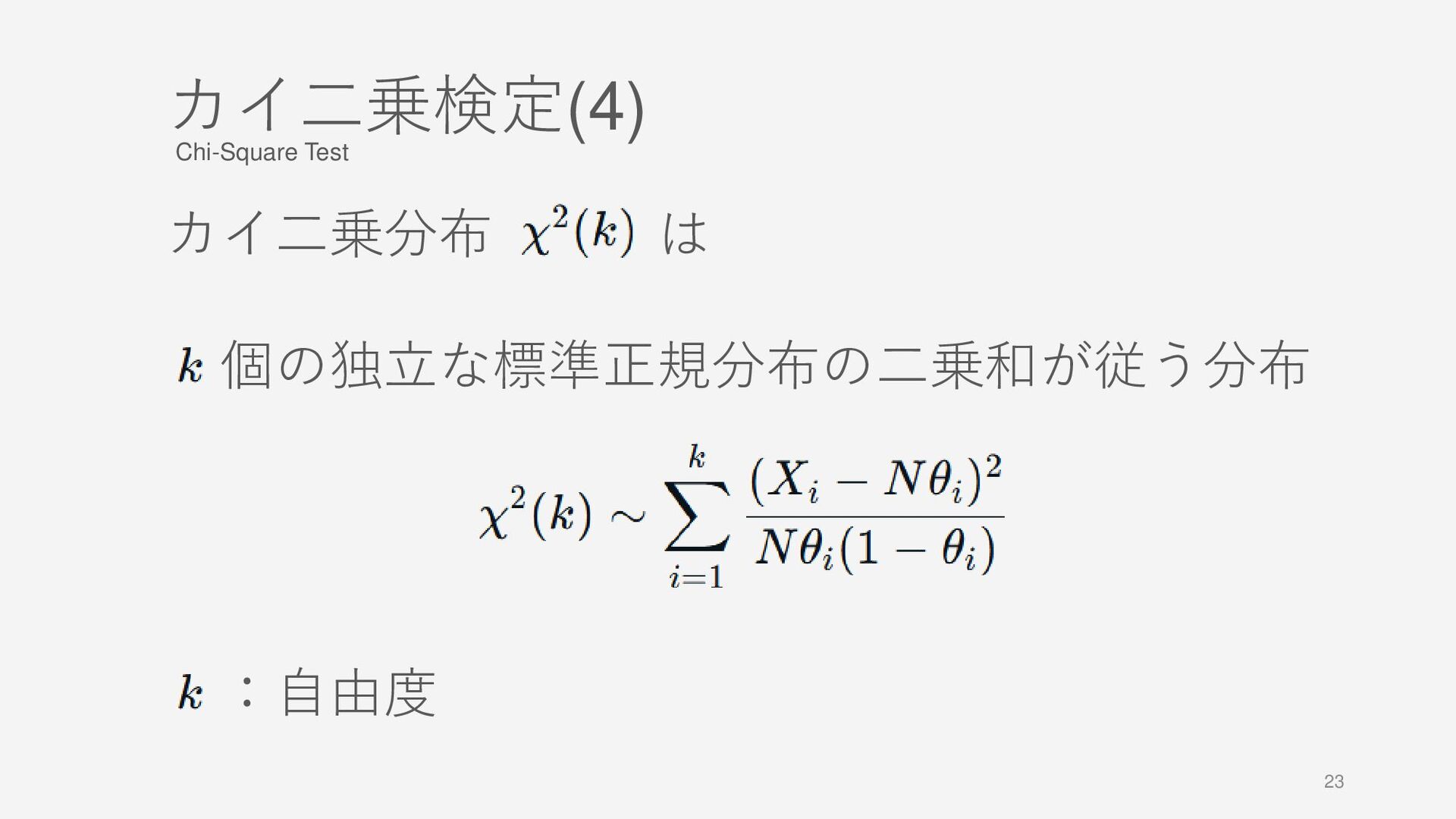
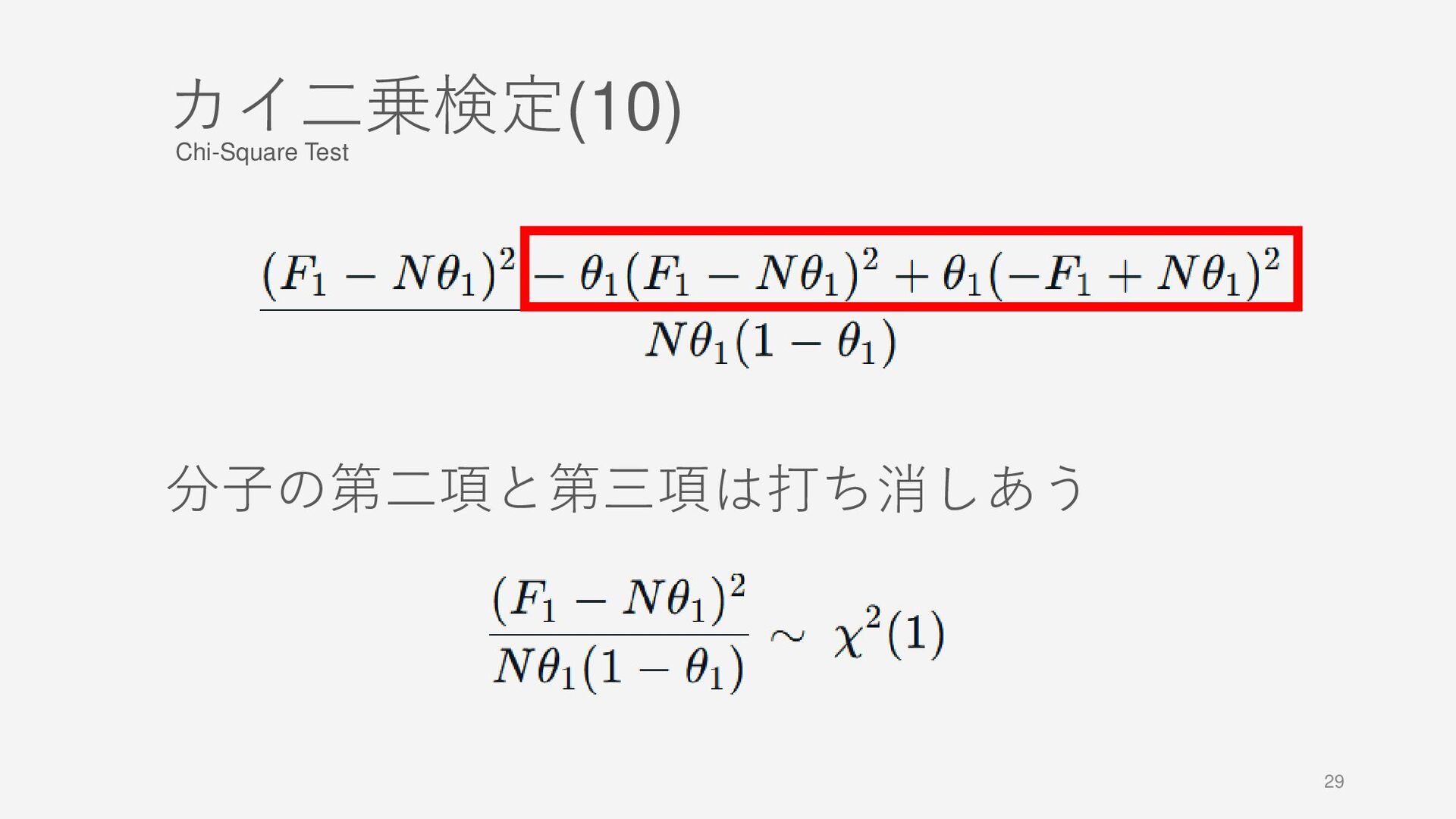
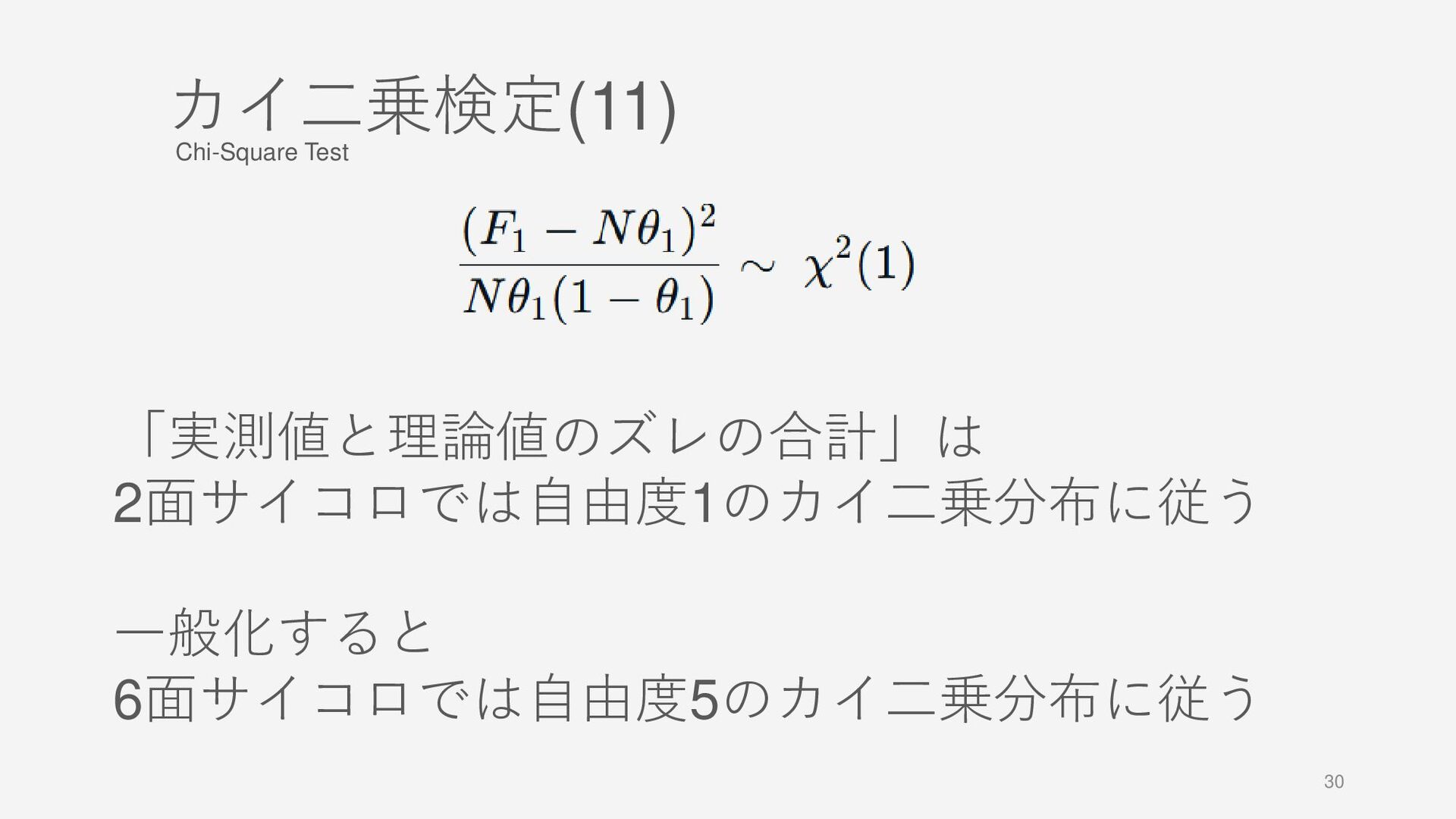
「実測値と理論値のズレの合計」はカイ二乗分布に 従う。 Chi-Square Test 1. A binomial distribution can be approximated by a normal distribution. 2. Standardizing a binomial random variable yields a standard normal distribution. 3. The sum of squares of standard normal variables follows a chi-square distribution. 4. "Sum of deviations between observed and theoretical values" follows a chi-square distribution.
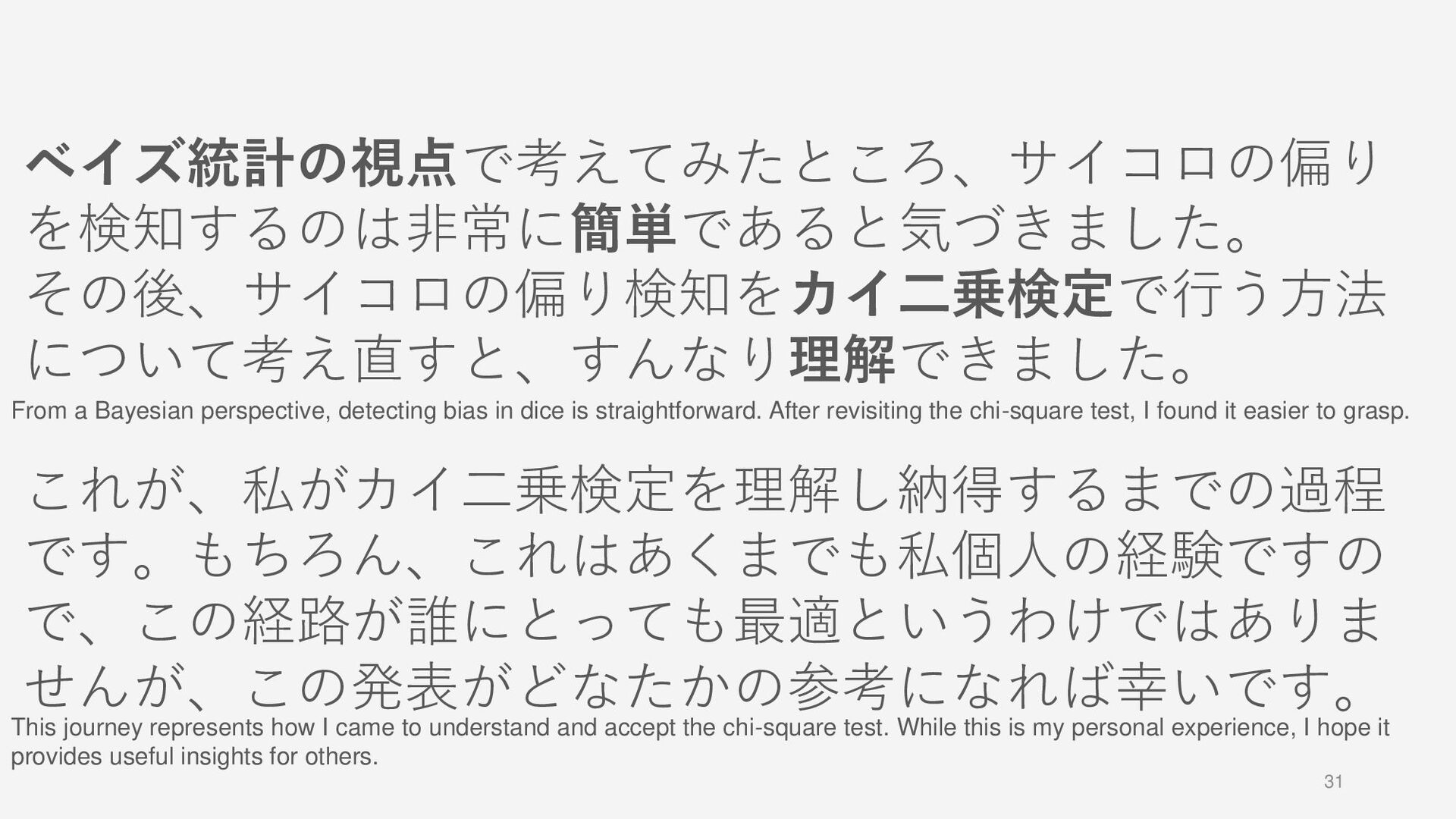
a Bayesian perspective, detecting bias in dice is straightforward. After revisiting the chi-square test, I found it easier to grasp. This journey represents how I came to understand and accept the chi-square test. While this is my personal experience, I hope it provides useful insights for others.


 florets1
 bkeepers
 chriscoyier
 jdejongh
 mojombo
 coloredviolet
 kastner
 afnizarnur
 raygrieselhuber
 tmiket
 davidcarrasco
 ammeep
 tamaranovitovic