Upgrade to Pro
— share decks privately, control downloads, hide ads and more …
Speaker Deck
Sign up for free
Menu
Search
Features
All features
Private URLs
Password Protection
Custom URLS
Scheduled publishing
Remove Branding
Restrict embedding
Deck Collections
Notes
Features
All features
Private URLs
Password Protection
Custom URLS
Scheduled publishing
Remove Branding
Restrict embedding
Deck Collections
Notes
Explore
Featured decks
Featured speakers
Programming
Technology
Storyboards
Explore
Featured decks
Featured speakers
Programming
Technology
Storyboards
Pricing
Search
Sign in
Sign up for free
Berlin 2013 - Riemann Workshop - Pierre-Yves Ri...
Search
Monitorama
September 20, 2013
740
2
Share
Embed
Copy iframe code
Copy JS code
Copy link
Start on current slide
Berlin 2013 - Riemann Workshop - Pierre-Yves Ritschard
Monitorama
September 20, 2013
More Decks by Monitorama
See All by Monitorama
Monitorama PDX 2017 - Ian Bennett
monitorama
1
650
PDX 2017 - Pedro Andrade
monitorama
0
850
PDX 2017 - Roy Rapoport
monitorama
4
1k
PDX 2017 - Julia Evans
monitorama
0
530
Berlin 2013 - Session - Brad Lhotsky
monitorama
5
770
Berlin 2013 - Session - Alex Petrov
monitorama
6
740
Berlin 2013 - Session - Jeff Weinstein
monitorama
2
680
Berlin 2013 - Session - Oliver Hankeln
monitorama
1
600
Berlin 2013 - Session - David Goodlad
monitorama
0
530
Featured
See All Featured
The SEO identity crisis: Don't let AI make you average
varn
0
600
A brief & incomplete history of UX Design for the World Wide Web: 1989–2019
jct
2
540
Between Models and Reality
mayunak
4
500
Amusing Abliteration
ianozsvald
1
360
DBのスキルで生き残る技術 - AI時代におけるテーブル設計の勘所
soudai
PRO
68
59k
The Myth of the Modular Monolith - Day 2 Keynote - Rails World 2024
eileencodes
28
3.7k
Reflections from 52 weeks, 52 projects
jeffersonlam
356
22k
Are puppies a ranking factor?
jonoalderson
2
4.1k
The AI Revolution Will Not Be Monopolized: How open-source beats economies of scale, even for LLMs
inesmontani
PRO
3
3.8k
Automating Front-end Workflow
addyosmani
1370
210k
Avoiding the “Bad Training, Faster” Trap in the Age of AI
tmiket
0
290
How to optimise 3,500 product descriptions for ecommerce in one day using ChatGPT
katarinadahlin
PRO
3
3.9k
Transcript
@pyr
https://github.com/pyr
• Riemann concepts • In-app events • System metrics •
Just enough clojure • Common use cases Agenda
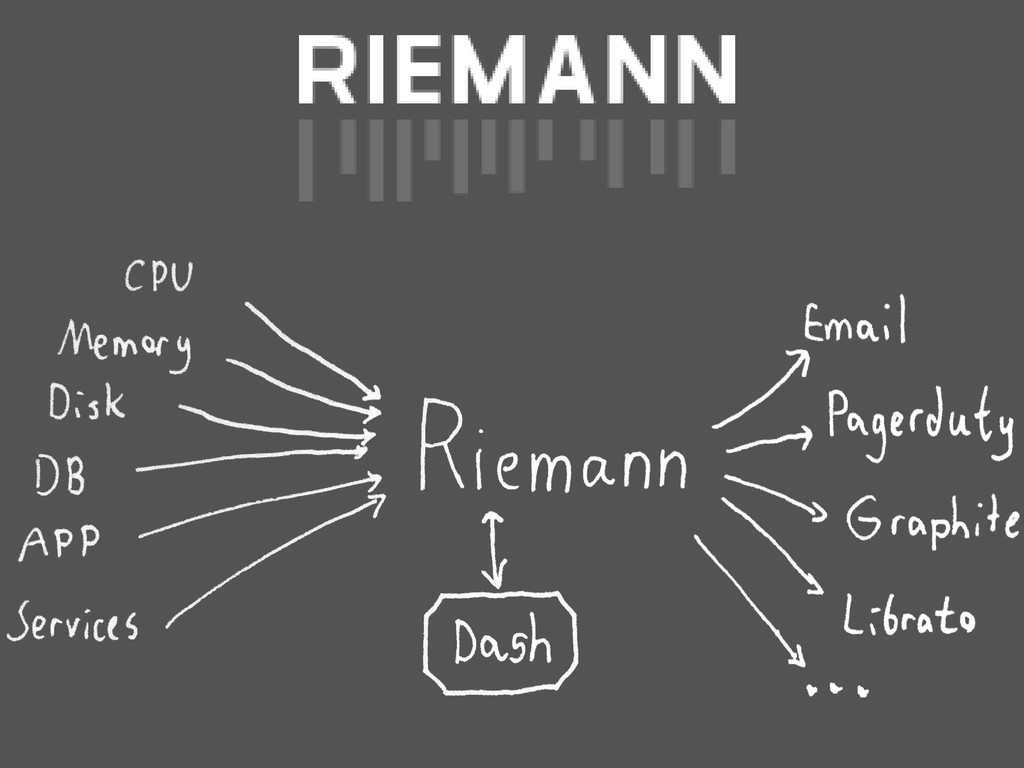
Event stream processor • Process • Analyze • React
None
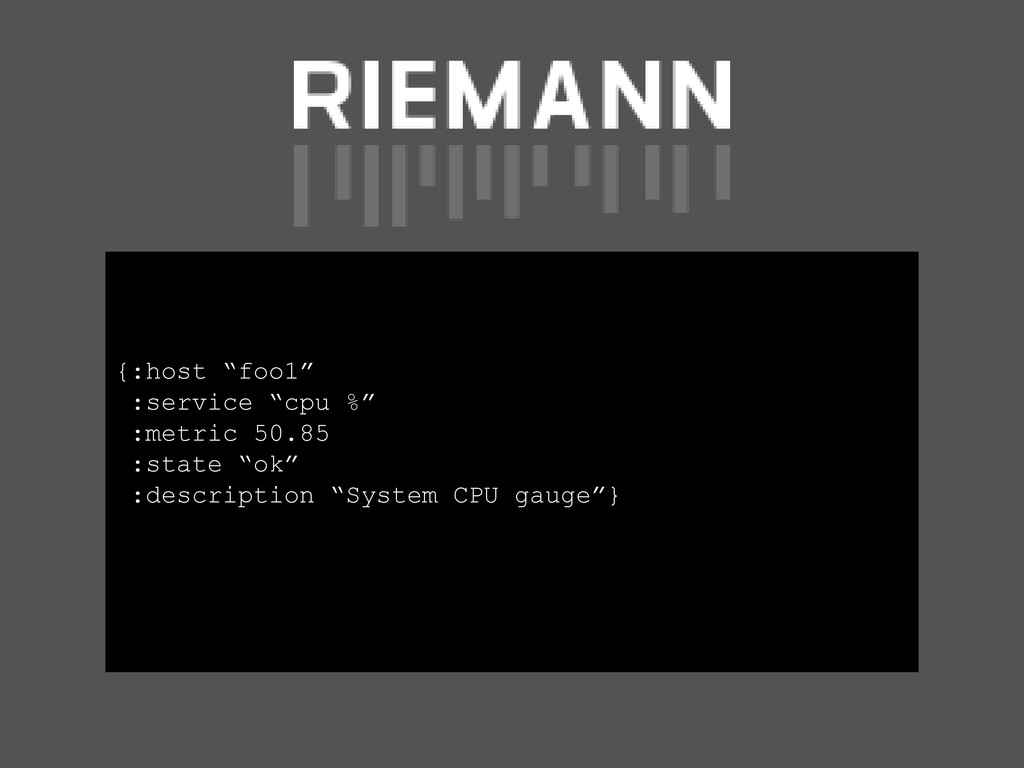
{:host “foo1” :service “cpu %” :metric 50.85 :state “ok” :description
“System CPU gauge”}
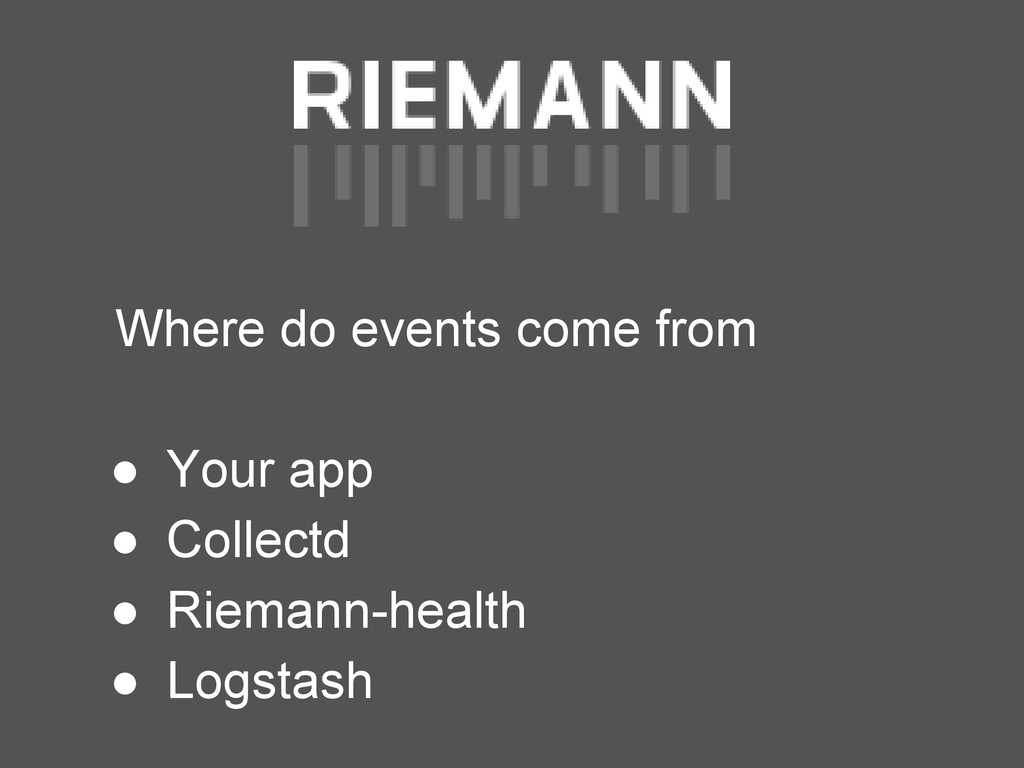
Where do events come from • Your app • Collectd
• Riemann-health • Logstash
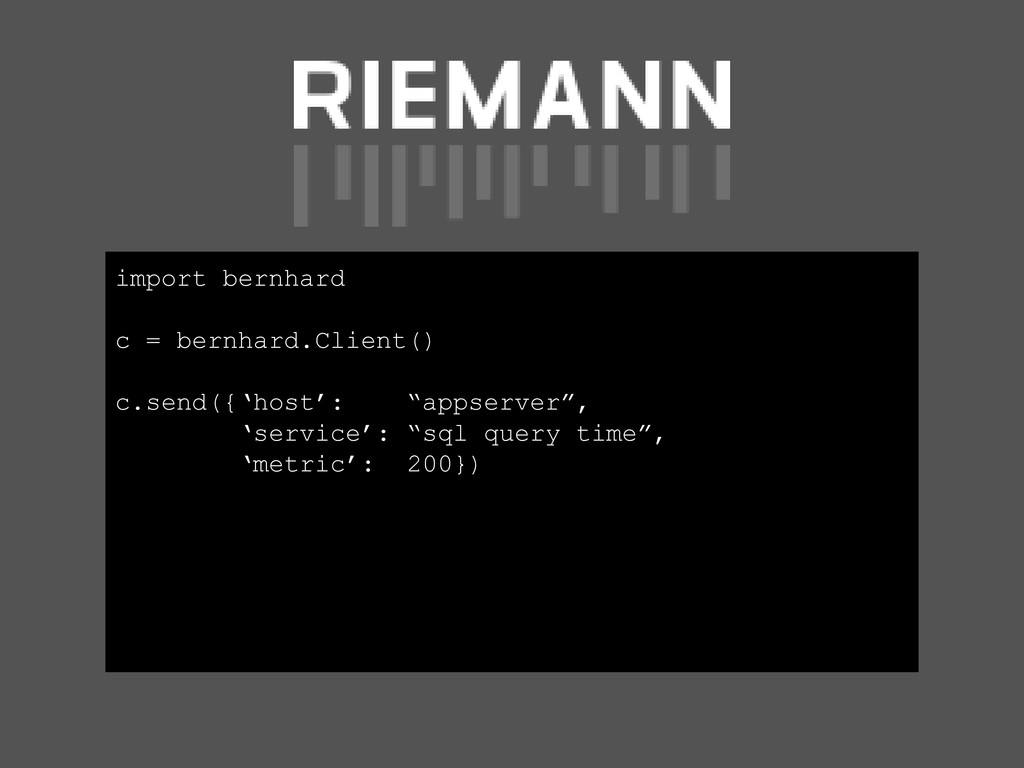
import bernhard c = bernhard.Client() c.send({‘host’: “appserver”, ‘service’: “sql query
time”, ‘metric’: 200})
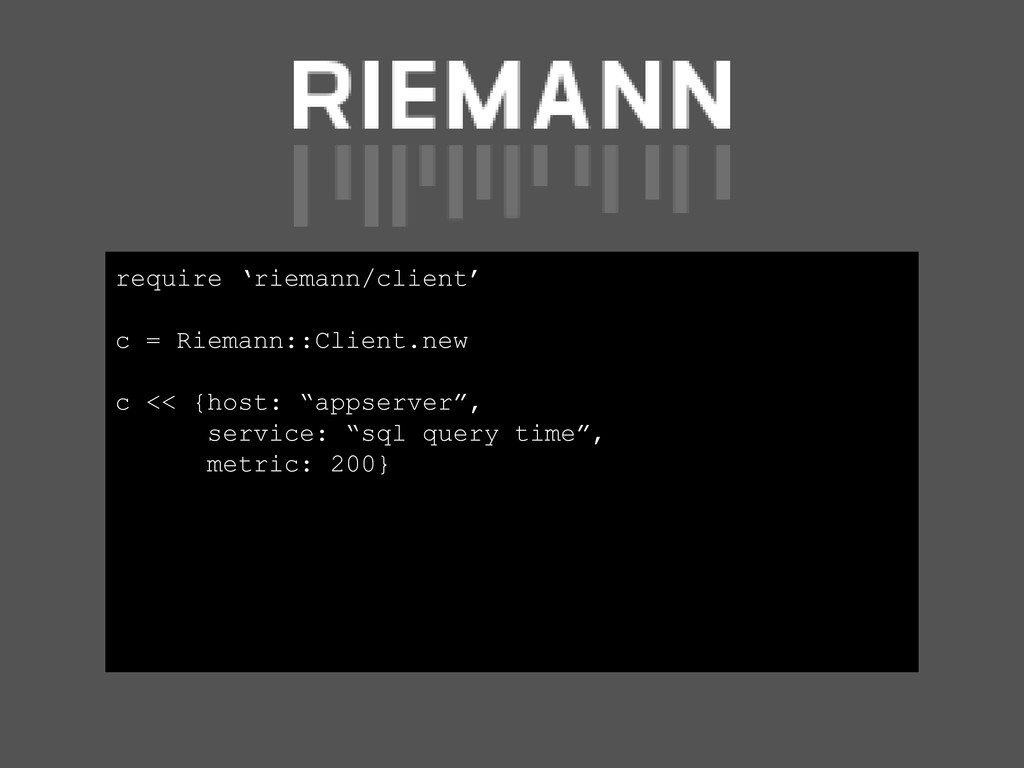
require ‘riemann/client’ c = Riemann::Client.new c << {host: “appserver”, service:
“sql query time”, metric: 200}
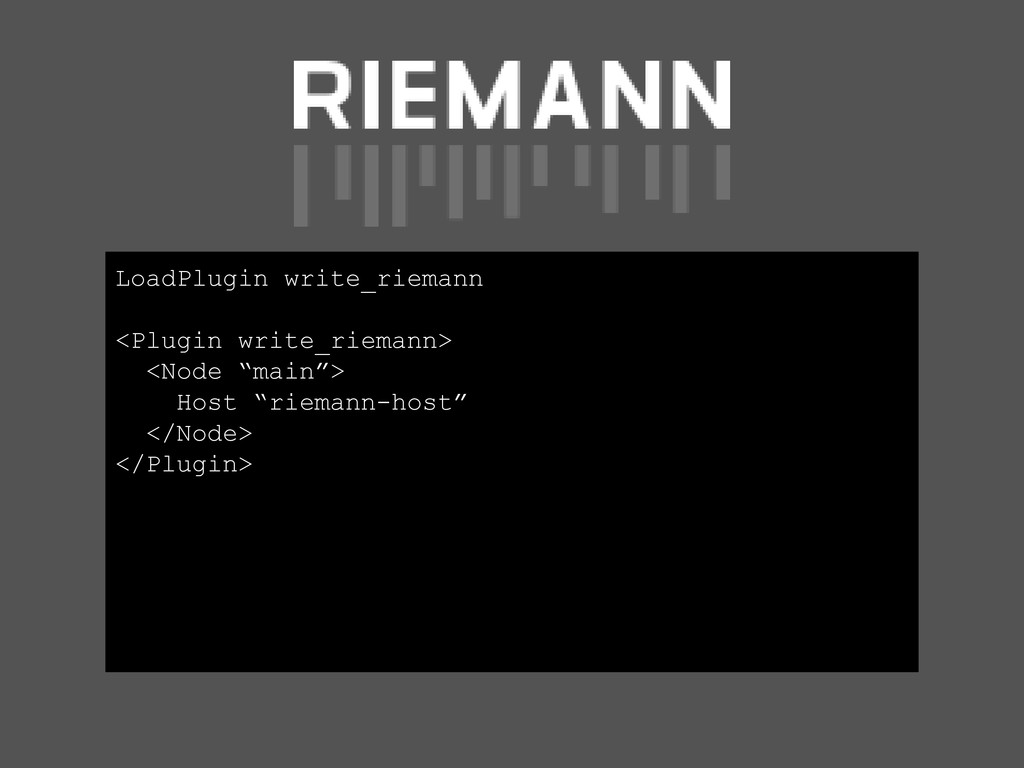
LoadPlugin write_riemann <Plugin write_riemann> <Node “main”> Host “riemann-host” </Node> </Plugin>
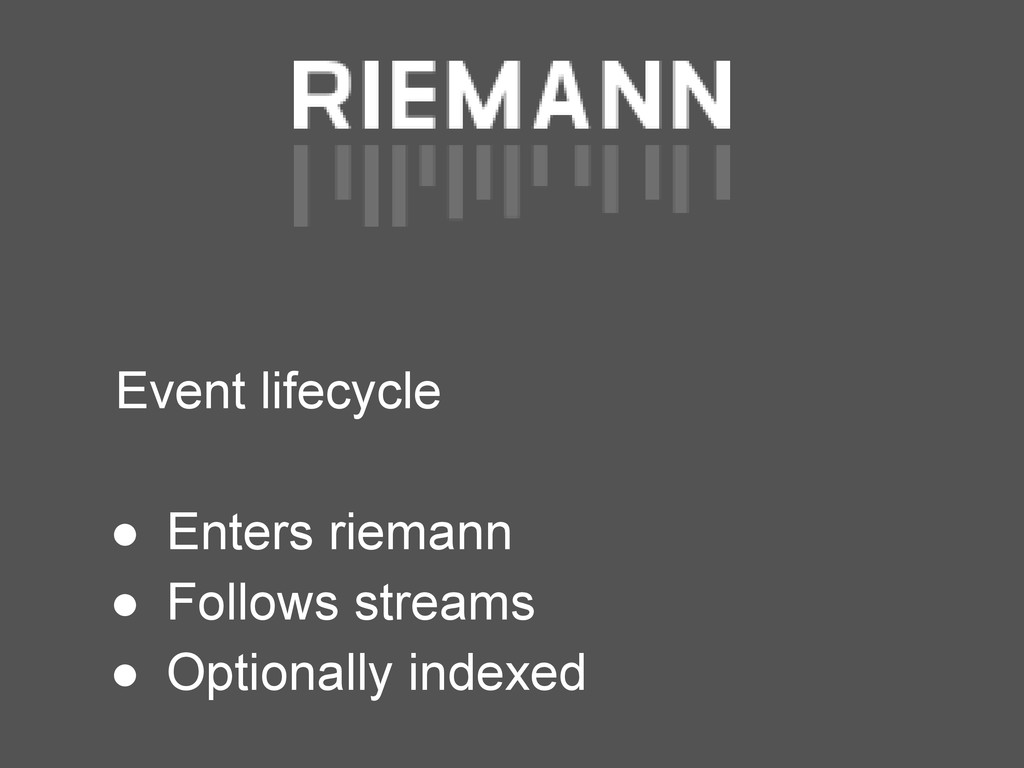
Event lifecycle • Enters riemann • Follows streams • Optionally
indexed
Looking at events • Queries • Dashboard
require ‘riemann/client’ c = Riemann::Client.new c[‘true’] c[‘service = “cpu”’] c[‘tagged
“web-servers”’]
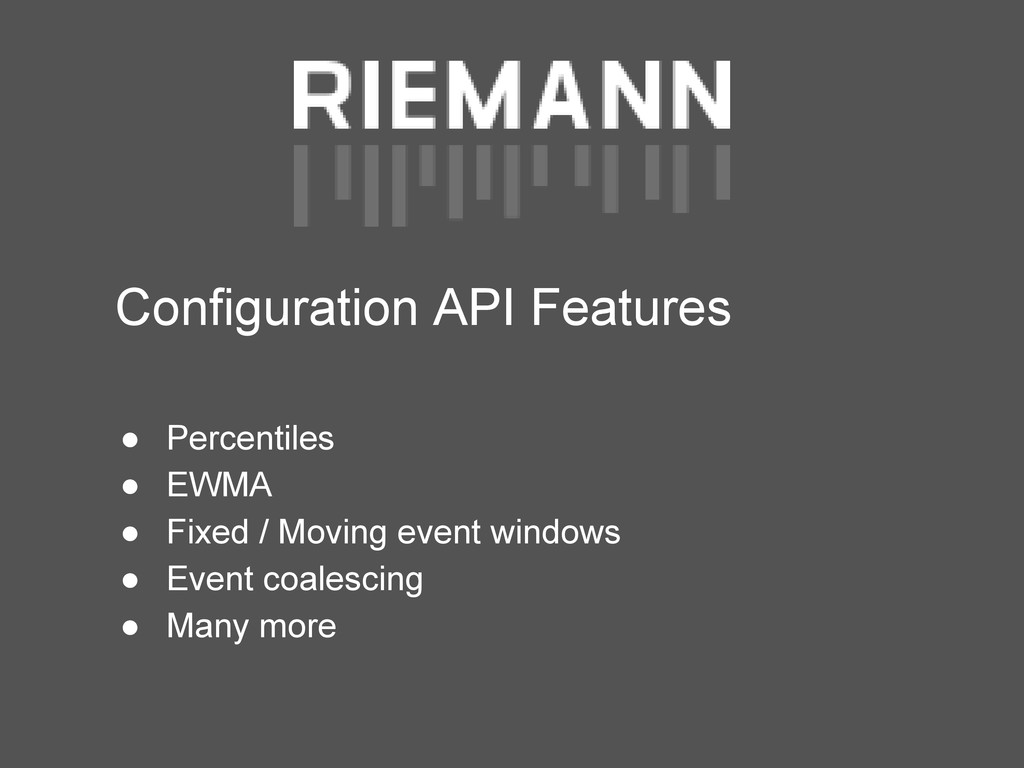
Configuration API Features • Percentiles • EWMA • Fixed /
Moving event windows • Event coalescing • Many more
Configuration • Configuration is code • Code is in clojure
Clojure
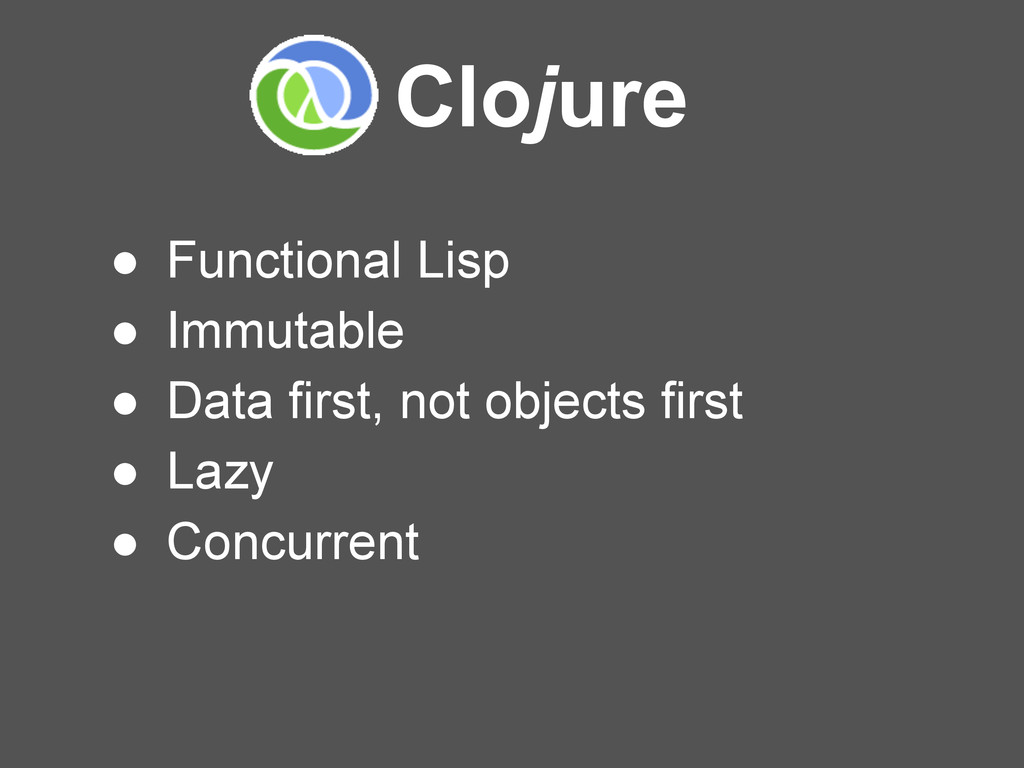
Clojure • Functional Lisp • Immutable • Data first, not
objects first • Lazy • Concurrent
Clojure (defn hello [name] (println “hello” name) (def a-map {:some-key
“some value”}) (def an-array [0 1 2 :foo]) (def a-set #{:a :b :c}) (def a-pattern #”^(.*)[ \t]+=(.*)[ \t]+$”) (def inline-fn #(+ 3 %)) (def anon-fn (fn [a b] (+ a b)))
Clojure (defn greeter [greeting] (fn [name] (println greeting “, “
name))) (let [german-greeting (greeter “Hallo”)] (german-greeting “Rich”))
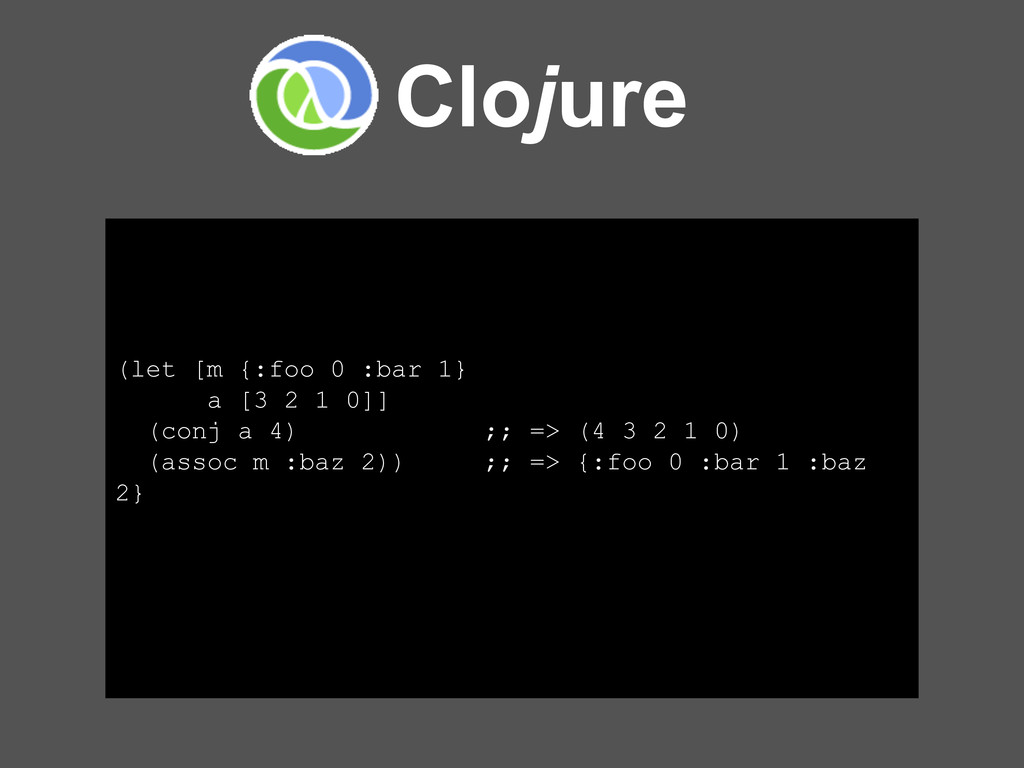
Clojure (let [m {:foo 0 :bar 1} a [3 2
1 0]] (conj a 4) ;; => (4 3 2 1 0) (assoc m :baz 2)) ;; => {:foo 0 :bar 1 :baz 2}
Clojure (ns my-sql-query-ns (:require [clojure.data.jdbc :as jdbc] [clojure.data.jdbc.sql :as sql]))
(jdbc/query mysql-db (sql/select * :users)) ;;=> ({:login “root” :uid 0} {:login :daemon :uid 1})
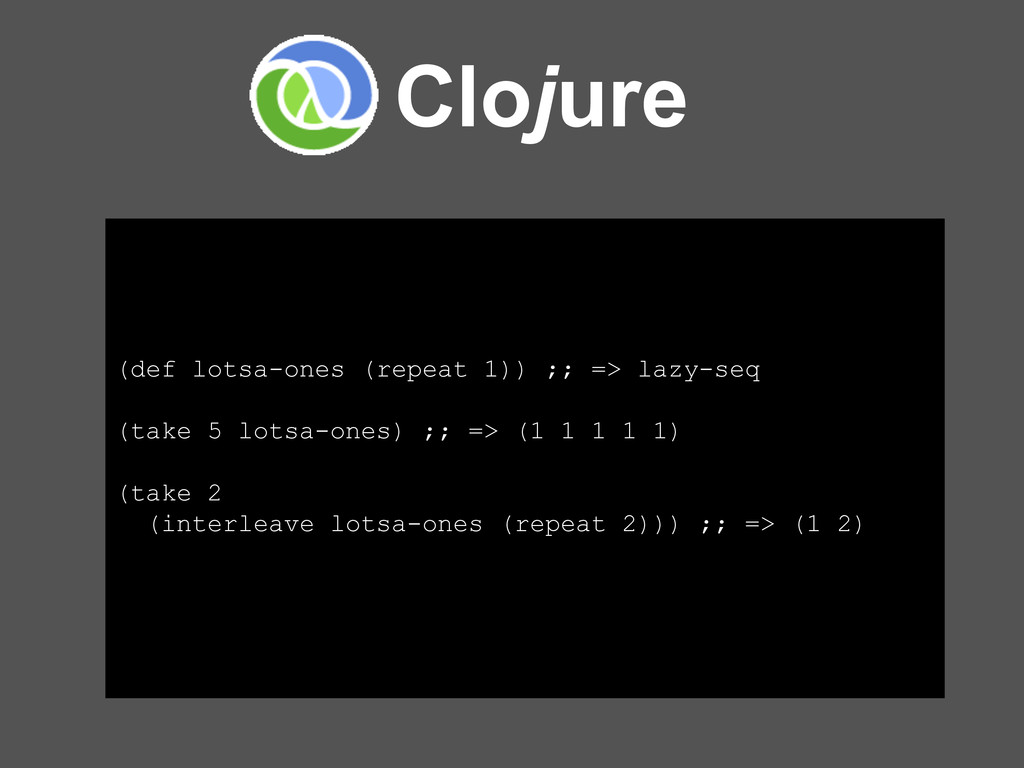
Clojure (def lotsa-ones (repeat 1)) ;; => lazy-seq (take 5
lotsa-ones) ;; => (1 1 1 1 1) (take 2 (interleave lotsa-ones (repeat 2))) ;; => (1 2)
Clojure (def requests (atom 0)) (swap! requests inc) @request ;;
=> 1 (def user1 (ref 10)) (def user2 (ref 50)) (dosync (alter user1 + 10) (alter user2 - 10)) @user1 ;; => 20 @user2 ;; => 40
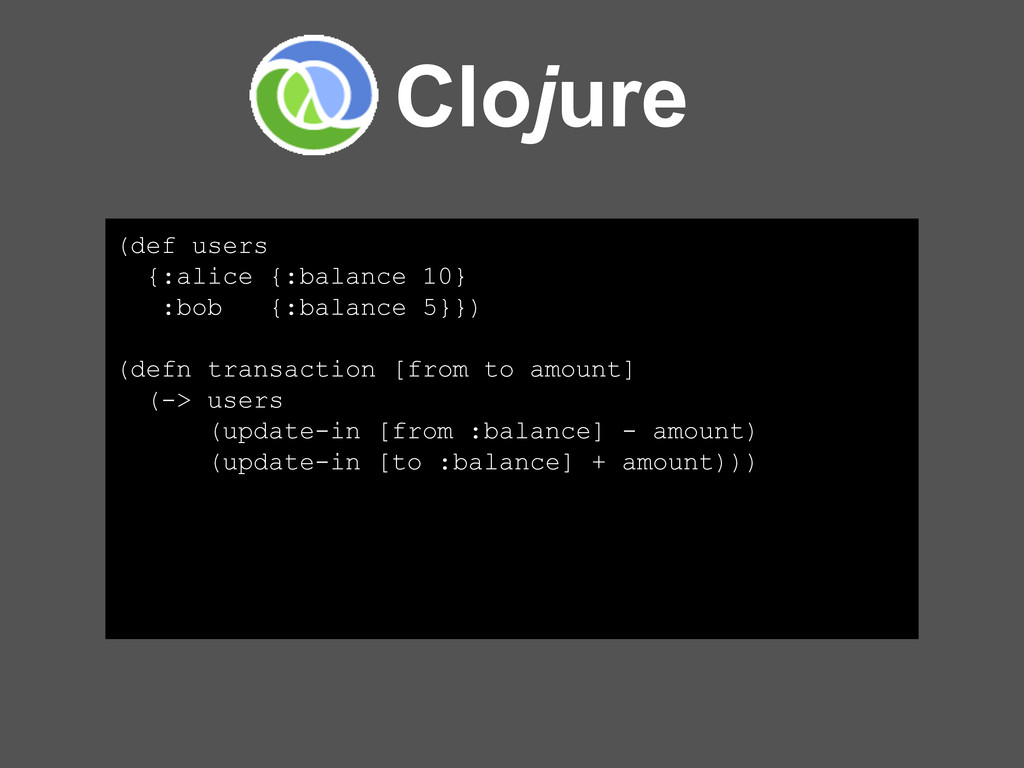
Clojure (def users {:alice {:balance 10} :bob {:balance 5}}) (defn
transaction [from to amount] (-> users (update-in [from :balance] - amount) (update-in [to :balance] + amount)))
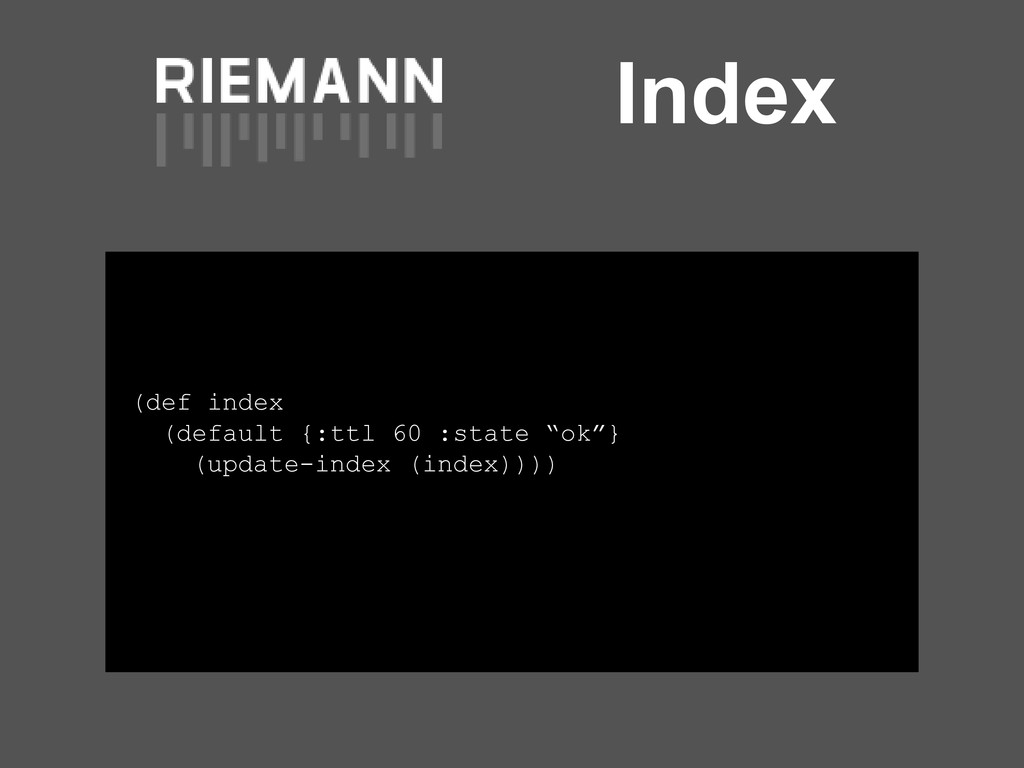
Index (def index (default {:ttl 60 :state “ok”} (update-index (index))))
Streams (let [index (default {:ttl 60 :state “ok”} (update-index (index)))]
(streams index))
Streams (let [index (default {:ttl 60 :state “ok”} (update-index (index)))
email (mailer {:from “riemann@production”})] (streams index (where (state “critical”) email) ))
Demo!


 monitorama
 varn
varn
 jct
jct
 mayunak
 ianozsvald
 soudai
 eileencodes
 jeffersonlam
 jonoalderson
 inesmontani
 addyosmani
 tmiket
 katarinadahlin



![require ‘riemann/client’ c = Riemann::Client.new c[‘true’] c[‘service = “cpu”’] c[‘tagged](https://files.speakerdeck.com/presentations/dbd5d41007b101317dbf6229406390f2/slide_12.jpg)

![Clojure (defn hello [name] (println “hello” name) (def a-map {:some-key](https://files.speakerdeck.com/presentations/dbd5d41007b101317dbf6229406390f2/slide_17.jpg)
![Clojure (defn greeter [greeting] (fn [name] (println greeting “, “](https://files.speakerdeck.com/presentations/dbd5d41007b101317dbf6229406390f2/slide_18.jpg)
![Clojure (ns my-sql-query-ns (:require [clojure.data.jdbc :as jdbc] [clojure.data.jdbc.sql :as sql]))](https://files.speakerdeck.com/presentations/dbd5d41007b101317dbf6229406390f2/slide_20.jpg)

![Streams (let [index (default {:ttl 60 :state “ok”} (update-index (index)))]](https://files.speakerdeck.com/presentations/dbd5d41007b101317dbf6229406390f2/slide_25.jpg)