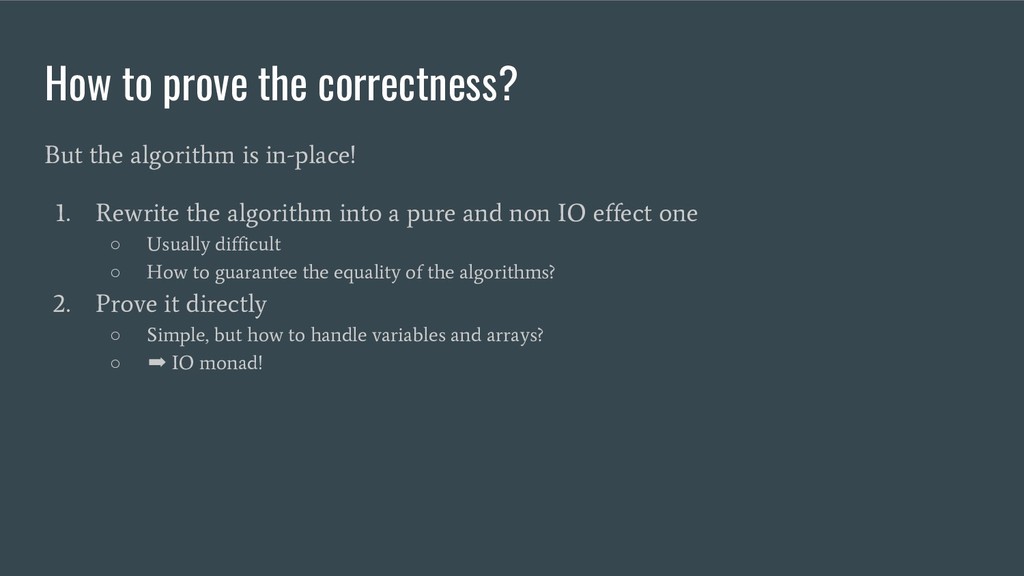
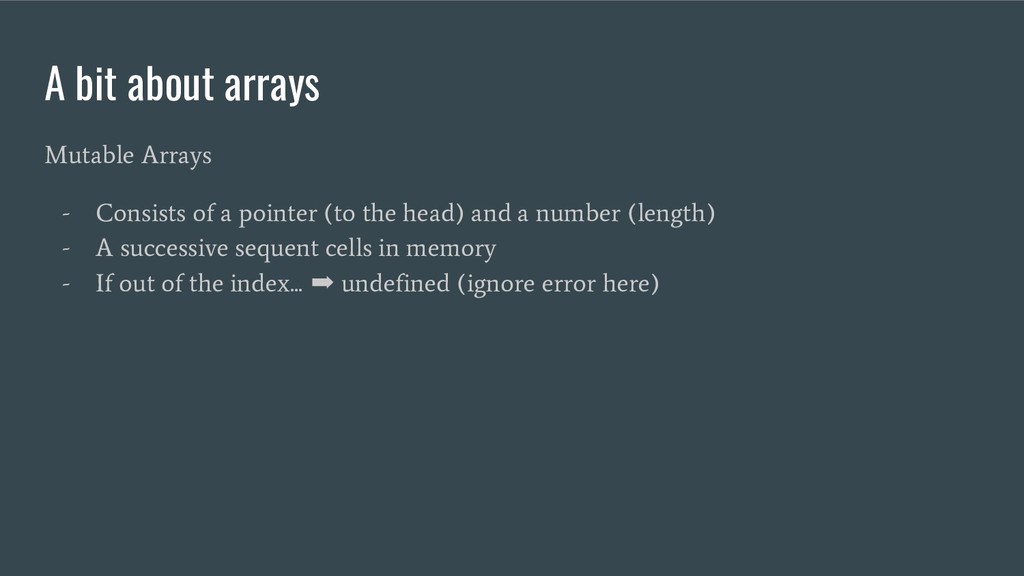
1. Rewrite the algorithm into a pure and non IO effect one ◦ Usually difficult ◦ How to guarantee the equality of the algorithms? 2. Prove it directly ◦ Simple, but how to handle variables and arrays? ◦ ➡ IO monad!
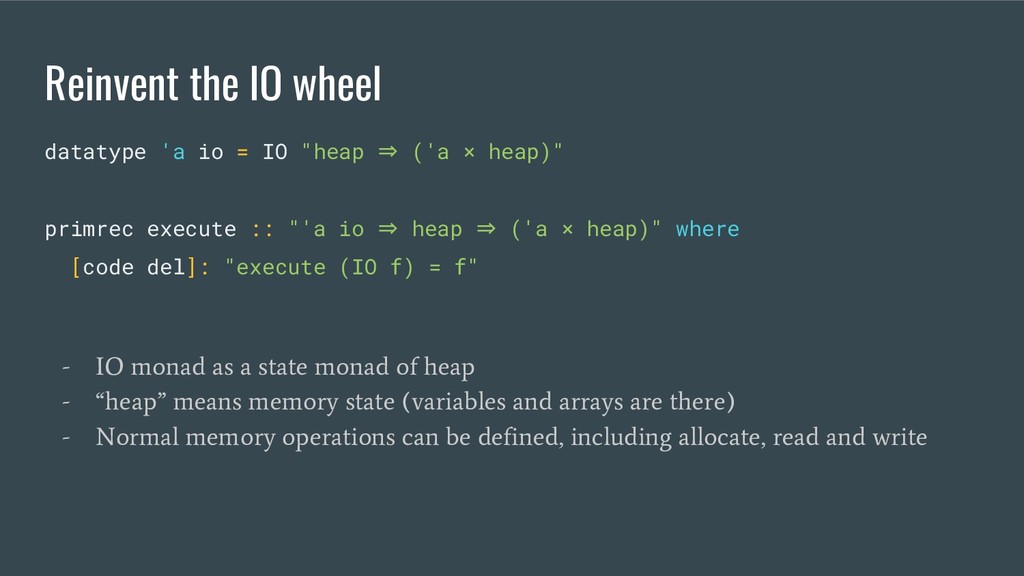
⇒ ('a × heap)" primrec execute :: "'a io ⇒ heap ⇒ ('a × heap)" where [code del]: "execute (IO f) = f" - IO monad as a state monad of heap - “heap” means memory state (variables and arrays are there) - Normal memory operations can be defined, including allocate, read and write
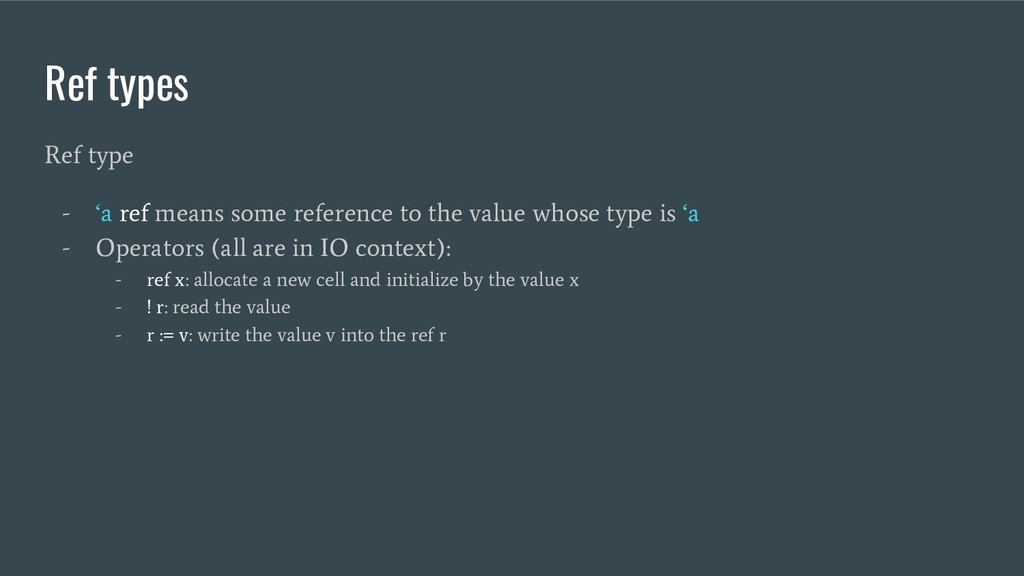
to the value whose type is ‘a - Operators (all are in IO context): - ref x: allocate a new cell and initialize by the value x - ! r: read the value - r := v: write the value v into the ref r
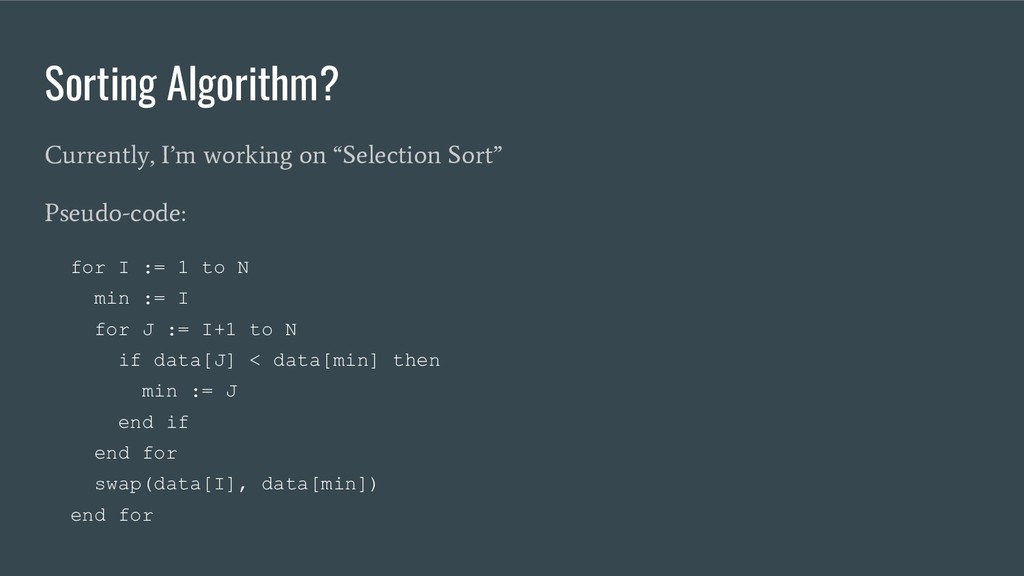
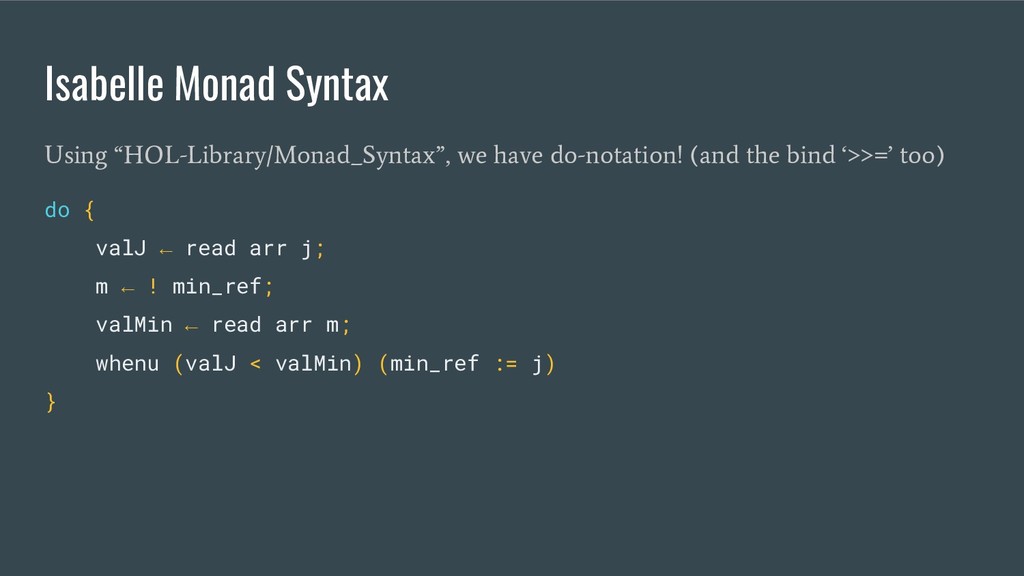
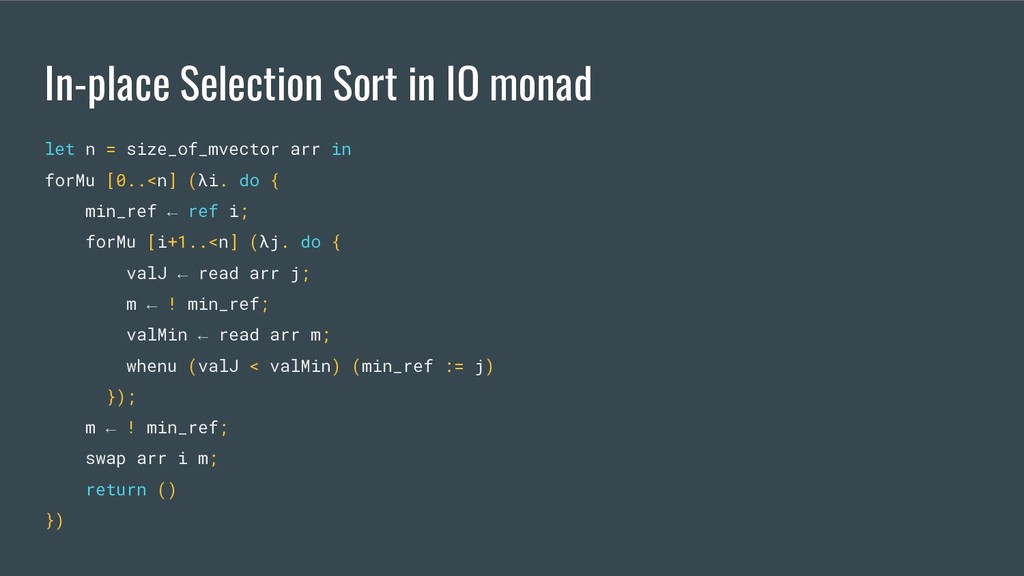
arr in forMu [0..<n] (λi. do { min_ref ← ref i; forMu [i+1..<n] (λj. do { valJ ← read arr j; m ← ! min_ref; valMin ← read arr m; whenu (valJ < valMin) (min_ref := j) }); m ← ! min_ref; swap arr i m; return () })
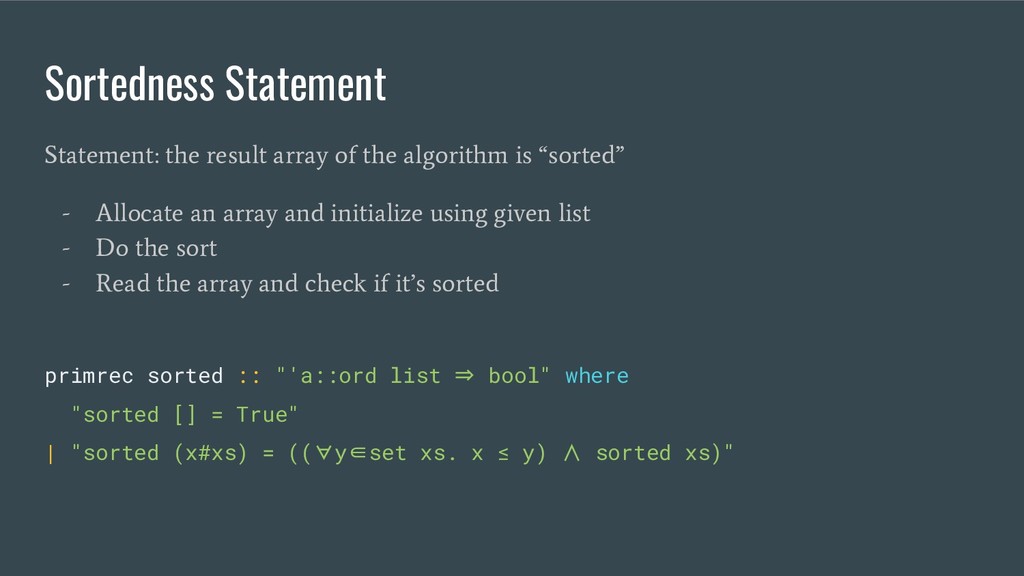
“sorted” - Allocate an array and initialize using given list - Do the sort - Read the array and check if it’s sorted primrec sorted :: "'a::ord list ⇒ bool" where "sorted [] = True" | "sorted (x#xs) = ((∀y∈set xs. x ≤ y) ∧ sorted xs)"
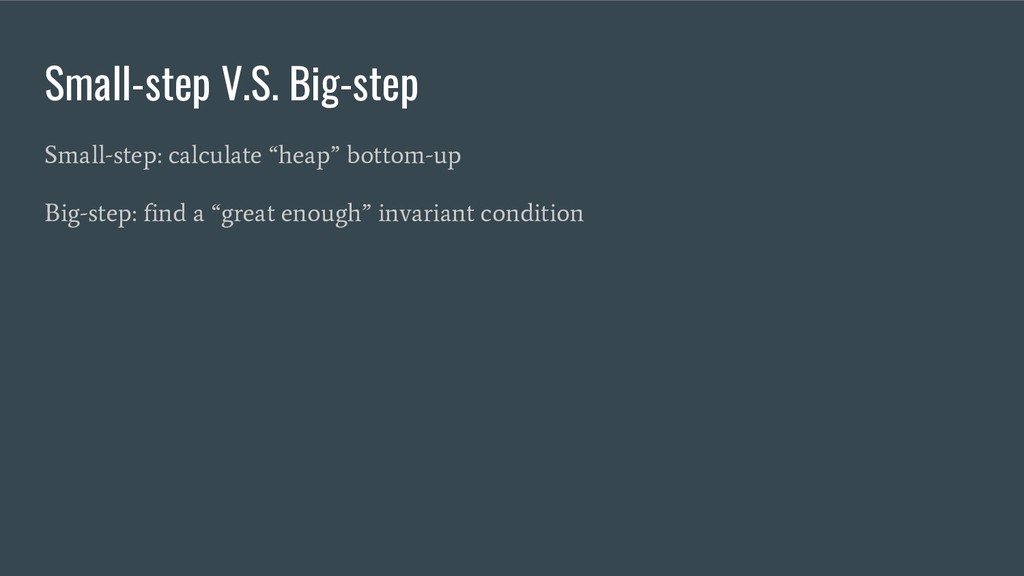
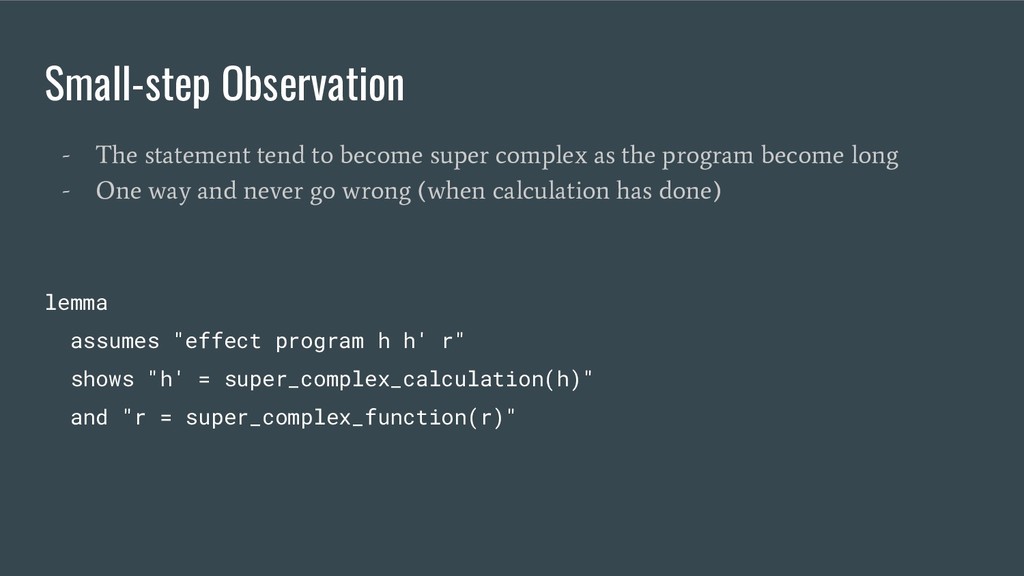
as the program become long - One way and never go wrong (when calculation has done) lemma assumes "effect program h h' r" shows "h' = super_complex_calculation(h)" and "r = super_complex_function(r)"
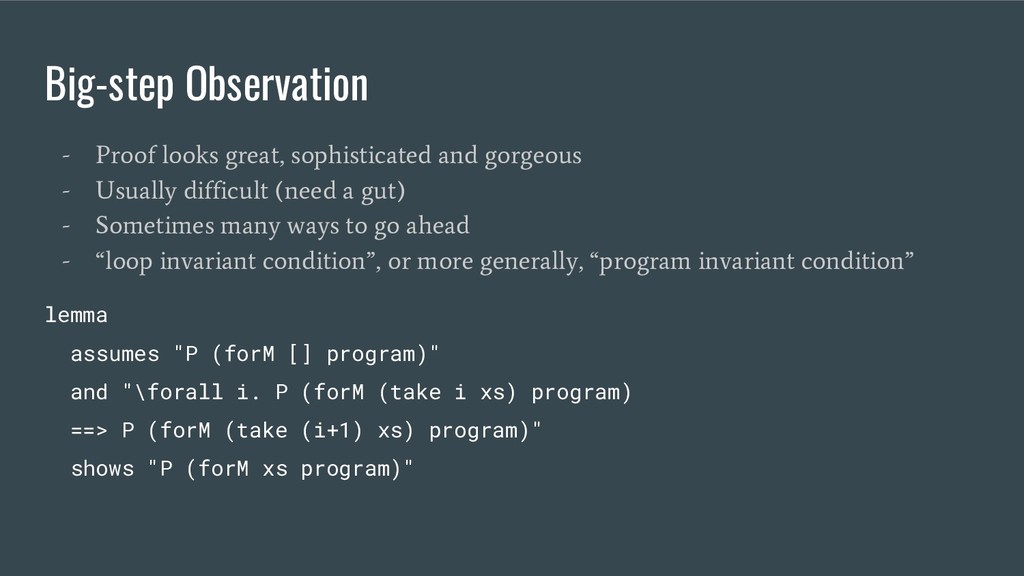
(need a gut) - Sometimes many ways to go ahead - “loop invariant condition”, or more generally, “program invariant condition” lemma assumes "P (forM [] program)" and "\forall i. P (forM (take i xs) program) ==> P (forM (take (i+1) xs) program)" shows "P (forM xs program)" Big-step Observation


 myuon
myuon
 riyaamemiya
 pfn
pfn
 tokuty
 gionn
gionn
 gogutan
 sansantech
 terapyon
 finengine
.png) yamad
yamad
 satoshi7
 prog893
 jct
jct
 minecr
 marktimemedia
 csswizardry
 aleyda
 bluesmoon
 skipperchong
 uxyall
 brettharned
 erikaheidi
 popppiees