Barger, “The Impact of the Exchange Fees on Impermanent Loss of Liquidity Providers for Conservative Automated Market Makers,” The Journal of The British Blockchain Association, 2025. [2] I. Melnikov, R. Vlasov, V. Gorgadze, A. Seoev, Y. Yanovich, “From Impermanent Loss to Sustainable Gain: Quantifying Profitability Zones for Liquidity Providers on DEX,” (under review), 2026. My research interest are not limited to the current topic! 2/19
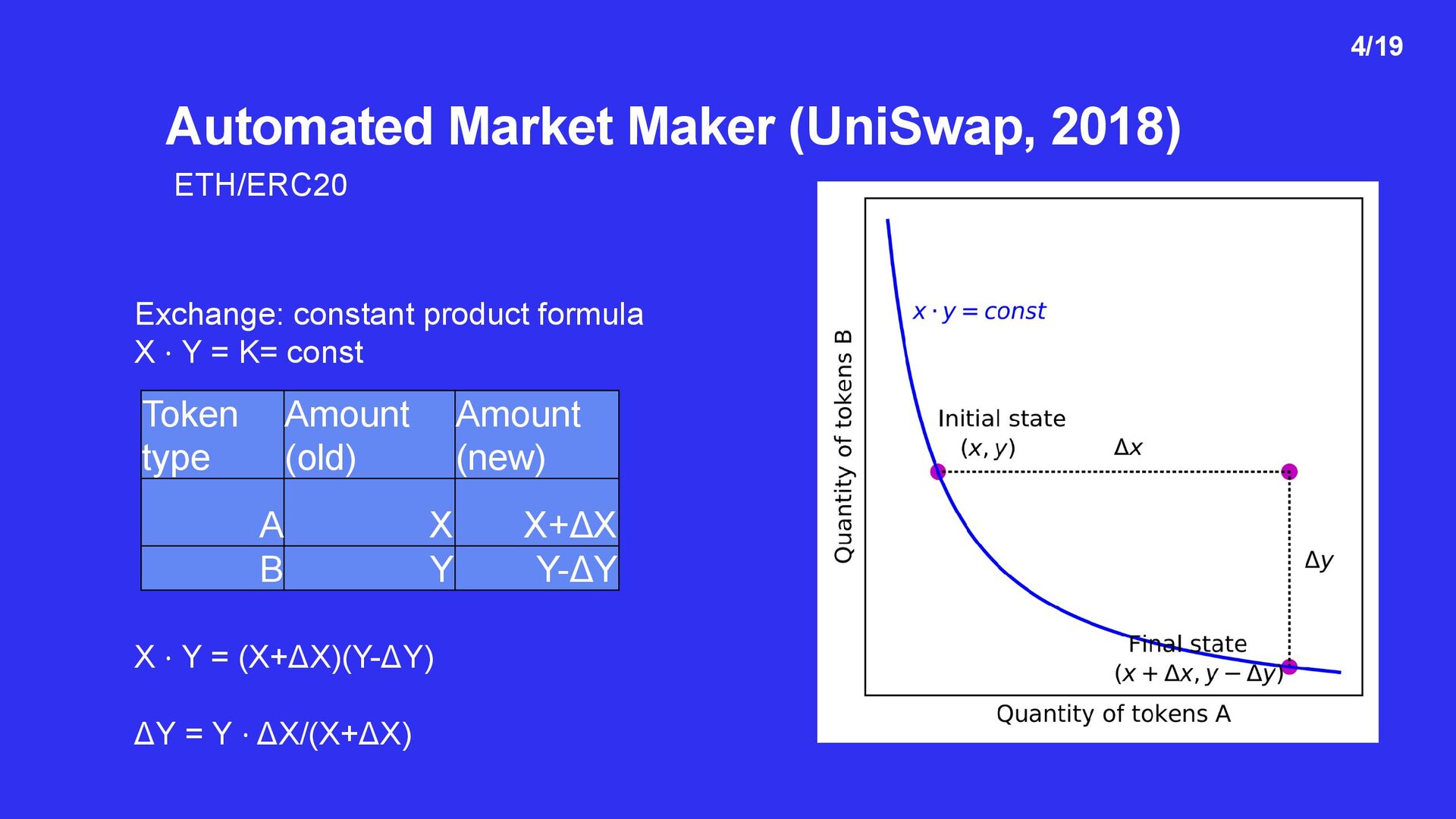
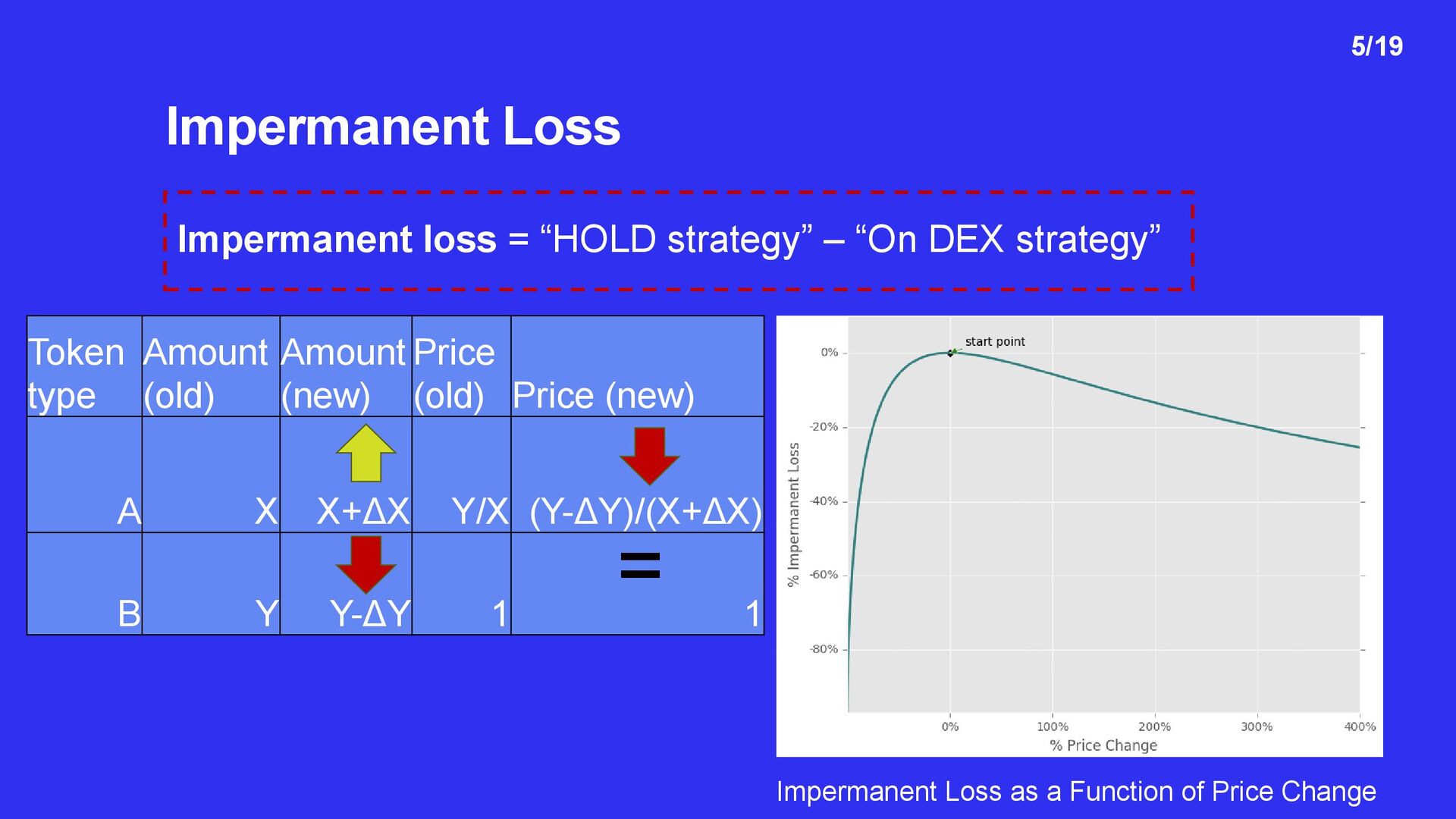
strategy” Impermanent Loss as a Function of Price Change Token type Amount (old) Amount (new) Price (old) Price (new) A X X+ΔX Y/X (Y-ΔY)/(X+ΔX) B Y Y-ΔY 1 1 = 5/19
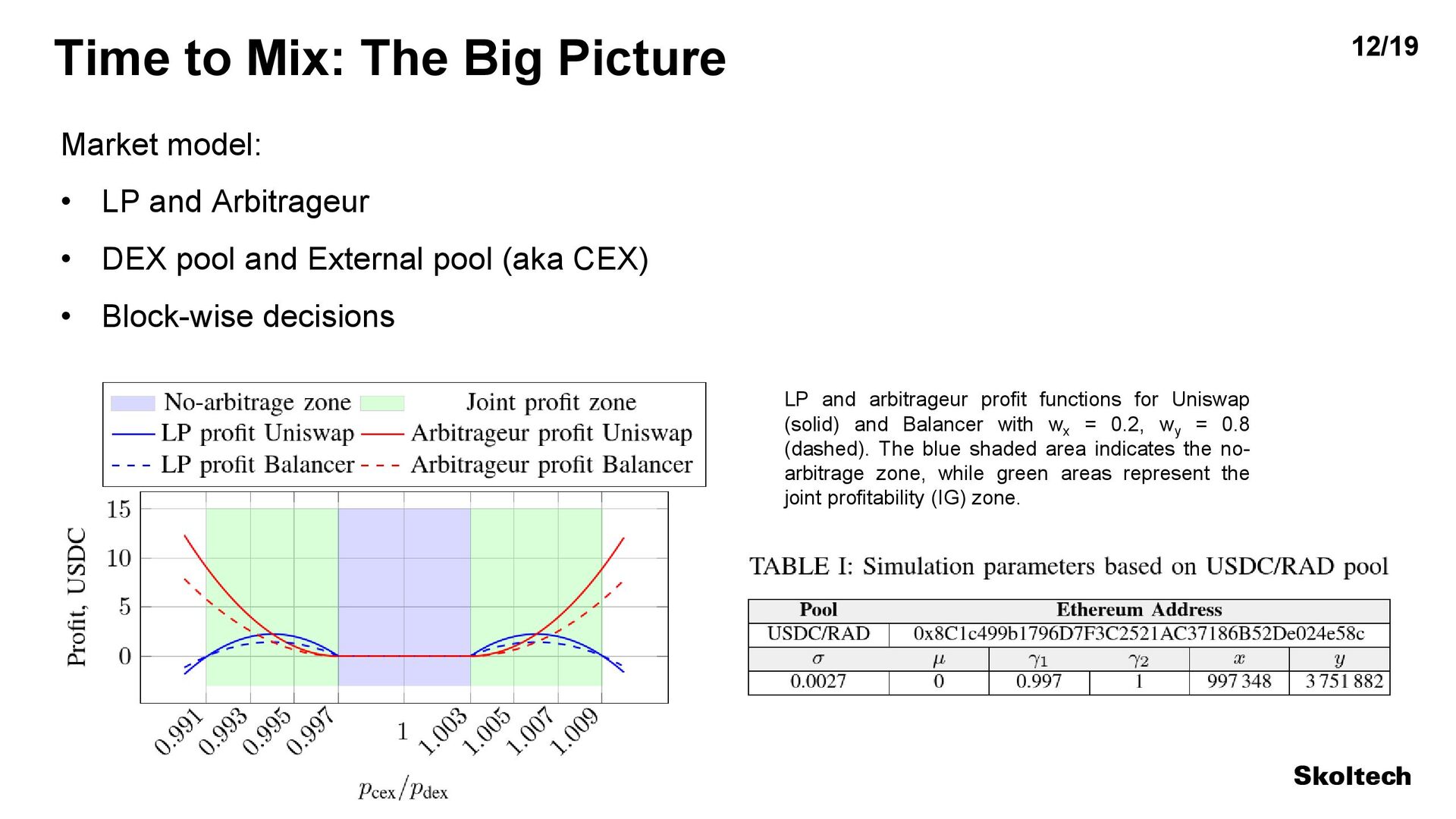
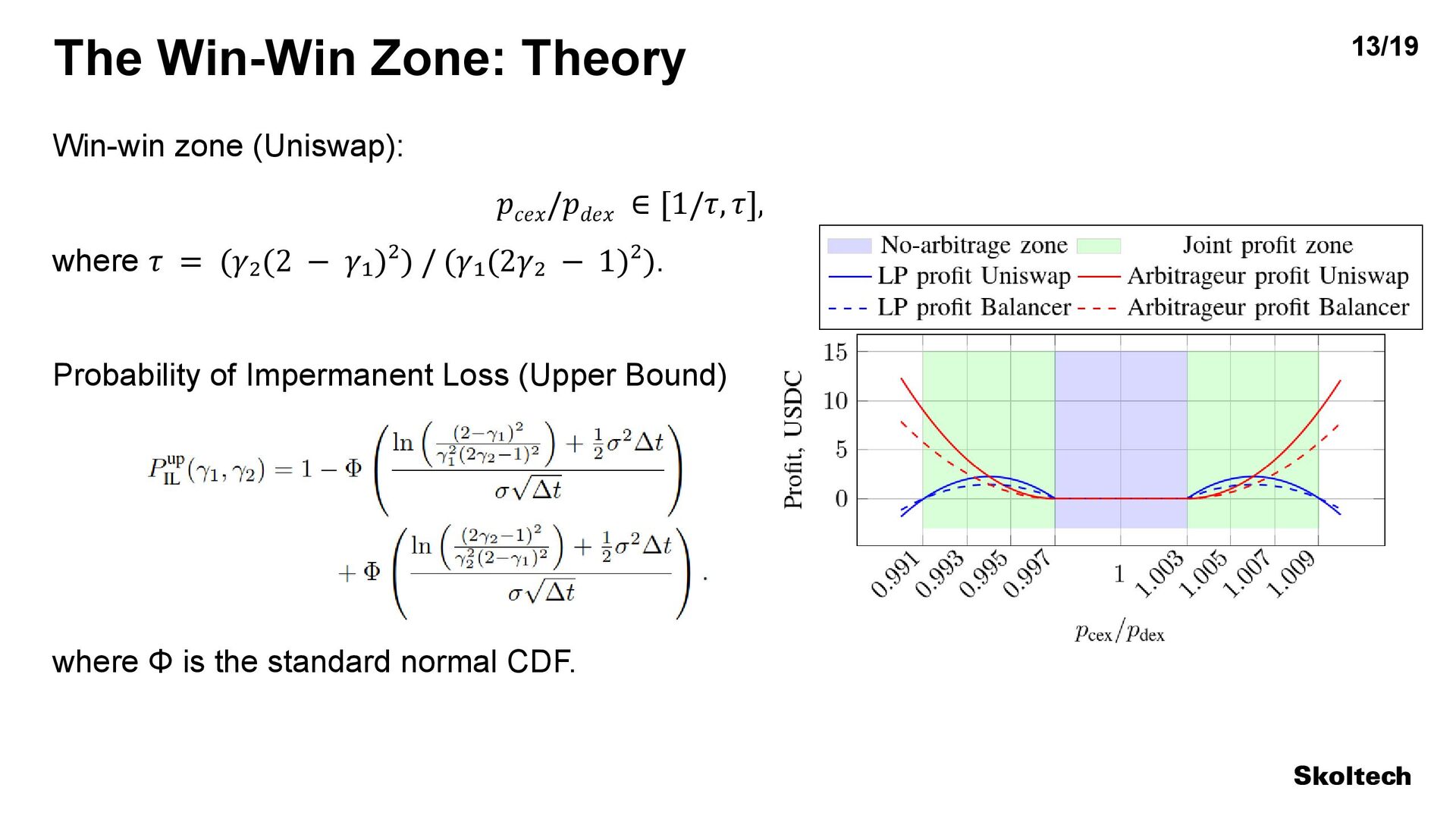
and Arbitrageur • DEX pool and External pool (aka CEX) • Block-wise decisions LP and arbitrageur profit functions for Uniswap (solid) and Balancer with wx = 0.2, wy = 0.8 (dashed). The blue shaded area indicates the no- arbitrage zone, while green areas represent the joint profitability (IG) zone. 12/19
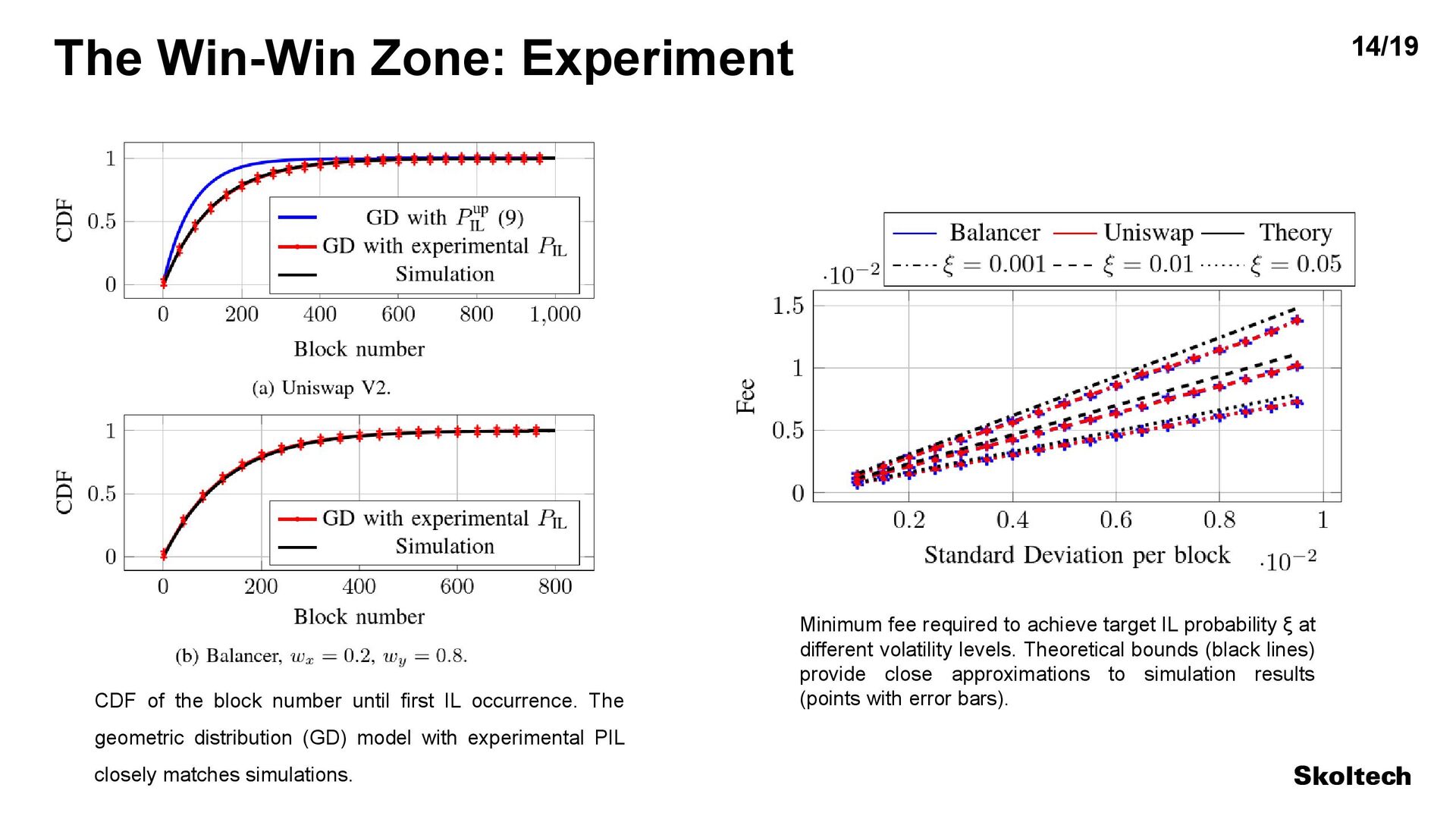
first IL occurrence. The geometric distribution (GD) model with experimental PIL closely matches simulations. Minimum fee required to achieve target IL probability ξ at different volatility levels. Theoretical bounds (black lines) provide close approximations to simulation results (points with error bars). 14/19
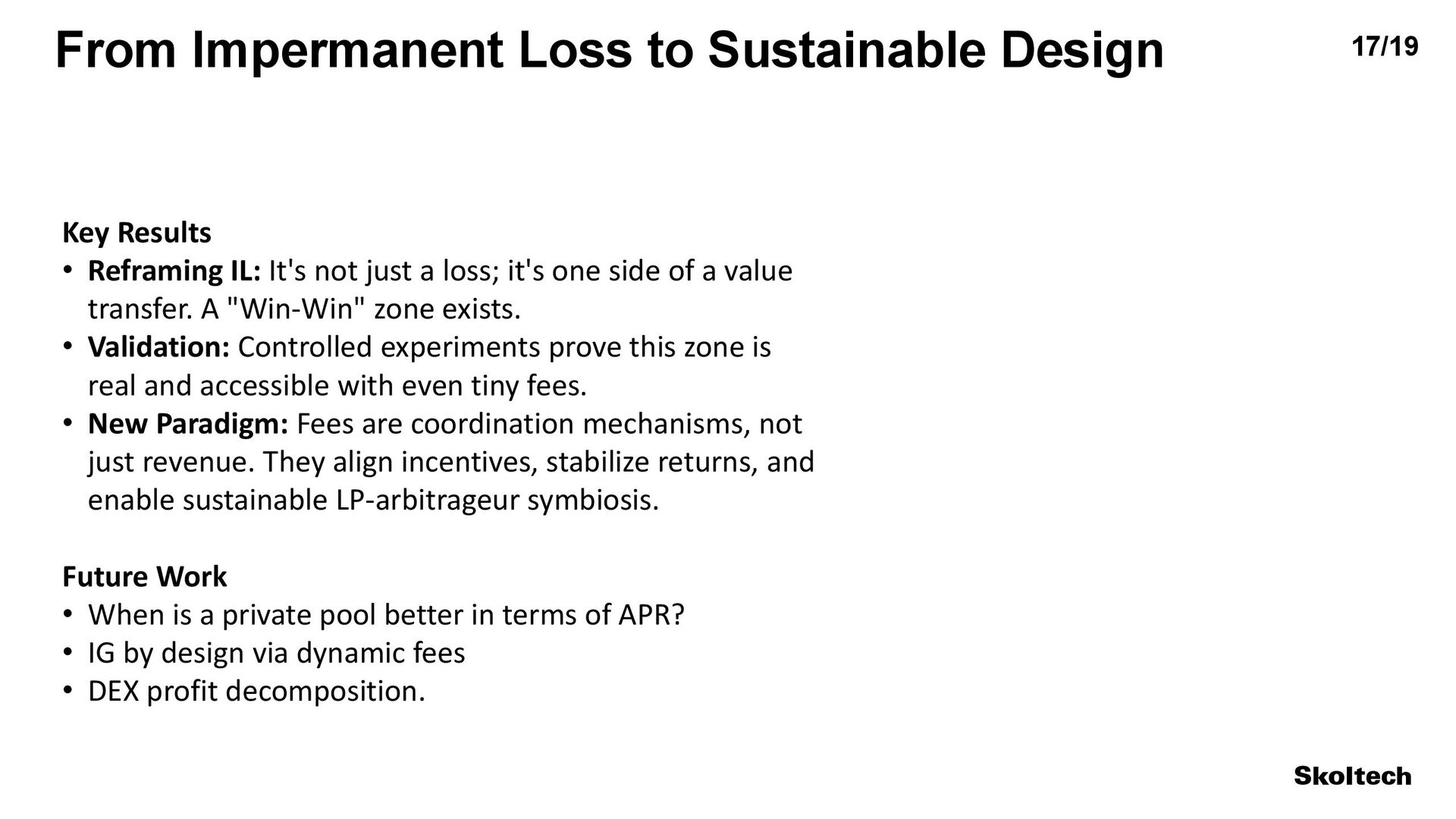
IL: It's not just a loss; it's one side of a value transfer. A "Win-Win" zone exists. • Validation: Controlled experiments prove this zone is real and accessible with even tiny fees. • New Paradigm: Fees are coordination mechanisms, not just revenue. They align incentives, stabilize returns, and enable sustainable LP-arbitrageur symbiosis. Future Work • When is a private pool better in terms of APR? • IG by design via dynamic fees • DEX profit decomposition. 17/19


 niknovo
 nikkihalliwell
 kneath
 lara
lara
 portentint
 seathinner
 inesmontani
 tapps
tapps
 colly
colly
 nwiizo
 ipullrank
 katarinadahlin
 addyosmani
![Before We Start [1] R. Vlasov, V. Gorgadze, and A.](https://files.speakerdeck.com/presentations/732f5ce138dd41faafd153660209ae18/slide_1.jpg)
![Impermanent Gain: Theory Theorem [1]. Estimation of the size of](https://files.speakerdeck.com/presentations/732f5ce138dd41faafd153660209ae18/slide_8.jpg)
![Social media accounts: Contacts: [email protected] Tg: @YuryYa Blockchain seminar Yury](https://files.speakerdeck.com/presentations/732f5ce138dd41faafd153660209ae18/slide_17.jpg)