ois.dev and mev-x.com Your experience with MEV? 0 – Never heard of MEV 1 – Know a bit about it 2 – Have researched MEV-related topics 3 – Active participant in the MEV industry
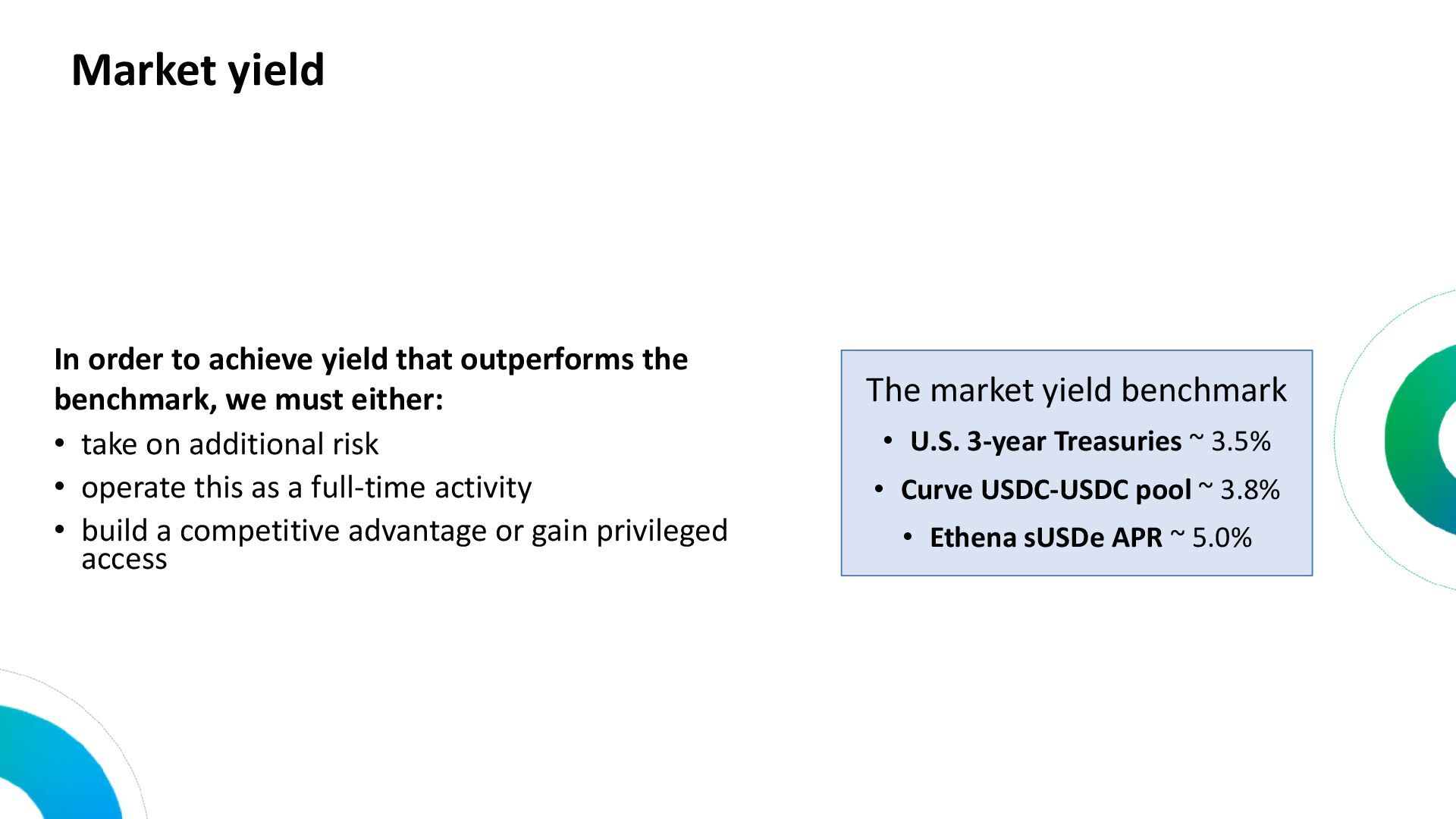
~ 3.5% • Curve USDC-USDC pool ~ 3.8% • Ethena sUSDe APR ~ 5.0% In order to achieve yield that outperforms the benchmark, we must either: • take on additional risk • operate this as a full-time activity • build a competitive advantage or gain privileged access
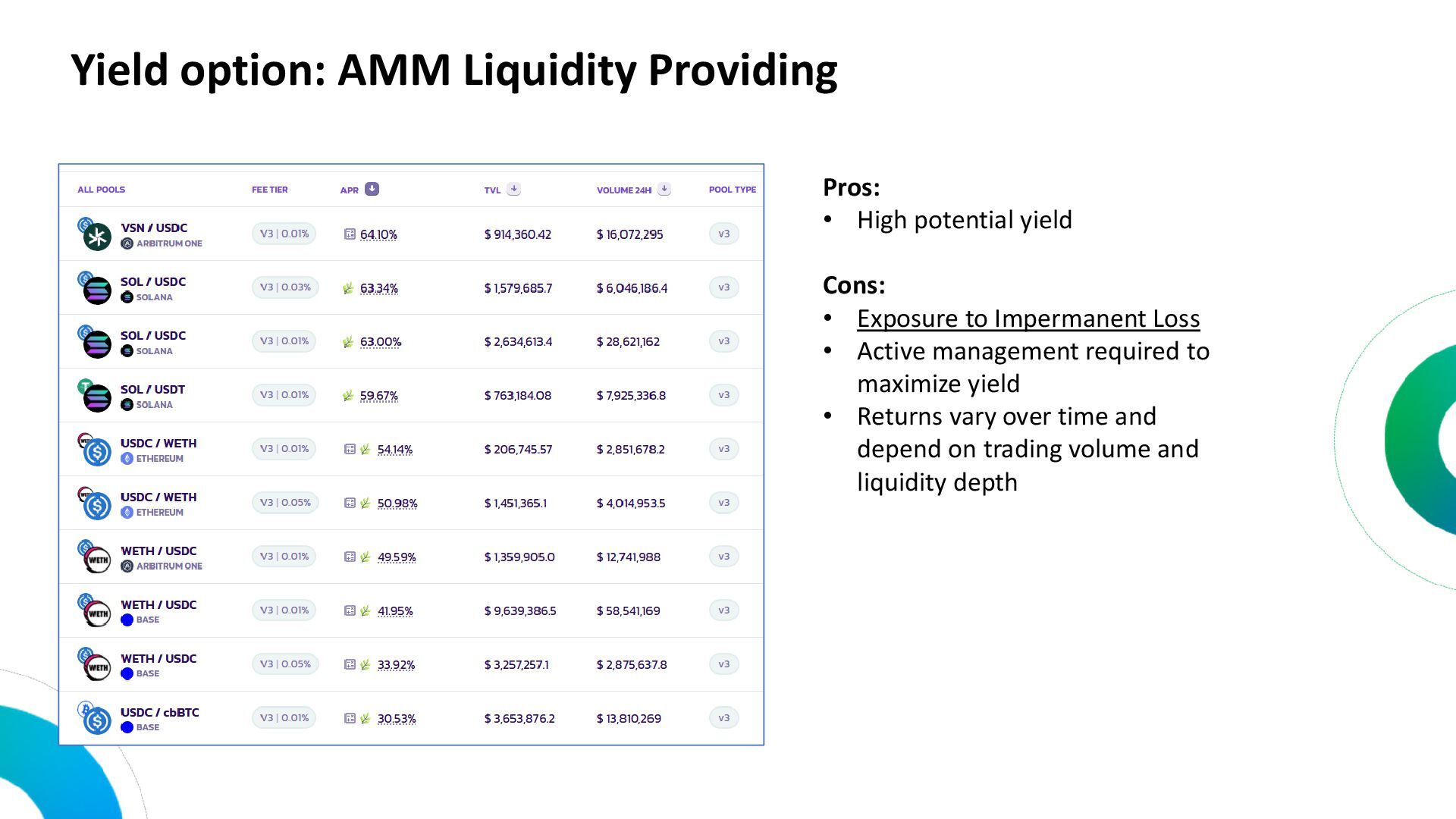
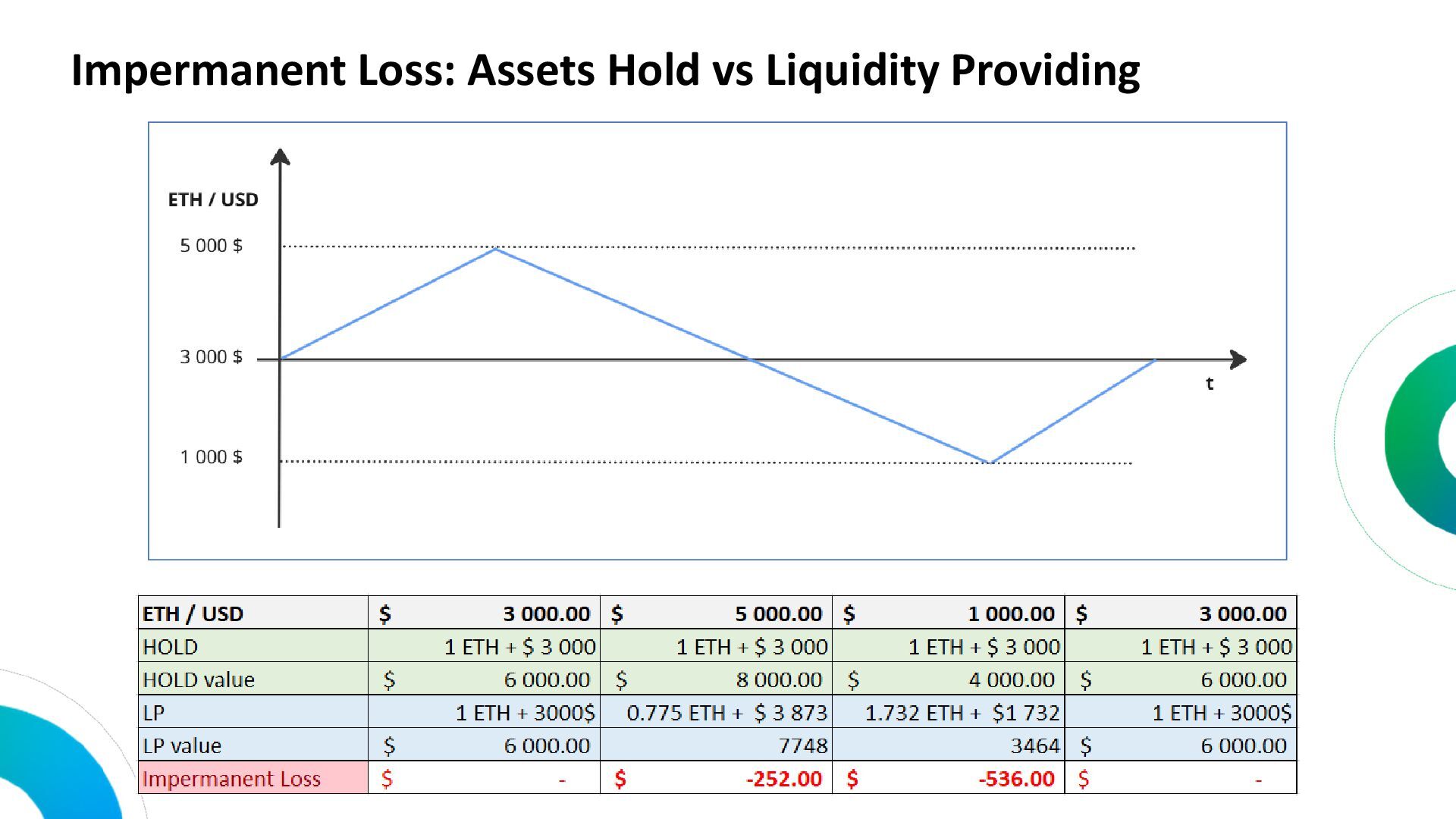
Cons: • Exposure to Impermanent Loss • Active management required to maximize yield • Returns vary over time and depend on trading volume and liquidity depth
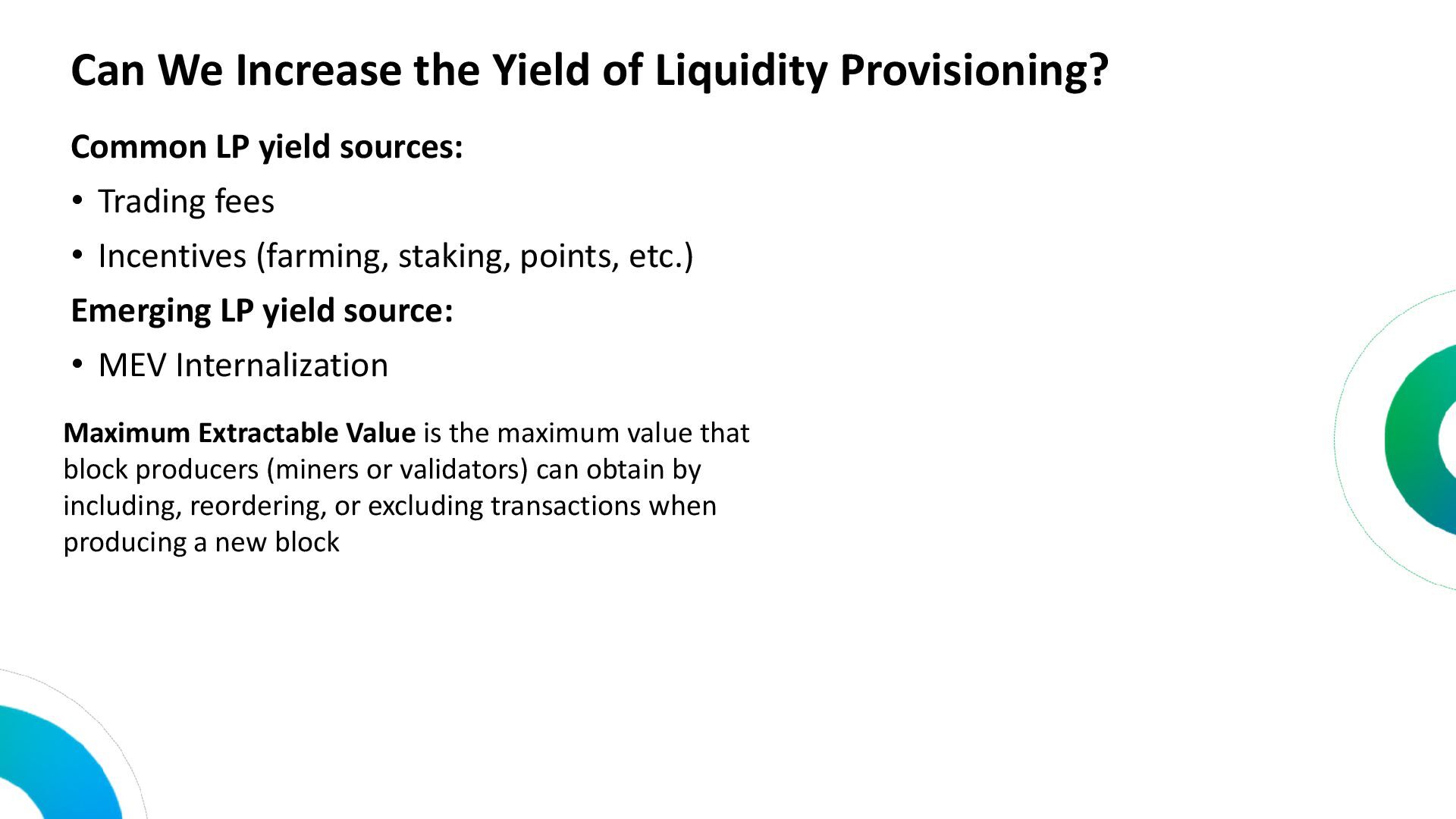
yield sources: • Trading fees • Incentives (farming, staking, points, etc.) Emerging LP yield source: • MEV Internalization Maximum Extractable Value is the maximum value that block producers (miners or validators) can obtain by including, reordering, or excluding transactions when producing a new block
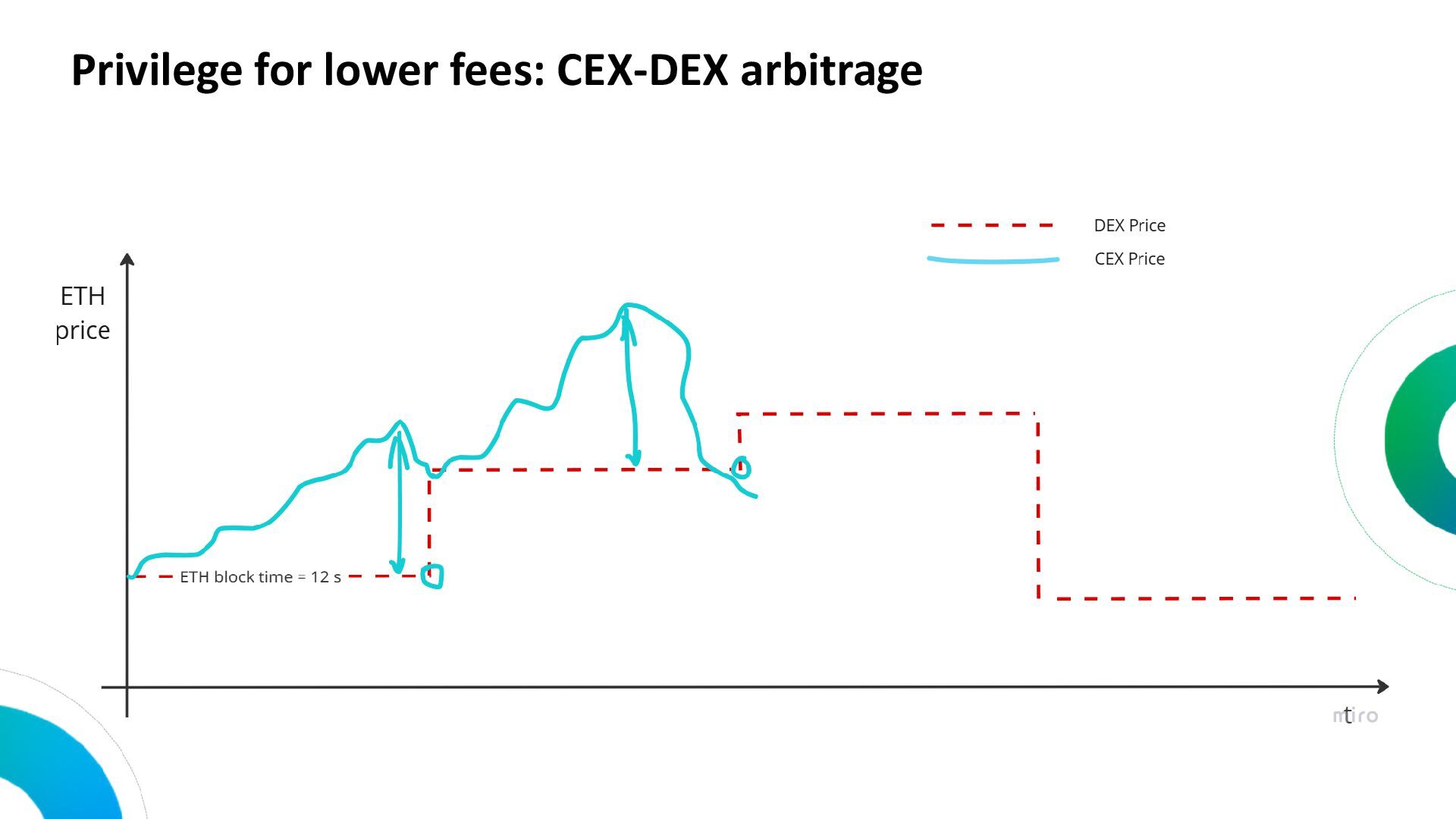
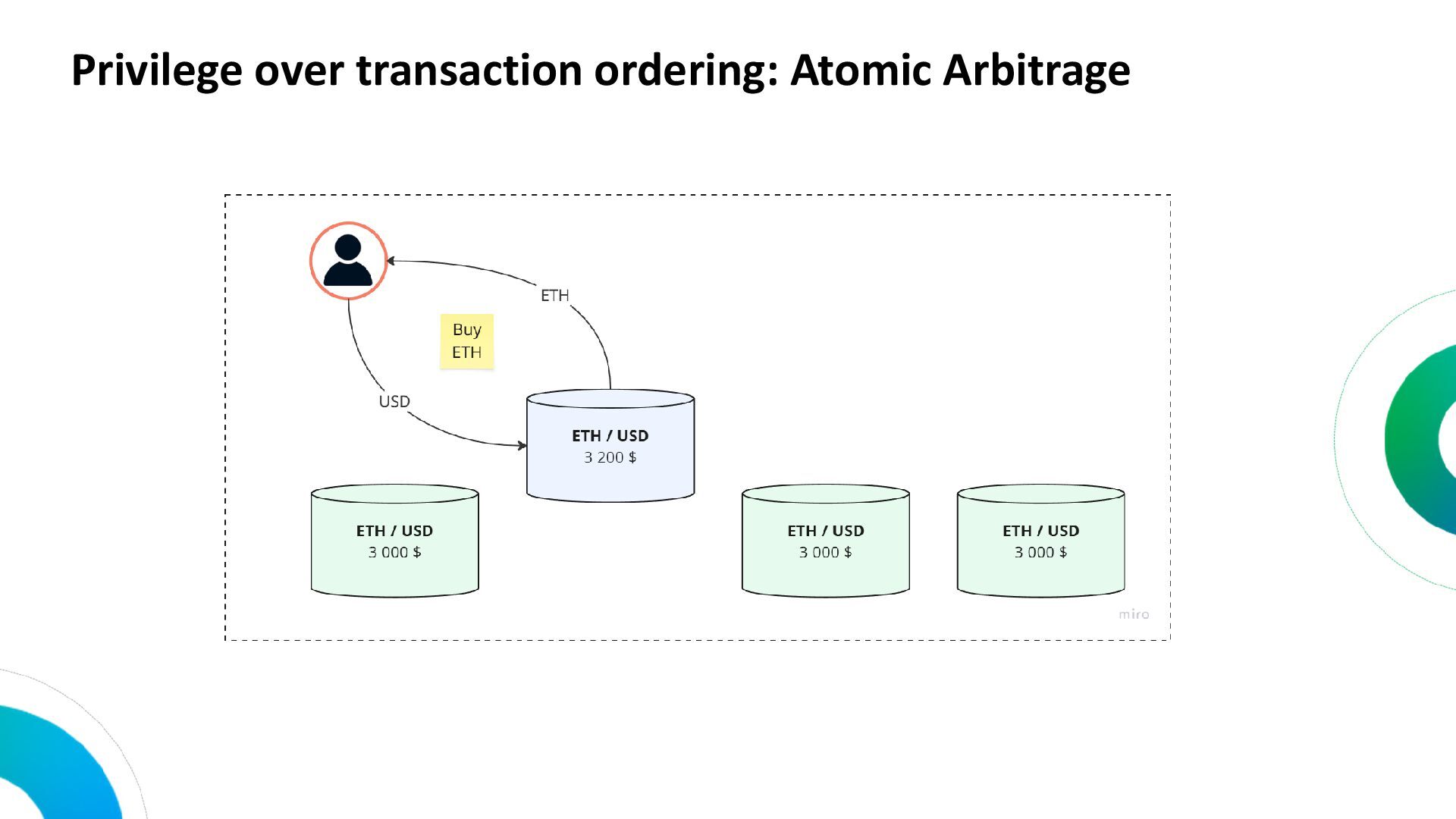
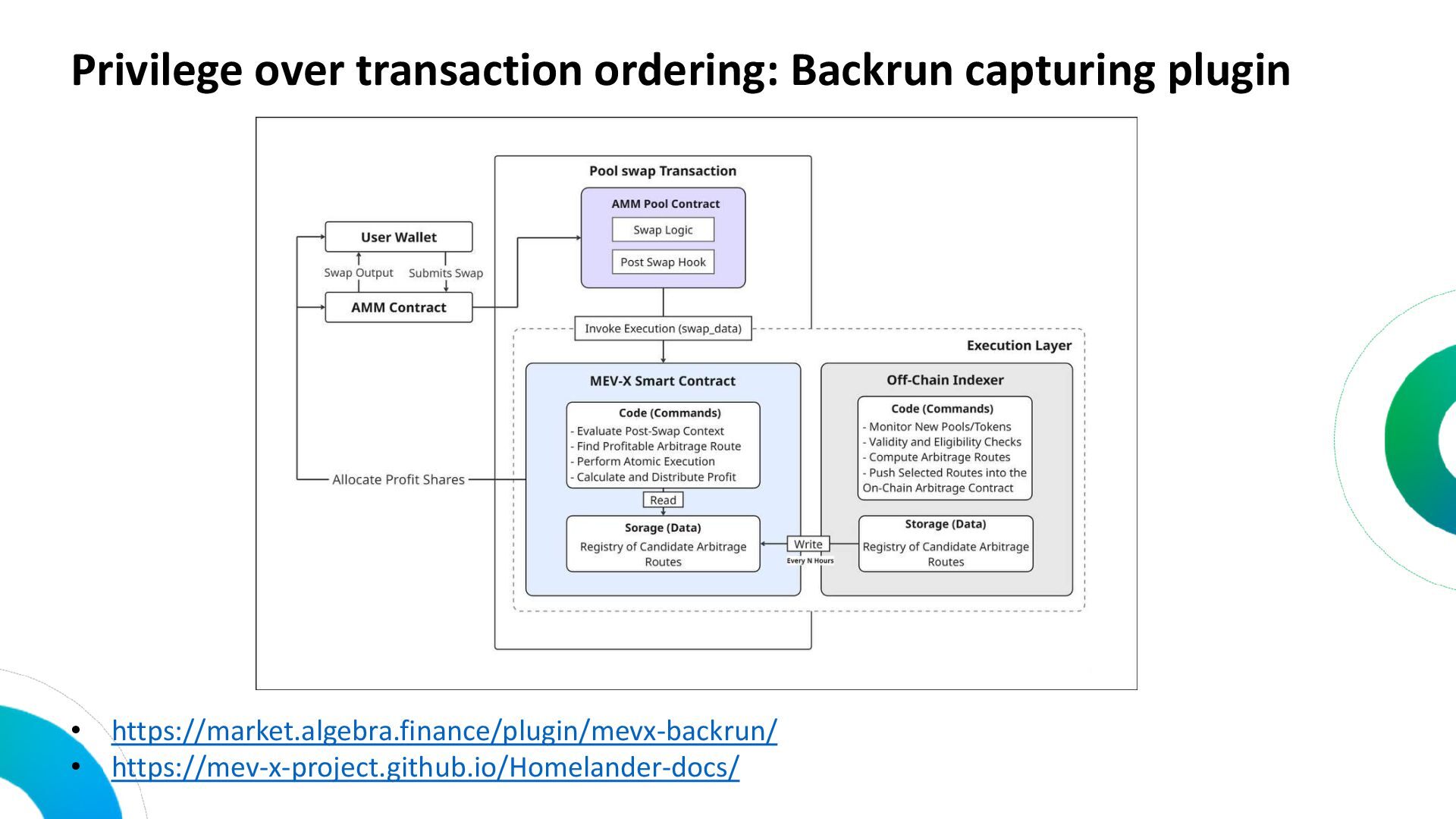
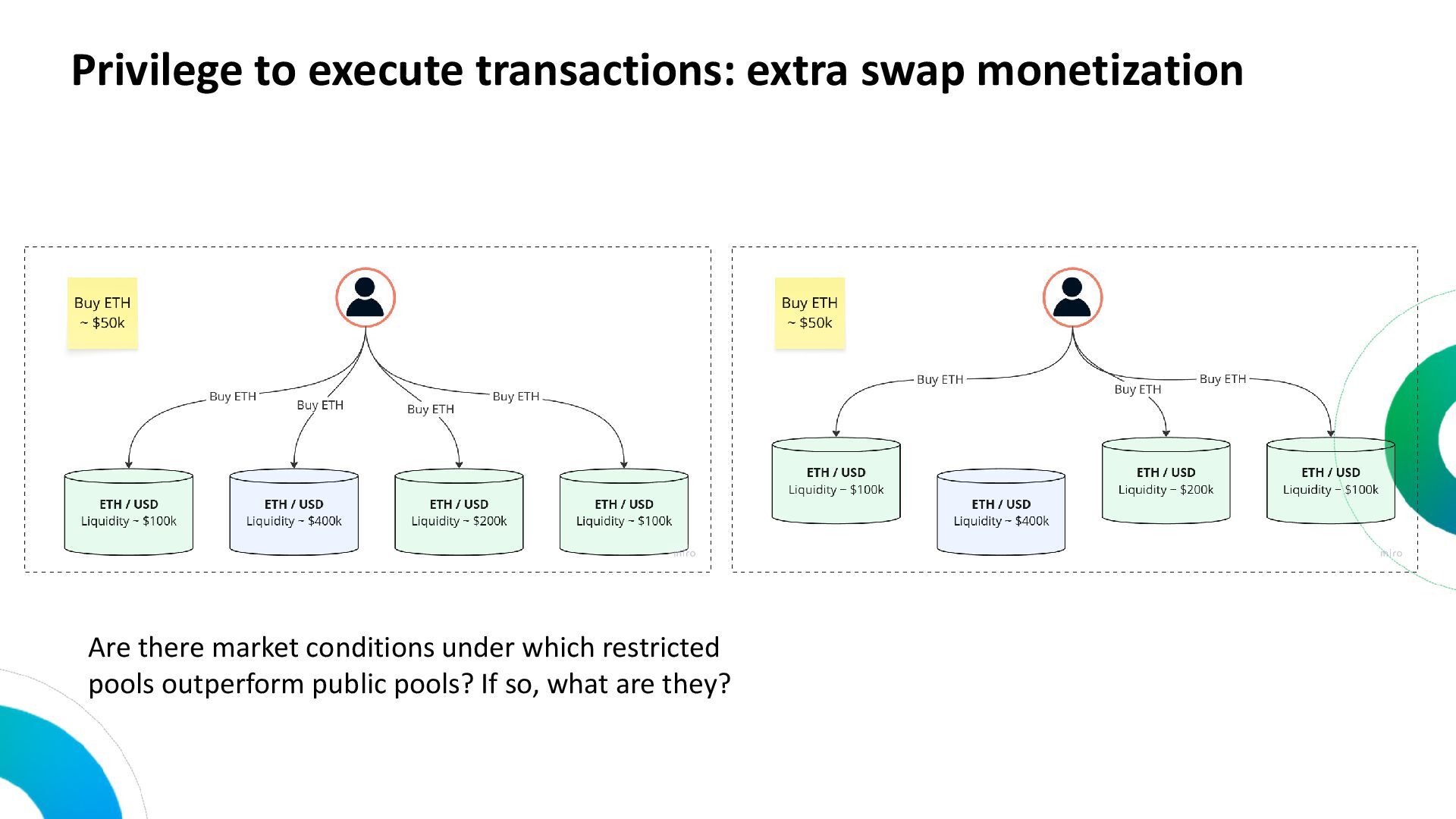
can grant selected market participants lower or zero trading fees, or apply higher fees to specific trading pairs. Privilege over transaction ordering The DEX can grant access to backrunning or frontrunning of user transactions. Privilege to execute transactions The DEX can grant permissioned access to execute transactions within restricted pools.
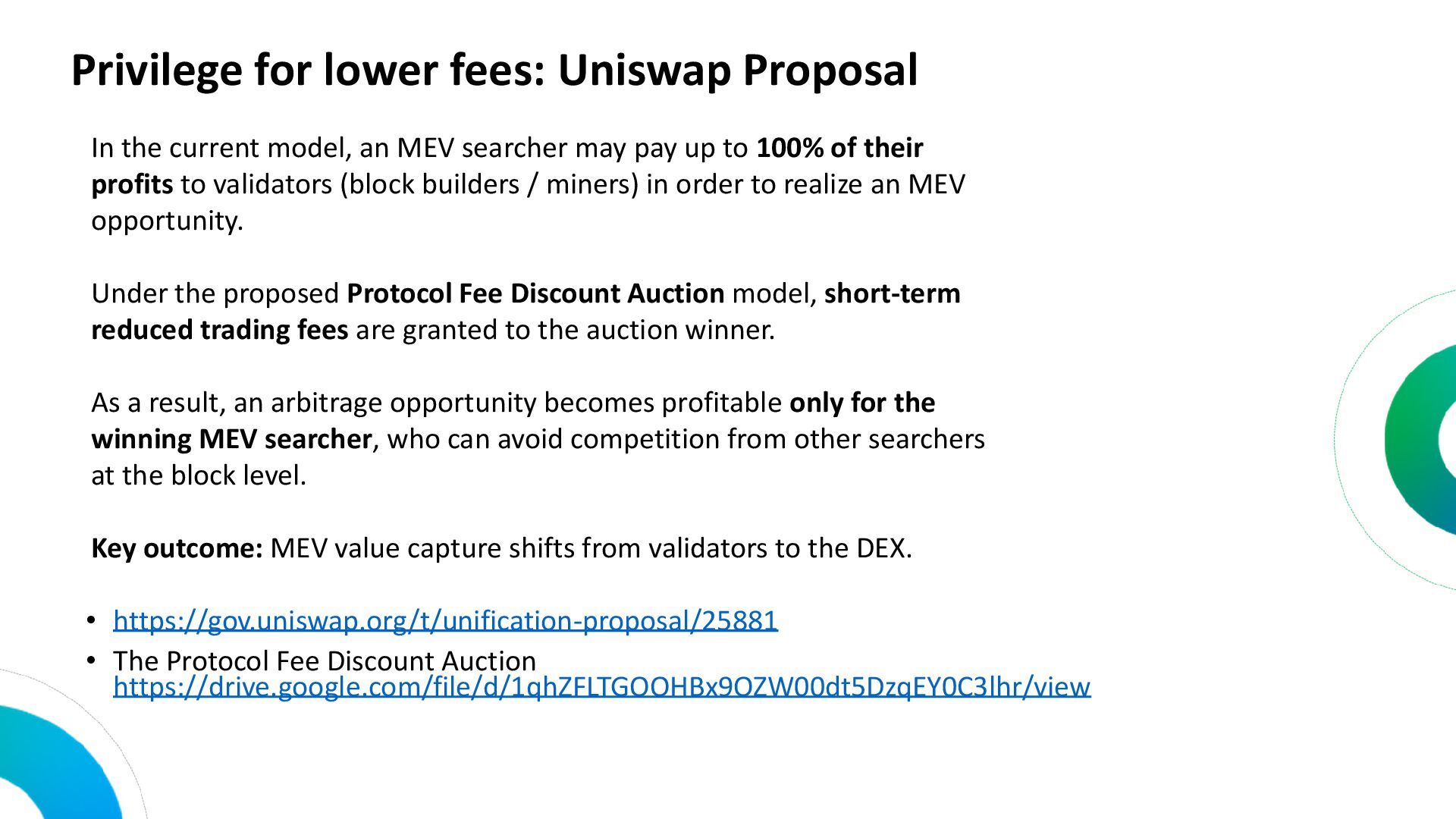
Protocol Fee Discount Auction https://drive.google.com/file/d/1qhZFLTGOOHBx9OZW00dt5DzqEY0C3lhr/view In the current model, an MEV searcher may pay up to 100% of their profits to validators (block builders / miners) in order to realize an MEV opportunity. Under the proposed Protocol Fee Discount Auction model, short-term reduced trading fees are granted to the auction winner. As a result, an arbitrage opportunity becomes profitable only for the winning MEV searcher, who can avoid competition from other searchers at the block level. Key outcome: MEV value capture shifts from validators to the DEX.


 niknovo
 nwiizo
 ryanjones
 3n
3n
 trallard
 konakalab
 sabderemane
 techseoconnect
 szymonslowik
 eileencodes
 chrislema
 lara
lara
 addyosmani