Share
Embed
Database Sharding at Netlog
A presentation about the sharding techniques used to keep Netlog.com running, a 70+ million member social network. Originally given at FOSDEM 2009.
Jurriaan Persyn
October 17, 2011
Transcript
70 slides
-
jurriaanpersyn.com lead web dev at Netlog php + mysql +
frontend since 3 years -
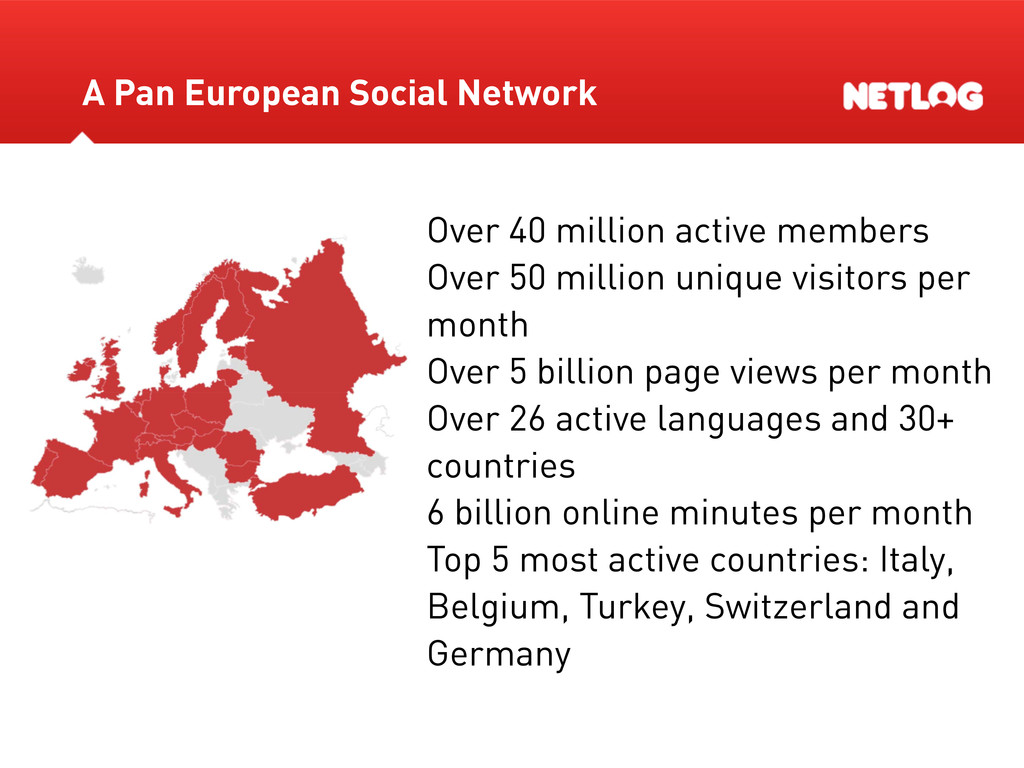
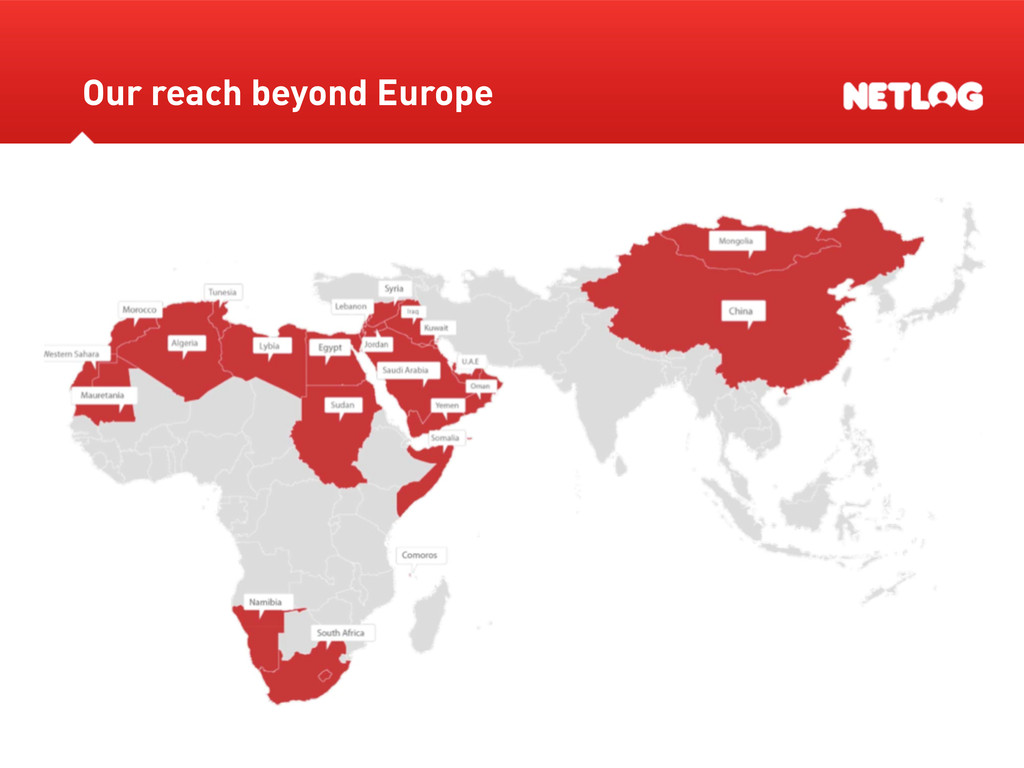
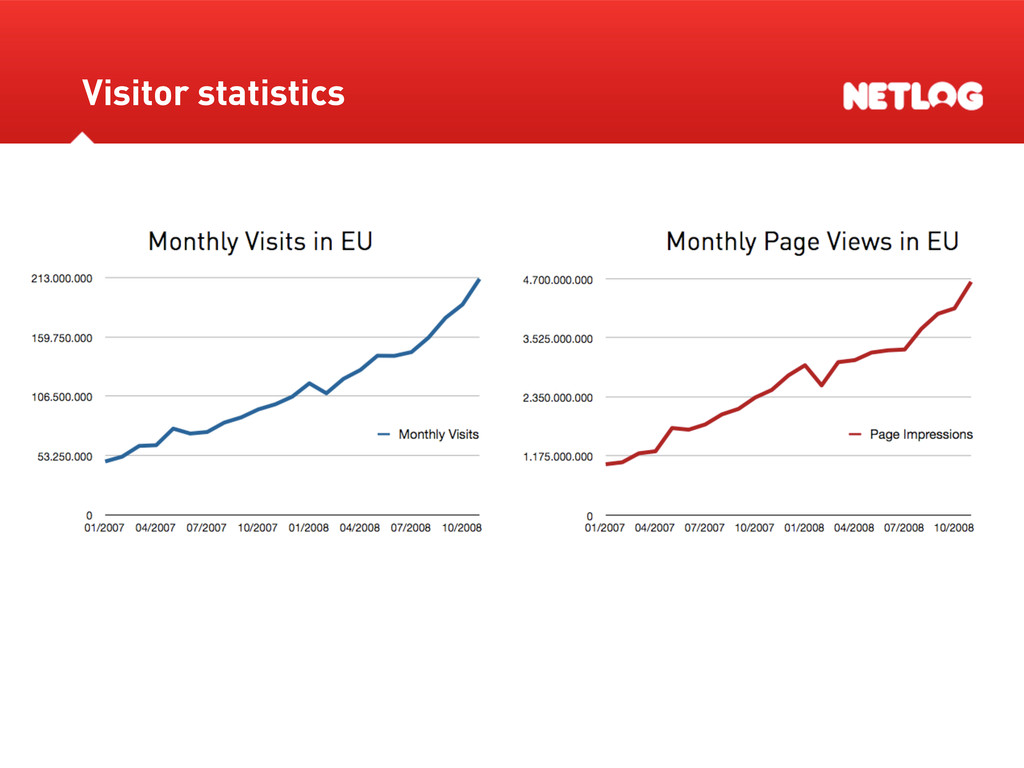
A Pan European Social Network Over 40 million active members
Over 50 million unique visitors per month Over 5 billion page views per month Over 26 active languages and 30+ countries 6 billion online minutes per month Top 5 most active countries: Italy, Belgium, Turkey, Switzerland and Germany -
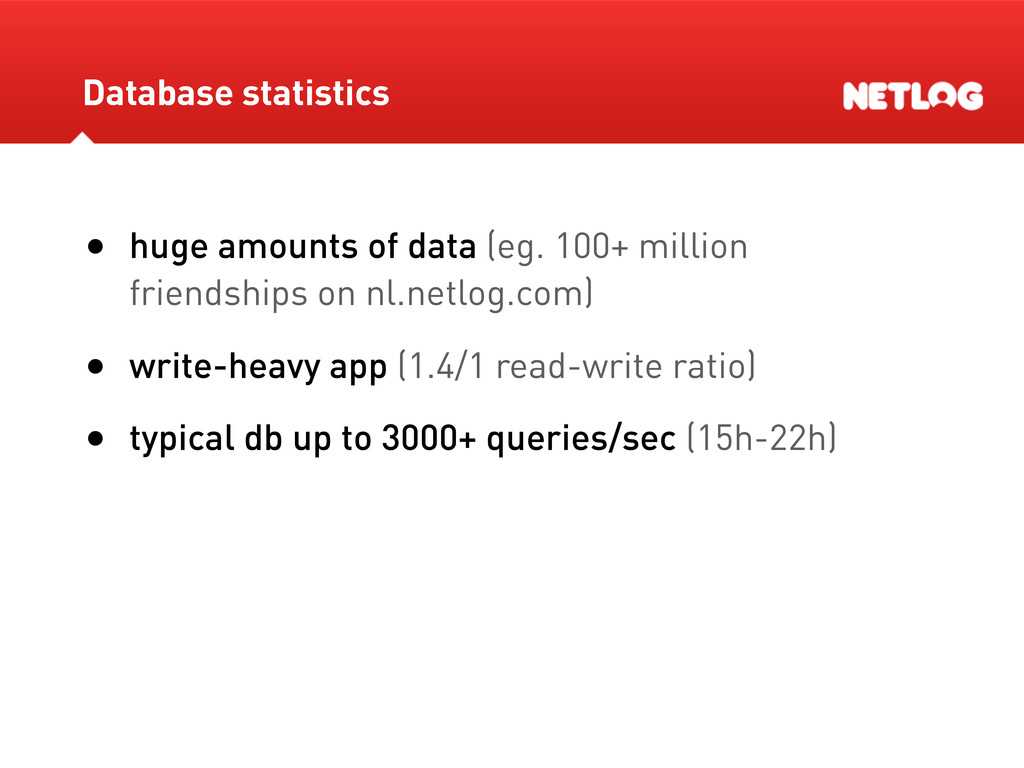
• huge amounts of data (eg. 100+ million friendships on
nl.netlog.com) • write-heavy app (1.4/1 read-write ratio) • typical db up to 3000+ queries/sec (15h-22h) Database statistics -
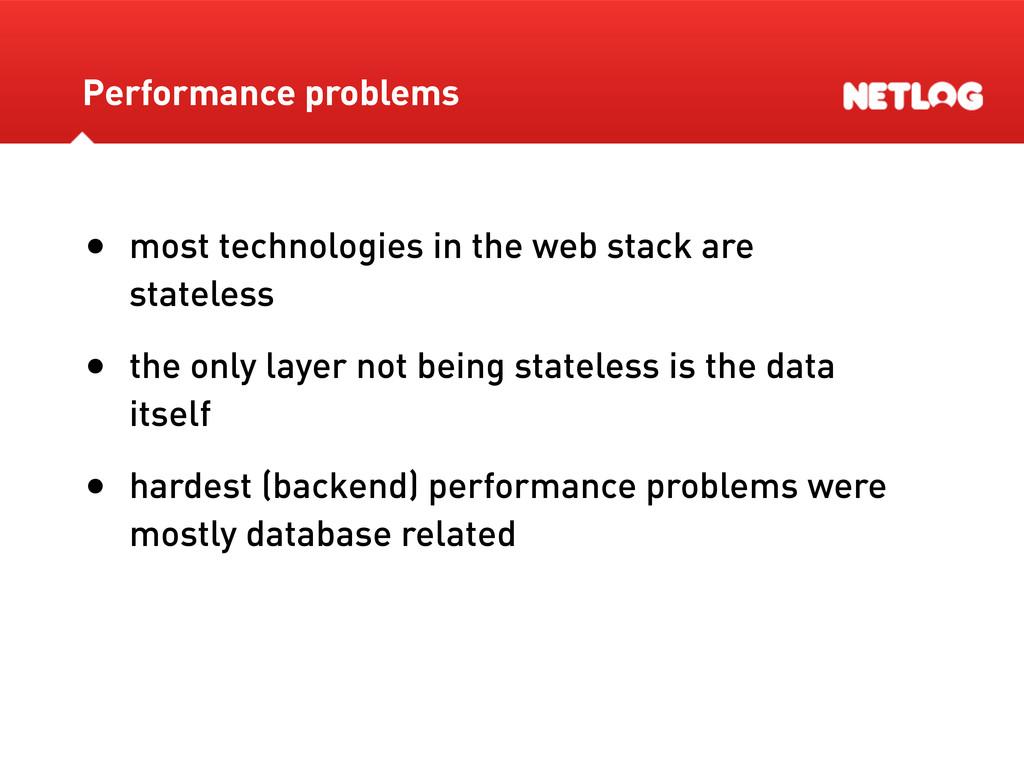
• most technologies in the web stack are stateless •
the only layer not being stateless is the data itself • hardest (backend) performance problems were mostly database related Performance problems -
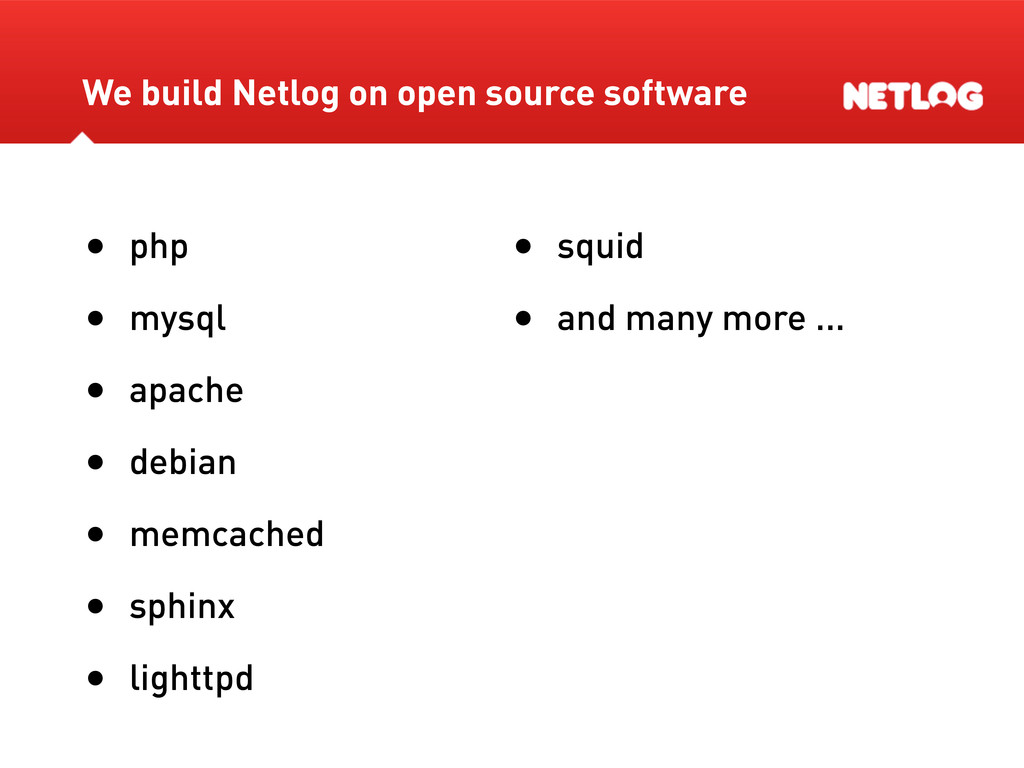
• php • mysql • apache • debian • memcached
• sphinx • lighttpd • squid • and many more ... We build Netlog on open source software -
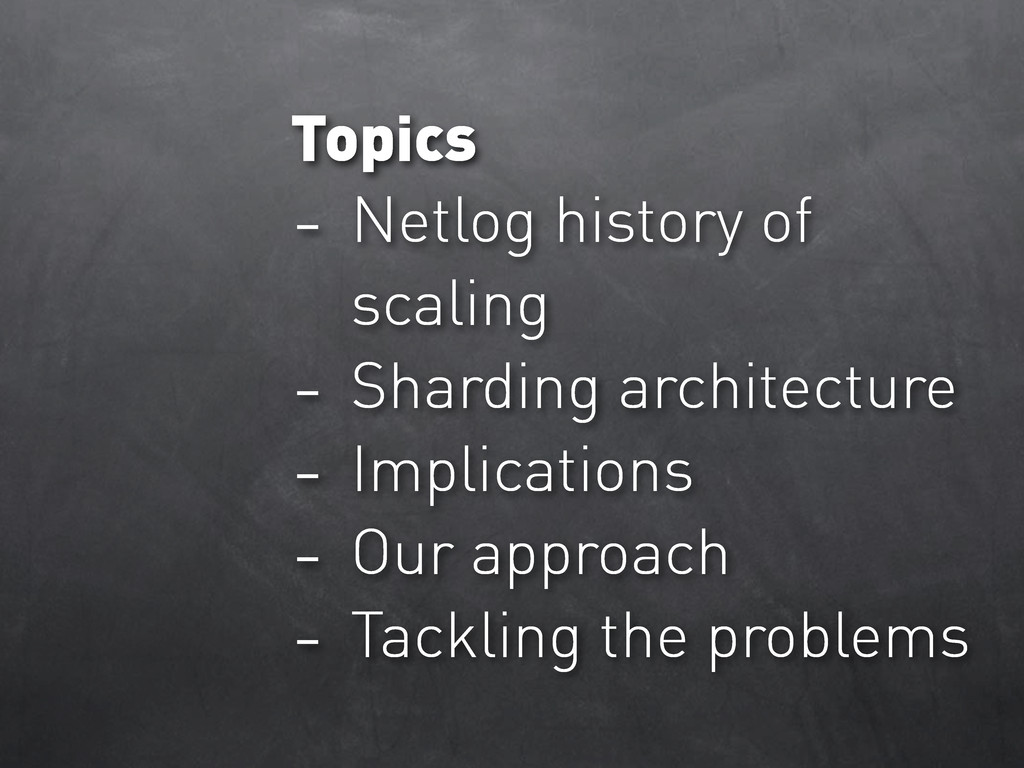
Topics - Netlog history of scaling - Sharding architecture -
Implications - Our approach - Tackling the problems -
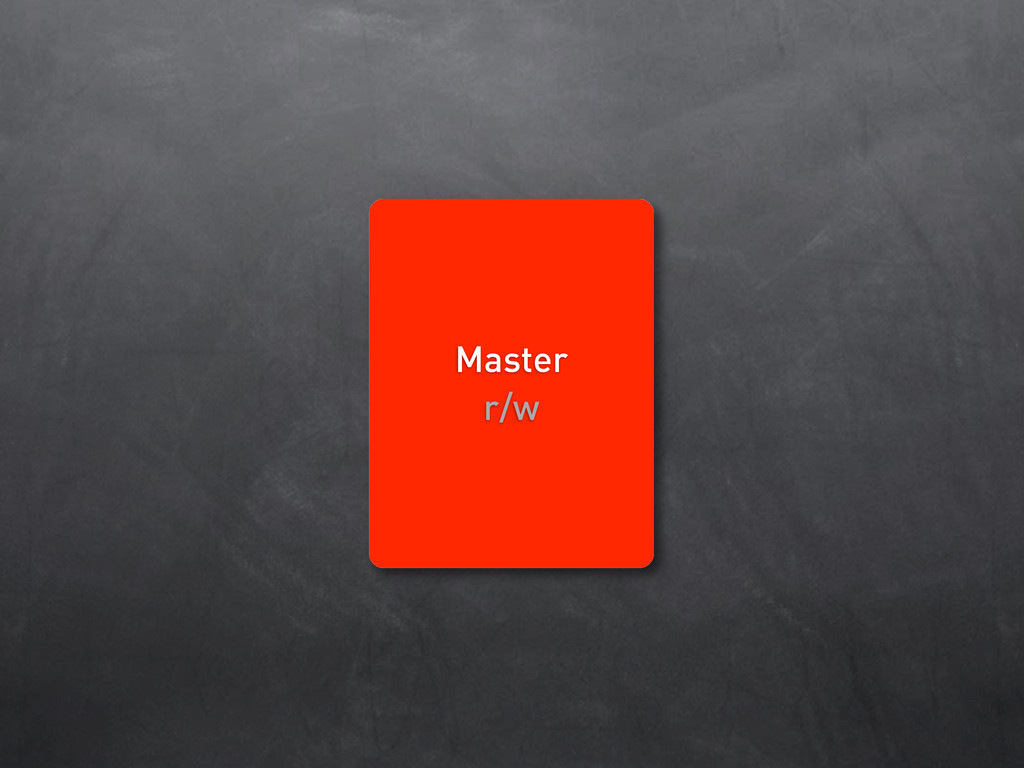
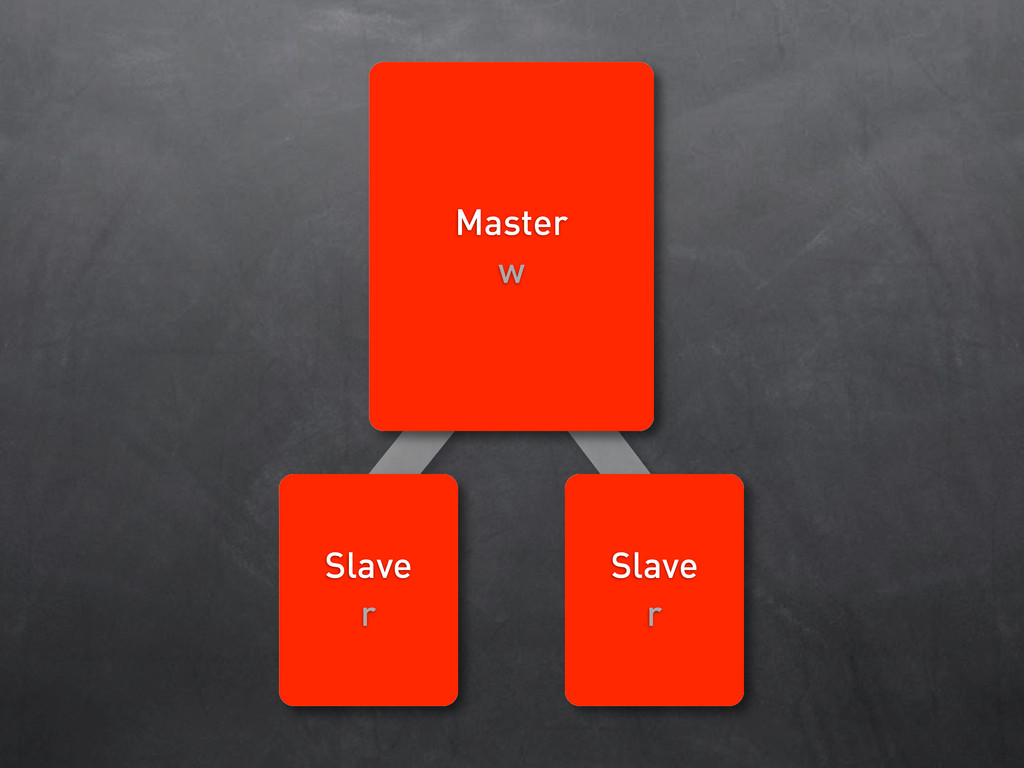
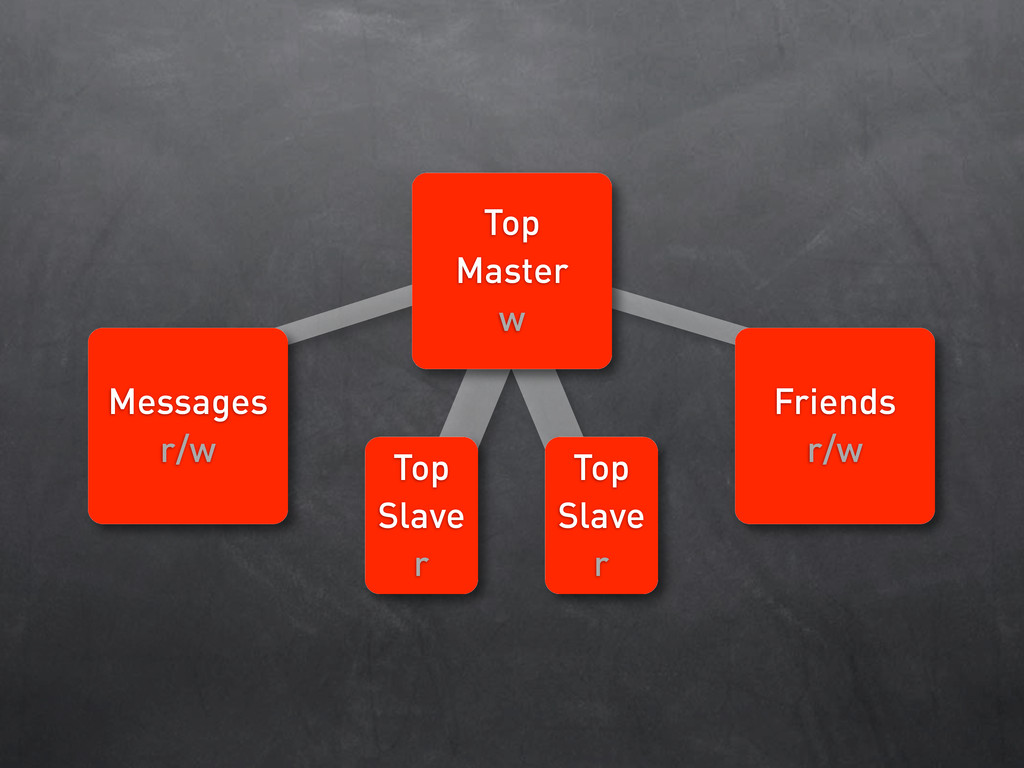
Top Master w Top Slave r Top Slave r Messages
r/w Friends r/w -
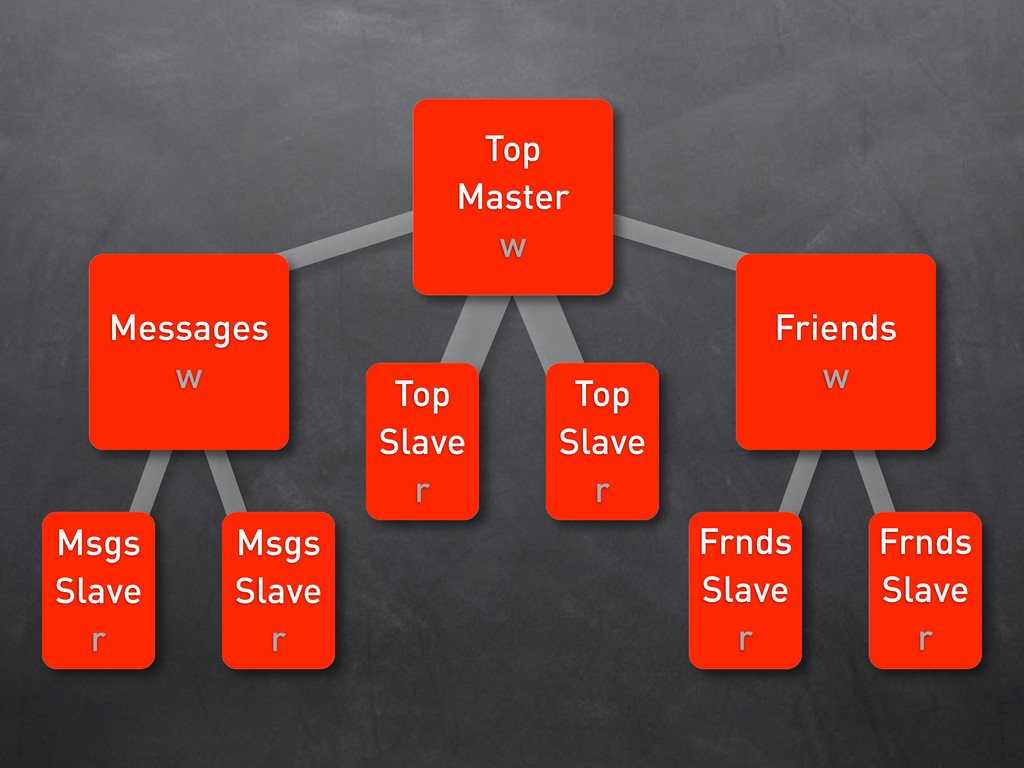
Top Master w Top Slave r Top Slave r Messages
w Friends w Msgs Slave r Msgs Slave r Frnds Slave r Frnds Slave r -
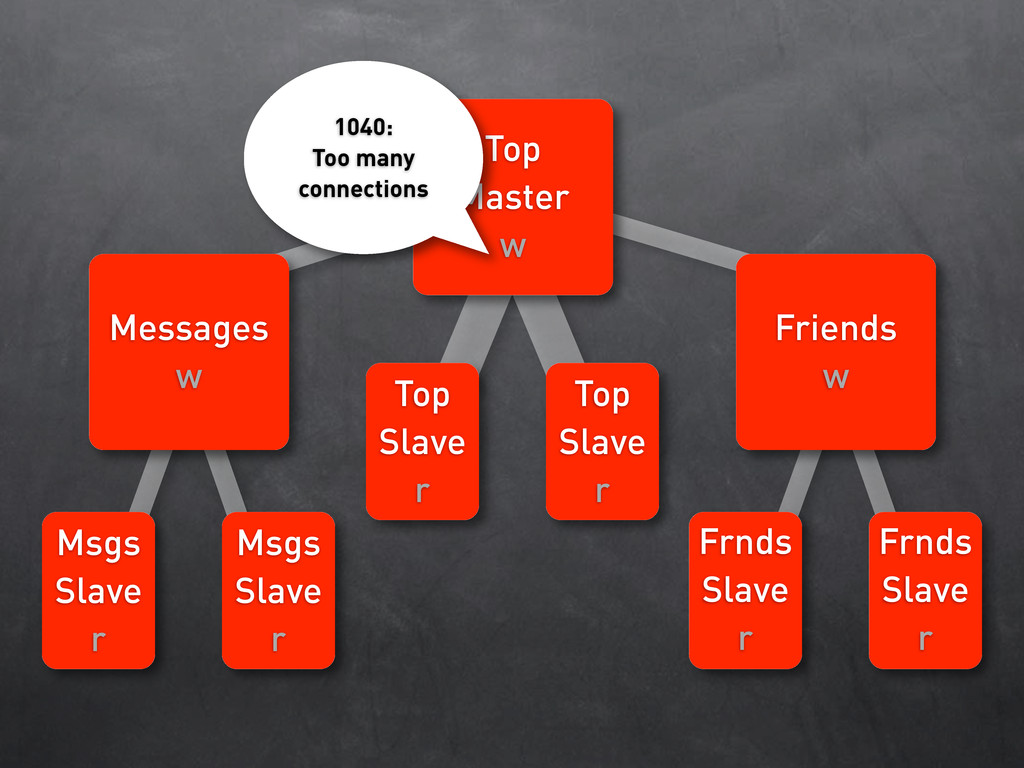
Top Master w Top Slave r Top Slave r Messages
w Friends w Msgs Slave r Msgs Slave r Frnds Slave r Frnds Slave r 1040: Too many connections -
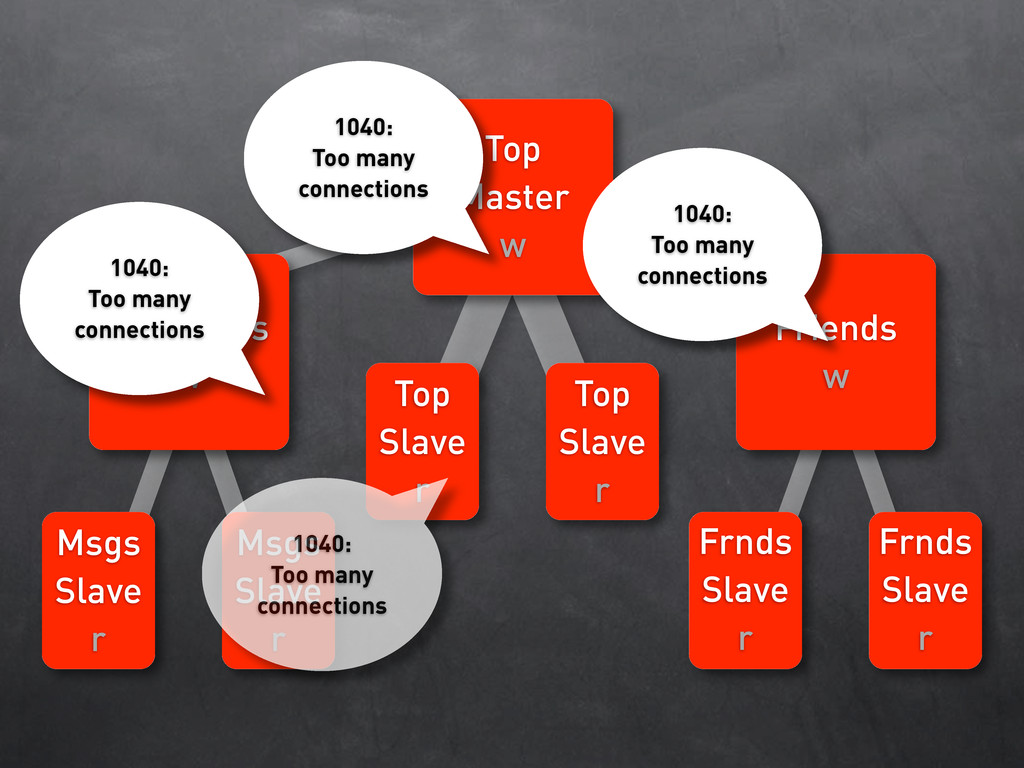
Top Master w Top Slave r Top Slave r Messages
w Friends w Msgs Slave r Msgs Slave r Frnds Slave r Frnds Slave r 1040: Too many connections 1040: Too many connections 1040: Too many connections 1040: Too many connections -
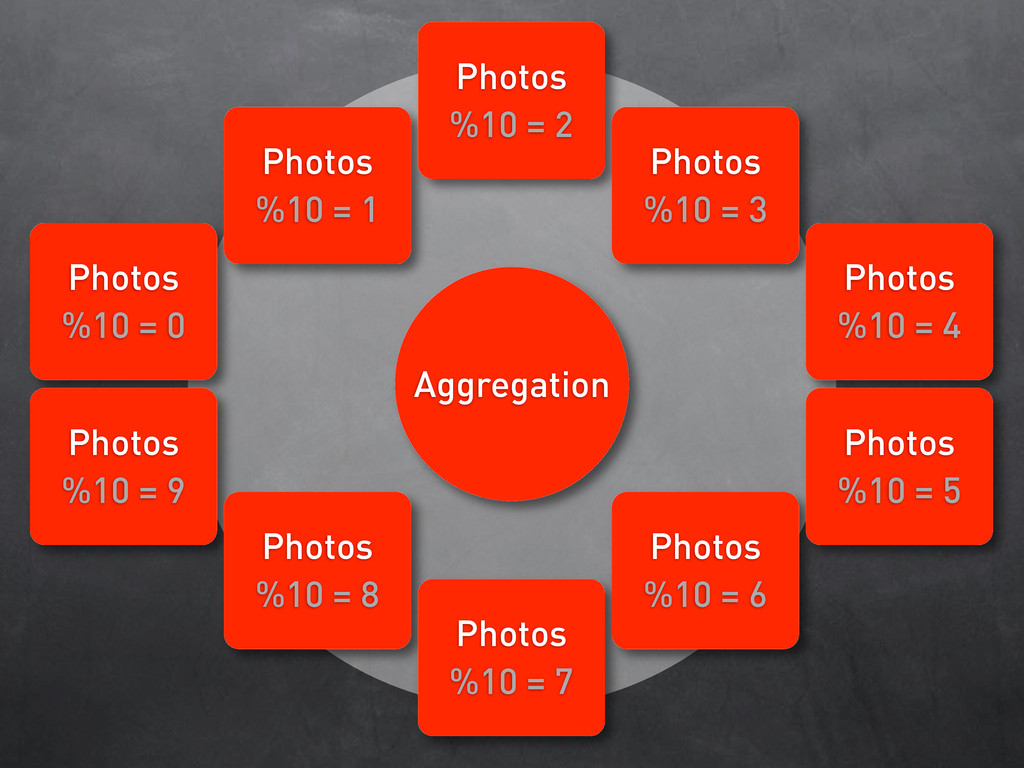
Photos %10 = 0 Aggregation Photos %10 = 1 Photos
%10 = 2 Photos %10 = 3 Photos %10 = 4 Photos %10 = 9 Photos %10 = 8 Photos %10 = 7 Photos %10 = 6 Photos %10 = 5 -
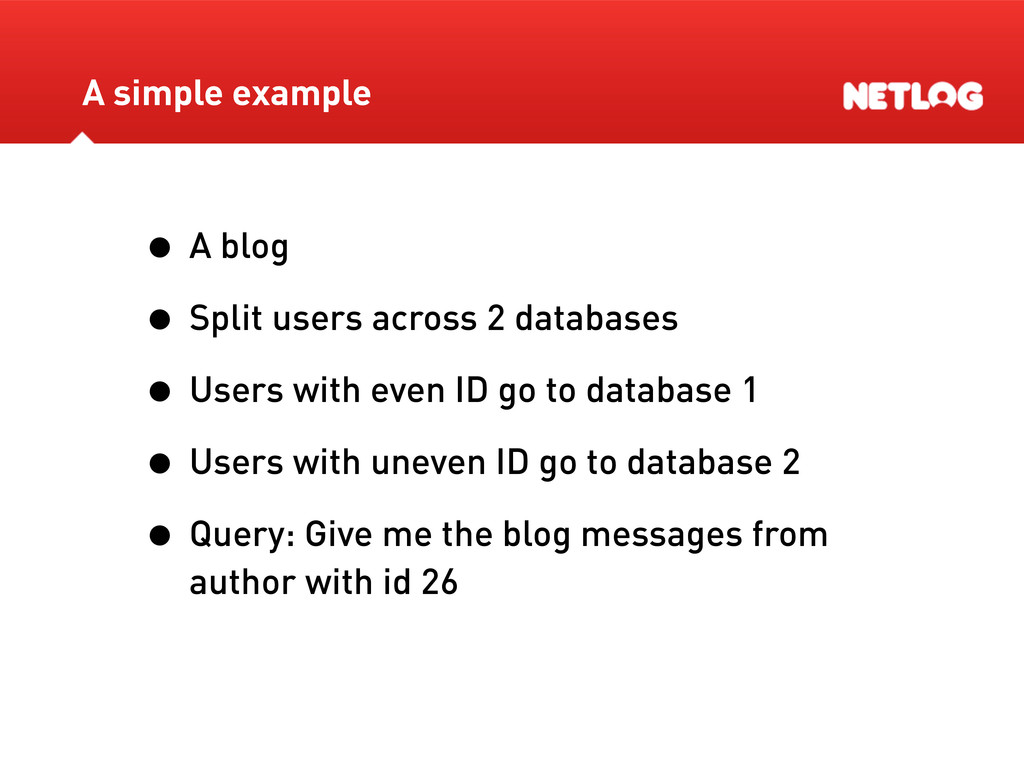
• A blog • Split users across 2 databases •
Users with even ID go to database 1 • Users with uneven ID go to database 2 • Query: Give me the blog messages from author with id 26 A simple example -
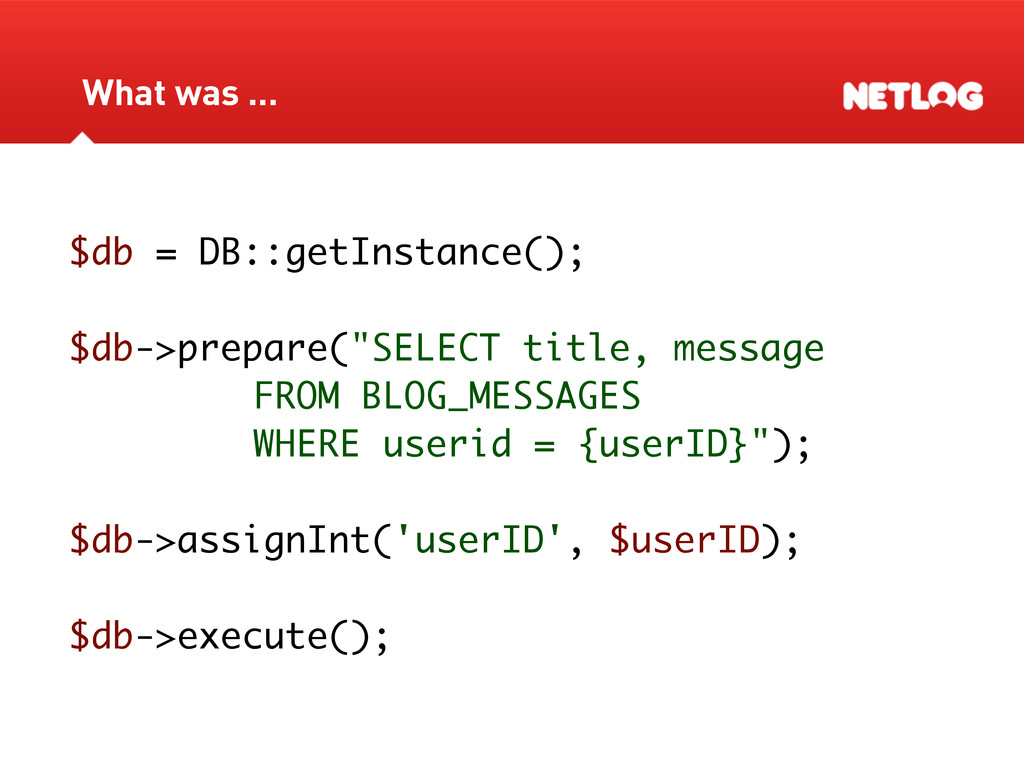
What was ... $db = DB::getInstance(); $db->prepare("SELECT title, message FROM
BLOG_MESSAGES WHERE userid = {userID}"); $db->assignInt('userID', $userID); $db->execute(); -
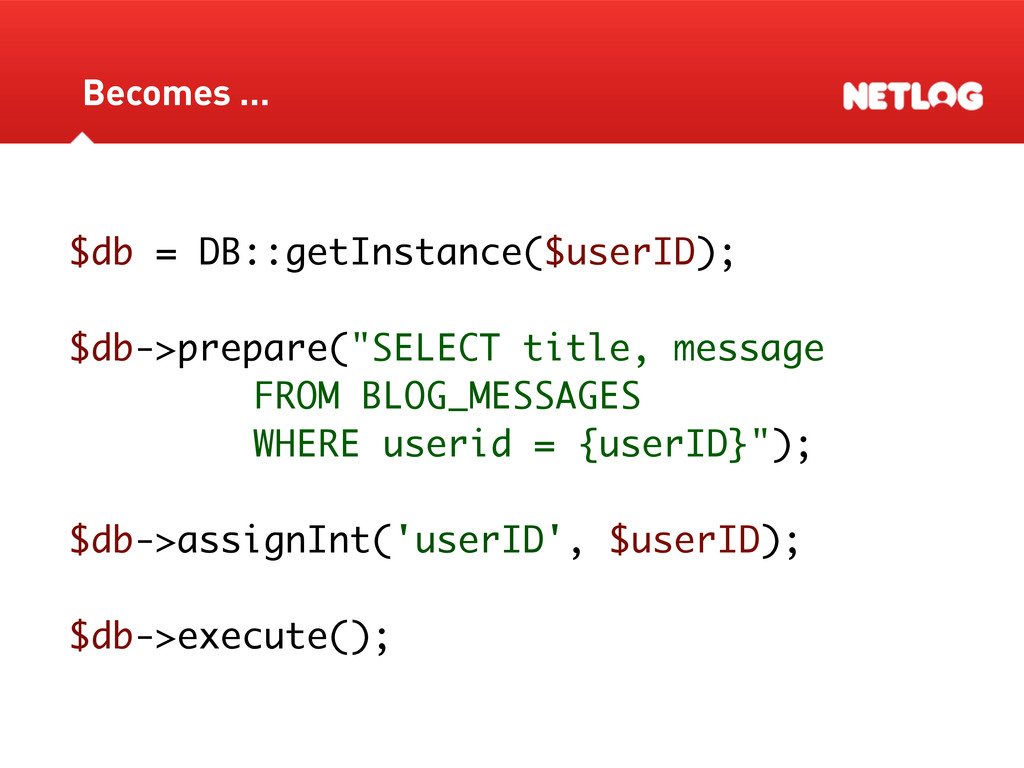
Becomes ... $db = DB::getInstance($userID); $db->prepare("SELECT title, message FROM BLOG_MESSAGES
WHERE userid = {userID}"); $db->assignInt('userID', $userID); $db->execute(); -
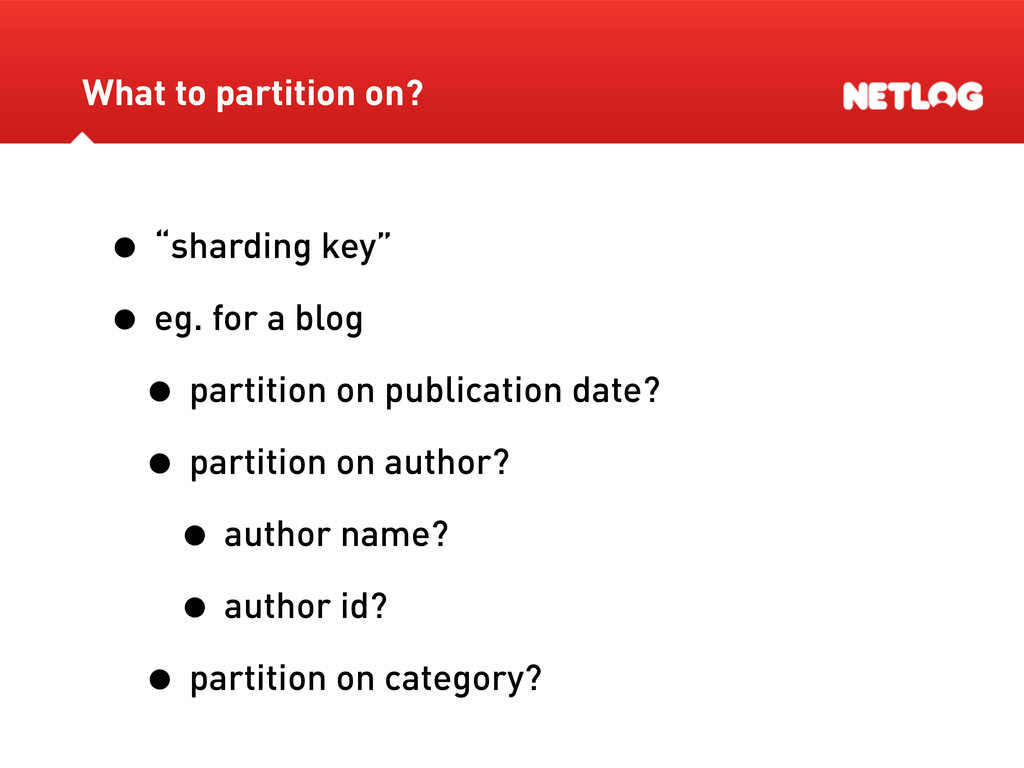
• “sharding key” • eg. for a blog • partition
on publication date? • partition on author? • author name? • author id? • partition on category? What to partition on? -
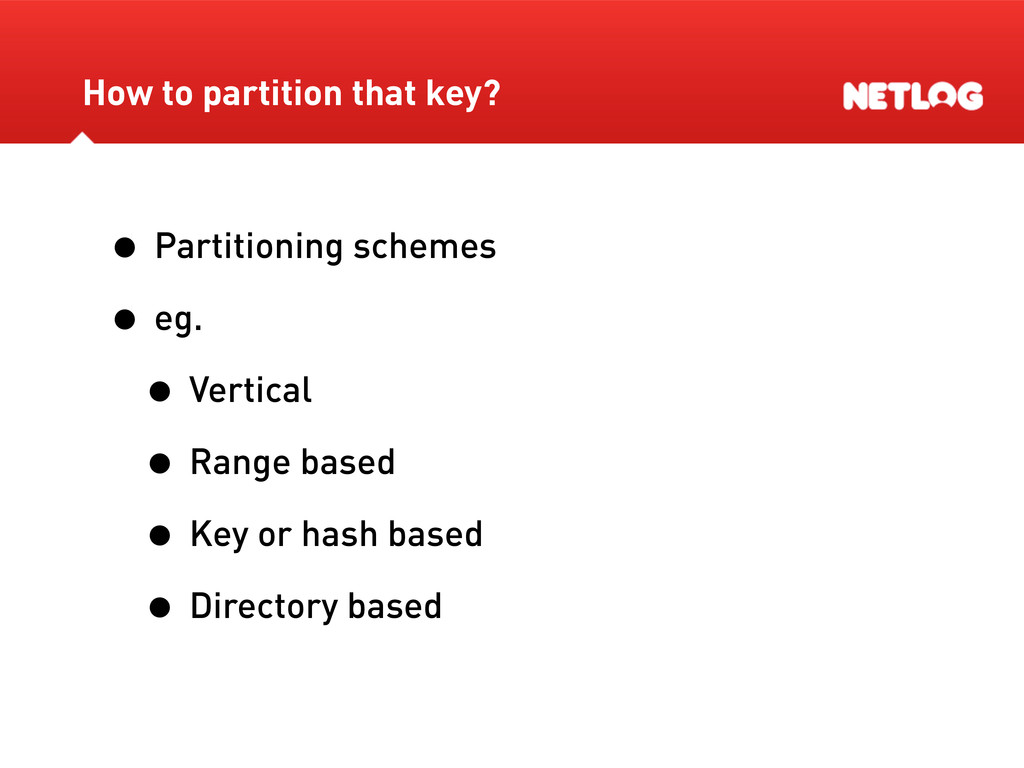
• Partitioning schemes • eg. • Vertical • Range based
• Key or hash based • Directory based How to partition that key? -
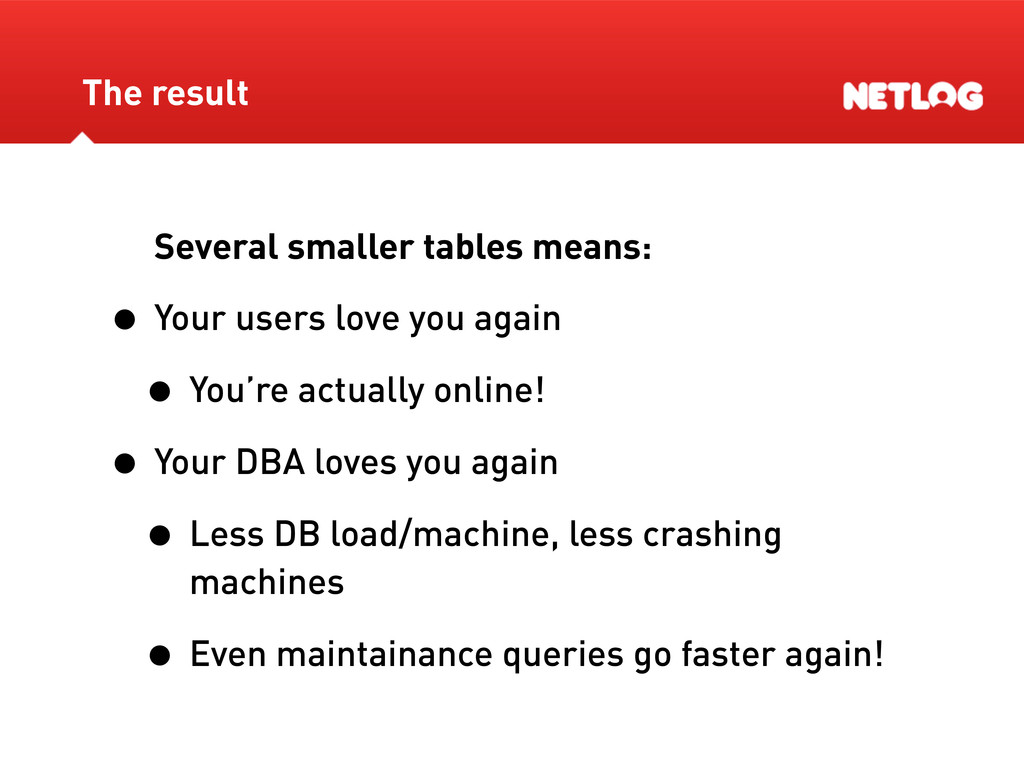
• Several smaller tables means: • Your users love you
again • You’re actually online! • Your DBA loves you again • Less DB load/machine, less crashing machines • Even maintainance queries go faster again! The result -
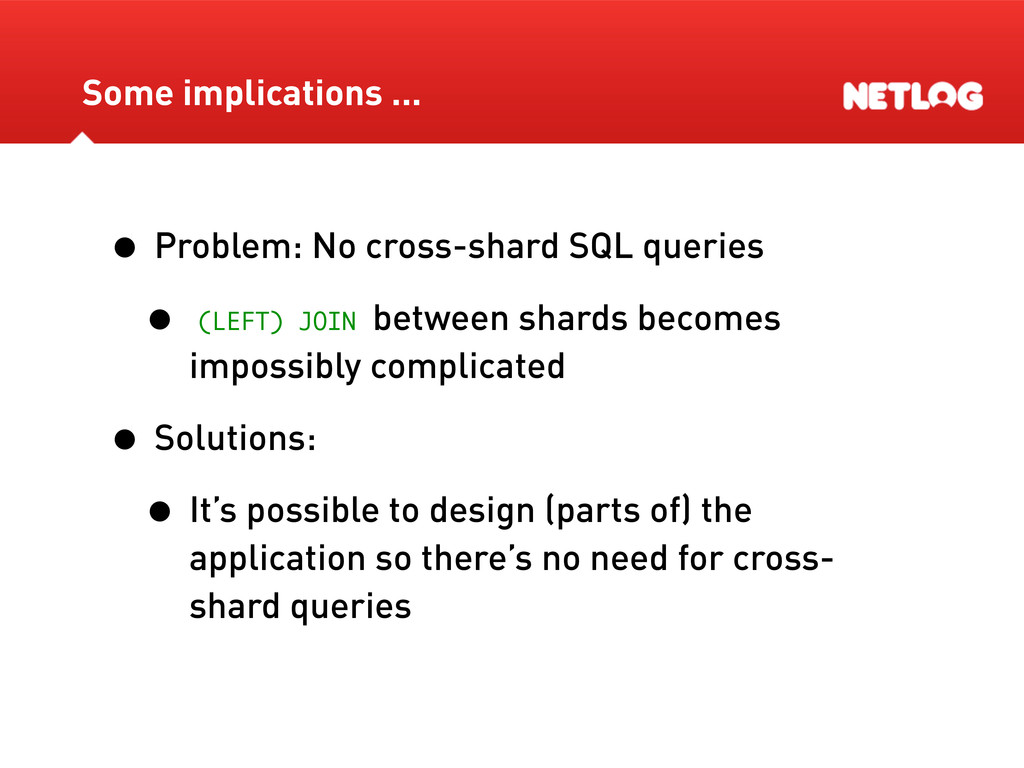
• Problem: No cross-shard SQL queries • (LEFT) JOIN between
shards becomes impossibly complicated • Solutions: • It’s possible to design (parts of) the application so there’s no need for cross- shard queries Some implications ... -
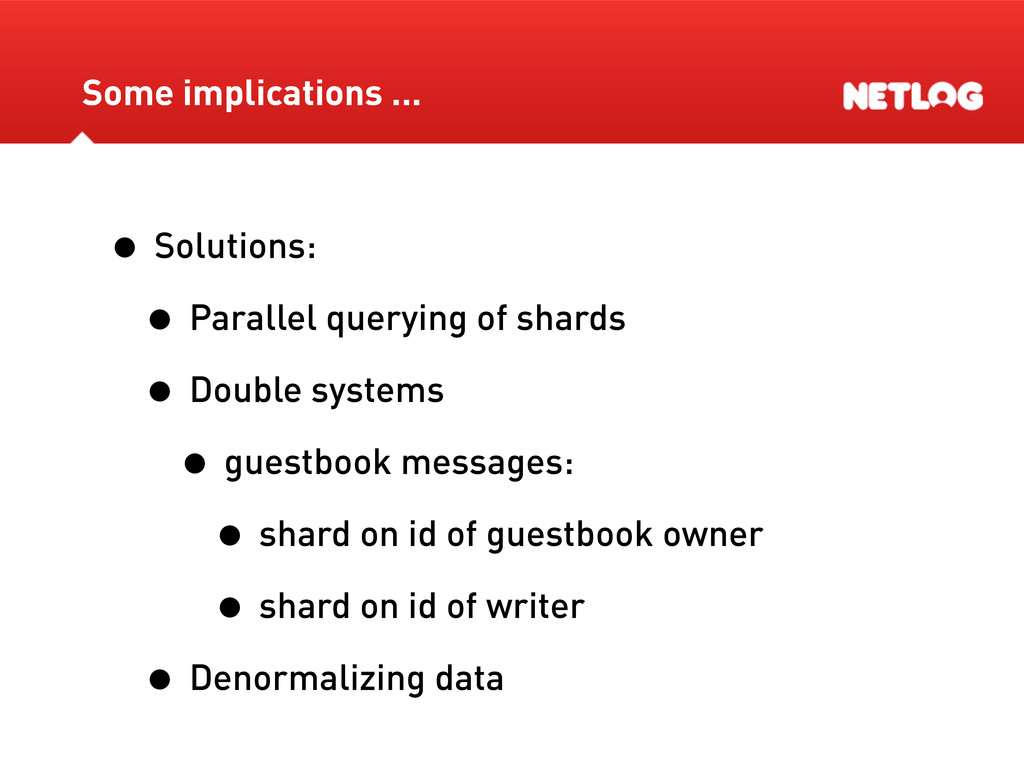
• Solutions: • Parallel querying of shards • Double systems
• guestbook messages: • shard on id of guestbook owner • shard on id of writer • Denormalizing data Some implications ... -
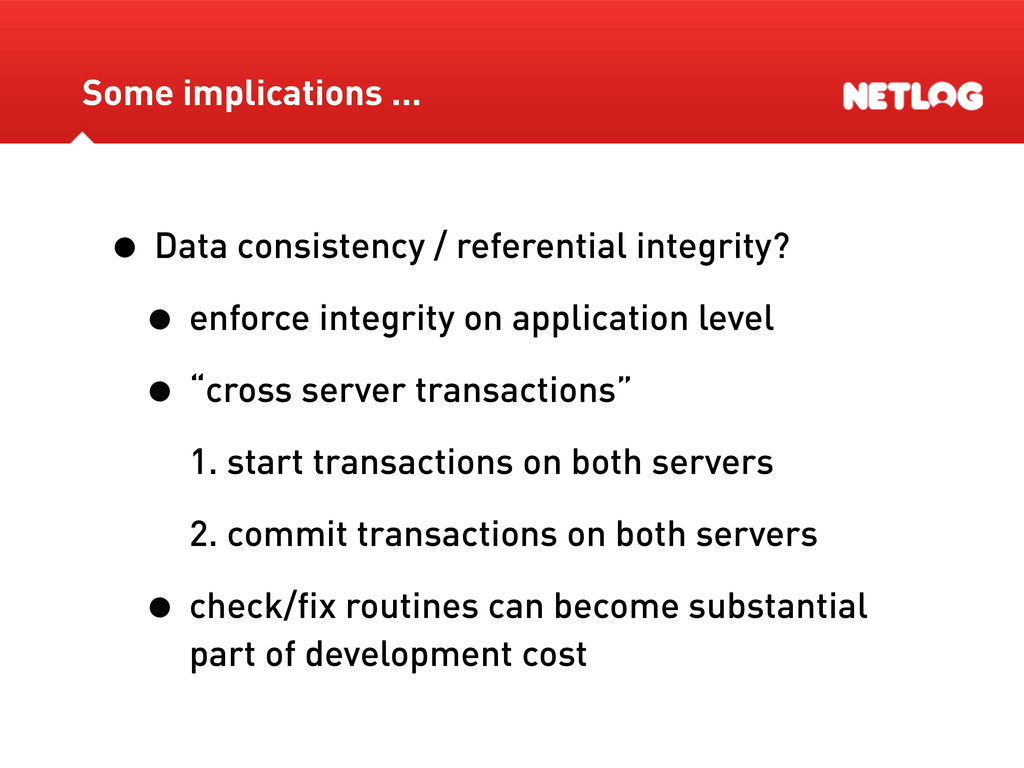
• Data consistency / referential integrity? • enforce integrity on
application level • “cross server transactions” 1. start transactions on both servers 2. commit transactions on both servers • check/fix routines can become substantial part of development cost Some implications ... -
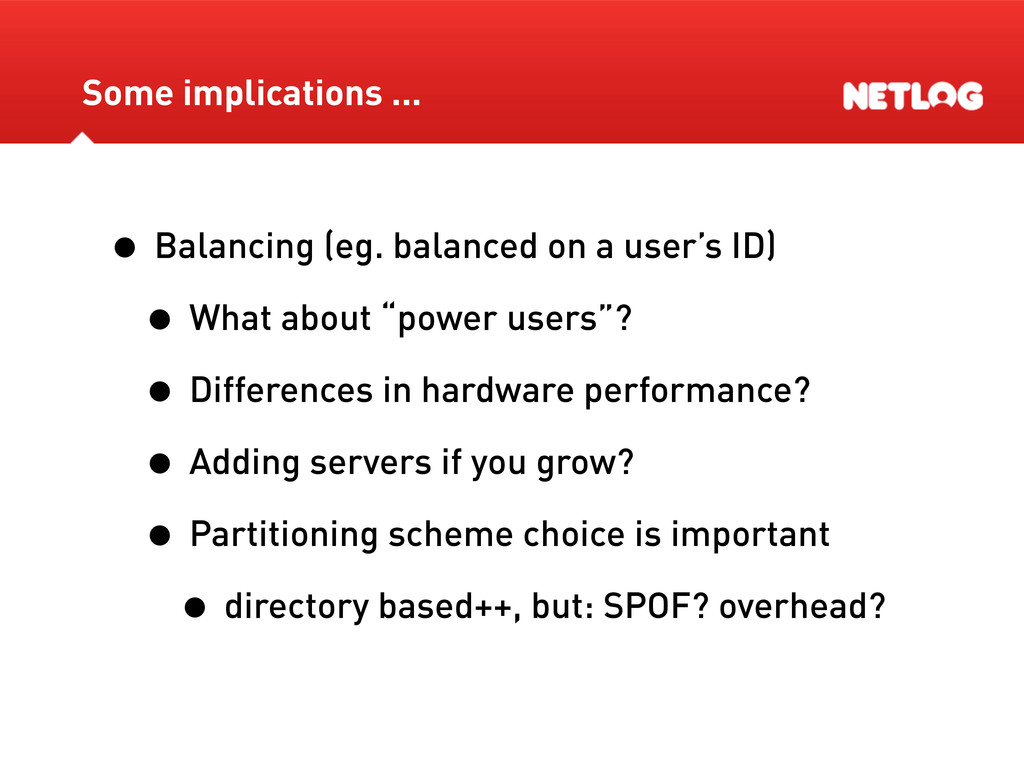
• Balancing (eg. balanced on a user’s ID) • What
about “power users”? • Differences in hardware performance? • Adding servers if you grow? • Partitioning scheme choice is important • directory based++, but: SPOF? overhead? Some implications ... -
• Your web servers talk to more / several databases
• network implications • keep connections open? close after every query? pools? Some implications ... -
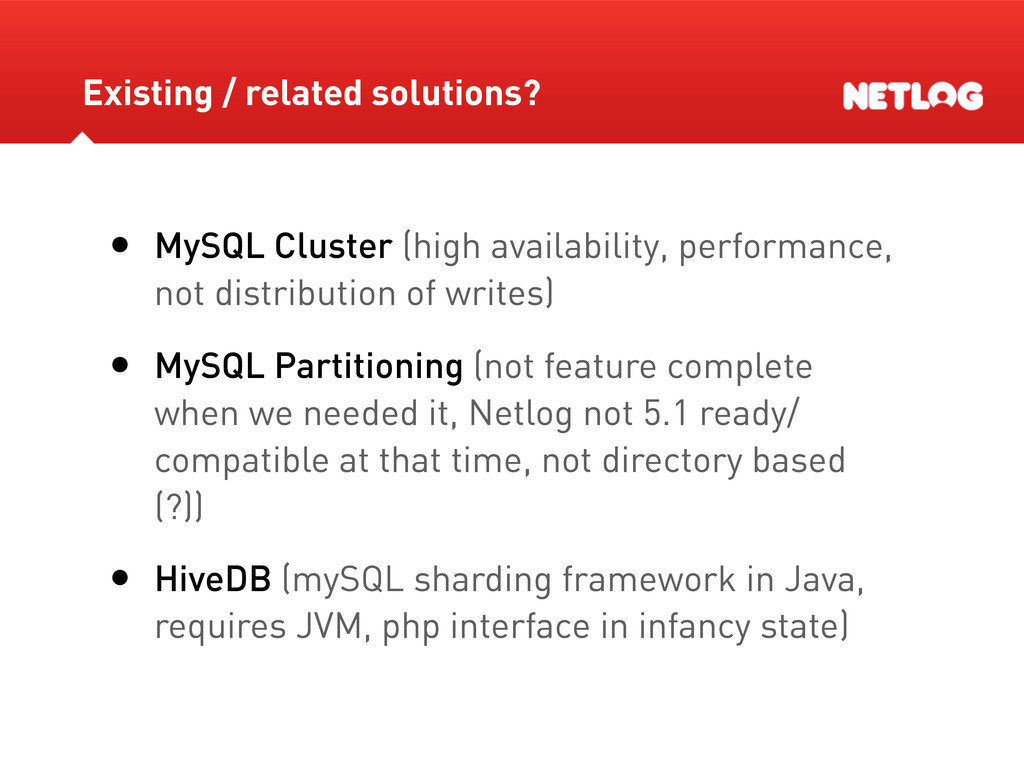
• MySQL Cluster (high availability, performance, not distribution of writes)
• MySQL Partitioning (not feature complete when we needed it, Netlog not 5.1 ready/ compatible at that time, not directory based (?)) • HiveDB (mySQL sharding framework in Java, requires JVM, php interface in infancy state) Existing / related solutions? -
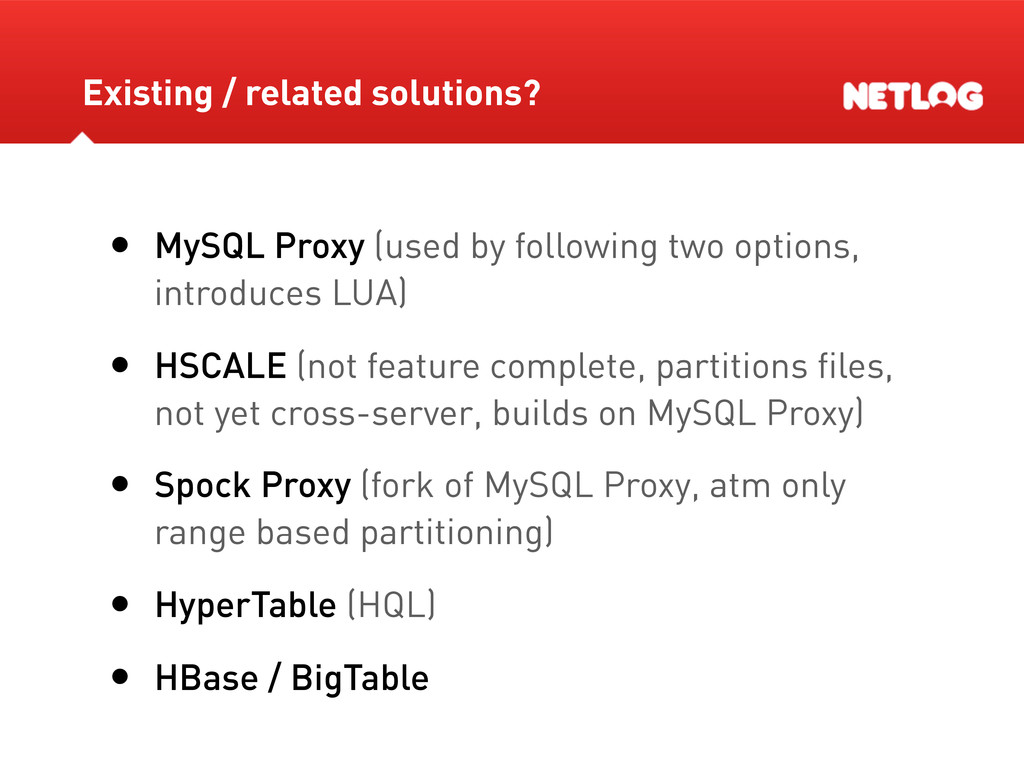
• MySQL Proxy (used by following two options, introduces LUA)
• HSCALE (not feature complete, partitions files, not yet cross-server, builds on MySQL Proxy) • Spock Proxy (fork of MySQL Proxy, atm only range based partitioning) • HyperTable (HQL) • HBase / BigTable Existing / related solutions? -
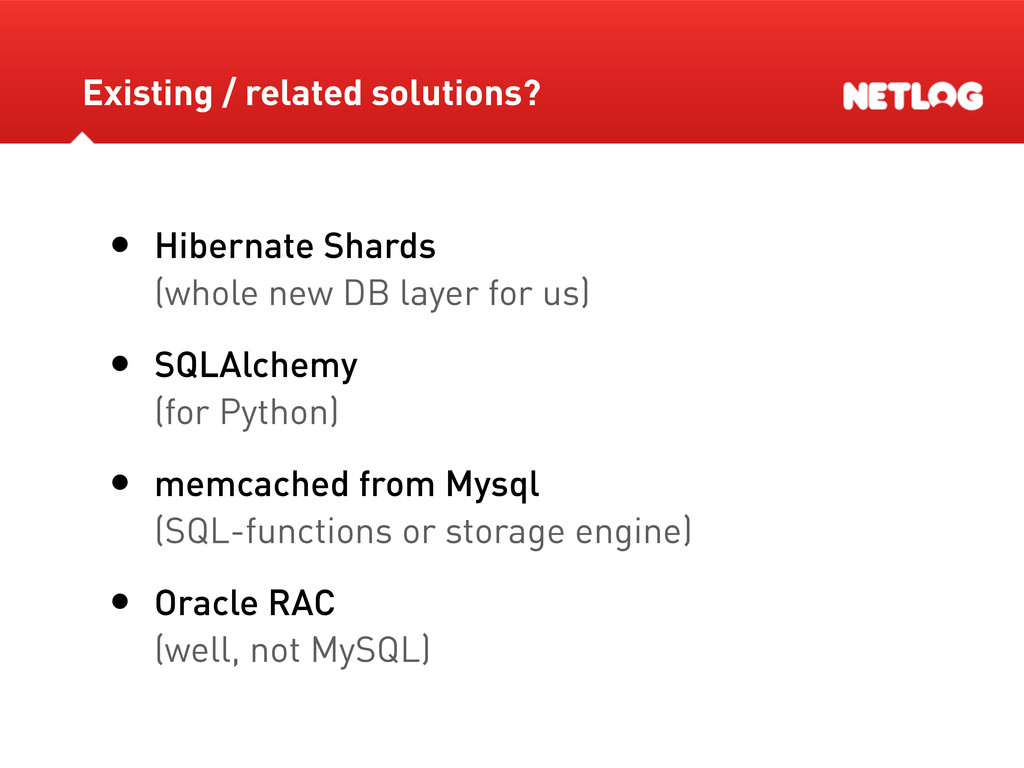
• Hibernate Shards (whole new DB layer for us) •
SQLAlchemy (for Python) • memcached from Mysql (SQL-functions or storage engine) • Oracle RAC (well, not MySQL) Existing / related solutions? -
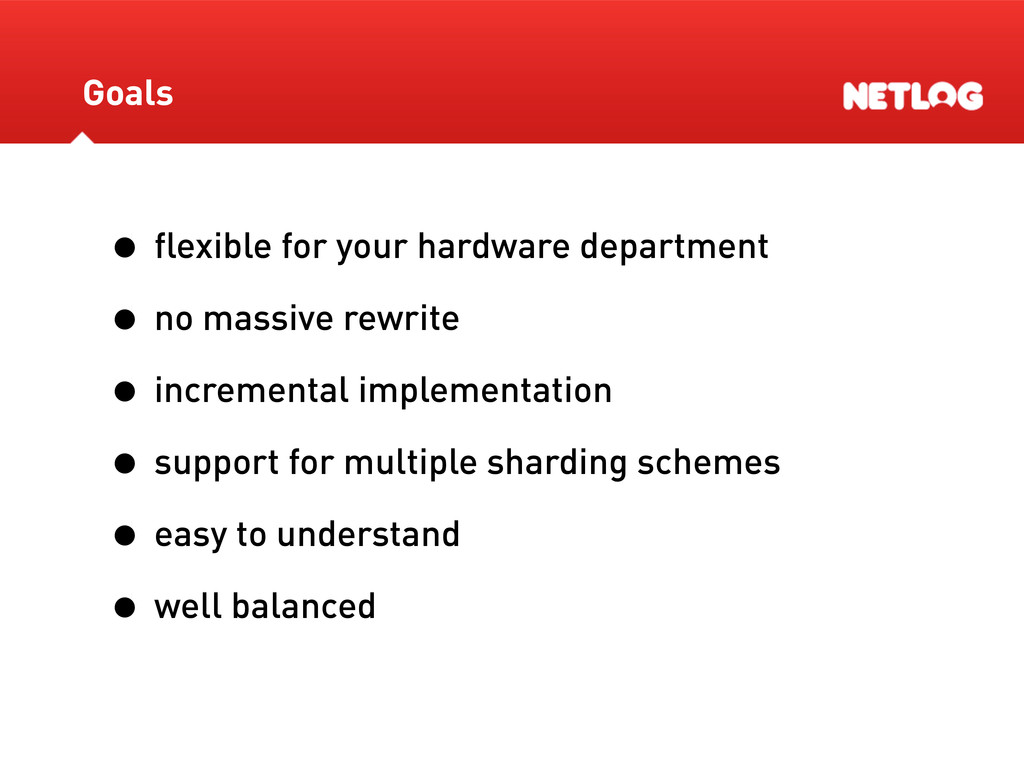
• flexible for your hardware department • no massive rewrite
• incremental implementation • support for multiple sharding schemes • easy to understand • well balanced Goals -
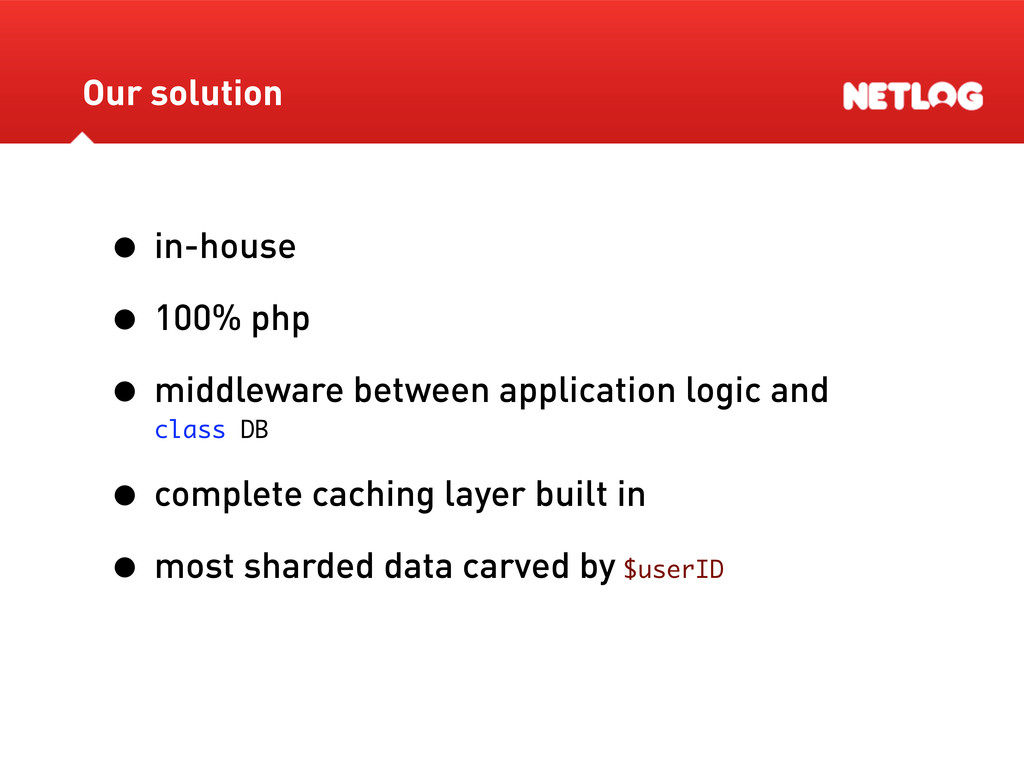
• in-house • 100% php • middleware between application logic
and class DB • complete caching layer built in • most sharded data carved by $userID Our solution -
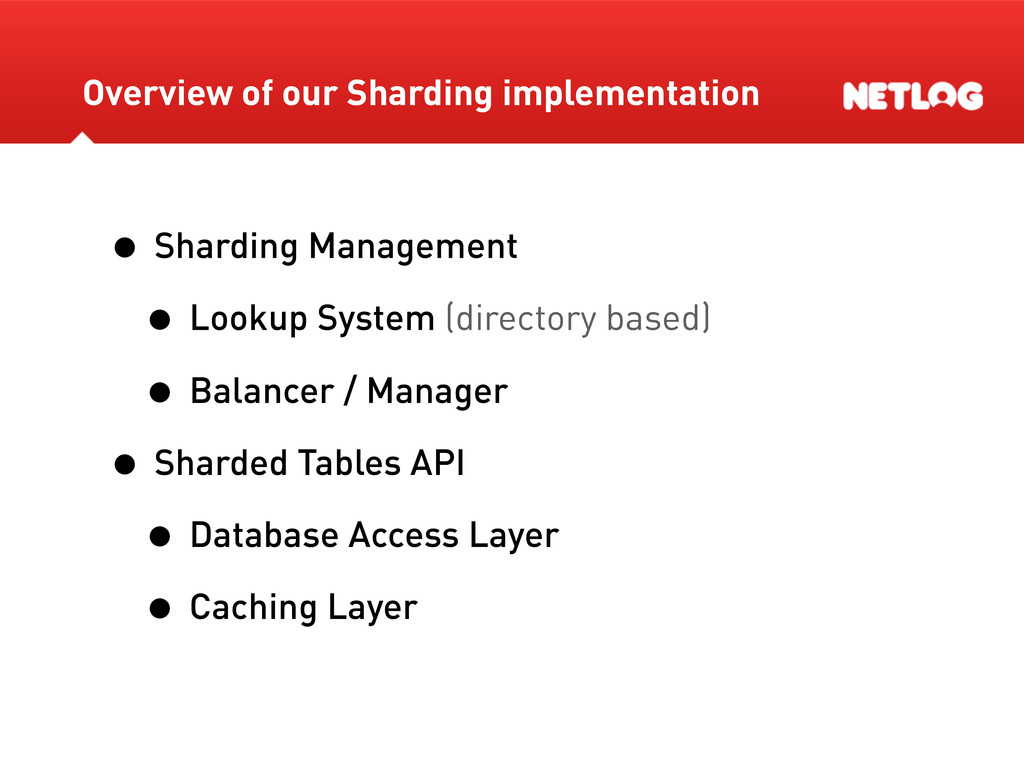
• Sharding Management • Lookup System (directory based) • Balancer
/ Manager • Sharded Tables API • Database Access Layer • Caching Layer Overview of our Sharding implementation -
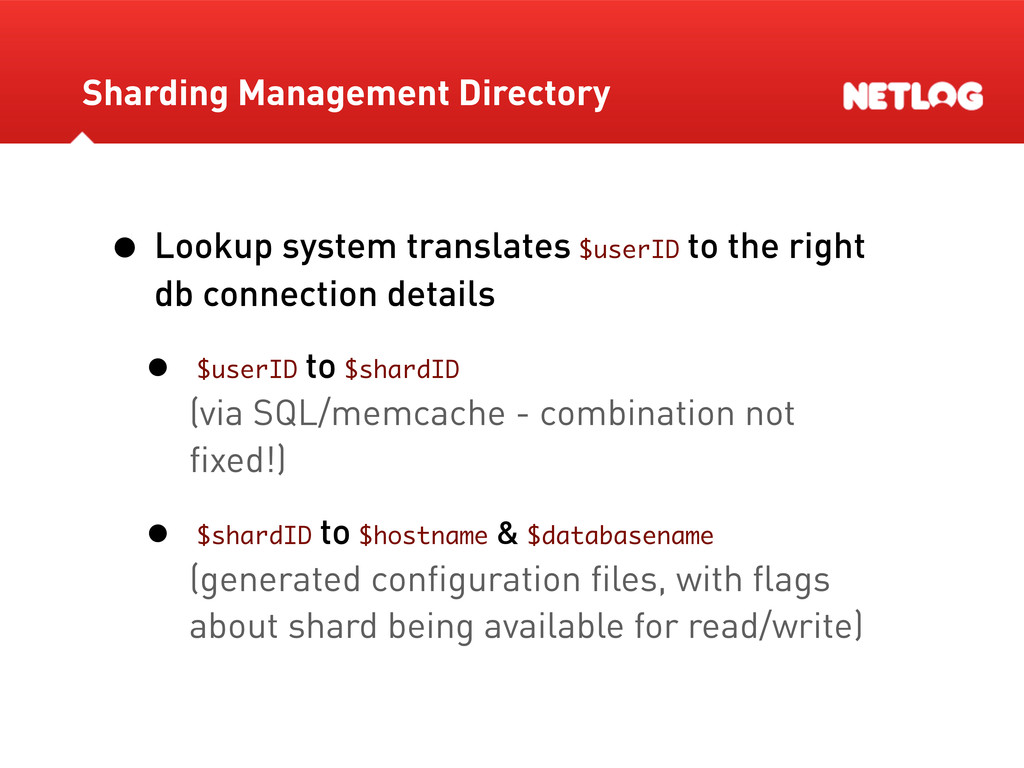
• Lookup system translates $userID to the right db connection
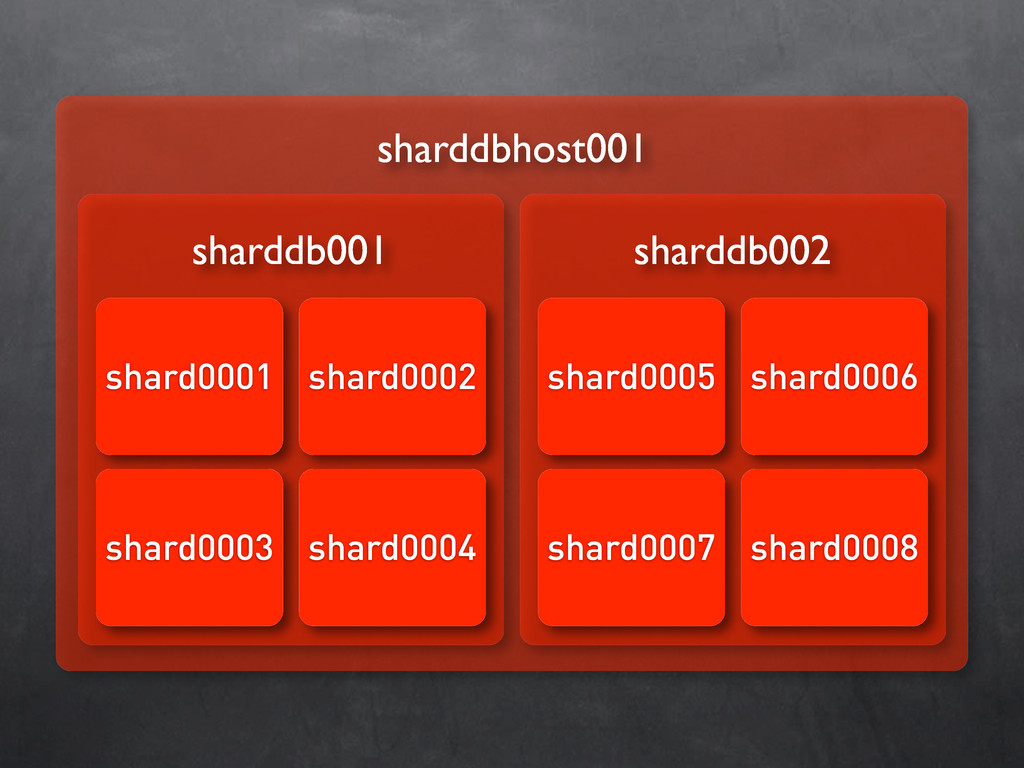
details • $userID to $shardID (via SQL/memcache - combination not fixed!) • $shardID to $hostname & $databasename (generated configuration files, with flags about shard being available for read/write) Sharding Management Directory -
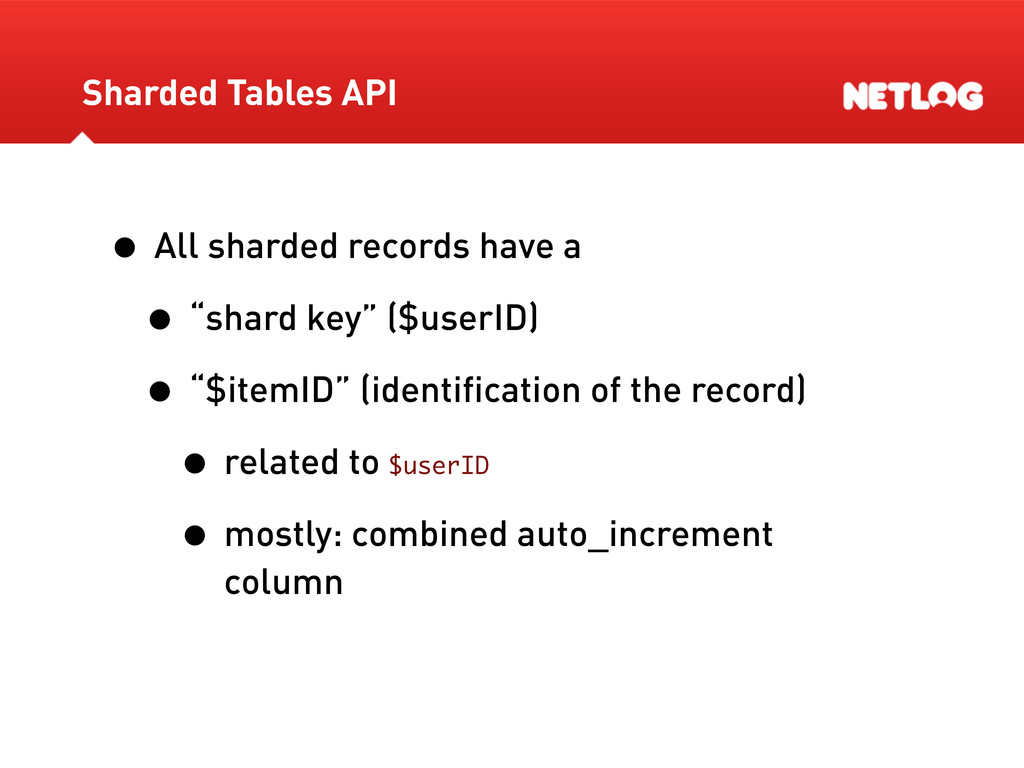
• All sharded records have a • “shard key” ($userID)
• “$itemID” (identification of the record) • related to $userID • mostly: combined auto_increment column Sharded Tables API -
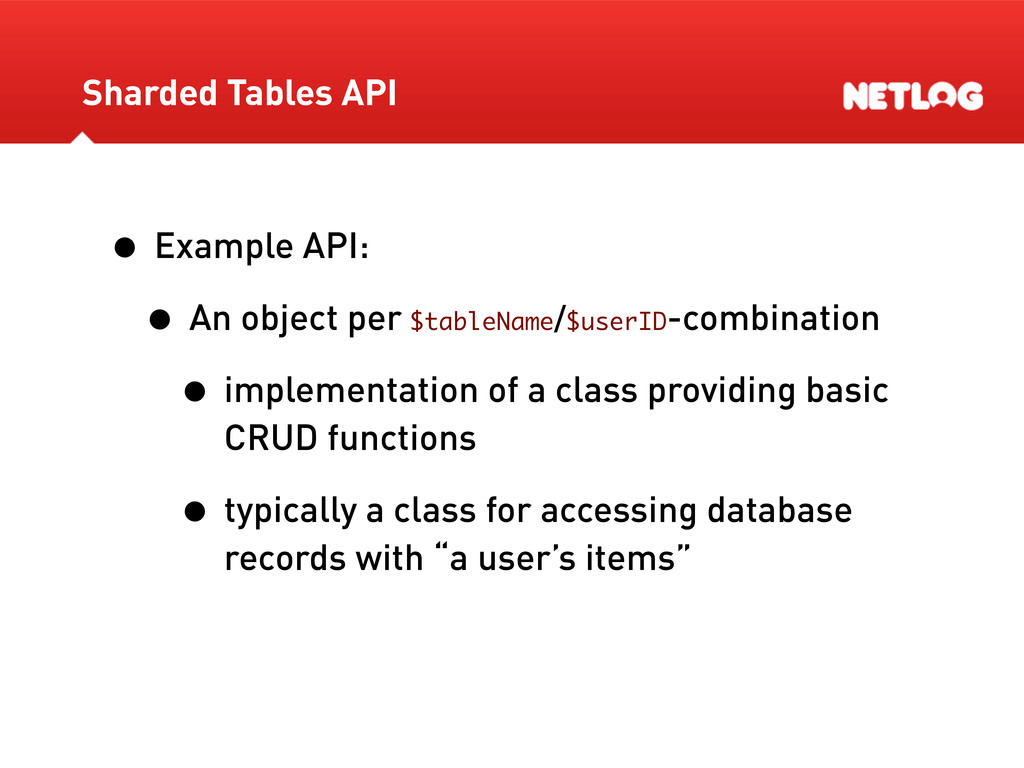
• Example API: • An object per $tableName/$userID-combination • implementation
of a class providing basic CRUD functions • typically a class for accessing database records with “a user’s items” Sharded Tables API -
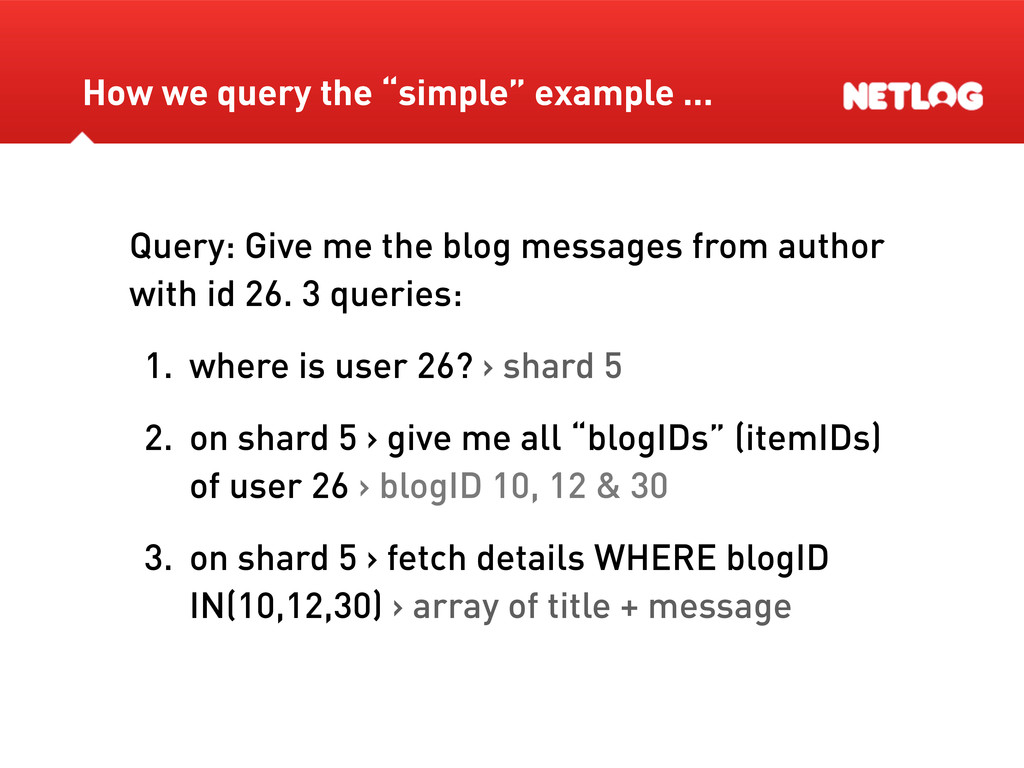
Query: Give me the blog messages from author with id
26. 3 queries: 1. where is user 26? > shard 5 2. on shard 5 > give me all “blogIDs” (itemIDs) of user 26 > blogID 10, 12 & 30 3. on shard 5 > fetch details WHERE blogID IN(10,12,30) > array of title + message How we query the “simple” example ... -
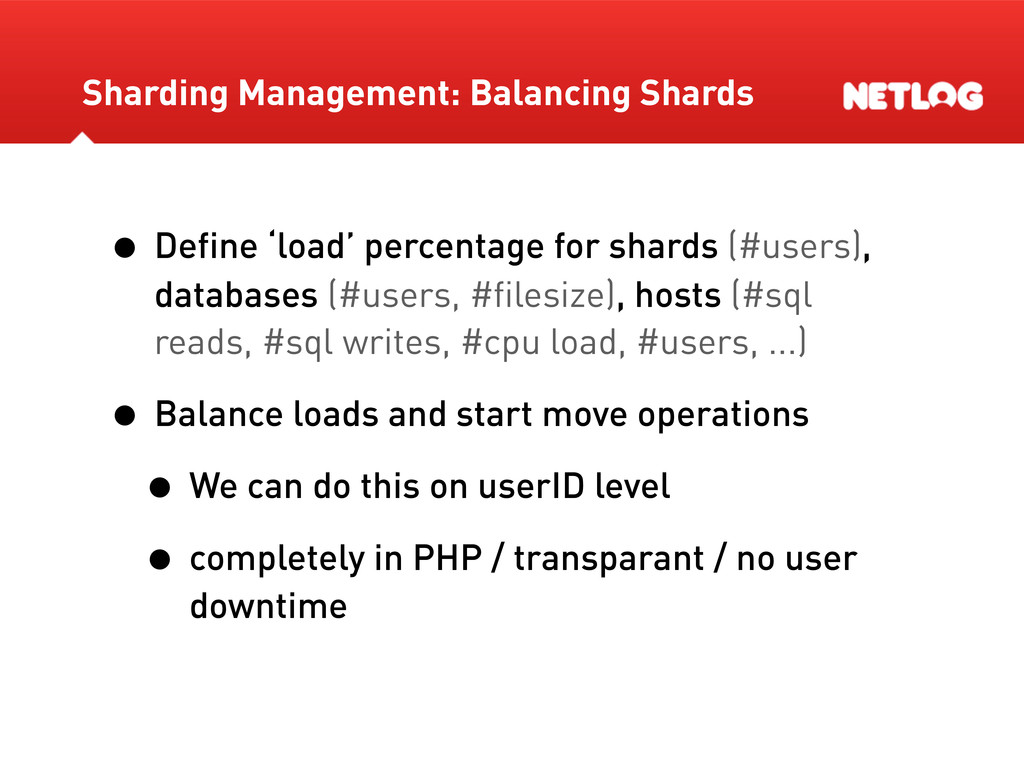
• Define ‘load’ percentage for shards (#users), databases (#users, #filesize),
hosts (#sql reads, #sql writes, #cpu load, #users, ...) • Balance loads and start move operations • We can do this on userID level • completely in PHP / transparant / no user downtime Sharding Management: Balancing Shards -
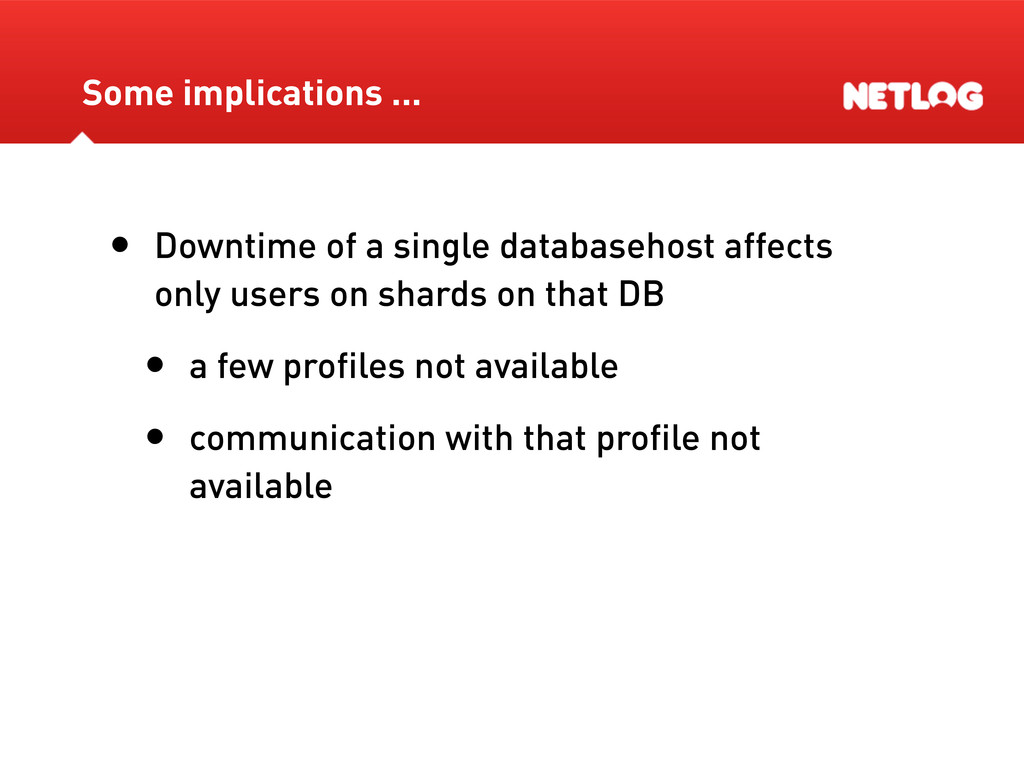
• Downtime of a single databasehost affects only users on
shards on that DB • a few profiles not available • communication with that profile not available Some implications ... -
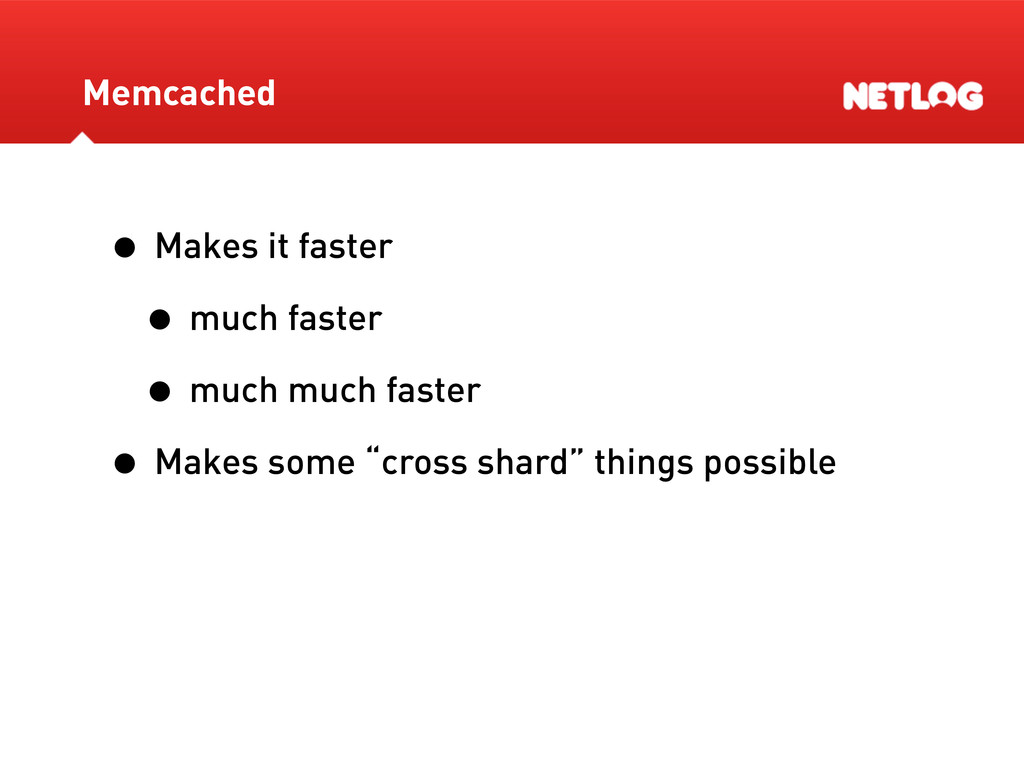
Memcached • Makes it faster • much faster • much
much faster • Makes some “cross shard” things possible -
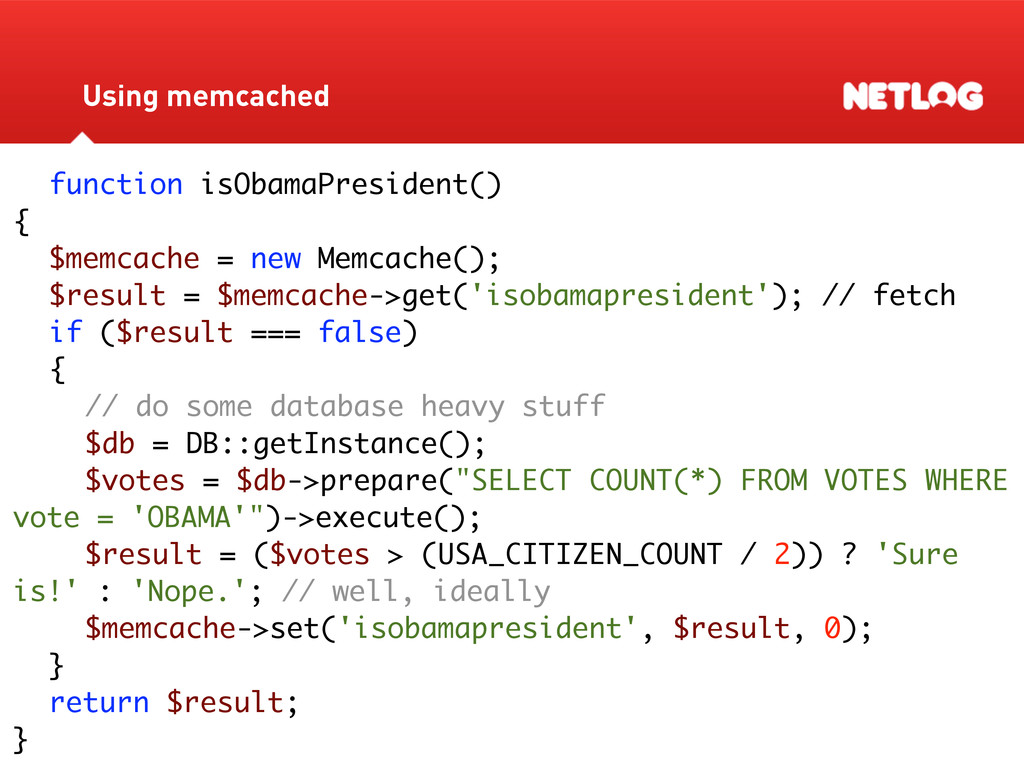
function isObamaPresident() { $memcache = new Memcache(); $result = $memcache->get('isobamapresident');
// fetch if ($result === false) { // do some database heavy stuff $db = DB::getInstance(); $votes = $db->prepare("SELECT COUNT(*) FROM VOTES WHERE vote = 'OBAMA'")->execute(); $result = ($votes > (USA_CITIZEN_COUNT / 2)) ? 'Sure is!' : 'Nope.'; // well, ideally $memcache->set('isobamapresident', $result, 0); } return $result; } Using memcached -
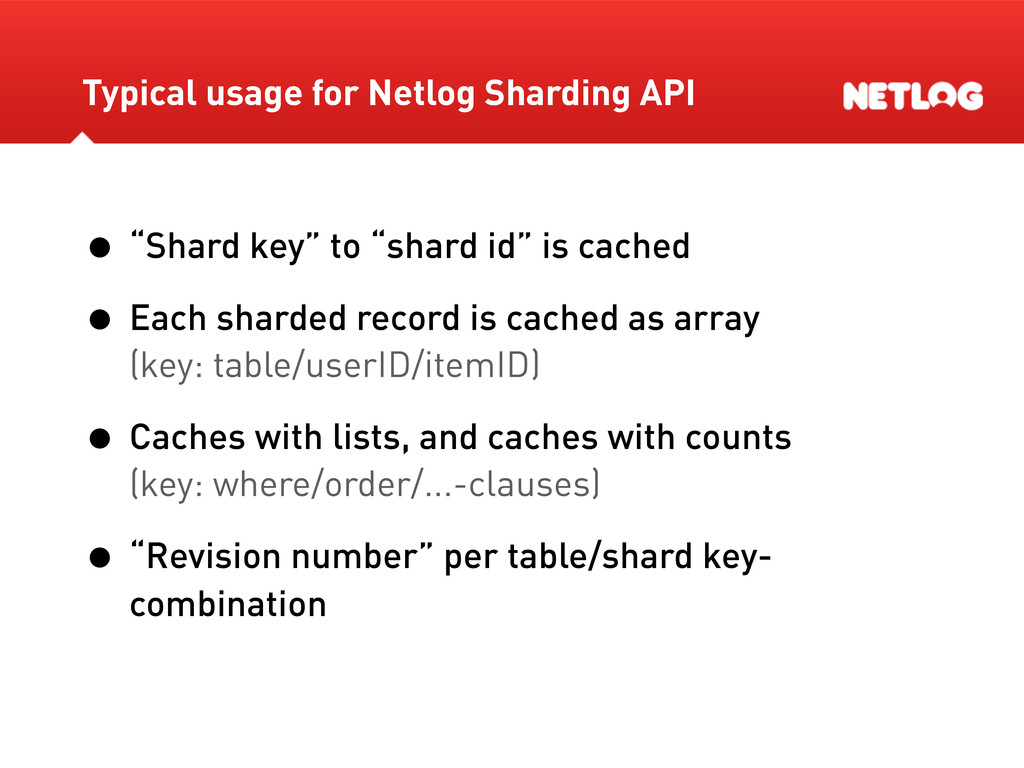
Typical usage for Netlog Sharding API • “Shard key” to
“shard id” is cached • Each sharded record is cached as array (key: table/userID/itemID) • Caches with lists, and caches with counts (key: where/order/...-clauses) • “Revision number” per table/shard key- combination -
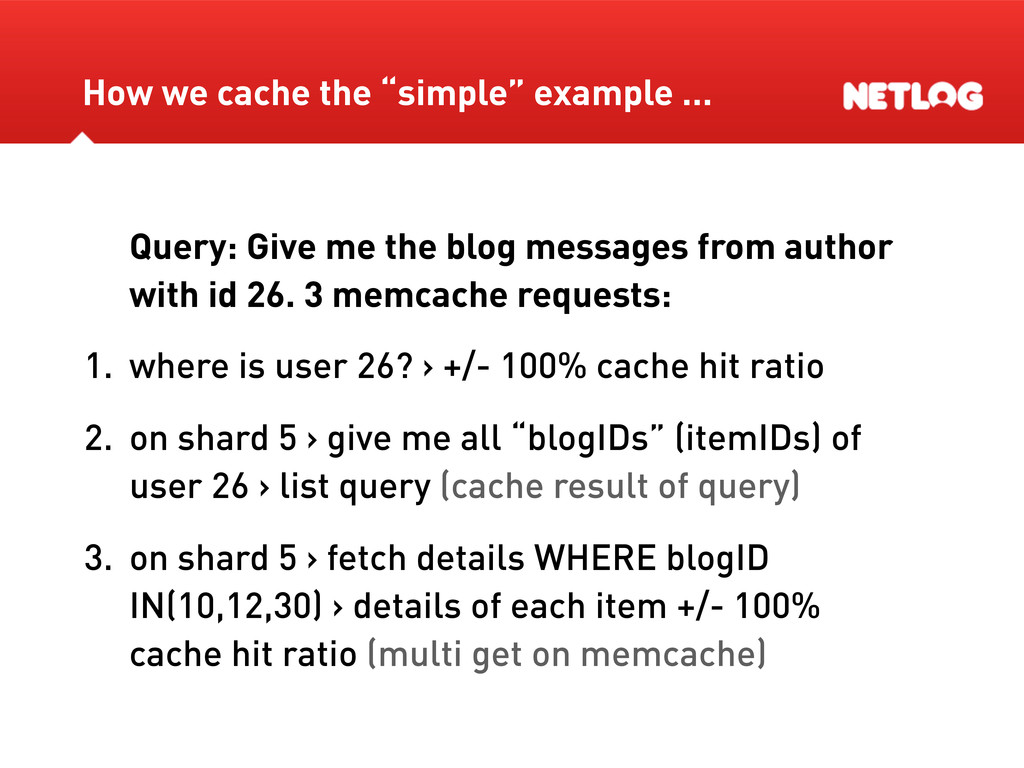
Query: Give me the blog messages from author with id
26. 3 memcache requests: 1. where is user 26? > +/- 100% cache hit ratio 2. on shard 5 > give me all “blogIDs” (itemIDs) of user 26 > list query (cache result of query) 3. on shard 5 > fetch details WHERE blogID IN(10,12,30) > details of each item +/- 100% cache hit ratio (multi get on memcache) How we cache the “simple” example ... -
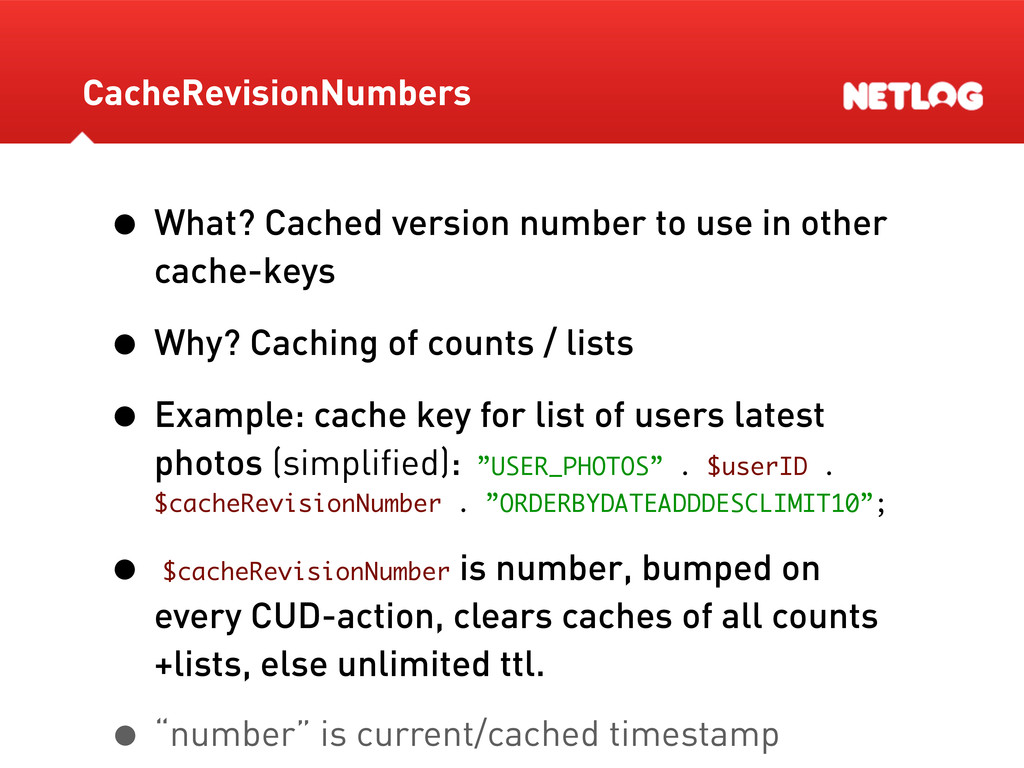
• What? Cached version number to use in other cache-keys
• Why? Caching of counts / lists • Example: cache key for list of users latest photos (simplified): ”USER_PHOTOS” . $userID . $cacheRevisionNumber . ”ORDERBYDATEADDDESCLIMIT10”; • $cacheRevisionNumber is number, bumped on every CUD-action, clears caches of all counts +lists, else unlimited ttl. • “number” is current/cached timestamp CacheRevisionNumbers -
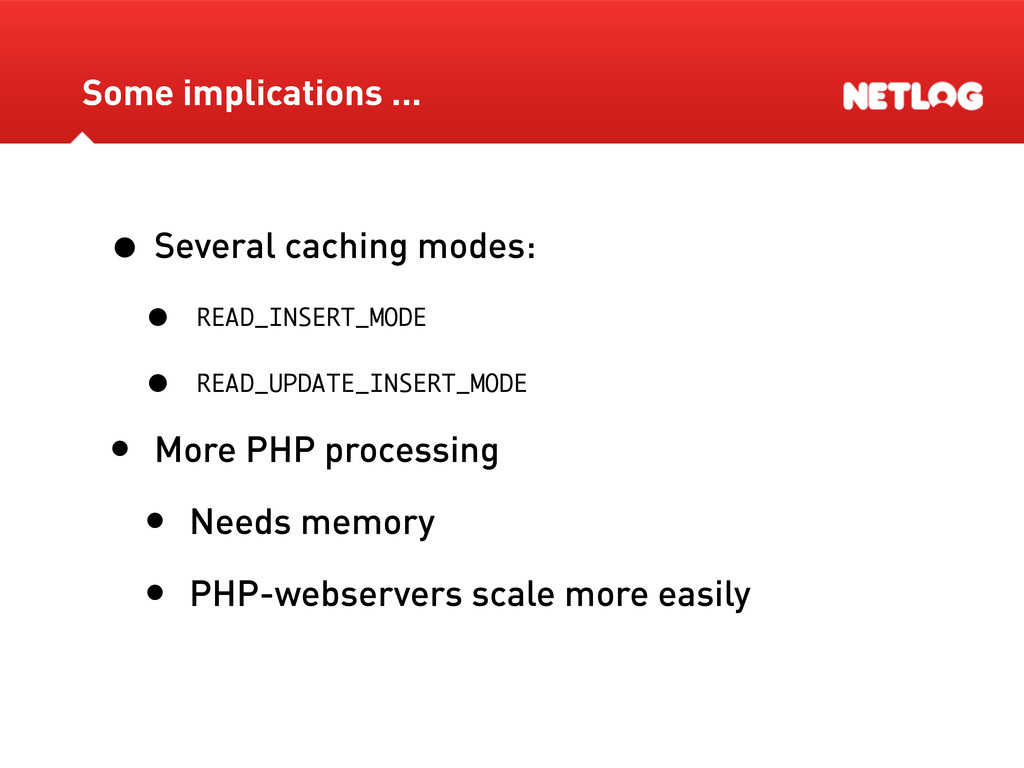
• Several caching modes: • READ_INSERT_MODE • READ_UPDATE_INSERT_MODE • More
PHP processing • Needs memory • PHP-webservers scale more easily Some implications ... -
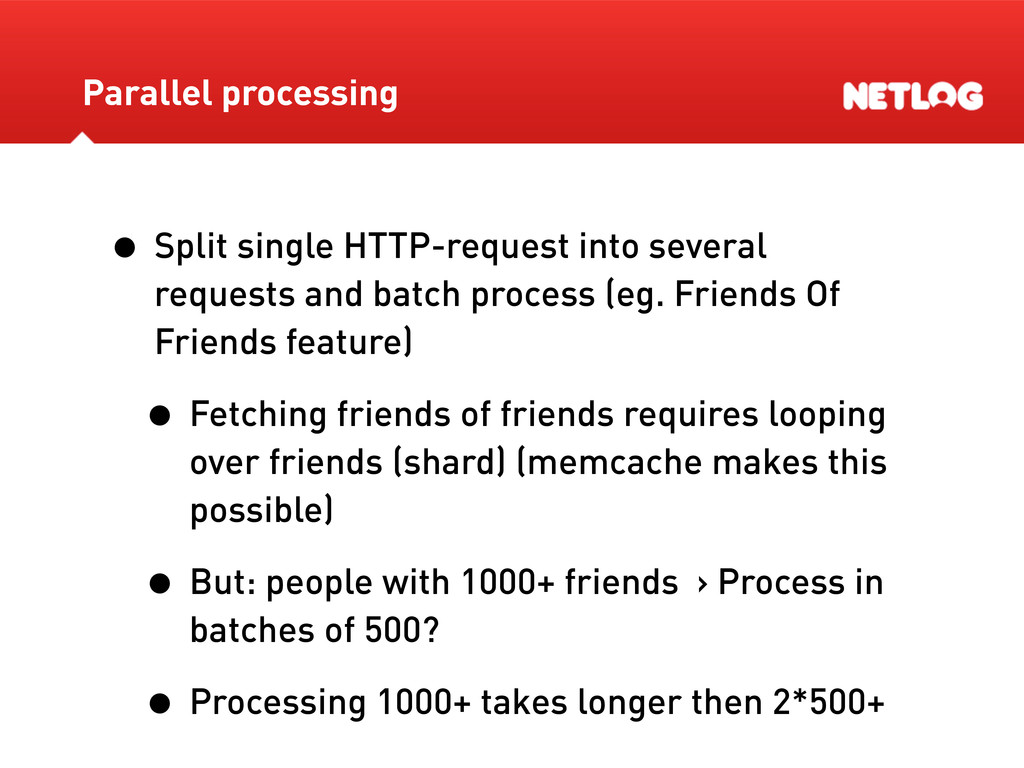
• Split single HTTP-request into several requests and batch process
(eg. Friends Of Friends feature) • Fetching friends of friends requires looping over friends (shard) (memcache makes this possible) • But: people with 1000+ friends > Process in batches of 500? • Processing 1000+ takes longer then 2*500+ Parallel processing -
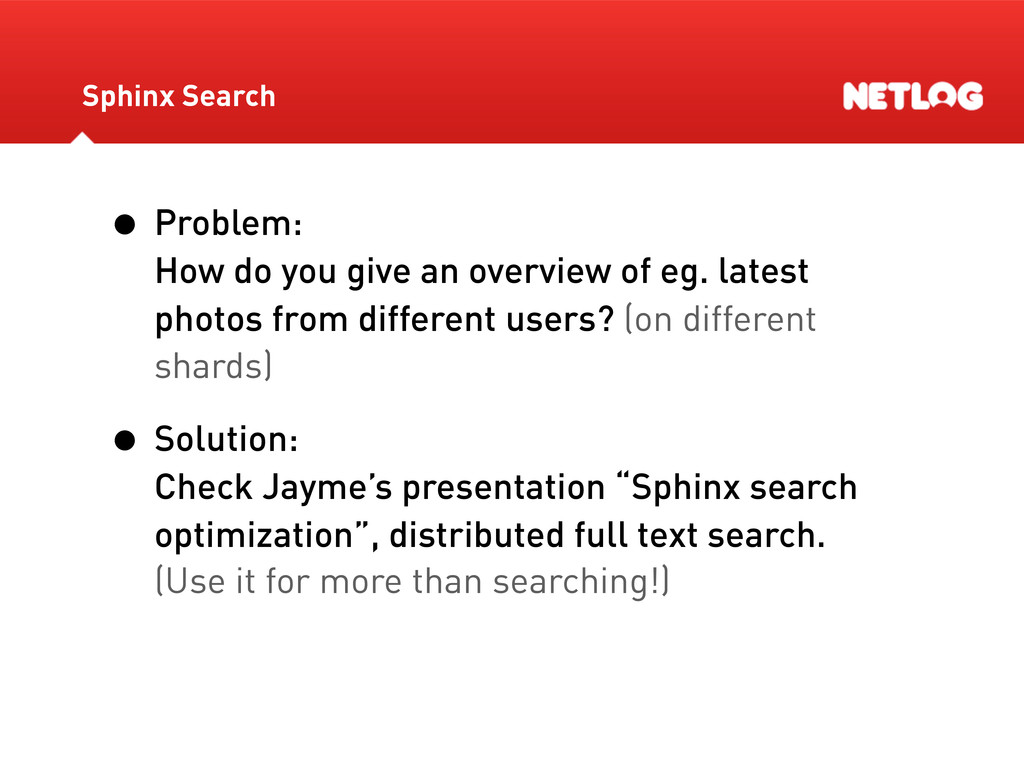
• Problem: How do you give an overview of eg.
latest photos from different users? (on different shards) • Solution: Check Jayme’s presentation “Sphinx search optimization”, distributed full text search. (Use it for more than searching!) Sphinx Search -
• First and foremost • Don’t do if it, if
you don’t need to! (37signals.com) • Shard early and often! (startuplessonslearned.blogspot.com) Tips & thoughts -
• “Don’t do if it, if you don’t need to!”?
• Sharding isn’t that easy • There is no out of the box solution that works for every set-up/technology/... • Maintainance does get a bit tougher • Complicates your set-up • There might be cheaper and better hardware available tomorrow. Tips & thoughts -
• “Shard early and often!”? • What is the most
relevant key to shard on for your app? (eg. userID) • Do you know that key on every query you send to a database? (function calls, objects) • Design your application / database schemas so you know that key everywhere you need it. (Migrating schemas is also hard.) Tips & thoughts -
• Don’t forget server tuning / hardware upgrade / sql
optimization • can be easier that (re-)sharding • Only scale those parts of your application that require high performance • (some clutter can remain on your db's, but are they causing harm?) Tips & thoughts -
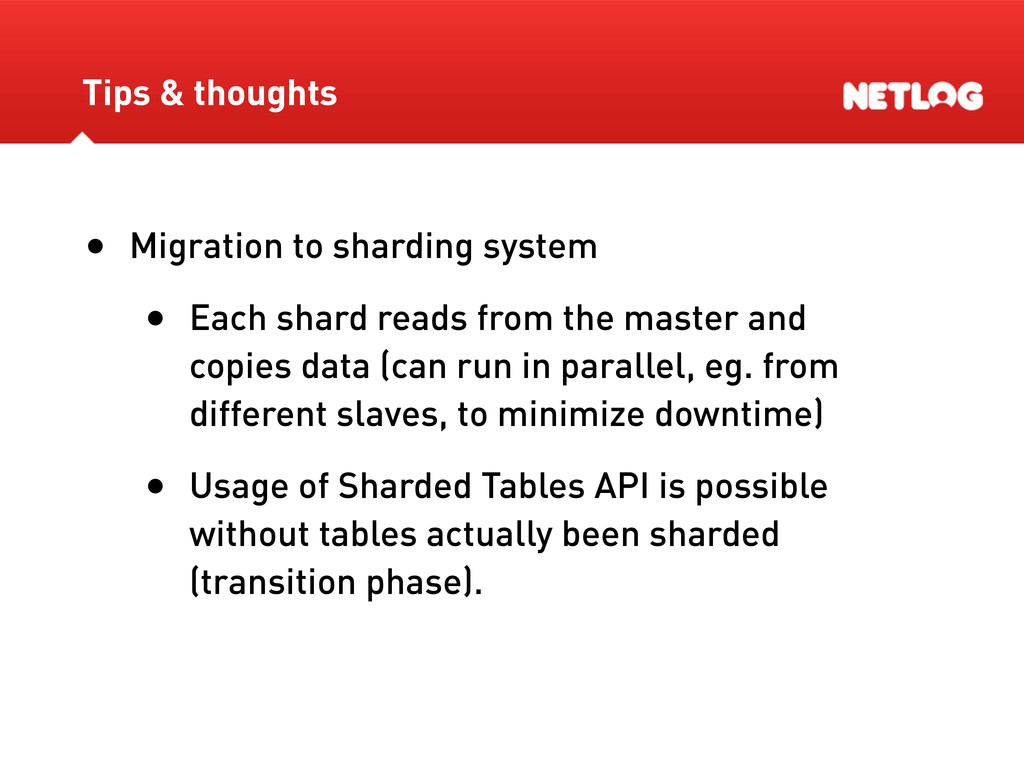
• Migration to sharding system • Each shard reads from
the master and copies data (can run in parallel, eg. from different slaves, to minimize downtime) • Usage of Sharded Tables API is possible without tables actually been sharded (transition phase). Tips & thoughts -
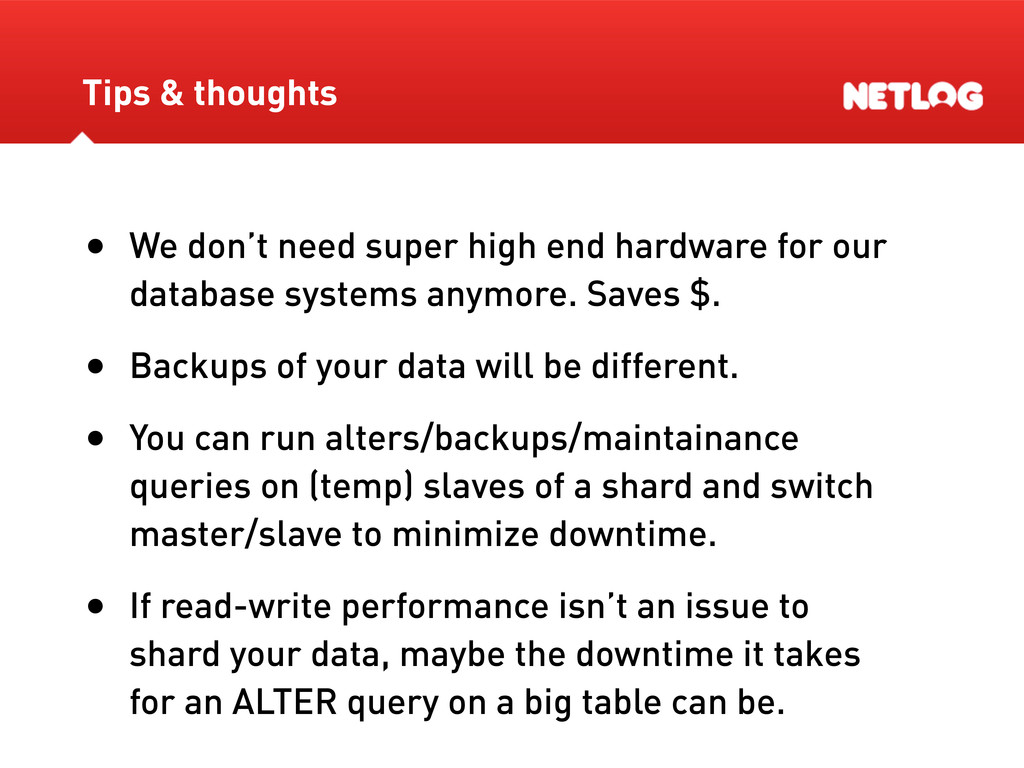
• We don’t need super high end hardware for our
database systems anymore. Saves $. • Backups of your data will be different. • You can run alters/backups/maintainance queries on (temp) slaves of a shard and switch master/slave to minimize downtime. • If read-write performance isn’t an issue to shard your data, maybe the downtime it takes for an ALTER query on a big table can be. Tips & thoughts -
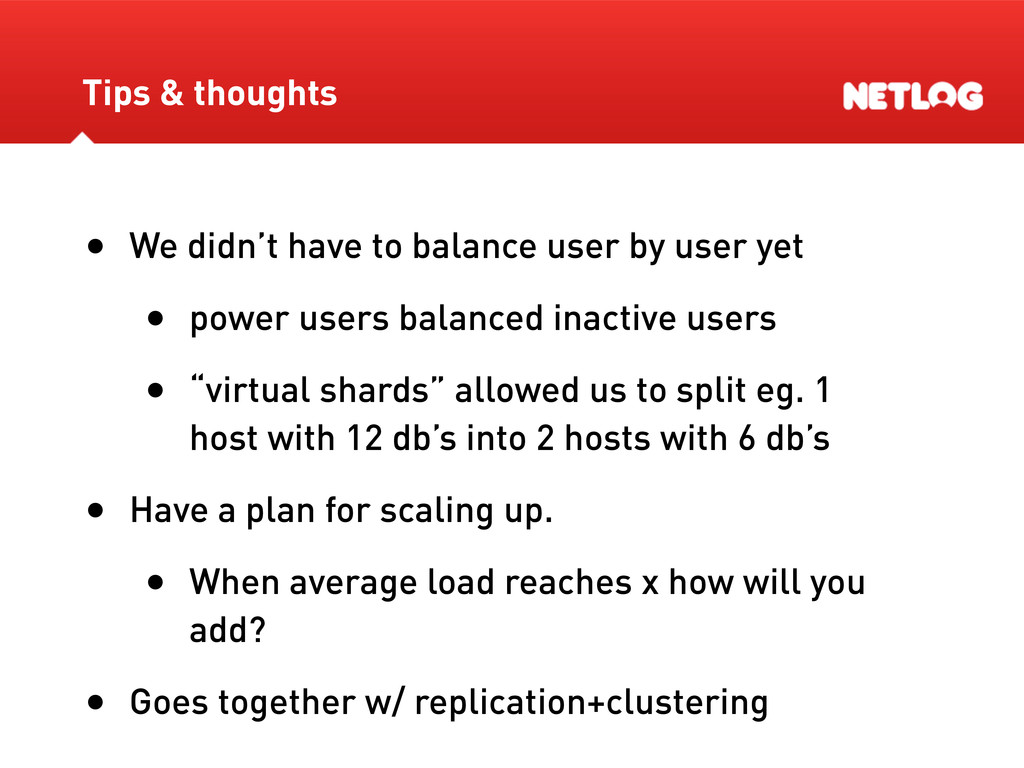
• We didn’t have to balance user by user yet
• power users balanced inactive users • “virtual shards” allowed us to split eg. 1 host with 12 db’s into 2 hosts with 6 db’s • Have a plan for scaling up. • When average load reaches x how will you add? • Goes together w/ replication+clustering Tips & thoughts -
don’t do it if you don’t need to, but prepare
for when you do the last thing you want is to be unreachable due to popularity -
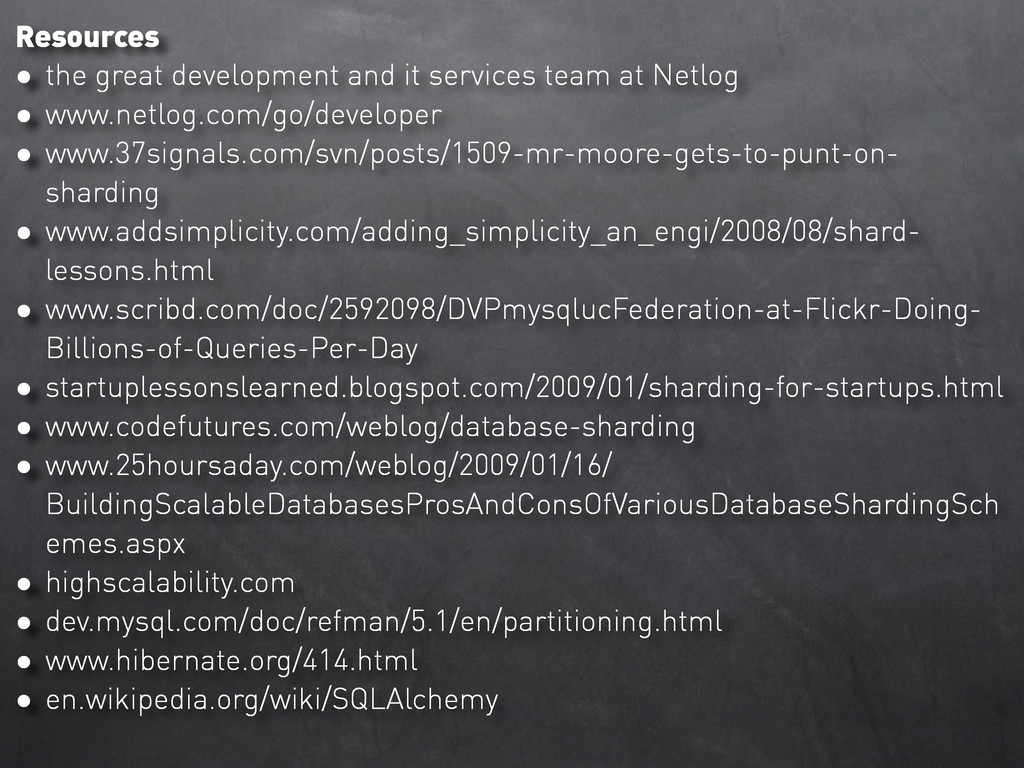
Resources • the great development and it services team at
Netlog • www.netlog.com/go/developer • www.37signals.com/svn/posts/1509-mr-moore-gets-to-punt-on- sharding • www.addsimplicity.com/adding_simplicity_an_engi/2008/08/shard- lessons.html • www.scribd.com/doc/2592098/DVPmysqlucFederation-at-Flickr-Doing- Billions-of-Queries-Per-Day • startuplessonslearned.blogspot.com/2009/01/sharding-for-startups.html • www.codefutures.com/weblog/database-sharding • www.25hoursaday.com/weblog/2009/01/16/ BuildingScalableDatabasesProsAndConsOfVariousDatabaseShardingSch emes.aspx • highscalability.com • dev.mysql.com/doc/refman/5.1/en/partitioning.html • www.hibernate.org/414.html • en.wikipedia.org/wiki/SQLAlchemy -
Resources • spockproxy.sourceforge.net • www.scribd.com/doc/3865300/Scaling-Web-Sites-by-Sharding-and- Replication • oracle2mysql.wordpress.com/2007/08/23/scale-out-notes-on-sharding- unique-keys-foreign-keys •
www.flickr.com/photos/kt Notes to the slides will become available soon at the Netlog Developer Blog and my personal blog (www.jurriaanpersyn.com)