Share
Edwin Jung - Mocking and Patching Pitfalls
Mocking and patching are powerful techniques for testing, but they can be easily abused, with negative effects on code quality, maintenance, and application architecture. These pain-points can be hard to verbalize, and consequently hard to address. If your unit tests are a PITA, but you cannot explain why, this talk may be for you.
Mocking as a technique has deep roots within OOD and TDD, going back 20+ years, but many Python developers know mocks and patches merely as a technique to isolate code under test. In the absence of knowledge around OOD and TDD, best practices around mocking are completely unknown, misunderstood, or ignored. Developers who use mocks and patches without doing TDD or OOD are susceptible to falling into many well-understood and documented traps.
This talk will draw a historical connection between the way mocks are taught today, and their origins in TDD, OOD, and Java. It will also demonstrate some pitfalls, and provide some guidance and alternatives to mocking and patching (e.g., dependency injection, test doubles, functional style).
https://us.pycon.org/2019/schedule/presentation/216/
PyCon 2019
Transcript
171 slides
-
Mocking and Patching Pitfalls Misadventures In Mocking A People’s History
of Mocking Mocking: Forms and Perversions Mocking: A Polemic Mock Hell PyCon 2019 -
who i am • Staff Software Engineer, Platform @ Quid
• Data engineering and microservices • Python is ~4th language email: [email protected] twitter: @ejjcatx github: xtaje -
who you are • Have used mocking or patching before.
• Use the mock and patch APIs regularly, but are not sure why it’s sometimes painful. • Comfortable with mocks, but want to know more about different options. Advanced Beginner -
what you might learn • What are the styles of
unit testing • Where did mocks come from? • What are alternatives to mocking? • Anti-patterns • Relationship between mocking and design Advanced Beginner -
1. complex patch targets 2. numerous mocks or patches 3.
mocks with brittle assertions 4. mocks with complex setup 5. deep mocks/recursive mocks/ mocks returning mocks 6. tests that test nothing 7. using the debugger to reverse- engineer mocks 8. mocks that prevent refactoring -
1. Mock is a really cool library used to isolate
code for testing. 2. Here’s how to use MagicMock, patch, spec, autospec, side_effect, etc. 3. Patching is tricky, use the right namespace target. the promise -
# my_module.py from db import db_read def total_value(item_id): items =
db_read(item_id) return sum(items) code under test -
mock patch # test_my_module.py from unittest.mock import patch from my_module
import total_value def test_total_value(): with patch('my_module.db_read') as db_read: db_read.return_value = [100, 200] assert 300 == total_value(1234) db_read.assert_called_with(1234) -
Given some topic of interest (e.g. “Brexit”), Find all relevant
articles from a particular time period, and Feed those article urls to a scraper service. -
{ "response": { "status": "ok", “total": 1113, "startIndex": 1, "pageSize":
10, "currentPage": 1, "pages": 112, “results": [ { "id": “world/2019/mar/21/thursday-briefing-mays-brexi...”, "type": "article", "webPublicationDate": "2019-03-21T06:30:38Z", "webTitle": "Thursday briefing: May's Brexit broadside", "webUrl": “https://www.theguardian.com/world/2019/m...”, }, . . . and 9 more results ] } } -
import redis import requests class Feed(object): + ---- < def
__init__ > --------------------------------- + ---- < def format_request > --------------------------- + ---- < def run > -------------------------------------- feed.py -
feed.py import redis import requests class Feed(object): def __init__(self, query,
redis_host=None, page_size=None, date_range=None): self._query, self.page_size = query, page_size self.date_range = date_range or (None, None) self._redis_con = redis.Redis(redis_host or "localhost") self._session = requests.Session() + ---- < def format_request > --------------------------------- + ---- < def run > -------------------------------------------- -
feed.py import redis import requests class Feed(object): + ---- <
def __init__ > --------------------------------- + ---- < def format_request > --------------------------- + ---- < def run > -------------------------------------- -
feed.py import redis import requests class Feed(object): + ---- <
def __init__ > -------------------------------------- def format_request(self, page): def param(key, val): return {key: val} if val is not None else {} params={"page": page, "query": self._query, "api-key": _APIKEY } params.update(param("page_size", self.page_size)) # repeat for from-date, to-date return Request('GET', _BASE_URL, params=params).prepare() + ---- < def run > ------------------------------------------- -
import redis import requests class Feed(object): + ---- < def
__init__ > --------------------------------- + ---- < def format_request > --------------------------- + ---- < def run > -------------------------------------- feed.py -
import redis import requests class Feed(object): + ---- < def
__init__ > -------------------------------------- + ---- < def format_request > -------------------------------- def run(self): page, page_count = (1, 1) while page <= page_count: rsp = self._session.send(self.format_request(page)) rsp.raise_for_status() response = rsp.json()['response'] page_count = response['pages'] results = response[‘results'] def push(web_url): self._redis_con.rpush("scrape_urls", web_url) list(map(push, (r['webUrl'] for r in results))) page += 1 feed.py -
@patch("feed.redis.Redis", autospec=True) @patch("feed.requests.Session", autospec=True) @patch("feed.Request", autospec=True) def test_run(request_mock, session_mock, mock_Redis):
mock_response = MagicMock(spec=requests.Response) mock_response.json.return_value = { "response": { "pages": 1, "results": [ {"webUrl": "http://article1"}, {"webUrl": "http://article2"} ] } } session_mock.return_value.send.return_value = mock_response Feed("brexit").run() -
@patch("feed.redis.Redis", autospec=True) @patch("feed.requests.Session", autospec=True) @patch("feed.Request", autospec=True) def test_run(request_mock, session_mock, mock_Redis):
mock_response = MagicMock(spec=requests.Response) mock_response.json.return_value = { "response": { "pages": 1, "results": [ {"webUrl": "http://article1"}, {"webUrl": "http://article2"} ] } } session_mock.return_value.send.return_value = mock_response Feed("brexit").run() request_mock.return_value.prepare.assert_called() params = {"page": 1, "api-key": ‘<apikey>', 'query': 'brexit'} expected_call = mock.call("GET", _GUARDIAN_URL, params=params) assert expected_call == request_mock.call_args -
@patch("feed.redis.Redis", autospec=True) @patch("feed.requests.Session", autospec=True) @patch("feed.Request", autospec=True) def test_run(request_mock, session_mock, mock_Redis):
mock_response = MagicMock(spec=requests.Response) mock_response.json.return_value = { "response": { "pages": 1, "results": [ {"webUrl": "http://article1"}, {"webUrl": "http://article2"} ] } } session_mock.return_value.send.return_value = mock_response Feed("brexit").run() request_mock.return_value.prepare.assert_called() params = {"page": 1, "api-key": ‘<apikey>', 'query': 'brexit'} expected_call = mock.call("GET", _GUARDIAN_URL, params=params) assert expected_call == request_mock.call_args mock_Redis.assert_called_with("localhost") expected_calls = [call('scrape_urls', 'http://article1'), ... ] assert expected_calls == mock_Redis.return_value.rpush.call_args_list -
@patch("feed.redis.Redis", autospec=True) @patch("feed.requests.Session", autospec=True) @patch("feed.Request", autospec=True) def test_run(request_mock, session_mock, mock_Redis):
mock_response = MagicMock(spec=requests.Response) mock_response.json.return_value = { "response": { "pages": 1, "results": [ {"webUrl": "http://article1"}, {"webUrl": "http://article2"} ] } } session_mock.return_value.send.return_value = mock_response Feed("brexit").run() request_mock.return_value.prepare.assert_called() params = {"page": 1, "api-key": ‘<apikey>', 'query': 'brexit'} expected_call = mock.call("GET", _GUARDIAN_URL, params=params) assert expected_call == request_mock.call_args mock_Redis.assert_called_with("localhost") expected_calls = [call('scrape_urls', 'http://article1'), ... ] assert expected_calls == mock_Redis.return_value.rpush.call_args_list How many mocks? A. 3 B. 4 C. __ -
@patch("feed.redis.Redis", autospec=True) @patch("feed.requests.Session", autospec=True) @patch("feed.Request", autospec=True) def test_run(request_mock, session_mock, mock_Redis):
mock_response = MagicMock(spec=requests.Response) mock_response.json.return_value = { "response": { "pages": 1, "results": [ {"webUrl": "http://article1"}, {"webUrl": "http://article2"} ] } } session_mock.return_value.send.return_value = mock_response Feed("brexit").run() request_mock.return_value.prepare.assert_called() params = {"page": 1, "api-key": ‘<apikey>', 'query': 'brexit'} expected_call = mock.call("GET", _GUARDIAN_URL, params=params) assert expected_call == request_mock.call_args mock_Redis.assert_called_with("localhost") expected_calls = [call('scrape_urls', 'http://article1'), ... ] assert expected_calls == mock_Redis.return_value.rpush.call_args_list How many mocks? A. 3 B. 4 C. 11 -
@patch("feed.redis.Redis", autospec=True) @patch("feed.requests.Session", autospec=True) @patch("feed.Request", autospec=True) def test_run(request_mock, session_mock, mock_Redis):
mock_response = MagicMock(spec=requests.Response) mock_response.json.return_value = { "response": { "pages": 1, "results": [ {"webUrl": "http://article1"}, {"webUrl": "http://article2"} ] } } session_mock.return_value.send.return_value = mock_response Feed("brexit").run() request_mock.return_value.prepare.assert_called() params = {"page": 1, "api-key": ‘<apikey>', 'query': 'brexit'} expected_call = mock.call("GET", _GUARDIAN_URL, params=params) assert expected_call == request_mock.call_args mock_Redis.assert_called_with("localhost") expected_calls = [call('scrape_urls', 'http://article1'), ... ] assert expected_calls == mock_Redis.return_value.rpush.call_args_list -
is this a violation of information hiding? encapsulation? @patch("feed.redis.Redis", autospec=True)
@patch("feed.requests.Session", autospec=True) @patch("feed.Request", autospec=True) -
@patch("feed.redis.Redis", autospec=True) @patch("feed.requests.Session", autospec=True) @patch("feed.Request", autospec=True) def test_run(request_mock, session_mock, mock_Redis):
mock_response = MagicMock(spec=requests.Response) mock_response.json.return_value = { "response": { "pages": 1, "results": [ {"webUrl": "http://article1"}, {"webUrl": "http://article2"} ] } } session_mock.return_value.send.return_value = mock_response Feed("brexit").run() request_mock.return_value.prepare.assert_called() params = {"page": 1, "api-key": ‘<apikey>', 'query': 'brexit'} expected_call = mock.call("GET", _GUARDIAN_URL, params=params) assert expected_call == request_mock.call_args mock_Redis.assert_called_with("localhost") expected_calls = [call('scrape_urls', 'http://article1'), ... ] assert expected_calls == mock_Redis.return_value.rpush.call_args_list -
def test_run(request_mock, session_mock, mock_Redis): mock_response = MagicMock(spec=requests.Response) mock_response.json.return_value = {
session_mock.return_value.send.return_value = mock_response request_mock.return_value.prepare.assert_called() assert expected_calls == mock_Redis.return_value.rpush.call_args_list law of demeter violation? -
what if you change imports? import redis import requests class
Feed(object): + ---- < def __init__ > --------------------------------- + ---- < def format_request > --------------------------- + ---- < def run > -------------------------------------- -
from redis import Redis import requests class Feed(object): + ----
< def __init__ > --------------------------------- + ---- < def format_request > --------------------------- + ---- < def run > -------------------------------------- what if you change imports? -
broken @patch("feed.redis.Redis", autospec=True) @patch("feed.requests.Session", autospec=True) @patch("feed.Request", autospec=True) def test_run(request_mock, session_mock,
mock_Redis): mock_response = MagicMock(spec=requests.Response) ... -
kwargs to args? class Feed(object): + ---- < def __init__
> --------------------------------- def format_request(self, page): def param(key, val): return {key: val} if val is not None else {} params={"page": page, "query": self._query, "api-key": _APIKEY } params.update(param("page_size", self.page_size)) # repeat for from-date, to-date return Request('GET', _BASE_URL, params=params).prepare() + ---- < def run > -------------------------------------- -
kwargs to args? class Feed(object): + ---- < def __init__
> --------------------------------- def format_request(self, page): def param(key, val): return {key: val} if val is not None else {} params={"page": page, "query": self._query, "api-key": _APIKEY } params.update(param("page_size", self.page_size)) # repeat for from-date, to-date return Request('GET', _BASE_URL, params).prepare() + ---- < def run > -------------------------------------- -
broken @patch("feed.redis.Redis", autospec=True) @patch("feed.requests.Session", autospec=True) @patch("feed.Request", autospec=True) def test_run(request_mock, session_mock,
mock_Redis): # more code above ... Feed("brexit").run() request_mock.return_value.prepare.assert_called() params = {"page": 1, "api-key": ‘<apikey>', 'query': 'brexit'} expected_call = mock.call("GET", _GUARDIAN_URL, params=params) assert expected_call == request_mock.call_args # more code below... -
1. Mock is a really cool library used to isolate
code for testing. 2. Here’s how to use Mock, MagicMock, patch, spec, autospec, side_effect, etc. 3. Patching is tricky, use the right namespace target. 4. (And by the way, be careful about over-mocking.) 5. (Mocks aren’t stubs) fine print -
• PyCon Cleveland 2018 • EuroPython 2018 • PyCon UK
2018 • PyCon Australia 2017 • PyCon CZ 2017 • PyCon Israel 2017 • EuroPython 2016 • PyCon Portland 2016 • PyCon UK 2015 • PyCon SG 2015 mock talk at PyCons -
A: … Patches can definitely get out of hand …
… you maybe need to look into why there is so much heavy mocking. “Q&A: Demystifying the Patch Function” -PyCon 2018 -
Q: Hello… that was a really good talk… “Q&A: Demystifying
the Patch Function” -PyCon 2018 -
Q: I’m Michael Foord. I was the original author of
mock… “Q&A: Demystifying the Patch Function” -PyCon 2018 -
Q: “One thing I would say is that…” “Q&A: Demystifying
the Patch Function” -PyCon 2018 -
Q: “Patches are a sign of failure.” “Q&A: Demystifying the
Patch Function” -PyCon 2018 -
Q: “The more you have to patch, the worse your
code is.” “Q&A: Demystifying the Patch Function” -PyCon 2018 -
Mock Objects is an extension to Test Driven Development that
supports good Object- Oriented design … -
It turns out to be less interesting as a technique
for isolating tests … than is widely thought. -
1. TDD 2. Object Oriented Design 3. mocks are not
a tool for isolation mocks in context -
1. rapid cycles of small refactoring 2. Object Oriented Design
3. mocks are not a tool for isolation mocks in context -
1. rapid, cycles of small refactoring 2. object collaborations 3.
mocks are not a tool for isolation mocks in context -
1. rapid, cycles of small refactoring 2. object collaborations 3.
mocks are a tool for exploratory design and discovery mocks in context -
1. rapid, cycles of small refactoring 2. object collaborations 3.
mocks are a tool for exploratory design and discovery mocks in context -
Always choose interaction testing [mocking]… as the last option. This
is very important… Not everyone agrees with this point of view ... -
I’m not fully disagreeing … but for maintainability … tests
using mocks creates more trouble than it’s worth. -
Mocking frameworks are potent tools that let you wield incredible
power. However, power nearly always corrupts. … -
mocks aren’t stubs 1. mocks are not stubs 2. mocks
!= stubs 3. stubs are not mocks -
test doubles name behavior mock records calls to the object
stub returns canned data, no logic fake implements fake version of production logic dummy does nothing spy records and delegates to the real thing -
# test_my_module.py from unittest.mock import patch from my_module import total_value
def test_total_value(): with patch('my_module.db_read') as db_read: db_read.return_value = [100, 200] assert 300 == total_value(1234) db_read.assert_called_with(1234) remember mock patch? mock stub -
alternative: fake patch # test_my_module.py from unittest.mock import patch from
my_module import total_value def test_total_value(): with patch('my_module.db_read'): assert 300 == total_value(1234) -
alternative: fake patch # test_my_module.py from unittest.mock import patch from
my_module import total_value def test_total_value(): def fake_db_read(item_id): with open(f'./fixtures/{item_id}.json') as fobj: return json.load(fobj) with patch('my_module.db_read'): assert 300 == total_value(1234) -
alternative: fake patch # test_my_module.py from unittest.mock import patch from
my_module import total_value def test_total_value(): def fake_db_read(item_id): with open(f'./fixtures/{item_id}.json') as fobj: return json.load(fobj) with patch('my_module.db_read', new=fake_db_read): assert 300 == total_value(1234) -
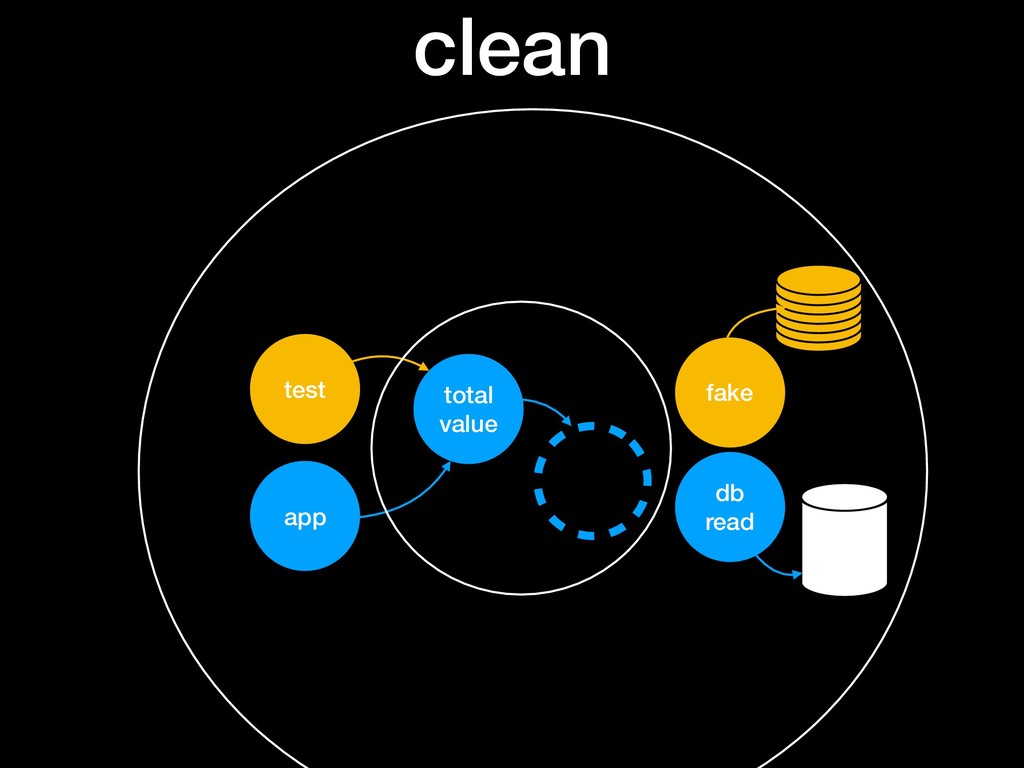
alternative: fake injection # my_module.py from db import db_read def
total_value(item_id): items = db_read(item_id) return sum(items) # my_module.py def total_value(item_id, db_read): items = db_read(item_id) return sum(items) -
alternative: fake injection def test_total_value2(): def fake_db_read(item_id): with open(f'./fixtures/{item_id}.json') as
fobj: return json.load(fobj) assert 300 == total_value2(1234, fake_db_read) -
total_value2 expects to be given a collaborator to fill a
role total value -
tactical questions 1.Which Test Doubles (mock or other)? 2.Mockist or
Classical? (aka London or Detroit) 3.Patch or Inject? -
Mock Roles, not Objects Tactics 3 Dependency Injection Tactics 4
Inject the Collaborator Tactics 5 Go Functional Tactics 1 Find a Seam Patch a Fake -
Feed test Session Request redispy redis server guardian what are
the roles in this collaboration? -
Mock Roles, not Objects Tactics 2 Dependency Injection Tactics 3
Inject the Collaborator Tactics 4 Go Functional Tactics 1 Find a Seam Patch a Fake -
seam “A seam is a place where you can alter
behavior in your program without editing in that place.” -
Feed test Session Request redispy redis server find a different
“seam” urllib3 requests internals TCP guardian -
Feed test Session Request redispy redis server patch a fake
into a transport layer “seam” HTTMock guardian fakeguard ian -
@httmock.urlmatch(netloc=r’content.guardianapis.com') def fake_guardian(url, request): page, page_size = parse_query_params(url.query) article_ids =
range(page_size*(page-1)+1, page_size*page+1) results = [{"webUrl": "http://article%d" % (i)} for i in article_ids] fake_response = { "response": { "currentPage": page, "pages": 2, "results": results } } return json.dumps(fake_response) -
from urllib.parse import parse_qs from httmock import urlmatch, HTTMock @mock.patch("feed.redis.Redis",
autospec=True) def test_run(mock_Redis): with httmock.HTTMock(fake_guardian): Feed("brexit").run() mock_Redis.assert_called_with("localhost") expected_calls = [mock.call('scrape_urls', f'http://a{i}') for i in range(1, 21)] assert expected_calls == mock_Redis.return_value.rpush.call_args_list) -
Mock Roles, not Objects Tactics 2 Dependency Injection Tactics 3
Inject the Collaborator Tactics 4 Go Functional Tactics 1 Find a Seam Patch a Fake -
inject the redis connection class Feed(object): def __init__(self, query, redis_host=None,
page_size=None, date_range=None): self._query = query self.page_size = page_size self.date_range = date_range or (None, None) self._redis_con = redis.Redis(redis_host or "localhost") self._session = requests.Session() + ---- < def format_request > --------------------------- + ---- < def run > -------------------------------------- -
inject the redis connection class Feed(object): def __init__(self, query, redis_con,
page_size=None, date_range=None): self._query = query self.page_size = page_size self.date_range = date_range or (None, None) self._redis_con = redis_con self._session = requests.Session() + ---- < def format_request > --------------------------- + ---- < def run > -------------------------------------- -
from httmock import urlmatch, HTTMock from feed import Feed import
fakeredis def test_run(): fake_con = fakeredis.FakeStrictRedis() with HTTMock(fake_guardian): Feed("brexit", fake_con).run() expected = [f"http://article{i}" for i in range(1, 21)] received = [fake_con.lpop("scrape_urls").decode("utf-8") for _ in range(1,21)] self.assertEqual(expected, received) -
Mock Roles, not Objects Tactics 3 Dependency Injection Tactics 4
Inject the Collaborator Tactics 5 Go Functional Tactics 1 Find a Seam Patch a Fake -
inject the collaborator class Feed(object): def __init__(self, query, redis_con, page_size=None,
date_range=None): self._query = query self.page_size = page_size self.date_range = date_range or (None, None) self._redis_con = redis_con self._session = requests.Session() + ---- < def format_request > --------------------------- + ---- < def run > -------------------------------------- -
inject the collaborator class Feed(object): def __init__(self, query, sink, page_size=None,
date_range=None): self._query = query self.page_size = page_size self.date_range = date_range or (None, None) self._sink = sink self._session = requests.Session() + ---- < def format_request > --------------------------- + ---- < def run > -------------------------------------- -
class Feed(object): + ---- < def __init__ > --------------------------------- +
---- < def format_request > --------------------------- def run(self): page, page_count = (1, 1) while page <= page_count: rsp = self._session.send(self.format_request(page)) rsp.raise_for_status() response = rsp.json()['response'] logger.debug(response) page_count = response['pages'] results = response['results'] list(map(self._sink, (r['webUrl'] for r in results))) page += 1 -
from httmock import urlmatch, all_requests, HTTMock from feed import Feed
def test_run(self): received = [] with HTTMock(fake_guardian): Feed("brexit", received.append).run() expected = [f"http://article{i}" for i in range(1, 21)] self.assertEqual(expected, received) -
if __name__ == "__main__": logging.basicConfig() logger.setLevel(logging.DEBUG) redis_con = redis.Redis("localhost") def
sink(msg): redis_con.rpush("scrape_urls", msg) Feed("brexit", sink).run() -
Mock Roles, not Objects Tactics 3 Dependency Injection Tactics 4
Inject the Collaborator Tactics 5 Go Functional Tactics 1 Find a Seam Patch a Fake -
glue code def feed(query): s = requests.Session() first_page = s.send(initial_request(query))
all_pages = map(s.send, page_requests(first_page.json(), query=query)) web_urls = munge(all_pages) redis.Redis("localhost").rpush("scrape_urls", *web_urls) if __name__ == "__main__": feed("brexit") -
pure functions def flatmap(f, items): return itertools.chain.from_iterable(map(f, items)) def param(key,
val): return {key: val} if val is not None else {} def format_request(query, page, page_size = None, date_range=None): date_range = date_range or (None, None) params= { "page": page, "query": query, "api-key": _APIKEY } params.update(param("page_size", page_size)) params.update(param("start_date", date_range[0])) params.update(param("end_date", date_range[1])) return Request('GET', _BASE_URL, params=params).prepare() def initial_request(query, page_size=None, date_range=None): return format_request(query, page=1, page_size=page_size, date_range=date_range) def page_requests(body, query): response = body['response'] page_count = min(3, int(response['pages'])) # IRL needs flow control for page in range(1, page_count+1): params = {"page": page, "query": query, "api-key": _APIKEY} yield Request('GET', _BASE_URL, params=params).prepare() def munge(all_pages): bodies = map(lambda r: r.json(), all_pages) results = flatmap(lambda body: body['response']['results'], bodies) return map(lambda result: result['webUrl'], results) -
• Aim for 100% test isolation, 100% coverage • Test
Whenever, No Refactoring • Procedural Decomposition or Top-Down Design (no OOP) bootleg TDD -
• Aim for 100% test isolation, 100% coverage • Test
Whenever, No Refactoring • Procedural Decomposition or Top-Down Design (no OOP) bootleg TDD -
procedural decomposition “In each step, one or several instructions of
a program are decomposed into more detailed instructions” -
C D E test test test “How do patch a
database?” -
C D E test test test “. . . mock
the db connection?” “. . . mock the query language?” -
Abstract Detailed 1.Top down design => no dependency inversion 2.Patching
+ mocking “locks in” design decisions Patching prevents understanding of dependency inversion Issues? -
issues • What kind of test is this? • Is
this • pragmatic or • just enabling bad habits? -
propositions 1.A test should test a single behavior. 2.A patch
is a violation of some encapsulation boundary. 3.A test with many patches is violating multiple encapsulation boundaries. A test case with a lot of patches may represent a problem with cohesion or coupling. A test case with a lot of patches may represent a crosscutting concern. -
opinions • always be refactoring • consider other test doubles
• patching • should be rare, and the last tool you use • mocks (if you use them) • should target roles and not objects • are not for just for test isolation -
Debates and Counter-opinions • Dependency Injection is Not a Virtue
(DHH) • TDD is Dead (Martin Fowler, Kent Beck, DHH) • Why Most Unit Testing is a Waste (Coplien) • The TDD Apostate (Seeman) Resources • Mocks aren’t Stubs (Fowler) • Clean Code (Uncle Bob) • Working Effectively with Legacy Code (Feathers) • Growing Object Oriented Software Guided by Tests • The Art of Unit Testing (Osherove) email: [email protected] twitter: @ejjcatx