Upgrade to Pro — share decks privately, control downloads, hide ads and more …

jasmine-given is for givers

Sponsored · Ship Features Fearlessly Turn features on and off without deploys. Used by thousands of Ruby developers. →
Justin Searls
November 16, 2011

jasmine-given is for givers

jasmine-given is a port of rspec-given, but for Jasmine. Details here: https://github.com/searls/jasmine-given

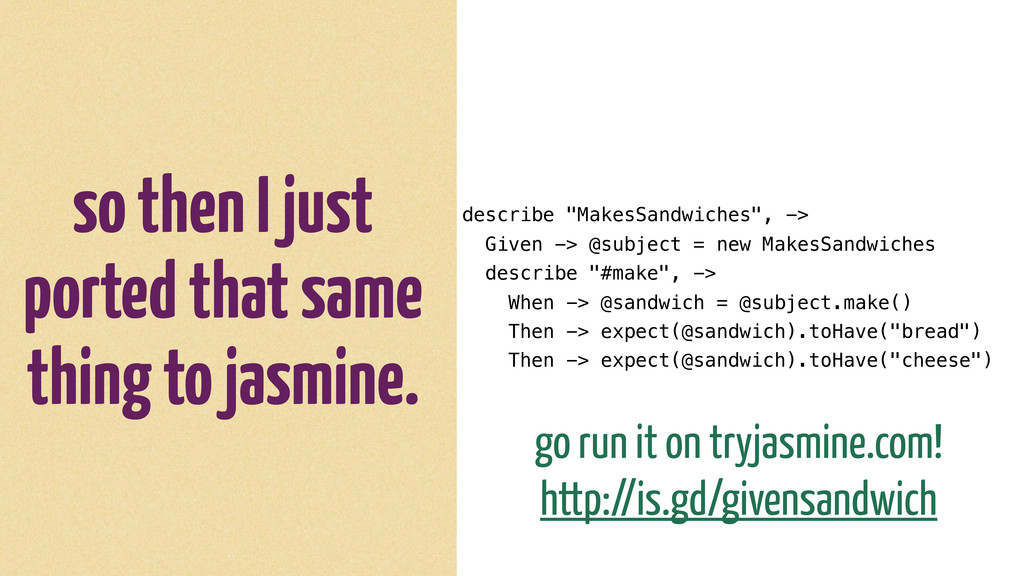
Basically, the extension lets you use a Given/When/Then DSL instead of trying to approximate Given/When/Then by using Jasmine's own beforeEach() & it(). Check out the slides and give it a try! You can play with the sample code inside your browser at http://is.gd/givensandwich

---
Need a web or mobile app built? Interested in training? Contact me at http://test-double.com and let's get in touch!

Justin Searls

November 16, 2011

Transcript

28 slides
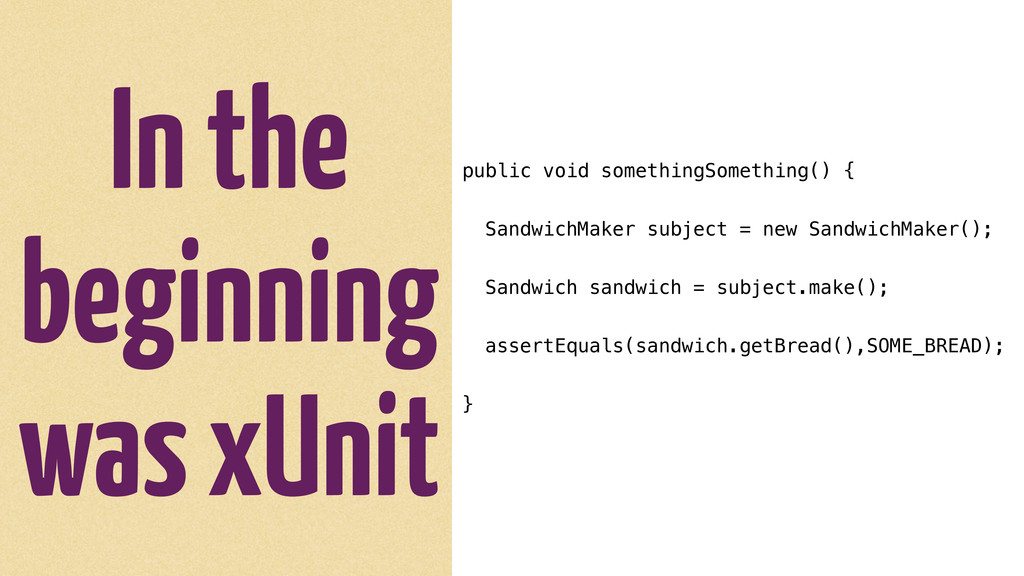
  1. In the beginning was xUnit public void somethingSomething() { SandwichMaker

    subject = new SandwichMaker(); Sandwich sandwich = subject.make(); assertEquals(sandwich.getBread(),SOME_BREAD); }
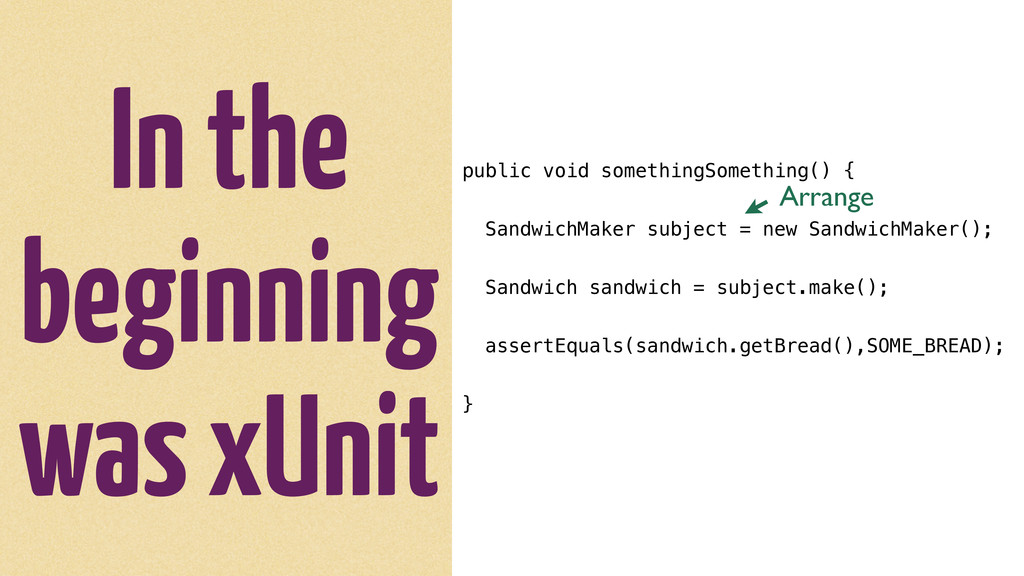
  2. In the beginning was xUnit public void somethingSomething() { SandwichMaker

    subject = new SandwichMaker(); Sandwich sandwich = subject.make(); assertEquals(sandwich.getBread(),SOME_BREAD); } Arrange
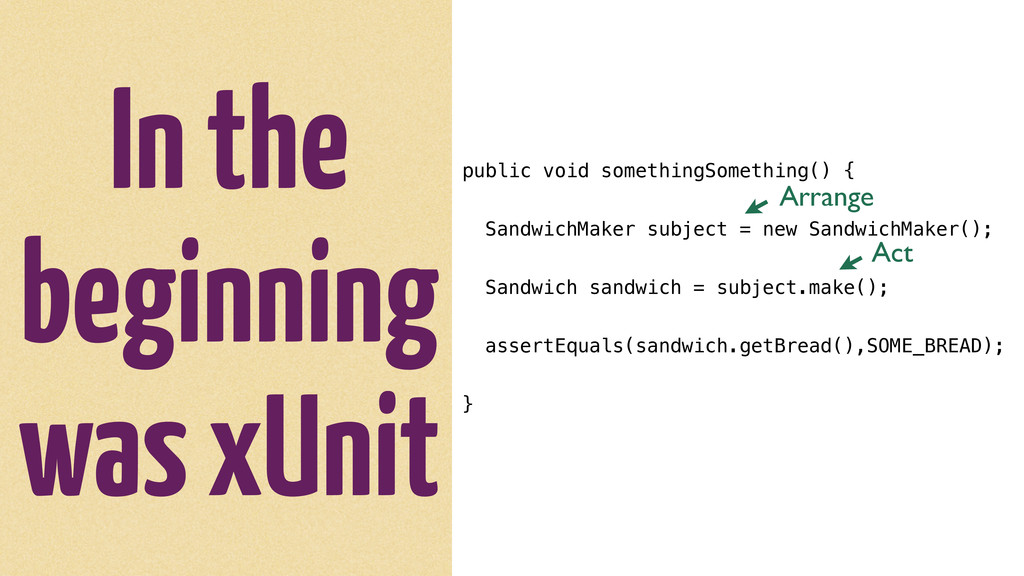
  3. In the beginning was xUnit public void somethingSomething() { SandwichMaker

    subject = new SandwichMaker(); Sandwich sandwich = subject.make(); assertEquals(sandwich.getBread(),SOME_BREAD); } Arrange Act
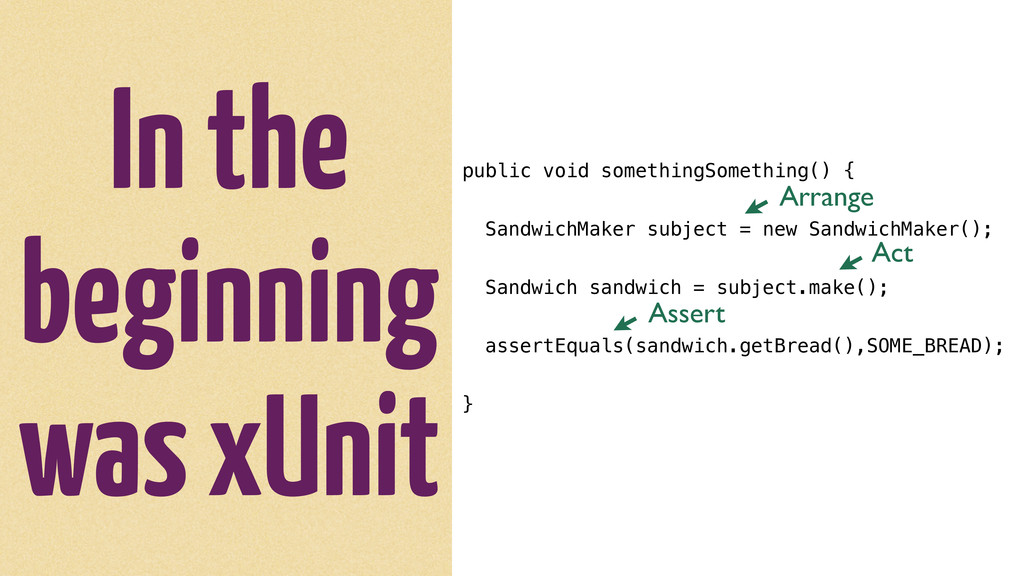
  4. In the beginning was xUnit public void somethingSomething() { SandwichMaker

    subject = new SandwichMaker(); Sandwich sandwich = subject.make(); assertEquals(sandwich.getBread(),SOME_BREAD); } Arrange Act Assert
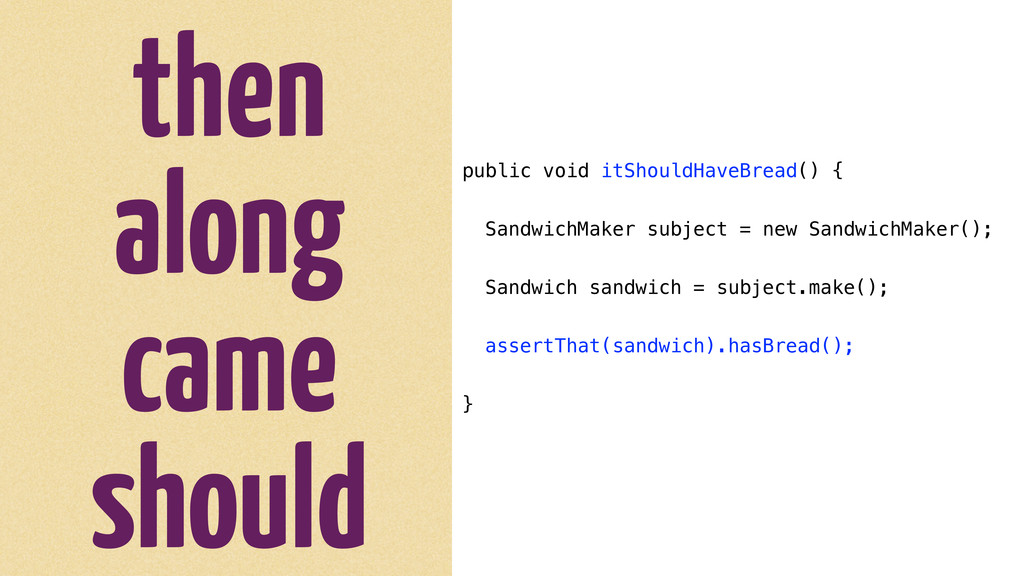
  5. then along came should public void itShouldHaveBread() { SandwichMaker subject

    = new SandwichMaker(); Sandwich sandwich = subject.make(); assertThat(sandwich).hasBread(); }
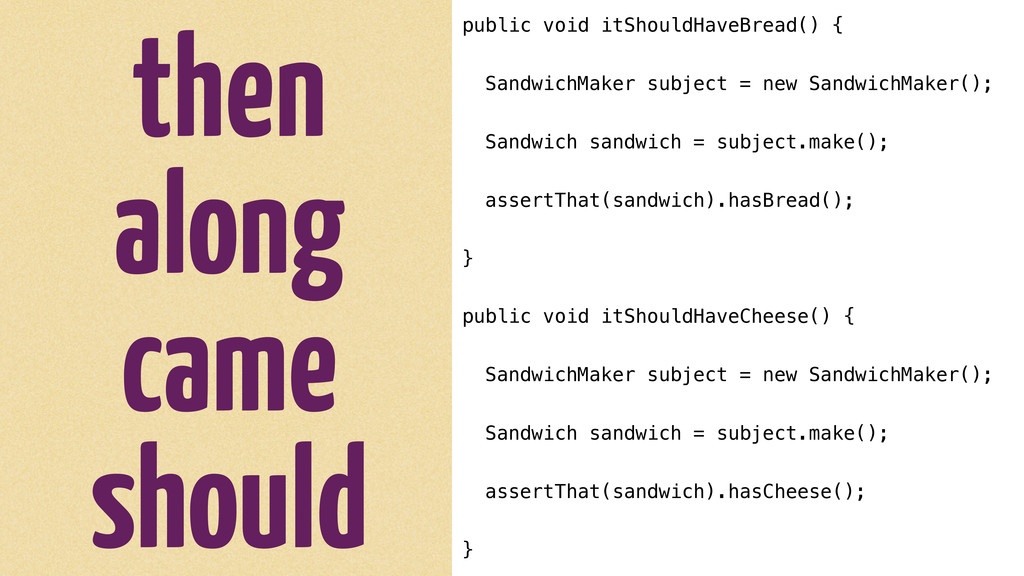
  6. then along came should public void itShouldHaveBread() { SandwichMaker subject

    = new SandwichMaker(); Sandwich sandwich = subject.make(); assertThat(sandwich).hasBread(); } public void itShouldHaveCheese() { SandwichMaker subject = new SandwichMaker(); Sandwich sandwich = subject.make(); assertThat(sandwich).hasCheese(); }
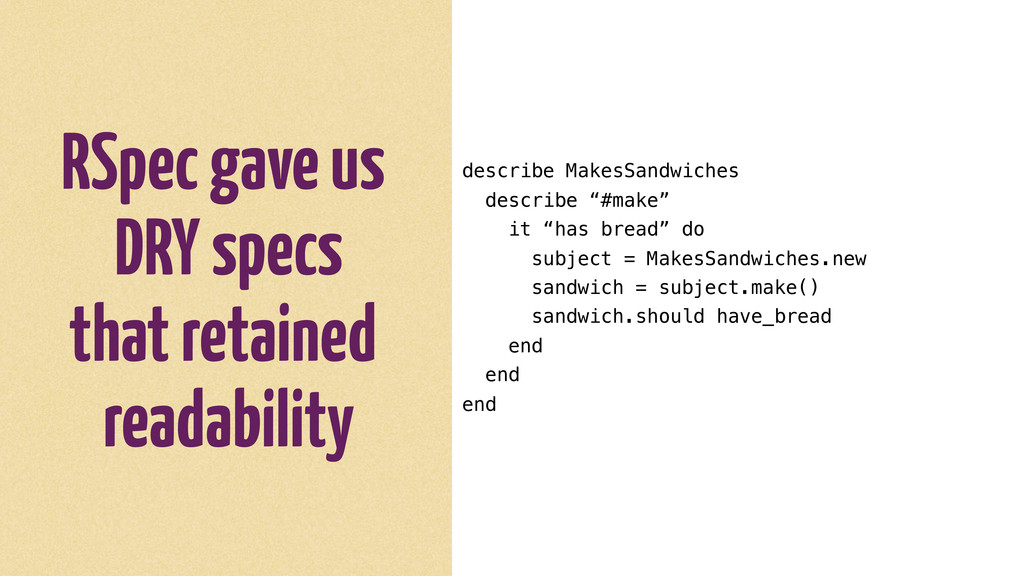
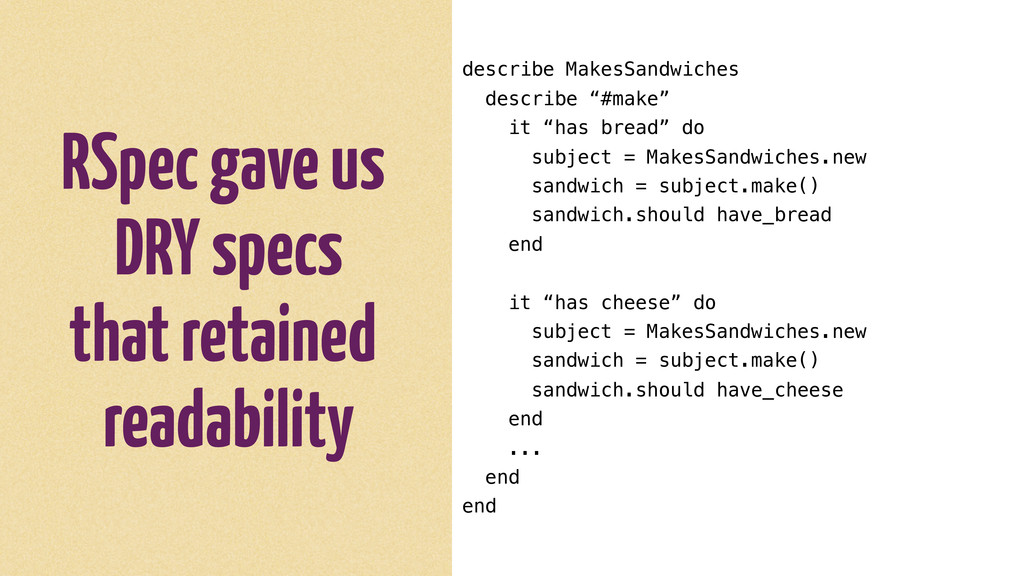
  7. RSpec gave us DRY specs that retained readability describe MakesSandwiches

    describe “#make” it “has bread” do subject = MakesSandwiches.new sandwich = subject.make() sandwich.should have_bread end end end
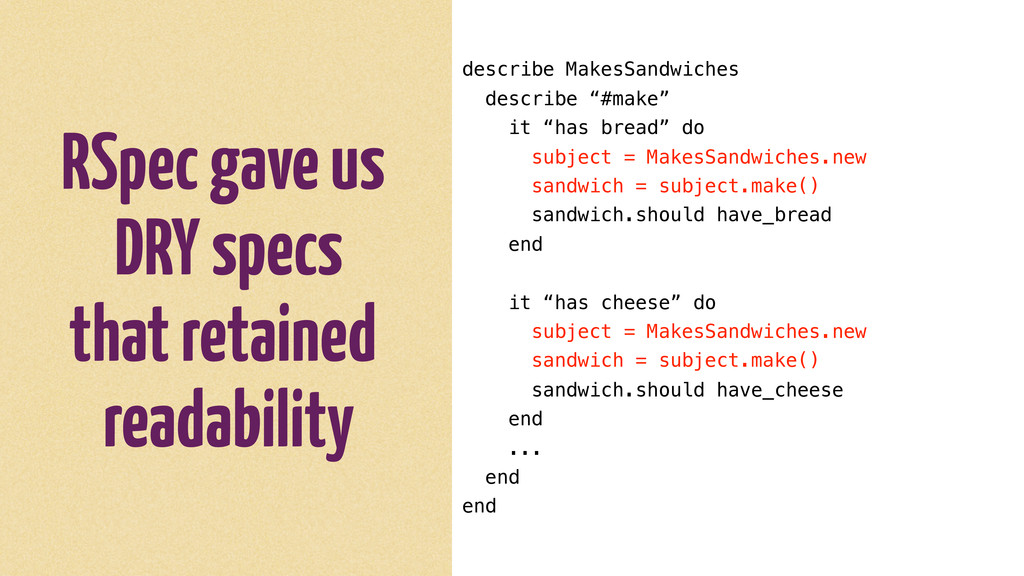
  8. RSpec gave us DRY specs that retained readability describe MakesSandwiches

    describe “#make” it “has bread” do subject = MakesSandwiches.new sandwich = subject.make() sandwich.should have_bread end it “has cheese” do subject = MakesSandwiches.new sandwich = subject.make() sandwich.should have_cheese end ... end end
  9. RSpec gave us DRY specs that retained readability describe MakesSandwiches

    describe “#make” it “has bread” do subject = MakesSandwiches.new sandwich = subject.make() sandwich.should have_bread end it “has cheese” do subject = MakesSandwiches.new sandwich = subject.make() sandwich.should have_cheese end ... end end
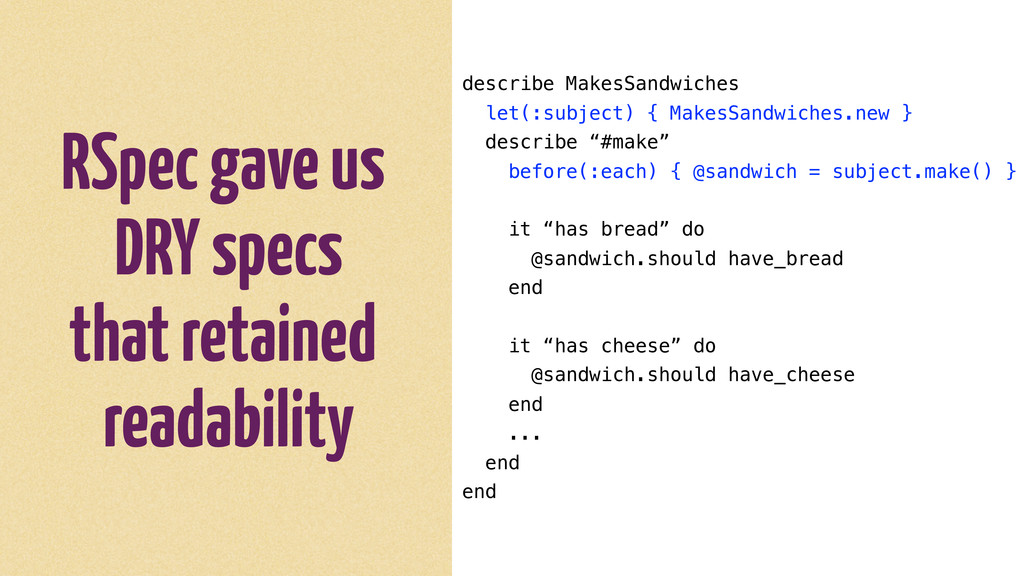
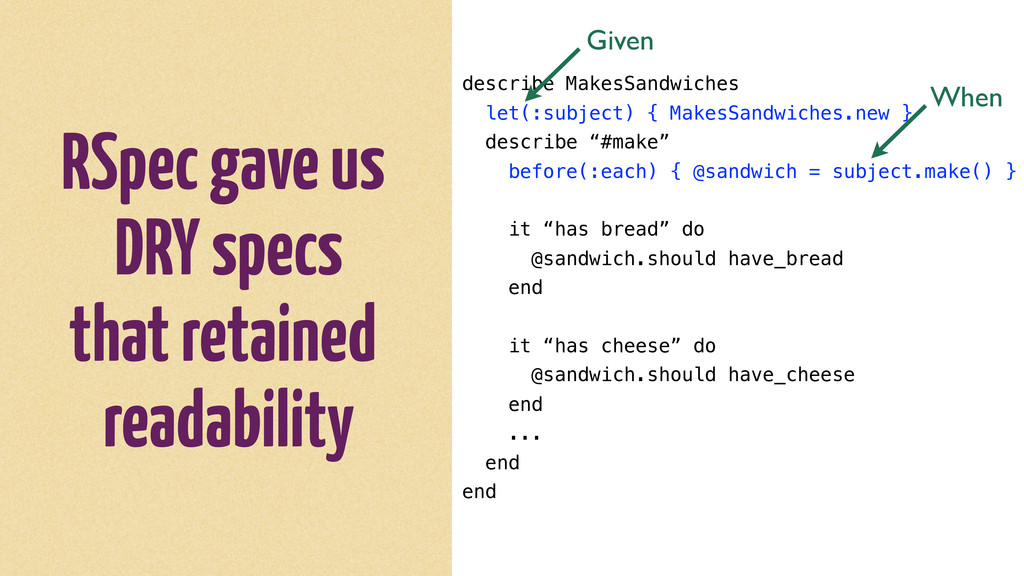
  10. RSpec gave us DRY specs that retained readability describe MakesSandwiches

    let(:subject) { MakesSandwiches.new } describe “#make” before(:each) { @sandwich = subject.make() } it “has bread” do @sandwich.should have_bread end it “has cheese” do @sandwich.should have_cheese end ... end end
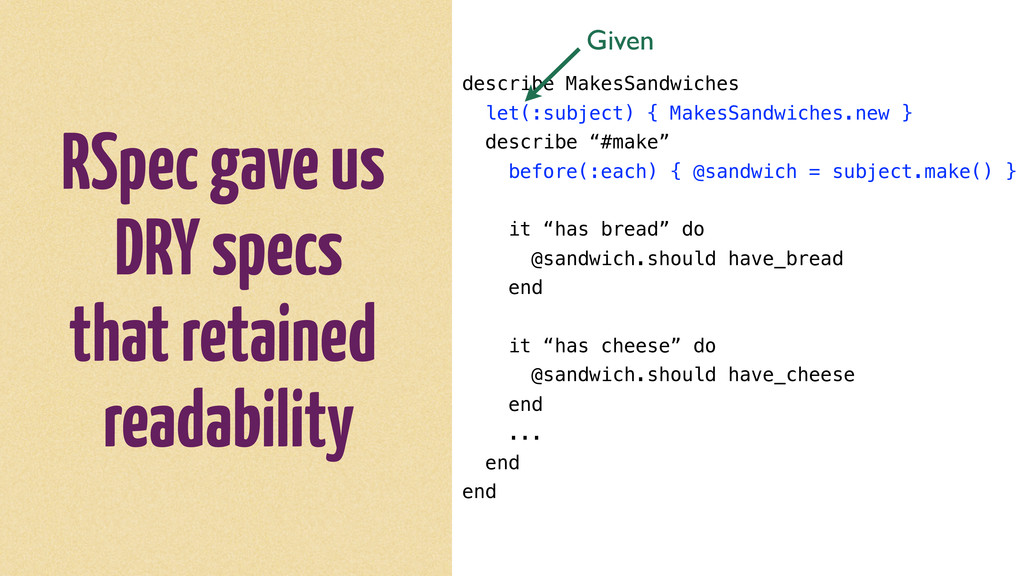
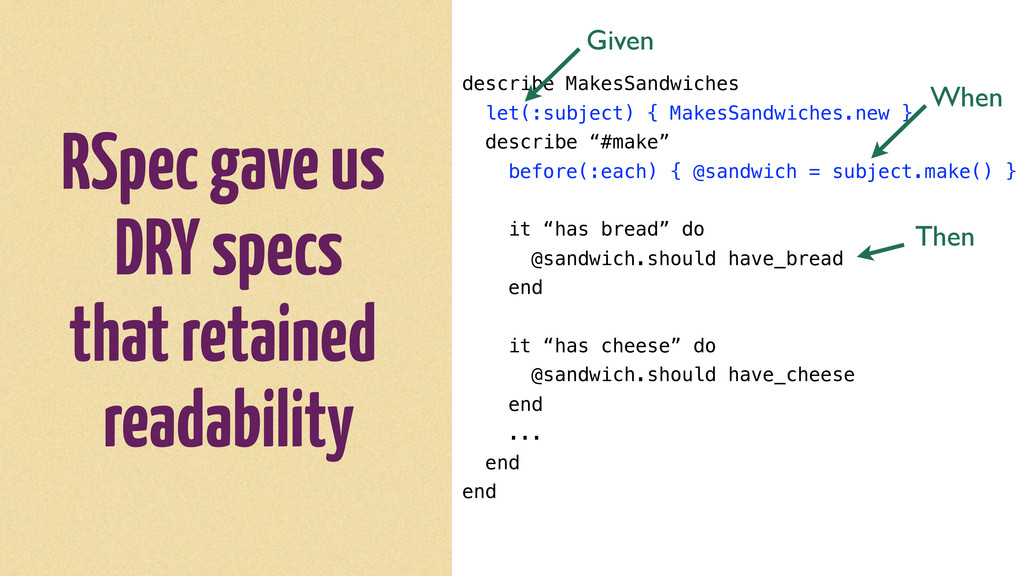
  11. RSpec gave us DRY specs that retained readability describe MakesSandwiches

    let(:subject) { MakesSandwiches.new } describe “#make” before(:each) { @sandwich = subject.make() } it “has bread” do @sandwich.should have_bread end it “has cheese” do @sandwich.should have_cheese end ... end end Given
  12. RSpec gave us DRY specs that retained readability describe MakesSandwiches

    let(:subject) { MakesSandwiches.new } describe “#make” before(:each) { @sandwich = subject.make() } it “has bread” do @sandwich.should have_bread end it “has cheese” do @sandwich.should have_cheese end ... end end Given When
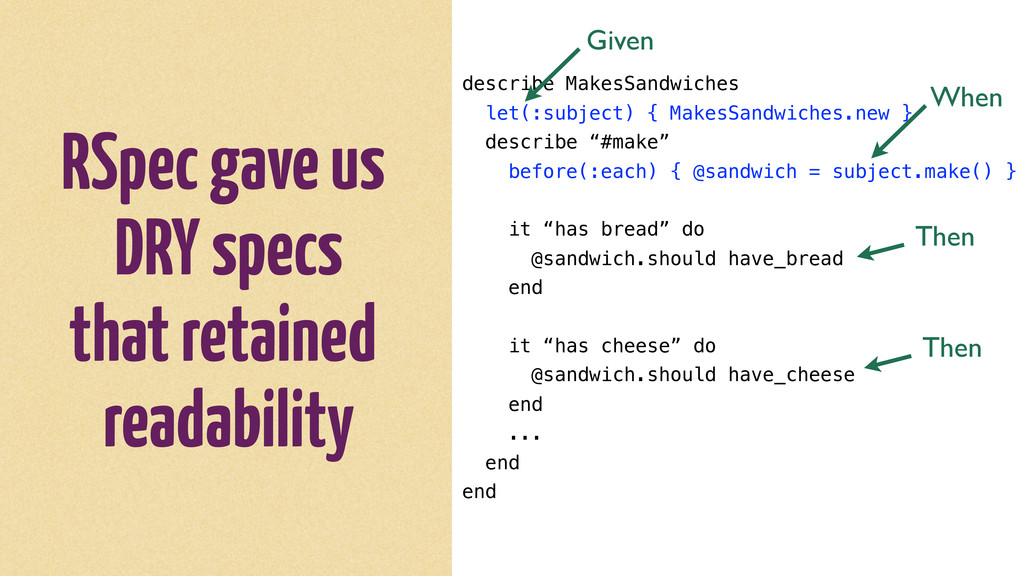
  13. RSpec gave us DRY specs that retained readability describe MakesSandwiches

    let(:subject) { MakesSandwiches.new } describe “#make” before(:each) { @sandwich = subject.make() } it “has bread” do @sandwich.should have_bread end it “has cheese” do @sandwich.should have_cheese end ... end end Given When Then
  14. RSpec gave us DRY specs that retained readability describe MakesSandwiches

    let(:subject) { MakesSandwiches.new } describe “#make” before(:each) { @sandwich = subject.make() } it “has bread” do @sandwich.should have_bread end it “has cheese” do @sandwich.should have_cheese end ... end end Given When Then Then
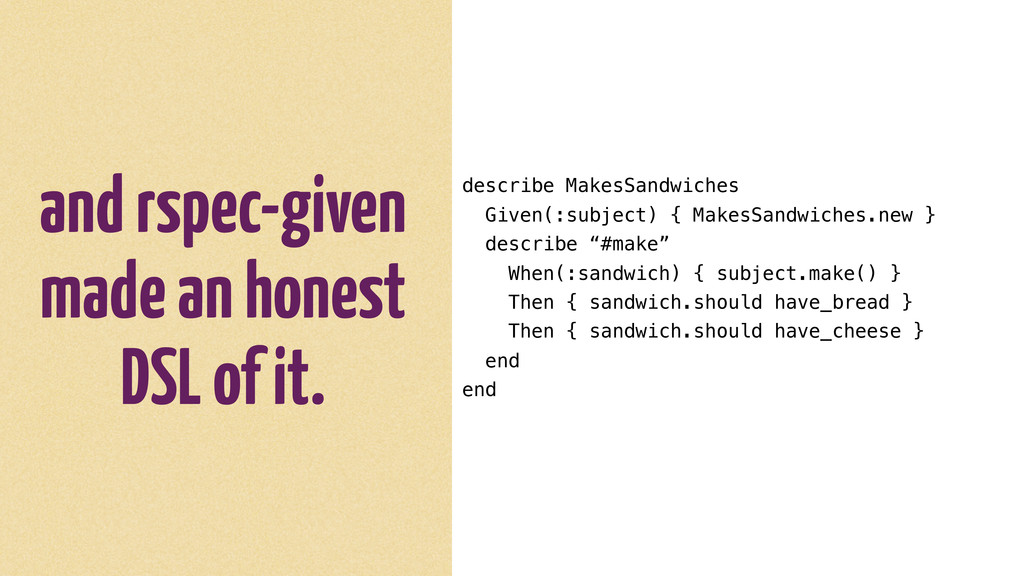
  15. and rspec-given made an honest DSL of it. describe MakesSandwiches

    Given(:subject) { MakesSandwiches.new } describe “#make” When(:sandwich) { subject.make() } Then { sandwich.should have_bread } Then { sandwich.should have_cheese } end end
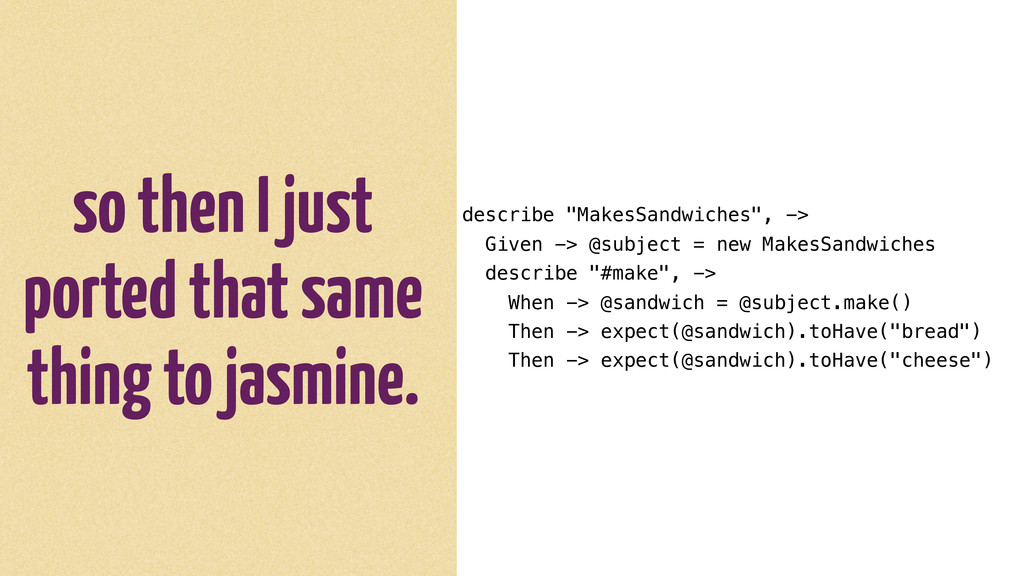
  16. so then I just ported that same thing to jasmine.

    describe "MakesSandwiches", -> Given -> @subject = new MakesSandwiches describe "#make", -> When -> @sandwich = @subject.make() Then -> expect(@sandwich).toHave("bread") Then -> expect(@sandwich).toHave("cheese")
  17. so then I just ported that same thing to jasmine.

    describe "MakesSandwiches", -> Given -> @subject = new MakesSandwiches describe "#make", -> When -> @sandwich = @subject.make() Then -> expect(@sandwich).toHave("bread") Then -> expect(@sandwich).toHave("cheese") go run it on tryjasmine.com! http://is.gd/givensandwich
  18. describe "MakesSandwiches", -> Given -> @subject = new MakesSandwiches describe

    "#make", -> When -> @sandwich = @subject.make Then -> @sandwich.bread == “sourdough” Then -> @sandwich.cheese == “swiss” simple boolean Thens
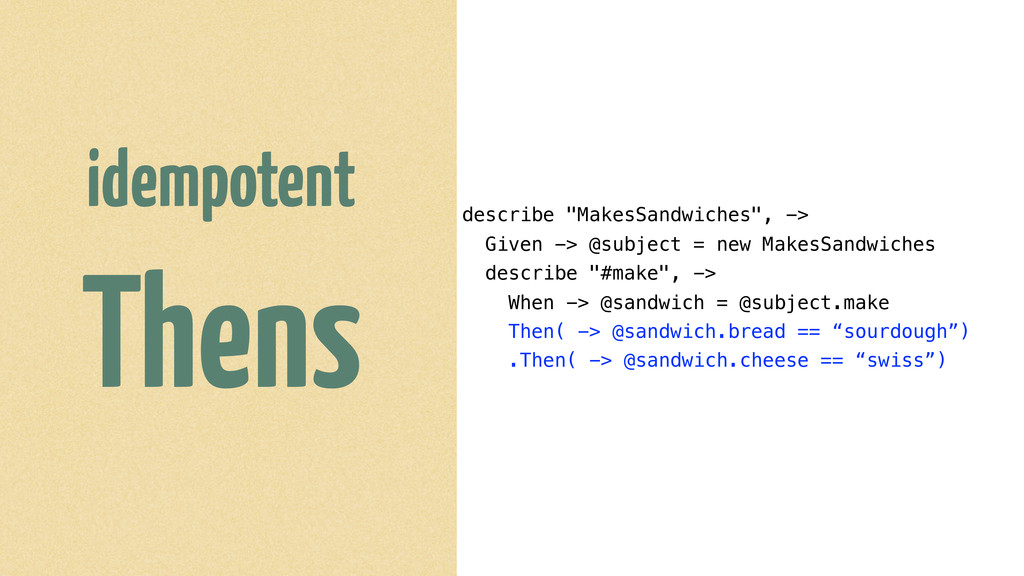
  19. describe "MakesSandwiches", -> Given -> @subject = new MakesSandwiches describe

    "#make", -> When -> @sandwich = @subject.make Then( -> @sandwich.bread == “sourdough”) .Then( -> @sandwich.cheese == “swiss”) idempotent Thens
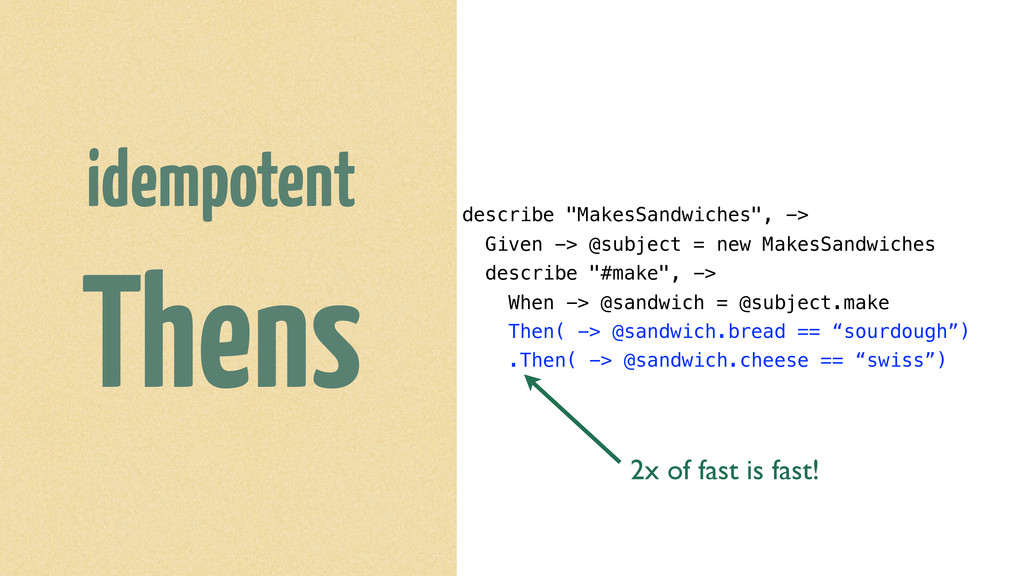
  20. describe "MakesSandwiches", -> Given -> @subject = new MakesSandwiches describe

    "#make", -> When -> @sandwich = @subject.make Then( -> @sandwich.bread == “sourdough”) .Then( -> @sandwich.cheese == “swiss”) idempotent Thens 2x of fast is fast!

More Decks by Justin Searls

Other Decks in Programming