Upgrade to Pro — share decks privately, control downloads, hide ads and more …

Why Platforms Are The Key to the Rise of Agenti...

Why Platforms Are The Key to the Rise of Agentic Teams

AI models have crossed a threshold and no longer simply help you type faster; they ship the work themselves. But scaling AI agents inside an enterprise surfaces the same coordination problems we’ve spent fifty years solving with human teams: context overload, conflicting changes, unclear ownership, and drift. This talk explores why the answers are familiar (specialised roles, bounded contexts, clean APIs) but the stakes are higher. We’ll walk through how agent teams need to be structured like engineering organisations, why informal handoffs that barely worked for people will snap entirely at agent speed, and why the platform’s new job is turning the enterprise estate into safe, governed, reusable APIs for humans and agents alike.

Avatar for Syntasso

Syntasso

June 19, 2026

More Decks by Syntasso

Other Decks in Technology

Transcript

  1. PORT MEETUP TALK · JUNE 2026 The Rise of Agentic

    Teams From AI assistants to the enterprise's primary engine of productivity. Abby Bangser Principal Engineer @ Syntasso We've seen this movie before →
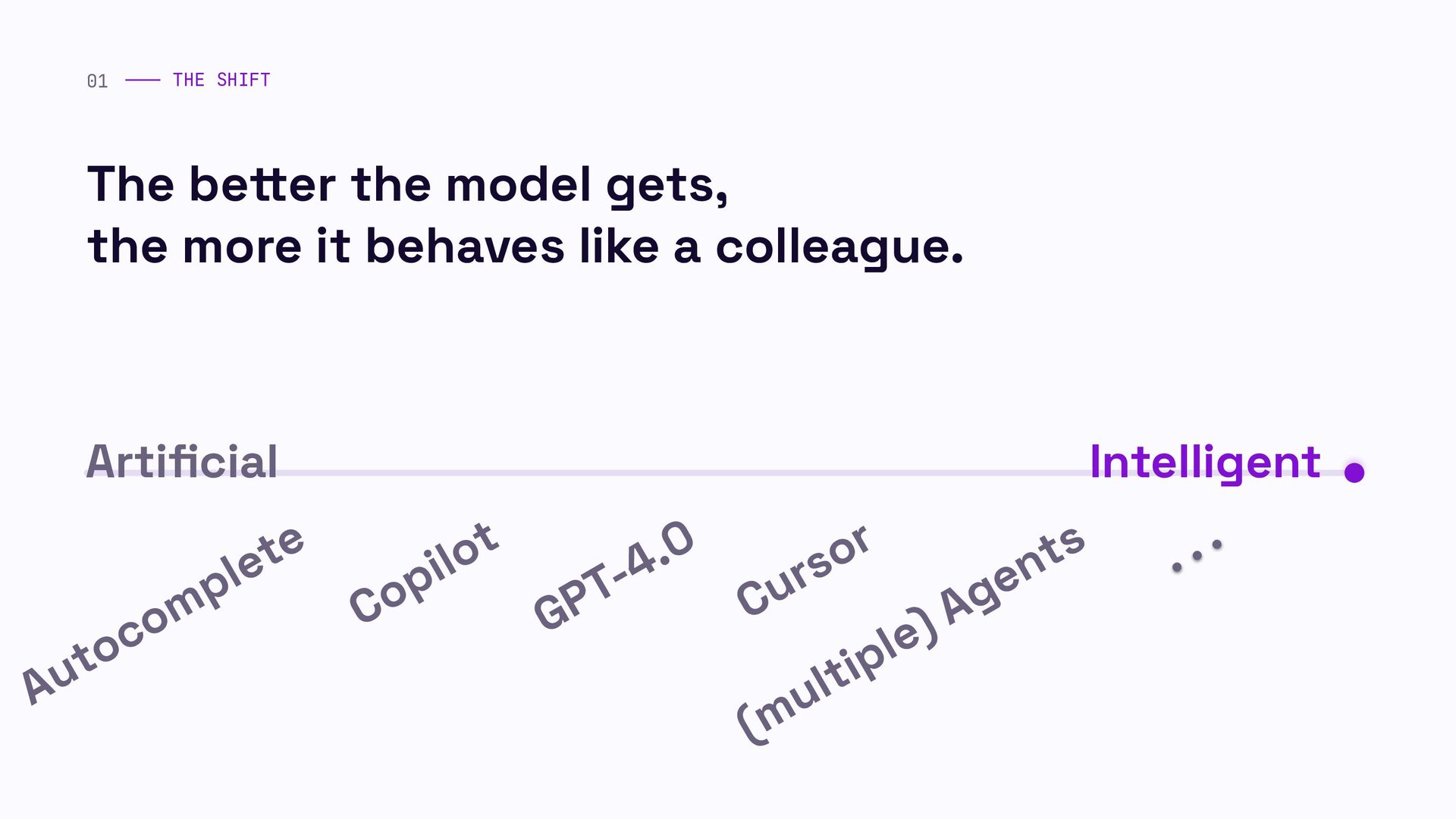
  2. 01 THE SHIFT Artificial The better the model gets, the

    more it behaves like a colleague. Intelligent GPT-4.0 Copilot Autocomplete Cursor (multiple) Agents . . .
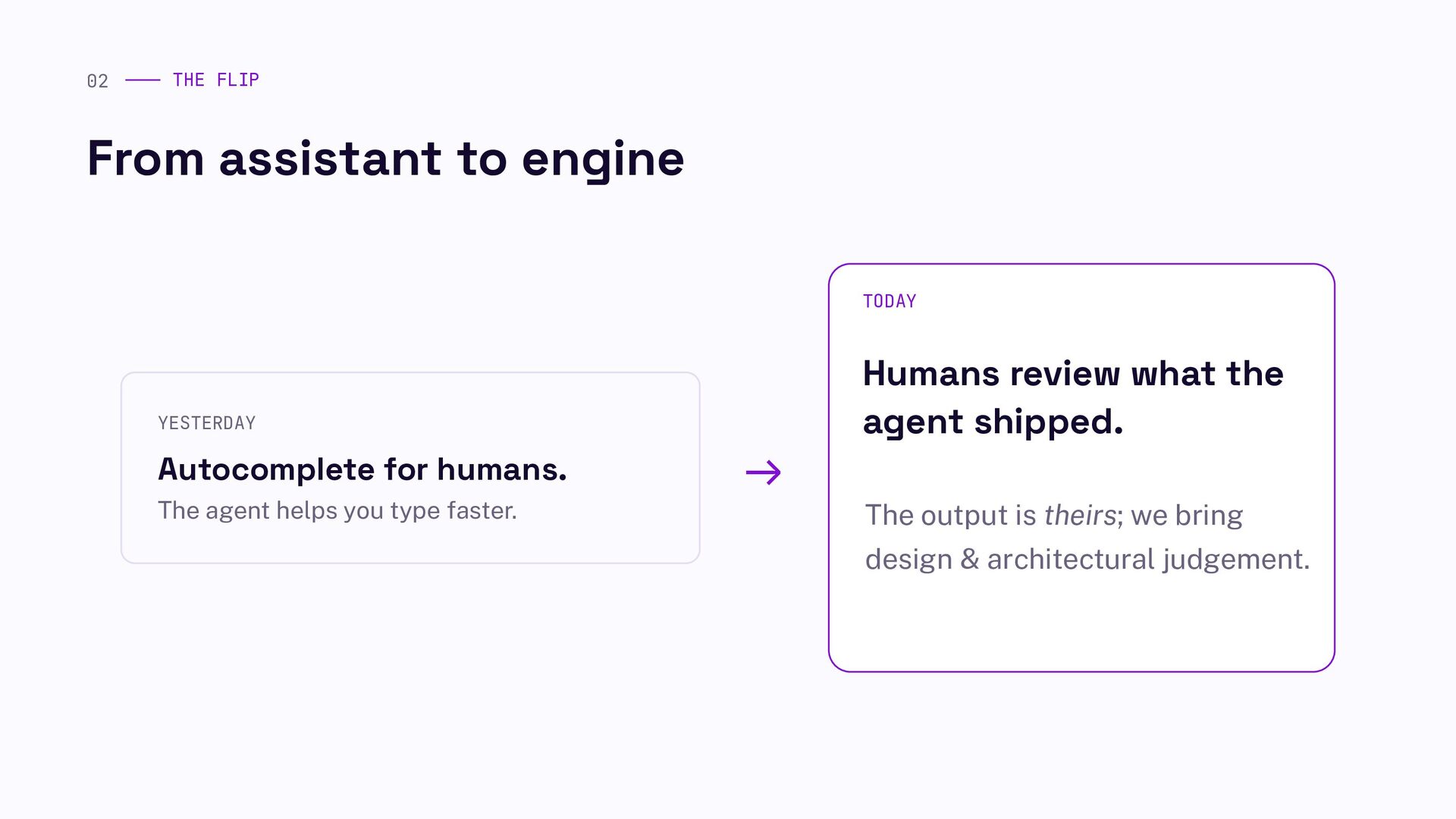
  3. 02 THE FLIP From assistant to engine YESTERDAY Autocomplete for

    humans. The agent helps you type faster. → TODAY Humans review what the agent shipped. The output is theirs; we bring design & architectural judgement.
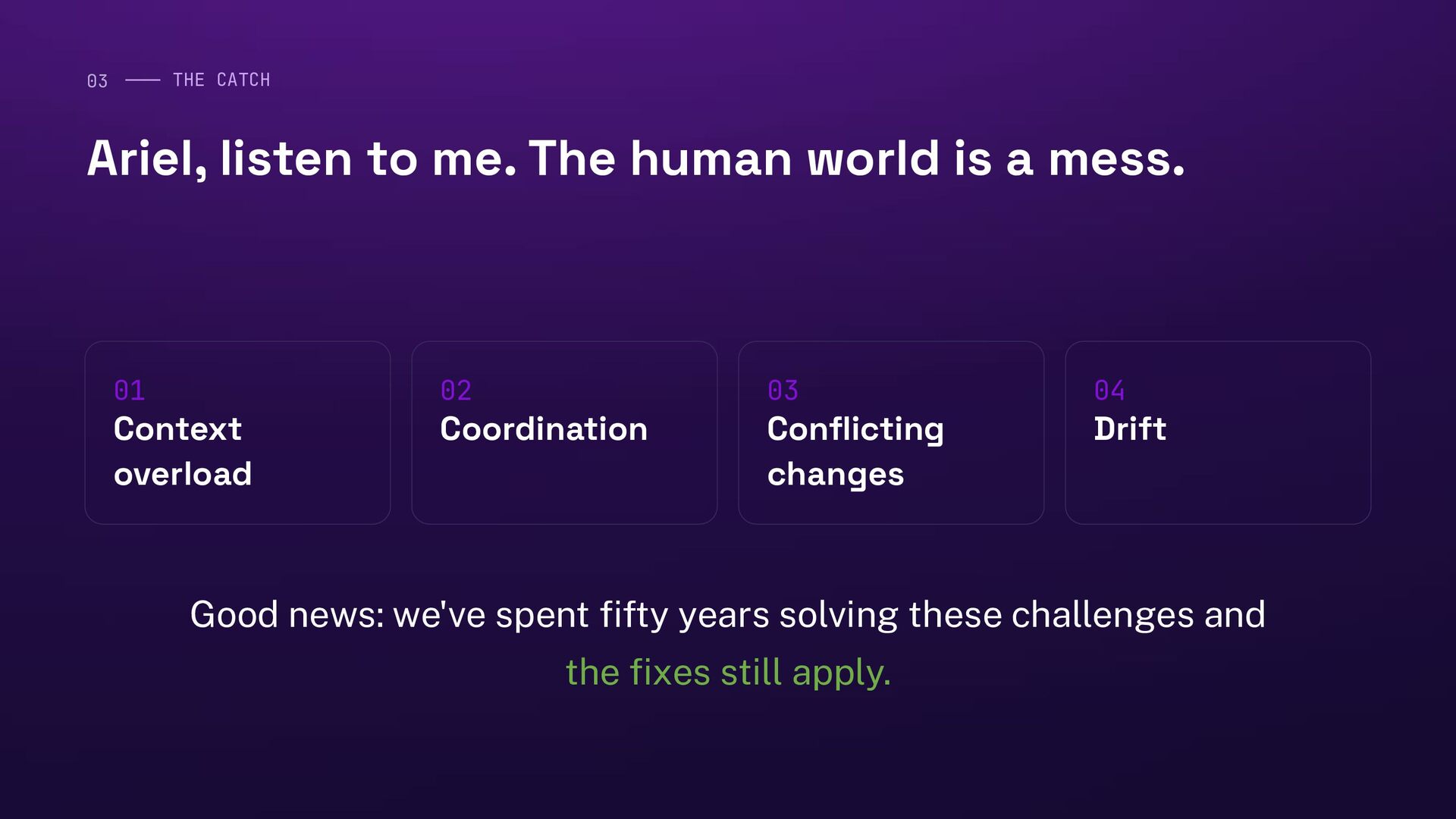
  4. 03 THE CATCH Ariel, listen to me. The human world

    is a mess. 01 Context overload 02 Coordination 03 Conflicting changes 04 Drift Good news: we've spent fifty years solving these challenges and the fixes still apply.
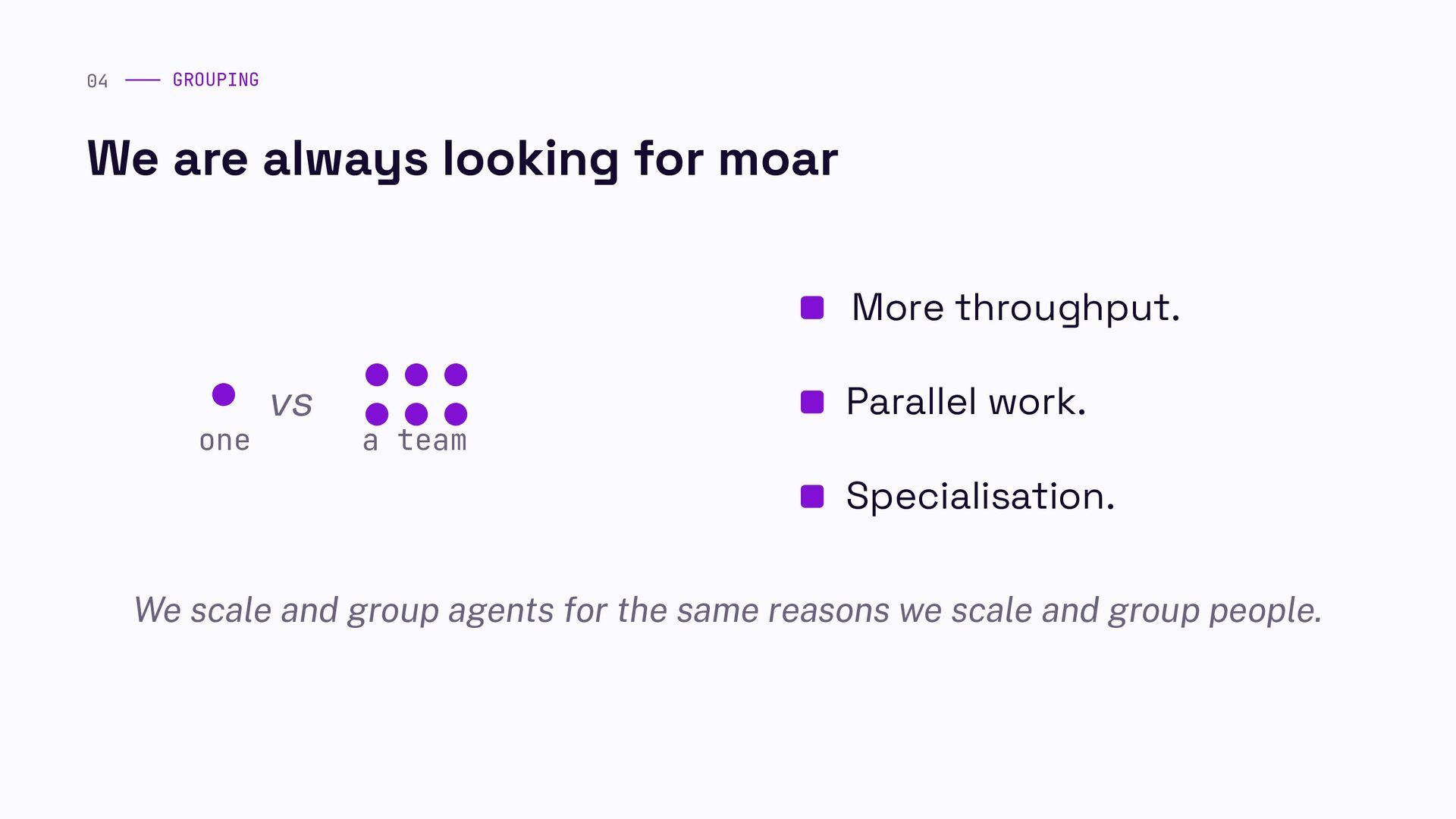
  5. 04 GROUPING We are always looking for moar one vs

    a team More throughput. Parallel work. Specialisation. We scale and group agents for the same reasons we scale and group people.
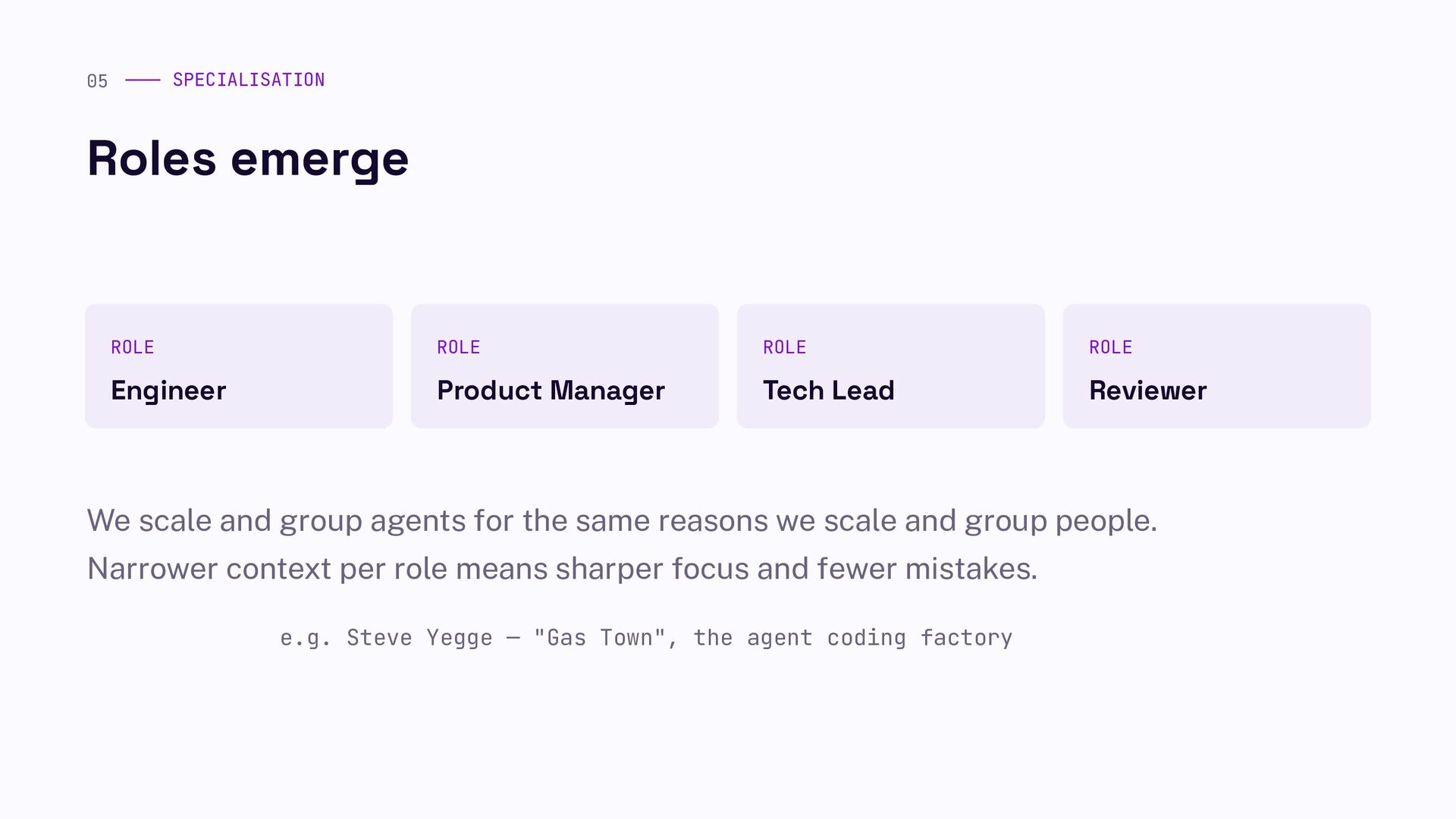
  6. 05 SPECIALISATION Roles emerge ROLE Engineer ROLE Product Manager ROLE

    Tech Lead ROLE Reviewer We scale and group agents for the same reasons we scale and group people. Narrower context per role means sharper focus and fewer mistakes. e.g. Steve Yegge — "Gas Town", the agent coding factory
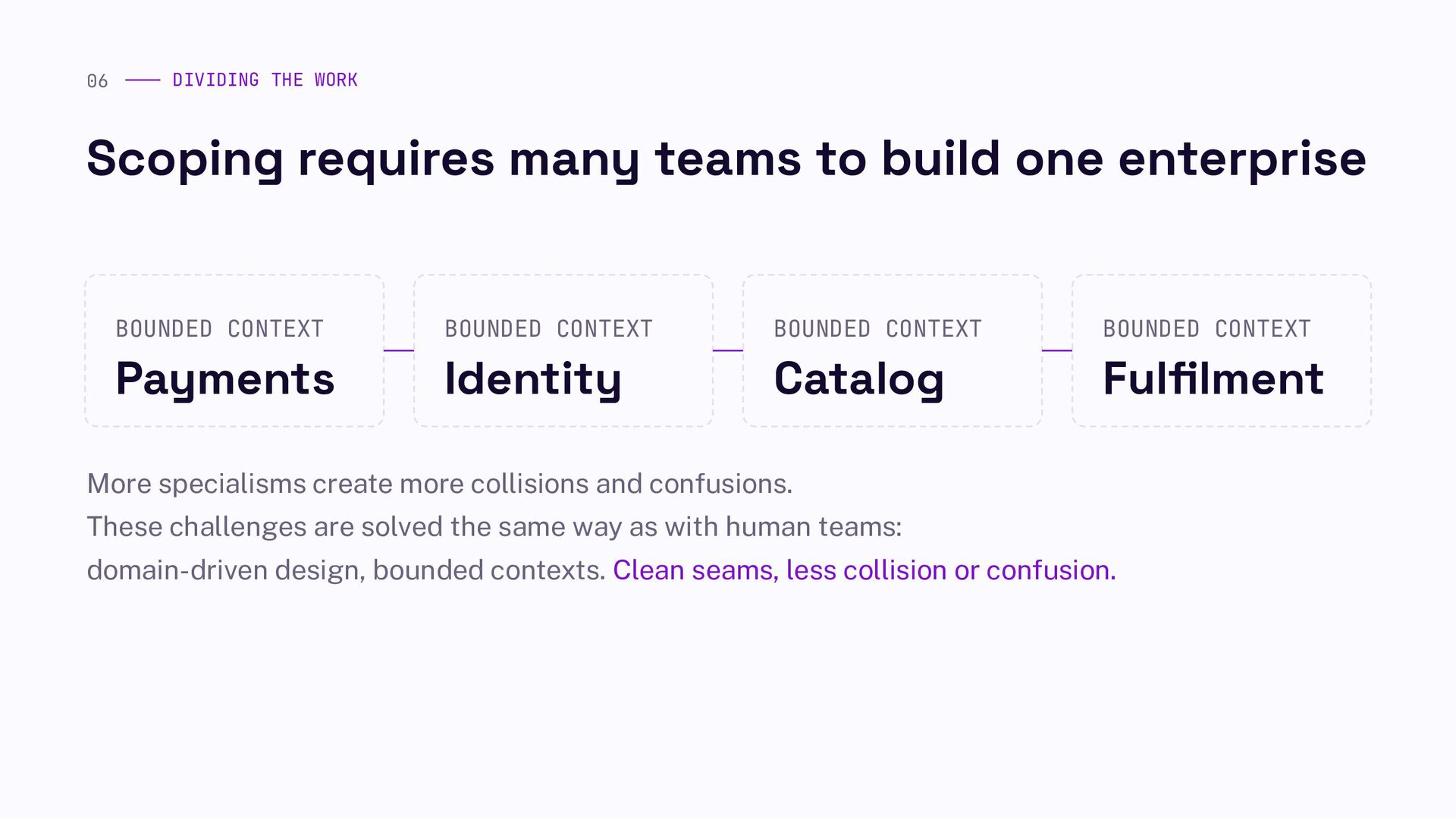
  7. 06 DIVIDING THE WORK Scoping requires many teams to build

    one enterprise BOUNDED CONTEXT Payments BOUNDED CONTEXT Identity BOUNDED CONTEXT Catalog BOUNDED CONTEXT Fulfilment More specialisms create more collisions and confusions. These challenges are solved the same way as with human teams: domain-driven design, bounded contexts. Clean seams, less collision or confusion.
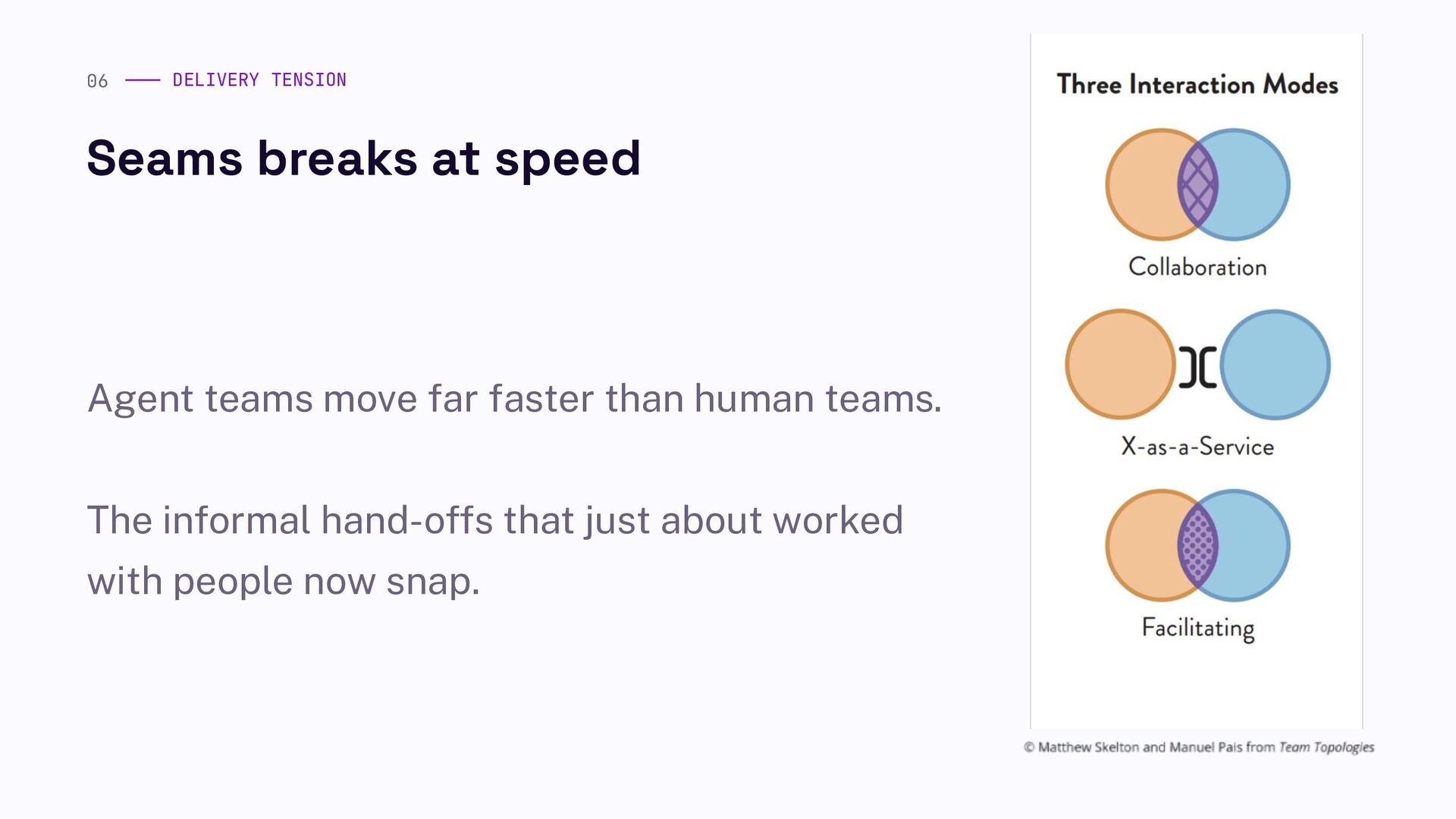
  8. 06 DELIVERY TENSION Seams breaks at speed Agent teams move

    far faster than human teams. The informal hand-offs that just about worked with people now snap.
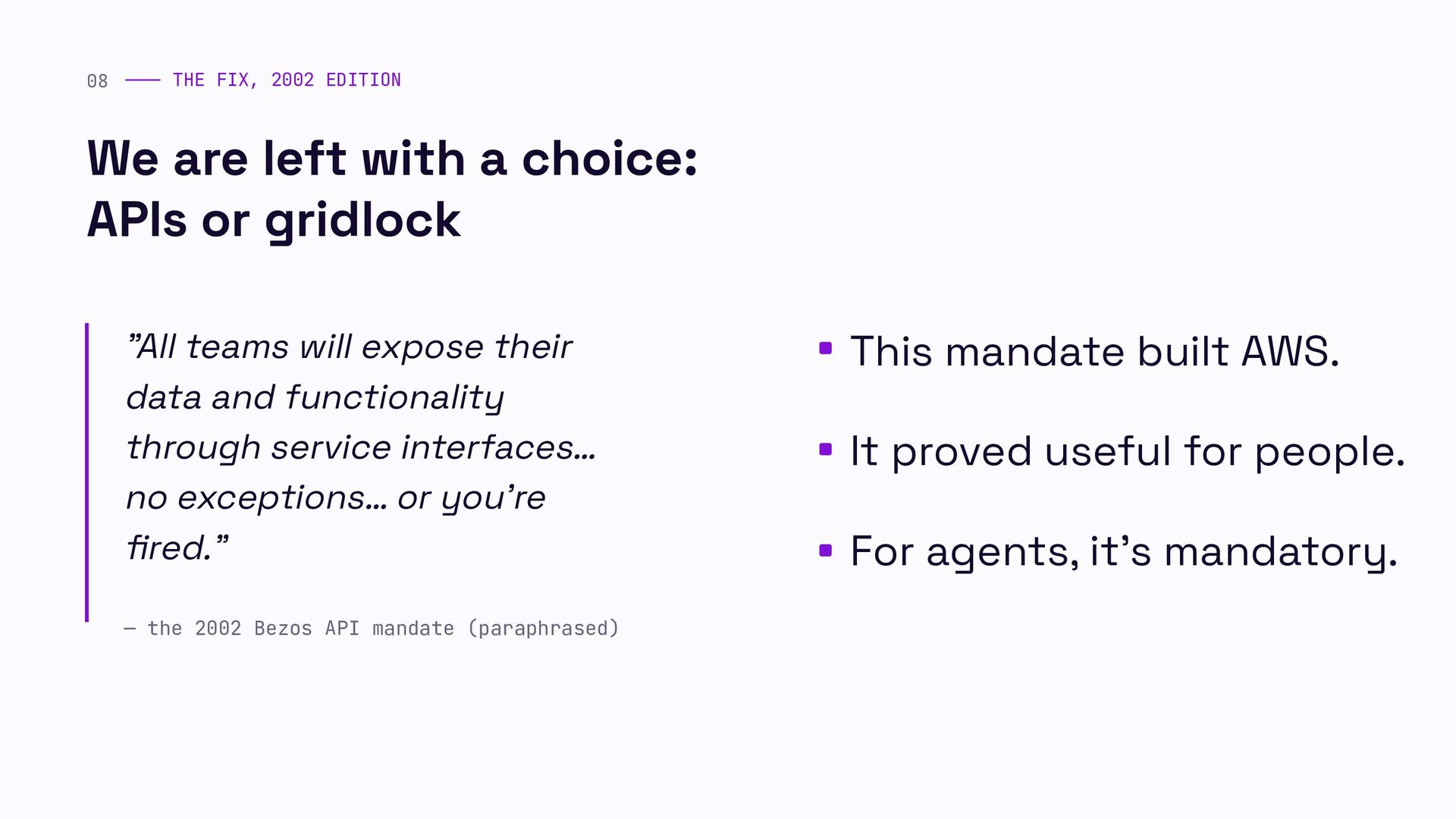
  9. 08 We are left with a choice: APIs or gridlock

    THE FIX, 2002 EDITION "All teams will expose their data and functionality through service interfaces… no exceptions… or you're fired." — the 2002 Bezos API mandate (paraphrased) This mandate built AWS. It proved useful for people. For agents, it's mandatory.
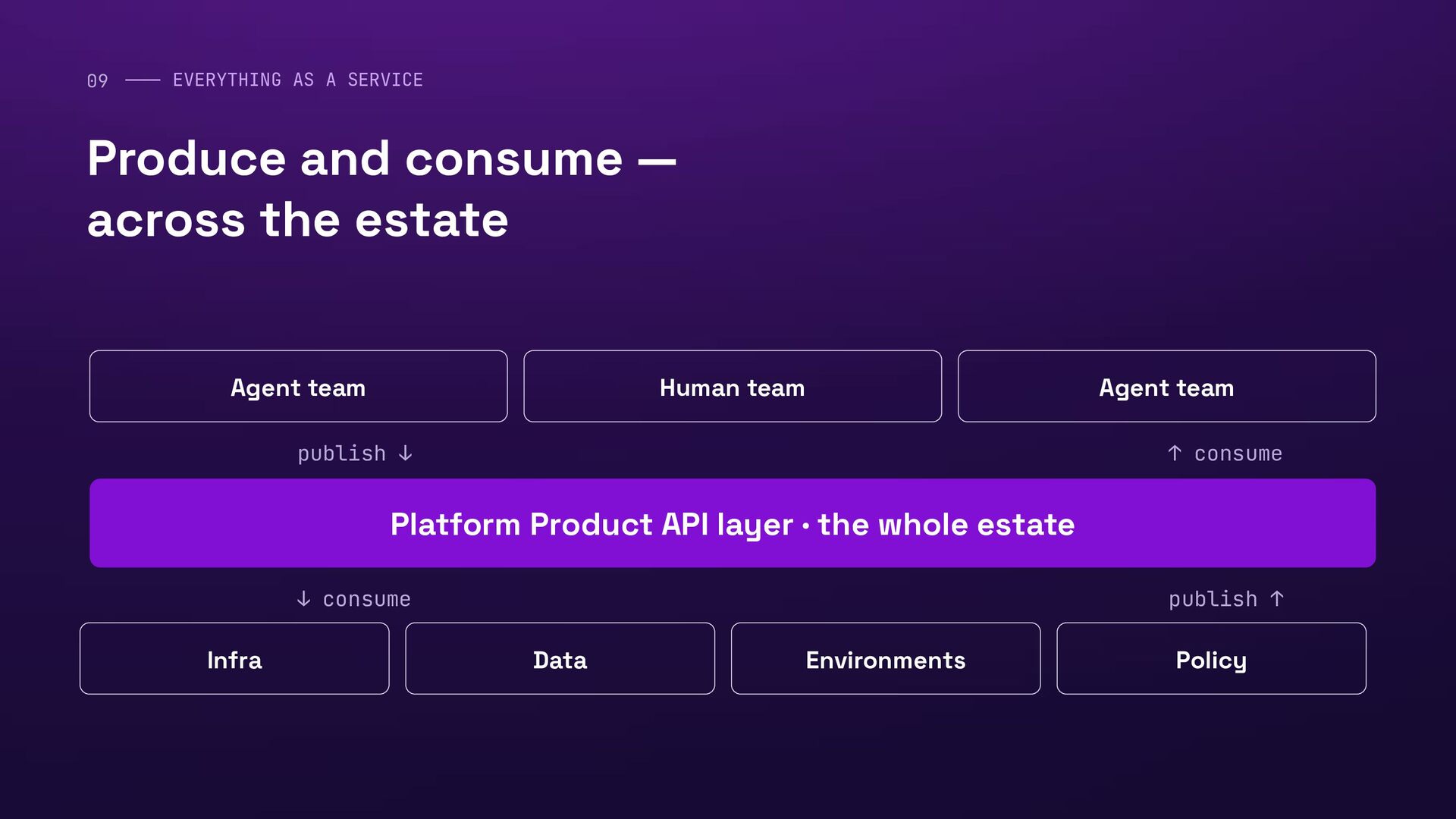
  10. 09 EVERYTHING AS A SERVICE Produce and consume — across

    the estate Agent team Human team Agent team publish ↓ ↑ consume Platform Product API layer · the whole estate ↓ consume publish ↑ Infra Data Environments Policy
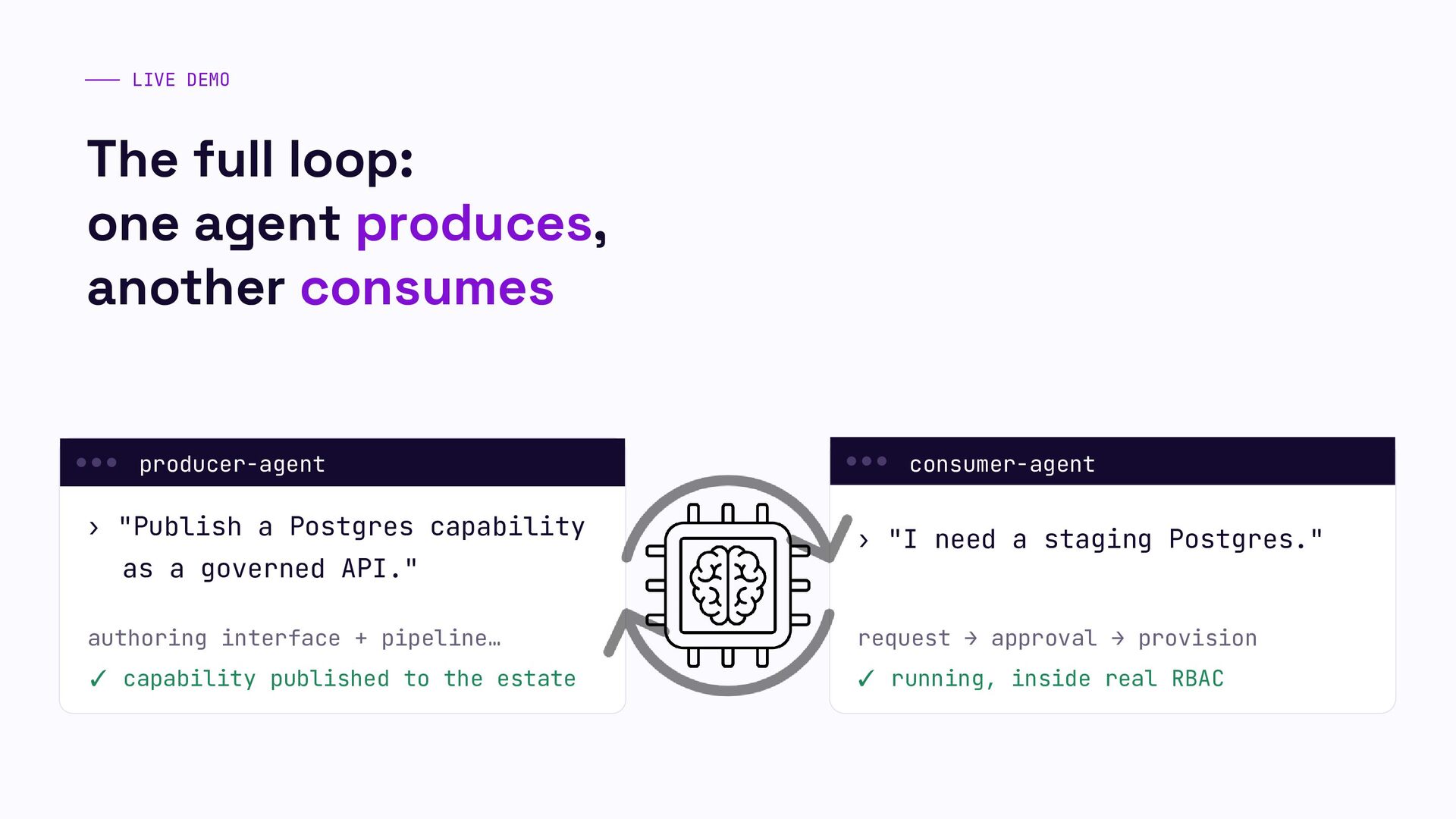
  11. LIVE DEMO The full loop: one agent produces, another consumes

    producer-agent › "Publish a Postgres capability as a governed API." authoring interface + pipeline… ✓ capability published to the estate consumer-agent › "I need a staging Postgres." request → approval → provision ✓ running, inside real RBAC
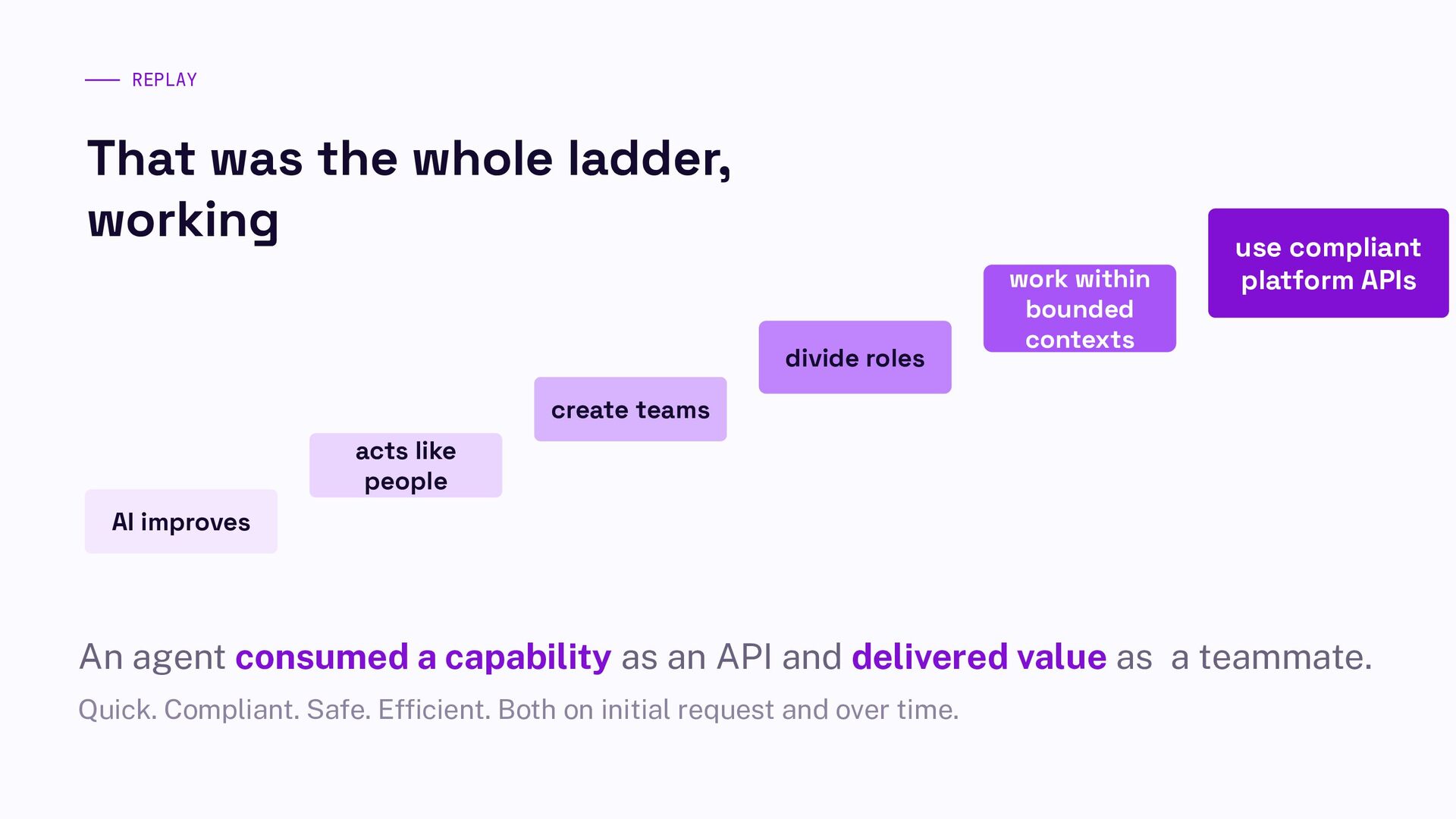
  12. REPLAY That was the whole ladder, working AI improves acts

    like people create teams divide roles work within bounded contexts use compliant platform APIs An agent consumed a capability as an API and delivered value as a teammate. Quick. Compliant. Safe. Efficient. Both on initial request and over time.
  13. SO WHAT The platform's new job: Turn the estate into

    safe, reusable APIs. Enable humans and agents alike.