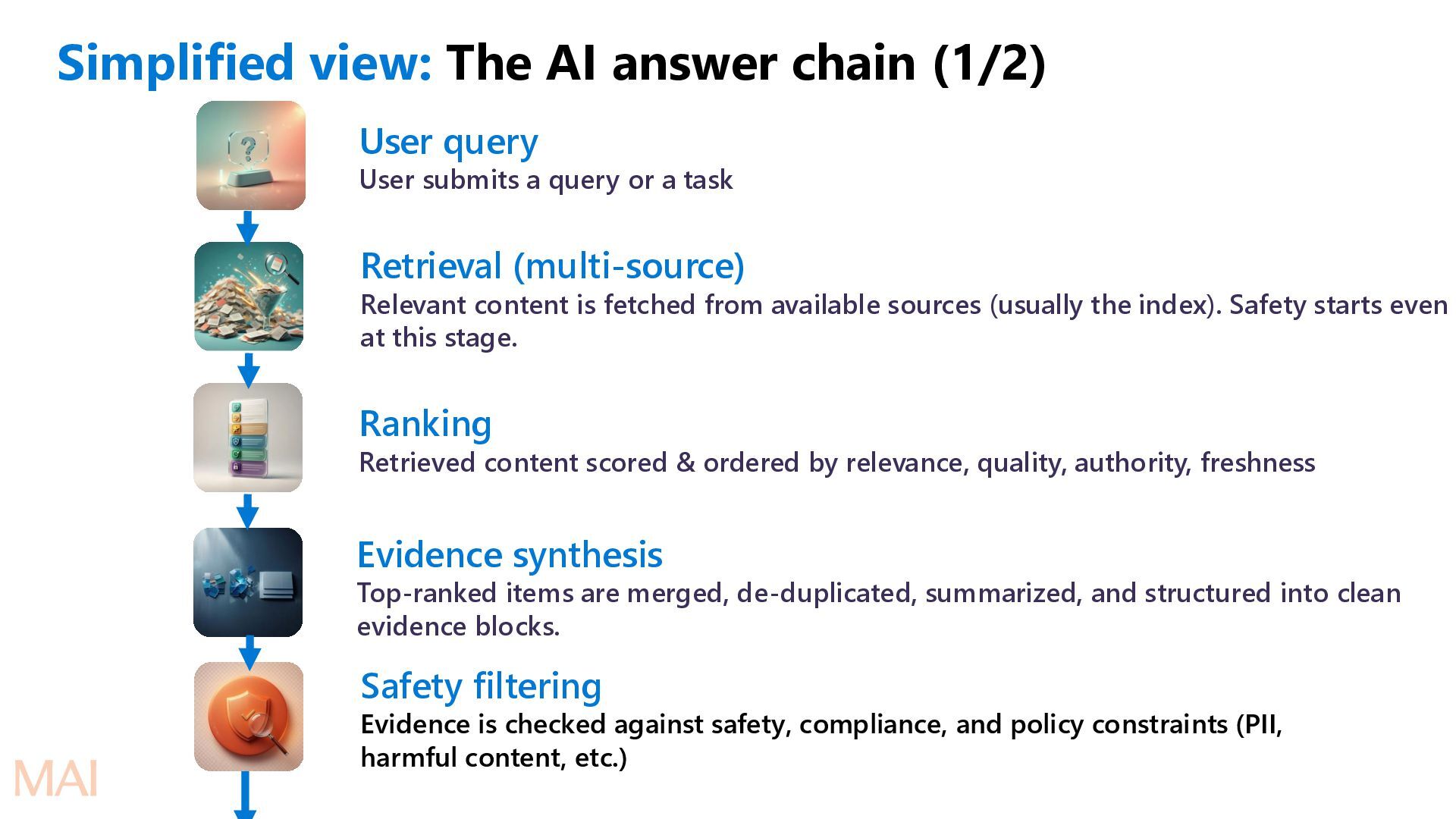
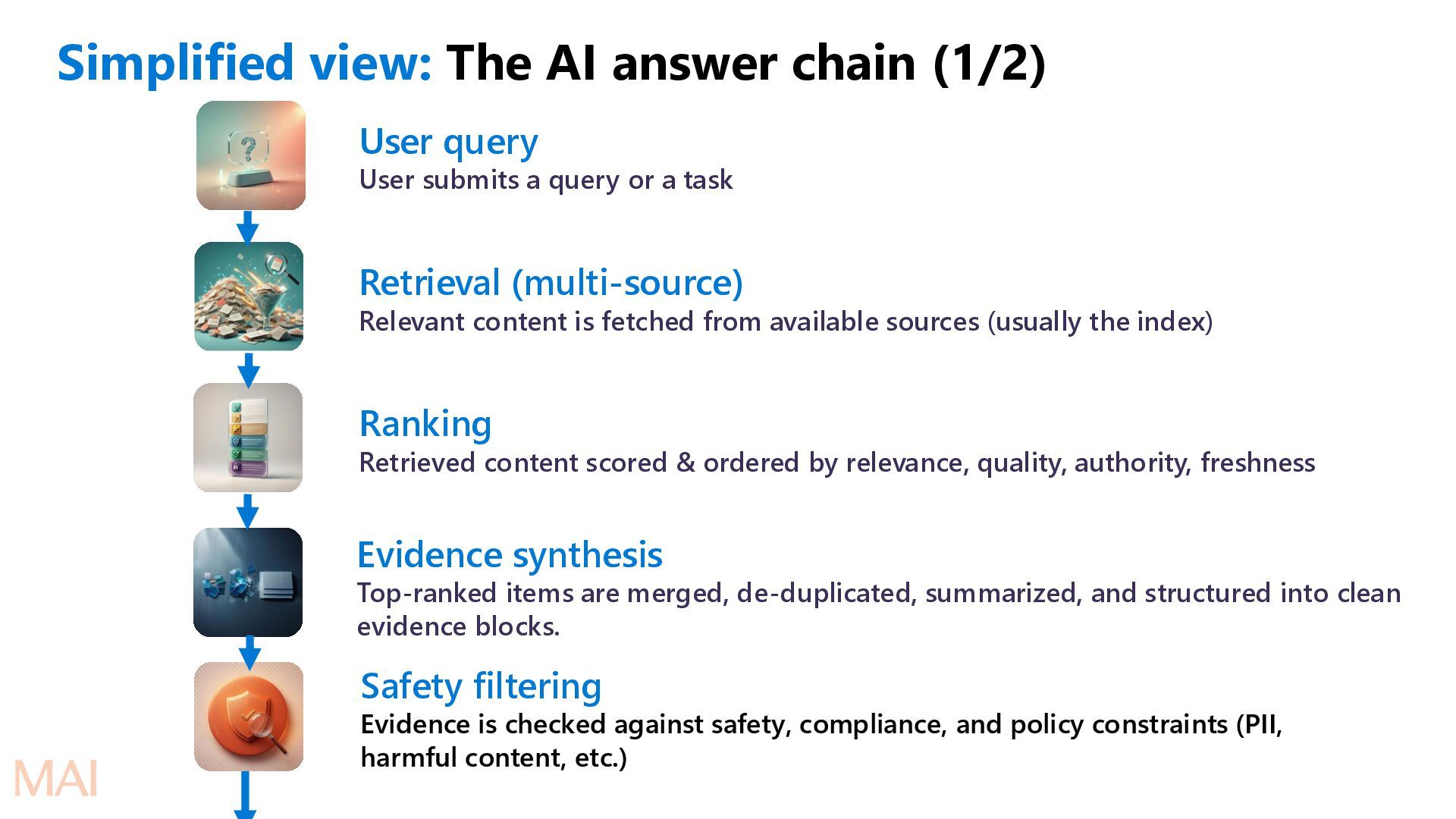
submits a query or a task Retrieval (multi-source) Relevant content is fetched from available sources (usually the index). Safety starts even at this stage. Ranking Retrieved content scored & ordered by relevance, quality, authority, freshness Evidence synthesis Top-ranked items are merged, de-duplicated, summarized, and structured into clean evidence blocks. Safety filtering Evidence is checked against safety, compliance, and policy constraints (PII, harmful content, etc.)
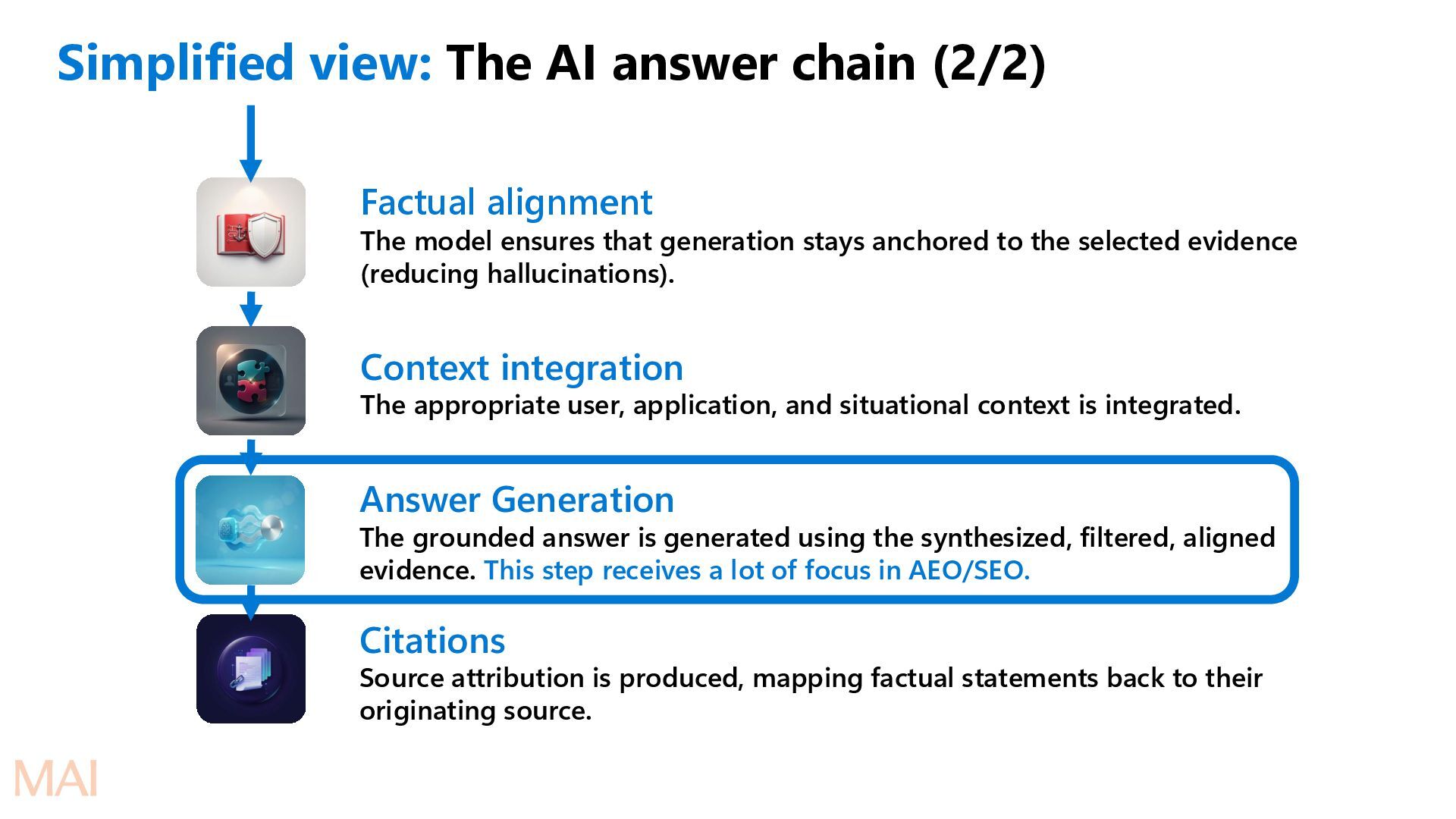
the selected evidence (reducing hallucinations). Context integration The appropriate user, application, and situational context is integrated. Answer Generation The grounded answer is generated using the synthesized, filtered, aligned evidence. This step receives a lot of focus in AEO/SEO. Citations Source attribution is produced, mapping factual statements back to their originating source. Simplified view: The AI answer chain (2/2)
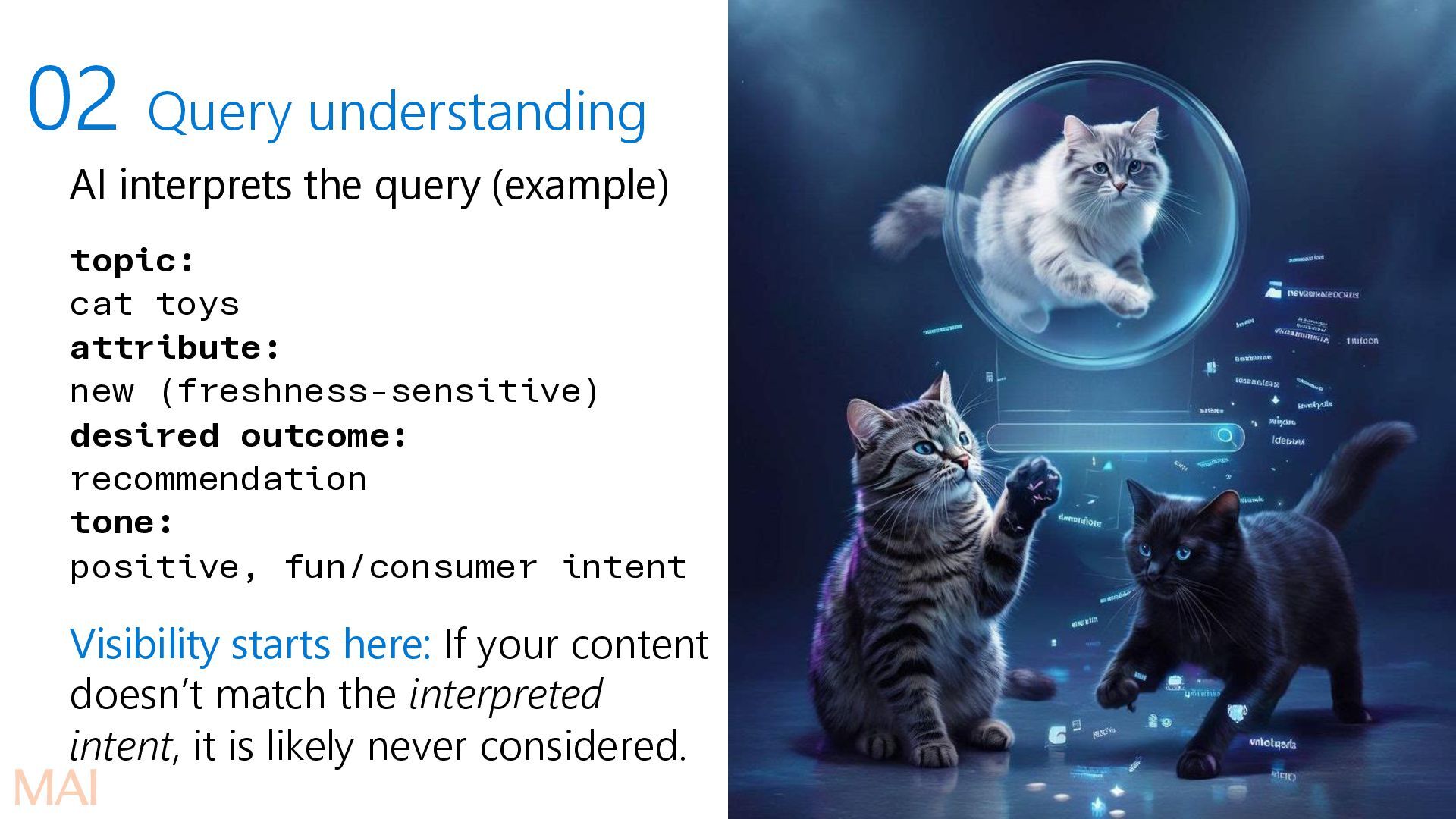
(freshness-sensitive) desired outcome: recommendation tone: positive, fun/consumer intent Visibility starts here: If your content doesn’t match the interpreted intent, it is likely never considered. 02 Query understanding
can operate on: “latest cat toys for 2025” “new cat toy releases for this year” “top trending cat toys” First selection bar: Only content aligned with the normalized intent is usually retrieved. 03 Query normalization
versions of your intent Semantic, keyword, schema-based, attribute-specific, entity, domain, and freshness queries All competing to find your content. 04 Query expansion (1/2)
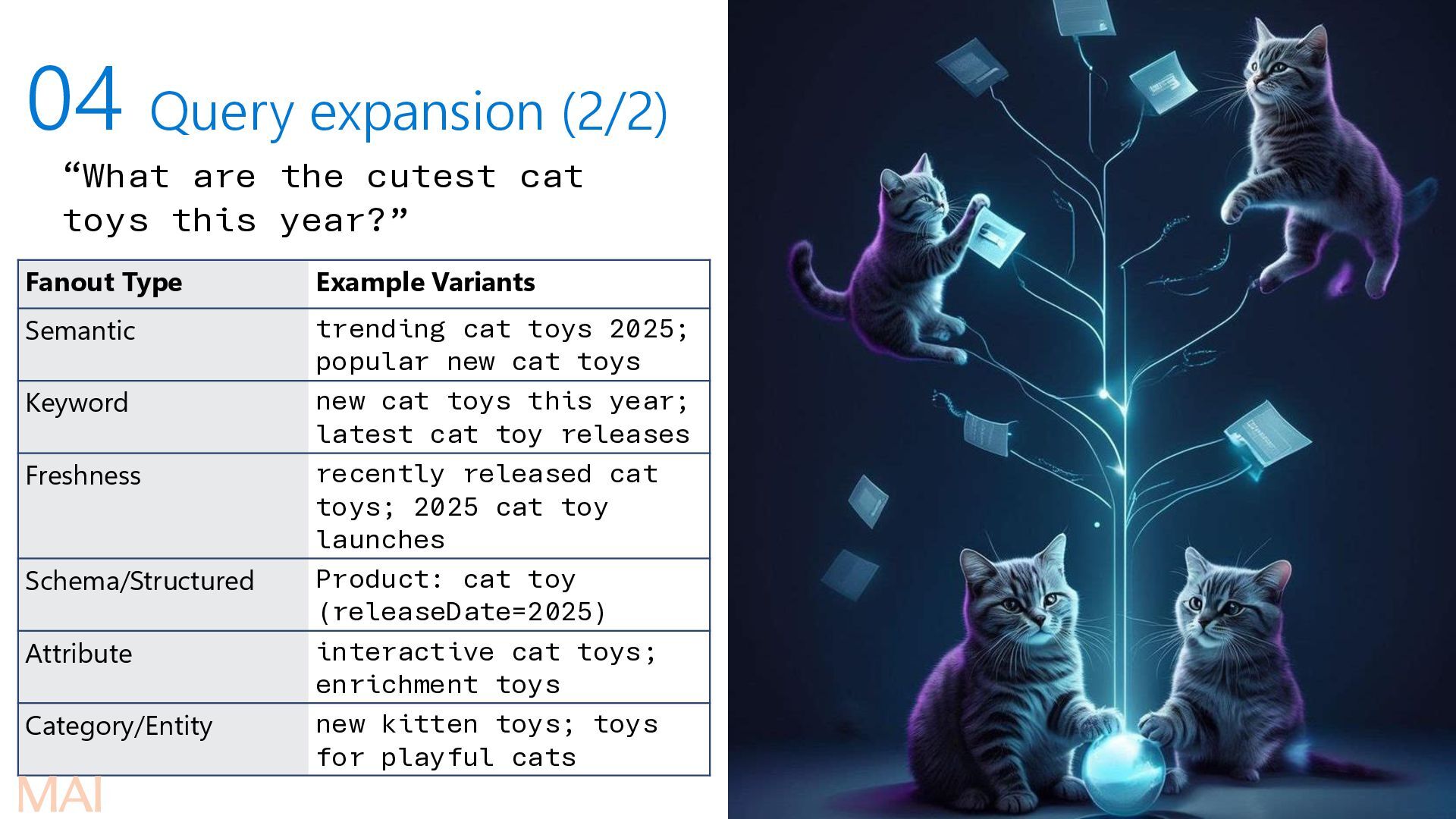
cat toys 2025; popular new cat toys Keyword new cat toys this year; latest cat toy releases Freshness recently released cat toys; 2025 cat toy launches Schema/Structured Product: cat toy (releaseDate=2025) Attribute interactive cat toys; enrichment toys Category/Entity new kitten toys; toys for playful cats “What are the cutest cat toys this year?”
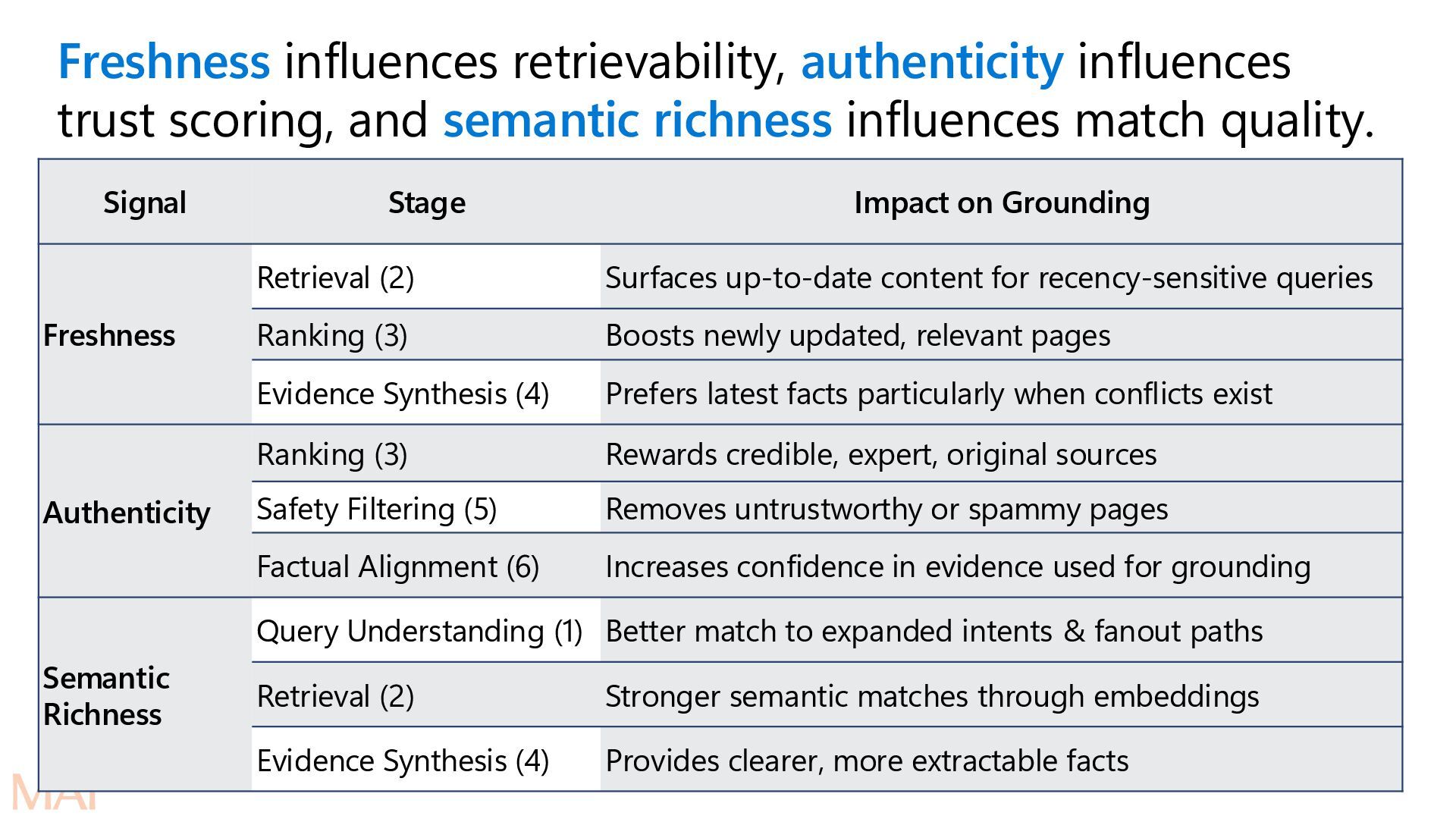
submits a query or a task Retrieval (multi-source) Relevant content is fetched from available sources (usually the index) Ranking Retrieved content scored & ordered by relevance, quality, authority, freshness Evidence synthesis Top-ranked items are merged, de-duplicated, summarized, and structured into clean evidence blocks. Safety filtering Evidence is checked against safety, compliance, and policy constraints (PII, harmful content, etc.)
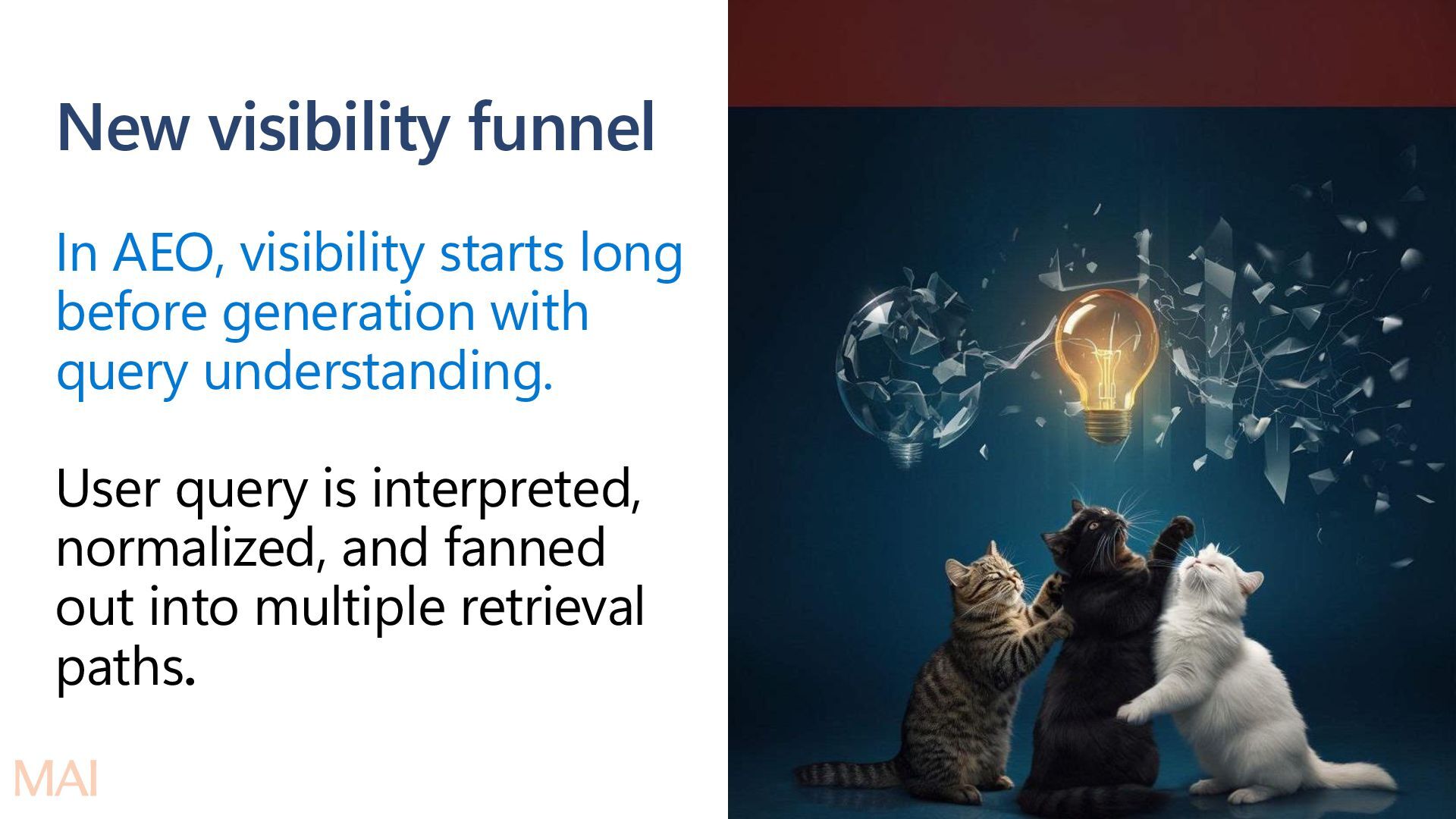
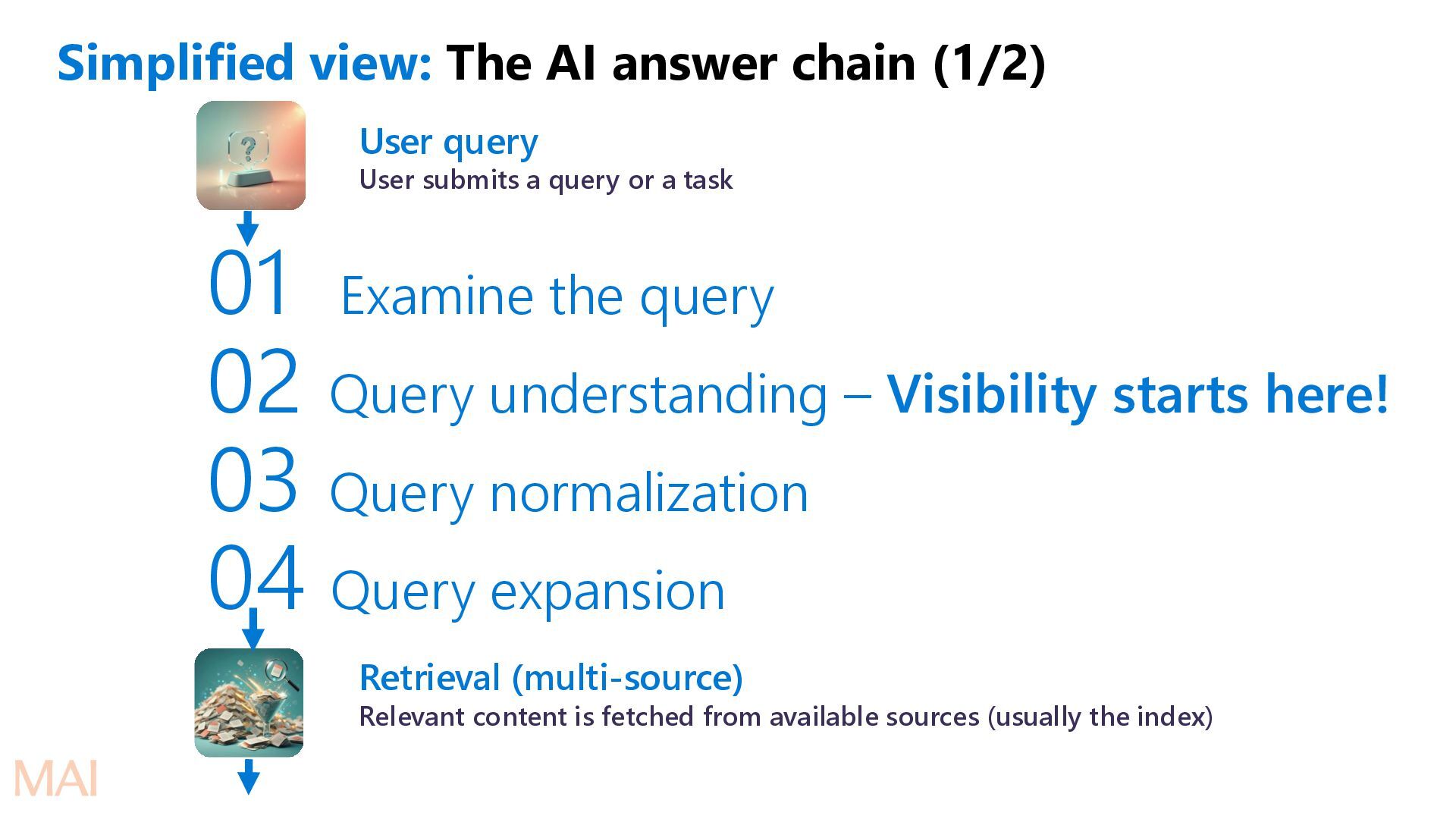
submits a query or a task Retrieval (multi-source) Relevant content is fetched from available sources (usually the index) 01 Examine the query 02 Query understanding – Visibility starts here! 03 Query normalization 04 Query expansion
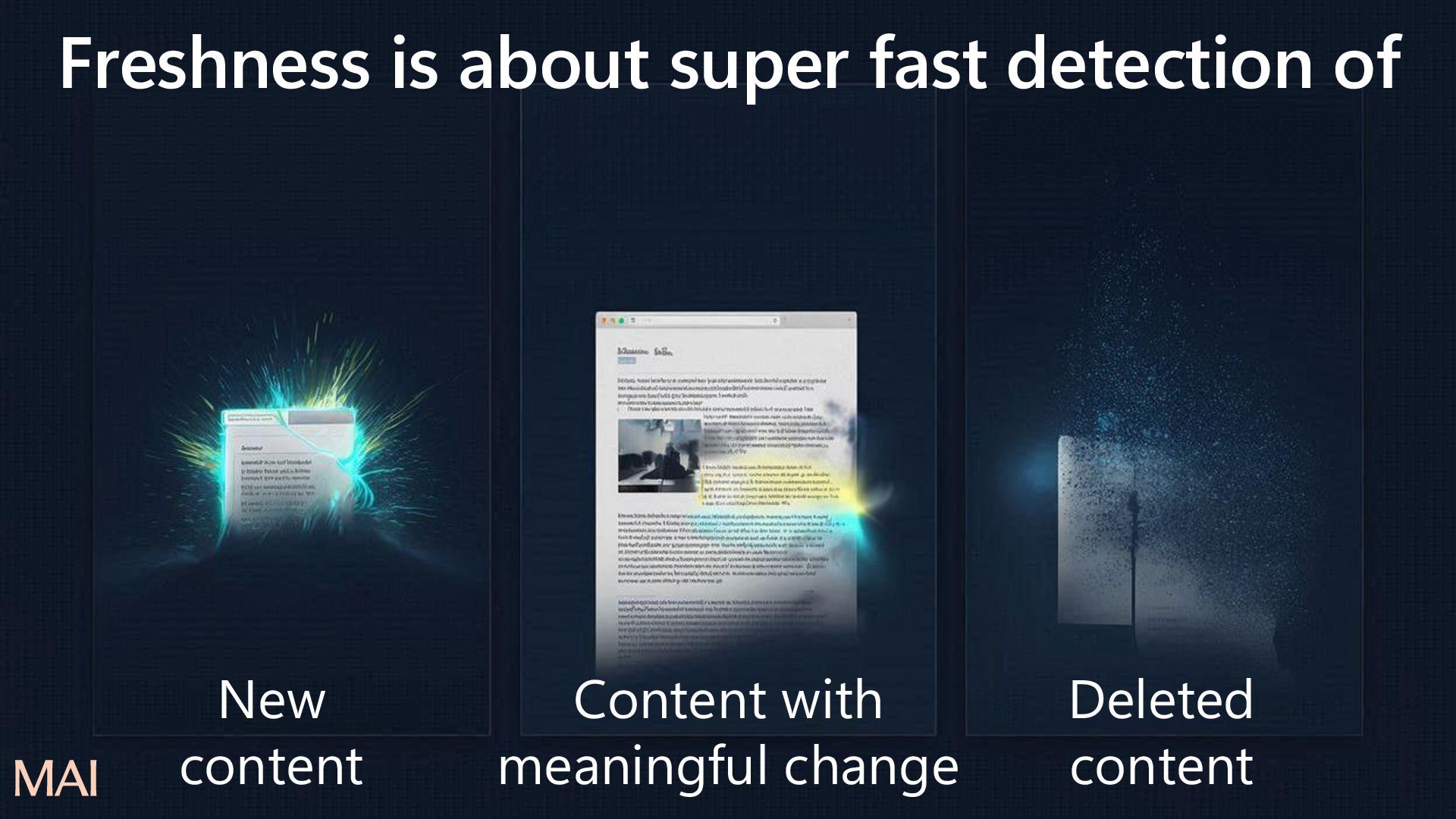
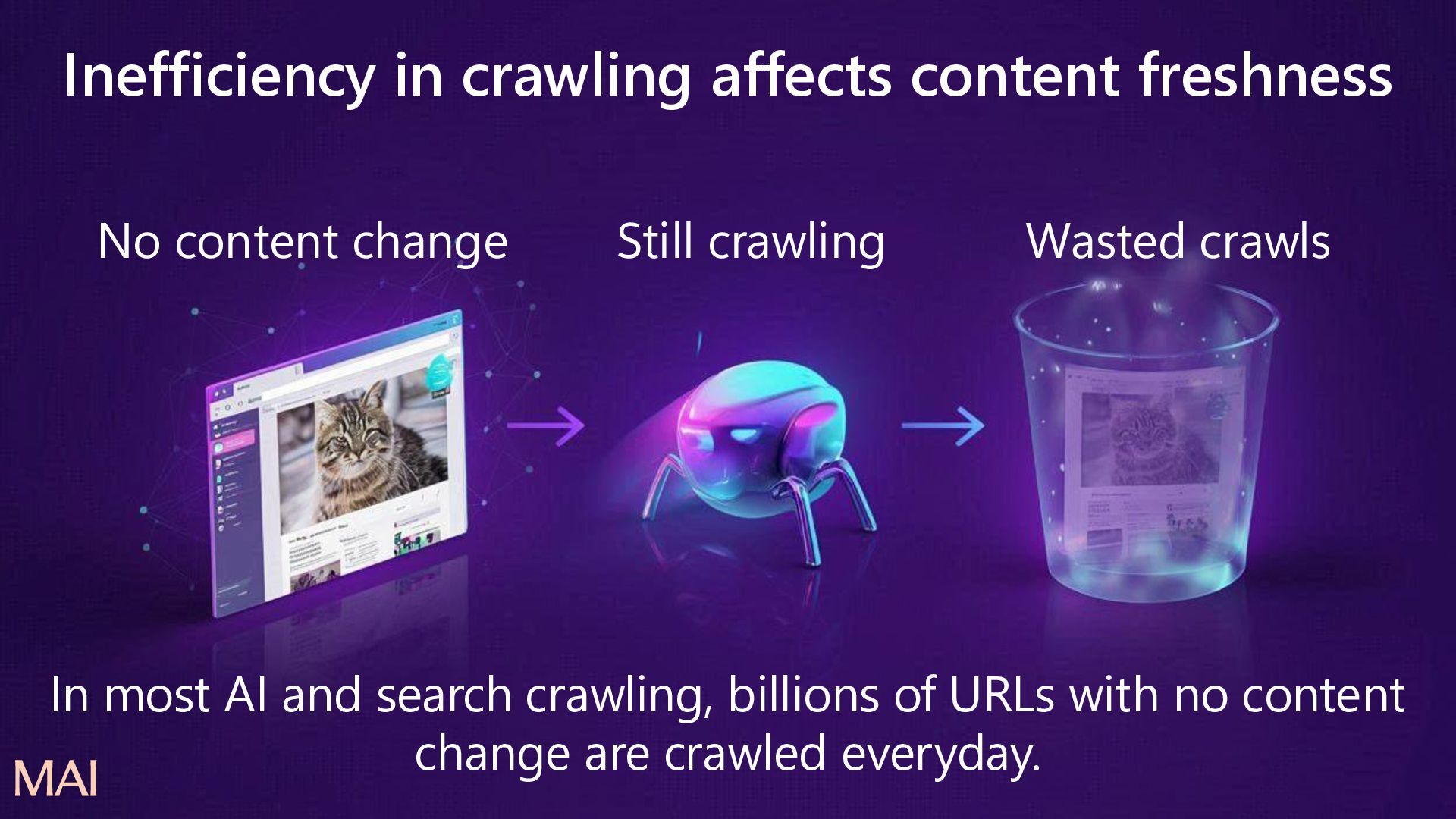
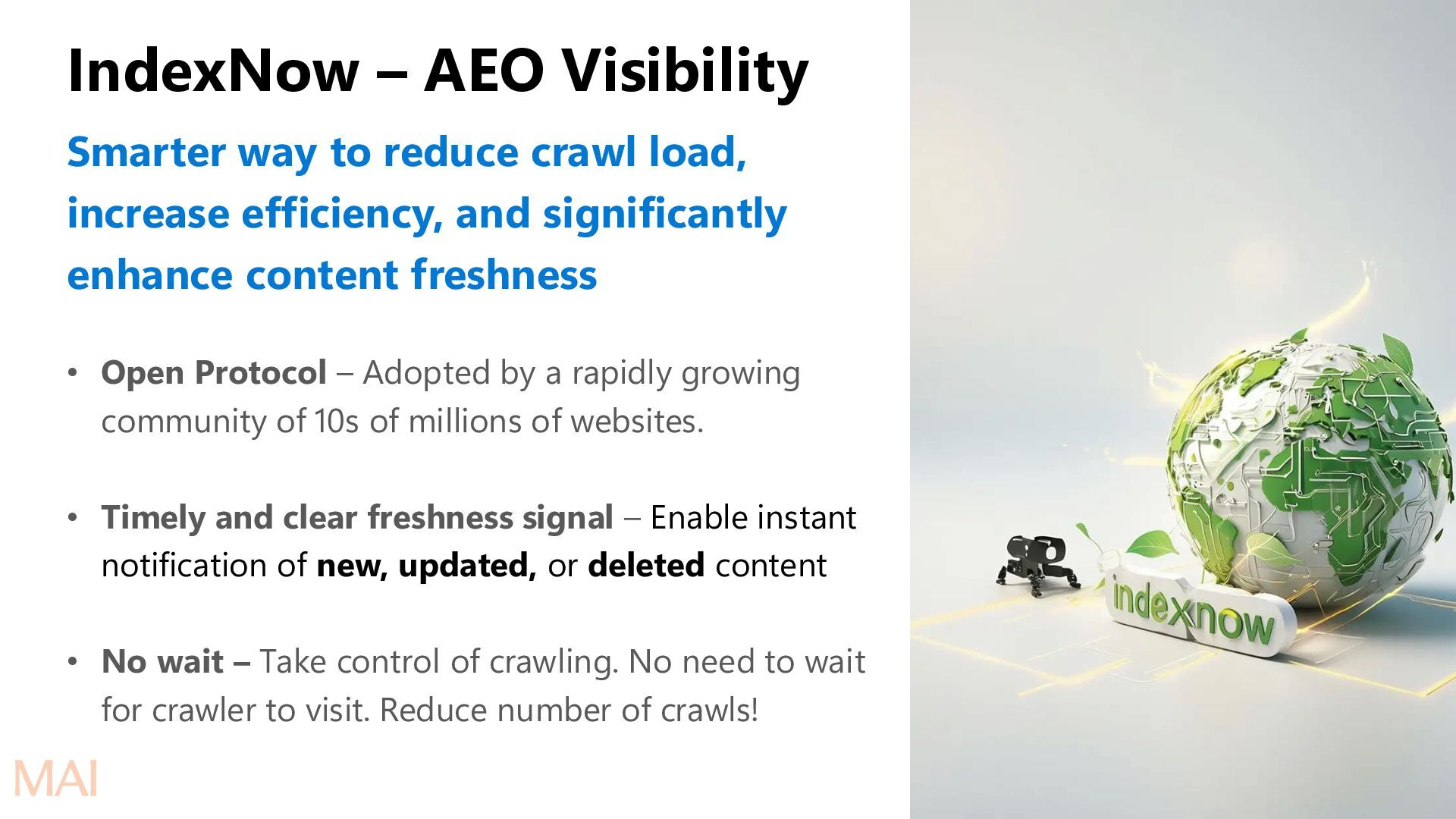
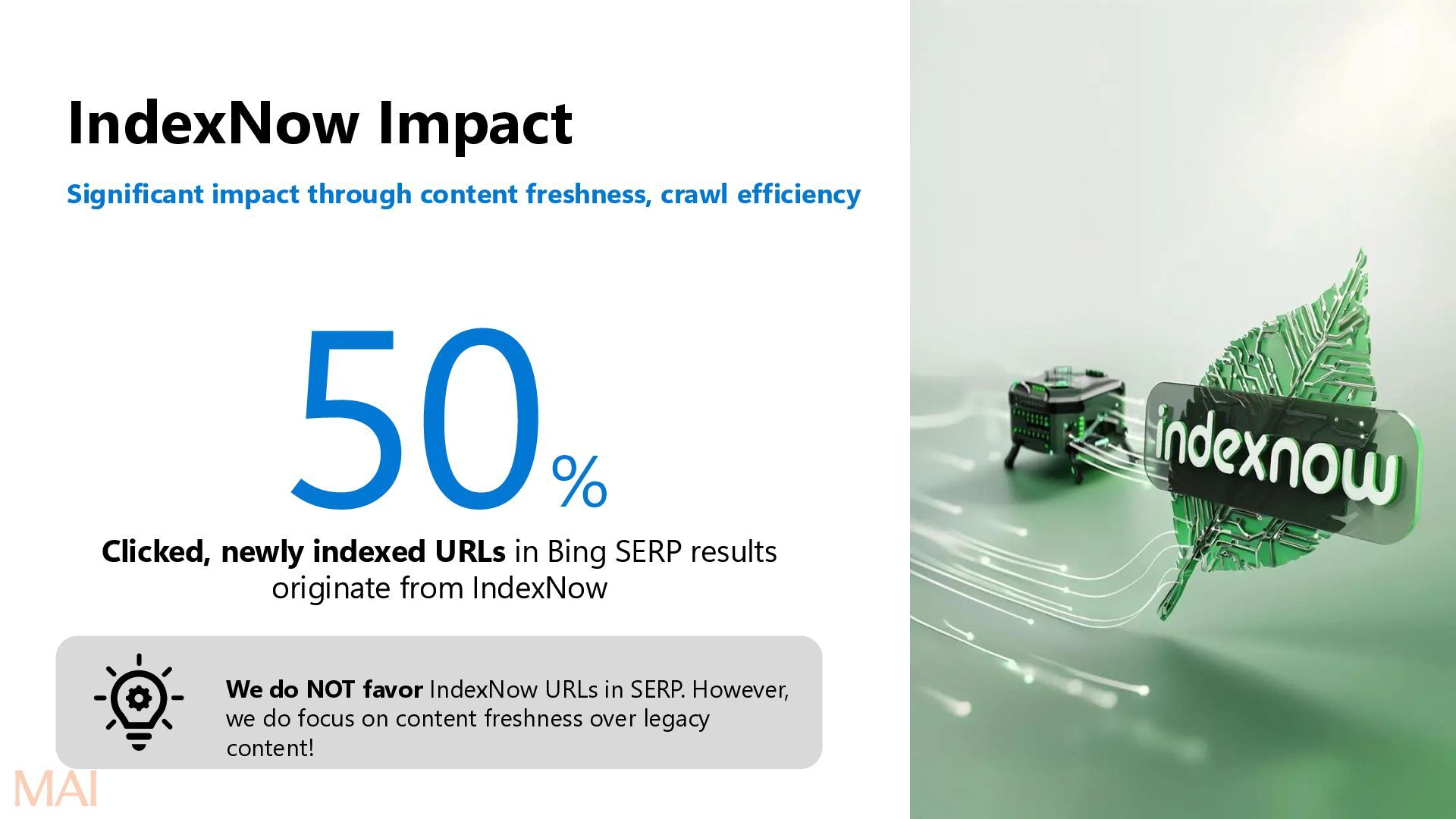
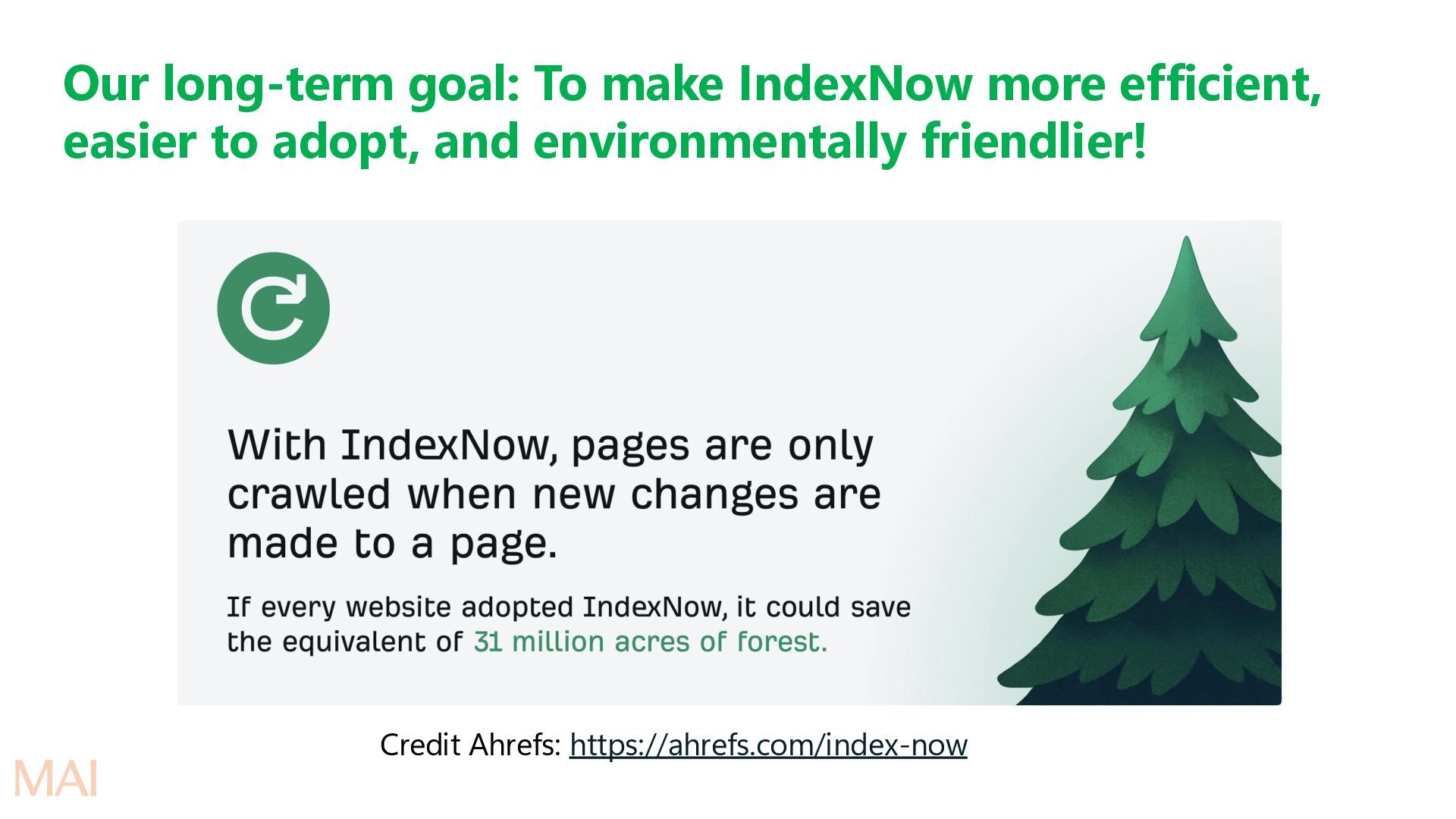
increase efficiency, and significantly enhance content freshness • Open Protocol – Adopted by a rapidly growing community of 10s of millions of websites. • Timely and clear freshness signal – Enable instant notification of new, updated, or deleted content • No wait – Take control of crawling. No need to wait for crawler to visit. Reduce number of crawls!
% Clicked, newly indexed URLs in Bing SERP results originate from IndexNow We do NOT favor IndexNow URLs in SERP. However, we do focus on content freshness over legacy content!
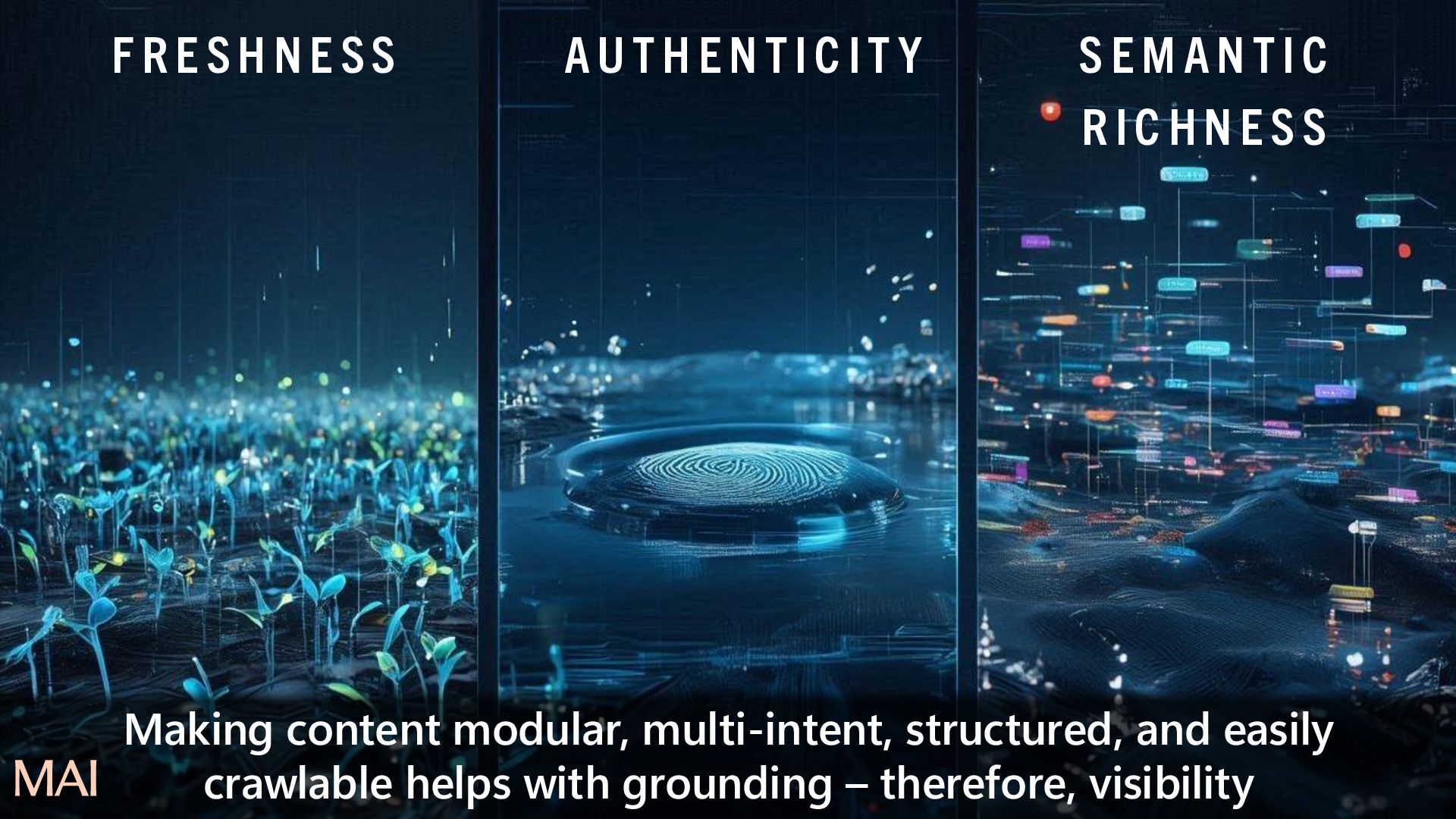
01 Build unique “content depth intensity” Focus on areas that reflect your unique expertise, depth, and niche problem space. 02 Structure is part of storytelling in “chunks” Avoid <div> soup, use <h1> or <h2> to position key points, tables, FAQ blocks, schema markup, and think “chunks”. 03 Showing your work builds trust Support your claims with examples, data, and sources. Content grounded in evidence builds trust and well- anchored claims.
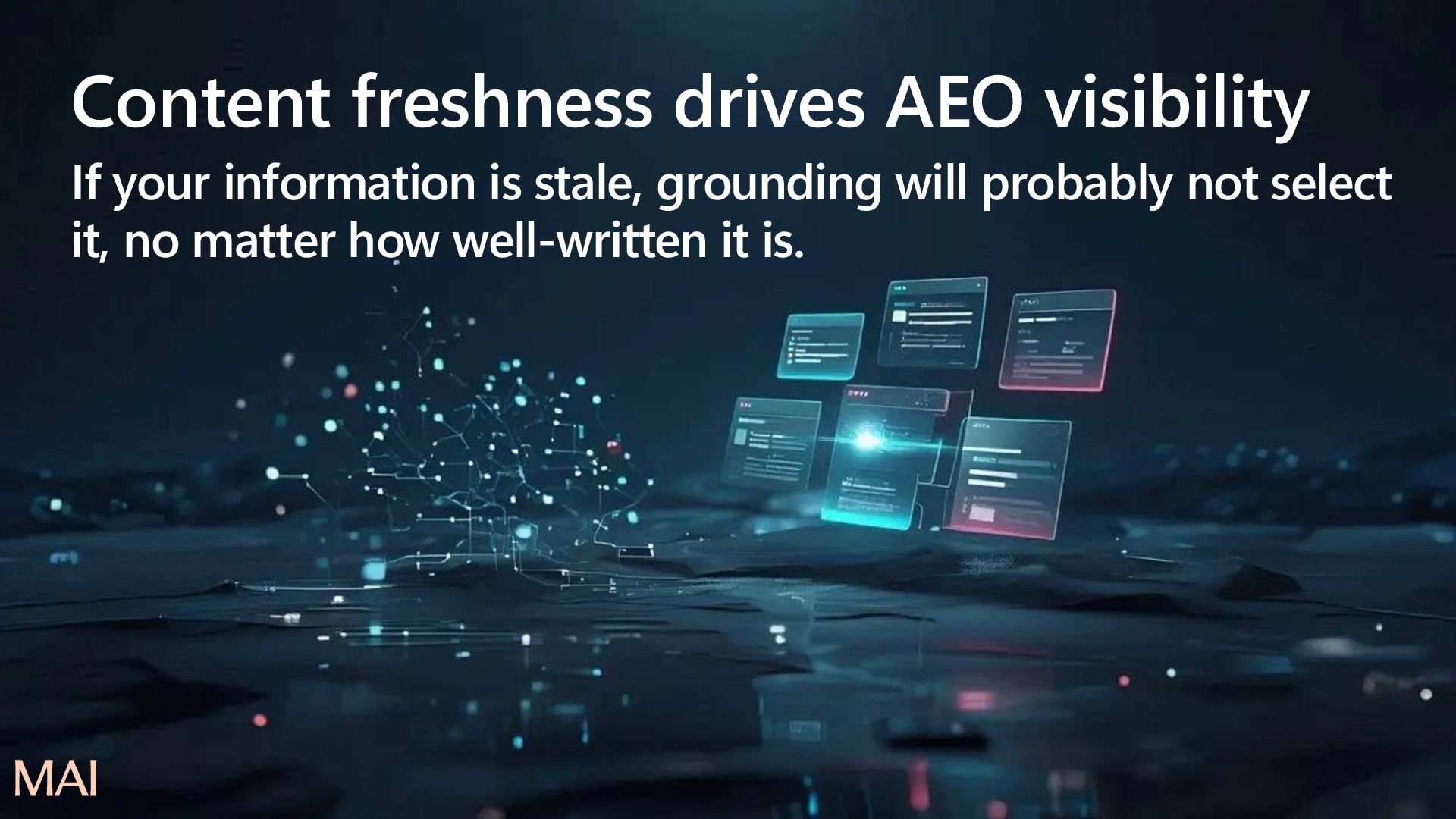
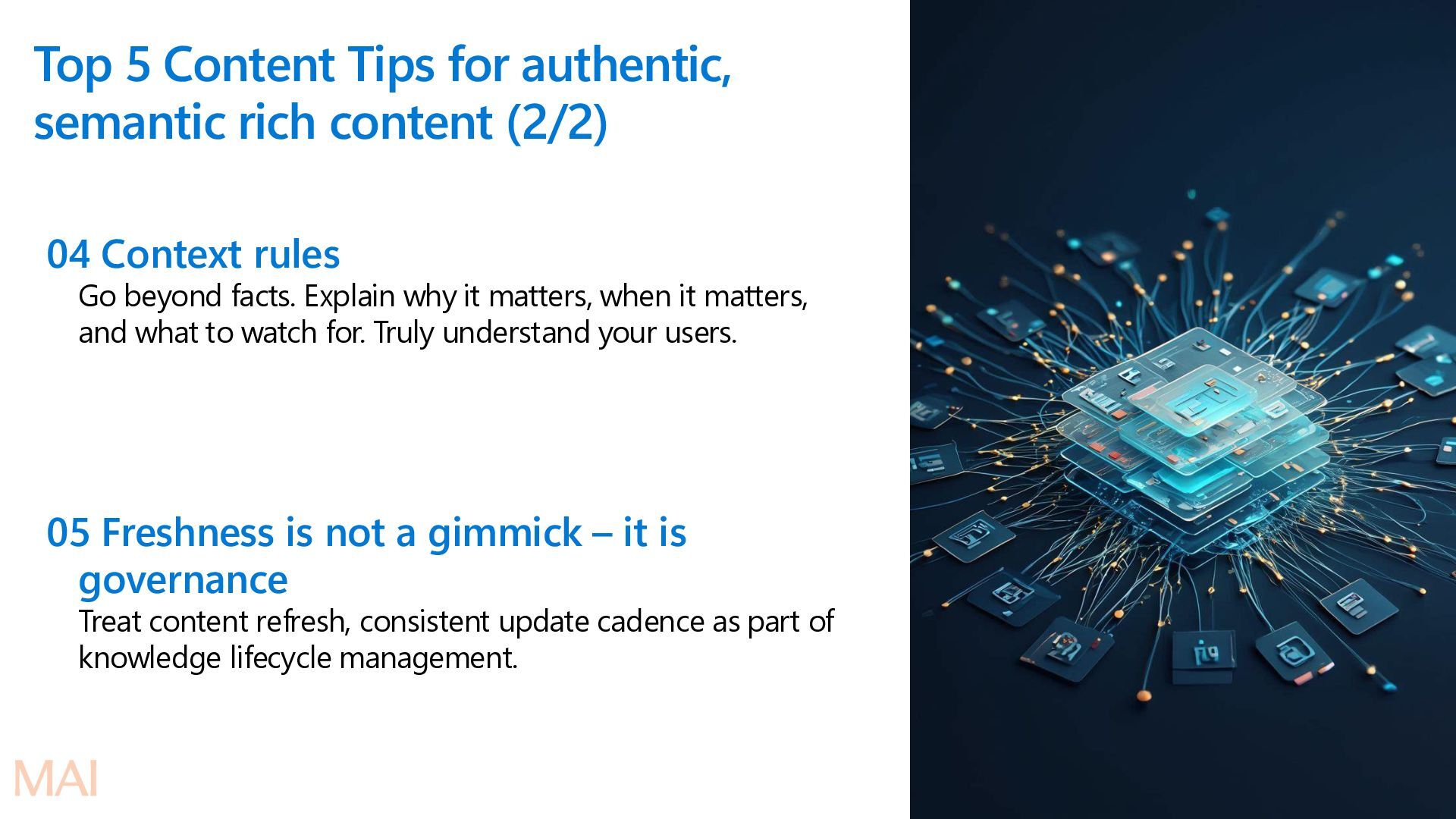
04 Context rules Go beyond facts. Explain why it matters, when it matters, and what to watch for. Truly understand your users. 05 Freshness is not a gimmick – it is governance Treat content refresh, consistent update cadence as part of knowledge lifecycle management.
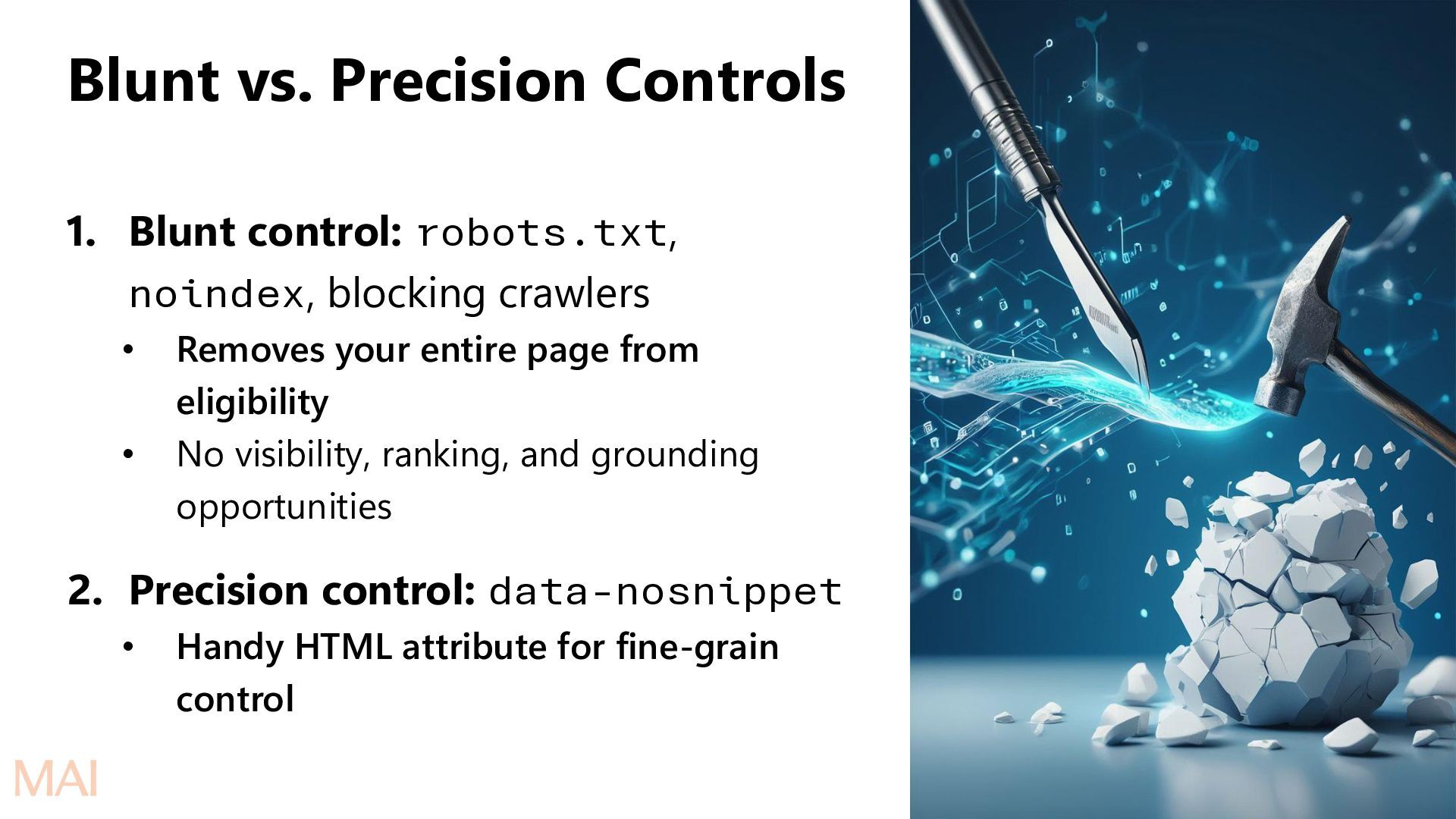
crawlers • Removes your entire page from eligibility • No visibility, ranking, and grounding opportunities 2. Precision control: data-nosnippet • Handy HTML attribute for fine-grain control
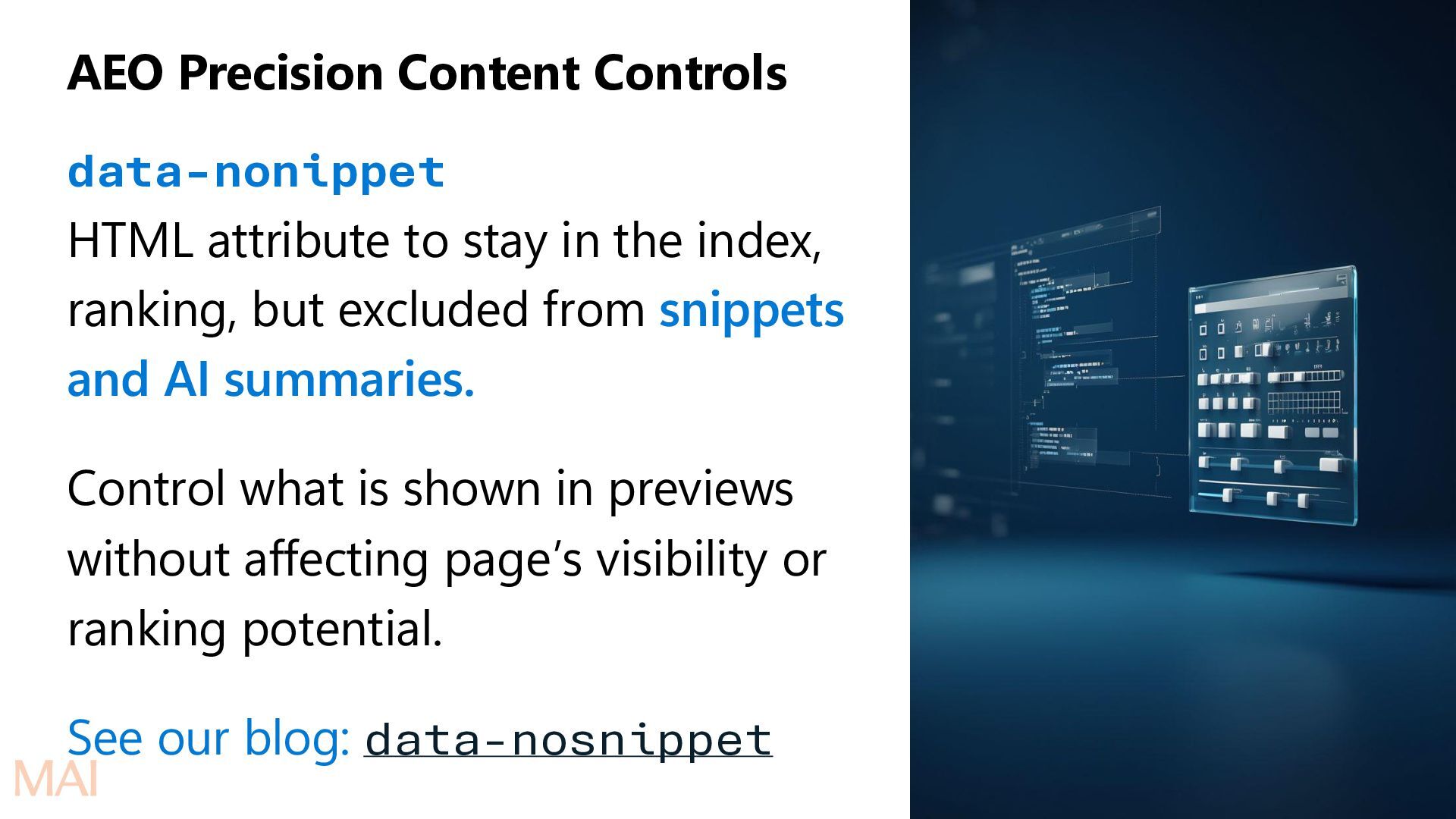
the index, ranking, but excluded from snippets and AI summaries. Control what is shown in previews without affecting page’s visibility or ranking potential. See our blog: data-nosnippet
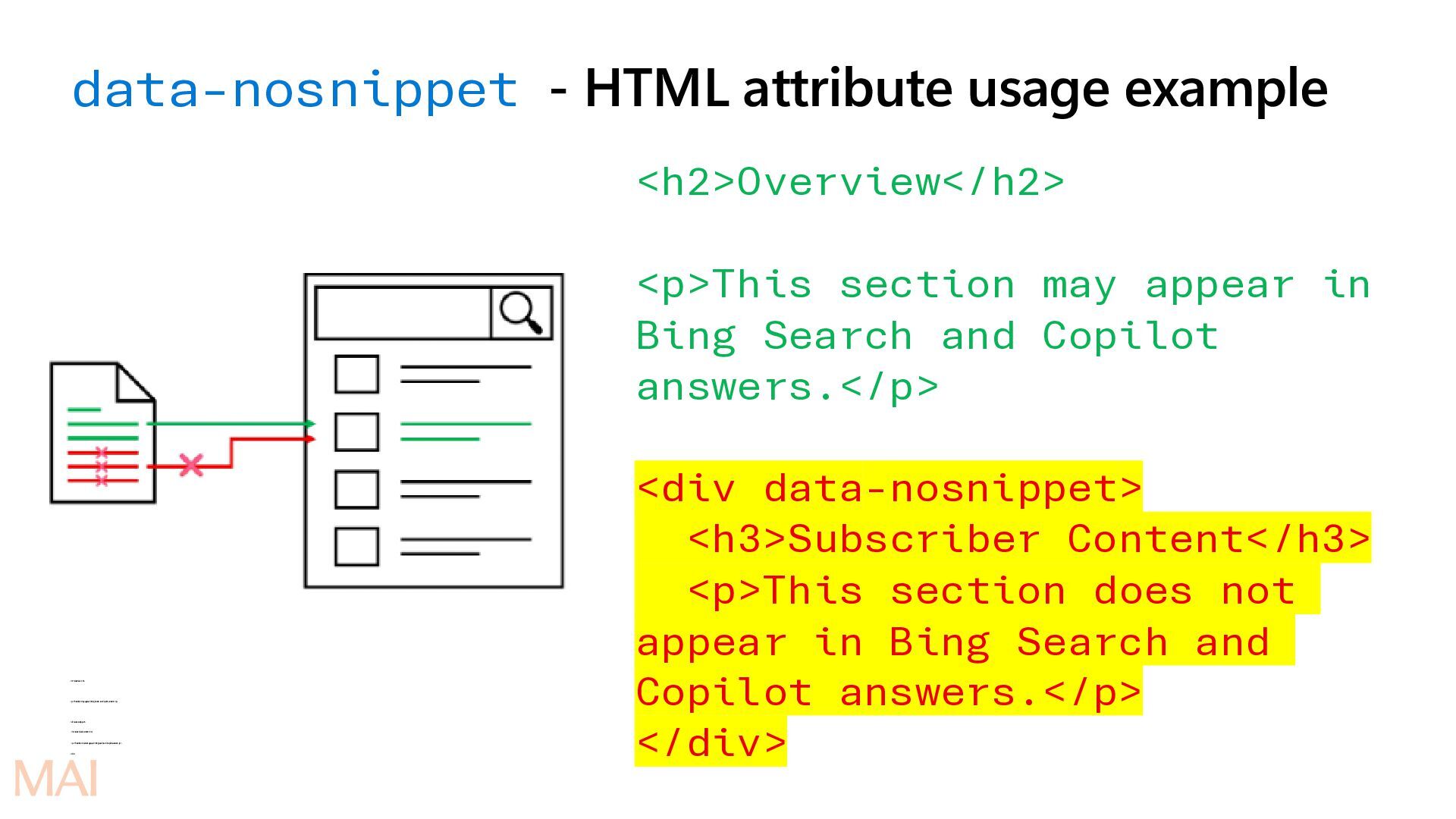
answers.</p> <div data-nosnippet> <h3>Subscriber Content</h3> <p>This section does not appear in Bing Search and Copilot answers.</p> </div> data-nosnippet - HTML attribute usage example <h2>O v er vi ew </h 2> <p>Th i s s ec ti on m ay app ear i n Bi ng Sea rc h a nd Copi l ot ans w er s. </p > <di v dat a-nos ni ppet > <h3>S ubs cri be r Cont ent </h3 > <p>Th i s s ec ti on does not ap pear i n Bi ng Se arc h and Copi l ot an sw er s. </ p> < /d i v >
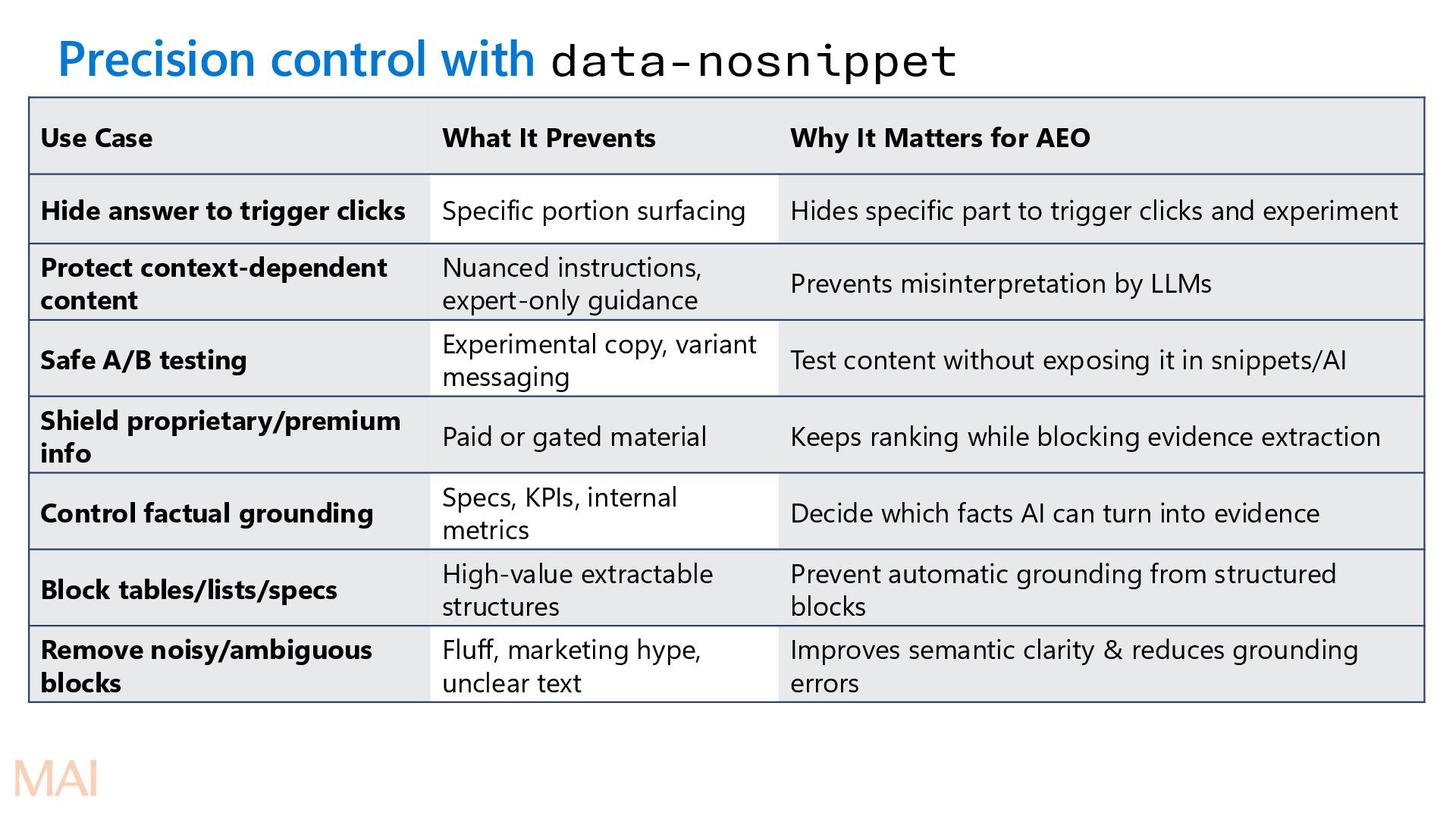
Hide answer to trigger clicks Specific portion surfacing Hides specific part to trigger clicks and experiment Protect context-dependent content Nuanced instructions, expert-only guidance Prevents misinterpretation by LLMs Safe A/B testing Experimental copy, variant messaging Test content without exposing it in snippets/AI Shield proprietary/premium info Paid or gated material Keeps ranking while blocking evidence extraction Control factual grounding Specs, KPIs, internal metrics Decide which facts AI can turn into evidence Block tables/lists/specs High-value extractable structures Prevent automatic grounding from structured blocks Remove noisy/ambiguous blocks Fluff, marketing hype, unclear text Improves semantic clarity & reduces grounding errors Precision control with data-nosnippet
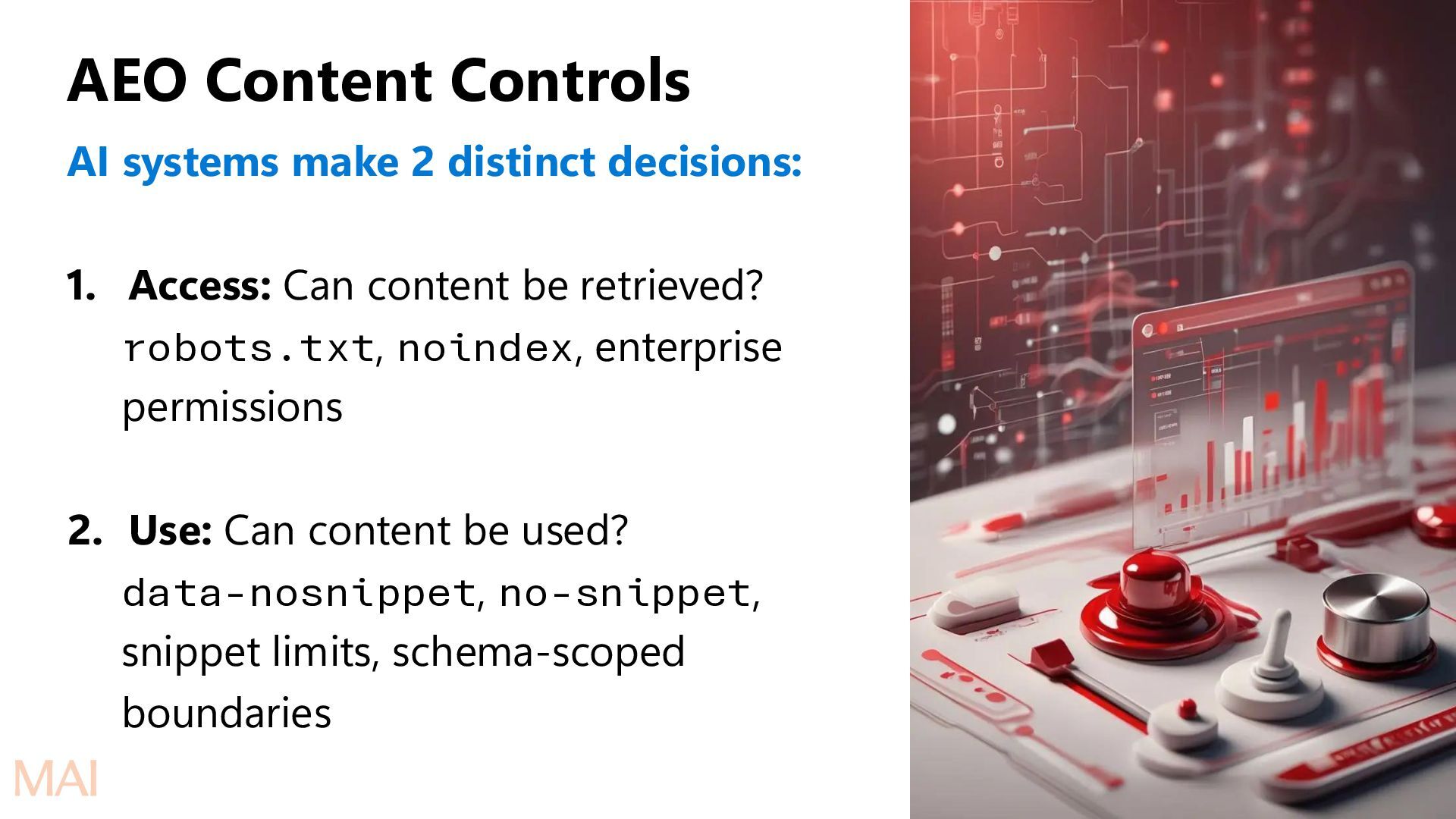
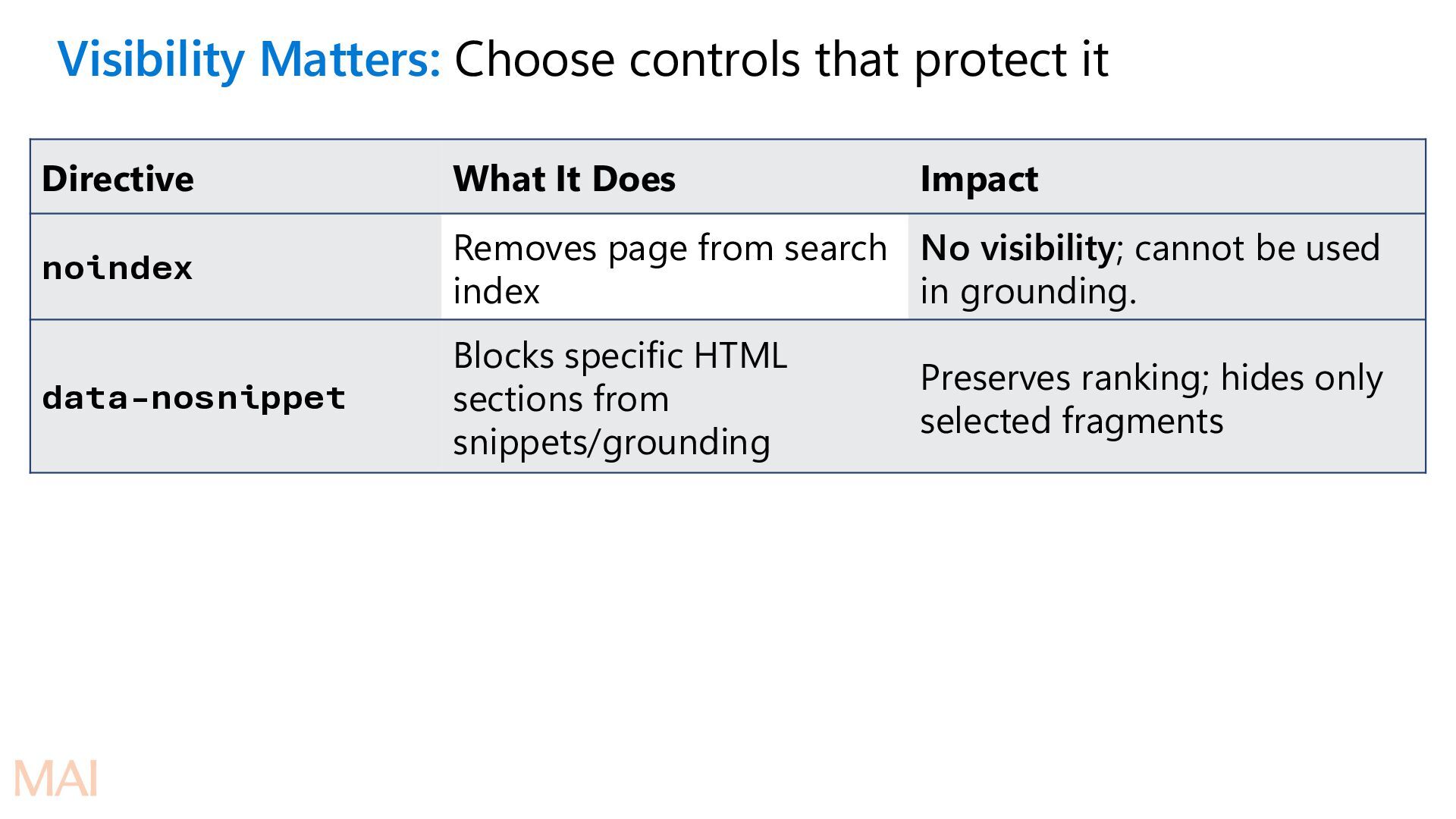
index No visibility; cannot be used in grounding. data-nosnippet Blocks specific HTML sections from snippets/grounding Preserves ranking; hides only selected fragments Visibility Matters: Choose controls that protect it
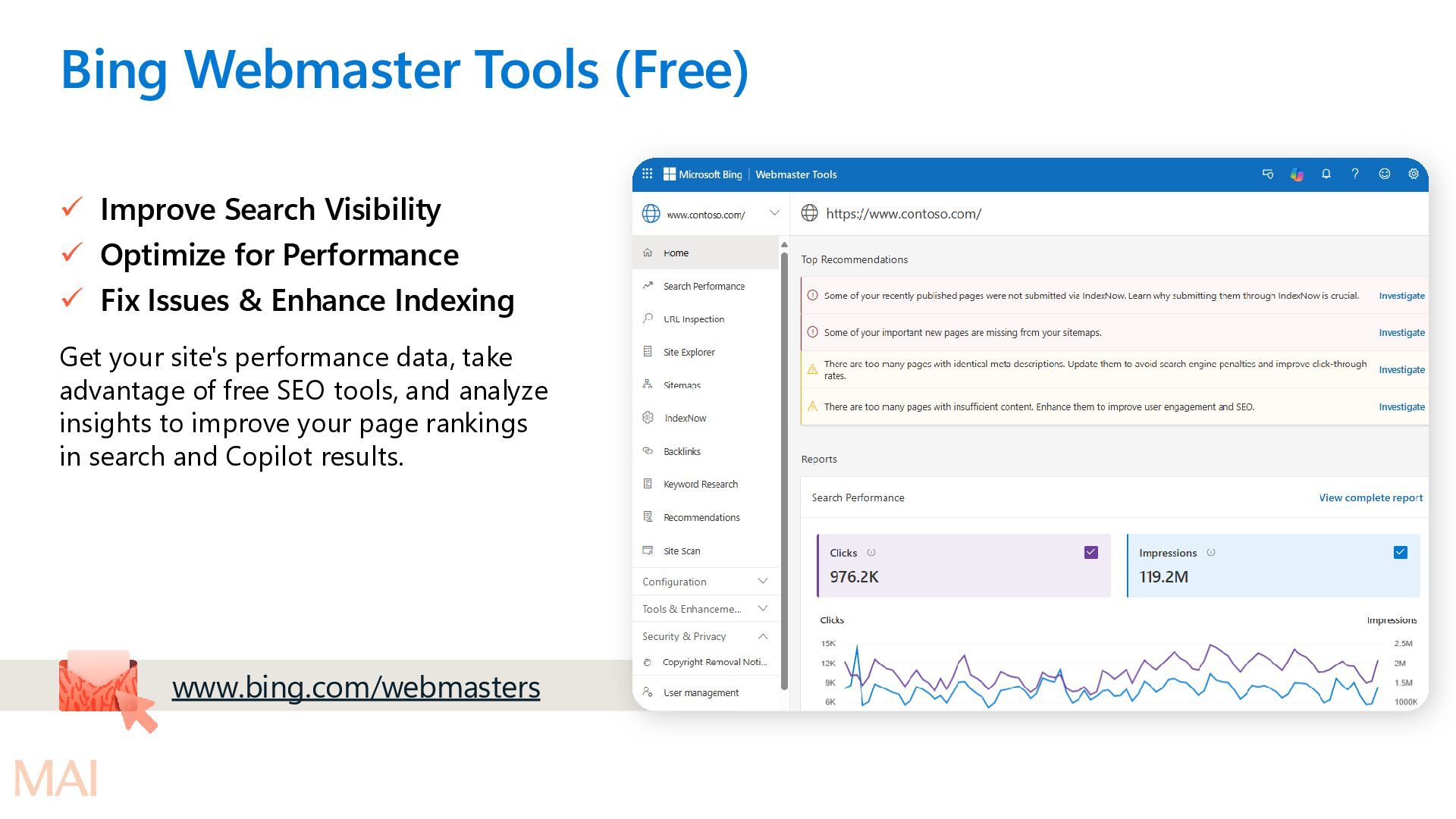
Optimize for Performance ✓ Fix Issues & Enhance Indexing Get your site's performance data, take advantage of free SEO tools, and analyze insights to improve your page rankings in search and Copilot results.
Session recordings ✓ Insights Gain deeper insights into user behavior, track engagement, and identify opportunities to optimize your site for better conversions and a seamless experience.


 techseoconnect
 shpigford
 palkan
 garrettdimon
 davidcarrasco
 stuffmc
 csswizardry
 kristinabergwall1
 kimpetersen
 livdayseo
 aleyda
 varn
varn
 427marketing