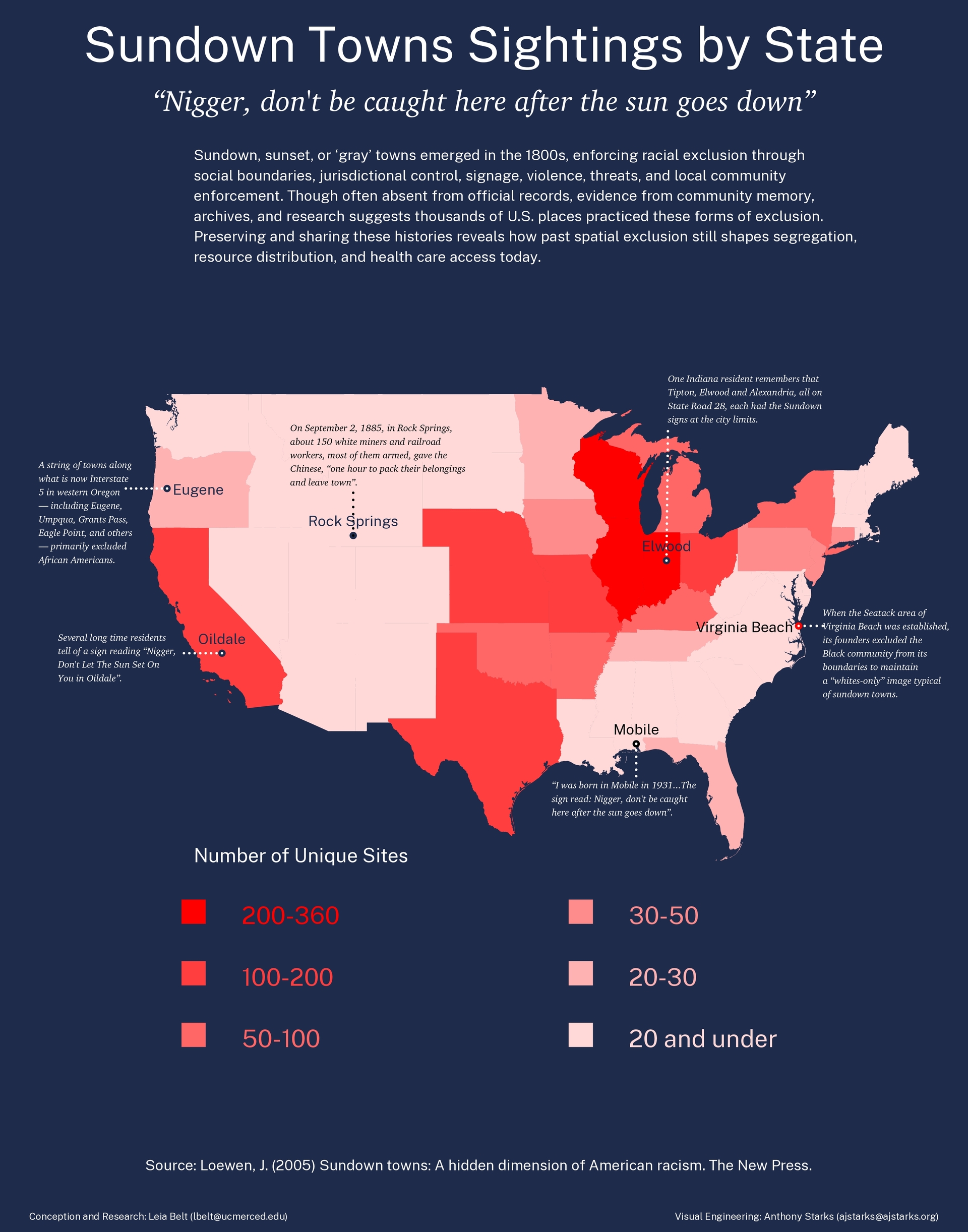
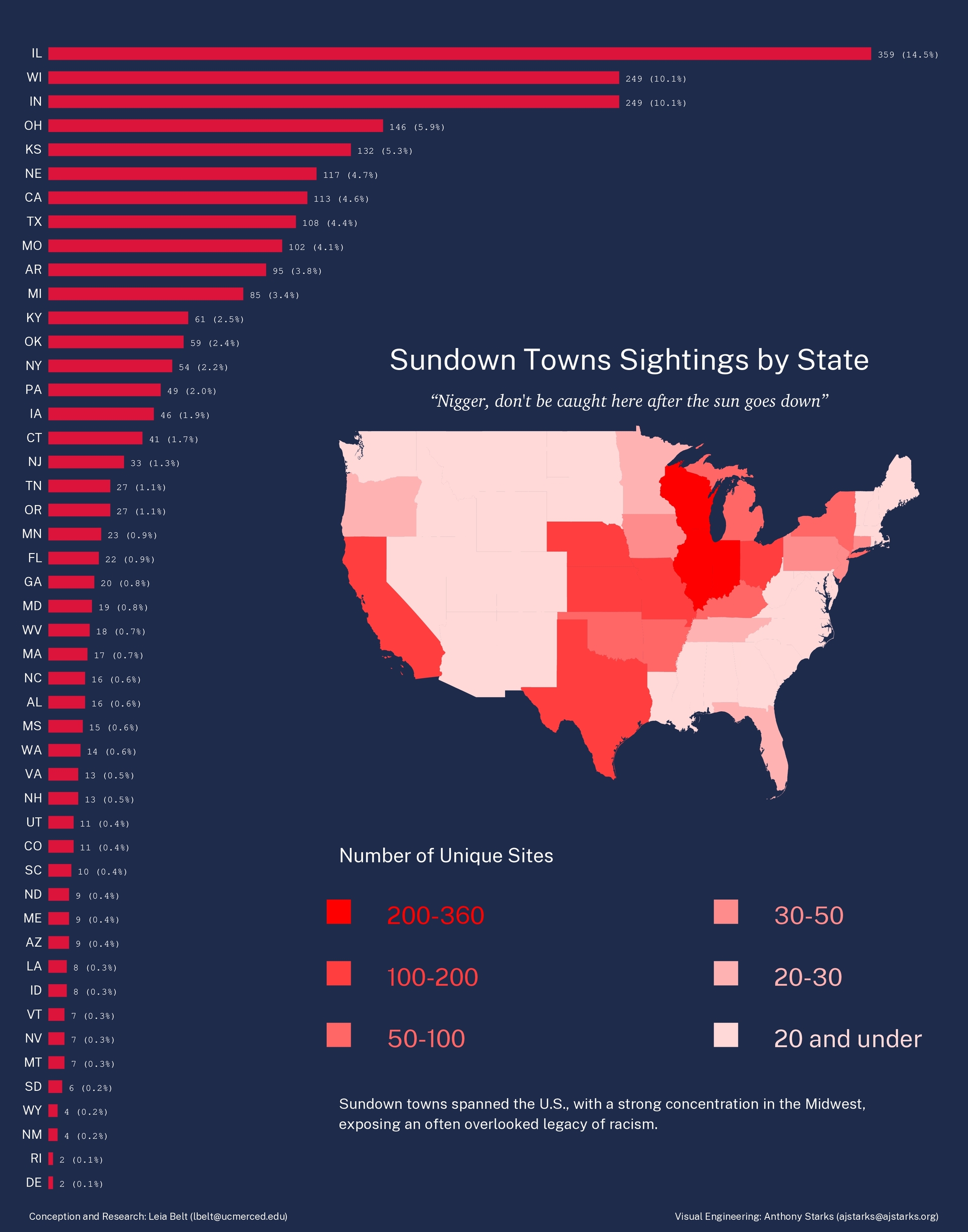
after the sun goes down” Sundown, sunset, or ‘gray’ towns emerged in the 1800s, enforcing racial exclusion through social boundaries, jurisdictional control, signage, violence, threats, and local community enforcement. Though often absent from official records, evidence from community memory, archives, and research suggests thousands of U.S. places practiced these forms of exclusion. Preserving and sharing these histories reveals how past spatial exclusion still shapes segregation, resource distribution, and health care access today. Elwood Mobile Oildale Rock Springs Eugene Virginia Beach “I was born in Mobile in 1931...The sign read: Nigger, don't be caught here after the sun goes down”. One Indiana resident remembers that Tipton, Elwood and Alexandria, all on State Road 28, each had the Sundown signs at the city limits. Several long time residents tell of a sign reading “Nigger, Don't Let The Sun Set On You in Oildale”. On September 2, 1885, in Rock Springs, about 150 white miners and railroad workers, most of them armed, gave the Chinese, “one hour to pack their belongings and leave town”. A string of towns along what is now Interstate 5 in western Oregon — including Eugene, Umpqua, Grants Pass, Eagle Point, and others — primarily excluded African Americans. When the Seatack area of Virginia Beach was established, its founders excluded the Black community from its boundaries to maintain a “whites-only” image typical of sundown towns. Number of Unique Sites 200-360 100-200 50-100 30-50 20-30 20 and under Source: Loewen, J. (2005) Sundown towns: A hidden dimension of American racism. The New Press. Conception and Research: Leia Belt (
[email protected]) Visual Engineering: Anthony Starks (
[email protected])


 ajstarks
 addyosmani
 sabderemane
 cassininazir
 quramy
 stephenakadiri
 schroneko
 orderedlist
 garrettdimon
 tamaranovitovic
 baasie
 jct
jct
 mayunak