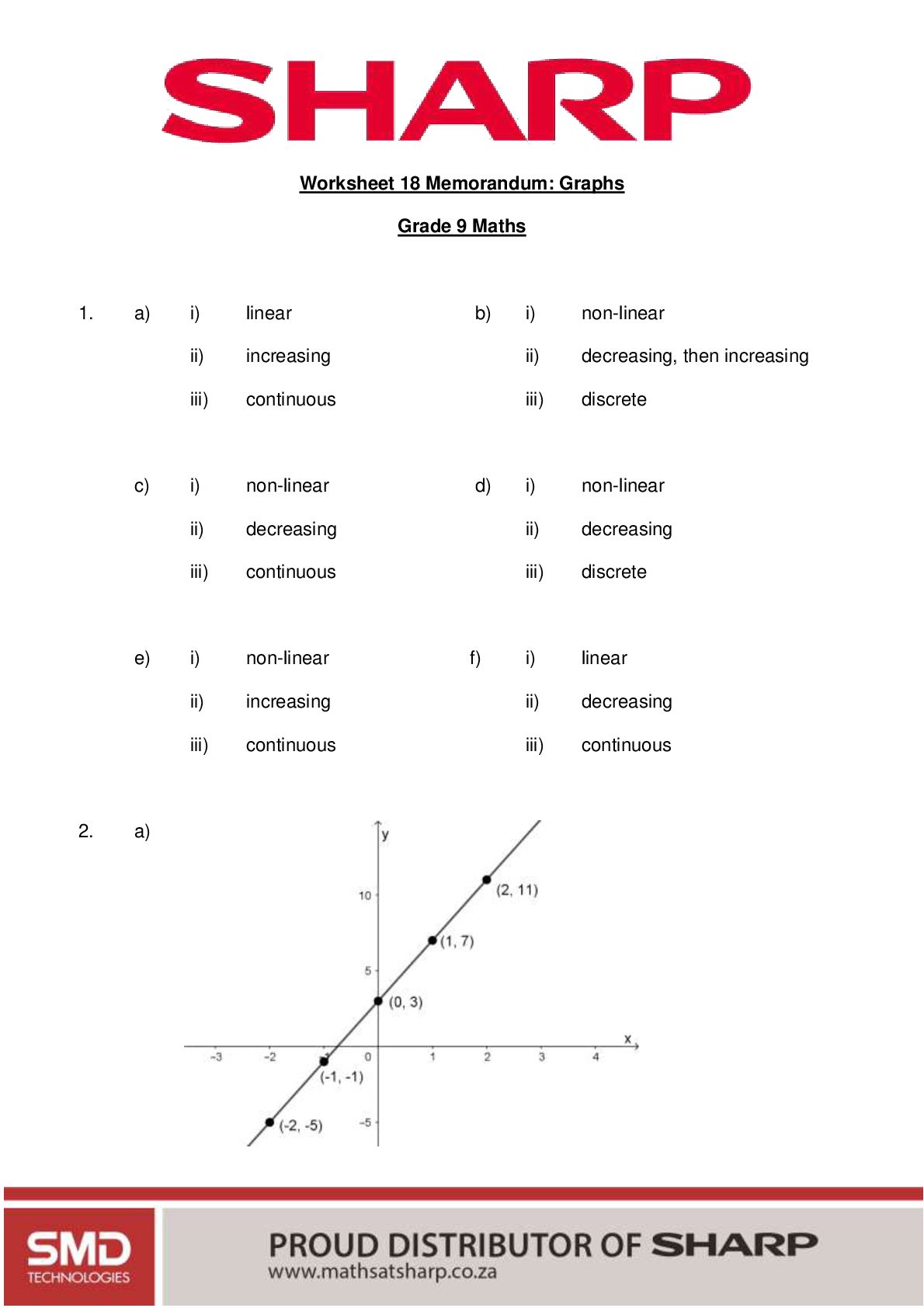
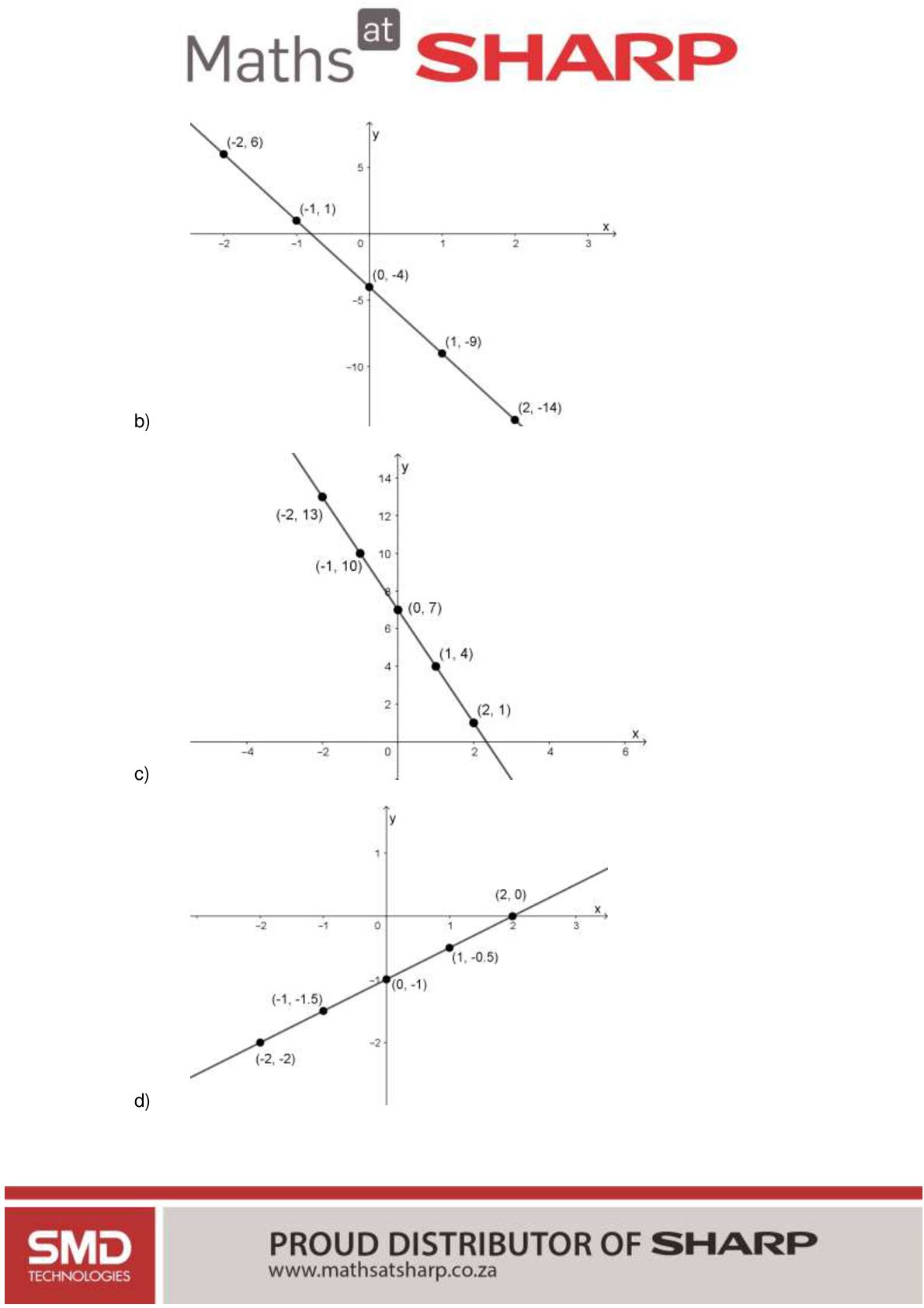
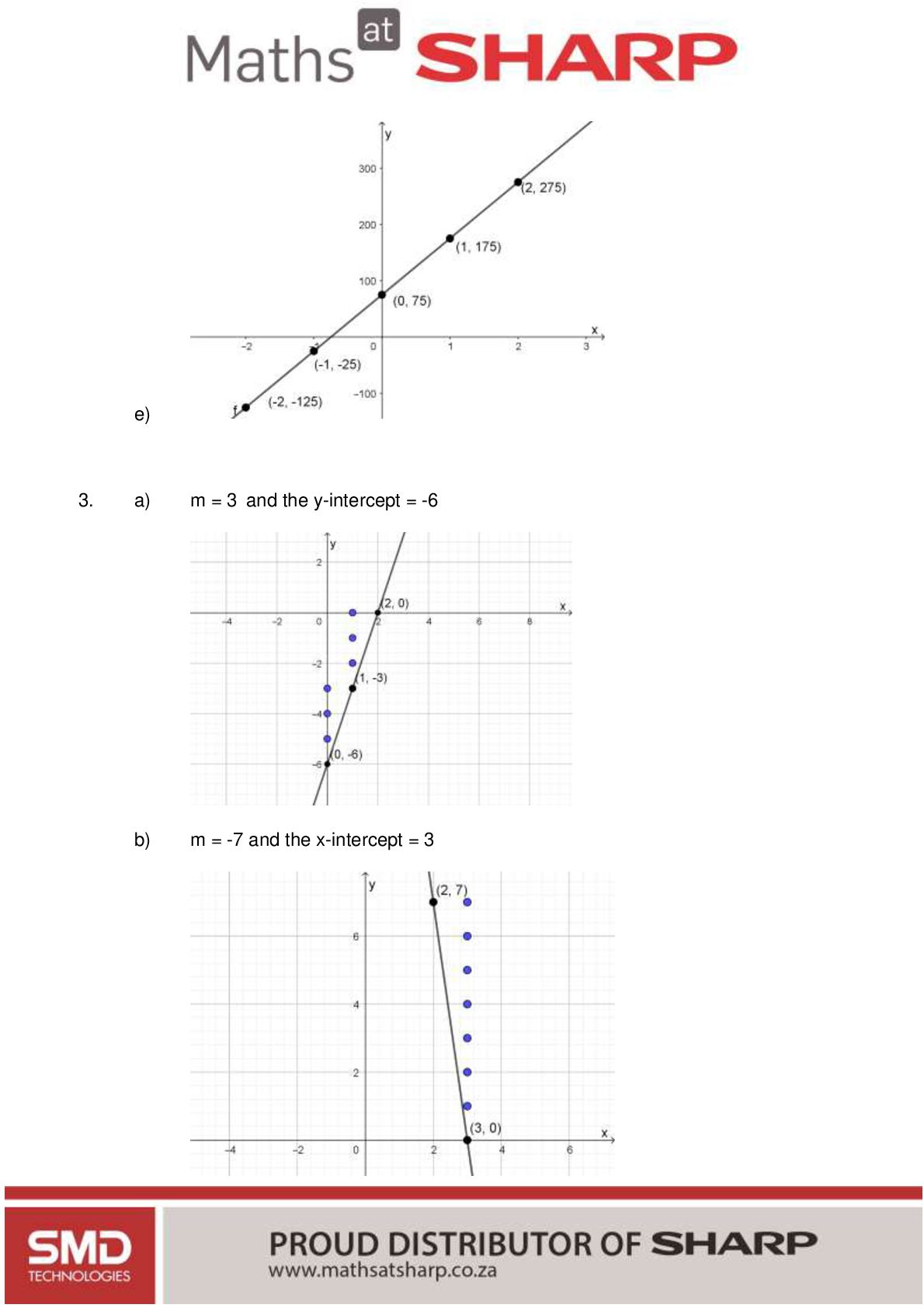
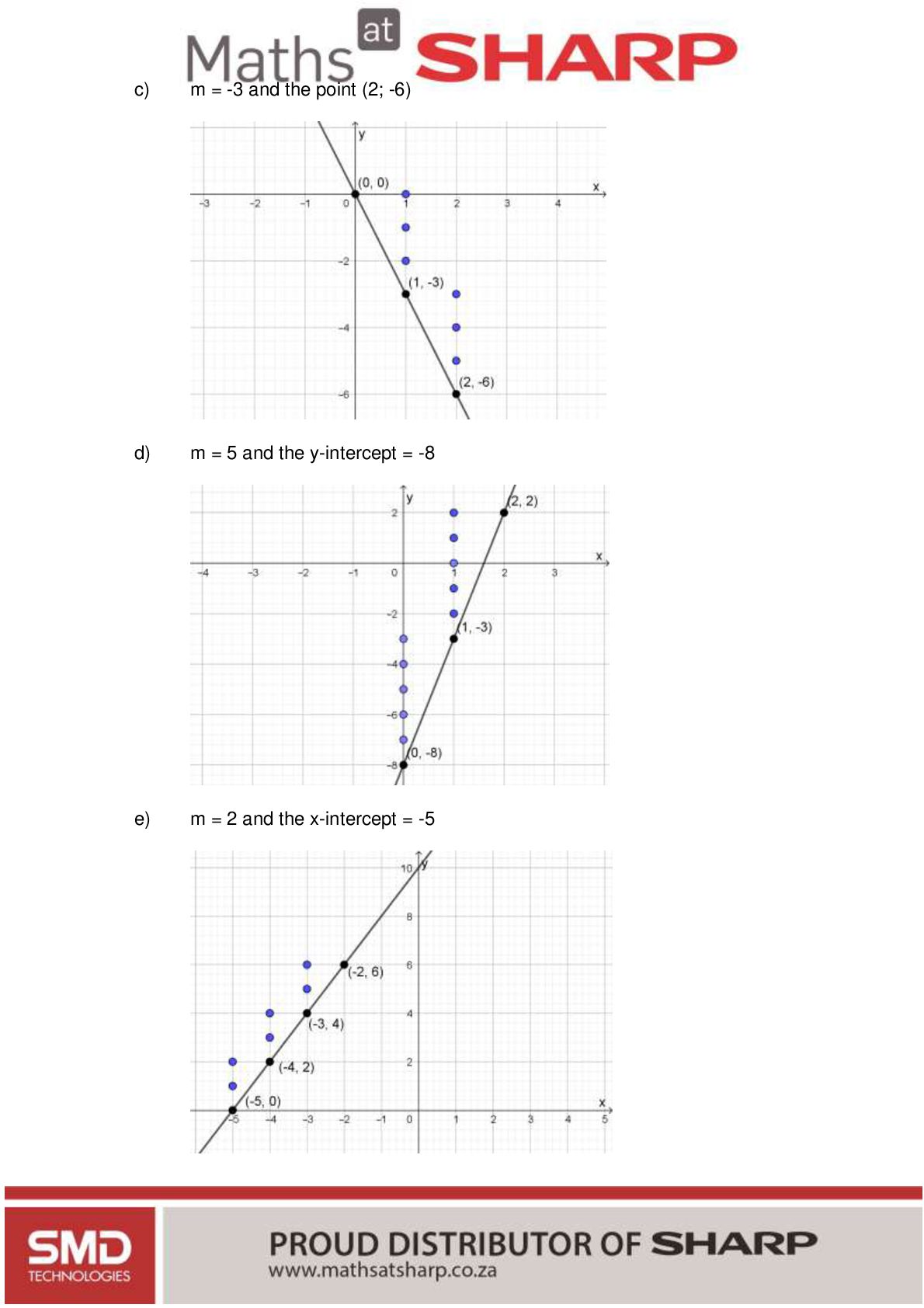
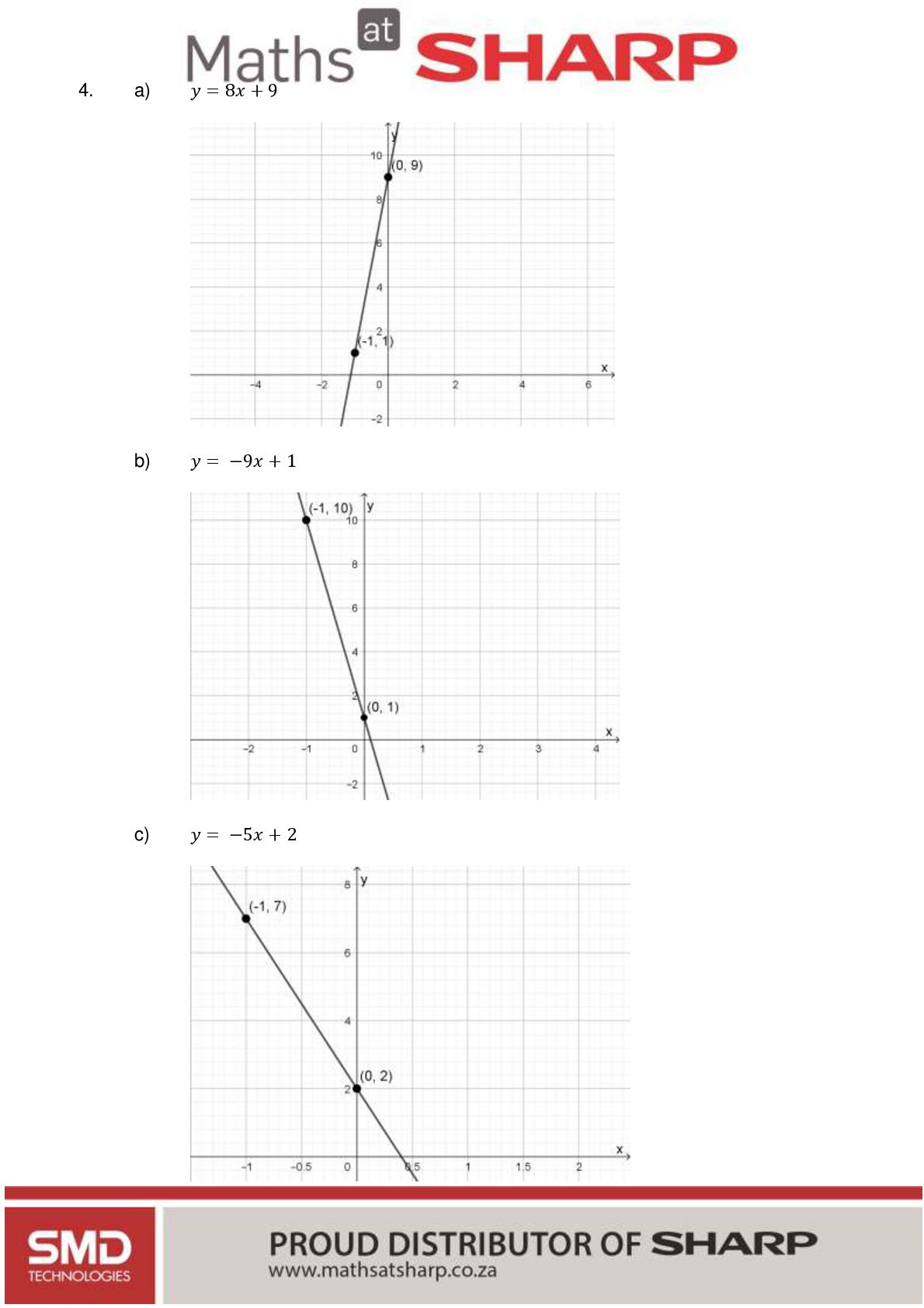
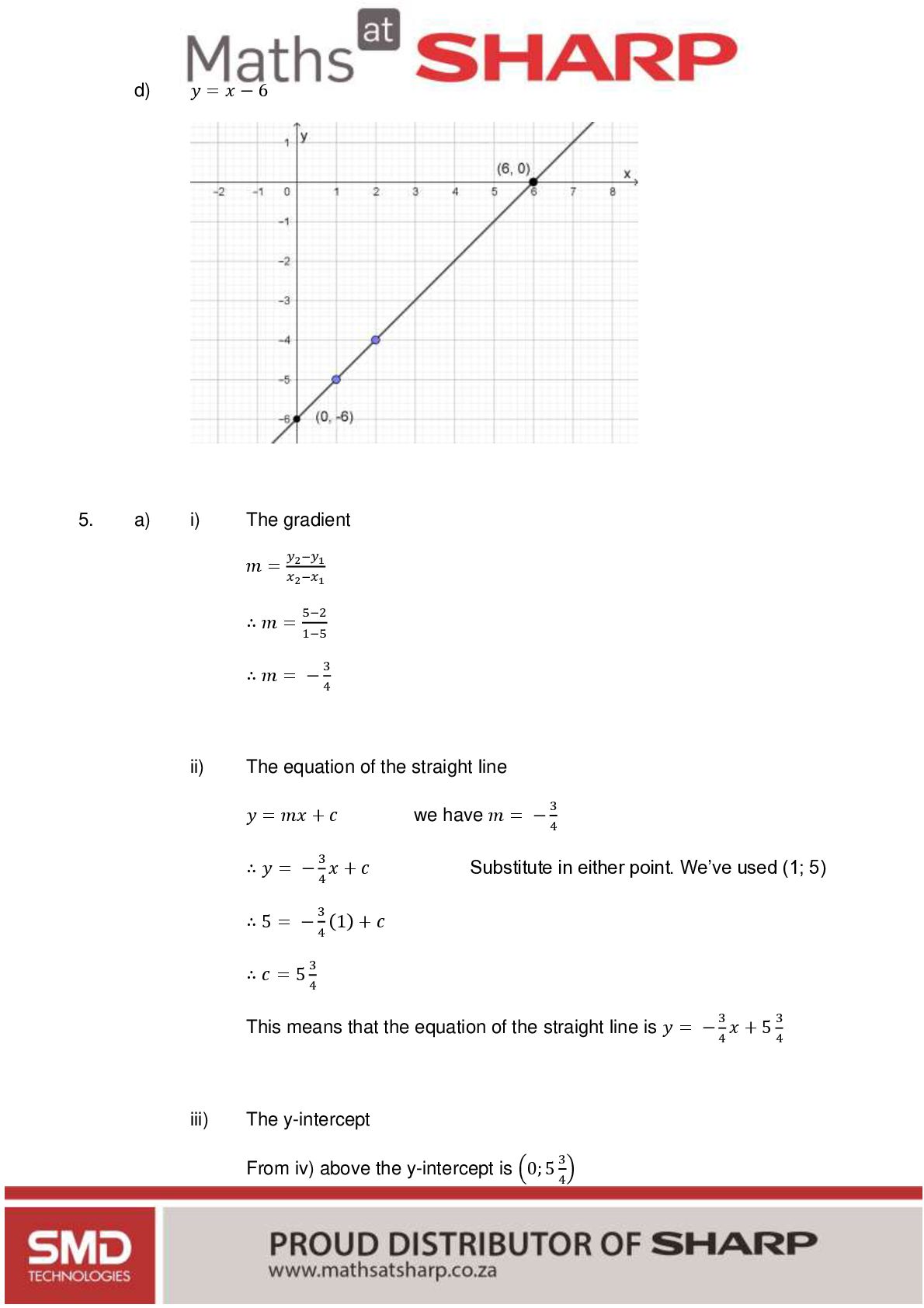
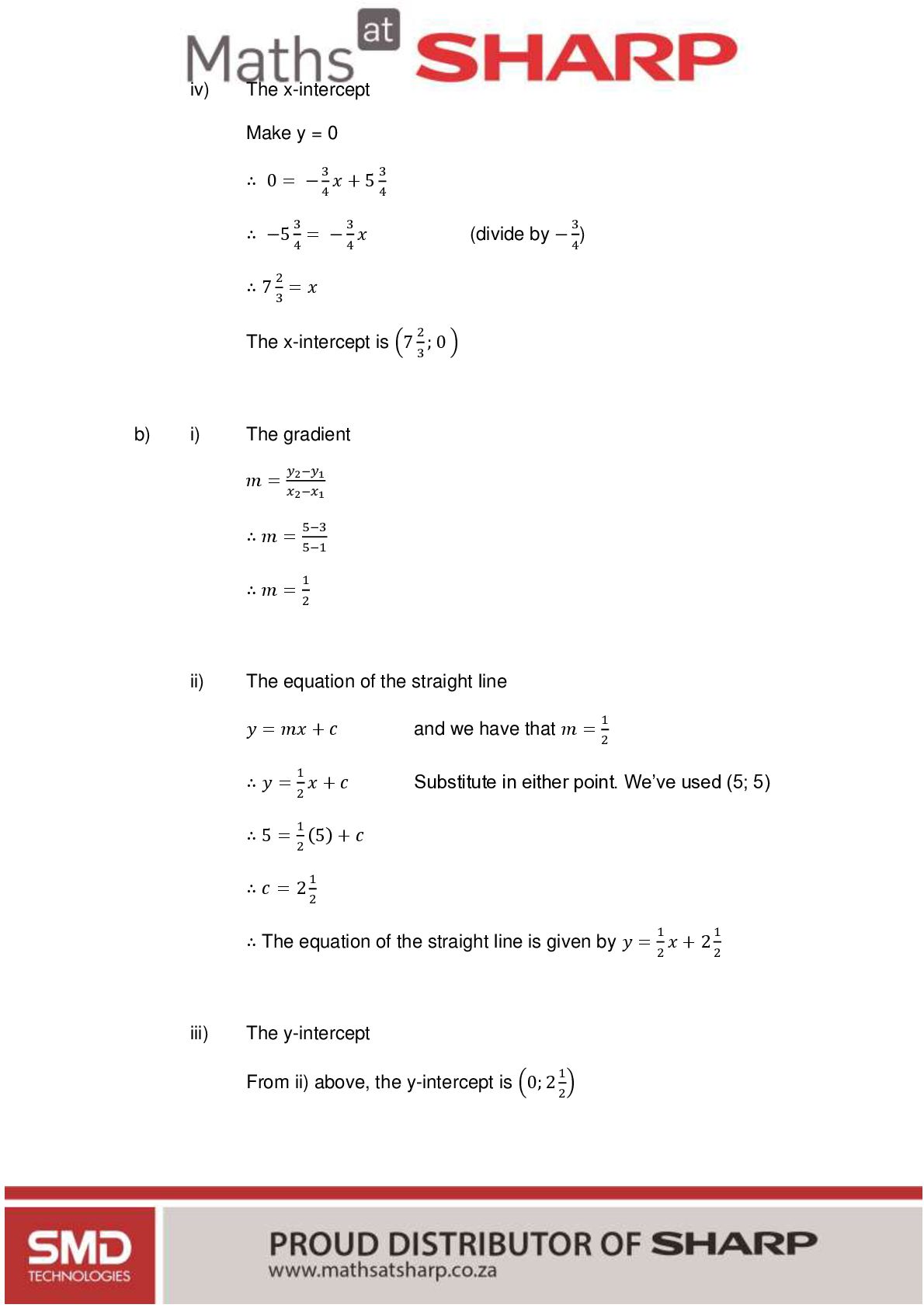
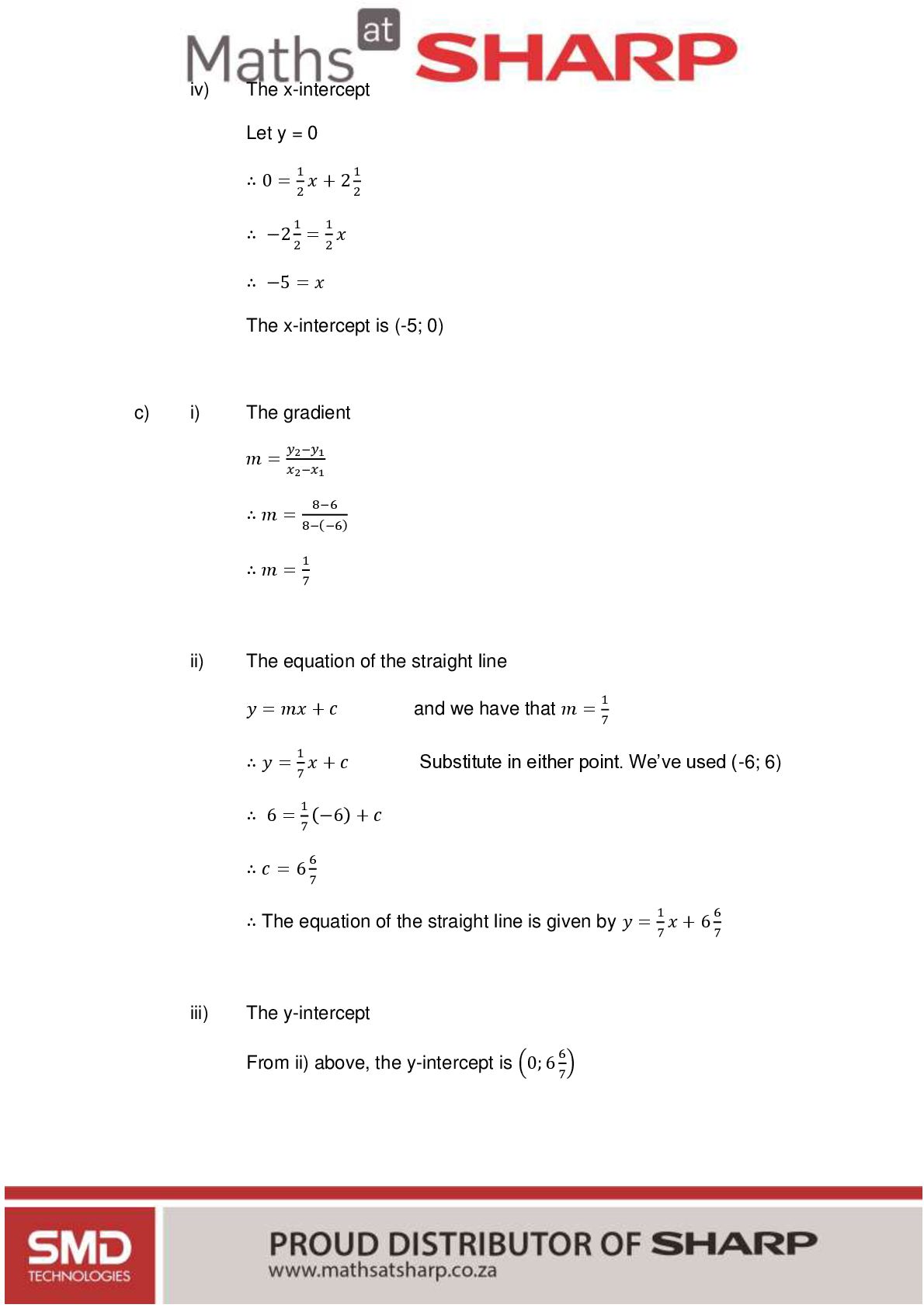
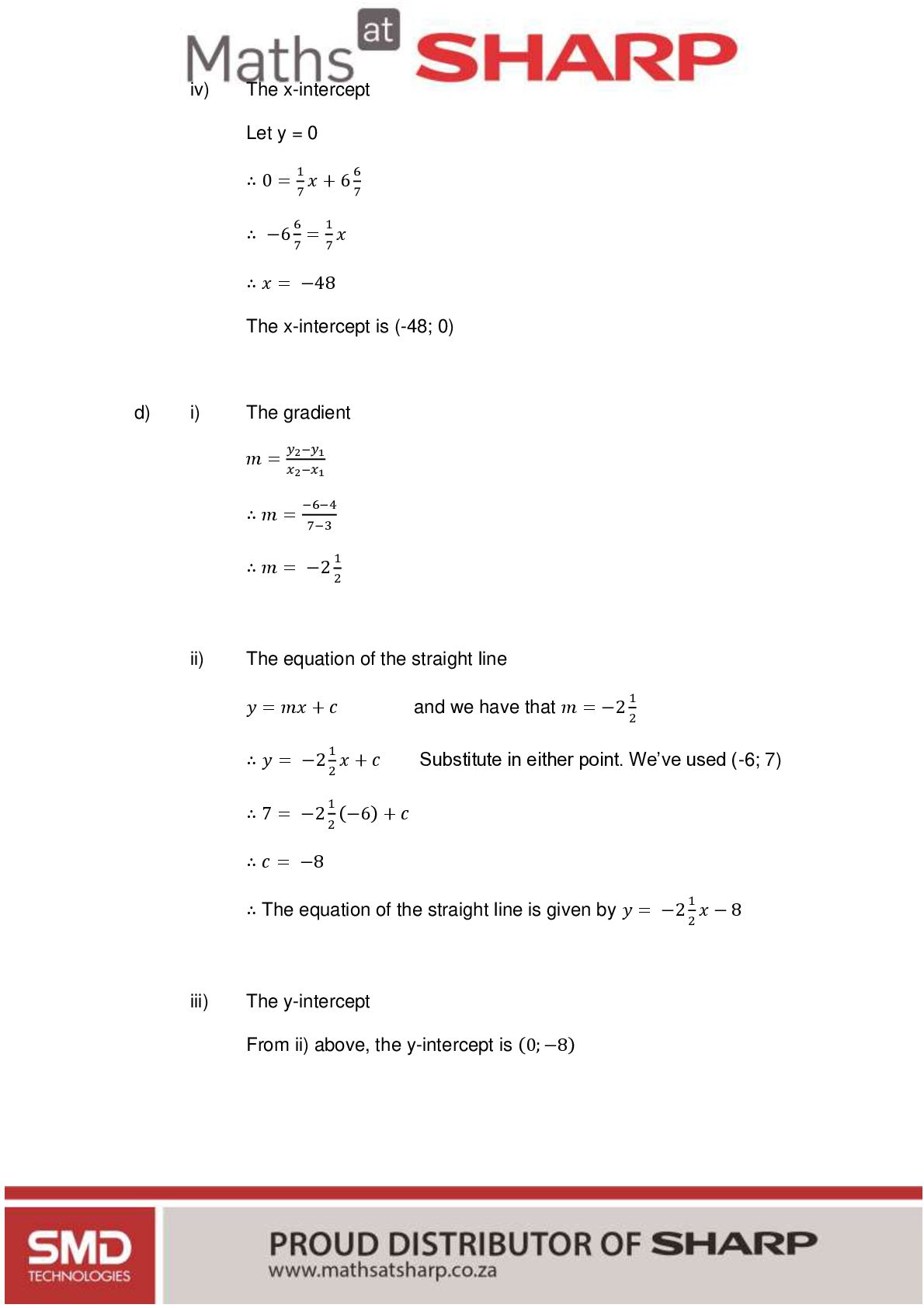
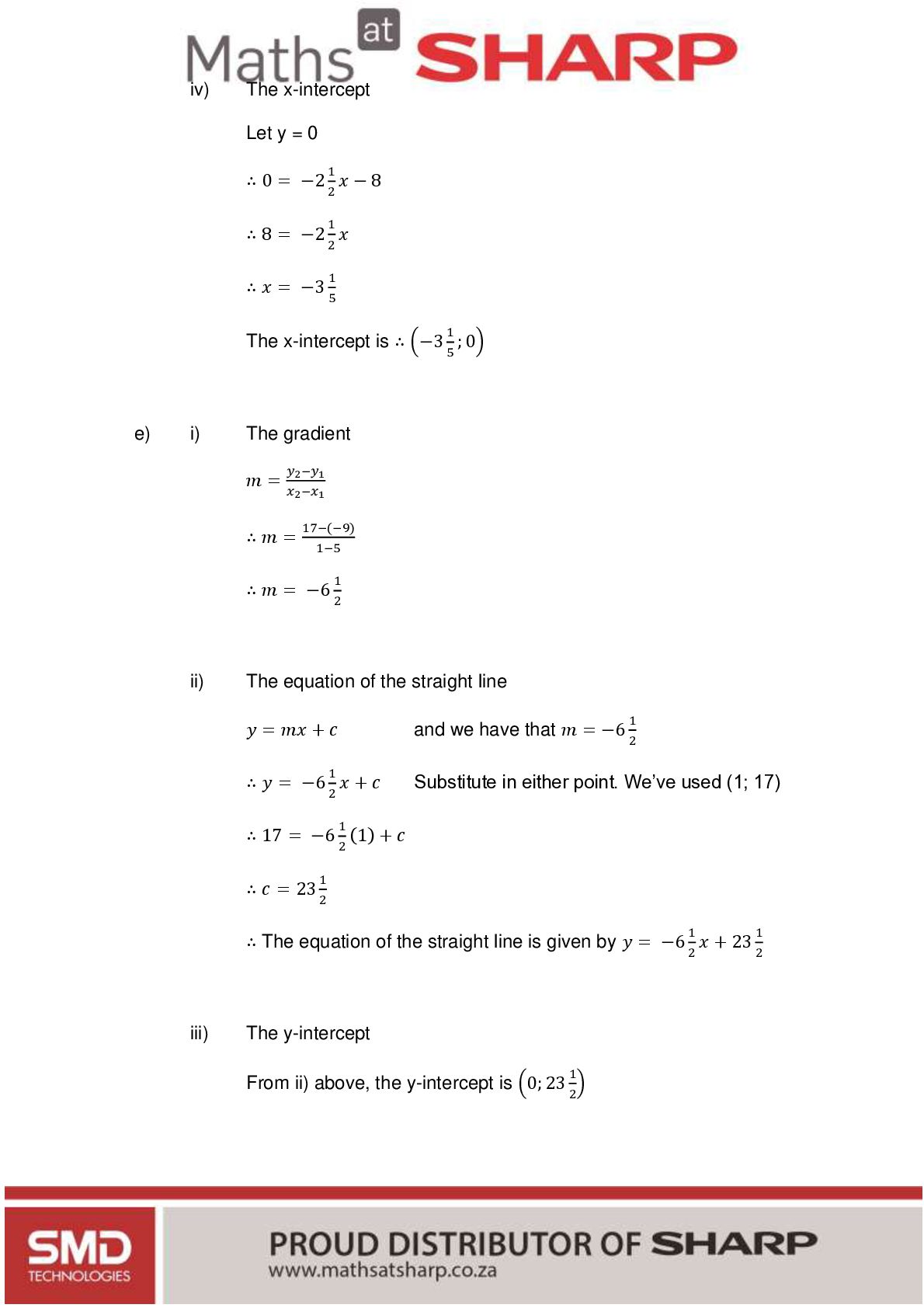
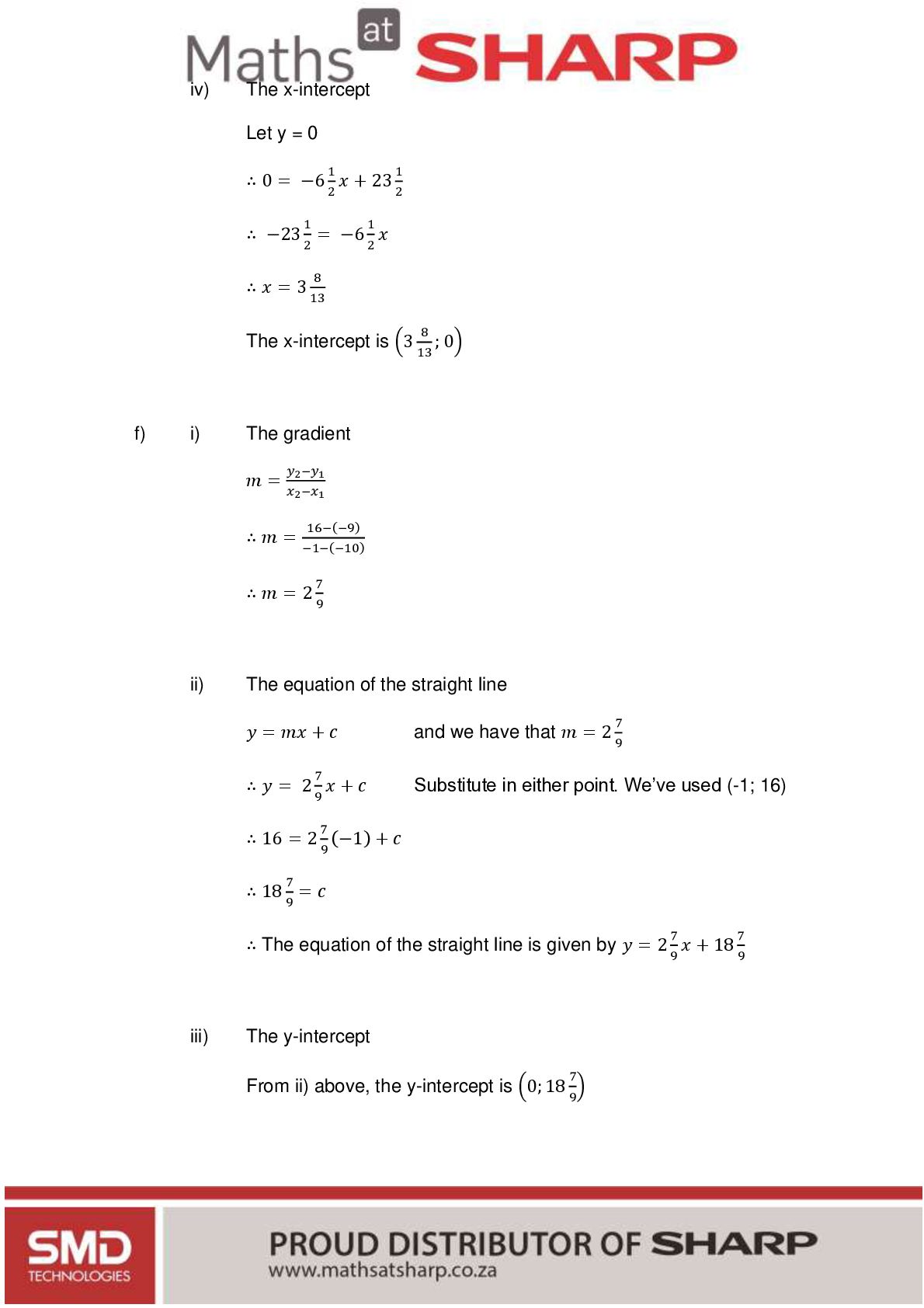
𝑚 = 𝑥2−𝑥1 2 1 5−2 ∴ 𝑚 = 1−5 ∴𝑚= − ii) 3 4 The equation of the straight line 𝑦 = 𝑚𝑥 + 𝑐 3 ∴ 𝑦 = −4𝑥 + 𝑐 3 we have 𝑚 = − 4 Substitute in either point. We’ve used (1; 5) 3 ∴ 5 = − 4 (1) + 𝑐 3 ∴ 𝑐 = 54 3 3 This means that the equation of the straight line is 𝑦 = − 4 𝑥 + 5 4 iii) The y-intercept 3 From iv) above the y-intercept is (0; 5 4)
0 = −4𝑥 + 54 3 3 3 ∴ −5 4 = − 4 𝑥 (divide by − 4) 2 ∴ 73 = 𝑥 2 The x-intercept is (7 3 ; 0 ) b) i) The gradient 𝑦 −𝑦 𝑚 = 𝑥2−𝑥1 2 1 5−3 ∴ 𝑚 = 5−1 1 ∴𝑚=2 ii) The equation of the straight line 𝑦 = 𝑚𝑥 + 𝑐 1 ∴ 𝑦 = 2𝑥 + 𝑐 1 and we have that 𝑚 = 2 Substitute in either point. We’ve used (5; 5) 1 ∴ 5 = 2 (5) + 𝑐 1 ∴ 𝑐 = 22 1 1 ∴ The equation of the straight line is given by 𝑦 = 2 𝑥 + 2 2 iii) The y-intercept 1 From ii) above, the y-intercept is (0; 2 2)
0 = 2𝑥 + 22 1 1 ∴ −2 2 = 2 𝑥 ∴ −5 = 𝑥 The x-intercept is (-5; 0) c) i) The gradient 𝑦 −𝑦 𝑚 = 𝑥2−𝑥1 2 1 8−6 ∴ 𝑚 = 8−(−6) 1 ∴𝑚=7 ii) The equation of the straight line 𝑦 = 𝑚𝑥 + 𝑐 1 ∴ 𝑦 = 7𝑥 + 𝑐 1 and we have that 𝑚 = 7 Substitute in either point. We’ve used (-6; 6) 1 ∴ 6 = 7 (−6) + 𝑐 6 ∴ 𝑐 = 67 1 6 ∴ The equation of the straight line is given by 𝑦 = 7 𝑥 + 6 7 iii) The y-intercept 6 From ii) above, the y-intercept is (0; 6 7)
0 = 7𝑥 + 67 6 1 ∴ −6 7 = 7 𝑥 ∴ 𝑥 = −48 The x-intercept is (-48; 0) d) i) The gradient 𝑦 −𝑦 𝑚 = 𝑥2−𝑥1 2 1 −6−4 ∴ 𝑚 = 7−3 1 ∴ 𝑚 = −2 2 ii) The equation of the straight line 𝑦 = 𝑚𝑥 + 𝑐 1 ∴ 𝑦 = −2 2 𝑥 + 𝑐 1 and we have that 𝑚 = −2 2 Substitute in either point. We’ve used (-6; 7) 1 ∴ 7 = −2 2 (−6) + 𝑐 ∴ 𝑐 = −8 1 ∴ The equation of the straight line is given by 𝑦 = −2 2 𝑥 − 8 iii) The y-intercept From ii) above, the y-intercept is (0; −8)


 alisontutors23
 signer
 ssmedikasda
 mariooc
 terasawat
 pawan_pharm
 masakiokuda
 ainischool
 juanmartin2026
 3l4l5
 ishii_mit
 hiola
 arnoknobbe
 nikkihalliwell
 hannesfritz
 nwiizo
 mza
 inesmontani
 mongodb
 tammyeverts
 apolaine
 techseoconnect
 kristinabergwall1
 tmiket
 tamaranovitovic