Upgrade to Pro
— share decks privately, control downloads, hide ads and more …
Speaker Deck
Sign up for free
Menu
Search
Features
All features
Private URLs
Password Protection
Custom URLS
Scheduled publishing
Remove Branding
Restrict embedding
Deck Collections
Notes
Features
All features
Private URLs
Password Protection
Custom URLS
Scheduled publishing
Remove Branding
Restrict embedding
Deck Collections
Notes
Explore
Featured decks
Featured speakers
Programming
Technology
Storyboards
Explore
Featured decks
Featured speakers
Programming
Technology
Storyboards
Pricing
Search
Sign in
Sign up for free
The Office Hours Data Conundrum
Search
Sponsored
·
Your Podcast. Everywhere. Effortlessly.
Share. Educate. Inspire. Entertain. You do you. We'll handle the rest.
→
Christina Koch
February 15, 2018
Research
220
0
Share
Embed
Copy iframe code
Copy JS code
Copy link
Start on current slide
The Office Hours Data Conundrum
Christina Koch
February 15, 2018
More Decks by Christina Koch
See All by Christina Koch
Data Carpentry SQL Introduction
christinalk
0
1.4k
A Different Kind of Carpentry
christinalk
0
240
Best Practices For All
christinalk
0
180
Query Live Database
christinalk
0
690
Workshop Development en breve
christinalk
0
130
Software Portability
christinalk
0
340
Software Licenses and Interpreted Languages
christinalk
0
170
Research Computing Taxonomy
christinalk
0
270
HTCondor User Tutorial
christinalk
0
380
Other Decks in Research
See All in Research
VLMの推論を高速化する視覚トークン削減の仕組み
tattaka
2
390
JICA QUEST 共創×革新プログラム Impact Report(海ノ向こうコーヒー)
ontheslope
0
890
Santé et fertilité des sols : ce que nous disent les pratiques dans les systèmes de polyculture-élevage
institutdelelevage
PRO
0
140
2026年6月_副業コンプライアンス調査_業界別リスク度分析_株式会社フクスケ.pdf
fkske
0
130
Les émissions de méthane entérique en élevage laitier : Enjeux et travaux menés en Afrique de l’Ouest et en France
institutdelelevage
PRO
0
140
研究室単位での自律的 IPv6接続性確立に向けたAS共同運用モデルの提案と実証
reokashiwa
PRO
0
240
IA for theory
gpeyre
1
520
論文紹介: Understanding Epistemic Language with a Language-augmented Bayesian Theory of Mind
hisaokatsumi
0
200
フィジカルAIの社会実装に向けて -AIエージェントからAgentic Roboticsへ-
hf149
1
2.4k
Kaggle|AI Agent Security — しくじり先生、俺みたいになるな
pomcho555
1
120
[IEICE-Soceity-Conf2026] セマンティック通信を見据えたマルチスケールセンシングと 学習の融合によるデジタルツイン基盤 / Digital Twin Infrastructure via the Fusion of Multi-Scale Sensing and Learning toward Semantic Communications
pman0214
0
110
Kunai: Toward a Verifier-Safe Layered DSL for Nested Encapsulation Packet Filtering on eBPF
takehaya
1
170
Featured
See All Featured
The Hidden Cost of Media on the Web [PixelPalooza 2025]
tammyeverts
2
530
Connecting the Dots Between Site Speed, User Experience & Your Business [WebExpo 2025]
tammyeverts
11
1.1k
GraphQLの誤解/rethinking-graphql
sonatard
75
12k
Save Time (by Creating Custom Rails Generators)
garrettdimon
PRO
33
5.3k
Darren the Foodie - Storyboard
khoart
PRO
4
4k
The browser strikes back
jonoalderson
0
1.8k
Skip the Path - Find Your Career Trail
mkilby
1
260
The State of eCommerce SEO: How to Win in Today's Products SERPs - #SEOweek
aleyda
2
12k
Ruling the World: When Life Gets Gamed
codingconduct
0
410
Future Trends and Review - Lecture 12 - Web Technologies (1019888BNR)
signer
PRO
0
3.8k
Digital Projects Gone Horribly Wrong (And the UX Pros Who Still Save the Day) - Dean Schuster
uxyall
1
3.5k
HDC tutorial
michielstock
2
970
Transcript
{ The Office Hours Conundrum Christina Koch Data Story
Slam, February 2018
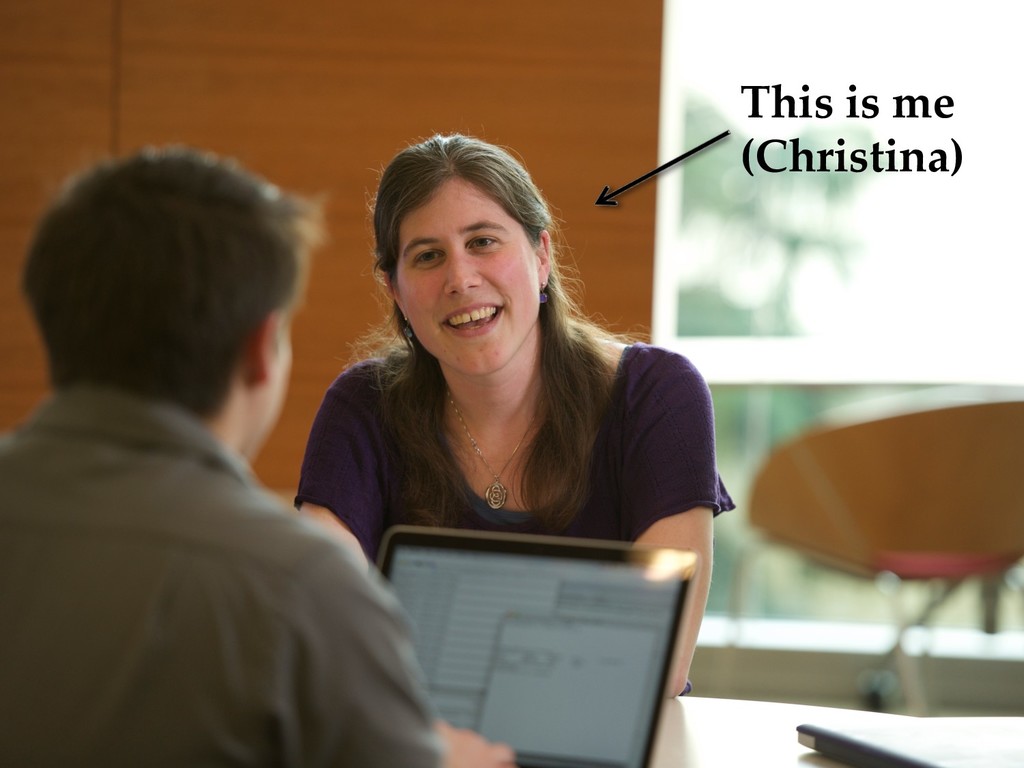
This is me (Christina)
My colleague Lauren and I work for the Center
for High Throughput Computing (CHTC) as research computing facilitators
{ New accounts, ongoing meetings, and weekly office hours.
We meet with a lot of people.
{ Question How many people do Christina and Lauren meet
with every month?
Version 1: Calendar
Version 2: Form
Version 3: Sign In
Success!
{ Busiest Month May: 77 people
{ Slowest Month December: 27 people
None
{ What happened in July? Christina and Lauren were
out of the office (conferences, summer school, workshops)
{ 312 Number of people new to CHTC
None
Ñ Everyone has to deal with data Ñ Sometimes a
simple solution is the best solution Ñ Structure your data Ñ Once you have data, you can tell a story Lessons Learned


 christinalk
 tattaka
 ontheslope
 institutdelelevage
 fkske
fkske
 reokashiwa
 gpeyre
 hisaokatsumi
 hf149
hf149
 pomcho555
 pman0214
 takehaya
 tammyeverts
 sonatard
 garrettdimon
 khoart
 jonoalderson
 mkilby
 aleyda
 codingconduct
 signer
 uxyall
 michielstock