Share
Embed
Recommendation on screening adults for asymptomatic thyroid dysfunction in primary care (2019)
Presentation for free use to disseminate Guidelines

CTFPHC
November 18, 2019
Transcript
27 slides
-
Putting Prevention into Practice Recommendation on screening adults for
asymptomatic thyroid dysfunction in primary care (2019) Canadian Task Force on Preventive Health Care (CTFPHC) -
Use of Slide Deck • These slides are made available
publicly following the guideline’s release as an educational support to assist with the dissemination, uptake and implementation of the guidelines into primary care practice • Some or all of the slides in this slide deck may be used in educational contexts 2 -
Overview of Webinar • Presentation • Background on screening adults
for asymptomatic thyroid dysfunction in primary care • Methods of the Task Force • Key Findings • Recommendations • Implementation Considerations • Conclusions • Questions and Answers 3 -
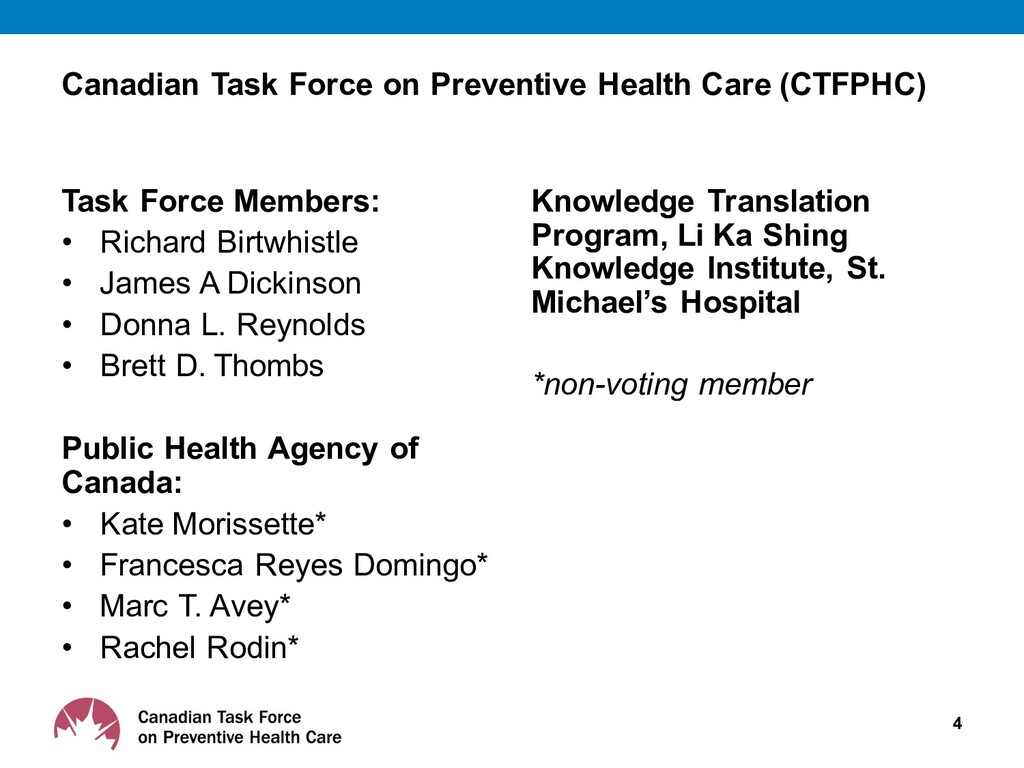
Canadian Task Force on Preventive Health Care (CTFPHC) Task Force
Members: • Richard Birtwhistle • James A Dickinson • Donna L. Reynolds • Brett D. Thombs Public Health Agency of Canada: • Kate Morissette* • Francesca Reyes Domingo* • Marc T. Avey* • Rachel Rodin* Knowledge Translation Program, Li Ka Shing Knowledge Institute, St. Michael’s Hospital *non-voting member 4 -
BACKGROUND 5 Recommendation on screening adults for asymptomatic thyroid
dysfunction in primary care -
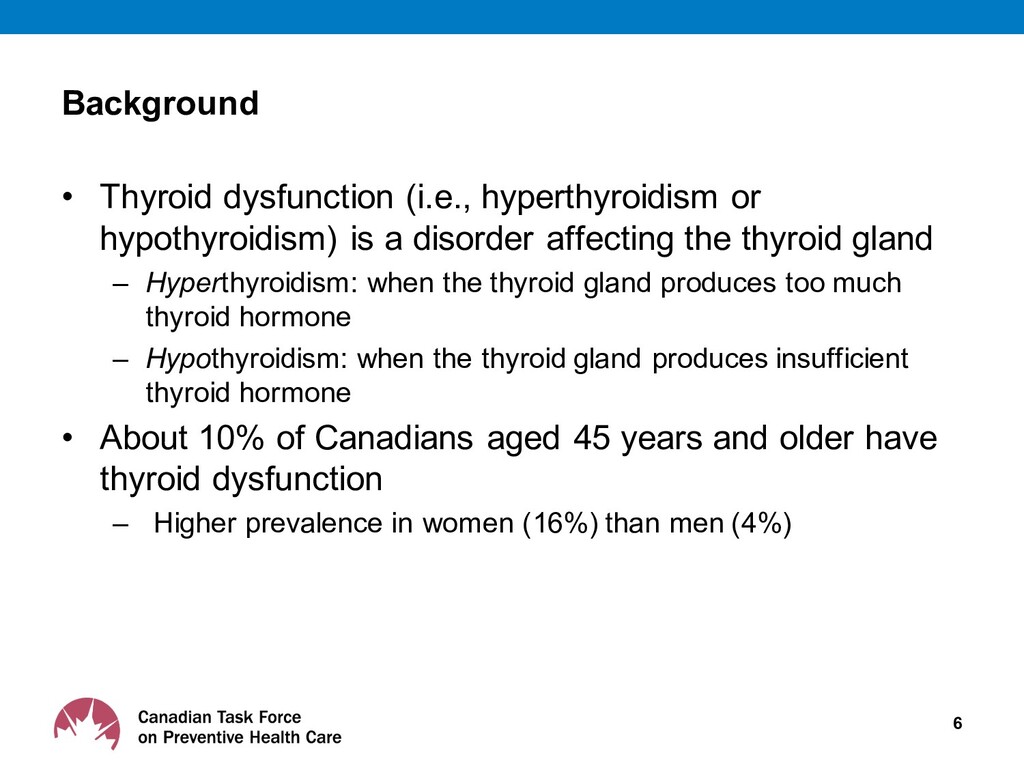
Background • Thyroid dysfunction (i.e., hyperthyroidism or hypothyroidism) is
a disorder affecting the thyroid gland – Hyperthyroidism: when the thyroid gland produces too much thyroid hormone – Hypothyroidism: when the thyroid gland produces insufficient thyroid hormone • About 10% of Canadians aged 45 years and older have thyroid dysfunction – Higher prevalence in women (16%) than men (4%) 6 -
Background • Signs and symptoms are often non-specific, and some
people are asymptomatic – Hypothyroidism: tiredness, sensitivity to cold, dry skin, hair loss, weight gain and slowed movements and thoughts – Hyperthyroidism: increased heart rate, atrial fibrillation, hyperactivity or irritability, intolerance to heat, tremor and weight loss • Screening for thyroid dysfunction involves a blood test to measure serum thyroid-stimulating hormone (TSH). 7 -
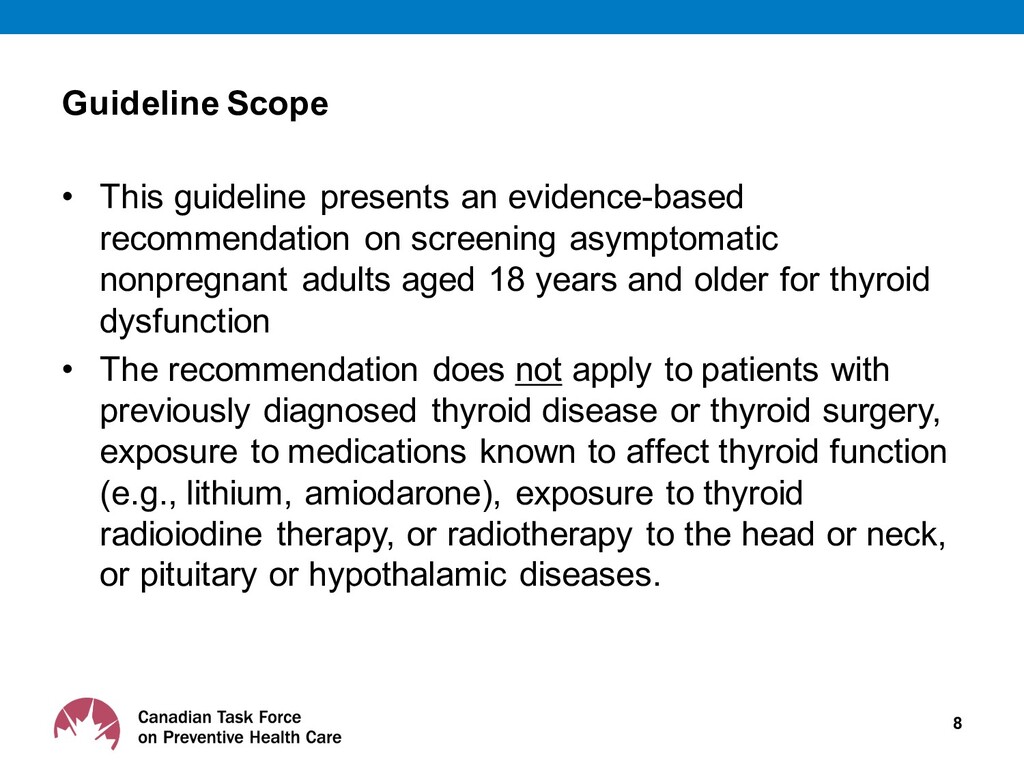
Guideline Scope • This guideline presents an evidence-based recommendation
on screening asymptomatic nonpregnant adults aged 18 years and older for thyroid dysfunction • The recommendation does not apply to patients with previously diagnosed thyroid disease or thyroid surgery, exposure to medications known to affect thyroid function (e.g., lithium, amiodarone), exposure to thyroid radioiodine therapy, or radiotherapy to the head or neck, or pituitary or hypothalamic diseases. 8 -
METHODS 9 Recommendation on screening adults for asymptomatic thyroid
dysfunction in primary care -
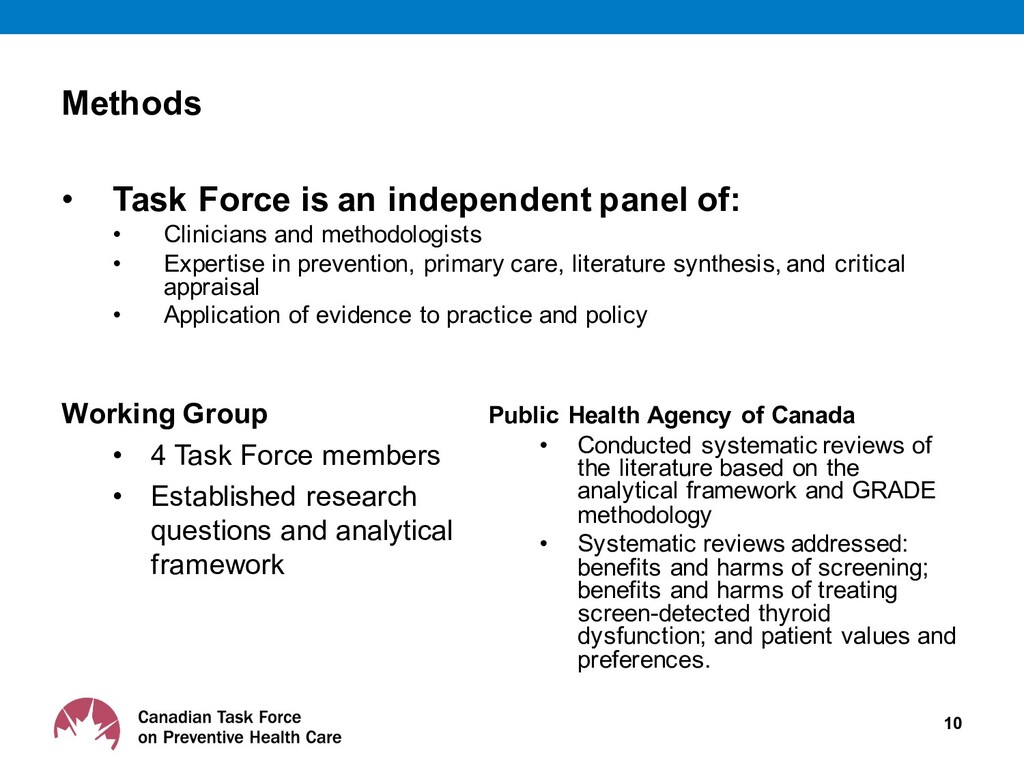
Methods • Task Force is an independent panel of: •
Clinicians and methodologists • Expertise in prevention, primary care, literature synthesis, and critical appraisal • Application of evidence to practice and policy Working Group • 4 Task Force members • Established research questions and analytical framework Public Health Agency of Canada • Conducted systematic reviews of the literature based on the analytical framework and GRADE methodology • Systematic reviews addressed: benefits and harms of screening;; benefits and harms of treating screen-detected thyroid dysfunction;; and patient values and preferences. 10 -
Research Questions • The key questions for the systematic
reviews were: – KQ1: Does screening asymptomatic, nonpregnant adults for Thyroid Dysfunction (TD) reduce morbidity and mortality? – KQ2: What are the harms of screening asymptomatic, nonpregnant adults for TD? – KQ3: Does treatment of screen-detected overt or subclinical TD improve (a) morbidity or mortality or (b) intermediate outcomes? – KQ4: What are the harms of treating screen-detected TD in asymptomatic, nonpregnant adults? – KQ5: What are asymptomatic, nonpregnant adults’ preferences and values concerning screening for TD? – KQ6: If screening asymptomatic, nonpregnant adults for TD is clinically effective, then what is the cost effectiveness and associated resource use? (this was not completed as there was no evidence of benefits) • For more detailed information, please access the systematic review www.canadiantaskforce.ca 11 -
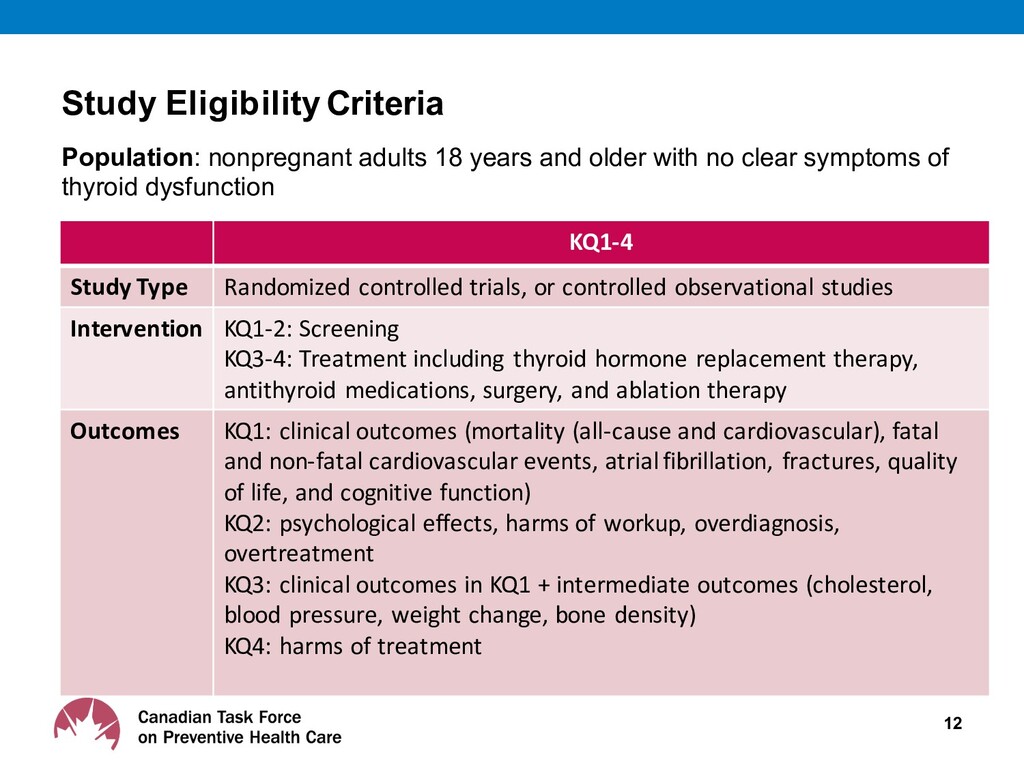
Study Eligibility Criteria Population: nonpregnant adults 18 years and older
with no clear symptoms of thyroid dysfunction KQ1-‐4 Study Type Randomized controlled trials, or controlled observational studies Intervention KQ1-‐2: Screening KQ3-‐4: Treatment including thyroid hormone replacement therapy, antithyroid medications, surgery, and ablation therapy Outcomes KQ1: clinical outcomes (mortality (all-‐cause and cardiovascular), fatal and non-‐fatal cardiovascular events, atrial fibrillation, fractures, quality of life, and cognitive function) KQ2: psychological effects, harms of workup, overdiagnosis, overtreatment KQ3: clinical outcomes in KQ1 + intermediate outcomes (cholesterol, blood pressure, weight change, bone density) KQ4: harms of treatment 12 -
How does the Task Force “GRADE” Evidence? 13 The
“GRADE” System: • Grading of Recommendations, Assessment, Development & Evaluation 1. Certainty of Evidence 2. Strength of Recommendation • Confidence that the available evidence correctly reflects the theoretical true effect • Certainty of supporting evidence • Desirable and undesirable effects • Values and preferences • Resource use High, Moderate, Low, Very Low Strong, Conditional -
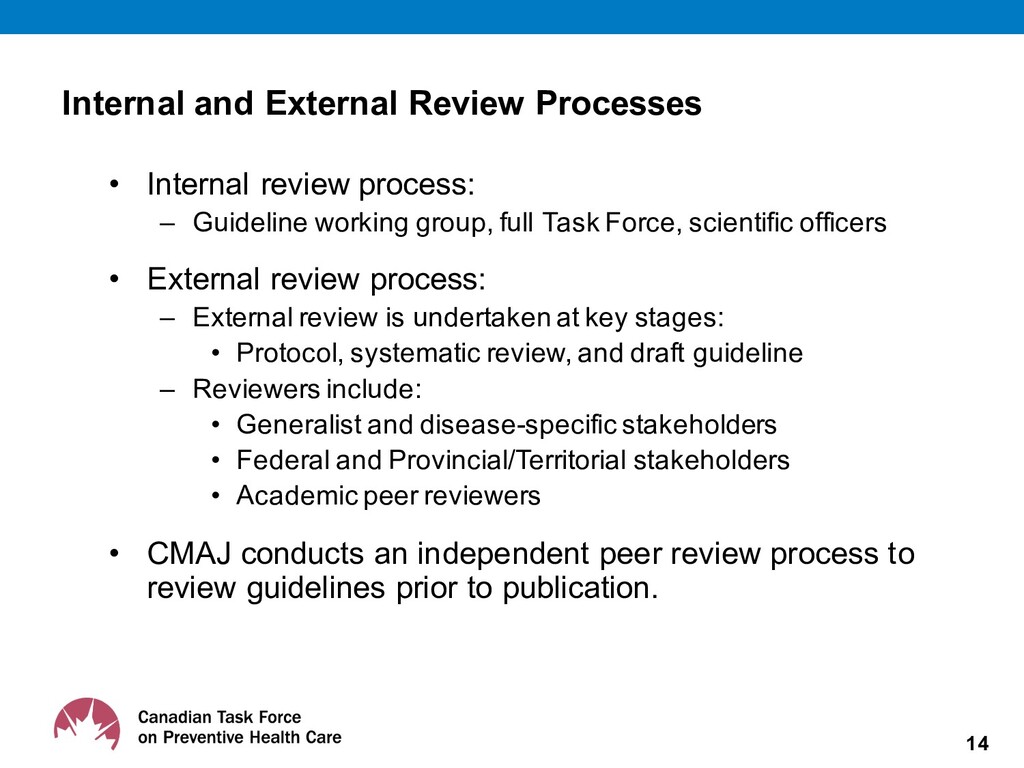
Internal and External Review Processes • Internal review process: –
Guideline working group, full Task Force, scientific officers • External review process: – External review is undertaken at key stages: • Protocol, systematic review, and draft guideline – Reviewers include: • Generalist and disease-specific stakeholders • Federal and Provincial/Territorial stakeholders • Academic peer reviewers • CMAJ conducts an independent peer review process to review guidelines prior to publication. 14 -
FINDINGS 15 Recommendation on screening adults for asymptomatic thyroid
dysfunction in primary care -
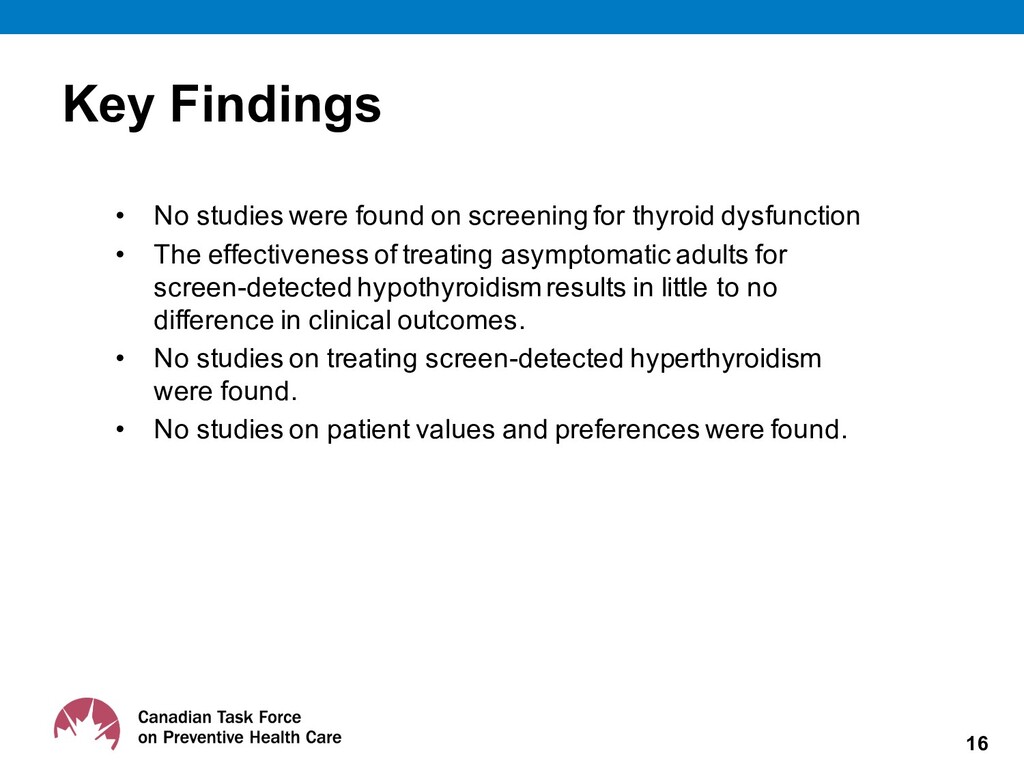
Key Findings • No studies were found on screening for
thyroid dysfunction • The effectiveness of treating asymptomatic adults for screen-detected hypothyroidism results in little to no difference in clinical outcomes. • No studies on treating screen-detected hyperthyroidism were found. • No studies on patient values and preferences were found. 16 -
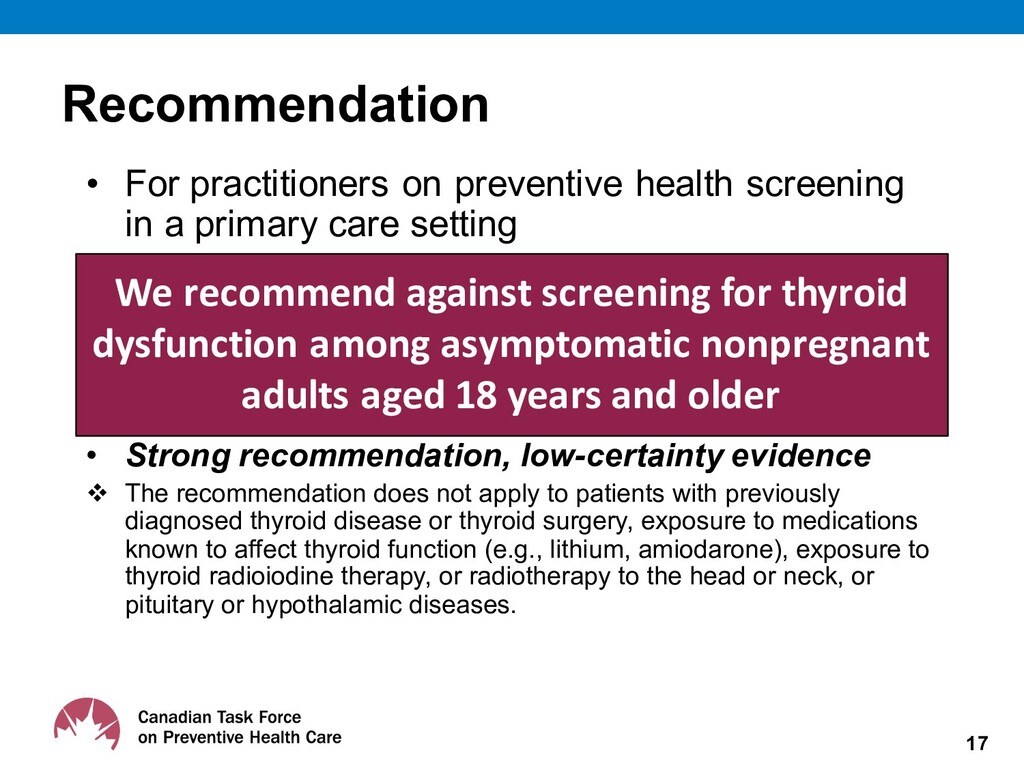
Recommendation • For practitioners on preventive health screening in
a primary care setting • Strong recommendation, low-certainty evidence v The recommendation does not apply to patients with previously diagnosed thyroid disease or thyroid surgery, exposure to medications known to affect thyroid function (e.g., lithium, amiodarone), exposure to thyroid radioiodine therapy, or radiotherapy to the head or neck, or pituitary or hypothalamic diseases. 17 We recommend against screening for thyroid dysfunction among asymptomatic nonpregnant adults aged 18 years and older -
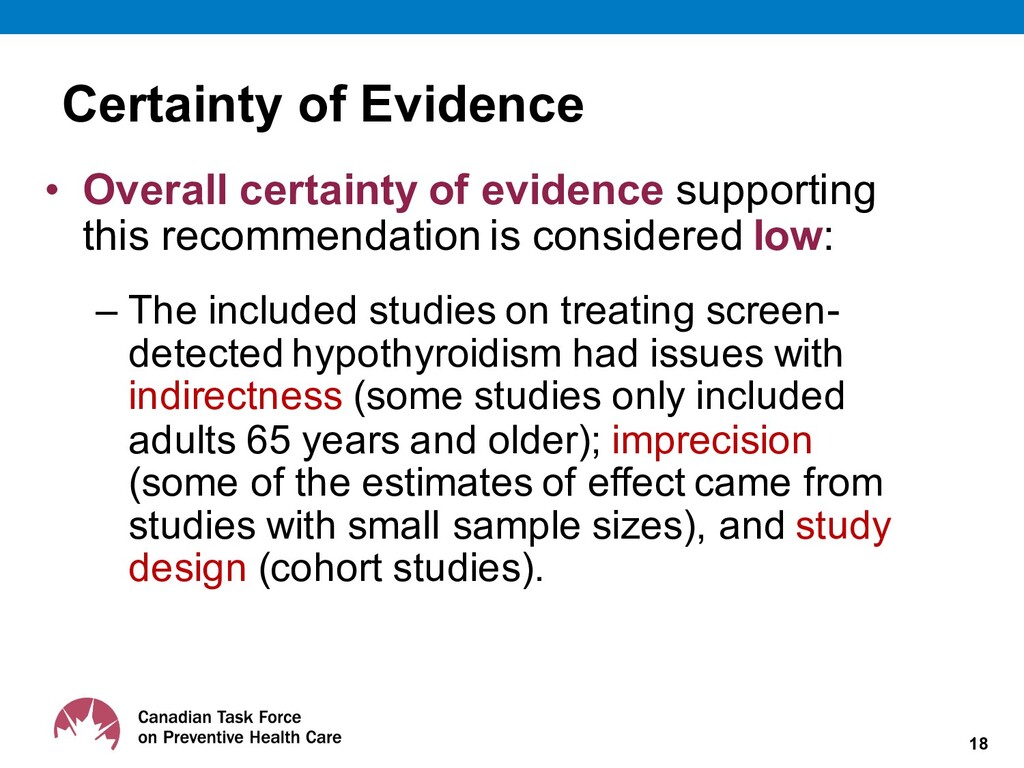
Certainty of Evidence • Overall certainty of evidence supporting
this recommendation is considered low: – The included studies on treating screen- detected hypothyroidism had issues with indirectness (some studies only included adults 65 years and older);; imprecision (some of the estimates of effect came from studies with small sample sizes), and study design (cohort studies). 18 -
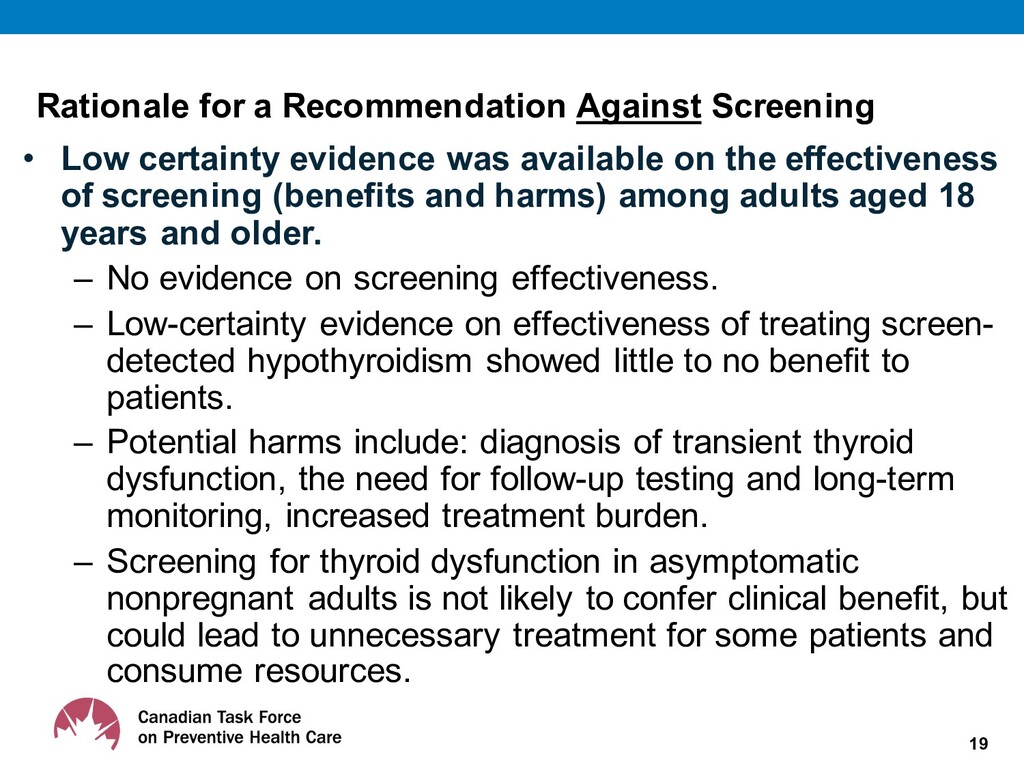
Rationale for a Recommendation Against Screening • Low certainty evidence
was available on the effectiveness of screening (benefits and harms) among adults aged 18 years and older. – No evidence on screening effectiveness. – Low-certainty evidence on effectiveness of treating screen- detected hypothyroidism showed little to no benefit to patients. – Potential harms include: diagnosis of transient thyroid dysfunction, the need for follow-up testing and long-term monitoring, increased treatment burden. – Screening for thyroid dysfunction in asymptomatic nonpregnant adults is not likely to confer clinical benefit, but could lead to unnecessary treatment for some patients and consume resources. 19 -
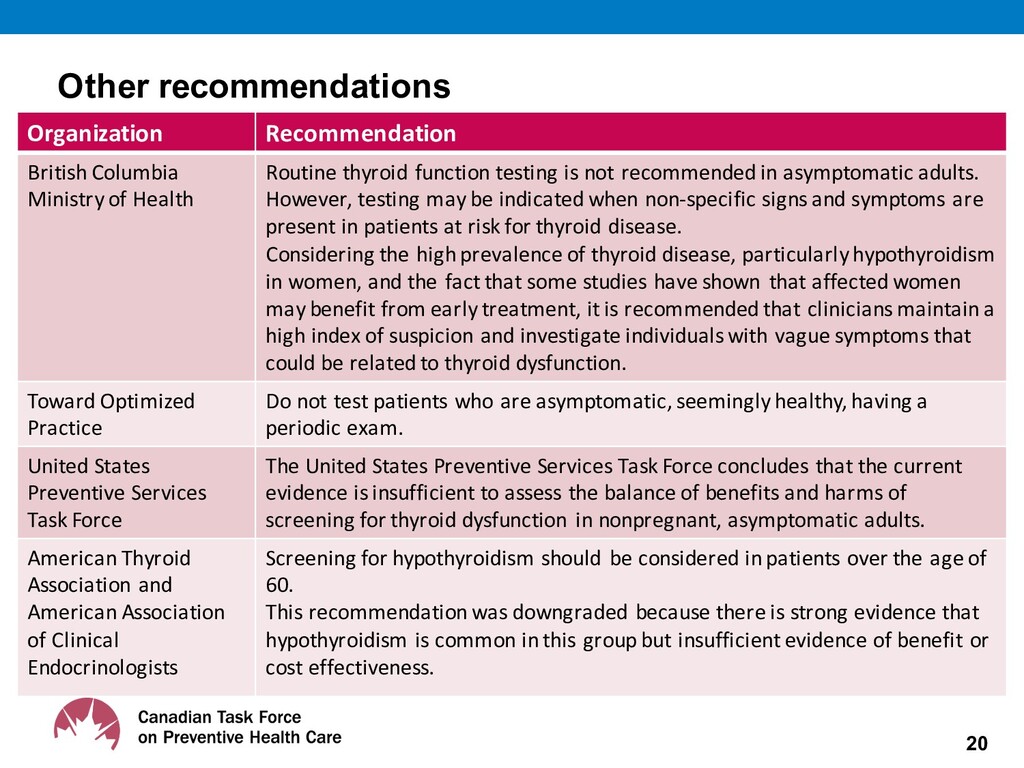
20 Other recommendations Organization Recommendation British Columbia Ministry
of Health Routine thyroid function testing is not recommended in asymptomatic adults. However, testing may be indicated when non-‐specific signs and symptoms are present in patients at risk for thyroid disease. Considering the high prevalence of thyroid disease, particularly hypothyroidism in women, and the fact that some studies have shown that affected women may benefit from early treatment, it is recommended that clinicians maintain a high index of suspicion and investigate individuals with vague symptoms that could be related to thyroid dysfunction. Toward Optimized Practice Do not test patients who are asymptomatic, seemingly healthy, having a periodic exam. United States Preventive Services Task Force The United States Preventive Services Task Force concludes that the current evidence is insufficient to assess the balance of benefits and harms of screening for thyroid dysfunction in nonpregnant, asymptomatic adults. American Thyroid Association and American Association of Clinical Endocrinologists Screening for hypothyroidism should be considered in patients over the age of 60. This recommendation was downgraded because there is strong evidence that hypothyroidism is common in this group but insufficient evidence of benefit or cost effectiveness. -
Knowledge Gaps • Future trials should evaluate: – The effectiveness
of screening versus not screening asymptomatic nonpregnant adults for thyroid dysfunction – The effectiveness of screening versus not screening adults with other concomitant conditions (e.g., cardiovascular diseases, type 1 diabetes mellitus, or other autoimmune diseases) 21 -
IMPLEMENTATION CONSIDERATIONS 22 Recommendation on screening adults for asymptomatic
thyroid dysfunction in primary care -
Implementation Considerations • This recommendation only applies to screening
asymptomatic nonpregnant adults aged 18 years and older. • While the Task Force recommends against routinely screening for thyroid dysfunction in this population, clinicians should remain alert to signs and symptoms (e.g., unusual fatigue, unexpected weight gain, menstrual irregularities, goiter, etc.) or risk factors (e.g., pituitary or hypothalamic diseases) suggestive of thyroid dysfunction and investigate accordingly. 23 -
Knowledge Translation (KT) Tools • The Task Force has created
a Q&A KT tool to support the implementation of the guideline into clinical practice • After the public release, this tool will be freely available for download in both French and English on the website: www.canadiantaskforce.ca 24 -
More Information For more information on the details of this
guideline please see: • Canadian Task Force on Preventive Health Care website: www.canadiantaskforce.ca • Email: [email protected] 25 -
Endorsements The following organizations have endorsed the guideline: - Canadian
Society of Endocrinology and Metabolism - Nurse Practitioner Association of Canada - College of Family Physicians of Canada 26
 ctfphc
 ryanjones
 garrettdimon
 uxyall
 axbom
 gurzu
 jct
 stuffmc
 rocio
 malarkey
 philnash
 lara